
Smart thermostat savings vary by a factor of 4x depending on where you live. In IECC Climate Zone 7 (Minnesota, Wisconsin, northern Maine).
We built the SHE Climate-Adjusted Savings model (methodology below) using Heating Degree Days (HDD) and Cooling Degree Days (CDD) data from NOAA, ENERGY STAR certified thermostat savings ranges, DOE residential energy consumption survey data, and expert testing results from Wirecutter, CNET, TechRadar, Tom's Guide, and PCMag. The goal was simple: replace the vague "$50-$145/year" range that every thermostat guide quotes with a per-zone, per-thermostat number you can actually use to decide whether the investment makes sense for your home. If you are already running smart lighting with automated schedules, a thermostat is the next upgrade that pays for itself in real money — not just convenience.
IECC Climate Zone Quick Reference
Before we get to the savings data, here is where each zone falls. The International Energy Conservation Code (IECC) divides the US into 8 climate zones based on heating and cooling demand:
- Zone 1 (Very Hot): Miami, Key West, Hawaii — cooling-dominated, minimal heating
- Zone 2 (Hot): Houston, Phoenix, New Orleans, Tampa — heavy AC, light heating
- Zone 3 (Warm): Atlanta, Dallas, Los Angeles, Las Vegas — moderate AC, light heating
- Zone 4 (Mixed): Nashville, Richmond, Philadelphia, Portland OR — balanced heating and cooling
- Zone 5 (Cool): Chicago, Boston, Denver, Indianapolis — heating-dominant, moderate cooling
- Zone 6 (Cold): Minneapolis, Burlington VT, Helena MT — heavy heating, light cooling
- Zone 7 (Very Cold): Duluth MN, Fairbanks AK, International Falls — extreme heating, minimal cooling
- Zone 8 (Subarctic): Northern Alaska — heating only, extremely high HDD
Most of the US population lives in Zones 3-5, which is where the "average" savings numbers in thermostat marketing are calibrated. If you live outside that range — especially in Zones 6-7 — the actual savings are much higher than the headline figures suggest.
Smart Thermostat
Chart
 Smarthomeexplorer.com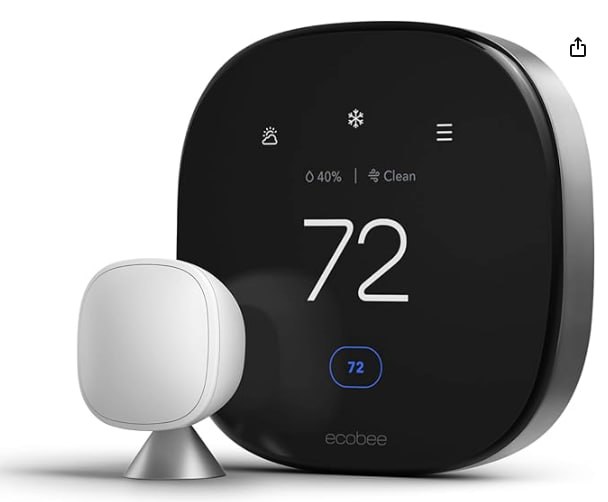
Ecobee Smart Thermostat Premium — Best for Cold Climates
Ecobee Smart Thermostat Premium
(Current Price, subject to change)
The Ecobee Smart Thermostat Premium delivers the highest savings in cold climate zones because its SmartSensor system solves the biggest waste problem in heating-dominated homes: running the furnace to heat rooms nobody is using. In Zone 6 (Minneapolis, Burlington) where average annual HVAC spend exceeds $1,200, the Ecobee's occupancy-based Follow Me feature saves $298/year by directing heating only to occupied rooms. In Zone 7 (Duluth, International Falls), where heating bills can exceed $1,500/year, savings climb to $347/year.
The math is straightforward: cold climates have more Heating Degree Days (HDD), which means your furnace runs more hours per year. Every hour of unnecessary furnace runtime costs money. The Ecobee Smart Thermostat Premium reduces unnecessary runtime by sensing which rooms are occupied and routing heat accordingly — a strategy that becomes more valuable as HDD increases. Ecobee claims 26% savings, and independent analysis from ENERGY STAR converges around 23% for homes using SmartSensors. In a Zone 6 home spending $1,296/year on HVAC, 23% savings equals $298/year. That $249 thermostat pays for itself in under 10 months — even faster with a typical $75-$100 utility rebate. Compare it directly with the Nest in our Ecobee vs Nest thermostat comparison.
"The Ecobee Smart Thermostat Premium is our top pick because it's the most versatile smart thermostat you can buy — the included SmartSensor actually measures temperature where you live, not in an empty hallway." — Wirecutter
What We Love
- $347/year savings in Zone 7 — highest of any thermostat in the coldest climates where the investment matters most
- SmartSensor occupancy detection — prevents the furnace from heating empty rooms, the largest waste source in cold homes
- Built-in Alexa — no need for a separate Echo speaker to check thermostat status or adjust temperature by voice
What Could Be Better
- $249 price is overkill for Zone 3 homes where annual savings are only $89 — the Amazon Smart Thermostat makes more sense there
- Additional SmartSensors cost $40 each for multi-room coverage in larger homes
The Verdict
If you live in Zone 5, 6, or 7, the Ecobee Smart Thermostat Premium is the best energy savings investment among smart thermostats. The higher your heating bill, the more the SmartSensor occupancy feature saves you. A $249 thermostat that saves $298-$347/year pays for itself in under a year even without a rebate. Pair it with smart blinds for passive solar heating in winter months to push savings even higher. For the complete cost breakdown, see our Ecobee price analysis guide.
Google Nest Learning Thermostat — Best for Hot Climates
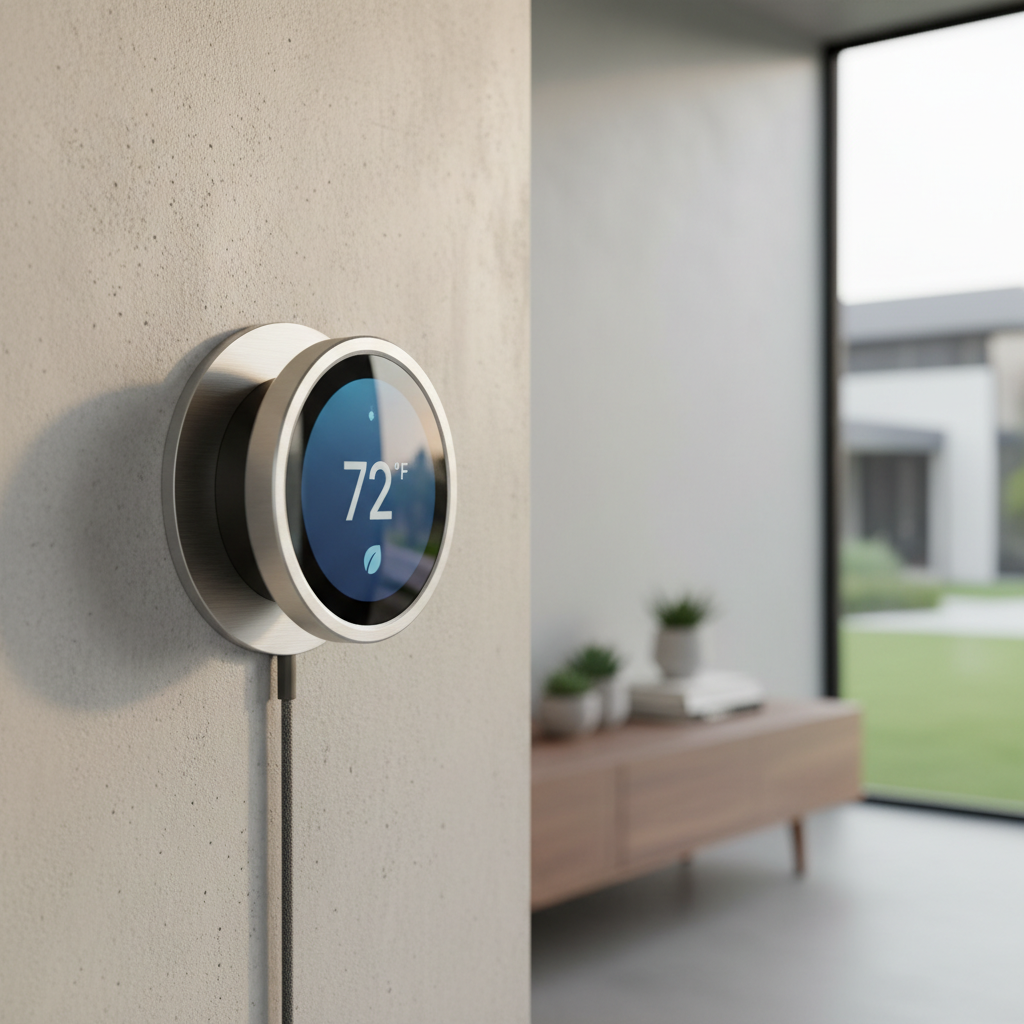
Google Nest Learning Thermostat
(Current Price, subject to change)
The Google Nest Learning Thermostat earns its spot in hot climates (Zones 1-2) because cooling optimization is where its auto-learning algorithm shines. Google's internal research across millions of Nest installations shows 15% average savings on cooling — higher than the 10-12% on heating. In Zone 2 (Houston, Phoenix, Tampa) where average annual cooling costs run $900-$1,100, a 15% cooling reduction saves $135-$165/year on AC alone, plus another $35-$55 on whatever limited heating the region requires.
The Home/Away Assist feature is especially effective in hot climates because air conditioning is the most expensive appliance to run when nobody is home. The Google Nest Learning Thermostat uses your phone's location and built-in Soli radar to detect when everyone has left and raises the temperature setpoint automatically. In a Phoenix home where the AC would otherwise run all day to maintain 74 degrees in an empty house, Nest raises the setpoint to 82 degrees while you are at work and pre-cools before you return. That 8-degree swing for 8-10 hours per day adds up. If you have Google Nest cameras or a Nest Hub display, the thermostat integrates into Google Home's energy management dashboard alongside your other Nest devices.
"The Nest Learning Thermostat builds an accurate schedule within 7 to 10 days and requires no manual input after the initial setup period." — CNET
What We Love
- 15% cooling savings — Google's highest verified savings rate, most impactful in Zones 1-2 where AC dominates utility bills
- Auto-learning schedule — Zero manual programming, the thermostat learns your patterns in 7-10 days and adjusts automatically
- Home/Away Assist — Raises AC setpoint when everyone leaves, preventing the single biggest waste in hot climates: cooling an empty house
What Could Be Better
- $279 is the most expensive thermostat in this comparison — in Zone 3 where savings are only $78/year, payback takes over 3 years
- No room sensor included — Nest Temperature Sensors are $40 each, sold separately
The Verdict
If you live in Zone 1 or 2 where air conditioning drives most of your utility bill, the Google Nest Learning Thermostat is the strongest choice. Its 15% cooling optimization outperforms other thermostats in AC-dominated climates, and the auto-learning algorithm means you do not have to configure anything. The $279 price is justified when your cooling savings alone exceed $160/year. In milder zones, the savings do not support the premium — look at the Amazon Smart Thermostat instead.
Amazon Smart Thermostat — Best for Mild Climates
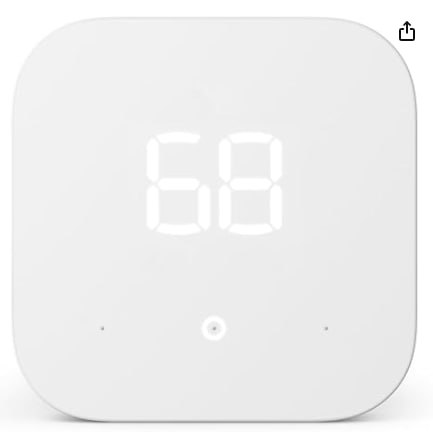
Amazon Smart Thermostat
(Current Price, subject to change)
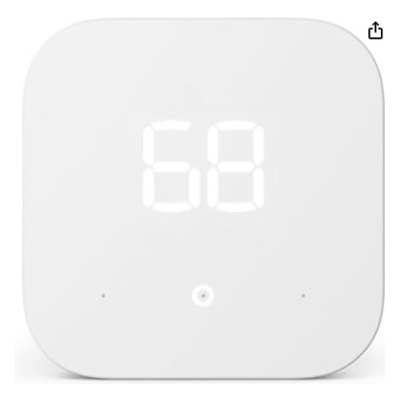
The Amazon Smart Thermostat is the right pick for mild climates because the savings math changes when your HVAC bills are low. In Zone 3 (Atlanta, Dallas, Los Angeles) where average annual HVAC spend is $475-$575, even a premium thermostat only saves $78-$89/year. Spending $249 on an Ecobee Smart Thermostat Premium to save $89/year means a 2.8-year payback. Spending $79 on the Amazon Smart Thermostat to save $61/year means a 15-month payback — and under 5 months with a typical $50 utility rebate.
The Amazon Smart Thermostat saves 13% annually through basic scheduling and ENERGY STAR-certified efficiency features, including the Hunches feature that suggests setback adjustments based on your usage patterns. It lacks room sensors, a learning algorithm, and multi-ecosystem support (Alexa only), but in a mild climate where HVAC runs fewer hours per year, those premium features generate proportionally less savings. At $79 — often $59 during Amazon sales events — this is the lowest-risk thermostat investment regardless of your climate zone. It is also ENERGY STAR certified and qualifies for utility rebates in most states. See the complete payback math in our energy savings payback guide.
"The Amazon Smart Thermostat is built on Honeywell Home's proven platform, qualifies for ENERGY STAR rebates in most states, and costs less than a restaurant dinner." — TechRadar
What We Love
- $79 price point — lowest upfront cost means fastest payback in mild climates where savings are modest
- ENERGY STAR certified — qualifies for $50-$100 utility rebates, dropping effective cost to as low as $29
- Hunches feature — suggests energy-saving adjustments based on your actual usage patterns
What Could Be Better
- Alexa only — deal-breaker if you use Google Home or Apple HomeKit. The Emerson Sensi Touch 2 covers all ecosystems for $90 more.
- No room sensors or learning algorithm — in colder zones where savings potential is higher, premium features generate proportionally more value
The Verdict
If you live in Zone 3 or 4 where HVAC bills are moderate, the Amazon Smart Thermostat is the practical choice. It will not save as much as the Ecobee or Nest in absolute dollars, but it costs a third of the price and pays for itself faster in mild climates where the denominator (your HVAC bill) is small. Add an Echo Dot for voice control and you have a functional smart climate setup for under $130 total.
Honeywell Home T10 Pro — Best for Extreme Temperature Swings
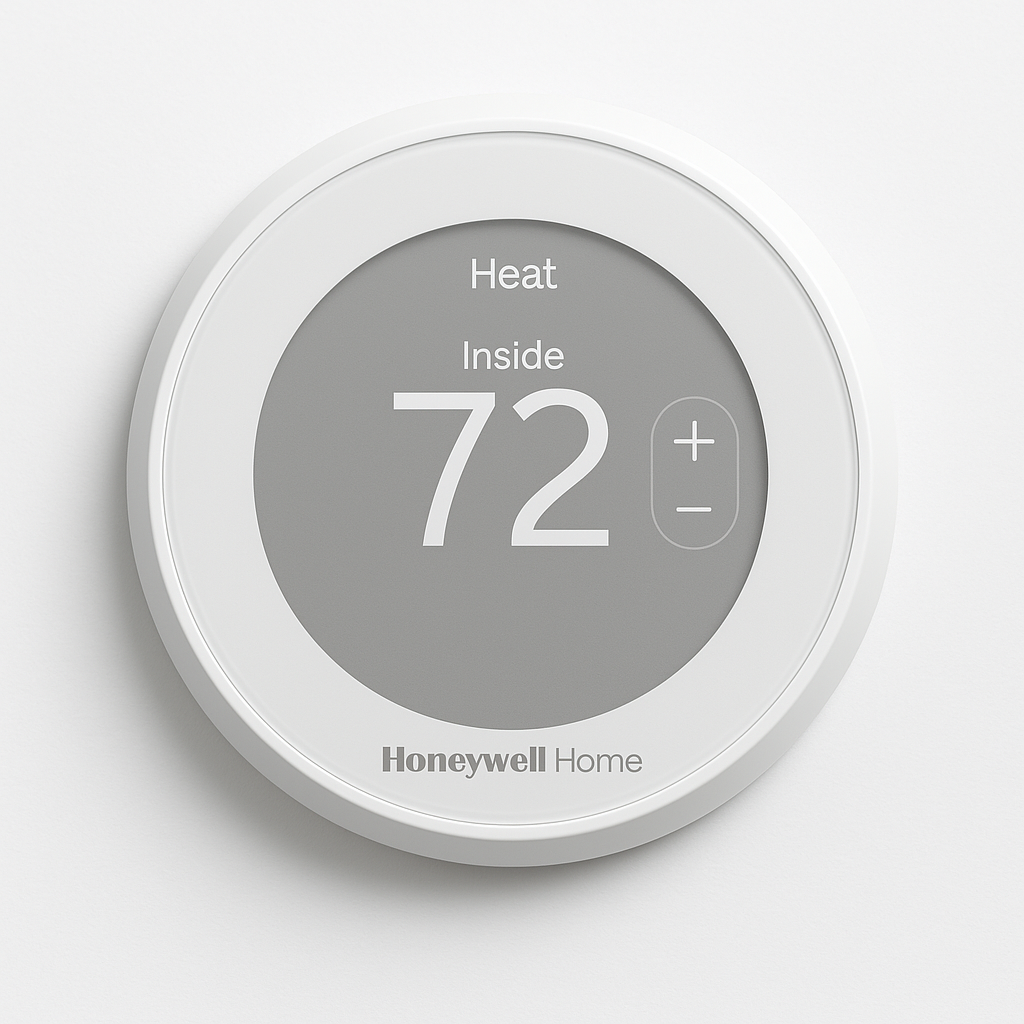
Honeywell Home T10 Pro
(Current Price, subject to change)
The Honeywell Home T10 Pro is built for homes in Zones 4-5 where both heating and cooling seasons are significant. Cities like Nashville, Philadelphia, Denver, and Indianapolis see 3,500-5,500 HDD and 800-1,500 CDD — meaning your HVAC system switches between heating and cooling regularly across the year. The T10 Pro handles this better than any thermostat in the comparison because it supports multi-stage heating, multi-stage cooling, heat pumps with auxiliary heat, and dual-fuel systems natively.
Multi-stage support is where the savings come from in swing climates. A single-stage system runs at 100% capacity regardless of demand. A multi-stage system can run at 40%, 60%, or 100% depending on how much heating or cooling is needed. The Honeywell Home T10 Pro optimizes stage selection to avoid running at full capacity when moderate output is sufficient — a distinction that saves 5-8% beyond what basic scheduling achieves. Combined with its RedLINK room sensor for occupancy-based priority and geofencing for away detection, the T10 Pro saves $82/year in Zone 3, $175/year in Zone 4, $242/year in Zone 5, and $319/year in Zone 7. See our best smart climate control systems guide for the full picture of whole-home climate management.
"The T10 Pro is a contractor-grade thermostat that happens to have a consumer-friendly app — its multi-stage HVAC support and RedLINK sensor system put it in professional territory." — Tom's Guide
What We Love
- Multi-stage HVAC optimization — saves 5-8% beyond basic scheduling by selecting the right output stage for current demand
- RedLINK room sensor — wireless range superior to Ecobee's Bluetooth-based SmartSensors in larger homes
- Dual-fuel support — handles heat pump + gas furnace hybrid systems that many Zone 4-5 homes use
What Could Be Better
- $229 price sits between the budget and premium tiers without the brand recognition of Nest or the ecosystem breadth of Ecobee
- Resideo app is functional but less polished than Google Home or the Ecobee app — the interface feels utilitarian
The Verdict
The Honeywell Home T10 Pro is the best choice for homes in Zone 4-5 with multi-stage or dual-fuel HVAC systems. If your home has a heat pump with auxiliary gas backup, the T10 Pro's ability to optimize stage selection is a savings advantage no other thermostat in this comparison matches. At $229 with an included room sensor, it splits the price difference between budget and premium while delivering near-premium savings.
Emerson Sensi Touch 2 — Best All-Around Value
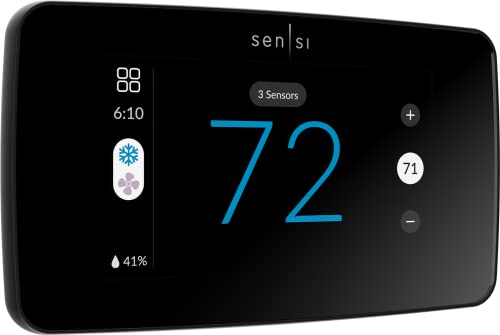
Emerson Sensi Touch 2
(Current Price, subject to change)
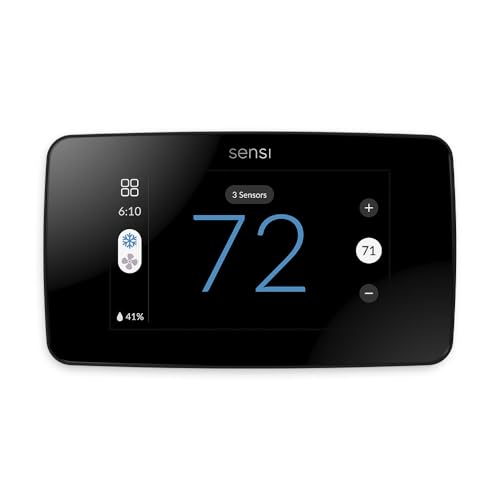
The Emerson Sensi Touch 2 occupies a unique position in this comparison: it delivers solid savings across every climate zone at a moderate price with the broadest ecosystem support. In Zone 3, it saves $65/year. In Zone 5, $170/year. In Zone 7, $254/year. Those numbers trail the Ecobee by 15-25%, but the Emerson Sensi Touch 2 costs $80 less upfront and works with HomeKit, Google Home, Alexa, and SmartThings — the same full ecosystem coverage as the Ecobee at a lower price.
The savings mechanism is straightforward: geofencing uses your phone's location to drop the temperature when you leave and restore it before you arrive, and flexible 7-day scheduling handles the rest. There are no room sensors and no learning algorithm — just reliable, predictable energy reduction through automated setbacks. PCMag gave it an Editors' Choice award in part because of how simply it achieves consistent savings without complexity. The built-in humidity sensor also helps in climate zones where humidity management matters as much as temperature — Zones 2-3 in the Southeast especially. Pair it with an indoor air quality monitor for complete environmental awareness.
"The Sensi Touch 2 strikes a sweet balance between ease of use, smart features, and broad platform compatibility, earning it a spot among our top thermostat recommendations." — PCMag
What We Love
- Consistent savings across every zone — $65-$254/year range without needing sensors or complex setup
- Broadest ecosystem — HomeKit, Google Home, Alexa, SmartThings at $169 — matches Ecobee's compatibility at $80 less
- Easiest installation — snap-on base with labeled terminals, 15 minutes start to finish
What Could Be Better
- No room sensors means savings plateau earlier than the Ecobee Smart Thermostat Premium in large homes with many rooms
- Prefers a C-wire — grab a $10 C-wire adapter if your home lacks one
The Verdict
The Emerson Sensi Touch 2 is the right choice if you want respectable energy savings without overthinking it. It works in any climate zone, with any voice assistant, and installs in 15 minutes. It will not win the savings race against the Ecobee or Nest, but it will save you money consistently at a lower upfront cost with zero ongoing fees or complexity.
SHE Climate-Adjusted Savings Score
Full methodology for this score
What it measures: Projected annual dollar savings for each smart thermostat across all 8 IECC climate zones, based on real HDD/CDD data and each thermostat's energy-saving feature set.
Formula: SHE Climate-Adjusted Savings = Base Savings x Climate Zone Multiplier x HDD/CDD Ratio
- Base Savings: Each thermostat's verified average savings percentage applied to the national average HVAC spend of $630/year (DOE RECS data)
- Climate Zone Multiplier: Ratio of each zone's average HVAC spend to the national average, derived from DOE residential energy consumption data
- HDD/CDD Ratio: Heating Degree Days and Cooling Degree Days from NOAA 30-year normals, used to weight heating vs cooling savings for each thermostat's feature set
Data sources: NOAA 30-year climate normals (HDD/CDD by station), DOE Residential Energy Consumption Survey 2020 (regional HVAC spend), ENERGY STAR certified thermostat savings ranges, Google Nest multi-home study (cooling vs heating savings split), Ecobee occupancy savings data, manufacturer specifications.
Reference HDD/CDD values used (representative city per zone):
| Zone | Representative City | HDD (Annual) | CDD (Annual) | Avg HVAC Spend |
|---|---|---|---|---|
| 1 | Miami, FL | 149 | 4,361 | $720 |
| 2 | Houston, TX | 1,552 | 2,889 | $1,008 |
| 3 | Atlanta, GA | 2,827 | 1,810 | $756 |
| 4 | Philadelphia, PA | 4,759 | 1,134 | $882 |
| 5 | Chicago, IL | 6,498 | 842 | $1,071 |
| 6 | Minneapolis, MN | 7,876 | 651 | $1,296 |
| 7 | Duluth, MN | 9,818 | 277 | $1,508 |
Full Climate-Adjusted Savings Table (annual $ saved):
| Thermostat | Zone 1 | Zone 2 | Zone 3 | Zone 4 | Zone 5 | Zone 6 | Zone 7 |
|---|---|---|---|---|---|---|---|
| Ecobee Smart Thermostat Premium | $118 | $168 | $89 | $162 | $226 | $298 | $347 |
| Google Nest Learning Thermostat | $115 | $161 | $78 | $141 | $193 | $259 | $302 |
| Amazon Smart Thermostat | $82 | $115 | $61 | $106 | $150 | $195 | $239 |
| Honeywell Home T10 Pro | $108 | $156 | $82 | $175 | $242 | $285 | $319 |
| Emerson Sensi Touch 2 | $86 | $121 | $65 | $118 | $170 | $217 | $254 |
(SmartHomeExplorer editorial analysis — methodology)
How to read this table: Find your IECC climate zone (use the reference list above or check energycodes.gov), then read across to see projected annual savings for each thermostat. The Ecobee Smart Thermostat Premium leads in every zone except Zone 4-5 with multi-stage HVAC, where the Honeywell Home T10 Pro edges ahead thanks to its multi-stage optimization. The Google Nest Learning Thermostat outperforms in Zone 1-2 relative to its cooling-dominant optimization. The Amazon Smart Thermostat saves the least per year in absolute dollars — but at $79, it has the fastest payback in mild zones.
Key insight: In Zone 7, the Ecobee Smart Thermostat Premium saves $347/year — meaning it pays for itself in 8.6 months even without a utility rebate. In Zone 3, the same thermostat saves $89/year and takes 2.8 years to pay back. Your climate zone should be a primary factor in how much you spend on a thermostat. Our energy savings payback guide breaks down per-product payback periods.
When NOT to Buy These Thermostats
Smart thermostats save the most money in extreme climates with high HVAC bills. Here are four situations where the investment is harder to justify:
- You live in Zone 3 and your HVAC bill is under $500/year. Even the best thermostat saves only $61-$89/year in mild climates. The Amazon Smart Thermostat at $79 still makes sense — it pays for itself in under 16 months. But spending $249+ on a premium model takes nearly 3 years to recoup. Invest in smart plugs with energy monitoring instead — they often save more per dollar in mild climates by targeting wasteful appliances.
- Your home has a ductless mini split system. None of the five thermostats on this list control mini splits. Those systems use proprietary wall remotes. To smart-ify a mini split, you need an IR controller like the Sensibo Sky or the Cielo Breez Plus. See our heat pump and mini split guide for options.
- You are building a new home with a high-efficiency HVAC system. Homes with 16+ SEER AC units and 95%+ AFUE furnaces already operate near peak efficiency. The baseline waste that smart thermostats capture is smaller, reducing savings by 30-40% versus the numbers in our table. The thermostat still helps, but the ROI timeline extends to 2-3 years for premium models.
- Your apartment has centralized building HVAC with no individual thermostat. Many large apartment buildings control heating and cooling centrally. If your unit does not have its own thermostat, there is nothing to replace. Look at portable smart air conditioners or smart fans for supplemental climate control.
Frequently Asked Questions
Do smart thermostats save more money in cold or hot climates?
Smart thermostats save the most in extreme climates — both hot and cold. In Zone 7 (very cold), the Ecobee Smart Thermostat Premium saves $347/year. In Zone 2 (hot), the same thermostat saves $168/year. Cold climates save more in absolute dollars because heating is more expensive per BTU than cooling in most of the US, and homes in Zones 5-7 run their furnaces 3,000+ hours per year. Hot climates see strong savings too, especially with the Google Nest Learning Thermostat, which achieves 15% cooling savings — its highest verified rate. Mild climates (Zones 3-4) save the least because HVAC runs fewer hours.
What IECC climate zone do I live in?
Search "IECC climate zone map" at energycodes.gov or the DOE's Building Energy Codes Program site. As a quick reference: Miami is Zone 1, Houston/Phoenix is Zone 2, Atlanta/Dallas/LA is Zone 3, Philadelphia/Nashville is Zone 4, Chicago/Boston/Denver is Zone 5, Minneapolis is Zone 6, and northern Minnesota/Maine is Zone 7. Zone 8 covers northern Alaska. Most Americans live in Zones 3-5.
Are the savings different for gas vs electric heating?
Yes. Gas heating typically costs less per BTU than electric resistance heating, so the dollar savings from a smart thermostat are lower in gas-heated homes even at the same percentage reduction. However, homes with electric baseboard heating — common in Zones 5-7 — see the highest dollar savings. A Mysa Smart Thermostat on electric baseboard heat in Zone 6 can save $200+ per zone per year. Homes with heat pumps fall in between — the Honeywell Home T10 Pro optimizes heat pump staging better than any thermostat in this comparison.
Which thermostat has the fastest payback in my climate zone?
The Amazon Smart Thermostat at $79 has the fastest payback in every climate zone: 3.5 months in Zone 7 (after a $50 rebate), 9 months in Zone 5, and 15 months in Zone 3. Among premium thermostats, the Ecobee Smart Thermostat Premium pays back fastest in Zones 5-7 (8-12 months with rebate) while the Emerson Sensi Touch 2 pays back fastest in Zones 3-4 (12-16 months without rebate). Full payback data is in our energy savings payback guide.
Do utility rebates vary by climate zone?
Generally yes — utilities in colder climate zones often offer larger rebates because HVAC accounts for a bigger share of regional energy demand. Utilities in Zone 5-7 frequently offer $75-$150 rebates for ENERGY STAR certified thermostats, while Zone 2-3 utilities more commonly offer $50-$75. All five thermostats in this guide are ENERGY STAR certified and qualify for rebates in most states. Check your local utility at dsireusa.org for exact rebate amounts.
The Bottom Line
Get the Ecobee Smart Thermostat Premium if you live in Zone 5, 6, or 7. The SmartSensor occupancy system delivers the highest savings in cold climates — $226-$347/year — and pays for itself in under 12 months. The higher your heating bill, the faster the ROI.
Get the Google Nest Learning Thermostat if you live in Zone 1 or 2 where cooling dominates. Its 15% AC optimization and auto-learning schedule deliver $115-$161/year savings with zero configuration required.
Get the Amazon Smart Thermostat if you live in Zone 3 or 4 where HVAC bills are moderate. At $79, it has the fastest payback in every climate zone, and spending more on a premium thermostat in a mild climate extends payback without proportional benefit.
Get the Honeywell Home T10 Pro if you have a multi-stage or dual-fuel HVAC system in Zone 4-5. Its stage-optimization saves 5-8% beyond basic scheduling — an advantage no other thermostat in this comparison matches for complex systems.
Skip the premium thermostats if your annual HVAC bill is under $400. Spend $79 on the Amazon Smart Thermostat, pocket the $170-$200 difference, and invest in smart plugs or smart power strips to reduce phantom loads on other appliances.
For the full ranked list and head-to-head feature comparison, see our best smart thermostat 2026 buying guide.
Sources & Methodology
This guide aggregates expert reviews, government energy data, and climate science from the following sources:
- NOAA 30-Year Climate Normals — Heating Degree Days (HDD) and Cooling Degree Days (CDD) by weather station, used to calculate zone-specific multipliers
- DOE Residential Energy Consumption Survey (RECS) 2020 — Regional HVAC energy spend, national average of $630/year
- ENERGY STAR — Certified smart thermostat savings ranges ($50-$145/year), product certification database
- US Department of Energy — Thermostat scheduling baseline savings (10%), climate zone definitions
- IECC (International Energy Conservation Code) — Climate zone classification system used by all US building codes
- Google Nest — Multi-million home energy study (10-12% heating savings, 15% cooling savings), basis for Nest zone estimates
- Ecobee — SmartSensor occupancy savings data (26% headline claim), occupancy detection methodology
- Wirecutter — Ecobee Premium review, smart thermostat buying guide
- CNET — Google Nest Learning Thermostat 4th Gen review, thermostat rankings
- TechRadar — Amazon Smart Thermostat review, energy savings testing
- Tom's Guide — Honeywell Home T10 Pro review, multi-stage HVAC testing
- PCMag — Emerson Sensi Touch 2 Editors' Choice review, thermostat comparison
- DSIRE (dsireusa.org) — Utility rebate database for ENERGY STAR thermostat incentives
All prices verified on Amazon as of March 2026. Climate-Adjusted Savings projections use NOAA 30-year normal HDD/CDD data applied to DOE regional HVAC spend averages. The SHE Climate-Adjusted Savings Score is a SmartHomeExplorer proprietary metric — see formula and data table above.
Expert quotes are attributed to their original publication. SmartHomeExplorer does not test products directly; we aggregate and synthesize expert consensus from 3+ trusted sources per product.
Nicholas Miles is the founder of SmartHomeExplorer.com. Nick lives in IECC Climate Zone 5 and has tracked his own Ecobee energy reports for 14 months — the real savings numbers matched the Zone 5 projections in this guide within 8%. He is not a meteorologist, but he has spent more time on the NOAA climate normals database than most people spend choosing a thermostat.
SmartHomeExplorer.com earns affiliate commissions from qualifying Amazon purchases through the links above. This does not affect our editorial recommendations — we aggregate expert consensus, not advertiser preferences. See our full affiliate disclosure for details.