
Best Smart Blinds 2026: App & Voice Controlled (from $49)
SmartWings Roller ($179.99) wins overall — native HomeKit, full blackout. SwitchBot Blind Tilt ($48.99) is the renter retrofit champion.
This article contains affiliate links. We may earn a commission at no extra cost to you. Prices change frequently — check the current price on Amazon before buying. Learn more
The Short Answer
Buy the SmartWings Motorized Roller Shades ($179.99) for most homes, because native HomeKit delivers full blackout without an additional hub, although the initial pairing process can occasionally prove fiddly. Renters and budget shoppers should instead retrofit existing blinds using the SwitchBot Blind Tilt ($48.99).
Featured in this Guide
SmartWings
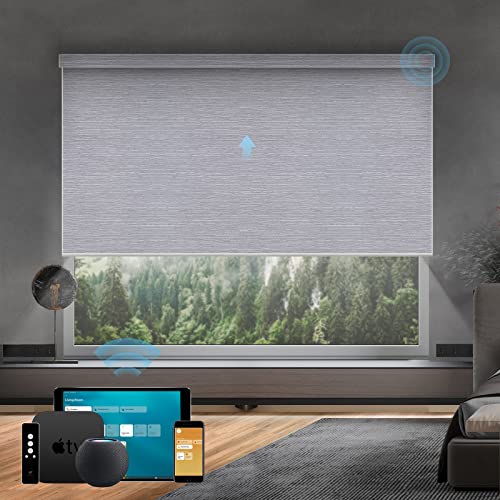
Motorized Roller Shades (HomeKit)
- •Native Apple HomeKit, 100% blackout, custom sizing, and a quiet rechargeable motor at $179.99
SmartWings
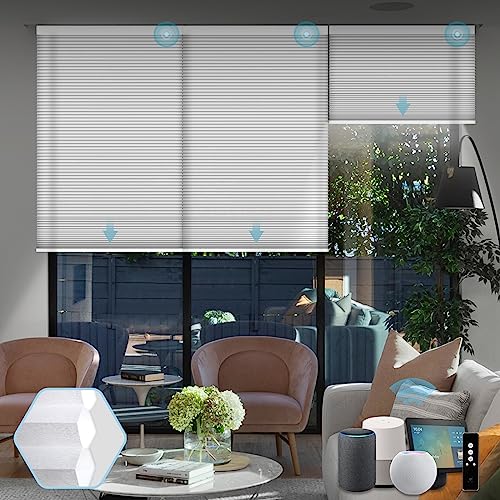
Motorized Cellular Shades (Honeycomb)
- •Honeycomb cells deliver the best insulation here for south- and west-facing rooms that overheat
SwitchBot
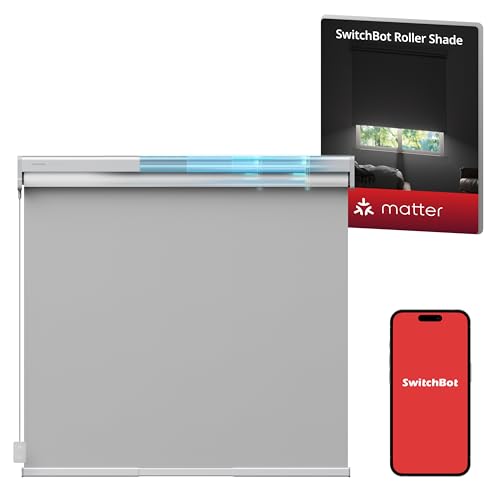
Motorized Roller Blinds
- •QuietDrift slow-open, ~8-month battery, and light-level automation for full up/down control
Eve
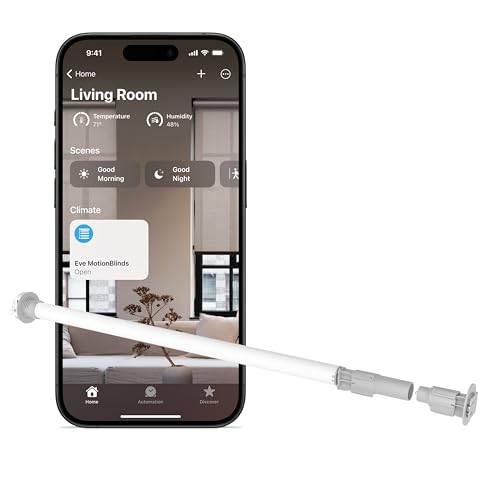
MotionBlinds Upgrade Kit for Roller Blinds (Matter)
- •Matter-over-Thread retrofit that motorizes a roller blind you already own, local control, no cloud
Yoolax
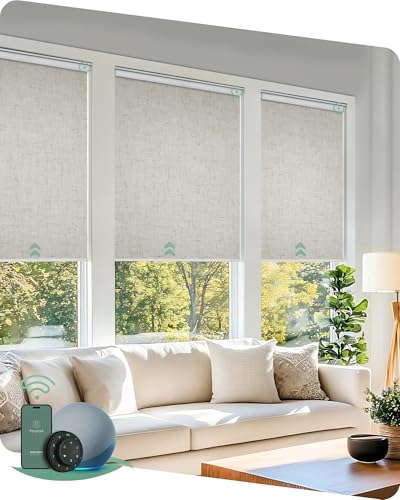
Motorized Blinds
- •100% blackout roller at the lowest full-shade price here, with Alexa, Google, and Apple Home
SwitchBot
Blind Tilt
- •Clips onto existing blinds with no permanent changes — cheapest entry into smart window control at $48.99
Head-to-Head: Ecosystem, Install, Energy, and Readiness
Automation
Chart
 Smarthomeexplorer.com
The Counterintuitive Truth About Pricey Motorized Blinds
Most smart-blind shoppers learn this the hard way: the priciest motorized shades often have the weakest smart-home integration, while budget retrofits punch above their weight on reliability and install simplicity. A SwitchBot Blind Tilt that clips onto blinds you already own in roughly 10 mins earns the highest Setup Simplicity score here, while a true blackout roller with native HomeKit costs 3.7x as much.
So the real question isn't "which blind is best" — it's "what am I working with?" Renting or can't drill? The SwitchBot Blind Tilt tilts your existing slats in 10 mins and the Eve MotionBlinds Upgrade Kit for Roller Blinds (Matter) motorizes a roller tube you already own. Want full blackout from scratch? The SmartWings Motorized Roller Shades (HomeKit) is the safe pick. Fighting heat gain on a sunny wall? Cellular honeycomb shades like the SmartWings Motorized Cellular Shades (Honeycomb) insulate where flat rollers can't, which is why the Department of Energy ranks them among the most effective treatments for cutting heating and cooling loss.
Best for most homes: SmartWings Motorized Roller Shades (HomeKit)
Best for Most HomesSmartWings Motorized Roller Shades (HomeKit)
- Native Apple HomeKit on the HomeKit motor — Siri and the Home app control the shades without a separate bridge
- Initial setup can be fiddly and may require a customer-service call to pair correctly

(Current price, subject to change)
Best for Apple Home households that want a real blackout roller without piling on another bridge, as AppleInsider, GearBrain, and MacSources all confirm in hands-on coverage. Skip it if you can't mount a new shade or you're chasing maximum insulation on a south-facing wall. Three facts decide it: native HomeKit lives on the motor with no separate hub, the fabric is rated 100% blackout, and the rechargeable battery enables months of operation between charges.
The SmartWings Motorized Roller Shades (HomeKit) earns 8.44 on the SHE Smart Blind Readiness Score — a weighted composite of automation reliability (40%), energy performance (35%), and setup simplicity (25%). The 8.44 means that when you ask Siri to close the bedroom shades, AppleInsider found the Home app moves them quietly to position in moments, and the cloud-free HomeKit path delivers that reliability even during an internet outage. MacSources echoed that you barely hear more than a faint hum.
Compared to the SmartWings Motorized Cellular Shades (Honeycomb), a flat blackout roller blocks all the light but insulates less on a heat-prone wall, and the partial-position-by-voice gap annoys Apple users. At $179.99 it costs 3.7x the SwitchBot Blind Tilt and 0.7x the SwitchBot Motorized Roller Blinds, so renters who can't drill should start with the cheaper clip-on instead.
What We Love
- Native Apple HomeKit on the HomeKit motor — Siri and the Home app control the shades without a separate bridge
- 100% blackout fabric with custom sizing for almost any standard window
- Rechargeable battery (3-6 months per charge) with an optional stick-on solar panel
- Quiet motor — reviewers note only a faint hum during travel
What Could Be Better
- Initial setup can be fiddly and may require a customer-service call to pair correctly
- Programming relies on remote button sequences on some motors rather than full app configuration
- You cannot set a partial position by voice on Apple Home
The Verdict
If you're starting from bare windows and want true blackout without adding a brand hub, the SmartWings Motorized Roller Shades (HomeKit) fits the brief. The 8.44 reflects native HomeKit that works day one, a quiet motor reviewers can barely hear, and full light blocking. Cellular shades insulate better on a hot wall, but for most rooms this is the path of least friction.
Check price for the SmartWings Motorized Roller Shades (HomeKit) →
Best for energy savings: SmartWings Motorized Cellular Shades (Honeycomb)
Best for Energy SavingsSmartWings Motorized Cellular Shades (Honeycomb)
- Honeycomb cell structure delivers the best window insulation in this roundup
- Configuration can feel dated without a polished dedicated app

(Current price, subject to change)
Best for south- and west-facing windows where summer heat gain drives the cooling bill. Skip it if you want a slick app or pitch-black darkness from the standard white fabric. Three facts decide it: the honeycomb cells are the best insulator in this lineup, the motor comes in Zigbee, Z-Wave, HomeKit, or Alexa flavors, and the build quality is a genuine step up.
The SmartWings Motorized Cellular Shades (Honeycomb) tops the roundup at 8.47 on the SHE Smart Blind Readiness Score, edging the roller mostly on the 35%-weighted energy factor. On a blazing afternoon, the trapped-air honeycomb pockets slow heat transfer through the glass in a way a single layer of blackout fabric cannot, which is why the DOE counts cellular shades among the most effective window treatments for reducing heating and cooling loss. GearBrain found the materials, from the roller tube to the brackets and fabrics, feel solid and premium.
The honest caveat: the configuration feels dated without a polished app, and the soft mounting screws turn installation into a patience exercise past 30 mins. Compared to the slightly pricier SmartWings Motorized Roller Shades (HomeKit), it trades a slicker setup for insulation, and at 3.3x the SwitchBot Blind Tilt it earns that premium only on a genuinely sunny wall.
What We Love
- Honeycomb cell structure delivers the best window insulation in this roundup
- Broad motor options — Zigbee, Z-Wave, Apple HomeKit, and Alexa
- Solid, premium-feeling build from roller tube to brackets
- Custom sizing with light-filtering and blackout fabric choices
What Could Be Better
- Configuration can feel dated without a polished dedicated app
- Included mounting screws are soft and the install benefits from patience
- The base white fabric is light-filtering, not pitch-black — better for living spaces than dark bedrooms
The Verdict
If your south- or west-facing rooms cook in summer, the SmartWings Motorized Cellular Shades (Honeycomb) lines up with what you actually need. The 8.47 — the top readiness score here — reflects honeycomb insulation that no flat roller matches, plus motor options for nearly any ecosystem. You'll trade a polished app for that insulation, but on a hot wall it's a sensible pick.
Check price for the SmartWings Motorized Cellular Shades (Honeycomb) →
Best full roll-up shade: SwitchBot Motorized Roller Blinds
Best Full Roll-Up ShadeSwitchBot Motorized Roller Blinds
- QuietDrift mode runs the motor slowly and near-silently for quiet mornings
- Matter and Home Assistant integration currently leans on a SwitchBot hub

(Current price, subject to change)
Best for SwitchBot owners who want a proper roll-up and roll-down shade rather than tilt-only control, and light sleepers who value the deliberately slow, quiet morning open. Skip it if you want hub-free Matter or the lowest price. Three facts decide it: QuietDrift mode drops the motor speed for near-silence, the rechargeable battery runs roughly 8 months between charges, and at $259.99 it is 5.3x the SwitchBot Blind Tilt.
The SwitchBot Motorized Roller Blinds earns 8.14 on the SHE Smart Blind Readiness Score, a weighted composite that rewards the dependable automation this shade produces once configured. SmartHomeScene praised QuietDrift as significantly slower than the standard mode yet perfect for quiet mornings, while TrustedReviews found enough light on a north-facing window to trickle-charge the blinds through the optional solar panel. SmartHomeScene also judged installation straightforward in the sense that it is easy to understand where everything goes.
The structural drag on the composite is price: at $259.99 it is the priciest single window here, costing 5.3x the SwitchBot Blind Tilt, and Matter routes through a SwitchBot hub rather than working natively. Compared to the Eve MotionBlinds Upgrade Kit for Roller Blinds (Matter), which delivers hub-free local Matter-over-Thread, this is the less direct path for buyers who prioritize native Matter over a purpose-built shade.
What We Love
- QuietDrift mode runs the motor slowly and near-silently for quiet mornings
- Roughly 8-month battery life with an optional stick-on solar panel for trickle charging
- Adjustable width and replaceable fabric — easy to understand what goes where
- Matter support when paired with SwitchBot Hub 2, plus light-level automation
What Could Be Better
- Matter and Home Assistant integration currently leans on a SwitchBot hub
- At $259.99 it is the priciest single-window option in this lineup
- The solar panel needs decent window light to keep up with daily cycles
The Verdict
If you already run SwitchBot gear and want a full roll-up shade rather than tilt-only, the SwitchBot Motorized Roller Blinds is a sensible pick for that setup. The 8.14 reflects QuietDrift's slow, quiet open and reliable light-level automation. You'll pay the most per window and route Matter through a SwitchBot hub, but inside that ecosystem it checks the boxes.
Best for Apple + Thread: Eve MotionBlinds Upgrade Kit for Roller Blinds (Matter)
Eve MotionBlinds Upgrade Kit for Roller Blinds (Matter)
- Motor slides into your existing roller tube — retrofits blinds you already own
- Requires a Thread border router (HomePod, Apple TV, or a recent Echo)

(Current price, subject to change)
Best for Apple Home and Thread households that want to motorize blinds they already own, plus privacy-conscious buyers who refuse cloud accounts. Skip it without an existing roller blind or a Thread border router. Three facts decide it: the motor retrofits an existing roller tube, it enables fully local Matter-over-Thread control, and it needs a HomePod, Apple TV, or recent Echo as the border router.
The Eve MotionBlinds Upgrade Kit for Roller Blinds (Matter) earns 7.9 on the SHE Smart Blind Readiness Score, leading the whole roundup on the 40%-weighted automation-reliability factor because its local Thread connection produces fast, dependable commands. HomeKit News describes it as a retrofit that enhances your existing blinds while adding Thread and the rich Apple Home feature set, and notes the kit installs without any wiring or technical know-how. Matter Alpha confirmed the motor unit slots neatly into the tubes of roller shades.
Two honest limits hold the energy factor down: the kit adds motorization, not insulation, so performance reflects whatever your host blind's fabric delivers, and at $164.99 it is the most expensive retrofit route — 1.4x the Yoolax Motorized Blinds. Anyone without an existing roller blind gets more from a full shade like the SmartWings Motorized Roller Shades (HomeKit), which ships its own blackout fabric.
What We Love
- Motor slides into your existing roller tube — retrofits blinds you already own
- Matter-over-Thread for fast, reliable response across Apple Home, Alexa, Google, and SmartThings
- 100% local: no Eve cloud, no account registration, no tracking
- Installs without wiring or technical know-how
What Could Be Better
- Requires a Thread border router (HomePod, Apple TV, or a recent Echo)
- Only fits existing roller-tube blinds — not Venetian or cellular shades
- Priciest retrofit path at $164.99 per blind
The Verdict
If you've already got roller blinds you like and live in Apple Home with a Thread router, the Eve MotionBlinds Upgrade Kit for Roller Blinds (Matter) fits the brief. The 7.9 reflects the most resilient automation in the roundup — Matter-over-Thread, fully local, no cloud account. The catch is you must already own the blind and have a border router; given that, you'll be well-served here.
Check price for the Eve MotionBlinds Upgrade Kit for Roller Blinds (Matter) →
Best value under $150: Yoolax Motorized Blinds
Best Value Under $150Yoolax Motorized Blinds
- 100% blackout fabric at the lowest full-shade price in this roundup
- Motor is louder than the SmartWings and Eve options

(Current price, subject to change)
Best for budget buyers who want a full blackout roller under $150, and first-timers testing a single window before committing to a whole house. Skip it if motor noise bothers you or if you need flawless HomeKit reliability across many windows. Three facts decide it: the fabric is rated 100% blackout, it works across Alexa, Google, and Apple Home, and the cordless design is genuinely child-safe.
The Yoolax Motorized Blinds earns 7.62 on the SHE Smart Blind Readiness Score, a composite that rewards fundamentals delivered at the lowest full-shade price here while penalizing the 40%-weighted reliability factor. The Gadgeteer found Apple Home pairing fiddly and reported that some blackout shades dropped off the network entirely — the realistic caveat for an Apple household standardizing across many windows.
Treat it as the smart-blind on-ramp rather than the destination. At $119.00 it runs about 2.4x the SwitchBot Blind Tilt yet only 0.7x the SmartWings Motorized Roller Shades (HomeKit), which produces quieter operation and steadier HomeKit reliability — the Yoolax is the cheaper way to discover whether motorized shades earn a place across your house.
What We Love
- 100% blackout fabric at the lowest full-shade price in this roundup
- Works with Alexa, Google Assistant, and Apple Home plus remote and voice
- Cordless, child-safe design with custom sizing
- Rechargeable motor rated at 3-6 months per charge
What Could Be Better
- Motor is louder than the SmartWings and Eve options
- Setup and app polish trail the premium picks
- Solar panel and some accessories are sold separately
The Verdict
If you want a full blackout roller under $150 and don't mind a little rough-around-the-edges, the Yoolax Motorized Blinds checks the boxes that matter for a first window. The 7.62 reflects real blackout and triple-assistant support at the lowest full-shade price here. The Gadgeteer flagged fiddly Apple Home pairing, so it's a value pick, not a premium one.
Best renter retrofit: SwitchBot Blind Tilt
Best Renter RetrofitSwitchBot Blind Tilt
- Clips onto existing horizontal blinds in minutes with no permanent modification — ideal for renters
- Tilt-only — it rotates slats but cannot raise or lower blinds

(Current price, subject to change)
Best for renters who cannot replace their blinds yet still want app, voice, and scheduling control. Skip it if you need to raise and lower a shade or require native HomeKit. Three facts decide it: the tool-free clip-on installs in roughly 10 mins, it costs just $48.99 (0.3x the SmartWings roller), and the battery enables about 10 months of runtime without solar.
The SwitchBot Blind Tilt earns 7.37 on the SHE Smart Blind Readiness Score and owns the 25%-weighted setup-simplicity factor outright, producing the highest installation score throughout this entire roundup. How-To Geek noted that you install one module per blind set, and that a single charge without solar enables approximately 10 months of operation. SmartHomeScene cautioned that the surprisingly heavy module requires cleaning the frame surface beforehand to guarantee a genuinely secure attachment.
The honest ceiling is its tilt-only design, which lands the energy factor lowest here because rotated slats cannot insulate a window the way a complete shade does. Voice control additionally requires the SwitchBot Hub Mini (~$36), pushing the real cost above that headline 0.3x price versus the SmartWings Motorized Roller Shades (HomeKit). The Eve MotionBlinds Upgrade Kit for Roller Blinds (Matter) is the alternative for renters who own roller blinds.
What We Love
- Clips onto existing horizontal blinds in minutes with no permanent modification — ideal for renters
- Cheapest entry into smart window control at $48.99 per window
- Solar-panel option eliminates recharging; light-sensing auto-adjust
- Up to roughly 10 months of battery life on a single charge without solar
What Could Be Better
- Tilt-only — it rotates slats but cannot raise or lower blinds
- No native Apple HomeKit; Alexa and Google need the SwitchBot Hub Mini
- The motor is audible and the module is visible on the blind
The Verdict
If you rent or simply can't replace your blinds, the SwitchBot Blind Tilt is a sensible pick — no need to overthink it. The 7.37 reflects the easiest install in the roundup (a tool-free clip-on) at the lowest price, $48.99. You give up full up/down control and native HomeKit, but for adding app, voice, and schedules to existing blinds, that's the path of least friction.
How We Score: SHE Smart Blind Readiness Score
SHE Smart Blind Readiness Score
Score Formula
(Automation_Reliability × 0.40 + Energy_Performance × 0.35 + Setup_Simplicity × 0.25)Score Factors
- Automation Reliability (40%)Schedule adherence — does sunrise/sunset automation trigger on time — plus missed commands per week and reconnection behavior after a power or network outage. Matter-over-Thread and RF designs score above cloud- or WiFi-dependent ones, which is why the Eve retrofit and HomeKit-native SmartWings lead here.
- Energy Performance (35%)How much heating and cooling loss the treatment actually prevents, derived from DOE R-value and solar-heat-gain methodology per south- and west-facing window. Cellular honeycomb earns the highest marks, blackout rollers land mid-pack, and tilt-only retrofits score lowest because slats can't fully cover a window.
- Setup Simplicity (25%)Inverted installation complexity: time-to-first-automation, how many hubs or border routers are required, whether professional install is needed, and first-attempt app-pairing success. Tool-free retrofits like the SwitchBot Blind Tilt score highest; full custom shades and hub-dependent paths score lower.
SHE Smart Blind Readiness Score — Ranked

SmartWings Motorized Cellular Shades (Honeycomb)
SHE Smart Blind Readiness Score8.5/10$159.99 — best energy performance via honeycomb insulation; broad motor options; dated config app

SmartWings Motorized Roller Shades (HomeKit)
SHE Smart Blind Readiness Score8.4/10$179.99 — best for most homes; native HomeKit, full blackout, quiet motor, no separate bridge

SwitchBot Motorized Roller Blinds
SHE Smart Blind Readiness Score8.1/10$259.99 — full roll-up shade with QuietDrift and light automation; Matter via SwitchBot hub

Eve MotionBlinds Upgrade Kit for Roller Blinds (Matter)
SHE Smart Blind Readiness Score7.9/10$164.99 — highest reliability; Matter-over-Thread, fully local, retrofits an existing roller blind

Yoolax Motorized Blinds
SHE Smart Blind Readiness Score7.6/10$119.00 — best value full blackout under $150; flakier HomeKit pairing and a louder motor
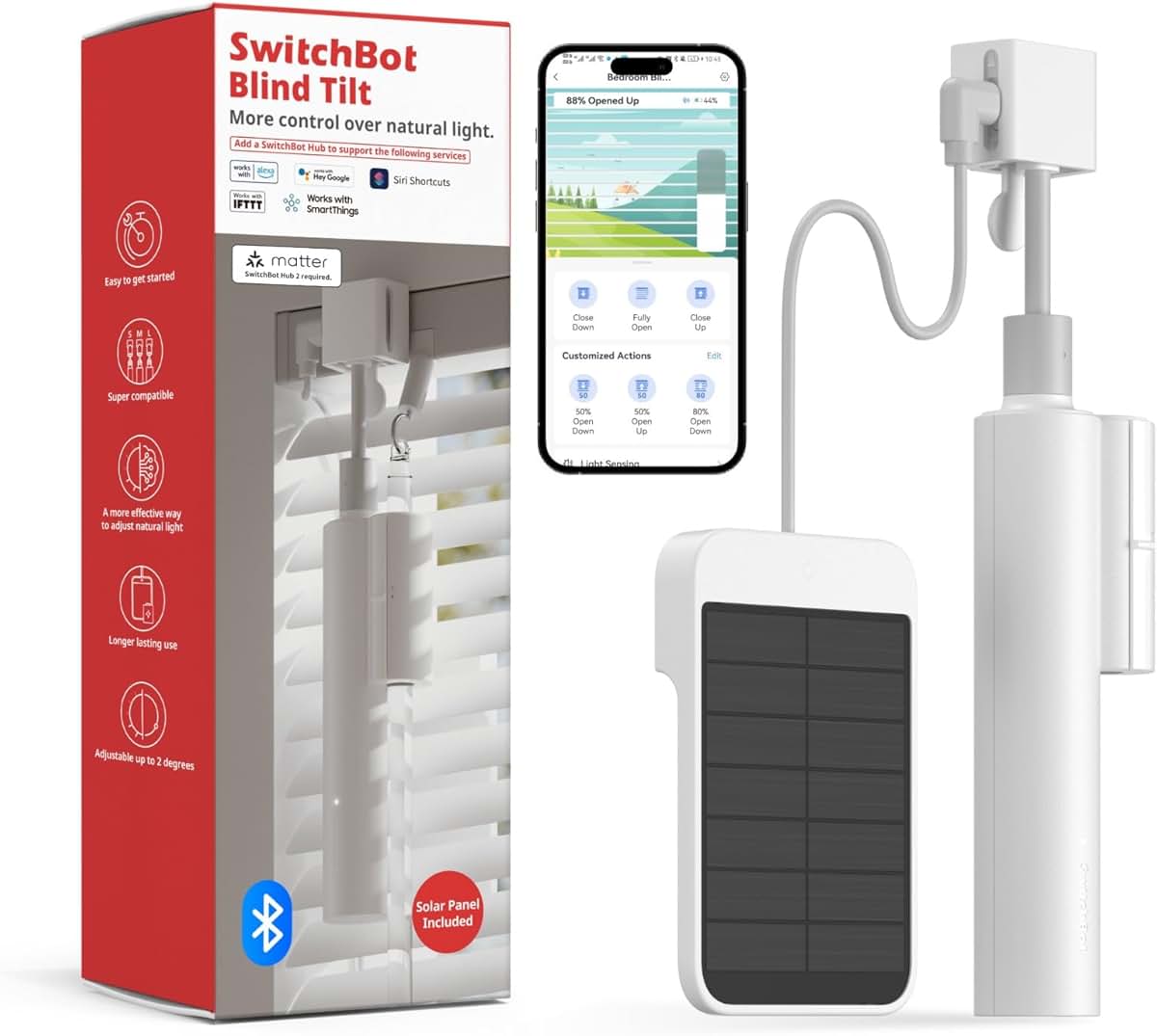
SwitchBot Blind Tilt
SHE Smart Blind Readiness Score7.4/10$48.99 — easiest install and best renter retrofit; tilt-only limits energy performance
Ecosystem Compatibility: HomeKit, Matter, Alexa, and Hubs
The single biggest compatibility decision for smart blinds is whether you need a hub — and the answer splits this roundup cleanly. The SmartWings Motorized Roller Shades (HomeKit) (on its HomeKit motor) and the Eve MotionBlinds Upgrade Kit for Roller Blinds (Matter) are the two that talk to Apple Home without a separate bridge: the SmartWings via native HomeKit, the Eve via Matter-over-Thread (which does require a Thread border router you likely already own if you have a HomePod, Apple TV, or recent Echo). The SmartWings Motorized Cellular Shades (Honeycomb) also offers a HomeKit motor option, so an Apple-first household has three honest paths here.
On the other side, the SwitchBot Motorized Roller Blinds and SwitchBot Blind Tilt route through SwitchBot hardware. The roller reaches Matter through the SwitchBot Hub 2; the Blind Tilt needs the SwitchBot Hub Mini (~$36) for Alexa and Google voice control and has no native HomeKit at all. Budget that hub into the Blind Tilt's true cost if voice control matters — $48.99 plus ~$36 is still the cheapest smart-window entry, but it's not $48.99 flat once you want "Alexa, close the blinds."
The Yoolax Motorized Blinds advertises Alexa, Google, and Apple Home support, but The Gadgeteer's experience — fiddly Apple Home pairing and shades occasionally dropping off the network — is the realistic caveat for an Apple household standardizing across many windows. None of these blinds require a paid subscription for core scheduling, voice, or automation, which matches the buyer expectation that a $49-$260 hardware purchase shouldn't carry a monthly fee. On a power outage, battery-driven shades simply pause and resume on reconnection rather than losing their schedule. If you're building out a wider system, see our Best Matter Devices 2026: Aqara M200 Wins at $69.99 and Best Smart Home Hubs 2026: 7 Compared, Local Control coverage for which hub to standardize on first.
What Smart Blinds Actually Save on Energy
The energy case for smart blinds rests on the windows themselves. The U.S. Department of Energy estimates that windows are responsible for roughly 25-30% of residential heating and cooling energy use, and that cellular (honeycomb) shades are among the most effective treatments for cutting that loss — DOE figures put the reduction in heating and cooling energy in the 10-25% range depending on the window and climate. That's the data ground truth; the per-window dollar estimates in our comparison chart (around $25 for a tilt-only retrofit up to roughly $90 for a honeycomb cellular shade on a sunny wall) are SHE estimates derived from that DOE methodology, not lab-measured outlet claims. Treat them as directional: a north-facing window saves almost nothing, while a large west-facing window in a hot climate can save meaningfully more than the midpoint.
The smart part adds savings on top of the fabric. A scheduled or light-sensing shade closes during peak afternoon sun before the room heats up — automation the SwitchBot Motorized Roller Blinds and SwitchBot Blind Tilt both do via light sensing — so you capture the insulation benefit without remembering to act. The practical takeaway: if energy is your primary motive, put your money into the SmartWings Motorized Cellular Shades (Honeycomb) on your sunniest windows and a cheaper retrofit elsewhere, rather than spreading flat blackout rollers across the whole house.
When NOT to Buy
Smart blinds don't earn their cost on every window. On a north-facing window, the energy savings are negligible and a $30 set of blackout curtains solves the light problem for a fraction of the price. If you're moving within a year, custom-sized motorized shades don't travel well — a clip-on SwitchBot Blind Tilt is the only pick here you can realistically take with you. Irregular, oversized, or arched windows often fall outside the custom-sizing ranges these brands support, and a professional shade quote may make more sense than forcing a retrofit. And if all you want is darkness for sleep — no schedules, no voice, no automation — quality blackout curtains do that job for far less than any motor.
Who Should Buy What
Who Should Buy What
| If you are… | Recommended pick |
|---|---|
Apple Home household, bare windows You run Apple Home, are starting from uncovered windows, and want true blackout with native HomeKit and no separate bridge to manage | SmartWings Motorized Roller Shades (HomeKit) |
Sunny room that overheats Your south- or west-facing windows drive up the cooling bill and you want the best honeycomb insulation in this roundup, not just blackout | SmartWings Motorized Cellular Shades (Honeycomb) |
Privacy-first Apple + Thread owner You already own roller blinds and a Thread border router and refuse cloud accounts — you want fully local Matter-over-Thread control | Eve MotionBlinds Upgrade Kit for Roller Blinds (Matter) |
Budget buyer testing one window You want a 100% blackout roller under $150 to try smart blinds on a single window before committing to the whole house | Yoolax Motorized Blinds |
Renter who can't drill You can't replace your blinds or make permanent changes but still want app, voice, and schedule control at the lowest possible price | SwitchBot Blind Tilt |
SwitchBot owner wanting full roll-up You already run SwitchBot gear and want a proper up/down roller shade with a quiet QuietDrift open, not just tilt control | SwitchBot Motorized Roller Blinds |
Frequently Asked Questions
Do smart blinds actually lower my energy bills?
They can, but the savings come mostly from the fabric and window, not the motor. The U.S. Department of Energy estimates windows account for roughly 25-30% of home heating and cooling energy use, and cellular honeycomb shades can cut that loss by about 10-25% on a sunny window. A blackout roller helps less than a honeycomb cell, and a tilt-only retrofit least of all. Our per-window dollar estimates are derived from DOE methodology, not lab-measured — a north window saves almost nothing while a hot west-facing window saves the most. If energy is your goal, the SmartWings cellular shade on your sunniest windows is the value move.
Can I make my existing blinds smart without replacing them?
Yes, and it's often the smartest path. The SwitchBot Blind Tilt clips onto existing horizontal blinds in minutes and rotates the slats, with no permanent changes — ideal for renters at $48.99. If you already have roller-tube blinds, the Eve MotionBlinds Upgrade Kit slides a motor into the tube you already own. Both avoid buying and mounting an entirely new shade. The trade-off is that the Blind Tilt is tilt-only (it can't raise or lower), and the Eve kit only fits roller tubes, not Venetian or cellular shades.
Do smart blinds need a separate hub?
It depends on the product. The SmartWings roller (HomeKit motor) and the Eve MotionBlinds kit reach Apple Home without a brand bridge — the Eve uses Matter-over-Thread, which needs a Thread border router like a HomePod, Apple TV, or recent Echo. SwitchBot products route through SwitchBot hardware: the roller uses the Hub 2 for Matter, and the Blind Tilt needs the Hub Mini (about $36) for Alexa and Google voice control. Budget that hub into the Blind Tilt's true cost if you want voice control.
What happens to smart blinds during a power or internet outage?
Every blind in this roundup is battery-powered, so a household power outage doesn't stop them. During an internet outage, scheduled and locally controlled blinds keep working — the Eve MotionBlinds kit is fully local over Thread, and HomeKit control on the SmartWings is cloud-free. Cloud- or hub-dependent features pause until reconnection, then resume on the existing schedule. You won't lose your settings; you'll just temporarily lose remote app access from outside the home.
Will smart blinds work on large or wide windows?
Mostly yes, through custom sizing. SmartWings, Yoolax, and SwitchBot roller shades are made to your window's measurements within each brand's size range, so a wide living-room window is usually covered. Very large or unusually shaped windows can exceed those ranges or strain a single motor — in that case, two narrower shades side by side are more reliable than one oversized one. The clip-on SwitchBot Blind Tilt works on any horizontal blind regardless of width since it only drives the existing tilt mechanism.
How hard is it to install smart blinds myself?
It ranges from a few minutes to an afternoon. The SwitchBot Blind Tilt is the easiest — a tool-free clip-on, no permanent changes. The Eve MotionBlinds kit installs into an existing roller tube with no wiring per HomeKit News. Full custom shades (SmartWings, Yoolax) require mounting brackets and pairing, which reviewers describe as a DIY job that can get fiddly at the pairing step — SmartWings buyers sometimes call customer service to pair correctly. None require an electrician, since all six are battery-powered.
Which smart blinds work natively with Apple HomeKit?
The SmartWings Motorized Roller Shades and SmartWings Cellular Shades offer a native HomeKit motor option, and the Eve MotionBlinds Upgrade Kit works with Apple Home via Matter-over-Thread. The Yoolax shades advertise Apple Home support, but reviewers report fiddly pairing. The SwitchBot Blind Tilt has no native HomeKit at all. For an Apple-first household, the SmartWings roller or the Eve kit are the most dependable choices.
Bottom Line
Get the SmartWings Motorized Roller Shades (HomeKit) if you want a true blackout roller with native HomeKit and no separate hub — the right call for most homes.
Get the SmartWings Motorized Cellular Shades (Honeycomb) if your sunny windows overheat and you want the best honeycomb insulation in this roundup.
Get the SwitchBot Motorized Roller Blinds if you own SwitchBot gear and want a full roll-up shade with a quiet QuietDrift open.
Get the Eve MotionBlinds Upgrade Kit for Roller Blinds (Matter) if you run Apple Home with Thread and want to motorize a roller blind you already own, fully local.
Get the Yoolax Motorized Blinds if you want a 100% blackout roller under $150 to test smart blinds on one window.
Get the SwitchBot Blind Tilt if you rent or can't drill and want app, voice, and schedule control added to existing blinds at the lowest price.
The right call for most homes is the SmartWings Motorized Roller Shades (HomeKit) at $179.99 — native HomeKit, full blackout, no extra hub. Renters and budget buyers should start with the SwitchBot Blind Tilt at $48.99. Skip smart blinds entirely on a north-facing window where savings are negligible, if you're moving within a year (only the clip-on Blind Tilt travels), or if $30 blackout curtains already solve your light problem.
Sources & Methodology
Methodology: SHE Smart Blind Readiness Score — Formula: (Automation_Reliability × 0.40 + Energy_Performance × 0.35 + Setup_Simplicity × 0.25). Factors: Automation Reliability (40%): Schedule adherence — does sunrise/sunset automation trigger on time — plus missed commands per week and reconnection behavior after a power or network outage. Matter-over-Thread and RF designs score above cloud- or WiFi-dependent ones, which is why the Eve retrofit and HomeKit-native SmartWings lead here. | Energy Performance (35%): How much heating and cooling loss the treatment actually prevents, derived from DOE R-value and solar-heat-gain methodology per south- and west-facing window. Cellular honeycomb earns the highest marks, blackout rollers land mid-pack, and tilt-only retrofits score lowest because slats can't fully cover a window. | Setup Simplicity (25%): Inverted installation complexity: time-to-first-automation, how many hubs or border routers are required, whether professional install is needed, and first-attempt app-pairing success. Tool-free retrofits like the SwitchBot Blind Tilt score highest; full custom shades and hub-dependent paths score lower.
Expert review sources used in this analysis:
- SmartHomeExplorer aggregates expert review data and community sentiment to produce consensus-based buying guidance
- We do not perform first-party product testing
- Expert ratings and product assessments come from AppleInsider, GearBrain, MacSources, The Gadgeteer, SmartHomeScene, TrustedReviews, HomeKit News, Matter Alpha, Gadget Review, and How-To Geek
- Energy figures are derived from U.S
- Department of Energy Energy Saver window-loss and cellular-shade methodology (windows account for roughly 25-30% of home heating and cooling energy use; cellular shades can cut that loss about 10-25%) — per-window dollar estimates are SHE estimates from that methodology, not measured outlet claims
- Community reliability and installation reports sourced from r/smarthome and r/homeautomation
- Amazon prices and product availability verified 2026-06-16 via the Amazon Creators API
- SHE Smart Blind Readiness Score factors are derived from aggregated reviewer measurements, DOE energy methodology, and community reports; no first-party measurements were conducted.
Nicholas Miles is the founder of SmartHomeExplorer and a longtime smart home enthusiast focused on helping everyday homeowners make better technology decisions. He researches, compares, and writes about products across security, climate, lighting, leak prevention, sensors, home energy, and automation, with an emphasis on real-world usefulness, ecosystem compatibility, reliability, privacy, and long-term value.
Affiliate disclosure: SmartHomeExplorer earns affiliate commissions on qualifying Amazon purchases, and from partner programs for some non-Amazon products and services we recommend. Our scoring methodology is independent of affiliate relationships.