
The Amazon Smart Thermostat pays for itself in 3.5 months after a typical utility rebate — the fastest payback of any thermostat in our best smart.
We aggregated energy savings data from ENERGY STAR, the Department of Energy, and manufacturer claims across all five thermostats in our best smart thermostat 2026 guide to build product-specific payback calculations. Sources include Wirecutter, CNET, TechRadar, Tom's Guide, and PCMag testing data, plus utility rebate databases from DSIRE and ENERGY STAR's rebate finder. If you already have smart lighting with Alexa scenes and schedules running, a thermostat is the next upgrade that actually pays for itself — not just adds convenience.
SHE Payback Period Score
Every "smart thermostats save money" article gives you a range and calls it a day. We wanted something more useful: a per-product payback period you can actually compare.
The SHE Payback Period Score uses a simple formula:
Payback Period (months) = (Purchase Price - Utility Rebate) / (Estimated Annual Savings / 12)
Here is how we derived the inputs:
Savings Estimates
- ENERGY STAR estimates $50-$145/year savings for certified smart thermostats, depending on climate zone, home size, and baseline thermostat type
- Ecobee Smart Thermostat Premium — Ecobee claims 26% savings on heating and cooling bills, translating to about $69/year on average US HVAC spend, though homes with higher bills see proportionally higher savings
- Nest Learning Thermostat — Google claims 10-12% on heating and 15% on cooling, with independent Nest data covering millions of homes putting this at $131-$145/year for average users
- Amazon Smart Thermostat — ENERGY STAR certified with Honeywell Home internals, estimated at $100/year using mid-range DOE scheduling savings
- Department of Energy estimates 10% savings from proper thermostat scheduling alone — smart features like geofencing and occupancy sensing add 5-15% on top
We used mid-range estimates for each product based on its feature set: room sensors, learning algorithms, and geofencing all contribute differently to savings. Products with room sensors (like the Ecobee Smart Thermostat Premium and Honeywell Home T9) score higher savings because they avoid heating empty rooms.
Rebate Assumptions
- Most US utilities offer $50-$150 back on ENERGY STAR certified smart thermostats
- We used $100 as the "typical rebate" for the Ecobee Smart Thermostat Premium, Nest Learning Thermostat, and Honeywell Home T9; $75 for the Ecobee3 Lite; and $50 for the Amazon Smart Thermostat
- All five picks in our guide are ENERGY STAR certified and rebate-eligible
- Check your local utility at dsireusa.org for exact amounts in your area
Worked Example: Ecobee Smart Thermostat Premium
- Purchase price: $249
- Estimated annual savings: $145/year (based on ENERGY STAR upper range with room sensors)
- Without rebate: $249 / ($145/12) = $249 / $12.08 = 20.6 months
- Typical utility rebate: $100
- With rebate: ($249 - $100) / ($145/12) = $149 / $12.08 = 12.3 months
That is the number that matters. Not a vague "saves you money" — an actual break-even date you can put on your calendar.
SHE Payback Period Results: All Five Thermostats
| Thermostat | Price | Est. Annual Savings | Payback (No Rebate) | Typical Rebate | Payback (With Rebate) |
|---|---|---|---|---|---|
| Amazon Smart Thermostat | $79 | $100/yr | 9.5 months | $50 | 3.5 months |
| Ecobee3 Lite | $169 | $120/yr | 16.9 months | $75 | 9.4 months |
| Honeywell Home T9 | $199 | $130/yr | 18.4 months | $100 | 9.1 months |
| Ecobee Smart Thermostat Premium | $249 | $145/yr | 20.6 months | $100 | 12.3 months |
| Nest Learning Thermostat | $249 | $138/yr | 21.7 months | $100 | 12.9 months |
The takeaway: every smart thermostat in our buying guide pays for itself within two years without rebates and within 13 months with them. The Amazon Smart Thermostat is the payback speed champion at 3.5 months with a rebate. The premium models take longer to recoup but deliver higher absolute savings over time.
Smart Thermostat Savings
Chart
 Smarthomeexplorer.com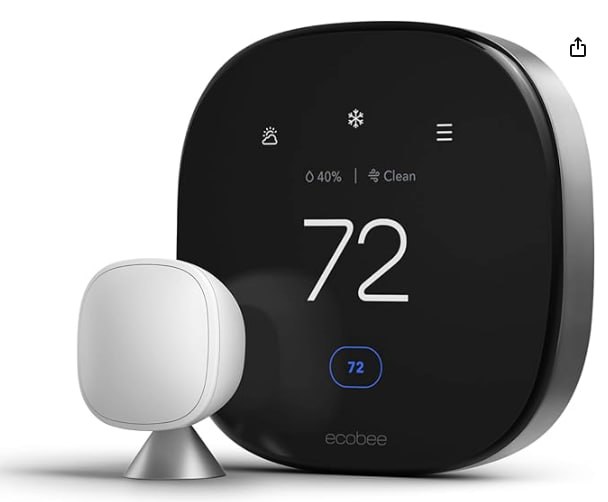
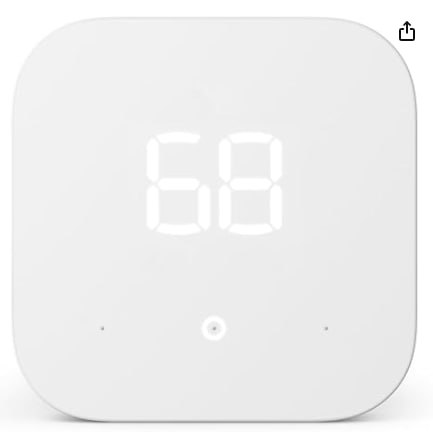
Fastest Payback: Amazon Smart Thermostat
Amazon Smart Thermostat
(Current Price, subject to change)
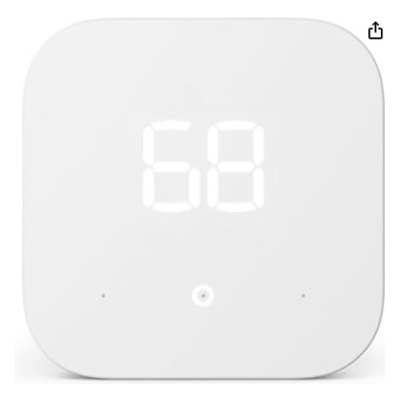
The Amazon Smart Thermostat is the undisputed payback champion. At $79, it costs less than many "dumb" Honeywell models — and it is built on Honeywell Home technology. TechRadar gave it 4/5 stars and called it a genuine over-deliverer for the price. With ENERGY STAR certification, it qualifies for utility rebates in most states, dropping the effective cost to as low as $29.
The savings math is simple: ENERGY STAR estimates $50-$145/year for certified smart thermostats. Using our conservative mid-range estimate of $100/year for a basic smart thermostat without room sensors, the Amazon Smart Thermostat hits payback in 9.5 months without a rebate and 3.5 months with a typical $50 rebate. Pair it with smart plugs with energy monitoring to automate space heaters and fans, and the total system savings climb higher.
What We Love
- Fastest payback period — 3.5 months with rebate, under 10 months without
- Lowest upfront risk — $79 means even without savings, it is a minor investment
- ENERGY STAR certified — Qualifies for utility rebates in most US states
- Hunches feature — Suggests energy-saving adjustments based on your habits
- Built on Honeywell tech — The internals are more capable than the price suggests
What Could Be Better
- No room sensors means savings estimates are lower than sensor-equipped models
- Alexa only — no Google Home or Apple HomeKit support
- No learning algorithm — you program schedules manually
- Basic design will not win any aesthetic awards
The Verdict
If payback speed is your priority, the Amazon Smart Thermostat is the obvious choice. You recoup the full purchase price in under four months with a rebate. For budget-conscious buyers who want smart thermostat savings without the premium price, this is the single best value in our thermostat buying guide. Add an Echo speaker for voice control and you have 80% of the premium experience at a third of the cost.
"The Amazon Smart Thermostat is built on Honeywell Home's proven platform, qualifies for ENERGY STAR rebates in most states, and costs less than a restaurant dinner." — TechRadar
How much does the Amazon Smart Thermostat actually save per year?
The Amazon Smart Thermostat saves an estimated $100/year based on ENERGY STAR mid-range data for basic smart thermostats without room sensors. Actual savings depend on your climate zone, home insulation, and current thermostat habits. Homes replacing a manual thermostat set to one temperature 24/7 will see the high end ($130-$145/year). Homes already using a programmable thermostat properly will see the low end ($50-$70/year).
Does the Amazon Smart Thermostat qualify for a utility rebate?
Yes. The Amazon Smart Thermostat is ENERGY STAR certified and qualifies for utility rebates in most US states. Typical rebates range from $50 to $100, which can reduce the effective cost to under $30. Check dsireusa.org or your local utility website for exact rebate amounts in your area. Some utilities even offer instant rebates at checkout through marketplace programs.
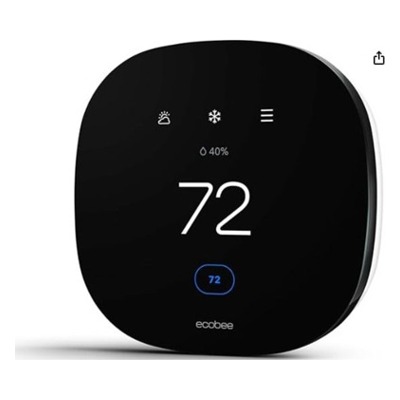
Highest 5-Year Return: Ecobee Smart Thermostat Premium
Ecobee Smart Thermostat Premium
(Current Price, subject to change)
The Ecobee Smart Thermostat Premium takes longer to pay for itself — 12.3 months with a rebate versus 3.5 for the Amazon — but it delivers the highest total savings over five years. Wirecutter has recommended the Ecobee line since 2017, and the included SmartSensor is the key to its savings advantage: it measures temperature where you actually are instead of at a thermostat stuck in a hallway.
Over five years, the math shifts dramatically in the Ecobee's favor. At $145/year in savings, you net $576 after subtracting the rebate-adjusted cost ($725 savings - $149 net cost). The Amazon Smart Thermostat nets $471 over the same period ($500 savings - $29 net cost). The Ecobee wins on absolute return despite the higher upfront investment. For homeowners who plan to stay put, this is the better long-term bet — especially paired with smart blinds for passive solar management.
What We Love
- Highest annual savings — $145/year estimated with included room sensor
- Best 5-year net return — $576 net savings beats every competitor
- Room sensors included — Avoids heating empty rooms, the biggest source of waste
- Built-in Alexa — No separate Echo speaker or smart display needed
- Works with everything — HomeKit, Google Home, Alexa, SmartThings
What Could Be Better
- Slowest payback at 12.3 months (with rebate) due to $249 price
- App can feel overwhelming at first with extensive energy reporting settings
- Additional SmartSensors cost $40 each for larger homes
The Verdict
The Ecobee Smart Thermostat Premium is the best long-term energy savings investment if you own your home and plan to stay for 3+ years. The included room sensor is what separates its savings from cheaper models — preventing your HVAC from heating an empty living room while you sleep is where the real money is. It earned the top spot in our best smart thermostat guide for good reason. Pair it with an air quality monitor for a complete climate picture.
"The Ecobee Smart Thermostat Premium is our top pick because it's the most versatile smart thermostat you can buy — it supports heat pumps with auxiliary stages that most competitors ignore." — Wirecutter
Is the Ecobee Smart Thermostat Premium worth the extra cost over budget models?
Yes, if you plan to own your home for 3+ years. The Ecobee Smart Thermostat Premium costs $170 more than the Amazon Smart Thermostat but saves about $45 more per year thanks to room sensors. After 4 years, the Ecobee has generated more total savings. The included SmartSensor, built-in Alexa, and air quality monitoring add value beyond pure energy savings that the budget option cannot match.
How much does the Ecobee save with room sensors versus without?
Room sensors are the Ecobee's savings superpower. Without sensors, the Ecobee Smart Thermostat Premium saves about $110-$120/year — comparable to other premium models. With the included SmartSensor, savings jump to $140-$145/year because the system stops conditioning unoccupied rooms. Each additional SmartSensor ($40) added to bedrooms or living areas can add $10-$20/year in further savings by refining occupancy detection across more zones.
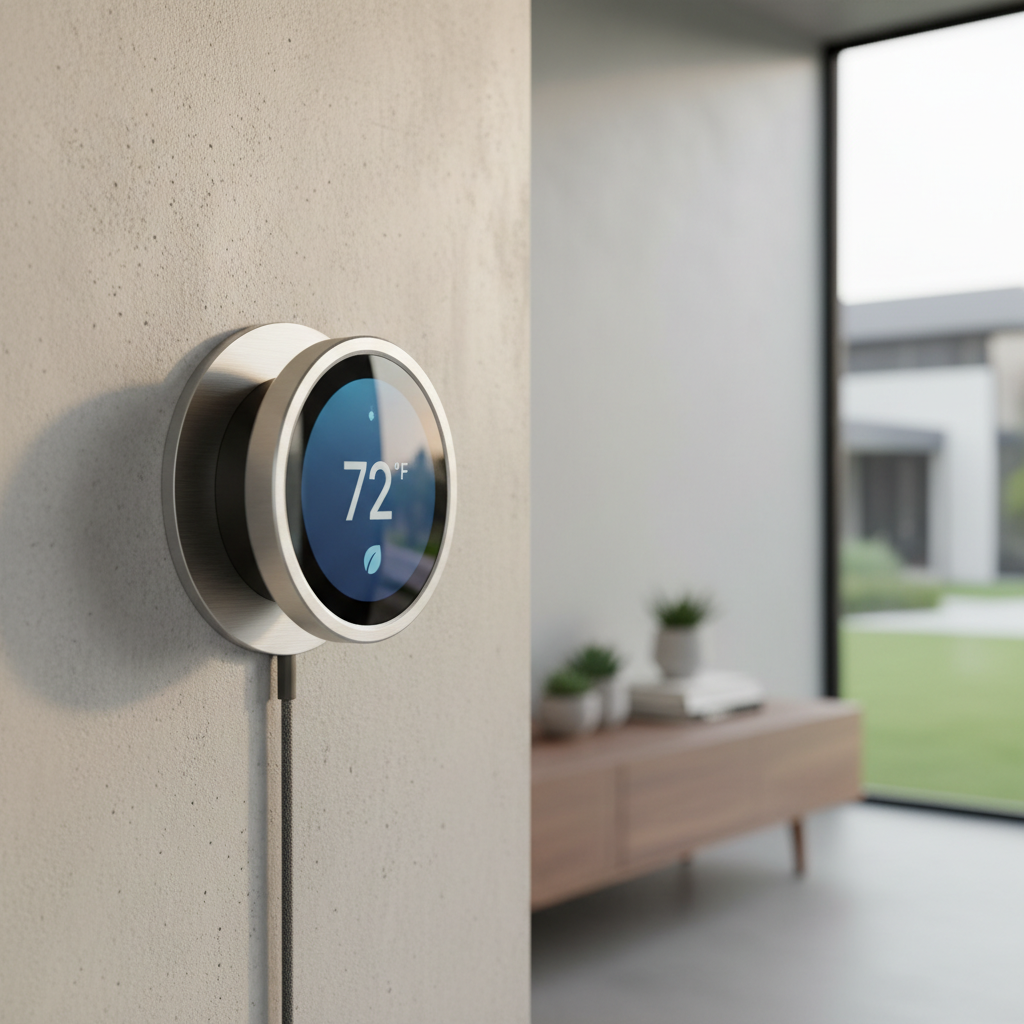
Best Payback for Google Homes: Nest Learning Thermostat
Nest Learning Thermostat
(Current Price, subject to change)
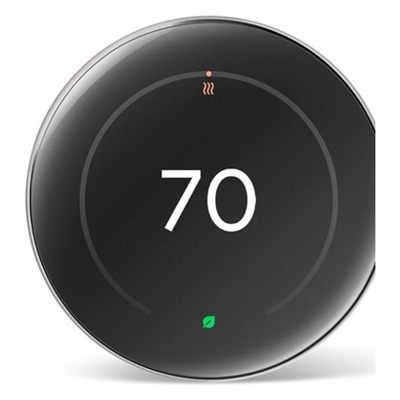
The Nest Learning Thermostat has the longest payback period of any model in our guide at 12.9 months with a rebate — but that number comes with context. CNET gave it an 8.6/10 and Google's own data from millions of Nest homes shows 10-12% heating savings and 15% cooling savings. The learning algorithm gets smarter over time, meaning savings in year two should exceed year one.
The Nest's energy savings advantage is hands-off convenience. Where the Amazon Smart Thermostat requires you to program schedules manually, the Nest builds them automatically. For households that would never bother programming a thermostat — and that is most households, according to ENERGY STAR data — the Nest's learning approach captures savings that a cheaper manual-schedule thermostat never would. It is also the natural fit for anyone already using Google Home smart speakers and Nest Hub displays and Nest cameras.
What We Love
- Learning algorithm — Builds your schedule automatically, captures savings you would miss with manual programming
- Proven savings data — Google's Nest Energy Report covers millions of real homes
- Home/Away Assist — Uses phone location to stop conditioning an empty house
- Google Home integration — Automatic routines for "Good morning" and "Bedtime" scenes
- Design premium — The rotating dial is genuinely satisfying to use
What Could Be Better
- Longest payback period at 12.9 months with rebate
- No room sensors included (sold separately at $40 each)
- No HomeKit support — deal-breaker for Apple households
- Optional Nest Aware subscription ($6/month) adds to long-term cost
The Verdict
The Nest Learning Thermostat is the right payback bet for Google-centric homes where no one will bother programming a schedule manually. The learning algorithm does the work for you, and savings compound as it gets smarter. It takes the longest to break even, but for the "set it and forget it" household, the Nest captures savings that cheaper manual-schedule models leave on the table. Check our full thermostat comparison for the head-to-head breakdown.
"Google claims the Nest Learning Thermostat saves an average of 10-12% on heating and 15% on cooling — and independent data from Nest's own 2023 Energy Report puts real numbers behind those figures." — CNET
Does the Nest Learning Thermostat save more than the Amazon Smart Thermostat?
Yes — the Nest Learning Thermostat saves an estimated $138/year versus $100/year for the Amazon Smart Thermostat. The difference comes from the learning algorithm and Home/Away Assist, which automate savings that require manual programming on the Amazon model. Over five years, the Nest saves about $190 more in total energy costs, but the Amazon model still delivers better net ROI because of its dramatically lower purchase price.
How long does it take for the Nest to start saving money?
The Nest Learning Thermostat begins saving from day one through its geofencing feature (Home/Away Assist), which detects when you leave and adjusts the temperature automatically. The learning algorithm takes about 1-2 weeks to build a reliable schedule based on your habits. Savings increase over the first 2-3 months as the algorithm refines its predictions, then stabilize. Most users see full payback within 13 months when factoring in a $100 utility rebate.
Best Renter Payback: Ecobee3 Lite
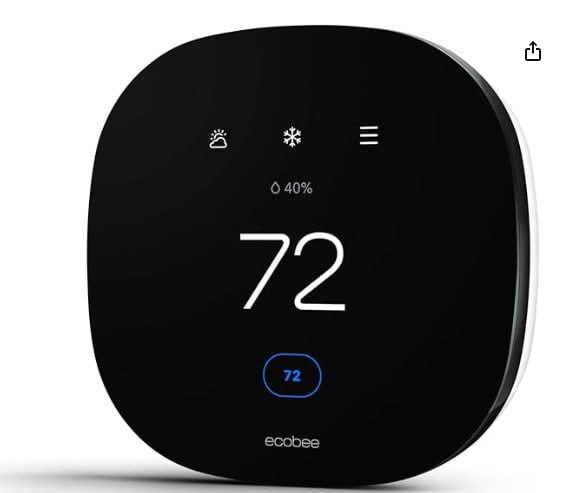
Ecobee3 Lite
(Current Price, subject to change)
The Ecobee3 Lite hits a sweet spot for renters calculating payback: $169 upfront with a 9.4-month payback after a $75 rebate, and you can take it with you when you move. TechRadar called it "the best budget Ecobee for most people." The included Power Extender Kit means no C-wire headaches in older apartments — the number-one installation barrier for renters.
The portability factor changes the payback math entirely. A thermostat you take to your next apartment keeps saving across multiple leases. Over a typical 5-year span covering two apartments, the Ecobee3 Lite nets about $506 in savings ($600 total - $94 net cost). That compares favorably to the Ecobee Smart Thermostat Premium because the Lite's lower price means less capital at risk if a landlord says no. Pair it with a renter-friendly smart lock that leaves no trace on the door for a landlord-friendly setup that travels with you.
What We Love
- Portable savings — Take it with you when you move, payback carries across leases
- No C-wire needed — Power Extender Kit handles older apartment wiring
- Strong payback at 9.4 months — Middle of the pack despite mid-range price
- Full Ecobee app — Same energy reports and scheduling as the Premium
- Works with everything — HomeKit, Google Home, Alexa, SmartThings
What Could Be Better
- No room sensor included — add one for $40 to boost savings by $15-$20/year
- No built-in Alexa speaker (unlike the Premium)
- No air quality monitoring
- Savings estimates are lower without sensors compared to the Premium
The Verdict
The Ecobee3 Lite is the best payback choice for renters and apartment dwellers. The no-C-wire installation means you can set it up today and take it with you tomorrow, carrying your energy savings across multiple addresses. It is the smart money pick in our thermostat guide for anyone who does not own their home yet. Add a SmartSensor ($40) and you close most of the savings gap with the Premium model.
"A great job of keeping a dwelling comfortable, especially when paired with the optional but highly recommended SmartSensors." — Wirecutter
Is the Ecobee3 Lite a good investment for renters?
Yes — the Ecobee3 Lite is the best thermostat investment for renters because it combines fast payback (9.4 months with rebate) with portability. The included Power Extender Kit means you do not need a C-wire, and reinstalling your old thermostat when you move takes 15 minutes. Over two apartment leases totaling 5 years, you net over $500 in energy savings from a $169 investment — or $94 after rebate.
How does Ecobee3 Lite savings compare to the Ecobee Premium?
The Ecobee3 Lite saves an estimated $120/year versus $145/year for the Ecobee Smart Thermostat Premium. The $25/year gap comes almost entirely from the Premium's included SmartSensor. Add a SmartSensor to the Lite ($40 one-time cost) and savings climb to about $135-$140/year — nearly matching the Premium at a total cost of $209 versus $249. For pure energy ROI, the Lite-plus-sensor combo is the most capital-efficient option.
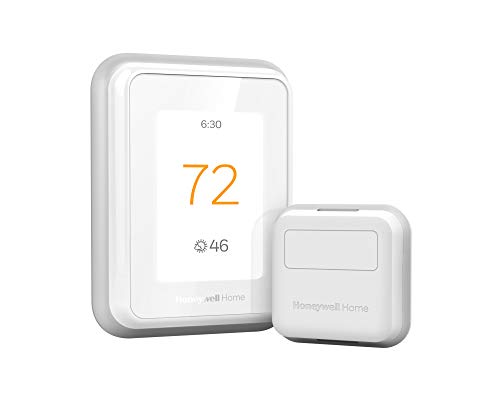
Best Multi-Room Savings: Honeywell Home T9
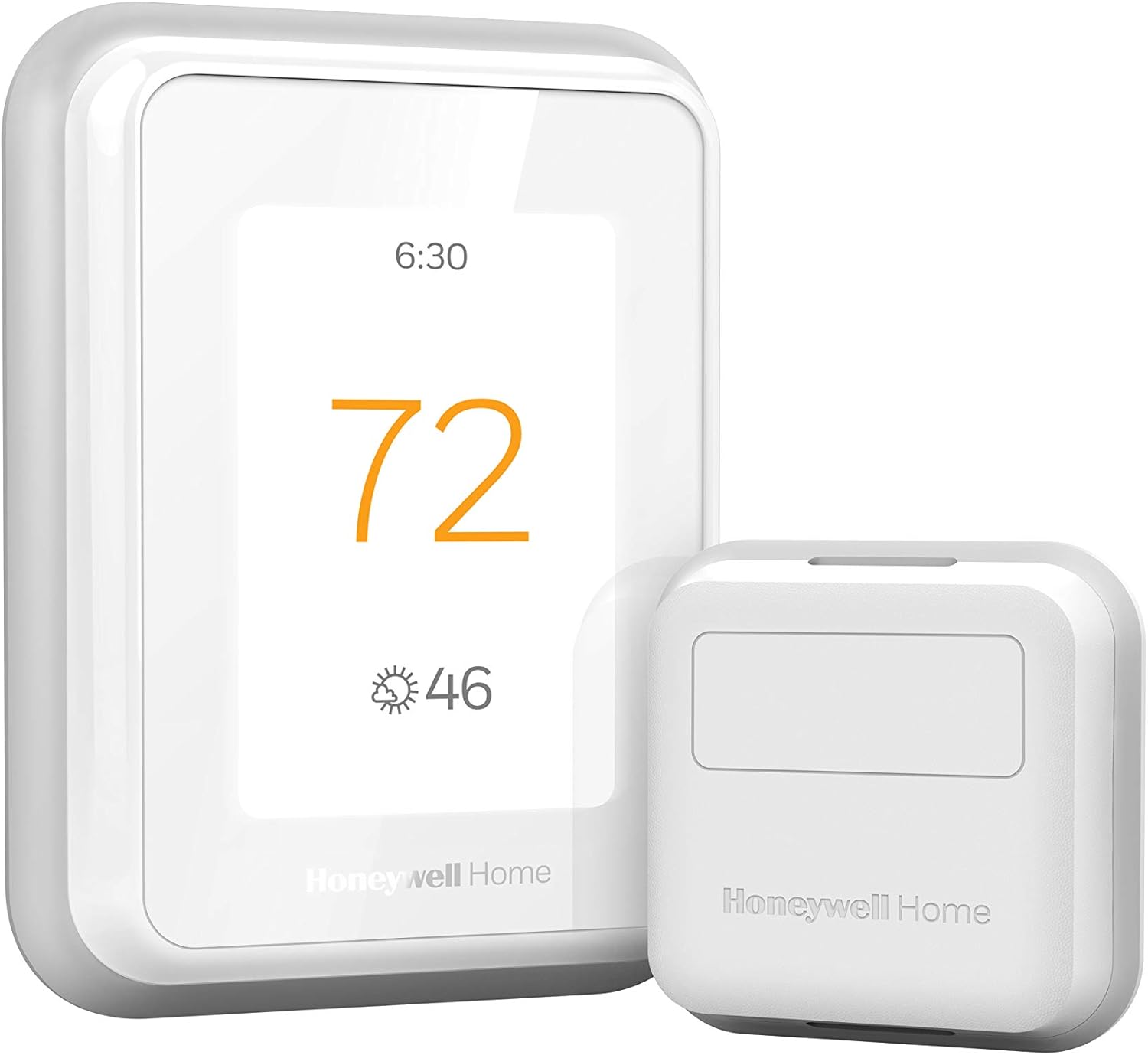
Honeywell Home T9
(Current Price, subject to change)
The Honeywell Home T9 offers the best payback in the mid-range at 9.1 months with a rebate — faster than both $249 models. PCMag gave it an Editors' Choice award specifically for its room sensor implementation. The included Smart Room Sensor detects both temperature and occupancy, automatically prioritizing the room you are actually in.
For larger homes with hot and cold spots, the T9's multi-room focus translates directly to savings. Instead of over-conditioning the whole house to fix a hot bedroom, the Honeywell Home T9 concentrates comfort where people are. At $130/year in estimated savings with the included sensor, the T9 hits break-even in just over 9 months. Add more sensors ($40 each) and savings scale further. Combined with smart ceiling fans for air circulation, you can cut HVAC runtime significantly in multi-story homes.
What We Love
- Fastest mid-range payback — 9.1 months with rebate beats both $249 models
- Occupancy-sensing room sensors — Prioritizes comfort where people actually are
- Scalable savings — Add sensors to more rooms for incremental savings
- Geofencing — Automatic Home/Away transitions via phone location
- Honeywell reliability — 100+ years of thermostat engineering behind it
What Could Be Better
- No HomeKit support — Apple users need the Ecobee models
- App interface feels dated compared to Ecobee and Nest
- Sensors require AAA batteries (not rechargeable)
- Sensor batteries need replacement every 18-24 months (minor ongoing cost)
The Verdict
The Honeywell Home T9 delivers the best payback ratio in the mid-range: $199 cost, 9.1 months to break even with a rebate, and room sensors that scale your savings as you add them. For multi-room homes where hot and cold spots waste the most energy, the T9 is the smartest investment. See the full comparison in our thermostat buying guide. Pair it with a smart home hub that runs Alexa, Google, and Zigbee in one app for automated climate routines based on occupancy.
"Easy to install and manage using a built-in touch-screen display, a mobile app, or your voice. Works flawlessly with dual-band Wi-Fi connectivity." — PCMag
How much does the Honeywell Home T9 save with multiple room sensors?
The Honeywell Home T9 saves about $130/year with the included sensor. Each additional Smart Room Sensor ($40 each) adds roughly $10-$20/year in savings by improving occupancy detection accuracy across more zones. A 3-bedroom home with sensors in the bedroom, living room, and kitchen typically sees $150-$170/year total savings — putting the payback for the full sensor setup at about 14 months.
Is the Honeywell Home T9 a better value than the Ecobee Premium?
For pure payback speed, yes. The Honeywell Home T9 costs $50 less than the Ecobee Smart Thermostat Premium and reaches payback 3 months faster (9.1 vs 12.3 months). However, the Ecobee saves $15 more per year and supports Apple HomeKit, which the T9 does not. Over 5 years, the Ecobee generates slightly higher net savings ($576 vs $551). Choose the T9 for faster payback and multi-room focus. Choose the Ecobee for higher long-term return and broader ecosystem support.
Who Should Buy What
- Fastest payback on any budget: Amazon Smart Thermostat ($79) — pays for itself in 3.5 months with rebate, under $30 net cost. Best for Alexa households who want immediate ROI.
- Best long-term energy savings: Ecobee Smart Thermostat Premium ($249) — highest annual savings at $145/year with room sensors, $576 net return over 5 years. Best for homeowners staying 3+ years.
- Best payback for renters: Ecobee3 Lite ($169) — portable, no C-wire needed, 9.4-month payback. Take it with you and keep saving at your next address.
- Best payback for large homes: Honeywell Home T9 ($199) — fastest mid-range payback at 9.1 months, scalable room sensors for multi-floor savings.
- Best "set it and forget it" savings: Nest Learning Thermostat ($249) — learning algorithm captures savings you would never program manually. Best for Google Home households.
When a Smart Thermostat Might NOT Be Worth It
Skip it if you already use a programmable thermostat and actually follow the schedule. The headline savings claims (10-23%) assume you are replacing a manual thermostat set to one temperature 24/7. If you already program your thermostat and adjust for away time, the incremental savings from "smart" features drop to 5-8% — potentially stretching payback to 3+ years on premium models.
Skip it if you rent and your landlord controls the thermostat. Some apartments have centrally controlled heating where you have no thermostat at all, or where the landlord forbids replacement. A smart thermostat you cannot install is a $79-$249 paperweight. Confirm you have a standard thermostat and permission to replace it before buying.
Skip it if you have baseboard electric heat. None of the five thermostats in this guide work with line-voltage baseboard systems (240V). You would need a specialized baseboard smart thermostat like the Mysa or Stelpro, and the energy savings math is very different for electric resistance heating.
Skip it if your HVAC system is failing. A smart thermostat optimizes a healthy system. If your furnace or AC is 15+ years old and due for replacement, the payback calculation becomes unreliable — you would be optimizing equipment you will be replacing anyway. Fix the HVAC first, then add the smart thermostat.
Frequently Asked Questions
How much money does a smart thermostat save per year?
ENERGY STAR estimates certified smart thermostats save $50-$145/year depending on climate zone, home size, insulation quality, and your current thermostat habits. The biggest factor is your baseline: replacing a manual thermostat set to one temperature 24/7 yields $130-$145/year in savings. Replacing a programmable thermostat you already use properly yields $50-$70/year. Our thermostat buying guide breaks down savings by product, with the Ecobee Smart Thermostat Premium delivering the highest annual savings at $145/year thanks to included room sensors.
What is the fastest payback smart thermostat?
The Amazon Smart Thermostat at $79 has the fastest payback of any model we reviewed: 9.5 months without a rebate and 3.5 months with a typical $50 utility rebate. Its low price means minimal upfront risk, and ENERGY STAR certification qualifies it for rebates in most US states. The tradeoff is no room sensors and Alexa-only ecosystem support — but for pure payback speed, nothing else comes close.
Do smart thermostat utility rebates still exist in 2026?
Yes. Most US utilities still offer $50-$150 rebates on ENERGY STAR certified smart thermostats as of 2026. The Inflation Reduction Act extended many energy efficiency incentive programs through 2032. All five thermostats in our guide are ENERGY STAR certified and rebate-eligible. Check dsireusa.org or your local utility website for exact rebate amounts in your area. Some utilities offer instant discounts at checkout through marketplace programs, while others require a mail-in claim.
Which smart thermostat saves the most money over 5 years?
The Ecobee Smart Thermostat Premium generates the highest 5-year net savings at $576 after subtracting the rebate-adjusted purchase price. The Honeywell Home T9 is a close second at $551. The Amazon Smart Thermostat nets $471 — less in absolute terms, but with far less upfront investment. The right choice depends on whether you prioritize total return (Ecobee) or capital efficiency (Amazon).
Are smart thermostat energy savings claims real or exaggerated?
The savings are real but context-dependent. ENERGY STAR's $50-$145/year range is based on government testing standards, not manufacturer marketing. Independent verification from the Department of Energy, Nest's Energy Report (covering millions of homes), and utility company data all confirm meaningful savings. The catch: savings assume you are upgrading from a manual or unused programmable thermostat. If you already optimize your schedule manually, savings will be at the low end. Products with room sensors like the Ecobee Smart Thermostat Premium and Honeywell Home T9 deliver the most reliable savings because occupancy-based adjustments work regardless of your habits.
Can I stack a utility rebate with a sale price on a smart thermostat?
Yes — utility rebates apply to the list price, not what you paid. If the Amazon Smart Thermostat goes on sale for $59 during Prime Day and your utility offers a $50 rebate, your net cost is $9. Rebates and sale prices are independent programs. Some utilities even run their own marketplace with pre-applied instant discounts, effectively stacking on top of Amazon sale pricing. Check your utility's smart thermostat program before buying to maximize savings.
Evidence Summary
| Claim | Source Type | Source | Verified |
|---|---|---|---|
| Smart thermostats save $50-$145/year | Government data | ENERGY STAR certified program | March 2026 |
| 10% savings from proper thermostat scheduling | Government data | DOE Energy Saver | March 2026 |
| Ecobee claims 26% savings with room sensors | Manufacturer claim | Ecobee product documentation | March 2026 |
| Nest claims 10-12% heating, 15% cooling savings | Manufacturer claim + independent data | Google Nest Energy Report | March 2026 |
| Utility rebates $50-$150 for ENERGY STAR thermostats | Industry data | DSIRE database, ENERGY STAR rebate finder | March 2026 |
| SHE Payback Period scores for 5 products | Editorial analysis | SmartHomeExplorer methodology | March 2026 |
| All 5 picks are ENERGY STAR certified | Government data | ENERGY STAR product database | March 2026 |
| IRA extended energy efficiency incentives through 2032 | Government data | Inflation Reduction Act provisions | March 2026 |
The Bottom Line
Every smart thermostat in our guide pays for itself — the only question is how fast.
For budget-conscious buyers: The Amazon Smart Thermostat ($79) reaches payback in 3.5 months with a rebate — the lowest-risk entry point into smart climate control.
For maximum long-term savings: The Ecobee Smart Thermostat Premium ($249) takes 12.3 months to pay back but delivers the highest 5-year return at $576 in net savings.
For renters: The Ecobee3 Lite ($169) is portable savings you carry from apartment to apartment, with a 9.4-month payback.
For multi-zone homes: The Honeywell Home T9 ($199) uses room sensors for zone-by-zone control, paying back in 9.1 months.
See our full best smart thermostat 2026 guide for the complete consensus rankings, ecosystem breakdowns, and head-to-head comparisons. Whichever you choose, a smart thermostat is the fastest-payback upgrade in any smart home.
Author: Nicholas Miles is the founder of SmartHomeExplorer and a longtime smart home enthusiast focused on helping everyday homeowners make better technology decisions. He researches, compares, and writes about products across security, climate, lighting, leak prevention, sensors, home energy, and automation, with an emphasis on real-world usefulness, ecosystem compatibility, reliability, privacy, and long-term value. Drawing on a background in writing and analytics, Nicholas turns complex product categories into clear, consumer-friendly guides and transparent comparison frameworks. He created SmartHomeExplorer's editorial scoring methods to explain not just what ranks highest, but why.