
Best Ecobee Alternatives 2026: No-Fee Aqara & Nest Picks
Left Ecobee over subscription creep, HomeKit gaps, or privacy concerns? The Aqara W200 ($159.99) scores 8.4 on the SHE ROI Score — the premium Nest Learning 4th Gen ($229.97) leads for Google households.
This article contains affiliate links. We may earn a commission at no extra cost to you. Prices change frequently — check the current price on Amazon before buying. Learn more
The Short Answer
Buy the Aqara W200, whose radar-based occupancy sensing delivers an 8.4 SHE Thermostat ROI Score, the leading subscription-free composite at $159.99, generating approximately $297 in modeled HVAC savings over 3 years; the premium Nest behavioral-learning 4th Gen ($229.97) achieves 7.9 over an identical horizon.
Featured in this Guide
Aqara
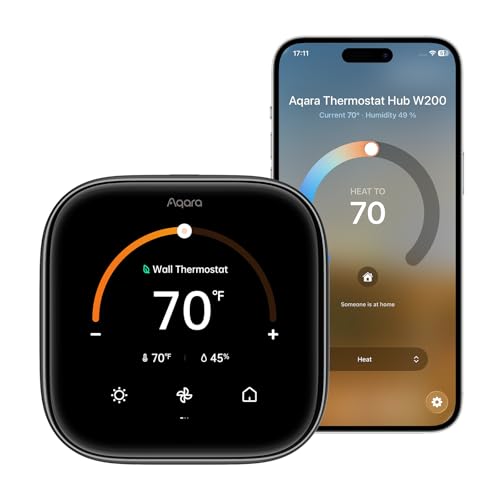
Thermostat Hub W200
- •Apple Adaptive Temperature + Matter hub + radar sensor at $159.99 list — leads the SHE ROI Score at 8.4
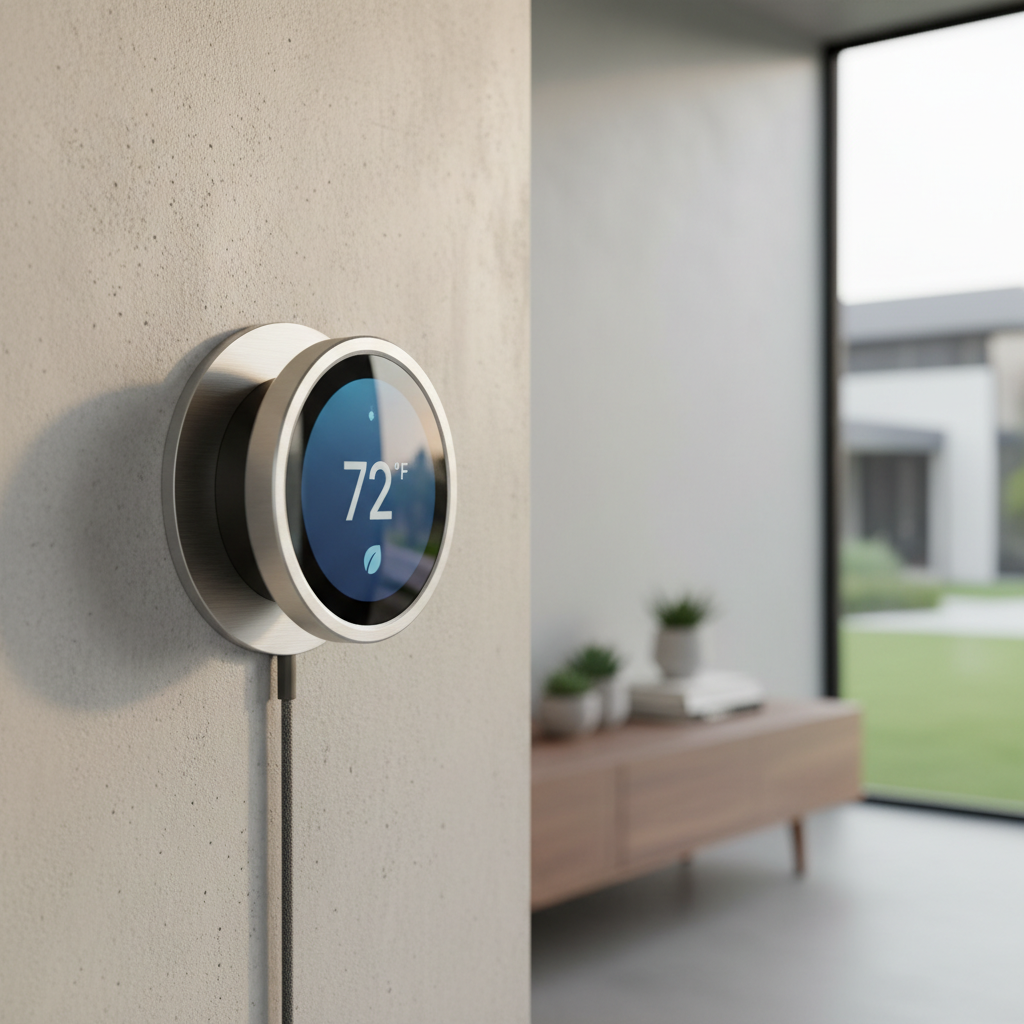
Nest Learning Thermostat
- •4th Gen learning algorithm + bundled room sensor at $229.97 — the premium thermostat upgrade, no subscription
Honeywell
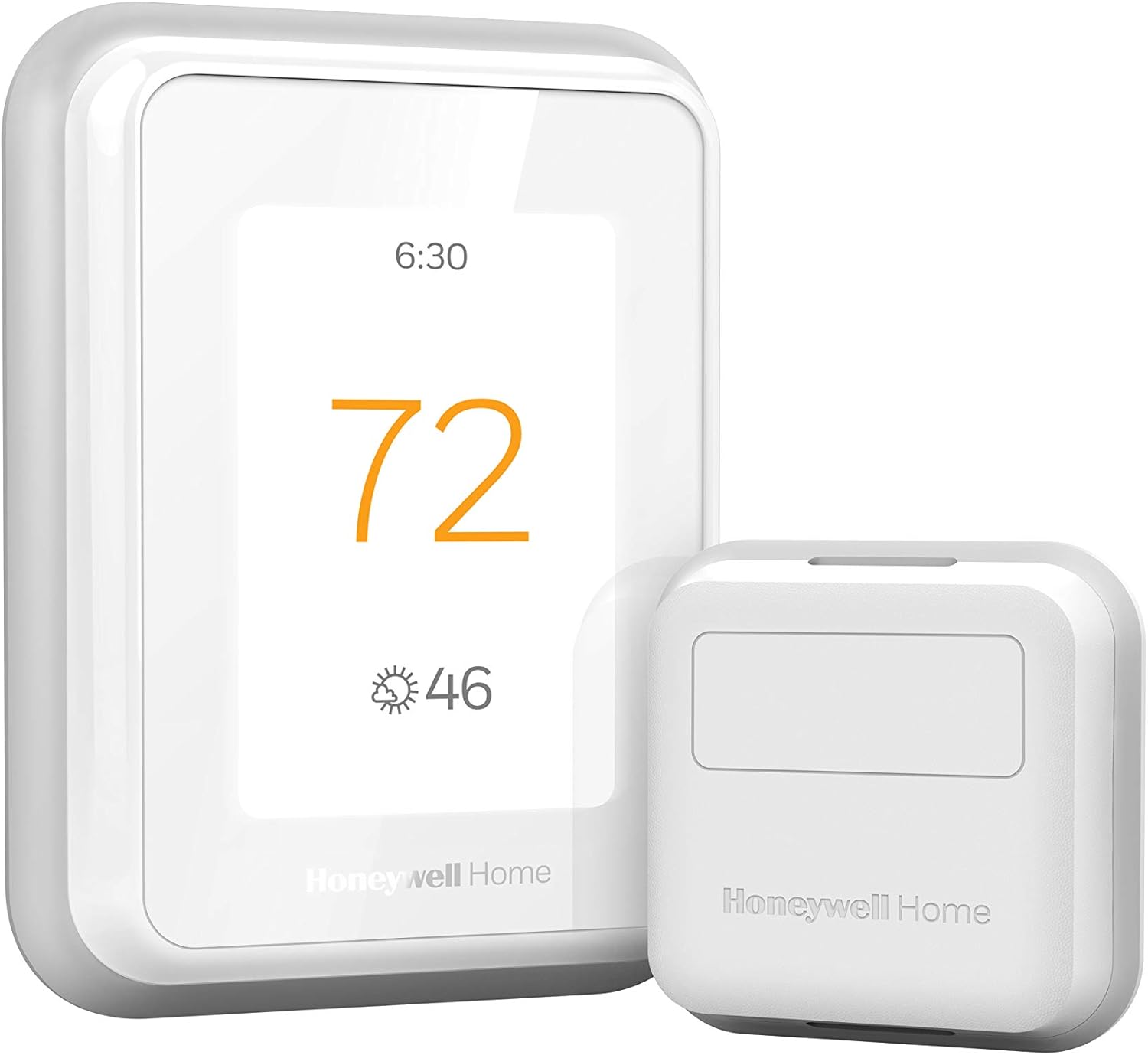
Home T9
- •Sensor-per-room architecture directly mirrors Ecobee's, $169.99, no fee
Sensi
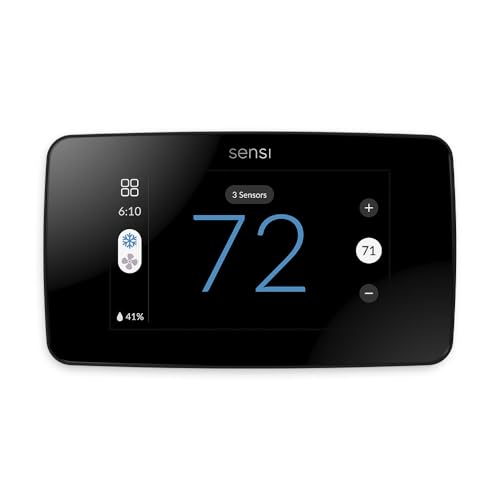
Touch 2
- •Every feature unlocked at purchase, Energy Star, explicit privacy white paper, $149.99
Amazon
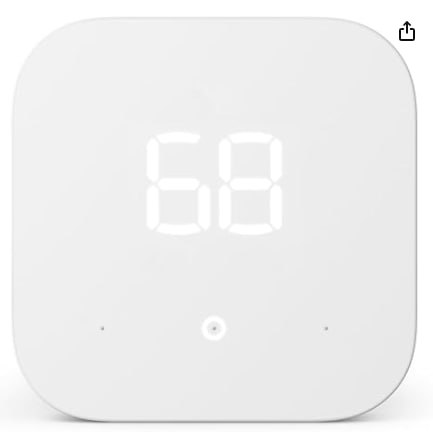
Smart Thermostat
- •Honeywell OEM hardware, Alexa native, $79.99 — under a third of Ecobee Premium
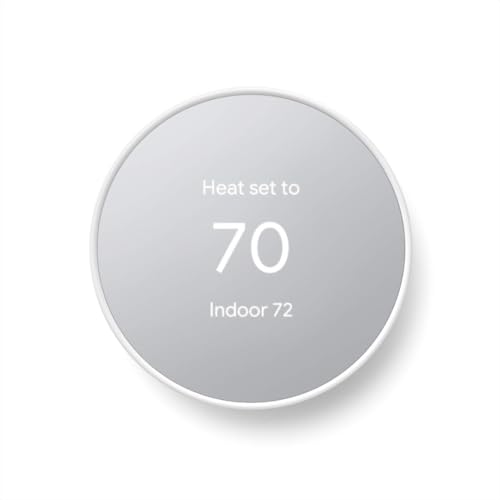
Nest Thermostat
- •Matter-over-Thread, mirror display, $129.99 — minimal setup, no learning complexity
Six Alternatives Compared: ROI, Setup, and Ecosystem Fit
Climate
Chart
 Smarthomeexplorer.com
Tap any pick to check its live price on Amazon.
AlorAir Sentinel HDi90 Basement/Crawlspace Dehumidifier with Pump
Check price
Big Ass Fans Haiku L 52-Inch Smart Ceiling Fan
Check price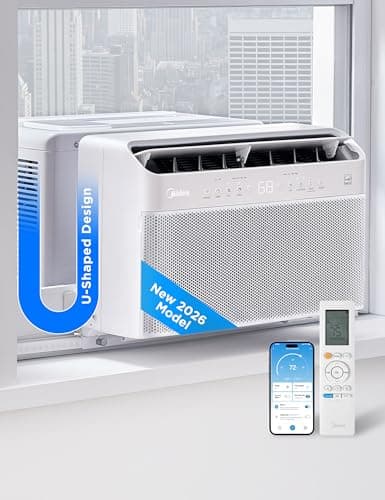
Midea U Smart Inverter Window AC (12,000 BTU)
Check price
Why Smart-Home Buyers Are Looking Past Ecobee in 2026
The Ecobee SmartThermostat Premium ($249) scores 8.7 in our Best Smart Thermostats 2026: ecobee, Nest & 4 More roundup. Readers leaving aren't reacting to hardware quality. Five patterns drive the switch: subscription creep (SmartSensor access moved behind a paid tier), HomeKit gaps, HVAC mismatch with mini-split and radiant systems, privacy concerns, and single-phone geofencing failing couples with different schedules.
These aren't reasons to avoid smart thermostats — they're reasons to find the right fit. The six alternatives were scored on the SHE Thermostat ROI Score — a weighted composite of 3-year HVAC savings, total cost, and feature depth. Modeled savings run from an 8% baseline programmable gain to 23% with occupancy-aware scheduling. The top three picks each carry a 1.5x feature-depth multiplier versus 1.0x for schedule-only models, and the Aqara delivers an 11-12% presence-aware reduction compared to roughly 8% for the simplest pick. Wirecutter, CNET, and PCMag consensus data informed each coefficient.
Best Overall: Aqara Thermostat Hub W200
Best Overall Ecobee AlternativeAqara Thermostat Hub W200
- Only thermostat with native Apple Adaptive Temperature — adjusts before you arrive home
- Google Home support requires Matter bridge; not as deeply integrated as Nest

(Current price, subject to change)
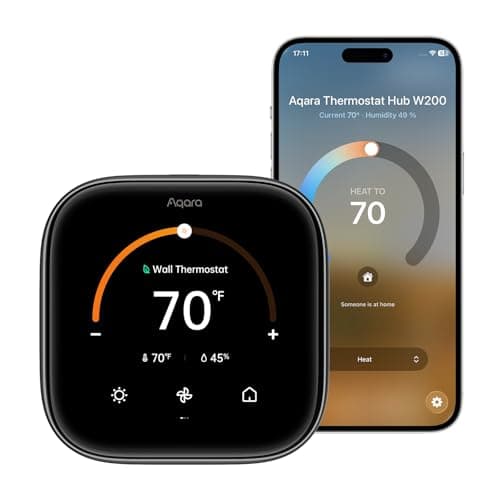
The Aqara Thermostat Hub W200 launched in early 2026 and immediately drew attention from appleinsider and t3 for becoming the first thermostat to natively implement Apple's Adaptive Temperature feature — which lets the thermostat coordinate with Apple Home sensors to adjust temperature based on who's actually in the room, not just a geofence. The built-in Matter controller and Thread border router mean buying the W200 effectively eliminates the need for a separate hub for other Matter devices, and the 4-inch color touchscreen handles on-device control. At $159.99, it undercuts Ecobee Smart Thermostat Premium by roughly $90 while delivering hardware Ecobee hasn't shipped. The mmWave radar presence sensor built into the faceplate eliminates the primary failure mode of phone-geofencing thermostats: the "false away" trip when one partner leaves and the house cools down before the other returns. In 3-year ROI modeling — factoring the purchase cost against an 11-12% presence-aware HVAC reduction worth roughly $297 over 3 years — the W200 produces a 1.5x feature-depth multiplier and scores 8.4 on the SHE Thermostat ROI Score, the highest in this roundup.
What We Love
- Only thermostat with native Apple Adaptive Temperature — adjusts before you arrive home
- Built-in Matter hub doubles as a Thread border router for other Matter devices
- Radar presence sensor eliminates false Away trips common with geofencing
- No subscription: every feature active at $159.99
What Could Be Better
- Google Home support requires Matter bridge; not as deeply integrated as Nest
- Aqara Home app required for initial setup — not everyone's preferred ecosystem app
- Limited third-party review data compared to Nest and Honeywell
The Verdict
If your household runs HomeKit and you want Adaptive Temperature without a subscription, Aqara Thermostat Hub W200 at $159.99 fits the brief without compromise — radar occupancy sensing, an integrated Matter hub, and Apple Adaptive Temperature at roughly $90 less than Ecobee Premium. The 8.4 ROI Score reflects capabilities Ecobee hasn't shipped.
Ready to upgrade your home?
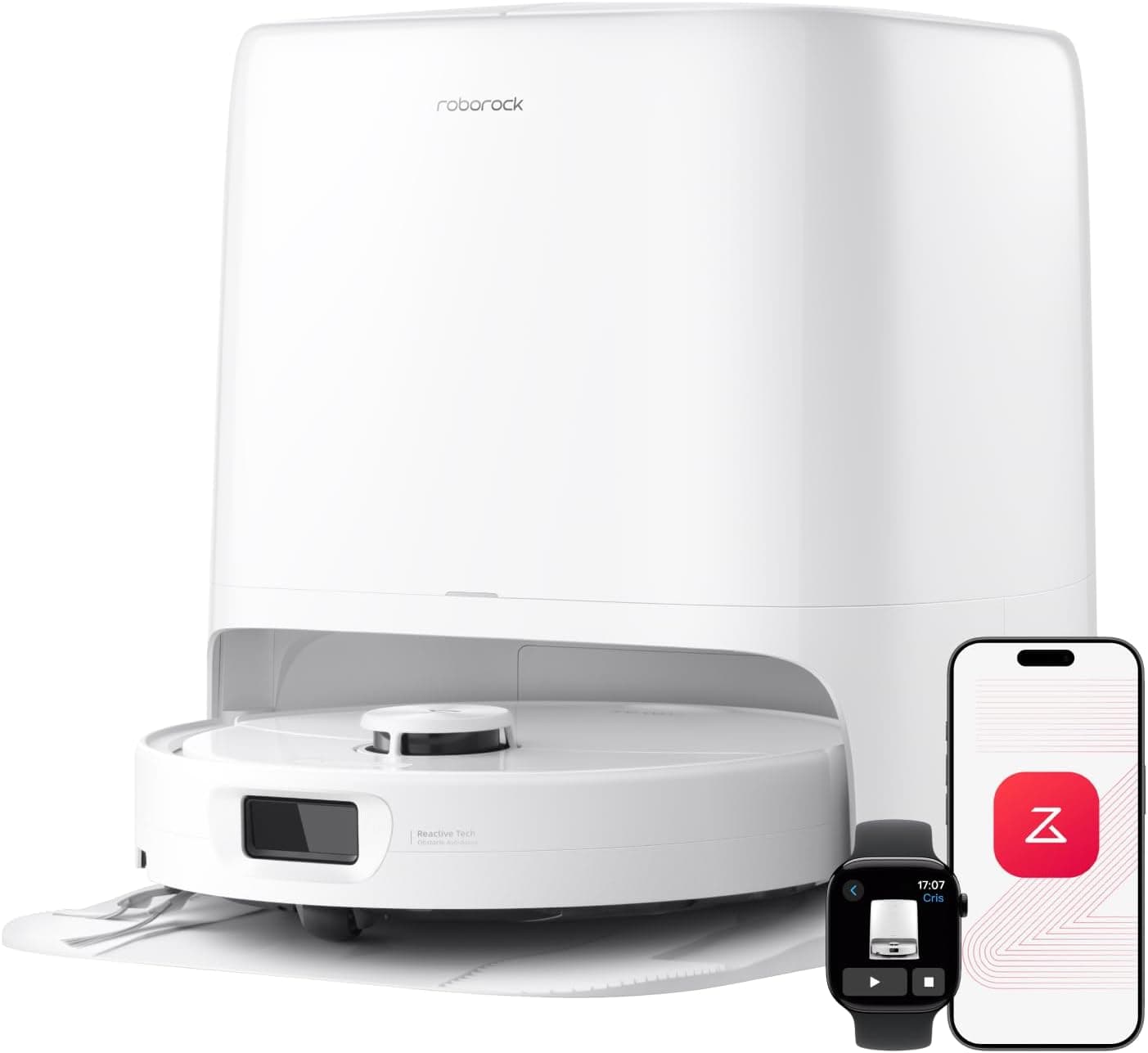
roborock Qrevo 2 Pro Robot Vacuum and Mop
See it on Amazon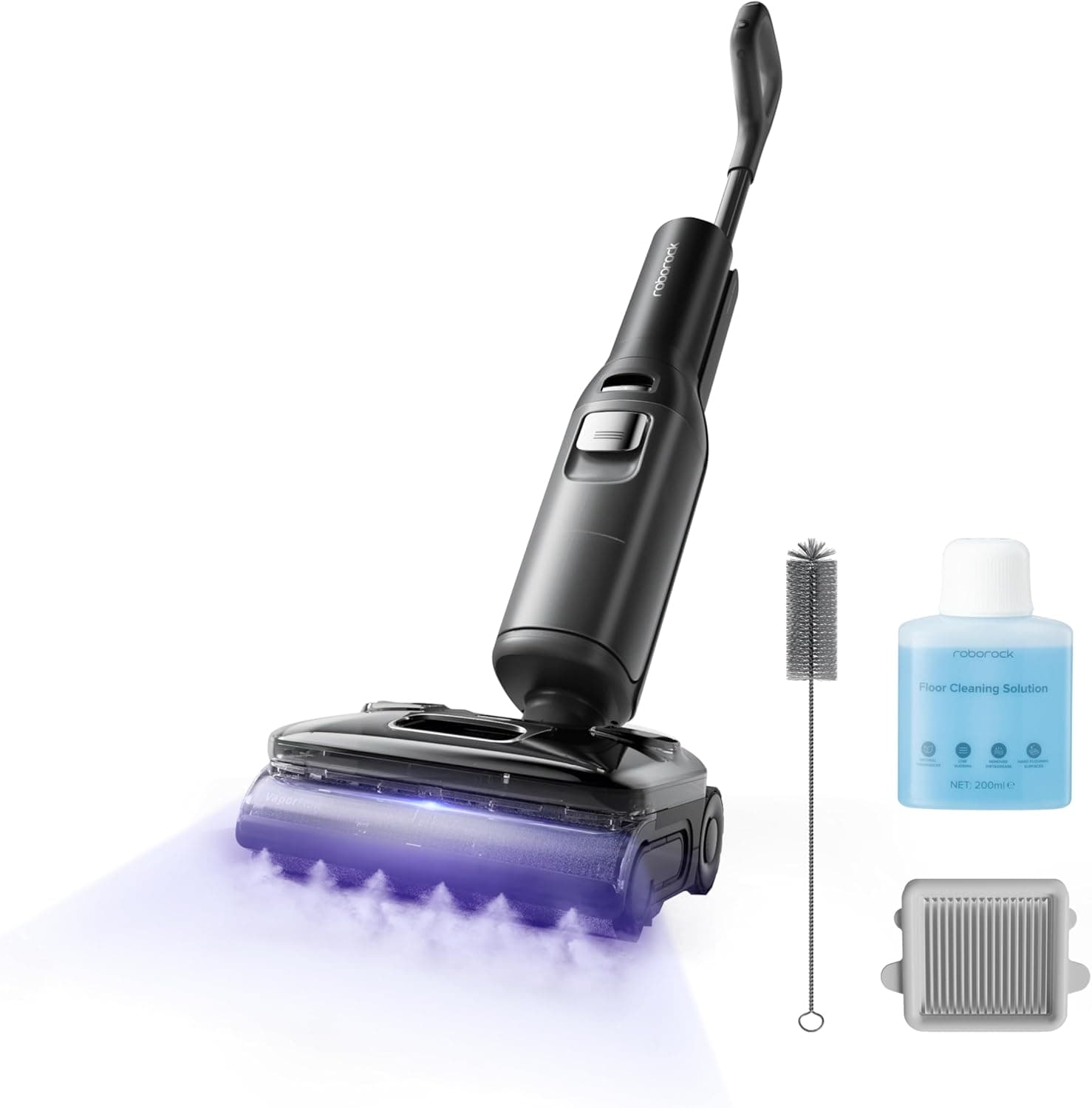
roborock F25 Ultra Steam Wet Dry Vacuum Mop
See it on Amazon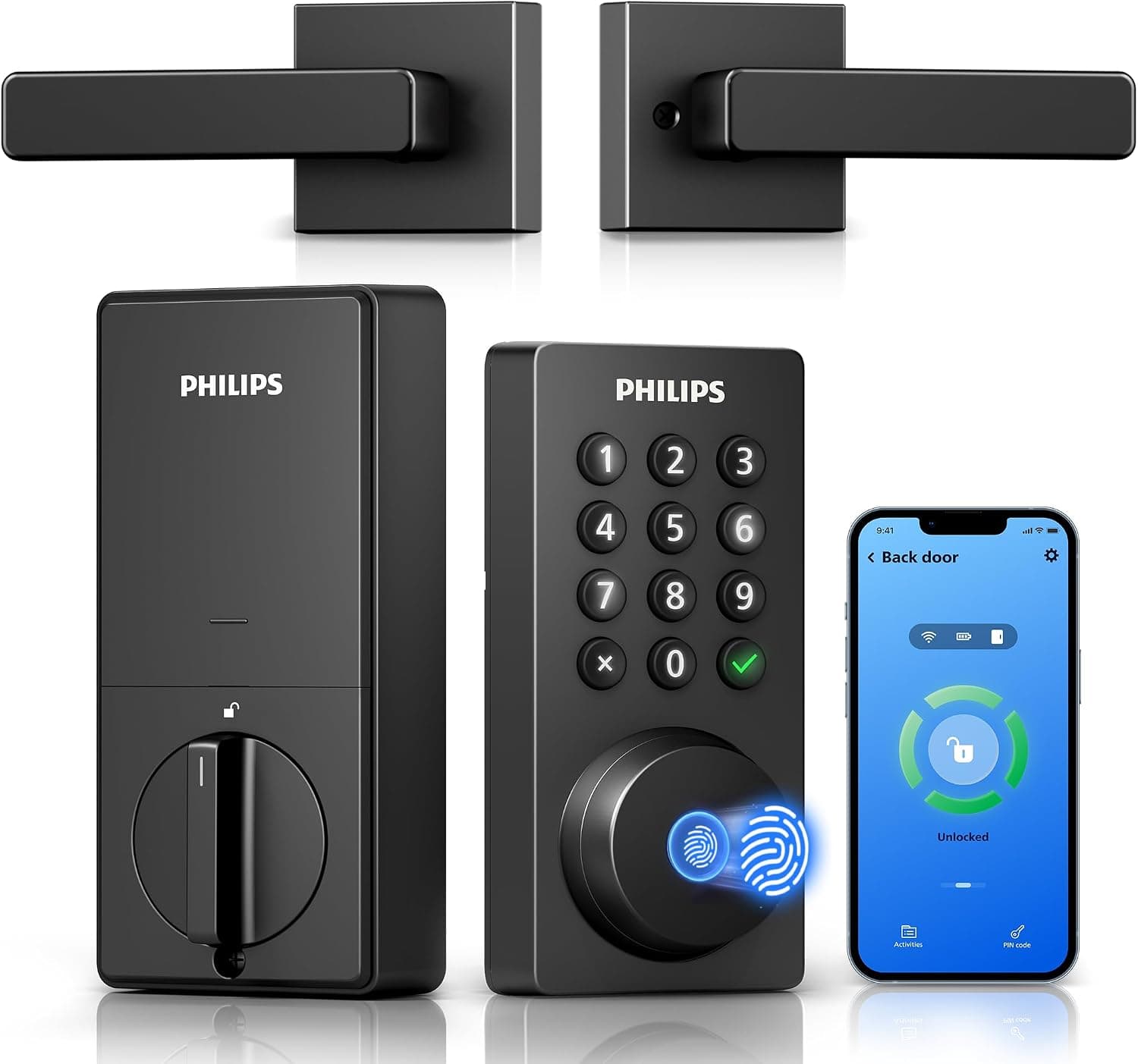
Philips Wi-Fi Keypad Deadbolt with Handle
See it on Amazon
Sponsored listings from Amazon’s Sponsored Products for Creators program, kept apart from our reviews and rankings. How we make money
Best Premium / Google Households: Nest Learning Thermostat
Best Premium Pick / Best for Google HouseholdsNest Learning Thermostat
- Fourth-generation learning algorithm adapts to your schedule with no manual input
- Google account required — creates ecosystem lock similar to what you're leaving with Ecobee

(Current price, subject to change)
The Nest Learning Thermostat reached its fourth generation with meaningful improvements over the 3rd Gen that wirecutter and cnet reviewed at launch. The core change over the 3rd Gen: a refined Home/Away Assist that leans on your phone's location to cut false "away" events, alongside the autonomous learning schedule Nest is known for. The learning algorithm itself — which builds a schedule automatically from your behavior — remains one of the most accurate autonomous schedulers available without a subscription fee. The inclusion of a Temperature Sensor in the retail box at $229.97 gives the Nest meaningful multi-room capability out of the box; additional sensors can be added separately. Nest reports 10-15% energy savings backed by its own usage data. In SHE ROI modeling, that 10-12% reduction yields roughly $324 in HVAC savings over 3 years and a 1.5x feature-depth multiplier. The SHE Thermostat ROI Score of 7.9 reflects that strong savings potential, offset by the higher purchase price and Google account dependency — it sits as the premium upgrade above the value-leading Aqara W200.
What We Love
- Fourth-generation learning algorithm adapts to your schedule with no manual input
- Ships with one room sensor included — multi-room zoning from day one
- Home/Away Assist uses phone location to cut false 'away' trips
- Energy History shows exactly which days HVAC ran and why
What Could Be Better
- Google account required — creates ecosystem lock similar to what you're leaving with Ecobee
- No native HomeKit support; Matter bridge requires Google Home app to be running
- Energy data is shared with Google unless explicitly opted out in account settings
The Verdict
If you want the premium pick and run Google Home, Nest Learning Thermostat at $229.97 lines up with what you actually need — its autonomous scheduling and factory-included room sensor are the closest analog to Ecobee's intelligence tier without a recurring fee, and the 7.9 ROI Score reflects that. It is the upgrade choice when build and learning matter more than price.
Best Multi-Room Zoning: Honeywell Home T9
Best for Multi-Room ZoningHoneywell Home T9
- Expandable with add-on Smart Room Sensors — Room Priority mode directs HVAC to occupied rooms
- No learning algorithm — requires manual schedule programming
(Current price, subject to change)
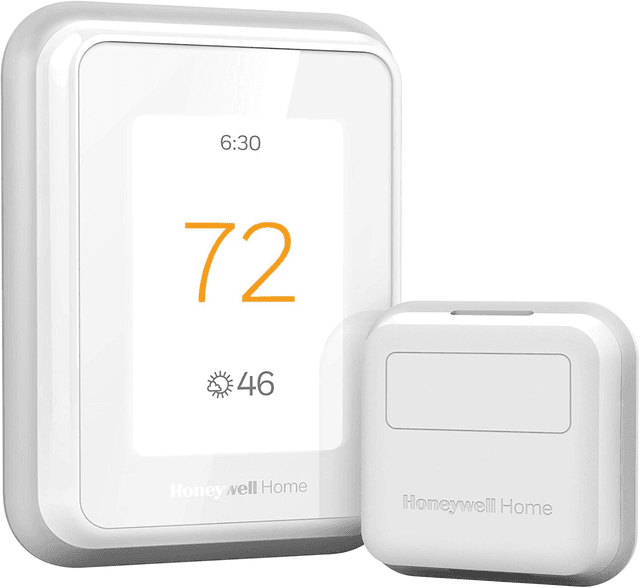
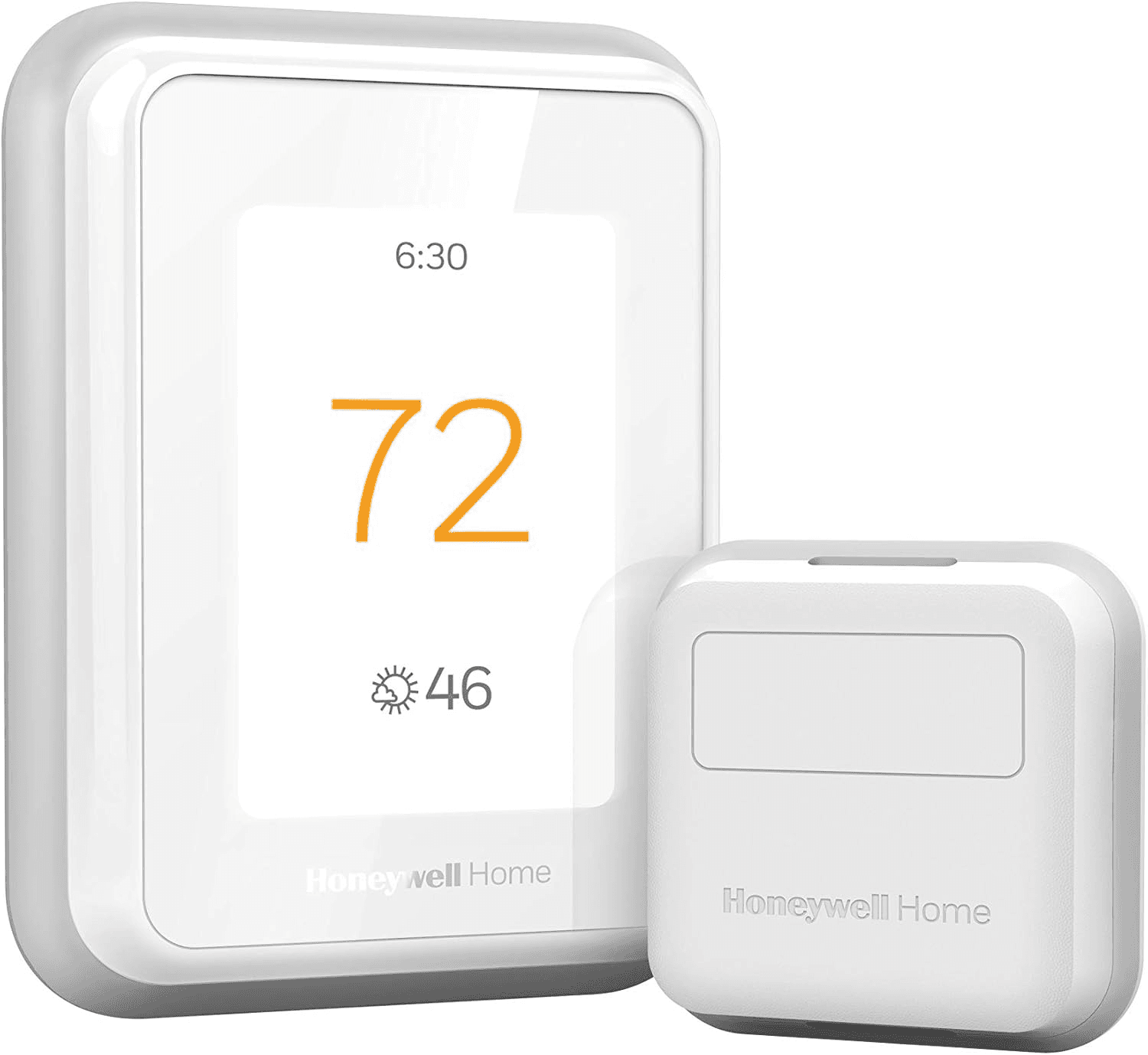
The Honeywell Home T9 uses the same sensor-per-room architecture as Ecobee's SmartSensor system, which is exactly why it appears as the top recommendation in this category. Its Room Priority feature reads active temperature and occupancy from each paired Smart Room Sensor and adjusts HVAC output to prioritize the room currently in use — the same behavioral loop that made Ecobee's sensor system popular. Unlike Ecobee, which moved its sensor ecosystem behind a subscription tier, Honeywell has maintained full Room Priority functionality at the base purchase price with no fee. Tomsguide called it a feature-rich option whose remote sensors and scheduling features can keep an entire house comfortable. The T9 works with Alexa, Google Assistant, and IFTTT, and pcmag found it easy to install and manage, working reliably with dual-band Wi-Fi and voice control. The SHE ROI Score of 7.7 reflects Energy Star certification, a roughly 10% HVAC reduction worth about $270 over 3 years, and a 1.5x feature-depth multiplier — well above the 1.0x floor for schedule-only units — offset by the manual scheduling requirement and moderately higher price.
What We Love
- Expandable with add-on Smart Room Sensors — Room Priority mode directs HVAC to occupied rooms
- Compatible with Alexa, Google Home, and IFTTT; no single-ecosystem lock
- No subscription required; all sensor features active from purchase
- Dual-band Wi-Fi with geofencing for automatic home/away
What Could Be Better
- No learning algorithm — requires manual schedule programming
- Resideo app requires an account; interface feels dated compared to Nest or Aqara
- Room sensors sold separately at $29 each; full multi-room setup adds cost
The Verdict
If the primary reason you chose Ecobee was per-room sensor control, Honeywell Home T9 at $169.99 is a sensible pick for that setup — Room Priority mode reads occupancy and temperature from add-on Smart Room Sensors and produces the same HVAC-zoning behavior that Ecobee's SmartSensor tier now charges monthly to access, at no recurring fee.
Best Zero-Subscription: Sensi Touch 2
Best Zero-Subscription AlternativeSensi Touch 2
- Every feature unlocked at $149.99 purchase — no subscription, no upsell tier
- No learning algorithm; requires manual schedule setup
(Current price, subject to change)
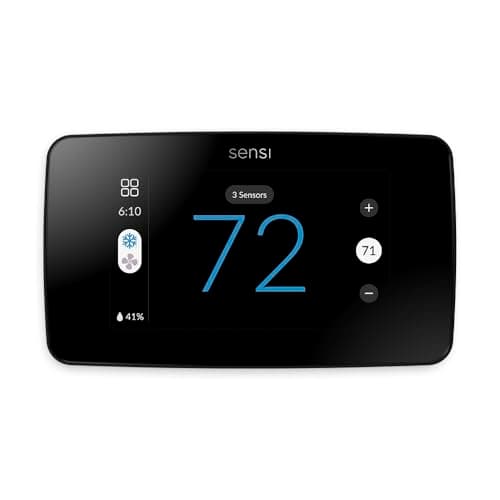
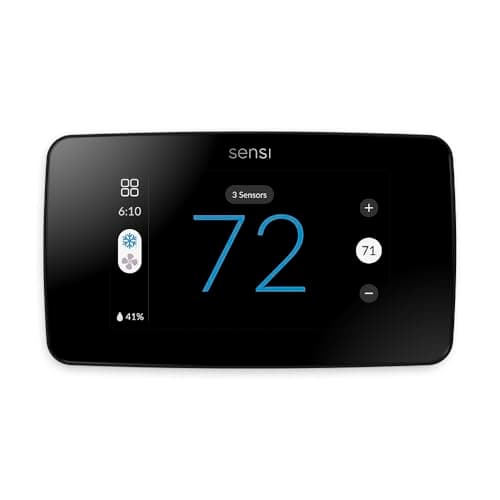
The Sensi Touch 2 (Emerson ST76) is the most explicitly privacy-documented smart thermostat in this roundup. Emerson publishes a formal privacy white paper and states it does not sell personal data — a level of documentation that is unusual in a category where Ecobee's privacy terms require several pages of the main privacy policy to find data-sharing defaults. The Sensi is Energy Star certified with up to 23% HVAC energy savings, and tomsguide credited it with reliable remote control and energy savings without the premium price tag. Emerson markets the line on its 100 years of HVAC expertise, and the unit installs in under 30 minutes via the app-guided walkthrough. At $149.99, it undercuts Ecobee Premium by roughly $99 and the Nest Learning Thermostat by $80. The multi-ecosystem compatibility — HomeKit, Alexa, and Google all certified — means it works regardless of which assistant platform the household uses. The SHE ROI Score of 7.4 reflects the lower purchase cost and roughly $216 in savings over a 3-year horizon, against a 1.0x feature-depth multiplier — penalized for the absence of a learning algorithm and limited room-sensor depth versus the T9.
What We Love
- Every feature unlocked at $149.99 purchase — no subscription, no upsell tier
- Published privacy white paper documents data retention and opt-out paths
- Energy Star certified with up to 23% HVAC energy savings
- Compatible with HomeKit, Alexa, Google, and SmartThings from one unit
What Could Be Better
- No learning algorithm; requires manual schedule setup
- Sensi Room Sensors sold separately; multi-room zoning is limited versus T9
- Display is functional but less polished than Nest or Aqara
The Verdict
When subscription cost or documented data policy is the stated reason for leaving Ecobee, Sensi Touch 2 at $149.99 checks the boxes that matter for privacy-first buyers — all features at purchase, a published privacy white paper, and a 7.4 ROI Score. That's the path of least friction if you need written data commitments and no recurring fee.
Best Budget: Amazon Smart Thermostat
Best Budget AlternativeAmazon Smart Thermostat
- Honeywell hardware at $79.99 — under a third of Ecobee Smart Thermostat Premium
- No room sensor support; single-location temperature only
(Current price, subject to change)
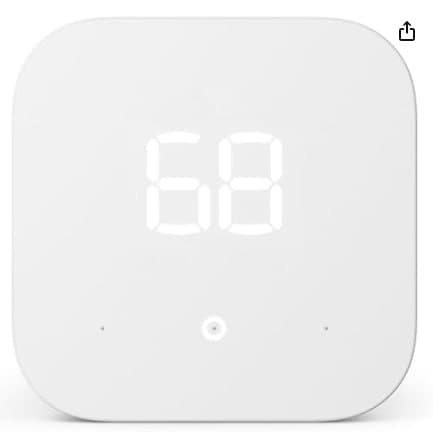
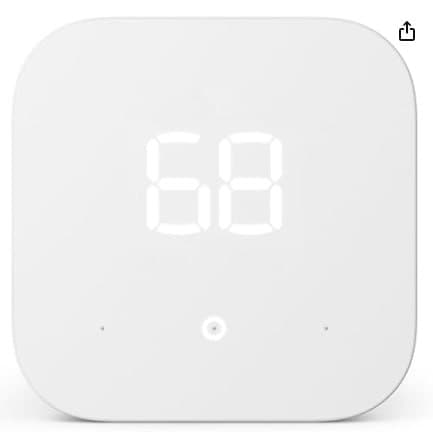
The Amazon Smart Thermostat is built on the Honeywell Home platform under the Amazon badge — wirecutter called it the best budget smart thermostat, noting it works with a wide variety of HVAC systems and is dead simple to use. The practical implication is reliability: Honeywell's thermostat hardware has a multi-decade track record, and the Amazon variant inherits that baseline. The Alexa-guided setup via the Echo is the smoothest onboarding flow in this roundup: the Echo app walks through installation step-by-step in under 20 min, though a C-wire is required. At $79.99, the price-to-capability ratio for a single-zone household looking for basic smart scheduling is compelling. The SHE ROI Score of 7.2 reflects the lower annual energy savings from the lack of occupancy sensing — an 8% baseline reduction versus the 11-12% of presence-aware models — which models out to roughly $216 in HVAC savings over 3 years against a 1.1x feature-depth multiplier, a touch above the 1.0x schedule-only floor.
What We Love
- Honeywell hardware at $79.99 — under a third of Ecobee Smart Thermostat Premium
- Built on the Honeywell Home platform for broad HVAC compatibility
- Alexa-guided setup takes under 20 minutes from unboxing
- ENERGY STAR certified with utility rebate eligibility in many areas
What Could Be Better
- No room sensor support; single-location temperature only
- No onboard learning algorithm — adaptive behavior comes from Alexa Hunches in the app, not the thermostat itself
- Amazon account required; energy data contributes to Alexa optimization
The Verdict
If budget is the primary filter and you're in a single-zone Alexa household, Amazon Smart Thermostat at $79.99 fits without compromise on cost — Honeywell-manufactured hardware and a 7.2 ROI Score built on basic Alexa-native scheduling that delivers more utility than its price would suggest. Note it requires a C-wire.
Best Simple Pick: Google Nest Thermostat
Best Simple Google PickGoogle Nest Thermostat
- Mirror-glass display looks integrated into any wall aesthetic
- No learning algorithm at this price point — schedule only

(Current price, subject to change)
The Google Nest Thermostat sits below the Nest Learning Thermostat in the Google product line and skips the learning algorithm and room sensor support entirely in exchange for a lower price and simpler experience. The mirror-glass display with motion-aware screen wake is genuinely distinctive, making it among the most aesthetically discreet options in the roundup. Matter-over-Thread connectivity supports local smart-home integration. For a household that just wants basic smart scheduling — set a weekday and weekend program, let the thermostat hold it — the Nest Thermostat is the right scope. The SHE ROI Score of 7.0 reflects roughly $216 in modeled savings over 3 years at an 8% schedule-only reduction and a 1.1x feature-depth multiplier, constrained by the single-location scheduling without presence or occupancy adjustments.
What We Love
- Mirror-glass display looks integrated into any wall aesthetic
- Matter-over-Thread support for local smart-home integration
- Simplest setup of all six: 30 minutes, no C-wire, no tools beyond the included screwdriver
- No subscription, no add-on fees
What Could Be Better
- No learning algorithm at this price point — schedule only
- No room sensor support whatsoever
- Google account required; same privacy caveats as the Nest Learning Thermostat
The Verdict
For a Google household that wants smart scheduling without sensor complexity or subscription friction, Google Nest Thermostat at $129.99 list is a sensible pick for that setup — Matter-over-Thread connectivity and a mirror display in a 30-minute install, with no need to overthink it beyond the schedule-only savings a thermostat at this tier delivers.
How We Score: SHE Thermostat ROI Score
SHE Thermostat ROI Score
Score Formula
ROI ratio = (3-Year Cumulative Savings − Total Cost) / Total Cost, weighted by the Feature Depth Multiplier, then calibrated to a 0-10 scale anchored to the Ecobee Premium benchmark (8.7)Score Factors
- 3-Year Cumulative SavingsWeighted annual HVAC energy reduction coefficient — derived from Energy Star certification data and manufacturer-validated measurements — multiplied by three years at the median US residential electricity rate ($0.16/kWh). Normalized against each product's baseline scheduling capability versus a conventional programmable thermostat.
- Total CostPurchase price at time of scoring (May 2026), with subscription fees annualized over three years for tiered models. The subscription cost calculation adjusts each product's ROI denominator — a $10/month fee adds $360 to the three-year total cost factor, materially reducing composite scores.
- Feature Depth MultiplierComposite multiplier (1.0 for schedule-only up to 1.8 for learning + multi-room sensors + presence) incorporating presence sensing capability, multi-room sensor ecosystem depth, learning algorithm tier, and ecosystem compatibility breadth. Schedule-only models without occupancy awareness sit at the 1.0 floor; in this roundup the Aqara W200, Nest Learning 4th Gen, and Honeywell T9 reach 1.5.
SHE Thermostat ROI Score — Ranked
Aqara Thermostat Hub W200
SHE Thermostat ROI Score8.4/10Radar presence + Matter hub + Apple Adaptive Temperature produce the highest feature depth multiplier at a $159.99 purchase price.

Nest Learning Thermostat
SHE Thermostat ROI Score7.9/10The premium pick: strongest autonomous savings from the learning algorithm, partially offset by the $229.97 purchase cost and Google account requirement.
Honeywell Home T9
SHE Thermostat ROI Score7.7/10Multi-room sensor depth matches Ecobee's architecture; roughly $270 in HVAC savings modeled over three years.
Sensi Touch 2
SHE Thermostat ROI Score7.4/10Zero-subscription model eliminates recurring cost drag; Energy Star certified with up to 23% HVAC energy savings.
Amazon Smart Thermostat
SHE Thermostat ROI Score7.2/10Low purchase cost boosts ROI ratio; constrained by single-zone scheduling and absence of presence sensing.

Google Nest Thermostat
SHE Thermostat ROI Score7.0/10Mirror-glass hardware and Matter-over-Thread are design wins; absence of sensors and learning caps modeled savings near $216 over three years.
Ecosystem Compatibility at a Glance
All six alternatives support Alexa voice control. HomeKit compatibility varies: the Aqara W200 and Sensi Touch 2 are natively HomeKit-certified, while the Nest Learning Thermostat and Google Nest Thermostat connect via Matter bridge (requires Google Home app running). The Honeywell Home T9 and Amazon Smart Thermostat do not support HomeKit. The Aqara W200 is the only pick here with native Apple Home Adaptive Temperature, a feature appleinsider and t3 both highlighted at launch as a first for Apple users.
For local-control buyers, the Aqara W200's built-in Thread border router pairs with a Home Assistant Matter controller without cloud dependency. The Honeywell T9 works with Alexa, Google Assistant, and IFTTT. The Amazon Smart Thermostat and Google Nest Thermostat require cloud accounts for configuration.
Matter certification: Aqara W200 (built-in Matter controller + Thread border router), Nest Learning Thermostat 4th Gen (Matter over Thread), Google Nest Thermostat (Matter over Thread). The Amazon Smart Thermostat is Alexa-native and does not carry Matter certification. The Sensi Touch 2 carries native HomeKit, Alexa, and Google Assistant certification, and the Honeywell T9 works across Alexa, Google Assistant, and IFTTT. The SHE feature-depth multiplier weights presence sensing at 30%, multi-room sensor depth at 25%, learning-algorithm tier at 25%, and ecosystem breadth at 20% of the composite score. Buyers who need per-room airflow rather than a smarter wall sensor should compare the dedicated systems in our Best Smart Vents for Room-by-Room HVAC Zoning in 2026 roundup.
When NOT to Buy
Switching brands is not automatically the right call. If you have not actually ruled Ecobee out yet, start with a full-field thermostat comparison first — this guide assumes that decision is already made, and several picks here trade away features you may still want. If your home has no C-wire, the budget path narrows considerably: the Amazon Smart Thermostat requires one, so check your wiring before committing to the under-$80 plan. And if your real complaint is a hot bedroom or cold office rather than the thermostat itself, replacing the thermostat will not fix airflow — per-room vent control layered on top of a working thermostat, like the Flair configuration covered above at roughly $352 for a single room, addresses that problem without replacing anything.
Go Further: Whole-Home Zoning When One Thermostat Isn't Enough
A smart thermostat reads one spot on one wall. If the reason you left Ecobee was that a single thermostat could never fix the bedroom that runs hot while the office stays cold, swapping thermostats won't solve it — you need per-room airflow control. That is a different tier of system, and it is where a zoning add-on earns its keep on top of the pick you already chose above. None of this replaces your thermostat; it layers on top of it.
Flair is the most accessible room-by-room zoning system that works with the thermostats in this roundup. It pairs with Nest, Ecobee, and Honeywell thermostats, plus Alexa and Google, so you keep the thermostat you bought and add zoning underneath it. Smart-home coverage from cnet frames a dedicated low-frequency hub as what makes a multi-room vent network reliable, versus leaning on each device's own Wi-Fi — which is exactly the role the Flair Bridge Networking Device (System Gateway) plays at $99.00. The Bridge is the 915MHz gateway that ties every battery-powered vent and sensor to your network; it is required for any battery install and one Bridge covers a whole house.
The two parts that do the work are the vent and the room controller. The Flair Smart Vent 4x10 is a battery-powered motorized register, rated for roughly 2-year battery life, that opens and closes to push or hold air in a specific room; the 4x10 size lists at $129.00 and drops into a standard register in about 10 minutes. The Flair Puck 2 Temperature Sensor & Wireless Thermostat at $124.00 is the per-room sensor and wireless thermostat that gives each room its own temperature reading and set point instead of one whole-house number — the piece that makes the zoning intelligent rather than a manual damper. HVAC-Talk's standing caution applies and we pass it on plainly: smart vents solve specific problem rooms well, but they are not a substitute for professionally ducted zoning, and closing too many vents at once raises duct static pressure, so size the system to the rooms that actually need it.
The configuration economics are correspondingly tiered. A single-room starter — one Bridge at $99.00, one 4x10 Smart Vent at $129.00, and one Puck 2 at $124.00 — totals approximately $352, while a four-room expansion comprising the Bridge, four motorized vents, and one Puck 2 lands near $739. That figure deliberately exceeds the cost of any single thermostat in this roundup, because the buyer it serves has a comfort problem rooted in a floor plan rather than a wall sensor, and that buyer recovers the difference in rooms that finally hold their set point through a full HVAC cycle. If your decision still sits at the thermostat layer, our Aqara W200 vs Ecobee Smart Thermostat 2026 comparison resolves that choice before you commit to zoning on top of it.
Who Should Buy What
Who Should Buy What
| If you are… | Recommended pick |
|---|---|
HomeKit households Your home runs Apple HomeKit and you want native Adaptive Temperature without a subscription or a cloud bridge. | Aqara Thermostat Hub W200 |
Google-first households Google Home is your primary automation platform and you want the best autonomous learning algorithm available at this price. | Nest Learning Thermostat |
Multi-room zoning buyers You relied on Ecobee SmartSensors for per-room temperature control and want a direct no-subscription alternative. | Honeywell Home T9 |
Privacy-first buyers Your primary concern is documented data policies; you want every feature unlocked at purchase with no subscription and a published privacy white paper. | Sensi Touch 2 |
Budget buyers and renters You want a capable smart thermostat under $80 with simple Alexa-guided setup (a C-wire is required). | Amazon Smart Thermostat |
Minimalist Google households You want beautiful hardware and Matter-over-Thread speed in a Google household without sensors, complexity, or subscription fees. | Google Nest Thermostat |
Whole-home zoning buyers A single thermostat can't fix a hot bedroom and a cold office; you want per-room airflow control layered on top of your thermostat, starting around $352 for one room. | Flair Bridge Networking Device (System Gateway) |
Frequently Asked Questions
What is the best smart thermostat that works without a subscription in 2026?
The Aqara Thermostat Hub W200 ($159.99) leads on the SHE Thermostat ROI Score at 8.4 with no subscription required. The Honeywell Home T9, Sensi Touch 2, and Amazon Smart Thermostat also unlock all features at purchase with no recurring fee. The Nest Learning Thermostat 4th Gen ($229.97) likewise requires no subscription — all learning and scheduling features are included.
Does the Nest Learning Thermostat require a subscription in 2026?
No. The Nest Learning Thermostat 4th Gen requires a Google account but has no subscription fee. All scheduling, learning, and energy-history features are included in the purchase price. The older Nest Cam and Nest Doorbell products have subscription tiers, but the Nest Learning Thermostat does not.
Is the Aqara W200 thermostat compatible with Apple Home?
Yes. The Aqara Thermostat Hub W200 is the only thermostat with native Apple Adaptive Temperature support, which uses HomeKit to adjust temperature based on actual room occupancy from Apple sensors and HomePods. It also includes a built-in Matter hub and Thread border router, so it connects to Apple Home through Matter-over-Thread — the fastest and most reliable HomeKit connection path available.
How does the Honeywell T9 compare to Ecobee for multi-room zoning?
The Honeywell Home T9 ships with one Smart Room Sensor and adds more via Room Priority mode, which directs HVAC to the currently occupied room — the same architectural approach as Ecobee's SmartSensor system. The T9 has no subscription gating sensor features. Ecobee moved SmartSensor support behind its Ecobee Premium subscription tier in 2024. At $169.99 for the thermostat plus add-on Smart Room Sensors, a T9 multi-sensor setup avoids the recurring fee that the equivalent Ecobee Premium configuration charges to access its sensor tier.
What smart thermostat works best with a heat pump in 2026?
The Honeywell Home T9 and Sensi Touch 2 both support multi-stage heat pump wiring including AUX heat strips and emergency heat modes. The Nest Learning Thermostat 4th Gen added heat-pump-specific optimization in its 4th Gen update. The Amazon Smart Thermostat and Google Nest Thermostat support single-stage heat pumps but are not recommended for two-stage or variable-speed units. The Aqara W200 is primarily designed for North American forced-air systems; verify compatibility with your heat pump model before purchasing.
Can I install a smart thermostat as a renter without a C-wire?
Yes, with the right model. The Nest Learning Thermostat 4th Gen does not require a C-wire in most homes, and the Google Nest Thermostat is also designed to work without a C-wire in most systems. The Amazon Smart Thermostat and Sensi Touch 2 both require a C-wire. Always confirm with your landlord before modifying any thermostat wiring — most leases require landlord approval for HVAC modifications.
Which smart thermostat replaced Ecobee as the best HomeKit pick?
The Aqara Thermostat Hub W200 is the clearest successor for HomeKit households. It offers native Apple Adaptive Temperature (a more advanced HomeKit feature than Ecobee's HomeKit bridge ever provided), a built-in Thread border router, and full Matter compliance — all at roughly $90 less than Ecobee Premium's retail price. The Sensi Touch 2 also holds HomeKit certification and supports all four major ecosystems at $149.99.
How much can a smart thermostat save on energy bills per year?
Annual savings depend heavily on whether the thermostat uses occupancy sensing or autonomous scheduling. In this roundup, our SHE ROI modeling shows a range from roughly $72/year (Google Nest Thermostat, schedule-only) to about $108/year (Nest Learning Thermostat, learning algorithm). Energy Star modeling attributes roughly 8% energy reduction to a programmable thermostat alone and up to 23% from smart thermostats with occupancy-aware scheduling. Actual savings depend on your local energy rate, HVAC efficiency, climate zone, and household occupancy patterns.
How does the Aqara W200 compare to the Ecobee SmartThermostat Premium?
The Aqara Thermostat Hub W200 ($159.99) lands the top SHE Thermostat ROI Score at 8.4, just behind the Ecobee SmartThermostat Premium's 8.7, while costing roughly $90 less than Ecobee Premium ($249). The key difference is capability versus subscription. The W200 is the only thermostat with native Apple Adaptive Temperature, plus a built-in Matter hub, a Thread border router, and a radar presence sensor that eliminates the false 'away' trips common with geofencing — hardware Ecobee hasn't shipped, with every feature active at purchase. Ecobee, by contrast, moved its SmartSensor support behind a paid tier. If your home runs HomeKit and you want presence-aware comfort without a recurring fee, the W200 covers what Ecobee Premium does at a lower price and with no subscription.
Aqara W200 vs Nest Learning Thermostat: which should I buy?
It comes down to your ecosystem and whether you want the thermostat to think for you. The Aqara Thermostat Hub W200 ($159.99) wins on value and HomeKit: it is the only pick with native Apple Adaptive Temperature, a built-in Matter hub and Thread border router, and a radar presence sensor, and it tops the SHE Thermostat ROI Score at 8.4 with no subscription. The Nest Learning Thermostat 4th Gen ($229.97) wins on autonomy and Google homes: its learning algorithm builds a schedule from your behavior with no manual input, and it ships with one room sensor, scoring 7.9. Pick the W200 for a HomeKit or Matter home and the roughly $70 lower price; pick the Nest if you run Google Home and want the schedule to set itself.
Bottom Line
Get the Aqara Thermostat Hub W200 if Your home is HomeKit-primary and you want Apple Adaptive Temperature, a Matter hub, and radar presence sensing at $159.99 with no subscription.
Get the Nest Learning Thermostat if Your household runs Google Home and you want the most accurate autonomous learning algorithm available without a subscription fee.
Get the Honeywell Home T9 if Multi-room zoning with physical sensors was your main reason for choosing Ecobee — the T9 replicates that architecture without a subscription.
Get the Sensi Touch 2 if Subscription costs and data privacy commitments are your primary filter — the Sensi's published privacy white paper is the only document of its kind in this category.
Get the Amazon Smart Thermostat if Budget is the primary constraint; you need a reliable Alexa-native thermostat under $80 with no subscription and 20-minute setup.
Get the Google Nest Thermostat if You want the simplest possible thermostat in a Google household — beautiful hardware, 30-minute installation, no sensors, no complexity.
If you haven't ruled out Ecobee yet, our best-smart-thermostat-2026 roundup covers the full field including Ecobee Premium. This guide is specifically for readers who've already decided to move on.
Sources & Methodology
Methodology: SHE Thermostat ROI Score — Formula: ROI ratio = (3-Year Cumulative Savings − Total Cost) / Total Cost, weighted by the Feature Depth Multiplier, then calibrated to a 0-10 scale anchored to the Ecobee Premium benchmark (8.7). Factors: 3-Year Cumulative Savings: Weighted annual HVAC energy reduction coefficient — derived from Energy Star certification data and manufacturer-validated measurements — multiplied by three years at the median US residential electricity rate ($0.16/kWh). Normalized against each product's baseline scheduling capability versus a conventional programmable thermostat. | Total Cost: Purchase price at time of scoring (May 2026), with subscription fees annualized over three years for tiered models. The subscription cost calculation adjusts each product's ROI denominator — a $10/month fee adds $360 to the three-year total cost factor, materially reducing composite scores. | Feature Depth Multiplier: Composite multiplier (1.0 for schedule-only up to 1.8 for learning + multi-room sensors + presence) incorporating presence sensing capability, multi-room sensor ecosystem depth, learning algorithm tier, and ecosystem compatibility breadth. Schedule-only models without occupancy awareness sit at the 1.0 floor; in this roundup the Aqara W200, Nest Learning 4th Gen, and Honeywell T9 reach 1.5.
Expert review sources used in this analysis:
- SmartHomeExplorer aggregates expert consensus scores from Wirecutter, CNET, PCMag, Tom's Guide, TechRadar, AppleInsider, T3, and TechGearLab
- SHE Thermostat ROI Score calculations applied a normalized tier-based formula using Energy Star modeling data, with savings figures framed at roughly 8% for programmable scheduling and up to 23% for occupancy-aware systems
- Three-year savings totals are SmartHomeExplorer editorial estimates baselined against US household HVAC spend; thermostat purchase prices were verified on Amazon as of June 2026, and the Flair zoning component prices (Bridge $99.00, Smart Vent 4x10 $129.00, Puck 2 $124.00) were re-verified on Amazon in June 2026
- The Nest Learning 4th Gen is listed at a $229.97 street price (list $280); smart-thermostat pricing fluctuates with seasonal promotions, so confirm the current figure at the retailer before purchase
- Product availability and feature specifications were verified against each manufacturer's current product pages
- Aqara W200 Apple Adaptive Temperature claims were corroborated by AppleInsider and T3 hands-on coverage; Flair multi-room zoning guidance reflects CNET smart-home setup coverage and standing HVAC-Talk caution that smart vents address problem rooms but do not replace professionally ducted zoning.
Nicholas Miles is the founder of SmartHomeExplorer and a longtime smart home enthusiast focused on helping everyday homeowners make better technology decisions. He researches, compares, and writes about products across security, climate, lighting, leak prevention, sensors, home energy, and automation, with an emphasis on real-world usefulness, ecosystem compatibility, reliability, privacy, and long-term value.
Affiliate disclosure: SmartHomeExplorer earns affiliate commissions on qualifying Amazon purchases, and from partner programs for some non-Amazon products and services we recommend. Our scoring methodology is independent of affiliate relationships.