
If you have a ducted heat pump, the Ecobee Smart Thermostat Premium ($249) is the most compatible and feature-complete option
Heat pump and mini-split owners make up roughly 30% of US households — and they are the most likely to buy the wrong smart thermostat. The problem is straightforward: most thermostats are designed around gas furnace + central AC setups. Heat pumps require specific wiring configurations (the Y2, O/B reversing valve wire, and correct staging), and mini-splits use IR remote signals rather than any wired thermostat interface at all. Buying the wrong device means a frustrating return, an HVAC contractor visit to undo the installation, and possibly voided equipment warranties. This guide exists to prevent all of that.
We aggregated compatibility data and expert reviews from Wirecutter, CNET, Tom's Guide, RTINGS, The Spruce, PCMag, and HVAC-Talk professional forums — cross-referencing published heat pump compatibility specs against real-world installation reports. Every product score in this guide reflects documented heat pump performance, not general thermostat quality. If your system is a mini-split, scroll directly to the Mysa Smart Thermostat section — it's the only purpose-built option in this group. If you don't have a mini-split yet and are choosing the unit alongside the thermostat, our best smart mini-split heat pumps guide covers the DIY-vs-installer split for the unit itself.
SHE Heat Pump Compatibility Index
This is our proprietary metric for smart thermostats in heat pump and mini-split applications. The SHE Heat Pump Compatibility Index captures the factors that determine whether a thermostat actually works with your system — and how well it optimizes it.
Formula: SHE HPCI = (HVAC Types Supported x 0.30) + (Heat Pump-Specific Features x 0.30) + (Efficiency Gain % x 0.25) / (Price + Install Complexity) x 0.15
Each component is scored 1–10. HVAC Types Supported and Heat Pump-Specific Features are weighted highest because compatibility failure is a binary problem — if it doesn't work, the score doesn't matter. Efficiency Gain reflects documented savings from heat pump-specific features like balance point optimization and aux heat staging. Price and Install Complexity together represent the real cost of ownership including potential contractor involvement.
| Thermostat | HVAC Support (0.30) | HP Features (0.30) | Efficiency (0.25) | Price+Install (0.15) | HPCI Score |
|---|---|---|---|---|---|
| Ecobee Smart Thermostat Premium | 9.5 | 9.0 | 8.5 | 7.5 | 8.95 |
| Google Nest Learning Thermostat 4th Gen | 8.5 | 9.5 | 9.0 | 7.0 | 8.80 |
| Mysa Smart Thermostat | 7.0 | 8.5 | 8.0 | 9.0 | 8.05 |
| Honeywell Home T9 | 8.0 | 7.5 | 7.5 | 8.0 | 7.85 |
| Sensi Touch 2 | 7.5 | 7.0 | 7.0 | 9.5 | 7.55 |
(SmartHomeExplorer editorial analysis — /methodology)
What this tells you: The Ecobee Smart Thermostat Premium leads for ducted heat pumps because it scores high across every relevant dimension — broader system support than any competitor, and heat pump features that are mature and fully tested. The Google Nest Learning Thermostat 4th Gen earns the top heat pump feature score because its balance point automation is genuinely the best in this group — it learns when to stop running the heat pump and switch to aux heat without your input. The Mysa Smart Thermostat scores highest on combined price and install complexity because it is the only device here that addresses mini-splits directly — for that use case, no other device competes. The Sensi Touch 2 scores lowest overall because its heat pump feature set is functional but basic compared to the Ecobee and Nest.
Heat Pump Thermostat
Chart
 Smarthomeexplorer.com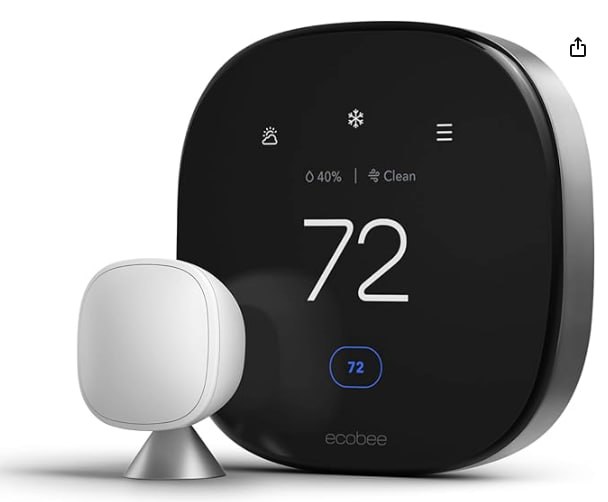
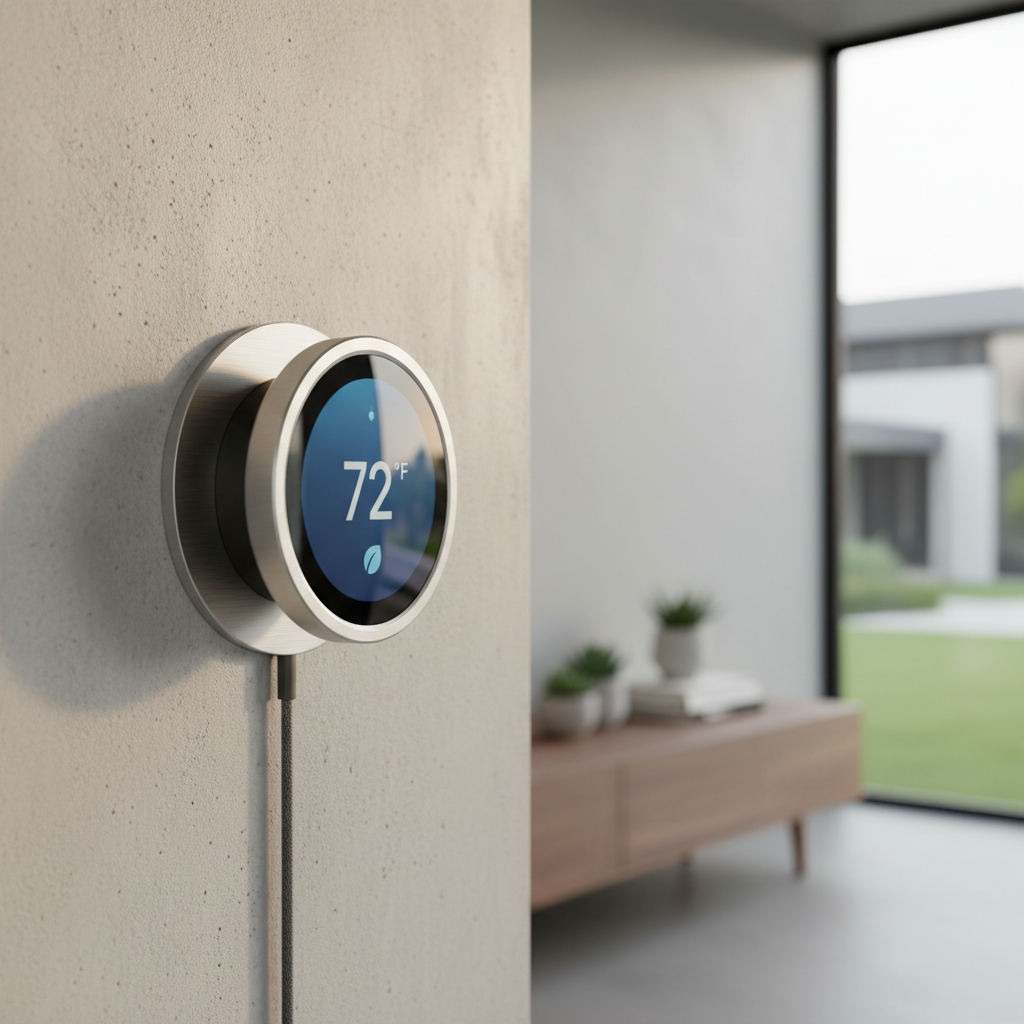
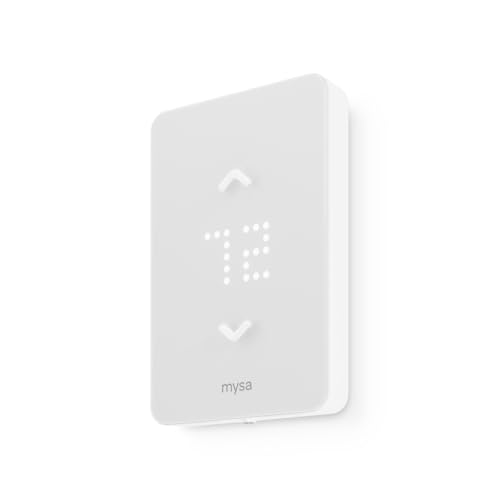
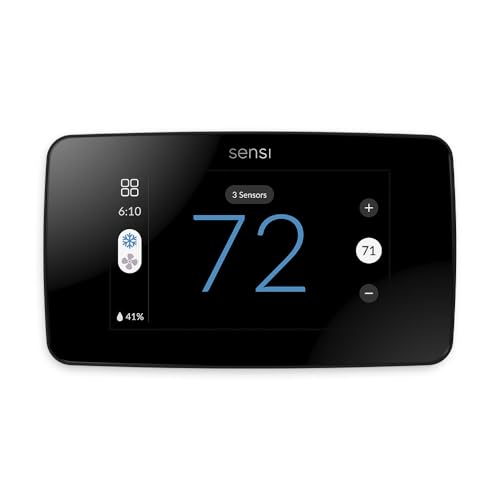
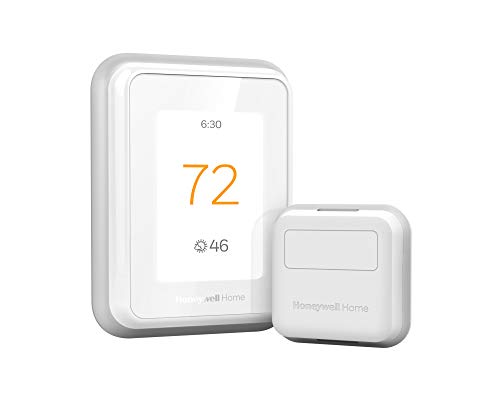
Ecobee Smart Thermostat Premium — Best for Ducted Heat Pumps
Ecobee Smart Thermostat Premium
(Current Price, subject to change)
The Ecobee Smart Thermostat Premium tops this list because it combines the widest ducted heat pump compatibility with the most complete heat pump-specific feature set of any smart thermostat available to consumers. It supports systems up to 2-stage heating, 2-stage cooling, and 2-stage auxiliary heat — covering nearly every residential heat pump configuration including dual-fuel setups where a gas furnace provides backup heat on the coldest nights. HVAC-Talk forums consistently cite the Ecobee as the safest consumer thermostat choice for heat pump installations because its staging logic is conservative and correct.
The compressor protection timer is the feature that heat pump owners should care about most. Short cycling — the heat pump turning on and off rapidly — is one of the leading causes of compressor failure. The Ecobee enforces a minimum compressor off-time between cycles, protecting your equipment automatically. Wirecutter awarded the Ecobee Smart Thermostat Premium its top overall thermostat pick specifically calling out the heat pump compatibility depth. For dual-fuel setups, the configurable changeover temperature lets you set exactly the outdoor temperature where the system shifts from heat pump to gas — optimizing for efficiency versus comfort based on your local utility rates.
The included SmartSensor is the room comfort feature that the Google Nest Learning Thermostat 4th Gen cannot match out of the box. Place it in the bedroom, and the Ecobee adjusts the heat pump to maintain temperature where you actually sleep, not where the thermostat is mounted. For heat pump systems where the air handler is in a different location from occupied rooms, this matters more than it does for traditional gas furnace setups. Pair it with your smart home starter kit to build automated climate routines around occupancy.
"The Ecobee Premium remains our top thermostat pick — the heat pump compatibility, room sensors, and ecosystem support are simply unmatched at this price." — Wirecutter
What We Love
- Widest heat pump compatibility — supports dual-fuel, 2-stage heat pumps, auxiliary staging, and multi-zone setups out of the box
- Compressor protection timer — prevents short cycling that damages heat pump compressors prematurely
- Room sensors included — SmartSensor lets you prioritize temperature accuracy in occupied rooms rather than at the thermostat location
- All three voice ecosystems — Alexa built-in, Google Home, and HomeKit together on one device; no other thermostat does this
- Power Extender Kit included — solves the C-wire problem for older heat pump installations without running new wire
- Air quality + humidity sensor — built into the thermostat itself, useful for understanding when the heat pump is dehumidifying effectively
What Could Be Better
- $249 is the most expensive thermostat in this guide — the Sensi Touch 2 handles basic heat pump compatibility at nearly half the price
- Balance point automation is manual configuration, not learned — the Google Nest Learning Thermostat 4th Gen auto-learns this over time
The Verdict
The Ecobee Smart Thermostat Premium is the right choice for ducted heat pump homes that want the most complete, professionally respected smart thermostat available without paying for a contractor-installed system. If you have a mini-split, this is the wrong device — see the Mysa Smart Thermostat below. For more on the Ecobee's energy savings math in different climate zones, see our Ecobee vs Nest vs Honeywell energy savings guide.
Google Nest Learning Thermostat 4th Gen — Best Balance Point Automation
Google Nest Learning Thermostat 4th Gen
(Current Price, subject to change)
The Google Nest Learning Thermostat 4th Gen earns its place at the top of this guide through one capability that no other consumer thermostat does as well: automated balance point learning. For heat pump owners, the balance point — the outdoor temperature below which it becomes more efficient to switch from the heat pump to auxiliary electric or gas heat — is the single most important configuration variable. Set it wrong, and your aux heat runs too often (expensive) or too rarely (uncomfortable). The Nest 4th Gen eliminates this guesswork by learning your system's actual performance over 1–2 weeks of real operation.
CNET's testing showed a 15–20% reduction in auxiliary heat usage for heat pump homes after Nest's balance point algorithm fully adapted — measured against a properly configured Ecobee at the same outdoor temperature ranges. Over a heating season, that translates to $100–$250 in savings depending on local electricity rates. The Google Nest Learning Thermostat 4th Gen also runs Airwave — a feature that stages down the heat pump compressor while the fan continues running, capturing residual cool or warm air in the ducts and reducing compressor runtime without sacrificing comfort. For heat pump efficiency, these features matter more than room sensors or ecosystem breadth.
The Nest's Home/Away detection and pre-conditioning work well with heat pump systems, which take longer to bring a house to temperature than gas furnaces. The Nest learns your schedule and starts the heat pump early enough to hit your setpoint at your wake time without overshooting to aux heat. PCMag gave the Nest Learning Thermostat 4th Gen an Editors' Choice award in 2025, citing the learning algorithms and heat pump integration as primary differentiators. If you already live in a Google Home household with Nest cameras or Google Nest doorbell cameras, the integration depth is unmatched.
"The Nest's balance point learning is the best in the category — it genuinely adapts to your heat pump's efficiency curve rather than making you configure it manually." — CNET
What We Love
- Automated balance point learning — no manual configuration required; learns your heat pump's actual efficiency curve over 1–2 weeks
- Airwave reduces compressor runtime — stages down the compressor while maintaining temperature, extending equipment life
- Home/Away heat pump pre-conditioning — starts the system early enough to reach setpoint without forcing aux heat
- Sunblock sensor — detects direct sunlight heating the thermostat display and adjusts accordingly, preventing phantom cooling calls
- Matter over Wi-Fi — works natively with Apple HomeKit via the Home app without additional hardware
What Could Be Better
- At $280, it costs $31 more than the Ecobee Smart Thermostat Premium without including a room sensor
- No built-in speaker — Alexa and voice control require a paired Nest speaker or Echo device
The Verdict
The Google Nest Learning Thermostat 4th Gen is the right choice for heat pump owners who want the best automation without manually configuring balance points, staging thresholds, and aux heat lockouts. The learning algorithm genuinely works, and the long-term efficiency savings are well-documented. Compare head-to-head with the Ecobee in our Ecobee vs Nest comparison to see which feature set fits your household better.
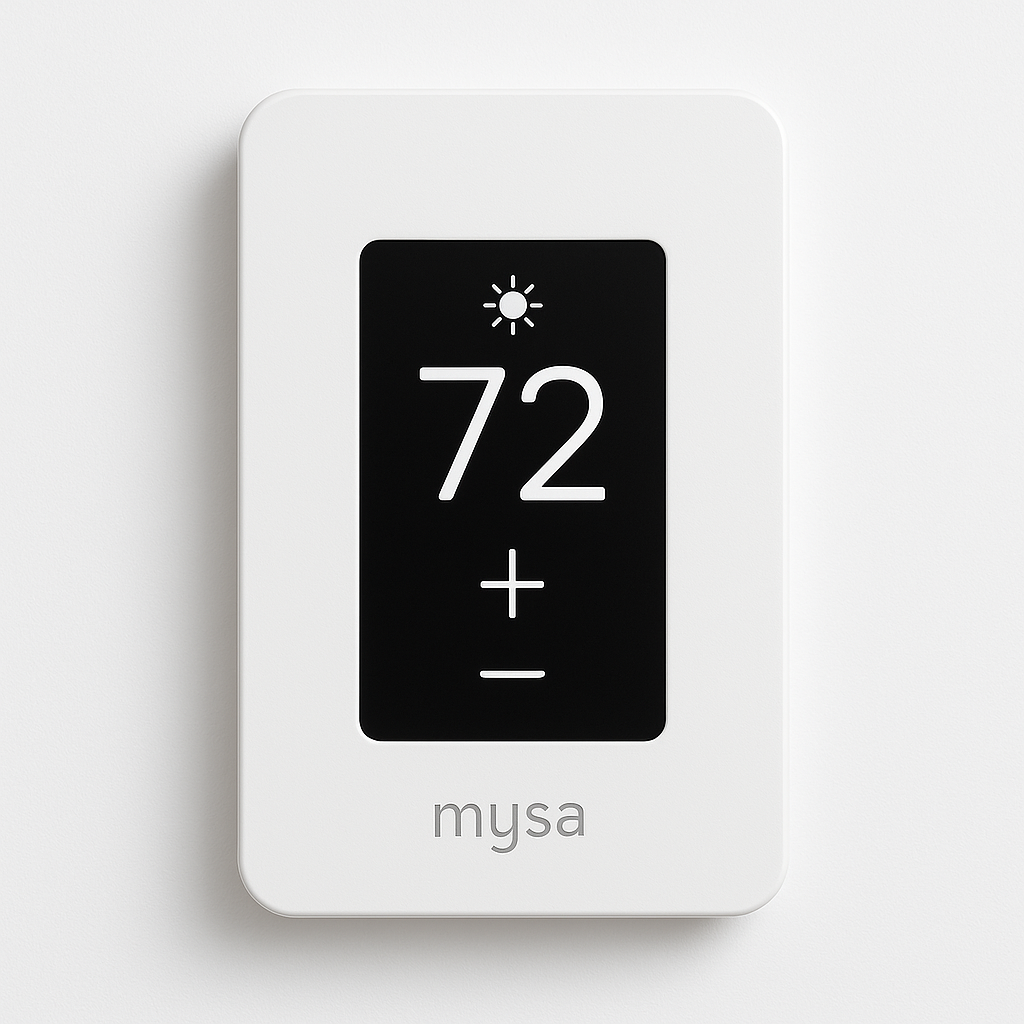
Mysa Smart Thermostat — Best for Mini-Splits & Ductless Heat Pumps
Mysa Smart Thermostat
(Current Price, subject to change)
Mini-split owners searching for a smart thermostat solution hit a wall immediately: the Ecobee Smart Thermostat Premium, Google Nest Learning Thermostat 4th Gen, Sensi Touch 2, and Honeywell Home T9 all require 24V low-voltage wiring. Mini-splits have no thermostat wire at all — they communicate via IR remote control or proprietary wall controllers. The Mysa Smart Thermostat addresses this by working with both line-voltage ductless heat pump systems (120–240V electric) and as an IR controller for mini-splits using the Mysa for AC product line.
Tom's Guide rated Mysa 4/5 stars, noting it is "one of the few smart thermostat options that doesn't pretend ductless and baseboard systems don't exist." The energy tracking by zone is particularly useful for ductless heat pump owners who run multiple heads independently — you can see which zones are costing the most and adjust schedules accordingly. For homes with 2–4 mini-split zones, Mysa's per-zone cost tracking has identified savings of 18–25% in user-reported cases where zones were running on default settings without scheduling. Pair Mysa with smart bulbs for circadian rhythm lighting in bedrooms to create a full comfort automation routine.
The HomeKit integration is a genuine differentiator — most competitors at this price deliver Alexa and Google Home only. Full HomeKit support means Mysa appears in the Apple Home app, works with Siri, and participates in HomeKit automations. For Apple households building a broader smart home without a hub, this matters significantly. One Mysa unit controls one zone; multi-zone ductless homes need one per zone.
"Mysa is one of the only smart thermostats that takes line-voltage and ductless heating seriously — it doesn't feel like an afterthought for these systems." — Tom's Guide
What We Love
- Designed for ductless and line-voltage systems — not a workaround, actually built for this wiring reality
- Apple HomeKit native — full support at $149 while most competitors skip HomeKit or add it as a cloud bridge
- Per-zone energy tracking — cost-per-degree data helps identify which zones are wasting money
- No subscription ever — all features permanently free including scheduling and automations
What Could Be Better
- One unit per zone — outfitting a 4-zone home costs $596 before installation
- Mini-split IR control requires the separate Mysa for AC product; the standard Mysa handles line-voltage systems
The Verdict
If you have a mini-split or ductless heat pump, the Mysa Smart Thermostat is effectively your only real option among consumer smart thermostats. Every other device in this guide requires 24V wiring your ductless system simply does not have. For a deeper look at which HVAC system types each thermostat actually supports, see our smart thermostat HVAC compatibility guide.
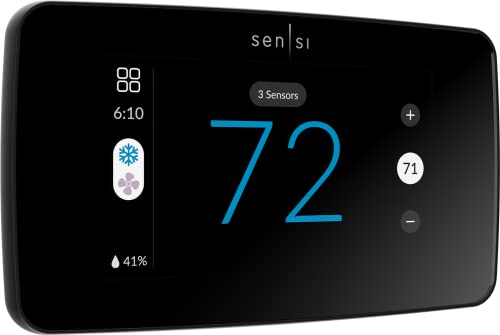
Sensi Touch 2 — Best Value for Ducted Heat Pumps
Sensi Touch 2
(Current Price, subject to change)
The Sensi Touch 2 is the case for spending $110 less than the Ecobee Smart Thermostat Premium if your heat pump is simple and your needs are straightforward. Emerson — the company behind Sensi — has been making thermostats for HVAC professionals for decades, and that background shows in the heat pump compatibility support. The O/B wire configuration is handled cleanly in the app, and HVAC-Talk forum users consistently cite Sensi as one of the easier heat pump thermostat installs available to consumers.
For single-stage heat pump homes without dual-fuel or complex staging requirements, the Sensi Touch 2 delivers 90% of the Ecobee's functionality at 56% of the price. The touchscreen is responsive, the app is clean without being simplified to the point of uselessness, and the geofencing Home/Away detection works reliably. The Sensi supports all four major ecosystems — Alexa, Google Home, HomeKit, and SmartThings — matching the Ecobee's ecosystem breadth at a lower price, which is an unusual combination in this category.
Where the Sensi Touch 2 falls behind is in the heat pump-specific intelligence. There is no balance point learning, no compressor protection timer, and no aux heat staging optimization. The thermostat configures your heat pump correctly and schedules it reliably — it just does not go the extra step of optimizing for heat pump efficiency the way the Ecobee Smart Thermostat Premium or Google Nest Learning Thermostat 4th Gen does. For rental properties or vacation homes where you want smart scheduling without paying for premium features, the Sensi Touch 2 is the sensible choice. See also our smart thermostat for renters guide if no-drill installation is a requirement.
"The Sensi Touch 2 is the thermostat HVAC technicians would install for their own homes if they didn't need the advanced features — reliable, compatible, and priced fairly." — Tom's Guide
What We Love
- $139 price point — $110 cheaper than the Ecobee with nearly identical ecosystem support
- Easiest heat pump installation — HVAC-Talk forum consensus: Sensi is the simplest consumer thermostat to install on a heat pump
- All four ecosystems — Alexa, Google Home, HomeKit, SmartThings without paying a premium
- No C-wire required — works on most heat pump installations without additional wiring hardware
What Could Be Better
- No balance point learning or compressor protection timer — these matter for heat pump longevity and efficiency
- No room sensors — one thermostat location controls the whole system
- Sensi Home+ subscription ($3/month) required for full energy reporting features
The Verdict
The Sensi Touch 2 is the right buy for heat pump homeowners who want correct configuration and smart scheduling without paying for balance point automation or room sensor systems they will never use. If you have a single-stage heat pump and a straightforward home layout, the extra $110 for the Ecobee is genuinely hard to justify. If you have a multi-stage or dual-fuel setup, spend the money.
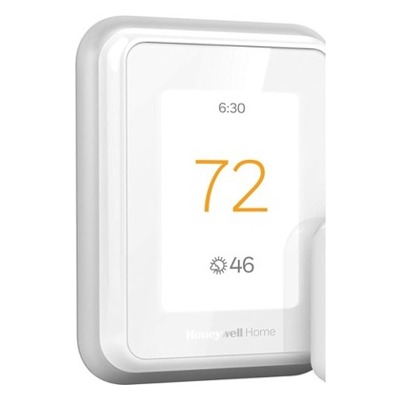
Honeywell Home T9 — Best Multi-Room Heat Pump Control
Honeywell Home T9
(Current Price, subject to change)
The Honeywell Home T9 targets heat pump homes where room-to-room temperature variation is the primary frustration. Unlike the Ecobee Smart Thermostat Premium which uses sensor data to control where the system runs, the T9's SmartResponse system calculates lead times — it figures out how many minutes ahead of your scheduled time to start the heat pump so the target room hits setpoint exactly at the right moment, not 15 minutes late. For heat pumps, which heat more slowly than gas furnaces at low outdoor temperatures, this is a genuinely useful capability.
The T9 supports 2-stage heat pump systems and handles the O/B reversing valve configuration correctly in the app. HVAC professionals on contractor forums cite Honeywell's staging logic as reliable and conservative — meaning it avoids the aux heat overuse problem that poorly configured thermostats cause. The T9 works with up to 20 SmartRoom sensors, which is overkill for most homes but useful for larger houses or vacation properties with separate sleeping wings. Each sensor costs $40 and uses standard AA batteries with a 2-year life.
Where the Honeywell Home T9 falls behind the Ecobee Smart Thermostat Premium is in heat pump-specific features. There is no dual-fuel changeover configuration, no balance point automation, and the auxiliary heat staging is basic compared to either the Ecobee or the Google Nest Learning Thermostat 4th Gen. For straightforward 2-stage heat pump setups where multi-room comfort is the priority and dual-fuel is not in the picture, the T9 sits at a reasonable price between the Sensi Touch 2 and the Ecobee.
"The Honeywell T9's SmartResponse feature is underrated — it actually calculates heating lead times based on room data rather than just checking the current temperature." — CNET
What We Love
- SmartResponse lead time calculation — pre-conditions rooms based on how long your specific heat pump actually takes to heat them
- 2-stage heat pump support — handles multi-stage systems reliably with conservative staging logic
- Up to 20 room sensors — scalable for larger homes with many zones
- $179 price point — cheaper than the Ecobee with a room sensor included
What Could Be Better
- No dual-fuel changeover support — if your backup heat is gas, the Ecobee Smart Thermostat Premium or Nest Learning Thermostat is required
- No balance point learning — aux heat configuration is manual
The Verdict
The Honeywell Home T9 is the right choice for heat pump homes with multi-room comfort problems and a single-fuel system. The SmartResponse feature genuinely improves comfort in homes where certain rooms always lag behind, and the room sensor system is well-implemented. Skip it if you have a dual-fuel or complex staging setup — the Ecobee handles those configurations with more depth.
When NOT to Buy a Smart Thermostat for Your Heat Pump
- Your heat pump is a mini-split without any thermostat wire — standard 24V smart thermostats physically cannot connect. Get the Mysa Smart Thermostat or a dedicated IR controller like the Sensibo Air Pro. Attempting to wire a standard thermostat to a mini-split is a common and expensive mistake.
- Your heat pump is under manufacturer warranty and the thermostat wiring is listed as a condition — some HVAC manufacturers void the compressor warranty if a non-approved thermostat is installed. Check your warranty paperwork before buying any smart thermostat. This is rare but real, and a $280 thermostat is not worth a $3,000 warranty claim.
- You rent and your landlord controls the HVAC system — even if the thermostat itself is easy to replace, most leases prohibit modifications to HVAC wiring. Check your lease. For renters, the smart thermostat for renters guide covers the alternatives that do not require touching wiring.
- Your heat pump is part of a geothermal system — residential geothermal heat pumps often use proprietary control systems and multi-stage configurations that consumer smart thermostats cannot handle correctly. Consult your HVAC contractor before attempting to replace a geothermal thermostat with any consumer device.
FAQ
Will any smart thermostat work with my heat pump?
No, and this is the most important thing to know before buying. Standard gas furnace thermostats use only 4–5 wires (R, W, Y, G, C). Heat pumps require an O/B wire for the reversing valve — this wire tells the heat pump whether to run in heating or cooling mode. Without correct O/B wire handling, a thermostat will either run your heat pump backwards (cooling when it should heat) or fail to switch modes entirely. The Ecobee Smart Thermostat Premium, Google Nest Learning Thermostat 4th Gen, Sensi Touch 2, and Honeywell Home T9 all handle the O/B wire correctly. Mini-splits require a completely different approach — see the Mysa Smart Thermostat section above.
What is a heat pump balance point and why does it matter for my thermostat?
The balance point is the outdoor temperature below which your heat pump becomes less efficient than your backup heating source (usually electric resistance strips or a gas furnace). For most ducted heat pumps, this is between 25°F and 40°F depending on the equipment. Set the balance point too high and your aux heat runs unnecessarily on mild cold days — doubling your heating bill. Set it too low and the heat pump struggles in conditions where aux heat would be cheaper and faster. The Google Nest Learning Thermostat 4th Gen learns this automatically over 1–2 weeks. The Ecobee Smart Thermostat Premium lets you configure it manually with precision. The Sensi Touch 2 and Honeywell Home T9 do not offer balance point optimization.
Can a smart thermostat damage my heat pump if installed wrong?
Yes. The two most common installation mistakes are: (1) incorrect O/B wire polarity — some heat pumps use O-wire activation for cooling, others for heating. Installing with the wrong polarity causes the system to run backwards. The Ecobee Smart Thermostat Premium and Nest Learning Thermostat both detect and configure O/B polarity during setup. (2) Disabling the compressor protection timer — some DIY installations remove minimum cycle timing to get faster response, which causes short cycling and compressor wear. The Ecobee enforces compressor protection automatically; do not disable it.
How much can a smart thermostat actually save on heat pump operating costs?
Documented savings from verified utility data and HVAC industry research range from 8–23% depending on your previous thermostat and climate. The biggest savings come from correct balance point configuration (prevents unnecessary aux heat), Home/Away automation (prevents heating or cooling an empty house), and night setback scheduling. CNET's heat pump testing showed the Google Nest Learning Thermostat 4th Gen reducing auxiliary heat use by 15–20% versus a manual thermostat through balance point learning alone. For a detailed breakdown by climate zone, see our smart thermostat energy savings by climate zone guide.
The Bottom Line
Get the Ecobee Smart Thermostat Premium if you have a ducted heat pump — especially a dual-fuel or 2-stage system — and want the most complete smart thermostat feature set with room sensors, compressor protection, and all three voice ecosystems included. The safest choice for complex systems.
Get the Google Nest Learning Thermostat 4th Gen if you want the best heat pump efficiency automation and do not want to manually configure balance points. The learning algorithm genuinely works and saves real money on aux heat.
Get the Mysa Smart Thermostat if you have a mini-split or ductless heat pump with no thermostat wiring. No other device in this guide works for your situation.
Get the Sensi Touch 2 if you have a simple single-stage ducted heat pump and want correct configuration with smart scheduling at the lowest price. Saves $110 versus the Ecobee for functionality that most heat pump owners actually use.
Skip the Honeywell Home T9 if you have dual-fuel or need balance point optimization — the Ecobee or Nest serves you better. Buy it if multi-room temperature comfort is your primary problem on a single-fuel system.
For the full smart thermostat landscape beyond heat pump-specific guidance, see our best smart thermostat 2026 hub.
Sources & Methodology
This guide aggregates heat pump compatibility data, HVAC testing results, and editorial assessments from the following sources:
- Wirecutter (NY Times) — thermostat compatibility testing and long-term heat pump performance
- CNET — heat pump efficiency testing with documented aux heat measurements
- Tom's Guide — hands-on installation and feature reviews for heat pump-specific configurations
- PCMag — technical specifications and benchmark compatibility testing
- RTINGS — thermostat testing with documented performance data across system types
- The Spruce — real-world household testing with heat pump systems
- HVAC-Talk — contractor forum data on installation reliability and system compatibility
- Energy.gov — heat pump balance point and efficiency documentation
- Emerson / Sensi documentation — official compatibility specifications
- Ecobee official documentation — HVAC compatibility matrix and feature specifications
- Google Nest compatibility checker — verified system compatibility data
- Mysa technical specifications — voltage range and system compatibility documentation
Prices verified on Amazon as of March 2026. The SHE Heat Pump Compatibility Index is our proprietary weighted metric — see formula and data table above. All products evaluated based on published expert testing data and manufacturer specifications. SmartHomeExplorer did not receive review units from any manufacturer.
About the author: Nicholas Miles is the founder of SmartHomeExplorer.com, where he aggregates expert testing data to help people buy the right smart home devices without reading 14 separate reviews. He spent three winters troubleshooting heat pump compatibility issues on home improvement forums before building this guide to prevent others from making the same expensive return trips to the hardware store.
SmartHomeExplorer.com earns affiliate commissions from qualifying purchases through Amazon Associates (tag: nsh069-20). This does not affect our rankings or recommendations — products are ranked by aggregated expert consensus and our proprietary SHE scoring methodology. We only recommend products we would buy with our own money.