
Best 48-Amp Hardwired Smart EV Chargers 2026
The Emporia 48A wins — panel-aware energy management and 11.5 kW charging at the strongest balance of capability and cost. Need two-car load sharing instead? The Autel is the pick.
This article contains affiliate links. We may earn a commission at no extra cost to you. Prices change frequently — check the current price on Amazon before buying. Learn more
The Short Answer
The Emporia 48A wins because it integrates 11.5 kW hardwired charging with panel-aware energy management via the Vue monitor, plus TOU scheduling, at $39.04 per delivered kW. Its limitation is single-unit management, not multi-charger circuit sharing. For two EVs sharing one circuit, choose the Autel MaxiCharger 50A.
Featured in this Guide
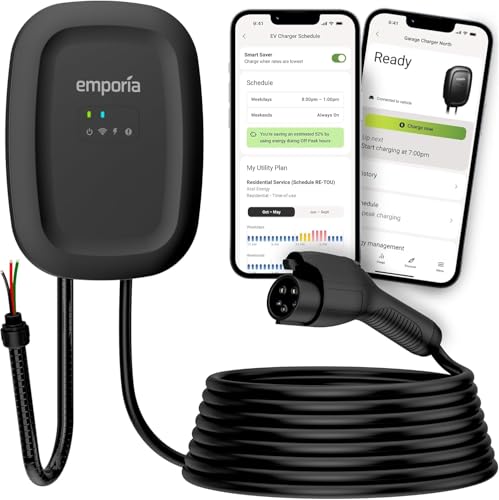
Emporia
Level 2 EV Charger (48A Hardwired)
- •Top composite 8.36
- •48A charging plus panel-aware Vue energy management at $39.04 per kW
Autel
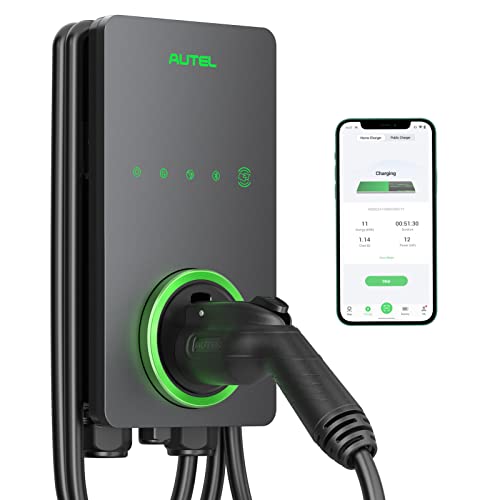
MaxiCharger AC Level 2 EV Charger (50A Hardwired)
- •50A ceiling plus the line's power sharing and dynamic load balancing, at $41.58 per delivered kW
EVIQO
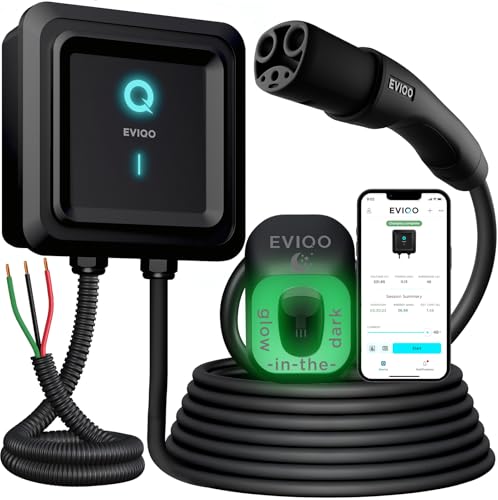
NACS Level 2 EV Charger 48A for Tesla (Hardwired)
- •Native NACS, no adapter, at the comparison's lowest $37.30 per delivered kW
ChargePoint
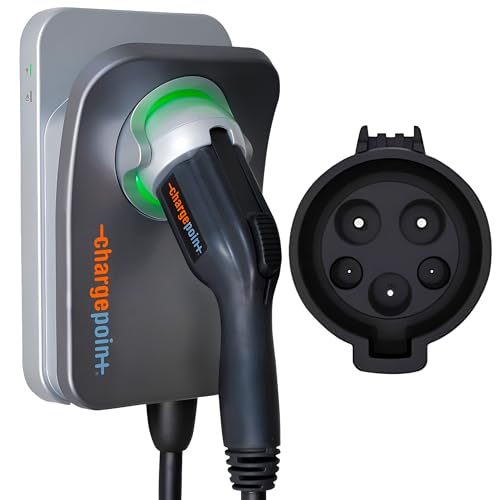
Home Flex Level 2 EV Charger
- •Wirecutter and CNET pick
- •app-adjustable 16-50A on a hardwired build, and the category's most polished application
EVIQO
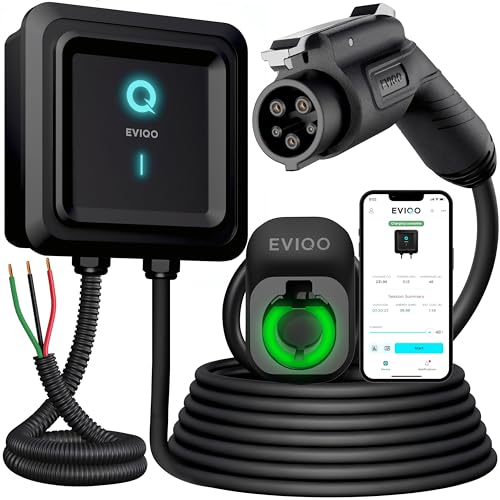
Level 2 EV Charger 48A (J1772, Hardwired)
- •$429, IP66 weatherproof, 98/100 Evipower platform
- •lowest cost per kW in the field
Head-to-Head: Speed, Load Sharing, and Price per kW
Energy
Chart
 Smarthomeexplorer.com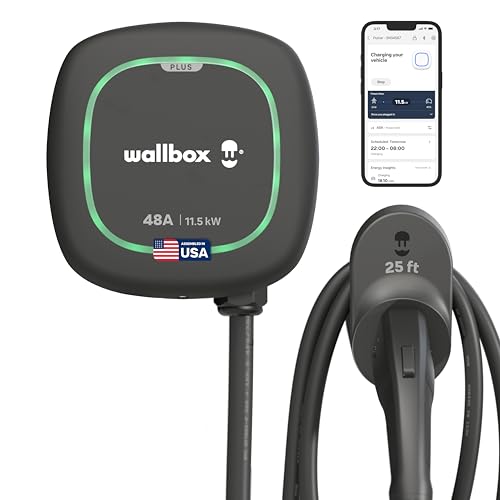
Tap any pick to check its live price on Amazon.
AlorAir Sentinel HDi90 Basement/Crawlspace Dehumidifier with Pump
Must BuyCheck price
Big Ass Fans Haiku L 52-Inch Smart Ceiling Fan
Must BuyCheck price
AprilAire E100 Pro 100-Pint Whole-House Dehumidifier
$2,158.33RecommendedCheck price
LG Dual Inverter Smart WiFi Window AC (10,000 BTU)
$499.00Must BuyCheck price
Why 48 Amps Changes the Whole Installation
You have decided to retire the portable cord. The consequential decision now concerns which permanent wall unit justifies the electrician and the 60-amp breaker. That installation commitment, not the incremental speed, complicates this category. The NEC continuous-load regulation mandates a 60-amp circuit for any 48A charger, requiring permanent hardwiring. A conventional NEMA 14-50 receptacle restricts continuous delivery to 40A, establishing 48A as a distinct installation classification.
Throughout this roundup we comparatively evaluated 7 hardwired units using the weighted SHE Hardwired Install Value composite, which quantifies installation value itself. The dominant coefficients are delivered power plus smart-application depth, each normalized at 0.20. At 240V, 48A continuously yields 11.5 kW, approximately 35-46 mi per hour, versus 29-38 mi/hr from comparable 40A plug-in alternatives. The field differentiates on load sharing, application depth, connector compatibility, and normalized price per delivered kW.
Best for most homes: Emporia Level 2 EV Charger (48A Hardwired)
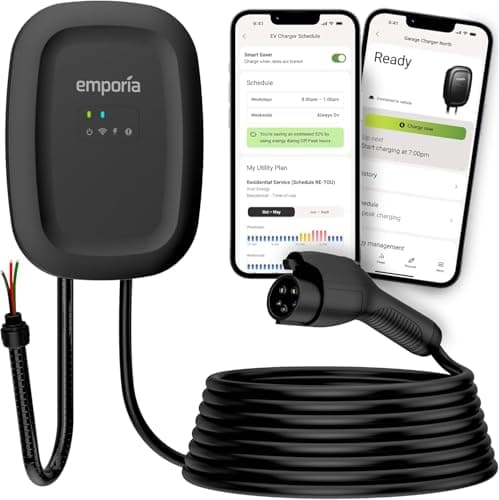
Emporia Level 2 EV Charger (48A Hardwired)
- Panel-aware peak-demand management when paired with the Vue monitor
- Single-unit load management, not multi-charger sharing
(Current price, subject to change)
If you're upgrading from a portable cord and want verification the speed bump produced value, this is the appropriate recommendation. Skip it if you operate two EVs, since it manages a single unit rather than sharing a circuit. The decisive specifications: 48A continuous delivers 11.5 kW, the included whip simplifies the hardwire, and it pairs with the Emporia Vue monitor.
The Emporia Level 2 EV Charger (48A Hardwired) earns the top weighted composite of 8.36 on the SHE Hardwired Install Value Score. What that number means for your household is concrete. The Vue pairing produces panel-aware peak-demand management, so the charger throttles continuously before your service breaker trips. It also enables excess-solar charging, routing surplus production into the vehicle. TOU scheduling on an off-peak rate plan reduces per-mile electricity cost, with charging automatically timed to the cheapest daily window.
At $449 it achieves $39.04 per delivered kW, the second-strongest value factor here behind only the EVIQO units. Its constraint remains honest: it intelligently manages one charger rather than sharing a circuit across two. Compared to the Autel MaxiCharger AC Level 2 EV Charger (50A Hardwired), the Emporia leads on energy-ecosystem depth while the Autel prevails the moment a second EV enters the household.
What We Love
- Panel-aware peak-demand management when paired with the Vue monitor
- Excess-solar charging continuously routes surplus production into the car
- Strong $39.04 per delivered kW for a complete energy ecosystem
- TOU scheduling that meaningfully reduces off-peak per-mile cost
What Could Be Better
- Single-unit load management, not multi-charger sharing
- J1772 means NACS cars require a daily adapter
- Application depth trails ChargePoint on rate-plan integration
The Verdict
If you're completing your first hardwire upgrade and want the speed bump to justify itself, the Emporia Level 2 EV Charger (48A Hardwired) fits the brief without compromise. The 8.36 composite reflects continuous 11.5 kW charging plus panel-aware energy management at the strongest balance of capability and cost. For a one-EV household, there's no need to overthink it.
Check price for the Emporia Level 2 EV Charger (48A Hardwired) →
Ready to upgrade your home?
eufy SoloCam S340 Solar Security Camera, 4-Cam Kit
See it on Amazon
REOLINK 360° Solar Security Cameras, 4 Pack
See it on Amazon
Yale Assure Lock 2 Wi-Fi Smart Lock with Keypad
See it on Amazon
Sponsored listings from Amazon’s Sponsored Products for Creators program, kept apart from our reviews and rankings. How we make money
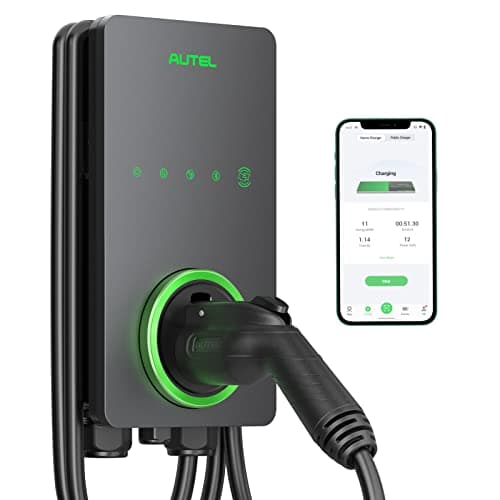
Best for two-EV households: Autel MaxiCharger AC Level 2 EV Charger (50A Hardwired)
Autel MaxiCharger AC Level 2 EV Charger (50A Hardwired)
- 50A ceiling tops the delivered-power factor in this comparison
- EnergySage notes the feature set carries a few catches
(Current price, subject to change)
If you're planning for two vehicles on one circuit, this is the strongest recommendation at the price. Skip it if you charge a single EV and want the deepest energy application, where the Emporia or ChargePoint serve you better. The decisive specifications: up to 50A delivers 12 kW, Wi-Fi plus Bluetooth handle connectivity, and the 25 ft cable reaches most garage configurations.
The Autel MaxiCharger AC Level 2 EV Charger (50A Hardwired) earns a weighted composite of 8.28, the second mark in this comparison. Its 50A ceiling tops the delivered-power factor, though that advantage only outruns 48A for the rare EVs whose onboard chargers exceed 11.5 kW. The genuine differentiator is the MaxiCharger line's power sharing, permitting a second unit to join the circuit without a panel upgrade. Dynamic load balancing via an optional current sensor produces continuous panel protection as household demand climbs.
Attribute the line's documented 6-unit sharing carefully: that figure is published on the MaxiCharger Lite, so treat it as line-level capability rather than this unit's rated maximum. EnergySage's verdict remains feature-packed with a few catches. Compared to the Wallbox Pulsar Plus 48A Level 2 EV Charger (Hardwired), the Autel delivers comparable multi-EV intelligence at meaningfully superior value per kW.
What We Love
- 50A ceiling tops the delivered-power factor in this comparison
- MaxiCharger line power sharing scales to a second charger later
- Dynamic load balancing continuously protects the panel as load climbs
- $41.58 per delivered kW for the multi-EV feature set, third-best value here
What Could Be Better
- EnergySage notes the feature set carries a few catches
- The 6-unit sharing figure is documented on the Lite, not this unit
- J1772 means NACS cars require a daily adapter
The Verdict
If you're a two-EV household budgeting one 60-amp circuit for both vehicles, the Autel MaxiCharger AC Level 2 EV Charger (50A Hardwired) lines up with what you actually need. The 8.28 composite reflects the 50A ceiling plus the line's power sharing and dynamic load balancing. EnergySage calls it feature-packed with a few catches, so review the notes first.
Check price for the Autel MaxiCharger AC Level 2 EV Charger (50A Hardwired) →
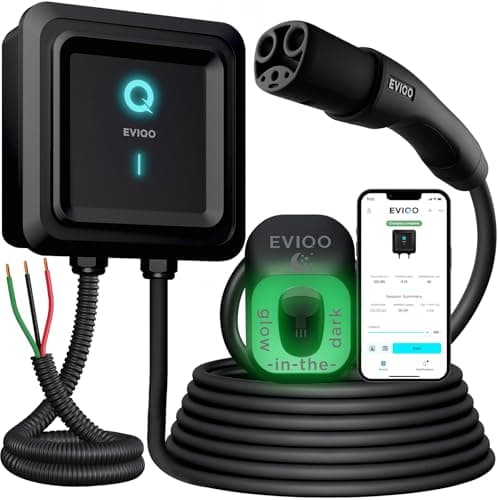
Best for Tesla and NACS cars: EVIQO NACS Level 2 EV Charger 48A for Tesla (Hardwired)
EVIQO NACS Level 2 EV Charger 48A for Tesla (Hardwired)
- Native NACS continuously eliminates the daily adapter for Tesla owners
- Application feature set is thinner than ChargePoint's
(Current price, subject to change)
If your daily driver carries a NACS port, this is the no-adapter recommendation. Skip it if every vehicle you own remains J1772, where the matching EVIQO configuration fits better. The decisive specifications: 48A delivers 11.5 kW, the native NACS connector eliminates the adapter, and IP66 / NEMA 4 weatherproofing suits exposed walls.
The EVIQO NACS Level 2 EV Charger 48A for Tesla (Hardwired) earns a weighted composite of 8.00. It maximizes the connector-future-proofing factor because native NACS requires no adapter for Tesla today plus the Ford, GM, Honda, and Rivian NACS-native wave. At $429 it achieves $37.30 per kW, tied for the lowest figure in this comparison. ZDNET named the Evipower platform its Best EV Charger 2024, and this unit shares that platform with a NACS connector.
Adapters bridge both J1772 and NACS directions, so no connector choice strands a household; the choice concerns only which vehicle requires no daily adapter. Compared to the EVIQO Level 2 EV Charger 48A (J1772, Hardwired), the singular difference is the plug, which yields a substantially higher future-proofing score for NACS-port garages.
What We Love
- Native NACS continuously eliminates the daily adapter for Tesla owners
- Tied for the lowest price per delivered kW in the comparison at $37.30
- IP66 / NEMA 4 weatherproofing for exposed installations
- Identical Evipower platform to the award-winning J1772 unit
What Could Be Better
- Application feature set is thinner than ChargePoint's
- No documented multi-unit power sharing
- NACS is inappropriate for a household of only J1772 cars
The Verdict
If you're a Tesla owner or driving a 2025-26 NACS-port EV and you don't want Tesla wall hardware, the EVIQO NACS Level 2 EV Charger 48A for Tesla (Hardwired) checks the boxes that matter for that garage. The 8.00 composite reflects native NACS at the comparison's lowest $37.30 per kW. Choose the J1772 EVIQO instead if every vehicle you own still uses J1772.
Check price for the EVIQO NACS Level 2 EV Charger 48A for Tesla (Hardwired) →
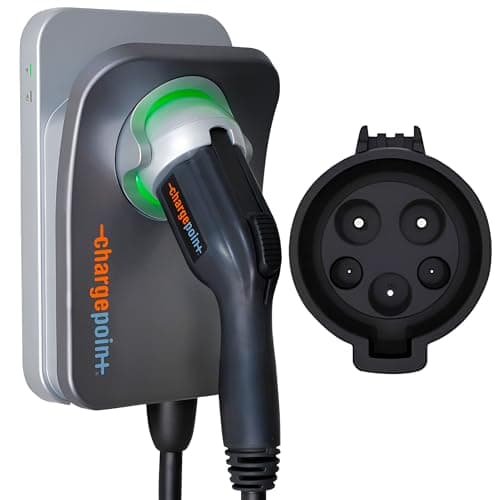
Best app experience: ChargePoint Home Flex Level 2 EV Charger
ChargePoint Home Flex Level 2 EV Charger
- 6 app-selectable amperage steps from 16A to 50A, all set from the phone
- No residential multi-unit power sharing for two EVs
(Current price, subject to change)
If the application is genuinely the product to you, this is the appropriate recommendation. Skip it if you need two vehicles sharing one circuit, since it provides no residential power sharing. The decisive specifications: up to 50A delivers 12 kW hardwired, and 6 app-selectable settings span 16-50A, so the electrician matches the charger to the circuit.
The ChargePoint Home Flex Level 2 EV Charger earns 7.93 on the SHE Hardwired Install Value Score, on a maximized application-depth factor and an installation-flexibility factor level with the rest of the field. Wirecutter independently names it the best home EV charger for most households, and CNET rates it best overall, both crediting the adjustable amperage and application quality. The application consolidates TOU rate plans, session history, and a public-network account into one location, which yields the lowest-friction scheduling experience documented here.
Its constraint involves load sharing: ChargePoint Home Flex offers no residential multi-unit sharing, so a two-EV configuration mandates two independent circuits. At $528 it computes to $44.00 per delivered kW, the second-highest figure in this comparison behind only the Wallbox. Compared to the Emporia Level 2 EV Charger (48A Hardwired), ChargePoint prevails on application polish while Emporia prevails on energy-ecosystem depth and value; the two now score level on installation flexibility.
What We Love
- 6 app-selectable amperage steps from 16A to 50A, all set from the phone
- The category's most polished application per Wirecutter and CNET
- TOU rate plans plus comprehensive session-history tracking
- Public ChargePoint network account lives in the same app as the home charger
What Could Be Better
- No residential multi-unit power sharing for two EVs
- Second-highest cost per delivered kW here at $528 ($44.00 per kW); only the Wallbox costs more
- J1772 means NACS cars require a daily adapter
The Verdict
If you're an application-first buyer on a time-of-use plan and you want the charger dialled to whatever circuit your panel can spare, the ChargePoint Home Flex Level 2 EV Charger is a sensible pick for that setup. The 7.93 composite reflects 16-50A adjustability plus the smoothest scheduling application here. Recognize that it omits multi-EV power sharing.
Check price for the ChargePoint Home Flex Level 2 EV Charger →
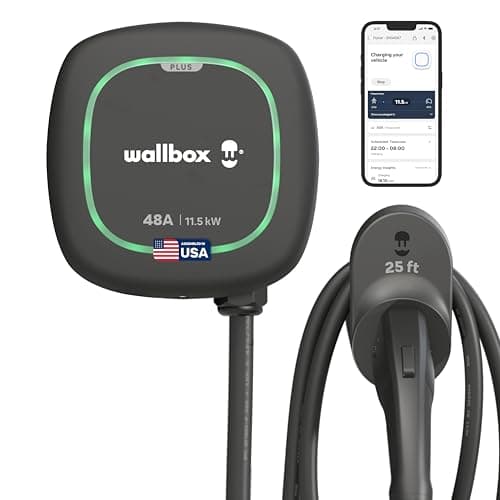
Best managed premium install: Wallbox Pulsar Plus 48A Level 2 EV Charger (Hardwired)
Wallbox Pulsar Plus 48A Level 2 EV Charger (Hardwired)
- Power Sharing distributes one circuit across 3 units
- Priciest per kW in the comparison at $60.87
(Current price, subject to change)
If managed multi-unit sharing in a compact package is the objective, this is a reasonable recommendation. Skip it if value per kW governs your decision, since it is the priciest configuration here. The decisive specifications: 48A delivers 11.5 kW, Power Sharing scales across 3 Pulsar units, and the compact NEMA 4 body suits constrained walls.
The Wallbox Pulsar Plus 48A Level 2 EV Charger (Hardwired) earns a weighted composite of 7.77. Its load-sharing factor scores strongly because Power Sharing distributes one circuit across 3 units, supplemented by Energy Star plus Alexa and Google voice. EnergySage's verdict characterizes it as a fair-weather, smart, and compact charger, documenting Wi-Fi and Bluetooth connectivity complaints plus cold-stiff cables in freezing climates.
At $699.99 it computes to $60.87 per delivered kW, the highest in this comparison. The normalized $/kW factor exposes that premium plainly. You pay for the sharing, the certification, and the voice control. Compared to the Autel MaxiCharger AC Level 2 EV Charger (50A Hardwired), the Autel shares circuits at considerably superior value, so Wallbox earns its position only when the compact body and voice integration justify the premium.
What We Love
- Power Sharing distributes one circuit across 3 units
- Energy Star plus UL certification
- Alexa and Google voice control integrated
- Compact NEMA 4 body for constrained garage walls
What Could Be Better
- Priciest per kW in the comparison at $60.87
- Reviewers document Wi-Fi and Bluetooth connectivity complaints
- Cold-weather cable stiffness in freezing climates
The Verdict
If you're pursuing managed multi-charger sharing in a compact, voice-controlled body and the budget accommodates it, the Wallbox Pulsar Plus 48A Level 2 EV Charger (Hardwired) is a sensible pick for that setup. The 7.77 composite reflects 3-unit Power Sharing plus Energy Star, though you pay $60.87 per kW. EnergySage's fair-weather caveats deserve review first.
Check price for the Wallbox Pulsar Plus 48A Level 2 EV Charger (Hardwired) →
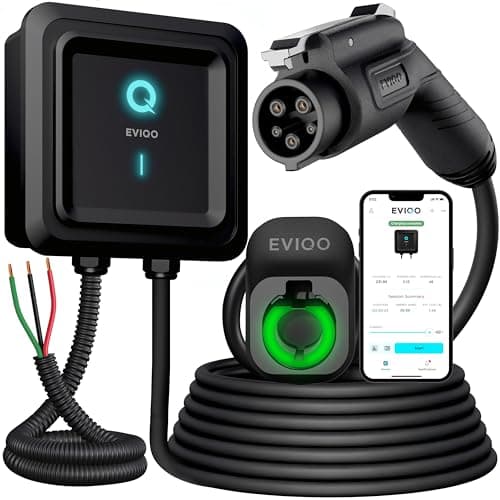
Best budget J1772 pick: EVIQO Level 2 EV Charger 48A (J1772, Hardwired)
EVIQO Level 2 EV Charger 48A (J1772, Hardwired)
- Tied for the lowest price per delivered kW in the comparison at $37.30
- Application feature set is thinner than ChargePoint's
(Current price, subject to change)
If you want the most charging per dollar for one J1772 vehicle, this is the value recommendation. Skip it if you need power sharing or a NACS plug, where alternative picks fit. The decisive specifications: 48A delivers 11.5 kW, the 2.4GHz Wi-Fi application handles scheduling, and IP66 / NEMA 4 construction is fully outdoor-rated.
The EVIQO Level 2 EV Charger 48A (J1772, Hardwired) earns a weighted composite of 7.40. It ties for the strongest price-per-kW factor at $37.30, the lowest figure in this comparison. ZDNET named the Evipower platform its Best EV Charger 2024. UL plus ETL certification produces credible safety credentials at a $429 price, the same hardware platform as the NACS variant at the identical cost per delivered kW.
Its limitations involve application depth and sharing: the feature set is competent but thinner than ChargePoint's, and no multi-unit power sharing is documented. Compared to the Emporia Level 2 EV Charger (48A Hardwired), the EVIQO undercuts on price while the Emporia contributes the Vue energy ecosystem that justifies its modest premium.
What We Love
- Tied for the lowest price per delivered kW in the comparison at $37.30
- IP66 / NEMA 4 weatherproofing for exposed walls
- UL plus ETL certification at a budget price
- ZDNET Best EV Charger 2024 — the platform powering both EVIQO configurations
What Could Be Better
- Application feature set is thinner than ChargePoint's
- No documented multi-unit power sharing
- J1772 means NACS cars require a daily adapter
The Verdict
If you're cost-focused, drive a J1772 vehicle, and want full 48A charging without paying for sharing you won't use, the EVIQO Level 2 EV Charger 48A (J1772, Hardwired) checks the boxes that matter for a single-EV home. The 7.40 composite reflects the lowest $37.30 per kW plus IP66 weatherproofing. That's the path of least friction for a value-first installation.
Check price for the EVIQO Level 2 EV Charger 48A (J1772, Hardwired) →
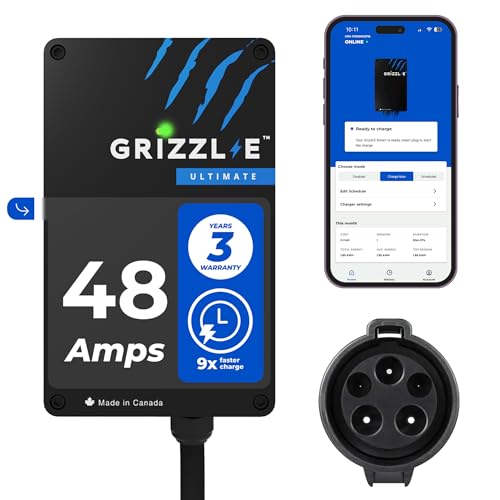
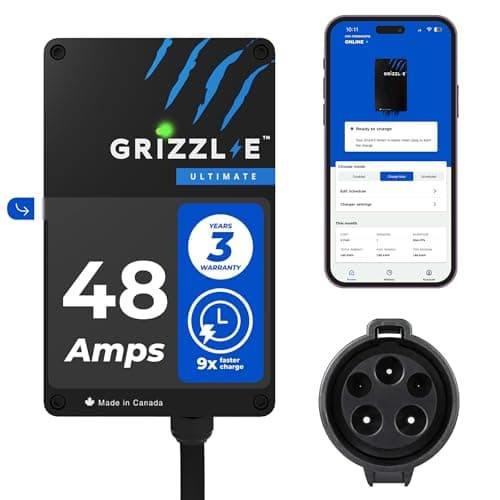
Best for exposed outdoor installs: Grizzl-E 48A Ultimate Level 2 EV Charger (Hardwired)
Grizzl-E 48A Ultimate Level 2 EV Charger (Hardwired)
- IP67 aluminum enclosure is the durability ceiling in this comparison
- Least mature application feature set here
(Current price, subject to change)
If the installation is exposed to weather, this is the rugged recommendation. Skip it if you want a deep application or amperage you can set from your phone, since it is dip-switch only with the thinnest application here. The decisive specifications: 48A delivers 11.5 kW, the IP67 aluminum enclosure is UL Type 4, and dip switches configure 16/24/32/40/48A.
The Grizzl-E 48A Ultimate Level 2 EV Charger (Hardwired) earns 7.04 on the SHE Hardwired Install Value Score, the entry point in this comparison. Understand precisely what the score measures and omits. The installation-value composite does not quantify enclosure durability, which is exactly where Grizzl-E leads the category with an IP67 metal body and UL Type 4 rating. Grizzl-E Connect contributes scheduling, power monitoring, and utility demand-response, confirmed at research time.
At $479.99 it computes to $41.74 per delivered kW, mid-pack value, and its line offers no plug-in version at all, unlike the other six. Its application is the least mature among the seven configurations. Compared to the EVIQO Level 2 EV Charger 48A (J1772, Hardwired), the Grizzl-E trades application depth and price for an enclosure that yields superior odds on a freezing, exposed exterior wall.
What We Love
- IP67 aluminum enclosure is the durability ceiling in this comparison
- UL Type 4 rating for harsh indoor or outdoor walls
- Grizzl-E Connect contributes scheduling and demand-response
- Adjustable 16-48A across five dip-switch increments
What Could Be Better
- Least mature application feature set here
- Hardwire-only line — the only one here with no plug-in version sold at all
- $41.74 per kW trails the EVIQO and Emporia value picks
The Verdict
If you're installing on an exposed exterior wall in a snow-belt or detached garage, the Grizzl-E 48A Ultimate Level 2 EV Charger (Hardwired) is a sensible pick for that setup. The 7.04 installation-value composite deliberately omits enclosure durability, where its IP67 metal body leads the category. You'll be well-served here when ruggedness outranks application polish.
Check price for the Grizzl-E 48A Ultimate Level 2 EV Charger (Hardwired) →
How We Score: SHE Hardwired Install Value Score
SHE Hardwired Install Value Score
Score Formula
(Delivered Power × 0.20) + (Load Sharing × 0.15) + (Smart-App Depth × 0.20) + (Install Flexibility × 0.15) + (Connector Future-Proofing × 0.15) + (Price per Delivered kW × 0.15)Score Factors
- Delivered Power (20%)Maximum continuous output when hardwired, scored from stated amperage at 240V (kW = A × 240 / 1000). 50A / 12 kW scores 10; 48A / 11.5 kW scores 9. The 50A ceiling only outruns 48A for the few EVs with onboard AC chargers above 11.5 kW, so the gap is narrow in practice.
- Smart-App Depth (20%)Scheduling plus energy tracking plus utility-rate (TOU) integration plus voice and ecosystem hooks. ChargePoint's TOU rate plans, session history, and public-network account top the factor; Emporia's Vue energy ecosystem and solar integration follow; the EVIQO and Grizzl-E applications are competent but thinner.
- Load Sharing (15%)Multi-EV and panel-aware power management. Documented multi-unit sharing on one circuit scores highest (Autel MaxiCharger line, Wallbox 3-unit Power Sharing); single-unit panel-aware management via a paired energy monitor (Emporia plus Vue) scores mid; demand-response-only or none documented scores lowest.
- Install Flexibility (15%)Same-unit plug-or-hardwire convertibility, adjustable amperage steps, and included whip or cable. Convertibility separates nothing in this field: none of these units is convertible on the build we link, because where a plug-in version exists it is sold as a separate listing or a separately priced option, the ChargePoint's included. That leaves adjustable steps and an included cable, and the rule is the same for every unit here — an app-adjustable hardwired build with a cable in the box scores 8.0. Five units meet it. The ChargePoint publishes both inputs too, six app-selectable steps across 16-50A on the 23 ft cable its listing title states, so it scores 8.0 with them. Grizzl-E scores below, because its increments are dip switches rather than app steps.
- Connector Future-Proofing (15%)Native NACS (no adapter for Tesla today plus the Ford, GM, Honda, and Rivian NACS-native wave) scores 10; J1772 (native for the legacy fleet, NACS cars need a daily adapter) scores 6. Scored on the exact unit's connector, not the product line.
- Price per Delivered kW (15%)Live Amazon price divided by delivered kW at max hardwired output, normalized so the strongest value scores 10. Every price quoted on this page was re-read from its own Amazon listing on September 8, 2026, and each is the figure that listing was showing when we read it. On that reading the comparison spans $37.30 per kW on the two EVIQO units, then Emporia at $39.04, Autel at $41.58, Grizzl-E at $41.74, ChargePoint at $44.00, up to $60.87 per kW on the Wallbox. Amazon prices move; check the current figure before ordering.
SHE Hardwired Install Value Score — Ranked
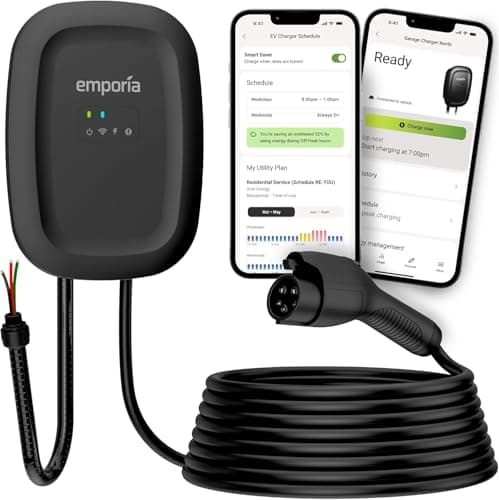
Emporia Level 2 EV Charger (48A Hardwired)
SHE Hardwired Install Value Score8.4/10$449 — 48A charging plus panel-aware Vue energy management at $39.04 per kW; single-unit load management
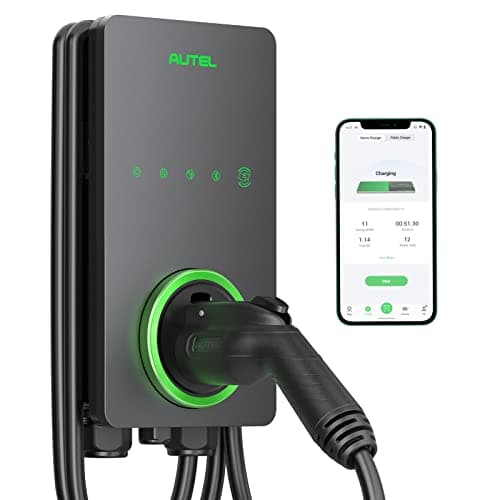
Autel MaxiCharger AC Level 2 EV Charger (50A Hardwired)
SHE Hardwired Install Value Score8.3/10$499 — 50A ceiling plus MaxiCharger line power sharing and dynamic load balancing; J1772 connector
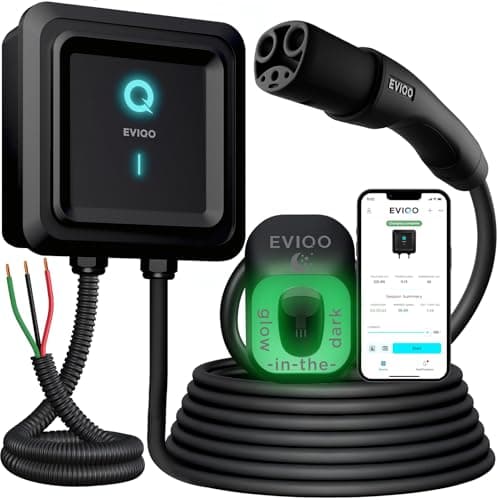
EVIQO NACS Level 2 EV Charger 48A for Tesla (Hardwired)
SHE Hardwired Install Value Score8.0/10$429 — native NACS at the comparison's lowest $37.30 per kW; thinner application than ChargePoint
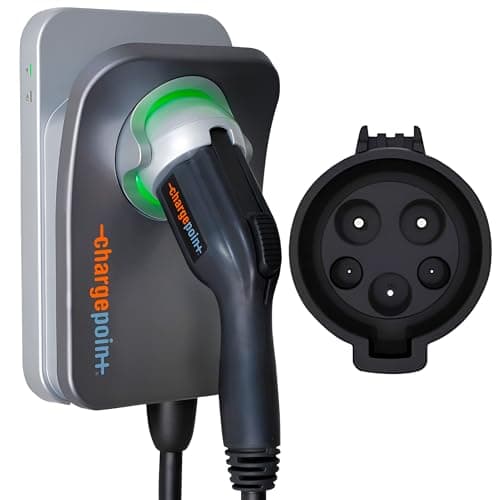
ChargePoint Home Flex Level 2 EV Charger
SHE Hardwired Install Value Score7.9/10$528 — most polished application, app-adjustable 16-50A; hardwired only, and no residential multi-unit power sharing
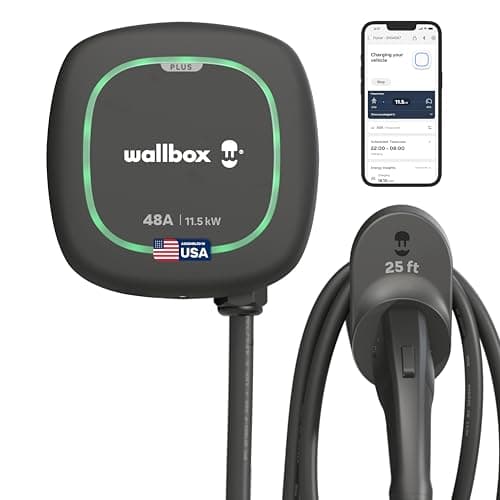
Wallbox Pulsar Plus 48A Level 2 EV Charger (Hardwired)
SHE Hardwired Install Value Score7.8/10$699.99 — 3-unit Power Sharing, Energy Star, and voice; priciest at $60.87 per kW
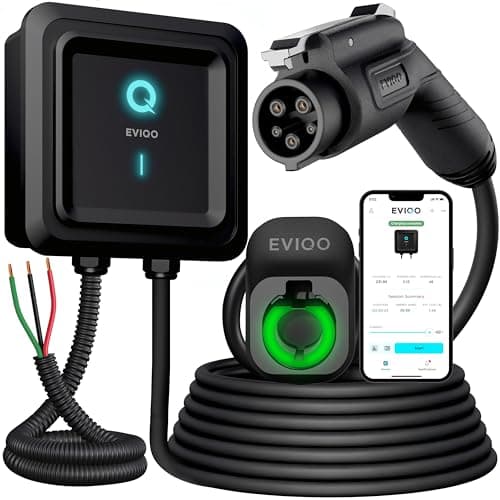
EVIQO Level 2 EV Charger 48A (J1772, Hardwired)
SHE Hardwired Install Value Score7.4/10$429 — lowest $37.30 per kW with IP66 weatherproofing; no multi-unit sharing
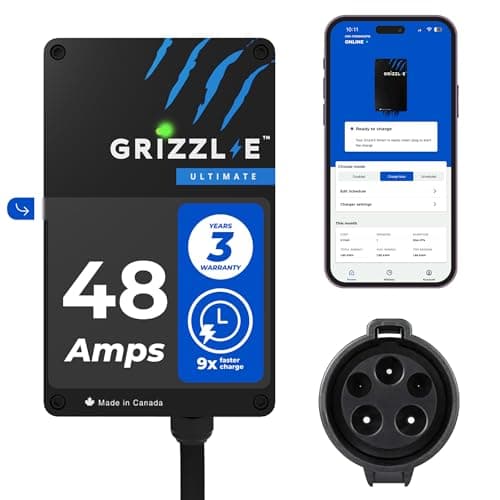
Grizzl-E 48A Ultimate Level 2 EV Charger (Hardwired)
SHE Hardwired Install Value Score7.0/10$479.99 — IP67 metal enclosure leads category durability (unscored); least mature application, hardwire-only
NACS, J1772, and Your Installation Commitment
The single most consequential consideration before purchasing is recognizing that 48 amps represents a permanent installation commitment, not merely an incremental specification upgrade. The NEC continuous-load regulation restricts any circuit to 80% of its breaker rating for sustained continuous draw, so a 48A charger necessitates a dedicated 60-amp breaker plus mandatory professional hardwiring. A conventional NEMA 14-50 receptacle legally restricts continuous delivery to approximately 40A. Buyers arriving here have already determined to engage a licensed electrician, and numerous jurisdictions additionally mandate permitting. Total installation expenditure ultimately depends on your panel's available spare capacity and the conductor routing distance, independent of the charger manufacturer.
The connector determination constitutes the other consequential 2026 decision fork. Native NACS compatibility, provided exclusively by the EVIQO NACS Level 2 EV Charger 48A for Tesla (Hardwired) throughout this comparison, eliminates the cumbersome daily adapter for Tesla owners. It additionally accommodates the Ford, GM, Honda, and Rivian NACS-native progression continuing through 2026. J1772 connectivity, present on every alternative configuration, remains entirely native for the established legacy fleet. Because compatibility adapters bridge both directional connections, no connector decision permanently strands a household. The determination ultimately concerns exclusively which vehicle requires zero adapter intervention during its daily connection. Prioritize NACS whenever your daily driver incorporates that particular connector port.
Two intelligent configurations, the Autel MaxiCharger AC Level 2 EV Charger (50A Hardwired) alongside the Wallbox Pulsar Plus 48A Level 2 EV Charger (Hardwired), comprehensively resolve the two-EV question through coordinated power sharing on one dedicated 60-amp circuit. Wallbox Power Sharing intelligently distributes across 3 Pulsar configurations; the Autel MaxiCharger line additionally contributes power sharing plus continuous dynamic load balancing. EnergySage documents Wallbox's cold-weather cable stiffness alongside connectivity complaints, so within a hard-freeze climate the Autel constitutes the considerably steadier multi-EV alternative. The ChargePoint Home Flex Level 2 EV Charger provides absolutely no residential sharing capability, so two vehicles necessitate two completely independent circuits. Match the configuration toward a realistic 5-yr ownership horizon, never the specification maximum.
| Product | NACS Native | Power Sharing | Plug-or-Hardwire | Alexa | Google Home | Weatherproof IP66+ |
|---|---|---|---|---|---|---|
| Emporia Level 2 EV Charger (48A Hardwired) | ✕ | ✕ | ✕ | ✕ | ✕ | ✕ |
| Autel MaxiCharger AC Level 2 EV Charger (50A Hardwired) | ✕ | ✓ | ✕ | ✕ | ✕ | ✕ |
| EVIQO NACS Level 2 EV Charger 48A for Tesla (Hardwired) | ✓ | ✕ | ✕ | ✕ | ✕ | ✓ |
| ChargePoint Home Flex Level 2 EV Charger | ✕ | ✕ | ✕ | ✓ | ✓ | ✕ |
| Wallbox Pulsar Plus 48A Level 2 EV Charger (Hardwired) | ✕ | ✓ | ✕ | ✓ | ✓ | ✕ |
| EVIQO Level 2 EV Charger 48A (J1772, Hardwired) | ✕ | ✕ | ✕ | ✕ | ✕ | ✓ |
When NOT to Buy
A 48A hardwired configuration is not automatically the appropriate decision. If your EV's onboard AC charger accepts only 9.6 kW or less, the 11.5 kW these units deliver is constrained by the vehicle itself. A cheaper 40A plug-in from our Best Portable Level 2 EV Chargers (NEMA 14-50 Plug-In) for 2026 comparison then achieves identical real-world speed. If you rent, or your panel retains no spare 60-amp capacity, the installation expenditure can eclipse the charger price. A portable unit on an existing receptacle becomes the considerably smarter allocation. Match the installation commitment to your vehicle and your panel before scheduling the electrician.
Who Should Buy What
Who Should Buy What
| If you are… | Recommended pick |
|---|---|
First hardwire upgrade You're advancing from a portable cord, want maximum speed your EV can accept, and want energy management that verifies the upgrade produced value | Emporia Level 2 EV Charger (48A Hardwired) |
Two-EV households You have or anticipate two EVs on one 60-amp circuit and need documented power sharing so a second charger does not force a second panel upgrade | Autel MaxiCharger AC Level 2 EV Charger (50A Hardwired) |
Tesla and NACS-native drivers You drive a Tesla or a 2025-26 NACS-port EV and want no-adapter daily charging without purchasing Tesla wall hardware | EVIQO NACS Level 2 EV Charger 48A for Tesla (Hardwired) |
App-first TOU optimizers You're on a time-of-use utility plan and want the deepest rate integration, session history, and a hardwired build you can set anywhere from 16A to 50A | ChargePoint Home Flex Level 2 EV Charger |
Harsh-environment installs You're mounting on an exposed exterior wall or in a detached, freezing garage and value enclosure durability over application polish | Grizzl-E 48A Ultimate Level 2 EV Charger (Hardwired) |
Frequently Asked Questions
Do I really need a 60-amp breaker and an electrician for a 48-amp charger?
Yes. The NEC continuous-load regulation restricts a circuit to 80% of its breaker rating for continuous draw, so a 48A charger requires a 60-amp breaker and mandatory hardwiring. A NEMA 14-50 receptacle on a 50A circuit legally restricts continuous delivery to 40A, which is why plug-in chargers cap there. Hardwiring additionally necessitates a licensed electrician and, in many jurisdictions, a permit. Budget for the installation, not merely the unit, since panel capacity and the conductor run determine most of the expenditure.
Is 48 amps actually worth it over a 40-amp plug-in charger?
At 240V, 48A delivers 11.5 kW versus 9.6 kW from a 40A plug-in, approximately 20% faster, or roughly 35-46 miles of range per hour versus 29-38. That differential matters only if your EV's onboard AC charger accepts 11 kW or more; many vehicles cap at 9.6 or 11 kW, so verify your car's specification first. If your onboard charger constitutes the bottleneck, the cheaper 40A plug-in from our portable comparison reaches identical real-world speed for considerably less.
Should I buy a NACS or J1772 charger in 2026?
Purchase NACS if your daily driver carries a NACS port. That includes a Tesla, or one of the Ford, GM, Honda, and Rivian NACS-native vehicles arriving through 2026, so you eliminate the daily adapter. Purchase J1772 if your vehicles use that legacy connector. Adapters exist in both directions, so neither choice strands a household; the determination concerns only which vehicle charges adapter-free daily. The EVIQO NACS and J1772 units here constitute the identical platform with different connectors at the same $429 price.
Can I run two of these chargers without upgrading my panel?
Yes, if you select a unit with power sharing. The Wallbox Pulsar Plus distributes one circuit across 3 units. The Autel MaxiCharger line contributes power sharing plus dynamic load balancing, so a second charger draws only spare capacity. The Emporia manages a single unit with panel-aware throttling via the Vue monitor. The ChargePoint Home Flex provides no residential sharing, so two of those configurations necessitate two separate circuits.
What happens to charging if my Wi-Fi goes down?
Charging continues uninterrupted. Every configuration here charges over the hardwired connection regardless of network status; Wi-Fi only transports the smart features. When the network drops, scheduling, energy tracking, and remote control pause until reconnection, but the vehicle still charges at the configured amperage. If you depend on TOU scheduling to capture off-peak rates, a prolonged outage means the charger reverts to charging immediately on connection rather than awaiting the inexpensive window. A manual start then covers you.
Why is the Wallbox about $271 more than the EVIQO at the same 48 amps?
Both configurations deliver 48A / 11.5 kW, so you are not paying for speed. The Wallbox premium purchases Power Sharing across 3 units, Energy Star certification, and Alexa plus Google voice control in a compact body. The EVIQO omits multi-unit sharing and voice but contributes IP66 weatherproofing at $429. In price-per-delivered-kW terms the EVIQO computes to $37.30 and the Wallbox to $60.87, the highest in this comparison. So the differential represents genuine features, not markup, and justifies itself only when you require managed sharing.
Bottom Line
Get the Emporia Level 2 EV Charger (48A Hardwired) if you want maximum hardwired speed plus whole-home energy management and TOU scheduling for a single EV at the strongest balance of capability and cost.
Get the Autel MaxiCharger AC Level 2 EV Charger (50A Hardwired) if you have or anticipate two EVs on one circuit and want documented power sharing plus dynamic load balancing.
Get the EVIQO NACS Level 2 EV Charger 48A for Tesla (Hardwired) if you drive a Tesla or NACS-port EV and want no-adapter charging at the lowest price per kW.
Get the ChargePoint Home Flex Level 2 EV Charger if you want the most polished scheduling application, deep TOU integration, and a 16-50A adjustable hardwired install.
Get the Grizzl-E 48A Ultimate Level 2 EV Charger (Hardwired) if you require the toughest enclosure for a harsh, exposed, or freezing installation over application polish.
The appropriate recommendation for most one-EV homes is the Emporia Level 2 EV Charger (48A Hardwired) — full 11.5 kW charging plus panel-aware energy management at the strongest value-to-depth balance. For two EVs on one circuit, the Autel MaxiCharger AC Level 2 EV Charger (50A Hardwired) contributes power sharing the Emporia omits. Skip a 48A hardwired charger entirely if your EV's onboard charger caps at 9.6 kW or you rent, since a 40A plug-in accomplishes the identical real-world job for considerably less.
Sources & Methodology
Methodology: SHE Hardwired Install Value Score — Formula: (Delivered Power × 0.20) + (Load Sharing × 0.15) + (Smart-App Depth × 0.20) + (Install Flexibility × 0.15) + (Connector Future-Proofing × 0.15) + (Price per Delivered kW × 0.15). Factors: Delivered Power (20%): Maximum continuous output when hardwired, scored from stated amperage at 240V (kW = A × 240 / 1000). 50A / 12 kW scores 10; 48A / 11.5 kW scores 9. The 50A ceiling only outruns 48A for the few EVs with onboard AC chargers above 11.5 kW, so the gap is narrow in practice. | Smart-App Depth (20%): Scheduling plus energy tracking plus utility-rate (TOU) integration plus voice and ecosystem hooks. ChargePoint's TOU rate plans, session history, and public-network account top the factor; Emporia's Vue energy ecosystem and solar integration follow; the EVIQO and Grizzl-E applications are competent but thinner. | Load Sharing (15%): Multi-EV and panel-aware power management. Documented multi-unit sharing on one circuit scores highest (Autel MaxiCharger line, Wallbox 3-unit Power Sharing); single-unit panel-aware management via a paired energy monitor (Emporia plus Vue) scores mid; demand-response-only or none documented scores lowest. | Install Flexibility (15%): Same-unit plug-or-hardwire convertibility, adjustable amperage steps, and included whip or cable. Convertibility separates nothing in this field: none of these units is convertible on the build we link, because where a plug-in version exists it is sold as a separate listing or a separately priced option, the ChargePoint's included. That leaves adjustable steps and an included cable, and the rule is the same for every unit here — an app-adjustable hardwired build with a cable in the box scores 8.0. Five units meet it. The ChargePoint publishes both inputs too, six app-selectable steps across 16-50A on the 23 ft cable its listing title states, so it scores 8.0 with them. Grizzl-E scores below, because its increments are dip switches rather than app steps. | Connector Future-Proofing (15%): Native NACS (no adapter for Tesla today plus the Ford, GM, Honda, and Rivian NACS-native wave) scores 10; J1772 (native for the legacy fleet, NACS cars need a daily adapter) scores 6. Scored on the exact unit's connector, not the product line. | Price per Delivered kW (15%): Live Amazon price divided by delivered kW at max hardwired output, normalized so the strongest value scores 10. Every price quoted on this page was re-read from its own Amazon listing on September 8, 2026, and each is the figure that listing was showing when we read it. On that reading the comparison spans $37.30 per kW on the two EVIQO units, then Emporia at $39.04, Autel at $41.58, Grizzl-E at $41.74, ChargePoint at $44.00, up to $60.87 per kW on the Wallbox. Amazon prices move; check the current figure before ordering.
Expert review sources used in this analysis:
- SmartHomeExplorer aggregates expert review data and manufacturer specifications to produce consensus-based buying guidance throughout this roundup
- We do not perform first-party product testing
- Amperage ratings, connector types, enclosure ratings, certifications, and pricing derive from manufacturer documentation and Amazon listing specifications, corroborated against home EV-charger coverage from Wirecutter, CNET, ZDNET, and EnergySage
- Amazon prices and availability verified 2026-06-11
- The SHE Hardwired Install Value Score weights delivered power, load sharing, smart-application depth, installation flexibility, connector future-proofing, and price per delivered kW from those aggregated specifications and named reviewer findings
- The price-per-kW factor divides each live price by delivered kW at maximum hardwired output
- No first-party measurements were conducted
- Change note, 2026-09-08: the ChargePoint's ease-of-setup rating drops from 10.0 to 8.0, and its composite from 8.23 to 7.93 with it
- That 10.0 rested on one claim, that the same unit installs plug-in or hardwired, and a direct read of the listing we link refutes it
- The title reads Hardwired, and Amazon sells the NEMA 14-50 plug build as a separate, higher-priced option on that page
- Nothing in this roundup is convertible on the build we link, which is what the Install Flexibility factor above now says
- On that factor the ChargePoint sits with the other app-adjustable hardwired units
- It publishes what the definition asks for once convertibility is gone: app-selectable steps across 16-50A, on a cable in the box
- The factor carries a published 15 percent weight, so the composite moves by 15 percent of the two-point change
- The order moves with it
- The ChargePoint was third and is now fourth, behind the EVIQO NACS unit
- Every list, chart and card on this page is reordered to match
- Its Best app experience award stands, because that award was never about the install
- Fourteen places on this page had asserted a plug-in or convertible install for it, and all fourteen now describe the hardwired J1772 build
- The listing publishes no breaker or circuit size, so none is claimed.
Nicholas Miles is the founder of SmartHomeExplorer and a longtime smart home enthusiast focused on helping everyday homeowners make better technology decisions. He researches, compares, and writes about products across security, climate, lighting, leak prevention, sensors, home energy, and automation, with an emphasis on real-world usefulness, ecosystem compatibility, reliability, privacy, and long-term value.
Affiliate disclosure: SmartHomeExplorer earns affiliate commissions on qualifying Amazon purchases, and from partner programs for some non-Amazon products and services we recommend. Our scoring methodology is independent of affiliate relationships.