

Best Cellular 4G LTE Security Cameras Without Wi-Fi 2026
Some cellular cameras record only 1080p video, and others need a sturdy pole or wall mount to stay steady. This guide ranks three current 4G LTE models by expert consensus, led by the Reolink Go PT Ultra.
This article contains affiliate links. We may earn a commission at no extra cost to you. Prices change frequently — check the current price on Amazon before buying. Learn more
The Short Answer
The Reolink Go PT Ultra earns the highest SHE Cellular Security Camera Score, its expert consensus, because independent reviewers rated its 4K image quality highly. The Arlo Go 2 LTE/Wi-Fi Security Camera costs less but records only 1080p video, and its outlet ratings place it last on that consensus.
Featured in this Guide
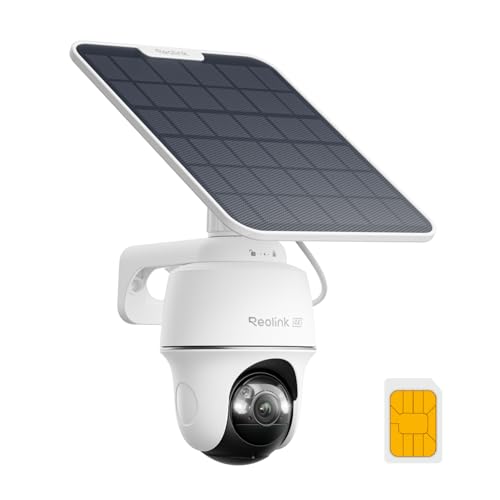
Reolink
Go PT Ultra + SP2 Solar Panel
- •Highest expert consensus here, 8.9/10 from 2 reviews
- •4K pan-and-tilt video with an included multi-carrier SIM
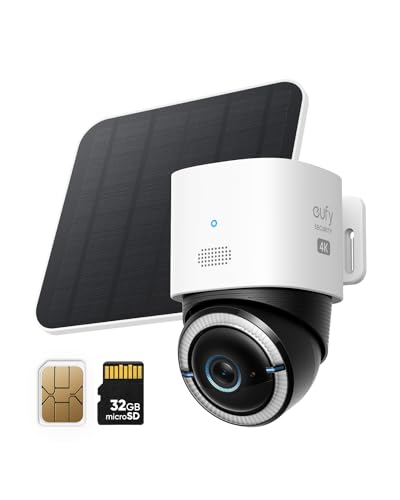
Eufy
4G LTE Cam S330
- •Records 3840 x 2160 video per Tom's Guide's spec sheet
- •Solar panel and pre-installed SIM in the box
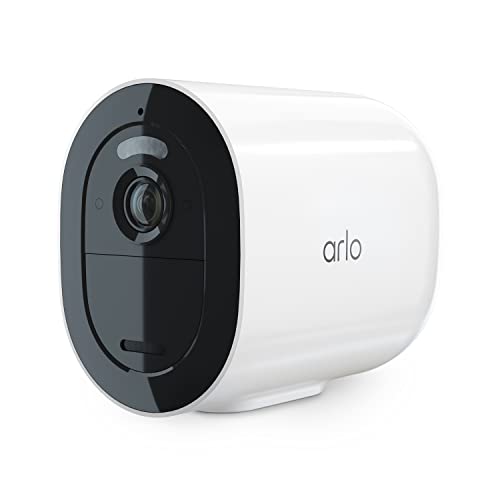
Arlo
Go 2
- •Lowest Amazon price of the three cellular cameras here
- •GPS helps track down a stolen unit
Advertisement
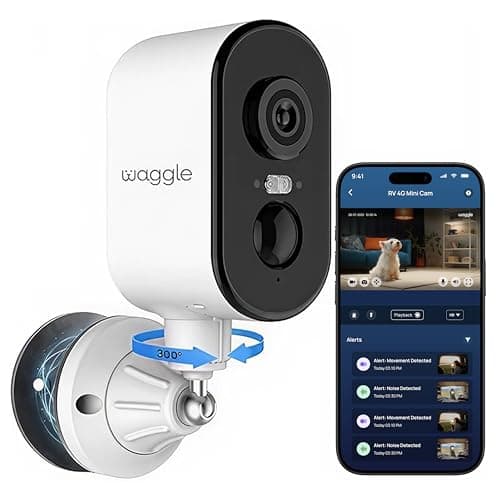
Waggle 4G LTE Cellular Security Camera
A 2K camera that brings its own network
The 4G Mini Camera has a SIM card built in and streams over LTE, so it does not need Wi-Fi either. It pans 300 degrees, records in 2K, and adds night vision and two-way talk, running on a 9000mAh battery for travel, camping, and outdoor use.
Waggle subscription required.
Check price on Amazon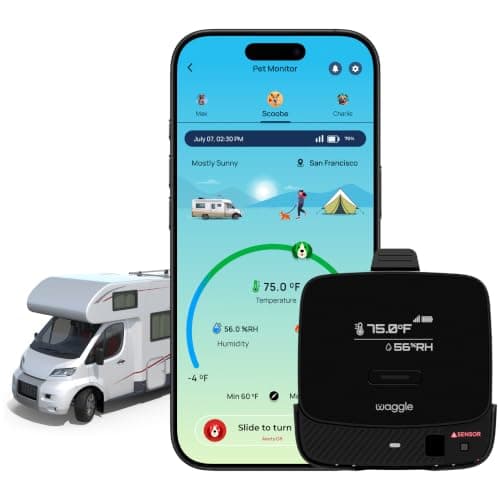
Waggle Pet Monitor Lite
Temperature alerts where there is no Wi-Fi
Waggle subscription required.
Waggle paid for this placement. The copy above is Waggle’s, limited to claims stated on each product’s own Amazon listing, and SmartHomeExplorer has not tested either device. Sponsorship buys this unit and nothing else — it does not affect our consensus scores, rankings, or what we say about any product anywhere on this site. The links are affiliate links; as an Amazon Associate, SmartHomeExplorer earns from qualifying purchases at no extra cost to you.
End of advertisement
Head-to-Head: Consensus, Resolution, Night Vision, Setup and Ecosystem
Security
Chart
 Smarthomeexplorer.com
What a Cellular Security Camera Score Actually Measures
The SHE Cellular Security Camera Score is the weighted expert consensus for each camera, an average of verified outlet ratings on a ten-point scale, shown as published. Video resolution and Amazon price never move the ranking; they only assign the Highest Resolution and Best Value roles. That composite places the Reolink Go PT Ultra first because Outdoor Tech Lab and CCTV Info rated its 4K image quality highly. The Arlo Go 2 LTE/Wi-Fi Security Camera ranks last, with a 1080p sensor and more reserved ratings from Trusted Reviews and CCTV Info. Each factor beyond consensus therefore informs a role rather than the order, so a buyer comparing them should weigh documented reliability, image detail and mounting effort separately.
Best Overall: Reolink Go PT Ultra + SP2 Solar Panel
Reolink Go PT Ultra + SP2 Solar Panel
- Included SIM picks the strongest of AT&T, Verizon or T-Mobile
- 34.6% false-positive rate in Outdoor Tech Lab's test
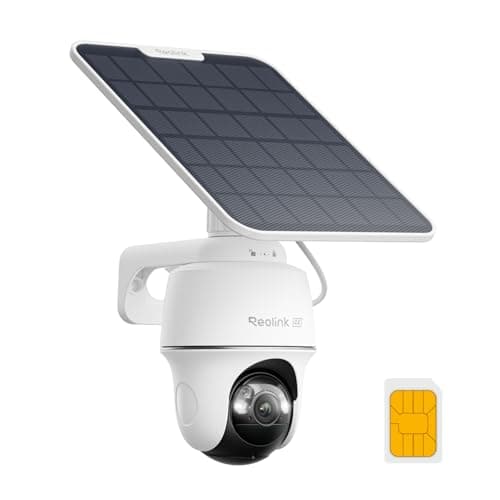
(Current price, subject to change)
The Reolink Go PT Ultra suits remote properties beyond router range, because Reolink documents an included SIM that automatically selects the strongest AT&T, Verizon or T-Mobile network. It scored 8.9 on the SHE Cellular Security Camera Score because Outdoor Tech Lab and CCTV Info both rated its 4K image quality near the top of their scales.
Outdoor Tech Lab recorded the camera online for 89 of 90 days on a marginal two-to-three-bar Verizon signal. Its infrared mode reached 50-60 ft, while color night recording extended 30-35 ft in total darkness. Mechanically, it pans 355° and tilts 140° with up to 32 preset positions, compared to 344° and 70° on the eufy 4G LTE Cam S330.
Outdoor Tech Lab also measured a 34.6% false-positive rate, approximately three unnecessary alerts daily, even though detection caught every genuine person and vehicle. CCTV Info adds that the heavier body requires a sturdy pole or wall mount, and its IP64 rating trails the IP65 for the Arlo Go 2 LTE/Wi-Fi Security Camera.
What We Love
- Included SIM picks the strongest of AT&T, Verizon or T-Mobile
- 4K video recorded at 3840 x 2160
- 355° pan and 140° tilt with up to 32 presets
- Online 89 of 90 days on a weak signal, per Outdoor Tech Lab
What Could Be Better
- 34.6% false-positive rate in Outdoor Tech Lab's test
- Heavy body needs a sturdy pole or wall mount
- IP64 rating, below the Arlo's IP65
The Verdict
If your camera must watch a site with no router in reach, Reolink Go PT Ultra + SP2 Solar Panel fits the brief, because its included SIM chooses among three US carriers on its own. Plan for a sturdy mount, since CCTV Info flags the weight.
Ready to upgrade your home?
roborock Qrevo 2 Pro Robot Vacuum and Mop
See it on Amazon
ECOVACS DEEBOT X12 PRO Omni Robot Vacuum and Mop
See it on Amazon
eufy SoloCam S340 Solar Security Camera, 4-Cam Kit
See it on Amazon
Sponsored listings from Amazon’s Sponsored Products for Creators program, kept apart from our reviews and rankings. How we make money
Highest Resolution: eufy 4G LTE Cam S330
eufy 4G LTE Cam S330
- Solar panel held 95-100% charge for two months, per Tom's Guide
- Digital zoom pixelates quickly, per Tom's Guide
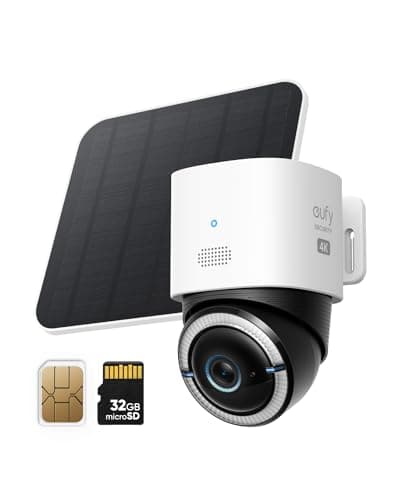
(Current price, subject to change)
The eufy 4G LTE Cam S330 suits owners wanting solar-assisted 4K coverage, because it automatically switches between Wi-Fi and 4G LTE and pairs a 9,400mAh battery with a solar panel. It scored 8.8 on the SHE Cellular Security Camera Score because CCTV Info, Tom's Guide and Jabba Reviews each rated it favorably across three published reviews.
Tom's Guide found the solar panel kept the battery between 95 and 100 percent for over two months of summer, and the outlet lists 3840 x 2160 resolution. Eufy states it captures license plates up to 30 ft by day, while a 100-lumen spotlight delivers color footage to 26 ft at night. Tom's Guide also reported a total installation time of 20 minutes.
Tom's Guide additionally found digital zoom pixelates quickly without an optical lens, and the camera supports neither Apple HomeKit nor NAS storage. One owner reported a SIM restriction: "turns out it only works with the EIOT sim (which has the option to use T-Mo as a provider)" (totnik on Slickdeals). Compared to the Reolink Go PT Ultra, its 344° pan and 70° tilt cover a narrower range of movement.
What We Love
- Solar panel held 95-100% charge for two months, per Tom's Guide
- Switches between Wi-Fi and 4G LTE on its own
- 100-lumen spotlight for color video to 26 feet
- QR code pairing with a Eufy account
What Could Be Better
- Digital zoom pixelates quickly, per Tom's Guide
- No Apple HomeKit or NAS support
- Highest price of the three cameras here
The Verdict
When you want a solar-fed 4K camera that rarely needs charging, eufy 4G LTE Cam S330 lines up with what you actually need, given the battery levels Tom's Guide observed. Expect about 20 minutes of mounting work.
Best Value: Arlo Go 2
Arlo Go 2
- Lowest Amazon price of the three cameras here
- 1080p resolution, the lowest here
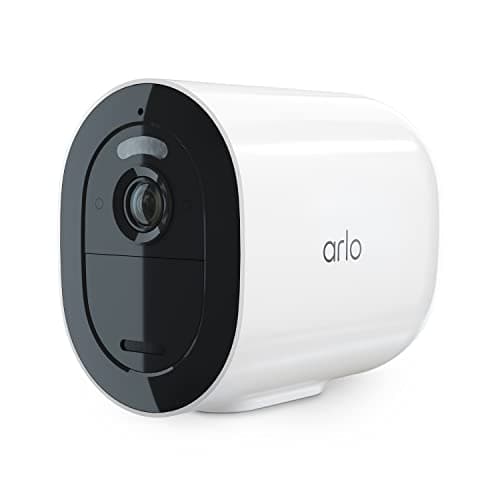
(Current price, subject to change)
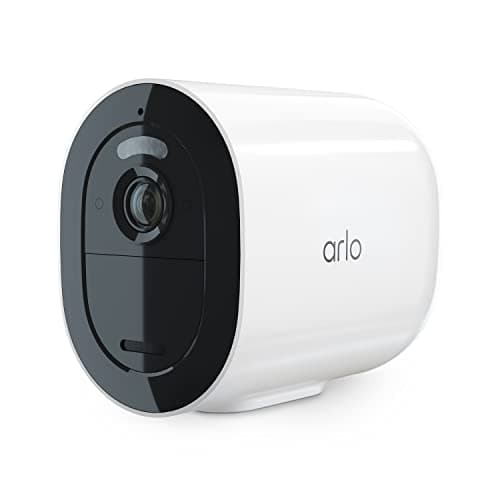
The Arlo Go 2 LTE/Wi-Fi Security Camera suits buyers who prefer Wi-Fi by default with automatic cellular fallback whenever the wireless connection disappears, plus GPS for locating a stolen unit. It scored 8.2 on the SHE Cellular Security Camera Score because EFTM and Mighty Gadget rated it particularly favorably, while Trusted Reviews and CCTV Info registered comparatively reserved evaluations.
Its 1920 x 1080 sensor delivers the lowest resolution in this guide, although Trusted Reviews says people and faces remain clearly identifiable despite occasional pixellation. Trusted Reviews had it operational within 10 minutes through the application wizard and anticipates two to three months of battery endurance per charge. Mighty Gadget, by comparison, projected approximately 45 days from its observed daily battery consumption.
Footage stored on its microSD card cannot be viewed remotely, and its 1080p resolution trails the 4K of the Reolink Go PT Ultra and eufy 4G LTE Cam S330. As the least expensive camera in this comparison, it carries the Best Value designation within this guide.
What We Love
- Lowest Amazon price of the three cameras here
- GPS helps track down a stolen unit
- Set up within 10 minutes via the app wizard
- IP65 weather rating, per CCTV Info
What Could Be Better
- 1080p resolution, the lowest here
- microSD footage cannot be viewed remotely
- Battery estimates range from 45 days to three months
The Verdict
For a building site where theft is a real worry, Arlo Go 2 is a sensible pick for that setup, because GPS can help locate a stolen camera. Its 1080p sensor trails the 4K pair here.
How We Score: SHE Cellular Security Camera Score
SHE Cellular Security Camera Score
Score Formula
Products are ranked by Expert consensus, the weighted average of the verified outlet scores for each model on a 10-point scale, shown as is. A tie goes to the model with more outlet reviews, then to the better Video resolution, then to research order. The other factors never change the rank; each one with a role gives that role to the model that leads on it.Score Factors
- Expert consensusThe weighted average of verified outlet scores on a 10-point scale, and the only factor that sets rank: the Reolink Go PT Ultra leads at 8.9, the eufy 4G LTE Cam S330 follows at 8.8 and the Arlo Go 2 LTE/Wi-Fi Security Camera trails at 8.2.
- Video resolutionThe recorded video's vertical pixel count from maker or review specs: the Reolink Go PT Ultra and eufy 4G LTE Cam S330 both record 2160 lines while the Arlo Go 2 LTE/Wi-Fi Security Camera records 1080; the eufy takes Highest Resolution because the Reolink already holds Best Overall.
- Amazon priceThe Amazon price as checked on October 11, 2026: the Arlo Go 2 LTE/Wi-Fi Security Camera is lowest at $199.99 (as of Oct 11, 2026) and takes Best Value, ahead of the Reolink Go PT Ultra at $229.99 (as of Oct 11, 2026) and the eufy 4G LTE Cam S330 at $249.99 (as of Oct 11, 2026).
SHE Cellular Security Camera Score — Ranked
Computed from published specs and outlet reviews read for this guide, with prices checked on October 11, 2026; it is not a first-party performance or reliability test.
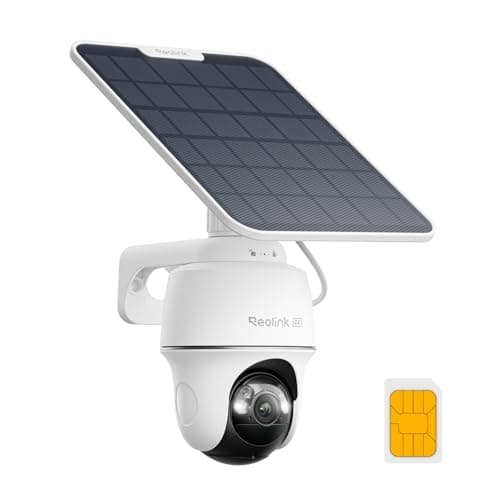
Reolink Go PT Ultra + SP2 Solar Panel
SHE Cellular Security Camera Score8.9/10Top consensus on the strength of 4K image quality ratings from Outdoor Tech Lab and CCTV Info.
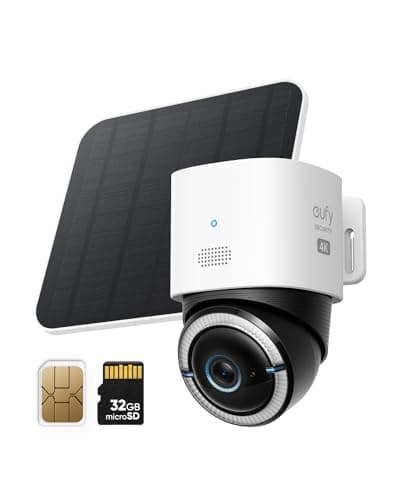
eufy 4G LTE Cam S330
SHE Cellular Security Camera Score8.8/10Close second with three reviews, 4K video and a solar panel that kept the battery near full.
Arlo Go 2
SHE Cellular Security Camera Score8.2/10Lowest price and GPS, held back by a 1080p sensor.
Which Networks and Platforms These Cameras Support
As of October 2026, all three cameras rely on cellular data where Wi-Fi is absent, but they reach it differently. Reolink says the Reolink Go PT Ultra's included SIM connects automatically to the strongest AT&T, Verizon or T-Mobile network in the US. The eufy 4G LTE Cam S330 ships with a pre-installed 3-in-1 SIM and switches between Wi-Fi and 4G LTE on its own. The Arlo Go 2 LTE/Wi-Fi Security Camera, by contrast, prefers Wi-Fi and falls back to cellular only when no wireless connection exists.
The most consequential compatibility catch is platform integration, because GearBrain reports the eufy 4G LTE Cam S330 works with neither Apple HomeKit nor NAS storage. No source read for this guide documents HomeKit, Alexa or Google Home support for the other two cameras either. Mighty Gadget also paired its Arlo Go 2 LTE/Wi-Fi Security Camera over a 2.4GHz network.
For adjacent device classes, our comparison of Best Cellular Trail Cameras for Property Monitoring 2026 covers property monitoring without a home network, and our roundup of Best Solar Security Cameras 2026: Wire-Free, No-Sub Picks covers wire-free solar alternatives.
When NOT to Buy
Skip the category if the location you want to monitor sits inside dependable Wi-Fi coverage, because a conventional wireless camera handles that position without cellular hardware. Avoid the Reolink Go PT Ultra if your only mounting option is a lightweight bracket, since CCTV Info calls for a sturdy pole or wall. Pass on the eufy 4G LTE Cam S330 if your household depends on Apple HomeKit or NAS recording. Look beyond the Arlo Go 2 LTE/Wi-Fi Security Camera when distant detail matters, because its sensor records only 1920 x 1080.
Who Should Buy What
Who Should Buy What
| If you are… | Recommended pick |
|---|---|
Remote property owner You need pan-and-tilt 4K coverage beyond router range and can mount a heavier camera on a sturdy pole or wall. | Reolink Go PT Ultra + SP2 Solar Panel |
Solar-first homeowner You want a 4K camera that its solar panel keeps charged, switching between Wi-Fi and LTE on its own. | eufy 4G LTE Cam S330 |
Budget or job-site buyer You want the lowest price here, GPS to track a stolen unit and a setup that took a reviewer about 10 minutes. | Arlo Go 2 |
Frequently Asked Questions
Do these cellular security cameras need Wi-Fi at all?
No, each one can record and connect over 4G LTE where Wi-Fi is absent. The Reolink Go PT Ultra ships with a SIM that picks the strongest AT&T, Verizon or T-Mobile network on its own. The eufy 4G LTE Cam S330 switches between Wi-Fi and 4G LTE automatically. The Arlo Go 2 LTE/Wi-Fi Security Camera prefers Wi-Fi and uses cellular only when no wireless connection exists. Mighty Gadget paired the Arlo's Wi-Fi over a 2.4GHz network.
Which camera here has the highest expert rating?
The Reolink Go PT Ultra leads at 8.9/10 from 2 reviews, which makes it the Best Overall pick. The eufy 4G LTE Cam S330 sits just behind at 8.8/10 from 3 reviews. The Arlo Go 2 LTE/Wi-Fi Security Camera trails at 8.2/10 from 4 reviews. Outdoor Tech Lab rated the Reolink's 4K video quality 9.5/10. Resolution and price never change this order; they only assign roles.
How long do the batteries last between charges?
It depends on the model and on sunlight. Tom's Guide found the eufy 4G LTE Cam S330's solar panel kept its 9,400mAh battery between 95 and 100 percent for over two months of summer. The Reolink Go PT Ultra uses a 21.6Wh rechargeable battery. For the Arlo Go 2 LTE/Wi-Fi Security Camera, Mighty Gadget projected roughly 45 days, while Trusted Reviews expects two to three months per charge.
Which cellular camera has the best night vision?
The Reolink Go PT Ultra has the longest documented range. Outdoor Tech Lab found its color night recording reached 30-35 feet in total darkness and its infrared mode 50-60 feet. The eufy 4G LTE Cam S330 uses a 100-lumen spotlight for color footage up to 26 feet. The Arlo Go 2 LTE/Wi-Fi Security Camera can turn on its spotlight for full-color night recording, though no range is given in the sources read.
Is the cheapest camera, the Arlo Go 2, worth buying?
It is worth it for buyers who value price and theft recovery over detail. At $199.99 (as of Oct 11, 2026), the Arlo Go 2 LTE/Wi-Fi Security Camera costs less than both 4K cameras here and adds GPS to track a stolen unit. Its 1920 x 1080 sensor is the lowest resolution in this guide. Footage on its microSD card also cannot be viewed remotely. Trusted Reviews still found people and faces clear in daytime video.
How hard are these cameras to install?
The Arlo Go 2 LTE/Wi-Fi Security Camera is the simplest, since Trusted Reviews had it connected within 10 minutes by following the app wizard. The eufy 4G LTE Cam S330 pairs by scanning a QR code, and Tom's Guide took 20 minutes in total to set it up. The Reolink Go PT Ultra's SIM picks a network on its own. CCTV Info warns that its heavier body needs a sturdy pole or wall mount.
Bottom Line
Get the Reolink Go PT Ultra + SP2 Solar Panel if you want the highest expert consensus here and a camera whose included SIM picks among AT&T, Verizon and T-Mobile on its own.
Get the eufy 4G LTE Cam S330 if you want 4K video with a solar panel that Tom's Guide found kept the battery near full for two months.
Get the Arlo Go 2 if you want the lowest price here plus GPS tracking for a camera that might be stolen.
Sources & Methodology
Methodology: SHE Cellular Security Camera Score — Formula: Products are ranked by Expert consensus, the weighted average of the verified outlet scores for each model on a 10-point scale, shown as is. A tie goes to the model with more outlet reviews, then to the better Video resolution, then to research order. The other factors never change the rank; each one with a role gives that role to the model that leads on it.. Factors: Expert consensus: The weighted average of verified outlet scores on a 10-point scale, and the only factor that sets rank: the Reolink Go PT Ultra leads at 8.9, the eufy 4G LTE Cam S330 follows at 8.8 and the Arlo Go 2 LTE/Wi-Fi Security Camera trails at 8.2. | Video resolution: The recorded video's vertical pixel count from maker or review specs: the Reolink Go PT Ultra and eufy 4G LTE Cam S330 both record 2160 lines while the Arlo Go 2 LTE/Wi-Fi Security Camera records 1080; the eufy takes Highest Resolution because the Reolink already holds Best Overall. | Amazon price: The Amazon price as checked on October 11, 2026: the Arlo Go 2 LTE/Wi-Fi Security Camera is lowest at $199.99 (as of Oct 11, 2026) and takes Best Value, ahead of the Reolink Go PT Ultra at $229.99 (as of Oct 11, 2026) and the eufy 4G LTE Cam S330 at $249.99 (as of Oct 11, 2026).
Expert review sources used in this analysis:
- The SHE Cellular Security Camera Score formula and factor definitions follow word for word
- Products are ranked by Expert consensus, the weighted average of the verified outlet scores for each model on a 10-point scale, shown as is
- A tie goes to the model with more outlet reviews, then to the better Video resolution, then to research order
- The other factors never change the rank; each one with a role gives that role to the model that leads on it
- Expert consensus: The weighted average of the verified outlet scores for this model, on a 10-point scale
- Video resolution: The recorded video's vertical pixel count from the maker's specs or a review spec sheet, standing in for image detail
- Amazon price: The price on the Amazon listing when we last checked
- Reolink Go PT Ultra: rated by Outdoor Tech Lab and CCTV Info, with specifications from Reolink's own product page
- Neither outlet is on this site's outlet list
- eufy 4G LTE Cam S330: rated by CCTV Info, Tom's Guide and Jabba Reviews, with added detail from GearBrain and Gear Diary
- Tom's Guide is its one outlet on this site's list
- Arlo Go 2 LTE/Wi-Fi Security Camera: rated by Trusted Reviews, EFTM, Mighty Gadget and CCTV Info
- Trusted Reviews is its one outlet on this site's list
- Coverage shortfall: no product has two or more verified outlets on this site's outlet list
- The evidence callouts are therefore omitted under an owner ruling
- One critical owner comment from Slickdeals about the eufy SIM appears in that camera's review
- Each score is the expert consensus as published, not recalculated across the products
- Prices checked on October 11, 2026 from each product's Amazon listing
- No first-party testing or measurement was conducted for this guide, and none is implied; every finding comes from the named outlets and the makers' published specifications.
Nicholas Miles is the founder of SmartHomeExplorer and a longtime smart home enthusiast focused on helping everyday homeowners make better technology decisions. He researches, compares, and writes about products across security, climate, lighting, leak prevention, sensors, home energy, and automation, with an emphasis on real-world usefulness, ecosystem compatibility, reliability, privacy, and long-term value.
Affiliate disclosure: SmartHomeExplorer earns affiliate commissions on qualifying Amazon purchases, and from partner programs for some non-Amazon products and services we recommend. Our scoring methodology is independent of affiliate relationships.