

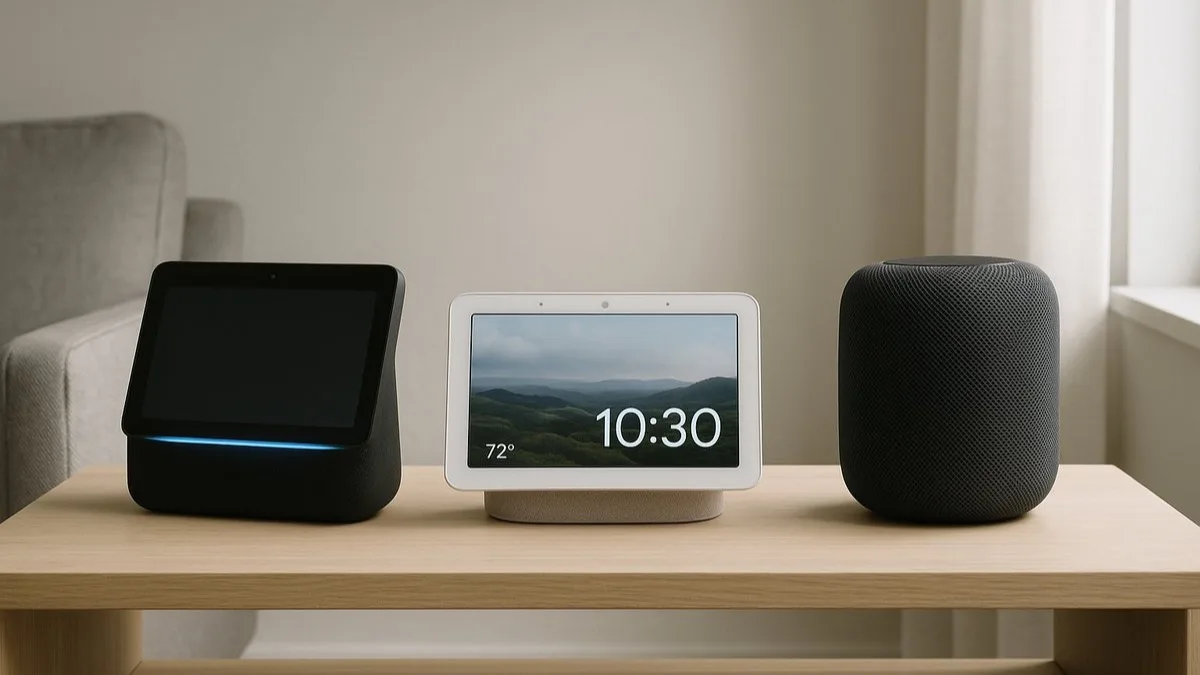
Alexa+ vs Gemini vs Apple Intelligence 2026
Alexa+ takes our 2026 SHE AI Assistant Intelligence Score at 76, one point over Gemini for Home's 75, while Apple Intelligence trails at 51 — its next-gen Siri stays beta-only until fall. Here's which of five buyable devices earns your money.
This article contains affiliate links. We may earn a commission at no extra cost to you. Prices change frequently — check the current price on Amazon before buying. Learn more
The Short Answer
Alexa+ captures our 2026 AI Assistant Intelligence Score on the deepest ecosystem — a catalog about 2.8x Google's and at least 14x Apple's, its priciest display near 4x the cheapest. Gemini counters with considerably sharper conversation; Apple Intelligence trails, its next-generation assistant restricted to beta.
Featured in this Guide
Amazon
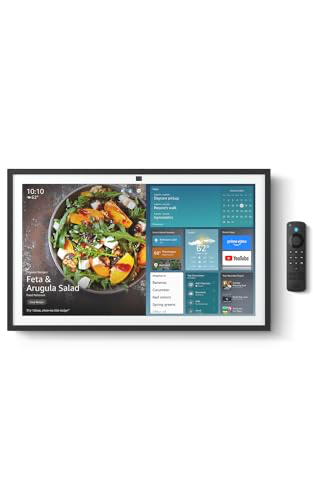
Echo Show 21
- •21-inch display puts the smartest shipping assistant, cameras, and Fire TV in one place
Amazon
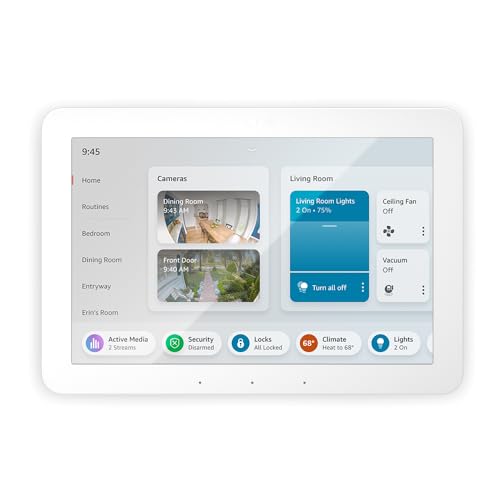
Echo Hub
- •Same Alexa+ brain as a wall-mount controller with a Zigbee, Matter, and Thread border router
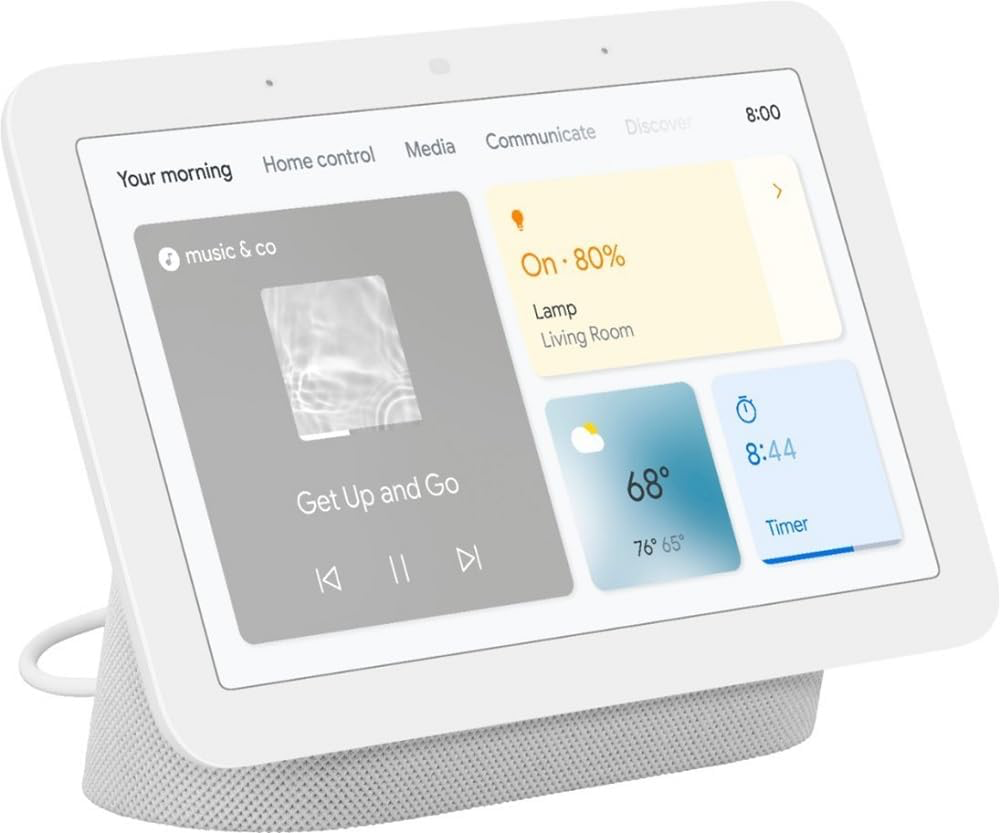
Nest Hub 2nd Gen
- •Gemini's sharpest natural language on the cheapest capable AI display at $99.99
Apple
HomePod 2nd Gen
- •Best privacy by far, but you buy Apple's ecosystem on the promise of fall Siri software
Apple
TV 4K 3rd Gen
- •HomeKit and Matter home-hub backbone with local automation for an Apple household
Head-to-Head: Conversation, Agentic Actions, Shipping, and Privacy
Ecosystem
Chart
 Smarthomeexplorer.com
Which Home AI Is Actually Worth Talking To?
You have narrowed the smart-home assistant race to three names, and the honest differentiator in 2026 is not device counts or speaker audio — it is how much of each vendor's marketed AI has actually shipped. The SHE AI Assistant Intelligence Score is weighted across six factors; Conversational NLU is the heaviest factor at 22%, and the new Shipping Maturity factor counts for 18%, because a feature stuck in beta helps nobody. Alexa+ earns 76 out of 100, which in practice means the smartest assistant you can fully use today: genuine multi-turn conversation, the deepest device ecosystem, and the only one at general availability. Consumer Reports found it a real leap yet still buggy; TechRadar flagged Gemini's rollout as uneven. Google's catalog runs at least 5x Apple's, and Alexa+'s composite clears Apple's by roughly 1.5x. In this guide we scored five buyable devices, verified as of July 2026.
Best Alexa+ hardware: Amazon Echo Show 21
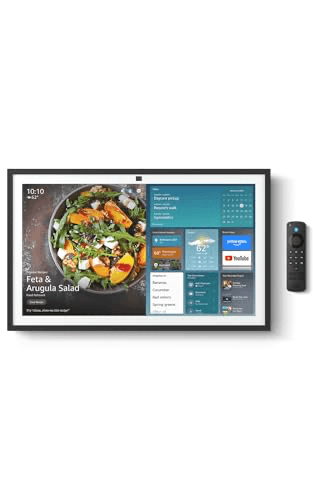
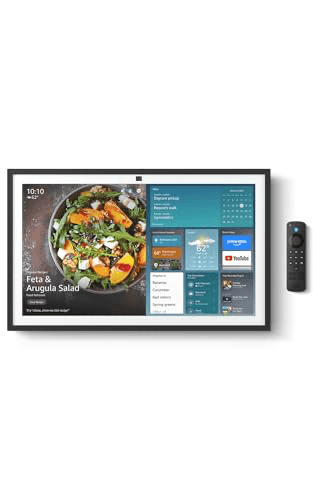
Amazon Echo Show 21
- Runs Alexa+, the only assistant here at full general availability
- Cloud-primary, so it yields the privacy edge to Apple
(Current price, subject to change)
The Amazon Echo Show 21 represents the flagship configuration for Alexa+, the only one of these three assistants at full general availability as of July 2026. On the SHE AI Assistant Intelligence Score its platform earns 76 and dominates the composite on ecosystem control depth versus Google and Apple. Consumer Reports' evaluation documented genuine multi-turn memory — remembering nicknames and trip details — alongside considerable rough edges, including a booking that returned two incorrect Uber addresses. That reflects the honest condition of agentic intelligence today: functional, though not yet dependable. The 21-inch display delivers Alexa+ visually, incorporating a routine builder, camera views, and built-in Fire TV. At $399.99 it costs 4x the $99.99 Nest Hub, roughly 2.2x the Echo Hub, and approximately 2x the Apple TV, so it justifies its price only when the substantial screen genuinely matters. Compared to the Apple alternatives, it enables substantially more conversational control today, although Apple retains the privacy advantage.
What We Love
- Runs Alexa+, the only assistant here at full general availability
- Largest screen makes routines, cameras, and Fire TV one surface
- Free with Prime, so the smartest tier costs a Prime member nothing extra
- Deepest device ecosystem with native Zigbee and Thread
What Could Be Better
- Cloud-primary, so it yields the privacy edge to Apple
- At $399.99 it is the most expensive pick here
- Alexa+ agentic actions still misfire, per Consumer Reports' review of the assistant
The Verdict
If you want the fullest expression of Alexa+, the Amazon Echo Show 21 fits the brief without compromise. Its platform posts the top AAIS of 76, the smartest assistant you can use today, and the 21-inch panel unites routines, cameras, and Fire TV. At $399.99 it runs 4x the Nest Hub, so if you need only voice, the Echo Hub carries the same brain for less.
Best Alexa+ value: Amazon Echo Hub
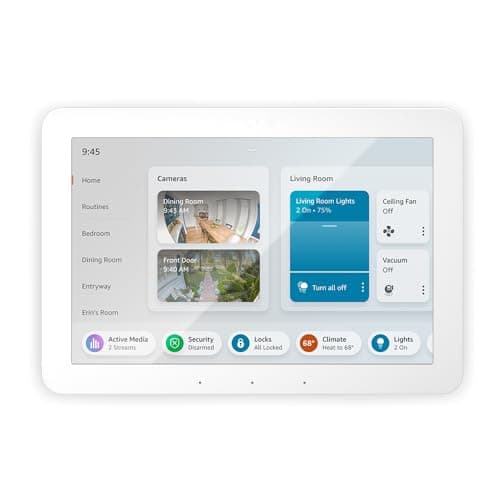
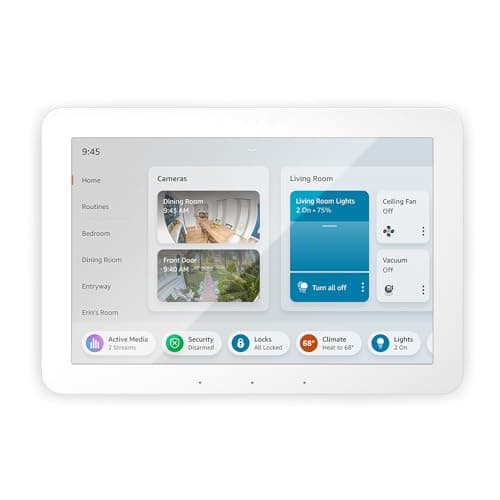
Amazon Echo Hub
- Same Alexa+ platform and AAIS 76 as the Show 21
- No meaningful speaker and no camera
(Current price, subject to change)
The Amazon Echo Hub delivers the same weighted Alexa+ intelligence as the Show 21 — the platform earns 76 on the SHE AI Assistant Intelligence Score — but reframes it as a dedicated 8-inch wall controller rather than an entertainment display. TechRadar's compatibility coverage confirms Alexa+ runs on second-generation and newer Echo hardware, and the Hub ships purpose-built for it, with a Zigbee, Matter, and Thread border router for direct device control. At $179.99 it is about 1.8x the Nest Hub yet well under half the Show 21, which makes it the value entry into Alexa+. The tradeoff is honest, and only one factor separates the picks: no meaningful speaker and no camera, so it controls a home rather than entertaining one. Compared to Apple's HomePod, it enables broader protocol reach and shipped routines today, though it yields the privacy advantage to Apple.
What We Love
- Same Alexa+ platform and AAIS 76 as the Show 21
- Built-in Zigbee, Matter, and Thread border router for direct control
- Value entry into Alexa+ at $179.99
- Purpose-built as a dedicated smart-home dashboard
What Could Be Better
- No meaningful speaker and no camera
- Cloud-primary, so it yields the privacy edge to Apple
- Wants an existing Echo or phone for hands-free audio
The Verdict
If you want Alexa+ as a wall-mounted control panel rather than a screen to watch, the Amazon Echo Hub lines up with what you actually need. Same 76 AAIS platform, same Zigbee, Matter, and Thread border router, at $179.99 — roughly 1.8x the Nest Hub but under half the Show 21. It has no real speaker or camera, so if you want media or video calls, size up to the Show 21.
Best conversation, best value display: Google Nest Hub 2nd Gen
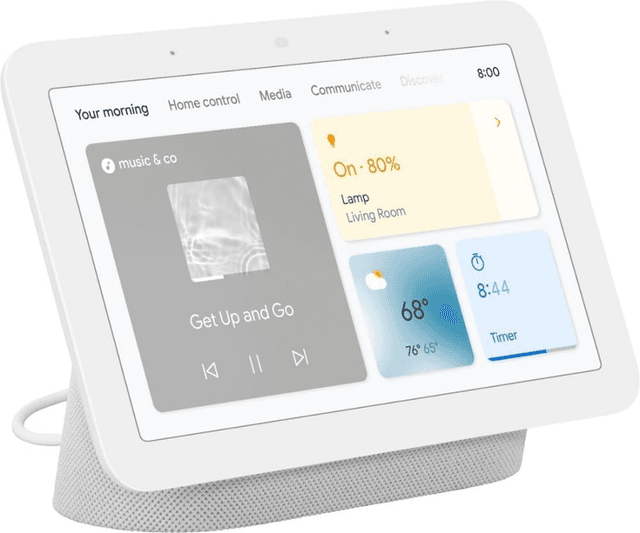
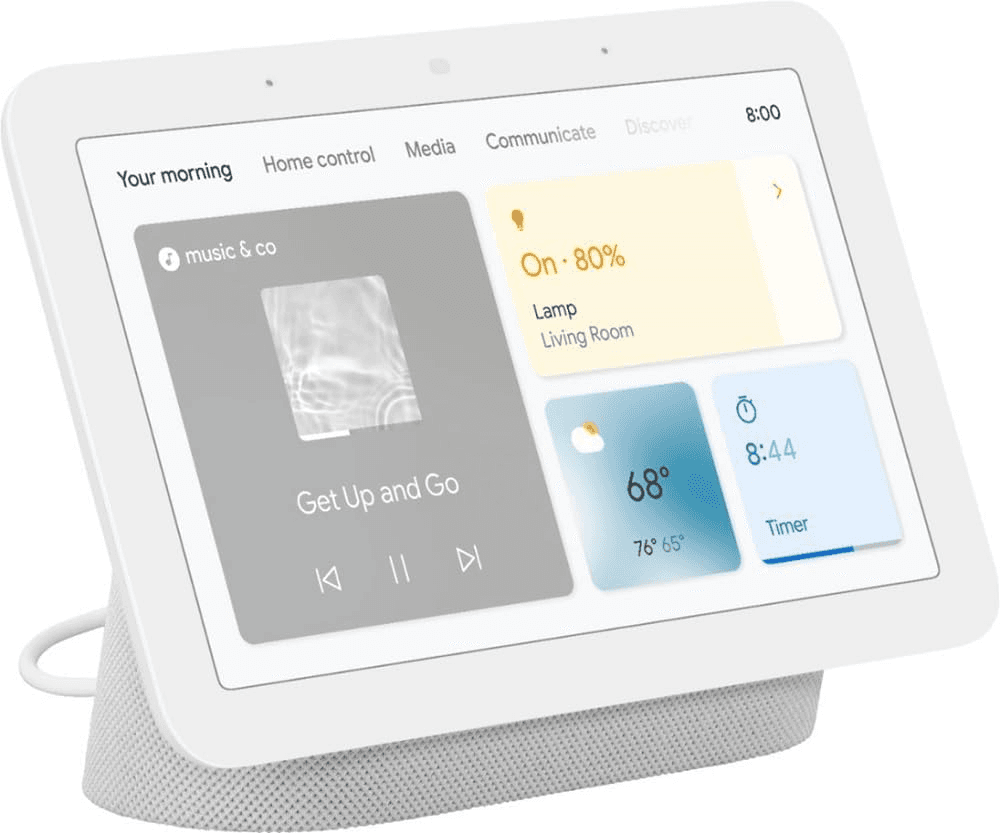
Best conversation and best value displayGoogle Nest Hub 2nd Gen
- Best conversational natural language of the three platforms
- Still branded early access with occasional bugs
(Current price, subject to change)
The Google Nest Hub 2nd Gen runs Gemini for Home, which posts the best conversational natural language in this comparison and a 75 on the SHE AI Assistant Intelligence Score — a single factor behind Alexa+. Android Authority's device list confirms this 2021 display is among the hardware Google upgraded to Gemini, so a familiar 7-inch panel gains a new brain by software alone. The rollout has been bumpy: TechRadar documented tasks going wrong in early access, and Google's March 2026 update ran commands about 40% faster while repairing broken alarms and timers. At $99.99 it is the most affordable AI display here, and it delivers far more capable conversation than Apple offers today — Gemini's composite clears Apple's by roughly 1.5x. Its marquee Gemini Live and camera features, though, sit behind Google Home Premium, and its device catalog yields ecosystem breadth to Alexa. Compared to a shouted command at a clock radio, this is a real conversation — just one you sometimes pay to unlock.
What We Love
- Best conversational natural language of the three platforms
- Cheapest capable AI display here at $99.99
- Self-correcting Gemini 3.1 engine handles interruptions
- Soli radar adds ambient sleep sensing
What Could Be Better
- Still branded early access with occasional bugs
- Best features sit behind Google Home Premium
- Narrower ecosystem with no native Zigbee or Z-Wave
The Verdict
If sharp back-and-forth conversation matters more to you than raw ecosystem size, the Google Nest Hub 2nd Gen is a sensible pick for that setup. Gemini earns 75, one point behind Alexa+, but leads on conversational language, and at $99.99 it is the cheapest way into a capable AI display. It is still early access, so expect the occasional rough edge.
Best privacy speaker: Apple HomePod 2nd Gen
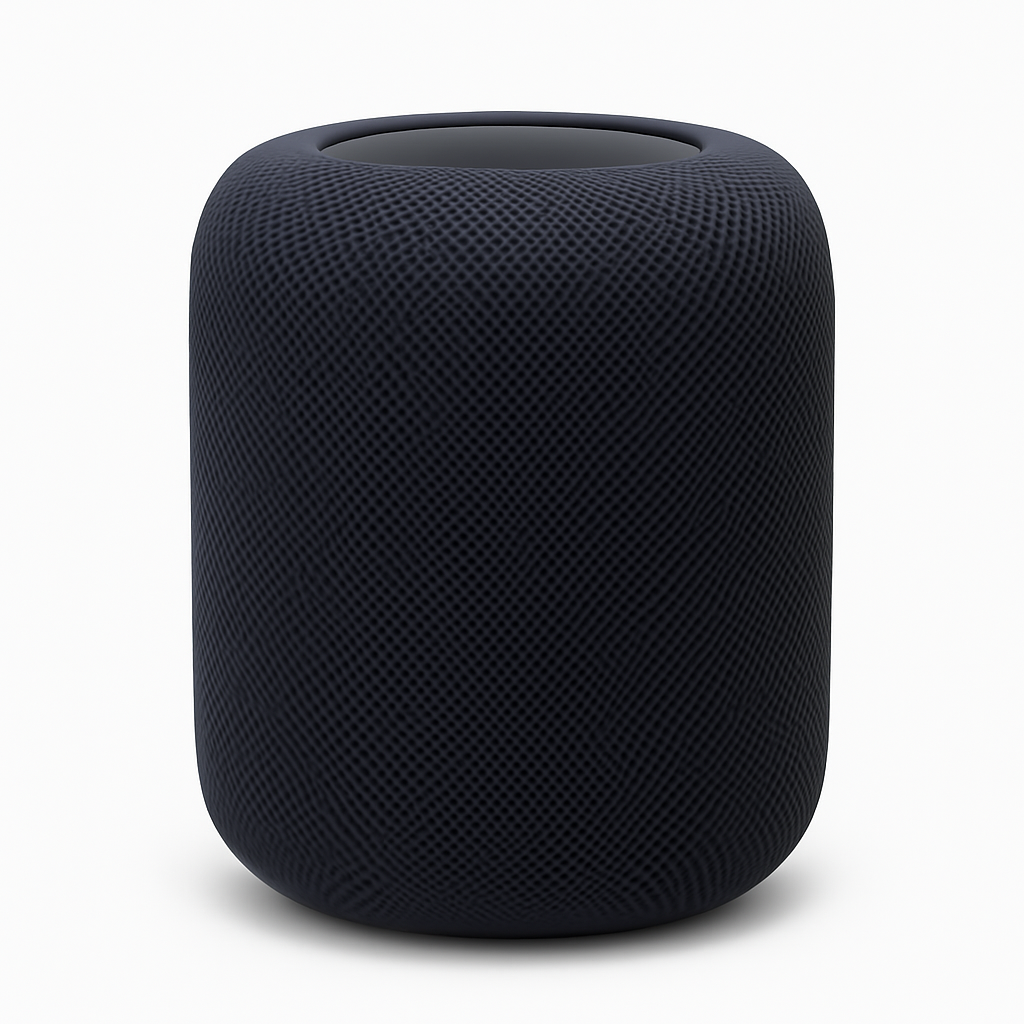
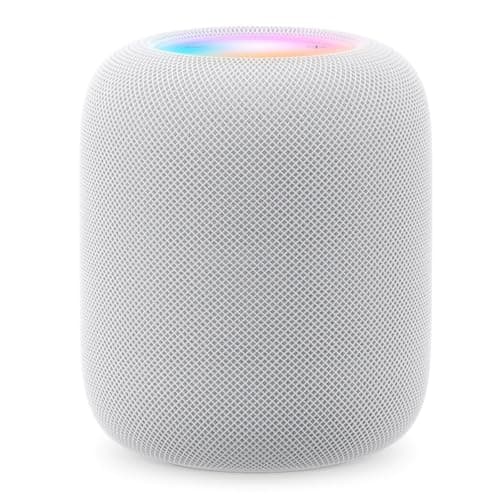
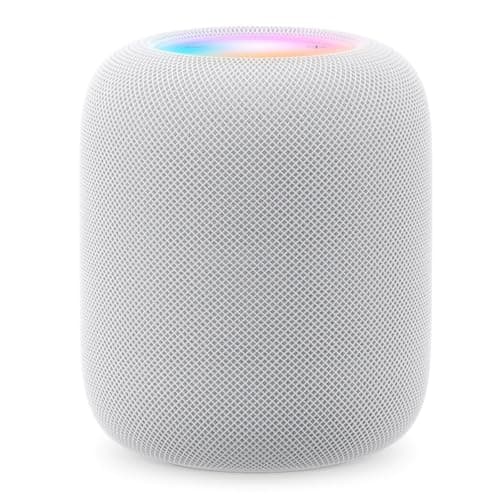
Apple HomePod 2nd Gen
- Best privacy of the three platforms by a wide margin
- S7 chip cannot run Apple Intelligence on-device
(Current price, subject to change)
The Apple HomePod 2nd Gen is the honest outlier of this comparison. Its platform drags its composite to a 51 on the SHE AI Assistant Intelligence Score, because the intelligence Apple marketed has not shipped: the next-gen Siri is beta-only in July 2026, with full release set for fall 2026 alongside iOS 27. The S7 chip — the same silicon class as an Apple Watch — cannot run Apple Intelligence on-device at all, so today's HomePod answers with the older Siri, a generation behind on real conversation. MacRumors has tracked repeated Siri delays, and AppleInsider reported that Apple held its home-hardware refreshes for that unfinished software. What the HomePod does deliver is the best privacy here, with on-device processing and Private Cloud Compute, plus a Thread border router and Matter control. At $349 it is about 3.5x the Nest Hub, roughly 1.9x the Echo Hub, and about 1.75x the Apple TV, and you are paying for ecosystem and privacy, not a smarter brain — yet.
What We Love
- Best privacy of the three platforms by a wide margin
- Excellent computational audio for a speaker this size
- Acts as a Thread border router and Matter controller
- Seamless for an all-Apple household
What Could Be Better
- S7 chip cannot run Apple Intelligence on-device
- Next-gen Siri is beta-only until fall 2026
- No display and no cross-service agentic actions
The Verdict
If privacy outranks capability and you live inside Apple's ecosystem, the Apple HomePod 2nd Gen is the path of least friction — with one honest caveat. Its platform scores an AAIS of 51 because the next-gen Siri is beta-only until fall 2026, and the S7 chip cannot run Apple Intelligence. At $349 you buy the ecosystem and its privacy on the promise of fall software, not a smarter brain.
Best Apple home hub: Apple TV 4K 3rd Gen
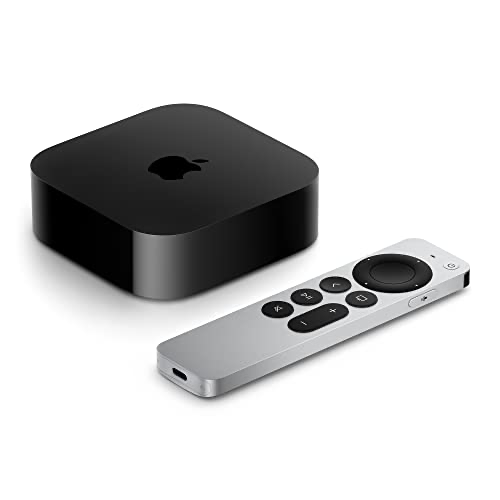
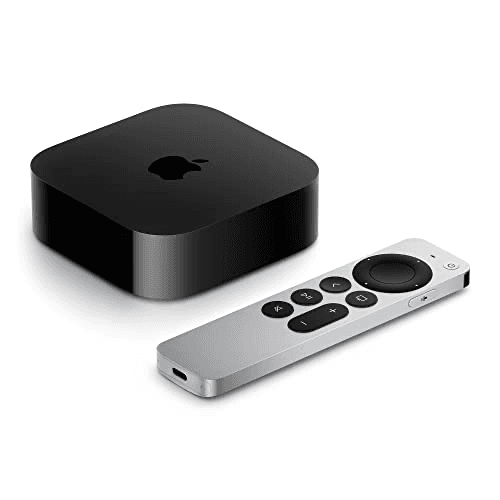
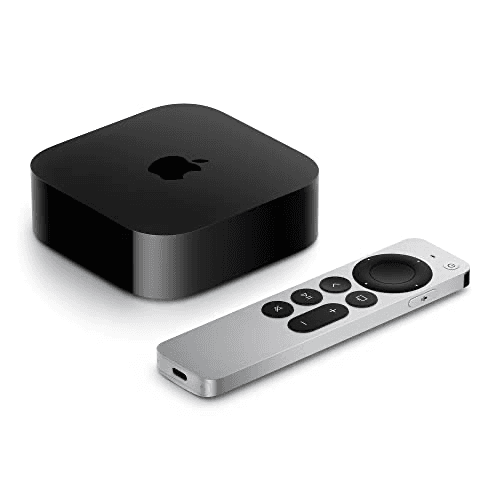
Apple TV 4K 3rd Gen
- Anchors an Apple smart home as the HomeKit and Matter hub
- Siri here is remote-driven, not ambient conversation
(Current price, subject to change)
The Apple TV 4K 3rd Gen earns its place as the same Apple platform in home-hub form, sharing the AAIS 51 and every strength and gap the HomePod carries. Its role is infrastructure: the A15 Bionic chip anchors your HomeKit and Matter home hub, keeping local automation and remote access running on the same factor set that scores privacy highest of the three. AppleInsider noted the refreshed Apple TV was held back for the unfinished Siri AI, and Apple said little else about home hardware at WWDC, so the third-generation box from 2022 remains the current model as of July 2026. Two honest scope notes: Siri here is remote-driven, not the ambient conversation Alexa+ and Gemini deliver; and the Thread border router belongs to the 128GB model, while this $199 64GB Wi-Fi SKU acts as the hub without it. At $199 it is roughly 2x the Nest Hub. Compared to buying a HomePod, it produces the automation backbone rather than the speaker.
What We Love
- Anchors an Apple smart home as the HomeKit and Matter hub
- Local automation keeps routines running on your network
- Best privacy posture of the three platforms
- Doubles as a capable 4K HDR streamer
What Could Be Better
- Siri here is remote-driven, not ambient conversation
- 64GB Wi-Fi model is not a Thread border router (the 128GB model is)
- Waiting on the same unshipped Siri AI as the HomePod
The Verdict
If you are building an Apple smart home and need the hub backbone, the Apple TV 4K 3rd Gen checks the boxes that matter for that setup. It anchors HomeKit and Matter automation on the same AAIS 51 platform — strong privacy, but Siri here is remote-driven, not ambient. At $199 the 64GB Wi-Fi model runs about 2x the Nest Hub; the Thread border router lives on the 128GB version.
How We Score: SHE AI Assistant Intelligence Score
SHE AI Assistant Intelligence Score
Score Formula
AAIS = [(Conversational NLU × 0.22) + (Agentic & Multi-Step × 0.20) + (Proactive Automation × 0.13) + (Ecosystem Control Depth × 0.17) + (Shipping Maturity × 0.18) + (Privacy & On-Device × 0.10)] × 10Score Factors
- Conversational NLU (22%)Natural-language understanding, multi-turn context retention, and self-correction. Does it hold a real conversation or need rigid syntax? Weighted highest because it is what most separates a modern AI from the old command-and-control assistant.
- Agentic & Multi-Step Reasoning (20%)Compound requests and cross-service agentic actions such as booking or ordering, and how reliably those actually complete. Real but unreliable actions are capped below shipped, dependable ones.
- Proactive Automation (13%)Pattern learning, proactive suggestions, and natural-language routine creation. Weight reduced this cycle because the category is in flux — Amazon retired its Hunches proactive system on June 9, 2026.
- Ecosystem Control Depth (17%)Device-compatibility depth, protocol breadth across Zigbee, Matter, Thread, and Z-Wave, routine trigger variety, and per-device control granularity. Rewards the platform that needs the fewest bridges.
- Shipping Maturity (18%)How much of the marketed AI has actually shipped to general release versus beta, early access, or announced, plus rollout stability. The decisive mid-2026 differentiator between Alexa+, Gemini, and Apple.
- Privacy & On-Device Processing (10%)On-device versus cloud inference, default recording policy, advertising-data use, and transparency. Apple leads on architecture; Amazon trails on its cloud-primary, ad-adjacent model.
SHE AI Assistant Intelligence Score — Ranked
Amazon Echo Show 21
SHE AI Assistant Intelligence Score7.6/10AAIS 76 — Alexa+ leads on ecosystem depth and is the only assistant at full GA; $399.99 flagship display
Amazon Echo Hub
SHE AI Assistant Intelligence Score7.6/10AAIS 76 — same Alexa+ brain and border-router control at $179.99; no speaker or camera
Google Nest Hub 2nd Gen
SHE AI Assistant Intelligence Score7.5/10AAIS 75 — Gemini's best-in-class conversation, one point back; $99.99 and still early access
Apple HomePod 2nd Gen
SHE AI Assistant Intelligence Score5.1/10AAIS 51 — best privacy, but next-gen Siri is beta-only until fall 2026; $349 speaker
Apple TV 4K 3rd Gen
SHE AI Assistant Intelligence Score5.1/10AAIS 51 — same Apple platform as a $199 HomeKit and Matter home hub
Cost, Privacy, or Conversation: Which Tradeoff to Buy
These three platforms optimize different things, so the right pick follows your priorities rather than a single winner. Each factor in the SHE AI Assistant Intelligence Score is weighted by how much it shapes daily use: Agentic and Multi-Step reasoning at 20%, Ecosystem Control Depth at 17%, Proactive Automation at 13%, and Privacy at 10%. Amazon retired its old Hunches proactive system on June 9, 2026, folding proactive behavior into Alexa+ suggestions, so that column is in flux for everyone. Alexa+ still delivers the broadest control and the only shipped agentic actions, even when they misfire.
Gemini for Home answers with the sharpest conversation — Google's engine self-corrects and handles interruptions — but its best features sit behind a paid tier, where Advanced runs 2x the Standard plan. (Engadget's “modest update” verdict applies to the new $99 Google Home Speaker — a device outside this roster — not to the Nest Hub ranked here.) Apple is the honest exception. Its next-gen Siri is beta-only until fall 2026, and the HomePod's S7 chip cannot run Apple Intelligence on-device at all. Buying Apple today means buying the ecosystem on the promise of fall software, in exchange for the best privacy by a wide margin.
The composite formula normalizes all six factors onto one 0-100 scale, and Alexa+ lands at 76, Gemini at 75, and Apple at 51 — the two leaders clearing Apple by about 1.5x. Match the platform to what you already own: an Amazon or Prime household is well-served by Alexa+, a Google-services household by Gemini, and a privacy-first Apple household should wait for the new Siri to ship before judging it.
| Product | Ambient Voice | Onboard Display | Thread Border Router | Matter Controller | Zigbee | On-Device AI |
|---|---|---|---|---|---|---|
| Amazon Echo Show 21 | ✓ | ✓ | ✓ | ✓ | ✓ | ✕ |
| Amazon Echo Hub | ✓ | ✓ | ✓ | ✓ | ✓ | ✕ |
| Google Nest Hub 2nd Gen | ✓ | ✓ | ✓ | ✓ | ✕ | ✕ |
| Apple HomePod 2nd Gen | ✓ | ✕ | ✓ | ✓ | ✕ | ✕ |
| Apple TV 4K 3rd Gen | ✕ | ✕ | ✕ | ✓ | ✕ | ✕ |
When NOT to Buy
If your smart home already runs well on the assistant you have, none of these five is a required upgrade in 2026 — Matter lets most devices answer any platform, so you are buying a better conversation, not new compatibility. If you are an Apple loyalist, the honest move may be to wait: the next-gen Siri that justifies the ecosystem ships in the fall, and today's HomePod runs the older Siri. And if you never talk to your home and only tap an app, a cheaper smart display on any platform belongs in a lower tier of your budget than these picks.
Who Should Buy What
Who Should Buy What
| If you are… | Recommended pick |
|---|---|
Amazon and Prime households You already pay for Prime and want the smartest shipping assistant on the largest screen, with cameras and Fire TV in one place | Amazon Echo Show 21 |
Value-minded Alexa+ buyers You want the same Alexa+ intelligence as a dedicated wall controller with a Zigbee, Matter, and Thread border router, not a media screen | Amazon Echo Hub |
Google-services households You value the sharpest conversation and live in Google's services, and a paid Premium tier for the marquee AI features is acceptable to you | Google Nest Hub 2nd Gen |
Privacy-first Apple homes You run an all-Apple household, you rank on-device privacy above raw capability, and you can wait for the new Siri to ship this fall | Apple HomePod 2nd Gen |
Apple homes needing a hub You want the HomeKit and Matter home-hub backbone with local automation and a capable 4K HDR streamer for an Apple household | Apple TV 4K 3rd Gen |
Frequently Asked Questions
Alexa+ vs Gemini for Home: which assistant is smarter?
It is close, and it depends on what you mean by smart. On our SHE AI Assistant Intelligence Score, Alexa+ edges Gemini 76 to 75. Gemini for Home wins the pure conversation contest — its self-correcting Gemini 3.1 engine handles interruptions and multi-step requests more fluidly. Alexa+ wins on ecosystem control depth and, decisively, on shipping maturity: it is the only one of the two at full US general availability, while Gemini is still branded early access. Both are close enough that the tiebreaker is which services and devices you already own. Note that Amazon retired its old Hunches proactive system in June 2026, so that former Alexa advantage is in transition.
Should I pick Alexa+ or Gemini if I don't already use Amazon or Google?
Start with cost and breadth, not brand loyalty. Alexa+ is free only if you would pay for Prime anyway ($14.99/mo or $139/yr); as a standalone subscription it is $19.99/mo. Gemini's basic voice is free, but its best features sit behind Google Home Premium at $10 to $20 per month. On raw ecosystem breadth, Alexa lists a far larger device catalog than Google. For a true greenfield buyer, let your phone and existing services decide: an Android or Google-services user leans Gemini for the better conversation, while anyone already in Amazon's orbit gets more shipped capability, and often a lower effective price, from Alexa+.
What do these assistants cost per month once you add subscriptions?
Alexa+ is $0 with Prime, otherwise $19.99/mo. Google charges for the marquee Gemini features through Google Home Premium — $10/mo for Standard or $20/mo for Advanced — while basic voice stays free. Apple Intelligence has no subscription at all; its cost is the hardware. A household that runs all three ends up maintaining three separate apps and three automation systems with no cross-platform intelligence, so the real cost is complexity as much as dollars. Most people are better served committing to one platform than paying into two or three.
Does Alexa+ work on older Echo devices?
Alexa+ runs on second-generation and newer Echo hardware — that includes Echo, Echo Dot, Echo Pop, Echo Spot (2nd gen), Echo Show 5, 8, 10, and 15, and Echo Studio, with the newest devices purpose-built for it. It does not run on first-generation Echo, Dot, Show, or Spot, the Echo Plus, the Echo Show 2nd gen, Echo Buds, Echo Auto, or third-party Alexa Built-in speakers. If your device is on the supported list, you do not need to buy new hardware to try Alexa+.
What happens to my Alexa Hunches now that Hunches is retired?
Amazon stopped supporting the Hunches feature on June 9, 2026, per its own customer-service guidance. The recommended replacement is Routines, which you configure explicitly rather than relying on Alexa's proactive guesses. One exception persists: Amazon Smart Thermostat auto-control continues to work. Going forward, Alexa+ folds proactive behavior into its context-aware suggestions, but that new system is unproven, which is part of why we reduced the weight of proactive automation in this year's scoring.
Is it worth waiting for Apple's new Siri before buying a HomePod?
If the AI is your reason to buy, yes. Apple unveiled its next-gen Siri in June 2026, but it is beta-only in July 2026 and does not reach full release until fall 2026 with iOS 27. The current HomePod's S7 chip cannot run Apple Intelligence on-device, so buying today gets you the older Siri, excellent audio, and the best privacy of the three platforms — not the smarter assistant Apple marketed. If privacy and Apple-ecosystem fit already sell you, the HomePod is fine now; if you want the new brain, wait for the fall software.
Can Alexa+ and Gemini control the same Matter devices?
Yes for the devices, no for the intelligence. A single Matter device — a lock or a bulb — can pair with multiple platforms at once and respond to all three assistants. But the AI features stay siloed: Alexa+ suggestions only see Alexa devices, Google's Ask Home only queries Google Home, and Apple automations only control HomeKit and Matter accessories inside Apple Home. So Matter solves basic compatibility, but it does not let one assistant's smarts reach across to another's ecosystem.
Does Gemini for Home work on older Nest speakers and displays?
Yes. Gemini for Home runs on Nest Audio, Nest Mini 2nd gen, Nest Hub 2nd gen, Nest Hub Max, the original Google Home, Home Mini, Home Max, and the Nest Hub 1st gen, delivered as a software upgrade rather than new hardware. The catch is Gemini Live, the hands-free conversational mode, which is limited to the four newer devices — Nest Audio, Nest Mini 2nd gen, Nest Hub 2nd gen, and Nest Hub Max — and typically the paid tier. Your older speaker still gets the improved assistant; it just may not get every marquee feature.
When do the new Siri and rumored HomePad arrive?
The next-gen Siri AI entered public beta in July 2026 and is set for full release in fall 2026 alongside iOS 27. The HomePad — a rumored square touchscreen home device around $350 — remains unconfirmed; there was no FCC filing as of May 2026, and it is now rumored for fall 2026, gated on that same Siri software. Treat the HomePad as a rumor, not a shipping product, and assume nothing until Apple confirms it.
Bottom Line
Get the Amazon Echo Show 21 if you already pay for Prime and want the smartest shipping assistant on the largest screen, with cameras and Fire TV.
Get the Amazon Echo Hub if you want the same Alexa+ intelligence as a dedicated wall controller with a Zigbee, Matter, and Thread border router.
Get the Google Nest Hub 2nd Gen if you value the sharpest conversation on the cheapest capable display and live in Google's services.
Get the Apple HomePod 2nd Gen if privacy outranks capability, you are all-Apple, and you can wait for the new Siri to ship this fall.
Get the Apple TV 4K 3rd Gen if you need the HomeKit and Matter home-hub backbone for an Apple household plus a capable 4K streamer.
For most buyers the pick is the Amazon Echo Show 21 or the value Amazon Echo Hub — Alexa+ is the smartest assistant you can fully use today at AAIS 76. If conversation matters most, the $99.99 Google Nest Hub 2nd Gen and Gemini's 75 are a hair behind. Choose Apple's Apple HomePod 2nd Gen only if privacy outranks capability and you can wait for Siri to ship this fall.
Sources & Methodology
Methodology: SHE AI Assistant Intelligence Score — Formula: AAIS = [(Conversational NLU × 0.22) + (Agentic & Multi-Step × 0.20) + (Proactive Automation × 0.13) + (Ecosystem Control Depth × 0.17) + (Shipping Maturity × 0.18) + (Privacy & On-Device × 0.10)] × 10. Factors: Conversational NLU (22%): Natural-language understanding, multi-turn context retention, and self-correction. Does it hold a real conversation or need rigid syntax? Weighted highest because it is what most separates a modern AI from the old command-and-control assistant. | Agentic & Multi-Step Reasoning (20%): Compound requests and cross-service agentic actions such as booking or ordering, and how reliably those actually complete. Real but unreliable actions are capped below shipped, dependable ones. | Proactive Automation (13%): Pattern learning, proactive suggestions, and natural-language routine creation. Weight reduced this cycle because the category is in flux — Amazon retired its Hunches proactive system on June 9, 2026. | Ecosystem Control Depth (17%): Device-compatibility depth, protocol breadth across Zigbee, Matter, Thread, and Z-Wave, routine trigger variety, and per-device control granularity. Rewards the platform that needs the fewest bridges. | Shipping Maturity (18%): How much of the marketed AI has actually shipped to general release versus beta, early access, or announced, plus rollout stability. The decisive mid-2026 differentiator between Alexa+, Gemini, and Apple. | Privacy & On-Device Processing (10%): On-device versus cloud inference, default recording policy, advertising-data use, and transparency. Apple leads on architecture; Amazon trails on its cloud-primary, ad-adjacent model.
Expert review sources used in this analysis:
- SmartHomeExplorer aggregates expert coverage and manufacturer specifications to produce consensus-based buying guidance
- We do not perform first-party product testing
- Assistant capabilities, rollout status, pricing, and hardware specifications are drawn from vendor documentation at amazon.com, google.com, and apple.com, and corroborated against coverage from Consumer Reports, TechRadar, Android Authority, Engadget, MacRumors, and AppleInsider
- Alexa+ reached US general availability in February 2026; Gemini for Home remains in early access; Apple's next-gen Siri is beta-only, shipping in full in fall 2026 with iOS 27
- Prices are manufacturer list prices verified as of July 2026 and change frequently — check the current price on Amazon
- The SHE AI Assistant Intelligence Score weights Conversational NLU, Agentic and Multi-Step Reasoning, Proactive Automation, Ecosystem Control Depth, Shipping Maturity, and Privacy, then normalizes the weighted composite onto a 0-100 scale
- No first-party measurements were conducted.
Nicholas Miles is the founder of SmartHomeExplorer and a longtime smart home enthusiast focused on helping everyday homeowners make better technology decisions. He researches, compares, and writes about products across security, climate, lighting, leak prevention, sensors, home energy, and automation, with an emphasis on real-world usefulness, ecosystem compatibility, reliability, privacy, and long-term value.
Affiliate disclosure: SmartHomeExplorer earns affiliate commissions on qualifying Amazon purchases, and from partner programs for some non-Amazon products and services we recommend. Our scoring methodology is independent of affiliate relationships.
More Guides

smart-home
Alexa+ vs Google Home 2026: 6 Picks Compared
Smart Speakers
Alexa vs Google Home vs Apple HomeKit (2026): Scored
Smart Speakers
Alexa vs Google Home vs Apple HomeKit 2026: Compared
Entertainment
Echo Show vs Nest Hub vs HomePod: Best Kitchen Display 2026

automation
Best AI Smart Home Hubs 2026
smart-speakers