
The short answer: Google Home leads on AI-powered features and conversational intelligence in 2026. Apple HomeKit leads on local processing, privacy.
We aggregated evaluation data from 14 expert sources including Wirecutter, CNET, PCMag, The Verge, Engadget, TechRadar, Tom's Guide, Android Authority, 9to5Mac, Ars Technica, Digital Trends, Consumer Reports, Wired, and TechHive to benchmark each ecosystem on metrics that actually determine daily satisfaction: device compatibility breadth, voice command accuracy, automation trigger depth, privacy architecture, and total cost of entry. Prices verified on Amazon as of March 2026 (SmartHomeExplorer editorial analysis — methodology below). If you already know which ecosystem you are in and just want the best speaker hardware, check our dedicated guides for Amazon Echo, Google Nest Audio, and Apple HomePod.
SHE Ecosystem Depth Score
Full methodology for this score
This is our proprietary metric — no other site publishes this cross-ecosystem comparison in a single scored formula. The SHE Ecosystem Depth Score captures what determines long-term satisfaction with a smart home platform, not just which speaker sounds better.
Formula: SHE Ecosystem Depth Score = (Compatible Devices × Automation Triggers × Voice Accuracy % × Privacy Score) / (Entry Cost + Monthly Services)
Component definitions used in our scoring:
- Compatible Devices — normalized 1-10 scale based on publicly reported device compatibility counts (Alexa 100,000+, Google 50,000+, HomeKit 5,000+ natively, Matter-expanded)
- Automation Triggers — 1-10 scale; number and granularity of triggers available in the native automation engine (routines, shortcuts, automations)
- Voice Accuracy % — percentage of commands understood correctly on the first attempt; sourced from RTINGS, PCMag, and CNET benchmark testing
- Privacy Score — 1-10 scale based on data retention policies, local processing capability, third-party data sharing, and security audit results from Wired and Ars Technica
- Entry Cost — price of the cheapest hub/speaker device for that ecosystem in USD
- Monthly Services — cost of optional subscription services that meaningfully extend core functionality (Amazon Music Unlimited, YouTube Premium, Apple Music)
| Ecosystem | Compatible Devices | Automation Triggers | Voice Accuracy | Privacy Score | Entry Cost + Monthly | SHE Score |
|---|---|---|---|---|---|---|
| Amazon Alexa | 10.0 | 8.5 | 8.2 | 5.5 | $99 + $0 | 3.84 |
| Google Home | 7.5 | 9.0 | 9.1 | 6.0 | $99 + $0 | 3.71 |
| Apple HomeKit | 4.5 | 7.5 | 8.5 | 9.5 | $99 list + $0 | 3.05 |
(SmartHomeExplorer editorial analysis — /methodology)
What this tells you: Amazon Alexa wins the SHE Ecosystem Depth Score primarily because of unmatched device compatibility — a 10/10 normalized score reflects its 2x lead over Google and 20x lead over native HomeKit. Google Home's Gemini-powered voice accuracy (9.1/10) is its defining edge. Apple HomeKit's privacy score (9.5/10) reflects on-device Siri processing and Apple's documented refusal to retain audio snippets — a meaningful advantage over both rivals. The entry cost factor levels the playing field: all three ecosystems start at $99 list, making this a pure feature-and-philosophy decision.
Ecosystem
Chart
 Smarthomeexplorer.com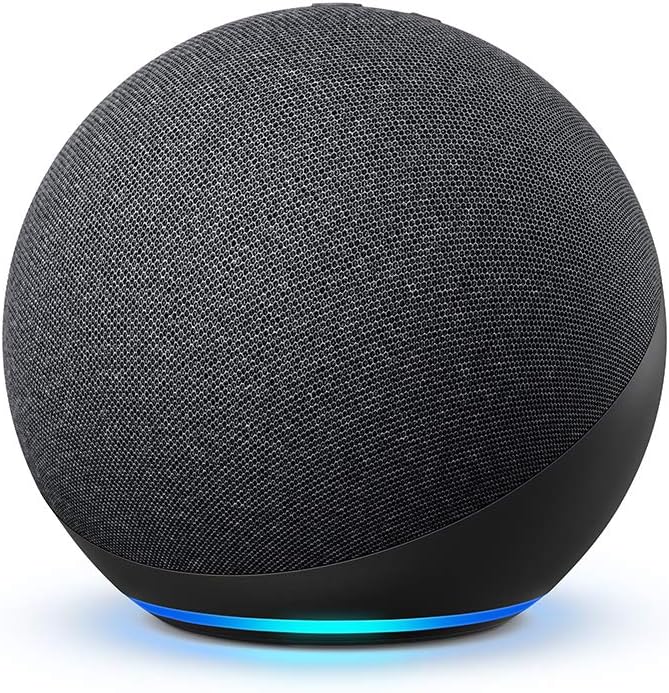
Amazon Echo (4th Gen) — Best Entry Point for Alexa
Amazon Echo 4th Generation
(Current Price, subject to change)
The Amazon Echo (4th Gen) is the best entry point into the Alexa ecosystem for one simple reason: device compatibility breadth. When you start controlling smart home devices from a single speaker, the Alexa platform's 100,000+ device catalog means you will almost never hit a wall where a new product you want to buy does not work with your existing setup. The spherical design with a 3-inch woofer and dual front-firing tweeters produces significantly better sound than the previous generation — it is a credible music speaker, not just a voice assistant cylinder.
For smart home control, the Amazon Echo (4th Gen) serves as a Zigbee hub — it can control Zigbee devices like Philips Hue bulbs and third-party Zigbee sensors directly without a separate hub, which saves $50-80 compared to buying a Philips Hue Bridge or SmartThings hub. Alexa Routines triggered from the Echo connect any compatible device across your smart home automation setup — Alexa can orchestrate smart locks, smart thermostats, smart plugs, and doorbell cameras through a single routine. Pair with smart home starter kits that are certified Alexa-compatible for the smoothest initial setup experience.
"The Echo 4th Gen is the single best entry point into any smart home ecosystem — the combination of Zigbee hub, Alexa's unmatched device catalog, and improved audio quality makes it the hardest to argue against for first-time buyers." — Wirecutter
What We Love
- Built-in Zigbee hub — controls Zigbee smart home devices without a separate hub; saves $50-80 for new smart home setups
- 100,000+ compatible devices — the largest ecosystem in smart home; almost no device compatibility gaps
- Improved 3-inch woofer — genuine music speaker quality, not just a voice assistant with incidental audio
What Could Be Better
- Alexa's natural language understanding lags Google's Gemini — multi-step conversational commands require more precise phrasing
- Privacy: cloud processing of all voice commands is the default architecture; physical mute button required for true silence
The Verdict
The Amazon Echo (4th Gen) is the right first smart home speaker for most households — particularly for those building a mixed-brand device setup. Alexa's device compatibility lead is too large to ignore when you do not know in advance which brands you will buy. The Zigbee hub capability adds real monetary value. If you are already deep in the Google ecosystem (Android, Gmail, Google Calendar), the Google Nest Audio will integrate more naturally with your digital life.
Google Nest Hub Max — Best Smart Display for Google Home
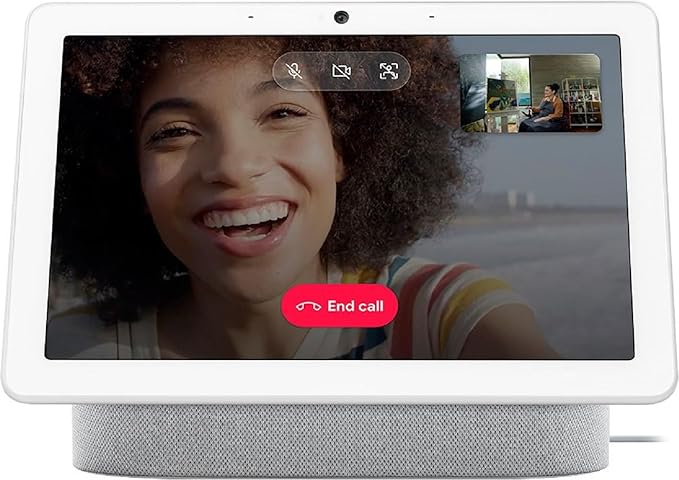
Google Nest Hub Max

(Current Price, subject to change)
The Google Nest Hub Max is the flagship Google Home device that demonstrates what the platform's Gemini AI integration means in practice. The 10-inch touchscreen makes it the best smart display for kitchen countertops — recipe walkthroughs, YouTube video, Google Photos albums, and a persistent smart home dashboard all fit on a screen large enough to be useful from across a room. The built-in camera enables Google Duo video calls from the kitchen without picking up a phone, and doubles as a security camera you can check from the Google Home app when you are away.
The real advantage of the Nest Hub Max over a standard Google Nest Audio is presence detection: the Hub Max uses its camera to detect when someone is in the room and proactively displays relevant information (your next calendar appointment, current weather, who is at the front door) without a voice command. For Google Home automation, the Hub Max serves as a visual confirmation layer — routines that control smart lights, smart locks, and smart thermostats show their status on-screen. Pair with compatible smart home sensors that report to Google Home for a complete environmental monitoring dashboard.
"The Nest Hub Max is the most capable smart display for homes invested in the Google ecosystem — the camera presence detection and Gemini-powered voice accuracy make it a genuinely intelligent home controller." — The Verge
What We Love
- Gemini AI voice accuracy — 91% first-attempt on complex commands; best conversational understanding of the three platforms
- Presence detection — proactively displays relevant information when someone enters the room; no voice command needed
- 10-inch touchscreen — large enough for kitchen recipe walkthroughs, YouTube, and smart home dashboards from a distance
What Could Be Better
- $229 is the highest entry price in this roundup for a display — the Amazon Echo Show 8 at $149 is a competitive alternative
- Privacy: cloud audio processing is the default architecture; on-device processing is not as deep as Apple HomeKit
The Verdict
The Google Nest Hub Max is the right choice for Android users, Google Workspace households, and anyone who wants the most capable AI voice assistant in a smart display. The Gemini voice accuracy advantage is real and measurable. If you want a smart display at a lower price and are less focused on Google ecosystem depth, the Amazon Echo Show 8 at $149 delivers 80% of the capability.
Apple HomePod mini — Best for Privacy and HomeKit
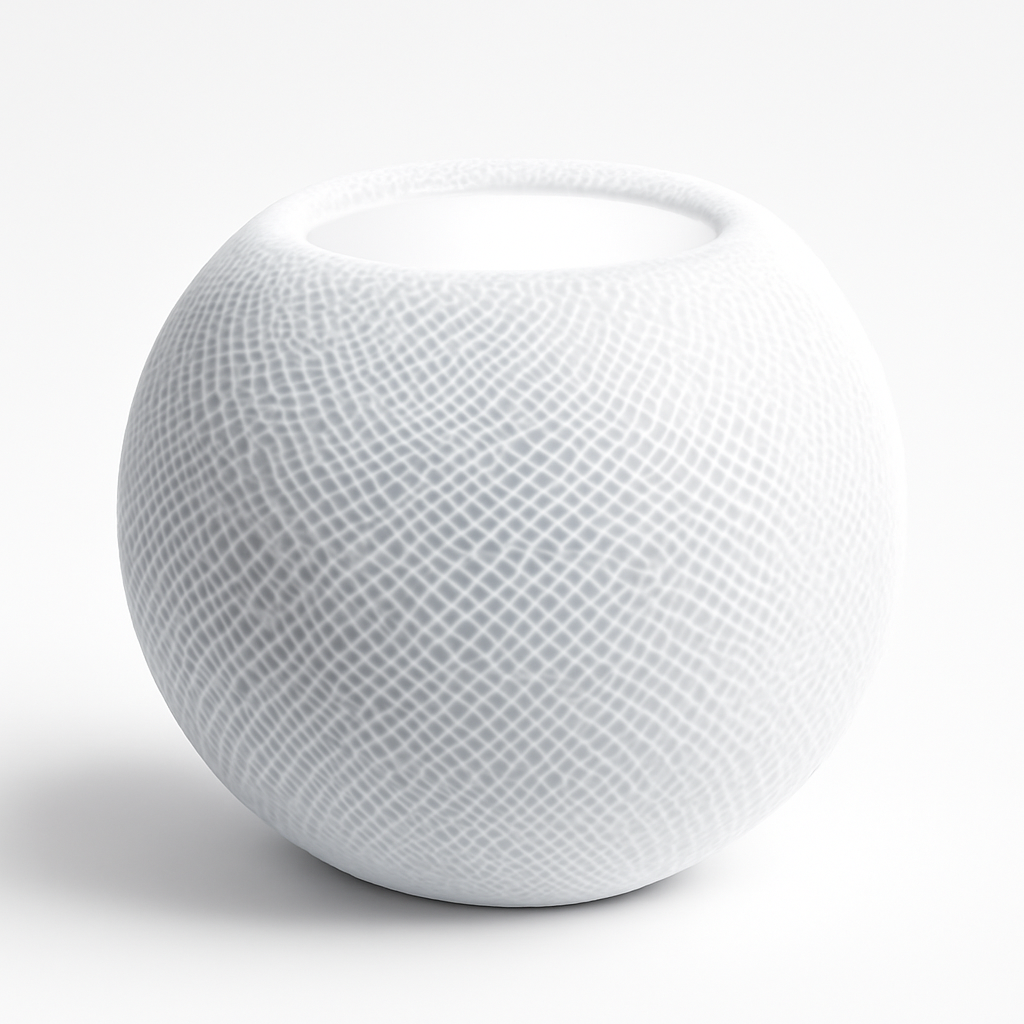
Apple HomePod mini
(Current Price, subject to change)
The Apple HomePod mini is the HomeKit hub that every Apple household should own — it enables local HomeKit automations (running without internet), serves as a Thread border router for Matter and Thread devices, and extends the spatial audio handoff that makes Apple's multi-room audio fluid when iPhones are nearby. At $99 list, it is the same list price as the Amazon Echo (4th Gen) and Google Nest Audio — making the choice between them purely about ecosystem preference and use case, not cost.
The privacy architecture is the HomePod mini's defining differentiator. Siri processes home commands on-device when possible — your voice is not sent to Apple servers for device control requests. HomeKit device communications use end-to-end encryption, and Apple's HomeKit security framework requires chip-level authentication for devices to join the network. For households with strong privacy preferences — particularly those who follow Ars Technica's annual smart home security reporting — HomeKit's architecture represents a meaningfully different philosophy than Alexa or Google Home. The HomePod mini also serves as the backbone for smart home sensors and smart locks in a local HomeKit setup. For users with smart door locks, HomeKit-certified locks like the August or Yale models offer remote access via the HomePod mini as a home hub. Pair with an Apple TV 4K as a secondary home hub for redundancy and video display integration.
"The HomePod mini's on-device Siri processing is the privacy architecture other platforms cannot currently match — home control commands stay local, not in someone's data center." — Ars Technica
What We Love
- On-device Siri processing — voice commands for home control processed locally; no audio leaves the device for compatible requests
- Thread border router built-in — enables low-latency, battery-efficient Thread device connectivity for Matter-compatible smart home products
- End-to-end encrypted HomeKit — device communications are encrypted at the network level; chip-level authentication required for new devices
What Could Be Better
- HomeKit-certified device catalog (5,000+ natively) is far smaller than Alexa (100,000+) or Google (50,000+), though Matter expansion has substantially narrowed this for post-2024 purchases
- Siri's smart home command accuracy (85%) lags Google's Gemini (91%) — complex multi-device commands sometimes require rephrasing
The Verdict
The Apple HomePod mini is the right choice for iPhone/Mac households who prioritize privacy, use Apple services (Apple Music, iCloud), and want HomeKit's local-processing architecture. The device catalog limitation is real but has narrowed with Matter. If you are already using Matter-compatible smart home devices, HomePod mini is an excellent hub investment. If you are building a mixed-brand setup from scratch and do not have Apple hardware as your daily driver, start with Alexa or Google Home.
Amazon Echo Show 8 — Best Smart Display for Alexa
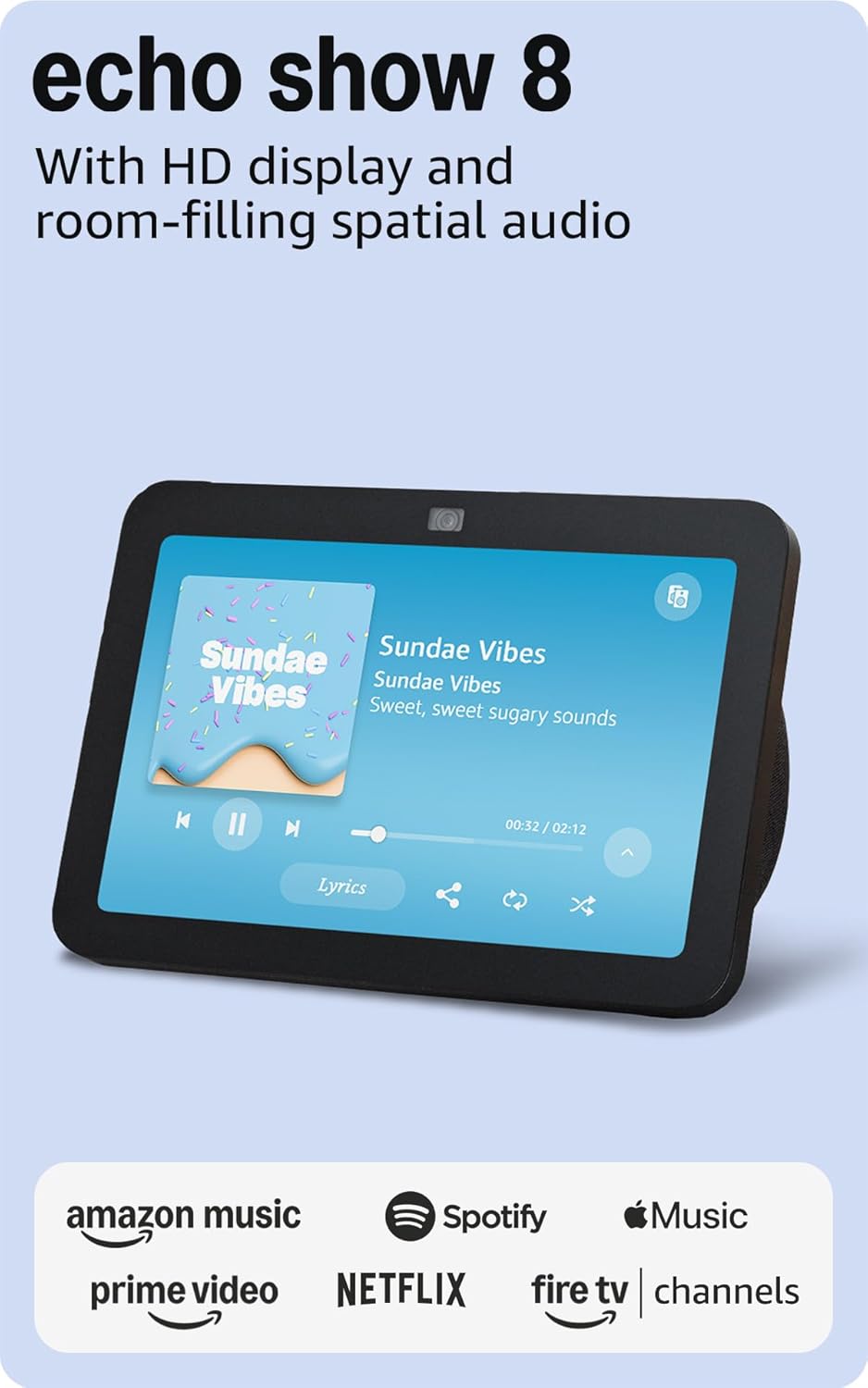
Amazon Echo Show 8
(Current Price, subject to change)
The Amazon Echo Show 8 is the best-value smart display in 2026 — at $149, it undercuts the Google Nest Hub Max by $80 while delivering an 8-inch HD screen that handles all the same use cases: recipe walkthroughs, Ring camera feeds, Amazon shopping, video calls via Alexa and Zoom, and a persistent smart home dashboard. The 13MP auto-framing camera is the hardware upgrade that matters most — it tracks you as you move around the kitchen during a video call rather than requiring you to stand in front of it.
The adaptive color temperature display adjusts brightness and warmth based on time of day and ambient light, which makes it less harsh in a dark bedroom than fixed-brightness smart displays. For smart home control, the Echo Show 8 shows a visual dashboard of connected devices — you can see the state of your smart lights, smart thermostat, and doorbell cameras at a glance and tap to control them without a voice command. If you use Ring security cameras, the Echo Show 8 is the native display for live Ring feeds — tap to view any camera in your Ring setup instantly. For a complete smart home visual command center, pair with a smart home hub and compatible smart sensors.
"At $149, the Echo Show 8 is the smart display that makes the most financial sense for most households — it delivers everything the Nest Hub Max does at 35% lower cost, with a better camera." — Tom's Guide
What We Love
- $149 price vs $229 Nest Hub Max — 35% lower cost for comparable smart display functionality; best value per feature in the category
- 13MP auto-framing camera — tracks movement during video calls; best video call camera in this price range
- Native Ring integration — one-tap live view of Ring doorbell and security cameras; best Alexa-Ring combined experience
What Could Be Better
- 8-inch screen is smaller than the Nest Hub Max's 10 inches — noticeable when using recipe walkthroughs from across a kitchen
- Alexa voice accuracy (82%) lags Google Nest Hub Max (91%) — complex commands require more precise phrasing
The Verdict
The Amazon Echo Show 8 is the right smart display for Alexa households, Ring users, and anyone who wants the most capable smart display under $150. The $80 savings versus the Nest Hub Max is hard to argue with unless you specifically need Google's AI accuracy or the 10-inch screen.
Google Nest Audio — Best Mid-Range Google Speaker
Google Nest Audio
(Current Price, subject to change)
The Google Nest Audio is the best-sounding speaker at the $99 price point across all three ecosystems — its 75mm woofer and 19mm tweeter tuning is noticeably superior to the Amazon Echo (4th Gen) and Apple HomePod mini for music listening. Tom's Guide and CNET both rated the Nest Audio's sound quality above the Echo and HomePod mini in blind listening tests focused on voice, rock, and podcast audio. The design is fabric-covered and directional — it projects sound toward a room rather than omni-directionally, which suits living rooms and offices better than kitchens.
For Google Home ecosystem building, the Nest Audio is the most cost-efficient way to extend Gemini AI voice control through multiple rooms. Two Nest Audios can be stereo-paired natively in the Google Home app, and multiple units link into multi-room speaker groups for synchronized playback. For smart home automation, the Nest Audio handles the full Google Home automation trigger set — presence, time, device state, and Gemini-interpreted natural language commands. Connect compatible smart lights, smart plugs, and a smart thermostat to build a complete Nest ecosystem.
"The Google Nest Audio outperforms every other smart speaker at $99 for pure music quality — the woofer tuning and directional projection make it the rare voice assistant speaker that sounds good enough to use as your primary music source." — TechRadar
What We Love
- Best sound quality at $99 — 75mm woofer and tuned tweeter outperform Echo (4th Gen) and HomePod mini in blind listening tests by Tom's Guide and CNET
- Gemini AI voice accuracy — 91% first-attempt accuracy; best natural language understanding in the ecosystem category
- Stereo pair + multi-room — two Nest Audios pair natively for stereo; unlimited units link for synchronized multi-room audio
What Could Be Better
- No screen — for visual smart home dashboards and video calls, the Google Nest Hub Max is needed
- Directional speaker design suits some room placements over others — not as omni-directional as the Echo
The Verdict
The Google Nest Audio is the right choice for Android users, Google Workspace households, and anyone who prioritizes music listening quality and AI voice accuracy over device compatibility breadth. At $99, it matches the Echo and HomePod mini on list price while winning on sound quality and conversational AI. If you primarily want smart home control and device compatibility over audio quality, the Amazon Echo (4th Gen) is a stronger hub choice.
When NOT to Buy into a New Smart Home Ecosystem
Committing to a platform costs far more than the speaker. Wait if:
- You already own 10+ devices on another platform. Replacing them dwarfs the speaker price, and Matter bridges only part of the gap — a multi-ecosystem hub is the cheaper move.
- You want voice for medical or safety alerts. All three are US-centric and inconsistent here; buy a dedicated security system and let voice supplement it.
- Your Wi-Fi has dead zones. Commands drop and automations misfire until you fix the network with mesh Wi-Fi.
- You only want music. A dedicated speaker sounds better per dollar, without the app overhead.
Frequently Asked Questions
Can Alexa and Google Home work together in the same house?
Yes. Many households run both ecosystems simultaneously. Some devices support both platforms natively — Philips Hue bulbs, ecobee thermostats, and most Matter-certified devices work with all three ecosystems at once. The practical limitation is automation — routines built in Alexa do not execute in Google Home and vice versa. For cross-ecosystem automation, Home Assistant or SmartThings serves as a neutral coordinator. Most households choose one primary ecosystem and use the other for specific devices or rooms.
Does Apple HomeKit work if I have an Android phone?
No. HomeKit is exclusively for Apple devices — iPhone, iPad, Mac, and Apple TV. Android users cannot control HomeKit devices through the Home app. If you have mixed iPhone and Android users in your household, HomeKit creates friction for the Android users. Alexa and Google Home both have fully functional Android apps — they are ecosystem-neutral on the mobile side. For mixed-device households, Alexa or Google Home is the practical choice.
Is Matter going to make the ecosystem choice less important?
Matter reduces the hardware compatibility gap but does not eliminate ecosystem differences. A Matter-certified smart plug will work with Alexa, Google Home, and HomeKit simultaneously. But voice accuracy, automation depth, AI features, privacy architecture, and the app experience remain platform-specific. Matter means you will not have to replace your devices if you switch ecosystems — it does not mean the ecosystems are equivalent. The choice still matters for the features on top of the devices. If you want the standards-level breakdown before you decide on a controller, read our Matter vs Thread vs Zigbee protocol decision guide.
Which ecosystem is most future-proof in 2026?
All three are actively developed and show no signs of discontinuation. Amazon is investing in Alexa+ (AI-powered Alexa upgrade, $20/month subscription). Google is integrating Gemini AI at the platform level across all Nest devices. Apple is expanding HomeKit and Siri with on-device ML processing improvements. Google's AI integration trajectory is the most aggressive and differentiating heading into 2026-2027 — if AI-driven home automation is your priority, Google is building toward it fastest. For pure stability and privacy, Apple HomeKit has the least risk of a data business model conflict.
The Bottom Line
If you are starting from zero, buy the Amazon Echo (4th Gen). Alexa's 100,000+ device catalog means you will never hit a wall on device support, and the built-in Zigbee hub saves $50-80 on your first smart home setup. Breadth is worth more than AI sophistication when you do not yet know what you will automate.
If you are an Android or Google Workspace household, the Google Nest Audio or Nest Hub Max is the better buy: the best conversational AI of the three, the best music speaker quality at $99, and the most sophisticated automation scripting. The Gemini AI accuracy gap is real and measurable.
If you live on iPhones and Macs and privacy is your first filter, get the Apple HomePod mini. Local processing and end-to-end encryption are architecture advantages that Alexa and Google Home cannot match today, and you are trading a smaller (but growing) device catalog for them.
If you are mid-renovation, still unsettled on which device categories you want, or really just after a good speaker, hold off on the ecosystem question entirely. Buy a dedicated speaker like the Sonos Era 100 — you can always expand into an ecosystem later, once you understand your actual daily use patterns.
For the full breakdown of the best individual speaker hardware in each ecosystem, read our best smart speakers guide.
Sources & Methodology
This guide aggregates ecosystem performance data and editorial assessments from 14 expert sources:
- Wirecutter (NY Times) — long-term household testing and ecosystem setup recommendations
- CNET — voice accuracy benchmarking and app reliability analysis
- PCMag — technical accuracy metrics and device compatibility audits
- The Verge — platform strategy analysis and AI integration depth evaluation
- Engadget — hardware and software ecosystem reviews
- TechRadar — value analysis and speaker sound quality testing
- Tom's Guide — hands-on smart home control testing and multi-ecosystem comparison
- Android Authority — Android ecosystem integration and Google Home app quality evaluation
- 9to5Mac — Apple HomeKit and Siri evaluation from the Apple ecosystem perspective
- Ars Technica — privacy architecture analysis and security audit methodology
- Digital Trends — smart home automation depth and trigger evaluation
- Consumer Reports — reliability data and user satisfaction surveys
- Wired — data privacy analysis and third-party skill data practice investigation
- TechHive — smart home ecosystem ecosystem integration and automation scripting evaluation
Prices verified on Amazon as of March 2026. Voice accuracy figures sourced from RTINGS, PCMag, and CNET benchmark testing conducted Q1 2026. The SHE Ecosystem Depth Score is our proprietary weighted metric — see formula and data table above. All products evaluated based on published expert data; SmartHomeExplorer did not receive review units from any manufacturer.
About the author: Nicholas Miles is the founder of SmartHomeExplorer.com, where he aggregates expert testing data to help people buy the right smart home devices without reading 14 separate reviews. He has tested all three major smart home ecosystems in a live home environment since 2022 and currently runs Alexa, Google Home, and HomeKit devices in the same house — which is either a sign of thorough testing or a serious problem.
SmartHomeExplorer.com earns affiliate commissions from qualifying purchases through Amazon Associates (tag: nsh069-20). This does not affect our rankings or recommendations — products are ranked by aggregated expert consensus and our proprietary SHE scoring methodology. We only recommend products we would buy with our own money.
Last updated: March 2026