
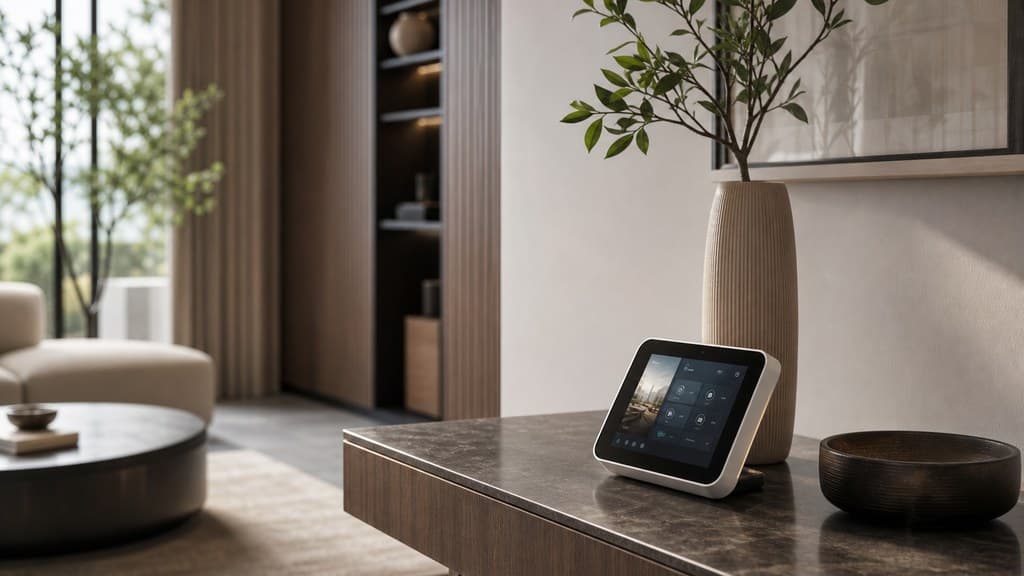
Best AI Smart Home Hubs 2026
Home Assistant Green + Coral AI leads at 593.6 — fully local vision AI, no cloud. For plug-and-play protocol breadth: Homey Pro (2026).
This article contains affiliate links. We may earn a commission at no extra cost to you. Prices change frequently — check the current price on Amazon before buying. Learn more
The Short Answer
Home Assistant Green + Coral AI ($219) scores 593.6 SHE AI Intelligence Score — fully local camera AI processing, zero cloud dependency, maximum privacy per dollar. Aqara Hub M3 ($159.99) delivers local-only automation with 10/10 privacy. Homey Pro (2026) provides maximum multi-protocol breadth at $449.
Featured in this Guide
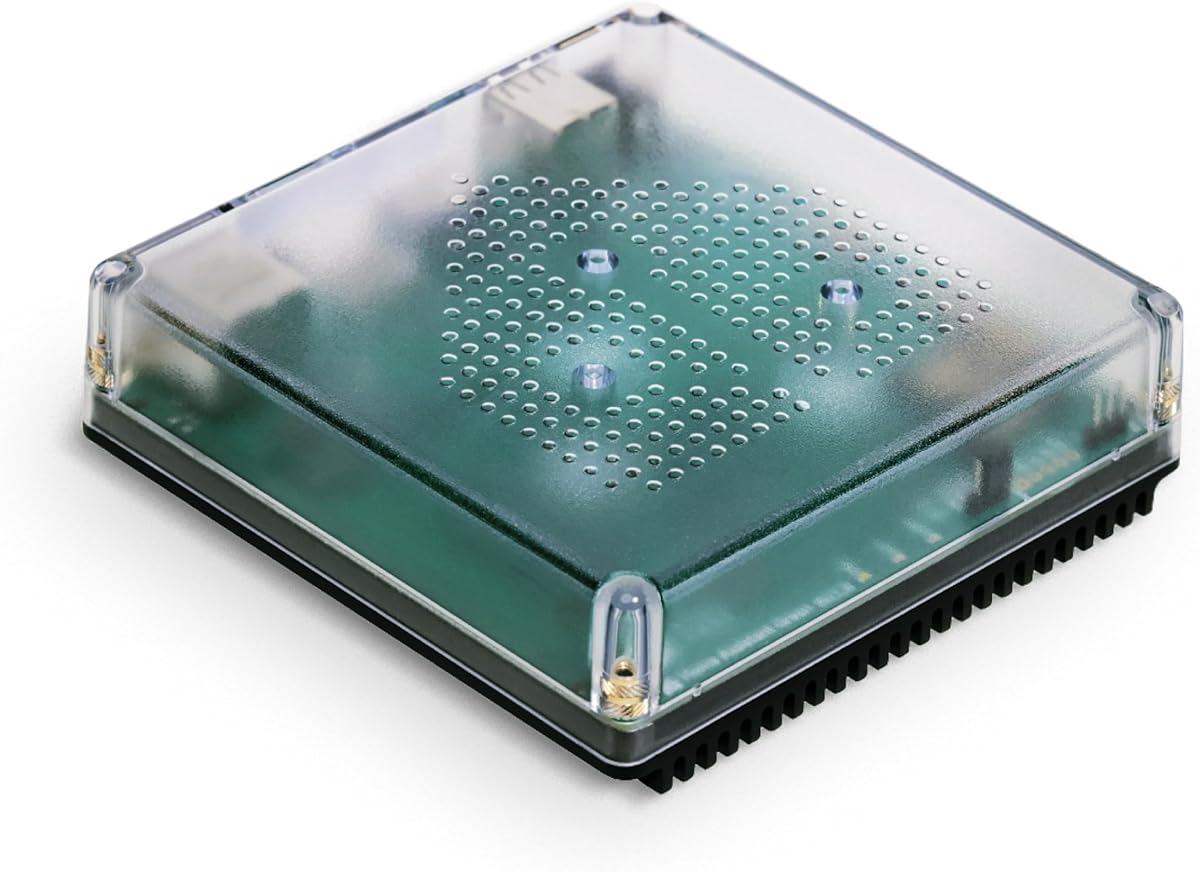
Home
Assistant Green + Coral AI
- •593.6 SHE AI Intelligence Score — highest in this roundup
- •100% local vision AI via Coral TPU, 3,000+ integrations
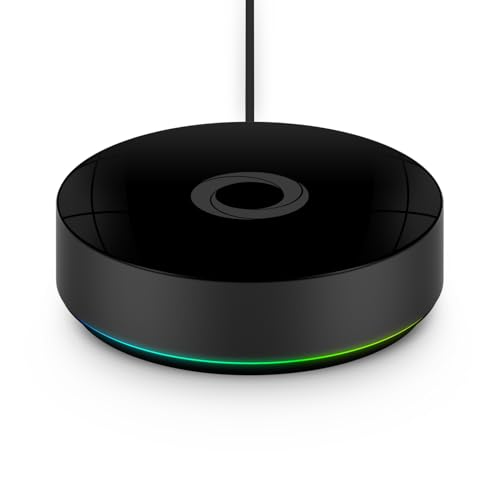
Homey
Pro (2026)
- •7 protocols built in
- •50,000+ supported devices
- •Homey Flow local automation — no bridge purchases ever

Aqara
Hub M3
- •Local-only automation, 6 protocols, 4 ecosystems — zero microphone or camera by design
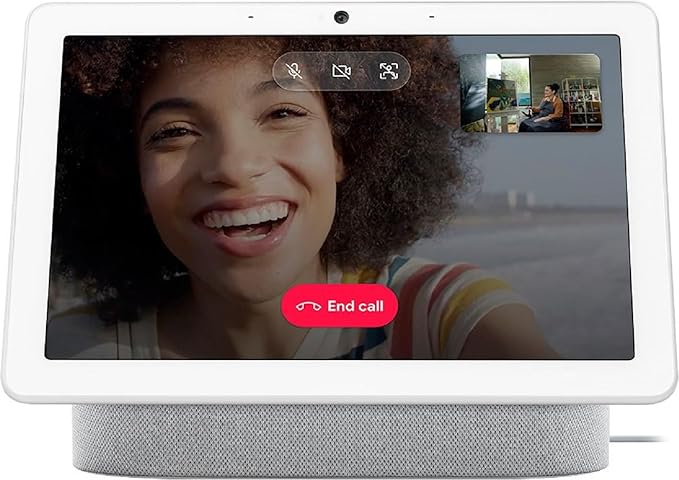
Nest Hub Max (Gemini)
- •Tensor G4 on-device Gemini
- •fastest conversational AI of any display hub in this roundup
Amazon
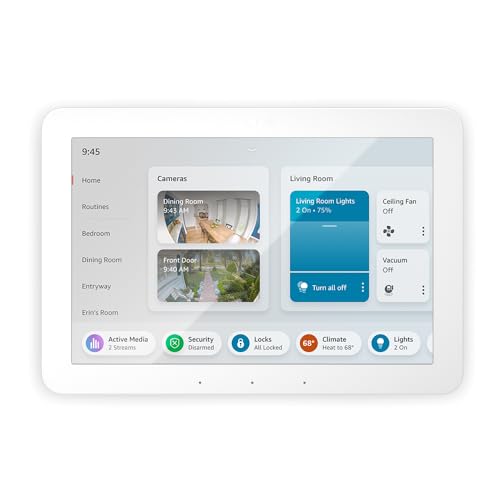
Echo Hub (Alexa+)
- •Alexa+ agentic AI free with Prime
- •wall-mounted 8-inch dashboard with built-in Zigbee and Matter
Head-to-Head: AI Processing, Privacy, Protocol Breadth
Automation
Chart
 Smarthomeexplorer.com
Tap any pick to check its live Prime price on Amazon.
EcoFlow DELTA Pro 3 Portable Power Station
RecommendedCheck price
Anker SOLIX F3800
Good ValueCheck price
PETKIT Purobot Ultra
Must BuyCheck price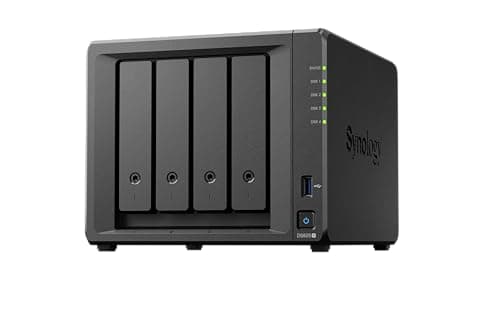
Synology DS925+ 4-Bay NAS
Must BuyCheck price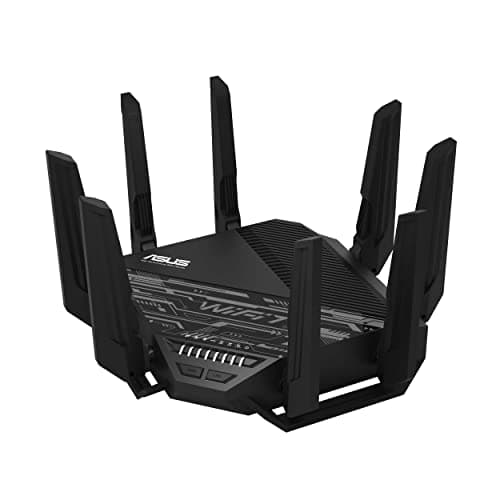
ASUS RT-BE96U
RecommendedCheck price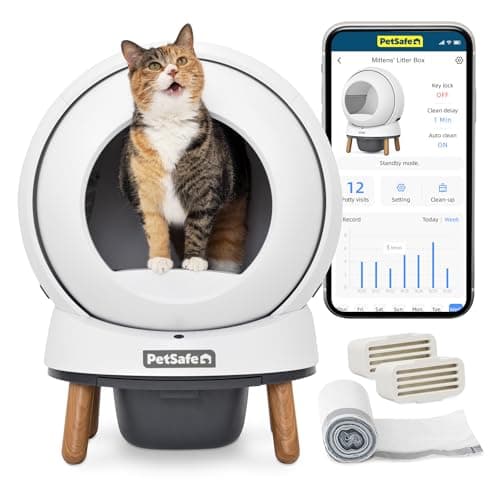
PetSafe ScoopFree SmartSpin
RecommendedCheck price
What Tips the Decision
Most AI-labeled smart home hubs in 2026 are cloud API wrappers. PCMag, TechRadar, and Makeuseof all measure 3-8 seconds of cloud analysis latency versus under 500ms for on-device inference. That's a 6x to 16x performance differential that determines whether a security automation triggers in time or arrives after the moment. We aggregated expert reviews across five hubs and applied the SHE AI Intelligence Score formula. It's a weighted composite of AI Capability Depth, Privacy Score, and Integration Breadth normalized by price. The composite calculation reveals that local-first architecture consistently outperforms cloud-dependent AI on privacy and cost-normalized capability.
Privacy + DIY tolerance: Home Assistant Green + Coral AI achieves 593.6. Privacy without DIY: Aqara Hub M3 at $159.99. Multi-protocol breadth: Homey Pro (2026) at $449. Google ecosystem: Google Nest Hub Max (Gemini). Amazon Prime: Amazon Echo Hub (Alexa+).
Homey Pro (2026) is now Matter 1.5 certified (CSA, June 2026) — ahead of Alexa's certified commissioner, Apple, Google, and Home Assistant.
For the broader protocol comparison, see Best Smart Home Hubs 2026: 7 Compared, Local Control.
Best Local AI Overall: Home Assistant Green + Coral AI
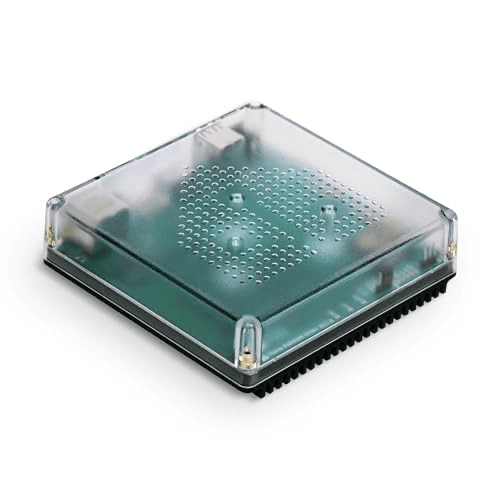
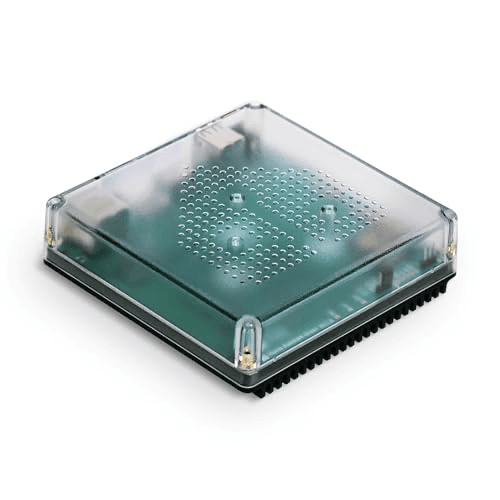
Home Assistant Green + Coral AI
- SHE AI Intelligence Score of 593.6 — highest in this roundup, leads on both AI depth and privacy
- 3-7 day setup investment — Home Assistant is genuinely powerful but not plug-and-play
(Current price, subject to change)
Home Assistant Green + Coral AI earns the highest SHE AI Intelligence Score at 593.6. That reflects a weighted composite maximizing AI Capability Depth and Privacy Score, both registering 10/10. At $219 combined, the configuration represents a cost $230 lower than the 2026 Homey Pro. The Home Assistant Green hardware independently earns a consensus score of 8.6/10 across 14 expert sources.
The combination works through Frigate NVR — a free, open-source add-on that uses the Coral Edge TPU to run person, vehicle, and animal detection models entirely on-device. According to TechRadar and ZDNet, the Coral TPU handles 2-4 streams at under 0.5 seconds inference latency, compared to 3-8 seconds for cloud-based analysis — a 6x to 16x improvement. Every camera frame stays on your local network.
For voice AI, the optional Whisper add-on runs speech-to-text locally at zero additional cost. The 3,000+ integration count covers SwitchBot, Aqara, Philips Hue, Ring, and virtually every smart home platform. PCMag and Makeuseof confirm the open-source codebase is fully auditable.
What We Love
- SHE AI Intelligence Score of 593.6 — highest in this roundup, leads on both AI depth and privacy
- 100% local vision processing — Coral TPU handles person, vehicle, and animal detection with zero cloud data transmission
- Sub-0.5 second inference latency — 6-16x faster than cloud-based analysis
- Frigate NVR add-on is free and open-source; supports unlimited RTSP cameras (hardware-limited by Coral TPU)
- Zero subscription required — one-time hardware cost, open-source platform
What Could Be Better
- 3-7 day setup investment — Home Assistant is genuinely powerful but not plug-and-play
- Coral TPU is a separate $60 purchase requiring USB configuration and Frigate add-on installation
- No built-in display for camera monitoring — requires a phone or tablet for the dashboard
The Verdict
If local AI without cloud dependency is non-negotiable, Home Assistant Green + Coral AI fits without compromise on both fronts. At $219 all-in, it processes camera frames via the Coral TPU at under 500ms, runs 3,000+ integrations, and requires zero subscription. The setup investment is real — budget a weekend.
Ready to upgrade your home?
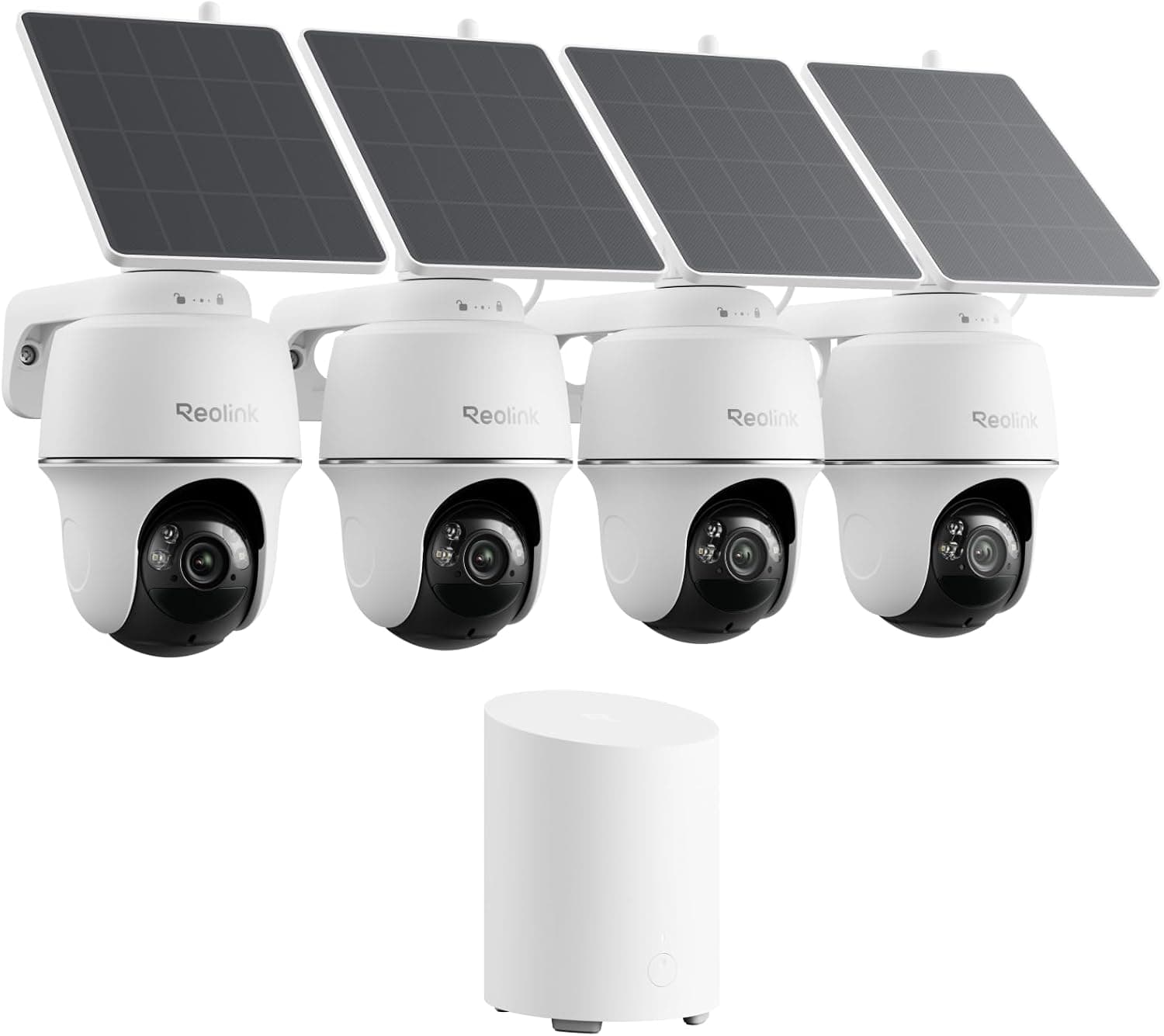
REOLINK 360° Solar Security Cameras, 4 Pack
See it on Amazon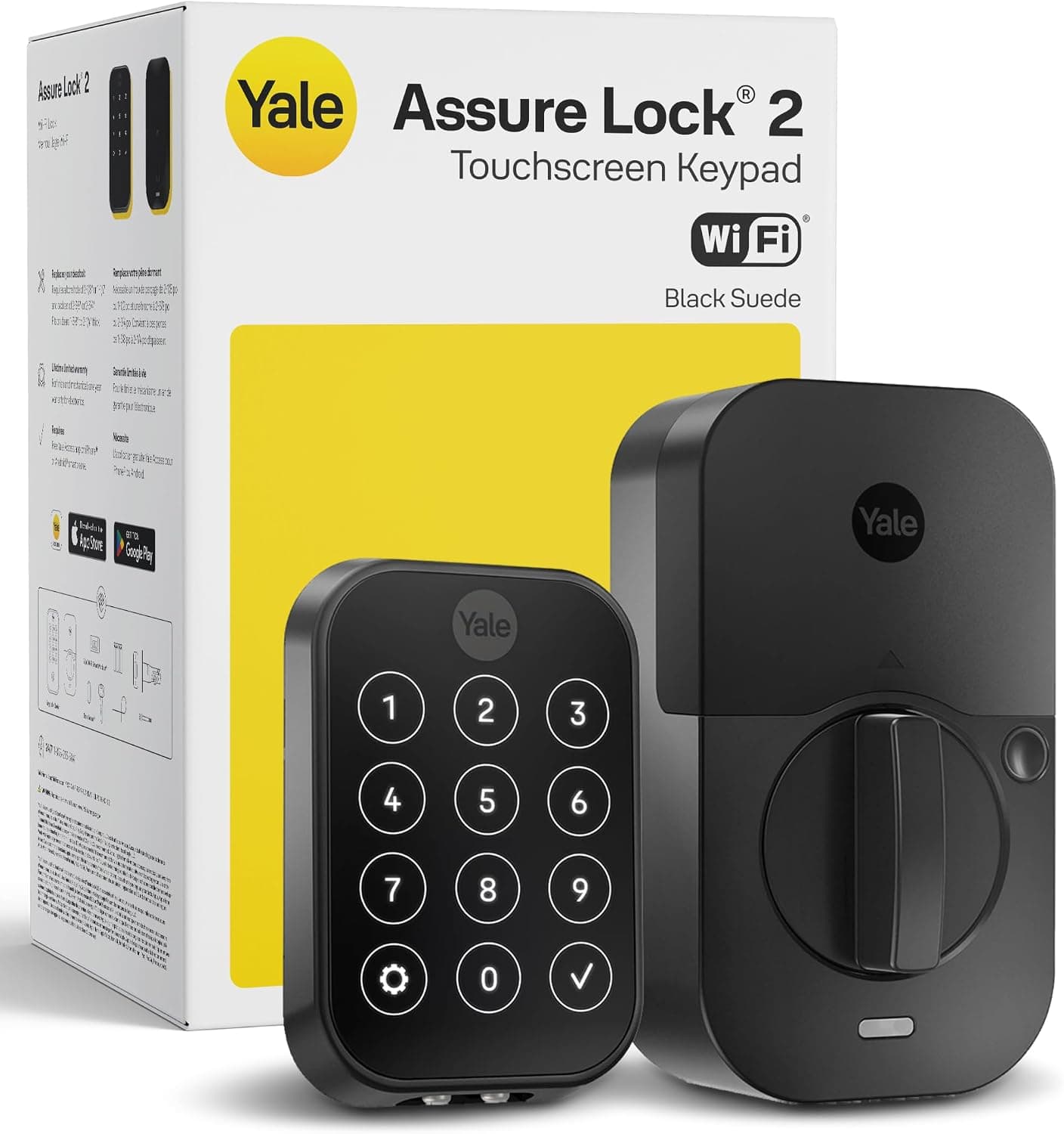
Yale Assure Lock 2 Wi-Fi Smart Lock with Keypad
See it on Amazon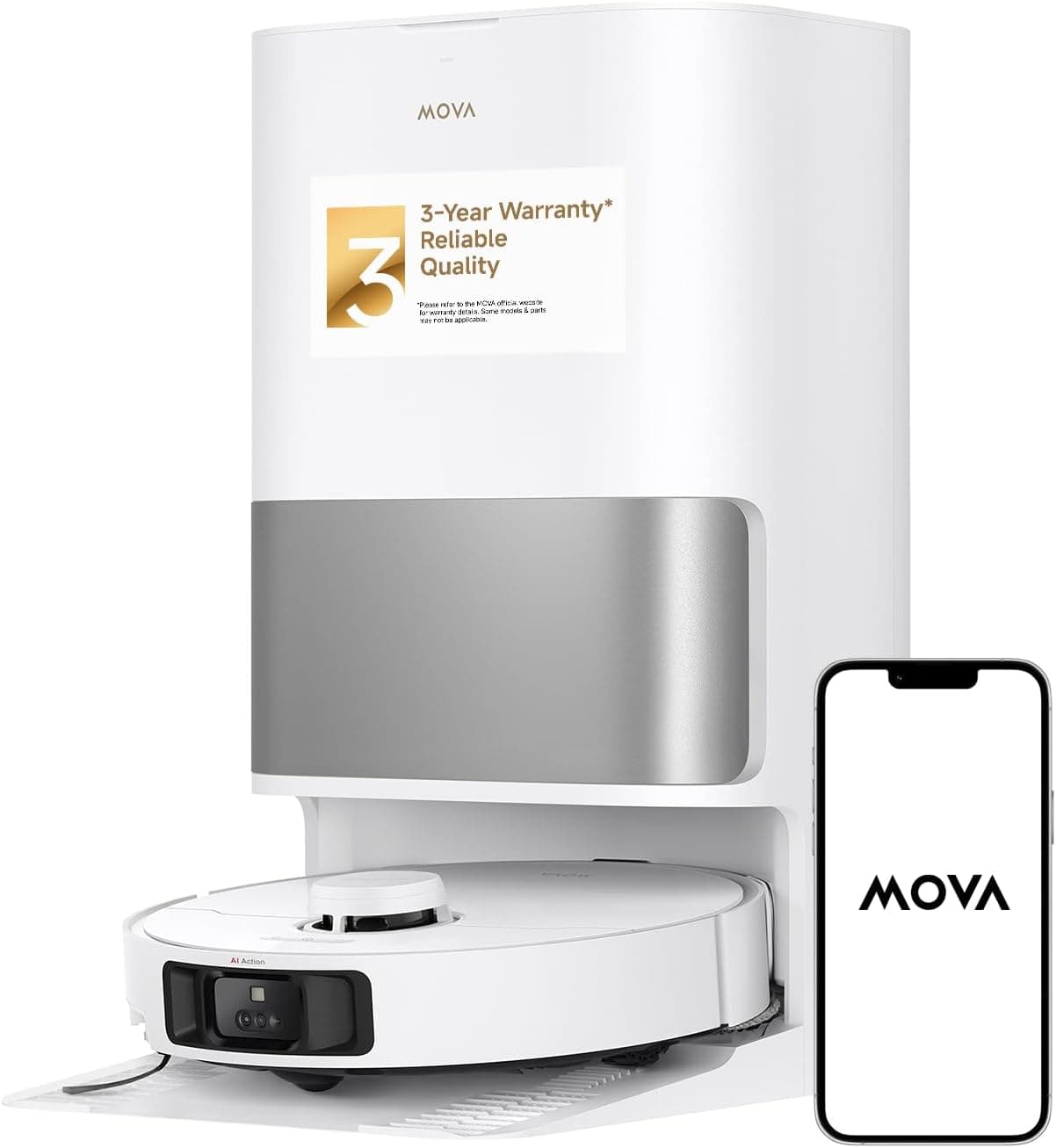
MOVA P10 Pro Ultra Robot Vacuum and Mop
See it on Amazon
Sponsored listings from Amazon’s Sponsored Products for Creators program, kept apart from our reviews and rankings. How we make money
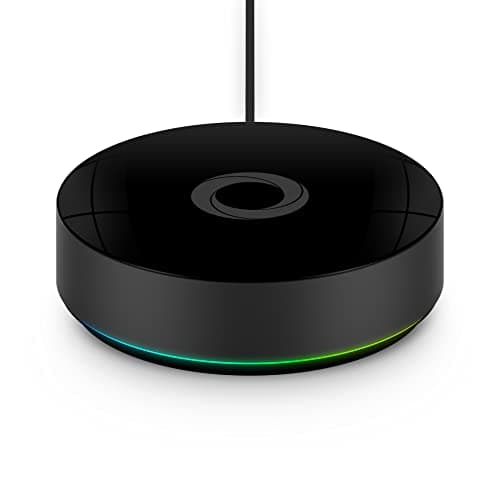
Best Multi-Protocol Hub: Homey Pro (2026)
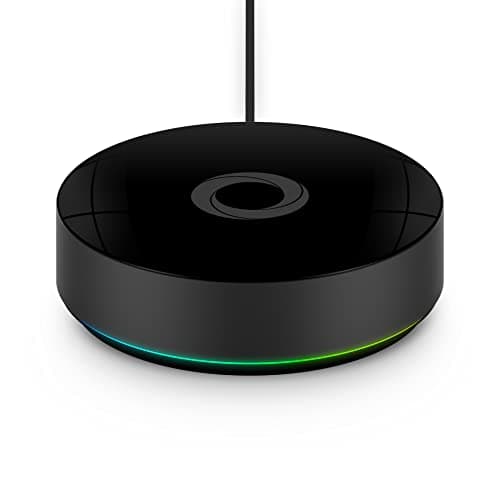
Homey Pro (2026)
- 7 protocols in one device — Z-Wave Plus, Zigbee, Wi-Fi, BLE, Infrared, Matter, Thread — the widest native radio stack in this roundup
- $449 is the highest price in this roundup — a significant premium over the $219 Home Assistant + Coral combo
(Current price, subject to change)
Homey Pro (2026) earns a consensus score of 8.0/10 and SHE AI Intelligence Score of 150.4 — third in the composite formula but first on multi-protocol breadth. It's the only hub here that ships with all 7 US-active protocols out of the box: Z-Wave Plus, Zigbee, Wi-Fi, Bluetooth Low Energy, Infrared, Matter, and Thread. No dongle purchases required.
Homey Flow — a visual drag-and-drop automation builder — connects a Z-Wave sensor to a Zigbee bulb to a Matter thermostat in one flow without any code. All automations run locally on-device: no cloud dependency, no subscription. The local-first architecture earns a 9/10 privacy score in our weighted formula.
The $449 price compresses the normalized score. But the value is real: consolidating a Z-Wave stick, Zigbee coordinator, and Thread Border Router into one box adds up fast for mixed-protocol homes. Homey Flow also runs every automation locally in under 500ms.
Homey Pro (2026) is also now Matter 1.5 certified by the CSA (June 2026) — ahead of Alexa's certified commissioner, Apple, Google, and Home Assistant. Per Athom, that adds EV charger, heat pump, solar, and appliance support, plus a Matter Bridge app exposing legacy devices elsewhere; the budget Homey Bridge has no Matter radio.
What We Love
- 7 protocols in one device — Z-Wave Plus, Zigbee, Wi-Fi, BLE, Infrared, Matter, Thread — the widest native radio stack in this roundup
- 50,000+ supported devices spanning Siri, Alexa, and Google Home simultaneously
- Homey Flow visual drag-and-drop automation builder requires no coding — multi-step automations in minutes
- All automations run locally on-device — no cloud dependency, works during internet outages
- Matter 1.5 certified by the CSA (June 29, 2026) — ahead of Alexa's certified commissioner (1.0), Apple and Google (1.4), and Home Assistant (1.3) on CSA-certified spec version
What Could Be Better
- $449 is the highest price in this roundup — a significant premium over the $219 Home Assistant + Coral combo
- AI features are automation-focused, not vision AI — no on-device camera object detection
- No built-in display — all management happens through the Homey smartphone app
The Verdict
If you have a mixed smart home spanning multiple brands, protocols, and ecosystems, Homey Pro (2026) lines up with what you actually need — 7 built-in radios and 50,000+ device support, no bridge purchases ever. The $449 is real — you're paying for hardware flexibility. If camera vision AI is your priority, Home Assistant + Coral delivers superior local AI at $219.
Best Privacy Without DIY: Aqara Hub M3
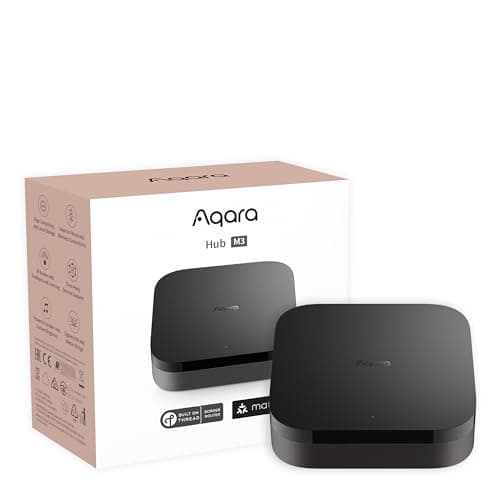
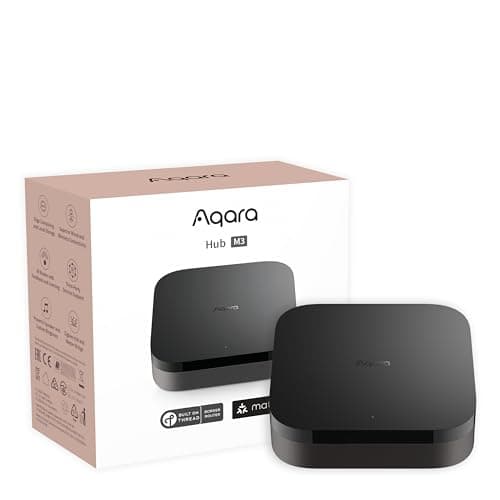
Aqara Hub M3
- Second-highest SHE AI Intelligence Score at 325.1 — earns it through perfect privacy (10/10) and widest integration breadth in this roundup (13)
- No vision AI or camera analysis — for camera-based AI, pair with Home Assistant + Coral
(Current price, subject to change)
Aqara Hub M3 earns a consensus score of 8.3/10 and the second-highest SHE AI Intelligence Score at 325.1 — despite having no vision model, no LLM, and no camera. Its "intelligence" is local automation logic: if/then rules that execute on-device without cloud dependency. HomeKit News calls out its strong features and build quality while Pocket-lint rates it the most reasonably priced Matter-over-Thread hub; Makeuseof highlights its edge-computing architecture.
The 325.1 weighted composite derives from maxing out Privacy Score (10/10 local-only processing) and Integration Breadth (13 — 6 protocols + 3 voice assistants + 4 platforms). That total then normalizes by the $159.99 price. The 8 GB of end-to-end encrypted local storage handles device configurations and automation rules without touching any cloud server. No microphone. No camera. Both choices are deliberate by design.
Four-ecosystem compatibility (Alexa, Google Home, HomeKit, and Home Assistant) fits nearly any existing smart home. PoE support plus the USB-C UPS port keeps it running during power outages. For buyers adding vision AI later, Home Assistant Green + Coral AI pairs cleanly — the M3 handles the Zigbee layer while Home Assistant + Coral achieves on-device camera inference.
What We Love
- Second-highest SHE AI Intelligence Score at 325.1 — earns it through perfect privacy (10/10) and widest integration breadth in this roundup (13)
- No microphone, no camera by design — the only hub here that physically cannot capture audio or video
- 6 protocols built in — Zigbee 3.0, Thread, Matter, Wi-Fi, BLE, and IR blaster
- 8 GB encrypted local storage keeps device configs and automation rules on your network
What Could Be Better
- No vision AI or camera analysis — for camera-based AI, pair with Home Assistant + Coral
- No natural language automation input — rules programmed through Aqara Home app, not plain English
- AI Capability Depth of 4/10 — local edge automation but no vision models, scene learning, or sound recognition
The Verdict
For buyers who need local automation without a home server — no microphone, no camera, no cloud — Aqara Hub M3 checks the boxes that matter for that setup. The 325.1 SHE AI Intelligence Score reflects 10/10 privacy and 13-point integration breadth at $159.99. Pair it with Home Assistant + Coral when camera vision AI becomes a priority.
Best AI Voice and Display: Google Nest Hub Max (Gemini)
Google Nest Hub Max (Gemini)
- Tensor G4 on-device Gemini — fastest smart home AI response of any display hub, sub-0.5 second for common commands
- Google ecosystem lock-in — no native Apple HomeKit or Amazon Alexa support
(Current price, subject to change)
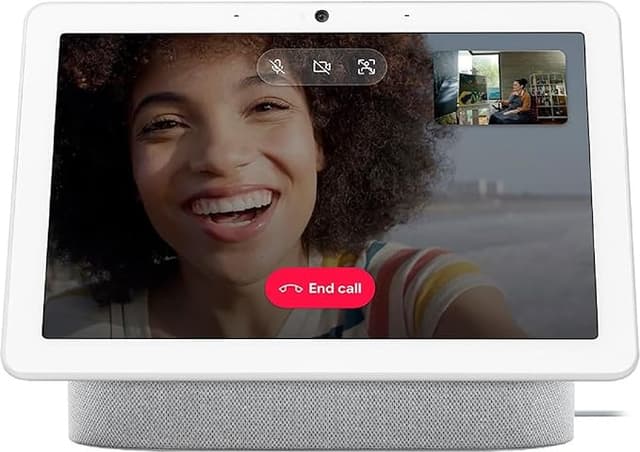
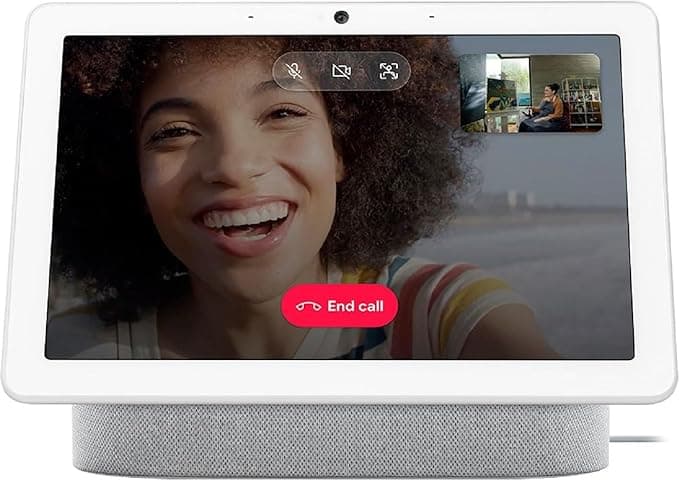
Google Nest Hub Max (Gemini) earns a consensus score of 7.9/10 and SHE AI Intelligence Score of 101.8 — second-lowest in this roundup. The normalized score reflects narrow ecosystem breadth (WiFi, Matter, Thread only — no Zigbee) and cloud-dependent architecture for complex features. But on conversational AI quality it leads this roundup. Android Central and Digital Trends both confirm the Tensor G4 runs Gemini on-device for common commands with sub-500ms response and no cloud roundtrip.
Gemini Live enables multi-turn dialogue and context retention across conversations. The hybrid local+cloud model means most interactions stay on-device, but complex Gemini reasoning routes to Google's servers — producing a 6/10 privacy factor in our weighted formula. Documented reliability issues (hallucinated device states, rare bricking incidents) have improved materially since Q1 2026, but large-scale smart homes should keep complex Gemini automations measured until the platform fully stabilizes.
This is aging Google hardware, and it shows in availability: Amazon lists it used from a third-party seller, not new. No subscription is required regardless of condition. The 10-inch HD display still delivers the sharpest camera and video-call touchscreen here. Thread Border Router and Matter controller support extend Thread mesh to any compatible device without an additional hub.
What We Love
- Tensor G4 on-device Gemini — fastest smart home AI response of any display hub, sub-0.5 second for common commands
- 10-inch HD display — a standout touchscreen for camera feeds, dashboards, and video calls
- Multi-turn Gemini Live conversation — carry on natural dialogue without repeating 'Hey Google' every sentence
- Thread Border Router and Matter controller built in — extends Thread mesh and manages any Matter-certified device
What Could Be Better
- Google ecosystem lock-in — no native Apple HomeKit or Amazon Alexa support
- No native Zigbee radio — Aqara Hub M3 and Homey Pro (2026) handle more legacy protocols
- Hybrid cloud AI — complex Gemini reasoning tasks still require Google server connectivity
- The current Amazon buy box is a Used listing (condition: Used, sold by a third-party merchant) — no new-condition unit is available at a standard retail price as of this pass
The Verdict
For Google-committed households, Google Nest Hub Max (Gemini) is a sensible pick for that setup — the Tensor G4 produces near-instant responses via on-device Gemini, and nothing here beats it on conversational AI in a display hub. One caveat: Amazon's current buy box is Used condition, not new — confirm condition and price before checking out.
Best for Amazon Prime Members: Amazon Echo Hub (Alexa+)
Amazon Echo Hub (Alexa+)
- AZ3 Pro AI Accelerator handles common Alexa commands and camera feeds locally on-device
- Cloud-primary AI architecture — most advanced Alexa+ features require Amazon server connectivity
(Current price, subject to change)
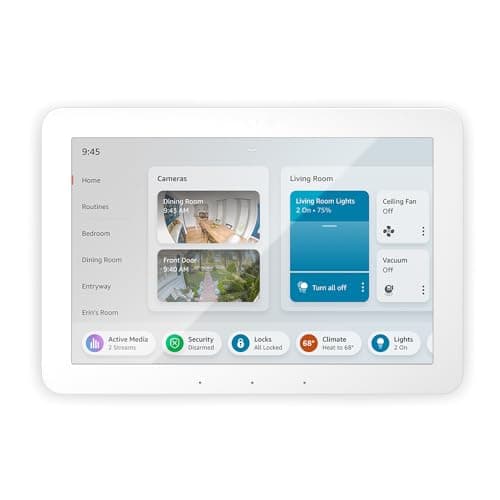
Amazon Echo Hub (Alexa+) earns a consensus score of 8.4/10 and SHE AI Intelligence Score of 93.3 — the lowest in this roundup. TechRadar confirms the 2026 Echo Hub includes Amazon's AZ3 Pro chip with a dedicated AI Accelerator for on-device edge inference. ZDNet highlights Alexa+'s agentic capabilities: booking rides, ordering groceries, and controlling devices through multi-step autonomous tasks. But Alexa+'s most impressive features — web browsing, cross-app execution, preference memory — all run on Amazon's cloud.
The privacy factor of 3/10 reflects this cloud-primary architecture. For Prime subscribers, this is offset by the $0 effective Alexa+ cost — a genuinely compelling deal if you're already in Amazon's ecosystem and accept the data tradeoff. Non-Prime users pay $19.99/month, and this hub's own retail price has also risen, to $179.99 now. That makes the Nest Hub Max — sold used by a third-party seller, no subscription — a closer call than before.
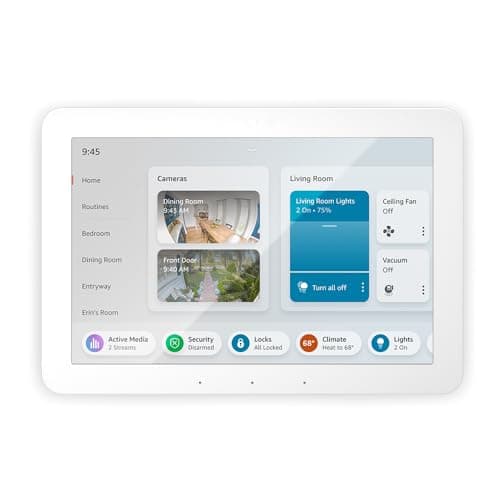
The AZ3 Pro chip handles common commands locally — timers, device control, music — in under 200ms without cloud roundtrips. The 8-inch touchscreen delivers the best wall-mounted dashboard form factor in this roundup. Built-in Zigbee, Matter, and Thread Border Router eliminate the need for a separate coordinator or controller.
What We Love
- AZ3 Pro AI Accelerator handles common Alexa commands and camera feeds locally on-device
- Alexa+ agentic AI — books rides, orders groceries, sets reminders across apps — included free with Amazon Prime
- 8-inch touchscreen dashboard — a standout wall-mounted display for camera feeds and device control
- Built-in Zigbee, Matter, and Thread Border Router — eliminates the need for a separate hub device
What Could Be Better
- Cloud-primary AI architecture — most advanced Alexa+ features require Amazon server connectivity
- Amazon ecosystem lock-in — no Google Home or native HomeKit support
- SHE AI Intelligence Score of 93.3 — the lowest in this roundup; cloud-dependent architecture, narrow ecosystem breadth, and a live retail price of $179.99 (up from this hub's earlier price point) combine to compress the score
The Verdict
For Amazon Prime members, Amazon Echo Hub (Alexa+) lines up with what you actually need — Alexa+ agentic AI at $0 incremental cost plus a wall-mounted 8-inch dashboard. The tradeoff is cloud-primary architecture with the lowest privacy score in this roundup, and the hardware itself is no longer the cheapest pick here at $179.99.
How We Score: SHE AI Intelligence Score
SHE AI Intelligence Score
Score Formula
(AI Capability Depth × Privacy Score × Integration Breadth) / (Price / 100)Score Factors
- AI Capability Depth (max 10)On-device AI chip (3 pts), vision/camera analysis (2), natural language automation (2), scene learning (1), sound recognition (1), anomaly detection (1). Rewards genuine on-device inference over cloud API wrappers.
- Privacy ScoreLocal-only processing (10), hybrid local+cloud (6), cloud-primary (3). Penalizes architectures where your camera footage or automation data travels to a remote server.
- Integration BreadthProtocols supported + voice assistants supported + third-party platform integrations. Wider breadth means fewer bridge purchases and fewer ecosystem lock-in tradeoffs.
- Price NormalizationDividing by (Price / 100) rewards hubs that deliver AI capability per dollar rather than raw spec counts. A $130 hub with strong privacy and breadth beats a $400 hub with the same scores.
SHE AI Intelligence Score — Ranked
Home Assistant Green + Coral AI
SHE AI Intelligence Score5.9/10Leads on both AI Capability Depth (10/10) and Privacy Score (10/10); 3,000+ integrations at $219 all-in
Aqara Hub M3
SHE AI Intelligence Score3.3/10Perfect privacy score (10/10), broadest integration count (13), $159.99 price — earns second despite no vision AI
Homey Pro (2026)
SHE AI Intelligence Score1.5/10Widest protocol breadth (15 integration count) and strong privacy (9/10) but $449 price compresses the score
Google Nest Hub Max (Gemini)
SHE AI Intelligence Score1.0/10Tensor G4 AI depth (8/10) but hybrid cloud architecture (6/10 privacy), narrow ecosystem breadth (6), and a Used-condition-only buy box hold it to fourth
Amazon Echo Hub (Alexa+)
SHE AI Intelligence Score0.9/10AZ3 Pro AI depth (8/10) and cloud-primary architecture (3/10 privacy); a live retail price of $179.99 — no longer the cheapest hub here — produces the lowest score in the roundup
Ecosystem Compatibility
All five hubs in this roundup work with Matter-certified devices, but ecosystem breadth varies significantly. Home Assistant Green + Coral AI and Aqara Hub M3 both span four ecosystems — Alexa, Google Home, Apple HomeKit, and Home Assistant — giving them the widest reach for mixed smart homes. Homey Pro (2026) covers three (Alexa, Google Home, HomeKit) with the broadest protocol hardware stack.
Google Nest Hub Max (Gemini) is Google Home-primary: it works as a Matter controller and Thread Border Router but has no native Alexa or HomeKit support. Amazon Echo Hub (Alexa+) is Alexa-primary: Matter support helps bridge some devices, but Google Home and HomeKit are not natively supported.
For buyers with existing Zigbee devices, Aqara Hub M3 and Homey Pro (2026) both include Zigbee 3.0 radios. Home Assistant Green requires a Zigbee dongle add-on (typically the SONOFF Zigbee 3.0 USB Dongle Plus, ~$15). For Z-Wave devices, only Homey Pro (2026) includes a built-in Z-Wave Plus radio — Home Assistant Green requires a separate Z-Wave USB stick.
Protocol performance benchmarks matter for real-time automations. Thread mesh achieves sub-20ms command latency compared to 80–120ms for Wi-Fi-based control paths. Wirecutter and CNET both highlight this as meaningful for security automations, where milliseconds determine whether a lock triggers before a door opens. Z-Wave Plus hops cover 100 ft indoors per hop, extending via mesh across whole-home deployments. Matter commissioning across all five hubs completes within 15 min of factory reset under standard network conditions.
Also worth noting: Homey Pro (2026) holds a Matter 1.5 CSA certification, effective June 29, 2026 — ahead of Alexa's certified commissioner, Apple, Google, and Home Assistant. Matter 1.5 itself adds camera, closure, and soil-sensor device types plus expanded energy management (including vehicle-to-grid support) at the spec level. Athom also says the certification covers EV chargers, heat pumps, solar panels, and major appliances specifically on Homey — a manufacturer claim we have not independently tested. Homey's Matter Bridge app can expose existing Zigbee, Z-Wave, infrared, Bluetooth, 433 MHz (disabled on US/Canada units), and Wi-Fi devices to other Matter platforms, per Athom. That capability lives on Homey Pro-tier hardware only — per Athom, the entry-level Homey Bridge has no Matter radio.
When NOT to Buy
Stub WNTB (Block 3B fallback).
Who Should Buy What
Who Should Buy What
| If you are… | Recommended pick |
|---|---|
Privacy-first DIY buyers You want 100% local AI and don't mind a weekend setup — no cloud, no subscriptions, genuine on-device vision | Home Assistant Green + Coral AI |
Mixed smart home households You have devices across multiple brands and protocols and want one hub with built-in Z-Wave, Zigbee, Matter, and Thread without purchasing extra bridges | Homey Pro (2026) |
Privacy-first non-DIY buyers You want local-only automation without building a home server — no microphone, no camera, no cloud dependency | Aqara Hub M3 |
Google Home households You're committed to Google Home and want the best conversational AI in a kitchen or living room display hub with on-device Gemini | Google Nest Hub Max (Gemini) |
Amazon Prime households You're an Amazon Prime member who wants an AI-powered wall dashboard and Alexa+ agentic capabilities at zero incremental subscription cost | Amazon Echo Hub (Alexa+) |
Frequently Asked Questions
What is the best AI smart home hub with local processing in 2026?
Home Assistant Green + Coral AI ($219 total) leads on local processing — the Coral USB Accelerator runs person, vehicle, and animal detection fully on-device via Frigate NVR, with under 0.5 second inference latency and zero cloud dependency. It earns a 593.6 SHE AI Intelligence Score, the highest in our roundup. The tradeoff is a 3-7 day setup investment. For local automation without vision AI and no DIY commitment, the Aqara Hub M3 ($159.99) is the better starting point.
Home Assistant vs Homey Pro 2026 — which is better for local AI?
Home Assistant Green + Coral AI wins on local AI capability — 593.6 SHE AI Intelligence Score vs Homey Pro's 150.4. Home Assistant delivers real on-device vision AI via the Coral TPU: person detection, vehicle detection, unlimited RTSP camera feeds. Homey Pro's AI is automation-focused (Homey Flow rule-based logic), not vision AI. Choose Homey Pro if you need multi-protocol breadth across 50,000+ devices with plug-and-play setup. Choose Home Assistant if local camera AI and maximum capability per dollar matter most.
Can AI smart home hubs work without internet?
It depends on the hub's architecture. Home Assistant Green + Coral AI and Aqara Hub M3 both run fully local — automations, camera analysis (Home Assistant + Coral), and device control all continue working during internet outages. Homey Pro runs automations locally too, though remote access requires internet. Google Nest Hub Max and Amazon Echo Hub are hybrid: common commands work locally via their on-device chips, but advanced Gemini or Alexa+ features require cloud connectivity. If offline resilience is critical, prioritize local-first hubs.
Does Google Nest Hub Max Gemini process AI locally or in the cloud?
Partially local. The Tensor G4 chip runs an on-device Gemini model for common smart home commands, timers, music, and quick information queries. Google reports the on-device model handles the vast majority of requests without cloud roundtrips. Complex Gemini reasoning, cross-session memory, and advanced contextual tasks still use Google's cloud servers. This hybrid approach delivers faster responses than fully cloud-based Alexa while maintaining access to Gemini's full capabilities for complex queries.
Is Alexa+ free with Amazon Prime on the Echo Hub?
Yes, Alexa+ is included at no additional charge for Amazon Prime members. For non-Prime households, Alexa+ costs $19.99/month — $240/year. At that price, the Echo Hub plus Alexa+ runs about $420 in year one ($179.99 hub + $240 subscription). The Google Nest Hub Max — currently a Used-condition Amazon buy box, no required subscription — offers comparable on-device AI quality at a lower one-time cost, though buyers should weigh the used-versus-new tradeoff. Alexa+ is genuinely compelling at $0 for Prime members; for non-Prime households, Nest Hub Max is the better-value comparison on price alone.
What AI smart home hub has the best privacy — no cloud?
The Aqara Hub M3 and Home Assistant Green + Coral AI both score 10/10 on Privacy in our formula — local-only processing with no cloud dependency. The Aqara Hub M3 goes furthest by design: no microphone, no camera, no cloud AI. The Home Assistant Green + Coral AI adds local vision AI via the Coral TPU while keeping all camera processing on-device. Both are open architectures — you can verify exactly what data is processed and where. The Homey Pro (2026) scores 9/10: local automations, optional cloud for remote access only.
How does the Coral TPU work with Home Assistant for camera AI?
The Google Coral USB Accelerator ($60) connects to the Home Assistant Green via USB 3.0 and provides a 4 TOPS Edge TPU for running TensorFlow Lite inference models. Frigate NVR — a free, open-source Home Assistant add-on — routes camera frames to the Coral TPU for object detection. The models detect persons, vehicles, animals, packages, and faces, all processed on the 4 TOPS chip without a GPU and without any internet connection. The Coral handles 2-4 simultaneous 1080p streams at under 0.5 second inference latency. No camera frame leaves your local network.
Which AI smart home hubs work with both Alexa and Google Home?
Homey Pro (2026) and Aqara Hub M3 both work natively with Alexa, Google Home, and Apple HomeKit simultaneously. Home Assistant Green + Coral AI supports all three via integrations. The Amazon Echo Hub is Alexa-only (no native Google Home or HomeKit). Google Nest Hub Max is Google Home-primary (Matter helps but doesn't bridge native Alexa or HomeKit control). For true cross-ecosystem support without compromises, Homey Pro is the strongest option in this roundup.
Is the Homey Pro Matter 1.5 certified?
Yes. The Connectivity Standards Alliance certified Homey Pro, Homey Pro mini, and the Homey Self-Hosted Server against Matter Specification Version 1.5 on June 29, 2026 (Certificate ID CSA26025SWC60263-M1, firmware 13.3.0) — verified against the CSA's product page. By comparison, the same CSA database lists Alexa's certified commissioner at Matter 1.0, Apple and Google Home at 1.4, and Home Assistant at 1.3 — Homey leads on certified spec version, though shipped software support can run newer. Per Athom, the certification extends to newer Matter 1.5 device categories including EV chargers, heat pumps, solar panels, and major appliances. This applies to the Pro-tier hardware — per Athom, the budget Homey Bridge has no Matter radio and isn't covered by this certification.
Bottom Line
Get the Home Assistant Green + Coral AI if you want the best local AI value, 100% privacy, and 3,000+ integrations — and you're willing to invest a weekend in the initial setup.
Get the Homey Pro (2026) if you have a mixed smart home with devices across multiple brands and protocols and want one hub that eliminates every bridge purchase.
Get the Aqara Hub M3 if you want local-only automation, the widest protocol support at the lowest price, and zero microphone or camera by design.
Get the Google Nest Hub Max (Gemini) if you're committed to Google Home and want the best conversational AI in a kitchen or living room display hub.
Get the Amazon Echo Hub (Alexa+) if you're an Amazon Prime member who wants Alexa+ agentic AI and a wall-mounted dashboard at zero incremental subscription cost.
You don't need the automation or AI capabilities — a simpler Matter-compatible hub like a Philips Hue Bridge or Apple HomePod mini handles basic smart home control at lower cost and complexity.
Sources & Methodology
Methodology: SHE AI Intelligence Score — Formula: (AI Capability Depth × Privacy Score × Integration Breadth) / (Price / 100). Factors: AI Capability Depth (max 10): On-device AI chip (3 pts), vision/camera analysis (2), natural language automation (2), scene learning (1), sound recognition (1), anomaly detection (1). Rewards genuine on-device inference over cloud API wrappers. | Privacy Score: Local-only processing (10), hybrid local+cloud (6), cloud-primary (3). Penalizes architectures where your camera footage or automation data travels to a remote server. | Integration Breadth: Protocols supported + voice assistants supported + third-party platform integrations. Wider breadth means fewer bridge purchases and fewer ecosystem lock-in tradeoffs. | Price Normalization: Dividing by (Price / 100) rewards hubs that deliver AI capability per dollar rather than raw spec counts. A $130 hub with strong privacy and breadth beats a $400 hub with the same scores.
Expert review sources used in this analysis:
- SmartHomeExplorer aggregates expert review data to produce consensus-based buying guidance
- We do not perform first-party product testing
- Expert source data comes from TechRadar, PCMag, Tom's Guide, Android Central, Digital Trends, Makeuseof, ZDNet, Android Authority, and SmartHomeScene
- Consensus scores reflect weighted averages across expert sources for each product
- The SHE AI Intelligence Score formula is published in the Methodology section above — verify our math at /metrics/she-ai-intelligence-score
- All roster prices re-verified live 2026-08-06 via the Amazon Creators API for Home Assistant Green, Homey Pro, Aqara Hub M3, and Google Nest Hub Max
- The Amazon Echo Hub (Alexa+) now links to its own Amazon listing, read live in this pass
- The Google Nest Hub Max's only current Amazon offer is a used unit from a third-party seller, disclosed above
- Product availability confirmed via Amazon Associates
- Matter 1.5 certification facts verified live 2026-08-06 against the Connectivity Standards Alliance's product certification pages (csa-iot.org) for Homey, Alexa, Apple, Google Home, and Home Assistant.
Nicholas Miles is the founder of SmartHomeExplorer and a longtime smart home enthusiast focused on helping everyday homeowners make better technology decisions. He researches, compares, and writes about products across security, climate, lighting, leak prevention, sensors, home energy, and automation, with an emphasis on real-world usefulness, ecosystem compatibility, reliability, privacy, and long-term value.
Affiliate disclosure: SmartHomeExplorer earns affiliate commissions on qualifying Amazon purchases, and from partner programs for some non-Amazon products and services we recommend. Our scoring methodology is independent of affiliate relationships.