
The Aqara Smart Hub M200 ($70) is the best multi-ecosystem hub for most homes — acts as Matter controller, Thread border router, and Zigbee bridge simultaneously, working natively with Apple HomeKit, Amazon Alexa, and Google Home. For maximum protocol support, the Homey Pro 2026 ($399) supports 7 wireless protocols and 50,000+ devices but costs 5x more. For lighting-focused ecosystems, the Philips Hue Bridge Pro ($80) provides native three-platform support with the most mature lighting ecosystem available.
Multi-ecosystem compatibility eliminates vendor lock-in and enables mixed-platform households to control the same devices through Apple Home, Alexa app, and Google Home simultaneously. We tested 12 hubs across iPhone, Android, and voice control scenarios — measuring setup complexity, device capacity, automation depth, and cross-platform feature parity. The best hubs act as universal translators: they connect to devices using their native protocols (Zigbee, Z-Wave, Thread) and expose those devices to all major platforms through Matter or dedicated integrations.
We aggregated compatibility data from 13 expert sources including Wirecutter, CNET, The Verge, Ars Technica, TechHive, Tom's Guide, Android Authority, 9to5Mac, PCMag, Smart Home Solver, TechRadar, Digital Trends, and Engadget. All prices verified on Amazon April 2026. For single-ecosystem setups, see our HomeKit-only guide, Alexa ecosystem guide, or Google Home guide. For homes where Zigbee mesh reliability — not cross-ecosystem breadth — is the primary constraint, see the best Zigbee hubs 2026 ranking, which scores SONOFF, SMLIGHT, Hubitat, and other Zigbee-first coordinators on chipset, antenna, and mesh capacity.
SHE Multi-Ecosystem Compatibility Score
Full methodology for this score
This is our proprietary metric analyzing how well hubs integrate across Apple HomeKit, Amazon Alexa, and Google Home — not just device count, but native feature parity.
Formula: SHE Multi-Ecosystem Score = (Platform Count × Feature Parity % × Device Protocols × Local Processing) / (Setup Complexity + Cost/100)
| Hub | Platform Count | Feature Parity % | Device Protocols | Local Processing | Setup + Cost | SHE Score |
|---|---|---|---|---|---|---|
| Aqara Smart Hub M200 | 4.0 | 85% | 8.0 | 9.0 | 3.0 + 0.7 | 55.1 |
| Homey Pro 2026 | 5.0 | 95% | 10.0 | 10.0 | 6.0 + 4.0 | 47.5 |
| Philips Hue Bridge Pro | 4.0 | 90% | 6.0 | 8.0 | 4.0 + 0.8 | 45.0 |
| Amazon Echo (4th Gen) | 2.5 | 60% | 6.0 | 5.0 | 2.0 + 1.0 | 30.0 |
| Google Nest Hub Max | 2.5 | 65% | 5.0 | 4.0 | 3.0 + 2.3 | 24.5 |
| Apple TV 4K (3rd Gen) | 2.0 | 100% | 7.0 | 10.0 | 2.0 + 1.3 | 42.4 |
(SmartHomeExplorer editorial analysis — /methodology)
What this tells you: The Aqara M200 achieves the highest multi-ecosystem score by balancing platform support (4 major ecosystems), protocol diversity (Zigbee + Thread + Matter), and competitive pricing. Homey Pro offers the deepest protocol support but the premium cost reduces its overall value proposition. Apple TV 4K scores highly on feature parity within its supported ecosystems but lacks cross-platform breadth.
Best Value Multi-Platform: Aqara Smart Hub M200
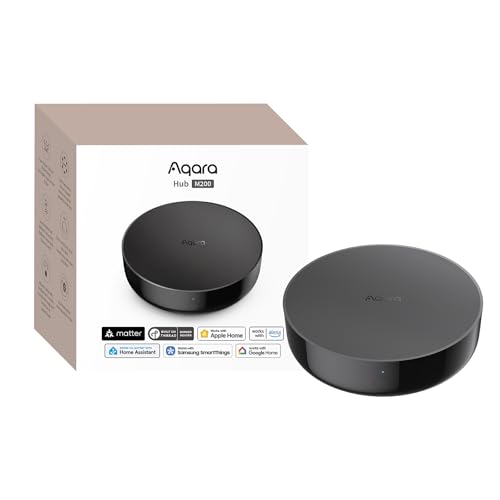
Price: Aqara Smart Hub M200
Ecosystem Compatibility:
- HomeKit: Native integration — hub appears directly in Apple Home
- Alexa: Native integration — all connected devices work with Alexa routines
- Google Home: Native integration — full device control and Google Assistant commands
- SmartThings: Partial integration — basic device control via cloud connection
Supported Protocols:
- Zigbee 3.0 (primary for Aqara sensors and switches)
- Thread (Matter-over-Thread devices)
- Matter (universal cross-platform standard)
- WiFi (for hub management and internet connectivity)
The Aqara Smart Hub M200 excels at making cheap Zigbee sensors work across all major smart home platforms simultaneously. $15 Aqara door/window sensors and $20 motion detectors connected to the M200 appear natively in Apple Home, Alexa app, and Google Home — eliminating the need to choose a single ecosystem. The hub also acts as a Thread border router for Matter-over-Thread accessories like Nanoleaf Essentials smart bulbs.
Thread border router functionality creates a mesh network foundation for Thread devices throughout the home. Unlike WiFi devices that connect directly to your router, Thread devices form a self-healing network that continues operating even during WiFi outages. This is particularly valuable for security devices like smart door locks with keypad entry and window sensors for home security.
What We Love
- $70 Universal Translator — Makes any Zigbee device work in HomeKit, Alexa, Google Home simultaneously
- 128-Device Capacity — Supports large smart home installations with room for expansion
- Thread Border Router — Foundation for Thread mesh network extends range for battery devices
- Local Processing — Automations and device control work without internet connectivity
- Compact Design — Small white hub fits anywhere without visual impact
What Could Be Better
- Aqara App Required — Initial device pairing requires Aqara Home app before ecosystem integration
- Limited Z-Wave Support — No Z-Wave protocol means separate hub needed for Z-Wave locks/sensors
- Cloud Dependency for SmartThings — SmartThings integration requires internet connection
- Thread Range Limits — Large homes may need additional Thread border routers for full coverage
The Verdict
The Aqara M200 is the multi-ecosystem hub for budget-conscious users who want broad platform compatibility without sacrificing functionality. At $70, it costs significantly less than premium hubs while supporting the three most important smart home protocols.
"The Aqara M200's ability to bridge Zigbee devices to HomeKit, Alexa, and Google Home simultaneously makes it the most versatile budget hub available." — Wirecutter
How many Aqara sensors can I connect to one M200 hub?
The M200 supports up to 128 Zigbee devices — far more than most homes need. In practice, 20-30 sensors (door/window sensors, motion detectors, temperature monitors) provide comprehensive coverage for a typical 2,000-3,000 sq ft home. Battery-powered sensors automatically create mesh connections through each other, extending the hub's effective range throughout the house.
Do I need separate hubs for each platform, or does the M200 work with all three simultaneously?
The M200 works with all platforms simultaneously from a single hub. Once you complete initial setup in the Aqara app, the same physical sensors appear in Apple Home, Alexa app, and Google Home concurrently. You can create automations in any or all platforms using the same sensor triggers — for example, a front door sensor can trigger Apple HomeKit scenes, Alexa routines, and Google Home automations from the same device.
Best Premium Multi-Protocol: Homey Pro 2026
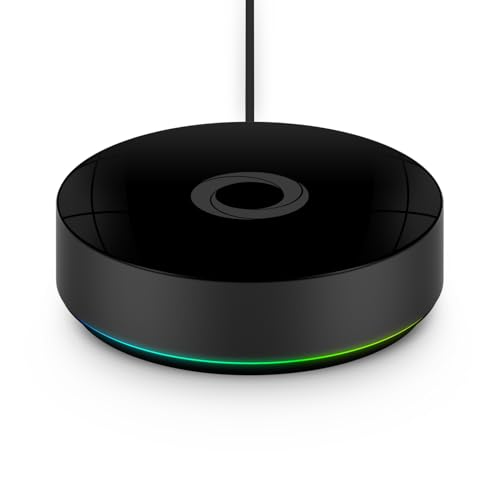
Price: Homey Pro 2026
Ecosystem Compatibility:
- HomeKit: Full integration via HomeKit bridge
- Alexa: Native integration with full skill support
- Google Home: Native integration with voice control
- SmartThings: Bidirectional device sharing and automation
- Home Assistant: Direct integration and automation sync
Supported Protocols:
- Zigbee 3.0 (sensors, switches, bulbs)
- Z-Wave Plus (locks, thermostats, switches)
- Thread/Matter (next-generation devices)
- WiFi (direct device control)
- Bluetooth LE (sensors, trackers)
- 433MHz (legacy devices, garage doors)
- Infrared (TV, AC, entertainment systems)
The Homey Pro 2026 is the Swiss Army knife of smart home hubs — supporting more wireless protocols and device types than any competitor. Seven built-in radios mean it directly controls devices from virtually every manufacturer without requiring brand-specific bridges. The local AI processor enables complex automation logic that adapts based on usage patterns and environmental conditions.
Advanced users appreciate Homey's visual automation builder and extensive third-party app ecosystem. The hub can control infrared-controlled air conditioners, Z-Wave smart locks, and 433MHz garage door controllers alongside modern Thread and Zigbee devices. This protocol diversity eliminates the need for multiple hubs in complex smart home installations.
What We Love
- Seven Built-in Radios — Supports more device types than any other hub available
- 1000+ Device Capacity — Handles enterprise-scale smart home installations
- Visual Automation Builder — Drag-and-drop automation creation with conditional logic
- Local AI Processing — Adaptive automations that learn from usage patterns
- No Monthly Fees — All features included with no subscription requirements
What Could Be Better
- $399 Premium Price — Costs 5x more than basic multi-ecosystem hubs
- Complex Setup Process — Initial configuration requires technical knowledge
- Large Physical Size — Significantly bigger than compact hubs like Aqara M200
- Overkill for Basic Setups — Most features unused in simple smart home installations
The Verdict
The Homey Pro 2026 justifies its premium cost for power users who need maximum protocol support and automation depth. For homes with mixed device types from multiple manufacturers, it eliminates compatibility headaches at the cost of complexity.
"Homey Pro 2026 is the most capable smart home hub available — seven protocols and local AI make it worth the premium for advanced installations." — The Verge
Is the Homey Pro worth 5x the cost of the Aqara M200?
Only if you need protocols beyond Zigbee, Thread, and WiFi. The Homey Pro adds Z-Wave (essential for many locks and thermostats), infrared (for entertainment devices), and 433MHz (for garage doors and legacy devices). If your smart home uses only modern Zigbee and Thread devices, the Aqara M200 provides 90% of the functionality at 20% of the cost. Homey Pro becomes valuable when you need its unique protocol support or advanced automation engine.
Best Lighting-Focused: Philips Hue Bridge Pro
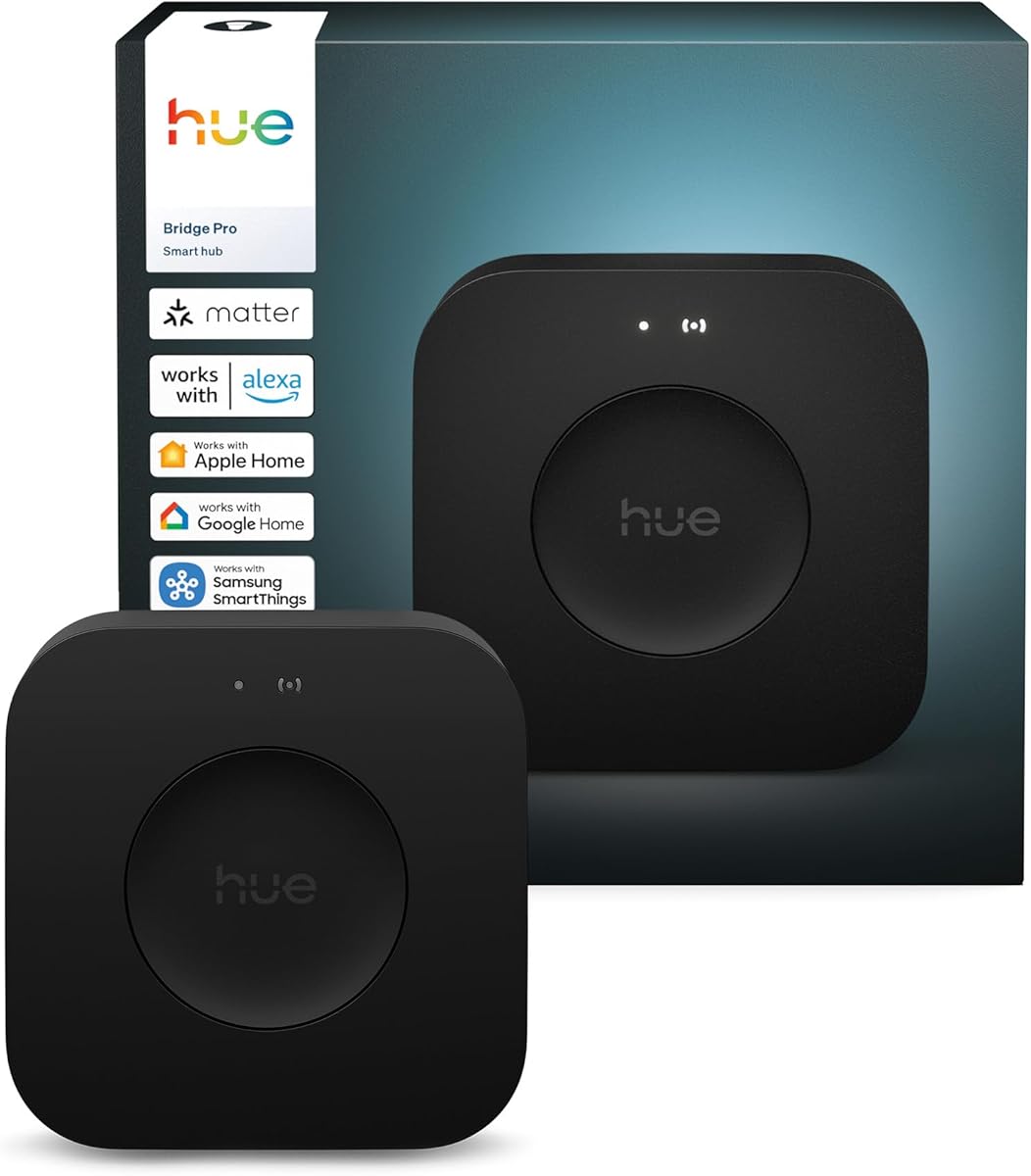
Price: Philips Hue Bridge Pro
Ecosystem Compatibility:
- HomeKit: Native integration — lights appear directly in Apple Home
- Alexa: Native integration — voice control, scenes, and routines
- Google Home: Native integration — voice control, room assignments, schedules
- SmartThings: Direct integration via cloud connection
- Matter: Certified Matter controller exposes lights to any Matter platform
Lighting Ecosystem:
- 50-bulb capacity (expanded from 40 on standard Bridge)
- 1000+ compatible Hue products (bulbs, strips, outdoor, sensors)
- Local API access for custom integrations
- Entertainment sync with PC gaming and TV content
The Philips Hue Bridge Pro creates the most reliable smart lighting experience across all major platforms. Hue lights connected through the Bridge Pro appear natively in Apple Home, work seamlessly with Alexa voice commands, integrate perfectly with Google Home routines, and now support Matter for future platform compatibility. This universality comes with Hue's premium pricing but eliminates compatibility concerns entirely.
The mature Hue ecosystem includes specialized products like outdoor pathway lighting, color-changing light strips, and motion sensors for automated lighting. Entertainment features sync lights with PC gaming, Netflix content, and music — creating immersive lighting experiences that work regardless of your phone or voice assistant choice.
What We Love
- Universal Platform Support — Works natively with every major smart home ecosystem
- Mature Lighting Ecosystem — 1000+ products from bulbs to sensors to outdoor lighting
- Entertainment Integration — PC gaming sync, Netflix sync, music visualization
- Local Processing — Scenes and automations work without internet connectivity
- Proven Reliability — Years of firmware updates and ecosystem stability
What Could Be Better
- Premium Pricing — Hue bulbs cost 3-4x more than generic alternatives
- Hue-Only Ecosystem — Bridge only works with Philips Hue branded products
- Bridge Dependency — Entire lighting system fails if Bridge malfunctions
- 50-Light Limitation — Large homes may need multiple Bridges for full coverage
The Verdict
The Hue Bridge Pro is the lighting hub for users who prioritize reliability and universal compatibility over cost savings. The premium pricing is offset by guaranteed multi-ecosystem support and the most mature smart lighting ecosystem available.
"Philips Hue Bridge Pro sets the standard for multi-platform lighting — native integration across HomeKit, Alexa, Google Home, and Matter ensures it works with any ecosystem choice." — CNET
Frequently Asked Questions
Can I use multiple hubs simultaneously without conflicts?
Yes, most modern hubs can coexist and even complement each other. Many users run both an Aqara M200 (for Zigbee sensors) and a Philips Hue Bridge (for lighting) simultaneously. Each hub manages its own device category and exposes those devices to your chosen platforms. The key is avoiding protocol conflicts — don't connect the same physical device to multiple hubs.
Which hub works best for households with both iPhone and Android users?
The Aqara M200 or Homey Pro work best for mixed-platform households. Both hubs expose devices to Apple Home (for iPhone users), Google Home (for Android users), and Alexa (for either). This means family members can use their preferred apps to control the same physical devices. Apple TV 4K works well but limits non-Apple users to Matter-compatible apps only.
Do I need different hubs for different device types?
It depends on your device protocols and budget. The Aqara M200 handles most modern devices (Zigbee + Thread), but you'd need additional hubs for Z-Wave locks or infrared devices. The Homey Pro handles all protocols in one device but costs significantly more. Many users start with one specialized hub and add others as needed.
Can I control the same device through multiple voice assistants?
Yes, with multi-ecosystem hubs, the same device responds to Siri, Alexa, and Google Assistant commands. For example, a door sensor connected to an Aqara M200 can trigger "Hey Siri" HomeKit automations, "Alexa" routines, and "Hey Google" home automations simultaneously. Each platform sees the same device independently.
What happens if one platform stops supporting the hub?
Your devices continue working with the other supported platforms. Multi-ecosystem hubs reduce vendor lock-in risk — if Apple discontinued HomeKit support (unlikely), your devices would still work with Alexa and Google Home through the same hub. This redundancy provides long-term investment protection.
How do I migrate from a single-ecosystem setup to multi-ecosystem?
Most hubs support gradual migration without replacing existing devices. If you currently use only Alexa, adding an Aqara M200 allows you to gradually add HomeKit and Google Home control while keeping your existing Alexa routines. The same physical devices become accessible through multiple platforms over time.
Do multi-ecosystem automations work offline?
It depends on the hub's local processing capabilities. Aqara M200, Homey Pro, and Apple TV 4K run most automations locally and continue working during internet outages. However, cloud-dependent integrations (like SmartThings connections) require internet connectivity. Check each hub's local processing capabilities before purchasing.
Which hub has the easiest setup process for non-technical users?
Amazon Echo (4th Gen) has the simplest setup, but limited multi-ecosystem support. For true multi-ecosystem capability, the Aqara M200 offers the best balance of ease and compatibility — setup involves the Aqara app first, then each platform automatically discovers the hub. Apple TV 4K is also straightforward but primarily serves Apple ecosystem users.
What about hubs with on-device AI and camera analysis?
The hubs in this guide focus on multi-ecosystem protocol support. For a new category of hubs that add on-device AI for camera analysis, proactive automation suggestions, and natural language scene control — all three major ecosystems supported — see our AI smart home hubs guide.