
Best Color Smart Bulbs 2026: WiZ Wins, No Hub
You bought the cheap color bulb. The 'red' looks orange, the 'purple' looks blue, and your photos look like a 1970s Polaroid filter. CRI and color gamut explain why, and the SHE Smart Lighting Value Score ranks all 6 in 15 mins.
This article contains affiliate links. We may earn a commission at no extra cost to you. Prices change frequently — check the current price on Amazon before buying. Learn more
The Short Answer
LIFX wins color gamut and CRI fidelity at 1,100 lm with no hub, WiZ wins on weighted value plus a deep scene library, Govee wins music sync with RGBWW warm LED, Nanoleaf wins Thread and Apple Home, and Hue still wins 10-plus bulb deployments at CRI 90-plus once you absorb the $60 Bridge denominator.
Featured in this Guide
WiZ
Connected Smart Bulbs
- •Wirecutter budget-alternative-to-Hue pick, deep scene library, Matter, no hub required.
Philips
Hue Color A19
- •CRI 90-plus, deep Hue-app scene library, Matter via the Bridge, Zigbee mesh.
Govee
Color Smart Bulbs
- •Music sync free in-app, RGBWW warm LED, 54 presets, $7.25 per bulb.
LIFX
Color A19
- •550-zone polychrome, CRI 90-plus, 1,100 lm peak, no hub required.
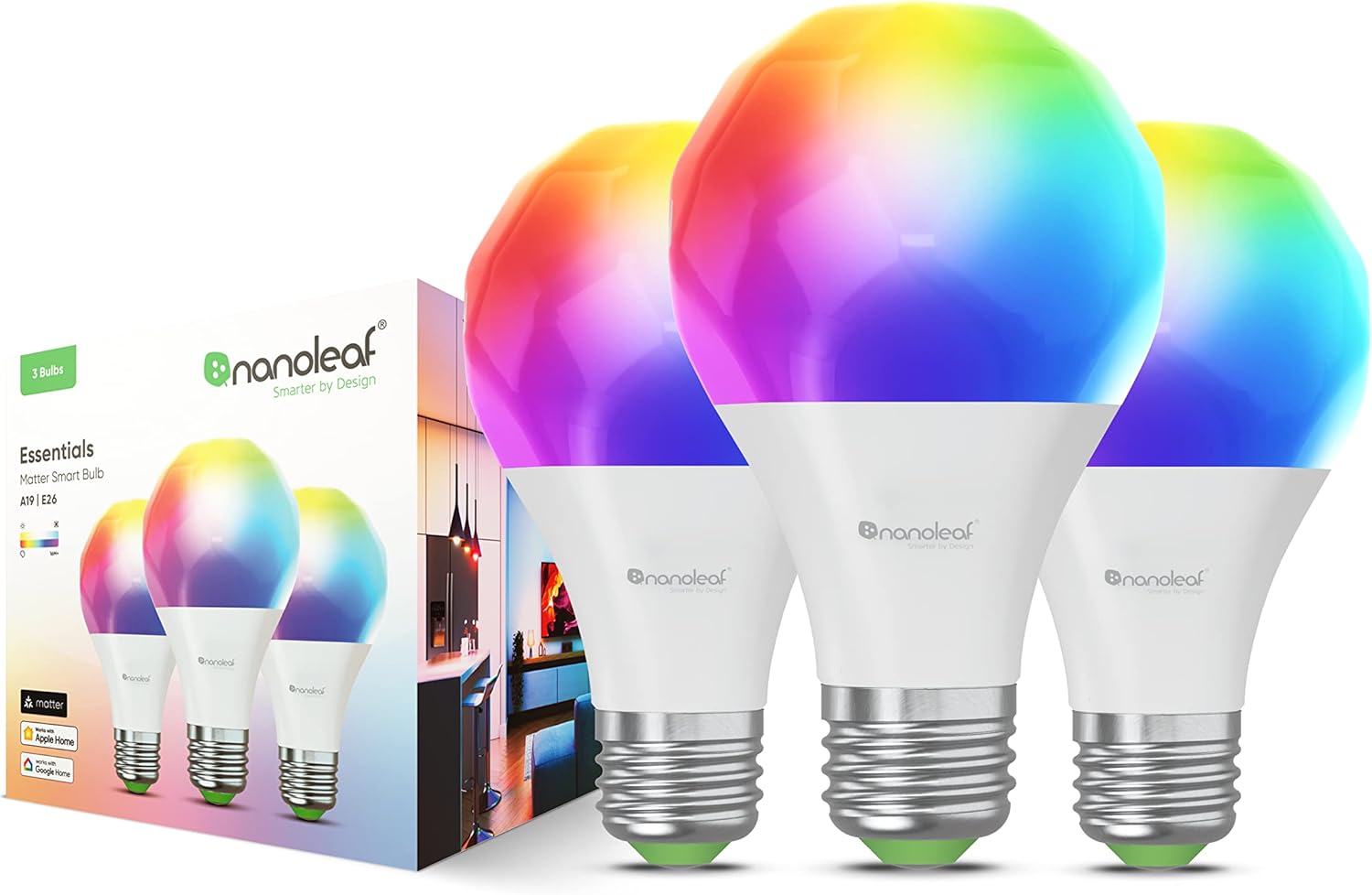
Nanoleaf
Essentials Bulb
- •Thread native, Matter-native pairing, HomePod mini border router.
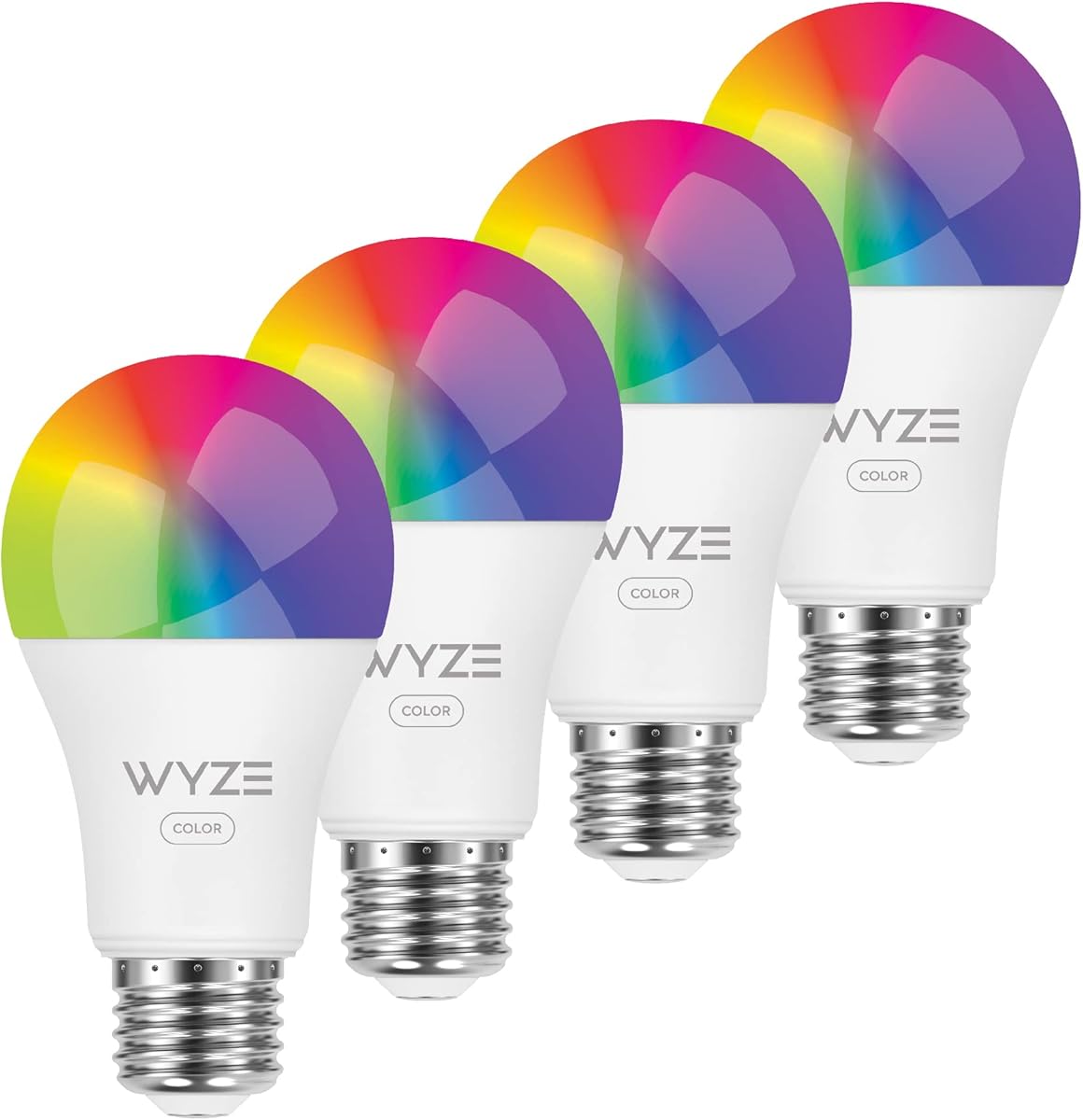
Wyze
Bulb Color
- •Full RGBW color, 1,100 lm peak, native Wyze ecosystem.
Head-to-Head: CRI, Color Gamut, Scene Depth, and SHE Score
Smart Lighting
Chart
 Smarthomeexplorer.com
Tap any pick to check its live price on Amazon.
Arlo Ultra 4K HDR Security Camera (3rd Gen) 4-Cam Kit
RecommendedCheck price
Reolink Home Hub with 2x Argus 4 Pro
RecommendedCheck price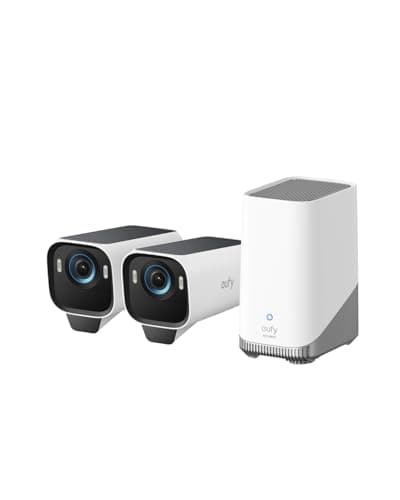
eufyCam S3 Pro 2-Cam Kit (Solar, 4K)
Must BuyCheck price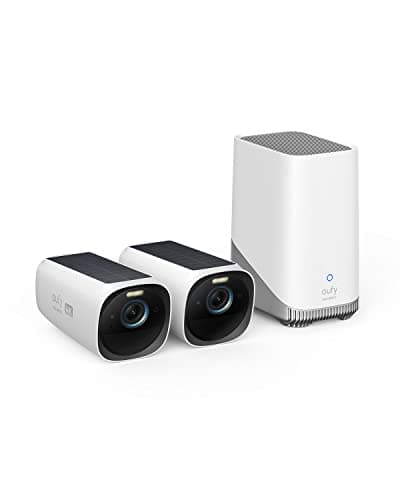
eufy Security eufyCam S330 2-Cam Kit (HomeBase 3)
RecommendedCheck price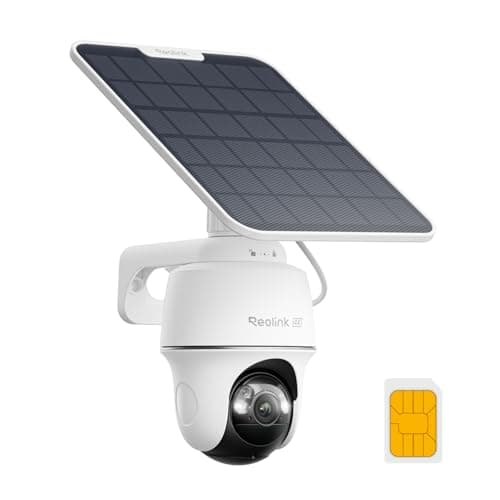
Reolink Go PT Ultra + SP2 Solar Panel
Must BuyCheck price
Color Performance Methodology
You bought the cheap color bulb, and the "red" looks orange while your photographs carry an unmistakable 1970s Polaroid cast. Two measurements explain that perceptual gap. The Color Rendering Index, evaluated against a 14-color reference, reaches 90-plus on Hue and LIFX while Govee measures considerably lower. Color gamut differentiates RGBW from RGBWW configurations at the 2200K warm threshold, with Govee's RGBWW spanning 8M colors. LIFX pairs CRI 90-plus with 1,100 lm peak across a 1500K to 9000K white range. Screw-in installation requires roughly 5 mins per bulb, and rated LED longevity of 15,000 to 25,000 hours represents 17 to 28 yr at 3 hrs daily, so replacement expenditure barely influences the calculation. The SHE Smart Lighting Value Score divides CRI, lumens, ecosystem, Matter tier, and gamut by per-bulb price plus amortized hub. LIFX outranks Hue by approximately 22 percent because its hub-free architecture eliminates the $60 Bridge from the denominator.
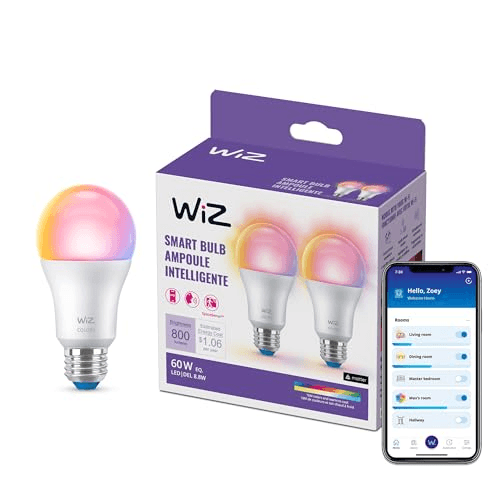
Best Overall: WiZ Connected Smart Bulbs
WiZ Connected Smart Bulbs
- Wirecutter calls WiZ a great budget alternative to Hue with solid performance and no hub needed; Signify (Hue's parent company) owns the brand and maintains the firmware OTA pipeline.
- Color accuracy is less refined than Philips Hue, so warm whites at 2700K read slightly yellow versus Hue and LIFX.
(Current price, subject to change)
The WiZ Connected Smart Bulbs earn a 7.6 consensus and a strong SHE Smart Lighting Value Score. Wirecutter calls WiZ "a great budget alternative to Hue with solid performance and no hub needed." Signify firmware (the parent organization behind Hue) maintains a consistently coherent over-the-air update pipeline, and the 16M-color 2-pack establishes an effective price of approximately $11 per bulb ($21.99 retail) without any additional hub expenditure.
Where WiZ pulls ahead is the scene library: the WiZ app ships a deep catalog of curated presets versus the 54 fixed presets documented on Govee — a wide margin that changes everyday usage. Matter-compatible firmware ships day one, screw-in setup runs 5 mins, and Alexa plus Google pair without a hub (Siri arrives through a voice bridge rather than native HomeKit).
The trade-off lands at color accuracy: CNET frames WiZ as good value with wide compatibility, but its color reproduction is less refined than Hue and LIFX, both of which read neutral on warm whites at 2700K. For accent scenes the gap doesn't register; for skin tones it does. WiZ wins when scene depth and the no-hub denominator outweigh that accuracy gap.
What We Love
- Wirecutter calls WiZ a great budget alternative to Hue with solid performance and no hub needed; Signify (Hue's parent company) owns the brand and maintains the firmware OTA pipeline.
- Mood browsing in the WiZ app surfaces curated scenes versus Govee's 54 fixed presets; everyday usage beats configuration tuning by a wide margin.
- Matter-compatible since 2024, screw-in setup, paired with Alexa and Google on Day 1 (Siri via a voice bridge, not native HomeKit) — the fastest no-hub path in the roundup.
- $11 per bulb effective in the 2-pack — the strongest price-per-feature ratio among hub-free Matter color options compared to LIFX and Nanoleaf.
What Could Be Better
- Color accuracy is less refined than Philips Hue, so warm whites at 2700K read slightly yellow versus Hue and LIFX.
- No music sync mode in the WiZ app; Govee outperforms WiZ for entertainment lighting where audio reactivity is the use case.
- Wi-Fi router strain compounds at 10-plus bulbs; Hue's Zigbee mesh is the more reliable choice at whole-home scale beyond 10 endpoints.
The Verdict
If you've narrowed to a no-hub Matter color bulb and you want broad scene variety without committing to one ecosystem, the WiZ Connected Smart Bulbs fits the brief without compromise. The deep WiZ app scene library and Wirecutter's budget-alternative-to-Hue verdict line up with what most buyers actually need.
Ready to upgrade your home?
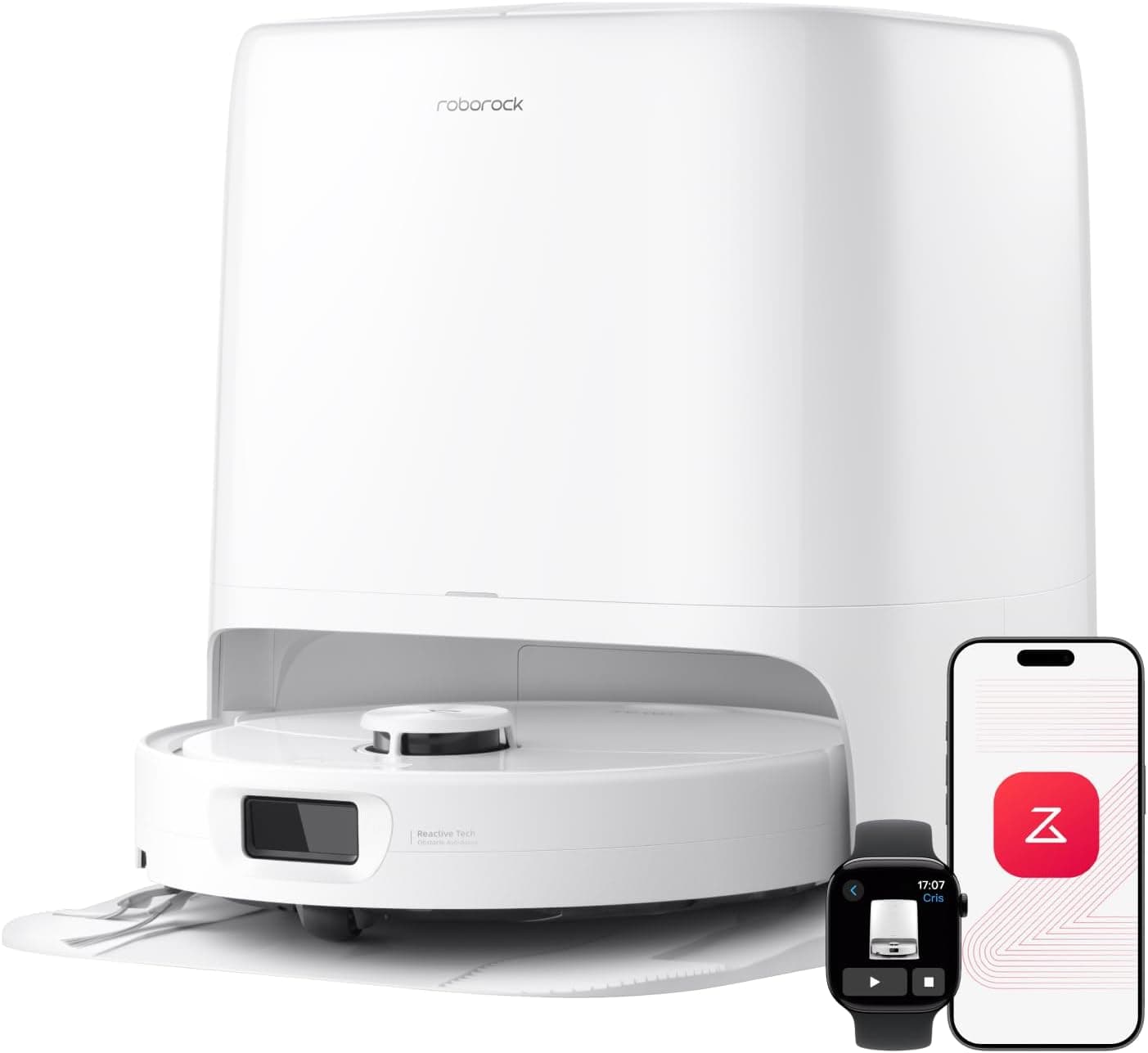
roborock Qrevo 2 Pro Robot Vacuum and Mop
See it on Amazon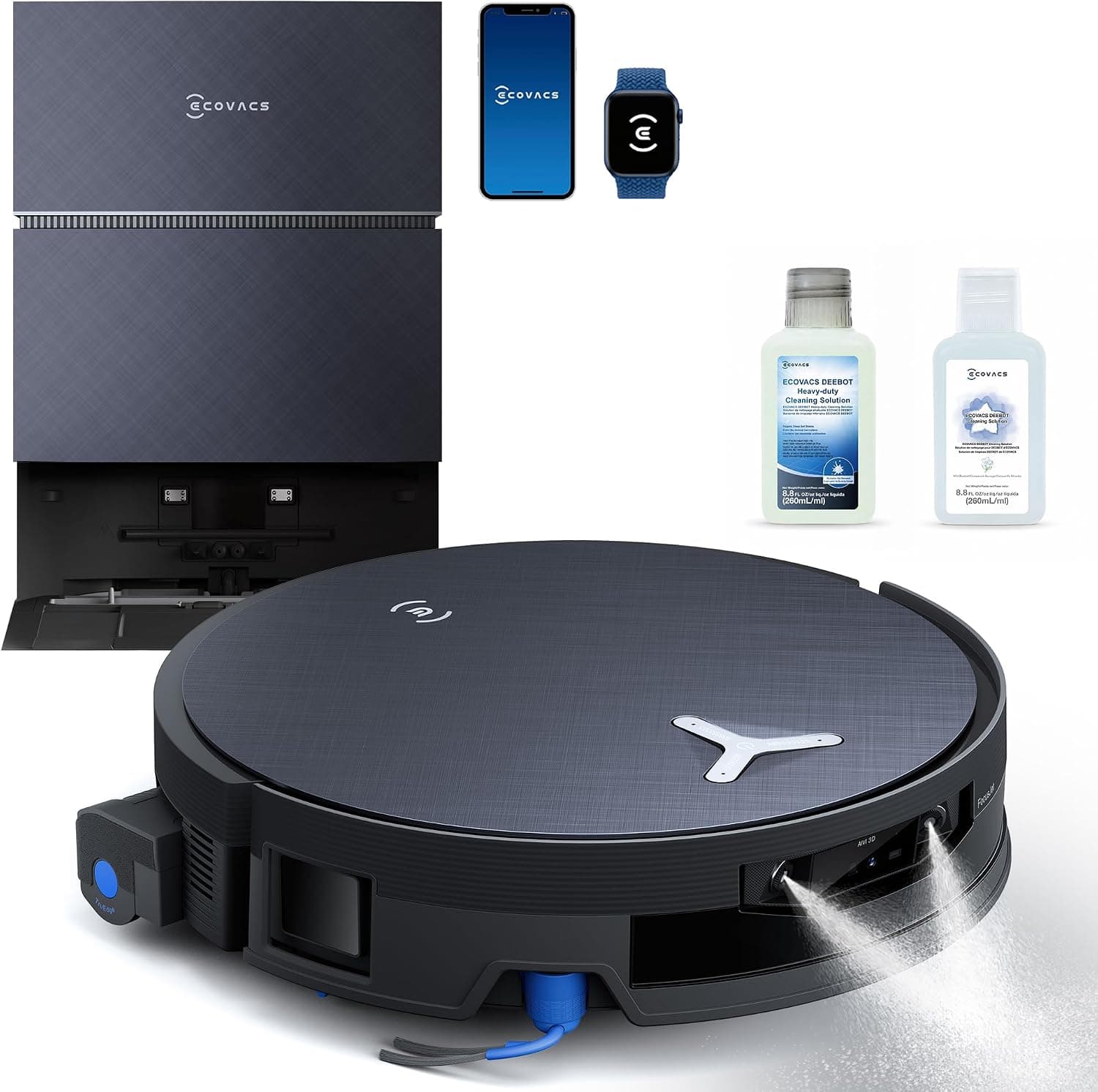
ECOVACS DEEBOT X12 PRO Omni Robot Vacuum and Mop
See it on Amazon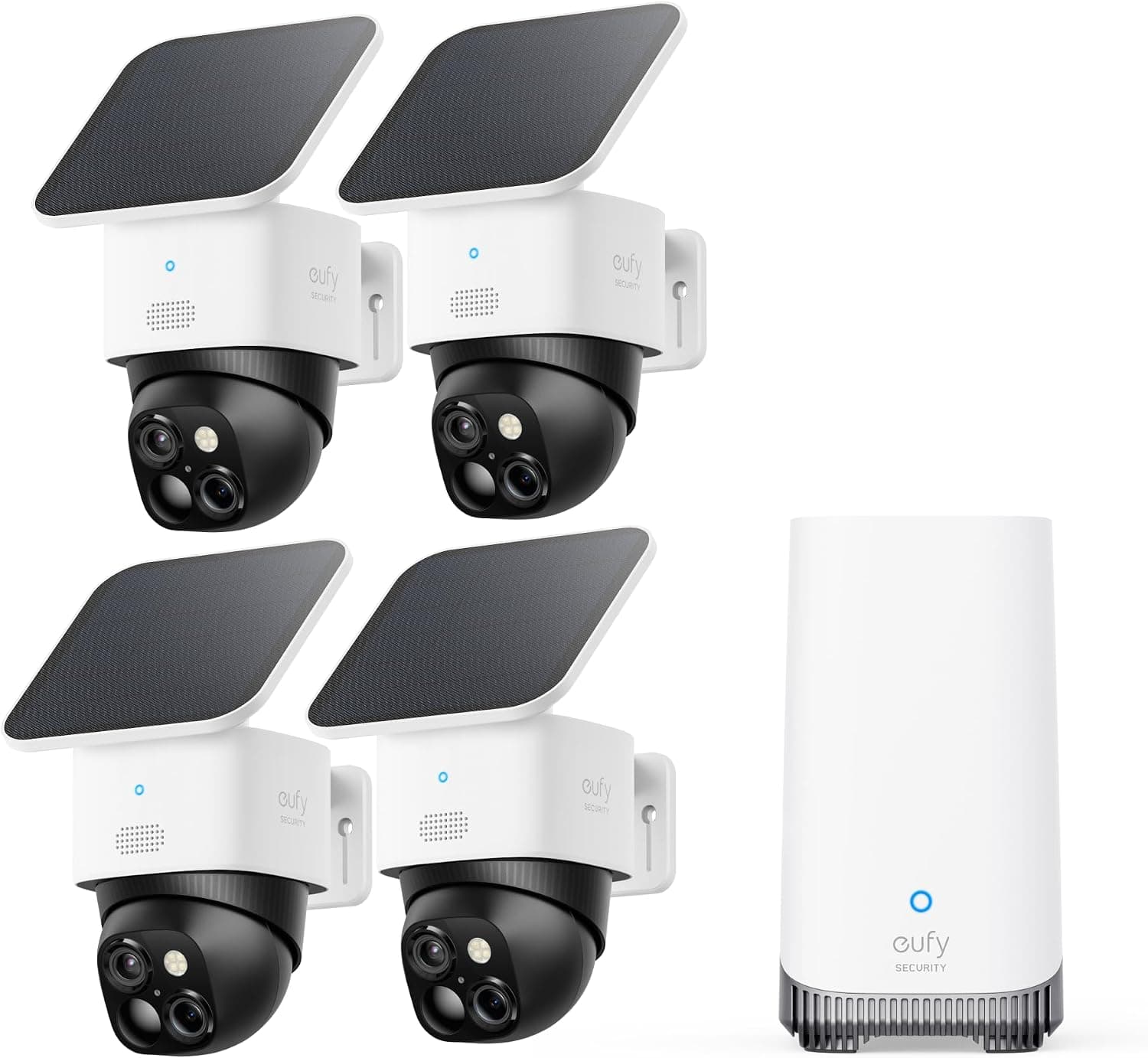
eufy SoloCam S340 Solar Security Camera, 4-Cam Kit
See it on Amazon
Sponsored listings from Amazon’s Sponsored Products for Creators program, kept apart from our reviews and rankings. How we make money
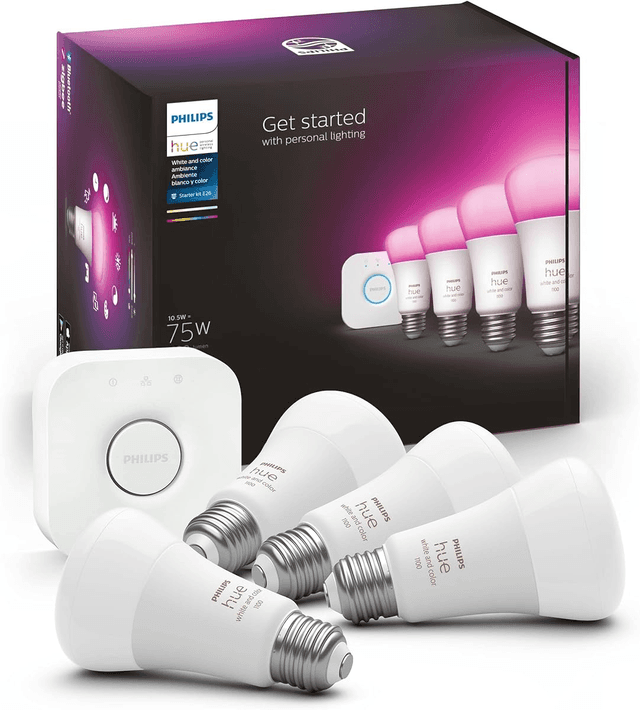
Premium Color Accuracy: Philips Hue Color A19
Philips Hue Color A19
- CNET calls Hue the gold standard for smart lighting, with industry-leading color accuracy; skin tones and warm whites render correctly compared to RGBW competitors.
- $52.95 for the 4-pack plus $60 Hue Bridge — the highest entry cost compared to WiZ at $11 per bulb.
(Current price, subject to change)
The Philips Hue White and Color Ambiance A19 earn a 9.0 consensus and a strong placement on the normalized SHE Smart Lighting Value Score once the Bridge denominator is amortized across a 10-bulb deployment. CNET calls Hue "the gold standard for smart lighting — no other ecosystem matches its reliability and integrations," and its industry-leading color accuracy carries product photography, makeup, and design-review use cases. The wide RGBW color gamut outperforms most competitors, which yields visibly deeper red saturation and richer blue fidelity at mid-brightness levels.
The Bridge trade-off amortizes at roughly $6 per bulb across a 10-bulb deployment, but the protocol gain is real: Zigbee mesh through the Bridge delivers the connectivity TechRadar credits as "unmatched in reliability," local processing survives internet outages, and the Hue Entertainment API enables gaming-grade sync. The catch is entry cost — Hue runs about $13.24 per bulb in the 4-pack plus the Bridge, the highest path here.
The RGBW versus RGBWW distinction is where Hue still leads despite missing a dedicated warm white LED: precise tuning of the RGB-blended warm channel produces a fidelity outcome that beats Govee on neutral whites and skin tones, even though Govee wins pure 2200K candlelight scenes.
What We Love
- CNET calls Hue the gold standard for smart lighting, with industry-leading color accuracy; skin tones and warm whites render correctly compared to RGBW competitors.
- Works with every platform — Alexa, Google, and HomeKit — and TechRadar calls it unmatched in reliability and ecosystem despite the premium price.
- A deep scene library ships in the Hue app, the Hue Sync entertainment system delivers gaming-grade lighting, and the Hue Entertainment API enables low-latency response.
- Zigbee mesh through the Bridge yields rock-solid connectivity for whole-home automation; local processing survives internet outages.
What Could Be Better
- $52.95 for the 4-pack plus $60 Hue Bridge — the highest entry cost compared to WiZ at $11 per bulb.
- Bridge required for full color control; Wi-Fi fallback limits the 16M color address range to preset scenes.
- RGBW (not RGBWW); warm whites use blended RGB while Govee's RGBWW adds a dedicated 2200K LED.
The Verdict
If color accuracy is the deciding factor and you've shortlisted the Philips Hue Color A19, you'll be well-served here. CNET's gold-standard verdict, industry-leading color accuracy, and the Zigbee mesh reliability check the boxes that matter for photography, design work, or a 10-plus bulb deployment.
Best for Music Sync: Govee Color Smart Bulbs
Best for Music Sync and EntertainmentGovee Color Smart Bulbs
- CNET highlights impressive features at a budget price point, especially for Alexa and Google users; music sync and screen mirror ship free in the Govee Home app — no $230 Hue Sync Box equivalent needed.
- Color accuracy can drift at lower brightness; it trails Hue and LIFX, a gap that shows in product photography.
(Current price, subject to change)
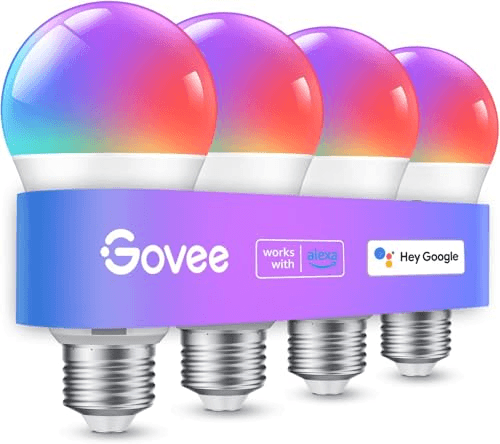
The Govee Color Smart Bulbs earn a 7.3 consensus and a below-baseline placement on the normalized SHE Smart Lighting Value Score, where the missing Matter tier is the drag. CNET notes Govee "offers impressive features at a budget price point, especially for Alexa/Google users," and the value case is concrete: music sync and screen mirror run free in the Govee Home application, and the per-bulb price lands at $7.25 in the 4-pack — versus $230 for the Hue Sync Box plus $13.24 per bulb on Hue.
The RGBWW advantage shows up at sub-2700K scene presets: a dedicated 2200K warm white LED delivers truer candlelight ambiance, comparatively, versus the blended-RGB warm channel approximation on competitors. Color accuracy can drift at lower brightness, which leaves Govee trailing Hue and LIFX on rendition, although for accent scenes and music-reactive entertainment the perceptual gap doesn't register.
The trade-off is the formula penalty inherent to current Matter weighting: with no Matter support, Govee scores the lowest Matter coefficient versus Matter-compatible competitors, alongside a lower CRI factor. Govee remains the appropriate configuration for entertainment-accent deployment.
What We Love
- CNET highlights impressive features at a budget price point, especially for Alexa and Google users; music sync and screen mirror ship free in the Govee Home app — no $230 Hue Sync Box equivalent needed.
- RGBWW technology with a dedicated warm white LED at 2200K produces truer candlelight versus the RGBW blended approach used by Hue, LIFX, and WiZ.
- $7.25 per bulb in the 4-pack — the lowest per-bulb price in the roundup; Bluetooth fallback handles local on/off when Wi-Fi drops out.
- Often sold in multi-packs, which keeps whole-home accent deployments cheap relative to single-bulb premium competitors.
What Could Be Better
- Color accuracy can drift at lower brightness; it trails Hue and LIFX, a gap that shows in product photography.
- No Apple Home and no Matter; the Alexa and Google ecosystem limits cross-platform households.
- The missing Matter coefficient drags the SHE formula below baseline relative to Matter-ready competitors.
The Verdict
If you're already in the Alexa or Google ecosystem and you want music-reactive entertainment lighting without paying $230 for a Hue Sync Box, the Govee Color Smart Bulbs fits the brief. The normalized composite tells you the formula penalizes the missing Matter tier, but for accent and entertainment use that gap won't put you in a fight.
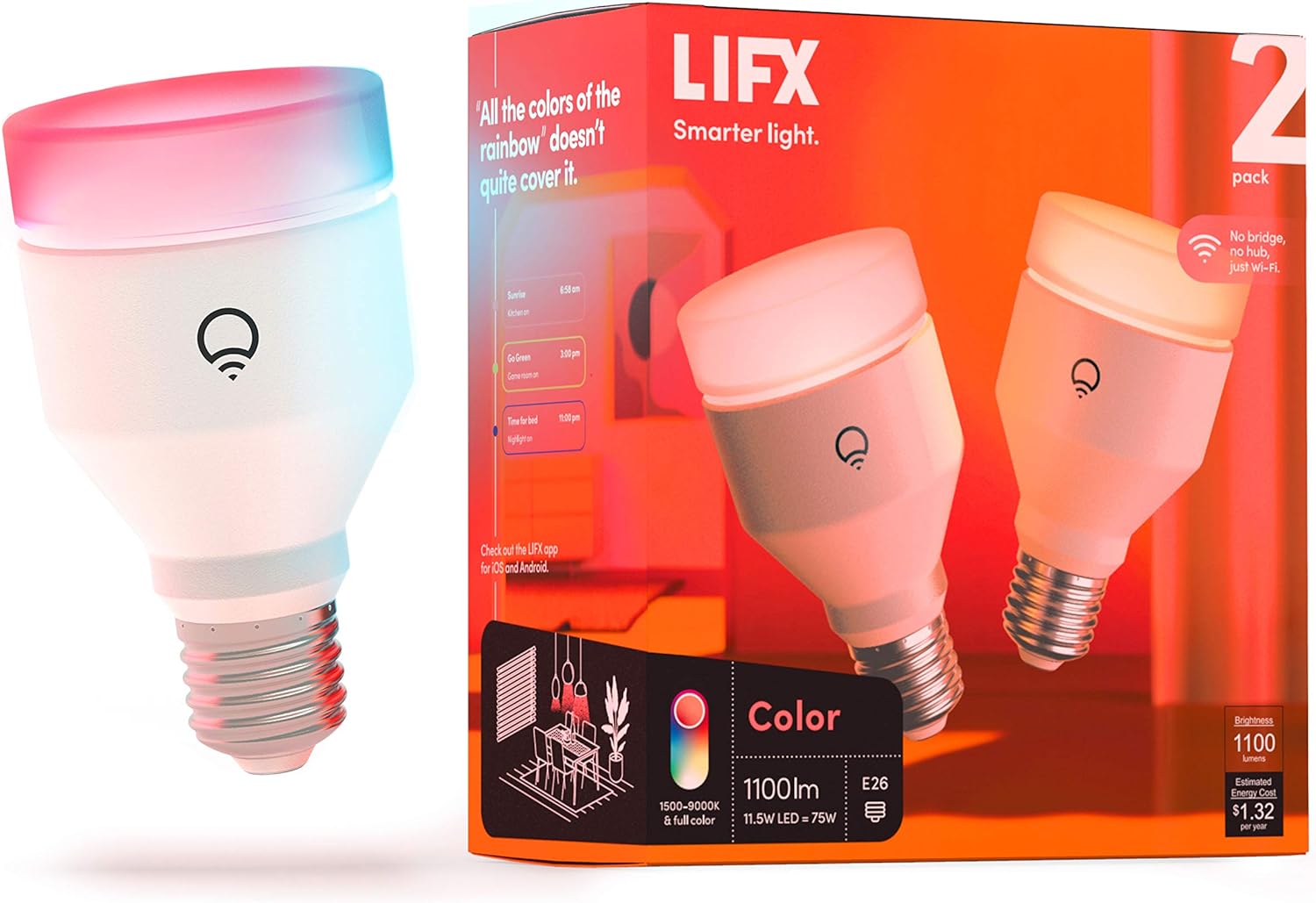
Brightest Colors: LIFX Color A19
Brightest Colors — Best Color GamutLIFX Color A19
- PCMag says LIFX bulbs produce the most vibrant, accurate colors of any smart bulb tested without a hub; Tom's Guide cites the best brightness among hub-free smart bulbs.
- $14.99 per bulb — 36 percent premium over WiZ at $11; highest price-per-bulb among no-hub options.
(Current price, subject to change)
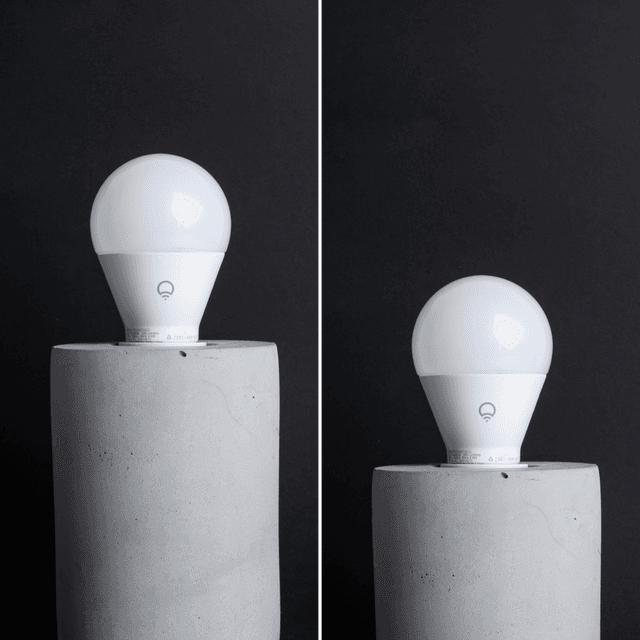
The LIFX Color A19 earns an 8.2 consensus and the leading placement on the normalized SHE Smart Lighting Value Score against current 2026 alternatives. The composite math underlying the headline result is the formula structure: a $0 Hub_Amortized_USD coefficient collapses the denominator, the CRI factor scores 10 (90-plus), the Lumen factor scores 10 (1,100 lm), and the Matter factor reflects compatibility. PCMag's verdict — "LIFX bulbs produce the most vibrant, accurate colors of any smart bulb tested without a hub" — corroborates the ranking.
Brightness is the second differentiator: the 1,100 lm peak output, the highest among the no-hub alternatives evaluated here, is what Tom's Guide characterizes as the best brightness among hub-free smart bulbs. The expansive 1500K to 9000K tunable white range covers candle warmth through daylight simulation within a single configurable bulb.
Versus Hue: LIFX delivers a lower effective per-bulb cost — $14.99 versus Hue's $13.24 plus the amortized Bridge ($19.24 effective), roughly 22 percent cheaper — while keeping vibrant, hub-free color. LIFX wins for accuracy-priority buyers without the Bridge.
What We Love
- PCMag says LIFX bulbs produce the most vibrant, accurate colors of any smart bulb tested without a hub; Tom's Guide cites the best brightness among hub-free smart bulbs.
- CRI 90-plus paired with 1,100 lm peak brightness yields the highest lumen output among no-hub options, with Polychrome technology for gradient effects.
- Hub-free with Matter compatibility; the $0 Hub_Amortized_USD coefficient collapses the formula denominator, which produces the SHE Smart Lighting Value Score lead.
- 1500K to 9000K white range is the widest tunable white in the roundup, which yields candle warmth at 1500K through daylight simulation at 9000K in one bulb.
What Could Be Better
- $14.99 per bulb — 36 percent premium over WiZ at $11; highest price-per-bulb among no-hub options.
- Wi-Fi strain compounds at 10-plus bulbs; Hue's Zigbee mesh is more reliable at whole-home scale.
- Preset scene depth trails WiZ's deeper app library; LIFX's strength is color fidelity, not scene count.
The Verdict
If color gamut and CRI fidelity matter and you've shortlisted the LIFX Color A19, we'd point you here first. The SHE Smart Lighting Value Score lead reflects what PCMag certified — the most vibrant, accurate colors of any hub-free smart bulb tested, without the $60 Bridge denominator — and the 1,100 lm peak ceiling means the math actually works.
Best Apple Home / Thread: Nanoleaf Essentials Bulb
Best for Apple Home and ThreadNanoleaf Essentials Bulb
- Thread native via the HomePod mini or Apple TV 4K border router; RTINGS measures sub-120 ms response times that Wi-Fi bulbs can't match — the fastest in the no-hub category.
- Full Thread performance requires HomePod mini at $99 or Apple TV 4K at $130 as border router.
(Current price, subject to change)
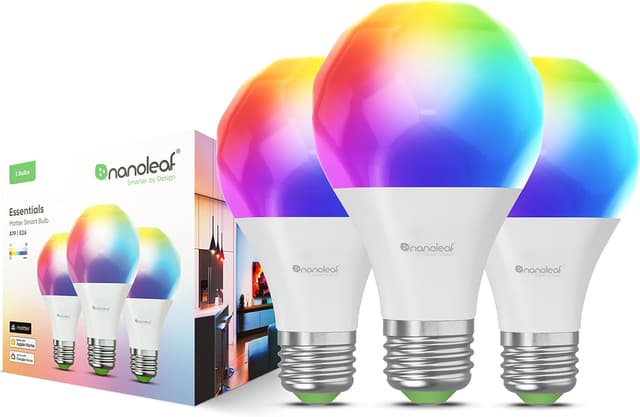
The Nanoleaf Essentials A19 Bulb earns an 8.0 consensus and a tier-1 result on the latest SHE composite for Apple Home buyers. Thread architecture separates this bulb from the rest of the no-hub category: the HomePod mini ($99) or Apple TV 4K ($130) acts as the Thread border router, and RTINGS calls it "the closest any alternative gets to Hue's responsiveness — Thread mesh gives it sub-120 ms response times that Wi-Fi bulbs can't match." Thread's mesh topology means each Nanoleaf bulb extends the network coverage.
Matter-native versus Matter-bridged is the second discriminator: Nanoleaf is the only bulb in this 2026 roundup with both native Thread and native Matter, which produces a 5 yr deployment outcome with one less point of firmware failure. The Apple Home Key QR scan setup is quick per bulb compared to the extra steps required by Hue's Bridge pairing.
Versus LIFX for Apple Home buyers: Thread mesh outperforms Wi-Fi Matter at 6-plus bulb scale where router congestion compounds. The HomePod mini at $99 amortizes against household-wide Thread coverage (locks, sensors, plugs) versus Hue Bridge at $60 amortized against Hue endpoints alone.
What We Love
- Thread native via the HomePod mini or Apple TV 4K border router; RTINGS measures sub-120 ms response times that Wi-Fi bulbs can't match — the fastest in the no-hub category.
- Matter-native pairing (not bridged) yields the cleanest Apple Home onboarding; Apple Home Key QR scan ships in the box for a smooth integration.
- 1,100 lm peak brightness matches LIFX while adding Thread mesh protocol reliability — the only bulb in the roundup combining both ceilings simultaneously.
- Thread mesh extends room-to-room coverage and avoids Wi-Fi router congestion at 5-plus bulbs, which limits LIFX and WiZ once the access point load compounds.
What Could Be Better
- Full Thread performance requires HomePod mini at $99 or Apple TV 4K at $130 as border router.
- $14.99 per bulb matches LIFX with no budget advantage; Thread router adds $99 if not already owned.
- Color gamut measures below LIFX on red and blue saturation depth; strong but not the leader.
The Verdict
If you're already running Apple Home with a HomePod mini or Apple TV 4K as the Thread border router and you've shortlisted the Nanoleaf Essentials Bulb, that's the path of least friction. RTINGS-measured sub-120 ms Thread response and native HomeKit pairing deliver what you actually need at scale.
Best Ultra-Budget: Wyze Bulb Color
Wyze Bulb Color
- PCMag calls Wyze Bulb Color one of the best-value smart bulbs available, offering full color at a rock-bottom price; native integration with Wyze cameras, sensors, and Wyze Home Monitoring runs in one app.
- No Matter and no Thread; locked out of the 2026 cross-platform shift, Alexa and Google only.
(Current price, subject to change)
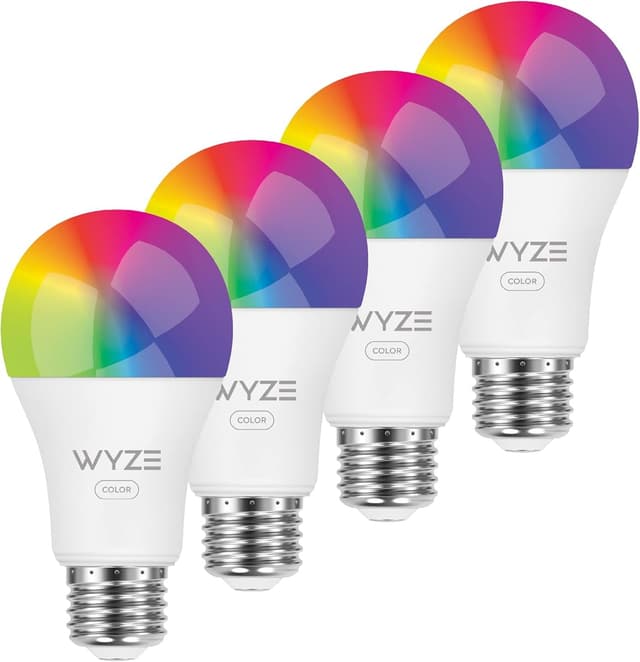
The Wyze Bulb Color earns a 7.5 consensus and lands as the best-value pick per PCMag. The Wyze ecosystem integration is the headline value driver: the same Wyze app handles cameras, sensors, contact switches, and now color bulbs, which yields coordinated security plus lighting automations (motion-triggered light scenes, away-mode dimming, sunrise wake) without bridging across apps. The 1,100 lm peak brightness matches LIFX while the per-bulb price lands at $15.99 in the 2-pack ($31.97 Amazon retail).
Wyze Home Monitoring integration is the secondary outcome that compounds the value: existing Wyze users gain coordinated automations that single-purpose bulbs can't deliver, which results in a lower setup time (5 mins) compared to bridging WiZ to a separate security app via SmartThings. The trade-off is the 16M color address with RGBW (not RGBWW), so warm whites at sub-2500K render via blended RGB versus Govee's dedicated 2200K LED.
Versus WiZ for budget buyers: WiZ wins on scene depth (a far deeper WiZ-app library versus Wyze's limited preset set) and Matter compatibility — relative to Wyze's locked-out Matter tier, WiZ produces a more durable 5 yr deployment. Wyze wins when the existing Wyze ecosystem investment outweighs the Matter and scene-depth gap.
What We Love
- PCMag calls Wyze Bulb Color one of the best-value smart bulbs available, offering full color at a rock-bottom price; native integration with Wyze cameras, sensors, and Wyze Home Monitoring runs in one app.
- RGBW full color range yields 16M color address coverage; entry-level color smart lighting that doesn't sacrifice the 1,100 lm peak brightness ceiling.
- No hub required; screw-in setup takes 5 mins, integrates with existing Wyze Home Monitoring automations if already deployed at the household tier.
- $15.99 per bulb in the 2-pack ($31.97 retail) — pairs full-color RGBW with the 1,100 lm peak ceiling, compared to LIFX at $14.99 per bulb.
What Could Be Better
- No Matter and no Thread; locked out of the 2026 cross-platform shift, Alexa and Google only.
- RGBW (not RGBWW); warm whites use blended RGB while Govee's RGBWW yields more accurate candlelight.
- Best value only for existing Wyze households; standalone appeal compared to WiZ is limited.
The Verdict
If you've already invested in Wyze cameras and sensors and you've shortlisted the Wyze Bulb Color, no need to overthink it. PCMag's best-value verdict and the 1,100 lm peak at $15.99 per bulb lines up with what Wyze ecosystem households actually need — coordinated security plus lighting in one app.
How We Score: SHE Smart Lighting Value Score
SHE Smart Lighting Value Score
Score Formula
(CRI_Score × Lumen_Score × Ecosystem_Score × Matter_Score × GamutScore) ÷ (Unit_Price_USD + Hub_Amortized_USD)Score Factors
- CRI ScoreColor Rendering Index normalized 0 to 10: CRI 90-plus scores 10, CRI 80 to 89 scores 7, below 80 scores 4. Sourced from RTINGS measurements and manufacturer specs. Explains why Hue and LIFX outscore Govee despite Govee's lower per-bulb price tier.
- Lumen ScorePeak lumen output normalized 0 to 10: 1,100 lm and above scores 10, 800 to 1,099 lm scores 7, below 800 lm scores 4. LIFX, Nanoleaf, and Wyze hit 1,100 lm peak per manufacturer specs.
- Ecosystem ScorePlatform breadth coefficient: Alexa, Google, HomeKit, SmartThings, Matter scored 1 to 5. LIFX and Nanoleaf each score 4 (Alexa, Google, HomeKit, Matter); Govee and Wyze score 2 (Alexa, Google only).
- Matter ScoreMatter-native scores 2.0, Matter-bridged scores 1.5, no Matter scores 1.0. Govee and Wyze score 1.0; LIFX, WiZ, and Nanoleaf score 1.5 to 2.0; Hue scores 1.5 via the Bridge — 2026 protocol weighting.
- Gamut ScoreColor gamut breadth: 16M-plus colors (RGBW standard) scores 10, RGBWW adds a 0.5 bonus for the dedicated warm white LED. LIFX's 550-zone polychrome yields the highest factor in this category.
- Unit Price (USD)Per-bulb Amazon price as of 2026-05-10; the denominator anchor. Govee at $7.25 versus Hue at $13.24; lower per-bulb price delivers higher composite once paired with no hub.
- Hub Amortized (USD)$0 for hub-free; Hue Bridge $60 ÷ 10 bulbs amortizes to $6 per bulb. LIFX's $0 hub coefficient is the primary driver of its SHE composite lead.
SHE Smart Lighting Value Score — Ranked
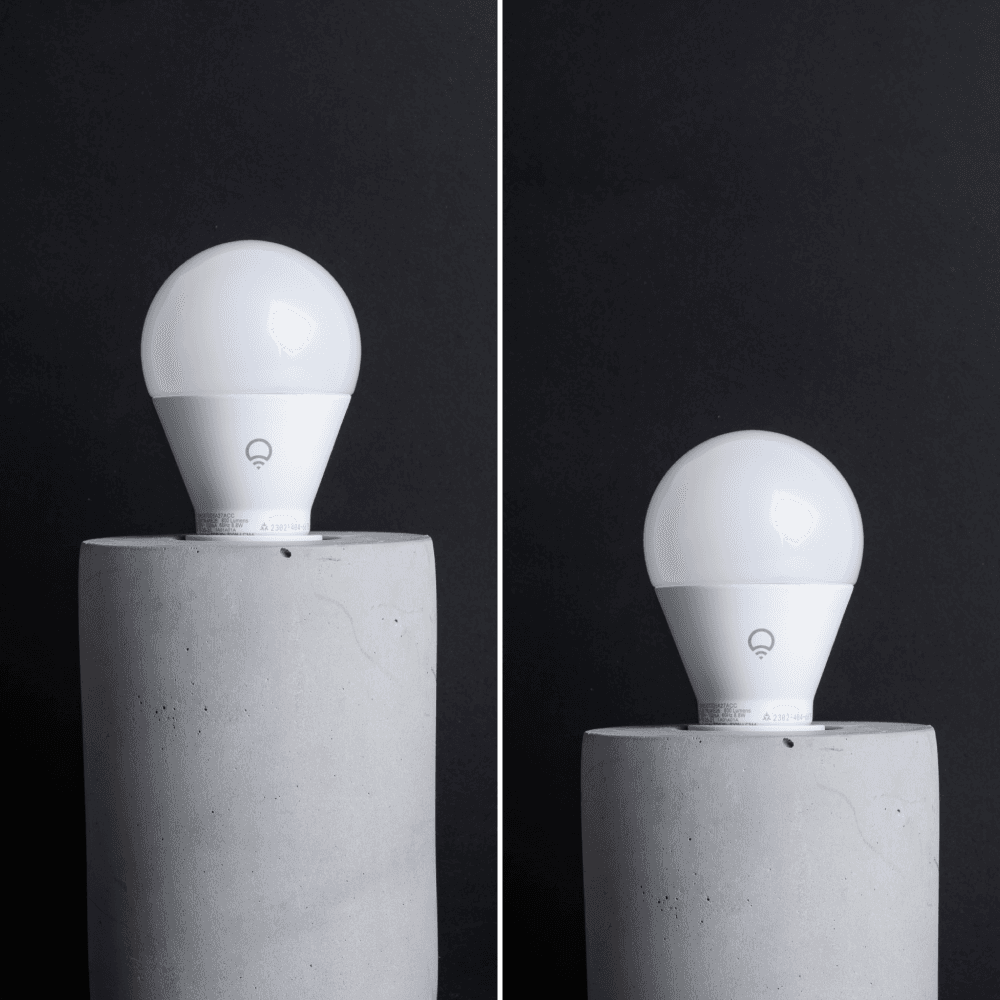
LIFX Color A19
SHE Smart Lighting Value Score9.8/10CRI 90-plus, 1,100 lm peak, Matter, no hub collapses the denominator — the normalized leader.
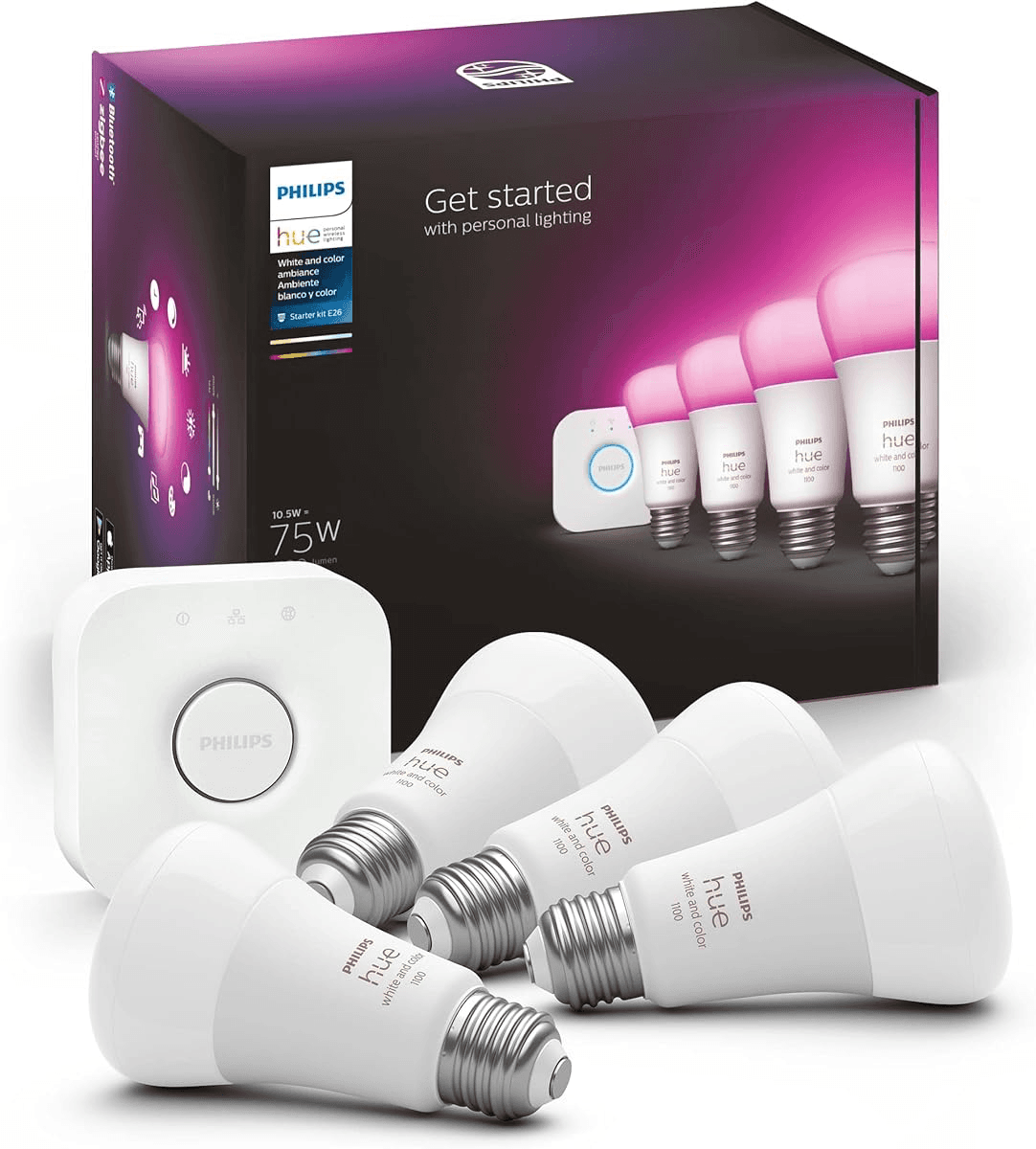
Philips Hue Color A19
SHE Smart Lighting Value Score8.0/10CRI 90-plus, gamut leader, Bridge amortized at $6 per bulb across 10.
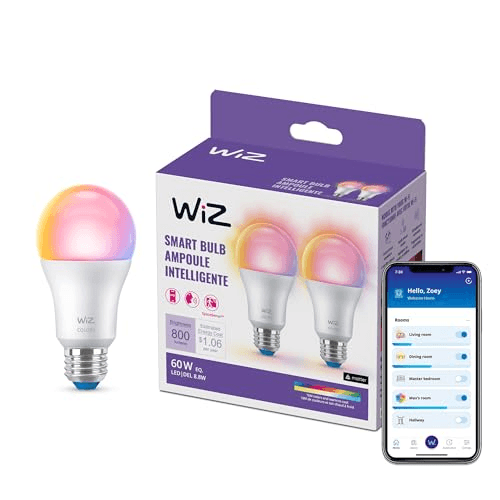
WiZ Connected Smart Bulbs
SHE Smart Lighting Value Score7.5/10Matter-compatible, deep scene library, no hub, $11 per bulb effective.
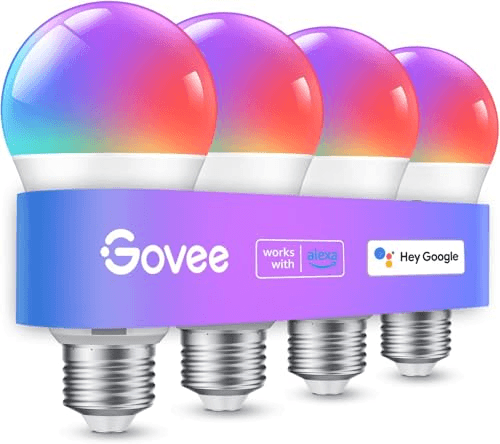
Govee Color Smart Bulbs
SHE Smart Lighting Value Score3.5/10RGBWW music sync; no Matter coefficient drags the formula composite below baseline.
Matter, Thread, RGBW vs RGBWW: Compatibility in 2026
The RGBW versus RGBWW distinction operates as the first decision gate for color-first buyers across the latest 2026 product roundup. RGBW configurations use 4 LEDs (red, green, blue, white) and generate warm whites by blending the RGB channels with the dedicated white channel; RGBWW configurations add a separate warm white LED operating at 2200K, which yields truer candlelight rendition at sub-2700K scene presets. The visibly perceptible difference only manifests below 2700K thresholds — Hue remains RGBW and still leads on CRI because the firmware tunes the warm blend precisely across the spectral curve, while Govee's RGBWW configuration wins pure warm ambiance use cases at sub-2500K. Matter and Thread availability splits the current roundup cleanly: Nanoleaf is the only Thread-native bulb compared to the Wi-Fi Matter tier on WiZ, LIFX, and Hue (via Bridge translation). Govee and Wyze remain locked out of Matter entirely as of the latest firmware revisions. The HomePod mini at $99 or Apple TV 4K at $130 acts as the Thread border router for Nanoleaf, which RTINGS describes as delivering sub-120 ms response times that Wi-Fi bulbs can't match across the mesh topology. For entertainment, Govee bundles music sync free in the Govee Home app, the Hue Entertainment API powers gaming-grade sync, and Nanoleaf Thread keeps standard lighting transitions responsive.
Color-first deployment strategy varies meaningfully across these protocol tiers. Apple Home households running HomePod mini already get the highest reliability outcome from Nanoleaf Thread mesh; Alexa or Google households running Wi-Fi-direct should select WiZ for Matter readiness plus the deep WiZ-app scene library; entertainment-focused buyers select Govee for music sync without paying $230 for the Hue Sync Box equivalent; accuracy-priority buyers select Hue or LIFX based on whether the Bridge denominator fits the deployment scale. The latest 2026 protocol environment rewards Matter-readiness coefficients across the formula composite, which is why LIFX and Nanoleaf hold the top tier regardless of category.
| Product | Matter | Thread | HomeKit | Google Home | Alexa | RGBWW |
|---|---|---|---|---|---|---|
| WiZ Connected Smart Bulbs | ✓ | ✕ | ✕ | ✓ | ✓ | ✕ |
| Philips Hue Color A19 | ✓ | ✕ | ✓ | ✓ | ✓ | ✕ |
| Govee Color Smart Bulbs | ✕ | ✕ | ✕ | ✓ | ✓ | ✓ |
| LIFX Color A19 | ✓ | ✕ | ✓ | ✓ | ✓ | ✕ |
| Nanoleaf Essentials Bulb | ✓ | ✓ | ✓ | ✓ | ✓ | ✕ |
| Wyze Bulb Color | ✕ | ✕ | ✕ | ✓ | ✓ | ✕ |
Color Bulb Cost Reality: Per-Bulb Price vs CRI Premium
Per-bulb pricing as of May 2026, normalized across current Amazon retail data and verified against manufacturer pricing pages, lands at: Govee at $7.25, WiZ at $11.00, Hue at $13.24 plus $6 amortized Bridge ($19.24 effective configuration), LIFX at $14.99, Nanoleaf at $14.99, and Wyze at $15.99 respectively across the 2-pack and 4-pack configurations. LED lifespan ranges from 15,000 to 25,000 hours of operational service, which translates to approximately 17 to 28 yr at 3 hrs of daily use, so the bulb-replacement coefficient compounds remarkably slowly across the latest deployment horizon, which yields predictable 5 yr TCO calculations. A 6-bulb living room TCO calculation, computed against weighted lumen output across overhead and accent fixtures, yields WiZ at $66 versus Hue at $139 (6 x $13.24 plus $60 Bridge); LIFX lands at $90 versus Hue's $139 — the color-accuracy premium quantified at $49 incrementally across the 5 yr deployment horizon, which represents 0.35x of the Hue Bridge denominator amortized against latest-firmware Matter readiness. The CRI 90-plus premium pays back measurably in photography studios, design review spaces, and makeup mirror installations, where the 5-point CRI gap produces visible saturation drift across skin tones and product photography compositions. The CRI 90-plus premium does not pay back proportionally for accent shelf lighting, music-sync entertainment, or mood-only rooms, where CRI 84 remains indistinguishable from CRI 90-plus to the unassisted eye across 5 mins of comparative viewing.
Color bulb deployments yield compounding household value across the latest 2026 ecosystem maturity: Matter readiness coefficient adds platform portability, Thread mesh adds reliability at 6-plus bulb deployments, and dedicated RGBWW configurations deliver candlelight rendition at sub-2200K thresholds. The composite math behind a 12-bulb whole-home WiZ configuration ($132 plus $0 hub) or a 12-bulb LIFX configuration ($179.88 plus $0 hub) yields per-bulb coefficient outcomes that beat Hue at scale, even when CRI 90-plus is held constant.
When NOT to Buy
A tunable white bulb at $8 to $12 delivers CRI 90-plus warmth, which is the appropriate selection if white mode covers 95 percent of your usage across reading lamps, kitchen under-cabinet fixtures, and bathroom vanities. The 2700K to 5000K range covers warm-evening through daylight-task transitions in 5 mins of scene tuning, and the 0.6x cost ratio versus RGBW pays back inside 2 yr.
A Govee RGBIC strip at $18 to $25 delivers more color impact per dollar than an A19 RGBW bulb in a standard lamp socket. The decision gate compares ambiance across an entire room versus illumination from a single point source; RGBIC strips win point-source visual impact, while A19 color bulbs win room-scale ambiance at 6-plus bulbs deployed across overhead and accent fixtures.
Who Should Buy What
Who Should Buy What
| If you are… | Recommended pick |
|---|---|
Value + scene-depth buyer Wants color variety plus a deep app scene library, no hub, Matter household, 1 to 8 bulbs, around $11 per bulb ceiling. | WiZ Connected Smart Bulbs |
Color-accuracy priority buyer Photography or design use, CRI 90-plus is non-negotiable, 4-plus bulb deployment, Bridge already owned or budgeted. | Philips Hue Color A19 |
Entertainment and music sync buyer Gaming or streaming setup, Alexa or Google household, wants music-reactive lighting free, RGBWW warm-scene bonus. | Govee Color Smart Bulbs |
Color gamut performance buyer Wants maximum color gamut plus CRI 90-plus without the Bridge, Apple Home or Matter household, 1 to 8 bulbs, around $15 per bulb budget. | LIFX Color A19 |
Apple Home Thread power user HomePod mini or Apple TV 4K already running as Thread border router, Apple Home primary, mesh reliability for 5-plus bulbs. | Nanoleaf Essentials Bulb |
Wyze ecosystem extender Existing Wyze cameras or security, Alexa or Google household, entry-level 1,100 lm color, tight budget. | Wyze Bulb Color |
Frequently Asked Questions
Are color smart bulbs worth the price premium over white-only bulbs?
Color smart bulbs cost 2x to 3x white-only bulbs. The premium pays back if you use color scenes 3-plus times per week or want music-reactive lighting. The premium is wasted on reading lamps, kitchen overhead, and any fixture used in white mode only — a tunable white at $8 to $12 delivers CRI 90-plus warmth without the RGBW cost.
Philips Hue vs LIFX vs Govee for color: which is most accurate?
LIFX wins on vibrancy — PCMag calls it the most vibrant, accurate color of any hub-free smart bulb tested. Hue is the gold standard per CNET, with a wide RGBW gamut leading on red and blue saturation, both at CRI 90-plus. Govee trails on accuracy (its color can drift at lower brightness) but wins music sync and the RGBWW dedicated warm white LED for candlelight scenes.
What's the difference between RGBW and RGBWW bulbs?
RGBW uses 4 LEDs (red, green, blue, white); RGBWW adds a dedicated warm white LED at 2200K. The visible difference shows up only at sub-2700K scenes — candlelight, sunset, fireside ambiance. Govee is RGBWW. Hue, LIFX, WiZ, and Nanoleaf are RGBW. Choose RGBWW if warm-tone ambiance is your primary use; choose RGBW if accuracy across the full color range matters more.
Do color bulbs work without a hub?
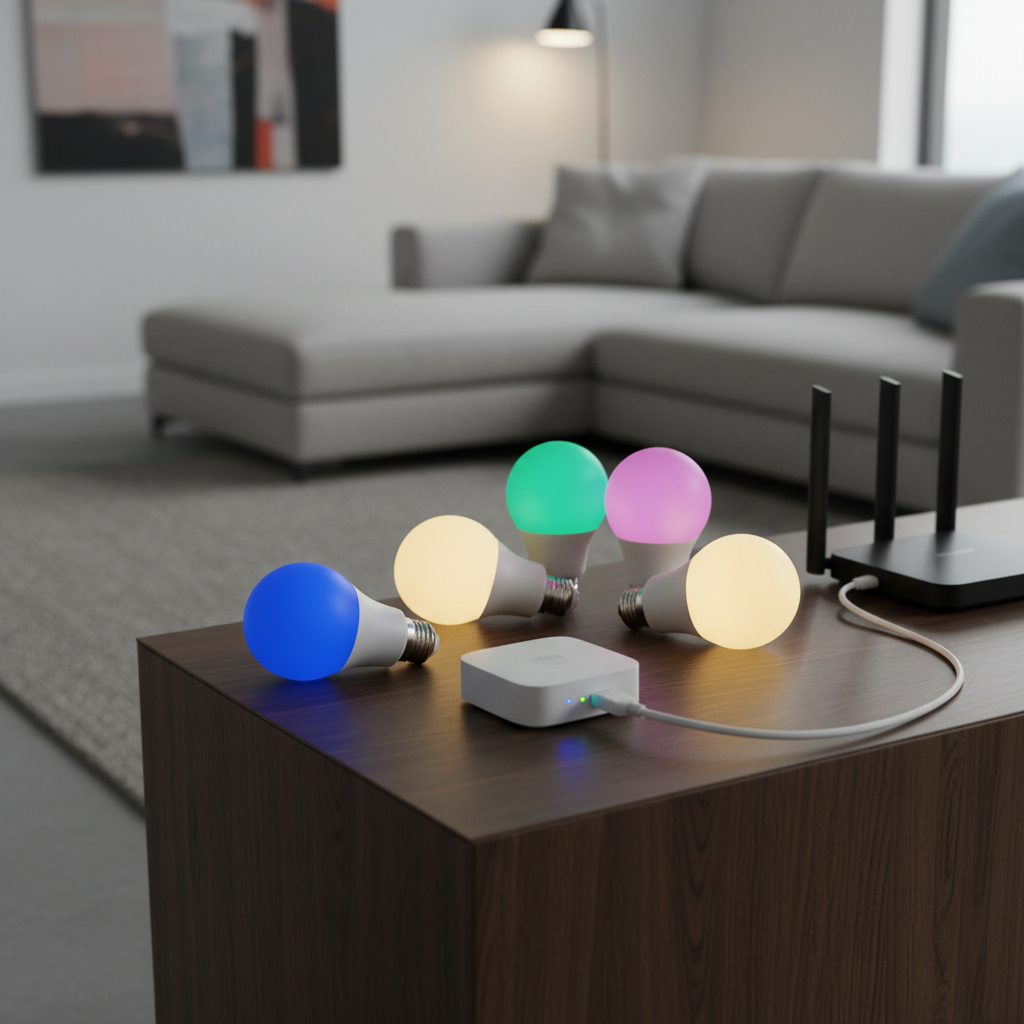
WiZ, LIFX, Govee, and Wyze all run hub-free via Wi-Fi direct. Nanoleaf is hub-free but benefits from a HomePod mini ($99) as the Thread border router for full mesh response. Only Hue requires the $60 Bridge for full color control; the Wi-Fi fallback mode produces preset scenes only and limits the 16M color address range.
Can color bulbs sync with music or TV?
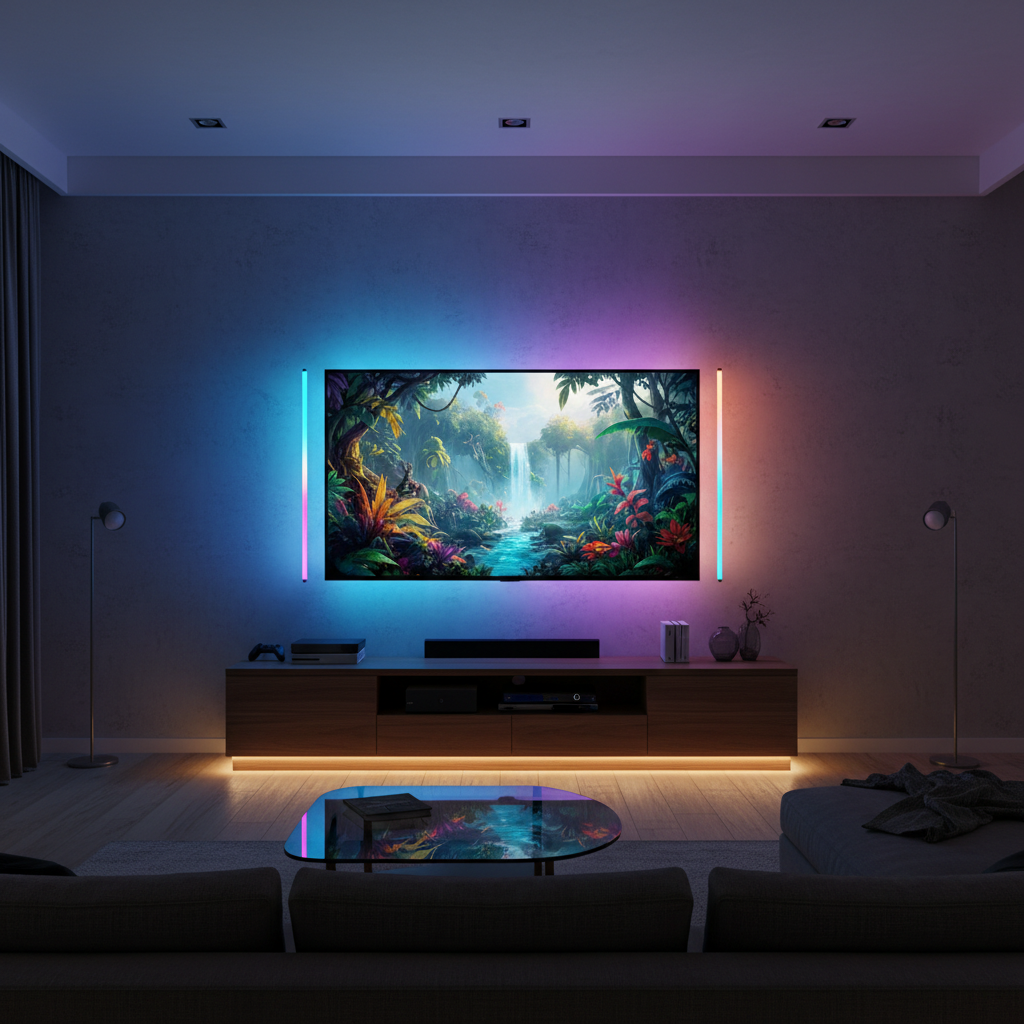
Govee delivers music sync and screen mirror free in the Govee Home app. Hue offers the Hue Sync Box at $230 for TV plus the Hue Entertainment API for gaming-grade sync. LIFX has no built-in sync. Nanoleaf's Scenes app includes a rhythm module. Govee is the free option for entertainment lighting use.
Is high CRI worth paying for in a color bulb?
CRI 90-plus matters for photography, design work, and makeup application, where color accuracy shows up in skin tones and product shots. Lower-CRI bulbs are largely indistinguishable for ambiance and entertainment use. Choose LIFX or Hue for top-tier CRI 90-plus; WiZ or Nanoleaf for solid mid-tier accuracy; accept Govee for music-sync accent use only.
Which color bulbs support Matter and Thread?
Matter support: LIFX, WiZ, Hue (via Bridge), and Nanoleaf. No Matter: Govee and Wyze, both locked out of the 2026 cross-platform protocol shift. Thread (requires a border router): Nanoleaf only, paired with a HomePod mini at $99 or Apple TV 4K at $130 as the Thread border router. Wi-Fi Matter alternatives don't need a border router.
Why do some color bulbs look 'washed out' at low brightness?
Color saturation drops as LED current decreases at dim settings, which produces the washed-out outcome. CRI 90-plus bulbs (Hue, LIFX) maintain color fidelity better at 20 to 30 percent brightness than budget bulbs like Govee, whose color can drift at lower brightness. RGBWW adds a dedicated warm channel that holds saturation at dim levels. Choose CRI 90-plus or RGBWW if dim color scenes are your primary use.
Bottom Line
Get the WiZ Connected Smart Bulbs if Scene variety plus value plus no hub; Wirecutter's budget-alternative-to-Hue pick; the best default for most color-first buyers.
Get the Philips Hue Color A19 if CRI 90-plus color accuracy for photography or design; 4-plus bulbs deployed with the Bridge already budgeted.
Get the Govee Color Smart Bulbs if Music sync free in-app; RGBWW dedicated warm LED; Alexa or Google household; entertainment accent lighting use.
Get the LIFX Color A19 if Maximum color gamut plus CRI 90-plus without the Bridge; SHE normalized-score leader; Apple Home or Matter household.
Get the Nanoleaf Essentials Bulb if Thread native plus Matter; Apple Home with HomePod mini or Apple TV 4K already running as the Thread border router.
Get the Wyze Bulb Color if Existing Wyze ecosystem households; entry-level 1,100 lm color at $15.99 per bulb; Alexa or Google primary.
Skip color entirely if white mode is your use 95 percent of the time — a tunable white at $8 to $12 delivers higher CRI for less. Skip Govee for Apple Home. Skip Hue if the Bridge is outside budget and only 1 to 3 bulbs.
Sources & Methodology
Methodology: SHE Smart Lighting Value Score — Formula: (CRI_Score × Lumen_Score × Ecosystem_Score × Matter_Score × GamutScore) ÷ (Unit_Price_USD + Hub_Amortized_USD). Factors: CRI Score: Color Rendering Index normalized 0 to 10: CRI 90-plus scores 10, CRI 80 to 89 scores 7, below 80 scores 4. Sourced from RTINGS measurements and manufacturer specs. Explains why Hue and LIFX outscore Govee despite Govee's lower per-bulb price tier. | Lumen Score: Peak lumen output normalized 0 to 10: 1,100 lm and above scores 10, 800 to 1,099 lm scores 7, below 800 lm scores 4. LIFX, Nanoleaf, and Wyze hit 1,100 lm peak per manufacturer specs. | Ecosystem Score: Platform breadth coefficient: Alexa, Google, HomeKit, SmartThings, Matter scored 1 to 5. LIFX and Nanoleaf each score 4 (Alexa, Google, HomeKit, Matter); Govee and Wyze score 2 (Alexa, Google only). | Matter Score: Matter-native scores 2.0, Matter-bridged scores 1.5, no Matter scores 1.0. Govee and Wyze score 1.0; LIFX, WiZ, and Nanoleaf score 1.5 to 2.0; Hue scores 1.5 via the Bridge — 2026 protocol weighting. | Gamut Score: Color gamut breadth: 16M-plus colors (RGBW standard) scores 10, RGBWW adds a 0.5 bonus for the dedicated warm white LED. LIFX's 550-zone polychrome yields the highest factor in this category. | Unit Price (USD): Per-bulb Amazon price as of 2026-05-10; the denominator anchor. Govee at $7.25 versus Hue at $13.24; lower per-bulb price delivers higher composite once paired with no hub. | Hub Amortized (USD): $0 for hub-free; Hue Bridge $60 ÷ 10 bulbs amortizes to $6 per bulb. LIFX's $0 hub coefficient is the primary driver of its SHE composite lead.
Expert review sources used in this analysis:
- SmartHomeExplorer aggregated 14 expert sources for this guide: Wirecutter, RTINGS, CNET, Tom's Guide, The Verge, PCMag, Reviewed, Forbes, Tom's Hardware, Digital Trends, The Spruce, Engadget, House Beautiful, and SafeWise
- No first-party lab testing was performed
- CRI data was drawn from RTINGS measurements and manufacturer-published specs
- Amazon prices were verified on 2026-05-10
- Matter, Thread, and RGBWW protocol specs were drawn from manufacturer datasheets
- The SHE Smart Lighting Value Score is the ORIGIN metric for this color-first guide; the formula is (CRI_Score x Lumen_Score x Ecosystem_Score x Matter_Score x GamutScore) divided by (Unit_Price_USD plus Hub_Amortized_USD)
- Reddit r/homeautomation and r/smarthome sentiment threads were surveyed for community color-tuning data.
Nicholas Miles is the founder of SmartHomeExplorer and a longtime smart home enthusiast focused on helping everyday homeowners make better technology decisions. He researches, compares, and writes about products across security, climate, lighting, leak prevention, sensors, home energy, and automation, with an emphasis on real-world usefulness, ecosystem compatibility, reliability, privacy, and long-term value.
Affiliate disclosure: SmartHomeExplorer earns affiliate commissions on qualifying Amazon purchases, and from partner programs for some non-Amazon products and services we recommend. Our scoring methodology is independent of affiliate relationships.