
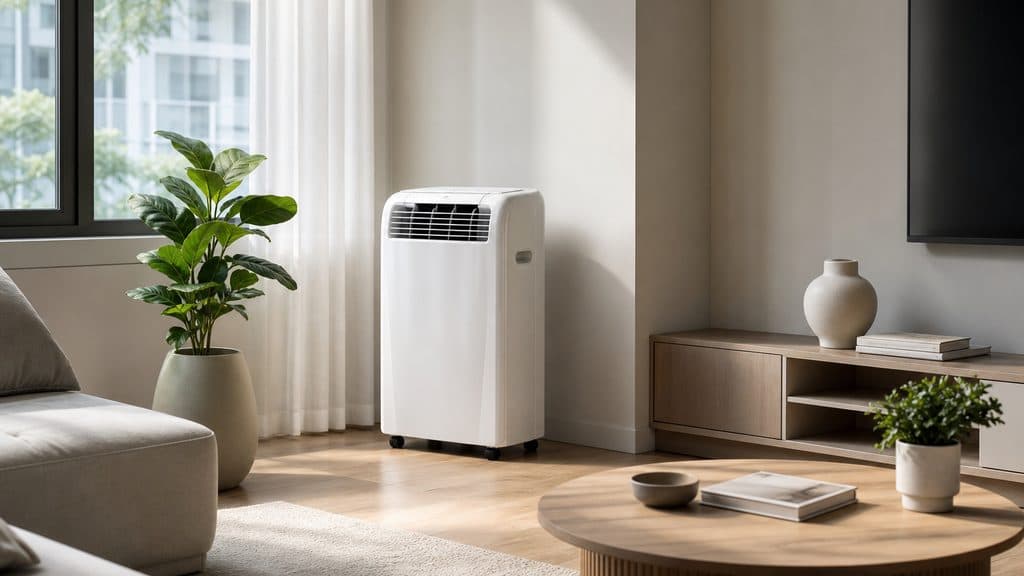
Best Smart Portable Air Conditioners 2026: 6 Compared
Portable AC labels mislead — single-hose units lose 25 to 45 percent of their ASHRAE rating. We compared six WiFi units on real SACC numbers: the Whynter ARC-1230WN leads on measured cooling, ahead of the Midea Duo 14K and the sub-$300 BLACK+DECKER.
This article contains affiliate links. We may earn a commission at no extra cost to you. Prices change frequently — check the current price on Amazon before buying. Learn more
The Short Answer
The Whynter ARC-1230WN is our 2026 recommendation: a 12,000 BTU SACC dual-hose inverter rated for coverage of rooms up to 600 square feet. TechGearLab's independent evaluation positioned it first among 9 competing units, and it registers the highest overall score in this comparison.
Featured in this Guide
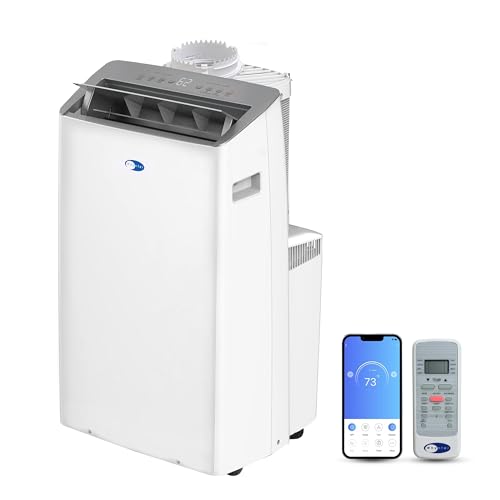
Whynter
ARC-1230WN 12,000 BTU SACC Dual-Hose Inverter Portable AC
- •12,000 BTU SACC dual-hose inverter, 600 sq ft, TechGearLab #1 of 9 tested
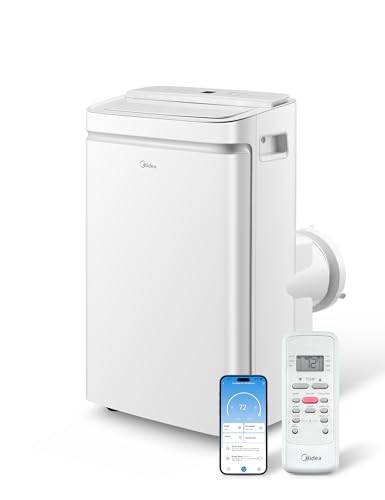
Midea
Duo 10,000 BTU SACC Dual-Hose Inverter Portable AC
- •Dual-hose inverter, 55.4 dBA measured on the tested sibling
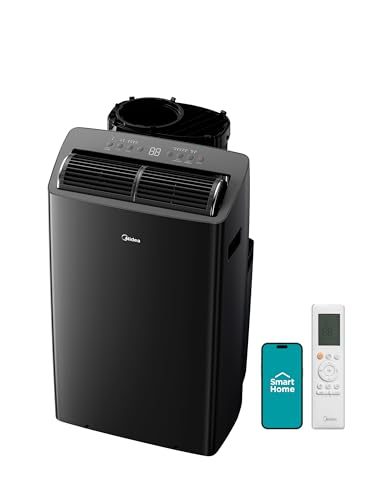
Midea
Duo 14,000 BTU (12,000 BTU SACC) High Efficiency Inverter Portable AC (2026)
- •New 2026 Duo flagship — 12,000 BTU SACC, 550 sq ft, as low as 42dB
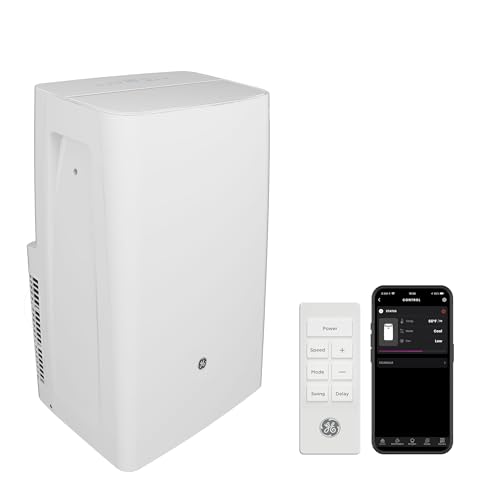
GE
8,000 BTU DOE Smart Portable AC
- •Auto-evaporation, GE SmartHQ, Alexa + Google, 350 sq ft
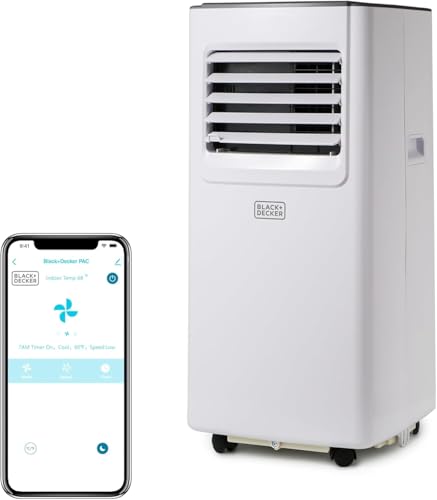
BLACK+DECKER
8,000 BTU WiFi Portable AC
- •Only true sub-$300 smart pick — Alexa + Google
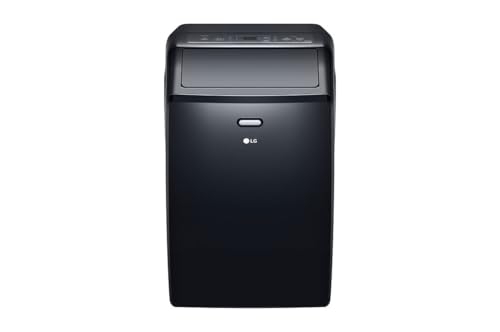
LG
LP1023BSSM 10,000 BTU Smart Portable AC
- •10,000 BTU DOE, 450 sq ft, Energy Star, ThinQ WiFi scheduling
Six Smart Portable ACs Compared
Climate
Chart
 Smarthomeexplorer.com
Are Smart Portable ACs Worth the Premium in 2026?
Portable air conditioners solve one problem: rooms a central system undershoots. The number that matters is the rating standard. ASHRAE BTU figures are inflated marketing numbers — the DOE's SACC standard runs lower because it counts real-world infiltration, and single-hose units commonly lose 25 to 45 percent of the label. The dual-hose inverter picks here hold more: both 14,000 BTU ASHRAE units rate 12,000 BTU SACC.
Our weighted SHE Smart Cooling Value Score normalizes a composite of efficiency, app intelligence, and seasonal value into one factor-by-factor ranking. We leaned on independent TechGearLab testing where it exists: the 77lbs Whynter ARC-1230WN measured 58.4dB on high and outperformed the field, while the Midea Duo's tested sibling measured 55.4dB. Scheduling savings, calculated at 8 hours of daily runtime versus the $0.16 kWh national average, recover the WiFi premium within a season or two.
Best Overall: Whynter ARC-1230WN 12,000 BTU SACC Dual-Hose Inverter Portable AC
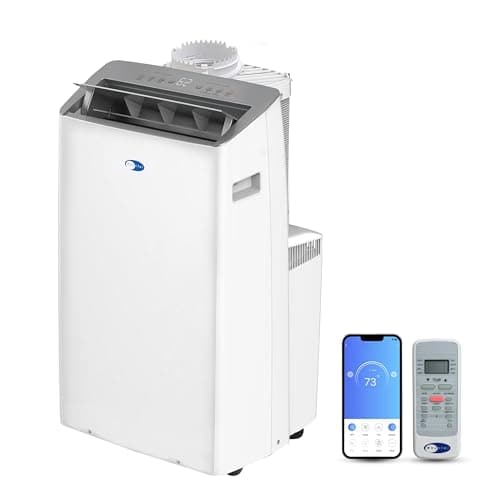
Whynter ARC-1230WN 12,000 BTU SACC Dual-Hose Inverter Portable AC
- 12,000 BTU SACC — the highest real-world cooling capacity in this roundup
- Heaviest unit at about 77 lbs — a genuine mobility limitation
(Current price, subject to change)
The Whynter ARC-1230WN 12,000 BTU SACC Dual-Hose Inverter Portable AC is the only unit in this roundup with strong independent backing. TechGearLab ranked it number one of 9 portable ACs tested, scoring 81/100 with an Editors' Choice award. RTINGS additionally lists it among its portable-AC coverage. In TechGearLab's testing it measured 58.4dB on high and produced the best cooling of the field. The 12,000 BTU SACC rating ties the new Midea Duo 14K on paper, but this is the unit whose figure has been independently verified. The NEX inverter modulates compressor speed, which delivers meaningful energy savings on long run days compared to a fixed-speed unit. The dual-hose design uses a dedicated outdoor intake, avoiding the negative-pressure penalty that single-hose units pay, and the hoses stow inside the unit when not in use. Alexa and Google Assistant are both supported through the Whynter app. The honest tradeoffs are weight and price: at roughly 77lbs it is the heaviest unit here, and it is the costliest. This is the selection when tested cooling capacity for a large room outranks portability and budget.
What We Love
- 12,000 BTU SACC — the highest real-world cooling capacity in this roundup
- TechGearLab's number-one portable AC of 9 tested (81/100, Editors' Choice)
- NEX inverter plus dual-hose delivered the best measured cooling, an 11.9 degree drop in 60 minutes
- Hose-in-hose stowaway design with Alexa and Google Assistant support
What Could Be Better
- Heaviest unit at about 77 lbs — a genuine mobility limitation
- The highest price in this roundup, ahead of the Midea Duo 14K
- 58.4 dBA on high (measured) — slightly louder than the Midea Duo sibling's 55.4 dBA
The Verdict
If raw cooling power for a large room is the priority and you've shortlisted the Whynter ARC-1230WN 12,000 BTU SACC Dual-Hose Inverter Portable AC, it checks the boxes that matter for that setup. This is the one unit here with independent lab backing — TechGearLab's #1 of 9 — so the 600 sq ft and 12,000 BTU SACC claims are tested, not marketed, and you'll be well-served here.
Check price for the Whynter ARC-1230WN 12,000 BTU SACC Dual-Hose Inverter Portable AC →
Most Efficient: Midea Duo 10,000 BTU SACC Dual-Hose Inverter Portable AC
Midea Duo 10,000 BTU SACC Dual-Hose Inverter Portable AC
- Dual-hose design avoids negative pressure — more efficient than single-hose at equal SACC
- Heavy and bulky — the tested Duo sibling weighs about 74 lbs
(Current price, subject to change)
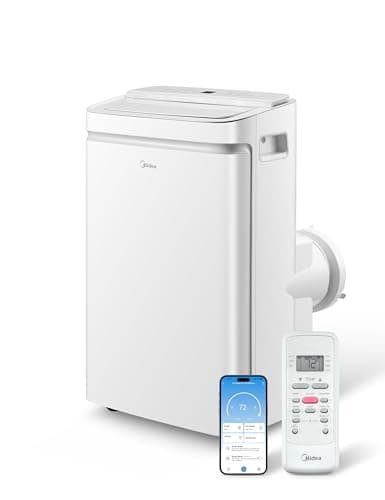
The Midea Duo 10,000 BTU SACC Dual-Hose Inverter Portable AC is the efficiency pick here: a 10,000 BTU SACC (13,000 BTU ASHRAE) dual-hose unit with an inverter compressor. TechGearLab tested the closely-related MAP12S1TBL sibling, naming it an Editors' Choice — it measured 55.4dB on high, the quietest measured figure in this roundup. Consumer Reports and RTINGS also list the MAP12S1TBL sibling in their portable-AC coverage. Treat that as sibling-model evidence: this exact listing shares the Duo's dual-hose inverter architecture but was not the unit on the bench. The dual-hose design matters because it draws outdoor air for the condenser instead of conditioned indoor air. That sidesteps the negative-pressure infiltration penalty the SACC standard now builds into single-hose ratings. The inverter modulates compressor speed rather than cycling at full power, which the manufacturer rates at roughly 40 percent lower energy use than the fixed-speed federal standard. The cost is bulk: the tested sibling weighs about 74lbs, the window footprint is larger, and install runs about 25 minutes. Both Alexa and Google Assistant are supported.
What We Love
- Dual-hose design avoids negative pressure — more efficient than single-hose at equal SACC
- Inverter compressor modulates speed for roughly 40% lower energy use than the fixed-speed standard
- 55.4 dBA measured on high (sibling) — the quietest measured unit here
- 389 CFM airflow turns a room over faster than the typical 200-300 CFM competitor
What Could Be Better
- Heavy and bulky — the tested Duo sibling weighs about 74 lbs
- Larger window footprint and roughly a 25-minute install versus single-hose units
- Independent testing covers the MAP12S1TBL sibling, not this exact SKU
The Verdict
If you run the AC long days and want the lowest running cost, the Midea Duo 10,000 BTU SACC Dual-Hose Inverter Portable AC lines up with what you actually need. The dual-hose inverter design is the efficiency story here — you are buying lower electricity bills over a summer, not just the sticker.
Check price for the Midea Duo 10,000 BTU SACC Dual-Hose Inverter Portable AC →
Best New Inverter: Midea Duo 14,000 BTU (12,000 BTU SACC) High Efficiency Inverter Portable AC (2026)
Midea Duo 14,000 BTU (12,000 BTU SACC) High Efficiency Inverter Portable AC (2026)
- 14,000 BTU ASHRAE rates an honest 12,000 BTU SACC — matching the top-tested Whynter's rated output
- The second-highest price in this roundup, behind only the Whynter
(Current price, subject to change)
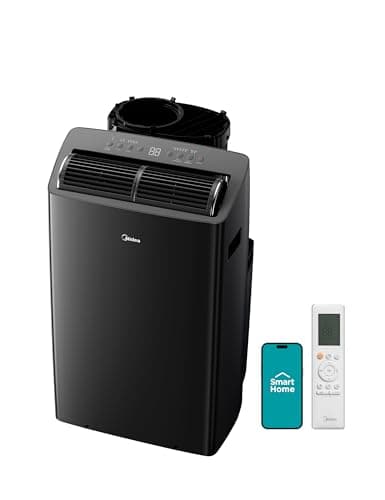
The Midea Duo 14,000 BTU (12,000 BTU SACC) High Efficiency Inverter Portable AC (2026) is the 2026 refresh of Midea's dual-hose Duo family. It pairs 14,000 BTU ASHRAE, an honest 12,000 BTU SACC, and a high-efficiency inverter compressor, with coverage for rooms up to 550 square feet. Alexa and Google Assistant are supported, and a window kit is included. The manufacturer rates operation as low as 42dB, which would be the quietest figure in this roundup. Treat it as an Amazon-listing claim, because no independent measurement of this exact model exists yet. The TechGearLab, Consumer Reports, and RTINGS bench evidence in the Duo family belongs to the 10K Duo's MAP12S1TBL sibling, and Forbes tested the previous-generation MAP14S1TBL. None of it transfers to this 2026 model. Budget-conscious buyers should know the honest alternative: a prior-generation dual-hose Midea carries the same 12,000 BTU SACC rating for less, sacrificing the 2026 refinements. The premium buys current-generation hardware and the strongest paper specifications in the Duo line.
What We Love
- 14,000 BTU ASHRAE rates an honest 12,000 BTU SACC — matching the top-tested Whynter's rated output
- Dual-hose Duo architecture with a high-efficiency inverter compressor
- Manufacturer rates operation as low as 42 dB — the lowest claimed figure in this roundup
- Alexa and Google Assistant support, with remote and window kit included
What Could Be Better
- The second-highest price in this roundup, behind only the Whynter
- No independent lab has tested this 2026 SKU — every Duo bench figure belongs to previous-generation siblings
- 550 sq ft rated coverage trails the Whynter's 600 sq ft, though it now lists for less
The Verdict
If you want the newest dual-hose inverter in the Duo family and you've shortlisted the Midea Duo 14,000 BTU (12,000 BTU SACC) High Efficiency Inverter Portable AC (2026), it checks the boxes that matter for a 550 sq ft space — 12,000 BTU SACC, both voice assistants, and a bundled window kit.
Best No-Drain: GE 8,000 BTU DOE Smart Portable AC
GE 8,000 BTU DOE Smart Portable AC
- Auto-evaporation no-drain design — the lowest-maintenance unit in the single-hose class
- Single-hose and non-inverter — the efficiency floor versus the dual-hose inverter picks
(Current price, subject to change)
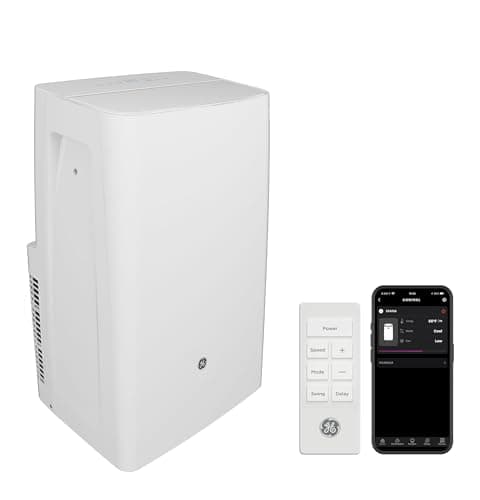
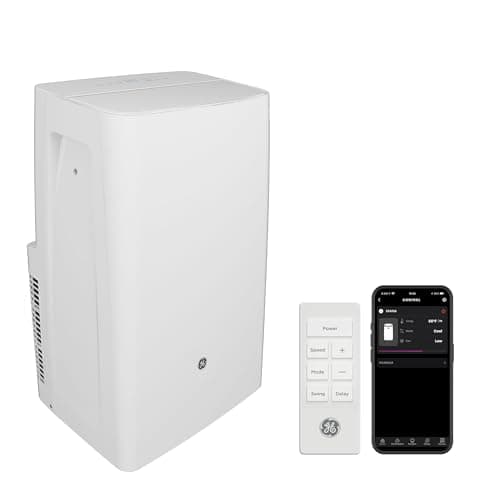
The GE 8,000 BTU DOE Smart Portable AC earns its slot on convenience: an auto-evaporation no-drain design that handles condensation through the exhaust under normal conditions, so you rarely empty a tank. It is rated 8,000 BTU DOE directly — an honest figure with no ASHRAE inflation to decode — and covers rooms up to 350 sq ft. The GE SmartHQ app is mature and shared across GE's broader appliance line, with both Alexa and Google Assistant supported. No independent lab has reviewed this specific model, and GE does not publish a separate SACC figure beyond the 8,000 DOE label. The 55 dB noise figure on the listing is a manufacturer claim. Judge it on the stated DOE rating and the no-drain convenience rather than on test data that does not exist. The honest comparison is the BLACK+DECKER 8,000 BTU WiFi Portable AC at a considerably lower price. It covers the same 350 sq ft with the same voice assistants, so the GE premium buys the auto-evaporation and the SmartHQ ecosystem, not more cooling.
What We Love
- Auto-evaporation no-drain design — the lowest-maintenance unit in the single-hose class
- GE SmartHQ app is mature and shared across GE's appliance ecosystem
- Both Alexa and Google Assistant are supported
- Rated 8,000 BTU DOE directly — no ASHRAE inflation to decode
What Could Be Better
- Single-hose and non-inverter — the efficiency floor versus the dual-hose inverter picks
- Cools up to 350 sq ft, the same as the cheaper BLACK+DECKER, for considerably more
- No SACC figure is published for this SKU beyond the 8,000 DOE label
The Verdict
If you want a low-maintenance unit and you've shortlisted the GE 8,000 BTU DOE Smart Portable AC, it lines up with what you actually need. The auto-evaporation no-drain design is the practical differentiator here — you are paying for the convenience and the GE SmartHQ ecosystem, not extra cooling capacity.
Best Value: BLACK+DECKER 8,000 BTU WiFi Portable AC
BLACK+DECKER 8,000 BTU WiFi Portable AC
- Lowest price in this roundup — the entry point into smart portable cooling
- Single-hose and non-inverter — the least efficient unit here on a SACC-per-watt basis
(Current price, subject to change)
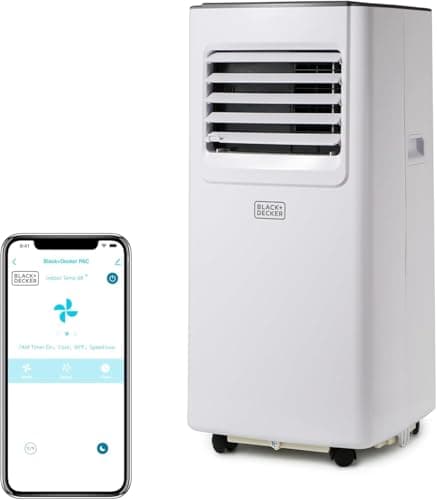
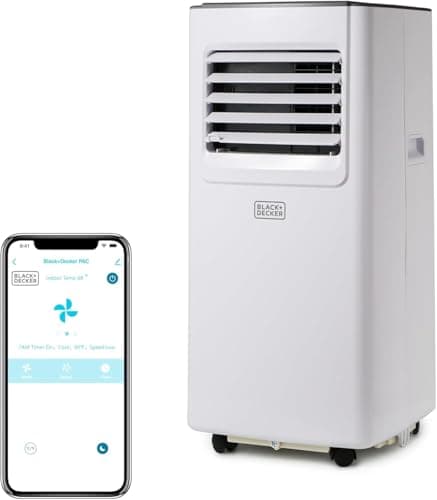
The BLACK+DECKER 8,000 BTU WiFi Portable AC is the value pick here, the only genuine sub-$300 smart portable AC in this roundup. It does not strip features to hit the number: both Alexa and Google Assistant work alongside the BLACK+DECKER app. It self-evaporates under normal humidity, cutting drainage chores in moderate climates. The honest limits are output and evidence. The current listing rates it at 8,000 BTU ASHRAE and 5,100 BTU SACC, the lowest real-world cooling in this group. No independent lab has published a review of this model, so judge it on the manufacturer figures rather than test data. Compared to the dual-hose inverter picks it produces substantially less cooling per hour of runtime, and its fixed-speed compressor draws full power whenever it runs. Treat 350 sq ft as the ceiling, not a target, and expect it to suit a bedroom or home office rather than a large living room. For buyers who want smart cooling without a premium, it covers the essentials at the lowest price here.
What We Love
- Lowest price in this roundup — the entry point into smart portable cooling
- Both Alexa and Google Assistant are supported, plus the BLACK+DECKER app
- Publishes a real 5,100 BTU SACC rating on the current listing — no ASHRAE-only guesswork
- Self-evaporating, reducing drainage chores in moderate climates
What Could Be Better
- Single-hose and non-inverter — the least efficient unit here on a SACC-per-watt basis
- Rated 5,100 BTU SACC from 8,000 ASHRAE — the lowest real-world output in this roundup
- Cools up to 350 sq ft — undersized for larger living rooms
The Verdict
If budget is the deciding factor and you've shortlisted the BLACK+DECKER 8,000 BTU WiFi Portable AC, it is a sensible pick for that setup. It is the only genuine sub-$300 smart unit here, and it does not cut the voice-assistant support to get there — Alexa and Google both work.
Check price for the BLACK+DECKER 8,000 BTU WiFi Portable AC →
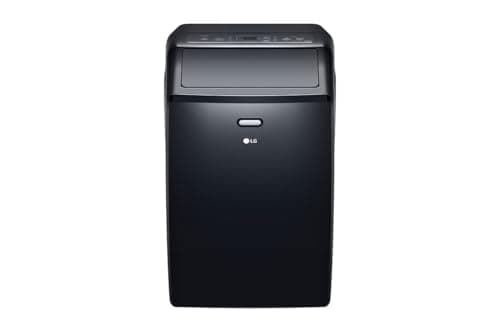
Energy Star 450 Sq Ft Pick: LG LP1023BSSM 10,000 BTU Smart Portable AC
LG LP1023BSSM 10,000 BTU Smart Portable AC
- 10,000 BTU DOE / 13,500 BTU ASHRAE — among the highest real cooling in the single-hose smart class
- Single-hose design pulls negative pressure, cutting efficiency versus a dual-hose unit of equal SACC
(Current price, subject to change)
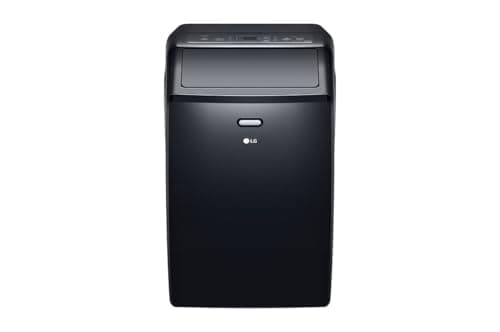
The LG LP1023BSSM 10,000 BTU Smart Portable AC is the balanced mainstream pick here: 10,000 BTU DOE (13,500 BTU ASHRAE) for rooms up to 450 square feet. It is Energy Star certified, with the mature LG ThinQ app for scheduling and remote control. The DOE rating is the figure that matters — it is the accurate, real-world number, not the inflated ASHRAE label competitors lead with. No independent lab has published a review of this specific model. The 52 dB figure should therefore be read as LG's marketing claim for low mode rather than a measured result. The single-hose design is the main efficiency tradeoff: it draws conditioned indoor air to cool the condenser and exhausts it outside. That creates slight negative pressure, which pulls warm air in through gaps. For one-window rooms the tradeoff is acceptable; buyers in climates regularly above 95°F should weigh the dual-hose alternatives. A handful of Amazon and Home Depot buyers report control-board failures, so register the warranty on delivery.
What We Love
- 10,000 BTU DOE / 13,500 BTU ASHRAE — among the highest real cooling in the single-hose smart class
- Energy Star certified, lowering operating cost versus non-certified peers
- LG ThinQ WiFi app handles scheduling and remote control from anywhere
- Cools up to 450 sq ft — larger rooms than most 8,000 BTU units
What Could Be Better
- Single-hose design pulls negative pressure, cutting efficiency versus a dual-hose unit of equal SACC
- No inverter — the fixed-speed compressor cycles at full power instead of modulating
- The 52 dB figure is LG marketing on low mode, not an independent measurement
The Verdict
If you want a balanced 450 sq ft unit from a major brand and you've shortlisted the LG LP1023BSSM 10,000 BTU Smart Portable AC, it fits the brief without compromise. The 10,000 BTU DOE rating and Energy Star certification are the substance here — you're paying for real, accurately-rated cooling, not an inflated ASHRAE label.
Check price for the LG LP1023BSSM 10,000 BTU Smart Portable AC →
How We Score: SHE Smart Cooling Value Score
SHE Smart Cooling Value Score
Score Formula
0.30 × DOE_Efficiency + 0.35 × App_Intelligence + 0.35 × Seasonal_ValueScore Factors
- DOE Efficiency (30%)Real-world cooling capacity and efficiency, scored on DOE/SACC rating, hose design, and inverter presence — normalized 0-10 across these six units. DOE/SACC ratings are used exclusively, never ASHRAE, which inflates capacity 25-45% versus real output. Dual-hose inverter units (Whynter, both Midea Duos) score highest because they avoid the single-hose infiltration penalty the SACC standard now measures; the BLACK+DECKER scores lowest on its published 5,100 BTU SACC.
- App Intelligence (35%)Composite 0-10 across voice-assistant breadth (dual Alexa and Google scores higher than app-only), app maturity (GE SmartHQ and LG ThinQ are the most established platforms), and scheduling depth. Heavier weighting than efficiency reflects that smart control is the primary reason to pay the WiFi premium over a non-connected unit. Five of the six confirm both Alexa and Google; LG ThinQ's voice support is unconfirmed for this specific model and scored accordingly.
- Seasonal Value (35%)First-summer cost per square foot of rated coverage — list price divided by DOE/SACC-rated sq ft, normalized set-relative across the six units and inverted so lower cost-per-sq-ft scores higher, with a +0.5 adjustment for inverter running-cost savings on long-use days. This rewards the units that deliver the most room coverage per dollar, which is the decision-relevant question when choosing between a bedroom unit and a large-room unit.
SHE Smart Cooling Value Score — Ranked
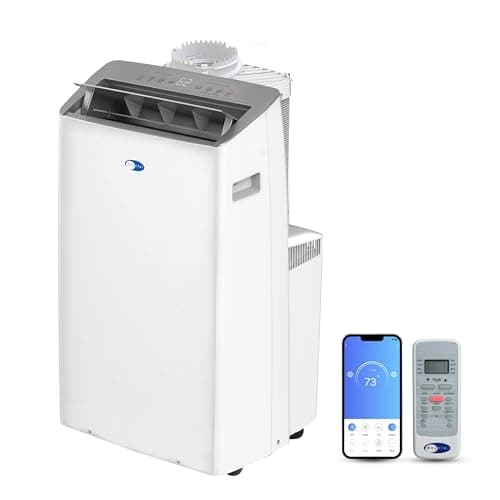
Whynter ARC-1230WN 12,000 BTU SACC Dual-Hose Inverter Portable AC
SHE Smart Cooling Value Score8.1/10Highest DOE efficiency and the only independently top-tested unit — its price trims seasonal value, but the composite still leads outright.
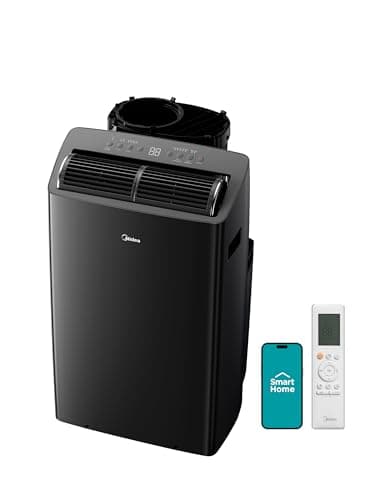
Midea Duo 14,000 BTU (12,000 BTU SACC) High Efficiency Inverter Portable AC (2026)
SHE Smart Cooling Value Score7.5/10Current-generation dual-hose inverter with the strongest paper specs in the Duo family; its price and zero independent testing keep it behind the Whynter.
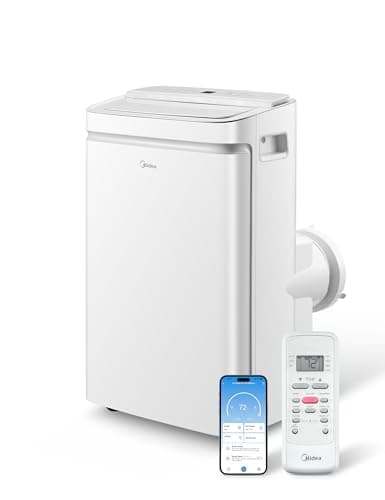
Midea Duo 10,000 BTU SACC Dual-Hose Inverter Portable AC
SHE Smart Cooling Value Score7.2/10Dual-hose inverter efficiency plus the quietest independently measured figure here (on its tested sibling); its price lifts cost-per-sq-ft.
BLACK+DECKER 8,000 BTU WiFi Portable AC
SHE Smart Cooling Value Score7.1/10Best seasonal value on the lowest price and dual voice support; the published 5,100 BTU SACC output constrains the efficiency component.
LG LP1023BSSM 10,000 BTU Smart Portable AC
SHE Smart Cooling Value Score6.2/10Accurate 10,000 BTU DOE and Energy Star certification at 450 sq ft; single-hose design, unconfirmed voice support, and its price cap the composite.
GE 8,000 BTU DOE Smart Portable AC
SHE Smart Cooling Value Score6.0/10Strong app intelligence via GE SmartHQ and no-drain convenience, but 8,000 BTU single-hose output and its price limit efficiency and value.
Smart Home Ecosystem Compatibility
Voice support is broad across this roundup. The Whynter ARC-1230WN, both Midea Duo units, the GE 8,000 BTU, and the BLACK+DECKER 8,000 BTU all support Alexa and Google Assistant natively. The LG LP1023BSSM connects through the LG ThinQ WiFi app; Alexa and Google support is not confirmed for this specific model, so verify it on LG's listing if voice control is essential. For any Alexa-only or app-only unit in a Google-primary household, a SwitchBot Hub 2 with an IR blaster adds Google-compatible voice control to any portable AC with an infrared remote — about $69.
Home Assistant integration is indirect for all six. None offers a published local API, so every control path routes through the manufacturer cloud. Community-maintained integrations exist — the SmartThinQ custom component for LG, the midea-ac-lan project for Midea, and the GE SmartHQ integration — but each depends on cloud availability rather than on-network local control. Buyers who require a fully local control path should not choose a portable AC in this class; a window unit driven by a SwitchBot Hub 2 IR blaster on the local network is the workaround.
Matter is not relevant to portable ACs yet. The Matter device type for air conditioners remains in draft, and no portable AC maker has announced certification; this is not expected to change before the end of 2026 on the current working-group schedule. Energy-data export is limited too: GE SmartHQ and LG ThinQ surface consumption data within their own apps, but none of the six expose API endpoints for a unified home-energy dashboard like Sense or Emporia Vue.
How Much Do Smart Features Actually Save?
Before the dollar figures, a note on how the ranking is built. The SHE Smart Cooling Value Score is a weighted composite that normalizes three factors onto a single 0-10 tier. The formula applies a 30 percent weighting to DOE efficiency, a 35 percent weighting to app intelligence, and a 35 percent weighting to seasonal value, then computes each unit's composite as a weighted calculation across those factors. Normalizing the factors set-relative keeps the ranking coherent: a higher DOE-efficiency coefficient delivers a higher composite, which produces the SHE Smart Cooling Value Score shown in the comparison chart and the rankings above.
Smart scheduling is where the WiFi premium pays for itself — but only if you configure it. Running a portable AC during occupied hours instead of continuously reduces summer electricity cost by 20 to 30 percent, calculated at 8 hours of daily runtime versus all-day operation at the $0.16 kWh national average. Time-based scheduling enables pre-cooling before you arrive rather than leaving the compressor running on an empty room, which yields most of the savings on a fixed-speed unit. Every unit here supports it through its app: LG ThinQ, the Midea app, GE SmartHQ, the Whynter app, and the BLACK+DECKER app.
The compressor type matters more than the schedule for long-use days. The inverter units — both Midea Duos and the Whynter ARC-1230WN — modulate compressor speed rather than cycling at full power, which the manufacturers rate at roughly 40 percent lower energy use than the fixed-speed federal standard at equal SACC. Compared to a fixed-speed unit cooled 8 hours a day, that running-cost gap delivers real savings over a 120-day summer. The three single-hose units (LG, GE, BLACK+DECKER) draw full power whenever the compressor runs, so their savings come almost entirely from scheduling rather than from the hardware.
The break-even math is straightforward. The smart-feature premium over a comparable non-WiFi unit is about $50 to $80, and scheduling produces roughly $29 to $53 of savings per summer at average rates. Most buyers recover the premium within one to two seasons, and buyers in high-rate states — California near $0.26 kWh, Hawaii near $0.37 kWh — recover it within a single summer relative to a continuously-running unit. Buyers who never set a schedule earn none of it; for them, a $150 to $200 non-WiFi unit cools identically.
When NOT to Buy
If your home already has central HVAC, a smart thermostat optimizes the whole system more efficiently than a portable unit ever could. An Ecobee or Nest at $130 to $249 handles scheduling, presence detection, and energy monitoring for every room. Add a portable AC only when the central system consistently undershoots one room or when you rent and thermostat control is shared. For the central-HVAC case, a Best Smart Thermostats 2026: 6 Ranked, Ecobee Wins investment delivers more efficiency per dollar.
If you need to cool more than one room at once, portable ACs do not scale economically. One unit per room, each drawing 900 to 1,150 watts, adds up faster than a single ductless mini-split sized for the same square footage. For two or more rooms, get a ductless installation quote before buying multiple portable units.
And the smart premium is only worth it if you will actually use the app. Buyers who want cold air and nothing else should look at non-WiFi portable ACs in the $150 to $200 range — the same cooling output, no app required, no premium paid for features that go unused.
Who Should Buy What
Who Should Buy What
| If you are… | Recommended pick |
|---|---|
Large-room and hot-climate buyers Your room runs up to 600 sq ft or you live somewhere regularly above 95°F — the only independently top-tested unit here has the cooling headroom. | Whynter ARC-1230WN 12,000 BTU SACC Dual-Hose Inverter Portable AC |
Long-use, efficiency-first buyers You cool a room 8 or more hours a day and want the lowest running cost — the dual-hose inverter recovers its premium over a season. | Midea Duo 10,000 BTU SACC Dual-Hose Inverter Portable AC |
Newest-hardware buyers You want the current 2026 Duo inverter with the quietest manufacturer rating in the class for rooms up to 550 sq ft — and accept paper specs over bench tests. | Midea Duo 14,000 BTU (12,000 BTU SACC) High Efficiency Inverter Portable AC (2026) |
Low-maintenance buyers You'd rather not empty a drain tank and you value a mature app ecosystem — the auto-evaporation no-drain design is built for it. | GE 8,000 BTU DOE Smart Portable AC |
Budget and small-room buyers Your room is under 350 sq ft and price is the deciding factor — the only genuine sub-$300 smart unit here. | BLACK+DECKER 8,000 BTU WiFi Portable AC |
Mainstream 450 sq ft buyers You want an accurately-rated single-hose unit from a major brand for a medium-to-large room — Energy Star certification and ThinQ scheduling. | LG LP1023BSSM 10,000 BTU Smart Portable AC |
Frequently Asked Questions
What is the best portable AC in 2026?
For raw cooling, the Whynter ARC-1230WN is the best portable AC we can defend with test data — TechGearLab ranked it number one of 9 units, and it covers up to 600 sq ft at 12,000 BTU SACC. The new Midea Duo 14K matches that SACC rating with current-generation inverter hardware but no independent testing yet. For a 450 sq ft room run long hours, the dual-hose Midea Duo 10K is the efficiency choice; on a budget, the BLACK+DECKER 8,000 BTU is the only genuine sub-$300 smart option.
Is the Midea Duo portable air conditioner worth it?
Usually, if you run long cooling days. The Midea Duo portable air conditioner line's dual-hose inverter design is the efficiency story: the Duo 10K is rated at roughly 40 percent lower energy use than the fixed-speed federal standard, and TechGearLab's Editors' Choice testing of the MAP12S1TBL sibling measured 55.4 dBA on high. The new Duo 14K adds 12,000 BTU SACC and a 42 dB manufacturer rating, though no lab has tested that 2026 model yet. If price matters more than the newest hardware, a prior-generation dual-hose Midea carries the same 12,000 BTU SACC rating for less.
What does a smart inverter portable A/C actually do?
A smart inverter portable A/C modulates its compressor speed continuously instead of cycling at full power, holding temperature with less electricity — Midea rates the Duo 10K at roughly 40 percent below the fixed-speed federal standard, and the Whynter ARC-1230WN pairs its NEX inverter with a dual-hose design. The smart half adds app scheduling and voice control, which cuts runtime another 20 to 30 percent when you cool only occupied hours. In this roundup the Whynter and both Midea Duos are inverter units; the LG, GE, and BLACK+DECKER are fixed-speed.
What is the quietest smart portable AC?
By measured data, the Midea Duo: TechGearLab recorded 55.4 dBA on high on the Duo's MAP12S1TBL sibling — the quietest independent figure in this roundup — against 58.4 dBA measured on the Whynter ARC-1230WN. On manufacturer claims only, the new Midea Duo 14K is rated as low as 42 dB and the LG LP1023BSSM markets 52 dB on low, but neither figure has been independently verified. Inverter units also tend to run quieter at partial load because the compressor rarely runs flat out.
What is the difference between DOE/SACC and ASHRAE BTU ratings?
ASHRAE is the older, inflated number used in marketing; SACC (the DOE standard required on EnergyGuide labels since 2017) runs 25 to 45 percent lower for single-hose units because it accounts for real-world temperatures and infiltration. Efficient dual-hose designs hold more of the label: the Whynter and the new Midea Duo 14K are both 14,000 BTU ASHRAE units that rate 12,000 BTU SACC. Always compare SACC or DOE figures — the LG and Midea Duo 10K are 10,000, the GE is 8,000 BTU DOE, and the BLACK+DECKER rates 5,100 BTU SACC.
Single-hose vs dual-hose portable AC — which is better?
Dual-hose units are more efficient. A single-hose unit draws cooled indoor air to cool its condenser and exhausts it outside, creating negative pressure that pulls warm air in through gaps; the SACC standard now penalizes this. Dual-hose units (the Whynter ARC-1230WN and both Midea Duos here) use a dedicated outdoor intake and avoid it. The gap matters most in very hot climates above 95°F or poorly-sealed rooms; for typical apartments, the single-hose LG, GE, and BLACK+DECKER perform acceptably.
Do these portable ACs work with Alexa and Google Home?
Five of the six support both natively: the Whynter ARC-1230WN, both Midea Duos, the GE 8,000 BTU, and the BLACK+DECKER 8,000 BTU. The LG LP1023BSSM connects via the LG ThinQ app, but Alexa and Google support is not confirmed for this specific model. For any unit without the assistant you use, a SwitchBot Hub 2 with an IR blaster (about $69) adds voice control to any portable AC with an infrared remote.
How much does a portable smart AC cost per month in electricity?
At 8 hours per day and $0.16 per kWh, an 8,000 BTU unit like the BLACK+DECKER or GE runs roughly $30 to $34 per month; a 10,000 BTU unit like the LG or Midea Duo 10K runs about $38; the 12,000 BTU SACC Whynter and Midea Duo 14K run about $44. Smart scheduling cuts those figures 20 to 30 percent by cooling only during occupied hours, and the inverter units (both Midea Duos, Whynter) save further by modulating rather than cycling at full power.
Can I schedule a portable AC to turn on before I get home?
Yes — all six support time-based scheduling through their apps: LG ThinQ, the Midea app for both Duos, GE SmartHQ, the Whynter app, and the BLACK+DECKER app. Set it to start cooling 30 minutes before your usual arrival so the room is comfortable when you walk in. None of these units support geofencing-triggered cooling natively, so schedules are time-based rather than location-based.
How many BTU do I need for a 400 sq ft room?
The rule of thumb is about 20 BTU per square foot using DOE/SACC ratings, so a 400 sq ft room needs roughly 8,000 BTU SACC. The LG (10,000 DOE) and Midea Duo 10K (10,000 SACC) cover it comfortably; the GE at 8,000 DOE is right at the line, and the BLACK+DECKER's 5,100 SACC falls short. Add 20 percent for large windows, direct sun, or high ceilings, which pushes the requirement toward 10,000 to 12,000 BTU — where the Whynter and Midea Duo 14K's 12,000 SACC has the headroom.
Does a portable AC work with Home Assistant?
Only indirectly. None of these six offers a local API or Matter certification — all control routes through the manufacturer cloud. Community-maintained Home Assistant integrations exist for LG ThinQ, Midea (via midea-ac-lan), and GE SmartHQ, but each depends on cloud availability. For buyers who need local control with no cloud dependency, none of these is the right choice; a window AC driven by a SwitchBot Hub 2 IR blaster on the local network is the workaround.
Bottom Line
Get the Whynter ARC-1230WN 12,000 BTU SACC Dual-Hose Inverter Portable AC if You need to cool a large room up to 600 sq ft or live somewhere regularly above 95°F — the only independently top-tested unit, with the most verified cooling.
Get the Midea Duo 10,000 BTU SACC Dual-Hose Inverter Portable AC if You run the AC 8 or more hours a day and want the lowest running cost — the dual-hose inverter earns back its premium in energy savings over a summer.
Get the Midea Duo 14,000 BTU (12,000 BTU SACC) High Efficiency Inverter Portable AC (2026) if You want the newest dual-hose inverter hardware with 12,000 BTU SACC for rooms up to 550 sq ft and accept manufacturer specs over bench tests.
Get the GE 8,000 BTU DOE Smart Portable AC if You want a low-maintenance, no-drain unit for a room up to 350 sq ft and value the GE SmartHQ ecosystem — convenience over capacity.
Get the BLACK+DECKER 8,000 BTU WiFi Portable AC if Your room is under 350 sq ft and price is the deciding factor — the only genuine sub-$300 smart unit.
Get the LG LP1023BSSM 10,000 BTU Smart Portable AC if You want an accurately-rated 450 sq ft single-hose unit from a major brand with Energy Star certification and scheduling — the balanced option.
If you have central HVAC, a smart thermostat optimizes your existing system more efficiently than a portable unit. See our smart thermostat roundup for Ecobee, Nest, and Aqara options that cut HVAC bills 10-23%.
Sources & Methodology
Methodology: SHE Smart Cooling Value Score — Formula: 0.30 × DOE_Efficiency + 0.35 × App_Intelligence + 0.35 × Seasonal_Value. Factors: DOE Efficiency (30%): Real-world cooling capacity and efficiency, scored on DOE/SACC rating, hose design, and inverter presence — normalized 0-10 across these six units. DOE/SACC ratings are used exclusively, never ASHRAE, which inflates capacity 25-45% versus real output. Dual-hose inverter units (Whynter, both Midea Duos) score highest because they avoid the single-hose infiltration penalty the SACC standard now measures; the BLACK+DECKER scores lowest on its published 5,100 BTU SACC. | App Intelligence (35%): Composite 0-10 across voice-assistant breadth (dual Alexa and Google scores higher than app-only), app maturity (GE SmartHQ and LG ThinQ are the most established platforms), and scheduling depth. Heavier weighting than efficiency reflects that smart control is the primary reason to pay the WiFi premium over a non-connected unit. Five of the six confirm both Alexa and Google; LG ThinQ's voice support is unconfirmed for this specific model and scored accordingly. | Seasonal Value (35%): First-summer cost per square foot of rated coverage — list price divided by DOE/SACC-rated sq ft, normalized set-relative across the six units and inverted so lower cost-per-sq-ft scores higher, with a +0.5 adjustment for inverter running-cost savings on long-use days. This rewards the units that deliver the most room coverage per dollar, which is the decision-relevant question when choosing between a bedroom unit and a large-room unit.
Expert review sources used in this analysis:
- This guide leans on independent lab testing where it exists and labels manufacturer figures as claims where it does not
- TechGearLab's portable AC test suite is the primary measured-data source
- It ranked the Whynter ARC-1230WN number one of 9 units tested (81/100) and reviewed the Midea Duo MAP12S1TBL sibling (55.4 dBA measured)
- Consumer Reports and RTINGS list that same MAP12S1TBL sibling, and Forbes tested the previous-generation MAP14S1TBL
- We do not transfer that sibling-model evidence to the 2026 Midea Duo 14K model, which no independent lab has tested yet
- The LG LP1023BSSM, GE 8,000 BTU DOE, and BLACK+DECKER 8,000 BTU have no product-specific independent review
- Their specifications therefore reflect manufacturer and Amazon listing data, with noise figures shown as manufacturer claims rather than measurements
- The SHE Smart Cooling Value Score applies a three-factor weighted formula: DOE efficiency (30%), app intelligence (35%), and seasonal cost-per-sq-ft (35%)
- The score is computed against August 2026 list pricing and DOE/SACC ratings
- DOE/SACC figures are used throughout; ASHRAE numbers are noted only to flag the 25-45% inflation
- This prose quotes no price of its own
- Any figure on this page comes from the product cards, which carry what our last check actually saw, and those figures move
- Every price and buy-link availability here was re-verified on 2026-08-21 against the prices we check daily
- The LG LP1023BSSM showed no buyable offer on that check, so it is ranked last rather than removed.
Nicholas Miles is the founder of SmartHomeExplorer and a longtime smart home enthusiast focused on helping everyday homeowners make better technology decisions. He researches, compares, and writes about products across security, climate, lighting, leak prevention, sensors, home energy, and automation, with an emphasis on real-world usefulness, ecosystem compatibility, reliability, privacy, and long-term value.
Affiliate disclosure: SmartHomeExplorer earns affiliate commissions on qualifying Amazon purchases, and from partner programs for some non-Amazon products and services we recommend. Our scoring methodology is independent of affiliate relationships.