
Seven pool heaters scored on 5-year ownership cost and smart-home integration — from Raypak Avia's built-in WiFi to Pentair's ecosystem workhorses.
Pool heaters cost $1,250 to $7,000 to buy, but $3,000 to $24,000 to run over five seasons — which means the sticker price is the small number. We compared seven 2026 residential pool heaters across gas, heat pump, and plug-in electric categories, and scored each through our own SHE Pool Heater 5-Year Cost Score that weights five-year fuel cost (40%), purchase price, install complexity, efficiency, and warranty-plus-smart-integration. The picks cluster by ecosystem: two Pentairs for IntelliCenter households, two Haywards for OmniLogic, a built-in-WiFi Raypak Avia that works as a standalone smart heater, a propane Jandy for pools without a gas line, and a $1,250 FibroPool heat pump for above-ground and small inground pools. The heat pumps top the efficiency rankings; the gas heaters win on heat-up speed.
Gas vs. Heat Pump vs. Electric: Which Pool Heater Type Fits Your Climate?
The single largest driver of 5-year cost is heater type, not brand. Gas heaters — natural gas or propane — heat fast and work in any weather, but their per-BTU fuel cost is permanent. Heat pumps extract heat from ambient air, which makes them dramatically cheaper to operate (roughly one-third the monthly cost, per DOE estimates), but they slow down below about 50°F ambient. Plug-in 120V heat pumps like the FibroPool are a third category: they install in an afternoon without an electrician or gas line, but the 35,000 BTU ceiling limits them to small or above-ground pools.
| Type | Typical Monthly Cost | Best Climate | Heat-up Speed | Install Cost |
|---|---|---|---|---|
| Natural gas | $260–600 | Any | Fast (1–2°F/hr on 20K gal) | $$$ (gas line + vent) |
| Propane | $400–800 | Any (rural common) | Fast | $$$ (tank + vent) |
| 220V heat pump | $50–320 | Warm/temperate | Moderate (<50°F ambient slows it) | $$$ (220V circuit + pad) |
| 120V heat pump | $30–120 | Warm | Slow (small-pool only) | $ (plug-in) |
Sources: DOE — Gas Pool Heaters, DOE — Heat Pump Swimming Pool Heaters, and Shasta Pool Supply's 2025 heat pump vs. gas cost analysis. If you pair a heat pump with a smart water leak detector at the pad and a smart pool monitor for water chemistry, the equipment room becomes a genuine smart zone — one of the reasons heat pumps play well with automation hubs.
Head-to-Head
Chart
 Smarthomeexplorer.com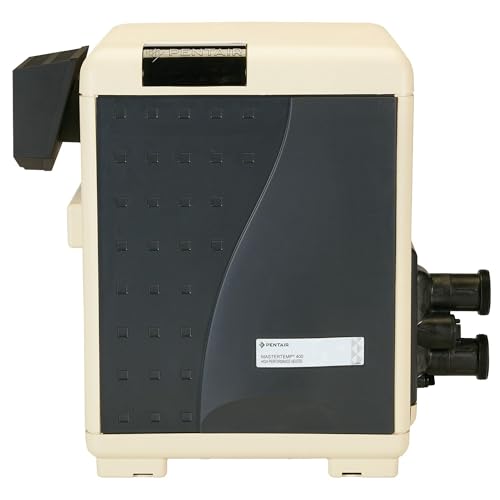
Pentair MasterTemp 400K BTU Natural Gas — Best Gas Heater for Pentair Ecosystems
Pentair MasterTemp 400K BTU Natural Gas
(Current Price, subject to change)
Ready to upgrade your home?
roborock Qrevo 2 Pro Robot Vacuum and Mop
See it on Amazon
ECOVACS DEEBOT X12 PRO Omni Robot Vacuum and Mop
See it on Amazon
Philips Wi-Fi Keypad Deadbolt with Handle
See it on Amazon
Sponsored listings from Amazon’s Sponsored Products for Creators program, kept apart from our reviews and rankings. How we make money
The MasterTemp 400 is the workhorse that sits on most automation-first Pentair pool pads for a reason: it plugs into IntelliCenter with none of the cross-brand wiring drama that trips up mixed ecosystems. The Pentair product page positions it as the standard for inground builds, and expert roundups from Leslie's Pool and Vita Filters' heater showdown consistently rank it a top-three gas pick. At 82% thermal efficiency it trails the condensing Raypak Avia at 87%, but the 400,000 BTU output heats a 20,000-gallon pool noticeably faster than the Raypak's 264K BTU — a trade most Pentair-ecosystem owners choose deliberately.
What We Love
- Full IntelliCenter / IntelliConnect integration — app-based scheduling slots in alongside Pentair pumps, lights, and valves with no wiring workarounds
- EPA low-NOx certified — outdoor pad installation in most U.S. markets without air-quality variances
- 400,000 BTU output — enough headroom to raise 20K gallons by 1.5–2°F per hour with cover
- Pentair service network — the one heater any Pentair-trained installer will recognize on sight
What Could Be Better
- No built-in WiFi — smart control requires a separate IntelliConnect controller
- 82% thermal efficiency trails condensing alternatives by ~5 points
- Gas line, vent, and 120V control wiring mean professional install is mandatory
The Verdict
If your pool already runs on Pentair IntelliCenter, the Pentair MasterTemp 400K BTU Natural Gas is the default answer. Cross-shop it against the condensing Raypak Avia below if you value fuel efficiency over BTU ceiling, and against the Pentair UltraTemp heat pump if you live in a climate that stays above 50°F most of your swim season.
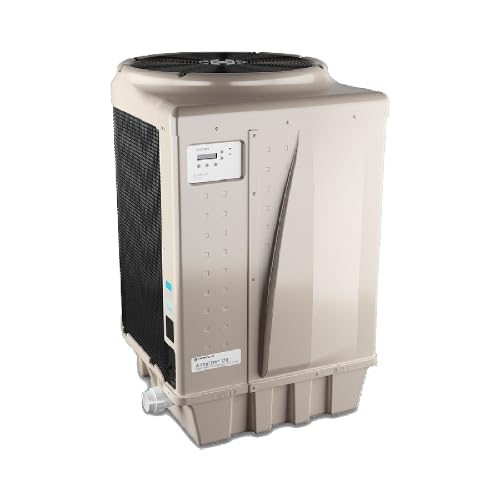
Pentair UltraTemp 140K/80K Heat Pump — Best Heat Pump for Pentair Ecosystems
Pentair UltraTemp 140K/80K Heat Pump
(Current Price, subject to change)
The UltraTemp 140 is Pentair's answer to the "can a heat pump also cool my pool" question, and unlike most heat-only competitors it carries a 80,000 BTU cooling rating alongside its 140K BTU heat rating. Reviewers found the heat-and-cool capability is the feature that pushes it out of the commodity heat-pump category — it lets a pool in Phoenix or Miami stay swimmable through July and August without running to 95°F. At COP 5.9, operating cost drops to roughly one-third of an equivalent gas heater per DOE estimates, which makes the UltraTemp's ~$7K purchase premium recoverable in 2–3 swim seasons for temperate-climate pools.
What We Love
- Dual heat + cool function — rare for residential pool heat pumps, extends the swim season on both ends
- COP 5.9 efficiency — roughly one-third the operating cost of an equivalent natural-gas heater per DOE modeling
- Titanium heat exchanger — resists corrosion in saltwater and heavily chlorinated pools
- Native IntelliCenter integration — scheduling sits alongside pumps, valves, and lights in one app
What Could Be Better
- Heat pump performance drops below 50°F ambient — slower heat-up in cold climates vs. gas
- No built-in WiFi; IntelliCenter controller still required for smart-home control
- Higher upfront cost than comparable gas heaters — multi-season ownership needed to recoup
The Verdict
For Pentair households in warm-to-temperate climates, the Pentair UltraTemp 140K/80K Heat Pump is the operating-cost winner. Heat + cool makes it especially appealing for Sun Belt pools that run warm in midsummer; cold-climate pools should pair it with a secondary gas heater or default to the MasterTemp. See the pool automation hub for the IntelliCenter pairing that unlocks app scheduling.
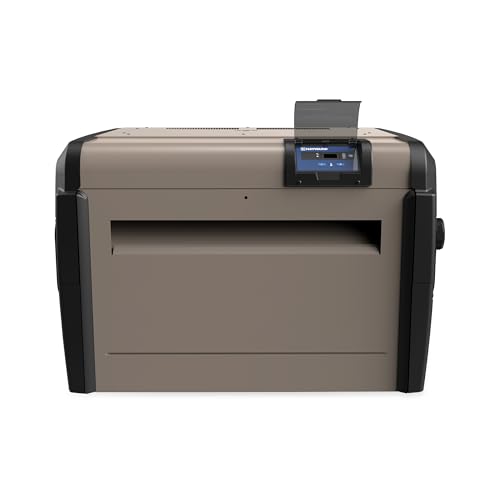
Hayward W3H400FDN Universal H-Series — Best Gas Heater for Hayward Ecosystems
Hayward W3H400FDN Universal H-Series
(Current Price, subject to change)
The W3H400FDN is the Hayward-ecosystem counterpart to the Pentair MasterTemp: 400K BTU, full automation integration, and a heat exchanger tier that edges its Pentair rival by a point or two on thermal efficiency (83–84% vs. 82%). Hayward's guidance is explicit that the H-bus 4-wire connection only plays well with OmniLogic — attempting to wire the W3H400FDN into a Pentair or Jandy automation board will damage the control circuit, according to Hayward's installer documentation. Reviewers consistently find the cupro-nickel heat exchanger outlasts copper in saltwater pools, which pushes this heater to the top of Hayward's saltwater-oriented builds.
What We Love
- Cupro-nickel heat exchanger — stronger corrosion resistance in saltwater than standard copper
- 83–84% thermal efficiency — the top of the standard (non-condensing) gas tier
- Hayward OmniLogic H-bus integration — full app control once paired with OmniLogic
- W3 current-generation designation — avoids legacy stock issues that still surface on older SKUs
What Could Be Better
- Incompatible with Pentair / Jandy automation — wiring into non-Hayward boards damages the controller
- No built-in WiFi; OmniLogic controller required for smart control
- Gas line, vent, and control wiring mean professional install is mandatory
The Verdict
For Hayward-ecosystem pools, the Hayward W3H400FDN Universal H-Series is the default gas pick. Cross-shop against the Raypak Avia if you value condensing efficiency over full OmniLogic integration, and against the Hayward HeatPro below if you're willing to trade heat-up speed for lower operating cost.
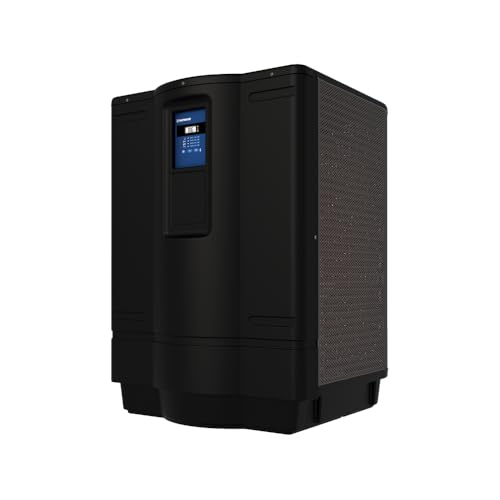
Hayward HeatPro W3HP21405T Heat Pump — Best Heat Pump for Hayward Ecosystems
Hayward HeatPro W3HP21405T Heat Pump
(Current Price, subject to change)
The HeatPro is Hayward's peer to the Pentair UltraTemp — similar COP, similar price, similar install footprint — with one meaningful difference: it's heat-only, with no cooling mode. Reviewers rate MCHX designs higher for long-term efficiency than older fin-tube exchangers because the micro-channel geometry moves more heat per pound of refrigerant, which is why the HeatPro lands a COP 5.7 rating despite being heat-only. For a Hayward pool that already runs OmniLogic, the HeatPro is the clean pairing; for a Hayward pool in a climate that also runs too hot in July, the Pentair UltraTemp's cooling function may be worth the brand switch.
What We Love
- COP 5.7 efficiency — substantial operating-cost savings over gas per manufacturer AHRI rating
- MCHX micro-channel heat exchanger — less refrigerant, better heat transfer than fin-tube designs
- Native OmniLogic integration — consistent control layer with the rest of a Hayward pool
- 140K BTU capacity — adequate for standard large inground pools per Hayward specs
What Could Be Better
- Heat-only — no cooling, unlike the Pentair UltraTemp alternative
- Heat pump performance drops below 50°F ambient
- Controller required for app control; no built-in WiFi
The Verdict
For Hayward pools in warm-to-temperate climates, the Hayward HeatPro W3HP21405T Heat Pump is the operating-cost pick that keeps the automation story inside one brand. See the pool automation hub for how OmniLogic handles heat-pump sequencing alongside VS pumps and lighting.
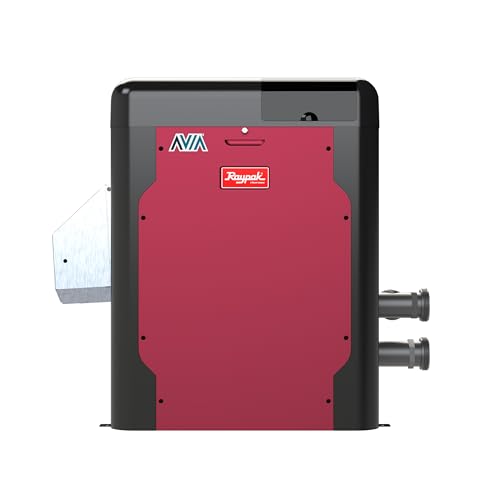
Raypak Avia 264K Natural Gas WiFi — Best Smart Pool Heater (Built-in WiFi)
Raypak Avia 264K Natural Gas WiFi
(Current Price, subject to change)
The Raypak Avia is the exception to the "you need an automation controller to smart-control your pool heater" rule. It's the only heater in this lineup with built-in WiFi and a first-party app (SmartPak 2), which means a Raypak-equipped pool can run app-based scheduling without a Pentair IntelliCenter or Hayward OmniLogic controller. The other quiet win is the 87% AFUE condensing design — reviewers found it runs noticeably cheaper month-over-month than 82–84% non-condensing competitors, and the 264K BTU is appropriate for pools up to roughly 30,000 gallons. The trade-offs are real: Raypak is standalone (no native Pentair or Hayward automation hooks), and for pools over 30K gallons you'd want the larger Avia 399K rather than this 264K variant.
What We Love
- Built-in WiFi + Raypak SmartPak 2 app — no external automation controller required for smart control
- 87% AFUE condensing gas efficiency — highest thermal efficiency in this lineup by a clear margin
- Lowest purchase price among full-size gas heaters — $3,391 undercuts Pentair / Hayward peers by $1K–$1.7K
- 120/240V input flexibility — simpler install matrix than 240V-only competitors
What Could Be Better
- 264K BTU ceiling — step up to the Avia 399K for pools over 30,000 gallons
- Standalone ecosystem — does not natively integrate with Pentair IntelliCenter or Hayward OmniLogic
- Condensing design requires proper condensate drain during install
The Verdict
For pool owners who want app control without a separate automation controller, the Raypak Avia 264K Natural Gas WiFi is the single most interesting product in the category. Pair it with a smart pool monitor for chemistry, a robot pool cleaner for walls, and a leak detector at the pad and you've built a fully smart pool without ever buying an automation controller.
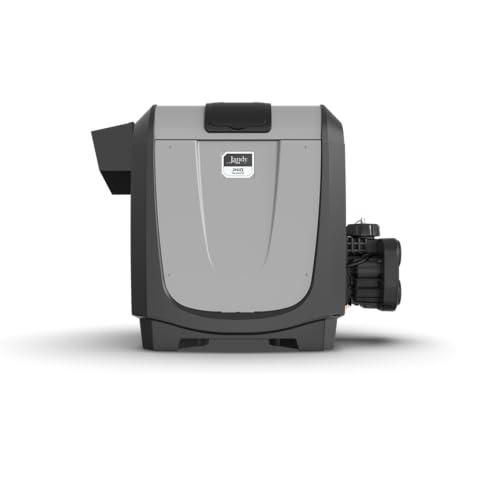
Jandy JXiQ 400K Propane — Best Propane Heater with Smart Connectivity
Jandy JXiQ 400K Propane
(Current Price, subject to change)
The JXiQ is the smart-connected variant of Jandy's JXi series: the "Q" suffix means the AquaLink board ships in the unit rather than being a $300 upgrade module you add later. For pools without a natural-gas line — common in rural and exurban sites — propane is often the only gas option, and the JXiQ is the cleanest smart pathway among propane heaters. The catch is pure fuel-cost math: propane at $3–$4 per gallon works out to substantially more per BTU than piped natural gas, which is why this heater's 5-year operating cost score is the lowest in the lineup even though the hardware itself is excellent. Reviewers rate the JXi platform among the most reliable gas heaters currently shipping.
What We Love
- Built-in iAquaLink connectivity — smart control without a separate upgrade module
- 400K BTU propane output — fast heat-up on larger pools when propane is the only option
- 84% thermal efficiency — top of the standard propane tier
- Jandy AquaLink ecosystem — app control consistent with other Jandy pool equipment
What Could Be Better
- Propane at $3–$4/gallon costs significantly more per BTU than natural gas — highest 5-year fuel cost in this lineup
- Propane-only SKU — natural gas version is a different model
- Copper heat exchanger (not cupro-nickel) — less robust in heavy saltwater use
The Verdict
For pools where propane is the only fuel option, the Jandy JXiQ 400K Propane is the cleanest smart-ready pick. If a natural-gas line runs within reasonable trenching distance of the pad, the Pentair MasterTemp, Hayward W3H400FDN, or Raypak Avia will all beat it on 5-year cost — propane's per-BTU premium is the one factor that's genuinely unfixable.
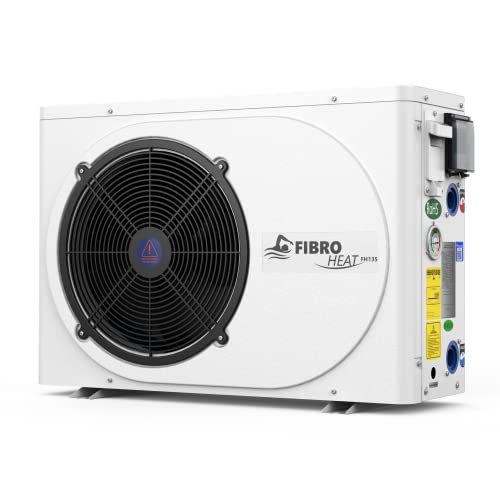
FibroPool FH135 Heat Pump — Best Budget Heat Pump for Small / Above-Ground Pools
FibroPool FH135 Heat Pump
(Current Price, subject to change)
The FH135 is the category outlier: a $1,250 plug-in heat pump that a homeowner can install without an electrician or plumber, compared to the $4–$7K pro-installed units everywhere else on this list. It's included because it's the only reasonable heating answer for above-ground pools and small inground pools under 12,000 gallons — the class of pool that the Pentair, Hayward, and Raypak lineups simply don't size down for. It's not a smart heater in any native sense: no WiFi, no app, no IntelliCenter integration. The smart-home story is limited to pairing it with a smart plug for on/off scheduling, which is a legitimate but modest win. For its intended use case it's a category champion; outside that use case it's badly overmatched.
What We Love
- 120V plug-in install — no electrician, no gas line, no pad — fastest setup in this lineup
- $1,249 purchase price — roughly a quarter to a sixth of the Pentair, Hayward, and Raypak heat-pump or gas options
- COP ~5.0 at 80°F — respectable efficiency for the budget tier
- All-electric operation — no propane delivery, no gas line permitting
What Could Be Better
- 35K BTU ceiling — cannot adequately heat a standard 20,000-gallon inground pool
- No native smart controls — integration limited to a third-party smart plug for on/off
- Budget-tier build vs. commercial-grade Pentair / Hayward / Raypak units
The Verdict
For above-ground pools and small inground pools under 12,000 gallons, the FibroPool FH135 Heat Pump is the realistic heating path. For anything larger or any pool where "smart" means more than a smart-plug schedule, step up to the Pentair UltraTemp, Hayward HeatPro, or Raypak Avia depending on which ecosystem the rest of the pool runs.
Smart-Home Integration: Which Heaters Work with Alexa, HomeKit, and Matter?
Pool heaters rarely talk to voice assistants directly — the integration story runs through the automation controller, not the heater. Here's how each heater reaches your smart-home ecosystem:
| Heater | Native App | Alexa | HomeKit | Matter | |
|---|---|---|---|---|---|
| Raypak Avia 264K Natural Gas WiFi | Raypak SmartPak 2 (built-in) | Via app routines | Via app routines | No | No |
| Pentair MasterTemp 400K BTU Natural Gas | Pentair IntelliCenter (controller) | Via IntelliCenter | Via IntelliCenter | No | No |
| Pentair UltraTemp 140K/80K Heat Pump | Pentair IntelliCenter (controller) | Via IntelliCenter | Via IntelliCenter | No | No |
| Hayward W3H400FDN Universal H-Series | Hayward OmniLogic (controller) | Via OmniLogic | Via OmniLogic | No | No |
| Hayward HeatPro W3HP21405T Heat Pump | Hayward OmniLogic (controller) | Via OmniLogic | Via OmniLogic | No | No |
| Jandy JXiQ 400K Propane | iAquaLink (built-in) | Via iAquaLink | Via iAquaLink | No | No |
| FibroPool FH135 Heat Pump | None | Smart-plug only | Smart-plug only | Smart-plug only | No |
The Raypak Avia 264K Natural Gas WiFi and Jandy JXiQ are the only two heaters in the lineup that ship app-ready out of the box — everything else routes through a separate pool automation controller. Matter support doesn't exist yet in this category; expect it to arrive on heat pumps first since electric devices are the easier Matter-onboarding target. If your broader outdoor setup includes a smart sprinkler controller, a leak detector, and a pool monitor, the heater becomes one node in a larger outdoor automation graph rather than a standalone device.
How We Score — SHE Pool Heater 5-Year Cost Score
The SHE Pool Heater 5-Year Cost Score is our proprietary 0-10 metric that measures the true 5-year cost of owning a residential pool heater, including purchase, install, fuel, efficiency, and warranty-plus-smart-integration.
Fuel cost dominates the formula (40% weight) because pool heaters cost $1,250–$7,000 to buy but $3,000–$24,000 to operate over five seasons — sticker-price comparisons are misleading for any heater you'll actually turn on.
Score = (Price-to-Capacity × 0.15)
      + (Install Complexity × 0.15)
      + (5-Year Fuel Cost × 0.40)
      + (Efficiency Tier × 0.15)
      + (Warranty & Smart Integration × 0.15)
Variables (each scored 0–10; higher is better):
- Price-to-Capacity — normalized BTU per purchase dollar (gas) or COP-adjusted effective BTU per dollar (heat pump). Source: Amazon current prices + manufacturer spec-sheet BTU + AHRI COP.
- Install Complexity — plug-in 120V (10), 220V with pad (5–6), gas line + vent + 120V control (3–4). Source: manufacturer manuals + installer consensus (Leslie's Pool, Riverpools, DOE).
- 5-Year Fuel Cost — estimated operating cost for a 20,000-gallon inground pool heated to 82°F across a 6-month season, across 5 years, normalized against the range of products. Cheaper → higher. Source: DOE Energy.gov, Shasta Pool Supply 2025 data, manufacturer AFUE/COP.
- Efficiency Tier — Gas: 80% AFUE → 5.0, 84% → 6.5, 87% → 7.5, 90%+ → 9.0. Heat pump: COP 4.0 → 6.5, 5.0 → 8.0, 5.5 → 8.8, 6.0 → 9.5. Source: manufacturer spec sheets + AHRI ratings.
- Warranty & Smart Integration — base 5.0 for standard 2-year warranty. +3 for built-in WiFi / app. +2 for first-party automation integration. +1 for extended warranty. −2 if no smart pathway. Source: manufacturer warranty + automation compatibility from the pool automation hub.
SHE Pool Heater 5-Year Cost Score
Scores of 8.0+ indicate excellent all-around 5-year value; 6.0–7.9 indicates a solid ecosystem-specific pick; below 6.0 indicates hardware that's strong on capacity or smart features but carries an operating-cost drag that hurts long-run ROI. For the sibling controller-focused metric that evaluates Pentair IntelliCenter vs. Hayward OmniLogic vs. Jandy AquaLink themselves, see our SHE Pool 5-Year Ownership Value Score.
(SmartHomeExplorer editorial analysis — methodology)
Pool Heater Sizing: How Big Does Your Heater Need to Be?
Heater sizing is the single most common installation mistake, and it cuts both ways: undersized heaters run constantly without ever reaching temperature, while oversized heaters short-cycle and waste fuel. The DOE rule of thumb for pool heater sizing is based on surface area (not gallons), delta-T (target minus starting temp), and a wind factor.
| Pool Size | Climate / Use | Recommended BTU | This Lineup Match |
|---|---|---|---|
| Above-ground / <12K gal | Warm climate, occasional use | 35K–55K | FibroPool FH135 |
| 15K–20K gal inground | Temperate, seasonal heat | 140K BTU heat pump / 264K BTU gas | Pentair UltraTemp, Hayward HeatPro, Raypak Avia |
| 20K–30K gal inground | Any climate, regular use | 264K–400K BTU | Raypak Avia, Pentair MasterTemp, Hayward W3H400FDN, Jandy JXiQ |
| 30K–50K gal inground | Large pool, fast heat-up | 400K BTU gas | Pentair MasterTemp, Hayward W3H400FDN, Jandy JXiQ |
| Any inground in cold climate | Year-round heat | 400K BTU gas (primary) + heat pump (shoulder) | Combine MasterTemp + UltraTemp |
Professional sizing using the surface-area × delta-T × wind-factor formula is worth the hour of a pool installer's time before buying — per Leslie's Pool guidance, the sizing error most owners make is choosing by pool gallons rather than surface area and local wind exposure. Heat pumps also need outdoor clearance for airflow; the Pentair UltraTemp, Hayward HeatPro, and FibroPool FH135 each spec a minimum clearance footprint in their install manuals.
FAQ
How much does it cost to run a pool heater per month?
According to DOE estimates and Shasta Pool Supply 2025 cost data, residential pool heater monthly costs range from $50–$320 for 220V heat pumps, $260–$600 for natural gas, and $400–$800 for propane (based on a 20,000-gallon inground pool, 82°F target, 6-month swim season). Heat pumps are dramatically cheaper to run month-over-month, but take longer to heat up and lose efficiency below ~50°F ambient. Gas heaters cost more per month but heat faster and work in cold weather.
What's the difference between a pool heater and a heat pump?
A pool heater typically means a gas or propane unit that burns fuel to heat water directly via a heat exchanger. A pool heat pump is an electric unit that extracts ambient heat from outdoor air and transfers it to pool water using a refrigerant cycle, similar to a home HVAC heat pump. Heat pumps are roughly three times more energy-efficient than gas on a per-BTU basis, but slow down below 50°F ambient and cannot match gas heat-up speed.
How long do pool heaters last?
Well-maintained residential pool heaters typically last 8–12 years for gas units and 10–15 years for heat pumps, per DOE estimates and manufacturer warranty data. Heat pumps tend to outlast gas heaters because there's no combustion chamber to fail. Lifespan is heavily influenced by water chemistry — aggressive pH, high chlorine, or saltwater dramatically shortens heat-exchanger life on copper units. Cupro-nickel and titanium exchangers (Hayward W3H400FDN, Pentair UltraTemp) last longer in saltwater pools.
What size pool heater do I need for my 15,000-gallon pool?
For a 15,000-gallon inground pool in a temperate climate with moderate wind exposure, a 140K BTU heat pump or a 264K BTU gas heater is typical. The exact sizing depends on surface area (not just gallons), target delta-T, and wind factor per DOE guidance. Professional sizing from a pool installer using the surface-area formula is strongly recommended before buying — gallons alone is a common sizing error.
Can I control my pool heater with my phone?
Yes, via one of three pathways. Built-in WiFi heaters like the Raypak Avia 264K Natural Gas WiFi and Jandy JXiQ 400K Propane ship app-ready out of the box. Heaters without built-in WiFi — Pentair MasterTemp 400K BTU Natural Gas, Pentair UltraTemp 140K/80K Heat Pump, Hayward W3H400FDN Universal H-Series, and Hayward HeatPro W3HP21405T Heat Pump — require a separate automation controller (Pentair IntelliCenter, Hayward OmniLogic, or Jandy iAquaLink) to reach the app layer. The FibroPool FH135 Heat Pump has no native smart controls; smart-home integration is limited to pairing with a smart plug for on/off scheduling.
Are heat pump pool heaters worth it?
Yes, for pools in climates where ambient temperatures stay above 50°F during the swim season. Per DOE and Shasta Pool Supply 2025 cost modeling, heat pump operating costs run roughly one-third that of natural gas and roughly one-fifth that of propane, which means a $3,000–$10,000 cumulative savings over 5 years for temperate-climate pools. The trade-off is upfront cost ($6,999 for the Pentair UltraTemp 140K/80K Heat Pump or Hayward HeatPro W3HP21405T Heat Pump versus $3,391–$5,099 for gas equivalents) and slower heat-up in cold weather.
When NOT to Buy a Smart Pool Heater
Skip this upgrade if your pool is already heated reliably by sun alone in your climate and you only swim in peak summer — the fuel and install cost never pays off for two-month-a-year pools. Skip a full-size ($3K+) heater if your pool is above-ground or under 12,000 gallons, where the FibroPool FH135 is the correct fit rather than a category-mismatched Pentair or Hayward. And skip a propane-only heater like the JXiQ if a natural-gas line runs within reasonable trenching distance of the pad — the per-BTU fuel-cost penalty of propane is unrecoverable over 5 years of ownership.
The Bottom Line
The short version of who should buy what:
- Raypak Avia 264K Natural Gas WiFi — the standalone smart pick. Built-in WiFi means no automation controller required.
- Pentair UltraTemp 140K/80K Heat Pump — the Pentair-ecosystem operating-cost winner in warm/temperate climates.
- Hayward HeatPro W3HP21405T Heat Pump — the Hayward-ecosystem operating-cost winner.
- Pentair MasterTemp 400K BTU Natural Gas — the Pentair gas workhorse for cold-climate or fast-heat pools.
- Hayward W3H400FDN Universal H-Series — the Hayward gas workhorse, especially on saltwater pools.
- Jandy JXiQ 400K Propane — the cleanest smart pick for propane-only sites.
- FibroPool FH135 Heat Pump — the budget plug-in pick for above-ground and small inground pools.
For the controller question — which automation platform to run — start with the pool automation hub. For the adjacent smart pool stack, see our guides on pool monitors for water chemistry and robot pool cleaners.
Get the Raypak Avia 264K Natural Gas WiFi if you want a smart pool heater that works without buying a separate $300+ automation controller. Skip the Raypak Avia 264K Natural Gas WiFi if your pool already runs on Pentair IntelliCenter or Hayward OmniLogic — the ecosystem-native gas heaters integrate more cleanly, and the Raypak's standalone WiFi becomes redundant.
Sources & Methodology
This guide aggregates product data, specifications, and efficiency ratings from the U.S. Department of Energy's Gas Pool Heaters and Heat Pump Swimming Pool Heaters guides, Shasta Pool Supply's 2025 heat pump vs. gas cost analysis, Leslie's Pool Supplies heater guidance, Vita Filters' heater showdown comparing Raypak / Hayward / Pentair, and manufacturer spec sheets including the Pentair MasterTemp product page. All seven picks are evaluated through the SHE Pool Heater 5-Year Cost Score, our proprietary 0-10 rubric that weights 5-year fuel cost (40%), purchase price, install complexity, efficiency, and warranty-plus-smart-integration. See our full methodology for how consensus scores are aggregated and how editorial independence is maintained.
Written by Nicholas Miles. Nick has covered smart home technology since 2024 and founded SmartHomeExplorer.com to aggregate consensus ratings from 2046 editorial sources across 1238 smart home products and 377 buying guides to surface the true consensus picks for every category.
Disclosure: SmartHomeExplorer.com earns affiliate commissions from qualifying Amazon purchases. This doesn't influence our rankings — our methodology is published at /methodology.