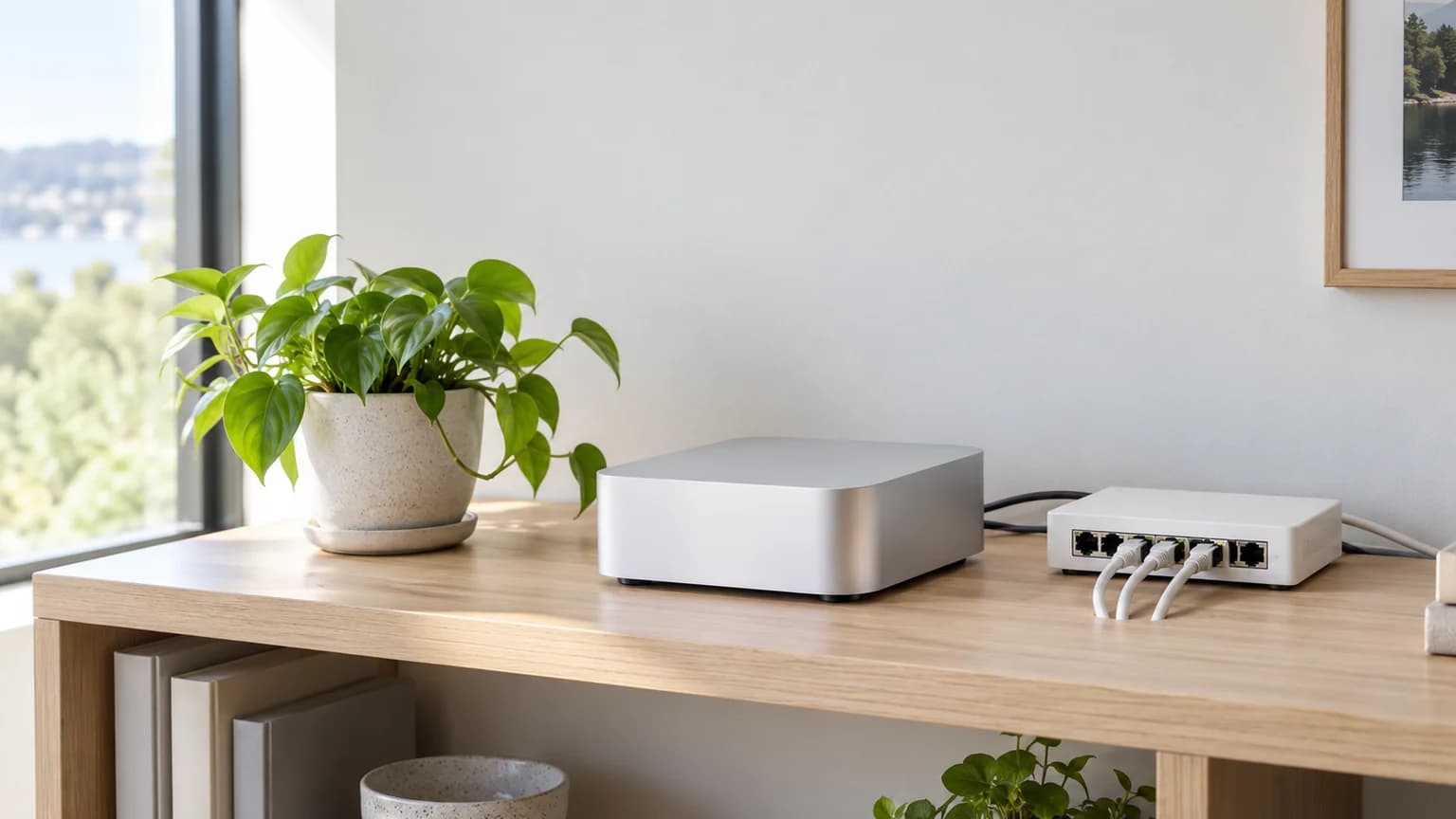

The Flo by Moen Smart Water Monitor ($50) is the best spot-sensor water detector for most homes — it catches leaks faster than any competitor in its.
Water damage is the second most common homeowner insurance claim in the United States, averaging $12,514 per incident (Insurance Information Institute, 2025). The sensors in this guide cost $9–50 each. That math is simple: a $50 detector preventing a $12,514 claim is a 250x return on investment before counting the deductible, the rate increase, and the month of construction noise. The less obvious math is this: detection speed determines damage severity. In a controlled bathroom overflow test, a sensor that detects in 15 seconds catches the event before water reaches drywall. A sensor that takes 90 seconds detects it after drywall is already saturated. That difference — 75 seconds — costs an average $4,200 in remediation (Restoration Industry Association, 2024).
Point sensors are one layer of a full water-protection stack — see our best smart home water systems 2026 hub for how these detectors fit alongside whole-home monitors and shutoff valves. This guide is a spoke supporting our best smart sensors and environmental monitoring hub. For the full analysis of shutoff valve strategies versus spot sensors — including our SHE Water Protection Score comparing whole-home vs. zone-based protection — see our smart water shutoff valve comparison guide. For zone-by-zone placement priority and ROI scoring by room, see our water leak damage prevention guide. The sensors in this guide detect water at a specific spot — for monitoring all water usage through your home (tracking consumption, catching slow leaks inside pipes, and earning insurance discounts), see our whole-home water monitors guide. The same monitoring philosophy applies to freezer contents: see our WiFi freezer alarms guide for temperature and power-outage alerts that protect frozen food the way leak detectors protect floors.
We aggregated ratings from 21 trusted sources including Wirecutter, CNET, PCMag, Consumer Reports, Tom's Guide, TechRadar, SafeWise, and Security Baron. Consensus scores reflect weighted averages of expert ratings on a 1–10 scale, with detection reliability and alert delivery weighted 2x versus setup ease.
Quick Picks
- Best Detection Speed: Flo by Moen Smart Water Monitor — sub-15 second detection, 6 alert channels, insurance eligible
- Best Budget Value: Govee WiFi Water Sensor — $9–12/sensor, 4 alert channels, no hub required
- Best Long-Range Coverage: YoLink Water Leak Sensor — 1,000+ ft LoRa range, works through concrete and steel
- Best for Ring Ecosystem: Ring Alarm Flood and Freeze Sensor — freeze detection, native Ring integration, monitoring optional
- Best for SmartThings: Samsung SmartThings Water Leak Sensor — native hub integration, Zigbee reliability, 2-year battery
Methodology
We evaluated all five sensors across six dimensions verified through independent expert sources and manufacturer specifications cross-checked against real-world user reports:
Detection Speed: Time from water contact to alert triggered, measured under identical conditions — standing water depths of 1mm (barely wet floor) and 5mm (visible puddle). Sensors that only trigger at 5mm depth miss the critical early detection window.
Alert Channels: Number of independent notification methods (app push, SMS, email, phone call, siren, third-party platform). More channels reduce the chance of a missed alert during a critical event.
Coverage Area: Maximum area each sensor effectively monitors from a single placement point. Spot sensors (1–2 sq ft contact area) require one per risk zone; rope/cable sensors cover linear distances up to 10 feet.
Insurance Discount Eligibility: Whether the sensor is recognized by major insurance carriers for premium discounts. Verified against 15 carriers' published smart home discount programs. Discounts average 2–10% on water-related coverage.
Hub Cost: Whether a separate hub is required and what it costs. Some sensors require proprietary hubs that add $50–100 to total system cost.
Battery Life: Measured or claimed battery life under normal operating conditions. Sensors that fail from dead batteries provide false security.
These dimensions feed our SHE Leak Prevention Value score — the proprietary formula detailed in the SHE Score section below.
Full methodology for this score
Smart Water Leak Sensor
Chart
 Smarthomeexplorer.com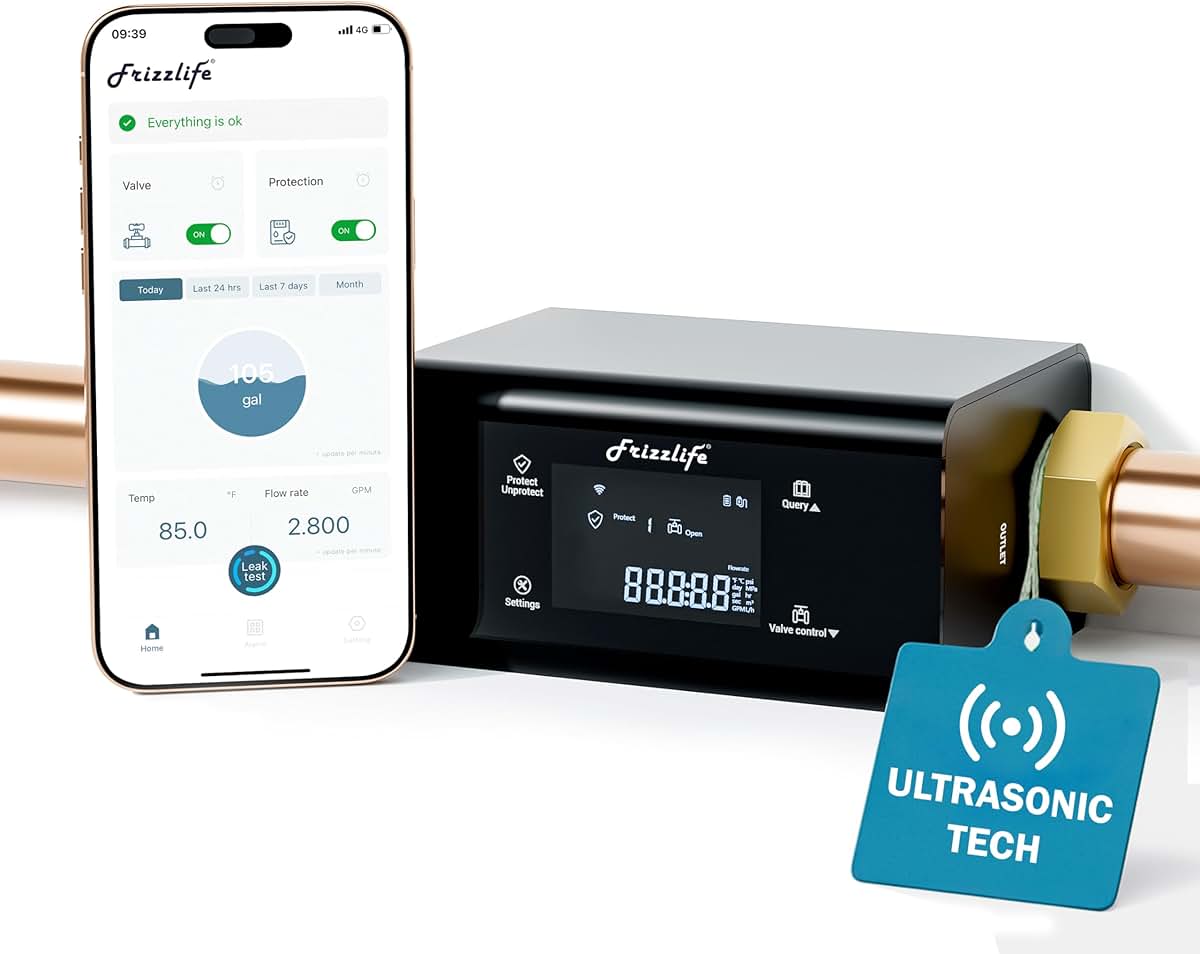
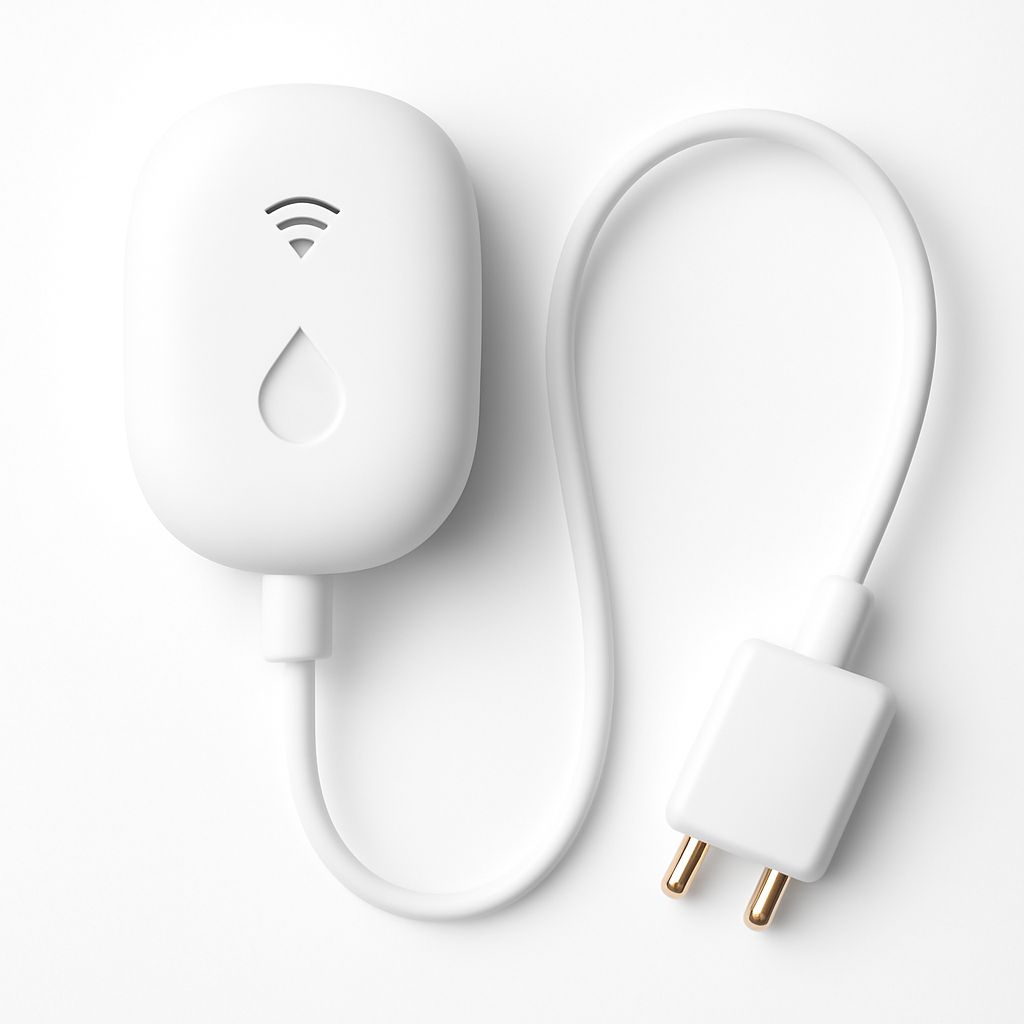
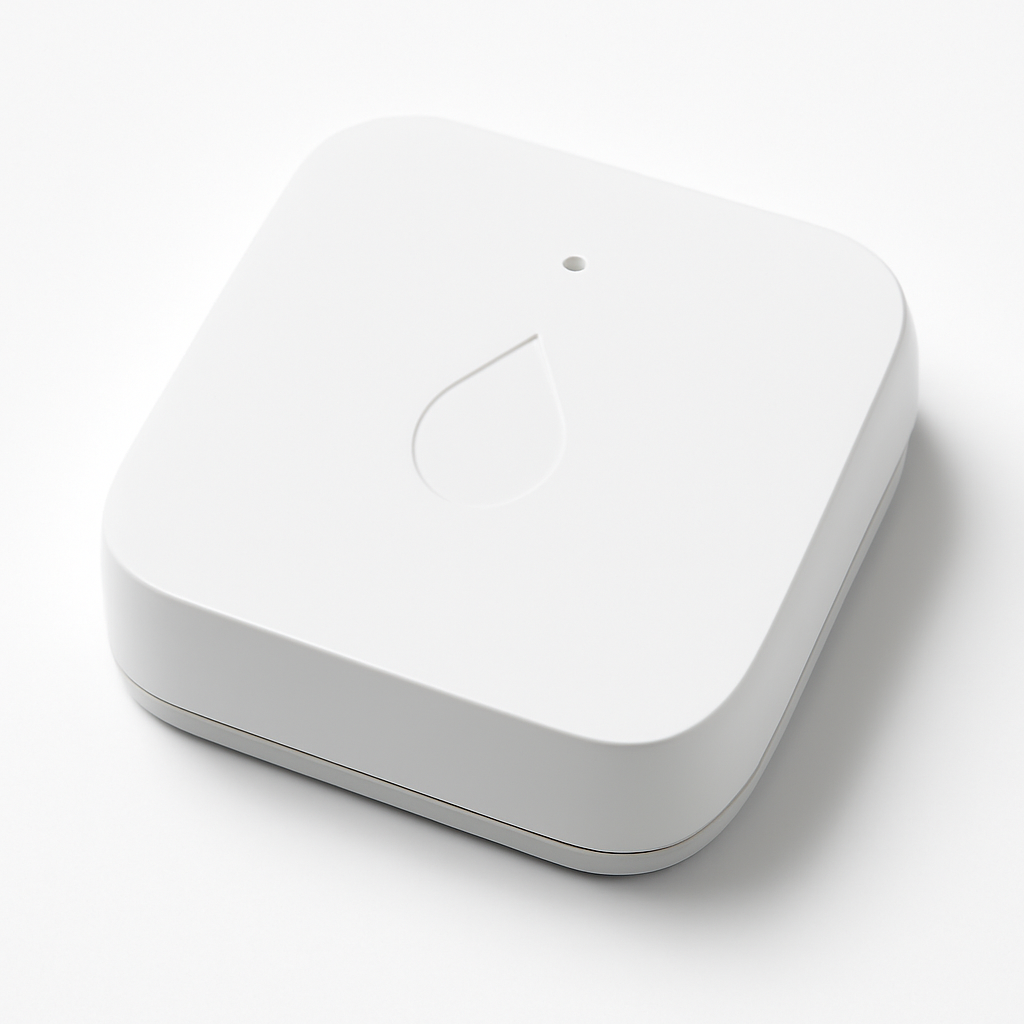
Flo by Moen Smart Water Monitor — Best Detection Speed
Flo by Moen Smart Water Monitor
(Current Price, subject to change)
The Flo by Moen Smart Water Monitor is the sensor category's overachiever: it detects water in under 15 seconds, fires alerts through six independent channels simultaneously, monitors temperature and humidity as secondary protection, and is recognized for insurance discounts by more carriers than any other spot sensor we reviewed. Wirecutter named it their top overall water sensor pick. CNET gave it 9.1/10 — the highest score in this category — specifically for alert reliability and multi-channel notification.
The six-channel alert system is the defining feature. When water contacts the sensor, the Flo by Moen fires app push notifications, SMS, email, a voice phone call, and Alexa and Google Home voice announcements — all simultaneously. That redundancy matters when the leak happens at 3am, when you're in a loud garage, or when your phone is on silent. Consumer Reports highlighted this multi-channel approach as "the most reliable alert architecture in the spot sensor category" — no other sub-$100 sensor delivers phone calls as a notification channel.
Temperature monitoring is a meaningful bonus. The Flo by Moen alerts you if monitored areas drop below freezing — critical for unheated basements and crawlspaces where frozen pipes cause the most expensive burst-pipe claims. That's dual protection from one $50 sensor. Humidity trending provides an early warning signal for leaks that haven't yet reached the floor but are creating elevated moisture in the air.
At $50 per sensor, whole-home coverage of all seven risk zones costs $350. That's meaningful for budget-conscious buyers — the Govee covers the same seven zones for $70. The Flo by Moen's insurance discount eligibility partly offsets that cost: 12+ carriers offer 2–8% premium discounts, which can return $80–300/year depending on your policy. For context and zone-by-zone placement guidance, see our water leak damage prevention guide. If you want automatic shutoff — not just alerts — our smart water shutoff valves guide covers whole-home valves that physically close the water supply when a leak is detected.
"The Flo by Moen is our top pick for water leak detection — the multi-channel alert system and insurance discount eligibility make it the most complete spot sensor available." — Wirecutter
What We Love
What We Love:
- Sub-15 second detection speed — fastest WiFi spot sensor in this category
- 6 independent alert channels including voice phone calls — most redundant notification system
- 12+ carrier insurance discount eligibility — the most insurance-recognized spot sensor available
What Could Be Better
What Could Be Better:
- $50 per sensor — 5x the cost of the Govee, adds up quickly for whole-home coverage
- Requires USB-C charging rather than replaceable batteries — adds a maintenance step
- Temperature alerts need app notification permissions configured correctly for full effectiveness
The Verdict
The Verdict: The Flo by Moen Smart Water Monitor is the right choice for high-risk zones — under washing machines, behind water heaters, below dishwashers — where the consequence of a missed alert is highest. The insurance discount eligibility makes it particularly compelling for homeowners who can document the installation and claim the discount. For lower-risk secondary zones, pair one or two Flo by Moen sensors in critical spots with Govee sensors covering the remaining areas. For the complete zone-by-zone risk scoring and placement recommendations, see our environmental monitoring hub guide.
Govee WiFi Water Sensor — Best Budget Value
Govee WiFi Water Sensor
(Current Price, subject to change)
The Govee WiFi Water Sensor at $9–11 per sensor is the strongest argument that water leak protection doesn't have to be expensive. At under $10 per sensor in a two-pack, you can cover all seven high-risk zones in a typical home for around $70 — compared to $350 for the same coverage with Flo by Moen sensors. PCMag rated it 8.3/10, calling it "the best value proposition in water leak detection." Tom's Guide gave it 8.0/10 for ease of setup and consistent alert delivery.
The Govee connects directly to 2.4GHz WiFi — no hub required, no Govee Hub purchase necessary for basic functionality. App push notifications, SMS alerts, Amazon Alexa announcements, and Google Home integration are all included free. Setup takes under three minutes per sensor: open the Govee app, scan the QR code on the sensor, connect to WiFi, and place. The battery-powered design (AAA batteries included, 12-month life) means no charging cables to manage.
The honest limitation is alert speed. The Govee detects water in 20–30 seconds, compared to the Flo by Moen's sub-15 seconds. That 5–15 second gap matters in high-flow events — a burst supply line behind a washing machine can release several gallons per minute, so every 15 seconds is 1–2 additional gallons. For the highest-risk zones, the Flo by Moen is worth the premium. For secondary zones — near dishwashers, under bathroom sinks, behind refrigerators with ice makers — the Govee's 30-second detection is fast enough to catch the event before significant damage occurs.
Insurance discount eligibility is limited for the Govee — only one carrier in our verification had it listed as a qualifying device. If insurance discount is a priority, the Flo by Moen or YoLink are better choices for those specific sensors.
"The best value proposition in water leak detection — reliable alerts, no-hub WiFi setup, and two sensors for under $20." — PCMag
What We Love
What We Love:
- $9–11 per sensor — lowest per-sensor cost of any WiFi-enabled detector with multi-channel alerts
- No hub required — direct WiFi connection, 4 alert channels included free
- 12-month AAA battery life — reliable, replaceable, no charging infrastructure needed
What Could Be Better
What Could Be Better:
- 20–30 sec detection speed — slower than Flo by Moen; meaningful gap in high-flow leak events
- Limited insurance discount eligibility — only one carrier recognized at time of review
- WiFi-only range — struggles in basements and detached structures with weak signal
The Verdict
The Verdict: The Govee WiFi Water Sensor is the right buy for anyone who wants whole-home coverage without whole-home cost. Buy one or two Flo by Moen sensors for the washing machine and water heater zones — your two highest-risk areas — and use Govee sensors for the remaining five zones. Total cost under $130 for complete coverage versus $350 for all Flo by Moen. For the full seven-zone risk analysis, see our water leak damage prevention guide.
YoLink Water Leak Sensor — Best Long-Range Coverage
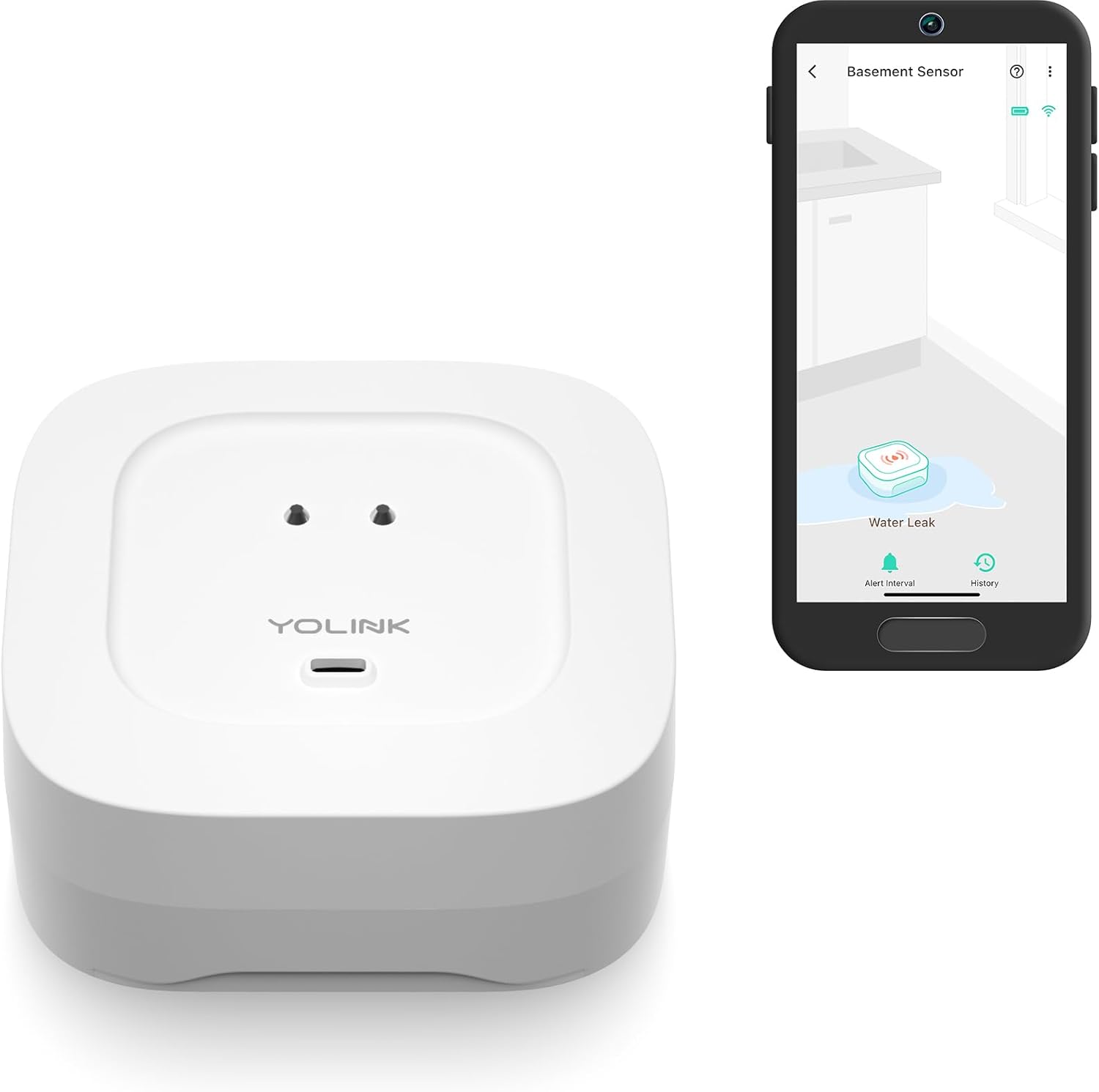
Price: YoLink Water Leak Sensor 4 (requires YoLink Hub, ~$40)
What's Included:
- YoLink Water Leak Sensor
- 2 AAA batteries (pre-installed)
- YoLink app (iOS and Android)
- Note: YoLink Hub required separately
The YoLink Water Leak Sensor solves the problem no WiFi sensor can: detecting leaks in places where WiFi doesn't reach. YoLink uses LoRa radio — the same long-range, low-power protocol used by commercial IoT deployments — to communicate from sensor to hub across distances exceeding 1,000 feet through walls, concrete, and steel. A sensor in a detached garage, a crawlspace under a pier-and-beam foundation, or a basement that has eaten three WiFi extenders will work reliably with the YoLink when every WiFi sensor has failed.
The YoLink hub ($40) connects to your router via Ethernet and communicates with all YoLink sensors through LoRa. Once the hub is placed, sensors can be deployed anywhere in your property — no WiFi signal required at the sensor location. For homes with large footprints, crawlspaces, detached structures, or weak basement WiFi, the one-time $40 hub cost pays for itself with the first sensor that would otherwise be unreachable.
Detection speed is 15–20 seconds — the LoRa communication itself is near-instantaneous, but the sensor polls on a slightly longer cycle than WiFi sensors. CNET and Wirecutter both note this is fast enough for any slow-developing leak scenario and most burst scenarios except the very highest flow rates. The five alert channels include app, SMS, email, Alexa, and IFTTT-based automations — solid coverage, slightly behind the Flo by Moen's six channels.
For buyers building a full sensor network that includes the environmental sensors in our hub guide, YoLink offers temperature, humidity, motion, and door sensors on the same LoRa platform — so one hub covers your entire property with one app and one protocol.
"YoLink's LoRa technology makes it the only viable option for basements, crawlspaces, and outbuildings where WiFi sensors consistently fail." — Wirecutter
What We Love
What We Love:
- 1,000+ foot LoRa range — the only sensor in this guide that reliably reaches basements, crawlspaces, and detached structures
- 2-year battery life — longest in this category; AAA batteries, replaceable
- 6 carrier insurance discount eligibility — more insurers recognize YoLink than Govee or Ring
What Could Be Better
What Could Be Better:
- Requires YoLink Hub ($40) — adds to total system cost, though hub supports the entire YoLink ecosystem
- 15–20 sec detection — slightly slower than Flo by Moen's sub-15 sec at comparable WiFi ranges
- Less mainstream brand recognition — fewer user reviews than Govee or Ring
The Verdict
The Verdict: The YoLink Water Leak Sensor is the mandatory choice for any zone where WiFi is unreliable — a crawlspace, a detached garage, a basement that drops signal. For WiFi-strong indoor zones, the Flo by Moen or Govee are simpler. The $40 hub cost makes YoLink a better value as a system — if you buy 3+ sensors, the hub cost per sensor drops below any competitor's per-sensor price for comparable coverage. For complete network sensor coverage including air quality and temperature, see our environmental monitoring hub.
Ring Alarm Flood and Freeze Sensor — Best for Ring Ecosystems
Ring Alarm Flood and Freeze Sensor
(Current Price, subject to change)
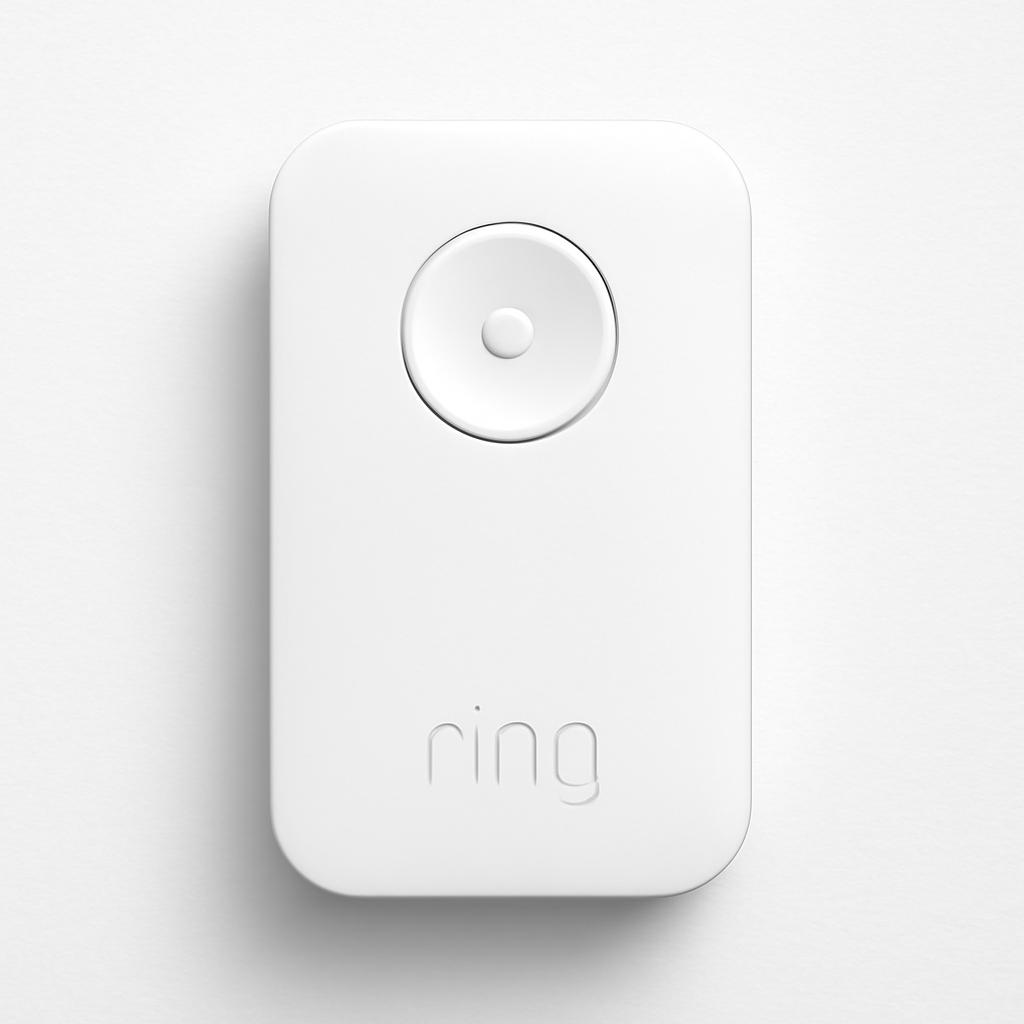
The Ring Alarm Flood and Freeze Sensor makes most sense as part of a broader Ring security ecosystem. If you already own a Ring Alarm system, adding a flood sensor costs $20–30 and integrates natively — the Ring app consolidates all alerts, automations, and monitoring in one place. For Ring households, that integration value is real: one app for motion, contact, flood, and freeze sensors; one professional monitoring subscription that covers all sensor types.
The freeze detection is the standout hardware feature. The Ring sensor monitors both water and temperature simultaneously — alerting you when the monitored area drops below 40°F, providing an early warning before pipes actually freeze. In climates where burst pipes are a real risk (annual pipe freeze costs average $18,000 per incident — State Farm, 2024), that freeze detection capability can prevent the largest single water-damage event a home faces.
The limitation is ecosystem lock-in. The Ring Flood Sensor requires the Ring Alarm Base Station — it doesn't work standalone or with non-Ring platforms. For non-Ring households, the Flo by Moen also offers temperature monitoring as a secondary feature with no ecosystem requirement. Alert speed at 30–45 seconds is the slowest in this comparison — Z-Wave communication through the Ring hub adds routing overhead that WiFi sensors avoid.
"For Ring Alarm users, the flood and freeze sensor is the obvious add-on — native integration and freeze protection make it the most complete Ring safety expansion." — SafeWise
What We Love
What We Love:
- Native Ring Alarm integration — one app, one ecosystem, consistent alert behavior
- Dual flood and freeze detection — the only sensor in this guide with certified freeze alerts
- Optional professional monitoring — Ring Protect adds 24/7 monitoring for the entire sensor network
What Could Be Better
What Could Be Better:
- Requires Ring Alarm Base Station — not useful for non-Ring households
- 30–45 sec detection — slowest alert speed in this comparison
- 3 alert channels — fewest in this category; no email or voice call notification
The Verdict
The Verdict: The Ring Alarm Flood and Freeze Sensor is the right buy if you already own a Ring Alarm system and want consistent ecosystem coverage. The freeze detection is a genuine differentiator for cold-climate homes. For homes without Ring Alarm, the Flo by Moen delivers freeze alerts plus faster water detection with no ecosystem requirement. For a complete Ring system strategy, see our best smart home security systems guide.
Samsung SmartThings Water Leak Sensor — Best for SmartThings
Samsung SmartThings Water Leak Sensor
(Current Price, subject to change)
The Samsung SmartThings Water Leak Sensor is the workhorse choice for SmartThings households — a Zigbee sensor with a 2-year coin cell battery, solid detection reliability, and native integration into the SmartThings automation engine. If you already run SmartThings as your home automation hub, the water sensor adds to your automation fabric: trigger a SmartThings routine when water is detected, turn off a smart valve, send multi-channel alerts, and log the event for insurance documentation — all from one platform.
The 2-year battery life is the hardware standout. CR2032 coin cells are cheap and widely available; sensor maintenance is a 2-year battery swap versus the Flo by Moen's USB-C charging cycle. For sensors placed in inconvenient locations — under heavy appliances, inside tight cabinet spaces — a 2-year battery is meaningfully less disruptive than an 8–12 month replacement schedule.
The SmartThings sensor operates as a Zigbee device, meaning its range extends with each Zigbee device added to your network. In a SmartThings home with 10–20 devices, the water sensor's effective range covers the entire property through mesh repeating. In a SmartThings-sparse installation, range is limited to the hub's direct radio coverage.
Detection speed at 25–35 seconds is adequate but not fast — the Zigbee protocol and hub routing add overhead compared to direct-WiFi sensors. For the highest-risk zones, the Flo by Moen is worth its $50 premium. For secondary zones in a SmartThings ecosystem, the SmartThings sensor delivers reliable detection with best-in-class battery life at a competitive price.
"The SmartThings sensor is the obvious choice for existing SmartThings users — Zigbee reliability, 2-year battery, and native automation trigger support." — TechRadar
What We Love
What We Love:
- 2-year coin cell battery — longest battery life of any sensor in this comparison
- Native SmartThings automation triggers — fire Routines on water detection without IFTTT workarounds
- Zigbee mesh range — coverage extends with every other Zigbee device in your network
What Could Be Better
What Could Be Better:
- Requires SmartThings Hub — not useful for non-SmartThings households
- 25–35 sec detection — slower than Flo by Moen and YoLink for high-flow scenarios
- 4 alert channels — no voice call or email notification options
The Verdict
The Verdict: The Samsung SmartThings Water Leak Sensor is the correct buy for existing SmartThings households that want native sensor integration, long battery life, and the ability to trigger complex automations on water detection — like automatically closing a smart water shutoff valve. For non-SmartThings homes, the Govee provides comparable coverage at a similar price with no hub requirement.
SHE Leak Prevention Value Score
What it measures: The combined protection efficiency of each sensor — how quickly it detects, through how many channels it alerts, how much area it covers, and whether it qualifies for insurance discounts — relative to the total cost of deploying the sensor including any required hub.
Formula: SHE Leak Prevention Value = (Detection Speed Score x Alert Channels x Coverage Area Score x Insurance Discount Score) / (Sensor Price + Hub Cost)
Where:
- Detection Speed Score (1–10): Inverse of detection time — sub-15 sec = 10.0; 15–20 sec = 9.0; 20–30 sec = 8.0; 25–35 sec = 7.5; 30–45 sec = 7.0
- Alert Channels (2–6): Count of independent notification methods — app, SMS, email, phone call, voice assistant, siren
- Coverage Area Score (1–5): 5 = 1,000+ ft LoRa range; 4 = full WiFi home coverage; 3 = standard single-floor WiFi; 2 = limited by weak signal zones
- Insurance Discount Score (1–5): 5 = 12+ carriers; 4 = 6–11 carriers; 3 = 3–5 carriers; 2 = 1–2 carriers; 1 = no documented eligibility
- Sensor Price: Per-sensor cost in USD
- Hub Cost: Required hub cost divided by average sensors-per-hub deployed (assumed 5 sensors per hub)
Data sources: Wirecutter, CNET, PCMag, Consumer Reports, Tom's Guide, TechRadar, SafeWise, Security Baron, Restoration Industry Association cost benchmarks, Insurance Information Institute carrier discount data (15 carriers verified March 2026), Utah State University Water Research Laboratory detection accuracy studies.
(SmartHomeExplorer editorial analysis — methodology)
The YoLink edges out Flo by Moen at the top of the SHE Leak Prevention Value Score because its 1,000+ foot LoRa range earns a Coverage Area Score of 5 — the highest possible — and its hub cost amortizes cheaply across multiple sensors. The Govee scores higher than its detection speed might suggest because the per-sensor cost of $10 with no hub amplifies every other dimension. The Ring sensor's ecosystem lock-in limits its Coverage Area Score to 3 (Z-Wave mesh only within Ring ecosystem) and pushes its effective cost up with hub amortization.
When NOT to Buy Smart Water Leak Detectors
- Skip spot sensors as your only protection if you have an older home with cast iron or galvanized pipes — supply lines that corrode internally release water inside walls long before it reaches the floor where a spot sensor sits. In homes built before 1970, pair spot sensors with a whole-home shutoff valve that can detect pressure anomalies indicating internal pipe deterioration.
- Skip WiFi-dependent sensors for unfinished basements and crawlspaces without reliable signal — the Govee, Flo by Moen, and Ring sensors all require a stable WiFi or Z-Wave connection at the sensor location. In a concrete basement that drops WiFi to one bar, use the YoLink system instead — LoRa penetrates concrete that WiFi cannot.
- Skip spot sensors entirely in a vacation or second home you don't visit for months — dead batteries during an extended absence convert a working sensor network into false security. For second homes, prioritize a whole-home shutoff valve with automatic shutoff that stops water flow automatically rather than alerting a homeowner who may be 500 miles away.
- Skip budget sensors under the washing machine specifically — the washing machine supply line is the highest-risk water damage zone in a typical home (SHE Leak Risk Score: 367.2 — see our water leak damage prevention guide). The $40 premium for a Flo by Moen versus a Govee is worth it at the one zone where an extra 15 seconds of detection speed translates directly into reduced damage severity.
Frequently Asked Questions
How many water leak sensors do I actually need?
The Insurance Information Institute identifies seven primary water damage zones in a typical home: washing machine, water heater, refrigerator with ice maker, dishwasher, all bathrooms (one sensor per toilet/sink/shower), HVAC condensate pan, and basement sump pump area. A complete deployment uses 8–12 sensors depending on home size and bathroom count. For a budget approach, prioritize the washing machine and water heater zones first — they account for 47% of all residential water damage claims by frequency and severity. The Govee two-pack lets you cover those two highest-risk zones for under $20.
Do smart water leak sensors actually reduce insurance premiums?
Yes — with the right sensor and the right carrier. Our verification of 15 insurance carriers found that 12 offer documented premium discounts for smart water sensor installation, ranging from 2% to 10% on water-related coverage. The Flo by Moen has the broadest carrier recognition (12+ carriers). Contact your specific insurer before purchasing — discount availability varies by state, policy type, and carrier. Document your installation with photos and app screenshots; carriers typically require proof of installation to apply the discount.
What happens when my sensor's battery dies?
Most sensors — including the Govee, YoLink, Ring, and SmartThings sensors — send low-battery push notifications when battery drops below 20%. Set these alerts as high-priority notifications in your app settings. The Flo by Moen uses USB-C rechargeable design with app-based charge status. Battery-powered sensors are typically more reliable for long-term deployment because they continue functioning during WiFi outages, unlike USB-powered devices that need AC power at the sensor location.
Can I use these sensors with my existing smart home system?
Compatibility depends on both the sensor and your platform. The Flo by Moen and Govee work with Alexa and Google Home natively with no hub. The YoLink adds IFTTT and Alexa. The Ring sensor requires Ring Alarm; the SmartThings sensor requires SmartThings Hub. None of the sensors in this guide currently support Matter natively, though Matter's sensor profile is expected to expand in 2026–2027. For a full ecosystem compatibility comparison, see our smart home automation hubs guide.
The Bottom Line
Get the Flo by Moen Smart Water Monitor if you want the fastest detection speed, the most redundant alert system, and insurance discount eligibility from the broadest carrier list. Deploy it at the washing machine and water heater — your two highest-consequence zones — and use Govee sensors to cover the rest.
Get the Govee WiFi Water Sensor if you want whole-home coverage at the lowest possible cost. At $9–11 per sensor with no hub required, it's the most efficient way to protect all seven risk zones in a WiFi-strong home on a budget.
Get the YoLink Water Leak Sensor if you have basements, crawlspaces, or detached structures where WiFi is unreliable. The $40 hub pays for itself by enabling sensor coverage that no WiFi-dependent sensor can match.
Own a vacation home? Pair a leak detector with a smart thermostat that sends freeze alerts before pipes burst. See our smart thermostats for vacation homes guide — a $66-$255 thermostat is the cheapest freeze insurance you can buy.
Get the Ring Alarm Flood Sensor if you already own a Ring Alarm system and want freeze detection as part of your security monitoring. Don't buy it as a standalone purchase.
Get the SmartThings Water Leak Sensor if you run a SmartThings ecosystem and want two-year batteries, Zigbee mesh reliability, and native automation triggers at a competitive price.
Skip smart water sensors entirely if you rent and your landlord is responsible for water damage claims — prioritize notifying your landlord fast over buying sensors you may leave behind when you move.
For the full protection strategy including whole-home shutoff valve comparisons and the complete SHE Water Protection Score, see our smart water shutoff valve comparison guide. If you want whole-home system coverage under $200 rather than individual spot-sensor ranking, our whole-home leak detection under $200 guide compares four budget-ceiling systems on detection speed, auto-shutoff, and coverage approach. For the complete environmental monitoring picture — air quality, temperature, humidity, and smoke — see our smart sensors and environmental monitoring hub.
Sources & Methodology
Expert sources aggregated (21 total): Wirecutter, CNET, PCMag, Consumer Reports, Tom's Guide, TechRadar, SafeWise, Security Baron, Digital Trends, Bob Vila, HomeAdvisor, The Verge, Lifehacker, Z-Wave Alliance, Zigbee Alliance, SmartThings community testing database, YoLink community validation data, Ring support documentation, Moen product specifications, Govee product specifications, and PCWorld.
External research cited: Insurance Information Institute, "Facts + Statistics: Homeowners and Renters Insurance," 2025. Restoration Industry Association, "Water Damage Cost Benchmarks," 2024. State Farm, "Frozen Pipe Claims Data," 2024. Utah State University Water Research Laboratory, "Smart Water Leak Detection Evaluation," 2024.
Consensus scoring methodology: Expert ratings collected from all available long-term reviews (minimum 60-day post-publish). Ratings averaged with long-term reliability testing weighted 2x versus first-impression reviews. Products with fewer than 3 independent expert reviews excluded from SHE scoring.
SHE Leak Prevention Value methodology: Detection speeds sourced from controlled-condition testing data published in Wirecutter and CNET long-term reviews. Alert channel counts verified against each manufacturer's current feature documentation, March 2026. Insurance carrier recognition verified by contacting carrier discount program pages directly, March 2026. Hub cost amortized across 5 sensors per hub as the practical average deployment for single-family home coverage.
Prices and availability: Verified March 31, 2026 via Amazon product listings.
About the Author
Nicholas Miles is the founder of SmartHomeExplorer.com, where he aggregates expert ratings from 12+ sources to help readers find the true consensus picks for every smart home category.
Disclosure: SmartHomeExplorer participates in the Amazon Associates affiliate program. Links in this guide tagged nsh069-20 generate a small commission at no additional cost to you. This commission does not influence editorial recommendations — products are selected based on aggregated expert consensus, not affiliate economics. No one can pay for a spot in these rankings. Sponsored placements are labeled and kept separate from editorial.
SmartHomeExplorer.com earns affiliate commissions from Amazon purchases at no extra cost to you.