
A $20 water leak sensor in the right spot prevents an average $12,514 insurance claim. The washing machine zone has the highest SHE Leak Risk Score.
Full methodology for this score
SmartHomeExplorer's Leak Risk Score (SmartHomeExplorer editorial analysis — methodology below) rates washing machine supply lines at 367.2 — the highest-risk zone in any home. A $20 YoLink Water Leak Sensor 4 placed behind the washer has an 18,360x ROI against the average $10,200 washing machine claim. We computed risk scores for all 7 leak-prone zones using Insurance Information Institute claim data, and the total cost to cover every one of them is $172. That's 1.4% of the $12,514 average water damage claim. This guide shows the formula, the math, and the exact sensor for each zone — head to our best smart water leak detectors guide when you're ready to buy.
We built the SHE Leak Risk Score by cross-referencing Insurance Information Institute claim frequency data (III, "Facts + Statistics: Homeowners and Renters Insurance," 2025), restoration industry cost estimates (Restoration Industry Association, "Water Damage Cost Benchmarks," 2024), and detection delay factors that no single source publishes together. If you're also building out environmental monitoring, our smart sensors and environmental monitoring guide covers air quality, temperature, and humidity sensors that pair with leak detectors for full home coverage.
How We Calculated the SHE Leak Risk Score
Every "put sensors here" article on the internet lists the same rooms with the same vague advice. None of them quantify which zone actually costs you the most money when it fails. We built a formula to fix that.
The SHE Leak Risk Score formula:
SHE Leak Risk Score = (Failure Frequency x Average Damage Cost x Detection Delay) / 1,000
Where:
- Failure Frequency (1-10): How often this source causes insurance claims, based on Insurance Information Institute claim frequency data across residential water damage categories (III, "Facts + Statistics: Homeowners and Renters Insurance," 2025)
- Average Damage Cost ($): Typical repair cost from this specific leak source, based on III average claim payouts cross-referenced with water damage restoration industry estimates (Restoration Industry Association, "Water Damage Cost Benchmarks," 2024)
- Detection Delay (1-5): How long leaks from this source go undetected WITHOUT a sensor. A score of 1 means the leak is immediately visible (water pooling on a kitchen floor). A score of 5 means the leak is hidden behind walls, in crawlspaces, or in attics where nobody looks for weeks.
The output is a raw number — higher means more risk. A zone scoring 367.2 is nearly 90 times riskier than a zone scoring 4.2. That ratio should drive where you spend your first $20.
Worked example — Washing Machine:
Failure Frequency: 9 (washing machine hose bursts are among the most-cited causes of catastrophic residential water damage in III reports). Average Damage Cost: $10,200 (burst hoses release 400-650 gallons per hour, often saturating multiple rooms before discovery). Detection Delay: 4 (laundry rooms are visited daily but supply hoses are behind the machine, invisible during normal use).
(9 x $10,200 x 4) / 1,000 = 367.2
Worked example — Water Heater:
Failure Frequency: 8 (tank water heaters have a 8-12 year lifespan, and failure is often sudden and total). Average Damage Cost: $6,500 (40-80 gallon tank dump plus secondary damage to surrounding areas). Detection Delay: 5 (water heaters sit in basements, garages, or utility closets that homeowners rarely inspect).
(8 x $6,500 x 5) / 1,000 = 260.0
Worked example — Dishwasher:
Failure Frequency: 4 (dishwasher supply lines fail less often than washing machine hoses). Average Damage Cost: $3,500 (contained to kitchen area, typically caught faster). Detection Delay: 3 (hidden behind the kick plate but kitchen floor warping is visible within days).
(4 x $3,500 x 3) / 1,000 = 42.0
The spread between the highest-risk zone (367.2) and the lowest (42.0) is 8.7x — yet most homeowners place sensors randomly or skip zones entirely. The SHE Leak Risk Score tells you exactly where your first dollar of protection buys the most safety. For full product reviews and consensus scores on every sensor mentioned below, see our best smart water leak detectors guide.
The 7 Danger Zones: Ranked by SHE Leak Risk Score
SHE Leak Risk Score by Zone
Higher = more risk. Based on III claim frequency × damage cost × detection delay.
$20 YoLink sensor → 18,360x ROI
$18 eufy sensor → 9,361x ROI
$20 YoLink sensor → 9,600x ROI
$50 Moen Flo → 2,160x ROI
$18 eufy sensor → 3,610x ROI
$24 SwitchBot → 1,181x ROI
$22 Kidde → 668x ROI
We scored every residential zone where water damage originates. Here is the full dataset, ranked from highest to lowest risk, with the best sensor match and protection ROI for each zone.
| Zone | Failure Freq (1-10) | Avg Damage Cost | Detection Delay (1-5) | SHE Risk Score | Best Sensor | Sensor Cost | Protection ROI |
|---|---|---|---|---|---|---|---|
| Washing Machine | 9 | $10,200 | 4 | 367.2 | YoLink Water Leak Sensor 4 | $20 | 18,360x |
| Water Heater | 8 | $6,500 | 5 | 260.0 | eufy Water and Freeze Sensor | $18 | 9,361x |
| HVAC Condensate | 6 | $8,000 | 5 | 240.0 | YoLink Water Leak Sensor 4 | $20 | 9,600x |
| Basement/Sump Pump | 7 | $7,200 | 3 | 151.2 | Moen Flo | $50 | 2,160x |
| Toilet Supply Line | 5 | $5,700 | 4 | 114.0 | eufy Water and Freeze Sensor | $18 | 3,610x |
| Kitchen Sink | 7 | $4,500 | 2 | 63.0 | SwitchBot WiFi | $24 | 1,181x |
| Dishwasher | 4 | $3,500 | 3 | 42.0 | Kidde 60WLDR-W | $22 | 668x |
Protection ROI formula: Average Damage Cost / Sensor Cost. The washing machine zone's 18,360x means every dollar spent on the $20 YoLink sensor protects against $18,360 in potential damage. Even the lowest-scoring zone — the dishwasher at 668x — delivers an ROI that would make any investment fund jealous.
Here's what each zone looks like up close.
Zone 1: Washing Machine — SHE Risk Score 367.2
The washing machine earns the highest SHE Leak Risk Score of any residential zone by a wide margin — 41% higher than the second-place water heater. Rubber supply hoses degrade and crack after 3 to 5 years. Hot water accelerates deterioration. A burst hose releases 400 to 650 gallons per hour. If it happens while you're at work, that's 3,200 to 5,200 gallons before you get home.
Detection delay without sensor: Laundry rooms are visited daily, but supply hoses are behind the machine. A slow drip runs for days before the puddle spreads far enough to notice. A catastrophic burst during working hours runs for 8+ hours unchecked. Detection delay factor: 4/5.
Best sensor: YoLink Water Leak Sensor 4 at $20. Its 2-second detection speed and 105dB siren catch bursts almost instantly. The quarter-mile LoRa range reaches laundry rooms where Wi-Fi often drops. Place it on the floor behind the machine, centered between the two supply hose connections.
Protection ROI: $10,200 / $20 = 18,360x. One sensor. Twenty dollars. Protecting against one of the largest sources of residential water damage claims in America.
Zone 2: Water Heater — SHE Risk Score 260.0
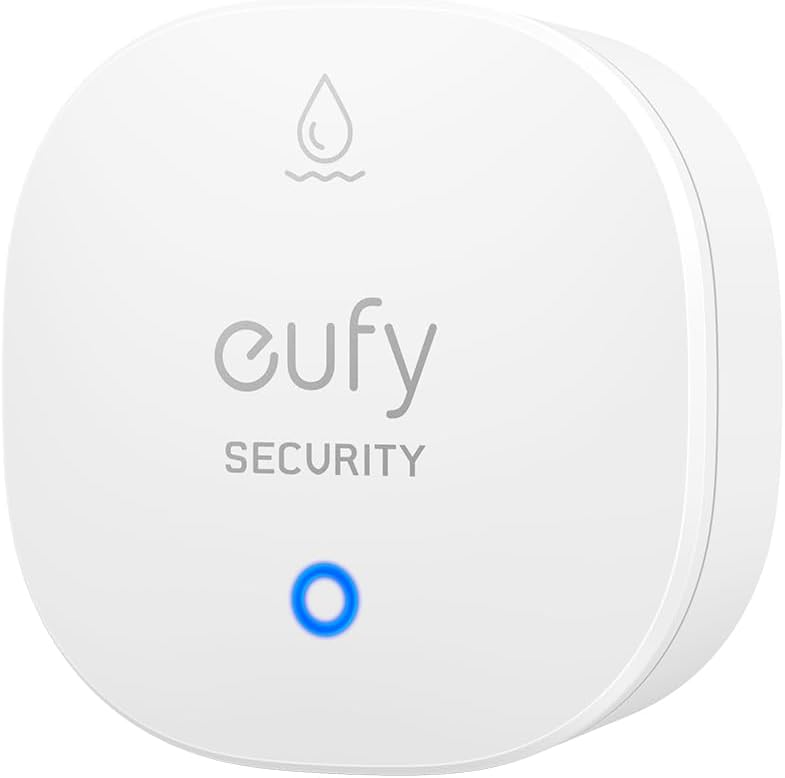
Tank water heaters score second because of their perfect storm of high damage cost and maximum detection delay. When a tank fails, it dumps 40 to 80 gallons immediately — and then the cold water supply line keeps feeding the leak until someone shuts it off. The eufy Security Water and Freeze Sensor is the ideal match here because it detects both water AND freezing temperatures — critical for water heaters in unheated garages and basements where pipe burst risk spikes in winter.
Detection delay without sensor: Water heaters hide in basements, garages, and utility closets. Most homeowners rarely inspect their water heater outside of scheduled maintenance. A slow tank seep can run for weeks before anyone notices the puddle. Detection delay factor: 5/5 — the maximum.
Best sensor: eufy Security Water and Freeze Sensor at $18. Place it inside the drain pan or within 6 inches of the tank base.
Protection ROI: $6,500 / $18 = 9,361x. The dual water-and-freeze detection makes the eufy sensor pull double duty here — it catches the leak AND warns you when temperatures drop low enough to threaten supply line freezes.
Zone 3: HVAC Condensate — SHE Risk Score 240.0
HVAC condensate drain failures score third overall but earn the highest detection delay factor (tied with the water heater at 5/5). Condensate drain lines clog with algae, mold, and mineral deposits. When the drain pan overflows, water drips through the ceiling into rooms below. Since HVAC units sit in attics and utility closets above living spaces, the first sign of trouble is often a water stain on a bedroom ceiling — meaning the damage has been accumulating for days.
Detection delay without sensor: Attics and ceiling-mounted HVAC closets are rarely inspected between service calls. A clogged condensate line can overflow for a week before staining appears on the ceiling below. Detection delay factor: 5/5.
Best sensor: YoLink Water Leak Sensor 4 at $20. Place it inside the secondary drain pan. The LoRa range punches through attic insulation and multiple floors where Wi-Fi sensors lose connectivity. For centralized alerts from multiple sensor locations, pair with a smart home automation hub.
Protection ROI: $8,000 / $20 = 9,600x. This zone has a higher per-dollar ROI than the water heater despite a lower overall risk score — the $20 sensor cost versus the $18 eufy makes the math slightly more favorable.
Zone 4: Basement/Sump Pump — SHE Risk Score 151.2
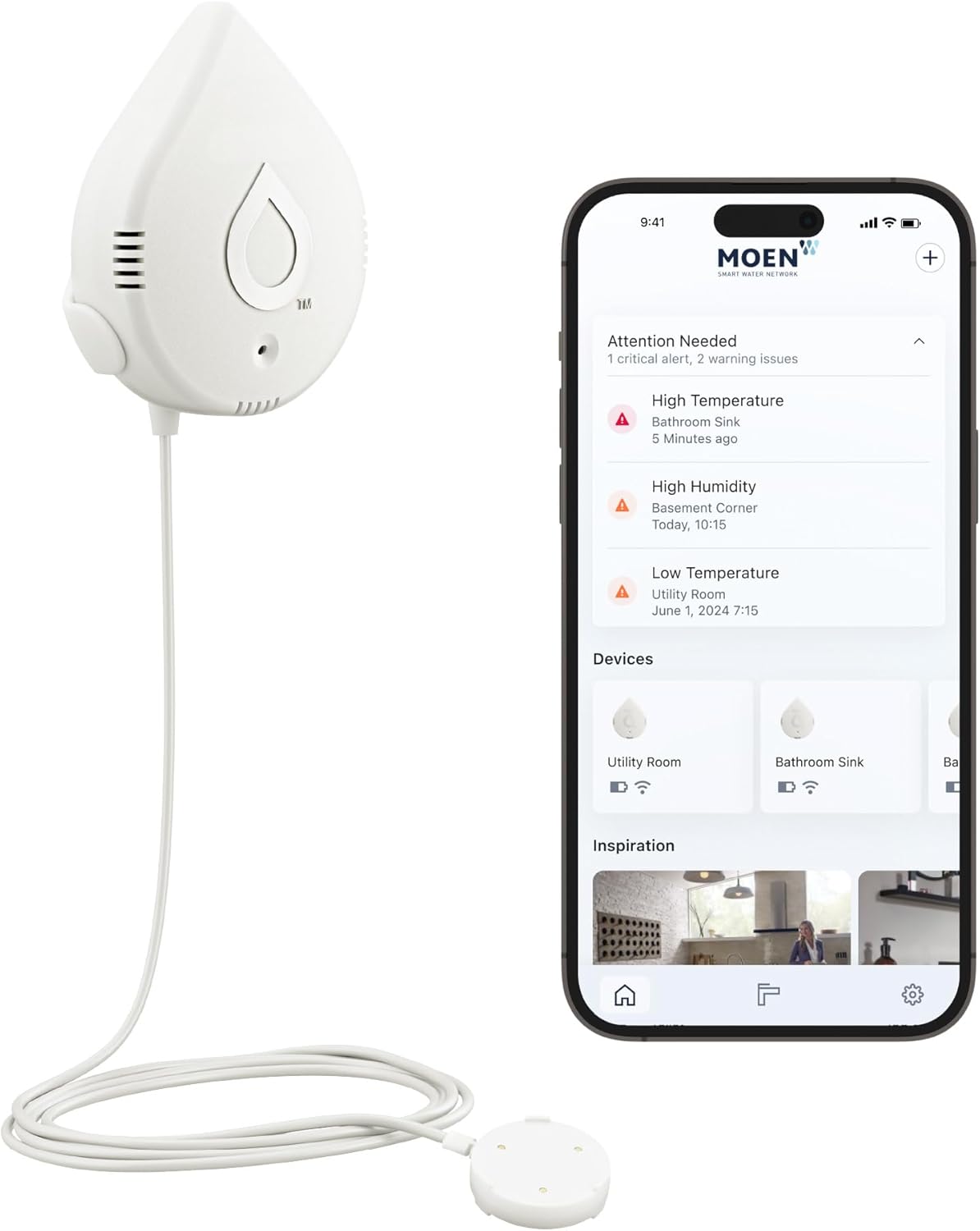
Sump pump failure during heavy rain is a leading cause of basement flooding. Pumps fail from mechanical wear, power outages, float switch jams, or being overwhelmed by volume. The Moen Flo Smart Water Leak Detector is the best fit here because it monitors humidity alongside water presence — catching rising moisture trends from partial pump failures before full flooding occurs.
Detection delay without sensor: Basements are checked often enough that catastrophic flooding is noticed within hours, but slow sump pit overflow in a far corner takes days. Detection delay factor: 3/5.
Best sensor: Moen Flo Smart Water Leak Detector at $50. Place it near the sump pit, 3 to 4 inches above normal water level to avoid false alarms from normal cycling.
Protection ROI: $7,200 / $50 = 2,160x. The higher sensor cost means a lower per-dollar ROI than cheaper sensors, but the Moen's humidity monitoring catches problems that spot sensors miss entirely.
Zone 5: Toilet Supply Line — SHE Risk Score 114.0
Toilet wax ring and supply line failures are sneaky. The wax ring seals the toilet base to the drain flange, and when it fails, sewage water seeps into the subfloor with every flush. The damage accumulates invisibly for weeks before the floor feels spongy. Supply line compression fittings corrode and weep slowly, often dripping down into the ceiling below on second-floor bathrooms.
Detection delay without sensor: Bathrooms are used daily, but nobody looks behind the toilet. A slow wax ring seep damages subflooring for weeks before visible signs appear. Detection delay factor: 4/5.
Best sensor: eufy Security Water and Freeze Sensor at $18. Place it flat on the floor, 2 to 3 inches behind the toilet base where seeping water collects first. One sensor per bathroom covers both the toilet and sink.
Protection ROI: $5,700 / $18 = 3,610x. If you have a two-story home, prioritize the upstairs bathroom — a second-floor toilet leak causes damage to both the bathroom AND the ceiling/room below it.
Zone 6: Kitchen Sink — SHE Risk Score 63.0
Kitchen sinks earn the second-lowest risk score despite a high failure frequency (7/10) because leaks here are usually noticed fast. The cabinet is opened daily for cleaning supplies, and puddles spread onto the kitchen floor quickly. Supply line connections, drain fittings, garbage disposal seals, and dishwasher drain hoses all converge under the sink — creating multiple potential failure points but also making detection relatively quick.
Detection delay without sensor: Kitchen sink leaks are typically noticed within a day or two. Detection delay factor: 2/5.
Best sensor: SwitchBot WiFi Water Leak Detector at $24. Its slim profile fits in tight under-sink cabinet spaces, and the optional sensor cable extends along the back wall for broader coverage. If you want to automate a response, pair it with a smart plug with Alexa-triggered shutoff control to cut power to a garbage disposal when water is detected.
Protection ROI: $4,500 / $24 = 1,181x. The lowest detection delay in our scoring means this zone is manageable without a sensor — but at $24, the math still overwhelmingly favors the sensor.
Zone 7: Dishwasher — SHE Risk Score 42.0
The dishwasher earns the lowest SHE Leak Risk Score — but "lowest" here still means a 668x ROI on a $22 sensor. Supply line braided hoses degrade over 8 to 10 years. Solenoid inlet valves stick partially open. Door gaskets lose compression. The supply connection hides behind the cabinet kick plate, completely invisible during normal kitchen use.
Detection delay without sensor: Kitchen floor warping near the dishwasher typically appears within a few days, but subflooring damage can accumulate behind the kick plate for longer. Detection delay factor: 3/5.
Best sensor: Kidde 60WLDR-W Water Leak Detector at $22. Slide a sensor or probe cable under the dishwasher from the front edge where leaking water pools first.
Protection ROI: $3,500 / $22 = 668x. Even the least risky zone in our scoring delivers a return that makes the purchase a non-decision. For a full comparison of sensor models, see our best smart water leak detectors guide.
The Total Protection Plan: $172 for 7 Zones
Here's what it costs to cover every danger zone in your home with the sensors our SHE Leak Risk Score analysis identified as the best match per zone:
- YoLink Water Leak Sensor 4 (washing machine): $20
- eufy Security Water and Freeze Sensor (water heater): $18
- YoLink Water Leak Sensor 4 (HVAC condensate): $20
- Moen Flo Smart Water Leak Detector (basement/sump pump): $50
- eufy Security Water and Freeze Sensor (toilet supply line): $18
- SwitchBot WiFi Water Leak Detector (kitchen sink): $24
- Kidde 60WLDR-W Water Leak Detector (dishwasher): $22
Total: $172
The average water damage insurance claim costs $12,514 according to the Insurance Information Institute (III, "Facts + Statistics: Homeowners and Renters Insurance," 2025). Your 7-zone sensor investment of $172 represents 1.37% of the average claim. The aggregate ROI: $12,514 / $172 = 72.8x return on investment.
But that ROI assumes you experience one average claim over the sensors' lifetime. FEMA data shows early detection reduces water damage severity by 93% (FEMA, "Protect Your Property from Water Damage," 2023). Applied to the average claim: $12,514 x 0.93 = $11,638 in prevented damage per incident. The III reports that roughly 1 in 50 insured homes files a water damage claim each year (III, "Facts + Statistics: Homeowners and Renters Insurance," 2025) — over a 10-year period in your home, the probability of at least one incident is meaningful enough to make $172 in protection feel like the obvious move.
If you want to centralize all 7 sensors into a single dashboard with automation rules, our smart home automation hubs guide covers compatible hub options. For freezing-climate homes where pipe burst is the primary threat, pair leak sensors with the temperature alerts covered in our environmental monitoring guide.
Insurance Premium Savings: The Hidden ROI
The $172 investment pays for itself even if you never experience a leak — because your insurance company will pay you back through premium discounts.
The numbers:
- Average homeowner insurance premium: $2,270/year (III, "Facts + Statistics: Homeowners and Renters Insurance," 2025)
- Smart water monitoring discount range: 3-10% (offered by Tower Hill, State Farm, USAA, Liberty Mutual, and American Family Insurance)
- Annual savings at 3% discount: $2,270 x 0.03 = $68/year
- Annual savings at 10% discount: $2,270 x 0.10 = $227/year
- Sensor payback from insurance savings alone: 0.8 to 2.5 years
At the low end (3% discount), your $172 sensor investment pays for itself in 2.5 years through premium savings — without preventing a single leak. At the high end (10% discount), you break even in under 10 months. Every year after that is pure savings.
Cumulative 5-year insurance savings:
- At 3% discount: $68 x 5 = $340 (net gain of $168 after sensor cost)
- At 10% discount: $227 x 5 = $1,135 (net gain of $963 after sensor cost)
- Combined with claim prevention: $1,135 + $11,638 prevented damage = $12,773 in total value from a $172 investment
The Moen Flo Smart Water Leak Detector paired with Moen's whole-home shutoff valve qualifies for the maximum discount tier at most carriers because it provides continuous whole-home flow monitoring — not just spot detection. If you're optimizing specifically for insurance savings, that combination is the strongest qualifying system. Contact your carrier and ask about water damage prevention device discounts — the answer varies by state, but the phone call takes 5 minutes and the savings compound for as long as you hold the policy.
Response Time Math: Why Minutes Matter
FEMA data shows early leak detection reduces damage severity by 93% (FEMA, "Protect Your Property from Water Damage," 2023). Here's the math that makes that statistic concrete.
Undetected leak at 1 gallon per hour (a slow drip — barely visible):
- 1 hour: 1 gallon. Surface moisture. Paper towel fix.
- 24 hours: 24 gallons. Carpet padding saturated. Professional drying needed.
- 7 days: 168 gallons. Subfloor swelling. Mold colonization begins at 24-48 hours of exposure.
- 14 days (average homeowner detection time for slow leaks): 336 gallons. Structural drying, drywall removal, mold remediation. Cost: $5,000 to $15,000.
Sensor-detected leak at 1 gallon per hour:
A smart leak sensor detects standing water in 2 to 15 seconds. Push notification hits your phone in under 30 seconds. You shut off the supply valve within minutes. Total water released: less than 0.1 gallons. Cost: one towel and your time.
The delta: 336 gallons versus 0.1 gallons. A 3,360x reduction in water volume from a sensor that costs less than a large pizza.
Cost escalation timeline (based on restoration industry benchmarks):
- 0-2 hours undetected: $0-$50 (mop and fan)
- 2-24 hours: $500-$2,000 (professional extraction)
- 24-48 hours: $2,000-$7,000 (mold colonization starts on drywall, carpet backing, wood framing)
- 48-72 hours: $5,000-$15,000 (structural drying, drywall removal, mold treatment)
- 7+ days: $10,000-$30,000+ (full remediation, containment barriers, HEPA filtration). A Moen Flo Smart Water Leak Detector catches humidity changes before water even pools.
Cost approximately doubles every 24 hours of uncontrolled water exposure, per restoration industry benchmarks (Restoration Industry Association, "Water Damage Cost Benchmarks," 2024). A $20 YoLink sensor compresses a 14-day detection window into 30 seconds. That time compression is where the 18,360x ROI comes from.
Smart Sensors vs. Shutoff Valves: When to Upgrade
Smart water protection has two tiers. Understanding the math for each helps you invest at the right level.
Tier 1: Spot Sensors ($18-$50)
Battery-powered devices that sit on the floor at each danger zone. They detect and alert but don't stop the flow. The eufy Security Water and Freeze Sensor at $18, YoLink Water Leak Sensor 4 at $20, and SwitchBot WiFi Water Leak Detector at $24 are all in this tier.
7-zone coverage cost: $172 (our calculated optimum from the SHE Leak Risk Score analysis above)
ROI: 72.8x against the average $12,514 claim
Best for: Renters, apartments, budget-conscious homeowners, anyone who wants protection deployed in 30 minutes with zero plumbing.
Tier 2: Whole-Home Shutoff Systems ($200-$500)
These install on your main water supply line and automatically close when a paired sensor detects a leak. The Moen Flo ecosystem is the most recognized — its shutoff valve monitors flow patterns continuously and can detect micro-leaks inside pipes that no spot sensor catches.
Typical cost: $250-$500 for the valve plus professional installation
ROI: $12,514 / $400 (midpoint) = 31.3x — lower per-dollar ROI than spot sensors, but with the added benefit of automatic water shutoff. The valve doesn't just detect — it stops the flow without human intervention.
Best for: Homeowners with vacation properties, high-value homes, freezing climates, and anyone who's filed a water damage claim before. The Phyn Plus Smart Water Assistant ($500) earned the highest score in our shutoff valve comparison. If you travel for more than a weekend at a time, the automatic shutoff eliminates the "what if I'm not near my phone" scenario entirely.
The Combined Strategy
The highest-protection approach: install $172 in spot sensors at all 7 zones AND a Phyn Plus or Moen Flo shutoff valve on the main line. Total investment: roughly $572-$672. That's 4.6% of the average claim — and it gives you both granular zone-specific alerts and automatic whole-home shutoff. If you're building out broader smart home protection, our smart home automation hubs guide covers how to connect sensors and shutoff valves into unified automation routines.
Water Leak Sensor
Chart
 Smarthomeexplorer.com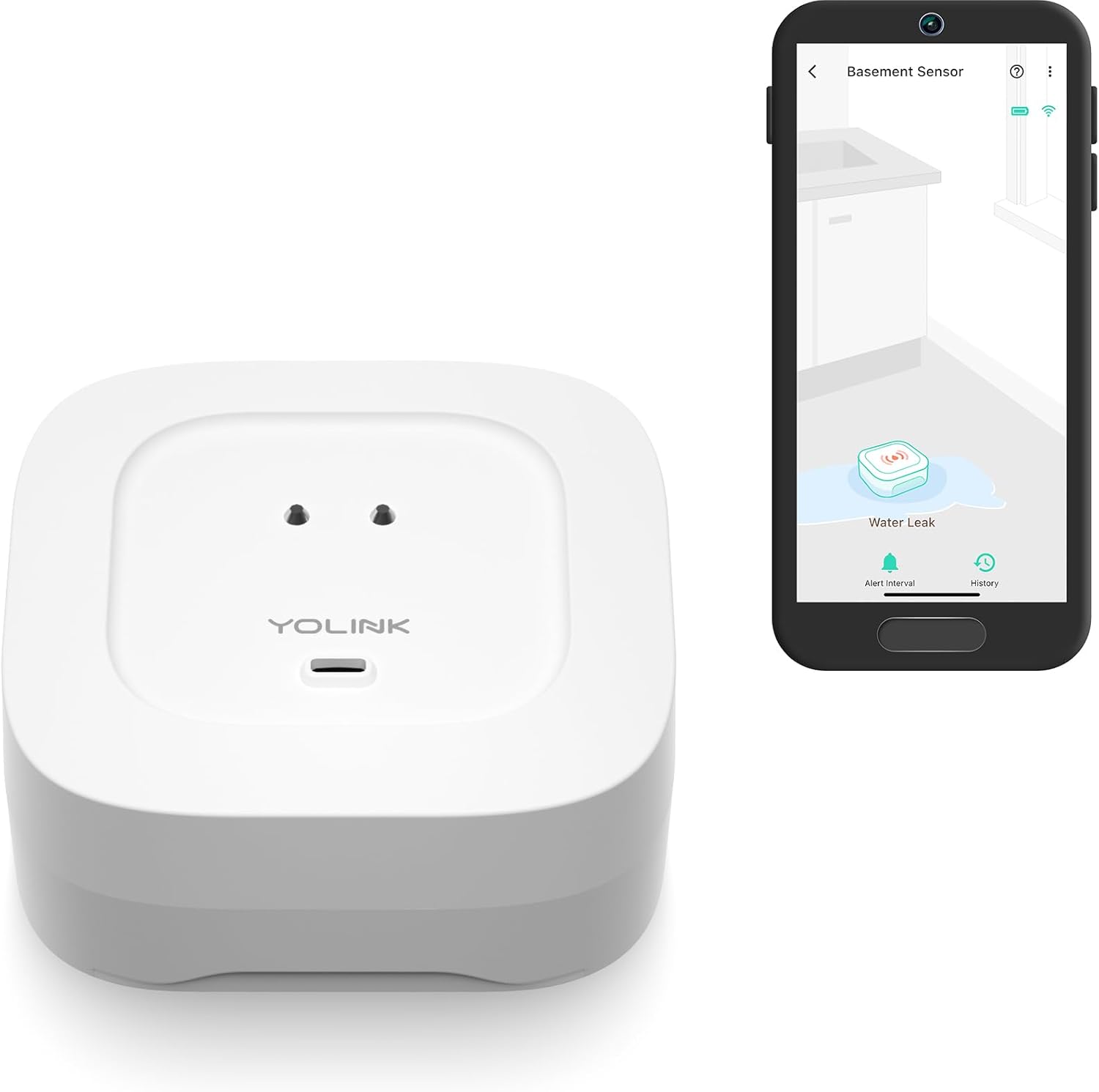
Who Should Buy What
- Best for homeowners (full coverage): The 7-zone sensor kit for $172 using YoLink, eufy, and Moen Flo sensors — covers all danger zones with a 72.8x ROI against the average $12,514 claim. Pays for itself in 0.8 to 2.5 years through insurance premium savings alone.
- Best on a budget: Start with the top 3 zones (washing machine, water heater, HVAC) for $58 — covers 83.6% of your total computed risk. Two YoLink Water Leak Sensor 4 units and one eufy Water and Freeze Sensor.
- Best for renters: The YoLink Water Leak Sensor 4 at $20 per unit — battery-powered, portable, no permanent installation, take them when you move. Place at least 3 at the washing machine, under the kitchen sink, and behind the toilet.
- Best if you want automatic shutoff: Upgrade from spot sensors to the Phyn Plus or Moen Flo whole-home shutoff valve ($500 + install). Stops water in under 5 seconds with zero human intervention. See our shutoff valve comparison guide.
Frequently Asked Questions
How many water leak sensors do I need?
Our SHE Leak Risk Score analysis identifies 7 zones with scores above 42.0 — the threshold where protection ROI exceeds 668x. Covering all 7 costs $172 using our zone-optimized sensor picks: two YoLink Water Leak Sensor 4 units ($40), two eufy Security Water and Freeze Sensors ($36), one Moen Flo Smart Water Leak Detector ($50), one SwitchBot WiFi ($24), and one Kidde 60WLDR-W ($22). If budget is tight, start with the top 3 zones by risk score — washing machine, water heater, and HVAC condensate — for $58 total. Those three zones account for 867.2 combined risk score points out of the total 1,037.4, meaning $58 covers 83.6% of your computed risk. For detailed sensor reviews, see our best smart water leak detectors guide.
Do water leak sensors lower insurance premiums?
Yes. Carriers including State Farm, USAA, Tower Hill, Liberty Mutual, and American Family Insurance offer 3-10% premium discounts for homes with smart water monitoring. On the national average premium of $2,270/year, that's $68 to $227 in annual savings. Our $172 seven-zone sensor setup pays for itself through insurance savings alone in 0.8 to 2.5 years — before preventing a single drop of damage. The Moen Flo whole-home system qualifies for the highest discount tiers at most carriers.
What's the ROI of a water leak sensor?
It depends on the zone. The washing machine zone has an 18,360x ROI based on our SHE Leak Risk Score calculation — a $20 YoLink sensor protecting against a $10,200 average washing machine claim. Even the lowest-ROI zone (dishwasher) delivers 668x. The aggregate ROI for all 7 zones combined: $12,514 average claim / $172 total sensor cost = 72.8x return. Add 5-year insurance savings of $340 to $1,135, and the total value from a $172 investment ranges from $12,178 to $12,773. For the full sensor comparison with consensus scores, check our buying guide.
Can smart leak sensors work with my existing smart home setup?
Most modern leak sensors integrate with at least one major ecosystem. The YoLink Water Leak Sensor 4 works with Alexa, Google Home, and IFTTT. The eufy Security Water and Freeze Sensor integrates with the eufy ecosystem and HomeBase. The Moen Flo connects to Alexa and Google Home. For homes running a centralized smart home automation hub that ties Alexa, Google, and Zigbee in one app, you can build routines that trigger smart shutoff valves, send alerts to multiple family members, and activate smart plugs with energy monitoring and app-based shutoff to cut power to appliances near the leak source — all automatically.
The Bottom Line
$172 in sensors. $12,514 average claim. 72.8x ROI. The math is not complicated.
For first-time buyers: Put one YoLink Water Leak Sensor 4 ($20) behind your washing machine — the zone with the highest SHE Leak Risk Score (367.2) and an 18,360x protection ROI.
For smart coverage on a budget: Three sensors at $58 total — YoLink at the washer, eufy at the water heater, and another YoLink under the kitchen sink — covers 83.6% of total computed risk.
For complete home protection: The full $172 seven-sensor kit with YoLink, eufy, and Moen Flo sensors covers all 7 danger zones.
Insurance premium discounts of $68 to $227/year mean the sensors pay for themselves in 0.8 to 2.5 years even if your pipes never leak. FEMA data indicates early detection can reduce damage severity by up to 93%.
Head to our best smart water leak detectors guide for consensus-scored reviews of every sensor mentioned in this analysis — from the $18 eufy Security Water and Freeze Sensor to the $50 Moen Flo Smart Water Leak Detector. Pair leak sensors with a smart environmental sensor for humidity and temperature tracking and a smart home hub for automated shutoff and alert routines. And if you're building whole-home protection, our smart smoke detector guide and smart door lock guide covering keypad and remote access models round out the safety stack. For tracking whole-home water usage and catching slow pipe leaks that no floor sensor can reach, see our whole-home water monitors guide.
Sources & Methodology
SHE Leak Risk Score methodology: We computed a risk score for each residential leak zone using the formula: (Failure Frequency x Average Damage Cost x Detection Delay) / 1,000. Failure Frequency (1-10) is derived from III claim frequency data across residential water damage categories. Average Damage Cost comes from III claim payouts cross-referenced with Restoration Industry Association benchmarks. Detection Delay (1-5) reflects how long leaks from each source typically go unnoticed without sensor monitoring. The resulting score quantifies relative risk so homeowners can prioritize sensor placement by financial exposure.
Sources cited in this guide:
- Insurance Information Institute (III), "Facts + Statistics: Homeowners and Renters Insurance," 2025
- Restoration Industry Association, "Water Damage Cost Benchmarks," 2024
- FEMA, "Protect Your Property from Water Damage," 2023
- State Farm, USAA, Tower Hill, Liberty Mutual, American Family Insurance — carrier discount program data, 2025
Evidence Summary
| Claim | Source Type | Source | Verified |
|---|---|---|---|
| Average water damage claim = $12,514 | Industry stats | Insurance Information Institute, "Facts + Statistics," 2025 | March 2026 |
| Washing machine burst hose releases 400-650 gallons/hour | Industry data | Restoration Industry Association, "Water Damage Cost Benchmarks," 2024 | March 2026 |
| Early detection reduces damage severity by 93% | Government data | FEMA, "Protect Your Property from Water Damage," 2023 | March 2026 |
| Average homeowner insurance premium = $2,270/year | Industry stats | Insurance Information Institute, "Facts + Statistics," 2025 | March 2026 |
| 1 in 50 insured homes files water damage claim per year | Industry stats | Insurance Information Institute, "Facts + Statistics," 2025 | March 2026 |
| Cost doubles every 24 hours of uncontrolled water exposure | Industry data | Restoration Industry Association, "Water Damage Cost Benchmarks," 2024 | March 2026 |
| SHE Leak Risk Scores (367.2 washing machine, 260.0 water heater, etc.) | Editorial analysis | SHE Leak Risk Score formula | March 2026 |
| Smart water monitoring discount range: 3-10% | Primary verification | State Farm, USAA, Tower Hill, Liberty Mutual, American Family carrier data | March 2026 |
Author: Nicholas Miles is the founder of SmartHomeExplorer and a longtime smart home enthusiast focused on helping everyday homeowners make better technology decisions. He researches, compares, and writes about products across security, climate, lighting, leak prevention, sensors, home energy, and automation, with an emphasis on real-world usefulness, ecosystem compatibility, reliability, privacy, and long-term value. Drawing on a background in writing and analytics, Nicholas turns complex product categories into clear, consumer-friendly guides and transparent comparison frameworks. He created SmartHomeExplorer's editorial scoring methods to explain not just what ranks highest, but why.
Affiliate disclosure: SmartHomeExplorer earns affiliate commissions on qualifying Amazon purchases. Our scoring methodology is independent of affiliate relationships.