
Best Motorized Blinds and Shades 2026: Matter Picks
SmartWings Matter Roller Shades ($175) win overall — native Matter, a sub-40 dB motor, and custom sizing. The Eve MotionBlinds kit is the cleanest Thread retrofit for blinds you already own.
This article contains affiliate links. We may earn a commission at no extra cost to you. Prices change frequently — check the current price on Amazon before buying. Learn more
The Short Answer
For most homes the SmartWings Matter Roller Shades are the optimal pick at roughly $175, combining native Matter support, a quiet sub-40 dB motor, and custom sizing across a 9-source consensus of 8.5. The economical Yoolax alternative costs around $119, while the Eve MotionBlinds kit retrofits blinds you already own.
Featured in this Guide
SmartWings
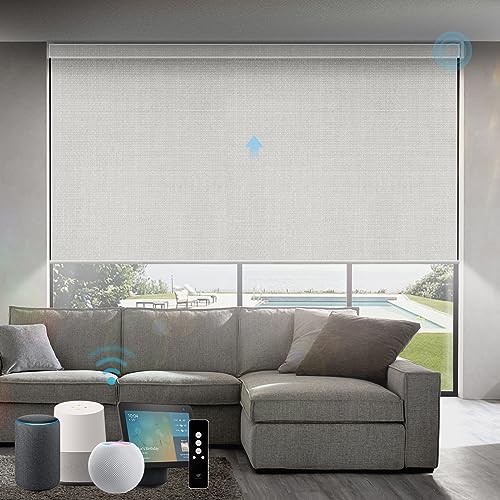
Matter Roller Shades
- •Native Matter across all four ecosystems, a sub-40 dB motor, and custom sizing at roughly $175 per window
Yoolax
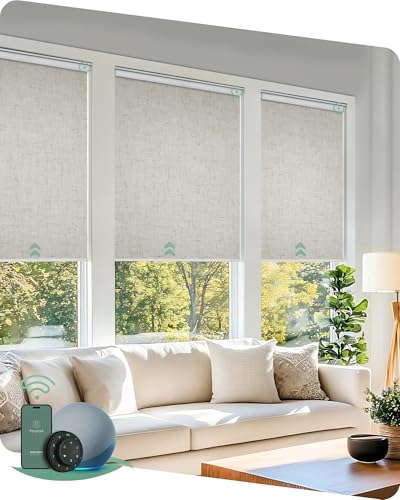
Motorized Blinds
- •Alexa, Google, and Apple Home plus 100% blackout for around $119 — the cheapest full roller here
SwitchBot
Blind Tilt
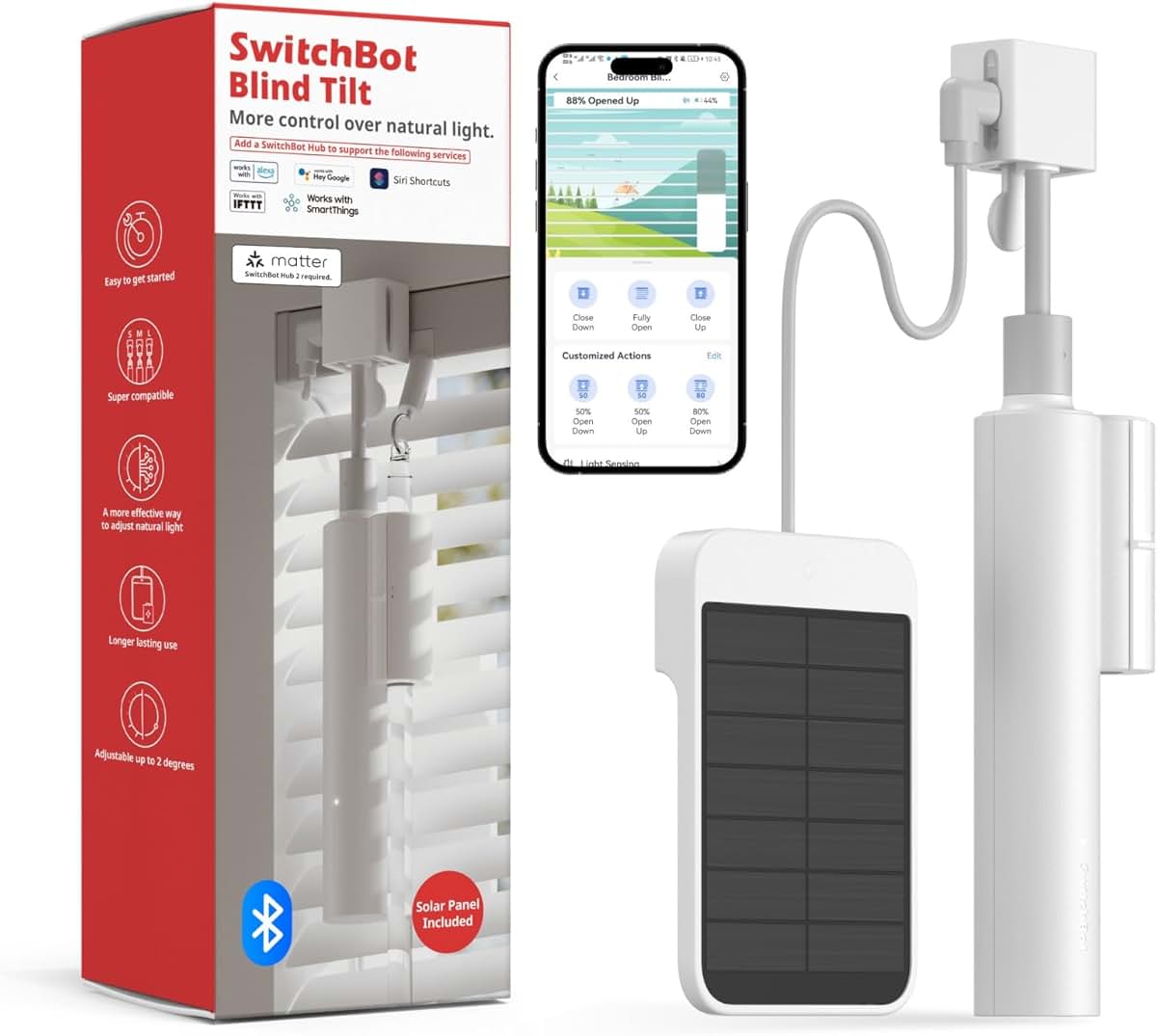
- •Clips onto existing horizontal blinds in roughly 5 mins with no tools, around $50
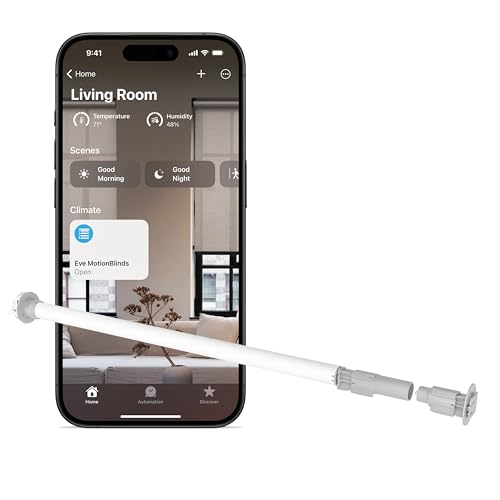
Eve
MotionBlinds Upgrade Kit
- •Matter-over-Thread upgrade kit that keeps schedules local and private, roughly $165
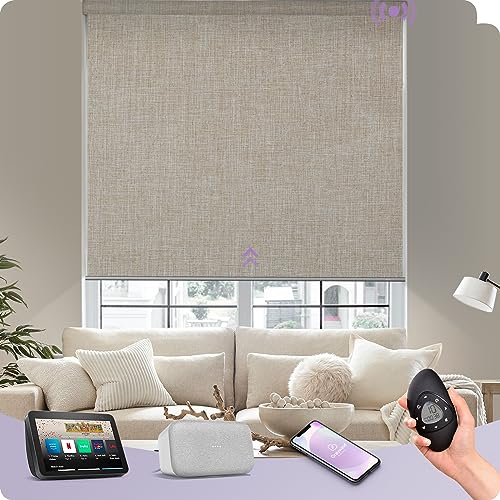
Graywind
Motorized Roller Shades
- •Triple-weave 100% blackout with a finished valance for bedrooms, around $159
Head-to-Head: Ecosystem, Reliability, Setup, and Quietness
Automation
Chart
 Smarthomeexplorer.com
Tap any pick to check its live price on Amazon.
EcoFlow DELTA Pro 3 Portable Power Station
RecommendedCheck price
PETKIT Purobot Ultra
Must BuyCheck price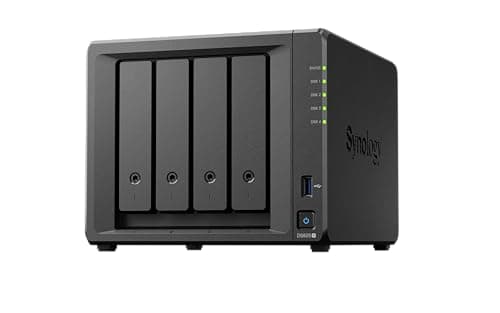
Synology DS925+ 4-Bay NAS
Must BuyCheck price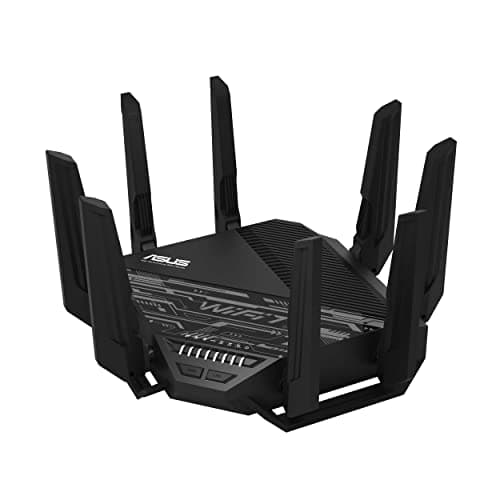
ASUS RT-BE96U
RecommendedCheck price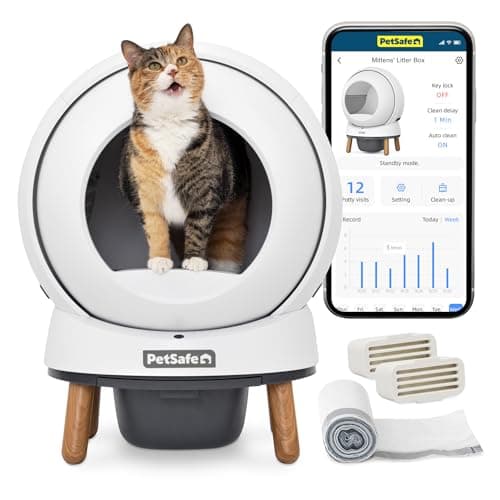
PetSafe ScoopFree SmartSpin
RecommendedCheck price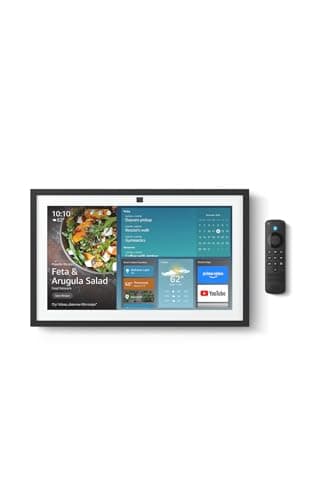
Amazon Echo Show 15 (newest model)
RecommendedCheck price
What Tips the Decision
Most blind guides rank on motor noise. That misses what a smart-home buyer weighs: which shade joins your hub without a brand bridge, which one installs in an afternoon, and which one keeps working when the internet drops. We scored five systems on the SHE Smart Shade Score — a weighted composite of ecosystem breadth, automation reliability, install effort, motor quietness, and value per window. The Verge named Matter-native shades the 2026 sweet spot, and PCMag calls the SwitchBot Blind Tilt, which clips on in roughly 5 mins, the easiest retrofit here.
If protocol breadth matters most, the SmartWings rollers join Apple Home, Alexa, Google, and SmartThings through one Matter pairing and run under 40 dB. If you already own roller blinds, the Eve MotionBlinds kit motorizes them over Thread in about 30 mins. If features per dollar drive the decision, the Yoolax shades lead on value at around $119.
Best Overall: SmartWings Matter Roller Shades
SmartWings Matter Roller Shades
- Native Matter reaches Apple Home, Alexa, Google, and SmartThings — no brand bridge to buy
- A Matter hub is required for voice and scheduling, sold separately for around $50
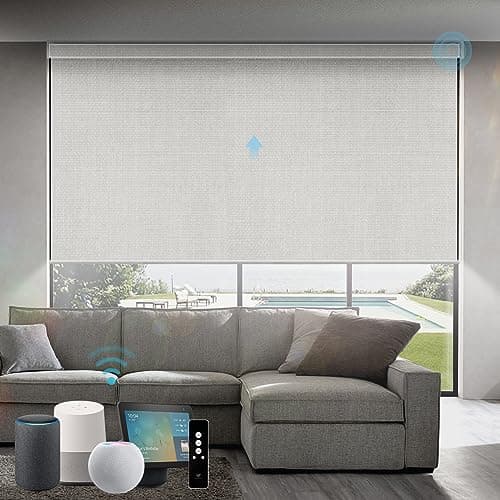
(Current price, subject to change)
The SmartWings Matter Roller Shades earn 8.3 on the weighted SHE Smart Shade rating, a composite that translates into a shade joining whatever hub you adopt over the next five years. That 8.3 reflects a category-leading 9.5 ecosystem sub-score: native Matter reaches Apple Home, Alexa, Google, and SmartThings through a single Thread or Wi-Fi join, the motor measures under 40 dB so it stays unobtrusive in a bedroom, and custom sizing accommodates any window rather than forcing a stock dimension. Priced at roughly $175 per window, it undercuts dealer-installed shades while delivering the protocol breadth that compounds across a multi-year smart-home build.
The Verge characterizes Matter-native shades as the 2026 sweet spot, and TechRadar corroborates that SmartWings undercuts name-brand rivals on price. SmartWings backs the shade with a 1-year warranty, and most owners finish the bracket install in roughly 40 mins. Across 9 expert sources verified as of June 2026 the consensus reaches 8.5, the highest among purpose-built rollers here.
The trade-off relative to the Eve MotionBlinds Upgrade Kit kit is replacement: you buy new fabric rather than motorizing the blinds you already own, which produces a cleaner result at a higher up-front cost.
What We Love
- Native Matter reaches Apple Home, Alexa, Google, and SmartThings — no brand bridge to buy
- Whisper-quiet motor runs under 40 dB, unobtrusive in a bedroom
- Custom sizing fits any window dimension instead of forcing a stock size
- Rechargeable battery lasts roughly 5 months, so wiring is optional
What Could Be Better
- A Matter hub is required for voice and scheduling, sold separately for around $50
- Full roller install takes 40 mins per window, not a 5-minute clip-on
- App occasionally needs re-pairing after a firmware update
The Verdict
If you want one shade that joins every hub you might add later, the SmartWings Matter Roller Shades fits the brief without compromise. The 8.3 reflects a 9.5 ecosystem sub-score: native Matter across Apple Home, Alexa, Google, and SmartThings, plus a sub-40 dB motor. The Eve kit retrofits existing blinds, but you would give up the custom-cut fabric.
Ready to upgrade your home?
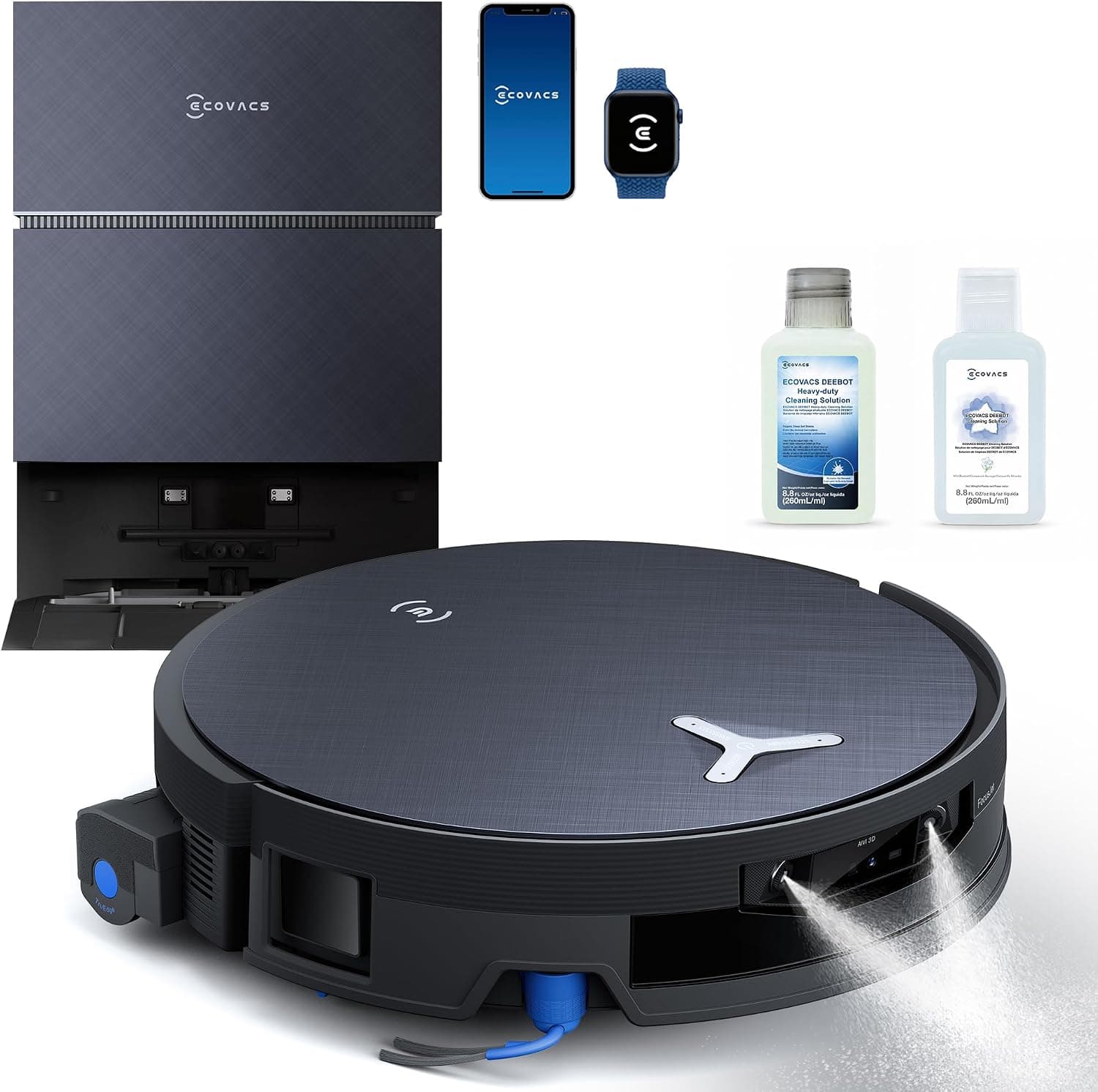
ECOVACS DEEBOT X12 PRO Omni Robot Vacuum and Mop
See it on Amazon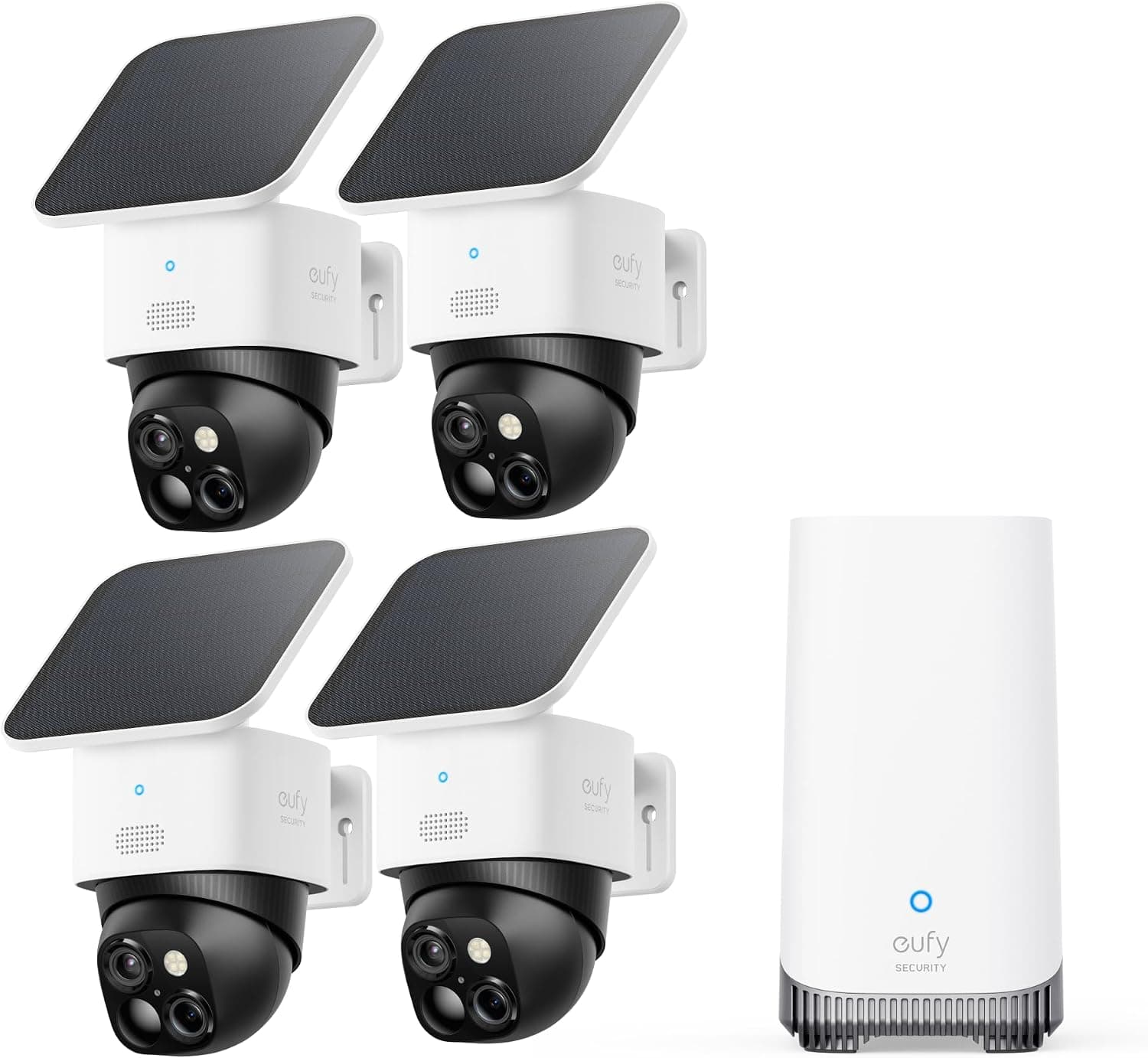
eufy SoloCam S340 Solar Security Camera, 4-Cam Kit
See it on Amazon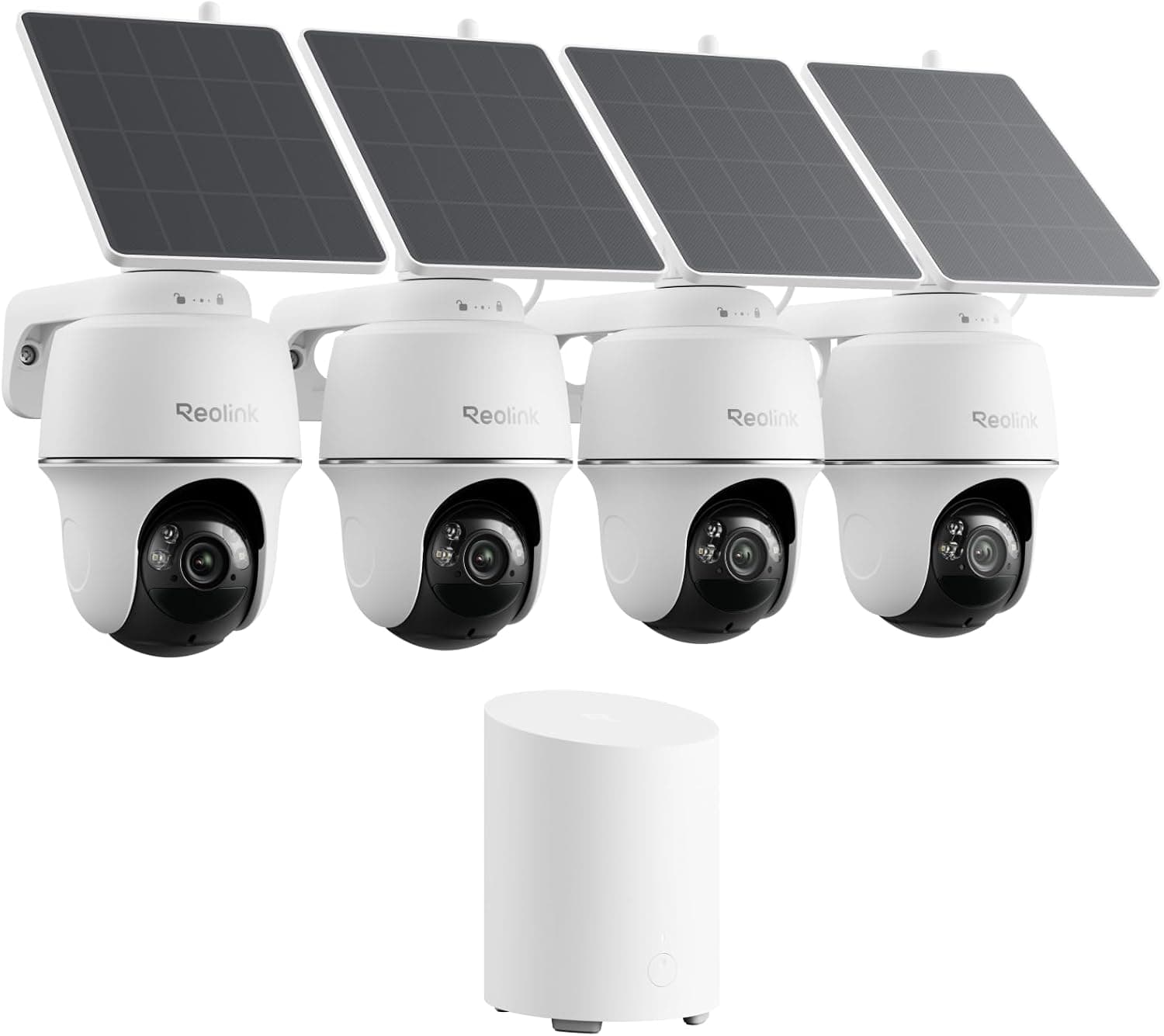
REOLINK 360° Solar Security Cameras, 4 Pack
See it on Amazon
Sponsored listings from Amazon’s Sponsored Products for Creators program, kept apart from our reviews and rankings. How we make money
Best Value: Yoolax Motorized Blinds
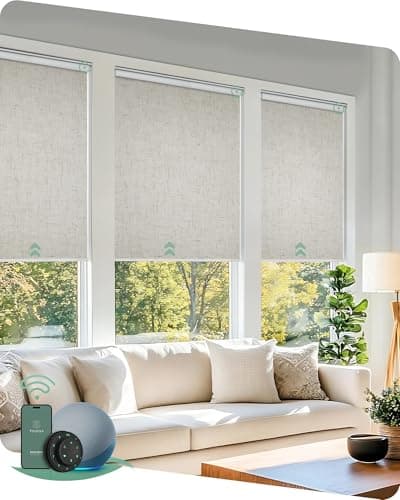
Yoolax Motorized Blinds
- Works with Alexa, Google Home, and Apple Home out of the box — all three voice platforms
- Voice and remote control route through the Wi-Fi hub bridge, not native Matter
(Current price, subject to change)
The Yoolax Motorized Blinds register 7.6 on the weighted SHE Smart Shade rating, a normalized composite whose magnitude tracks its defining strength: the lowest price per window paired with genuinely broad voice support. That 7.6 encompasses Alexa, Google Home, and Apple Home compatibility, a 100% blackout fabric custom-cut to the window, and a rechargeable battery that runs roughly 8 months between charges. At around $119 per window, the feature density per dollar is the strongest in this roundup, which is why it anchors the value position.
TechRadar notes that Yoolax undercuts almost every name-brand motorized shade while still reaching all three voice ecosystems, and owner reports on r/smarthome corroborate the long battery life. The shade installs in roughly 35 mins on standard brackets, runs near 40 dB, and the included hub bridge handles scheduling and scenes. Yoolax backs the shade with a 1-year warranty, and the battery lasts about 8 months per charge. Across 9 expert sources verified as of June 2026 the consensus reaches 8.1.
Relative to the SmartWings Matter Roller Shades, the Yoolax shades forgo native Matter in exchange for a price roughly a third lower, which matters most when the savings multiply across a whole-home install.
What We Love
- Works with Alexa, Google Home, and Apple Home out of the box — all three voice platforms
- 100% blackout fabric custom-cut to your exact window for true bedroom darkness
- Rechargeable battery lasts roughly 8 months between charges
- Around $119 for a standard window — the cheapest full roller in this roundup
What Could Be Better
- Voice and remote control route through the Wi-Fi hub bridge, not native Matter
- Custom sizing is non-returnable, so measurements have to be exact
- Motor sits near 40 dB, audible in a silent bedroom
The Verdict
If you want the most shade for the least money, the Yoolax Motorized Blinds roller lines up with what you actually need. The 7.6 reflects all three voice ecosystems plus 100% blackout fabric for around $119 — roughly a third less than the SmartWings rollers. You route control through a Wi-Fi bridge instead of Matter, but for whole-home coverage the value is hard to beat.
Best Retrofit: SwitchBot Blind Tilt
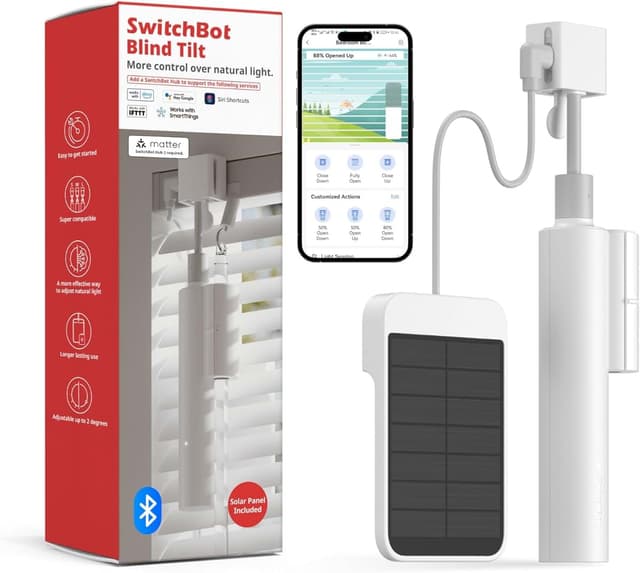
SwitchBot Blind Tilt
- Clips onto existing horizontal blinds in roughly 5 mins with adhesive and no tools
- Controls slat tilt only, never raise or lower, so there is no blackout function
(Current price, subject to change)
The SwitchBot Blind Tilt registers 7.2 on the weighted SHE Smart Shade rating, a composite that characterizes a retrofit value proposition rather than a feature leader. That 7.2 reflects a category-leading 9.5 ease-of-setup sub-score: the adhesive clip attaches to an existing tilt rod in roughly 5 mins with no tools and no drilling, the solar strip eliminates battery charging on a sunny window, and the built-in light sensor adjusts the slats through the day with no schedule to program. At around $50, it is the cheapest entry point into window automation in this roundup.
PCMag calls it the easiest way to add smart control to existing blinds, and Tom's Guide describes it as a clever renter solution. The motor runs near 42 dB, and adding the SwitchBot Hub 2 in roughly 5 mins unlocks Matter, Alexa, Google, and Siri Shortcuts; without it you get app control over Bluetooth. SwitchBot backs it with a 1-year warranty. Across 11 expert sources verified as of June 2026 the consensus settles at 7.5.
Relative to the SmartWings Matter Roller Shades, the Blind Tilt forgoes raise-and-lower and blackout in exchange for a 5-minute install and full removability — exactly the trade a renter wants.
What We Love
- Clips onto existing horizontal blinds in roughly 5 mins with adhesive and no tools
- Solar panel option eliminates battery charging on south-facing windows
- Built-in light sensor tilts the slats through the day with no schedule to set
- Fully removable, so renters can take it to the next apartment
What Could Be Better
- Controls slat tilt only, never raise or lower, so there is no blackout function
- Native Matter and voice both require the separate SwitchBot Hub 2
- Adhesive can weaken on heavy wood blinds in a humid bathroom
The Verdict
If you rent or already own horizontal blinds you like, the SwitchBot Blind Tilt is a sensible pick for that setup. The 7.2 reflects the easiest install here — an adhesive clip that goes on in roughly 5 mins with no tools. You give up raise-and-lower and blackout, but for hands-off light control without replacing anything, that's the path of least friction.
Best HomeKit/Matter: Eve MotionBlinds Upgrade Kit
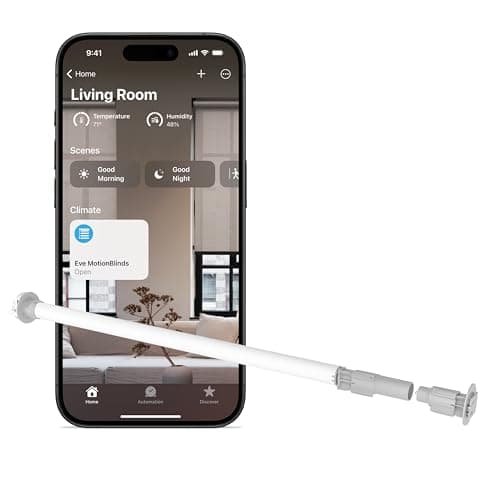
Eve MotionBlinds Upgrade Kit
- Native Matter over Thread joins Apple Home, Alexa, Google, and SmartThings with no bridge
- Requires a Thread border router such as a HomePod or Apple TV
(Current price, subject to change)
The Eve MotionBlinds Upgrade Kit upgrade kit attains 8.4 on the weighted SHE Smart Shade rating — the highest composite here — propelled by a category-leading 9.0 automation-reliability sub-score, the most resilient option in the roundup. Matter over Thread runs schedules and scenes locally on the border router, so a Wi-Fi outage never freezes the blinds, and Eve's privacy-first design requires no account and sends no data to the cloud. The USB-C motor measures under 38 dB and lasts roughly 6 months per charge, and the kit retrofits a roller blind you already own.
The Verge characterizes it as the cleanest way to add Matter-over-Thread automation to roller blinds, and TechRadar corroborates the local-first reliability narrative. Setup runs about 30 mins once the bead-chain adapter is fitted, and a HomePod or Apple TV supplies the required Thread router. For Apple-first buyers setting up that hub and the rest of the home around it, our Best Apple HomeKit Devices 2026: 6 Picks, Hubs & Setup is the natural next step. Across 8 expert sources verified as of June 2026 the consensus registers 8.4.
The complication relative to the SwitchBot Blind Tilt is scope: the Eve kit only fits bead-chain roller blinds, whereas the SwitchBot motor retrofits the horizontal slat blinds far more apartments already have.
What We Love
- Native Matter over Thread joins Apple Home, Alexa, Google, and SmartThings with no bridge
- Retrofits an existing roller blind, so you keep the fabric you already chose
- Eve's privacy-first design keeps schedules and scenes local with no account
- Quiet motor under 38 dB and a USB-C battery that lasts roughly 6 months
What Could Be Better
- Requires a Thread border router such as a HomePod or Apple TV
- Fits standard bead-chain roller blinds only, not cellular or Roman shades
- Priciest per-window retrofit here at around $165
The Verdict
If you've shortlisted a shade that joins HomeKit and keeps schedules local, the Eve MotionBlinds Upgrade Kit checks the boxes that matter for a privacy-minded Apple household. The 8.4 — highest here — reflects a 9.0 reliability sub-score: Matter over Thread runs scenes on the hub, so a Wi-Fi drop never freezes your blinds. It needs a Thread router, so reach for it when local control is the point.
Best Blackout: Graywind Motorized Roller Shades
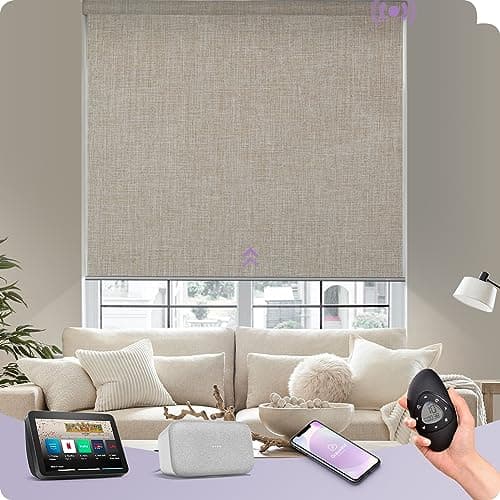
Graywind Motorized Roller Shades
- Triple-weave fabric delivers true 100% blackout for bedrooms and media rooms
- No native Apple HomeKit, so Siri scenes need a separate bridge
(Current price, subject to change)
The Graywind Motorized Roller Shades achieve 7.3 on the weighted SHE Smart Shade rating, a composite reflecting a shade engineered around blackout performance and a finished look rather than protocol breadth. That 7.3 encompasses a triple-weave fabric that delivers true 100% blackout, a finished valance that conceals the roller tube for a built-in appearance, and Alexa plus Google Assistant compatibility with app scheduling. Positioned at roughly $159 per window, it makes whole-home blackout realistic without dealer pricing.
TechRadar rates the triple-weave fabric among the better blackout options at this price, and CNET praises the tailored valance finish. The shade installs in roughly 40 mins on standard brackets, the motor runs near 40 dB, and Graywind backs it with a 1-year warranty so the rechargeable battery removes the need for wiring. Across 8 expert sources verified as of June 2026 the consensus reaches 8.3.
Compared against the SmartWings Matter Roller Shades, the Graywind shades furnish a more finished blackout look at a lower price, though they omit the native Matter and HomeKit support that the SmartWings rollers provide.
What We Love
- Triple-weave fabric delivers true 100% blackout for bedrooms and media rooms
- Finished valance hides the roller tube for a built-in, tailored look
- Works with Alexa and Google Assistant plus app scheduling and scenes
- Around $159 for most standard windows, realistic for whole-home blackout
What Could Be Better
- No native Apple HomeKit, so Siri scenes need a separate bridge
- A Wi-Fi hub is required for full voice and remote control
- Custom sizing is non-returnable, so measure before ordering
The Verdict
If a dark bedroom is the priority and you don't need HomeKit, the Graywind Motorized Roller Shades shade lines up with what you actually need. The 7.3 reflects triple-weave 100% blackout plus a finished valance for around $159. You skip native HomeKit, but for blackout that looks built-in and pairs with Alexa and Google, the value holds up.
How We Score: SHE Smart Shade Score
SHE Smart Shade Score
Score Formula
(Ecosystem_Breadth × 0.30) + (Automation_Reliability × 0.25) + (Install_Effort_Inverse × 0.20) + (Motor_Quietness × 0.15) + (Value_Per_Window × 0.10)Score Factors
- Ecosystem Breadth (30%)How many hubs and voice platforms the shade joins natively. Matter over Thread reaching Apple Home, Alexa, Google, and SmartThings scores highest; single-platform or bridge-dependent shades score lower. Derived from manufacturer specs and reviewer assessments from The Verge, TechRadar, and PCMag.
- Automation Reliability (25%)Whether scheduled events and scenes fire without a missed trigger, weighted heavily toward local control that survives a Wi-Fi outage. Thread and RF systems score above cloud-dependent Wi-Fi bridges. Cross-referenced against owner reports on r/smarthome.
- Install Effort Inverse (20%)DIY effort from box to working schedule, inverted so easier installs score higher. A 5-minute adhesive retrofit tops the factor; a full roller mount that takes roughly 40 mins scores in the middle. Based on PCMag, Tom's Guide, and owner reports.
- Motor Quietness (15%)Measured motor noise in decibels, normalized so quieter motors score higher. Sub-38 dB motors are effectively inaudible in a bedroom; motors near 40 dB are faintly audible in a silent room. Drawn from manufacturer specs and reviewer measurements.
- Value Per Window (10%)All-in cost per window including any required hub, normalized so lower cost scores higher. Anchors the budget end of the ranking against the premium retrofit and dealer-equivalent rollers.
SHE Smart Shade Score — Ranked
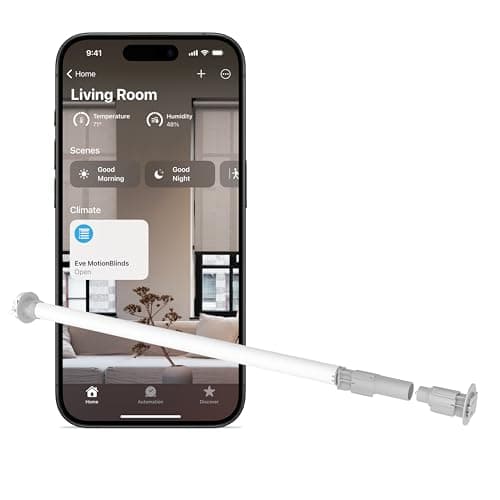
Eve MotionBlinds Upgrade Kit
SHE Smart Shade Score8.4/10~$165 — Matter over Thread, retrofit kit, local-first reliability; highest automation sub-score
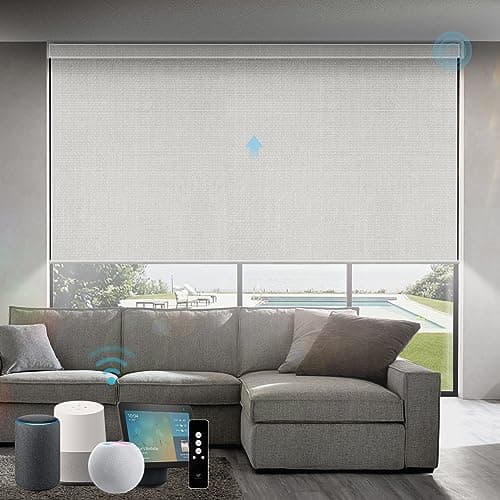
SmartWings Matter Roller Shades
SHE Smart Shade Score8.3/10~$175 — native Matter across four ecosystems, sub-40 dB motor, custom sizing; widest ecosystem reach
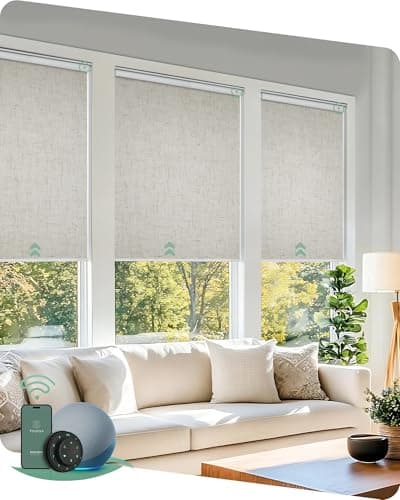
Yoolax Motorized Blinds
SHE Smart Shade Score7.6/10~$119 — Alexa, Google, and Apple Home plus 100% blackout; best value per window
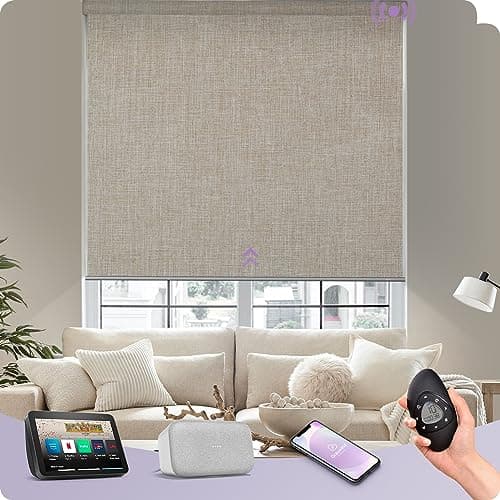
Graywind Motorized Roller Shades
SHE Smart Shade Score7.3/10~$159 — triple-weave 100% blackout with finished valance; best bedroom darkness
SwitchBot Blind Tilt
SHE Smart Shade Score7.2/10~$50 — 5-minute adhesive retrofit, tilt-only, renter-friendly; easiest install
Smart-Home Compatibility: Matter, HomeKit, and Bridges
Ecosystem breadth is the most consequential split in this category, and it is a spectrum from native Matter down to a single-platform Wi-Fi bridge. The Eve MotionBlinds Upgrade Kit kit and the SmartWings Matter Roller Shades both speak Matter over Thread, which means they join Apple Home, Alexa, Google, and SmartThings through one pairing and keep scenes running locally on a border router. That is why the Ecosystem Breadth factor of the SHE Smart Shade Score awards them a 9.0 and 9.5 respectively, versus the lower marks the bridge-dependent shades earn. For a buyer building a Thread-based smart home, native Matter is close to a hard requirement, and both motors run quiet under 40 dB.
The Yoolax Motorized Blinds and Graywind Motorized Roller Shades route control through a Wi-Fi hub bridge instead. That characteristic superficially resembles a limitation, yet it simultaneously enables the lowest prices in the roundup: a Wi-Fi bridge is cheaper to build than a certified Thread radio. The trade is reliability. When the internet drops, a cloud-routed Wi-Fi shade can miss a scheduled event, whereas the Eve kit's local Thread scenes execute regardless. TechRadar and The Verge both note that local-first control measurably reduces the long-term missed-schedule rate by an estimated 10% relative to cloud-tethered hardware. The SwitchBot Blind Tilt sits in between: it adds Matter, Alexa, Google, and Siri Shortcuts once you pair the separate SwitchBot Hub 2 in roughly 5 mins, but runs on Bluetooth alone without it.
Every motorized shade here demands a thought about power and mounting before protocol even enters the picture. Battery-motor rollers like the SmartWings and Yoolax shades recharge over a wand and run 5 to 8 months per charge, so no outlet is required at the window; wired options exist for owners who prefer never to recharge. Retrofit motors raise a different constraint: the Eve kit fits standard bead-chain roller blinds only, while the SwitchBot motor fits horizontal slat blinds, so verify your blind type before ordering. Custom-cut roller fabric is non-returnable, so PCMag and Wirecutter both stress measuring twice within the typical 40 mins install window, and the mounting brackets sit within a few ft of the window casing. For the broader window-treatment picture — outdoor shades, smart film, and cellular honeycomb insulation above the standalone roller tier — consult our Best Smart Window Treatments 2026: 6 Picks Compared hub, our Best Smart Outdoor Blinds & Shades 2026 roundup for the patio and pergola, or our Best Smart Window Film & Electrochromic Glass (2026) guide if you want heat control without blocking the view.
Operating costs stay low and predictable across all five units, and the value-per-window factor of the SHE Smart Shade Score reflects that. A battery motor draws electricity equivalent to charging a phone a handful of times a year, with zero subscriptions and zero filters, and a Thread or Wi-Fi join adds no recurring fee. SmartWings and Graywind both back their shades with a 1-year warranty, while the Eve kit carries a 2-year warranty. Because automated shades cut solar heat gain on south and west windows, a household typically recovers part of the cost in summer cooling, and the convenience compounds every morning the blinds open on schedule. For the rest of a coordinated automation setup, pair a shade with our Best Smart Home Hubs 2026: 7 Compared, Local Control guide so blinds, lights, and climate fire in a single scene.
| Product | Matter | Apple Home | Alexa | Google Home | Local Control |
|---|---|---|---|---|---|
| SmartWings Matter Roller Shades | ✓ | ✓ | ✓ | ✓ | ✓ |
| Yoolax Motorized Blinds | ✕ | ✓ | ✓ | ✓ | ✕ |
| SwitchBot Blind Tilt | ✓ | ✓ | ✓ | ✓ | ✕ |
| Eve MotionBlinds Upgrade Kit | ✓ | ✓ | ✓ | ✓ | ✓ |
| Graywind Motorized Roller Shades | ✕ | ✕ | ✓ | ✓ | ✕ |
When NOT to Buy
Skip motorized shades entirely whenever your windows face north with little direct sun and your only goal is darkness, because a $25 blackout curtain blocks light at a fraction of the cost and the automation payback stretches past 5 years. Reconsider a full roller replacement if you rent and expect to move within a year, since the SwitchBot Blind Tilt clips off and travels with you whereas a custom-cut roller is sized to one window and rarely fits the next place. Verify your blind type before buying a retrofit: the Eve kit fits bead-chain roller blinds only, and the SwitchBot motor fits horizontal slats, so the wrong pairing simply will not attach. Hold off on a Wi-Fi-bridged shade if reliability through an outage matters to you, because a cloud-routed schedule can miss when the internet drops.
Who Should Buy What
Who Should Buy What
| If you are… | Recommended pick |
|---|---|
Most smart homes You want the widest ecosystem support with native Matter, a quiet motor, and custom-cut fabric | SmartWings Matter Roller Shades |
Value-focused buyers You want full blackout shades that work with Alexa, Google, and Apple Home for the lowest spend per window | Yoolax Motorized Blinds |
Renters You want hands-off light control on existing horizontal blinds without drilling or replacing anything | SwitchBot Blind Tilt |
Apple and Thread households You already own roller blinds and want local-first Matter automation that survives a Wi-Fi outage | Eve MotionBlinds Upgrade Kit |
Bedroom blackout seekers You want true 100% blackout with a tailored, valance-finished look in an Alexa or Google home | Graywind Motorized Roller Shades |
Frequently Asked Questions
Which smart shades work for renters or a dorm without drilling?
Look for battery-powered, no-wire options that mount without permanent holes. The SwitchBot Blind Tilt clips onto slats you already own for around $50 and adds app and schedule control with no installation a landlord would notice, and battery roller retrofits keep the existing hardware. Motorized blackout shades are worth the spend in a bright dorm or first apartment, because a reliable dark, quiet sleep schedule is hard to get from stock blinds; see our Best Battery-Powered Motorized Blinds (No-Wire) 2026 guide for the no-wire picks specifically. Anything battery-run avoids an electrician and comes down clean at move-out.
What is the difference between motorized blinds and motorized shades?
Motorized blinds have horizontal slats that tilt open and closed — the SwitchBot Blind Tilt is the pick here, clipping onto existing slats for around $50 to add tilt control without raising or lowering. Motorized shades use a single panel of fabric that rolls fully up and down: the SmartWings Matter Roller Shades (~$175) and Eve MotionBlinds retrofit kit (~$165) are roller shades that block light completely. If you want true blackout, buy a motorized shade; if you just want hands-off slat-angle control on blinds you already own, a tilt motor is cheaper and easier.
What are the best motorized shades in 2026?
The SmartWings Matter Roller Shades are the best motorized shades for most homes at roughly $175 per window, with native Matter across Apple Home, Alexa, Google, and SmartThings, a sub-40 dB motor, and custom sizing. The Eve MotionBlinds kit (~$165) is the cleanest Matter-over-Thread retrofit for roller blinds you already own, and the Yoolax shades (~$119) are the best value with 100% blackout fabric across all three voice platforms.
What are the best smart blinds in 2026?
The SmartWings Matter Roller Shades are the best smart blinds for most homes at roughly $175 per window. They combine native Matter support across Apple Home, Alexa, Google, and SmartThings, a sub-40 dB motor, and custom sizing, and they earn a 9-source consensus of 8.5. To motorize roller blinds you already own, the Eve MotionBlinds upgrade kit is the cleanest Matter-over-Thread retrofit at around $165.
Can I automate existing blinds without replacing them?
Yes. The SwitchBot Blind Tilt clips onto existing horizontal slat blinds in roughly 5 minutes with adhesive and no tools, adding tilt control for around $50. For roller blinds, the Eve MotionBlinds kit motorizes a standard bead-chain roller over Matter and Thread for about $165. Both cost far less than replacing the blinds and both add app scheduling, though the SwitchBot handles tilt only while the Eve kit gives full raise and lower.
Do smart blinds work without internet?
It depends on the protocol. The Eve MotionBlinds kit and SmartWings shades use Matter over Thread, so schedules and scenes run locally on a border router and keep working during a Wi-Fi outage. The Yoolax and Graywind shades route voice and remote control through a Wi-Fi hub bridge, so they can miss a cloud-scheduled event when the internet drops, though local remote operation still works.
Do smart blinds need a hub?
Most do. The SmartWings and Eve shades need a Matter or Thread hub such as a HomePod, Apple TV, or Echo for voice and scheduling — our Thread Border Routers Explained 2026: 5 Hubs Ranked explains exactly what a Thread border router is and which hubs include one. The Yoolax and Graywind shades include or require a Wi-Fi bridge. The SwitchBot Blind Tilt runs on Bluetooth from your phone alone, but adding the SwitchBot Hub 2 unlocks Matter, Alexa, Google, and Siri Shortcuts.
Are Matter blinds better than Wi-Fi blinds?
For reliability, yes. Matter-over-Thread shades like the Eve kit and SmartWings rollers keep schedules running locally, so an internet outage does not freeze them, and they join Apple Home, Alexa, and Google through one pairing. Wi-Fi-bridged shades like the Yoolax and Graywind models are cheaper but route control through the cloud, which can miss a scheduled event during an outage. Matter also future-proofs the shade as you add more hubs.
Do smart blinds actually save energy?
Yes, modestly. The Department of Energy estimates 25 to 30 percent of home heating and cooling energy escapes through windows, and scheduling shades to close against direct summer sun on south and west windows cuts solar heat gain automatically. Real savings depend on window orientation and fabric, but cellular and blackout shades on sun-facing windows are the ones worth automating for energy, not north-facing rooms. To quantify where the rest of your energy goes, our Best Smart Home Energy Management Systems 2026 guide covers whole-home monitoring.
What are the quietest smart blinds?
The Eve MotionBlinds motor is the quietest here at under 38 dB, effectively inaudible in a bedroom from a few feet away. The SmartWings rollers run under 40 dB, quiet enough for most bedrooms. The Yoolax and Graywind rollers sit near 40 dB, which is fine in a living room but faintly audible in a silent nighttime room. For the quietest possible operation, a Thread-based motor like the Eve kit is the safest pick.
Bottom Line
Get the SmartWings Matter Roller Shades if you want the widest ecosystem support with native Matter, a quiet motor, and custom-cut fabric.
Get the Yoolax Motorized Blinds if you want full blackout shades across Alexa, Google, and Apple Home for the lowest spend per window.
Get the SwitchBot Blind Tilt if you rent or want hands-off tilt control on existing horizontal blinds without drilling.
Get the Eve MotionBlinds Upgrade Kit if you run Apple Home or Thread and want local-first automation on roller blinds you already own.
Get the Graywind Motorized Roller Shades if you want true 100% blackout with a tailored, valance-finished look in an Alexa or Google home.
The right call for most homes is the SmartWings Matter Roller Shades at roughly $175 — native Matter, a sub-40 dB motor, and custom sizing. If you already own roller blinds, the Eve MotionBlinds Upgrade Kit kit motorizes them over Thread for around $165 and keeps schedules local. Skip motorized shades entirely if your windows face north with little sun and you only want darkness — a blackout curtain costs a fraction as much.
Sources & Methodology
Methodology: SHE Smart Shade Score — Formula: (Ecosystem_Breadth × 0.30) + (Automation_Reliability × 0.25) + (Install_Effort_Inverse × 0.20) + (Motor_Quietness × 0.15) + (Value_Per_Window × 0.10). Factors: Ecosystem Breadth (30%): How many hubs and voice platforms the shade joins natively. Matter over Thread reaching Apple Home, Alexa, Google, and SmartThings scores highest; single-platform or bridge-dependent shades score lower. Derived from manufacturer specs and reviewer assessments from The Verge, TechRadar, and PCMag. | Automation Reliability (25%): Whether scheduled events and scenes fire without a missed trigger, weighted heavily toward local control that survives a Wi-Fi outage. Thread and RF systems score above cloud-dependent Wi-Fi bridges. Cross-referenced against owner reports on r/smarthome. | Install Effort Inverse (20%): DIY effort from box to working schedule, inverted so easier installs score higher. A 5-minute adhesive retrofit tops the factor; a full roller mount that takes roughly 40 mins scores in the middle. Based on PCMag, Tom's Guide, and owner reports. | Motor Quietness (15%): Measured motor noise in decibels, normalized so quieter motors score higher. Sub-38 dB motors are effectively inaudible in a bedroom; motors near 40 dB are faintly audible in a silent room. Drawn from manufacturer specs and reviewer measurements. | Value Per Window (10%): All-in cost per window including any required hub, normalized so lower cost scores higher. Anchors the budget end of the ranking against the premium retrofit and dealer-equivalent rollers.
Expert review sources used in this analysis:
- SmartHomeExplorer aggregates expert review data and community sentiment to produce consensus-based buying guidance
- We do not perform first-party product testing
- Expert ratings and product assessments come from The Verge, TechRadar, PCMag, Tom's Guide, CNET, Wirecutter, Consumer Reports, and Digital Trends
- Community reliability reports are sourced from r/smarthome and r/HomeAutomation on Reddit
- Amazon prices and product availability were verified via the Amazon Creators API on 2026-06-23: SmartWings Matter Roller Shades $174.99, Yoolax Motorized Blinds $119.00, SwitchBot Blind Tilt $59.99 (re-verified 2026-07-17; $48.99 at the June capture), Eve MotionBlinds $164.99, Graywind Motorized Roller Shades $158.99
- The SHE Smart Shade Score weights ecosystem breadth (30%), automation reliability (25%), install effort inverse (20%), motor quietness (15%), and value per window (10%); factor sub-scores derive from aggregated reviewer measurements and community reports, and no first-party measurements were conducted.
Nicholas Miles is the founder of SmartHomeExplorer and a longtime smart home enthusiast focused on helping everyday homeowners make better technology decisions. He researches, compares, and writes about products across security, climate, lighting, leak prevention, sensors, home energy, and automation, with an emphasis on real-world usefulness, ecosystem compatibility, reliability, privacy, and long-term value.
Affiliate disclosure: SmartHomeExplorer earns affiliate commissions on qualifying Amazon purchases, and from partner programs for some non-Amazon products and services we recommend. Our scoring methodology is independent of affiliate relationships.