

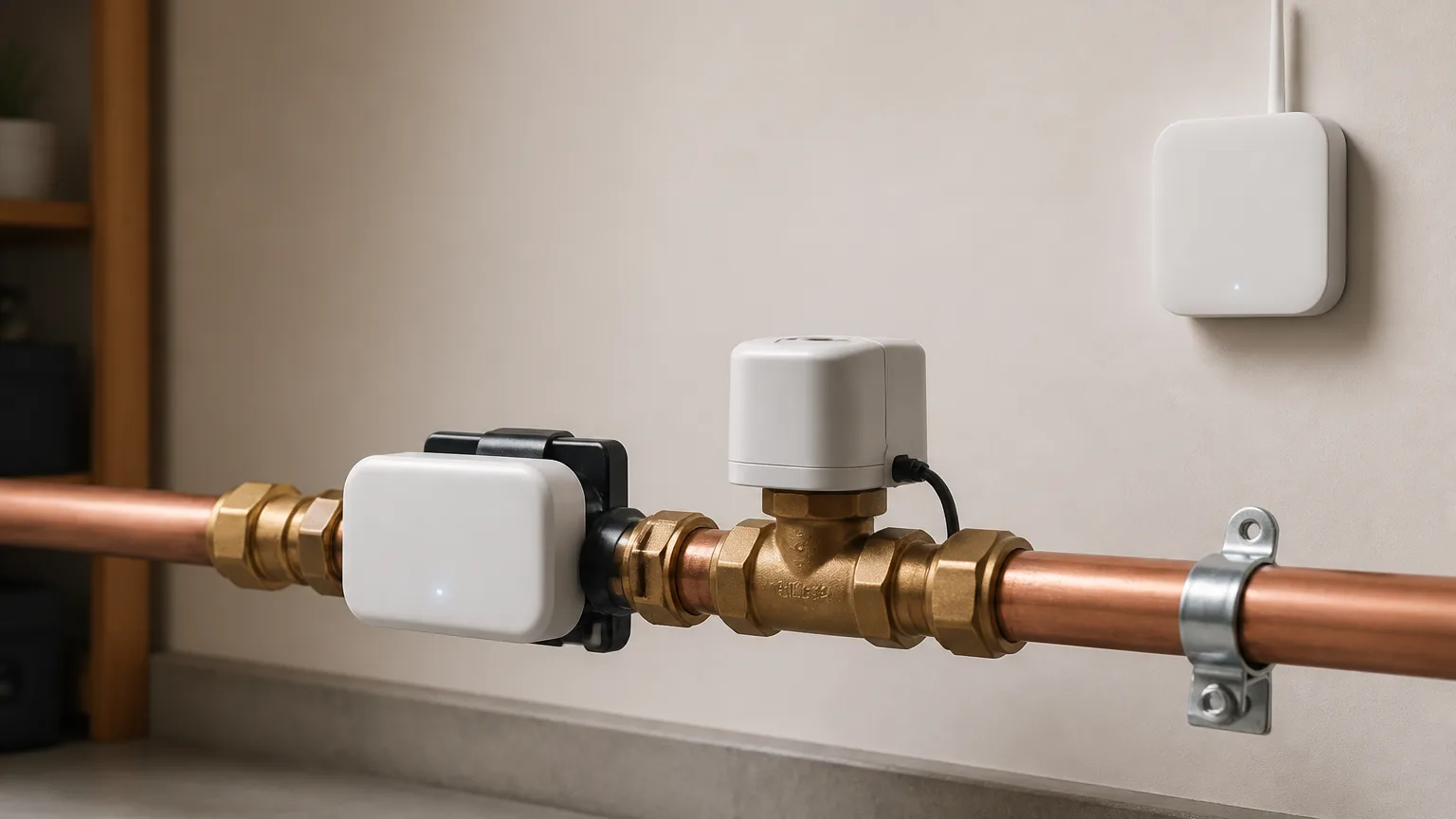
Best Whole-Home Water Monitors in 2026: 4 Picks Ranked
The Moen Flo bundle attains the highest SHE Water Protection Score here, because it is the only pick that closes the valve and documents four separate elements of how it finds the leak. Four monitors, every specification read from its own Amazon listing in September 2026.
This article contains affiliate links. We may earn a commission at no extra cost to you. Prices change frequently — check the current price on Amazon before buying. Learn more
The Short Answer
The Moen Flo bundle accumulates the highest composite here, because it publishes both an automatic shutoff and a documented detection method. That figure is roughly 2.3x the equivalent calculated for the cheapest pick. Nothing that merely reports a leak can realistically approach the summit of a protection ranking.
Featured in this Guide
Moen
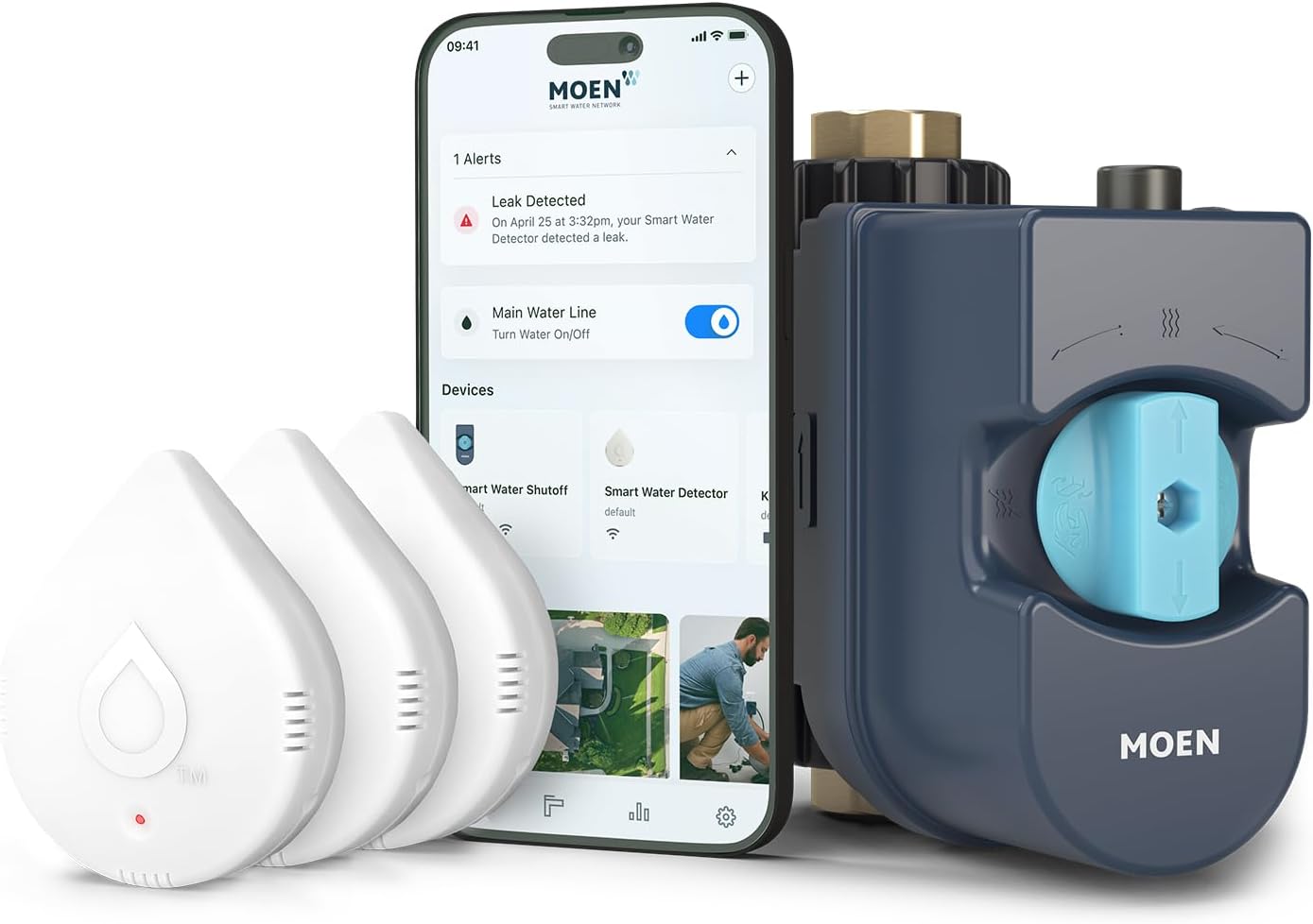
Flo 3/4-Inch Smart Water Shutoff with 3 Smart Water Detectors
- •Closes the main valve on its own, runs a daily leak test down to a drop per minute, and puts three spot detectors in the same box
YoLink
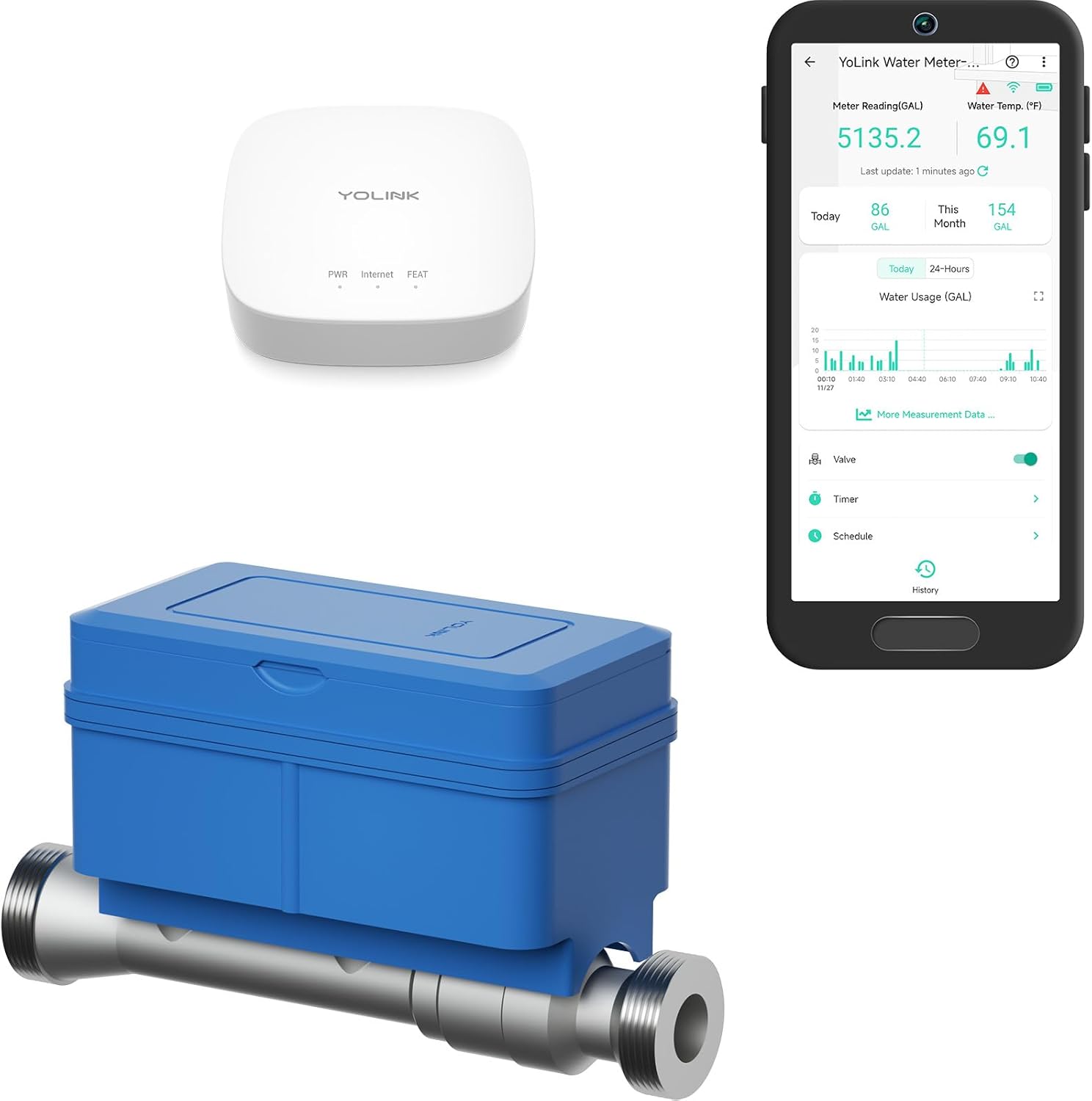
FlowSmart All-in-One Smart Water Meter (3/4-Inch, YS5018)
- •The same shutoff protection over a long-range radio that keeps working when the internet does not, with a hub included
Bluebot
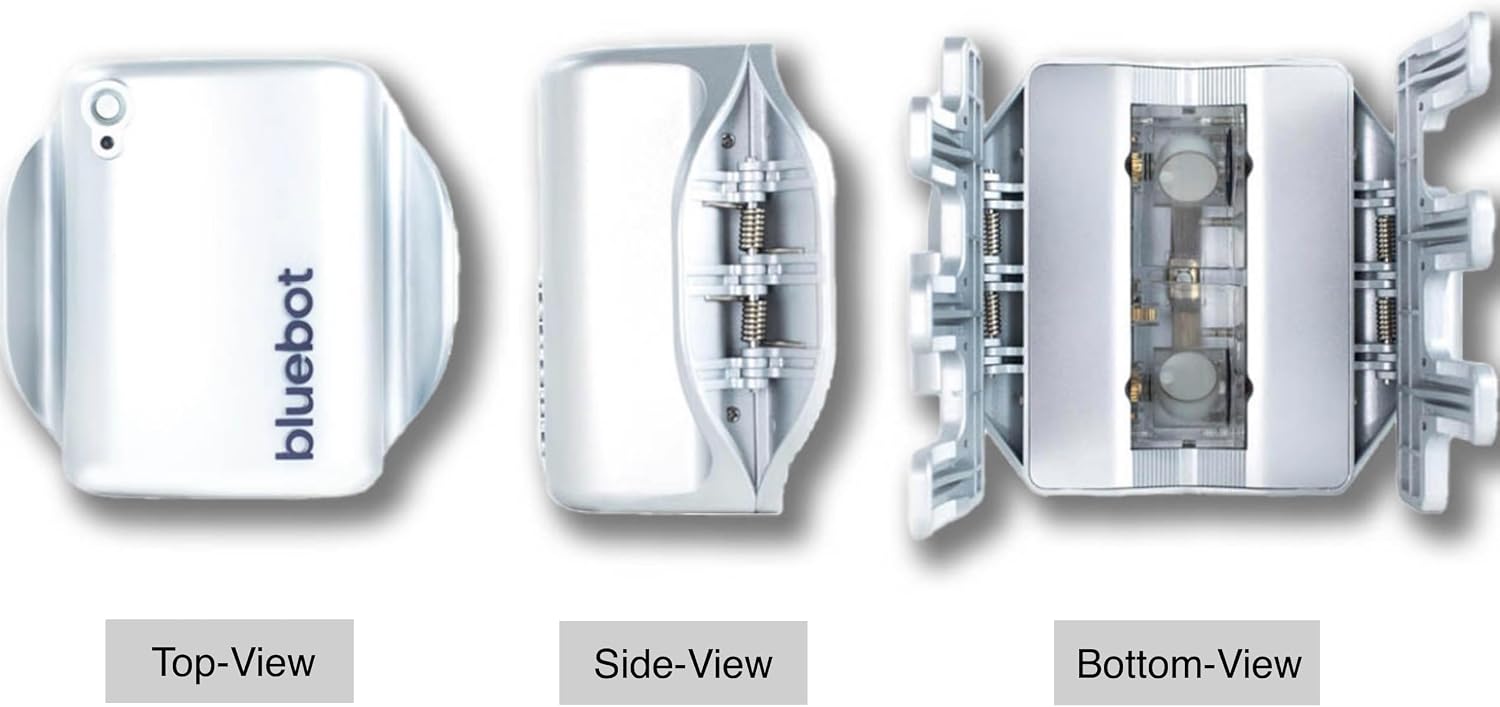
Wi-Fi Universal Water Meter (Clamp-On, Bundle 2)
- •One clamp fits five pipe sizes across eight pipe materials, anywhere on the line, with no cutting and no plumber
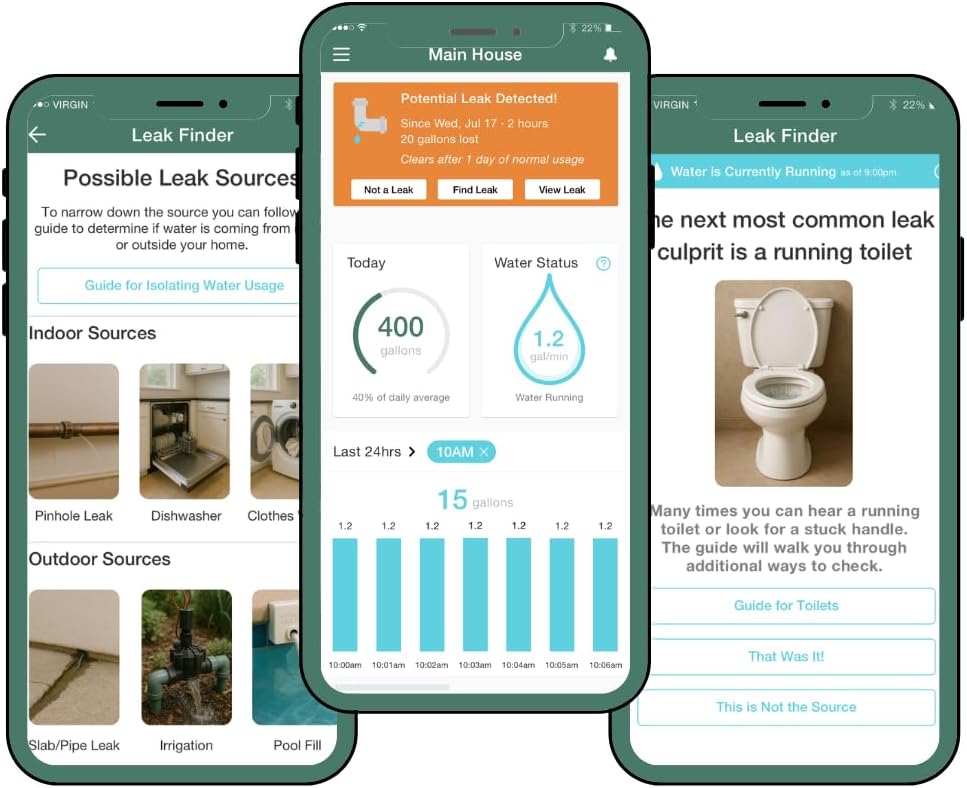
Flume
F2X Smart Home Water Monitor (Newest Model)
- •The cheapest route to whole-home visibility, with irrigation and sprinkler zones broken out separately from the house
Head-to-Head: Shutoff, Detection and Install
Sensors
Chart
 Smarthomeexplorer.com
Tap any pick to check its live Prime price on Amazon.
Reolink RLK16-800B8 4K 16-Channel PoE NVR System (8-Camera)
RecommendedCheck price
ANNKE 4K PoE NVR Security Camera System (6-Camera)
RecommendedCheck price
eufyCam S3 Pro 2-Cam Kit (Solar, 4K)
Must BuyCheck price
What Actually Separates a Monitor From a Protector
The Insurance Information Institute records water damage and freezing as 27.6% of homeowner insurance losses, second only to wind and hail. That statistic explains precisely why this category exists. It also explains why the ranking below weights one capability above every other: whether the device can actually close your water supply. Two of the four picks in this guide can. The SHE Water Protection Score normalizes that alongside how much each manufacturer genuinely documents about its own detection hardware. Installation independence is the counterweight, because a clamp-on unit that takes 15 mins demands nothing of your plumbing. Our best smart home water systems 2026 hub covers the wider category.
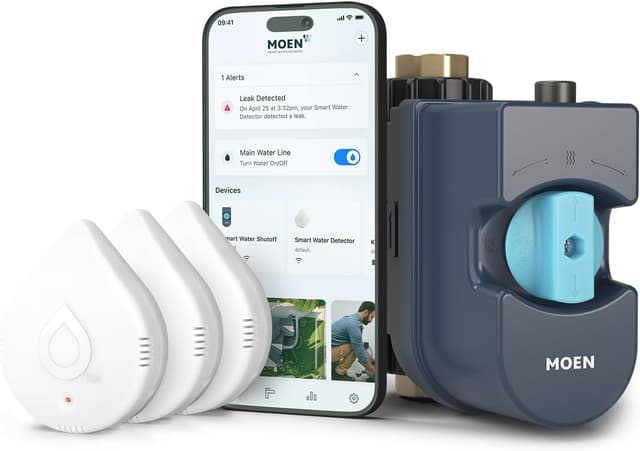
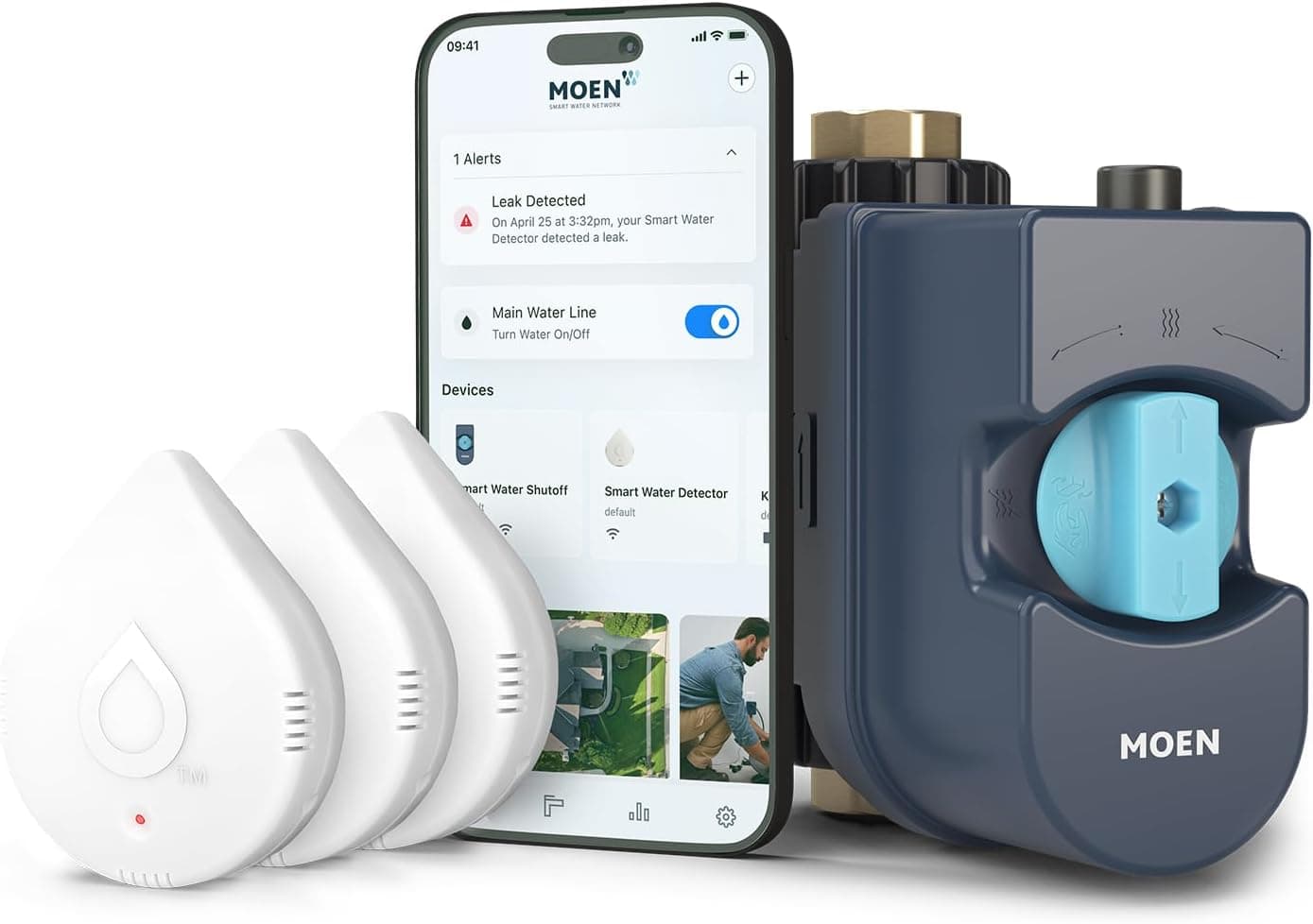
Best Overall: Moen Flo 3/4-Inch Smart Water Shutoff with 3 Smart Water Detectors
Moen Flo 3/4-Inch Smart Water Shutoff with 3 Smart Water Detectors
- The only pick here that both closes the valve and documents four separate elements of how it finds the leak
- Digital Trends reports it cannot tell you where in the house the leak is
(Current price, subject to change)
Digital Trends and This Old House both cover the Flo by Moen shutoff, and Digital Trends publishes a rating of 8 out of 10 for it. Its reviewer describes the nightly routine plainly: the valve briefly closes and watches for pressure changes, and a decline means something downstream is leaking.
That proactive test is what separates this pick from every clamp-on alternative in this roundup. The listing puts the threshold at a drop per minute, and This Old House describes the same mechanism independently. Four documented elements of the detection path produce the maximum factor calculated anywhere here, versus a quarter of that for the Bluebot and nothing whatsoever for the Flume. Its leading SHE Water Protection Score follows directly from that combination.
The trade-offs are real and worth naming. Digital Trends records that the device cannot locate a leak, only detect one, and that its reviewer's own irrigation runs triggered shutdown warnings repeatedly. His threshold eventually settled at roughly 57 gallons across 11 mins before a warning fires.
What We Love
- The only pick here that both closes the valve and documents four separate elements of how it finds the leak
- MicroLeak Technology runs a daily test and flags leaks as small as a drop per minute
- Three detectors included, and any of them can trigger the main shutoff
- No hub required, and it joins Alarm.com, Ring, Google Assistant and NICE directly
What Could Be Better
- Digital Trends reports it cannot tell you where in the house the leak is
- Mains powered with no Ethernet port, so the valve is only as reliable as the Wi-Fi reaching it
- Its reviewer had to override repeated irrigation alerts before the baseline settled
The Verdict
If your priority is preventing the flood rather than documenting it afterwards, Moen Flo 3/4-Inch Smart Water Shutoff with 3 Smart Water Detectors checks the boxes that matter for that job — an automatic valve, a proactive daily leak test, and three spot detectors that can trigger the same shutoff.
Check price for the Moen Flo 3/4-Inch Smart Water Shutoff with 3 Smart Water Detectors →
Ready to upgrade your home?
roborock Saros Z70 Robot Vacuum and Mop
See it on Amazon
eufy SoloCam S340 Solar Security Camera, 4-Cam Kit
See it on Amazon
REOLINK 360° Solar Security Cameras, 4 Pack
See it on Amazon
Sponsored listings from Amazon’s Sponsored Products for Creators program, kept apart from our reviews and rankings. How we make money
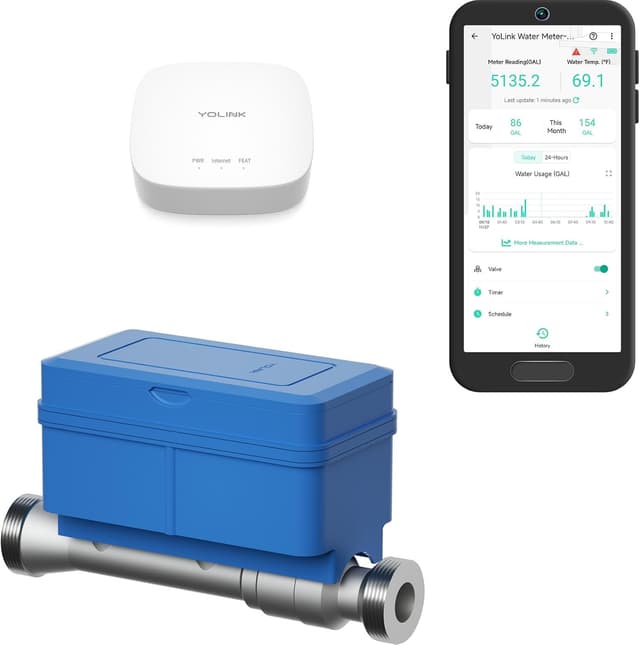
Best Value with Automatic Shutoff: YoLink FlowSmart All-in-One Smart Water Meter (3/4-Inch, YS5018)
YoLink FlowSmart All-in-One Smart Water Meter (3/4-Inch, YS5018)
- Control-D2D rules keep critical shutoff actions running with no internet connection
- No outlet we track has published a review of this exact model
(Current price, subject to change)
This pick achieves the same maximum shutoff factor as the Moen bundle above, which is precisely why the two finish comparatively close together despite the gap in price. Where it separates itself is resilience: it earns the maximum factor available on that dimension, comfortably above the equivalent calculated for either clamp-on monitor.
Three published traits produce that result. Critical shutoff rules continue running device to device whenever the internet connection disappears. The radio is a dedicated long-range design rather than household Wi-Fi. The power system is specified for 10-year operation instead of a permanent mains cable.
One clarification the listing invites and this guide will not repeat uncritically. The NSF certification it advertises covers material safety for potable water, not measurement accuracy, so it earns no credit in the detection factor. That factor stays low relative to the Moen bundle for a straightforward reason: nothing else about the sensing path is documented.
What We Love
- Control-D2D rules keep critical shutoff actions running with no internet connection
- A LoRa radio built for the distances that defeat Wi-Fi at a basement water main
- A 10-year battery design rather than a mains cable at the valve
- The hub is in the box, and it joins Alexa, IFTTT and Home Assistant
What Could Be Better
- No outlet we track has published a review of this exact model
- Ultrasonic is named, but no leak-size threshold or accuracy figure is published
- The listing warns against flooding, standing water and condensation, so siting matters
The Verdict
For a household that wants the valve to close by itself without paying for the most expensive box on the shelf, YoLink FlowSmart All-in-One Smart Water Meter (3/4-Inch, YS5018) is a sensible pick for that setup — the same shutoff capability, carried over a radio that does not depend on your router reaching the basement.
Check price for the YoLink FlowSmart All-in-One Smart Water Meter (3/4-Inch, YS5018) →
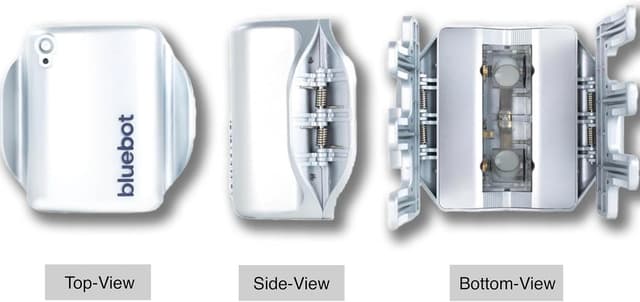
Best for Homes Without an Accessible Meter: Bluebot Wi-Fi Universal Water Meter (Clamp-On, Bundle 2)
Bluebot Wi-Fi Universal Water Meter (Clamp-On, Bundle 2)
- One clamp adjusts across five pipe sizes and eight pipe materials, including PEX and ductile iron
- No automatic shutoff, so it reports the flood rather than preventing it
(Current price, subject to change)
The universal fit is the entire argument, and it is a genuinely useful one. Copper, PVC, CPVC, PE, galvanized, ductile iron, stainless and PEX are all accommodated by one self-adjusting clamp. It mounts on any straight run, rather than requiring the utility meter its nearest alternative depends on absolutely.
Everything else is a compromise, and the price makes those compromises expensive. Ultrasonic measurement is named, but no accuracy figure and no leak-size threshold appear anywhere on the listing, so the detection factor lands at a quarter of the leader's. There is no valve, which zeroes the heaviest-weighted factor in the whole formula outright.
Its SHE Water Protection Score therefore finishes at roughly half the top figure, and the arithmetic is unsubtle. An install the listing puts at 15 mins is what it delivers, compared to a plumber's visit for either shutoff pick. A 2-yr data subscription softens the running cost without altering the protection question.
What We Love
- One clamp adjusts across five pipe sizes and eight pipe materials, including PEX and ductile iron
- Mounts anywhere on a straight run, so no utility meter access is required
- The listing puts installation at 15 mins with no cutting and no tools
- IP-65 rated, which makes an outdoor or damp mounting location genuinely viable
What Could Be Better
- No automatic shutoff, so it reports the flood rather than preventing it
- No outlet we track has published a review of it
- Premium Live Data renews at $59.76 annually once the included period expires
- It costs substantially more than the YoLink, which can actually close the valve
The Verdict
You've shortlisted this because your plumbing does not cooperate with anything simpler, and on that understanding you'll be well-served here — Bluebot Wi-Fi Universal Water Meter (Clamp-On, Bundle 2) is the only monitor in this guide that clamps onto the outside of your pipe with no cutting, rather than being plumbed inline or strapped to the meter.
Check price for the Bluebot Wi-Fi Universal Water Meter (Clamp-On, Bundle 2) →
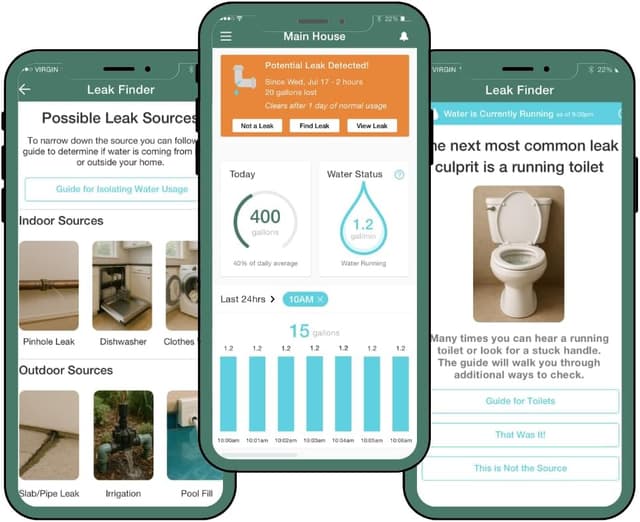
Best for Water-Bill Tracking: Flume F2X Smart Home Water Monitor (Newest Model)
Flume F2X Smart Home Water Monitor (Newest Model)
- Straps to the meter with no tools, no cutting and no plumber whatsoever
- No automatic shutoff, and no companion valve from Flume either
(Current price, subject to change)
Flume publishes nothing about how this model measures, which produces the only zero detection factor in this guide. That is a documentation failure rather than a hardware verdict, and the distinction matters. Android Central covers the Flume 2 that the F2X supersedes, and records that it magnetically reads the spinning disc inside the meter. Its reviewer clocks the physical installation at under 30 seconds.
None of that is transferred to this model here, because Flume sells the F2X as a different product with a parylene coating and an upgraded radio. What the listing does publish is compatibility with over 95% of home meters, and a manufacturer claim that its customers cut bills by up to 15% each month.
The dependency Android Central identified remains the real constraint. Its reviewer states that an apartment, a multi-family building or a well without a conventional meter enables no installation, versus a clamp-on alternative mounting on the pipe itself. That review also records a battery interval of 2 to 3 yr on the older model, relative to the extended life Flume now claims for this one.
What We Love
- Straps to the meter with no tools, no cutting and no plumber whatsoever
- Irrigation and sprinkler zones are broken out separately from household use
- Standard AA packs replace the proprietary pack its predecessor required
- An upgraded Wi-Fi chip and a parylene coating over the model it supersedes
What Could Be Better
- No automatic shutoff, and no companion valve from Flume either
- Flume publishes no sensing method, accuracy figure or leak threshold for this model
- Android Central's coverage is of the Flume 2 this model replaces, not of the F2X
- It stops working entirely if you cannot reach your utility meter
The Verdict
If the question is where your water is going rather than how to stop it, Flume F2X Smart Home Water Monitor (Newest Model) is the path of least friction — it straps onto the meter in minutes, and it separates the sprinklers from the house so the bill finally makes sense.
Check price for the Flume F2X Smart Home Water Monitor (Newest Model) →
How We Score: SHE Water Protection Score
SHE Water Protection Score
Score Formula
(Automatic Shutoff × 0.35) + (Published Detection Hardware × 0.25) + (Install Independence × 0.20) + (Resilience and Reach × 0.20)Score Factors
- Automatic Shutoff (35%)Ten where the listing publishes an integrated motorised valve that closes on its own, zero where the device only reports and alerts. Deliberately binary and deliberately the heaviest weight, because a monitor that cannot close the valve cannot prevent the damage it detects.
- Published Detection Hardware (25%)Two and a half points for each published element of the sensing path, capped at ten: a named measurement method, a published leak-size or accuracy threshold, a proactive leak test the device runs on its own schedule, and continuous pressure or temperature sensing. Credited from the Amazon listing or from an outlet covering that exact product line.
- Install Independence (20%)Ten where the listing states the device clamps or straps on with no pipe cutting and no plumber, three where it is an inline device the listing says to have professionally fitted. This factor deliberately pulls against the first one, because the same physical connection that permits a valve also demands a plumber.
- Resilience and Reach (20%)Two points each, capped at ten, for published traits that keep the device working: critical actions continuing without internet, a dedicated long-range radio, multi-year battery or power independence, a published ingress rating, coverage of multiple pipe sizes, and additional protection hardware included in the box.
SHE Water Protection Score — Ranked
Scored against Amazon listings and outlet reviews read in September 2026. This composite measures published protection capability and documentation, not measured detection accuracy, which no outlet publishes comparably for these products.
Moen Flo 3/4-Inch Smart Water Shutoff with 3 Smart Water Detectors
SHE Water Protection Score7.4/10The only pick that both closes the valve and documents four separate elements of how it finds the leak
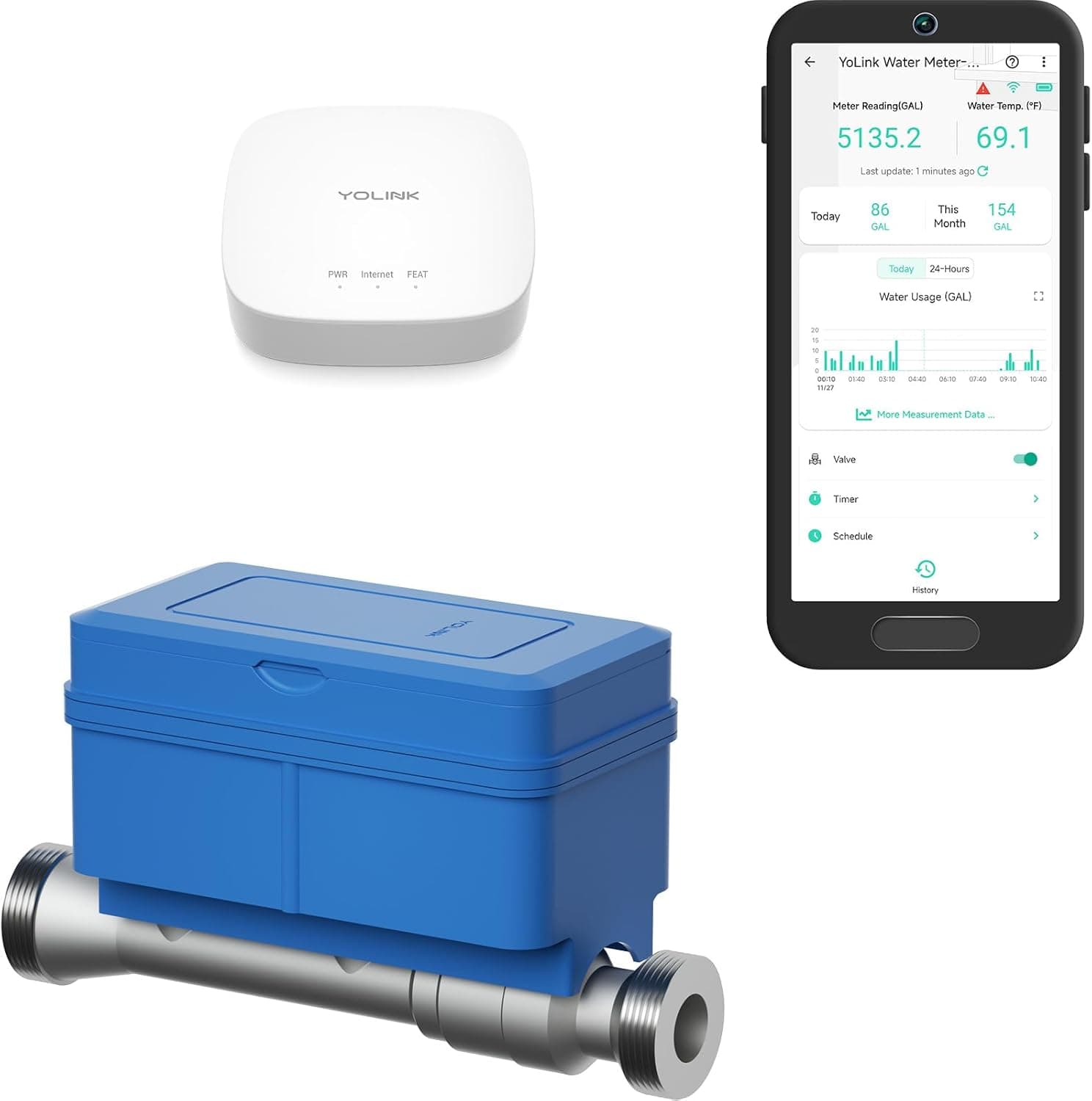
YoLink FlowSmart All-in-One Smart Water Meter (3/4-Inch, YS5018)
SHE Water Protection Score6.7/10The same shutoff capability and the best resilience here, held back by a sensing path that stops at its method
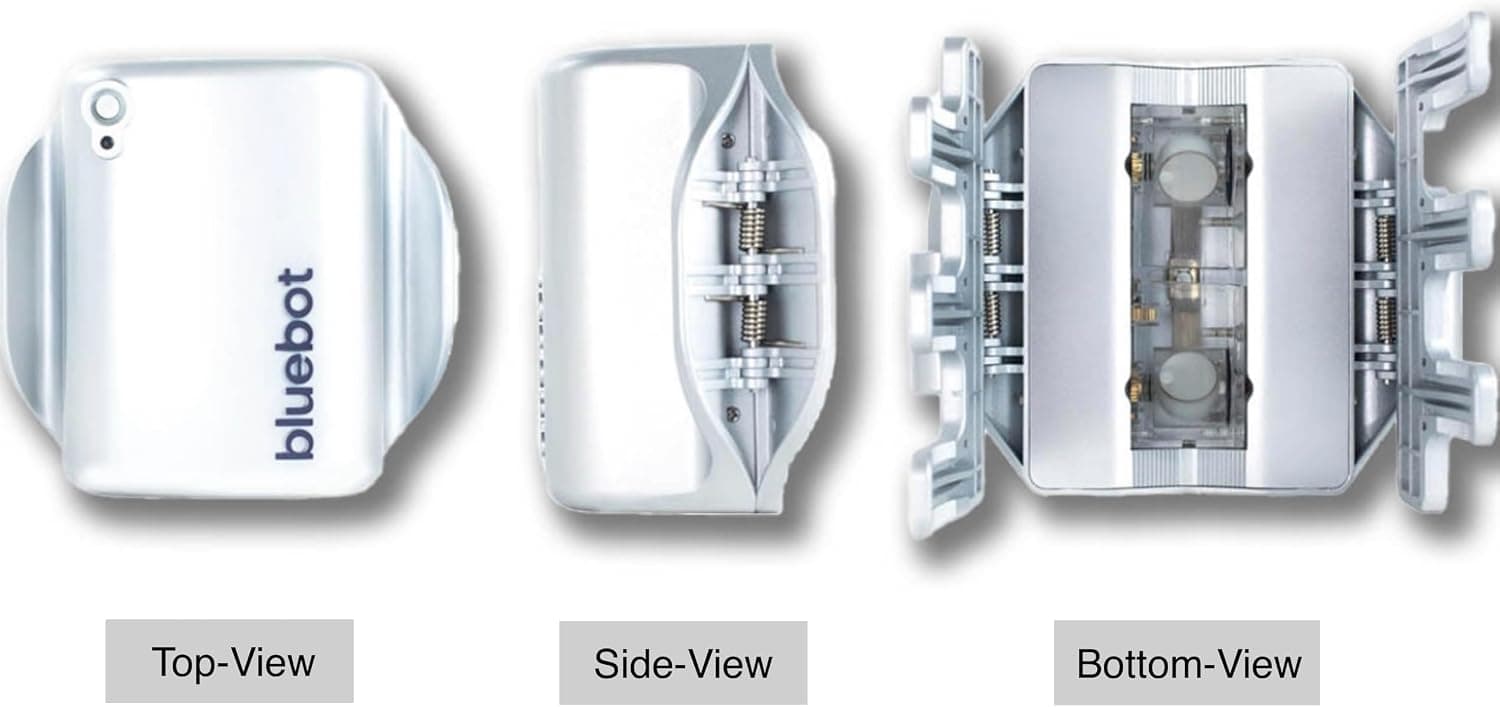
Bluebot Wi-Fi Universal Water Meter (Clamp-On, Bundle 2)
SHE Water Protection Score3.8/10Unmatched install flexibility across pipe sizes and materials, with no valve and no published threshold
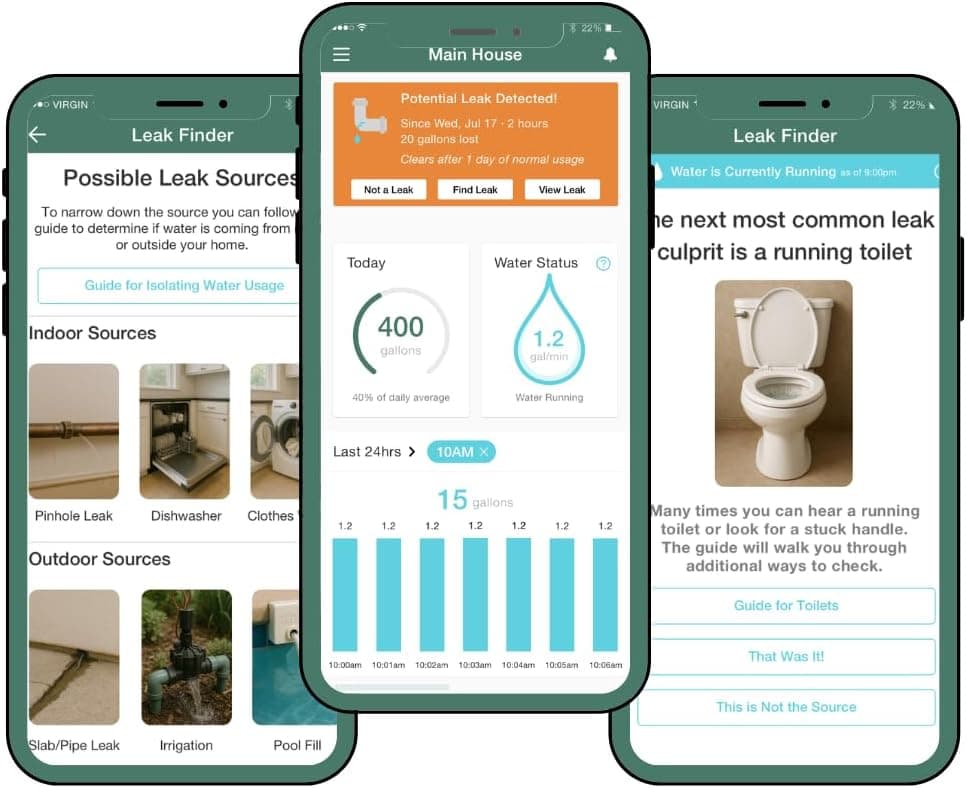
Flume F2X Smart Home Water Monitor (Newest Model)
SHE Water Protection Score3.2/10The easiest install in the guide and the least documented sensing path, with nothing published for this model
Integration Requirements, and What Your Plumbing Must Accommodate
Platform support splits these four more sharply than the hardware does. The Moen bundle names Alarm.com, Ring, Google Assistant and NICE, and needs no separate bridge. The YoLink meter names Alexa, IFTTT and Home Assistant, and ships its hub in the box. Both clamp-on picks stay inside their own apps. If you already run best smart water leak detectors 2026, the platform question becomes decisive. It determines whether a floor sensor can trigger the main valve, which is the most useful automation in this category. Households layering this onto smart water shutoff valves guide should confirm the two devices speak before buying both.
The physical requirement most frequently prevents a purchase entirely, and verifying it beforehand is genuinely worthwhile. The Moen shutoff accommodates 3/4-inch through 1-1/4-inch pipe, and additionally requires mains power alongside reliable Wi-Fi coverage at the valve. The YoLink meter threads inline at nominal pipe size, but incorporates its own long-range radio and a 10-year battery design. Router coverage and a convenient outlet consequently matter considerably less compared to the Moen configuration. Bluebot accommodates any straight pipe run measuring 3/4-inch through 2-inch, wherever that happens to be accessible. Flume, alternatively, depends entirely on your utility meter, and Android Central documents a bridge reaching approximately 1000 ft from the sensor.
Coverage layering is the remaining consideration, and it moves independently of the ranking above. A whole-home monitor watches what flows through the pipe; a spot sensor catches what has already escaped it. The Moen bundle is the only pick here that delivers both from one purchase. For second homes and seasonal properties our vacation home water damage prevention guide covers the complete protocol, and our water leak damage prevention guide covers the wider damage-prevention case. Our editorial methodology explains how these constraints are weighted throughout the comparison.
What These Monitors Cost You After the Purchase
Two of these four configurations carry a recurring obligation and two genuinely do not, and the pattern conspicuously refuses to follow the purchase price. Bluebot incorporates a 2-yr subscription to Premium Live Data, subsequently renewing annually at $59.76. Moen positions particular capability behind FloProtect, which Digital Trends approximates at roughly five dollars monthly. YoLink and Flume publish no comparable subscription requirement whatsoever for their fundamental functionality. Calculate that arithmetic against your anticipated ownership period before concluding that the least expensive purchase necessarily produces the least expensive outcome.
Insurance represents the offset most prospective buyers immediately ask about, and the honest answer is that it exists but remains highly carrier-specific. Nationwide published a partnership announcement in December 2024, establishing a hardware discount on Phyn equipment for eligible policyholders. Phyn's own internal examination of 13,500 households concludes that protected properties file substantially fewer non-weather leakage claims. That constitutes a manufacturer investigation communicated through an insurer, rather than an independent determination, and it concerns a product this particular guide deliberately does not link. Requirements vary enormously between carriers, so confirm your own before incorporating any discount into your calculation.
If your budget stops short of the picks here, our whole-home leak detection under $200 guide ranks systems below that ceiling. Whatever you install at the main line, pair it with spot sensors at the highest-risk points, because the two approaches catch genuinely different failures.
When NOT to Buy
Skip a whole-home monitor entirely if you rent an apartment in a multi-unit building, because you will have neither an accessible meter nor permission to alter the main line. Skip it if your only goal is a washing-machine alarm, since spot sensors deliver that outcome for a fraction of the price. The leader's composite is only about 2.3x the lowest figure here, which tells you the category is narrower than the price spread suggests.
What Changed in This Roster, and Why
Three products recommended in the previous version of this guide are no longer linked anywhere. The Phyn Plus 2nd Gen retains a live Amazon listing, but no seller is currently offering it. Consequently there is nothing purchasable to direct you toward, so it is identified here and linked nowhere. StreamLabs Control has no verifiable Amazon listing whatsoever. The Flume 2 remains purchasable at a considerably lower price, but Flume now positions the F2X as its newest model. The current generation therefore receives the recommendation, and its predecessor is disclosed here rather than recommended separately. Our editorial standards, including how any product qualifies for a roster, are published at /methodology.
The ranking itself was reconstructed from the formula upward. The previous version incorporated a detection-accuracy input attributed to a 2024 Utah State University comparison of seven residential monitors. That study proved impossible to locate, and searching for its distinctive figures returns this page's own earlier version as their apparent origin. A citation loop constitutes no evidence whatsoever. It was consequently eliminated, alongside an unverifiable eight-carrier insurance survey and a five-year-cost denominator that made the composite fluctuate whenever prices did. Nothing was carried across.
Who Should Buy What
Who Should Buy What
| If you are… | Recommended pick |
|---|---|
Homeowner protecting against a burst pipe Preventing catastrophic damage is the whole point, the water main is accessible to a plumber, and spot coverage in the same purchase is worth more than the price difference | Moen Flo 3/4-Inch Smart Water Shutoff with 3 Smart Water Detectors |
Owner with an awkward or remote water main You want the valve to close by itself, but the main sits in a crawlspace or outbuilding where household Wi-Fi is unreliable and a mains outlet is inconvenient | YoLink FlowSmart All-in-One Smart Water Meter (3/4-Inch, YS5018) |
Household that cannot touch the plumbing No accessible utility meter and no permission or appetite to cut into the supply line, with an unusual pipe size or material to work around | Bluebot Wi-Fi Universal Water Meter (Clamp-On, Bundle 2) |
Buyer chasing the water bill The goal is understanding where the water goes, especially irrigation, for the least money, and a separate manual shutoff is an acceptable answer to emergencies | Flume F2X Smart Home Water Monitor (Newest Model) |
Frequently Asked Questions
Why does this guide publish no leak-detection accuracy percentages?
Because none exist in a form that can be compared across these four products. The earlier version of this page carried a detection rate of 97.3 percent and a false-alarm figure attributed to a 2024 Utah State University Water Research Laboratory comparison of seven residential monitors. We could not locate that study. The only Utah State publication on residential metering we could find measures the accuracy of utility water meters and makes no comparison of smart leak monitors at all. Worse, searching for the figures returns this site's own earlier page as their source, which is a citation loop rather than evidence. Every number in that chain was removed, and the ranking was rebuilt from specifications each manufacturer publishes about its own device.
Why do most of these products have no expert review quoted?
Because the reviews genuinely do not exist. Of the four picks here, only the Flo by Moen shutoff has been covered by outlets we track, by Digital Trends and This Old House. No outlet we follow has published a review of the Bluebot universal meter, the YoLink FlowSmart, or the Flume F2X. This is a real gap in the category rather than an oversight on our part, and we would rather say so than attach a plausible-sounding verdict to an outlet that never wrote one. Where coverage does exist we quote it and link it. Where it does not, the guide relies on published manufacturer specifications and says which is which.
Should I buy the Flume F2X or the cheaper Flume 2?
Flume sells the F2X as its newest model and it is the version this guide recommends, but the trade is genuine. The F2X adds a parylene coating, an upgraded Wi-Fi chip and standard AA battery packs in place of the proprietary pack the Flume 2 used. The Flume 2 remains buyable for less. The awkward part is that all the independent coverage belongs to the older model: Android Central reviewed the Flume 2, rated it four out of five, and documented that it magnetically reads the spinning disc inside your water meter. Flume publishes no equivalent detail for the F2X. If the saving matters more than the newer hardware, the Flume 2 is a defensible choice and it is the one an outlet has actually examined.
Why is the Phyn Plus 2nd Gen no longer the top pick?
Its Amazon listing is still live, but no seller is currently offering it, which means there is no active offer for us to send you to. We do not link a listing that cannot be bought, so the Phyn is named in this guide and linked nowhere in it. That is a purchasing-availability judgement and not a verdict on the hardware, which remains well regarded. Phyn's own technology is genuinely distinctive: the company describes analysing pressure fluctuations hundreds of times a second to identify individual fixtures. If Amazon availability returns we will reassess it against the current roster on the same criteria as everything else.
Is a clamp-on monitor as good as one plumbed into the line?
For visibility, often yes. For protection, no, and the difference is structural rather than a matter of quality. A clamp-on device attaches outside the pipe or onto the utility meter, which is why it takes minutes and needs no plumber. That same non-invasive design means it has no way to close your water: it can tell you a pipe has burst and nothing more. An inline device is cut into the supply line, which is why it needs a professional, and it is also why it can carry a motorised valve. If your goal is understanding usage, clamp-on is sufficient. If your goal is preventing damage while nobody is home, only an inline device with a valve can do it.
Will a whole-home water monitor lower my insurance premium?
Sometimes, but the specifics vary far more than most buying guides admit, and you should confirm with your own carrier before treating a discount as part of the maths. The clearest published example we could verify is Nationwide, which announced a partnership in December 2024 offering eligible policyholders 15 percent off Phyn hardware. Note what that actually is: a discount on the device, for particular policyholders, on a product this guide does not link. Whether your insurer offers a premium credit, which devices qualify, and what documentation they require are all carrier-specific questions. Ask before you buy rather than after.
Will any of these work in an apartment or condo?
Usually not, and it is worth checking before spending anything. Inline devices require cutting into a dedicated supply line before it branches to other units, which most multi-unit buildings will not permit. Android Central's Flume review makes the meter-based limitation explicit as well: an apartment, a multi-family building, or a property on a well without a conventional meter may make installation impossible. Bluebot is the closest thing to an exception here, because it clamps to any accessible straight pipe run rather than needing meter access. If you rent and none of that applies, spot sensors under sinks and behind appliances are the practical route.
Bottom Line
Get the Moen Flo 3/4-Inch Smart Water Shutoff with 3 Smart Water Detectors if preventing the damage matters more than the price, and you want a documented daily leak test plus spot detectors in the same box.
Get the YoLink FlowSmart All-in-One Smart Water Meter (3/4-Inch, YS5018) if you want the valve to close by itself for the least money, and your water main sits where household Wi-Fi struggles.
Get the Bluebot Wi-Fi Universal Water Meter (Clamp-On, Bundle 2) if your plumbing rules out everything else, and mounting on any pipe size or material is worth more than a shutoff valve.
Get the Flume F2X Smart Home Water Monitor (Newest Model) if the water bill is the question you are actually trying to answer and you can reach your utility meter.
Skip the category entirely if you rent in a multi-unit building with no meter access, or if a washing-machine alarm is all you actually need.
Sources & Methodology
Methodology: SHE Water Protection Score — Formula: (Automatic Shutoff × 0.35) + (Published Detection Hardware × 0.25) + (Install Independence × 0.20) + (Resilience and Reach × 0.20). Factors: Automatic Shutoff (35%): Ten where the listing publishes an integrated motorised valve that closes on its own, zero where the device only reports and alerts. Deliberately binary and deliberately the heaviest weight, because a monitor that cannot close the valve cannot prevent the damage it detects. | Published Detection Hardware (25%): Two and a half points for each published element of the sensing path, capped at ten: a named measurement method, a published leak-size or accuracy threshold, a proactive leak test the device runs on its own schedule, and continuous pressure or temperature sensing. Credited from the Amazon listing or from an outlet covering that exact product line. | Install Independence (20%): Ten where the listing states the device clamps or straps on with no pipe cutting and no plumber, three where it is an inline device the listing says to have professionally fitted. This factor deliberately pulls against the first one, because the same physical connection that permits a valve also demands a plumber. | Resilience and Reach (20%): Two points each, capped at ten, for published traits that keep the device working: critical actions continuing without internet, a dedicated long-range radio, multi-year battery or power independence, a published ingress rating, coverage of multiple pipe sizes, and additional protection hardware included in the box.
Expert review sources used in this analysis:
- SmartHomeExplorer aggregates published expert review coverage and manufacturer specifications
- No first-party water-monitor testing was conducted for this guide, and none is implied anywhere on this page
- Three outlets are cited here and each page was fetched directly while this guide was written
- Digital Trends reviews the Flo by Moen shutoff and publishes a rating of 8 out of 10
- That review covers the shutoff device rather than the three-detector bundle recommended here
- This Old House covers the same Flo by Moen valve with Flo Technologies' chief executive
- Android Central reviews the Flume 2 and rates it four out of five
- Because Flume sells the F2X as a newer model, nothing from that review is attributed to it
- The TechHive articles that search results named for these products served unrelated content or returned an error when fetched
- TechHive is therefore credited nowhere on this page
- The most important disclosure here is a negative one
- Three of the four recommended products have no published review from any outlet we track
- That is the honest state of this category, and it is why this guide leans on manufacturer specifications and says so each time it does
- Every price, pipe size, certification, radio, battery specification and bundle contents figure in this guide was read from the product listing on Amazon in September 2026
- All four picks showed as in stock in new condition at that time; the Bluebot showed a single unit remaining
- The YoLink listing was discounted 15 percent when we read it
- Prices change frequently — check the current price on Amazon before buying
- The claim-frequency and claim-severity context in this guide comes from the Insurance Information Institute's homeowners and renters insurance facts and statistics
- The Nationwide and Phyn figures come from Nationwide's own December 2024 announcement of that partnership
- The SHE Water Protection Score is our own composite and is attributable to no outlet
- Its four factors, their weights and the normalization applied to each are published in the scoring block above and on the metric page
- The factor set was rebuilt entirely for this version, and no score was carried across from the earlier roster.
Nicholas Miles is the founder of SmartHomeExplorer and a longtime smart home enthusiast focused on helping everyday homeowners make better technology decisions. He researches, compares, and writes about products across security, climate, lighting, leak prevention, sensors, home energy, and automation, with an emphasis on real-world usefulness, ecosystem compatibility, reliability, privacy, and long-term value.
Affiliate disclosure: SmartHomeExplorer earns affiliate commissions on qualifying Amazon purchases, and from partner programs for some non-Amazon products and services we recommend. Our scoring methodology is independent of affiliate relationships.
More Guides
water
Best Smart Home Water Systems 2026: 6 Compared & Ranked
Sensors
Best Smart Water Leak Detectors 2026: 5 Ranked
Sensors
Best Smart Water Shutoff Valves 2026: Phyn Leads 4
Water
Best Water Leak Detectors Under $200 (2026): iSpring LS43
Sensors
Vacation Home Water Damage Prevention: The $222 Sensor Kit
Sensors