

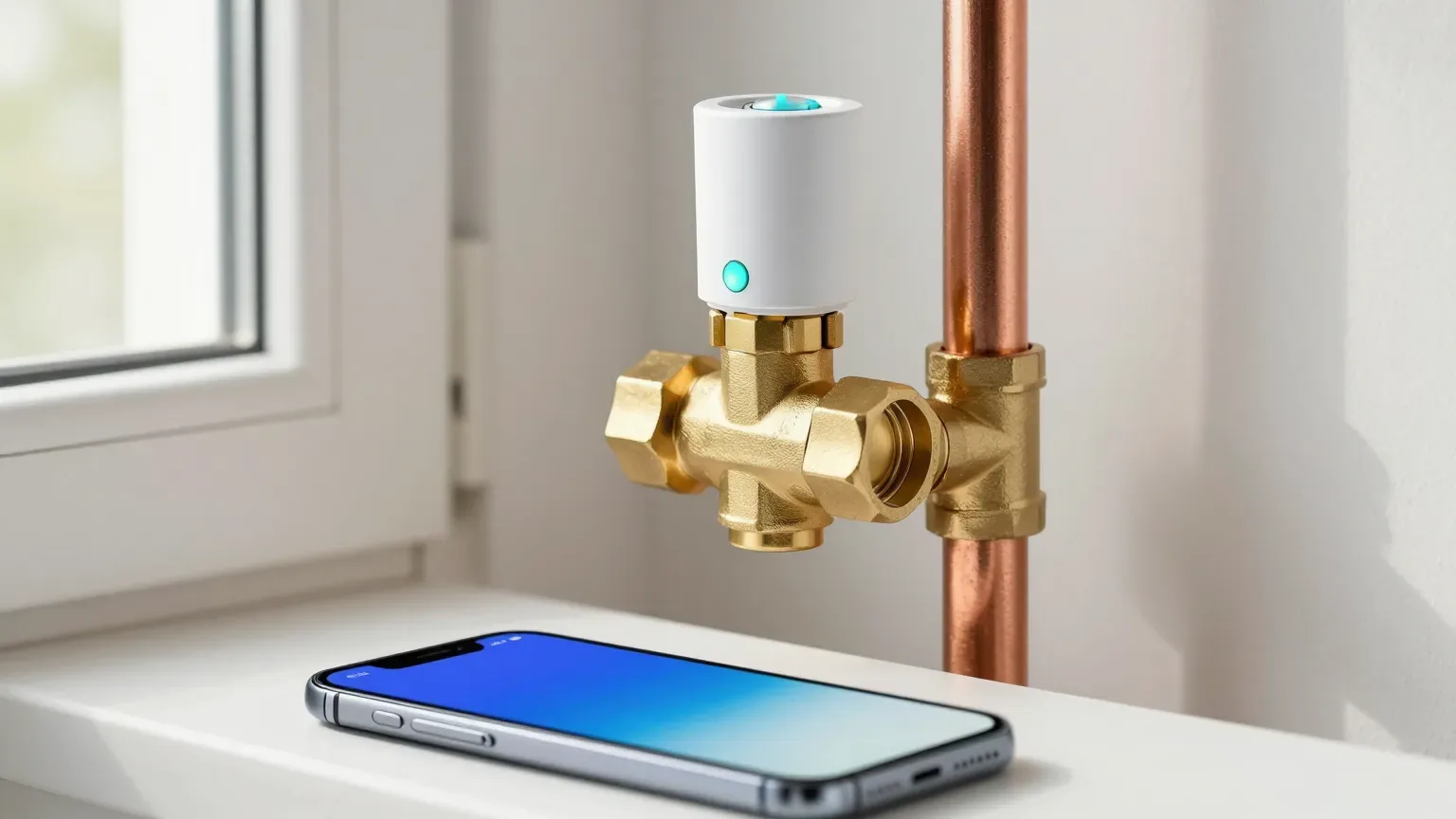
Best Smart Water Shutoff Valves 2026: Phyn Leads 4
A smart shutoff valve does what a leak sensor cannot: monitor the whole home and stop the water when a pipe fails. We scored the four you can buy today on a deterministic prevention formula, and the honest ranking puts a $329.99 challenger ahead of the $559 name brand.
This article contains affiliate links. We may earn a commission at no extra cost to you. Prices change frequently — check the current price on Amazon before buying. Learn more
The Short Answer
The Phyn Plus 2nd Gen ($579.99 list) tops our Catastrophic Prevention ranking, a weighted composite of detection, shutoff reliability, and ownership independence, delivering the roster's most sensitive whole-home ultrasonic detection; the Frizzlife LP365 then outperforms the pricier Moen on prevention-per-dollar.
Featured in this Guide

Phyn
Plus 2nd Gen
- •Tops our SHE Catastrophic Prevention Score at 8.3 with whole-home ultrasonic flow-and-pressure detection and no subscription, at $579.99 list
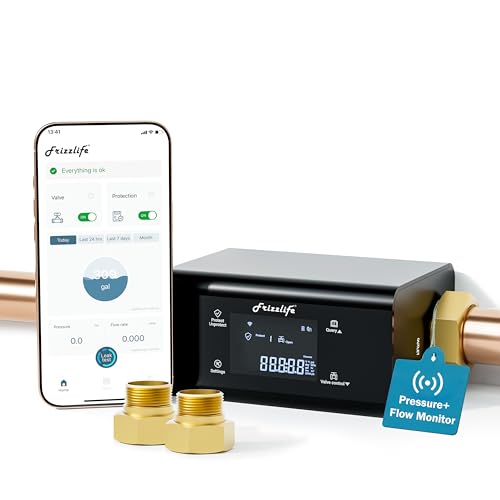
Frizzlife
LP365
- •The same whole-home flow-monitoring-plus-shutoff at the roster's best price — $329.99, subscription-free, and about 0.6x the Moen's sticker
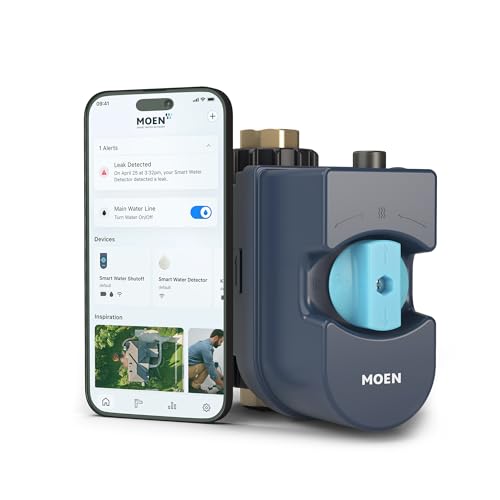
Moen
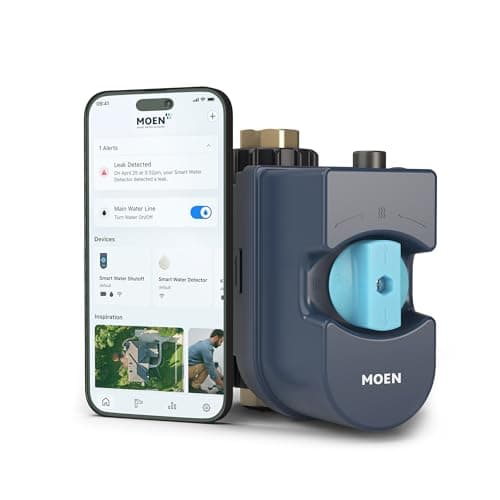
Flo Smart Water Monitor
- •Proactive MicroLeak nightly test and the broadest ecosystem — Alexa, Google, Ring, Control4 — with an optional FloProtect guarantee, at $559 list
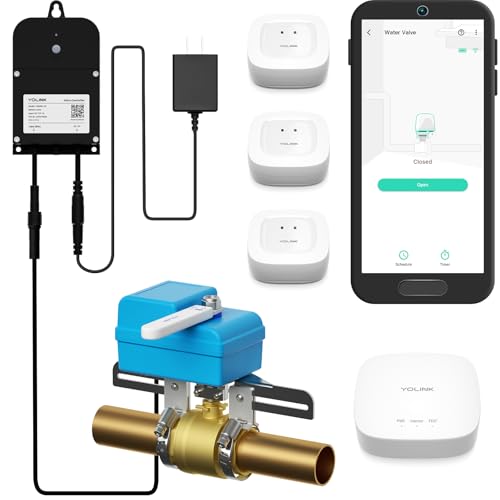
YoLink
Water Leak Shutoff Kit
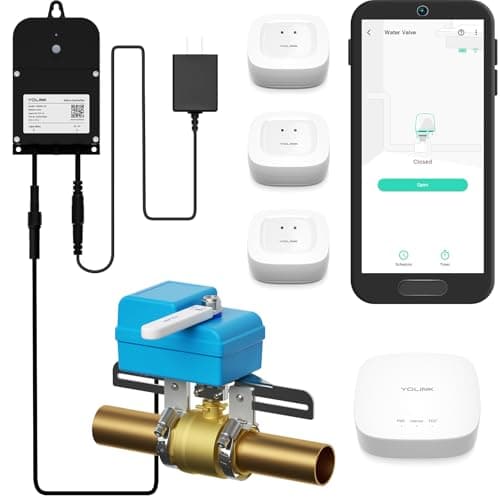
- •The only no-plumbing option — installs in about 15 mins, reaches 1/4-mile on LoRa, and auto-closes offline, at $269.99 list
How the 2026 Shutoff Valves Compare
Sensors
Chart
 Smarthomeexplorer.com
Tap any pick to check its live Prime price on Amazon.
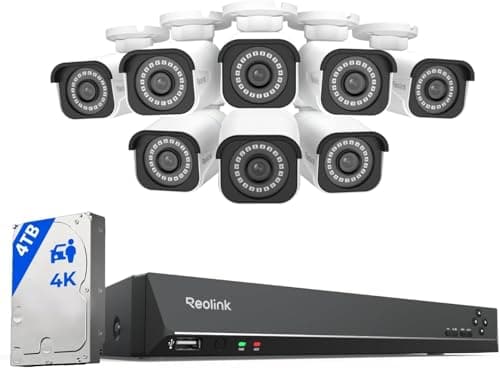
Reolink RLK16-800B8 4K 16-Channel PoE NVR System (8-Camera)
RecommendedCheck price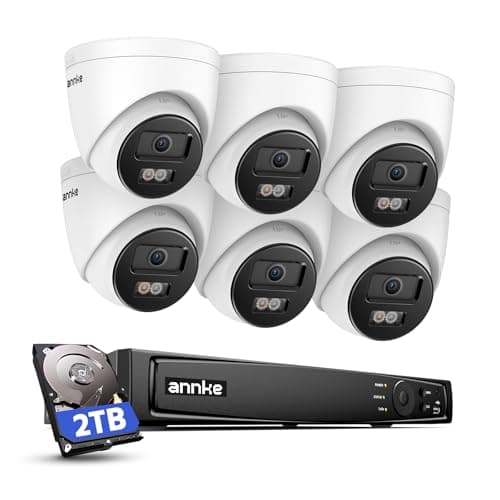
ANNKE 4K PoE NVR Security Camera System (6-Camera)
RecommendedCheck price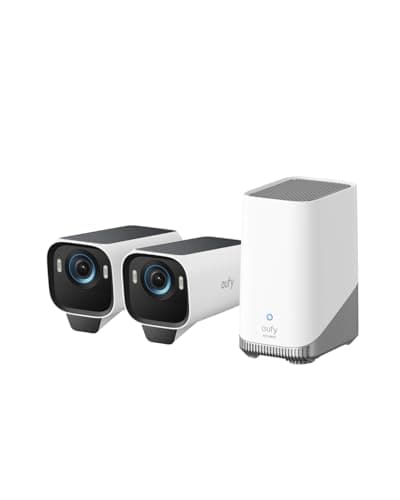
eufyCam S3 Pro 2-Cam Kit (Solar, 4K)
Must BuyCheck price
Are Smart Water Shutoff Valves Worth It in 2026?
A smart water shutoff valve is catastrophic-loss insurance you install once. Unlike a spot leak sensor, which only chirps when water reaches it, a whole-home valve continuously monitors flow and physically closes the main when something goes wrong — and with the average US water-damage claim running into five figures, that difference is the whole argument. The four valves we evaluated in this guide run from $269.99 to $579.99, about a 2.1x spread, and rank on the SHE Catastrophic Prevention Score, a weighted composite of detection coverage, shutoff reliability, install fit, and ownership independence. No mainstream lab — Consumer Reports, RTINGS, Wirecutter, or CNET — runs a dedicated shutoff-valve test program, so every spec here traces to a manufacturer, with TechHive the lone outlet to publish exact-model reviews.
Best Overall Protection: Phyn Plus 2nd Gen
Phyn Plus 2nd Gen
- Whole-home ultrasonic transit-time detection with no moving parts
- Professional plumber required to cut into the main
(Current price, subject to change)
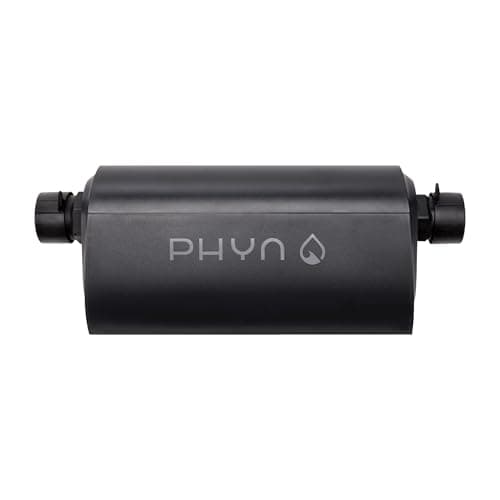
The Phyn Plus 2nd Gen earns the roster's highest SHE Catastrophic Prevention Score, an 8.3 composite, because its detection factor anchors the set at the top. In practice that means the premium buys genuine, manufacturer-stated capability: an ultrasonic transit-time flow sensor with no moving parts, continuous whole-home flow, pressure, and temperature monitoring, and an integrated motorized ball valve that closes the main automatically, which delivers whole-home coverage from a single device. It is entirely subscription-free — every alert and shutoff is included at purchase. Compared to the Frizzlife, which it beats on detection sophistication, the Phyn runs about 1.8x the price; versus the Moen it sits within roughly 1.04x. TechHive published a dedicated second-generation review, which we credit as coverage rather than transcribing a verdict, since no lab runs a shutoff-valve test bench. The honest caveats: installation requires a professional plumber cutting into a 3/4-inch or 1-inch main, and the 2nd-generation housing, though about 25 percent smaller than before, still needs accessible pipe.
What We Love
- Whole-home ultrasonic transit-time detection with no moving parts
- Continuous flow, pressure, and temperature monitoring
- Integrated motorized shutoff and subscription-free ownership
- Top 8.3 composite — the roster's best detection factor
What Could Be Better
- Professional plumber required to cut into the main
- Fits 3/4-inch and 1-inch pipe only
- Carries the roster's highest sticker price
The Verdict
If you want the strongest whole-home detection and can absorb the roster's top price, we'd point you here first: the Phyn Plus 2nd Gen tops our ranking at 8.3, pairing ultrasonic flow-and-pressure sensing with an integrated shutoff and no subscription at $579.99 list. It needs a plumber to install.
Ready to upgrade your home?
roborock Qrevo 2 Pro Robot Vacuum and Mop
See it on Amazon
roborock Saros Z70 Robot Vacuum and Mop
See it on Amazon
eufy SoloCam S340 Solar Security Camera, 4-Cam Kit
See it on Amazon
Sponsored listings from Amazon’s Sponsored Products for Creators program, kept apart from our reviews and rankings. How we make money
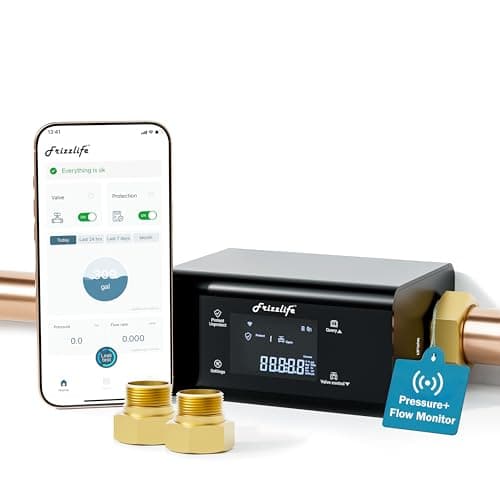
Best Value Prevention: Frizzlife LP365
Frizzlife LP365
- Whole-home ultrasonic flow sensor at the roster's best price
- Base model omits pressure monitoring and proactive testing
(Current price, subject to change)
Strip the fabricated insurer-partner factor out of the old ranking and the Frizzlife LP365 is the honest surprise of this roundup: its 7.6 on the SHE Catastrophic Prevention Score edges the $559 Moen by a tenth on pure prevention-per-dollar. The manufacturer states an ultrasonic flow sensor with 0.01 GPM micro-leak sensitivity, real-time flow and temperature monitoring, and an integrated motorized shutoff that closes automatically on an anomaly — the same whole-home job the flagships do, which it delivers at about 0.6x the Moen's price and roughly 1.2x the cost of the YoLink kit. Compared to the Phyn, the base model is honestly narrower: it omits pressure monitoring, proactive nightly testing, and fixture-level disaggregation, which is why its detection factor sits at 7.5 rather than the top. It fits both 3/4-inch and 1-inch pipe natively, so the install skips the adapter step, though it remains a plumbed inline valve. No registered lab has reviewed this exact model, so it is scored on manufacturer specifications alone.
What We Love
- Whole-home ultrasonic flow sensor at the roster's best price
- Manufacturer-rated 0.01 GPM micro-leak sensitivity
- Fits 3/4-inch and 1-inch pipe natively, no adapters
- Subscription-free monitoring, alerts, and auto-shutoff
What Could Be Better
- Base model omits pressure monitoring and proactive testing
- No fixture-level disaggregation like the flagships
- Still an inline valve a plumber should install
The Verdict
For a value-first buyer who wants whole-home flow monitoring and automatic shutoff without the flagship premium, the Frizzlife LP365 fits the brief: at $329.99 — about 0.6x the Moen's sticker — it edges the pricier Moen on our prevention-per-dollar composite while staying subscription-free. It still needs a plumbed install.
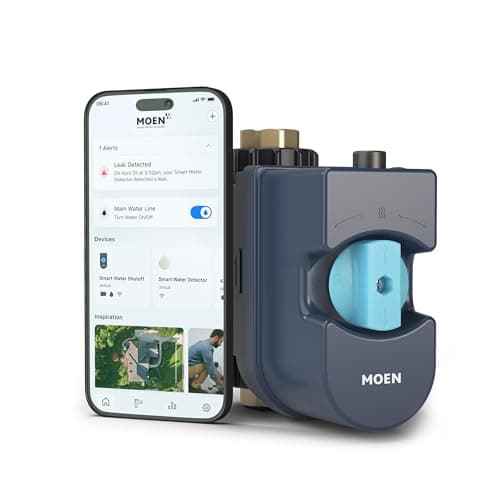
Best Insurance-Backed Ecosystem: Moen Flo Smart Water Monitor
Best Insurance-Backed Peace of MindMoen Flo Smart Water Monitor
- Proactive MicroLeak nightly pressure-drop test for pinhole leaks
- FloProtect guarantee and premium alerts gated behind about $5 a month
(Current price, subject to change)
The Moen Flo Smart Water Monitor posts a 7.5 on the SHE Catastrophic Prevention Score, and its real edge is proactive detection rather than the top ranking. Moen states a turbine flow sensor plus continuous pressure and temperature monitoring, and its MicroLeak Technology runs an automatic nightly pressure-drop test that catches pinhole leaks a passive flow-only monitor would miss — a genuine differentiator, and the reason its 9.5 detection factor leads the Frizzlife's 7.5. It also carries the roster's broadest ecosystem — Alexa, Google, Ring, and Control4 — which enables the widest voice control in the set. Compared to the subscription-free picks, though, its ownership factor drops: the FloProtect guarantee and premium alerts sit behind about a $5-a-month plan, which over a 2-year horizon is the recurring cost our formula weighs. At $559 it runs roughly 1.7x the Frizzlife while landing a tenth behind it overall. TechHive published a dedicated review, credited here as coverage only. Installation still requires a plumber on the main supply line.
What We Love
- Proactive MicroLeak nightly pressure-drop test for pinhole leaks
- Whole-home flow, pressure, and temperature sensing
- Broadest ecosystem — Alexa, Google, Ring, and Control4
- Optional FloProtect guarantee for insurance-minded buyers
What Could Be Better
- FloProtect guarantee and premium alerts gated behind about $5 a month
- Turbine sensor has a moving part; no fixture disaggregation
- Professional plumber required for the inline install
The Verdict
If broad ecosystem support and an insurance-backed guarantee matter more to you than topping the leaderboard, you'll be well-served here: the Moen Flo Smart Water Monitor pairs a proactive MicroLeak nightly test with the roster's widest platform support at $559 list. Its detection genuinely leads the Frizzlife, though it lands third overall once the subscription is weighed.
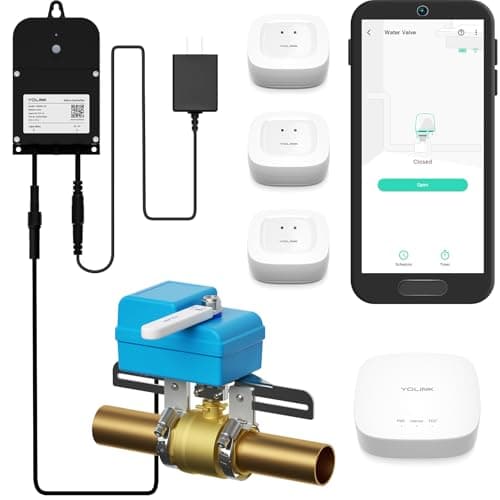
Best DIY / Renter Pick: YoLink Water Leak Shutoff Kit
Best DIY / Renter-Friendly PickYoLink Water Leak Shutoff Kit
- Installs in about 15 mins with no plumbing or pipe cutting
- Contact sensors only — no whole-home flow or pressure monitoring
(Current price, subject to change)
The YoLink Water Leak Shutoff Kit is the roster's only no-plumbing option, and its 6.5 on the SHE Catastrophic Prevention Score reflects an honest trade: it wins on access, not on detection. The kit pairs three wireless contact sensors with an external EVO actuator that turns your existing ball-valve handle, so it installs in about 15 mins with a screwdriver and lifts off cleanly when you move — which is why it anchors the install-fit factor at the top of the set. Its LoRa radio reaches up to 1/4-mile, roughly 1,320 ft, so it enables coverage for detached garages and basements a Wi-Fi valve cannot hold. The genuine limitation is detection: contact sensors only alarm where water pools, so they miss a slow in-pipe leak upstream, and the composite weighs that at a 3.0 detection factor. Compared to the inline valves, its one structural advantage is Device-to-Device auto-close, which fires locally even with no internet or power. At $269.99 it is the cheapest pick, about 0.8x the Frizzlife's price — the least expensive way into automatic shutoff.
What We Love
- Installs in about 15 mins with no plumbing or pipe cutting
- 1/4-mile LoRa range covers outbuildings and basements
- Device-to-Device auto-close works during internet and power outages
- Renter-friendly and fully removable; core features free
What Could Be Better
- Contact sensors only — no whole-home flow or pressure monitoring
- External actuator on the existing handle, not an inline valve
- Catches pooling water at sensor spots, not slow in-pipe leaks
The Verdict
If you rent, or want protection without touching the plumbing, the YoLink Water Leak Shutoff Kit checks the boxes that matter for a DIY setup: it installs in about 15 mins, reaches 1/4-mile on LoRa, and uniquely auto-closes during an outage, at $269.99 list. It tops our install-fit factor, but its contact-only detection puts it fourth overall.
How We Score: SHE Catastrophic Prevention Score
SHE Catastrophic Prevention Score
Score Formula
score = 0.35 * detection_coverage + 0.30 * auto_shutoff_reliability + 0.20 * install_fit + 0.15 * ownership_independenceScore Factors
- Detection Coverage (weight 0.35)How much of the home the device catches a leak in, and how sensitively, scored deterministically from the manufacturer's detection method. Whole-home continuous inline flow monitoring — which catches any downstream leak, from a slow drip to a burst pipe — scores highest, with added credit for pressure monitoring, a proactive nightly test, and sensor sophistication. Point contact-sensor detection, where water must pool at a placed puck, scores lowest. Anchored: Phyn 10.0 for ultrasonic transit-time flow plus pressure; Moen 9.5 for whole-home flow plus its MicroLeak nightly pressure test; Frizzlife 7.5 for ultrasonic flow at 0.01 GPM without pressure or proactive testing; YoLink 3.0 for contact sensors at three placed points only.
- Auto-Shutoff Reliability (weight 0.30)The integrity of the physical shutoff mechanism. An integrated inline motorized ball valve — where the valve is the plumbing, so closure is deterministic — scores 9.0 for the three inline picks (Phyn, Frizzlife, Moen). YoLink scores 7.0: an external EVO actuator that turns the existing ball-valve handle adds marginal mechanical failure surface, offset upward by its unique Device-to-Device offline auto-close that fires with no internet or power.
- Install Fit (weight 0.20)Who can actually own and fit the device. YoLink anchors this factor at 10.0 — a roughly 15-minute DIY install with no plumbing, no pipe cutting, renter-friendly and removable. Frizzlife scores 4.0: an inline plumbed valve like the flagships, but its dual 3/4-inch and 1-inch fit removes the adapter step. Phyn and Moen score 3.0 each — a licensed plumber must cut into the main supply line.
- Ownership Independence (weight 0.15)Whether the core prevention — detection, auto-shutoff, and alerts — works with no mandatory subscription. Phyn and Frizzlife score 10.0, fully subscription-free. YoLink scores 9.0 (core features free; an optional low-cost plan adds SMS only). Moen scores 6.0: core detection and shutoff run on the free tier, but its FloProtect guarantee and premium alerts are gated behind a monthly plan, so its independence is partial.
SHE Catastrophic Prevention Score — Ranked
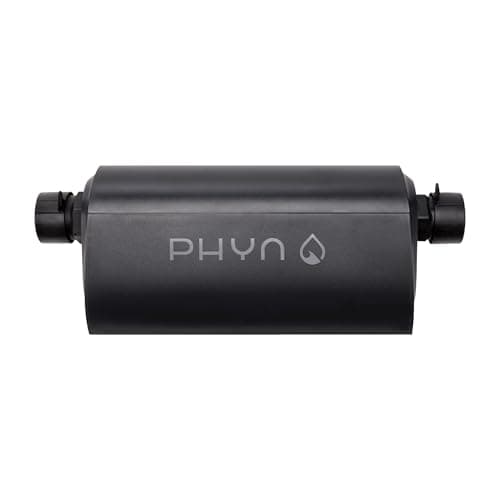
Phyn Plus 2nd Gen
SHE Catastrophic Prevention Score8.3/10$579.99 list — ultrasonic whole-home flow-and-pressure detection, integrated shutoff, subscription-free; the top composite
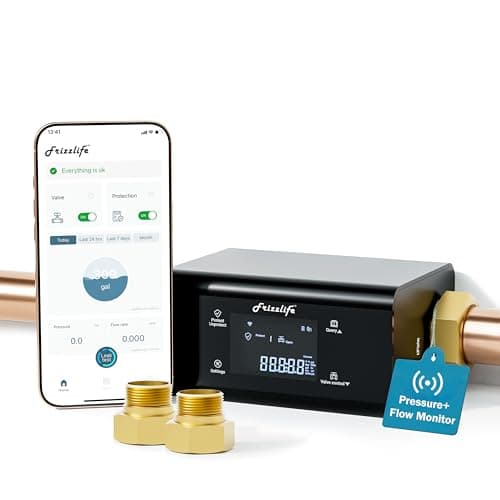
Frizzlife LP365
SHE Catastrophic Prevention Score7.6/10$329.99 list — whole-home ultrasonic flow plus shutoff at the best value; base model omits pressure and proactive testing
Moen Flo Smart Water Monitor
SHE Catastrophic Prevention Score7.5/10$559 list — proactive MicroLeak nightly test and the broadest ecosystem; loses ground on the subscription-gated guarantee
YoLink Water Leak Shutoff Kit
SHE Catastrophic Prevention Score6.5/10$269.99 list — no-plumbing DIY install and offline auto-close, but contact-only detection puts it fourth overall
SHE Catastrophic Prevention Score
Weighted prevention composite across four buyable whole-home shutoff valves — higher means more manufacturer-verifiable prevention per dollar, re-grounded on manufacturer specs, no insurer counts.
Shutoff Valve vs Spot Leak Sensor: What Stops Water
The most common mistake in leak protection is treating a spot sensor and a whole-home shutoff valve as interchangeable, when they are fundamentally different instruments. A spot leak sensor is a puck you place under a sink or water heater; it alarms when water reaches it, but it cannot stop the flow, which still requires you to be home, awake, and reacting immediately. A smart shutoff valve monitors the whole home's water and physically closes the main when it detects an anomaly, which delivers protection whether or not anyone is there. That is the entire catastrophic-prevention argument: a cheap sensor tells you about a burst pipe, while a $329.99-to-$579.99 valve actually stops it. The three inline valves here — Phyn, Frizzlife, and Moen — monitor flow continuously; the YoLink kit substitutes contact sensors and an external actuator, which is why it trades detection coverage for a renter-friendly install at about 0.8x the Frizzlife's price. A shutoff valve guards only the supply side, so for the drainage half of a wet basement, pair it with our Best Smart Sump Pump Monitors 2026: 5 Ranked guide. The matrix below maps which manufacturer-stated capabilities each pick actually carries.
| Product | Whole-Home Flow Monitoring | Automatic Shutoff | Pressure Monitoring | Works Offline / No Cloud | No-Plumbing DIY Install |
|---|---|---|---|---|---|
| Phyn Plus 2nd Gen | ✓ | ✓ | ✓ | ✕ | ✕ |
| Frizzlife LP365 | ✓ | ✓ | ✕ | ✕ | ✕ |
| Moen Flo Smart Water Monitor | ✓ | ✓ | ✓ | ✕ | ✕ |
| YoLink Water Leak Shutoff Kit | ✕ | ✓ | ✕ | ✓ | ✓ |
When NOT to Buy
A smart shutoff valve is genuinely the wrong purchase in a handful of situations worth understanding before ordering. If your landlord prohibits plumbing modifications, the three inline valves are immediately disqualified — the YoLink kit is the only renter-safe alternative, because it clamps onto the existing handle rather than cutting into the supply line. If your main line is larger than 1 inch, confirm fit before ordering, because these units target 3/4-inch and 1-inch pipe. If you only want alerts and not automatic shutoff, a spot-sensor system costs far less — start with our Best Smart Water Leak Detectors 2026: 5 Ranked roundup instead. And on well water with heavy sediment, a turbine flow sensor can foul over time, so an ultrasonic pick like the Frizzlife — at roughly 1.2x the YoLink's price — is the safer long-term choice.
Who Should Buy What
Who Should Buy What
| If you are… | Recommended pick |
|---|---|
Whole-home protection maximizers You want the most sensitive whole-home detection and subscription-free ownership, and will hire a plumber to install it on the main | Phyn Plus 2nd Gen |
Value-first homeowners You want whole-home flow monitoring and automatic shutoff at the lowest price, and do not need brand-name insurer recognition | Frizzlife LP365 |
Ecosystem and insurance-minded buyers You want the broadest smart-home ecosystem, proactive nightly leak testing, and the option of an insurance-backed FloProtect guarantee | Moen Flo Smart Water Monitor |
Renters and DIY installers You rent or want a no-plumbing install, need range for outbuildings, or want shutoff that keeps working during an outage | YoLink Water Leak Shutoff Kit |
Frequently Asked Questions
What is a smart water shutoff valve, and how is it different from a leak sensor?
A smart water shutoff valve installs inline on your main supply line (or, for the YoLink kit, clamps onto the existing valve) and does two jobs: it monitors the whole home's water and physically closes the main when it detects an anomaly. A spot leak sensor only alarms when water reaches the puck — it cannot stop the flow. The valve is what actually prevents catastrophic damage; the sensor just tells you it is already happening.
What is the best automatic water shutoff valve for leaks in 2026?
The Phyn Plus 2nd Gen ($579.99 list) is the best overall — it tops our SHE Catastrophic Prevention Score at 8.3 with whole-home ultrasonic flow-and-pressure detection, an integrated motorized shutoff, and no subscription. For less money, the $329.99 Frizzlife LP365 delivers the same whole-home flow-monitoring-plus-shutoff at the roster's best value, and the YoLink EVO kit ($269.99) is the only option that installs in about 15 minutes with no plumbing — ideal for renters.
Moen Flo vs Phyn Plus — which should I buy?
Both are inline whole-home valves with automatic shutoff. Phyn uses an ultrasonic transit-time flow sensor (no moving parts), is fully subscription-free, and leads our detection factor. Moen adds MicroLeak Technology — a proactive nightly pressure-drop test — plus the broadest ecosystem (Alexa, Google, Ring, Control4) and an optional FloProtect plan (about $5 a month) that carries an insurance-backed damage guarantee. Choose Phyn for subscription-free detection; choose Moen for ecosystem breadth and the FloProtect guarantee.
What's the best whole-house leak prevention setup for 2026?
Start with a whole-home inline valve (Phyn, Frizzlife, or Moen) that catches both slow drips and burst pipes and shuts the water off automatically. Add spot leak sensors at high-risk fixtures — under the water heater, dishwasher, and washing machine — for location-specific alerts the valve cannot localize. For no-plumbing or offline coverage, the YoLink kit fills the gap. Our Best Smart Home Water Systems 2026: 6 Compared & Ranked hub shows how the pieces fit together.
Can I install a smart water shutoff valve myself?
It depends on the design. The YoLink EVO kit is genuinely DIY — about 15 minutes with a screwdriver, no plumbing and no pipe cutting, because the actuator clamps onto your existing ball-valve handle. The Phyn, Moen Flo, and Frizzlife are inline valves that cut into the main supply line, so they call for a licensed plumber. Budget for professional installation on the three flagships.
Do I still need leak sensors if I have a shutoff valve?
They complement each other. A whole-home valve catches flow anomalies across the entire house and stops the water, but it cannot tell you exactly which fixture failed. Spot sensors add location-specific alerts at appliances the valve cannot localize, so you know where to look. Many owners run both — see our Best Smart Water Leak Detectors 2026: 5 Ranked roundup for spot-sensor picks.
Do smart shutoff valves work during a power or internet outage?
Inline valves (Phyn, Frizzlife, Moen) hold their last position during an outage but rely on the cloud for monitoring and alerts, so remote control drops until service returns. The YoLink kit is the exception: its Device-to-Device local trigger can auto-close the valve even with no internet and no power, which is its main structural advantage over the inline flagships for outage resilience.
Bottom Line
Get the Phyn Plus 2nd Gen if you want the roster's most sensitive whole-home detection and subscription-free ownership, and can hire a plumber.
Get the Frizzlife LP365 if you want the best prevention-per-dollar — whole-home flow monitoring and shutoff at the lowest price.
Get the Moen Flo Smart Water Monitor if you want the broadest ecosystem and an optional insurance-backed guarantee, and don't mind a subscription for it.
Get the YoLink Water Leak Shutoff Kit if you rent or want a roughly 15-minute DIY install with offline auto-close and long-range coverage.
For most buyers the answer is the Phyn Plus 2nd Gen — it tops our ranking at 8.3 with the roster's best detection at $579.99 list. Choose the Frizzlife LP365 to save without giving up whole-home coverage, or the YoLink Water Leak Shutoff Kit if you rent and cannot touch the plumbing.
Sources & Methodology
Methodology: SHE Catastrophic Prevention Score — Formula: score = 0.35 * detection_coverage + 0.30 * auto_shutoff_reliability + 0.20 * install_fit + 0.15 * ownership_independence. Factors: Detection Coverage (weight 0.35): How much of the home the device catches a leak in, and how sensitively, scored deterministically from the manufacturer's detection method. Whole-home continuous inline flow monitoring — which catches any downstream leak, from a slow drip to a burst pipe — scores highest, with added credit for pressure monitoring, a proactive nightly test, and sensor sophistication. Point contact-sensor detection, where water must pool at a placed puck, scores lowest. Anchored: Phyn 10.0 for ultrasonic transit-time flow plus pressure; Moen 9.5 for whole-home flow plus its MicroLeak nightly pressure test; Frizzlife 7.5 for ultrasonic flow at 0.01 GPM without pressure or proactive testing; YoLink 3.0 for contact sensors at three placed points only. | Auto-Shutoff Reliability (weight 0.30): The integrity of the physical shutoff mechanism. An integrated inline motorized ball valve — where the valve is the plumbing, so closure is deterministic — scores 9.0 for the three inline picks (Phyn, Frizzlife, Moen). YoLink scores 7.0: an external EVO actuator that turns the existing ball-valve handle adds marginal mechanical failure surface, offset upward by its unique Device-to-Device offline auto-close that fires with no internet or power. | Install Fit (weight 0.20): Who can actually own and fit the device. YoLink anchors this factor at 10.0 — a roughly 15-minute DIY install with no plumbing, no pipe cutting, renter-friendly and removable. Frizzlife scores 4.0: an inline plumbed valve like the flagships, but its dual 3/4-inch and 1-inch fit removes the adapter step. Phyn and Moen score 3.0 each — a licensed plumber must cut into the main supply line. | Ownership Independence (weight 0.15): Whether the core prevention — detection, auto-shutoff, and alerts — works with no mandatory subscription. Phyn and Frizzlife score 10.0, fully subscription-free. YoLink scores 9.0 (core features free; an optional low-cost plan adds SMS only). Moen scores 6.0: core detection and shutoff run on the free tier, but its FloProtect guarantee and premium alerts are gated behind a monthly plan, so its independence is partial.
Expert review sources used in this analysis:
- SmartHomeExplorer aggregates manufacturer specifications and product-listing details into consensus buying guidance; we perform no first-party testing and transcribe no outlet scores or verdicts
- No mainstream lab — Consumer Reports, RTINGS, Wirecutter, or CNET — runs a dedicated whole-home shutoff-valve test program, so every capability here traces to a manufacturer page or the product's own Amazon listing, verified July 2026
- TechHive is the lone registered outlet with dedicated exact-model reviews of the Phyn Plus 2nd Gen and the Moen Flo; we note that coverage as existence only and never as a transcribed verdict
- The Frizzlife LP365 and YoLink kit carry no qualifying outlet coverage and are scored on manufacturer specifications alone
- This edition re-grounds our SHE Catastrophic Prevention Score on manufacturer-traceable capability only — the legacy insurer-partner-count factor was fabrication-prone and has been removed
- Prices are manufacturer list captured outside deal windows — the roster runs from $269.99 to $579.99, about a 2.1x spread — and change frequently, so confirm the current price on Amazon before buying.
Nicholas Miles is the founder of SmartHomeExplorer and a longtime smart home enthusiast focused on helping everyday homeowners make better technology decisions. He researches, compares, and writes about products across security, climate, lighting, leak prevention, sensors, home energy, and automation, with an emphasis on real-world usefulness, ecosystem compatibility, reliability, privacy, and long-term value.
Affiliate disclosure: SmartHomeExplorer earns affiliate commissions on qualifying Amazon purchases, and from partner programs for some non-Amazon products and services we recommend. Our scoring methodology is independent of affiliate relationships.
More Guides
water
Best Smart Home Water Systems 2026: 6 Compared & Ranked
Sensors
Best Smart Water Leak Detectors 2026: 5 Ranked
Sensors
Best Whole-Home Water Monitors in 2026: 4 Picks Ranked
Sensors
The $20 Sensor vs. the $12,514 Claim: SHE Leak Risk Scores

Sensors
Vacation Home Water Damage Prevention: The $222 Sensor Kit
Smart Home