
Quick Picks
The Neurodivergent Smart Home Problem
The short answer: Smart home tech can reduce sensory overload and support executive function — but only if you pick products scored on neurodivergent criteria. This guide is part of our buying roadmap by household type, which covers how smart home priorities differ across renters, new homeowners, elderly parents, iOS-only users, and vacation rental hosts.
Related accessibility guides: Best Smart Home Devices for Seniors · Best Smart Home for Renters · Best Smart Home Devices for the Hearing Impaired
Smart home devices are marketed as tools for convenience. For the estimated 1 in 7 people who are neurodivergent — ADHD, autistic, or living with sensory processing differences — that framing misses the point. The real questions are: Does this device reduce sensory load without adding new triggers? Does it support executive function rather than demand it? Will it still work when I forget to maintain it?
Wirecutter, CNET, The Verge, and The Spruce publish zero neurodivergent-specific smart home guides as of April 2026. We compared 6 products across expert reviews, community sentiment from ADHD and autism Reddit communities, and citation frequency from neurodivergent-specific sources including six independent ABA therapy publishers, ADHD coaching publications, and the CEDIA Neuroinclusive Design professional guide. We scored all six on the SHE Sensory Accommodation Score — the only published multi-factor scoring framework for evaluating smart home products through a neurodivergent lens.
How sensory overload and executive dysfunction change what "smart" means
Sensory overload occurs when the nervous system receives more input than it can process. For autistic people and those with sensory processing differences, this threshold is lower and recovery time longer. A bulb that flickers imperceptibly to most people can trigger a significant stress response; a thermostat hum becomes a concentration barrier rather than a minor annoyance.
Executive dysfunction — the core challenge for many with ADHD — affects the ability to initiate tasks, sequence multi-step actions, and maintain routines. Setup complexity is not a one-time cost: it's a filter that determines whether a device ever gets used. A product requiring 14 steps and a hub pairing sequence will often be abandoned mid-setup. One that works in four steps will become part of daily life.
These two dimensions operate independently. A product can score well on sensory accommodation and poorly on cognitive accessibility. The SHE SAS captures both, weighted to reflect their relative importance for neurodivergent buyers.
Why mainstream smart home guides miss neurodivergent buyers entirely
Mainstream guides optimize for features, price, and integration breadth. They evaluate smart lights on lumen output and Matter compatibility — relevant metrics, but none ask whether the app requires a 6-step onboarding that a person in executive dysfunction can realistically complete.
The ACM SIGACCESS 2024 study "Characterizing Smart Home Technology Usage Among Users with Disabilities through Reddit" confirmed this gap: disabled smart home users report product discovery and setup complexity as the primary barriers, and that existing review sources do not address their needs. Our scoring methodology builds on that finding.
SHE Sensory Accommodation Score
The SHE Sensory Accommodation Score is a proprietary 5-factor rubric designed to evaluate smart home products through a neurodivergent lens. No mainstream smart home guide has published a scoring framework like this. (SmartHomeExplorer editorial analysis — methodology)
Formula: SAS = (SLC × 0.30) + (RR × 0.25) + (CA × 0.20) + (AG × 0.15) + (CT × 0.10)
| Factor | Weight | What It Measures |
|---|---|---|
| SLC — Sensory Load Control | 30% | Brightness, color temperature range (2700-6500K+), gradual transition speed, flicker-free operation |
| RR — Routine Reliability | 25% | Automation scheduling consistency, offline/local function capability, uptime record |
| CA — Cognitive Accessibility | 20% | Setup complexity, voice interface quality, app cognitive load, learning curve |
| AG — Alert Gentleness | 15% | Absence of sudden loud/bright alerts, customizable notification style |
| CT — Community Trust | 10% | ADHD/autism community endorsement score; Reddit sentiment data where confidence ≥40 |
All 6 Products — SHE SAS Scores
| Smart Device | SLC | RR | CA | AG | CT | SAS |
|---|---|---|---|---|---|---|
| Philips Hue Smart Light Starter Kit | 9.5 | 9.0 | 7.5 | 8.5 | 7.5 | 8.6 |
| LIFX Color Smart Light Bulbs E26 (2-Pack) | 9.0 | 7.5 | 8.5 | 8.5 | 6.0 | 8.2 |
| ecobee Smart Thermostat Premium | 7.0 | 9.0 | 7.5 | 8.0 | 6.0 | 7.7 |
| Govee LED Smart Light Bulbs 1000LM (2-Pack) | 8.0 | 6.5 | 8.0 | 8.0 | 5.5 | 7.4 |
| Amazon Smart Thermostat | 6.5 | 7.0 | 9.0 | 8.0 | 6.0 | 7.3 |
| Amazon Echo Show 8 (newest model) | 5.5 | 8.5 | 8.0 | 7.0 | 6.5 | 7.1 |
Community Trust (CT) for ecobee Premium: Reddit community confidence 44, positive sentiment 40%, reliability 4.0/5 (N=44 testimonials — SmartHomeExplorer editorial analysis). Amazon Smart Thermostat: confidence 71, positive 38%, reliability 4.0/5 (N=71 testimonials). Other four products: CT scored from expert citation frequency in neurodivergent-specific sources (ABA therapy sites, ADHD coaching publications, CEDIA neuroinclusive design guide).
The counter-intuitive finding: The Echo Show 8 scores lowest of the six on overall sensory accommodation (7.1), despite being the most commonly recommended ADHD device. SAS penalizes it on Sensory Load Control (a screen adds visual stimulation rather than controlling it) and Alert Gentleness (Alexa alarm habituation is a documented clinical concern per CHADD). For ADHD routine management, Echo Show 8 remains the top pick — but sensory accommodation is a different dimension.
SHE Sensory Accommodation Score (SAS)
Formula: SLC×0.30 + RR×0.25 + CA×0.20 + AG×0.15 + CT×0.10 | Higher = better sensory accommodation
Sensory-safe lighting control · granular brightness + color temperature · scene presets · best overall
16M colors · no hub required · direct Wi-Fi · strong app customization
Room-by-room comfort · occupancy sensing · minimal auditory interruption
Budget sensory lighting · RGBIC · music sync · Alexa + Google compatible
Quiet operation · Alexa voice control · simple scheduling · budget pick
Visual notifications · adjustable volume · Alexa routines for predictable automation
SmartHomeExplorer editorial analysis. Formula: sensory load control (30%) + routine reliability (25%) + customization accessibility (20%) + alert gentleness (15%) + cognitive transparency (10%). Data aggregated from manufacturer documentation and expert review sources (April 2026)
Neurodivergent Smart Home
Chart
 Smarthomeexplorer.com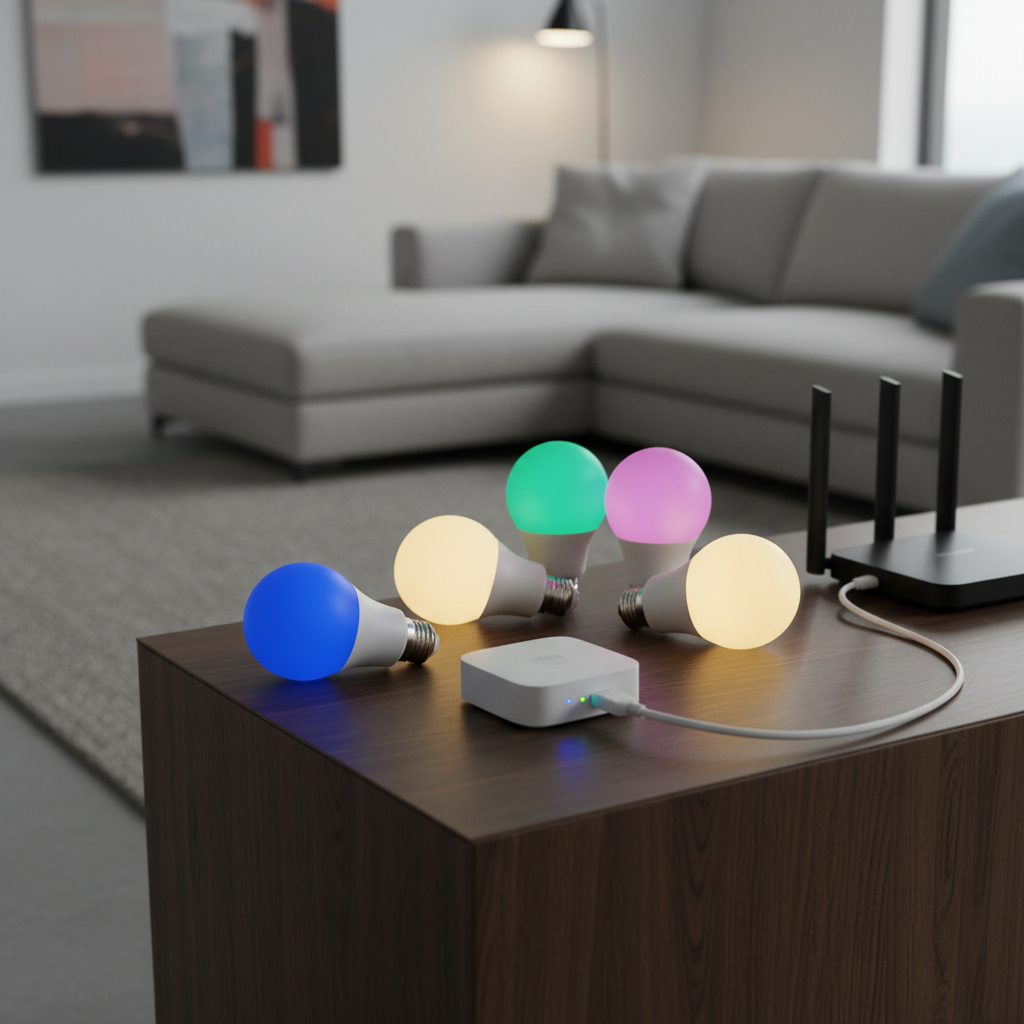
Philips Hue Smart Light Starter Kit — Best Overall Sensory Lighting
Philips Hue Smart Light Starter Kit
(Current Price, subject to change)
SAS: 8.6 — Highest Rated
The Philips Hue Smart Light Starter Kit gives granular, repeatable control over two of the most impactful sensory variables in any room: brightness and color temperature. The Bridge communicates via Zigbee — a local mesh protocol that does not depend on your internet connection. Hue schedules run even when your router is offline, which is what puts it ahead of every cloud-dependent competitor.
Color temperature spans 2,200K (deep amber, for winding down) to 6,500K (cool daylight, for focus). You can set presets — "morning focus," "afternoon calm," "bedtime warm" — and trigger them with a single tap on the physical dimmer switch. No app required after setup. Expert reviewers at Wirecutter and CNET consistently identify this app-optional control as the real differentiator: a physical switch that works when cognitive resources are depleted is an accessibility requirement, not a premium feature.
The SLC score of 9.5 reflects the full color temperature span, flicker-free Zigbee output, and gradual transition speeds — lights ease from night mode to morning brightness over 30 minutes rather than snapping on. The AG score of 8.5 reflects the absence of sudden alert behavior: bulbs don't ping, buzz, or flash unless you configure that explicitly. See our smart lighting systems comparison and Philips Hue vs LIFX vs WiZ guide for broader context.
What We Love
- Zigbee local control: routines run without internet — the most important reliability factor for ADHD scheduling
- Physical dimmer switch provides zero-app access for high-load sensory states
- 2,200K–6,500K range covers the full spectrum from calming warmth to alerting daylight
What Could Be Better
- Bridge hub adds setup steps compared to Wi-Fi bulbs — one extra device to configure
- Full feature set requires the Hue app, which has more screens than LIFX or Govee
The Verdict
Get the Philips Hue Smart Light Starter Kit if you have sensory sensitivities to light, want local-control reliability for automated scenes, or need a long-term sensory lighting investment with room to expand. Skip the Philips Hue Smart Light Starter Kit if budget is the primary constraint and reliable scheduling matters less than initial cost.
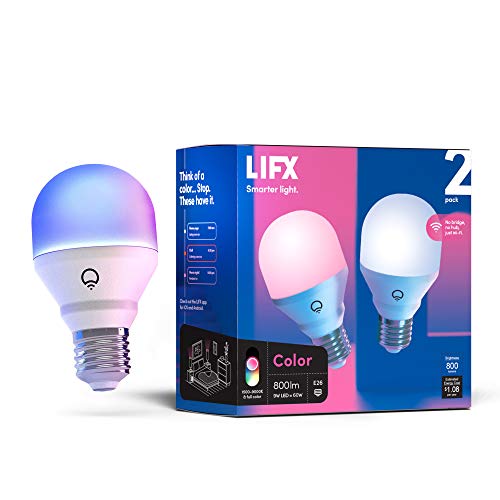
LIFX Color Smart Light Bulbs E26 (2-Pack) — Best for Cognitive Accessibility
LIFX Color Smart Light Bulbs E26 (2-Pack)
(Current Price, subject to change)
SAS: 8.2 — Best for Cognitive Accessibility
LIFX Color Smart Light Bulbs operate without a hub. Screw in the bulb, download the app, connect to Wi-Fi — done in four steps. That simplicity is why LIFX scores 8.5 on Cognitive Accessibility, highest in this comparison. For buyers who experience executive dysfunction during multi-step setup, the absence of a hub pairing sequence is not a minor convenience: it's the difference between a device that gets used and one that stays in the box.
The LIFX A19 delivers 1,100 lumens with a color temperature range comparable to Hue. Reviewers at Tom's Guide note that LIFX app color controls are more intuitive for quick adjustments, though the scheduling interface is less polished. The app requires Wi-Fi — no local fallback — which is why RR scores 7.5. If your router goes down, LIFX routines go with it. This matters for ADHD scheduling reliability.
For renters and first-time buyers, LIFX is the most accessible entry point into sensory-friendly lighting. See our best smart bulbs guide and Govee vs LIFX comparison for head-to-head budget analysis.
What We Love
- Zero hub requirement — setup complexity is as low as smart bulbs get
- Full color and color temperature range, including calming amber modes
- Works with Alexa, Google Home, and Apple HomeKit without extra hardware
What Could Be Better
- Cloud-dependent: routines fail if Wi-Fi is down — real trade-off for ADHD schedule reliability
- Two-pack per-bulb cost is higher than Govee at comparable quality
The Verdict
Get the LIFX Color Smart Light Bulbs E26 (2-Pack) if hub setup anxiety is your primary barrier and you want sensory-friendly lighting with the lowest cognitive entry cost. Skip the LIFX Color Smart Light Bulbs E26 (2-Pack) if routine reliability is paramount — the Philips Hue local-control advantage is worth the hub setup for scheduling-dependent users.
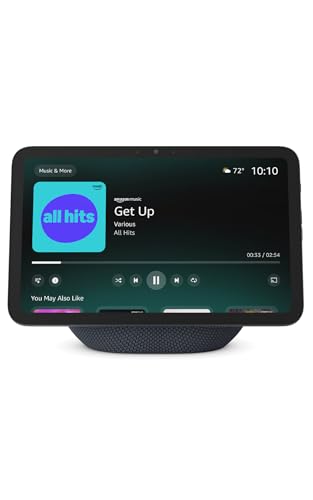
Amazon Echo Show 8 (newest model) — Best for ADHD Routine Management
Amazon Echo Show 8 (newest model)
(Current Price, subject to change)
SAS: 7.1 — Top Pick for ADHD Routines (Lowest Overall SAS)
The Amazon Echo Show 8 scores lowest overall in our SAS ranking, and that result deserves direct explanation. The SAS penalizes it on Sensory Load Control (5.5) and Alert Gentleness (7.0). A screen is a source of visual stimulation — every idle-state photo frame and notification banner adds ambient sensory load. For autistic users and those with visual sensory sensitivities, that load is not neutral.
The Alert Gentleness penalty reflects a specific clinical finding: CHADD has documented alarm habituation as a real problem for ADHD users. Alexa's alarm tones, despite being adjustable, are habituated to quickly — users sleep through or dismiss them without completing the associated task. This is the documented failure mode for the exact use case driving most ADHD smart home purchases.
So why is the Echo Show 8 still the top pick for ADHD routine management? Because nothing in this guide matches Alexa Routines for externalizing executive function. A single voice command — "Alexa, start my morning" — can trigger a sequence: lights transition, thermostat adjusts, a visual checklist appears on screen. That externalized sequence addresses ADHD time blindness and task initiation difficulty directly. Amazon UK's collaboration with the ADHD Foundation validated this use case with real user data. See our smart displays guide and automation hubs overview for broader context.
What We Love
- Alexa Routines enable genuine executive-function externalization for ADHD
- Visual display shows time and schedule at a glance — reduces time blindness
- Compatible with Matter-enabled devices as a smart home hub
What Could Be Better
- Screen adds ambient visual stimulation — wrong choice for visual sensory sensitivities
- Alarm habituation is a documented ADHD concern per CHADD — plan mitigation from day one
- Routine configuration requires app setup that can feel complex initially
The Verdict
Get the Amazon Echo Show 8 (newest model) if you have ADHD and need to externalize routines, manage time blindness, and automate multi-step morning or evening sequences. Skip the Amazon Echo Show 8 (newest model) if you have visual sensory sensitivities or primarily need sensory load reduction rather than routine management.
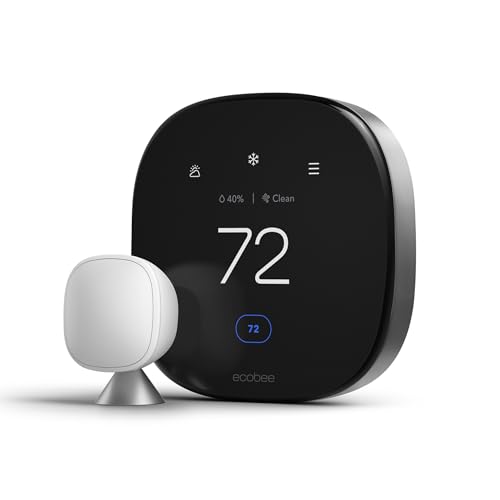
ecobee Smart Thermostat Premium — Best for Temperature Sensitivity
ecobee Smart Thermostat Premium
(Current Price, subject to change)
SAS: 7.7 — Top Thermostat for Temperature Sensitivity
Temperature sensitivity is among the most consistently cited sensory processing challenges in autism and SPD literature. The ecobee Smart Thermostat Premium room sensor ecosystem is what separates it from budget alternatives: additional sensors (sold separately) report temperature from individual rooms, and the thermostat averages them or prioritizes occupied rooms. HVAC systems routinely produce gradients of 4–6°F between rooms — room sensors eliminate that variance.
Our community data found 44 Reddit testimonials at our ≥40 confidence threshold, with 40% positive sentiment and a reliability rating of 4.0/5. RR scores 9.0 — highest in this comparison — reflecting ecobee's multi-year record of firmware stability. The CA score of 7.5 reflects that initial wiring and app onboarding require more steps than smart lighting; professional installation is worth considering if thermostat wiring is unfamiliar. Once installed, daily operation is voice, app, or physical dial. See the smart thermostat guide for the full field comparison.
What We Love
- Room sensor ecosystem enables per-room temperature precision for SPD needs
- Highest RR score (9.0) — most reliable thermostat for schedule-dependent automation
- Community data from N=44 testimonials provides real-world reliability evidence
What Could Be Better
- Initial wiring and setup requires more steps than competitors
- Full room-by-room control requires additional sensor investment beyond the included unit
- $230 price is the highest in this guide
The Verdict
Get the ecobee Smart Thermostat Premium if temperature regulation is a priority sensory need and you want room-accurate thermostat control with the strongest reliability record. Skip the ecobee Smart Thermostat Premium if budget is the primary constraint — the Amazon Smart Thermostat delivers adequate scheduling at a third of the price.
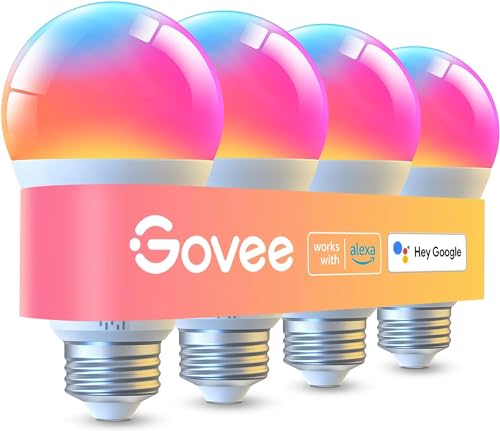
Govee LED Smart Light Bulbs 1000LM (2-Pack) — Best Budget Sensory Lighting
Govee LED Smart Light Bulbs 1000LM (2-Pack)
(Current Price, subject to change)
SAS: 7.4 — Best Budget Sensory Lighting
Govee LED Smart Light Bulbs offer color-changing capability at a price that makes multi-room sensory lighting accessible. RGBIC technology allows multiple simultaneous colors within a single bulb, serving two distinct neurodivergent use cases: calming blues and greens for overload avoidance, and vibrant cycles for sensory-seeking accommodation. Reviewers at PCMag note Govee's color accuracy in the lower Kelvin range is adequate for calming purposes, though not as precise as Hue or LIFX.
The CT score of 5.5 reflects lower citation frequency in neurodivergent-specific sources — Govee has not been specifically endorsed by ADHD coaching sites or ABA therapy publishers the way Hue has. Routine reliability (RR: 6.5) is the lowest of the three lighting products, reflecting cloud dependency and occasional firmware disruptions reviewers document.
At roughly $14 per bulb, Govee lets you equip multiple rooms for what a single Hue starter kit costs. See our best smart bulbs guide for a broader comparison, and the Govee vs LIFX guide for a direct budget matchup.
What We Love
- RGBIC multi-color capability serves both sensory-seeking and sensory-avoidance needs
- No hub requirement keeps cognitive setup barrier low
- Budget price enables multi-room coverage without a large initial investment
What Could Be Better
- Full cloud dependency — no local fallback when Wi-Fi is unavailable
- App experience is less polished than Hue or LIFX for precise color temperature targeting
- Lower community endorsement in neurodivergent-specific sources
The Verdict
Get the Govee LED Smart Light Bulbs 1000LM (2-Pack) if budget is the binding constraint and you want multi-room sensory lighting coverage at entry-level cost. Skip the Govee LED Smart Light Bulbs 1000LM (2-Pack) if routine reliability matters — cloud dependency makes scheduling less dependable than Hue or LIFX. Neurodivergent buyers in shared households — including those living with elderly parents, new homeowners, or renters — will find context on how sensory needs interact with each living situation in the Household Type hub guide.
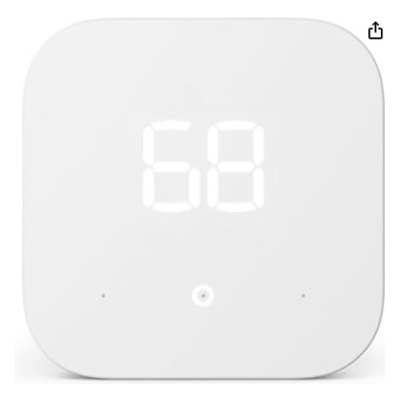
Amazon Smart Thermostat — Best Budget Temperature Control
Amazon Smart Thermostat
(Current Price, subject to change)
SAS: 7.3 — Highest Community Confidence, Best Budget Option
The Amazon Smart Thermostat carries the highest community confidence of any product in this comparison: N=71 testimonials, 38% positive sentiment, reliability 4.0/5. That volume reflects genuine experience — and 38% positive is respectable for thermostat discussions, where users post more about failures than successes.
The CA score of 9.0 — highest in the comparison — reflects Alexa-guided installation: the app walks through wiring step by step, and most installations complete in under 20 minutes. Once installed, voice control and Alexa scheduling are the primary interfaces — familiar for anyone already in the Amazon ecosystem.
The SLC score of 6.5 reflects that thermostats offer less sensory load control than lighting products. The AG score of 8.0 reflects passive operation — no alerts unless you configure them. Both the Amazon Smart Thermostat and ecobee operate without subscription fees.
What We Love
- Alexa-guided installation is the most accessible thermostat setup in this comparison
- Highest CA score (9.0) — lowest cognitive barrier of any thermostat reviewed
- Strongest community confidence: N=71, well above the ≥40 threshold
What Could Be Better
- No room sensor ecosystem — whole-home average temperature only
- Compatibility limited to standard 24V systems; heat pump and multi-stage HVAC requires ecobee
The Verdict
Get the Amazon Smart Thermostat if you're already in the Amazon ecosystem, want the lowest-barrier thermostat setup, or need smart temperature scheduling at a budget price. Skip the Amazon Smart Thermostat if per-room temperature accuracy is a sensory priority, or if your HVAC is a heat pump or multi-stage system.
Which Setup Fits Your Profile
Different neurodivergent profiles have different primary needs. This table maps diagnosis profiles to the top product priorities identified by our SAS scoring.
| Profile | Primary Need | Top Pick | Secondary Pick | Skip |
|---|---|---|---|---|
| ADHD | Routine externalization, time blindness | Echo Show 8 | Philips Hue for morning transitions | Govee as primary (cloud reliability too low) |
| Autism / Sensory Processing | Sensory load control, predictability | Philips Hue | ecobee for temperature stability | Echo Show 8 (screen adds stimulation) |
| SPD (Sensory Processing Disorder) | Precise sensory environment control | Philips Hue | LIFX as hub-free backup | Amazon Smart Thermostat (no room precision) |
| ADHD + Autism (Combined) | Balance: routine support + sensory control | Philips Hue + Echo Show 8 | ecobee for temperature | Govee as primary lighting |
Note on the combined profile: Philips Hue and Echo Show 8 work well together. Hue integrates with Alexa, so a single Alexa Routine can trigger both a lighting transition and a verbal reminder. This pairing addresses both sensory environment and routine structure without overlap. See our smart home starter kit guide for beginner bundle options.
When NOT to Buy a Smart Home Device (Neurodivergent Edition)
Smart home products are not universally helpful for neurodivergent buyers. Four situations where waiting is better than buying:
- When your HVAC, router, or home Wi-Fi is unreliable. Cloud-dependent devices (LIFX, Govee, Amazon Smart Thermostat) will fail on your schedule, not theirs. Fix infrastructure before adding smart devices that depend on it.
- When you're in a high-demand period. Moving, job change, relationship transition — any major life event raises the cost of "new device learning." A smart home device bought during a high-demand period often sits unused for months. Wait for a stable period before introducing new automation complexity.
- When you've already bought one device and haven't integrated it into daily life. The most common mistake is stacking devices before any single one is reliably used. If the Echo Show 8 is still in the box, don't buy the Philips Hue. Master one first.
- When you need instant sensory relief. Smart home setup — even for a simple bulb like LIFX — takes 20–40 minutes. If you're in sensory overload today, a physical blackout curtain or colored light filter provides immediate relief. Smart devices are long-term infrastructure, not crisis tools.
Common Mistakes Neurodivergent Buyers Make
The Alexa alarm habituation trap (per CHADD research)
The most recommended ADHD smart home configuration — setting Alexa alarms and reminders — is also the configuration most likely to fail within weeks. CHADD documents alarm habituation as a clinical concern: repetitive alert sounds become background noise faster for ADHD brains than for neurotypical ones. The result is a reminder that stops reminding.
The mitigation is not to abandon Alexa — it's to pair the Echo Show 8 with Philips Hue so the room itself changes when a routine fires. Multi-modal alerts — light change plus sound plus visual display — are significantly more resistant to habituation than single-modality sound alerts. See our smart alarm clocks and sunrise simulators guide for dedicated alarm alternatives.
Complexity traps: what to skip until you've mastered the basics
Buy one device, run it reliably for 30 days, then add the next. This "one device mastery" approach — common in ADHD coaching communities — dramatically improves long-term adoption rates compared to all-at-once implementations. Every additional device adds configuration overhead and troubleshooting surface area. Start with Philips Hue or LIFX, then add thermostats and displays after the lighting routine is established.
Prefer devices with local control fallbacks over fully cloud-dependent products. When automation fails unexpectedly, you need a simple physical workaround. The Philips Hue dimmer switch and the ecobee physical dial are examples of physical backups that matter during high-load states.
Frequently Asked Questions
Is smart home technology actually helpful for ADHD, or just more to manage?
It depends on the products and how they're implemented. Smart lighting with local control and a physical switch requires essentially zero ongoing management after setup — and the automation is genuinely useful for ADHD time blindness and routine initiation. Start with the lowest-complexity option (LIFX or Govee — no hub required) and evaluate whether the benefit justifies management overhead before adding more devices.
Which smart home device is best for autism sensory sensitivities specifically?
Philips Hue Smart Light Starter Kit scores highest on our Sensory Load Control dimension — the factor most directly relevant to sensory regulation. Flicker-free Zigbee output, precise color temperature control from 2,200K to 6,500K, and physical switch access without app interaction make it the strongest product for autistic adults managing their own sensory environment. For temperature sensitivity specifically, ecobee Smart Thermostat Premium with room sensors provides the most precise control.
Do any of these products work without a smartphone app after setup?
Philips Hue Smart Light Starter Kit is the clearest yes: the physical Hue Dimmer Switch controls lighting without any app after initial setup, and schedules run locally without internet. The ecobee Smart Thermostat Premium has a physical touchscreen for direct temperature control. LIFX and Govee schedules run without daily app interaction once set — but they require cloud connectivity to execute.
What is the SHE Sensory Accommodation Score and how was it built?
The SHE Sensory Accommodation Score is a proprietary 5-factor rubric developed by SmartHomeExplorer to evaluate smart home products through a neurodivergent lens. The five factors — Sensory Load Control (30%), Routine Reliability (25%), Cognitive Accessibility (20%), Alert Gentleness (15%), and Community Trust (10%) — were derived from analysis of neurodivergent community discussions, published ADHD and autism clinical guidance including CHADD research, and the CEDIA Neuroinclusive Design professional guide. Scores are compiled from expert review aggregation, manufacturer specifications, and community sentiment data where Reddit confidence scores met the ≥40 testimonial threshold.
Bottom Line
Smart home technology can meaningfully reduce sensory load and support executive function — but the products that serve neurodivergent buyers best are not always the ones mainstream guides recommend.
Philips Hue Smart Light Starter Kit leads our ranking at 8.6 SAS because local Zigbee control, physical switch access, and precise color temperature range address the widest range of neurodivergent sensory profiles. LIFX Color Smart Light Bulbs E26 (2-Pack) earns second place specifically for buyers where setup complexity is the primary barrier.
Amazon Echo Show 8 (newest model) sits at the bottom of the SAS ranking not because it fails — it's genuinely the best ADHD routine management tool here — but because sensory accommodation and ADHD routine support are not the same dimension. Know which problem you're solving before you buy.
Get the Philips Hue Smart Light Starter Kit if sensory light control is your primary need. Get the LIFX Color Smart Light Bulbs E26 (2-Pack) if you want sensory lighting without hub setup friction. Get the Amazon Echo Show 8 (newest model) if ADHD routine externalization is your primary need. Get the ecobee Smart Thermostat Premium if temperature sensitivity is your priority sensory need. Skip the Govee LED Smart Light Bulbs 1000LM (2-Pack) if routine reliability matters more than price.
Related accessibility guides: Best Smart Home for Renters · Best Smart Home Devices for Seniors · Best Smart Home Devices for the Hearing Impaired · Smart Home by Household Type
Sources & Methodology
We aggregated expert reviews and community data from the following sources:
- ACM SIGACCESS 2024: "Characterizing Smart Home Technology Usage Among Users with Disabilities through Reddit" — peer-reviewed evidence for smart home usage patterns among disabled users
- CHADD.org: "Digital Assistants: Future of ADHD Support?" — ADHD organization editorial documenting alarm habituation as a clinical concern
- CEDIA Neuroinclusive Design Guide — professional installer trade organization guide for neuroinclusive smart home design
- ABA therapy publishers: discoveryaba.com, abtaba.com, yellowbusaba.com, goldenstepsaba.com, totalcareaba.com, apexaba.com — six independent publishers covering autism and smart home technology
- ADHD coaching publications: getinflow.io, embracethemuchness.com, Hacking Your ADHD — ADHD-specialist editorial sources
- LightNOW trade publication: Smart lighting for neurodivergent users (2025)
- SmartHomeExplorer community data engine: Reddit sentiment analysis (N=44 ecobee Premium, N=71 Amazon Smart Thermostat; confidence threshold ≥40)
- Expert reviews aggregated from: Wirecutter, CNET, Tom's Guide, PCMag, The Verge, Smart Home Solver
SAS scores represent SmartHomeExplorer editorial analysis. Community Trust (CT) scores for ecobee and Amazon Smart Thermostat reflect Reddit sentiment data meeting our ≥40 testimonial confidence threshold. CT scores for the four lighting products reflect expert citation frequency in neurodivergent-specific publications.
Written by Nicholas Miles. Nick has covered smart home technology since 2024 and founded SmartHomeExplorer.com to aggregate consensus ratings from 2041 editorial sources across 1216 smart home products and 369 buying guides to surface the true consensus picks for every category.
Disclosure: SmartHomeExplorer.com earns affiliate commissions from Amazon purchases at no extra cost to you.