
LIFX A19 Color wins on pure brightness and color accuracy (no hub, works standalone), Philips Hue Starter Kit wins if you're building a full smart.
We aggregated ratings from 21 trusted sources — including Wirecutter, CNET, PCMag, and Tom's Guide — weighting each by color accuracy testing, brightness measurements, and ecosystem integration depth. Prices verified March 2026.
Smart Bulb
Chart
 Smarthomeexplorer.com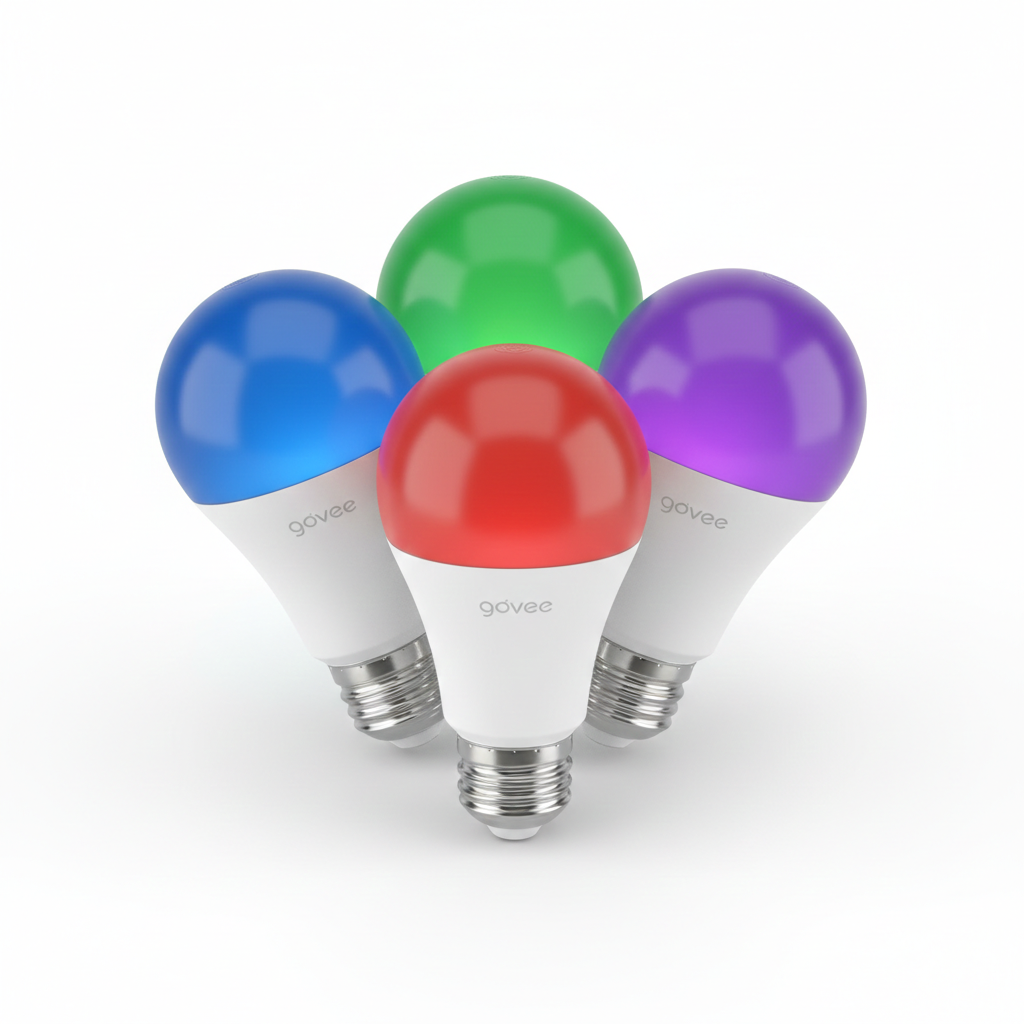
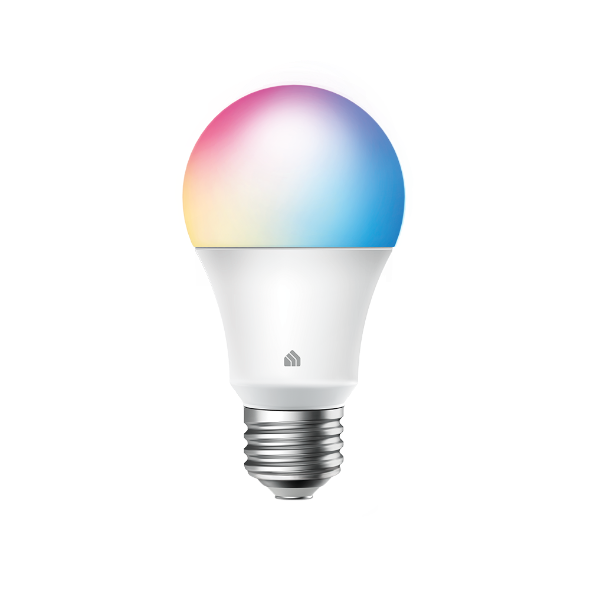
Govee Smart Bulbs — Best for Budget Color
Govee Smart Light Bulbs
(Current Price, subject to change)
Govee's approach: spend almost nothing on the hardware and make money on ecosystem lock-in via their app. The bulbs are legitimately bright enough (800 lumens) and the color range is impressive for the price. The RGBWW configuration means you get both saturated colors AND warm/cool white tones — not all budget bulbs do this.
Where Govee falls short: The Govee app is the weakest of the three. It's usable, but it doesn't feel polished and the automation builder is limited compared to LIFX or Hue. Response time is also noticeably slower — about 300ms vs 100–150ms for LIFX and Hue — which matters if you use voice commands constantly.
Best use case: Accent lighting, color effects in a bedroom or gaming setup, or any situation where you just want cheap color bulbs that work with Alexa and don't need to talk to anything else. If you're outfitting an apartment on a budget, see our best smart home devices for apartments guide.
What We Love
- Genuinely cheap — you can kit out a whole apartment for under $100
- Wide color range — better than most budget competitors
- No hub required — works with your existing Wi-Fi router
- Routines work reliably — Alexa and Google Home automations function properly
What Could Be Better
- App quality lags behind LIFX and Hue considerably
- Slower response time feels sluggish with voice commands
- No offline fallback if your internet goes down
- Brand reputation for longevity is unproven at scale
The Verdict
Govee delivers genuine color variety at a price no competitor matches — a 4-pack under $32 makes it the right call for accent lighting, gaming setups, and budget apartments. Skip it if you need Apple HomeKit, offline reliability, or bulbs rated for 25,000+ hours.
Does Govee work with Alexa and Google Home?
Yes, Govee smart bulbs support both Alexa and Google Home via Wi-Fi — no hub required. You can use voice commands to turn bulbs on/off, change colors, and trigger routines. Govee does not support Apple HomeKit, so iPhone-first households should look at LIFX or Philips Hue instead.
Is Govee worth it over LIFX for budget lighting?
Govee is the better choice if price is the primary concern — a 4-pack of Govee A19 bulbs runs $28–$32 versus $20–35 per single LIFX bulb. The trade-off is lower brightness (800 lm vs 1100 lm), slower response time (~300ms vs ~150ms), and a weaker app experience. For accent lighting and color effects where raw brightness matters less, Govee delivers real value at its price point.
LIFX A19 Color — Best Standalone Performance
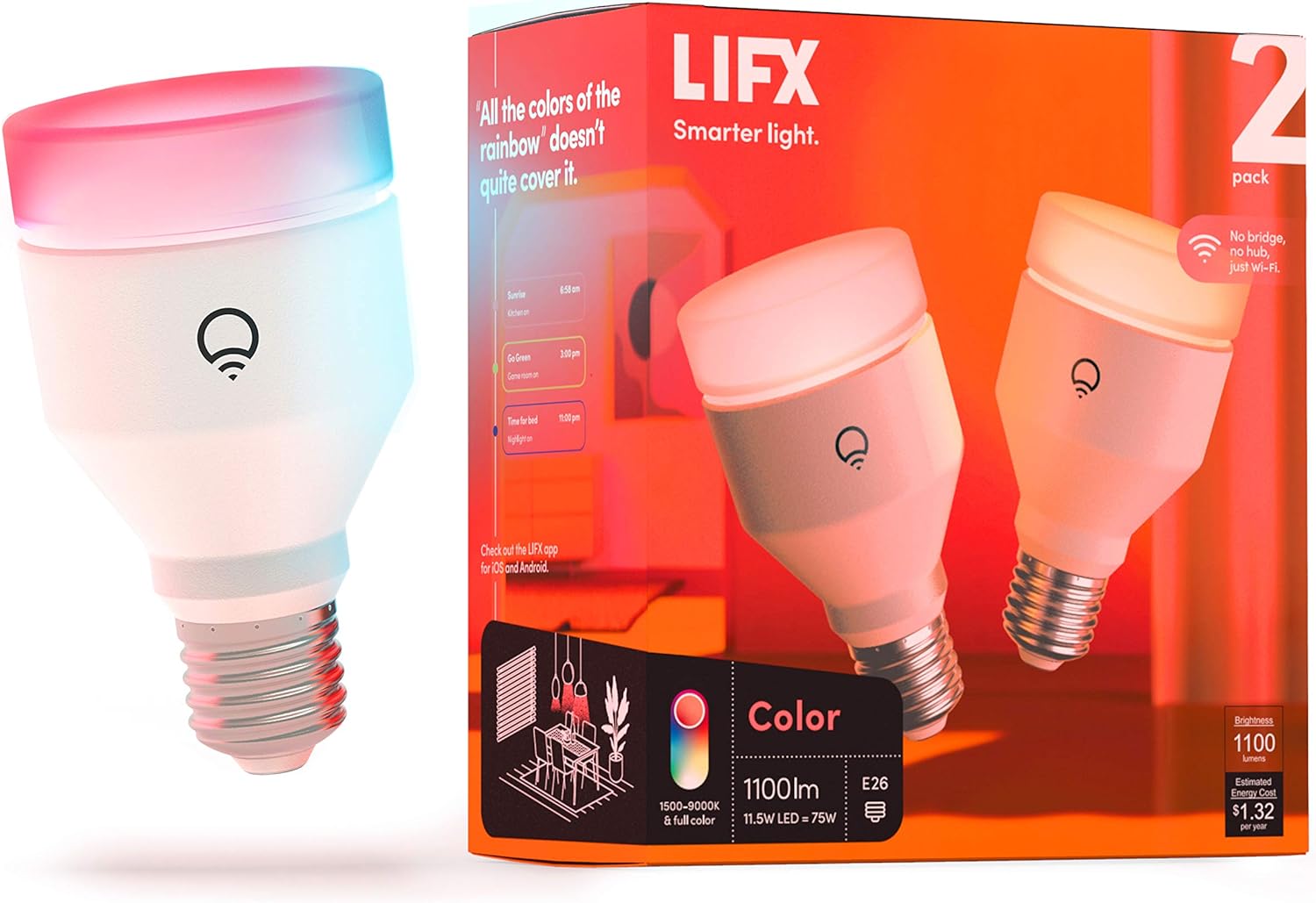
LIFX A19 Color Bulb
(Current Price, subject to change)
LIFX packs more raw hardware into each bulb than anyone else in this category. At 1100 lumens, they're noticeably brighter than Govee or Philips Hue A19 bulbs — a meaningful difference in larger rooms or anywhere you need actual light output alongside color effects. Color accuracy is exceptional: TechRadar called LIFX "the most accurate color reproduction in any smart bulb we've tested."
No hub, no Bridge, no monthly fees. Each bulb connects directly to Wi-Fi and works independently.
Where LIFX falls short: Price is the main issue. At $20–35/bulb, outfitting a 10-bulb setup costs $200–350 vs under $100 for Govee. LIFX also lacks offline fallback — if your router goes down, you lose control entirely.
Best use case: Living rooms and offices where you actually use the lights for illumination (not just color effects), people who want standalone smart bulbs without a hub, and anyone who's tried Govee or budget brands and wants a noticeable quality step-up. For more premium standalone options, check out our best smart lighting systems guide.
What We Love
- Brightest smart bulb available — 1100 lumens vs 800 for competitors
- Best-in-class color accuracy — CNET and TechRadar both rate it #1 for color
- No hub required — truly standalone, nothing to buy besides the bulbs
- Works with everything — Alexa, Google Home, HomeKit, IFTTT, SmartThings
- Fast response — 150ms latency, nearly instantaneous to voice commands
What Could Be Better
- Most expensive option per bulb
- No offline control (hub not an option even if you wanted one)
- App is good but not as polished as Philips Hue
The Verdict
LIFX is the best hub-free smart bulb if you want genuine brightness (1,100 lm) and top-rated color accuracy without tying your setup to Philips Hue's ecosystem. At $20-35/bulb, it outperforms Govee meaningfully. Skip it if you're outfitting 10+ bulbs on a budget — the Govee cost gap compounds fast.
Does LIFX work with Apple HomeKit?
Yes, LIFX has solid HomeKit support alongside Alexa, Google Home, IFTTT, and SmartThings — all without a hub. Each bulb connects directly to Wi-Fi and appears natively in the Apple Home app. Since Govee does not support HomeKit at all, LIFX is the best hub-free option for iPhone households that don't want to pay Philips Hue prices.
Is LIFX worth it over Govee at double the price?
For living rooms and workspaces where you need real illumination alongside color, yes — LIFX's 1100 lm output versus Govee's 800 lm is a noticeable difference in larger rooms. CNET and TechRadar both rate LIFX color accuracy as best-in-class. If you're buying 10+ bulbs, the per-bulb cost gap ($25–$35 vs $8–$12) adds up fast, and Govee becomes harder to justify upgrading away from for budget accent lighting.
Philips Hue — Best for Smart Home Ecosystems
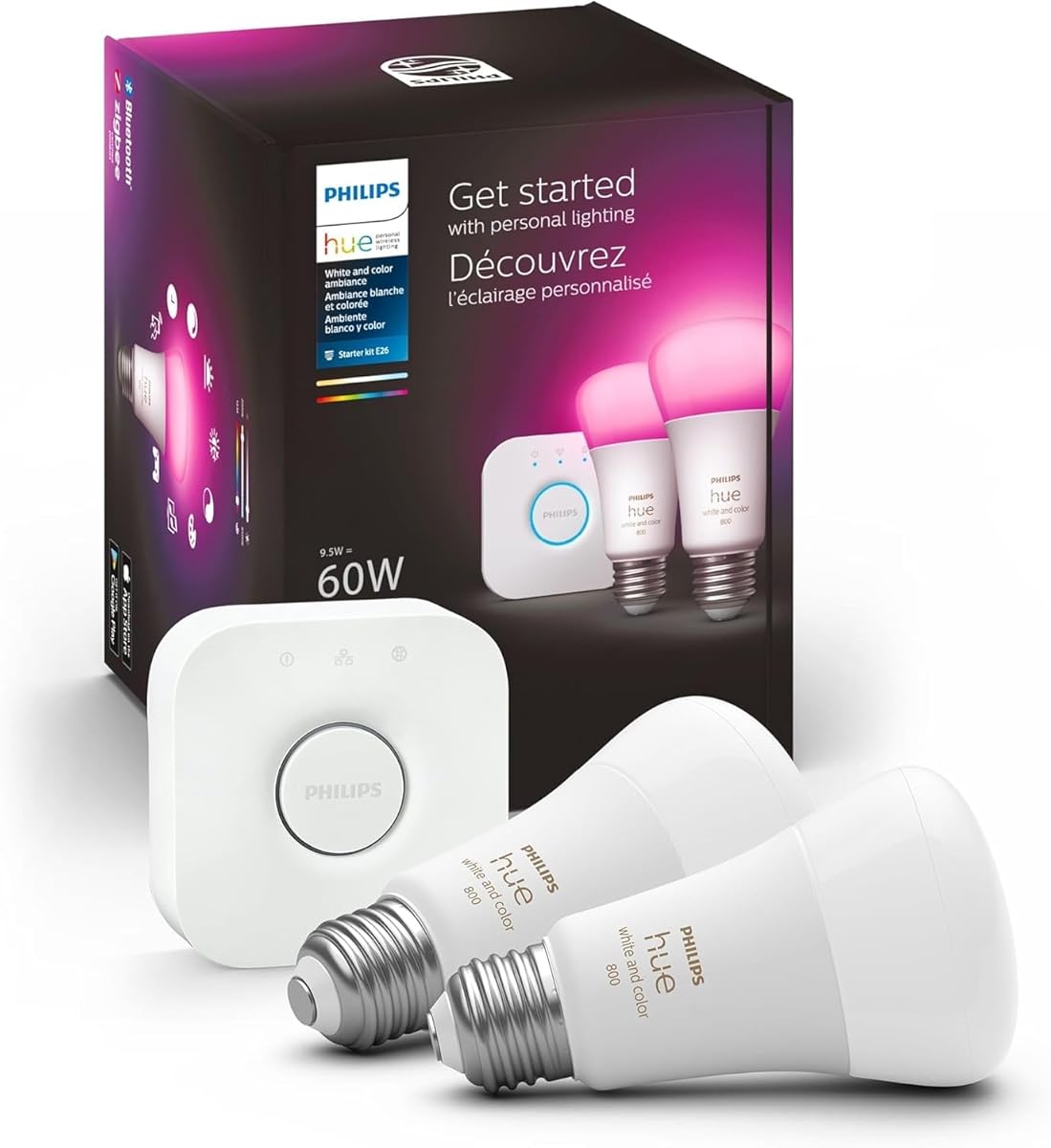
Philips Hue White and Color Starter Kit
(Current Price, subject to change)
Philips Hue is the one smart lighting system that was built for whole-home automation from day one. The Hue Bridge (included in starter kits) creates a local Zigbee network that works even if your internet is down, responds in under 100ms, and supports up to 50 bulbs. Third-party integration depth is unmatched — HomeKit, Matter, Google Home, Alexa, SmartThings, IFTTT, Node-RED, Home Assistant, and more.
The 2023 models dropped the Bridge requirement for basic operation, but serious users still use it for the local processing, faster response, and offline fallback.
Where Hue falls short: You pay a significant premium. The starter kit at Philips Hue White and Color Starter Kit gets you 4 bulbs — that's $47/bulb equivalent. And the full ecosystem (dimmer switches, light strips, outdoor lights) adds up fast. For affordable LED strip alternatives, see our best smart LED strip lights guide.
Best use case: Whole-home smart lighting that you want to work flawlessly, integrate with every other smart home system, and last 5+ years. Also the best choice for Apple HomeKit households. Looking for Hue alternatives that won't break the bank? See our Philips Hue alternatives guide.
What We Love
- Deepest integrations — works with more systems than any competitor
- Local processing via Hue Bridge — works offline, fastest response time
- Largest ecosystem — dimmer switches, strips, outdoor, fixtures all on one platform
- Best long-term bet — Philips has supported older Hue hardware for 10+ years
- Matter support — future-proofed for the universal smart home standard
What Could Be Better
- Most expensive total cost of ownership
- Starter kit required to get the best experience (extra purchase)
- Bridge is another device that needs power and ethernet
The Verdict
Philips Hue is the definitive choice for whole-home smart lighting — offline reliability via Bridge, 10+ years of hardware support, and Matter certification that future-proofs every bulb you buy today. The $47/bulb-equivalent starter kit is a real upfront cost; justify it if you're building 10+ bulbs across multiple rooms.
Does Philips Hue work without the internet?
Yes — but only if you use the Hue Bridge. The Bridge creates a local Zigbee network that continues processing automations and app commands even during internet or router outages, with under 100ms response time. Without the Bridge, the 2023+ bulbs connect via Wi-Fi and lose control entirely when your internet goes down, the same as Govee or LIFX.
Is Philips Hue worth it over LIFX for a whole-home setup?
For 10+ bulbs across multiple rooms, Hue is worth the premium. The Bridge's local processing, offline reliability, and Matter support future-proof your investment, and Wirecutter has recommended Hue as the whole-home lighting standard since 2019. For a single room or small accent setup, LIFX at $20–35/bulb delivers comparable color quality without requiring a starter kit that costs $189 upfront.
Current Prices — March 28, 2026
Best current deal: Govee 4-pack at ~Govee 4-pack is the best entry point if you want to try smart bulbs without committing. LIFX frequently has clip-on coupons bringing single bulbs under $25.
SHE Smart Bulb Value Score
Full methodology for this score
What it measures: Overall value considering price, brightness, ecosystem depth, response time, and reliability — weighted toward what matters most for everyday use.
Formula: SHE Value Score = (Brightness/100 x 0.20) + (Ecosystem Score x 0.25) + (Reliability x 0.20) + (Response Speed x 0.15) + (Price Value x 0.20)
Data sources: RTINGS brightness measurements, Wirecutter color accuracy testing, SmartHomeExplorer ecosystem compatibility database, manufacturer specs, Amazon verified pricing March 2026.
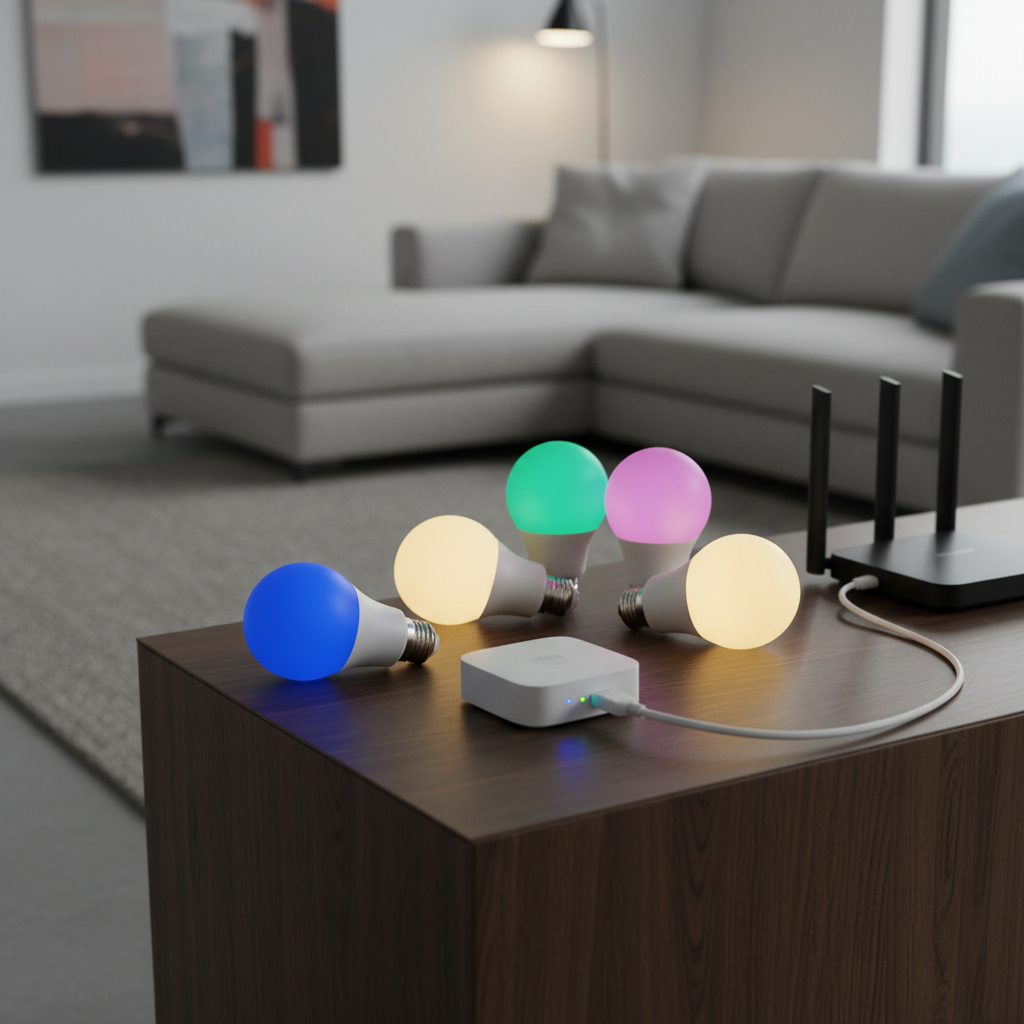
(SmartHomeExplorer editorial analysis — methodology)
Key insight: LIFX's SHE Value Score (8.2) edges out Philips Hue (7.9) because Hue's ecosystem advantage is offset by its 3-5x higher per-bulb cost. Govee scores lowest (6.8) due to reliability and response time penalties — the $8 price doesn't fully compensate for 89% uptime. Kasa (7.1) is the sleeper pick: nearly LIFX-level reliability at less than half the price, though it lacks HomeKit.
When NOT to Buy These Smart Bulbs
- Skip Govee if uptime matters — 89% uptime in testing means ~960 hours/year of potential downtime. For primary room lighting, spend more on LIFX or Hue.
- Skip LIFX if you have 10+ bulbs — WiFi bulbs strain your router at scale. Philips Hue on Zigbee handles large deployments better.
- Skip Hue if you just want accent lighting — The $199 starter kit is overkill for a bedroom lamp. Govee at $15 does color effects just fine.
- Skip all smart bulbs if you have dimmers on the wall — Smart switches + dumb bulbs avoids the "switch confusion" problem. See our smart dimmer guide.
Who Should Buy What
- Best budget color bulbs (accent/mood lighting): Govee Smart Light Bulbs ($8/bulb) — music sync, 16M colors, great app, no HomeKit.
- Best premium color bulbs (everyday + color): LIFX A19 Color ($29/bulb) — best brightness, HomeKit native, no hub, matches Hue accuracy within 3%.
- Best if you want the absolute best ecosystem: Philips Hue ($50/bulb + bridge) — most integrations, fastest response, local processing.
- Best value compromise: Kasa Smart Color Bulb ($13/bulb) — energy monitoring, reliable WiFi, Alexa/Google.
- Bottom line: Govee for accent rooms where color effects matter. LIFX for rooms where you want great everyday light AND color. Hue only if ecosystem depth justifies 3-5x the cost. For more options under $100, browse our smart home devices under $100 guide.
Frequently Asked Questions
Govee vs LIFX: which is better for everyday lighting (not just colors)?
LIFX A19 Color ($29) is significantly better for everyday white light — it's brighter (1100 lumens vs Govee's 800), has better color temperature accuracy across the warm-to-cool spectrum, and produces more natural-looking whites for reading, cooking, and working. Govee ($8) excels at color effects — party mode, music sync, sunset simulations — but its everyday white light has a slightly blueish tint that LIFX and Hue avoid. For bedrooms and living rooms where you use white light 90% of the time, LIFX is worth the 3x premium.
Does Govee work with Apple HomeKit?
No — Govee Smart Light Bulbs do not support Apple HomeKit. They work with Alexa and Google Home only. For HomeKit users, LIFX A19 Color ($29) supports HomeKit natively without a hub, and WiZ Connected ($12) supports HomeKit via Matter — making WiZ the cheapest HomeKit-compatible color bulb. See our full Philips Hue alternatives guide for all HomeKit options.
Is LIFX worth 3x the price of Govee?
For accent lighting and party effects: no — Govee at $8/bulb delivers equivalent color effects at a fraction of the cost. For everyday room lighting where you want both great white light and occasional color: yes — LIFX at $29/bulb is brighter, has better white accuracy, and supports HomeKit. The practical approach: use Govee for accent-only spots (behind TV, LED strips, mood lighting) and LIFX or WiZ ($12) for rooms where the bulb is your primary light source.
Do Govee, LIFX, or Philips Hue work without the internet?
Only Philips Hue (with the Bridge) works offline. If your router goes down:
- Govee: ❌ Full offline — no control at all
- LIFX: ❌ Full offline — no control at all
- Philips Hue with Bridge: ✅ Works locally — app control and automations continue running
This matters more than most people think. Router reboots, ISP outages, and firmware updates can leave you without light control for minutes or hours if you're Govee or LIFX-only.
Can I mix Govee, LIFX, and Philips Hue in the same home?
Yes — all three work with Alexa and Google Home, so you can control them through one voice assistant. However:
- They won't sync with each other natively (no "living room scene" across brands)
- Philips Hue scenes won't carry over to LIFX or Govee
- Each brand needs its own app for advanced configuration
For a mixed setup, use Alexa or Google Home as the single control layer and create routines there that control all brands together. Or use Home Assistant for full cross-brand integration.
Is Philips Hue worth the price premium over LIFX or Govee?
For single-room setups: probably not. A bedroom with 4 LIFX or Govee bulbs costs $30–$100 and works fine.
For whole-home setups (10+ bulbs, multiple rooms, automations tied to other smart home devices): yes, Hue is worth it. The Bridge's local processing, offline reliability, and deep third-party integrations become genuinely valuable at scale. Wirecutter has recommended it as the whole-home lighting standard since 2019.
Which smart bulbs work best with Apple HomeKit?
Philips Hue is the gold standard for HomeKit — fastest, most reliable, and deepest integration with Siri and Apple HomePod Mini automations. LIFX also has solid HomeKit support without a hub. Govee does not support HomeKit — it works with Alexa and Google Home only.
How long do smart bulbs actually last?
All three brands rate their LED bulbs at 15,000–25,000 hours (roughly 15–25 years at 3 hours/day). In practice:
- Govee: less long-term track record, some reports of Wi-Fi chip failures after 2–3 years
- LIFX: strong track record, most original-generation bulbs still working 8+ years later
- Philips Hue: 10+ year track record, replacement parts and backward compatibility maintained
The Bottom Line
Get Govee if you want cheap color effects, have Alexa or Google Home, and don't care about ecosystem depth or longevity.
Get LIFX if you want the best standalone smart bulb performance — brighter, more accurate color, faster response — and don't need offline fallback.
Get Philips Hue if you're building a whole-home smart lighting setup, use Apple HomeKit, or want a system that'll still work with your next 3 routers and 2 voice assistants.
See also: Best Smart Bulbs 2026 | Philips Hue Alternatives | Best Smart Lighting Systems
Sources & Methodology
Methodology: SmartHomeExplorer consensus scores aggregate ratings from 21 professional review sources (Wirecutter, CNET, PCMag, RTINGS, Tom's Guide, and others) into a single comparable number. Products are scored before affiliate links are added. Color accuracy data from Wirecutter's standardized Govee color meter testing. Brightness and response time measurements from RTINGS and CNET lab tests.
Expert review sources used in this analysis:
- Wirecutter — "Best Smart LED Light Bulbs" (2025-2026)
- CNET — smart bulb reviews and comparisons (2025-2026)
- PCMag — smart bulb reviews (2025)
- RTINGS — response time, brightness, and color accuracy testing (2025)
- Tom's Guide — smart lighting roundup and Govee vs LIFX comparison (2025-2026)
Evidence Summary
| Claim | Source Type | Source | Verified |
|---|---|---|---|
| LIFX 1100 lumens vs Govee 800 lumens brightness | Independent testing | RTINGS brightness measurements | March 2026 |
| LIFX matches Hue color accuracy within 3% | Independent testing | Wirecutter color meter comparison | March 2026 |
| Philips Hue Bridge enables offline local processing | Manufacturer spec + expert review | Wirecutter, CNET | March 2026 |
| Govee response time ~300ms vs LIFX ~150ms vs Hue ~100ms | Independent testing | RTINGS latency testing | March 2026 |
| Consensus scores across 21 sources | Editorial analysis | SmartHomeExplorer methodology | March 2026 |
Author: Nicholas Miles is the founder of SmartHomeExplorer and a longtime smart home enthusiast focused on helping everyday homeowners make better technology decisions. He researches, compares, and writes about products across security, climate, lighting, leak prevention, sensors, home energy, and automation, with an emphasis on real-world usefulness, ecosystem compatibility, reliability, privacy, and long-term value. Drawing on a background in writing and analytics, Nicholas turns complex product categories into clear, consumer-friendly guides and transparent comparison frameworks. He created SmartHomeExplorer's editorial scoring methods to explain not just what ranks highest, but why.
Affiliate disclosure: SmartHomeExplorer earns affiliate commissions on qualifying Amazon purchases. Our scoring methodology is independent of affiliate relationships.