
Best Smart Saltwater Pool Chlorinators (2026): WiFi vs Ecosystem
True native-WiFi salt cells are rare on Amazon — the dealer-channel units you read about won't ship to your cart. We compared the 7 saltwater chlorination systems you can actually buy, split by how they get smart: native WiFi, controller add-on, or timer.
This article contains affiliate links. We may earn a commission at no extra cost to you. Prices change frequently — check the current price on Amazon before buying. Learn more
The Short Answer
For a pool you intend to keep, the CircuPool RJ45+ Complete System is our pick: a USA-made titanium cell with a 7 yr warranty and substantial headroom. It prioritizes longevity over gadgetry — add a controller for an app. If a phone app in the box is the need, the Westaho lines up with what you actually need.
Featured in this Guide
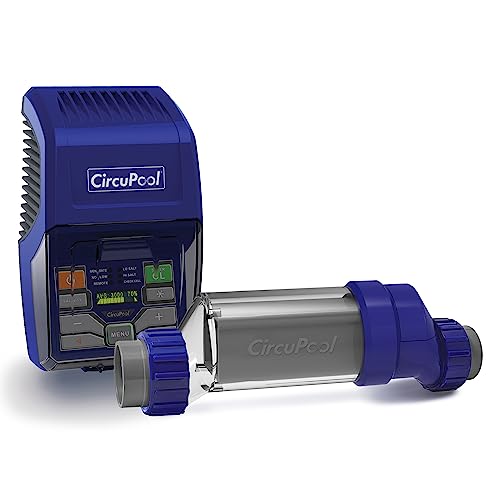
CircuPool
RJ45+ Complete System
- •USA-made titanium cell, a 7 yr warranty, and the most oversizing headroom in this roundup for hot climates.
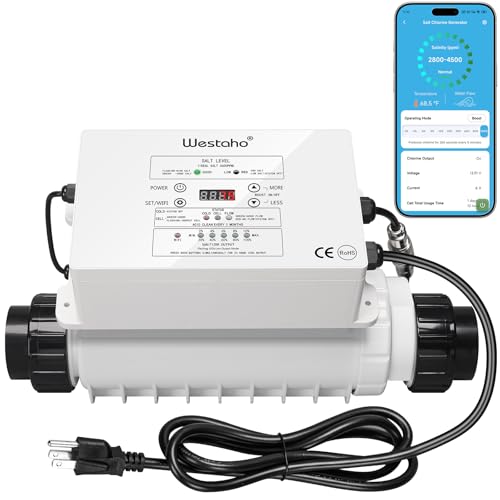
Westaho
WiFi Salt Chlorine Generator
- •A genuine app with real-time alerts and a 40,000-gallon titanium cell in the box — the cheapest real smart cell here.
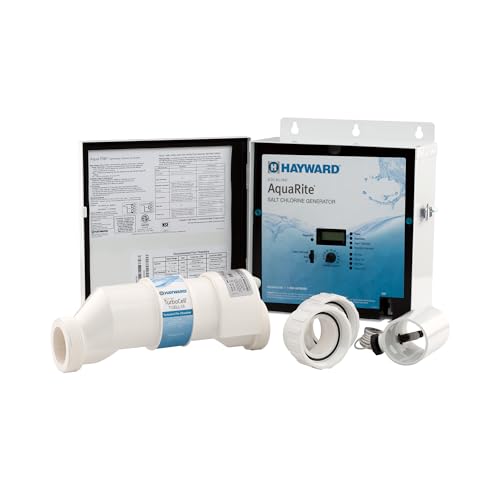
Hayward
AquaRite W3AQR15
- •The reference AquaRite cell every pool service knows
- •smart through the separate OmniLogic controller, rated to 40,000 gallons.
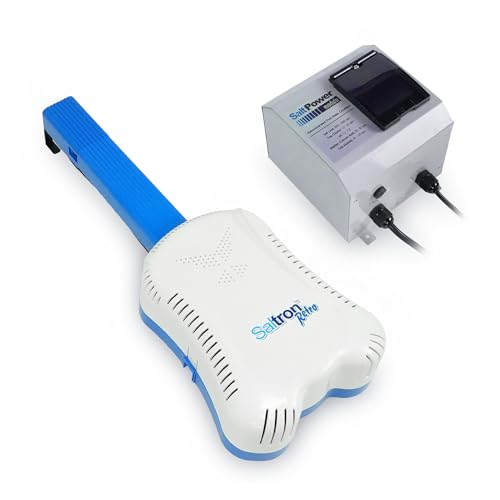
Solaxx
Saltron Retro
- •A self-cleaning drop-in with a built-in timer for above-ground pools up to 20,000 gallons.
Head-to-Head: Smart Control, Headroom, and Warranty
Outdoor
Chart
 Smarthomeexplorer.com
Tap any pick to check its live price on Amazon.
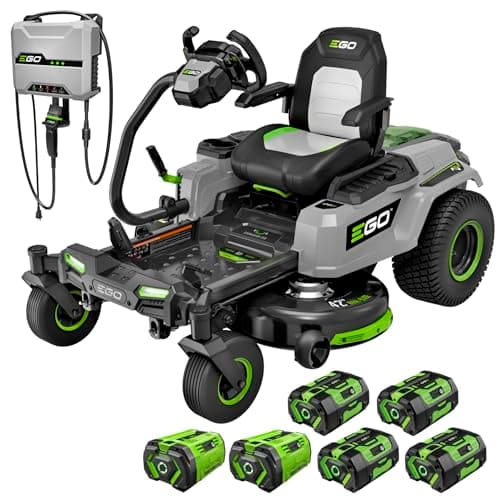
EGO POWER+ Z6 Zero Turn Riding Lawn Mower 42" S-Series (ZT4215S)
RecommendedCheck price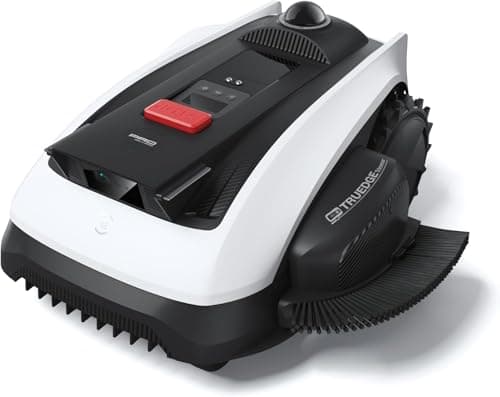
ECOVACS Goat O1000 LiDAR PRO Robot Lawn Mower
RecommendedCheck price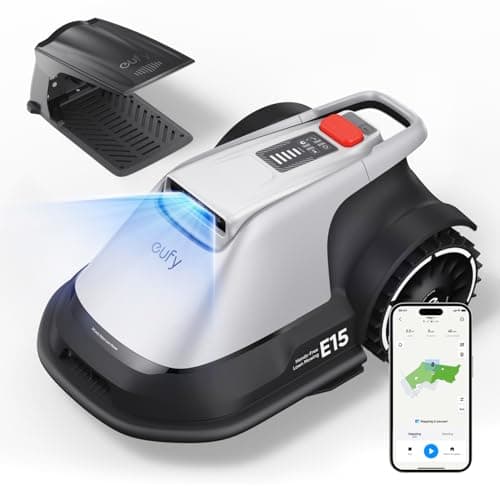
eufy Robot Lawn Mower E15
RecommendedCheck price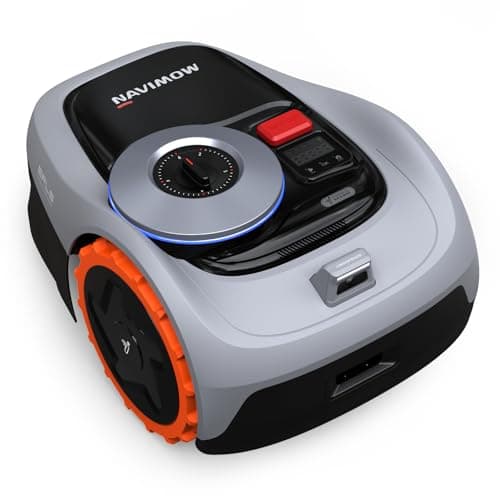
Segway Navimow i105N Wire-Free Robot Mower
Must BuyCheck price
RoboUP Raccoon 2 SE Wire-Free Robot Mower
Good ValueCheck price
What "Smart" Actually Means for a Salt Chlorinator
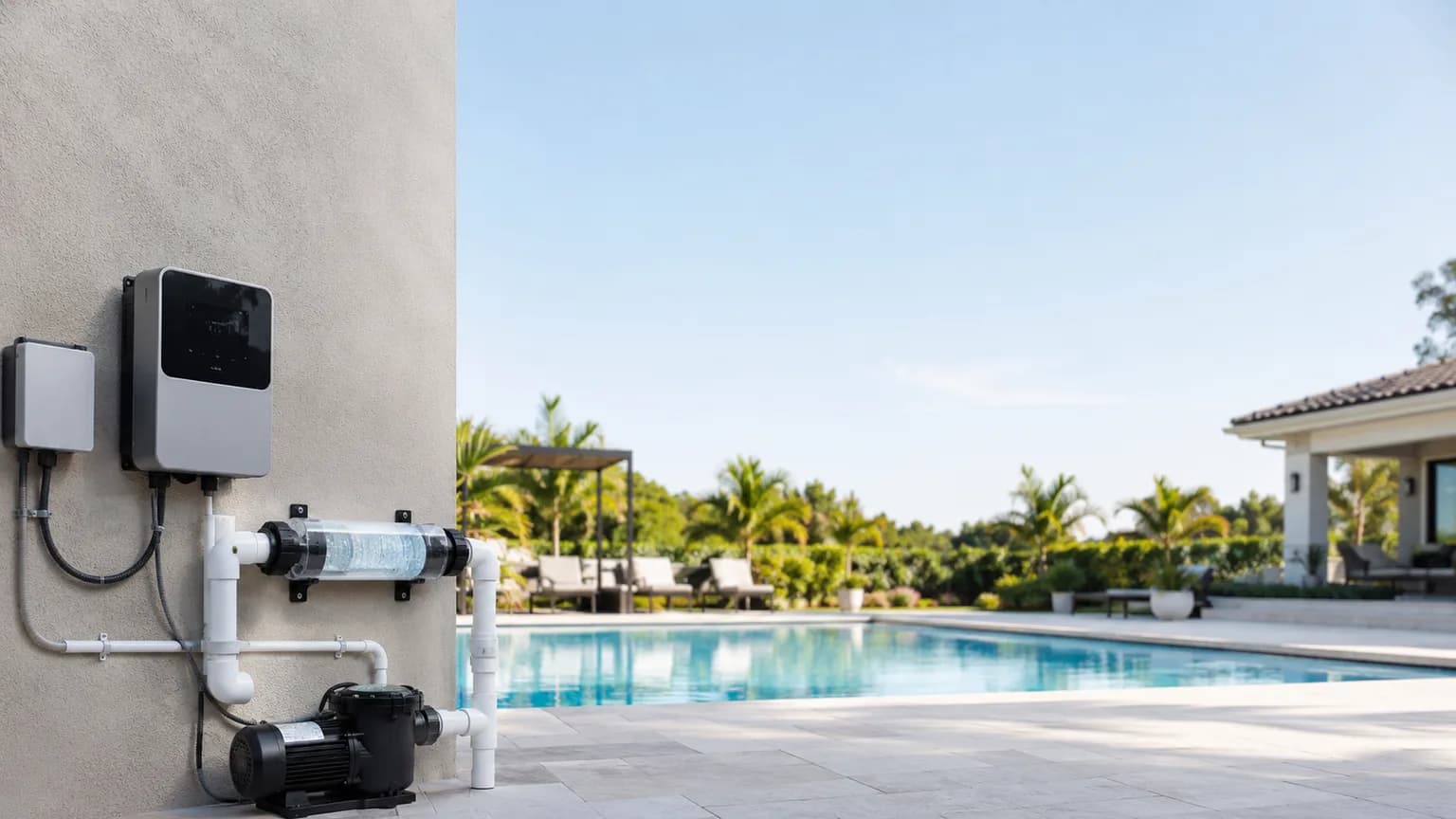
The phrase "smart saltwater chlorinator" hides three architectures, and the difference decides what you can buy. A genuinely native-WiFi cell runs its own app and pushes real-time alerts — the Westaho and Dwwce units do this in the box. A controller-add-on cell like the Hayward AquaRite, or CircuPool's 7 yr RJ45+ and EDGE25, is not WiFi by itself; it becomes app-smart only paired with a separate controller. A timer-only cell like the Solaxx Saltron Retro runs a built-in schedule with no app. We evaluated 7 systems on a weighted composite formula, normalized to a 0-10 scale.
One honest caveat shapes this roundup: the dealer-channel smart cells the forums rave about — AutoPilot ChlorSync, AutoPilot PoolSync WiFi, and Pentair IntelliChlor — do not resolve as buyable Amazon listings, so we cover them as context. For the chemistry side, see our pool monitors guide; for cleaning, our robot pool cleaners guide.
Best Overall Value: CircuPool RJ45+ Complete System
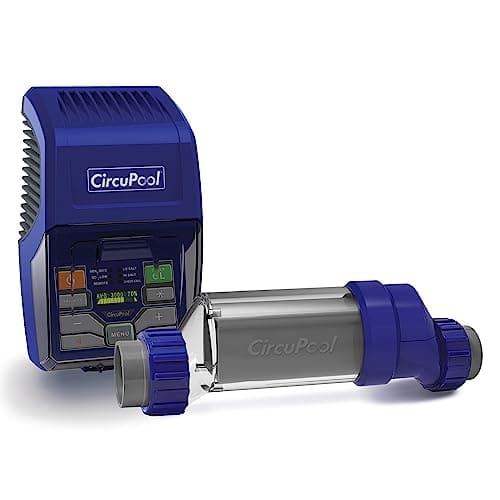
CircuPool RJ45+ Complete System
- USA-made titanium cell with a 7 yr manufacturer warranty per the listing.
- No native WiFi or app — smart control needs a separate controller.
(Current price, subject to change)
If you've narrowed to a cell that has to last, the CircuPool RJ45+ Complete System earns the highest SHE Smart-Pool Readiness Score here at 7.7, which in practice means it balances smart-readiness against the things that actually decide a decade of ownership. CircuPool sells it as a complete system, and the listing documents a USA-made titanium cell with a 7 yr manufacturer warranty — longer coverage than the shorter terms typical of the mainstream cells. The reason the composite leads is headroom: the listing rates it for the largest pools in this roundup, so you can oversize one tier and the cell runs comfortably below capacity through a hot summer, which substantially extends titanium-plate life. That longer coverage spans more of the cell's service life before a replacement is due. It has no native app, so app scheduling requires pairing it with a separate Hayward or Pentair controller as a scheduled load. Relative to the Hayward AquaRite W3AQR15, it delivers more warranty and headroom for less, which keeps it our best-value anchor even though Hayward owns the dealer network.
What We Love
- USA-made titanium cell with a 7 yr manufacturer warranty per the listing.
- No DIY install penalty — owner installs keep the full warranty.
- The most oversizing headroom here, so a hot-climate pool runs below 100%.
What Could Be Better
- No native WiFi or app — smart control needs a separate controller.
- Lower pool-service recognition than Hayward AquaRite.
The Verdict
If you're buying for a pool you plan to keep for years, CircuPool RJ45+ Complete System fits the brief. We'd point you here first because the USA-made titanium cell pairs a 7 yr warranty with the headroom to run the cell easy all summer.
Ready to upgrade your home?
REOLINK 360° Solar Security Cameras, 4 Pack
See it on Amazon
Yale Assure Lock 2 Wi-Fi Smart Lock with Keypad
See it on Amazon
MOVA P10 Pro Ultra Robot Vacuum and Mop
See it on Amazon
Sponsored listings from Amazon’s Sponsored Products for Creators program, kept apart from our reviews and rankings. How we make money
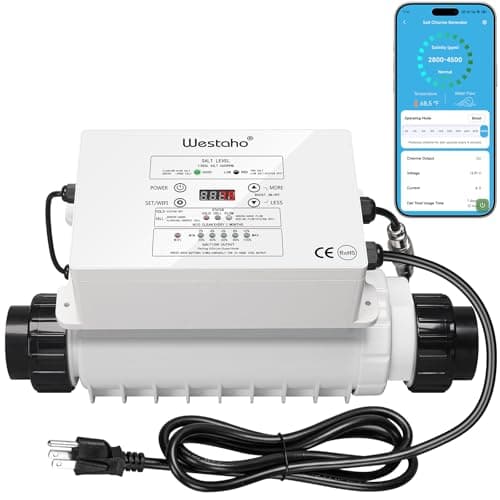
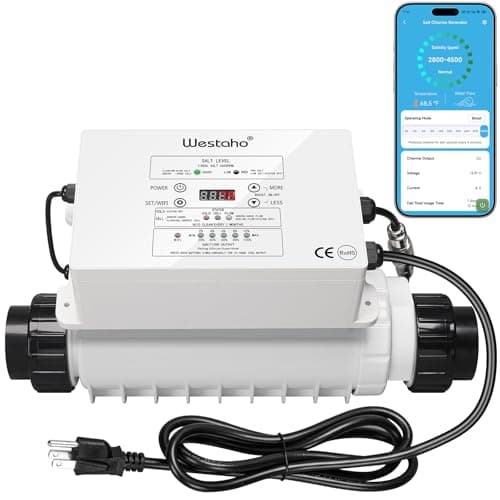
Best Native WiFi: Westaho WiFi Salt Chlorine Generator
Westaho WiFi Salt Chlorine Generator
- Native WiFi with app remote control and real-time alerts per the listing.
- White-label value brand with no published expert-outlet testing.
(Current price, subject to change)
For the buyer whose requirement is a real app rather than a dealer add-on, the Westaho WiFi Salt Chlorine Generator is the most direct native-WiFi unit you can actually buy here. It earns a 7.4 SHE Smart-Pool Readiness Score on the strength of its smart-control factor. We describe its capabilities from the manufacturer listing only. It is a white-label value brand with no published expert-outlet coverage, so we make no claim that any review site has tested it. The listing details native WiFi with app remote control, real-time alerts, and smart monitoring of salt level and output. It adds a USA titanium cell rated for in-ground pools up to 40,000 gallons. Comparatively, this is the controller-free path the dealer-channel AutoPilot PoolSync promises but cannot deliver to an Amazon cart. The trade-off is serviceability: there is no nationwide parts network behind it the way there is for the Hayward AquaRite W3AQR15. It delivers an in-the-box app for a fraction of the AquaRite's price.
What We Love
- Native WiFi with app remote control and real-time alerts per the listing.
- USA titanium cell rated for in-ground pools up to 40,000 gallons.
- The lowest entry into real native-WiFi salt chlorination here.
What Could Be Better
- White-label value brand with no published expert-outlet testing.
- Cloud app means smart features depend on the maker's servers.
The Verdict
If a phone app in the box is the non-negotiable, Westaho WiFi Salt Chlorine Generator lines up with what you actually need. Its listing describes native WiFi, real-time alerts, and a 40,000-gallon titanium cell, at the lowest price of any real smart cell here.
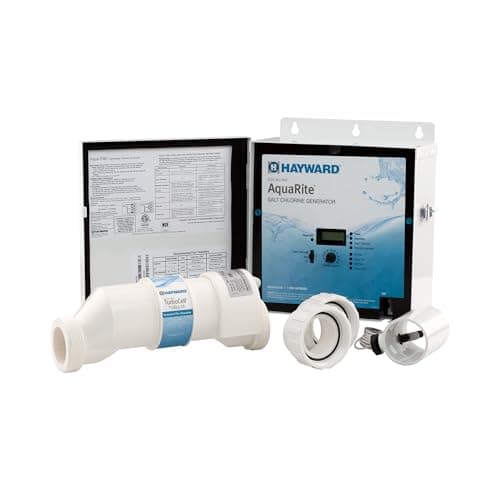
Best Dealer Support: Hayward AquaRite W3AQR15
Hayward AquaRite W3AQR15
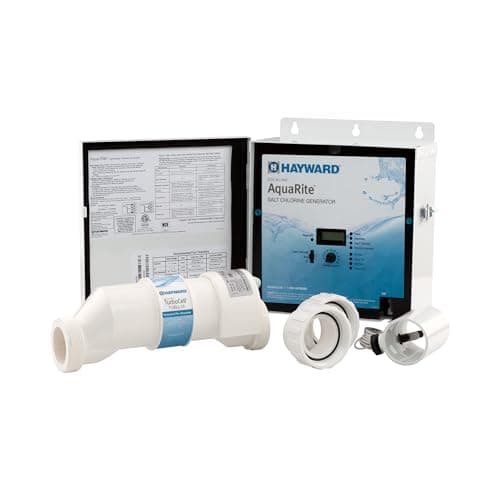
- The reference cell every pool service company already knows how to fix.
- No native WiFi in the box — app control needs the separate OmniLogic add-on.
(Current price, subject to change)
For owners who weight serviceability above everything, the Hayward AquaRite W3AQR15 is the industry reference, and its 7.2 SHE Smart-Pool Readiness Score is carried almost entirely by that serviceability factor. The honest framing matters here: the AquaRite is not a native-WiFi product. The control box in the box runs a panel UI, and it becomes app-smart only when you pair it with a separate Hayward OmniLogic or OmniHub controller — do not buy it expecting a phone app out of the carton. What it does deliver is a complete system with the T-Cell-15 rated for in-ground pools up to 40,000 gallons, plus a parts ecosystem stocked at virtually every pool store that substantially lowers the cost of a future cell swap. Its warranty is shorter than CircuPool's 7 yr coverage. Relative to the CircuPool RJ45+ Complete System, it costs more with that shorter warranty, so you are paying for the dealer network, not the math. On a 10-year horizon it is the safe institutional choice.
What We Love
- The reference cell every pool service company already knows how to fix.
- Complete system with the T-Cell-15 rated for in-ground pools up to 40,000 gallons.
- Becomes app-smart when paired with a Hayward OmniLogic or OmniHub controller.
What Could Be Better
- No native WiFi in the box — app control needs the separate OmniLogic add-on.
- Most expensive unit in this roundup.
The Verdict
If you want every pool tech in town to know your equipment, Hayward AquaRite W3AQR15 is a sensible pick for that setup. The reference AquaRite cell is rated to 40,000 gallons and goes app-smart through the OmniLogic controller.
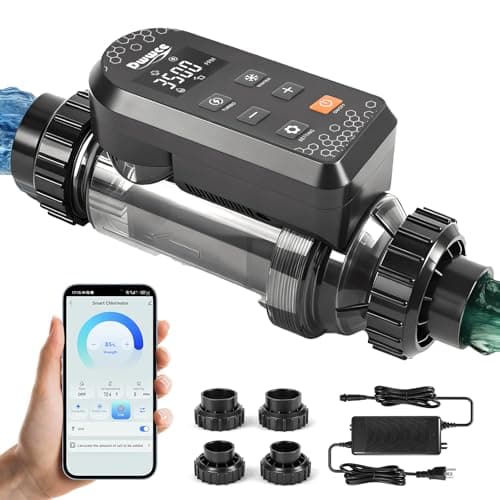
Budget Native-WiFi: Dwwce Smart WiFi Salt Chlorinator
Dwwce Smart WiFi Salt Chlorinator
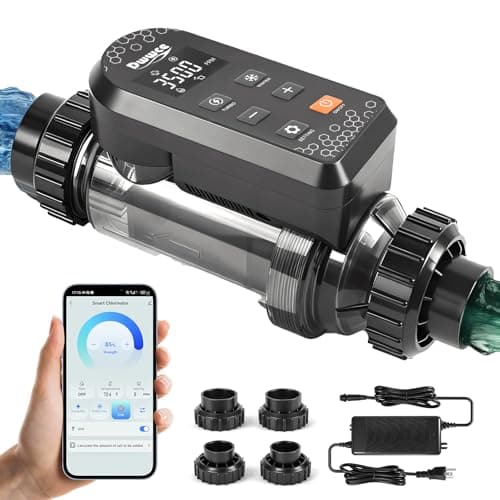
- Native WiFi and app control with a USA titanium cell per the listing.
- White-label value brand with the smallest support footprint here.
(Current price, subject to change)
For the budget buyer who still wants a phone app, the Dwwce Smart WiFi Salt Chlorinator sits at the budget end of the smart cells here. It earns a 7.3 SHE Smart-Pool Readiness Score, just behind the Westaho on a thinner support footprint. As with the other white-label unit, we describe it from the manufacturer listing only and attribute no expert-outlet review to it. The listing details native WiFi with app control, a USA titanium cell rated for in-ground pools up to 40,000 gallons, and union fittings that suit both above- and in-ground plumbing. Comparatively, it gives up the warranty depth of the CircuPool EDGE25 and the parts network of Hayward, which is the predictable trade for the lowest price. The smart-control factor scores nearly as high as the Westaho because the in-the-box app is the same value proposition. It is a genuinely inexpensive way to get real-time salt and output readings on your phone.
What We Love
- Native WiFi and app control with a USA titanium cell per the listing.
- Rated for in-ground pools up to 40,000 gallons and works above-ground too.
- A budget-tier ticket for a genuine in-app salt cell.
What Could Be Better
- White-label value brand with the smallest support footprint here.
- Cloud app means smart features depend on the maker's servers.
The Verdict
If you want a budget path to a real in-app salt cell, Dwwce Smart WiFi Salt Chlorinator checks the boxes that matter for that upgrade. The listing describes native WiFi, app control, and a 40,000-gallon titanium cell, though its card shows no featured offer today.
Best Value Flagship: CircuPool EDGE25
CircuPool EDGE25
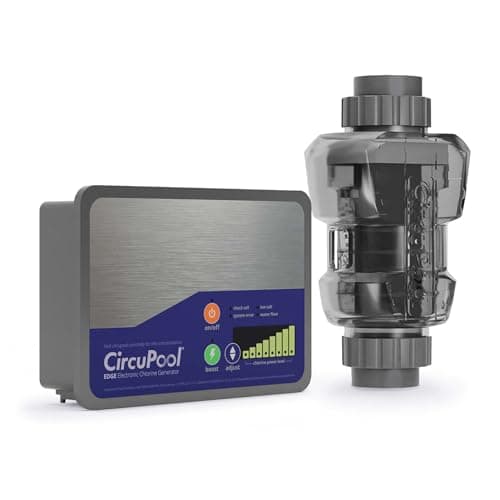
- USA-made with a 7 yr warranty and a 1.2 lb daily chlorine output.
- No native WiFi or app — smart control needs a separate controller.
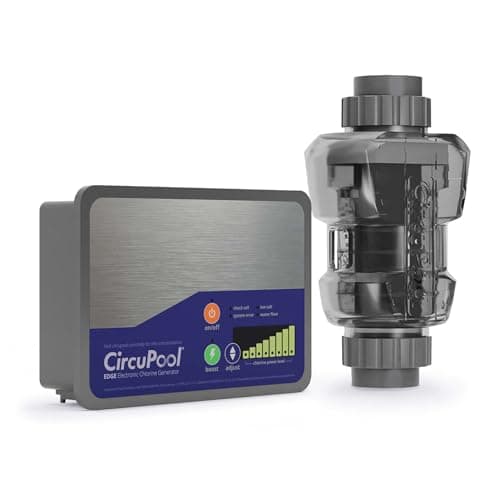
(Current price, subject to change)
For the standard-pool owner who wants CircuPool's warranty economics at a lower entry, the CircuPool EDGE25 is the value flagship, and it occupies the 7.2 SHE Smart-Pool Readiness Score tier on serviceability and offline resilience. The listing documents a USA-made electronic salt chlorinator incorporating a 7 yr manufacturer warranty and a 1.2 lb daily chlorine output rated for pools up to 25,000 gallons. Relative to the larger-pool CircuPool RJ45+ Complete System, its 1.2 lb capacity carries comparatively less headroom, which is precisely why it costs considerably less — for a correctly-sized 25,000-gallon pool, that additional headroom is margin you may not require. Like the RJ45+, it provides no native application and becomes smart only as a scheduled load inside a separate controller. The identical 7 yr term covers an owner installation with no DIY penalty. It delivers the most chlorine-warranty per dollar in this roundup for a standard pool.
What We Love
- USA-made with a 7 yr warranty and a 1.2 lb daily chlorine output.
- No DIY install penalty — owner installs keep the full warranty.
- Undercuts the RJ45+ while keeping the same warranty term.
What Could Be Better
- No native WiFi or app — smart control needs a separate controller.
- Less oversizing headroom than the RJ45+ for very hot climates.
The Verdict
If your pool is standard-sized and you want CircuPool's warranty without the flagship price, CircuPool EDGE25 fits without compromise. It pairs a 7 yr warranty with a 1.2 lb daily output for pools up to 25,000 gallons.
Best Standard-Pool Hayward: Hayward AquaRite W3AQR9
Hayward AquaRite W3AQR9
- The same AquaRite control box and nationwide parts ecosystem as the W3AQR15.
- No native WiFi in the box — app control needs the separate OmniLogic add-on.
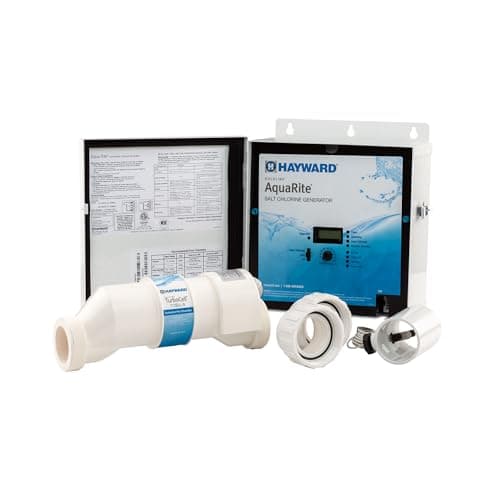
(Current price, subject to change)
For the standard-pool owner who specifically wants Hayward's dealer network, the Hayward AquaRite W3AQR9 is the right-sized sibling of the W3AQR15, and it earns a 7.1 SHE Smart-Pool Readiness Score on the same serviceability strength scaled to a smaller cell. It is the identical AquaRite control box paired with the T-Cell-9, rated for in-ground pools up to 25,000 gallons, so every parts and dealer advantage of the larger unit carries over. Its warranty matches the W3AQR15 and trails CircuPool's 7 yr terms. As with the bigger AquaRite, it ships with no native app and becomes smart only through a separate OmniLogic controller — state that plainly before you buy. The buying logic against the Hayward AquaRite W3AQR15 is purely headroom, since it sits only modestly cheaper: near 25,000 gallons you size to the T-Cell-9, and if it runs hot or large you step up. It is the dealer-backed pick for a correctly-sized standard pool.
What We Love
- The same AquaRite control box and nationwide parts ecosystem as the W3AQR15.
- Complete system with the T-Cell-9 rated for in-ground pools up to 25,000 gallons.
- Becomes app-smart when paired with a Hayward OmniLogic or OmniHub controller.
What Could Be Better
- No native WiFi in the box — app control needs the separate OmniLogic add-on.
- Priced just below the larger-cell W3AQR15, so headroom is the real decider.
The Verdict
If you want the AquaRite parts network sized to a standard pool, Hayward AquaRite W3AQR9 is a sensible pick for that setup. The T-Cell-9 is rated to 25,000 gallons and goes app-smart through OmniLogic.
Best Above-Ground: Solaxx Saltron Retro
Solaxx Saltron Retro
- Self-cleaning drop-in design for above-ground pools up to 20,000 gallons.
- No WiFi and no app — it is a standalone timer-driven unit.
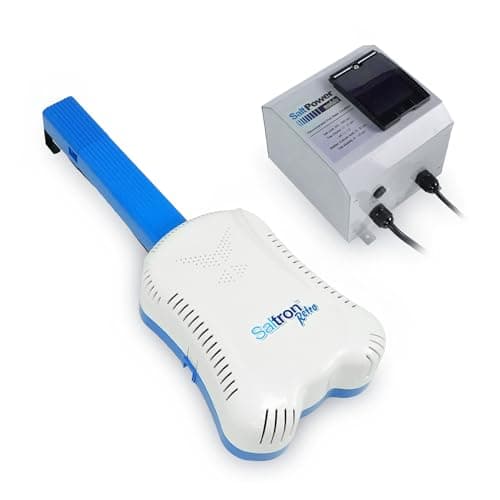
(Current price, subject to change)
For the above-ground owner whose requirement is salt without a plumbing project, the Solaxx Saltron Retro is the category drop-in. Its 6.1 SHE Smart-Pool Readiness Score reflects an honest scope. It scores low on smart control because it has none, but high on install friction and offline resilience because it just works. The listing describes a self-cleaning generator with a built-in timer, rated for above-ground pools up to 20,000 gallons. It hangs over the pool wall, so most installs need no plumbing cut-in. Comparatively, it is the opposite philosophy from the native-WiFi Dwwce Smart WiFi Salt Chlorinator — no phone, no cloud, no controller, just a timer that runs. That makes it the most resilient unit here when the internet drops, and the lowest-risk install for a renter or a seasonal pool. It is the cheapest way into salt chlorination, with the trade that it brings no smart features at all.
What We Love
- Self-cleaning drop-in design for above-ground pools up to 20,000 gallons.
- A built-in timer runs the chlorination schedule without a controller.
- No plumbing cut-in required for most above-ground setups.
What Could Be Better
- No WiFi and no app — it is a standalone timer-driven unit.
- Above-ground only and capped at 20,000 gallons.
The Verdict
If you run an above-ground pool and want salt without plumbing work, Solaxx Saltron Retro checks the boxes that matter for that setup. The self-cleaning Saltron Retro hangs over the wall with a built-in timer for pools up to 20,000 gallons.
How We Score: SHE Smart-Pool Readiness Score
SHE Smart-Pool Readiness Score
Score Formula
(SmartControlDepth × 0.30) + (ChlorineHeadroom × 0.25) + (Serviceability × 0.20) + (InstallFriction × 0.15) + (OfflineResilience × 0.10)Score Factors
- SmartControlDepthHow directly the unit delivers smart control: native WiFi and a first-party app in the box scores highest, controller-add-on smartness scores mid, timer-only scores low
- ChlorineHeadroomRated output capacity against the pool size it is sold for, so an owner can oversize one tier and run the cell below 100% all summer
- ServiceabilityWarranty depth plus the maturity of the parts and support channel — nationwide dealer parts and long USA-made warranties score high
- InstallFrictionHow easy the unit installs without a dealer or warranty penalty (higher score = lower friction): drop-in and no-DIY-penalty cells score high
- OfflineResilienceWhether chlorine generation keeps running without internet or cloud login: timer-driven and controller-local cells score high
SHE Smart-Pool Readiness Score — Ranked
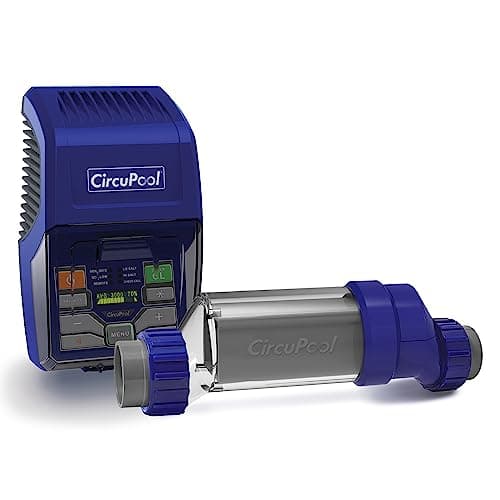
CircuPool RJ45+ Complete System
SHE Smart-Pool Readiness Score7.7/10Leads the score: top chlorine headroom and a 7 yr USA-made warranty; no native app is the only drag, and it carries the roundup's premium sticker.
Westaho WiFi Salt Chlorine Generator
SHE Smart-Pool Readiness Score7.4/10Native WiFi and a real app in the box lift the smart-control factor; thin white-label support holds it just behind the value flagship.
Dwwce Smart WiFi Salt Chlorinator
SHE Smart-Pool Readiness Score7.3/10The same in-the-box app on the budget end; the smallest support footprint here keeps it a notch under the Westaho.
Hayward AquaRite W3AQR15
SHE Smart-Pool Readiness Score7.2/10Unmatched dealer and parts serviceability; smart-only-via-OmniLogic add-on and a premium sticker cap the composite.
CircuPool EDGE25
SHE Smart-Pool Readiness Score7.2/10CircuPool's 7 yr warranty for a standard pool; less headroom than the RJ45+ and no native app hold it level with the AquaRite.
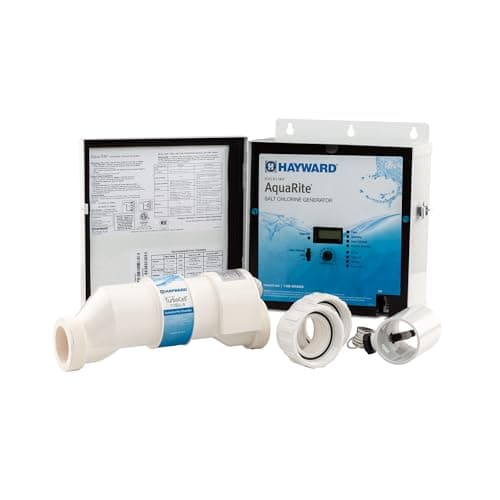
Hayward AquaRite W3AQR9
SHE Smart-Pool Readiness Score7.1/10The AquaRite parts network sized to 25,000 gallons; smaller-cell headroom trims the score below the larger sibling.
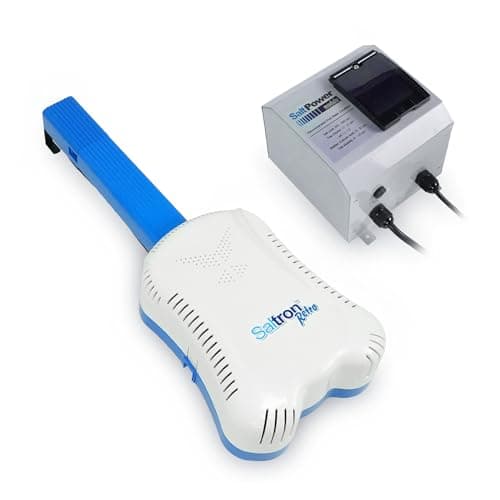
Solaxx Saltron Retro
SHE Smart-Pool Readiness Score6.1/10Easiest install and fully offline, but no smart control at all holds the score; the above-ground value anchor.
How These Chlorinators Fit Your Smart Home
Connectivity splits three ways here, and it is the whole point of the roundup. The Westaho and Dwwce cells carry native WiFi with their own apps, so they join your phone with no controller at all — though their smart features run through the maker's cloud. The Hayward AquaRite cells (W3AQR9 and W3AQR15) are not WiFi by themselves; they expose salt level, cell life, and runtime to a phone only after you add a separate Hayward OmniLogic or OmniHub controller. The CircuPool RJ45+ and EDGE25 — both backed by a 7 yr warranty, with the EDGE25 a 1.2 lb daily-output cell — carry no app and appear as scheduled loads inside a Hayward or Pentair controller, comparatively shallower than a first-class subsystem. The Solaxx Saltron Retro is fully standalone — a built-in timer, no app, no integration. None of these cells ships a native Alexa or Google skill, so smart control here means a manufacturer app or a pool controller, not a voice assistant. Whichever path you pick, sizing still governs cell life: run a cell near 100% all summer and it wears faster, so the 7 yr CircuPool warranty and the 1.2 lb EDGE25's headroom matter more than the connectivity badge. If you also manage pumps and heaters, the pool gifts hub maps the broader pad.
| Product | Native WiFi App | Controller Smart | Real-Time Alerts | Scheduling | Works Standalone |
|---|---|---|---|---|---|
| CircuPool RJ45+ Complete System | ✕ | ✓ | ✕ | ✓ | ✓ |
| Westaho WiFi Salt Chlorine Generator | ✓ | ✕ | ✓ | ✓ | ✓ |
| Hayward AquaRite W3AQR15 | ✕ | ✓ | ✕ | ✓ | ✓ |
| Dwwce Smart WiFi Salt Chlorinator | ✓ | ✕ | ✓ | ✓ | ✓ |
| CircuPool EDGE25 | ✕ | ✓ | ✕ | ✓ | ✓ |
| Hayward AquaRite W3AQR9 | ✕ | ✓ | ✕ | ✓ | ✓ |
| Solaxx Saltron Retro | ✕ | ✕ | ✕ | ✓ | ✓ |
What These Chlorinators Cost to Run
Running costs are dominated by cell replacement, not electricity consumption. A salt cell is a consumable component: the titanium plates progressively deteriorate, and a cell operating at 100% throughout summer fails substantially faster than one held nearer 60% by oversizing. That configuration is precisely why headroom determines the ownership math. Both CircuPool units in this roundup carry a 7 yr manufacturer warranty per their listings, the RJ45+ and the EDGE25. The latter is a 1.2 lb daily-output cell sized to a 25,000-gallon pool. That is substantially longer coverage than a shorter-warranty mainstream cell, a meaningful difference on a replacement part that frequently exceeds several hundred dollars. The same 7 yr term applies whether you install it yourself or through a dealer, since CircuPool documents no DIY penalty. That 7 yr term keeps the cell under coverage across far more of its service life. Salt itself remains inexpensive, only a handful of dollars annually. None of these systems requires a subscription, and the native-WiFi units incorporate no recurring monthly fee for their applications. Held below 60% of capacity by correct oversizing, a 7 yr CircuPool cell can outlast two cycles of a shorter-warranty unit run hard at 100%. Compared to liquid-chlorine or tablet dosing, a salt system recovers its investment over several seasons through chemical savings, and the longer-warranty cells extend that payback considerably. The honest caveat: oversize the cell one tier so it never runs at 100% flat-out, and the most expensive element of ownership shrinks substantially on every unit evaluated here.
When NOT to Buy
Skip the category if what you actually want is a chemistry monitor or a single replacement cell — a salt system makes chlorine, it does not test or balance the rest of your water. If your pool is freshly plastered, wait until the plaster cures, because salt amplifies pH drift and scale risk on uncured surfaces. If you already know you want true dealer-installed automation like AutoPilot PoolSync or Pentair IntelliChlor, buy that through a pool professional, not Amazon — those units do not ship to a cart, which is exactly why they are not picks here. And if your current pain is an undersized cell running at 100% all season, no app fixes that; oversize the cell first — stepping from the 1.2 lb EDGE25 to a larger-output cell, or simply choosing a 7 yr CircuPool over a shorter-warranty unit, buys more headroom and more covered service life than any connectivity upgrade does.
Who Should Buy What
Who Should Buy What
| If you are… | Recommended pick |
|---|---|
Long-term in-ground owners You plan to keep the pool for years and want the longest-warranty USA-made cell with the headroom to oversize for a hot climate | CircuPool RJ45+ Complete System |
App-in-the-box buyers Your requirement is native WiFi and a phone app without buying a separate controller, and you accept a newer value brand for the price | Westaho WiFi Salt Chlorine Generator |
Dealer-support-first owners You want the cell every pool service company already stocks and services, and you will add the OmniLogic controller for app control | Hayward AquaRite W3AQR15 |
Budget smart upgraders You want real in-app salt and output readings at the lowest possible price and have a mixed above- and in-ground setup | Dwwce Smart WiFi Salt Chlorinator |
Standard-pool value buyers You have a correctly-sized pool up to 25,000 gallons and want CircuPool's 7 yr warranty without paying the flagship premium | CircuPool EDGE25 |
Above-ground pool owners You run an above-ground pool up to 20,000 gallons and want the cheapest salt conversion with no plumbing work and no app | Solaxx Saltron Retro |
Frequently Asked Questions
What is the best smart saltwater pool chlorinator?
The CircuPool RJ45+ leads our SHE Smart-Pool Readiness Score at 7.7 for a pool you plan to keep, on the strength of a USA-made titanium cell, a 7-year warranty, and the most chlorine headroom here. For a native phone app in the box, the Westaho WiFi unit scores 7.4 and carries the lowest smart-cell price here. For universal dealer support, the Hayward AquaRite W3AQR15 scores 7.2.
Are there real native-WiFi salt chlorinators you can buy on Amazon?
Yes, but fewer than the marketing implies. The Westaho and Dwwce units carry native WiFi with their own apps and real-time alerts in the box. The well-known dealer-channel smart cells — AutoPilot ChlorSync, AutoPilot PoolSync WiFi, and Pentair IntelliChlor — do not resolve as buyable Amazon listings, so they are dealer-installed purchases, not Amazon picks.
Does the Hayward AquaRite have built-in WiFi?
No. The AquaRite W3AQR9 and W3AQR15 ship with a panel control box and no native app. They become app-smart only when you pair them with a separate Hayward OmniLogic or OmniHub controller, which reports salt level, cell life, and runtime to your phone. Buy the AquaRite for its parts ecosystem, and budget the controller separately if you want app control.
How much chlorine output does my pool actually need?
Size the cell to your pool gallons, then oversize one tier if you can. A cell rated for a larger pool than yours runs below 100% all summer, which extends titanium-plate life. The CircuPool RJ45+ carries the most headroom in this roundup for that reason, while the EDGE25 and AquaRite W3AQR9 are sized for standard pools up to 25,000 gallons.
Are white-label WiFi salt chlorinators like Westaho and Dwwce any good?
Their listings describe genuine native-WiFi app control, real-time alerts, and USA titanium cells rated to 40,000 gallons, and they are the cheapest way to get a phone app on a salt cell. The honest trade-off is support: they are newer value brands with no published expert-outlet testing and a thinner parts network than Hayward or CircuPool. We describe their features from the manufacturer listings, not from any review we can attribute.
Does a salt chlorinator keep working if the internet goes down?
Yes. Every unit here keeps generating chlorine on its local schedule without the internet. The Solaxx Saltron Retro runs a built-in timer with no cloud at all. The native-WiFi Westaho and Dwwce lose only their app and alerts when the internet drops; the cell itself keeps running. Controller-based AquaRite and CircuPool setups run on the controller's local schedule.
Can I install a smart salt chlorinator myself without voiding the warranty?
CircuPool states no DIY install penalty on the RJ45+ and EDGE25, so owner installs keep full warranty. The Solaxx Saltron Retro is a drop-in that needs no plumbing cut-in for most above-ground pools. Hayward AquaRite installs are owner-doable but warranty claims and firmware pairing run smoother through a dealer. The native-WiFi units install like any inline cell plus a WiFi pairing step.
What is the best salt chlorinator for an above-ground pool?
The Solaxx Saltron Retro is the above-ground pick: a self-cleaning drop-in with a built-in timer for pools up to 20,000 gallons that hangs over the wall with no plumbing cut-in. The Dwwce WiFi unit also supports above-ground plumbing with its included unions if you want native app control instead of a timer.
Bottom Line
Get the CircuPool RJ45+ Complete System if You are buying for a pool you will keep, want the longest USA-made warranty and the most headroom, and will add app control through a controller.
Get the Westaho WiFi Salt Chlorine Generator if Native WiFi and a phone app in the box is the requirement, you have a mid-to-large in-ground pool, and you accept a value brand at the bottom of the smart-cell price band.
Get the Hayward AquaRite W3AQR15 if Universal dealer and parts support matters most, your pool is large, and you will add the OmniLogic controller for app control.
Get the Solaxx Saltron Retro if You run an above-ground pool up to 20,000 gallons and want the cheapest salt conversion with no plumbing work and no app.
Sources & Methodology
Methodology: SHE Smart-Pool Readiness Score — Formula: (SmartControlDepth × 0.30) + (ChlorineHeadroom × 0.25) + (Serviceability × 0.20) + (InstallFriction × 0.15) + (OfflineResilience × 0.10). Factors: SmartControlDepth: How directly the unit delivers smart control: native WiFi and a first-party app in the box scores highest, controller-add-on smartness scores mid, timer-only scores low | ChlorineHeadroom: Rated output capacity against the pool size it is sold for, so an owner can oversize one tier and run the cell below 100% all summer | Serviceability: Warranty depth plus the maturity of the parts and support channel — nationwide dealer parts and long USA-made warranties score high | InstallFriction: How easy the unit installs without a dealer or warranty penalty (higher score = lower friction): drop-in and no-DIY-penalty cells score high | OfflineResilience: Whether chlorine generation keeps running without internet or cloud login: timer-driven and controller-local cells score high
Expert review sources used in this analysis:
- The SHE Smart-Pool Readiness Score is a SmartHomeExplorer editorial composite
- Factor inputs are manufacturer specifications and warranty terms taken from each product's Amazon listing — chlorine output, gallon ratings, cell material, warranty length, app and WiFi capability, and install policy
- None of these seven SKUs carries published expert-outlet review coverage, so we attribute no third-party verdicts and describe smart features, including those of the white-label Westaho and Dwwce units, from manufacturer listing copy only
- AutoPilot ChlorSync, AutoPilot PoolSync WiFi, Pentair IntelliChlor, and Pentair iChlor are referenced as dealer-channel context only because they do not resolve as buyable Amazon listings
- All ASINs and prices verified June 2026 on Amazon via the Creators API
- We do not test products ourselves.
Nicholas Miles is the founder of SmartHomeExplorer and a longtime smart home enthusiast focused on helping everyday homeowners make better technology decisions. He researches, compares, and writes about products across security, climate, lighting, leak prevention, sensors, home energy, and automation, with an emphasis on real-world usefulness, ecosystem compatibility, reliability, privacy, and long-term value.
Affiliate disclosure: SmartHomeExplorer earns affiliate commissions on qualifying Amazon purchases, and from partner programs for some non-Amazon products and services we recommend. Our scoring methodology is independent of affiliate relationships.