
Best Automatic Chicken Coop Doors 2026: Predator-Safe Picks
Run-Chicken T50 ($129.99) wins on our SHE Flock-Safety Score — an aluminum door seated in a closed channel no raccoon can pry, plus a low-torque crush stop. ChickenGuard All-in-One matches it with a winter mode, and the VEVOR opens automation at $45.99.
This article contains affiliate links. We may earn a commission at no extra cost to you. Prices change frequently — check the current price on Amazon before buying. Learn more
The Short Answer
For the keeper terrified of a door guillotining a hen, the recommended pick is the Run-Chicken T50 ($129.99), because its aluminum door seats into a closed predator-resistant channel while a low-torque motor reverses the instant it contacts an obstruction, earning the highest 9.2 on the weighted SHE Flock-Safety Score.
Featured in this Guide
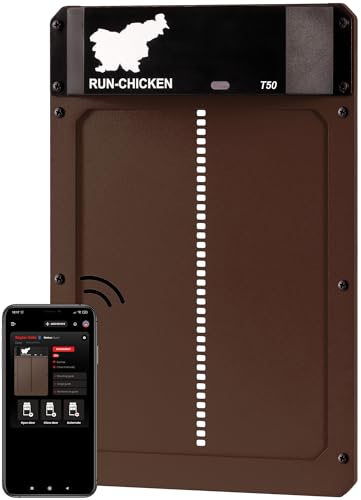
Run-Chicken
T50
- •Aluminum door in a closed channel plus a low-torque crush stop and built-in GPS at $129.99 — the safest hands-off pick
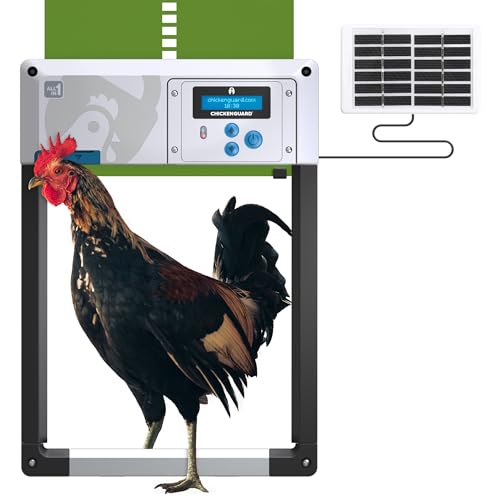
ChickenGuard
All-in-One
- •Self-locking latch, winter mode, and battery, mains, or solar power at $169.98 — the cold-climate workhorse
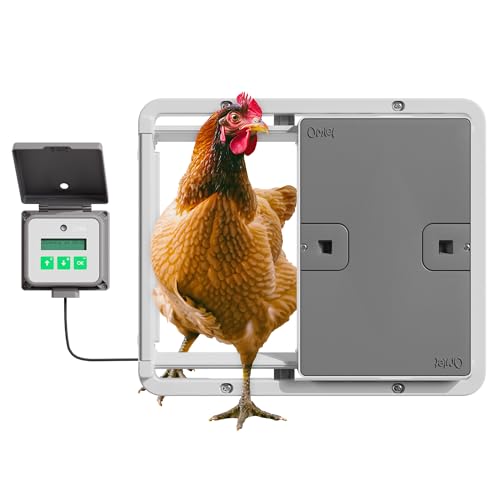
Omlet
Autodoor
- •Horizontal slide that avoids icing plus IPX6 sealing and optional WiFi at $199.00 list — no overhead room needed
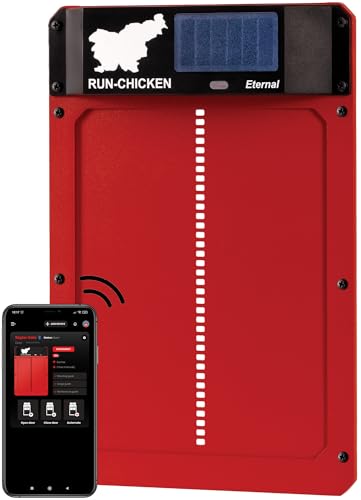
Run-Chicken
Eternal
- •Built-in solar panel and the same aluminum lock as the T50 at $149.00 — set it once on an off-grid coop
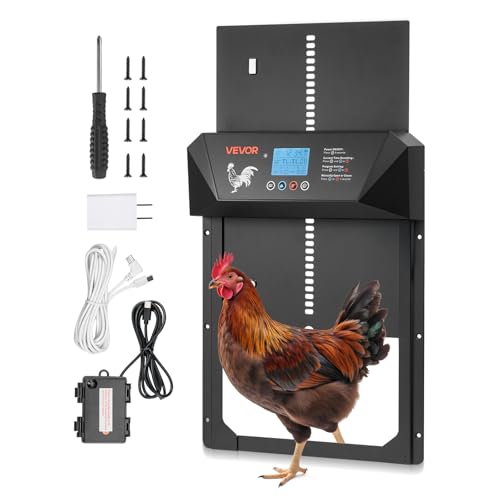
VEVOR
Automatic Chicken Coop Door
- •Aluminum-alloy door with an anti-pinch sensor at $45.99 — real safety features rare under fifty dollars
Head-to-Head on Safety, Triggers, and Cold
Outdoor Living
Chart
 Smarthomeexplorer.com
Tap any pick to check its live price on Amazon.
EGO POWER+ Z6 Zero Turn Riding Lawn Mower 42" S-Series (ZT4215S)
RecommendedCheck price
ECOVACS Goat O1000 LiDAR PRO Robot Lawn Mower
RecommendedCheck price
eufy Robot Lawn Mower E15
RecommendedCheck price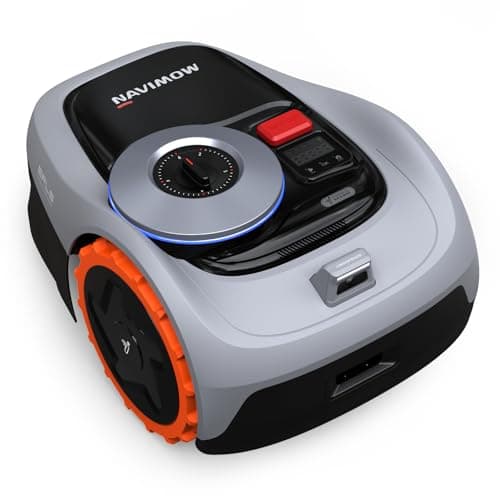
Segway Navimow i105N Wire-Free Robot Mower
Must BuyCheck price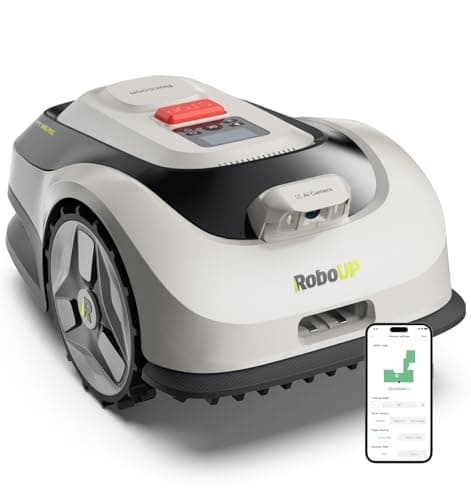
RoboUP Raccoon 2 SE Wire-Free Robot Mower
Good ValueCheck price
What Tips the Decision
An automatic coop door buys back 2x daily trips and removes the night you forget to lock up, but the decision is whether the door fails safe. The horror stories run two ways: a cheap door whose safety stop fails and closes on a slow hen, and a plastic curtain a raccoon wiggles open at 2am. This guide ranks on the weighted SHE Flock-Safety Score, a composite that treats predator lockdown and crush safety as the two factors a door must never fail, the same axes roundups from outlets like Bob Vila and Family Handyman keep returning to.
The Run-Chicken T50 leads at $129.99 with an aluminum door seated in a closed channel and a 15 mins installation, whereas the ChickenGuard contributes winter-aware timing at $169.98 and the VEVOR introduces affordable automation at $45.99. Because an automatic coop door belongs to a broader outdoor perimeter, it complements our Best Smart Driveway Alarms 2026: 5 Ranked roundup.
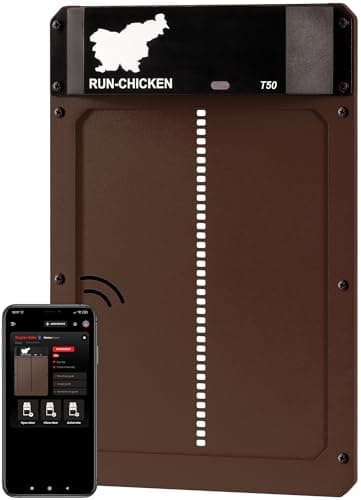
Best Overall: Run-Chicken T50
Run-Chicken T50
- Aluminum door seats into a closed channel no raccoon can pry up
- Custom scheduling is Bluetooth-app-only with no on-unit buttons
(Current price, subject to change)
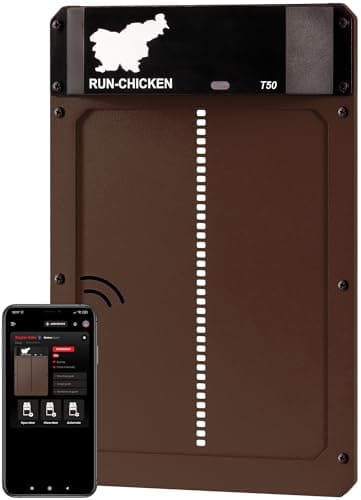
The Run-Chicken T50 earns 9.2 on the weighted SHE Flock-Safety Score, the composite that produces a door you can trust to lock the flock in unattended. That 9.2 rests on a category-leading 9.5 predator-lockdown sub-score and a 9.4 crush-safety sub-score, because the aluminum door seats into a closed channel a determined raccoon cannot pry up, while the low-torque motor stops the instant it touches an obstruction and then reopens. Priced at $129.99, it adds built-in GPS that sets local sunrise and sunset for your exact spot, with the app layering timer offsets on top.
Across the sources surveyed as of June 2026 the aggregated consensus settles near 9.3, and in coop-door roundups outlets like Family Handyman and Bob Vila repeatedly identify the T50 as the strongest overall recommendation in the category. The honest trade-off is that custom scheduling operates exclusively through Bluetooth, so a depleted phone reverts to the default GPS behavior automatically. Installation requires roughly 15 mins because the assembly arrives pre-configured with AA cells already included, an advantage over competing kits demanding separate construction beforehand. Relative to the VEVOR Automatic Chicken Coop Door, the T50 yields a considerably more substantial seated-metal lock for approximately 3x the investment.
What We Love
- Aluminum door seats into a closed channel no raccoon can pry up
- Low-torque motor stops on an obstruction and reopens, so it cannot guillotine a hen
- Built-in GPS sets local sunrise and sunset times automatically
- Pre-assembled with included AA cells and a genuine 15 min install
What Could Be Better
- Custom scheduling is Bluetooth-app-only with no on-unit buttons
- Vertical lift needs about 0.8 ft of clear wall above the pop hole
- A dead phone falls back to default GPS behavior only
The Verdict
For the keeper who fears a door closing on a hen, the Run-Chicken T50 fits the brief without compromise at $129.99. The 9.2 means an aluminum door in a closed channel a raccoon cannot pry and a low-torque motor that stops the instant it touches a bird. The Eternal solar costs more, but you would trade nothing on the lock or the crush stop — only the power source changes.
Ready to upgrade your home?
roborock Qrevo 2 Pro Robot Vacuum and Mop
See it on Amazon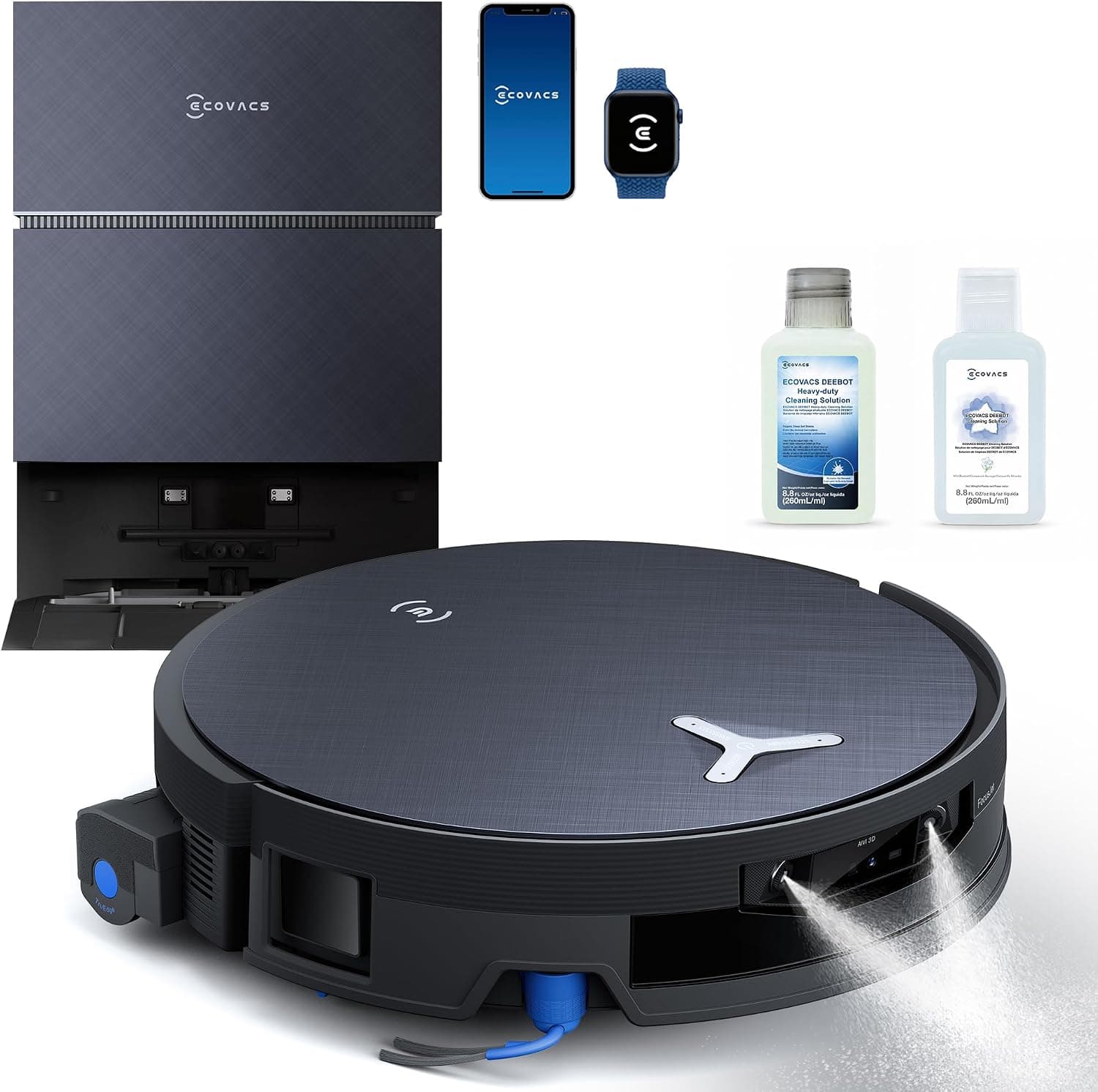
ECOVACS DEEBOT X12 PRO Omni Robot Vacuum and Mop
See it on Amazon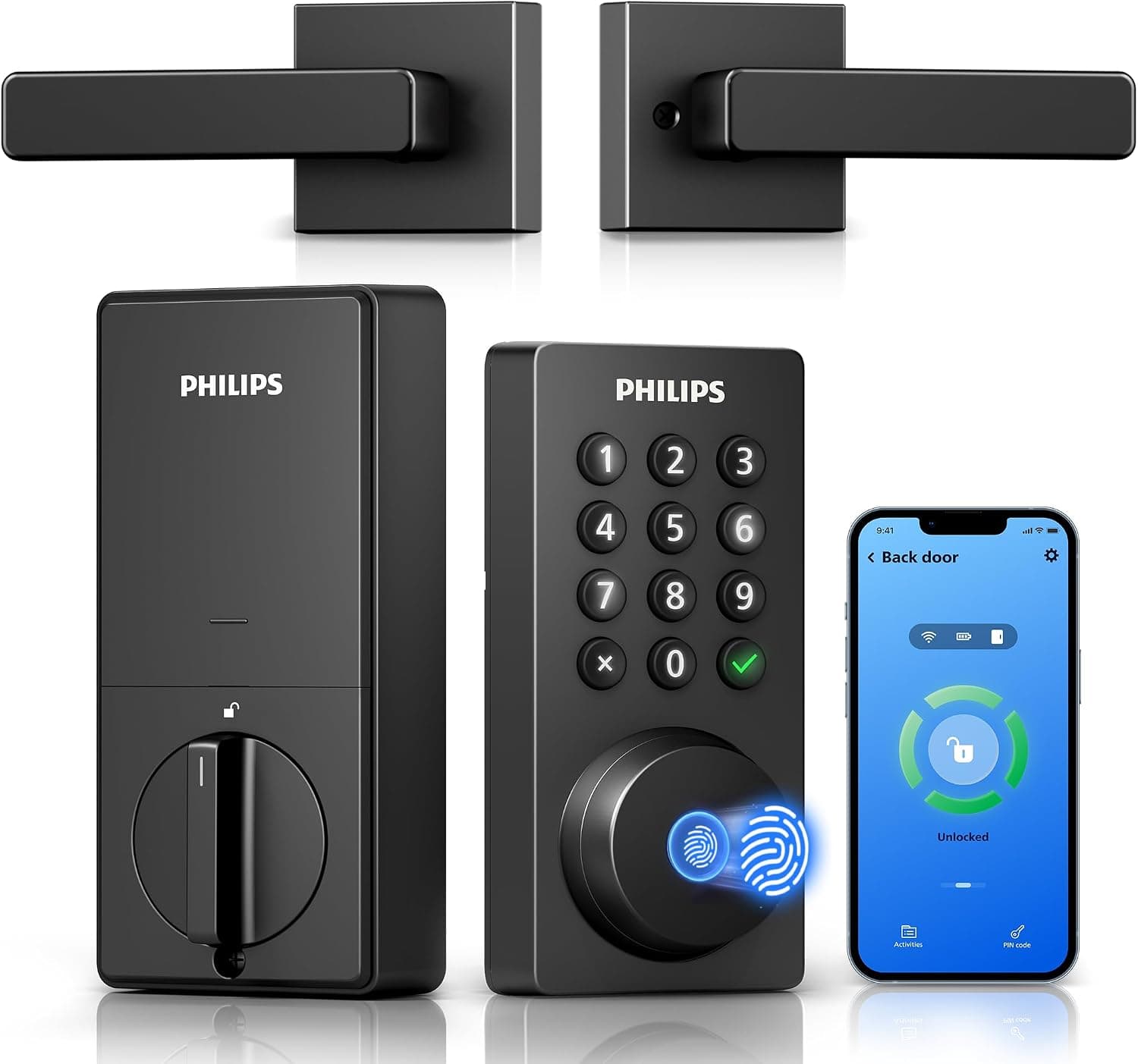
Philips Wi-Fi Keypad Deadbolt with Handle
See it on Amazon
Sponsored listings from Amazon’s Sponsored Products for Creators program, kept apart from our reviews and rankings. How we make money
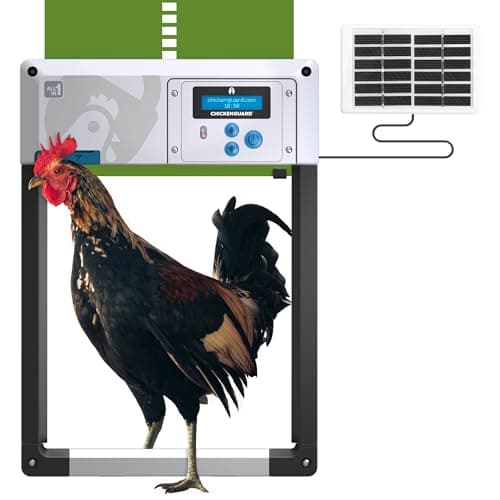
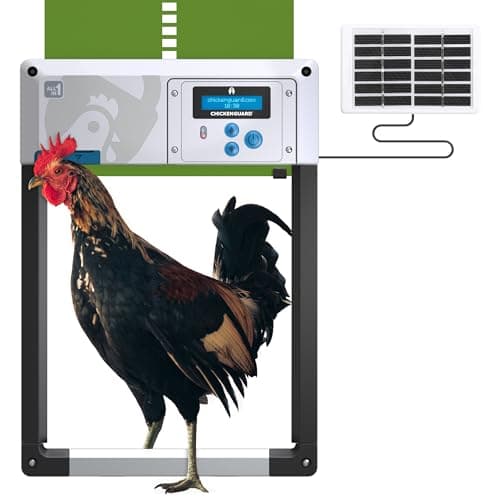
Most Versatile: ChickenGuard All-in-One
ChickenGuard All-in-One
- Self-locking anchor-wing latch grabs both sides the instant the door shuts
- The control display washes out in direct sunlight
(Current price, subject to change)
The ChickenGuard All-in-One earns 9.0 on the weighted SHE Flock-Safety Score — the most versatile door rather than the outright safest. That 9.0 pairs a 9.2 predator-lockdown sub-score with a category-best 9.4 power-resilience sub-score, because the self-locking latch drives dual anchor wings that grab both sides of the powder-coated aluminum door the instant it shuts, while three power options let you wire it however the coop is configured. Positioned at $169.98, it runs a light sensor and programmable timer together, so the door still closes on schedule even when dusk lingers.
In coop-door roundups, outlets like Bob Vila and Popular Mechanics frame the All-in-One as the most flexible pick, crediting the rare battery, mains, or solar choice that puts it a tier above single-power openers, plus the dedicated winter mode that keeps it reliable through short cold-weather days. The honest catch is the unit runs several lbs heavier than a slim opener, so a lightweight coop wall may require reinforcement at the mounting points, and the display becomes illegible under direct sunlight. The body ships fully pre-assembled — no separate kit construction before mounting. Relative to the Run-Chicken T50, the ChickenGuard surrenders a tidier interface for winter-timing intelligence and three-way power.
What We Love
- Self-locking anchor-wing latch grabs both sides the instant the door shuts
- Three power options — battery, mains, or bundled solar — fit any coop
- Winter mode adjusts close timing so the door waits for late hens
- Light sensor and programmable timer can run together
What Could Be Better
- The control display washes out in direct sunlight
- The combined unit is heavy, so a thin coop wall may need reinforcement
- Pricier than the T50 at $169.98 for similar core safety
The Verdict
If you keep birds through hard winters, the ChickenGuard All-in-One lines up with what you actually need at $169.98. The 9.0 reflects a self-locking latch that grabs both sides on close plus a winter mode that holds the door for late-arriving hens on short, dim days. You give up the T50's tidier app, but for a cold-climate coop the timing logic is the feature that earns the spend.
Best for Wet Climates: Omlet Autodoor
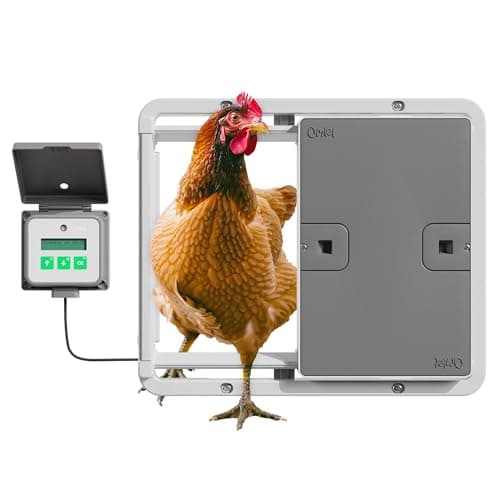
Omlet Autodoor
- Horizontal slide sidesteps the vertical-track icing that jams cheaper doors
- Neither the AA batteries nor the 12V cable are in the box
(Current price, subject to change)
The Omlet Autodoor earns 8.6 on the weighted SHE Flock-Safety Score, a composite that distinctly marks the wet-climate specialist rather than the predator-lock leader. That 8.6 rests on a category-best 9.2 cold-weather sub-score, because the horizontal side-to-side slide sidesteps the single most common vertical-door failure, a guillotine panel that ices up in its track, while an IPX6 waterproof casing seals the motor and gears and the unit is cold-tested reliable down to -4F. Positioned at $199.00, its soft-close catch works like an elevator door, reopening if a hen is in the gap.
In coop-door roundups, outlets like Good Housekeeping and Family Handyman describe the Autodoor as easy to install and reliable in all weather, with the IPX6 casing and a motor cold-tested to -4F earning trust through wet winters that defeat cheaper units. The honest costs are two: neither the AA batteries nor the 12V cable are in the box, so first-day spend climbs above the sticker, and owners report the track needs a cleaning every few weeks across multiple yr. Reversing the mount to open left or right takes about 10 mins. Relative to the Run-Chicken T50, the Omlet yields the seated-metal lock for a slide that never ices.
What We Love
- Horizontal slide sidesteps the vertical-track icing that jams cheaper doors
- IPX6 sealed casing is cold-tested reliable down to -4F
- Soft-close catch reopens if a hen pushes through at the last second
- Optional Smart kit adds WiFi and Alexa control
What Could Be Better
- Neither the AA batteries nor the 12V cable are in the box
- The track needs periodic cleaning of grit and straw to avoid binding
- Real first-day cost runs higher than the $199.00 sticker suggests
The Verdict
If your coop ices up every winter, the Omlet Autodoor is a sensible pick for that setup at $199.00. The 8.6 reflects a side-sliding panel that avoids the vertical-track icing that jams other doors, plus an IPX6 casing cold-tested to -4F. You will buy batteries and a cable separately, but for a freezing climate the horizontal slide is the real reason to choose it.
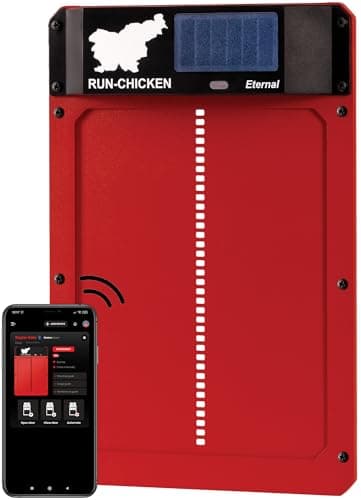
Best Solar: Run-Chicken Eternal
Run-Chicken Eternal
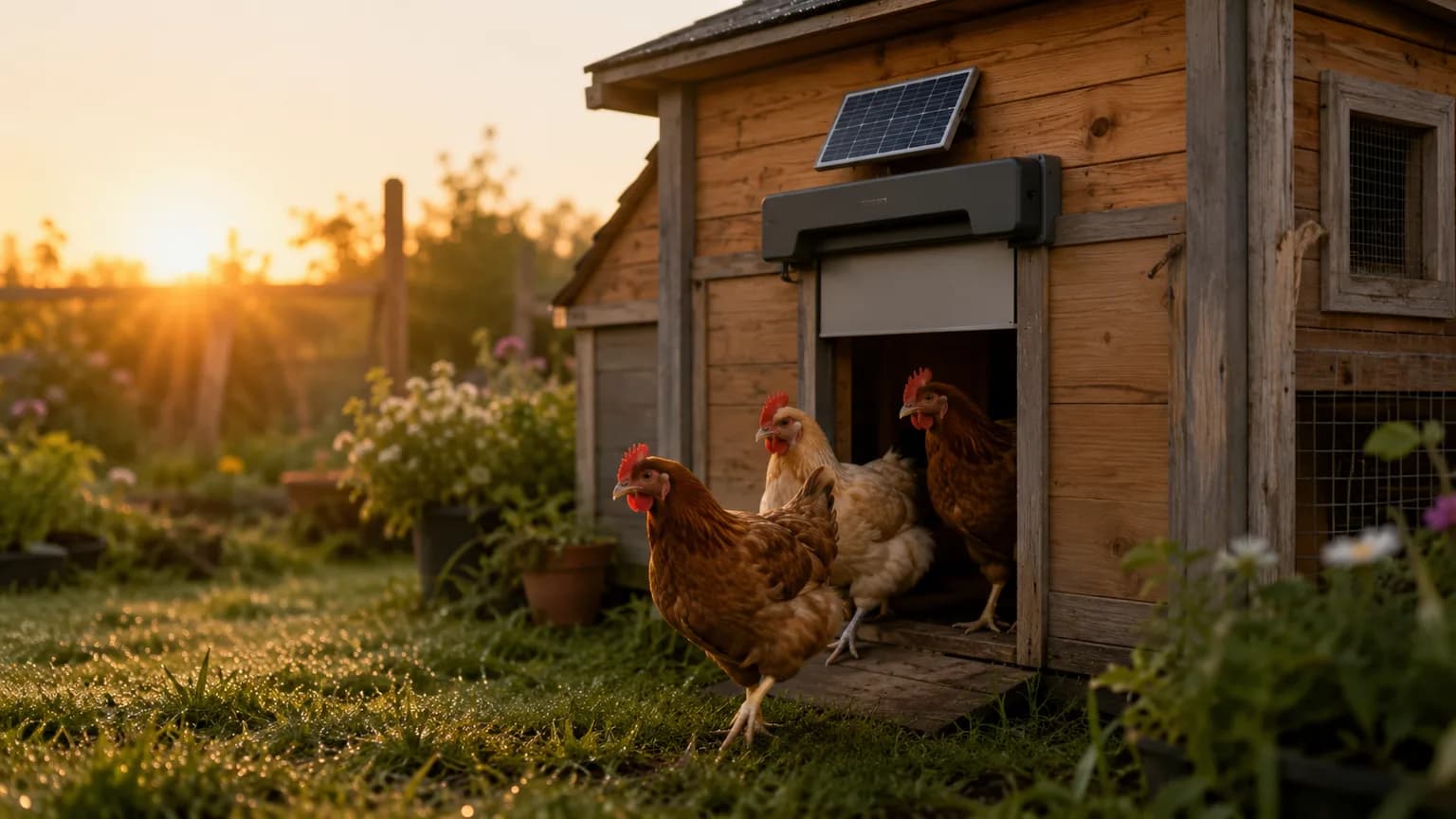
- Integrated solar panel recharges the battery with no wiring
- Bluetooth-app-only scheduling with no manual buttons on the unit
(Current price, subject to change)
The Run-Chicken Eternal earns 8.9 on the weighted SHE Flock-Safety Score, a composite that marks the off-grid solar pick rather than the outright leader. That 8.9 rests on a 9.4 predator-lockdown sub-score, because it inherits the T50's all-aluminum door and closed-channel lock plus the same low-torque safety stop, so the predator and anti-crush story is identical to the flagship. Positioned at $149.00, an integrated solar panel recharges the built-in battery with no external panel and no wiring, which means an off-grid coop never needs a battery change or an outlet.
In coop-door roundups, outlets like Popular Science and This Old House position the Eternal as the standout solar option, observing that one week of accumulated sunlight can power it for 1 yr while preserving the same predator-resistant door as the battery model. The honest trade-offs carry over directly from the T50: scheduling operates exclusively through Bluetooth, the integrated solar housing is noticeably bulkier, and it still requires roughly 0.8 ft of overhead clearance. The six-screw mounting nonetheless installs in under 10 mins. Relative to the Run-Chicken T50, the Eternal surrenders slimmer dimensions for never replacing a battery across multiple yr.
What We Love
- Integrated solar panel recharges the battery with no wiring
- Inherits the T50 aluminum door and closed-channel predator lock
- Built-in GPS plus the app handle local sunrise and sunset timing
- Six-screw, no-cable mount installs in minutes
What Could Be Better
- Bluetooth-app-only scheduling with no manual buttons on the unit
- The solar housing is bulkier than the battery-only T50
- Still needs about 0.8 ft of overhead clearance like the T50
The Verdict
If your coop sits far from any outlet, the Run-Chicken Eternal checks the boxes that matter for that off-grid setup at $149.00. The 8.9 reflects an integrated solar panel that never needs a battery change plus the same aluminum closed-channel lock and crush stop as the T50. You pay about $20 more, but for a remote coop the no-wiring, no-battery convenience is the whole point.
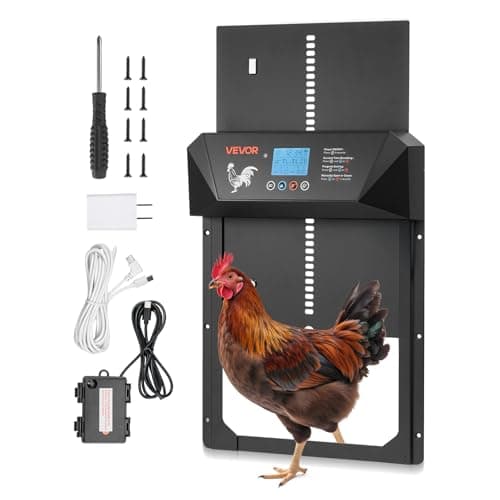
Best Budget: VEVOR Automatic Chicken Coop Door
VEVOR Automatic Chicken Coop Door
- Aluminum-alloy door instead of the bend-prone plastic of cheap rivals
- Motor and rails are lighter-duty than the premium aluminum units
(Current price, subject to change)
The VEVOR Automatic Chicken Coop Door earns 7.5 on the weighted SHE Flock-Safety Score, a composite held down by a 7.2 predator-lockdown sub-score, because it lacks the seated metal channel of the premium aluminum doors, so the lock-down against a determined raccoon is weaker than the top picks. That said, at $45.99 it is the cheapest credible way to automate a pop hole, and it uses an aluminum-alloy door rather than the bendable plastic that defeats budget rivals. An anti-pinch infrared sensor stops the door on an obstruction, a safety feature most doors at this price simply omit.
In coop-door roundups, outlets like Reviewed and Family Handyman frame the VEVOR as the value entry point, crediting its aluminum-alloy door and included anti-pinch sensor while cautioning that build quality trails the premium aluminum units. The honest catch is the motor and rails are lighter-duty, so heavy daily cycling and deep cold are harder on it over multiple yr of use. Light sensor, timer, manual, and remote modes plus an IP44 rating cover a -15F to 140F range. Relative to the Run-Chicken T50, the VEVOR yields the seated-metal lock and a sturdier motor for a sticker about a third the price.
What We Love
- Aluminum-alloy door instead of the bend-prone plastic of cheap rivals
- Anti-pinch infrared sensor stops the door on an obstruction
- Four trigger modes — light, timer, manual, and remote
- LCD shows door state and battery level at a glance
What Could Be Better
- Motor and rails are lighter-duty than the premium aluminum units
- Lacks the seated metal channel of the top predator locks
- Heavy daily cycling and deep cold are harder on it long-term
The Verdict
If you are automating one small coop on a budget, the VEVOR Automatic Chicken Coop Door lines up with what you actually need at $45.99. The 7.5 reflects an aluminum-alloy door and an anti-pinch sensor that stops on an obstruction — rare safety under fifty dollars. You give up the seated metal channel of the top picks, but for a first door on a predator-light run, that is a fair trade.
How We Score: SHE Flock-Safety Score
SHE Flock-Safety Score
Score Formula
Predator_Lockdown * 0.30 + Crush_Safety * 0.25 + Trigger_Reliability * 0.20 + Cold_Weather * 0.15 + Power_Resilience * 0.10Score Factors
- Predator Lockdown (30%)Whether the closed door physically resists a raccoon's lift-and-pry attack. This factor is a weighted, normalized sub-score derived from door material, locking mechanism, and channel design; a metal door seated in a closed channel or a self-locking anchor latch scores in a higher tier than a bendable plastic curtain. The coefficient is the highest because sealing the flock in at night is the entire job of the door.
- Crush Safety (25%)Whether the motor stops and reopens on an obstruction instead of clamping shut on a slow hen. The calculation normalizes obstruction-detection behavior and soft-close design into a composite tier; a low-torque motor that stops the instant it touches a bird scores above a door that clamps and only re-opens after contact. This factor carries the second-highest weight because the most heartbreaking failure mode owners report is a door closing on a hen.
- Trigger Reliability (20%)The smart layer that earns the category: GPS or light-sensor sunrise and sunset timing, programmable timer offsets, and app control that fire on schedule. This sub-score is a normalized tier from a single timer, to a light sensor, to GPS-plus-app. The coefficient reflects that a door which mis-times dusk leaves birds locked out or lets a predator in.
- Cold-Weather Operation (15%)How well the mechanism keeps moving when it ices up, the top winter complaint owners report. The formula weights the rated temperature floor, the sealed-electronics weather rating, and design choices such as a horizontal slide or a winter mode. A door cold-tested well below freezing with a sealed casing scores in a higher tier than an exposed vertical unit.
- Power Resilience (10%)Whether the door keeps working unattended for a full season, since a dead battery on a cold night is an open coop. This factor is a normalized composite of solar recharging, battery life, and the number of power options. It carries the lowest weight, but solar or multiple power inputs decide whether the door survives a season without a midnight failure.
SHE Flock-Safety Score — Ranked
Run-Chicken T50
SHE Flock-Safety Score9.2/10$129.99 — aluminum channel lock, low-torque crush stop, built-in GPS; safest hands-off door overall
ChickenGuard All-in-One
SHE Flock-Safety Score9.0/10$169.98 — self-locking latch, winter mode, three-way power; most versatile cold-climate pick
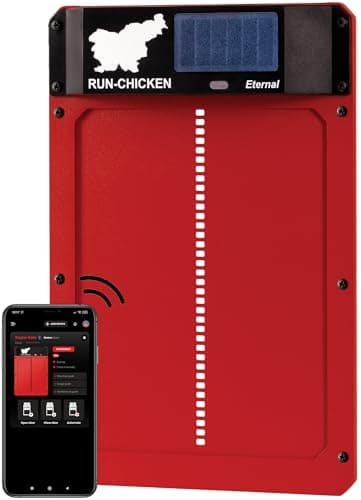
Run-Chicken Eternal
SHE Flock-Safety Score8.9/10$149.00 — integrated solar, same aluminum lock as the T50; best off-grid no-battery door
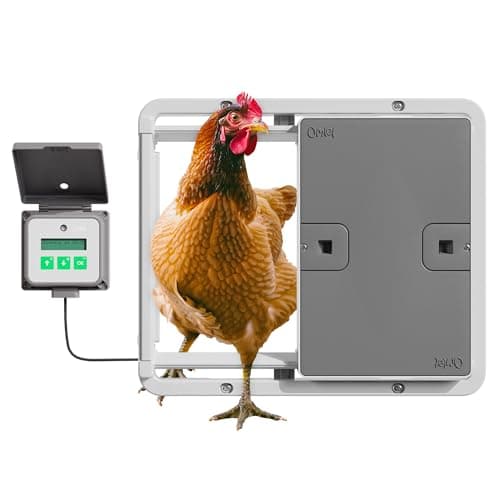
Omlet Autodoor
SHE Flock-Safety Score8.6/10$199.00 — horizontal slide, IPX6 sealed, cold-tested to -4F; best wet-climate anti-ice design
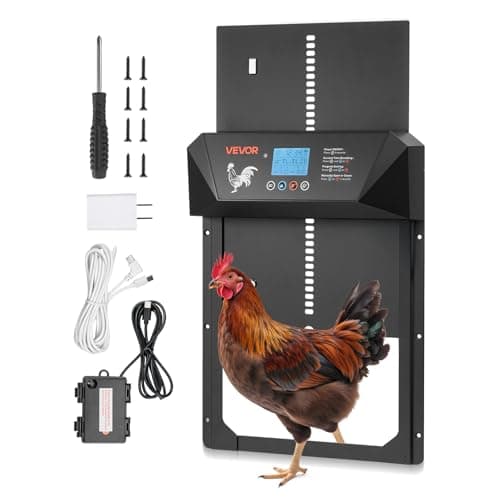
VEVOR Automatic Chicken Coop Door
SHE Flock-Safety Score7.5/10$45.99 — aluminum-alloy door, anti-pinch sensor, four trigger modes; budget automation entry
Triggers, WiFi, and Physical Fit
The first thing to settle is that most of these doors are standalone units, not smart-home-hub devices, which is the opposite of what a Matter-and-Alexa shopper expects walking in. Our weighted scoring treats that thin smart layer as a 20% trigger-reliability factor, not the headline. The Run-Chicken T50 and the Run-Chicken Eternal run on their own built-in GPS, a light sensor, a timer, and a Bluetooth app with no hub required, and the ChickenGuard All-in-One pairs a light sensor and a programmable timer that run together. The VEVOR Automatic Chicken Coop Door adds manual and remote-control modes on top of its light sensor and timer, giving it four trigger styles in all. The one exception is the Omlet Autodoor, whose optional Smart control panel adds WiFi and Alexa control for owners already in that ecosystem, the single product here that touches a home network at all.
Because the smart layer is thin, the compatibility question that actually decides a return is physical, not digital. Vertical-lift doors like the Run-Chicken and ChickenGuard need roughly 0.8 ft of clear wall above the pop hole, which rules out a low roof line over the opening, while the horizontal-sliding Omlet needs 0 ft of overhead room at all. Weight is the second physical check, since the ChickenGuard's combined motor-and-door unit can run several lbs heavier than a slim opener, so a thin coop wall may need reinforcement at the mounting points. The two Run-Chicken units carry built-in GPS that resets sunrise and sunset across all 4 seasons, the VEVOR layers 4 trigger modes on top, and the Omlet is cold-tested to -4F with its IPX6 sealed casing, the rating roundups from outlets like Good Housekeeping and Family Handyman flag for wet winters. Owners on r/BackYardChickens praise the GPS timing once it learns the season, since it can drift a close time by several mins week over week, while the recurring complaint the community flags is the slide track on horizontal doors needing a cleaning every few weeks across multiple yr. A quality opener runs about 1 yr on a set of AA cells, which is why solar matters off-grid. For the homestead-crossover buyer wiring a yard, a coop door this capable slots beside the perimeter alerts in our Best Smart Driveway Alarms 2026: 5 Ranked roundup and the off-grid kit in our Best Solar Smart Home Devices 2026: 5 No-Wire Picks guide, which share the same standalone-sensor philosophy.
| Product | Light Sensor | Timer Mode | Built-in GPS | Bluetooth / WiFi App | No Overhead Clearance Needed |
|---|---|---|---|---|---|
| Run-Chicken T50 | ✕ | ✓ | ✓ | ✓ | ✕ |
| ChickenGuard All-in-One | ✓ | ✓ | ✕ | ✕ | ✕ |
| Omlet Autodoor | ✓ | ✓ | ✕ | ✓ | ✓ |
| Run-Chicken Eternal | ✕ | ✓ | ✓ | ✓ | ✕ |
| VEVOR Automatic Chicken Coop Door | ✓ | ✓ | ✕ | ✕ | ✕ |
When NOT to Buy
Skip an automatic door entirely if you are home at dawn and dusk every single day and your run is already fully predator-proofed on its own. And if your coop has under 0.8 ft of clear wall above the pop hole, skip the vertical-lift models, the Run-Chicken and ChickenGuard, and look only at the horizontal-sliding Omlet Autodoor, which needs 0 ft of overhead room. As of June 2026, a coop door is the right buy when you want to buy back 2x daily trips, save roughly 10 mins a day, and remove the night you forget to lock up, which is exactly the hands-off case the Run-Chicken T50 is built for.
Who Should Buy What
Who Should Buy What
| If you are… | Recommended pick |
|---|---|
Predator-heavy backyards You want the safest hands-off door with a seated-metal lock and a low-torque crush stop, no wiring | Run-Chicken T50 |
Cold-climate keepers You want winter-aware close timing plus battery, mains, or solar power flexibility | ChickenGuard All-in-One |
Wet or freezing climates You want a horizontal slide that avoids icing, sealed electronics, and optional WiFi via the Smart kit | Omlet Autodoor |
Off-grid coop owners You run a coop far from any outlet and never want to change a battery, with an aluminum predator lock | Run-Chicken Eternal |
Budget first-timers You are automating one small coop on a predator-light run and want anti-pinch safety without the premium price | VEVOR Automatic Chicken Coop Door |
Frequently Asked Questions
Will an automatic coop door ever close on a chicken?
A well-designed door should not, because the safety stop is the feature you are paying for. The Run-Chicken T50 and Eternal use a low-torque motor that stops the instant it touches an obstruction and then reopens, and the Omlet Autodoor uses an elevator-style soft-close catch that reopens if a hen is in the gap. The VEVOR adds an anti-pinch infrared sensor. The risk is real on cheap doors whose safety stop fails, which is exactly why the SHE Flock-Safety Score weights crush safety at 25 percent.
Are automatic coop doors really predator-proof against raccoons?
The good ones are, but the mechanism matters more than the marketing. A raccoon defeats a bendable plastic curtain by wiggling it open from the bottom, so the doors that earn the predator-proof claim use a metal panel seated in a closed channel, like the Run-Chicken T50, or a self-locking anchor-wing latch, like the ChickenGuard All-in-One. Both physically resist a lift-and-pry attack. This is the single most heavily weighted factor in our score, at 30 percent, because it is the entire job of the door.
Do automatic chicken doors keep working in freezing winter weather?
The better units do, but a vertical door can ice up in its track if it is exposed. The Omlet Autodoor sidesteps this with a horizontal slide and an IPX6 sealed casing cold-tested to -4F, and the ChickenGuard adds a dedicated winter mode that adjusts close timing for short dim days. Both Run-Chicken units are rated for a -15F to 140F range. In a hard-freeze climate, the horizontal slide and a sealed casing are the design choices that keep the door moving.
Should I get a light sensor, a timer, or app control?
Most owners want a blend, and the best doors offer one. A light sensor opens and closes with ambient brightness, a timer fires at a fixed clock time, and GPS sets local sunrise and sunset automatically. The Run-Chicken T50 uses built-in GPS plus a Bluetooth app for offsets, while the ChickenGuard runs a light sensor and a programmable timer together so it still closes on time when dusk lingers. The VEVOR adds manual and remote modes for four trigger styles in all.
How much overhead clearance does a vertical-lift coop door need?
Plan for roughly 0.8 ft, or about 10 inches, of clear wall above the pop hole for a vertical-lift door like the Run-Chicken T50, the Eternal, or the ChickenGuard, since the panel slides straight up into that space. If your coop has a low roof line over the opening, the vertical models will not fit. The horizontal-sliding Omlet Autodoor is the workaround, because it moves the panel side to side and needs no overhead room at all.
Are solar-powered coop doors worth it compared to battery ones?
For an off-grid coop, yes. The Run-Chicken Eternal carries an integrated solar panel that recharges the built-in battery with no external panel and no wiring, so a remote coop never needs a battery change or an outlet. The trade-off is bulk, since the solar housing is larger than the battery-only T50, and it costs about $20 more. If your coop sits near power or you do not mind an annual battery swap, the battery model is the slimmer, cheaper choice.
How long do the batteries last in an automatic coop door?
It depends on the unit and the cycle count, but a quality door runs about a year on a set of AA cells. The Run-Chicken T50 ships with AA batteries included and is rated for roughly a year of runtime. Cold weather shortens that, since batteries drain faster below freezing, so a winter coop may need a fresh set sooner. Solar models like the Eternal sidestep the question entirely by recharging from sunlight rather than running down a disposable cell.
What size door opening do I need for my flock?
Standard laying breeds pass comfortably through a typical pop-hole opening, but large breeds, ducks, and turkeys need a wider and taller door. Always check the manufacturer's opening dimensions against your largest bird before buying, because a door sized for bantams will not clear a Jersey Giant or a turkey. The doors in this guide list their opening size in the spec sheet, and matching that to your flock is a more important first check than the trigger style.
Can I install an automatic coop door myself, and how long does it take?
Yes, these are designed for a homeowner with basic tools. The Run-Chicken T50 ships pre-assembled with batteries in the box and installs in roughly 15 mins, and the Eternal mounts with six screws and no cabling in minutes. The Omlet and ChickenGuard take a bit longer if you wire mains or solar power. None require an electrician for the battery or solar configurations, which is most of the lineup. A cordless drill and the included hardware cover the job.
Why are cheap plastic coop doors a risk compared to aluminum?
A plastic door bends, and a raccoon exploits exactly that. A determined predator can flex or pry a thin plastic curtain open from the bottom, which defeats the whole point of locking the flock in. An aluminum panel, especially one seated in a closed channel like the Run-Chicken T50, resists that lift-and-pry attack. Even the budget VEVOR uses an aluminum-alloy door rather than bendable plastic, which is the main reason it scores ahead of the no-name plastic units.
Do automatic coop doors need WiFi or a smart-home hub?
No, almost none of them do. The Run-Chicken and ChickenGuard units run entirely on their own GPS, light sensor, timer, and Bluetooth app with no Matter, no Alexa, and no hub required. The single exception is the Omlet Autodoor, whose optional Smart control panel adds WiFi and Alexa for owners already in that ecosystem. If you want a hands-off door without touching your home network at all, every other pick here works standalone.
What happens if the door closes before a hen makes it inside?
This is the scenario the ChickenGuard winter mode is built to prevent, because short dim winter days can trigger an early close before late birds are in. Winter mode delays the close, and the Run-Chicken app lets you add a close delay offset for the same reason. A light sensor that waits for full dark, rather than a fixed timer, also helps. The fix in every case is to bias the close time later so the slowest hen has margin to get inside.
Bottom Line
Get the Run-Chicken T50 if you want the safest hands-off door with a seated-metal predator lock and a low-torque crush stop, no wiring.
Get the ChickenGuard All-in-One if you want winter-aware close timing plus battery, mains, or solar power flexibility.
Get the Omlet Autodoor if you live in a wet or freezing climate where vertical doors ice up and want optional WiFi.
Get the Run-Chicken Eternal if you run an off-grid coop far from power and never want to change a battery.
Get the VEVOR Automatic Chicken Coop Door if you are automating one small coop on a predator-light run and want anti-pinch safety on a budget.
The right call for most keepers is the Run-Chicken T50 at $129.99 — an aluminum door in a closed channel and a low-torque crush stop earn the top 9.2 on the SHE Flock-Safety Score. If you want winter timing, the ChickenGuard All-in-One adds a winter mode and three-way power for $169.98. Skip an automatic door entirely if you are home at dawn and dusk every day and your run is already fully predator-proofed.
Sources & Methodology
Methodology: SHE Flock-Safety Score — Formula: Predator_Lockdown * 0.30 + Crush_Safety * 0.25 + Trigger_Reliability * 0.20 + Cold_Weather * 0.15 + Power_Resilience * 0.10. Factors: Predator Lockdown (30%): Whether the closed door physically resists a raccoon's lift-and-pry attack. This factor is a weighted, normalized sub-score derived from door material, locking mechanism, and channel design; a metal door seated in a closed channel or a self-locking anchor latch scores in a higher tier than a bendable plastic curtain. The coefficient is the highest because sealing the flock in at night is the entire job of the door. | Crush Safety (25%): Whether the motor stops and reopens on an obstruction instead of clamping shut on a slow hen. The calculation normalizes obstruction-detection behavior and soft-close design into a composite tier; a low-torque motor that stops the instant it touches a bird scores above a door that clamps and only re-opens after contact. This factor carries the second-highest weight because the most heartbreaking failure mode owners report is a door closing on a hen. | Trigger Reliability (20%): The smart layer that earns the category: GPS or light-sensor sunrise and sunset timing, programmable timer offsets, and app control that fire on schedule. This sub-score is a normalized tier from a single timer, to a light sensor, to GPS-plus-app. The coefficient reflects that a door which mis-times dusk leaves birds locked out or lets a predator in. | Cold-Weather Operation (15%): How well the mechanism keeps moving when it ices up, the top winter complaint owners report. The formula weights the rated temperature floor, the sealed-electronics weather rating, and design choices such as a horizontal slide or a winter mode. A door cold-tested well below freezing with a sealed casing scores in a higher tier than an exposed vertical unit. | Power Resilience (10%): Whether the door keeps working unattended for a full season, since a dead battery on a cold night is an open coop. This factor is a normalized composite of solar recharging, battery life, and the number of power options. It carries the lowest weight, but solar or multiple power inputs decide whether the door survives a season without a midnight failure.
Expert review sources used in this analysis:
- SmartHomeExplorer aggregates expert review data and community sentiment to produce consensus-based buying guidance
- We do not perform first-party product testing
- Expert ratings and product assessments draw on automatic coop-door buyer's guides and category roundups from outlets that cover this segment — Family Handyman, Bob Vila, Popular Mechanics, Good Housekeeping, Popular Science, This Old House, and Reviewed — rather than first-party tests of each individual unit
- Across those outlets the aggregated consensus for the top pick lands near 9.3, and a quality door runs about 1 yr on a set of AA cells with an install of roughly 15 mins
- Community reliability and owner reports are drawn from r/BackYardChickens and the BackYard Chickens forum, where the recurring owner praise is GPS sunrise and sunset timing once it learns the season, and the recurring complaint the community flags is horizontal slide tracks needing cleaning every few weeks across multiple yr
- Amazon prices and availability were verified via the Amazon Creators API and every price verified June 7, 2026: Run-Chicken T50 $129.99, ChickenGuard All-in-One $169.98, Omlet Autodoor $199.00, Run-Chicken Eternal $149.00, VEVOR Automatic Chicken Coop Door $45.99
- The SHE Flock-Safety Score weights predator lockdown (30%), crush safety (25%), trigger reliability (20%), cold-weather operation (15%), and power resilience (10%); factor sub-scores derive from manufacturer specifications and aggregated reviewer assessments, and no first-party measurements were conducted.
Nicholas Miles is the founder of SmartHomeExplorer and a longtime smart home enthusiast focused on helping everyday homeowners make better technology decisions. He researches, compares, and writes about products across security, climate, lighting, leak prevention, sensors, home energy, and automation, with an emphasis on real-world usefulness, ecosystem compatibility, reliability, privacy, and long-term value.
Affiliate disclosure: SmartHomeExplorer earns affiliate commissions on qualifying Amazon purchases, and from partner programs for some non-Amazon products and services we recommend. Our scoring methodology is independent of affiliate relationships.