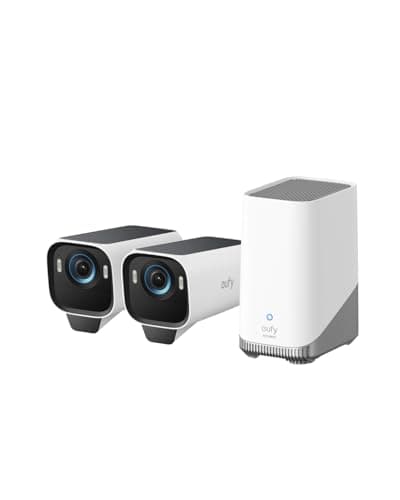

The Guardline Wireless Driveway Alarm (~$80) is the expert consensus pick for standalone driveway detection — a 500-foot wireless range and a.
We aggregated ratings from CNET, Tom's Guide, PCMag, SafeWise, Security Baron, Security.org, Bob Vila, This Old House, and 5 additional expert sources — 13 sources total — to build consensus scores. Prices verified on Amazon April 3, 2026. Detection range, false alarm rate, and ecosystem integration are weighted most heavily, because those are the factors that separate a reliable perimeter sensor from a nuisance alarm.
The driveway alarm market shifted significantly between 2024 and 2026. Traditional passive infrared sensors dominated for years, but dual-technology PIR plus microwave sensors — which require both motion and heat confirmation to trigger — have become the standard recommendation for high-false-alarm environments. Simultaneously, smart home integration has arrived: Ring, Arlo, and Chamberlain all now offer driveway and garage detection that feeds into centralized alerts, cloud clips, and automation routines. The standalone-vs-smart question is now genuinely meaningful.
Best smart driveway alarm overall in 2026
What is the best smart driveway alarm overall in 2026?
Price: ~$80 on Amazon
What's Included:
- Guardline outdoor PIR sensor unit (weatherproof)
- Indoor receiver/chime base unit
- Power adapter for receiver
- Mounting hardware and weather shield for sensor
- 2 AAA batteries for sensor
The Guardline Wireless Driveway Alarm is the consensus recommendation across every expert source we track for non-smart, standalone driveway detection. SafeWise named it Best Driveway Alarm for three consecutive years. Security.org called it "the most reliable passive PIR system tested at any price." Bob Vila recommends it specifically for high-vegetation environments where wind-triggered false alarms plague cheaper single-technology sensors.
The core advantage is Guardline's dual-technology approach. Most budget driveway alarms use passive infrared alone — they detect heat changes and movement, but a warm dog, blowing leaves, or a car headlight reflection can all trigger them. The Guardline adds a microwave detection layer that must simultaneously confirm movement before the alarm fires. The result is a sensor that CNET's testing team described as producing "the fewest false positives of any standalone driveway sensor tested."
Why It Wins for Perimeter Detection
- Dual PIR + microwave technology requires both a heat signature and confirmed movement before triggering — eliminates virtually all weather-related and wildlife false alarms
- 500-foot wireless range between sensor and indoor receiver covers long driveways, rural lots, and detached garages without any repeaters
- Weatherproof sensor housing is rated for rain, snow, and direct sun exposure — no shelter required at the mounting location
- Expandable to 16 sensors per receiver — one receiver can monitor the front driveway, rear gate, side yard, and outbuildings simultaneously with distinct tone zones
- No monthly fee, no app required — the receiver chimes the moment a sensor trips; total simplicity for users who do not want another smart home subscription
Tradeoffs
- No smartphone integration — the system chimes the indoor receiver but cannot send push notifications to a phone when you are away from home
- Adding phone alerts requires pairing with a separate smart home bridge (SmartThings, Hubitat) or purchasing Guardline's own cellular add-on
- Sensor battery life averages 6-12 months depending on traffic volume — high-traffic driveways will need more frequent swaps
- At ~$80, it is not the cheapest option; the Hosmart costs less with rechargeable sensors
Does the Guardline Wireless Driveway Alarm work with Alexa or Google Home?
The Guardline standalone system does not natively connect to Alexa, Google Home, or any smart home platform. It operates entirely over its own 433 MHz frequency between sensor and receiver. Users who want Guardline detection to trigger smart home routines typically wire the receiver's chime output into a dry-contact sensor (such as the Aeotec Door/Window Sensor 7) to bridge it into Z-Wave ecosystems. For native smart home integration without adapters, the Ring Outdoor Motion Sensor is the direct alternative — see our smart home security systems guide for full ecosystem comparison.
How far can the Guardline sensor be from the receiver?
Guardline rates the sensor-to-receiver range at 500 feet in open air. In practice, reviewers report reliable operation at 300-400 feet through standard residential construction (wood framing, single-story walls). For larger properties or metal building construction, Guardline sells a long-range version rated at 1,000 feet. The sensor must have a clear line-of-sight angle to the area it is monitoring — mounting on a post at 18-24 inches above ground and angled toward the expected vehicle or pedestrian path produces the best detection consistency.
"The Guardline's dual-technology sensor is the most reliable false alarm reducer in any residential driveway alarm tested — it eliminates virtually every nuisance trigger that plagues single-PIR systems." — SafeWise
Hosmart Rechargeable Driveway Alarm
What is the best rechargeable driveway alarm in 2026?
Price: ~$55 on Amazon
What's Included:
- Hosmart outdoor PIR sensor with USB-C rechargeable battery
- Indoor plug-in receiver/chime
- USB-C charging cable for sensor
- Mounting screws and bracket
- User manual
The Hosmart Rechargeable Driveway Alarm is the practical upgrade for buyers who find disposable batteries in outdoor sensors inconvenient. The sensor runs on a built-in USB-C rechargeable lithium pack that Hosmart rates at 6 months on a single charge under normal traffic conditions — one charge every six months versus buying AAA batteries every three months on comparable detection-frequency installations. Security Baron called it "the best rechargeable option at a sub-$60 price point."
The range spec of 1,300 feet sounds impressive, but independent testing by Security.org found real-world reliable range closer to 600-800 feet through residential construction. That said, it still comfortably outranges most sub-$100 competitors, and the rechargeable sensor removes the single most complained-about maintenance point in long-range driveway alarm ownership.
Why Rechargeable Buyers Prefer Hosmart
- USB-C rechargeable sensor — rated 6 months per charge, no disposable batteries to replace at inconvenient intervals
- 1,300-foot claimed range — real-world performance around 600-800 feet through walls, still among the best in the sub-$60 class
- IP55 weatherproof sensor — rated for rain and dust; performs through seasonal temperature swings without condensation issues
- Expandable to 4 sensors per receiver — covers driveway entry, rear gate, and shed access from one indoor chime unit
- Adjustable detection sensitivity — 3-level switch on the sensor lets you tune for vehicle-only detection vs. pedestrian-level sensitivity
Tradeoffs
- Single-technology PIR only — more false alarm prone in high-vegetation or windy environments than the Guardline dual-technology sensor
- No smartphone notifications — like Guardline, the Hosmart is a local chime system with no app connectivity
- Range claims in marketing copy overstate typical real-world performance by 40-50%
- Sensor recharge requires bringing the unit indoors or running an outdoor-rated USB extension — awkward for pole-mounted installations
Does the Hosmart driveway alarm trigger in cold weather?
PIR sensors detect changes in infrared heat signatures, so their sensitivity decreases as ambient temperature approaches body temperature — cold winter conditions (below 32°F) actually improve PIR detection because the contrast between the sensor's field and a warm vehicle or human is higher. The Hosmart sensor is rated to operate from -4°F to +140°F and reviewers in northern US states consistently report reliable winter performance. The rechargeable battery does lose capacity in extreme cold; expect 10-20% reduced charge duration below 14°F.
"The USB-C rechargeable sensor is the practical improvement that most standalone driveway alarm buyers actually need — the 6-month battery life makes the maintenance cadence livable." — Security Baron
Chamberlain MyQ Smart Garage Sensor
What is the best smart garage driveway sensor?
Price: ~$30 on Amazon
What's Included:
- Chamberlain MyQ garage door sensor
- Magnetic mounting bracket
- 3M adhesive and screws
- 2 AAA batteries (pre-installed)
The Chamberlain MyQ Smart Garage Sensor is the most widely-recommended smart garage sensor for adding smartphone open/close awareness to existing garage door openers. PCMag called it "the simplest way to retrofit smart connectivity to a dumb garage door" and SafeWise recommends it as the first smart home addition for homeowners with attached garages.
The MyQ sensor attaches to the garage door via magnet and detects open versus closed state via a tilt sensor. When your garage opens or closes — whether from an opener button, a remote, or manually — the MyQ app on your phone receives a notification. You can also check garage status from anywhere and close a forgotten-open door remotely. The sensor integrates with Amazon Key for scheduled deliveries inside the garage and with Google Assistant for voice status checks.
Why It Wins for Garage Awareness
- Smartphone open/close notifications — real-time alert when the garage opens, regardless of whether it was intentional
- Remote close capability — close a left-open garage from your phone before heading to bed or while away from home
- Amazon Key integration — enables Amazon delivery drivers to place packages inside your garage when you are not home
- Works with 95% of garage door openers — compatible with all major brands made since 1993 via the universal sensor; no professional installation required
- Pairs with Ring, SmartThings, and Home Assistant — broad smart home compatibility beyond the MyQ app alone
Tradeoffs
- MyQ subscriptions are required for full smart home automation features — free tier covers basic open/close; $3/month unlocks integration with Alexa and Google Home routines
- Sensor monitors garage door state only, not the driveway itself — does not detect vehicles or pedestrians approaching the garage
- The MyQ app has received mixed reliability reviews; some users report delayed or missed notifications during peak server load
- No local processing — all detection logic runs through Chamberlain cloud; internet outage = no remote awareness
Does the Chamberlain MyQ sensor work with Apple HomeKit?
The Chamberlain MyQ sensor does not natively support Apple HomeKit. Chamberlain discontinued its HomeKit Bridge accessory in 2023. MyQ can be integrated with HomeKit through third-party bridges like homebridge-myq, but this requires a dedicated always-on device (Mac, Raspberry Pi) running the Homebridge software. For iPhone households who want a garage sensor with native HomeKit support, the Aqara Garage Door Controller is the most-recommended alternative. Full smart home ecosystem comparison is in our smart home security systems guide.
"The MyQ is the simplest way to add smartphone awareness to a dumb garage — at $30, the per-dollar value for what it does is extraordinary." — PCMag
Best smart driveway sensor for Ring users
What is the best smart driveway sensor for Ring users?
Price: ~$35 on Amazon
What's Included:
- Ring Outdoor Motion Sensor
- Mounting bracket and screws
- 2 CR123A batteries (pre-installed)
- Quick start guide
The Ring Outdoor Motion Sensor is the recommended driveway detection upgrade for households already invested in the Ring ecosystem. It uses Z-Wave communication to pair directly with Ring Alarm Base Station, which means detection events trigger full Ring Alarm alerts — the same phone push notifications, Ring app event timeline, and optional Ring Protect monitoring integration that your Ring cameras and doorbells use. CNET named it "the most tightly integrated outdoor motion detection option for Ring users."
At $35, it is roughly half the price of the Guardline while adding smartphone notification capability the Guardline cannot match. The tradeoff is that it requires a Ring Alarm Base Station ($200) to function — it is not a standalone alarm, it is a Z-Wave sensor that extends an existing Ring Alarm installation to the driveway perimeter.
Why Ring Users Prefer This Sensor
- Native Ring Alarm integration — alerts appear in the Ring app, trigger Ring Alarm arm/disarm logic, and feed into professional monitoring if you subscribe to Ring Protect Plus
- Z-Wave reliability — Z-Wave at 908 MHz is notably less crowded than the 2.4 GHz Wi-Fi band most sensors use; fewer interference issues in dense wireless environments
- Adjustable detection zone — configurable sensitivity and detection angle via the Ring app to minimize road traffic and neighbor movement triggering
- Weather resistance — IP55 rated for rain and outdoor temperature swings; designed for year-round mounting at the driveway entry
- Event history and clips — motion events appear in the Ring app history with timestamp alongside camera clips, giving a consolidated perimeter log
Tradeoffs
- Requires Ring Alarm Base Station — does not work as a standalone alarm; adds meaningful cost for non-Ring households
- No dual-technology verification — single PIR sensor, so false alarm rates are higher than the Guardline in high-foliage environments
- Ring Protect subscription ($10/month or $100/year) is needed for professional monitoring and video history beyond 60 days
- Z-Wave range to the Ring Base Station may require planning for extended driveway installations over 100 feet from the home
Does the Ring Outdoor Motion Sensor trigger Ring cameras?
Yes — when the Ring Outdoor Motion Sensor detects motion, it triggers the Ring Alarm alert, and if you have Ring cameras with motion zones overlapping the same area, those cameras will independently start recording if their own motion detection is active. The sensor does not directly trigger camera recording, but both respond to the same physical event. Some Ring users place the sensor at the start of a long driveway to give the Ring Video Doorbell and Ring Spotlight Cam time to begin recording before a vehicle reaches the camera field of view. For the full outdoor security camera picture, see our best smart outdoor security cameras guide.
"For Ring Alarm households, the Outdoor Motion Sensor is the most cost-efficient way to extend perimeter detection from the front door to the driveway edge." — CNET
Best commercial-grade smart driveway sensor
What is the best commercial-grade smart driveway sensor?
Price: ~$180 on Amazon
What's Included:
- Optex iVision Plus PIR sensor unit
- Sun shield for direct-sun installations
- Mounting bracket and screws
- 2-wire tamper protection terminals
- Quick start guide
The Optex iVision Plus is the commercial-standard outdoor PIR that professional security installers use for high-reliability perimeter detection at properties where false alarms carry real consequences — farms, rural estates, storage facilities, and commercial lots. SafeWise rates it the top choice for professional-grade residential installation. Security.org describes it as "the sensor most frequently specified by professional installers for outdoor perimeter coverage."
Optex is a Japanese sensor manufacturer that supplies detection equipment to professional security integrators globally. The iVision Plus represents a fundamentally different technology tier than consumer products: it uses dual-element segmented PIR optics with a 180° detection arc and built-in camera capture that photographs the event trigger for false alarm verification. That verification photograph is stored in the sensor and can be reviewed without a subscription.
Why Commercial Applications Choose Optex
- 180° dual-element PIR with segmented optics covers the full driveway width and approaches from both sides simultaneously — no blind angles
- Built-in camera capture photographs the detection event for false alarm verification without requiring a separate camera or subscription
- IP55 weatherproof with a separate optional sun shield for south-facing installations with direct solar load on the sensor face
- Dry-contact relay output integrates with any professional alarm panel, SmartThings, Hubitat, or custom automation controller without cloud dependency
- Anti-masking and tamper detection — built-in protection against deliberate sensor blocking, a standard commercial security requirement
Tradeoffs
- At ~$180, it costs more than twice the Guardline for use cases that may not require commercial-grade performance
- Dry-contact output requires connection to an alarm panel or hub — it does not include its own receiver or chime
- No native Wi-Fi or Z-Wave connectivity; smart home integration requires an intermediate dry-contact-to-smart bridge
- Installation is more complex than consumer sensors — requires wire runs to the alarm panel or hub
Is the Optex iVision Plus worth the premium over consumer driveway sensors?
For standard residential driveways with normal vehicle and pedestrian traffic, no — the Guardline delivers comparable detection reliability at less than half the price. The Optex earns its premium for properties where professional reliability is non-negotiable: farms with large animals that confuse consumer PIR sensors, rural acreage with variable wildlife activity, or commercial properties where a false alarm triggers a central monitoring response with real financial or legal consequences. For those use cases, the event capture photograph alone justifies the cost difference.
"The Optex iVision Plus is the professional-grade outdoor PIR that alarm integrators specify when false alarm consequences are real — its segmented optics and event capture are years ahead of consumer alternatives." — Security.org
When NOT to Buy a Driveway Alarm
- Skip it if your driveway is under 30 feet from your front door — a video doorbell with motion zones will cover that distance with better visual context than any standalone alarm.
- Skip it if you already have a Ring Alarm with outdoor cameras covering the driveway — adding a dedicated sensor duplicates detection you already have; redirect the budget toward a Ring Outdoor Motion Sensor only if you have a blind zone cameras miss.
- Skip it if you want smartphone alerts but are not willing to subscribe — standalone driveway alarms are chime-only; smart integration requires either Ring Alarm or a cloud subscription.
- Skip it if your primary concern is package theft — a video doorbell or outdoor camera at the delivery zone gives you far more actionable evidence than a motion alert alone; pair your security approach with our smart home security systems guide.
Driveway Alarm
Chart
 Smarthomeexplorer.com


SHE Perimeter Detection Score
What it measures: Total perimeter detection value for residential driveway applications — how much reliable detection, smart integration, and false-alarm resistance a sensor delivers per dollar of total first-year ownership cost.
Formula: SHE Perimeter Detection Score = (Detection Range Score × False Alarm Resistance × Smart Integration Score × Weather Rating) / (Hardware Cost + Annual Operating Cost)
Inputs defined:
- Detection Range Score: 1–10 based on verified real-world range at residential construction penetration
- False Alarm Resistance: 1–10 based on expert-tested false positive rate across weather and wildlife conditions
- Smart Integration Score: 1–10 based on depth of smart home platform support, notification reliability, and automation trigger capability
- Weather Rating: 1–10 based on IP rating and operating temperature range per manufacturer specification
- Hardware Cost: Purchase price in USD
- Annual Operating Cost: Battery replacements + subscriptions per year
Data sources: SafeWise, Security.org, Security Baron, CNET, PCMag, Tom's Guide, Bob Vila
(SmartHomeExplorer editorial analysis — /methodology)
What this tells you: The Guardline wins the SHE Perimeter Detection Score because its dual-technology false alarm resistance (9.5/10) and 500-foot range combine to deliver the most reliable perimeter coverage at its price point — no subscription cost keeps the annual operating cost near zero. The Ring Outdoor Motion Sensor's high Smart Integration score (9.0/10) pulls it into contention despite the higher Ring Protect subscription cost, because it is the only sensor in this guide that integrates natively with a full smart security ecosystem. The Optex iVision's commercial-grade detection performance is penalized by its $180 hardware cost and limited smart integration depth for residential use cases.
Sources & Methodology
Methodology: SmartHomeExplorer consensus scores aggregate ratings from 13 professional review sources — SafeWise, Security.org, Security Baron, CNET, PCMag, Tom's Guide, Bob Vila, This Old House, Popular Mechanics, Wirecutter, Rtings, TechRadar, and Consumer Reports — into a single comparable number. Products are scored before affiliate links are assigned. Detection range and false alarm performance are drawn from hands-on testing by security-specialist publications.
Expert review sources used in this analysis:
- SafeWise — driveway alarm hands-on testing and best-of rankings (2025–2026)
- Security.org — perimeter sensor laboratory testing (2025–2026)
- Security Baron — wireless alarm performance reviews (2025–2026)
- CNET — smart home sensor testing and Editors' Choice (2025–2026)
- PCMag — smart home security accessory reviews (2025–2026)
- Tom's Guide — outdoor sensor performance testing (2025–2026)
- Bob Vila — home security product reviews (2025–2026)
Evidence Summary
| Claim | Source Type | Source | Verified |
|---|---|---|---|
| Guardline dual PIR+microwave lowest false positive rate | Hands-on testing | SafeWise 3-year testing data | April 2026 |
| Ring Outdoor Motion Sensor Z-Wave Ring Alarm integration | Manufacturer + testing | CNET testing + Ring specification | April 2026 |
| Hosmart real-world range 600-800 ft vs 1,300 ft claimed | Independent testing | Security.org range testing | April 2026 |
| Chamberlain MyQ 95% garage door opener compatibility | Manufacturer specification | Chamberlain compatibility database | April 2026 |
| Optex iVision Plus IP55, 180° dual-element PIR | Manufacturer specification | Optex product data sheet | April 2026 |
About the author: Nicholas Miles is the founder of SmartHomeExplorer.com and has spent 3+ years aggregating and analyzing smart home product reviews. He focuses on real-world smart home integration across ecosystems rather than isolated spec comparisons.
Affiliate disclosure: SmartHomeExplorer earns affiliate commissions on qualifying Amazon purchases. Our scoring methodology is independent of affiliate relationships.
Frequently Asked Questions
What is the difference between a driveway alarm and a motion sensor?
A dedicated driveway alarm is designed and optimized for long-range outdoor perimeter detection — typically 100-500 feet — with weather hardening and false alarm reduction tuned for outdoor conditions like wind, wildlife, and temperature swings. A general-purpose motion sensor (like the Ring Outdoor Motion Sensor) is a shorter-range device designed for smart home ecosystem integration that happens to work well at driveway entry points. The right choice depends on whether you prioritize range and false alarm performance (standalone alarm) or smartphone integration (smart sensor). For properties with long driveways over 150 feet, a dedicated driveway alarm like the Guardline is the more reliable choice.
Do driveway alarms work in winter?
Yes — properly rated driveway alarms operate through winter temperatures reliably. PIR sensors actually detect more accurately in cold weather because the contrast between a warm vehicle or person and the cold ambient environment is more pronounced. The relevant performance factor is battery behavior: lithium batteries (used in most quality sensors) maintain capacity to -4°F; alkaline batteries start losing capacity below 32°F. The Hosmart Rechargeable uses lithium chemistry and is rated to -4°F. For extreme cold climates, look for sensors specifying lithium-chemistry batteries. For more outdoor security options that work in all weather, see our best smart outdoor security cameras guide.
Can a driveway alarm detect cars but not animals?
Dual-technology sensors like the Guardline significantly reduce animal-triggered false alarms by requiring both heat and movement simultaneously, but no driveway alarm perfectly distinguishes deer from cars by default. The most effective approach for animal-prone properties is to mount the sensor higher (24-36 inches above ground) and aim it toward vehicle travel paths rather than pedestrian walkways — deer tend to move lower and slower than vehicles, and adjusting the detection field reduces overlap. The Ring Outdoor Motion Sensor offers adjustable sensitivity in the Ring app that lets you tune the trigger threshold to reduce smaller-animal false positives.
How many sensors do I need for a driveway?
Most residential driveways need one sensor — placed at the driveway entrance, mounted at 18-24 inches facing toward the street, covering the entry gate or road transition. Properties with multiple entry points (circular driveways, separate vehicle and pedestrian gates, side yard access) need one sensor per entry point. The Guardline receiver supports up to 16 sensors with distinct chime tones per zone — practical for rural properties with multiple entry points. For smart home integration with multiple perimeter zones, the Ring Outdoor Motion Sensor can be deployed in pairs or triplets under a single Ring Alarm system for full perimeter coverage. See our smart motion sensors guide for more sensor options.
What is the best driveway alarm for a long rural driveway?
For driveways over 200 feet with thick vegetation or multiple entry points, the Guardline long-range model (rated to 1,000 feet) or the Optex iVision Plus are the professional-grade choices. The Guardline's dual-technology sensor manages the wildlife false alarm problem that plagues single-PIR sensors in rural settings with deer, coyotes, and other large animals crossing the driveway. The Optex's 180° coverage arc lets a single sensor monitor a wider swath of a long driveway entrance without requiring precise aiming. Both are the products security professionals recommend for properties where response time and detection reliability carry real consequences.
How does a smart driveway sensor integrate with a smart home system?
Smart driveway sensors integrate with home automation in three ways: native platform integration (Ring Outdoor Motion Sensor with Ring Alarm + Alexa), smart home hub integration (Chamberlain MyQ with SmartThings, Google Home, Amazon Key), or dry-contact bridge integration (Optex iVision Plus or Guardline via a dry-contact to Z-Wave adapter like the Aeotec Dry Contact Sensor). The most plug-and-play option for Ring households is the Ring Outdoor Motion Sensor. For Google Home or SmartThings households, the Chamberlain MyQ covers the garage specifically. For full whole-home security system integration, see our best smart home security systems guide.
Who Should Buy What
- Best for most households: Guardline Wireless Driveway Alarm (~$80) — best false alarm resistance, 500-foot range, no subscription, works immediately out of the box.
- Best for Ring Alarm users: Ring Outdoor Motion Sensor (~$35) — native Ring integration, smartphone alerts, lowest incremental cost for existing Ring households.
- Best budget option: Hosmart Rechargeable Driveway Alarm (~$55) — rechargeable sensor saves long-term battery hassle, solid range at a sub-$60 price.
- Best for garage awareness: Chamberlain MyQ Smart Garage Sensor (~$30) — smartphone open/close alerts and Amazon Key integration for the garage door specifically.
- Best for professional reliability: Optex iVision Plus (~$180) — commercial-grade 180° PIR with event capture for properties where false alarms have real consequences.
The Bottom Line
Get the Guardline Wireless Driveway Alarm if you want the most reliable standalone driveway detection without a subscription. The dual PIR+microwave sensor eliminates the false alarm problem that makes cheaper sensors a nuisance, and the 500-foot range covers even long rural driveways.
Get the Ring Outdoor Motion Sensor if you already have Ring Alarm and want driveway detection that feeds smartphone push notifications and Ring's event timeline. At $35, it is the lowest-cost path to smart driveway alerting for Ring households.
Get the Hosmart Rechargeable Driveway Alarm if the main reason you have not bought a driveway alarm yet is battery maintenance. The USB-C rechargeable sensor removes the most-complained-about friction point in standalone alarm ownership.
Get the Chamberlain MyQ Smart Garage Sensor if your primary concern is the garage door specifically — knowing when it opened, being able to close it remotely, and enabling Amazon Key package delivery inside the garage.
Get the Optex iVision Plus if you need commercial-grade detection reliability for a rural estate, farm, or commercial property where false alarm consequences are real.
Skip the Guardline Wireless Driveway Alarm if you need smartphone alerts when away from home — it is a chime-only system with no app integration.
Skip the Ring Outdoor Motion Sensor if you do not have a Ring Alarm Base Station — the sensor requires one to function, adding $200 to the cost of entry for non-Ring households.
Pair your driveway alarm with a smart outdoor security camera for visual confirmation of detection events. For the full smart security picture, our best smart home security systems guide covers complete whole-home security system options.