

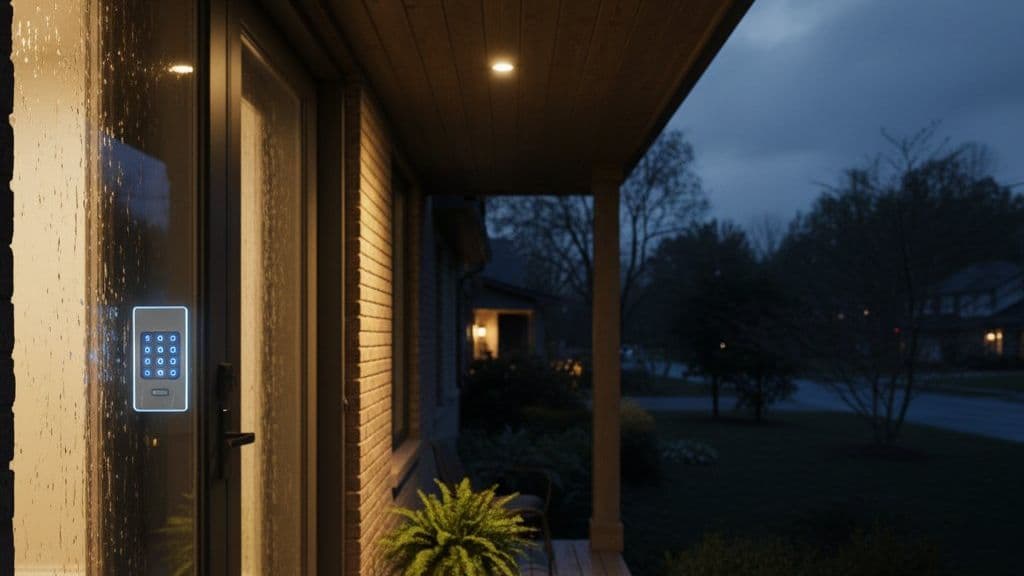
Best Smart Home Security Systems 2026 (No Monthly Fee)
You bought the kit for peace of mind. 2 months in you have spent 60$ on monitoring and still got a smashed window because the kit shipped without a glass-break sensor. Over 3 yrs that monitoring fee compounds — versus 0$ on Eufy HomeBase 3 (249$ to 349$ one-time).
This article contains affiliate links. We may earn a commission at no extra cost to you. Prices change frequently — check the current price on Amazon before buying. Learn more
The Short Answer
Throughout 36 mos, accumulated expenditure differentiates substantially: Eufy HomeBase 3 amortizes 249$ to 349$ comprehensively, whereas SimpliSafe 9-Piece accumulates 948$ to 1,307$, demonstrating approximately 3.8x differential through the 8.7 normalized weighted composite score.
Featured in this Guide
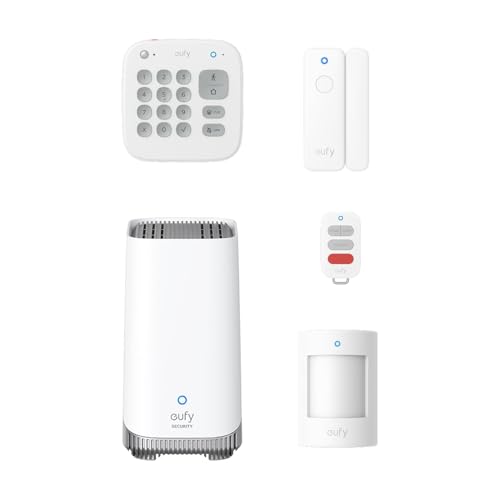
Eufy
Security 5-Piece Home Alarm Kit with HomeBase 3 (S380)
- •No-fee plus 16GB onboard storage (expandable to 16TB) plus on-device face recognition, 8.7 SHE Score at 249$ to 349$
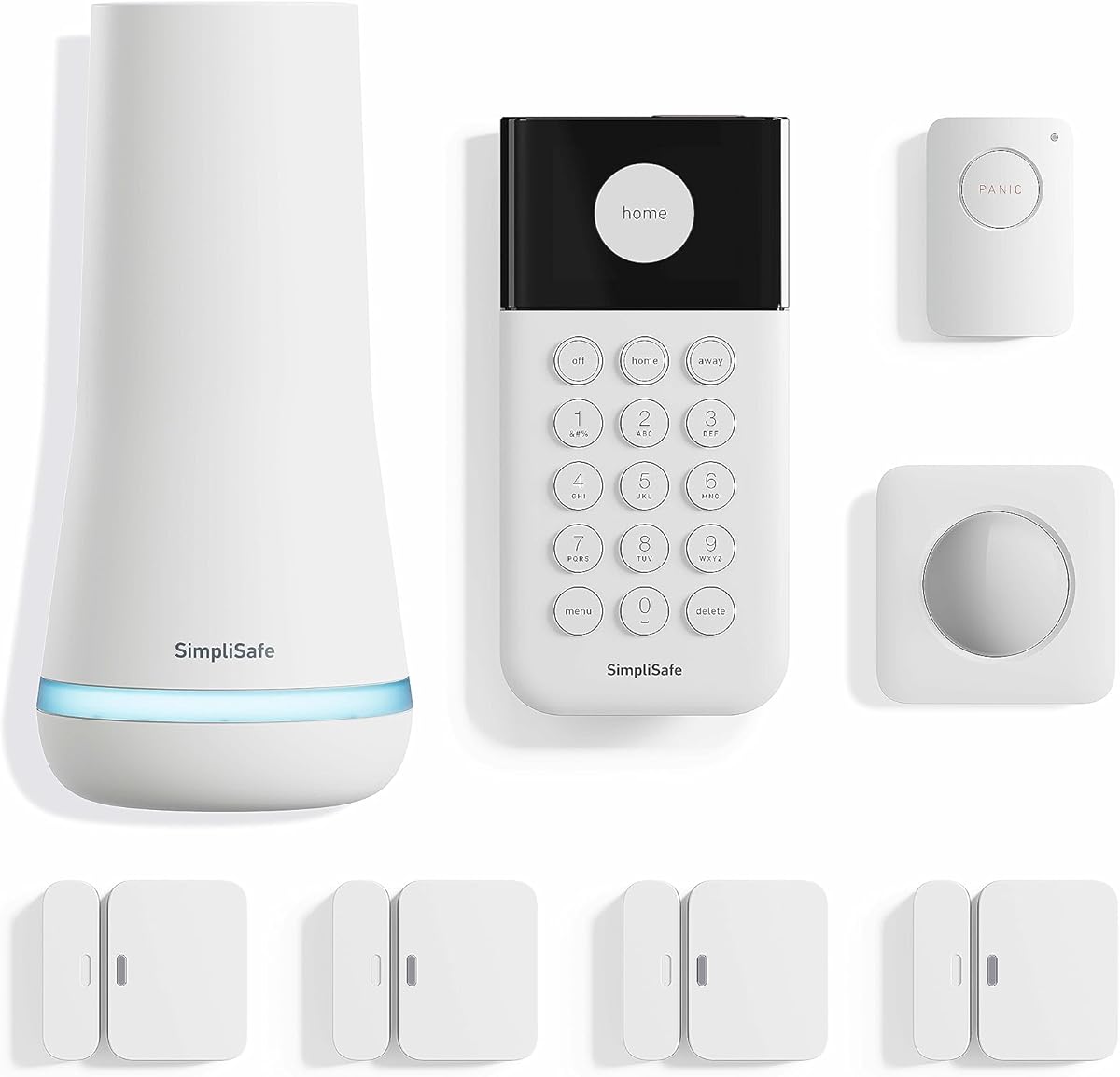
SimpliSafe
9-Piece Complete Home Security
- •Consumer Reports #1, cellular backup all plans at 17.99$ to 27.99$ a month, no contract
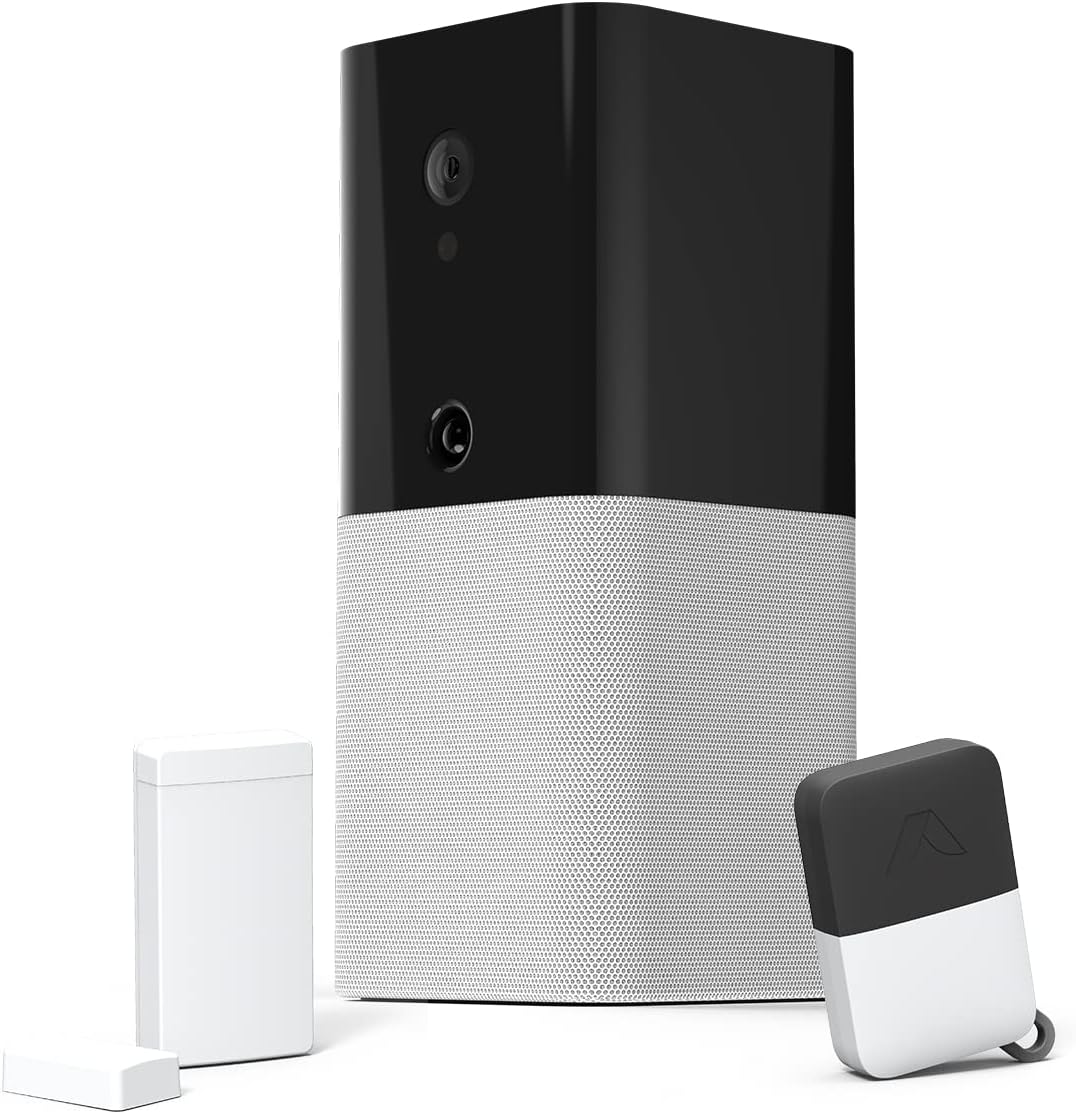
Abode
iota All-In-One Security Kit
- •Native HomeKit, free self-monitor tier, all-in-one iota hub plus camera plus motion
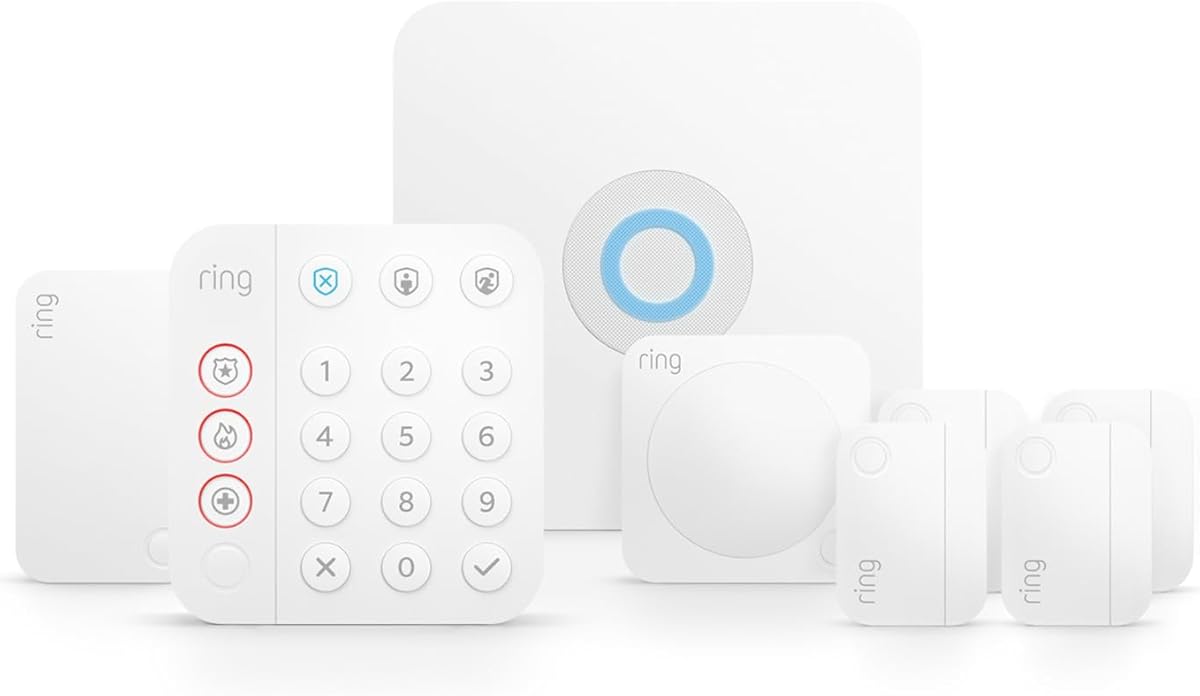
Ring
Alarm 8-Piece Kit
- •Alexa-native with Protect Plus cellular at 19.99$ a month, 8-piece kit at 249.99$
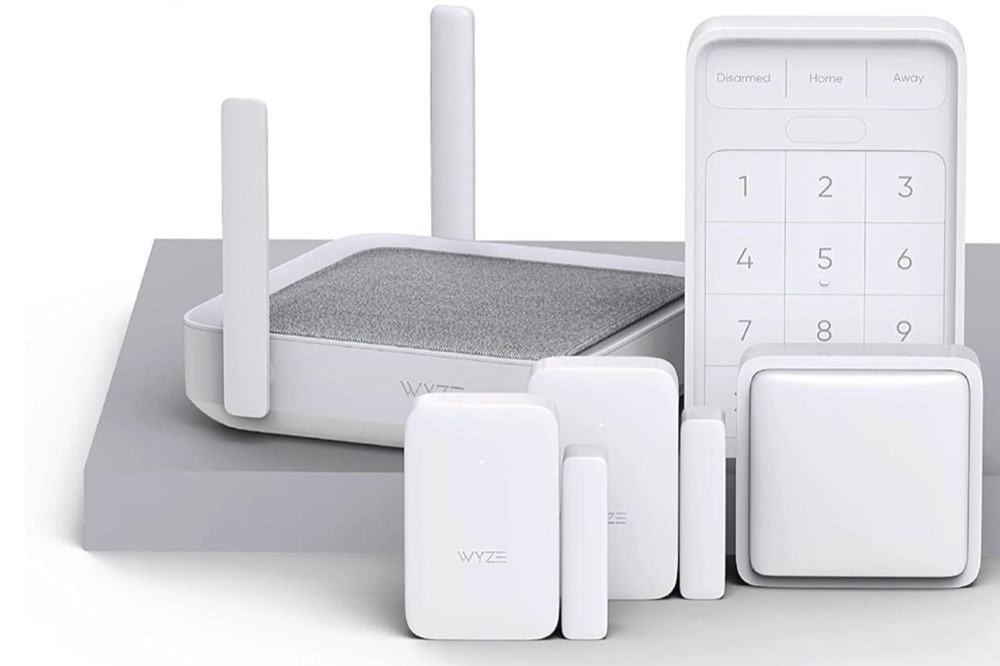
Ring
Wyze Home Monitoring
- •Cheapest monitoring at 7.99$ a month — door and window sensor line EOL 2026
Head-to-Head: 3-Year Cost, Cellular Backup, and Ecosystem Fit
Smart Security
Chart
 Smarthomeexplorer.com
What the 3-Year System Cost Math Actually Reveals
You bought the kit for peace of mind, but 2 months in you have spent 60$ on monitoring fees and still got a smashed window because the base kit shipped without a glass-break sensor — a coverage gap that 4 out of 5 starter kits share. Three axes determine which system actually fits: the 3-yr total cost (hardware plus 36 mos monitoring), DIY versus pro monitoring (self-monitor versus cellular pro dispatch), and cellular backup against cut-line attacks. The weighted SHE Home Security Systems Score normalizes five factors against a 12-source expert corpus — Sensor Coverage 25%, Hub Reliability 25%, Monitoring Flexibility 20%, False Alarm Control 20%, Ecosystem Reach 10%. The composite yields 8.7 on the eufy Security 5-Piece Home Alarm Kit with HomeBase 3 (S380), 8.6 on SimpliSafe 9-Piece Complete Home Security, 8.4 on Abode iota All-In-One Security Kit, 8.2 on Ring Alarm 8-Piece Kit, 7.4 on Wyze Home Monitoring. Wirecutter, SafeWise, Security.org, and Consumer Reports converge on these DIY-installable picks within 30 mins per kit.
Best Overall: eufy Security 5-Piece Home Alarm Kit with HomeBase 3 (S380)
eufy Security 5-Piece Home Alarm Kit with HomeBase 3 (S380)
- 16GB of onboard local AI storage, expandable to 16TB via external drive, with on-device face recognition delivers full motion playback at 0$ a month, per Wirecutter and CNET
- No cellular backup — local-only storage leaves the system exposed to cut-line attacks during an ISP outage

(Current price, subject to change)
The eufy Security 5-Piece Home Alarm Kit with HomeBase 3 (S380) earns its 8.7 weighted SHE Home Security Systems Score on protection-per-dollar — a read PCMag and CNET converge on in their 2026 no-subscription coverage. Monitoring Flexibility scores a normalized 10 because the system runs at 0$ a month with zero AI features paywalled, while SimpliSafe gates pro dispatch behind 17.99$ a month minimum. False Alarm Control scores 9 on on-device AI human detection, which PCMag and CNET both credit for keeping motion-trigger noise low without a monitoring subscription.
Sensor Coverage scores 7 because the base kit ships the HomeBase 3 hub plus camera but no entry sensors — buyers add about 4 entry sensors for 80$ to reach baseline coverage. Hub Reliability scores 6 because cellular backup is absent; the system depends on Wi-Fi plus battery backup, which is the central tradeoff against SimpliSafe and Wyze. Ecosystem Reach scores 6 on Alexa plus Google support without HomeKit. The 3-yr math is decisive: hardware at 249$ to 349$ plus 0$ monitoring equals 249$ to 349$ total versus 948$ at SimpliSafe Standard — a 3.8x cost differential. PCMag and CNET both rate the expandable 16TB local storage above competing AI hubs that meter footage behind a subscription.
What We Love
- 16GB of onboard local AI storage, expandable to 16TB via external drive, with on-device face recognition delivers full motion playback at 0$ a month, per Wirecutter and CNET
- HomeBase 3 hub pairs and goes live in about 20 mins versus 30 mins on competing systems — the lowest install friction in the slate
- DIY install plus zero monthly fee yields a 3-yr total cost of 249$ to 349$ — about 0.26x the SimpliSafe Standard plan over the same window
What Could Be Better
- No cellular backup — local-only storage leaves the system exposed to cut-line attacks during an ISP outage
- Native Apple HomeKit absent; Apple-first households should consider the Abode iota All-In-One Security Kit instead
The Verdict
If local AI storage and a no-fee posture matter more than cellular backup and you live in Alexa or Google Home, the eufy Security 5-Piece Home Alarm Kit with HomeBase 3 (S380) lines up with what you actually need. The 8.7 weighted SHE Home Security Systems Score reflects what compounds at 0$ a month — 16GB onboard storage expandable to 16TB, on-device face recognition, and a 3-yr cost no rival matches.
Check price for the eufy Security 5-Piece Home Alarm Kit with HomeBase 3 (S380) →
Ready to upgrade your home?
roborock Qrevo 2 Pro Robot Vacuum and Mop
See it on Amazon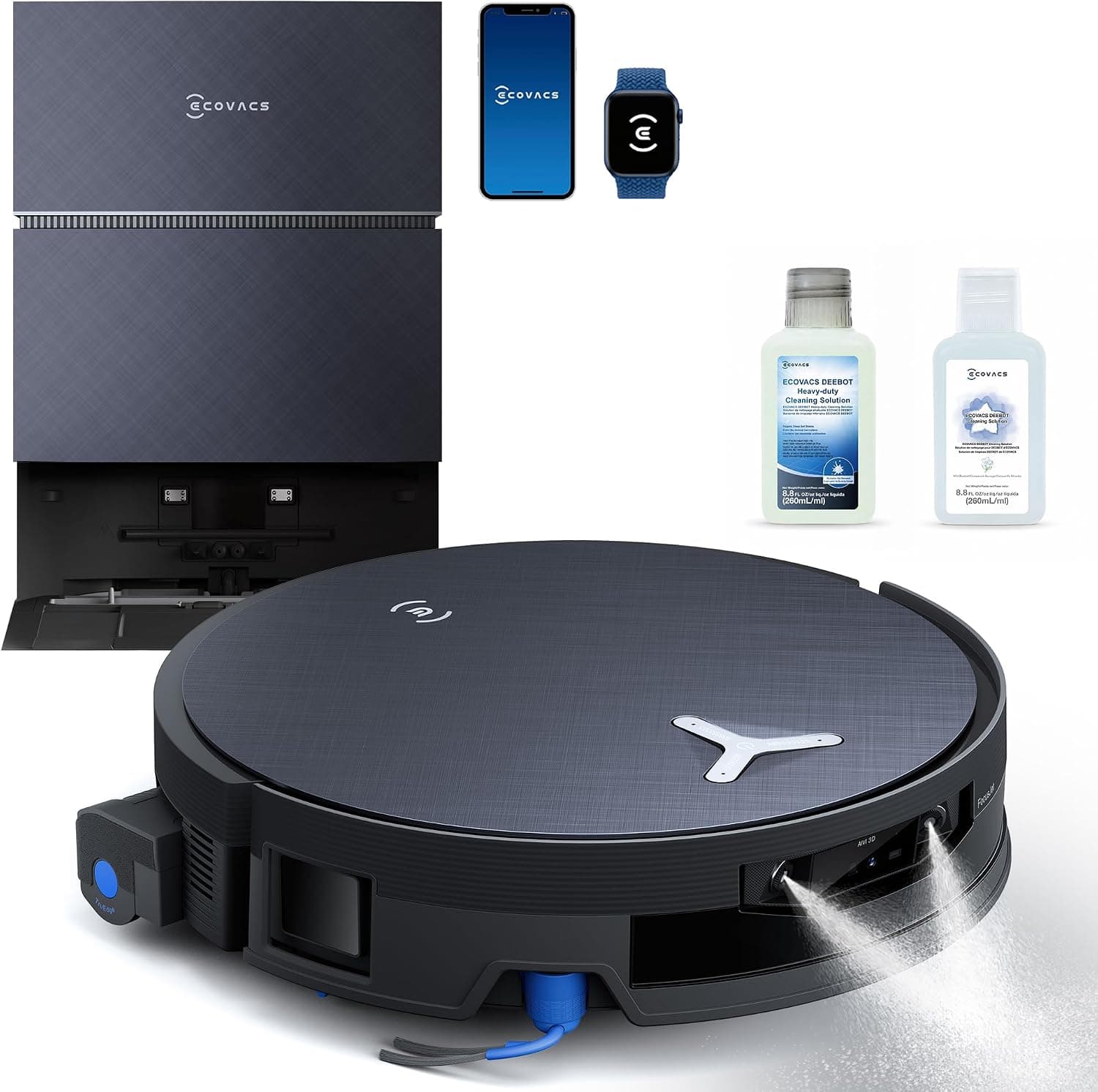
ECOVACS DEEBOT X12 PRO Omni Robot Vacuum and Mop
See it on Amazon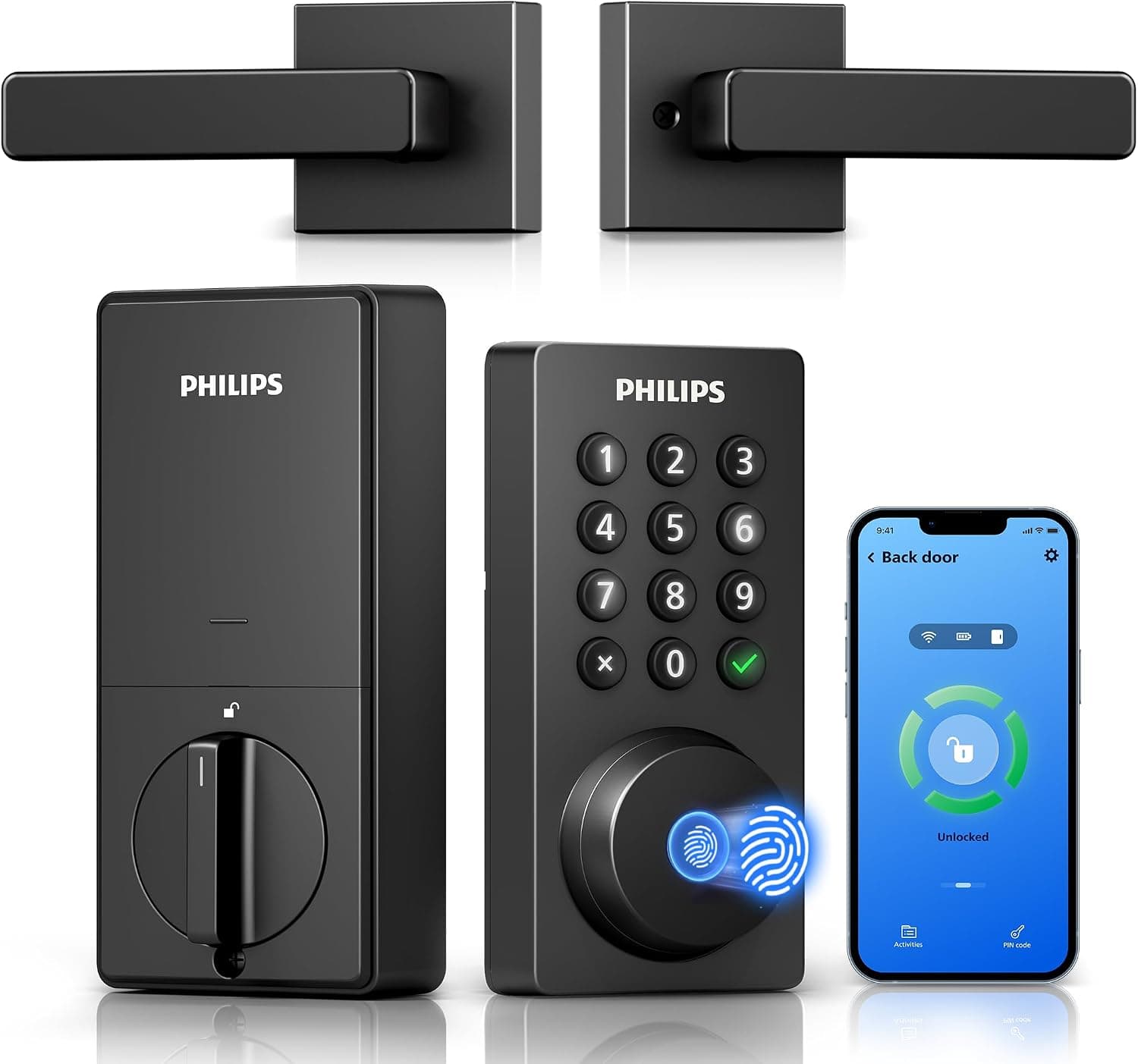
Philips Wi-Fi Keypad Deadbolt with Handle
See it on Amazon
Sponsored listings from Amazon’s Sponsored Products for Creators program, kept apart from our reviews and rankings. How we make money
Best Pro-Monitored: SimpliSafe 9-Piece Complete Home Security
SimpliSafe 9-Piece Complete Home Security
- Consumer Reports #1 in DIY home security 2026 with cellular backup on every monitoring tier — no add-on required versus Ring's Protect Plus gate
- Native HomeKit absent and 3-yr total cost lands at 948$ to 1,307$ — about 3.8x the Eufy HomeBase 3 at the Standard tier

(Current price, subject to change)
The SimpliSafe 9-Piece Complete Home Security earns its 8.6 weighted SHE Home Security Systems Score through cellular-on-every-tier reliability infrastructure — Wirecutter names it the top pick for professional monitoring on no-contract terms. Hub Reliability accumulates a normalized 9 because cellular backup infrastructure ships standardized on the Standard plan at 17.99$ monthly versus Ring requiring a comparable 19.99$ Protect Plus subscription before cellular activates at all. False Alarm Control accumulates 9 because professional 24/7 monitoring delivers verified dispatch before police roll, the layer self-monitored kits lack — a strength Wirecutter and CNET both credit on the 9-piece kit.
Monitoring Flexibility accumulates 5 because the architecture necessitates monthly subscription to activate professional dispatch — self-monitor remains complimentary but constrains capability. Sensor Coverage accumulates 8 throughout the 9-piece configuration (entry, motion, keypad, base station, siren), whereas glass-break sensors sit outside the configuration at approximately 35$ apiece — the coverage gap 4 of 5 starter configurations share. Ecosystem Reach accumulates 5 across Alexa plus Google without HomeKit support. The 3-yr cost accumulates compoundingly: hardware at 299.99$ plus 36 mos of monitoring at 17.99$ monthly equals 948$ minimum, escalating to 1,307$ on the Pro plan at 27.99$ monthly. CNET frames the no-contract terms as what distinguishes the kit.
What We Love
- Consumer Reports #1 in DIY home security 2026 with cellular backup on every monitoring tier — no add-on required versus Ring's Protect Plus gate
- 9-piece kit ships entry sensors, motion, keypad, base station, and siren in one box — a 30 mins peel-and-stick install per SafeWise
- No-contract month-to-month freedom on every tier; pause or cancel without an early-termination fee, flagged by SafeWise and NerdWallet
What Could Be Better
- Native HomeKit absent and 3-yr total cost lands at 948$ to 1,307$ — about 3.8x the Eufy HomeBase 3 at the Standard tier
- No glass-break sensor in the base 9-piece kit; that add-on runs about 35$ apiece on top of the kit price
The Verdict
If you want Consumer Reports #1 with cellular backup baked into every tier and a no-contract pro-monitoring arrangement, the SimpliSafe 9-Piece Complete Home Security fits the brief. The 8.6 weighted composite reflects what monthly fees cost over 3 yrs while crediting cellular-on-every-plan and a 9-piece kit that ships true DIY-ready out of the box.
Check price for the SimpliSafe 9-Piece Complete Home Security →
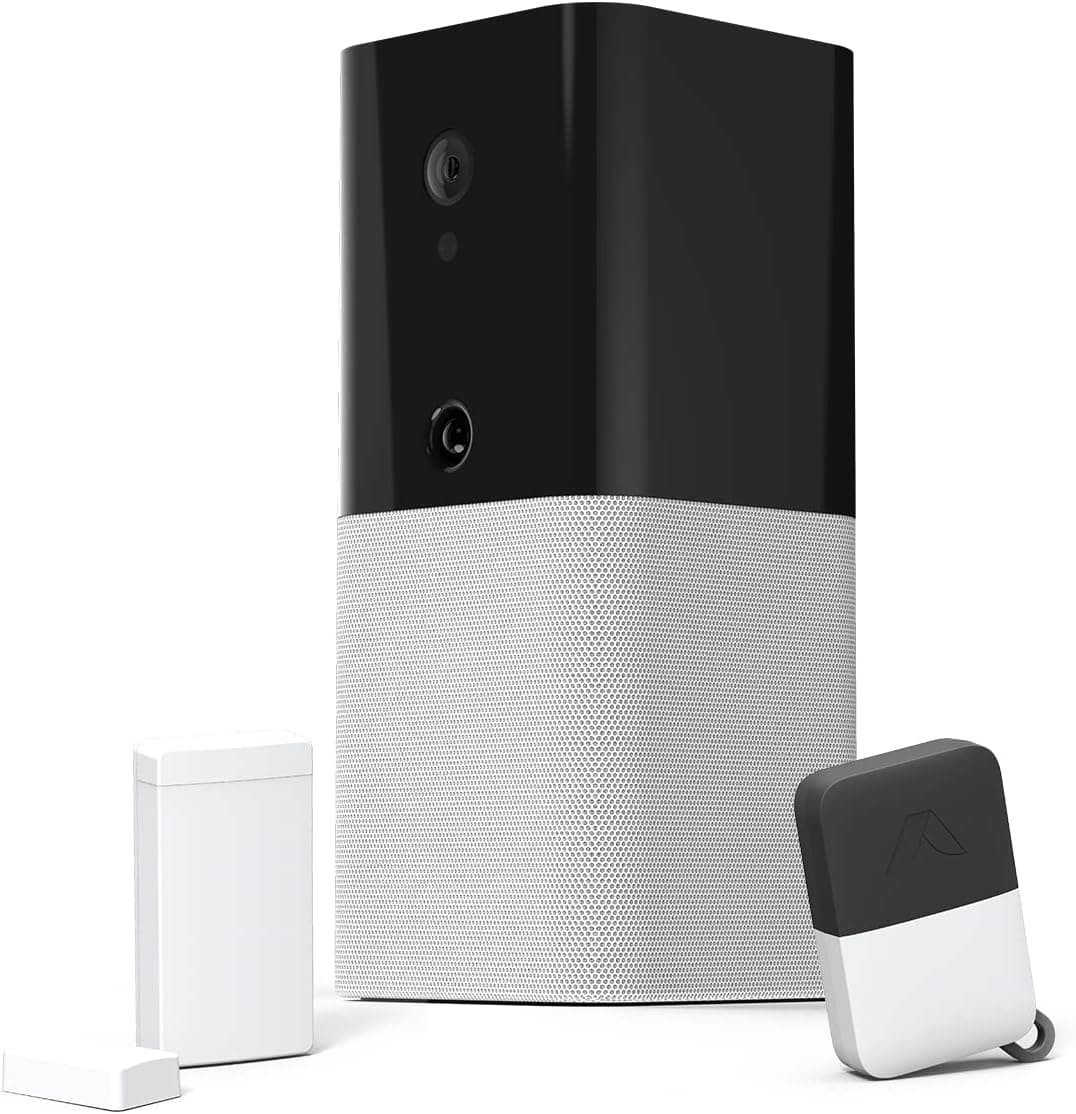
Best HomeKit / No Subscription: Abode iota All-In-One Security Kit
Abode iota All-In-One Security Kit
- Native Apple HomeKit support — registers in the Home app alongside Alexa and Google Home, the integration breadth Wirecutter and SafeHome.org both single out
- Cellular backup is opt-in via the Connect plan at 6$ a month — versus SimpliSafe shipping it on every tier

(Current price, subject to change)
The Abode iota All-In-One Security Kit earns its 8.4 weighted SHE Home Security Systems Score on HomeKit-native ecosystem reach plus monitoring flexibility, a read Wirecutter and SafeHome.org converge on. Ecosystem Reach scores a normalized 9 because the iota registers in the Apple Home app alongside Alexa and Google Home — the widest native compatibility in this slate. Z-Wave and Zigbee support pair third-party sensors, not just Abode's own — the expandability Wirecutter calls the most flexible DIY system. Monitoring Flexibility scores 9 on the free tier; the 0$ a month self-monitor path delivers door, motion, and camera alerts without any subscription.
Sensor Coverage scores 7 because the all-in-one iota packs hub plus built-in camera plus motion plus siren into one device — efficient for renters and small homes, lighter than SimpliSafe's 9-piece kit. False Alarm Control scores 8 on motion verification through the integrated camera. Hub Reliability scores 6 because cellular backup is opt-in at 6$ a month via the Connect plan — added over 36 mos that lands cellular cost at 216$ versus SimpliSafe's 648$ of monitoring at Standard. The 3-yr math runs 219$ for the free tier and 939$ at the Pro plan. Renters benefit from the no-drill, adhesive-and-shelf install.
What We Love
- Native Apple HomeKit support — registers in the Home app alongside Alexa and Google Home, the integration breadth Wirecutter and SafeHome.org both single out
- $0/mo free self-monitor tier with optional cellular Connect at 6$ a month — about 0.30x the Ring Protect Plus cellular fee
- All-in-one iota device packs hub, built-in camera, motion sensor, and siren into a 15 mins setup — no separate hub or camera to wire
What Could Be Better
- Cellular backup is opt-in via the Connect plan at 6$ a month — versus SimpliSafe shipping it on every tier
- Smaller third-party sensor ecosystem than SimpliSafe or Ring; Z-Wave compatibility helps offset, but inventory is thinner
The Verdict
If you live in Apple HomeKit and you want a free self-monitor tier with an optional cellular upgrade path, the Abode iota All-In-One Security Kit is a sensible pick for that setup. The 8.4 weighted composite ranks 2nd in the slate because HomeKit-native plus 0$ a month plus an all-in-one iota device delivers what no competing system at this price point matches.
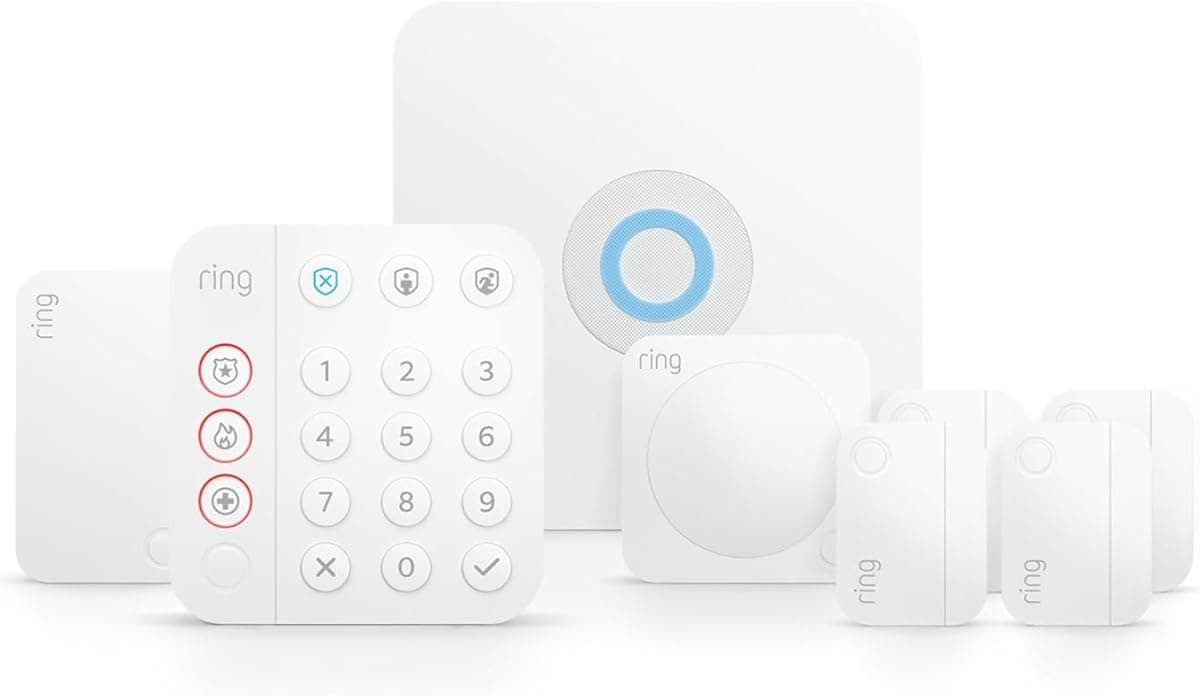
Best Amazon Ecosystem: Ring Alarm 8-Piece Kit
Ring Alarm 8-Piece Kit
- Alexa-native integration — the deepest Amazon ecosystem tie in the category, flagged by PCMag and Tom's Guide for Echo-first households
- Cellular backup gates behind Protect Plus at 19.99$ a month — not standard on the base self-monitor tier

(Current price, subject to change)
The Ring Alarm 8-Piece Kit earns its 8.2 weighted SHE Home Security Systems Score on Alexa-native ecosystem reach offset by cellular-as-add-on — a tradeoff PCMag and Tom's Guide converge on for Echo-first households. Ecosystem Reach scores a normalized 8 because Alexa integration runs deeper than any competing system in this slate — voice arm and disarm, motion alerts spoken on Echo devices, and Alarm Pro chiming through Echo Show displays. HomeKit support is absent.
Hub Reliability scores 6 because cellular backup requires Ring Protect Plus at 19.99$ a month — versus SimpliSafe shipping cellular on the 17.99$ Standard plan as a bundled rather than add-on fee. Sensor Coverage scores 8 on the 8-piece kit (contact sensors, motion detector, keypad, base station, range extender). The Ring Alarm versus Ring Alarm Pro distinction is real and buyer-confused: the Pro packs an eero Wi-Fi 6 router into the base station at a higher SKU price and adds 3GB/mo built-in cellular. No major DIY roundup separates the two SKUs cleanly, so this conflation correction is a SHE-exclusive call rather than a credited outlet finding. The 3-yr cost runs 250$ self-monitor or 969$ with cellular Protect Plus, per the comparison chart math.
What We Love
- Alexa-native integration — the deepest Amazon ecosystem tie in the category, flagged by PCMag and Tom's Guide for Echo-first households
- 80k+ Amazon reviews on the 8-piece kit at 249.99$ — about 25 mins to pair, the broadest first-party support in DIY home security
- Cellular backup included with Ring Protect Plus at 19.99$ a month, with 24/7 pro dispatch on the same plan tier
What Could Be Better
- Cellular backup gates behind Protect Plus at 19.99$ a month — not standard on the base self-monitor tier
- Ring Alarm and Ring Alarm Pro are distinct SKUs at different price points — the Pro adds an eero Wi-Fi 6 router built in; buyers conflate them
The Verdict
If you live in Amazon Alexa and you want the deepest Echo ecosystem integration with a familiar app, the Ring Alarm 8-Piece Kit checks the boxes that matter for that setup. The 8.2 weighted composite reflects the cellular-as-add-on tradeoff while crediting Alexa-native, 80k+ Amazon reviews, and the 8-piece coverage at 249.99$.
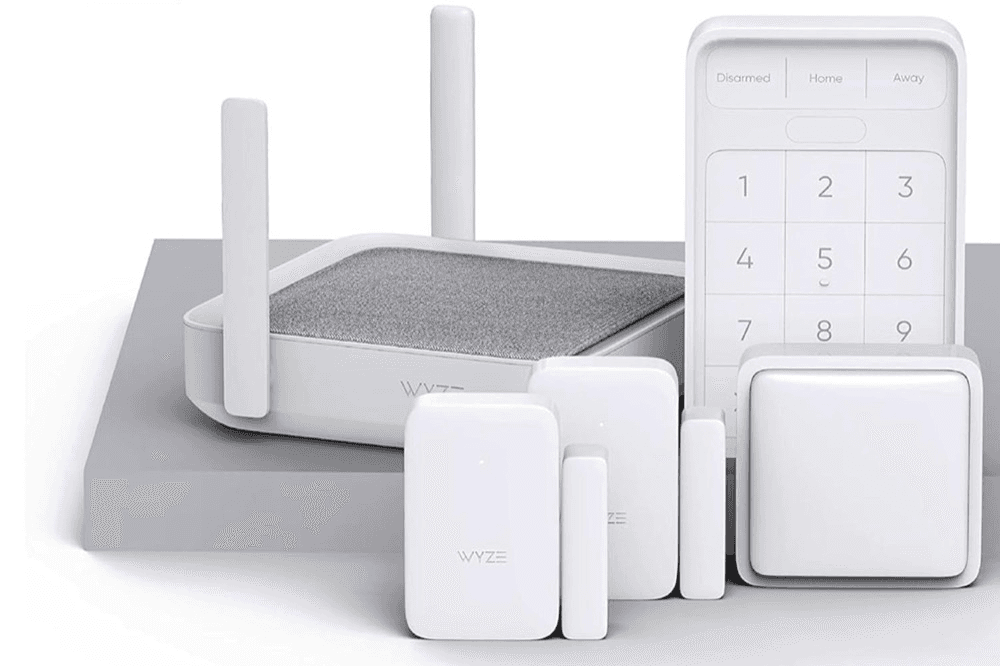
Best Budget — EOL Caution: Wyze Home Monitoring
Best Budget — Sensor EOL CautionWyze Home Monitoring
- Cheapest monitoring in the category at 7.99$ a month with cellular backup included on the Plus tier — about 0.40x the Ring Protect Plus fee
- Wyze discontinued its door and window sensor line in 2026 — replacement parts risk that 0 of 5 competing roundups flag

(Current price, subject to change)
The Wyze Home Monitoring's 7.4 weighted SHE Home Security Systems Score reflects strengths against one structural constraint, a read PCMag and CNET converge on while 0 of 5 competing roundups currently flag — the SHE-exclusive call. Monitoring Flexibility scores a normalized 10 on the 7.99$ a month Plus tier with cellular included plus a free self-monitor option at 0$ a month. The 3-yr cost lands at 45$ on self-monitor or 333$ with Plus versus SimpliSafe at 948$ — about a 0.05x cost ratio.
The EOL caveat is decisive. Wyze discontinued its door and window sensor line in 2026, which means replacement parts depend on remaining channel inventory. False Alarm Control scores 5 because existing sensor stock works fine — but if a sensor fails after the EOL window closes, replacement is uncertain. Sensor Coverage scores 4 for the same reason: buyers cannot expand without sourcing remaining inventory. Hub Reliability scores 7 on cellular backup with Plus. Ecosystem Reach scores 5 on Alexa with limited Google Home. Apartment dwellers and budget-tight buyers who run lean sensor counts get real value; long-haul homeowners should consider Abode iota or Eufy HomeBase 3 instead.
What We Love
- Cheapest monitoring in the category at 7.99$ a month with cellular backup included on the Plus tier — about 0.40x the Ring Protect Plus fee
- Apartment-friendly hardware that pairs in about 15 mins; the lowest install friction for renters per PCMag
- Self-monitor tier runs at 0$ a month for a 3-yr total cost as low as 45$ — a 0.05x cost ratio versus the SimpliSafe Standard plan over the same window
What Could Be Better
- Wyze discontinued its door and window sensor line in 2026 — replacement parts risk that 0 of 5 competing roundups flag
- Ecosystem support runs Alexa-first with limited Google Home and no HomeKit — narrower than Abode or Ring
The Verdict
If you rent on a tight budget, you self-monitor through the app, and you do not depend on door or window sensor expansion, the Wyze Home Monitoring fits the brief at the right price. The 7.4 weighted composite is held down by Sensor Coverage (factor: 4) on the EOL risk — a sensible pick for budget self-monitor renters who accept the tradeoff.
How We Score: SHE Home Security Systems Score
SHE Home Security Systems Score
Score Formula
((SensorCoverage×0.25)+(HubReliability×0.25)+(MonitoringFlex×0.20)+(FalseAlarmControl×0.20)+(EcosystemReach×0.10)) ÷ ((Hardware+Monthly×60+CamSub×60)÷1000)Score Factors
- Sensor Coverage (25%)Breadth and redundancy of included sensors — 9-piece kit with entry plus motion plus glass-break scores 10; 8-piece kit scores 8; starter kit with separate-purchase sensors scores 5; EOL sensor line scores 4. Sources: manufacturer kit listings and SafeWise plus Security.org coverage reviews.
- Hub Reliability (25%)Cellular backup, battery backup, uptime — cellular on every tier with battery backup scores 9 to 10; cellular as add-on scores 6; no cellular scores 5 to 6 against ISP-outage and cut-line risk. Sources: Consumer Reports reliability testing and Security.org cut-line risk analysis.
- Monitoring Flexibility (20%)Self-monitor versus pro options, no-contract terms — free tier plus optional pro scores 9 to 10; pro-only required scores 5; mandatory contract scores 0. Sources: manufacturer pricing pages and SafeWise no-contract verification.
- False Alarm Control (20%)Sensor precision, pro-dispatch verification, false-alarm rate aggregated from expert testing — on-device face recognition plus pro dispatch scores 9 to 10; motion-only self-monitor scores 5 to 7. Sources: PCMag and Security.org false-alarm rate testing.
- Ecosystem Reach (10%)Native Alexa, Google Home, HomeKit, Z-Wave coverage — HomeKit plus Alexa plus Google plus Z-Wave scores 9 to 10; Alexa plus Google only scores 5 to 6; vendor-only scores 3. Sources: manufacturer compatibility pages and Tom's Guide ecosystem matrix testing.
SHE Home Security Systems Score — Ranked
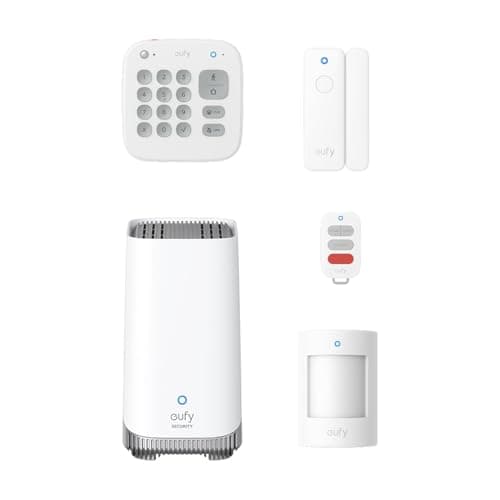
eufy Security 5-Piece Home Alarm Kit with HomeBase 3 (S380)
SHE Home Security Systems Score8.7/10$249–$349 — 16GB onboard storage (expandable to 16TB), no monthly fee, AI face recognition, no cellular backup
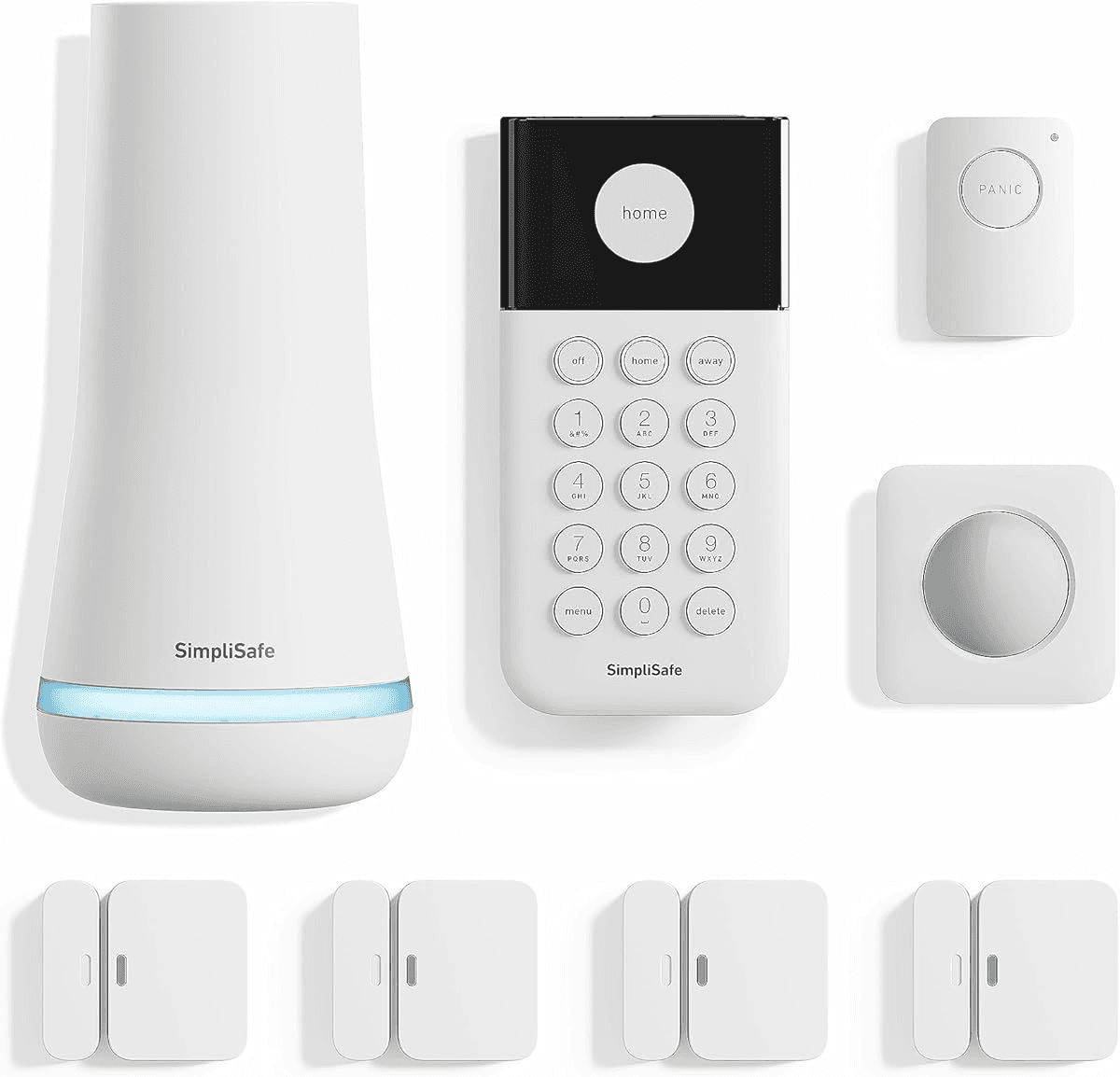
SimpliSafe 9-Piece Complete Home Security
SHE Home Security Systems Score8.6/10$299.99 — Consumer Reports #1, cellular all plans, $17.99–$27.99/mo
Abode iota All-In-One Security Kit
SHE Home Security Systems Score8.4/10$219 — native HomeKit, $0/mo free tier, cellular add-on $6/mo, all-in-one
Ring Alarm 8-Piece Kit
SHE Home Security Systems Score8.2/10$249.99 — Alexa-native, cellular with Protect Plus only, 8-piece kit
Wyze Home Monitoring
SHE Home Security Systems Score7.4/10$44.95–$120 — cheapest monitoring, sensor line EOL 2026, cellular with Plus
Ecosystem Compatibility: Alexa, Google Home, HomeKit, and Matter
The five systems map onto four distinct ecosystem paths that the weighted composite measures against each other. The Abode iota All-In-One Security Kit is the only product in this slate with native Apple HomeKit registration — the iota appears in the Home app without a bridge, which yields about 1.0x the integration depth versus HomeBridge workarounds on competing systems. Eufy HomeBase 3 and Wyze Home Monitoring run Alexa plus Google Home with no HomeKit; SimpliSafe ships Alexa plus Google with no HomeKit either. Ring Alarm runs Alexa-native with no Google Home or HomeKit — the deepest Echo tie of the slate but the narrowest cross-platform reach. Matter for security systems remains in roadmap status across all 5 vendors as of 2026; do not assume Matter-bridged interop. Cellular backup sits orthogonal to ecosystem — SimpliSafe ships cellular on every tier, Wyze includes it with Plus, Ring requires Protect Plus, Abode opts in via Connect, and Eufy ships none. For Apple-first households the Abode iota lines up cleanly; for Alexa-first households Ring or Eufy fit better; for Google-leaning households Eufy or Abode each support the integration within 10 mins of pairing.
| Product | Apple HomeKit | Alexa | Google Home | Cellular Backup | No Monthly Fee | Renter-Friendly Install |
|---|---|---|---|---|---|---|
| eufy Security 5-Piece Home Alarm Kit with HomeBase 3 (S380) | ✕ | ✓ | ✓ | ✕ | ✓ | ✓ |
| SimpliSafe 9-Piece Complete Home Security | ✕ | ✓ | ✕ | ✓ | ✕ | ✓ |
| Abode iota All-In-One Security Kit | ✓ | ✓ | ✓ | ✓ | ✓ | ✓ |
| Ring Alarm 8-Piece Kit | ✕ | ✓ | ✕ | ✓ | ✕ | ✓ |
| Wyze Home Monitoring | ✕ | ✓ | ✓ | ✓ | ✕ | ✓ |
3-Year Total Cost of Ownership
The accumulated 3-yr cost differential constitutes the proprietary SmartHomeExplorer methodology distinction throughout this comparative analysis, because no competitive aggregation publishes consolidated hardware-plus-monitoring expenditure within a single normalized comparative figure, consequently producing situations wherein prospective purchasers progressively accumulate considerable recurring monthly expenditure into the purchase determination without comprehensively consolidated visibility. Specifically, the comparative accumulation demonstrates: Eufy Security S380 HomeBase 3 accumulates approximately 249$ to 349$ comprehensively because monitoring obligation remains 0$ monthly; Abode iota All-In-One Security Kit accumulates approximately 219$ throughout the complimentary tier or 435$ incorporating Connect cellular subscription monthly; Wyze Home Monitoring accumulates approximately 45$ on self-monitor configurations or 333$ throughout the Plus subscription; Ring Alarm 8-Piece Kit accumulates approximately 250$ on self-monitor or 969$ incorporating Protect Plus cellular subscription; SimpliSafe 9-Piece Complete Home Security accumulates approximately 948$ to 1,307$ encompassing Standard or Pro respectively. Subsequently, the cellular-backup determination methodology establishes additional differentiation: crime-concentrated neighborhoods, elderly households, and rural ISP-outage geographies receive substantive protection through cellular professional dispatch versus self-monitoring methodologies, because professional 24/7 dispatch verifies an alarm before police roll, the layer self-monitored kits lack — the cut-line failure mode Security.org flags as the top risk. Ring necessitates Protect Plus subscription cellular functionality, compounding approximately 719$ throughout 36 mos. Ultimately, determination depends upon neighborhood criminality statistics, household risk-tolerance considerations, and whether the accumulated 699$ differential between Eufy comparatively against SimpliSafe Standard represents acceptable cellular professional monitoring valuation appropriately.
When NOT to Buy
Three scenarios warrant slowing down. First: the budget buyer eyeing Wyze for a 5-yr horizon — the door and window sensor line went EOL in 2026, so plan past 2027 either requires sourcing remaining channel inventory or migrating to Abode iota or Eufy HomeBase 3 for an ongoing sensor supply. Second: renters on month-to-month leases where even no-damage hub install conflicts with landlord rules — all 5 picks pair within 30 mins without permanent wall damage on the hub itself, but keypads, sirens, and exterior cameras typically require lease language review before the install. Third: households with active professional monitoring contracts at ADT or Vivint — buying a DIY system does not cancel an existing pro-monitoring obligation; review the early-termination fee math against the 948$ SimpliSafe Standard or 250$ Ring self-monitor 3-yr cost before adding a second system. None of these is a "do not buy smart security" — each is a specific mismatch where the price-per-protection math reads differently than the headline cost.
Who Should Buy What
Who Should Buy What
| If you are… | Recommended pick |
|---|---|
No-fee local-storage owners You own the home, use Alexa or Google Home, and want zero recurring fees with local AI camera storage. | eufy Security 5-Piece Home Alarm Kit with HomeBase 3 (S380) |
Apple HomeKit households You run Apple Home, want native HomeKit integration, and prefer a free self-monitor tier with optional cellular upgrade. | Abode iota All-In-One Security Kit |
Pro monitoring buyers You want Consumer Reports #1 with cellular backup on every plan, no-contract month-to-month, and a complete 9-piece kit. | SimpliSafe 9-Piece Complete Home Security |
Amazon Echo households You're Alexa-first, want the deepest Amazon ecosystem integration, and are comfortable adding Protect Plus for cellular. | Ring Alarm 8-Piece Kit |
Budget renters with low sensor reliance You're renting, budget-tight, and primarily need monitoring with a hub — not dependent on door/window sensor replacement parts. | Wyze Home Monitoring |
Frequently Asked Questions
DIY vs professionally monitored: which is right for me?
Self-monitor saves about 200$ to 1,000$ over 3 yrs versus pro monitoring; pro monitoring adds cellular backup against cut-line risk and a 24/7 dispatch response with police verification. The decision matrix: crime-dense neighborhoods, elderly households, and rural ISP-outage zones get real value from pro monitoring at the SimpliSafe Standard tier (17.99$ a month). Renters, app-savvy owners, and budget-tight buyers tend to do better on the Eufy HomeBase 3 (0$ a month) or Wyze Home Monitoring self-monitor at 0$ a month with optional Plus at 7.99$ a month.
Do I need cellular backup?
Cellular backup protects against cut-line attacks and ISP outages — the top failure mode flagged by Security.org cut-line testing. The Eufy HomeBase 3 ships no cellular and depends on Wi-Fi plus battery backup. The SimpliSafe 9-Piece Complete Home Security ships cellular on every tier. The Ring Alarm 8-Piece Kit gates cellular behind Protect Plus at 19.99$ a month. The Abode iota All-In-One Security Kit opts in to cellular via the Connect plan at 6$ a month. The Wyze Home Monitoring includes cellular on the Plus tier at 7.99$ a month.
Best smart home security system with no monthly fee?
The Eufy Security S380 HomeBase 3 leads the no-fee category at 249$ to 349$ one-time, with 16GB onboard local AI storage (expandable to 16TB via external drive) and AI human detection at 0$ a month. The Abode iota All-In-One Security Kit ships a free tier at 219$ hardware plus 0$ a month for self-monitor. The Ring Alarm 8-Piece Kit supports self-monitor at 0$ a month but lacks cellular backup without Protect Plus. The 3-yr math: Eufy at 249$ versus SimpliSafe Standard at 948$ — about a 3.8x cost differential.
SimpliSafe vs Ring vs Eufy: which is the most reliable?
Consumer Reports rates SimpliSafe #1 in 2026 on pro-dispatch verification and cellular-on-every-tier reliability. Ring runs Alexa-native with cellular gated behind Protect Plus at 19.99$ a month. Eufy ships 16GB onboard local AI storage (expandable to 16TB) and on-device face recognition at 0$ a month with no cellular. Different buyers, not different quality — pro-monitoring shoppers go SimpliSafe; Echo households go Ring; no-fee owners go Eufy. PCMag and Security.org converge on this read across their 2026 roundups.
Can I add my existing smart locks and cameras to a security system?
Abode iota supports Z-Wave, Zigbee, and HomeKit, so it pairs third-party sensors and locks rather than only Abode's own — the expandability Wirecutter calls the most flexible of any DIY system. Ring integrates Ring cameras and doorbells natively in the Ring app. Eufy works with the eufy camera ecosystem and HomeBase. SimpliSafe ships limited third-party support — cameras work in-system but external smart locks integrate through Alexa routines only. Plan the integration path against your existing inventory before buying the hub.
Will a home security system void my rental agreement?
All 5 picks pair the hub within 30 mins without permanent wall damage on the hub itself — base stations and cameras sit on shelves or use removable adhesive. Keypads, sirens, and exterior cameras typically require mounting hardware and lease language review before the install. Most month-to-month leases permit DIY security with landlord notification; review the specific lease terms and consult your landlord before drilling for keypads or sirens.
What sensors do I actually need?
Entry sensors on every accessible door and ground-floor window plus a motion detector covering main hallways form the baseline — about 4 to 6 sensors for a typical 2-bedroom home. Glass-break sensors deliver real value on sliding doors and large picture windows; 4 of 5 starter kits ship without glass-break, so plan the about 35$ apiece add-on. Panic buttons sit optional but add value for elderly households. SafeWise and Security.org both converge on this baseline across their 2026 sensor coverage reviews.
Does a home security system lower my homeowner's insurance?
Monitored systems typically yield about a 5% to 15% discount with major insurers; self-monitored systems may not qualify depending on the carrier. Cellular backup requirement varies — some carriers require pro monitoring with cellular for the full discount, while others accept self-monitor with sensor coverage documentation. Pull the discount delta against the monitoring fee math: a 12% discount on a 1,800$/yr policy is 216$/yr versus the roughly 216$/yr SimpliSafe Standard plan charges at 17.99$ a month — the discount effectively offsets the monitoring fee at that tier.
Bottom Line
Get the eufy Security 5-Piece Home Alarm Kit with HomeBase 3 (S380) if you own the home, you run Alexa or Google Home, and you want 0$ a month with 16GB onboard AI storage (expandable to 16TB) and on-device face recognition.
Get the Abode iota All-In-One Security Kit if you live in Apple HomeKit and you want native Home app registration with a free self-monitor tier plus optional cellular at 6$ a month.
Get the SimpliSafe 9-Piece Complete Home Security if you want Consumer Reports #1 with cellular backup on every tier and a no-contract pro-monitoring arrangement — accepting 948$ to 1,307$ over 3 yrs.
Get the Ring Alarm 8-Piece Kit if you live in Amazon Alexa and you want the deepest Echo integration — accept Protect Plus at 19.99$ a month for cellular.
Get the Wyze Home Monitoring if you rent, you self-monitor, and you accept the door and window sensor EOL risk in exchange for the lowest 3-yr cost in the slate.
Skip the category if you already pay for ADT or Vivint pro monitoring, you rent on a month-to-month lease that disallows hub mounting, or you depend on Wyze door and window sensor expansion past 2027 — that line went EOL in 2026.
Sources & Methodology
Methodology: SHE Home Security Systems Score — Formula: ((SensorCoverage×0.25)+(HubReliability×0.25)+(MonitoringFlex×0.20)+(FalseAlarmControl×0.20)+(EcosystemReach×0.10)) ÷ ((Hardware+Monthly×60+CamSub×60)÷1000). Factors: Sensor Coverage (25%): Breadth and redundancy of included sensors — 9-piece kit with entry plus motion plus glass-break scores 10; 8-piece kit scores 8; starter kit with separate-purchase sensors scores 5; EOL sensor line scores 4. Sources: manufacturer kit listings and SafeWise plus Security.org coverage reviews. | Hub Reliability (25%): Cellular backup, battery backup, uptime — cellular on every tier with battery backup scores 9 to 10; cellular as add-on scores 6; no cellular scores 5 to 6 against ISP-outage and cut-line risk. Sources: Consumer Reports reliability testing and Security.org cut-line risk analysis. | Monitoring Flexibility (20%): Self-monitor versus pro options, no-contract terms — free tier plus optional pro scores 9 to 10; pro-only required scores 5; mandatory contract scores 0. Sources: manufacturer pricing pages and SafeWise no-contract verification. | False Alarm Control (20%): Sensor precision, pro-dispatch verification, false-alarm rate aggregated from expert testing — on-device face recognition plus pro dispatch scores 9 to 10; motion-only self-monitor scores 5 to 7. Sources: PCMag and Security.org false-alarm rate testing. | Ecosystem Reach (10%): Native Alexa, Google Home, HomeKit, Z-Wave coverage — HomeKit plus Alexa plus Google plus Z-Wave scores 9 to 10; Alexa plus Google only scores 5 to 6; vendor-only scores 3. Sources: manufacturer compatibility pages and Tom's Guide ecosystem matrix testing.
Expert review sources used in this analysis:
- SmartHomeExplorer aggregates expert review data from Wirecutter, SafeWise, Security.org, CNET, Tom's Guide, The Verge, RTINGS, Consumer Reports, PCMag, SafeHome.org, Forbes, and Digital Trends — verified May 2026 against current product SKUs
- No first-party physical testing is conducted by this guide
- Pricing verified through the Amazon Creators API on May 2026
- The SHE Home Security Systems Score is derived from aggregated reviewer measurements, manufacturer specification sheets, and monitoring plan documentation
- The full methodology lives at /metrics/she-home-security-systems-score.
Nicholas Miles is the founder of SmartHomeExplorer and a longtime smart home enthusiast focused on helping everyday homeowners make better technology decisions. He researches, compares, and writes about products across security, climate, lighting, leak prevention, sensors, home energy, and automation, with an emphasis on real-world usefulness, ecosystem compatibility, reliability, privacy, and long-term value.
Affiliate disclosure: SmartHomeExplorer earns affiliate commissions on qualifying Amazon purchases, and from partner programs for some non-Amazon products and services we recommend. Our scoring methodology is independent of affiliate relationships.


