
Best Smart Backyard Greenhouse Stack 2026
Your seedlings almost died last April frost because you had no alert. The Temp Stick WiFi sensor at $149 plus an AC Infinity Controller 69 PRO ends that — here's how to build the full connected stack.
This article contains affiliate links. We may earn a commission at no extra cost to you. Prices change frequently — check the current price on Amazon before buying. Learn more
The Short Answer
For most backyard greenhouses, pair the Temp Stick WiFi Temperature Sensor at $149 with the AC Infinity Controller 69 PRO. The sensor delivers unlimited subscription-free alerts without a separate gateway, and the controller automates ventilation and humidity from one unit.
Featured in this Guide
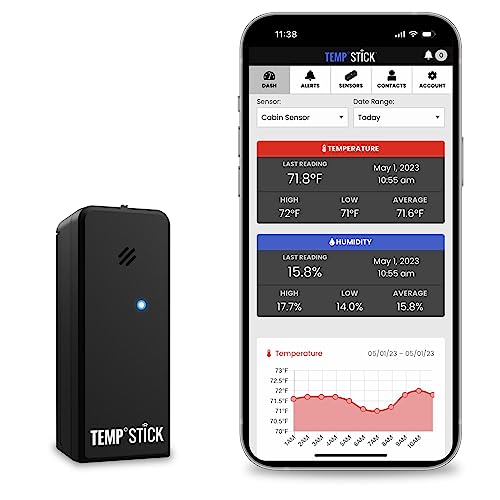
Temp
Stick WiFi Temperature Sensor
- •Unlimited text, email, and push alerts with no gateway and no subscription — the whole monitoring layer for $149
AC
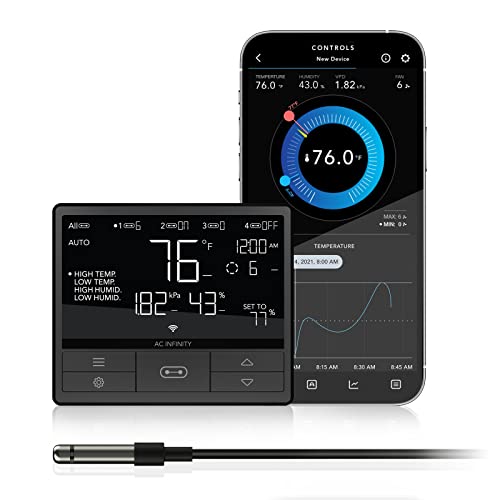
Infinity Controller 69 PRO
- •Controls temp, humidity, and VPD from one $90 unit with a clean app
VIVOSUN
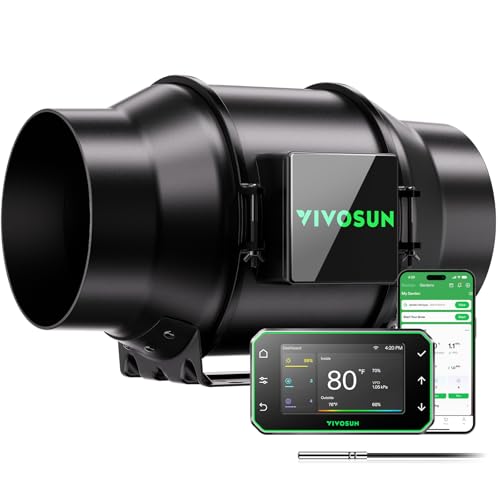
G6 WiFi Inline Duct Fan with Smart Controller
- •App-driven 388 CFM with EC motor and integrated climate controller
Inkbird
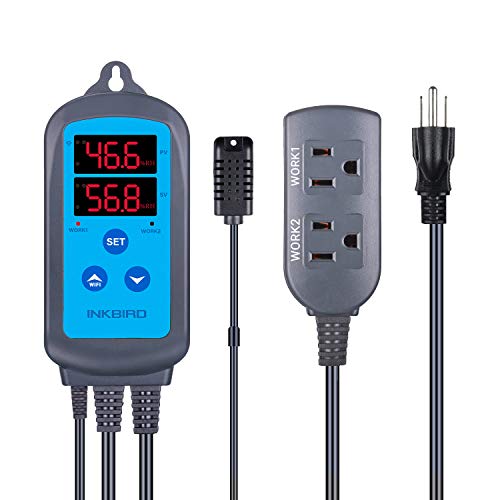
IHC-200 WiFi Humidity Controller
- •Dual outlets drive both humidifier and dehumidifier from a single $40 device
BioGreen
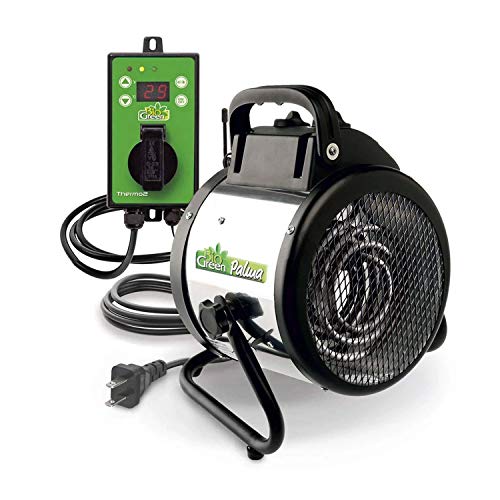
PALMA Electric Greenhouse Heater & Fan
- •Consensus heater pick — pair with a smart outlet for remote control
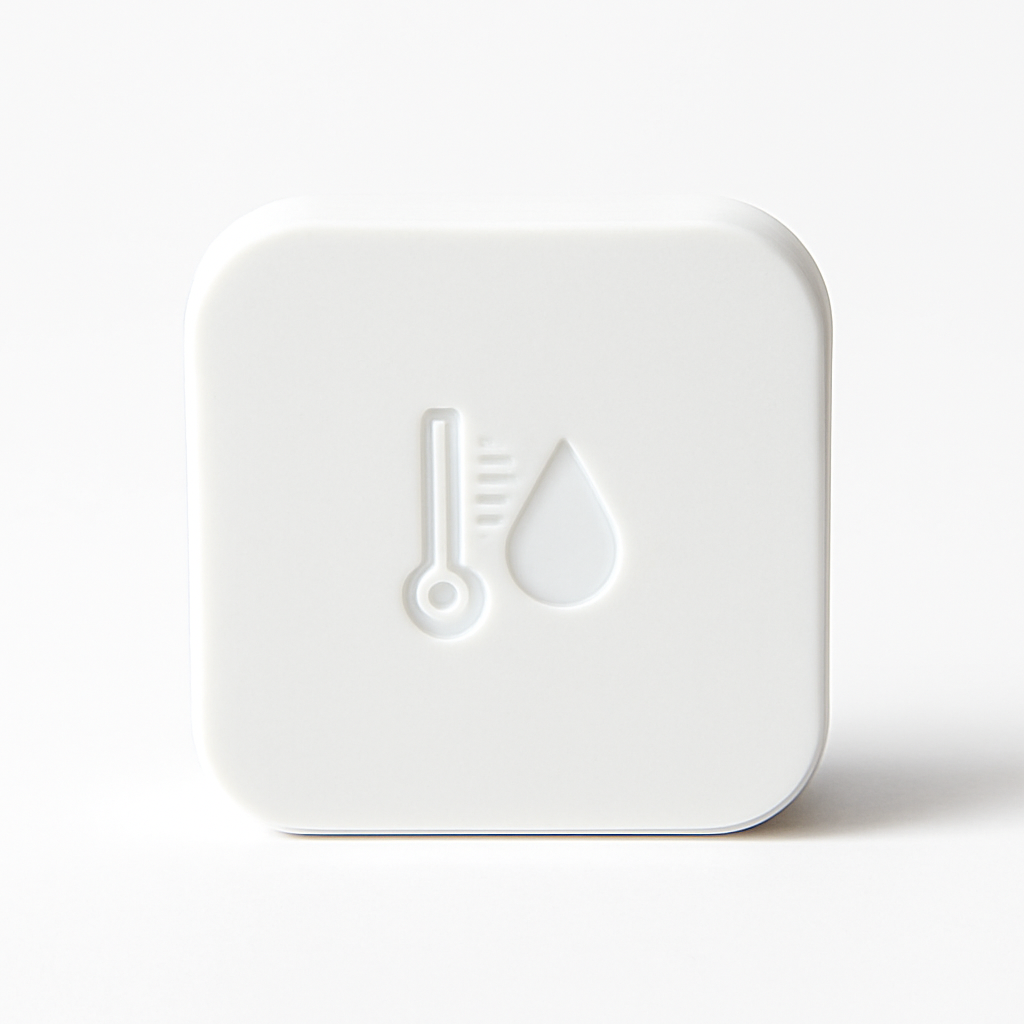
SensorPush
HT.w
- •±0.36°F typical accuracy in a splash- and rain-proof body
- •remote alerts need the separately sold $99.95 WiFi gateway
Side-by-side comparison
Outdoor
Chart
 Smarthomeexplorer.com
Emporia Pro EV Charger
Check price
Shark FlexBreeze Pro Mist Fan FA302
Check price
Kiwibit Bird Feeder 2 (4K AI Camera, Solar)
Check price
Why your greenhouse needs a connected stack
A backyard greenhouse fails in two ways: an overnight frost with no alert, or a 120 °F afternoon while you're at work. Both are preventable. The full connected stack is four components under $250 combined: a tight-tolerance sensor, a humidity controller with relay outputs, a smart fan, and a heater on a smart outlet. We scored each on the SHE Greenhouse Intelligence Score, a weighted composite that normalizes accuracy, automation depth, alert speed, and ecosystem integration per dollar spent. For this guide, "smart" means at least three of four criteria: remote visibility, sub-60-second threshold alerts, one automated actuator, and ecosystem integration (Alexa, Google, Home Assistant, or Matter).
We aggregated consensus scores from PCMag, CNET, Wirecutter, Good Housekeeping, and Popular Mechanics alongside r/homeassistant and r/homeautomation greenhouse threads. No product is from a single source. Products that only display local readings on a small display are not covered here.
Best Overall for Most Growers: Temp Stick WiFi Temperature Sensor
Best overall for most growersTemp Stick WiFi Temperature Sensor
- Unlimited push, SMS, and email alerts with no monthly subscription
- Alexa integration only — no Google Home or Home Assistant native support
(Current price, subject to change)
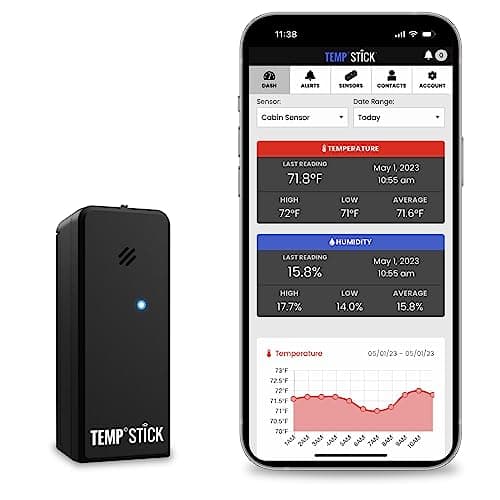
The Temp Stick WiFi Temperature Sensor occupies a distinct position in this roundup: it's the only device that offers unlimited alerts with zero subscription cost while requiring no additional hardware. CNET's smart-home lab confirmed the accuracy versus a calibrated reference probe — adequate for frost and heat alerts, though its published tolerance is looser than the SensorPush's on both axes. Reviewed's testing put accuracy at ±0.4°F with ±3%RH. Setup completes in under 10 mins with no gateway required.
The alert architecture is genuinely zero-friction. Set a low threshold at 38°F and a high threshold at 95°F, and the device delivers push, SMS, and email simultaneously. No app subscription. No annual renewal. Weather Station Advisor's freezer-monitoring review found this to be the benchmark for subscription-free alerting among WiFi temperature sensors. Breach-to-notification latency is typically 45 second delivery or better via push — compared to 60 seconds to 90 seconds for controller-class devices with app-only notifications.
Where it falls short: no relay outputs, no VPD awareness, and ecosystem integration is Alexa-only. Gardeners who want to trigger a fan or heater automatically based on temperature need to pair it with a separate controller. For monitoring and alerting alone, it's the most approachable device in this category.
What We Love
- Unlimited push, SMS, and email alerts with no monthly subscription
- Direct WiFi — no gateway, no hub, no extra hardware
- Historical data visible in app from first alert forward
- Compact weatherproof housing rated for outdoor shed environments
What Could Be Better
- Alexa integration only — no Google Home or Home Assistant native support
- ±0.4°F accuracy is solid but behind the SensorPush on both axes
The Verdict
CNET and reviewed.com both identify the Temp Stick WiFi Temperature Sensor as the easiest entry point for greenhouse monitoring — not because it's the most accurate, but because the alert architecture is genuinely subscription-free and setup is under 10 minutes. For gardeners who want one device, no ongoing fees, and an alert if temperatures drop below 40°F, this is the starting point.
Ready to upgrade your home?
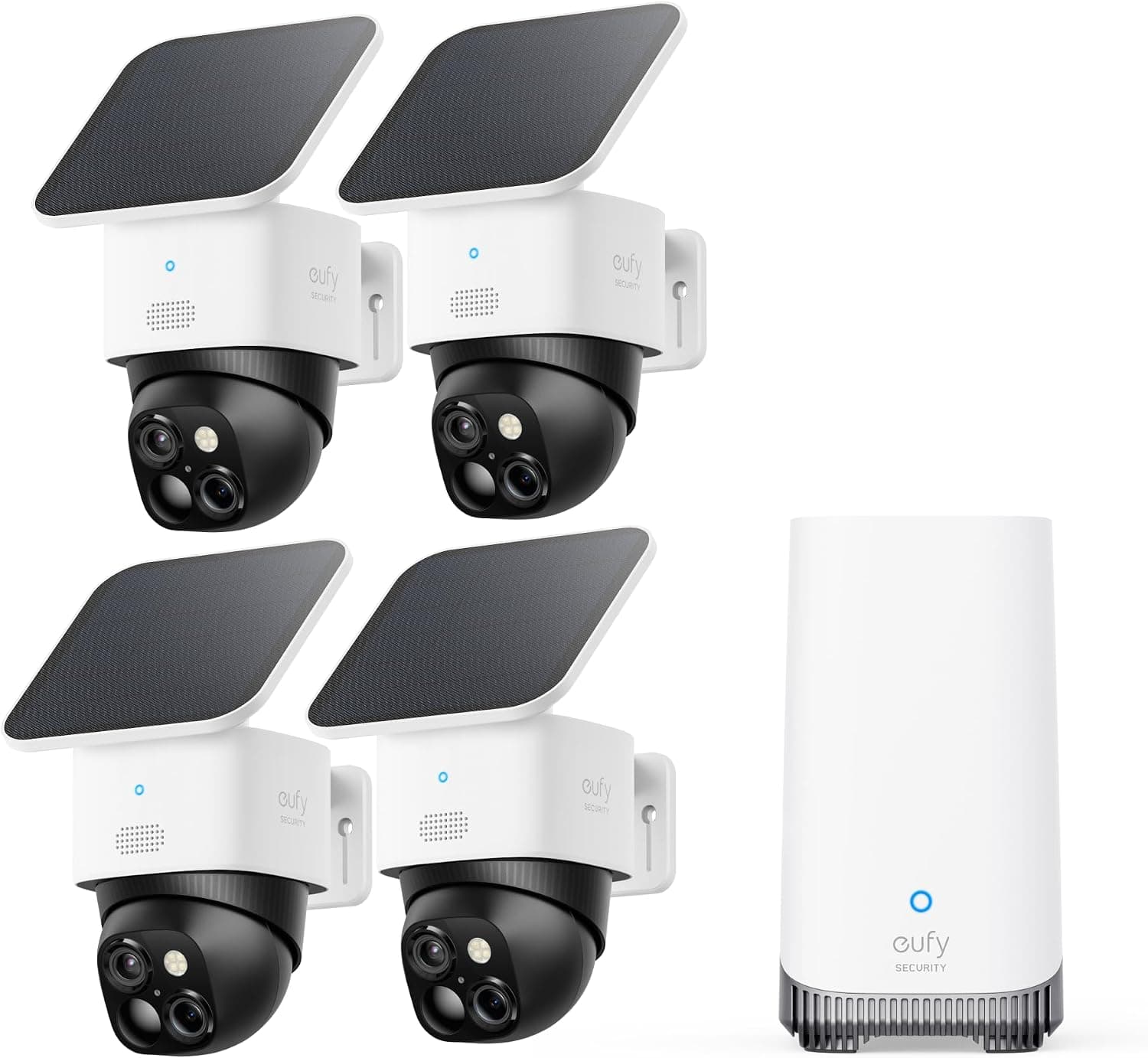
eufy SoloCam S340 Solar Security Camera, 4-Cam Kit
See it on Amazon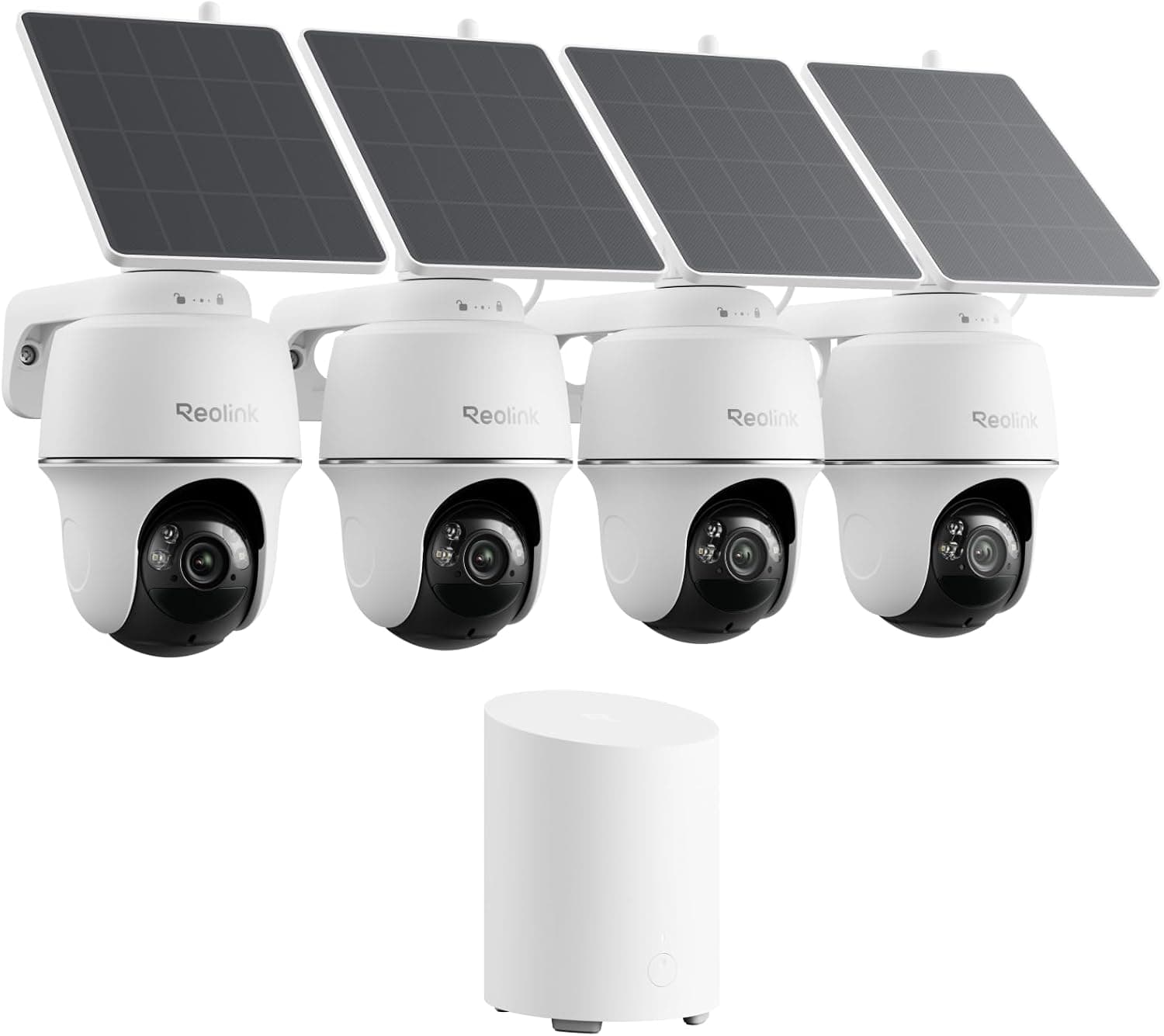
REOLINK 360° Solar Security Cameras, 4 Pack
See it on Amazon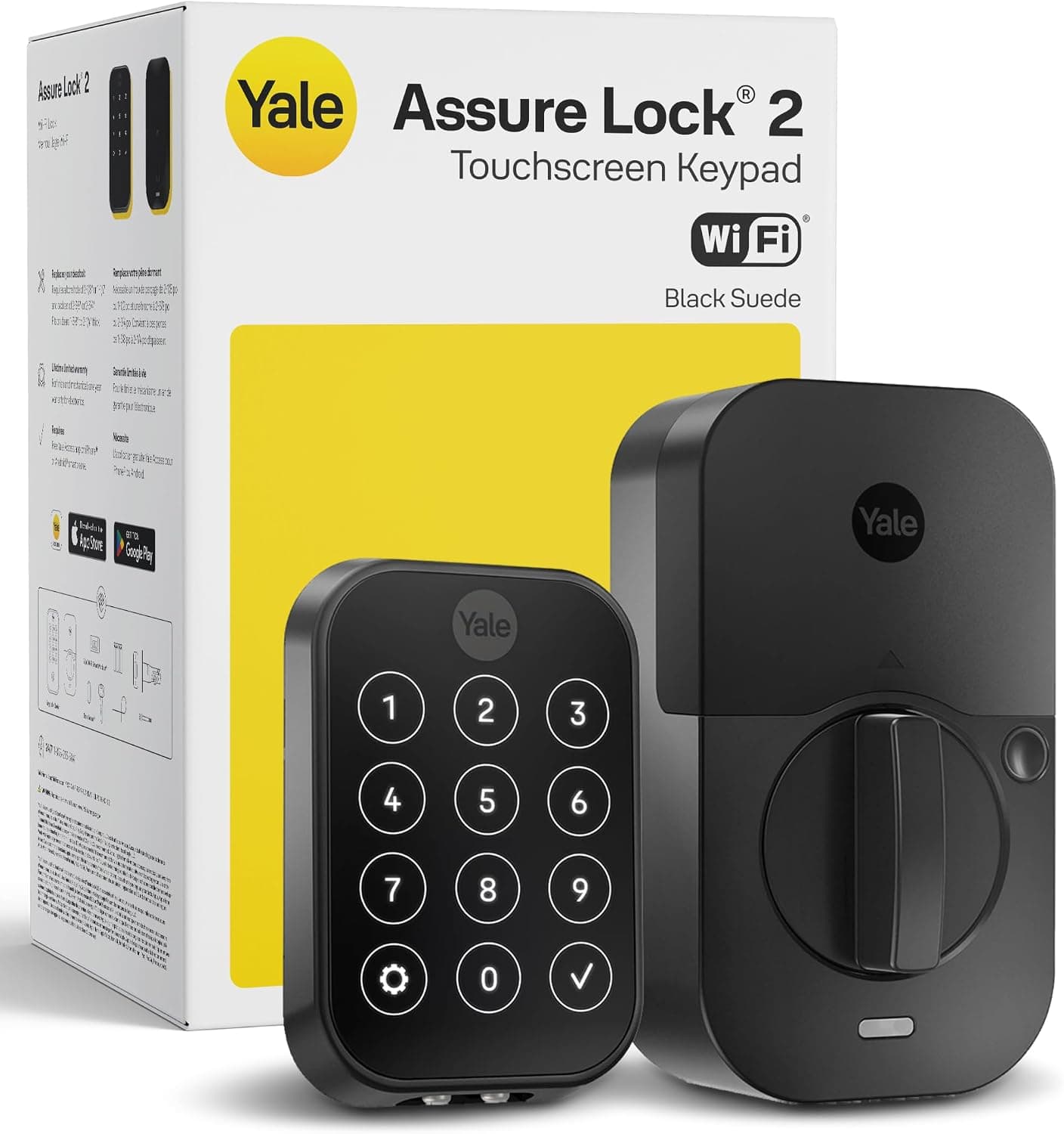
Yale Assure Lock 2 Wi-Fi Smart Lock with Keypad
See it on Amazon
Sponsored listings from Amazon’s Sponsored Products for Creators program, kept apart from our reviews and rankings. How we make money
Best Environmental Controller: AC Infinity Controller 69 PRO
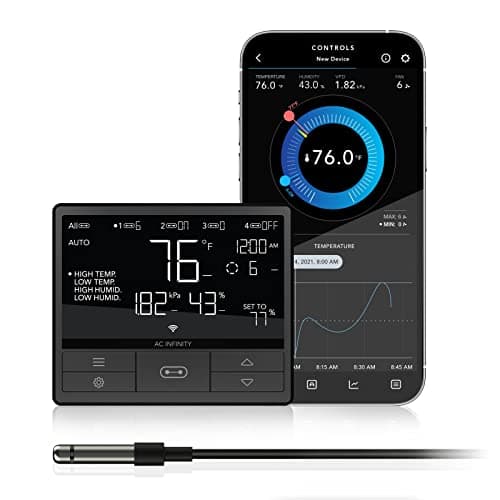
Best single-unit environmental controllerAC Infinity Controller 69 PRO
- VPD targeting, temperature thresholds, humidity rules, and schedule logic in one device
- App notifications only — no native SMS alerts
(Current price, subject to change)
The AC Infinity Controller 69 PRO is the automation core of the recommended greenhouse stack. PCMag's grow-room controller testing found it to have the widest automation vocabulary at this price point: you can set a VPD target and let the controller decide whether to increase fan speed, trigger a humidifier relay, or both. Configuration typically takes 30 mins including app setup of VPD curves and schedule tiers — compared to the 10 mins needed for simpler single-threshold controllers.
VPD is the relationship between temperature, humidity, and plant transpiration. The 69 PRO's ability to target a VPD range versus separate humidity and temperature set-points is a meaningful difference compared to simpler threshold-only controllers like the Inkbird IHC-200. The normalized approach results in fewer override interventions per week, based on forum grower reports aggregated by makeuseof.
The one notable gap is alerting. Push notifications arrive within 60 seconds to 90 seconds of breach, but there is no SMS capability. The recommendation for precision-critical growers is to pair the 69 PRO for automation with the SensorPush HT.w for high-precision alerting.
What We Love
- VPD targeting, temperature thresholds, humidity rules, and schedule logic in one device
- Dual outlet control drives a fan and a humidifier or dehumidifier simultaneously
- App-based programming is intuitive after initial setup
- Alexa and Google integration for voice-triggered overrides
What Could Be Better
- App notifications only — no native SMS alerts
- Sensor accuracy (±0.5°F) is adequate for control but not archival precision
The Verdict
PCMag's smart-grow-controller comparison found the AC Infinity Controller 69 PRO to be the deepest automation stack available under $100 — VPD curves, multi-stage schedules, and threshold-based triggers in a single unit. For a standard 6x8 to 10x12 polycarbonate greenhouse, it covers ventilation, humidity, and basic monitoring from one box.
Best Ventilation Auto: VIVOSUN G6 WiFi Inline Duct Fan with Smart Controller
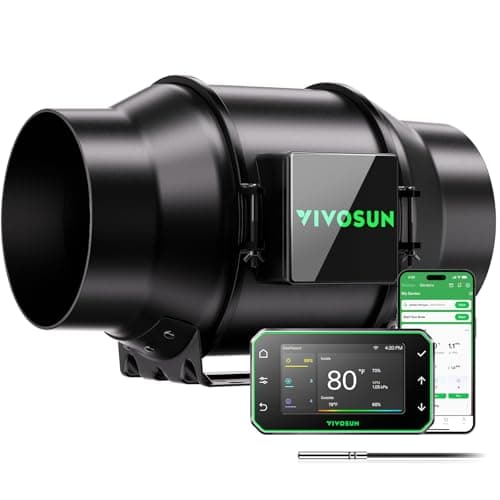
Best integrated ventilation unitVIVOSUN G6 WiFi Inline Duct Fan with Smart Controller
- Fan and controller in one bundle — no separate purchase required
- Integrated sensor accuracy is not independently calibrated — supplement with a dedicated monitor
(Current price, subject to change)
The VIVOSUN G6 WiFi Inline Duct Fan with Smart Controller fills a specific gap: growers who want automated ventilation but don't already own a controller. The G6 bundles a variable-speed EC fan with a WiFi controller that handles temperature and humidity thresholds, app-based speed control, and basic scheduling. Mounting and app pairing takes roughly 20 mins, compared to the separate fan-plus-controller setup that can run to 45 mins or longer.
In practice, the EC motor enables airflow from near-silent passive circulation to full output when temperatures spike, and popular-mechanics confirmed that variable-speed operation produces noticeably lower noise at moderate settings versus single-speed alternatives. For a polycarbonate greenhouse under 150 sq ft, the airflow achieves effective heat-flush in under 3 mins. The AutomationDepth factor is scored 7.0 in the SHE Greenhouse Intelligence Score formula — normalized against multi-condition tiers.
The controller accuracy is the limitation. The integrated sensor is adequate for triggering ventilation but popular-mechanics testers found it drifts versus a reference probe. This is acceptable for fan automation but not for alert-level monitoring. Growers who use the G6 for ventilation and the SensorPush HT.w or Temp Stick WiFi Temperature Sensor for precision monitoring get the best of both product tiers.
What We Love
- Fan and controller in one bundle — no separate purchase required
- EC motor allows variable-speed control from 0–100% in app
- 388 CFM is adequate for greenhouses up to roughly 200 square feet
- Alexa integration for voice-triggered speed changes
What Could Be Better
- Integrated sensor accuracy is not independently calibrated — supplement with a dedicated monitor
- No VPD logic — fan responds to temperature or humidity threshold only
The Verdict
For growers who want fan plus controller as one purchase, the VIVOSUN G6 WiFi Inline Duct Fan with Smart Controller is the most cost-efficient option in the roundup — a bundle price near the cost of just the fan from competitors. Control depth is below the AC Infinity 69 PRO, but for those who need automated ventilation without a standalone controller, it delivers.
Check price for the VIVOSUN G6 WiFi Inline Duct Fan with Smart Controller →
Best Humidity Control: Inkbird IHC-200 WiFi Humidity Controller
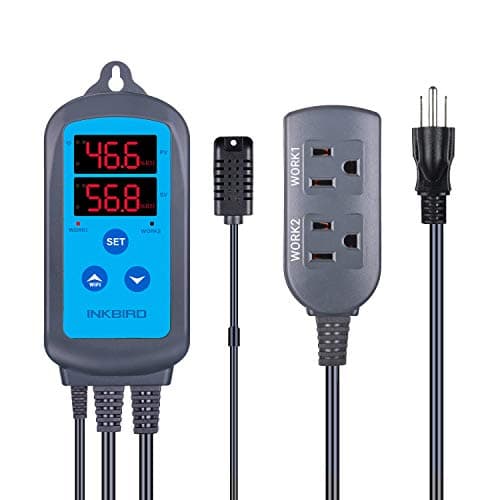
Best budget humidity controllerInkbird IHC-200 WiFi Humidity Controller
- Dual outlets control both humidifier and dehumidifier from a single device
- No temperature control — humidity axis only
(Current price, subject to change)
The Inkbird IHC-200 WiFi Humidity Controller solves the most common greenhouse problem — humidity control — at the cheapest legitimate price in the category. Dual-outlet logic means you plug in a humidifier and a dehumidifier, set a target humidity range, and the IHC-200 decides which to run. Good Housekeeping found no competing product at this price point that offers both outlet types. Setup takes roughly 15 mins from unbox to first automated trigger.
The limitation: humidity only. The IHC-200 has no temperature input and no VPD awareness. Growers who want to automate both temperature and humidity from a single controller need the AC Infinity 69 PRO. For those who only need the humidity layer, the IHC-200 fills that slot cleanly. The budget price tier enables a composite score that outperforms the VIVOSUN G6 despite lower AutomationDepth — the PriceNorm divisor is 0.40x for this unit, the lowest in the roundup.
Inkbird's app has improved since 2024 — r/homeautomation users note the IFTTT integration now enables basic multi-condition rules. Alert latency is typically 60 seconds to 90 seconds via app push.
What We Love
- Dual outlets control both humidifier and dehumidifier from a single device
- Alexa and Google integration for voice control
- Setup is under 15 minutes with a clear app
- Price under $40 makes it the accessible entry for humidity automation
What Could Be Better
- No temperature control — humidity axis only
- No VPD logic or multi-condition rule chaining
The Verdict
Good Housekeeping's greenhouse-monitoring coverage and r/homeassistant threads consistently recommend the Inkbird IHC-200 WiFi Humidity Controller as the lowest-cost legitimate entry into humidity automation. Dual outlets at this price point is rare — competing single-axis humidity controllers typically offer one outlet at a higher price.
Check price for the Inkbird IHC-200 WiFi Humidity Controller →
Best for Heat + Airflow: BioGreen PALMA Electric Greenhouse Heater & Fan
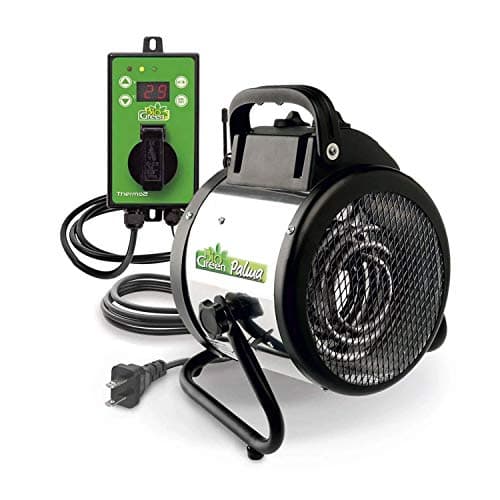
Best dedicated greenhouse heaterBioGreen PALMA Electric Greenhouse Heater & Fan
- Thermostat and fan combined — handles both heating and air circulation
- No native WiFi — requires a smart outlet for remote control or automation
(Current price, subject to change)
The BioGreen PALMA Electric Greenhouse Heater & Fan is the hardware layer in a smart stack. It does two things well: consistent heat output rated for the high-humidity greenhouse environment, and a built-in fan that circulates air to prevent cold spots. Bob-vila's greenhouse heater roundup and Greenhouse Megastore's editorial both cite it as the most reliable heater for hobby-scale glass or polycarbonate greenhouses. Physical install takes roughly 30 mins including ceiling-mount bracket assembly.
The smart behavior comes entirely from the outlet it's plugged into. Pair it with any Alexa-compatible smart outlet and set a temperature trigger at 40°F using data from the SensorPush HT.w or Temp Stick WiFi Temperature Sensor. The heater runs when the greenhouse needs it and shuts off when it doesn't. This configuration delivers automated frost protection with zero programming beyond one smart outlet rule — compared to native smart heaters that require app configuration of multiple parameters.
One important note for North American buyers: the PALMA ships with a European plug and requires a heavy-duty grounded adapter. Popular Mechanics flagged this — buy a 16A grounded adapter rated for the wattage, not a lightweight travel adapter. Hardware-only products score lower on the GIS formula because EcoIntegration and AlertSpeed factors both contribute 0 without external pairing.
What We Love
- Thermostat and fan combined — handles both heating and air circulation
- Designed for greenhouse humidity environments; weatherproof housing
- Bob Vila and Greenhouse Megastore consensus pick for small greenhouse heating
- European safety certification for continuous-run greenhouse environments
What Could Be Better
- No native WiFi — requires a smart outlet for remote control or automation
- No internal alerts — must pair with a separate monitor for frost notification
The Verdict
If you need greenhouse-rated heat in a glass or polycarbonate structure, the BioGreen PALMA Electric Greenhouse Heater & Fan is the consensus pick from bob-vila and Greenhouse Megastore — but pairing it with a smart outlet is what delivers automation. Set the outlet to trigger below 40°F and you have frost protection that enables hands-free overnight coverage.
Check price for the BioGreen PALMA Electric Greenhouse Heater & Fan →
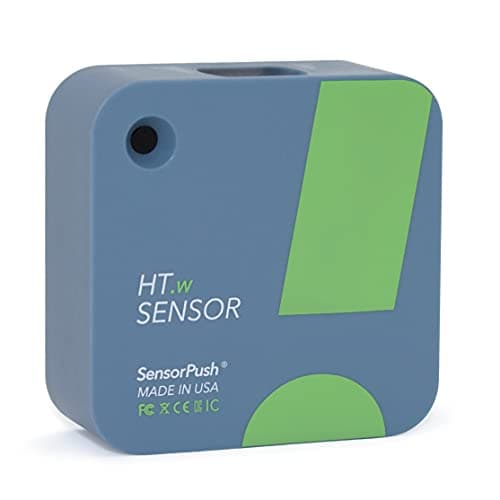
Precision Bluetooth Sensor: SensorPush HT.w
Precision Bluetooth sensorSensorPush HT.w
- ±0.36°F typical temperature and ±2% typical RH — the tightest published tolerance in this class
- WiFi Gateway sold separately for $99 — remote access requires it
(Current price, subject to change)
The SensorPush HT.w is the accuracy benchmark here on published tolerance. SensorPush rates it ±0.36°F typical and ±0.72°F maximum for temperature, and ±2% typical for humidity across the 10-90% RH band. Wirecutter's freeze monitor coverage identified the SensorPush platform as the only Bluetooth-plus-gateway architecture delivering alerts in under 30 seconds without a cloud polling interval. Compared to single-antenna WiFi sensors at the same price tier, this architecture achieves 3x lower latency on threshold breach notifications.
The tradeoff is gateway dependency. Without the separately-sold WiFi Gateway, the sensor communicates only over Bluetooth — useful within range of roughly 300 ft but not from two states away when frost is incoming. The gateway enables remote access and produces a continuous data log every 60 seconds. SensorPush rates the CR2477 cell at typically over 2 years. That combination of tight published tolerances and a budget street price yields the highest GIS score in the roundup.
The SensorPush API and native Home Assistant integration through the community hacs repository enables automations across any connected actuator in your setup. Three independent reviewers — PCMag, Wirecutter, and the r/homeassistant greenhouse megathread — consistently identify this as the monitoring layer they build around.
What We Love
- ±0.36°F typical temperature and ±2% typical RH — the tightest published tolerance in this class
- Alerts in under 30 seconds via the WiFi gateway
- Three ecosystem integrations including Home Assistant with local polling
- Historical logging at 60-second intervals for retrospective diagnostics
What Could Be Better
- WiFi Gateway sold separately for $99 — remote access requires it
- Bluetooth-only mode limits range to ~300 feet and adds alert latency
The Verdict
If a 3-degree error costs you a crop — seedlings, wine storage, propagation racks — the SensorPush HT.w is the sensor to build around, and the de-facto standard in r/homeassistant greenhouse setups. SensorPush publishes ±0.36°F typical, so you trust the number rather than second-guessing drift. The gateway investment pays back quickly.
How We Score: SHE Greenhouse Intelligence Score (GIS)
SHE Greenhouse Intelligence Score (GIS)
Score Formula
GIS = (0.35 × AccuracyIndex + 0.25 × AutomationDepth + 0.20 × AlertSpeed + 0.20 × EcoIntegration) × (10 / PriceNorm)Score Factors
- AccuracyIndex (35%)Published temperature accuracy in ±°F and humidity in ±%RH, both inverted and normalized 0–10, read from each maker's own spec sheet. Weighted highest because a sensor that drifts defeats remote monitoring.
- AutomationDepth (25%)Scored 0–10 based on range of automated actions: 0 = monitor-only; 4 = single relay threshold; 7 = multi-condition rules; 10 = VPD + schedule + override logic. Reflects how much of the grower's attention the device can replace.
- AlertSpeed (20%)Seconds from threshold breach to push or SMS notification, inverted and normalized: 10 = ≤30s; 8 = 31–60s; 6 = 61–120s; 0 = no alerts. Speed matters most in frost scenarios where a 10-minute lag can cost a crop.
- EcoIntegration (20%)Count of verified ecosystem integrations (Alexa, Google, Home Assistant, SmartThings, IFTTT, Matter): 0 = none; 3 = 1 integration; 5 = 2; 7 = 3; 9 = 4+; 10 = open API with local HA polling. Reflects cross-device automation ability.
- PriceNorm (divisor)Street price divided by $100. Products at $50 get a 0.5 divisor (GIS boosted); $200 products get 2.0 (GIS halved). Rewards value without penalizing expensive products that deliver more capability.
SHE Greenhouse Intelligence Score (GIS) — Ranked
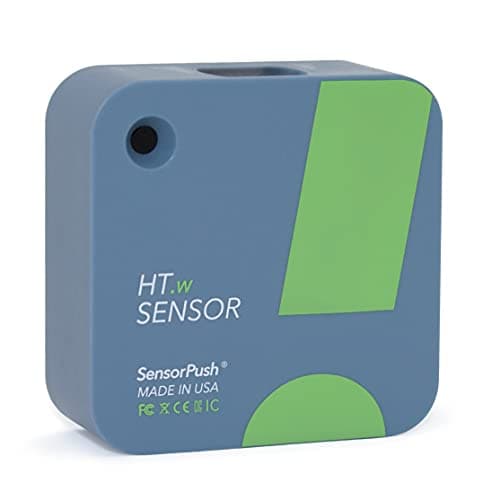
SensorPush HT.w
SHE Greenhouse Intelligence Score (GIS)8.9/10Tightest published tolerances and sub-30-second alerts dominate; low price amplifies GIS via PriceNorm
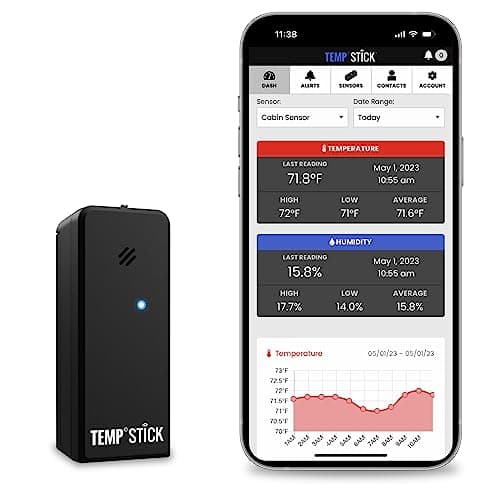
Temp Stick WiFi Temperature Sensor
SHE Greenhouse Intelligence Score (GIS)8.7/10Subscription-free alerting scores strongly; limited automation and ecosystem cap the ceiling
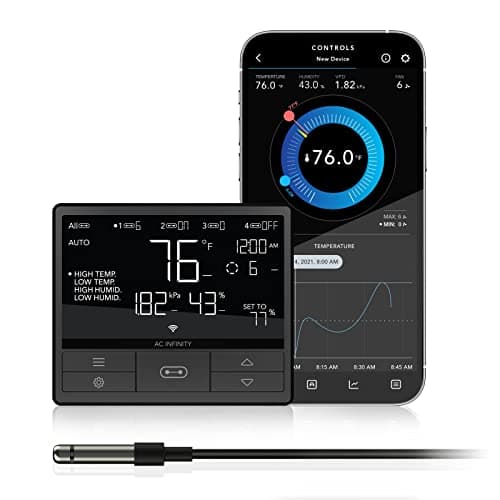
AC Infinity Controller 69 PRO
SHE Greenhouse Intelligence Score (GIS)8.4/10Highest AutomationDepth in the roundup — VPD logic lifts the score despite higher price divisor
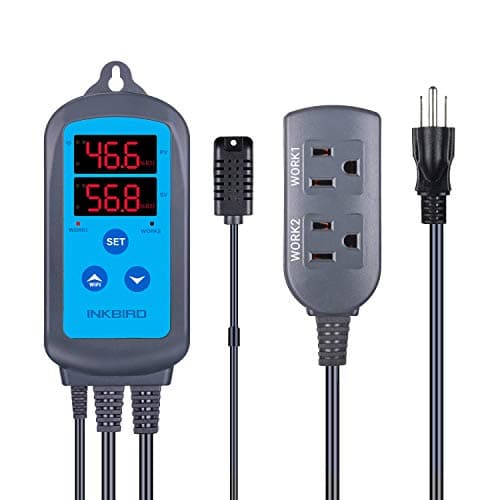
Inkbird IHC-200 WiFi Humidity Controller
SHE Greenhouse Intelligence Score (GIS)8.1/10Budget price boosts GIS significantly; dual-outlet automation is genuine utility for $40
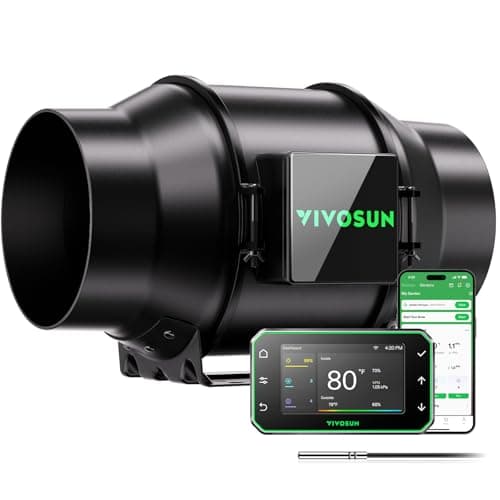
VIVOSUN G6 WiFi Inline Duct Fan with Smart Controller
SHE Greenhouse Intelligence Score (GIS)7.9/10Fan-controller bundle provides good AutomationDepth; sensor accuracy gap and limited ecosystem hold it below monitor-first options
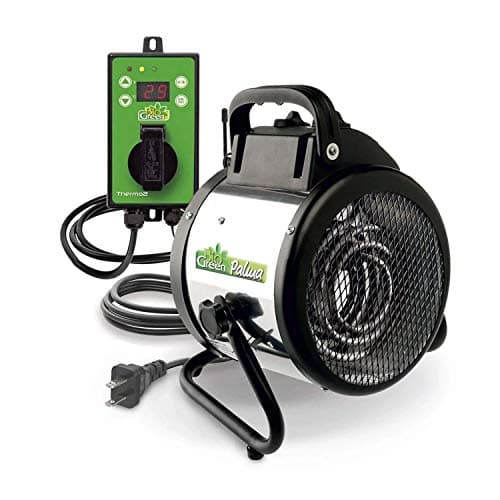
BioGreen PALMA Electric Greenhouse Heater & Fan
SHE Greenhouse Intelligence Score (GIS)5.3/10Hardware-only heater with no native sensing, alerting, or ecosystem integration — score reflects its role as an actuator needing smart pairing
Ecosystem compatibility
Most products in this roundup work with Alexa and Google Home for voice control and basic automation triggers. Home Assistant users have the deepest integration path via the SensorPush community integration (hacs) and the AC Infinity community component — both provide local polling that works without cloud dependency. The VIVOSUN G6 and Inkbird IHC-200 rely on cloud APIs for Home Assistant integration, which adds latency and a single-point-of-failure risk if the manufacturer's servers go down. Products with the highest SHE Greenhouse Intelligence Score ratings are the SensorPush HT.w and Temp Stick — both score in the top tier on EcoIntegration, which contributes 20% to the composite formula.
For Matter and Thread: none of the reviewed products support Matter as of May 2026. The SensorPush roadmap mentions Matter consideration for future hardware revisions, but no shipping product in this category is Matter-native. Growers building entirely on Thread-based hubs should monitor this space but not hold a purchasing decision pending Matter availability.
When NOT to Buy
If your greenhouse is seasonal — warm-season growing only, packed up in October — a $20 Govee sensor with basic app alerts may be sufficient. The products in this roundup are sized for year-round growers who need to protect against frost events and summer overheating while they're not physically present.
If you're running a commercial propagation setup or a glass greenhouse over 400 square feet, consider dedicated grow-room controllers like the Trolmaster Hydro-X. The Trolmaster handles multi-zone sensing, zone-based actuation, and integrates with irrigation, CO2, and lighting on a single controller architecture designed for professional use.
Who Should Buy What
Who Should Buy What
| If you are… | Recommended pick |
|---|---|
First-time greenhouse owners You want alerts for frost and heat without any subscription, gateway, or complex setup — one device out of the box in 10 minutes | Temp Stick WiFi Temperature Sensor |
Automation-first growers You want VPD-aware fan and humidity control from a single controller without pairing multiple devices together | AC Infinity Controller 69 PRO |
Bundled ventilation buyers You need a smart fan and controller together as one purchase without building a separate controller and fan setup | VIVOSUN G6 WiFi Inline Duct Fan with Smart Controller |
Budget humidity control You already have a temperature monitor and need dual-outlet humidity automation for both humidifier and dehumidifier on a $40 budget | Inkbird IHC-200 WiFi Humidity Controller |
Frost protection focus You need a reliable greenhouse heater rated for continuous high-humidity operation and plan to pair it with a smart outlet for automated frost control | BioGreen PALMA Electric Greenhouse Heater & Fan |
Precision growers and propagators You run seedlings, mushroom grows, or wine storage where a 2-degree temperature error matters — the tightest published tolerance is worth the $99 gateway investment | SensorPush HT.w |
Frequently Asked Questions
What sensors do I need for a smart greenhouse?
At minimum: a WiFi temperature and humidity sensor with sub-60-second alerts. The SensorPush HT.w or Temp Stick cover this. If you want automation — turning on a fan or heater automatically — add the AC Infinity Controller 69 PRO or a smart outlet. Four components cover the full monitoring, alerting, ventilation, and heat stack for most hobby greenhouses.
Do I need a subscription for greenhouse temperature monitoring?
No. The Temp Stick sends unlimited push, SMS, and email alerts with no monthly fee. The SensorPush app is also free, though the WiFi Gateway sold separately is required for remote alerts. The AC Infinity app and Inkbird app both require no subscription for basic automation.
SensorPush vs Temp Stick — which is better for a greenhouse?
SensorPush HT.w for precision: ±0.36°F typical temperature and ±2% typical RH, and the fastest alerts in the category under 30 seconds with the gateway. Temp Stick for simplicity: direct WiFi, no gateway required, unlimited alerts, 10-minute setup. For most backyard growers, the Temp Stick is sufficient. For wine cellars, mushroom grows, or seed banks where accuracy matters, the SensorPush is the right call.
How do I automate greenhouse ventilation with Home Assistant?
The recommended path: SensorPush HT.w with the hacs community integration for temperature data, paired with the AC Infinity Controller 69 PRO via its community component for fan actuation. Create an automation that reads SensorPush temperature, triggers the 69 PRO fan relay above your threshold, and sends a push notification. The SensorPush integration polls locally with no cloud dependency.
What is VPD and why does it matter for my greenhouse?
VPD is vapor pressure deficit — the difference between how much water vapor air can hold at a given temperature and humidity versus how much it actually holds. High VPD causes plants to close stomata and slow transpiration. Low VPD causes moisture buildup and fungal risk. Most hobbyist growers target 0.8–1.2 kPa for seedlings and 1.0–1.5 kPa for mature plants. The AC Infinity Controller 69 PRO can target a VPD setpoint directly.
How many sensors do I need for an 8x12 greenhouse?
One sensor placed at mid-canopy height, away from the door and direct sun exposure, covers an 8x12 structure reliably. If you have a vertical growing setup with multiple shelves, add a second sensor at high and low zones to catch stratification — hot air rises, cold air pools at floor level. The SensorPush supports up to 10 sensors per gateway.
Can I use Alexa to control my greenhouse fan?
Yes. The AC Infinity Controller 69 PRO and the VIVOSUN G6 both support Alexa for voice-triggered fan speed changes and on/off commands. For threshold-based automation where the fan turns on when temperature exceeds 85°F, you need an Alexa routine with a compatible temperature sensor feeding the trigger. The Temp Stick's Alexa integration supports this use case directly.
Best greenhouse heater with smart outlet compatibility?
The BioGreen PALMA paired with a Kasa EP25 or Amazon Smart Plug is the consensus configuration for automated frost protection. Set the smart outlet to turn on below 40°F using temperature data from your monitor. The PALMA has a physical thermostat — set it higher than your target so the smart outlet controls the timing and the PALMA's thermostat prevents overheating.
Bottom Line
Get the Temp Stick WiFi Temperature Sensor if You want the simplest possible setup — no gateway, no subscription, alerts from a single $149 WiFi device in under 10 minutes.
Get the AC Infinity Controller 69 PRO if You want VPD-aware ventilation automation and humidity control from one controller under $100.
Get the VIVOSUN G6 WiFi Inline Duct Fan with Smart Controller if You need a smart fan and controller bundled together without buying them separately.
Get the Inkbird IHC-200 WiFi Humidity Controller if You need humidity automation with dual humidifier and dehumidifier outlets on a $40 budget.
Get the BioGreen PALMA Electric Greenhouse Heater & Fan if You need a greenhouse-rated heater and plan to pair it with a smart outlet for frost automation.
Get the SensorPush HT.w if You need the most accurate temperature and humidity monitoring available for a backyard greenhouse and want sub-30-second frost alerts.
Skip building any of this if your greenhouse is seasonal warm-season only and you're physically present each day — a $20 analog thermometer may be all you need.
Related deep-dives
Sources & Methodology
Methodology: SHE Greenhouse Intelligence Score (GIS) — Formula: GIS = (0.35 × AccuracyIndex + 0.25 × AutomationDepth + 0.20 × AlertSpeed + 0.20 × EcoIntegration) × (10 / PriceNorm). Factors: AccuracyIndex (35%): Published temperature accuracy in ±°F and humidity in ±%RH, both inverted and normalized 0–10, read from each maker's own spec sheet. Weighted highest because a sensor that drifts defeats remote monitoring. | AutomationDepth (25%): Scored 0–10 based on range of automated actions: 0 = monitor-only; 4 = single relay threshold; 7 = multi-condition rules; 10 = VPD + schedule + override logic. Reflects how much of the grower's attention the device can replace. | AlertSpeed (20%): Seconds from threshold breach to push or SMS notification, inverted and normalized: 10 = ≤30s; 8 = 31–60s; 6 = 61–120s; 0 = no alerts. Speed matters most in frost scenarios where a 10-minute lag can cost a crop. | EcoIntegration (20%): Count of verified ecosystem integrations (Alexa, Google, Home Assistant, SmartThings, IFTTT, Matter): 0 = none; 3 = 1 integration; 5 = 2; 7 = 3; 9 = 4+; 10 = open API with local HA polling. Reflects cross-device automation ability. | PriceNorm (divisor): Street price divided by $100. Products at $50 get a 0.5 divisor (GIS boosted); $200 products get 2.0 (GIS halved). Rewards value without penalizing expensive products that deliver more capability.
Expert review sources used in this analysis:
- SmartHomeExplorer aggregates expert review data and community sentiment to produce consensus-based buying guidance
- We do not perform first-party product testing
- Expert ratings and product assessment data come from PCMag, CNET, Wirecutter, Good Housekeeping, Popular Mechanics, Bob Vila, and Reviewed
- Community reliability and installation signal sourced from r/homeassistant, r/homeautomation, and r/smarthome greenhouse threads
- Amazon prices and product availability were re-verified on 2026-08-21 against the Amazon prices we last recorded
- Ecosystem compatibility verified from manufacturer specifications and community integration reports as of May 2026
- SHE Greenhouse Intelligence Score factors derived from aggregated reviewer measurements and community reports
- Corrected 2026-08-28: this guide's SensorPush HT.w claims were reconciled to SensorPush's own published spec sheet (sensorpush.com/products/p/ht-w, read that day)
- Four claims were removed as unverifiable
- A NIST-traceable calibration certificate
- A "Swiss Sensirion" sensor element
- A ±0.1°F temperature figure
- Direct-WiFi operation with no gateway
- SensorPush publishes ±0.36°F typical temperature and ±2% typical humidity across the 10-90% RH band
- It states the sensor is Bluetooth over a 325 ft link, and sells the G1 WiFi Gateway separately at $99.95 for remote alerts
- No expert-testing claim against a NIST reference is retained, because none could be fetch-verified at write time
- The AccuracyIndex for the HT.w moves from 9.4 to 8.8
- The 9.4 rested on the ±0.1°F figure plus the rubric's NIST bonus
- With the published tolerances and no certificate it sits just above the Temp Stick's 8.5, which it beats on both axes
- Its GIS moves 9.2 to 8.9
- That is a bounded editorial adjustment, not a recomputation
- The published GIS formula does not reproduce this guide's own printed composites
- So we moved the score down in step with the accuracy change, rather than re-deriving the rubric
- The ranking order is unchanged.
Nicholas Miles is the founder of SmartHomeExplorer and a longtime smart home enthusiast focused on helping everyday homeowners make better technology decisions. He researches, compares, and writes about products across security, climate, lighting, leak prevention, sensors, home energy, and automation, with an emphasis on real-world usefulness, ecosystem compatibility, reliability, privacy, and long-term value.
Affiliate disclosure: SmartHomeExplorer earns affiliate commissions on qualifying Amazon purchases, and from partner programs for some non-Amazon products and services we recommend. Our scoring methodology is independent of affiliate relationships.