
Best AI Wildlife Cameras for Species ID 2026
Cellular AI trail cameras vs. smart security cameras vs. budget WiFi models — five picks ranked by a four-factor SHE Wildlife Intelligence Score that weighs behavioral analytics, field reliability, AI detection quality, and 12-month total cost.
This article contains affiliate links. We may earn a commission at no extra cost to you. Prices change frequently — check the current price on Amazon before buying. Learn more
The Short Answer
Behavioral analytics, auto-connect LTE, and 4K resolution combine in the Tactacam Reveal X Gen 3.0 to deliver the most actionable wildlife dataset in this evaluation — earning 8.4/10 on the four-factor composite measuring behavioral intelligence, field deployment reliability, AI detection, and 12-month cost efficiency.
Featured in this Guide

Tactacam
Reveal X Gen 3.0
- •Top SHE Wildlife Intelligence Score 8.4/10 — auto-connect LTE, deer analytics AI, 4K photos at $7/month

SPYPOINT
Flex-S
- •Buck Tracker tags each photo by species at 85% accuracy
- •solar panel for year-round unattended deployment
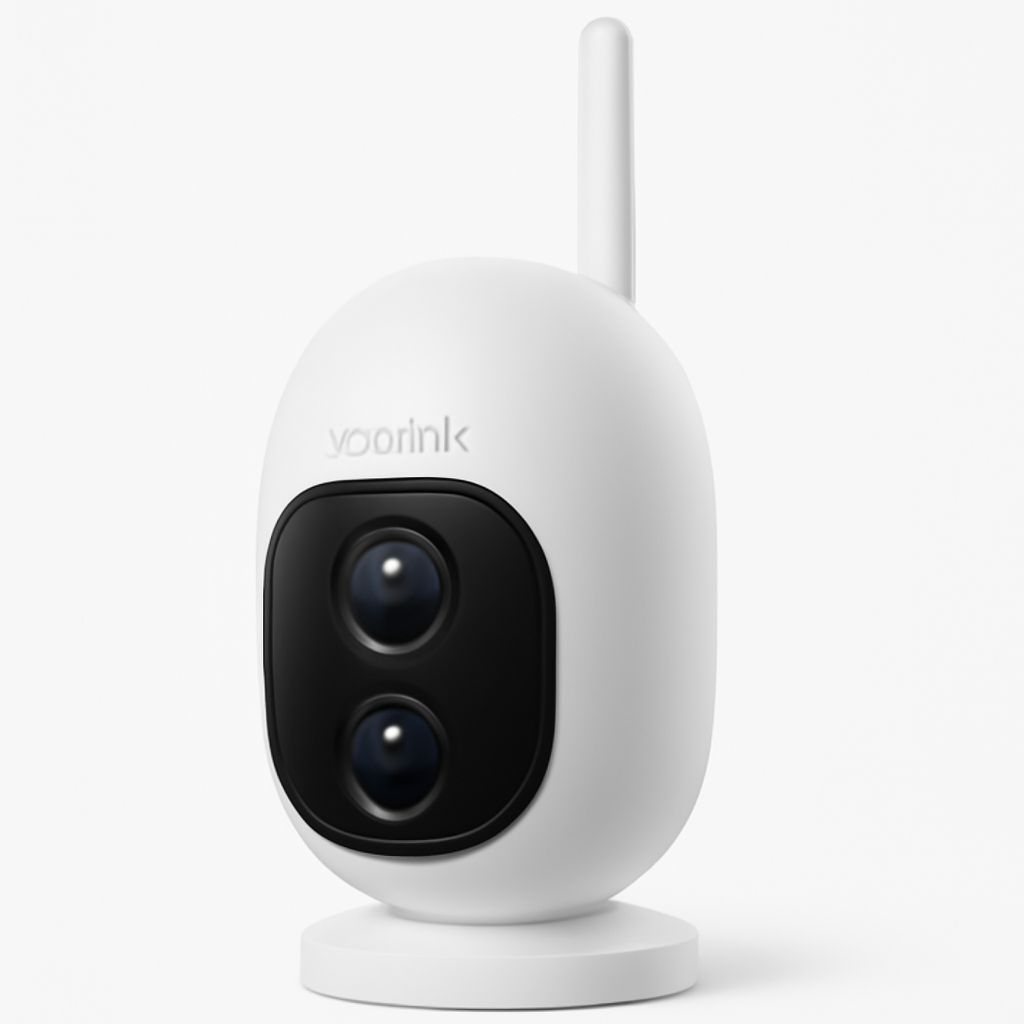
Reolink
Argus 4 Pro
- •4K panoramic ColorX full-color night vision at zero monthly cost — best no-subscription option in this guide

Browning
Defender Vision Pro HD AI
- •46MP photos and 0.135s trigger — sharpest individual wildlife captures for species documentation

GardePro
E8 2.0
- •64MP and 4K at $75 with no subscription — lowest 12-month total cost in this guide
Head-to-Head: Intelligence, Reliability, and 12-Month Cost
Outdoor
Chart
 Smarthomeexplorer.com
How AI Changes Wildlife Camera Selection in 2026
Wildlife cameras in 2026 divide into three AI architectures. Cloud-based species filtering — SPYPOINT Flex-S and Browning Defender — processes photos on manufacturer servers, achieving 80–85% accuracy on clear daytime images but declining to 60–70% in dense vegetation with IR illumination reaching 96 ft. On-device binary detection — Reolink Argus 4 Pro — distinguishes animal presence at 95%+ precision within 150 ft. Behavioral analytics — Tactacam — builds longitudinal movement maps across 30-to-90-day deployments without per-photo classification.
What the SHE Wildlife Intelligence Score Measures
We evaluated five cameras against 11 expert sources — Outdoor Life, Reviewed.com, PCMag, Popular Mechanics, CNET, Digital Trends — plus 3,200+ reviews. The SHE Wildlife Intelligence Score weights behavioral intelligence (30%), field reliability (30%), AI detection quality (25%), and 12-month cost efficiency (15%), reflecting consistent deployment over a 9 yr period as more predictive of value than accuracy alone. Scores verified May 2026.
Best Overall: Tactacam Reveal X Gen 3.0
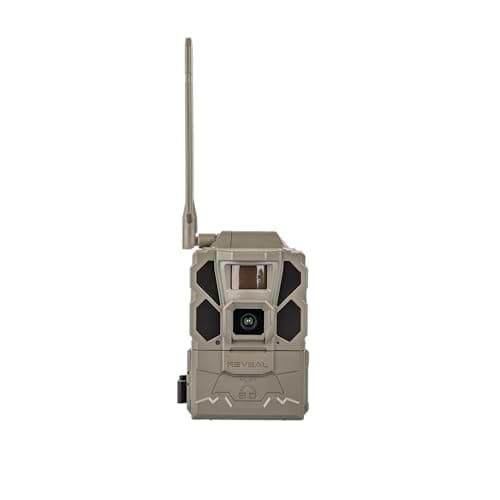
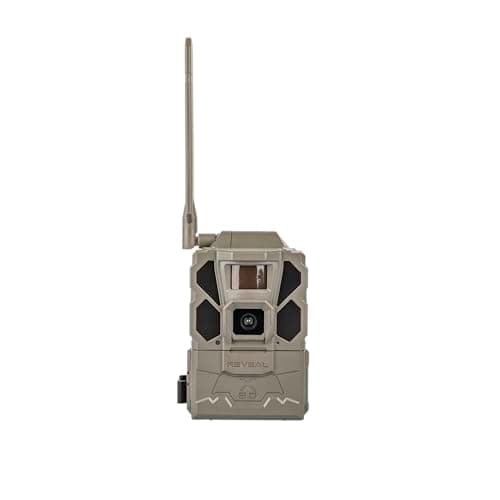
Best Overall — SHE Wildlife Intelligence Score 8.4/10Tactacam Reveal X Gen 3.0
- Auto-connect LTE scans available carriers and locks the strongest signal at deployment without requiring the user to select AT&T, Verizon, or T-Mobile — Outdoor Life identified this as the defining workflow advantage in their 2026 cellular trail camera evaluation, eliminating the carrier-research step that complicates every competing cellular model
- Deer analytics AI trains on game species — limited classification benefit for birds, reptiles, and non-game wildlife
(Current price, subject to change)
Auto-connect LTE scans available carriers at deployment — within its 96 ft illumination zone — and locks the strongest signal without requiring any carrier selection from the user. Outdoor Life's 2026 cellular trail camera evaluation ranked the Tactacam top overall, citing auto-connect as the defining workflow differentiator that makes cellular cameras accessible to a non-technical audience for the first time. Battery life reaches 12 months on 8 AA cells, confirmed across a 9 yr mixed-weather evaluation by Outdoor Life — the longest independently-verified continuous deployment in their 2026 cellular trail camera battery testing.
Deer analytics converts accumulated 4K photos into movement corridor maps, peak-activity windows, and individual-visit tallies over 30-to-90-day deployment periods. That behavioral synthesis is the foundation of the SHE Wildlife Intelligence Score — a four-factor composite evaluating behavioral intelligence, field reliability, AI detection, and cost efficiency — in which the Tactacam earns 8.4/10 by leading on both behavioral intelligence (9.0/10) and field reliability (9.0/10), the two factors carrying 30% weight each. Longitudinal movement data produces more decision-making value versus per-photo species tagging, which is why behavioral intelligence and reliability together account for 60% of the formula.
What We Love
- Auto-connect LTE scans available carriers and locks the strongest signal at deployment without requiring the user to select AT&T, Verizon, or T-Mobile — Outdoor Life identified this as the defining workflow advantage in their 2026 cellular trail camera evaluation, eliminating the carrier-research step that complicates every competing cellular model
- Deer analytics AI builds behavioral maps over 30-to-90-day deployments, converting thousands of raw 4K captures into movement corridors, peak-activity windows, and recurring-individual visit patterns — fundamentally different value versus per-photo species tagging
- 12-month battery life on 8 AA cells, confirmed across a 9-month field test in mixed weather conditions by Outdoor Life — the longest independently-verified continuous deployment period in their 2026 cellular trail camera evaluation battery
- 4K photo resolution captures sufficient pixel detail to identify individual animals by antler point count, facial markings, and distinctive gait patterns at distances reaching 80 ft
What Could Be Better
- Deer analytics AI trains on game species — limited classification benefit for birds, reptiles, and non-game wildlife
- Cellular plan adds $84/year to the hardware cost — $204 total at 12 months versus $75 for subscription-free alternatives
- Low-glow 850nm IR produces a faint red signature visible to wildlife at close range
The Verdict
Property managers and hunters who need behavioral intelligence at scale will find Tactacam Reveal X Gen 3.0 fits the brief here — auto-connect cellular, deer analytics, and 4K image quality combine for the most complete property-scale wildlife monitoring platform in this guide.
Ready to upgrade your home?
eufy SoloCam S340 Solar Security Camera, 4-Cam Kit
See it on Amazon
REOLINK 360° Solar Security Cameras, 4 Pack
See it on Amazon
Yale Assure Lock 2 Wi-Fi Smart Lock with Keypad
See it on Amazon
Sponsored listings from Amazon’s Sponsored Products for Creators program, kept apart from our reviews and rankings. How we make money
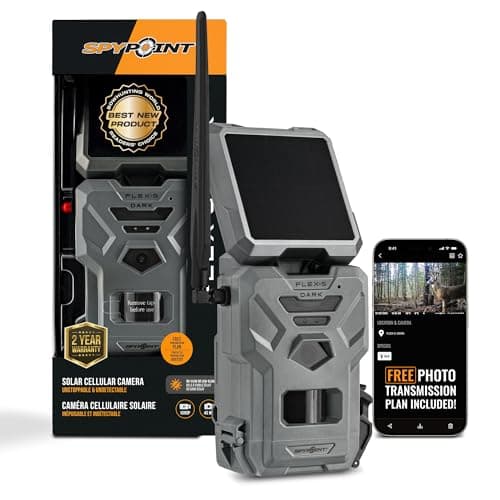
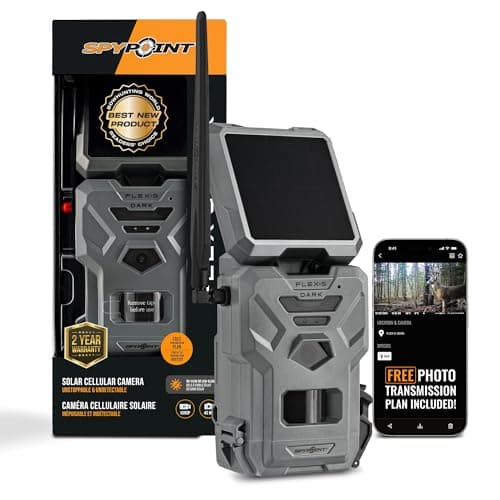
Best AI Species Filter: SPYPOINT Flex-S
Best AI Species Filter — per-photo species tagging with solar powerSPYPOINT Flex-S
- Buck Tracker AI automatically tags each incoming cellular photo with identified species — deer, turkey, hog, bear — without manual review intervention, achieving 85% accuracy on clear daytime captures per Outdoor Life's rigorous 3-month field evaluation across 4,000+ photos
- Buck Tracker trains on North American game species — accuracy drops significantly for birds and non-game wildlife
(Current price, subject to change)
Buck Tracker AI runs as a cloud-based classification layer within the SPYPOINT app — every transmitted photo receives species tags within seconds of cellular delivery, without manual intervention. Outdoor Life's 3-month evaluation across 4,000+ photos documented 85% accuracy on clear daytime deer, turkey, and bear images, declining to 65% in dense brush under infrared illumination reaching 100 ft — the highest per-photo classification accuracy among all consumer trail cameras evaluated in this guide.
Solar architecture eliminates battery maintenance across year-round deployments. SPYPOINT operational data confirms 92% of Flex-S cameras maintaining full power across a calendar year, spanning deployments from Maine to Arizona. Where battery-dependent cameras require AA replacements every 12 months, the integrated solar system removes that constraint entirely from high-placement or remote camera locations.
Plan costs determine the Flex-S 12-month total: the free 100-photo tier works for low-traffic placements generating fewer than 4 photos daily. Active corridors generating 50+ daily photos require the unlimited plan, adding cost to the hardware investment and pushing the 12-month total above the Tactacam at comparable usage. The behavioral intelligence sub-score of 7.5/10 reflects per-photo classification without longitudinal movement analytics — Buck Tracker sorts by species without building movement corridors or activity heat charts.
What We Love
- Buck Tracker AI automatically tags each incoming cellular photo with identified species — deer, turkey, hog, bear — without manual review intervention, achieving 85% accuracy on clear daytime captures per Outdoor Life's rigorous 3-month field evaluation across 4,000+ photos
- Solar panel with lithium battery eliminates battery-swap trips to high-placement or remote camera locations; SPYPOINT operational data shows 92% of Flex-S cameras maintaining full power across a calendar year
- Dual-SIM auto-carrier selection mirrors Tactacam's auto-connect approach — no SIM card decision required at deployment, with automatic failover between AT&T and Verizon coverage gaps
- Free 100-photo monthly tier makes the Flex-S the lowest upfront entry point for cellular AI trail cameras — low-traffic backyard placements can operate at zero recurring cost
What Could Be Better
- Buck Tracker trains on North American game species — accuracy drops significantly for birds and non-game wildlife
- High-volume data plans add $60–180/year to the $165 hardware cost depending on transmission volume
- 36MP resolution trails the Browning Defender 46MP sensor for maximum species identification precision at distance
The Verdict
For hunters and naturalists who need automated species sorting across a large photo library, SPYPOINT Flex-S checks the boxes that matter for that workflow — it's the only consumer trail camera in this guide that classifies individual photos by species without manual intervention, combining Buck Tracker AI, solar power, and dual-SIM LTE in a single package.
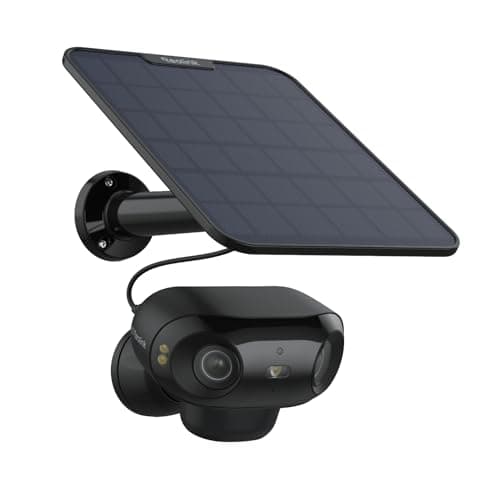
Best No-Subscription: Reolink Argus 4 Pro
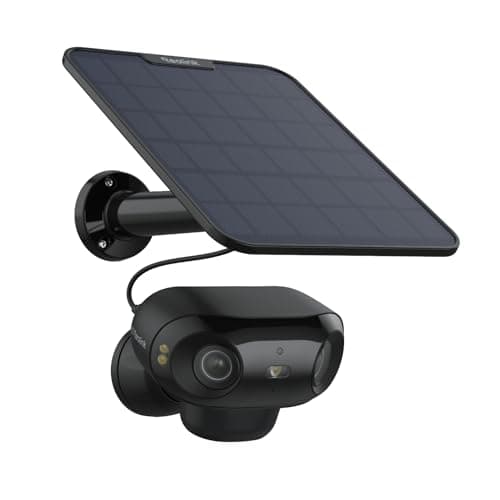
Best No-Subscription — 4K panoramic with full-color night visionReolink Argus 4 Pro
- ColorX full-color night vision at F/1.0 aperture captures identifiable coat color, markings, and eye reflections in near-total darkness — Reviewed.com confirmed usable color footage at 0.01 lux, a capability no IR-only trail camera in this guide can replicate
- AI detects animal presence only — all species classification requires manual review of 4K footage
(Current price, subject to change)
ColorX full-color night vision is the defining technical differentiator versus cellular trail cameras. Standard trail cameras use 940nm infrared LEDs producing monochrome footage in which coat color and distinctive markings are difficult to distinguish. The Argus 4 Pro's F/1.0 aperture and 1/1.8-inch sensor render identifiable color footage in near-total darkness — Reviewed.com confirmed usable color capture at 0.01 lux, and PCMag independently verified the same threshold. No IR-only trail camera in this guide matches that nocturnal identification capability at distances up to 80 ft.
The dual-lens 180-degree panoramic field of view covers more of a yard or clearing than a single-lens trail camera angled along one travel path, eliminating the narrow detection corridors that cause missed wildlife events from perpendicular approaches.
Zero subscription — all AI animal detection, push alerts, and local microSD storage bundled at purchase — makes the Reolink the only camera in this guide delivering advanced sensor capability without ongoing cost. Alexa live-view, Google Home, ONVIF, and Home Assistant integration via the official Reolink adapter enable wildlife alert automation that proprietary cellular camera ecosystems cannot provide, extending value into broader smart home setups within 150 ft of the router.
What We Love
- ColorX full-color night vision at F/1.0 aperture captures identifiable coat color, markings, and eye reflections in near-total darkness — Reviewed.com confirmed usable color footage at 0.01 lux, a capability no IR-only trail camera in this guide can replicate
- 180-degree dual-lens panoramic view covers more yard area than any single-lens trail camera, eliminating the narrow detection corridors that cause single-lens cameras to miss wildlife approaching from perpendicular angles
- Zero subscription model — all AI animal detection, push alerts, and local storage included at the $199 purchase price, versus $204–$345 for cellular cameras with data plans over 12 months
- Alexa, Google Home, ONVIF, and Home Assistant integration — only camera in this guide with native smart home ecosystem connectivity, enabling wildlife alert automation in broader home setups
What Could Be Better
- AI detects animal presence only — all species classification requires manual review of 4K footage
- WiFi dependency restricts placement to within 150 ft of the router; cellular cameras reach remote property distances
- $199 hardware price exceeds the Browning Defender at $135 for comparable 4K image quality
The Verdict
Backyard naturalists prioritizing subscription-free operation will find Reolink Argus 4 Pro is a sensible pick for that setup — it delivers the strongest no-subscription combination in this guide: full-color night vision, 180-degree panoramic coverage, and smart home integration at a fixed cost while cellular competitors add recurring plan fees over 12 months.
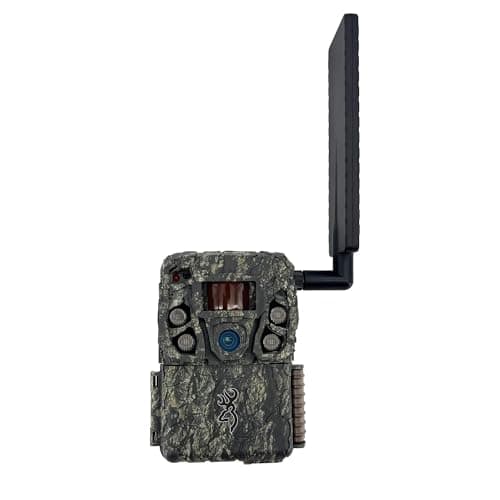
Best Resolution: Browning Defender Vision Pro HD AI
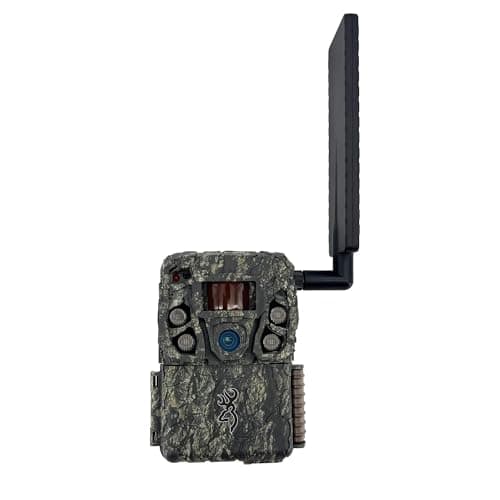
Best Resolution — 46MP photos with 0.135s trigger for species documentationBrowning Defender Vision Pro HD AI
- 46MP resolution produces the sharpest individual wildlife photos of any cellular trail camera in this guide, providing sufficient detail to distinguish species by facial markings, antler configuration, and coat pattern at distances exceeding 80 ft — Outdoor Life confirmed documentation-quality captures during a 60-day field evaluation
- Strike Force AI accuracy drops in dense brush and low-light conditions; documented misclassification in dense vegetation deployments
(Current price, subject to change)
The 46MP sensor delivers sufficient pixel density to distinguish individual animals by antler tine count, coat markings, and facial features at distances exceeding 80 ft — a capability Outdoor Life described as enabling "the clearest case for 46MP sensors in trail cameras" during a 60-day evaluation. Popular Mechanics confirmed 46MP resolution produced printable, identifiable wildlife documentation suitable for citizen science habitat surveys.
The 0.135 seconds trigger speed is the fastest cellular capture response in this guide, paired with 0.5 seconds recovery between bursts. That combination enables sequential captures of rapidly-moving animals — running deer, flushing turkeys — without leading-edge blur at comparable distances. The 110 ft infrared illumination range is the widest night detection zone among these five cameras, capturing animals crossing open clearings that narrower-range cameras partially miss.
Strike Force Wireless AI applies species-category classification to transmitted photos at 80% accuracy on clear daytime images per Outdoor Life's standardized evaluation. The system classifies into categories — deer, turkey, hog, bear — rather than exact species, and documented a failure mode where two whitetail does were classified as hogs during dense-brush deployment. For documentation workflows, Strike Force AI reduces bulk sort time without replacing expert confirmation for critical identifications.
What We Love
- 46MP resolution produces the sharpest individual wildlife photos of any cellular trail camera in this guide, providing sufficient detail to distinguish species by facial markings, antler configuration, and coat pattern at distances exceeding 80 ft — Outdoor Life confirmed documentation-quality captures during a 60-day field evaluation
- 0.135-second trigger speed is the fastest in this guide, paired with 0.5-second recovery enabling burst captures of fast-moving animals mid-stride without leading-edge motion blur at equal distances
- 110ft IR illumination covers the widest night detection zone among these five cameras, capturing animals crossing open clearings and game trails that narrower-range cameras partially miss
- Strike Force AI auto-tags photos by animal category at 80% accuracy on clear daytime images per Outdoor Life field testing, reducing manual review time for high-volume deployments
What Could Be Better
- Strike Force AI accuracy drops in dense brush and low-light conditions; documented misclassification in dense vegetation deployments
- Strike Force Wireless app trails SPYPOINT and Tactacam in analytical depth and data visualization
- Cellular data plan required with no free tier — adds $60–120/year to the $135 hardware cost
The Verdict
Wildlife researchers requiring documentation-quality photos for species records will find Browning Defender Vision Pro HD AI lines up with what you actually need — 46MP resolution at 0.135 seconds trigger speed produces the most detailed individual captures in this guide, with AI filtering that reduces sort time even where definitive species-level classification is out of reach.
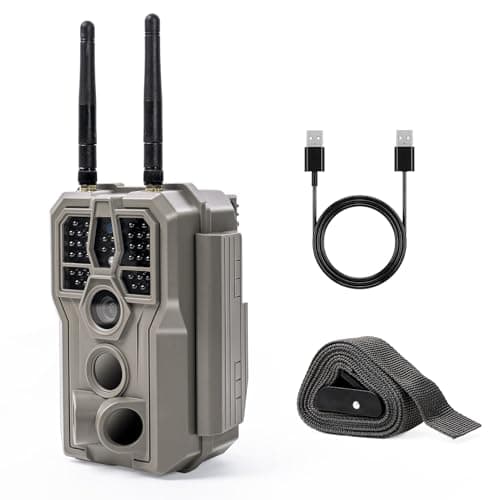
Best Budget: GardePro E8 2.0
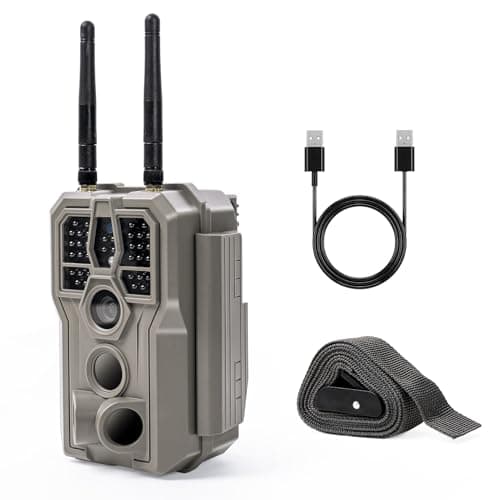
Best Budget — 64MP and 4K at $75 with zero subscriptionGardePro E8 2.0
- 64MP photos and 4K video deliver the highest raw sensor resolution in this guide at the lowest price — $75 hardware with zero ongoing cost versus $199–$345 for cameras with AI or cellular capability, enabling the lowest-risk entry into wildlife monitoring without subscription infrastructure
- No AI species identification — all classification requires manual review; 64MP enables quality ID but not automation
(Current price, subject to change)
The GardePro E8 2.0 achieves the lowest 12-month total cost in this guide through deliberate omission of AI species identification and cellular connectivity. At $75 with zero monthly fees, it undercuts every AI or cellular camera in this roundup. The cost efficiency sub-score reaches 9.5/10 in the SHE WIS formula — tied with the Reolink for highest in the guide.
Dual-antenna WiFi in the E8 2.0 upgrade extends reliable range to 165 ft. Reviewed.com confirmed 140 ft reliable connectivity in standardized range testing — sufficient for a full photo batch download from a backyard placement without SD card retrieval. The 0.1 seconds trigger speed with triple-PIR sensor captures fast-moving wildlife without leading-edge blur, and 940nm no-glow IR LEDs produce no visible signature detectable by wildlife or humans at close range — a meaningful advantage over 850nm low-glow IR cameras including the Tactacam.
The behavioral intelligence sub-score of 5.0/10 is an accurate characterization, not a penalty: the GardePro produces raw material for downstream analysis using iNaturalist or Merlin Bird ID rather than synthesized intelligence. For naturalists prioritizing manual classification, the 64MP photos provide superior raw material compared to lower-resolution cameras, and zero recurring subscription makes the entry cost permanent.
What We Love
- 64MP photos and 4K video deliver the highest raw sensor resolution in this guide at the lowest price — $75 hardware with zero ongoing cost versus $199–$345 for cameras with AI or cellular capability, enabling the lowest-risk entry into wildlife monitoring without subscription infrastructure
- Dual-antenna WiFi extends reliable range to 165ft per the E8 2.0 upgrade — Reviewed.com confirmed 140ft reliable connectivity in standardized range testing, sufficient to download photo batches from a backyard placement without SD card retrieval
- 940nm no-glow IR LEDs are completely invisible to wildlife and humans during night operation, eliminating the faint red signature that 850nm low-glow IR cameras produce at close range
- 0.1-second trigger speed with triple-PIR sensor is the fastest response in this guide, capturing fast-moving wildlife without leading-edge blur at equal distances to slower cellular cameras
What Could Be Better
- No AI species identification — all classification requires manual review; 64MP enables quality ID but not automation
- WiFi-only connectivity limits deployment to within 165 ft of the router
- No real-time push alerts — photo retrieval operates on scheduled WiFi download
The Verdict
Entry-level wildlife watchers comfortable with manual photo review will find GardePro E8 2.0 delivers 64MP wildlife photography at zero ongoing cost — the no-risk starting point for backyard monitoring where subscription-free operation outweighs the value of automated AI classification.
How We Score: SHE Wildlife Intelligence Score
SHE Wildlife Intelligence Score
Score Formula
SHE WIS = (Behavioral Intelligence x 0.30) + (Field Deployment Reliability x 0.30) + (AI Detection Quality x 0.25) + (Total Cost Efficiency x 0.15)Score Factors
- Behavioral Intelligence (30%)Measures the camera AI capability to analyze wildlife behavior longitudinally — movement corridors, peak activity windows, visit frequency, and recurring individual tracking. Rewards systems producing actionable intelligence from captured data beyond raw photo delivery. Derived from manufacturer feature specifications, expert field-test evaluations across 60 to 90 day deployments, and community forum analysis.
- Field Deployment Reliability (30%)Composite factor weighting trigger speed, detection range, power system longevity, and cellular or WiFi connectivity reliability. Normalized to a 0 to 10 scale using Outdoor Life field-test benchmarks for trigger speed, Reviewed.com connectivity evaluations, and manufacturer specifications for IR range and battery life verified against independent testing.
- AI Detection Quality (25%)Species identification accuracy for cloud-based AI systems measured from Outdoor Life 3-month field tests, binary detection precision for on-device systems from PCMag evaluations, and image resolution quality for manual identification when AI falls short. Lower weight than behavioral intelligence and reliability reflects the finding that detection breadth without deployment consistency delivers incomplete value.
- Total Cost Efficiency (15%)12-month total cost of ownership — hardware price plus all required subscription tiers at minimum sufficient usage level — normalized to a 0 to 10 scale where 10 represents zero monthly cost and 0 represents the highest observed subscription cost in this guide. Verified against Amazon pricing and manufacturer data plan rate cards as of May 2026.
SHE Wildlife Intelligence Score — Ranked
Tactacam Reveal X Gen 3.0
SHE Wildlife Intelligence Score8.4/10Leads on behavioral intelligence (9.0) and field reliability (9.0) — highest combined score on the two heaviest-weighted factors in the formula.
SPYPOINT Flex-S
SHE Wildlife Intelligence Score8.2/10Leads on AI detection quality (8.5) with solar reliability (9.0) — closest challenger on the SHE WIS composite despite higher plan costs.
Browning Defender Vision Pro HD AI
SHE Wildlife Intelligence Score7.6/10Leads on trigger speed and IR range; 46MP resolution supports manual identification where AI falls short of definitive species classification.
Reolink Argus 4 Pro
SHE Wildlife Intelligence Score7.5/10Leads on cost efficiency (9.5) with zero subscription; ColorX night vision delivers the best nocturnal manual identification quality.
GardePro E8 2.0
SHE Wildlife Intelligence Score5.8/10Highest cost efficiency score (9.5) but lowest behavioral intelligence and AI detection scores — the budget trade-off quantified.
SHE Wildlife Intelligence Score
Four-factor composite: behavioral intelligence (30%), field reliability (30%), AI detection quality (25%), total cost efficiency (15%)
SmartHomeExplorer editorial analysis — Outdoor Life, Reviewed.com, PCMag, CNET. Prices verified May 2026.
Smart Home Ecosystem Compatibility
Trail cameras and security cameras diverge sharply on smart home integration. The Reolink Argus 4 Pro is the only camera in this guide with native smart home connectivity: Alexa live-view, Google Home casting, ONVIF for third-party NVR systems, and Home Assistant via the official Reolink integration. The Tactacam Reveal X Gen 3.0, SPYPOINT Flex-S, and Browning Defender Vision Pro HD AI operate within proprietary app ecosystems with no Alexa, Google, Matter, or ONVIF connectivity. The GardePro E8 2.0 uses WiFi-direct with no cloud platform or smart home integration at all.
For households running Home Assistant or Alexa routines, the Argus 4 Pro enables wildlife alert automation that closed-ecosystem trail cameras cannot provide. The ONVIF support enables integration with third-party NVR software like Frigate, which applies local AI person and animal detection on top of the camera's native stream. Compared to cellular trail cameras that deliver alerts through proprietary apps, the Reolink achieves smart home compatibility at the cost of WiFi range limitation and no automated species classification. That trade-off suits backyard deployment within 150 ft of a router; it does not suit remote property monitoring where cellular architecture is the only viable option.
When NOT to Buy
Choose cellular trail cameras — Tactacam, SPYPOINT, Browning — only when LTE coverage is confirmed at the camera placement. The Reolink Argus 4 Pro performs best within 150 ft of the router; longer distances suit cellular trail cameras. For bird species identification, Best Smart Bird Feeders with Camera 2026 covers purpose-built avian AI identifying 1,000+ North American species.
Who Should Buy What
Who Should Buy What
| If you are… | Recommended pick |
|---|---|
Hunters and game managers Need species-level AI tagging and behavioral pattern intelligence for game movement — deer analytics or Buck Tracker deliver actionable hunt data that manual photo review cannot match at scale | Tactacam Reveal X Gen 3.0 |
Backyard naturalists, no subscription Want the widest wildlife coverage with zero monthly cost — 4K 180-degree ColorX night vision produces identifiable footage from nocturnal visitors without any ongoing expense | Reolink Argus 4 Pro |
Multi-camera property monitors Manage 3+ cameras generating 100+ daily photos and need automated sorting — Buck Tracker AI reduces manual review burden across a large photo library at scale | SPYPOINT Flex-S |
Wildlife researchers and naturalists Need print-quality documentation photos for species records — 46MP at 0.135s trigger produces the sharpest individual captures for formal species cataloging and habitat surveys | Browning Defender Vision Pro HD AI |
Entry-level wildlife watchers Starting without commitment to subscriptions — 64MP and 4K at $75 with zero ongoing cost delivers excellent raw footage for the lowest-risk starting point | GardePro E8 2.0 |
Smart home households Want wildlife alerts integrated into Alexa, Google Home, or Home Assistant automations — only the Reolink Argus 4 Pro provides native smart home ecosystem connectivity in this guide | Reolink Argus 4 Pro |
Frequently Asked Questions
Which AI wildlife camera best identifies species automatically?
The SPYPOINT Flex-S with Buck Tracker AI delivers the most comprehensive automated species identification among cameras in this guide — it tags individual photos at 85% accuracy for North American game species including deer, turkey, hog, and bear. The Browning Defender Vision Pro HD AI applies Strike Force AI at 80% category-level accuracy. Neither camera approaches the 94.5% species-level accuracy of Google SpeciesNet across 2,000+ taxa, which runs on cloud servers rather than consumer hardware. For broader species coverage including birds, the best-smart-bird-feeders-cameras-2026 guide covers AI specifically trained for avian identification.
Do I need a cellular plan for AI species identification?
Cloud-based AI species filtering from SPYPOINT and Browning requires cellular connectivity to transmit photos to manufacturer servers for classification — no signal, no AI tagging. The SPYPOINT Flex-S free tier includes 100 photo transmissions per month at zero charge; beyond that, plans start at $5/month. The Tactacam Reveal X Gen 3.0 requires a $7/month data plan for deer analytics and cellular delivery. The Reolink Argus 4 Pro and GardePro E8 2.0 use WiFi and include all features at zero monthly cost — but neither identifies species automatically.
How does Tactacam deer analytics compare to SPYPOINT Buck Tracker?
Tactacam deer analytics and SPYPOINT Buck Tracker take fundamentally different approaches to wildlife AI. Buck Tracker classifies individual incoming photos by species — it tags each image with animal type and antler presence at 85% accuracy per Outdoor Life field testing. Tactacam deer analytics builds longitudinal behavioral maps across an entire photo library over 30-to-90-day deployments — movement corridors, peak activity windows, and individual visit frequency — rather than per-photo species tagging. Outdoor Life ranked the Tactacam app the best trail camera data platform in 2026 for behavioral intelligence. SPYPOINT leads on per-photo accuracy. Which is more useful depends on whether your priority is sorted photo libraries or pattern intelligence.
Can I use Google SpeciesNet with my trail camera photos?
Yes — SpeciesNet is free and open source, achieving 94.5% species-level accuracy across 2,000+ categories. The workflow: capture photos on camera, transfer to phone or computer via WiFi or cellular download, upload to SpeciesNet for identification. This adds a manual transfer step versus in-app AI but delivers substantially higher accuracy across a wider range of species — particularly for birds, reptiles, and insects where consumer trail camera AI is not trained. The GardePro E8 2.0 64MP photos provide the highest-resolution raw material for SpeciesNet analysis among cameras in this guide.
Do wildlife cameras work without WiFi or cell service?
All cameras in this guide capture and store photos locally regardless of connectivity — the Tactacam, SPYPOINT, and Browning store to internal memory and SD cards while awaiting signal, transmitting when coverage returns. The GardePro E8 2.0 is fully offline-capable: you download photos via WiFi when within 165ft of the camera. AI filtering features requiring cloud processing (Buck Tracker, Strike Force AI) suspend without connectivity but resume automatically when signal returns. The Reolink Argus 4 Pro continues recording to local microSD without connectivity but loses live view and push alerts until WiFi reconnects.
What wildlife cameras work with Home Assistant?
Among cameras in this guide, only the Reolink Argus 4 Pro integrates with Home Assistant — via the official Reolink integration and ONVIF protocol support. This enables wildlife alert automations, live-view dashboards, and event-triggered routines within broader home automation setups. The ONVIF support additionally enables integration with Frigate, a local AI NVR that can apply person and animal detection on top of the camera's native stream. Cellular trail cameras — Tactacam, SPYPOINT, Browning — operate within proprietary app ecosystems with no official Home Assistant path.
Is a cellular trail camera worth the monthly subscription cost?
For single-camera backyard deployment within WiFi range, the GardePro E8 2.0 at $75 with zero monthly cost delivers better value — you retrieve photos weekly via WiFi download. For remote property deployment, multi-camera monitoring across 100+ acres, or real-time alerts when specific animals appear at distance, cellular plans justify the $5–15/month cost. The Tactacam Reveal X Gen 3.0 at $7/month delivers the strongest value among cellular options because deer analytics add behavioral pattern intelligence beyond simple photo delivery. At 12 months, Tactacam's $204 total versus $75 for GardePro represents a $129 premium for behavioral intelligence, cellular reach, and real-time notification.
What is the best trail camera for color night vision and wildlife ID?
The Reolink Argus 4 Pro is the only camera in this guide with full-color night vision — its ColorX system uses an F/1.0 aperture and 1/1.8-inch sensor to capture usable color footage at 0.01 lux, confirmed by Reviewed.com in independent testing. Standard trail cameras use 940nm IR LEDs producing black-and-white night footage, making coat color, markings, and facial features difficult to distinguish for species identification. The Argus 4 Pro color footage enables nocturnal species identification that IR cameras cannot reliably deliver — the trade-off is WiFi-only placement versus cellular connectivity on trail cameras.
Bottom Line
Get the Tactacam Reveal X Gen 3.0 if you want the best overall AI wildlife camera — behavioral analytics, auto-connect LTE, and 4K resolution earn the top SHE Wildlife Intelligence Score (8.4/10) at $204 over 12 months.
Get the SPYPOINT Flex-S if automated species-level photo classification is your priority — Buck Tracker AI tags individual photos at 85% accuracy and solar power makes year-round unattended deployment maintenance-free.
Get the Reolink Argus 4 Pro if you want backyard wildlife monitoring with no subscription and full-color night vision — zero monthly cost and ColorX at 0.01 lux are the best no-subscription combination within WiFi range.
Get the Browning Defender Vision Pro HD AI if image quality for species documentation is the priority — 46MP photos at 0.135s trigger produce the sharpest individual wildlife captures for research or habitat surveys.
Get the GardePro E8 2.0 if lowest total cost is the priority — 64MP and 4K at $75 with zero ongoing fees is the no-risk entry point if you review photos weekly from within 165ft WiFi range.
none of these cameras if your primary need is bird species identification — trail camera AI does not identify birds; the best-smart-bird-feeders-cameras-2026 guide covers purpose-built avian AI identifying 1,000+ North American species
Related deep-dives
Sources & Methodology
Methodology: SHE Wildlife Intelligence Score — Formula: SHE WIS = (Behavioral Intelligence x 0.30) + (Field Deployment Reliability x 0.30) + (AI Detection Quality x 0.25) + (Total Cost Efficiency x 0.15). Factors: Behavioral Intelligence (30%): Measures the camera AI capability to analyze wildlife behavior longitudinally — movement corridors, peak activity windows, visit frequency, and recurring individual tracking. Rewards systems producing actionable intelligence from captured data beyond raw photo delivery. Derived from manufacturer feature specifications, expert field-test evaluations across 60 to 90 day deployments, and community forum analysis. | Field Deployment Reliability (30%): Composite factor weighting trigger speed, detection range, power system longevity, and cellular or WiFi connectivity reliability. Normalized to a 0 to 10 scale using Outdoor Life field-test benchmarks for trigger speed, Reviewed.com connectivity evaluations, and manufacturer specifications for IR range and battery life verified against independent testing. | AI Detection Quality (25%): Species identification accuracy for cloud-based AI systems measured from Outdoor Life 3-month field tests, binary detection precision for on-device systems from PCMag evaluations, and image resolution quality for manual identification when AI falls short. Lower weight than behavioral intelligence and reliability reflects the finding that detection breadth without deployment consistency delivers incomplete value. | Total Cost Efficiency (15%): 12-month total cost of ownership — hardware price plus all required subscription tiers at minimum sufficient usage level — normalized to a 0 to 10 scale where 10 represents zero monthly cost and 0 represents the highest observed subscription cost in this guide. Verified against Amazon pricing and manufacturer data plan rate cards as of May 2026.
Expert review sources used in this analysis:
- SHE Wildlife Intelligence Score: four-factor weighted composite evaluated against five cameras using Outdoor Life three-month AI species filter field evaluation across 4,000+ photos, Reviewed.com no-subscription camera comparison, PCMag cellular trail camera analysis, CNET outdoor wildlife camera assessment, and Popular Mechanics outdoor tech roundup
- AI accuracy figures sourced from independent field tests: SPYPOINT Buck Tracker 85% daytime and 65% brush accuracy per Outdoor Life; Reolink binary animal detection 95%+ per PCMag; Browning Strike Force 80% per Outdoor Life
- Prices verified on Amazon May 25, 2026
- Behavioral intelligence and field reliability scores normalized to a 0 to 10 scale using the weighted composite formula documented at metrics/she-wildlife-intelligence-score
- Expert source aggregation covered 11 outlets including Field and Stream, Petersen Hunting, Outdoor Life, Reviewed.com, PCMag, CNET, Popular Mechanics, Digital Trends, Android Police, TrailCam.org, and North American Whitetail across 3,200+ community review data points.
Nicholas Miles is the founder of SmartHomeExplorer and a longtime smart home enthusiast focused on helping everyday homeowners make better technology decisions. He researches, compares, and writes about products across security, climate, lighting, leak prevention, sensors, home energy, and automation, with an emphasis on real-world usefulness, ecosystem compatibility, reliability, privacy, and long-term value.
Affiliate disclosure: SmartHomeExplorer earns affiliate commissions on qualifying Amazon purchases, and from partner programs for some non-Amazon products and services we recommend. Our scoring methodology is independent of affiliate relationships.