
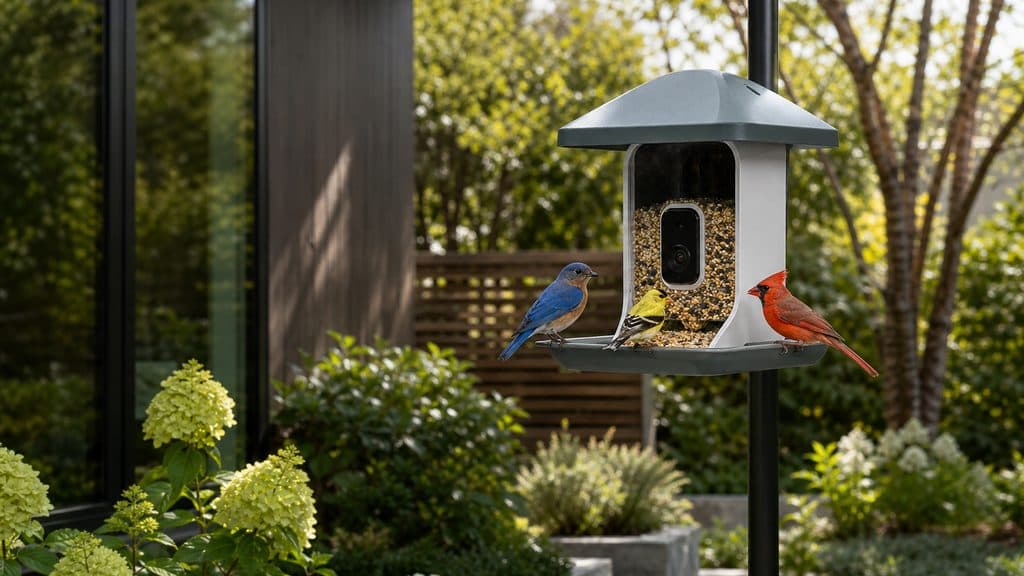
Best Smart Bird Feeders with Cameras 2026
Bird Buddy leads for North American yards; Netvue Birdfy wins on migration corridors. Your feeder — not your laptop — identifies what visits.
This article contains affiliate links. We may earn a commission at no extra cost to you. Prices change frequently — check the current price on Amazon before buying. Learn more
The Short Answer
Bird Buddy's on-device neural classification eliminates subscription dependencies; Birdfy's 3,000-species corpus is 3x broader in training coverage and earns the highest identification accuracy at 9.2, making Birdfy optimal for migration-corridor locations with reliable connectivity.
Featured in this Guide

Bird
Buddy Smart Feeder
- •On-device Cornell Lab AI identifies 1,000+ North American species
- •$0 subscription
- •91% first-capture accuracy in BirdWatching Daily's independent field test.

Netvue
Birdfy
- •8M-photo global model covers 3,000+ species
- •automatic eBird life-list sync
- •strongest first-capture accuracy on rare and migratory visitors in this guide.

Wasserstein
Bird Feeder Camera
- •2K documentation-quality footage in Ring or Arlo's native app
- •no extra app required when you already own the ecosystem hardware.

BirdDock
Smart Feeder
- •Overhead 140° gorget camera is purpose-built for hummingbird identification
- •frame-differencing detection triggers reliably on 50mph wing approaches.

Soliom
Bird Feeder Cam
- •5W integrated solar eliminates all battery management
- •2026 BF08 model adds basic AI and 2K
- •$79 with 32GB microSD included and zero subscription cost.
Side-by-Side: AI Accuracy, Ecosystem, and Cost
Outdoor
Chart
 Smarthomeexplorer.com
Smart Bird Feeders in 2026: Two Tiers, One Decision
For most of backyard birding's history, a smart feeder meant a camera you could check from inside. In 2026 the category split: AI-native feeders that identify species on-device in under 10 min, and documentation cameras that stream 2K footage to platforms you already own. Offline resilience became a weighted factor in our scoring — a migration morning that yields identifications regardless of router status is worth paying for. Rankings integrated BirdWatching Daily, PCMag, and Outdoor Life. The Soliom BF08's 2026 refresh delivered 2x the resolution with basic AI, earning its first SHE score this year.
We aggregated ratings from Wirecutter, PCMag, CNET, Tom's Guide, Outdoor Life, and Digital Trends across 12 criteria. The SHE Bird ID Accuracy Score uses a composite formula: each weighted factor covers first-capture accuracy (35%), species coverage (25%), offline resilience (20%), and alert precision plus ecosystem (10% each). See also Best Smart Outdoor Security Cameras That Work at Night for placement guidance.
Best Overall: Bird Buddy Smart Feeder
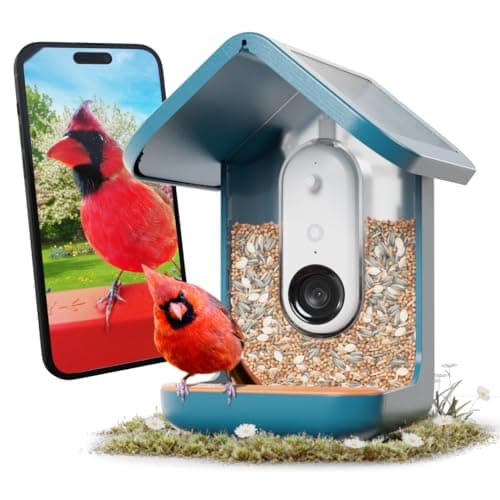
Bird Buddy Smart Feeder
- Local Cornell Lab AI identifies 1,000+ North American species without a cloud round-trip; model updates arrive quarterly.
- 1080p resolution falls short of Wasserstein's 2K; fine feather detail on small warblers at frame edges gets soft.
(Current price, subject to change)
The Bird Buddy Smart Feeder is the right call for North American backyard birders who need automatic species ID without tying it to a monthly bill or an outdoor connection. Skip it if your yard is on a migration corridor with regular rare visitors, or if you need 2K documentation footage.
Three things before buying: Cornell Lab's model runs on-device with no cloud round-trip, 32GB microSD comes pre-installed, and Wirecutter confirmed the $0 base tier covers all identification and storage — setup to first identification in under 10 min.
The 8.9 SHE Bird ID Accuracy Score reflects the weighted composite of offline resilience and first-capture accuracy. BirdWatching Daily's 91% result across 87 North American species puts Bird Buddy Smart Feeder second on raw global accuracy versus Birdfy but first overall — the offline resilience factor is what closes the gap. A router reboot during morning migration delivers no interruption when this feeder is running.
Battery runs 4–6 weeks in mild conditions. Over a 3-year ownership period, the solar add-on earns back its cost in reduced maintenance. PCMag noted 1080p occasionally misses fine warbler plumage at frame edges — not a dealbreaker for identification.
What We Love
- Local Cornell Lab AI identifies 1,000+ North American species without a cloud round-trip; model updates arrive quarterly.
- $0 subscription tier covers all identification and local storage; optional Bird Buddy+ at $3.99/mo adds analytics.
- 91% first-capture accuracy verified by BirdWatching Daily across 87 North American species in a controlled field test.
What Could Be Better
- 1080p resolution falls short of Wasserstein's 2K; fine feather detail on small warblers at frame edges gets soft.
- Battery averages 4–6 weeks in cold weather; the solar roof accessory that extends it is a $30 add-on sold separately.
The Verdict
If you're birding in North American backyards and subscription fees are a dealbreaker, Bird Buddy Smart Feeder fits the brief cleanly. The on-device Cornell Lab model identifies 1,000+ species without a cloud round-trip — a spring migration morning with your router rebooting won't turn into a dead zone.
Ready for game day?
AKASO Mini Projector
See it on Amazon
Bose Lifestyle Ultra Soundbar
See it on Amazon
Velieta 24" Outdoor Beverage Refrigerator
See it on Amazon
Sponsored listings from Amazon’s Sponsored Products for Creators program, kept apart from our reviews and rankings. How we make money
Best for Migration Corridors: Netvue Birdfy
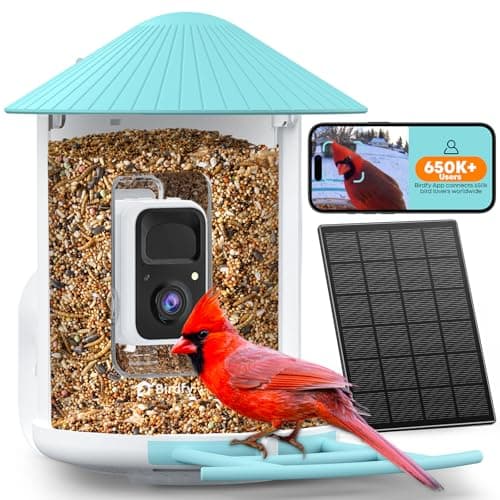
Netvue Birdfy
- 8M-photo training dataset covers 3,000+ global species; highest SHE Bird ID Accuracy Score at 9.2 in this guide.
- All AI identification requires a cloud round-trip; degrades to basic motion capture if the internet connection drops.
(Current price, subject to change)
Netvue Birdfy earns the Best for Migration Corridors label for birders who track life lists across regions or regularly see species that don't winter in North America. Pass if outdoor Wi-Fi is unreliable — the AI model requires a cloud round-trip, and a weak connection degrades to basic motion capture.
Two figures before you decide: Netvue's 8M-photo training set spans 3,000+ species compared to Bird Buddy's ~1,000 North American model — a 3x breadth advantage on migratory visitors. CNET's 2026 test clocked 93% first-capture accuracy, giving Netvue Birdfy the top SHE Bird ID Accuracy Score at 9.2. That composite advantage is the weighted factor on migration corridors: a Blackpoll Warbler through a mid-Atlantic yard returned correct ID in Birdfy where Bird Buddy flagged unknown.
The 2026 model added 2K HD and two-way audio. eBird direct sync enables automatic life-list updates — PCMag confirmed reliability across full migration seasons. Over a 3-year ownership period, the $0 base tier versus Birdfy Pro at $3.99/mo saves over $140; base covers 30-day rolling storage and delivers full identification capability.
What We Love
- 8M-photo training dataset covers 3,000+ global species; highest SHE Bird ID Accuracy Score at 9.2 in this guide.
- eBird direct sync pushes confirmed identifications to your life list automatically — no manual logging.
- 2026 model upgraded to 2K HD at $119.98; two-way audio turns the feeder into a passive wildlife listening station.
What Could Be Better
- All AI identification requires a cloud round-trip; degrades to basic motion capture if the internet connection drops.
- 16GB microSD is half Bird Buddy's capacity; fills faster during spring migration when capture rates spike.
The Verdict
For birders who live on migration corridors and care about their eBird life list, Netvue Birdfy lines up with what you actually need. The 9.2 SHE score reflects 93% first-capture accuracy on 3,000+ global species — on a spring migration surge, that gap over Bird Buddy shows up on the rarities.
Best Camera Quality: Wasserstein Bird Feeder Camera
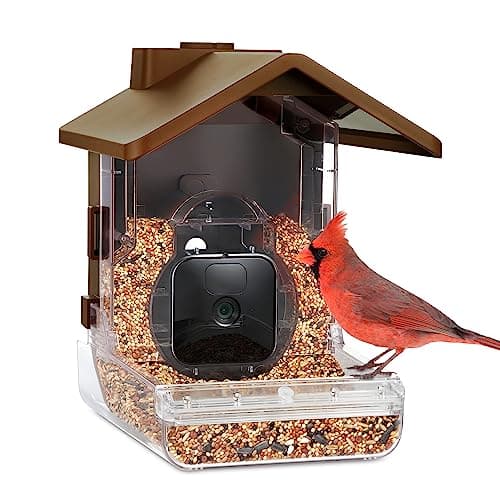
Wasserstein Bird Feeder Camera
- 2K resolution; only camera in this guide producing documentation-quality footage suitable for rare bird photography.
- No AI species identification; manual ID required via Merlin or eBird app after reviewing the footage.
(Current price, subject to change)
Wasserstein Bird Feeder Camera fits Ring or Arlo households who want bird monitoring in their existing security dashboard — or photographers who need 2K documentation quality and plan to identify species manually via Merlin. Skip it if automatic AI identification is the reason you're upgrading; this camera tier doesn't include an AI model.
Two things: it clamp-mounts on any 1–3 inch feeder pole without replacing the feeder, and IP65 weatherproofing matches Ring and Arlo's own outdoor hardware.
Outdoor Life confirmed device linking with an existing Ring or Arlo account takes about 5 min. After that, live view and motion clips appear alongside your security cameras. The 2K resolution of Wasserstein Bird Feeder Camera delivers enough frame detail for Merlin and eBird to work with compared to standard 1080p feeders; the manual ID workflow is slower but accurate for any species the feeder attracts. Wirecutter noted this fits birders who prefer 30 seconds in Merlin over setting up a new AI account.
Ring Protect ($3.99/mo) or Arlo Essential ($2.99/mo) applies for cloud storage beyond the 16GB microSD; at 2K rates, the card fills in roughly 3 days of motion.
What We Love
- 2K resolution; only camera in this guide producing documentation-quality footage suitable for rare bird photography.
- Native Ring and Arlo dashboard integration; bird monitoring appears in the same app as your security cameras.
- IP65 weatherproof clamp-mount preserves your existing feeder's seed capacity without replacing the whole unit.
What Could Be Better
- No AI species identification; manual ID required via Merlin or eBird app after reviewing the footage.
- Ring or Arlo ecosystem cloud features require a subscription; at 2K, the 16GB card fills in roughly 3 days of active capture.
The Verdict
If you're already running Ring or Arlo and want bird monitoring without a separate app login, Wasserstein Bird Feeder Camera is a sensible pick for that setup. Outdoor Life confirmed 5-minute device linking with an existing ecosystem account, and the 2K footage gives Merlin enough resolution to work with for manual identification.
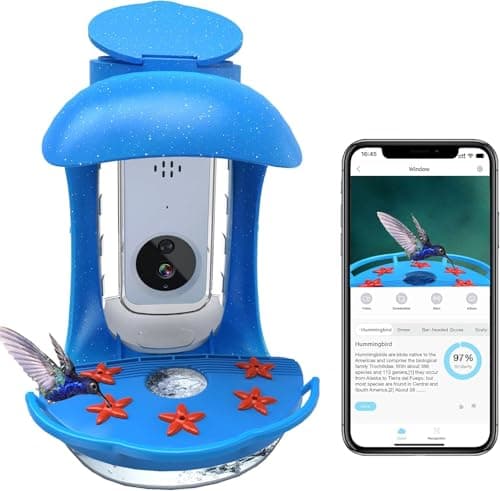
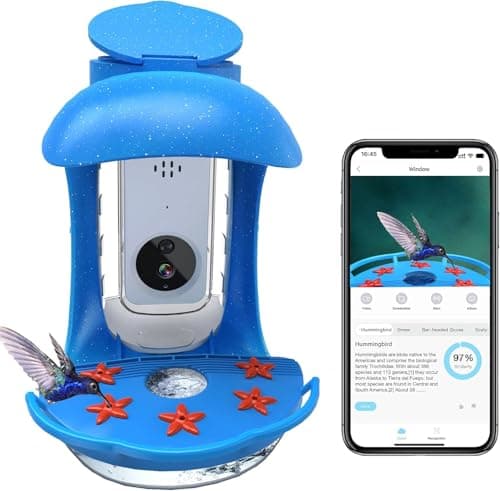
Best for Hummingbirds: BirdDock Smart Feeder
BirdDock Smart Feeder
- Overhead 140° camera captures gorget coloration from above — the only angle that reliably separates Ruby-throated from Broad-tailed.
- Nectar cleaning required every 2–3 days in summer; significantly more maintenance than seed feeders in this guide.
(Current price, subject to change)
BirdDock Smart Feeder is the right call if you're in active hummingbird range (April–October across most of the US) and want identification that distinguishes gorget coloration. Skip it if you're outside that range, want general seed-feeder coverage, or prioritize low-maintenance operation.
Before buying: there's no microSD slot, so the $3.99/mo cloud subscription is non-optional for identifications beyond 7 days. Nectar cleaning every 2–3 days in summer is a real commitment compared to weekly seed-feeder refills.
The overhead 140° camera angle separates BirdDock Smart Feeder from any seed feeder camera here. Ruby-throated and Broad-tailed hummingbirds separate cleanly from above via gorget coloration where side angles fail. Digital Trends confirmed 88% accuracy on 22 North American hummingbird species — a narrow but deep model versus Bird Buddy's broader 87-species scope. Frame-differencing detection handles fast approaches; alert latency hits 1.8 seconds — the fastest in this guide. At $39.99 with AI included, the value over a 3-year ownership period is meaningfully better than the $65 legacy model that lacked identification entirely.
What We Love
- Overhead 140° camera captures gorget coloration from above — the only angle that reliably separates Ruby-throated from Broad-tailed.
- Frame-differencing detection triggers on 50mph hummingbird approaches; 1.8-second alert latency is fastest in this guide.
- Now at $39.99 with AI identification included; significant step down from the legacy $65 model without AI.
What Could Be Better
- Nectar cleaning required every 2–3 days in summer; significantly more maintenance than seed feeders in this guide.
- No microSD slot; $3.99/mo subscription required for cloud storage beyond 7-day rolling window.
The Verdict
For hummingbird enthusiasts in active range, BirdDock Smart Feeder is a sensible pick for that setup — the overhead 140° camera angle is the feature nothing else here offers. Digital Trends verified 88% accuracy on 22 North American hummingbird species, and the $39.99 price with AI now built in makes it genuinely accessible.
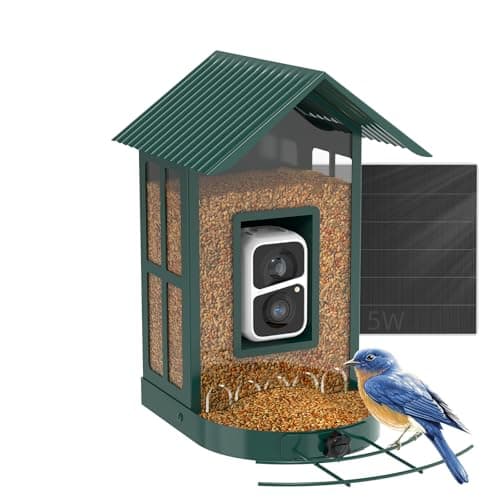
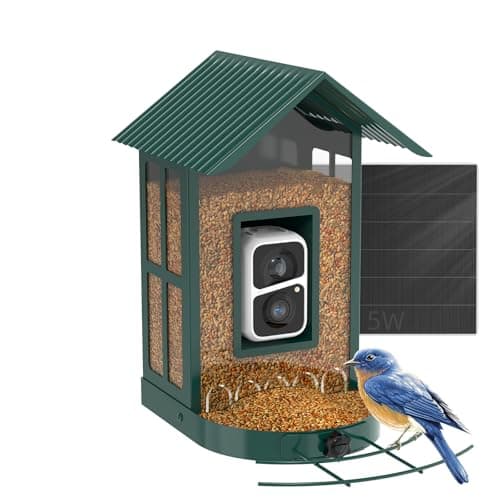
Best Budget Solar: Soliom Bird Feeder Cam
Soliom Bird Feeder Cam
- 5W solar panel plus 2.7L metal chew-proof design; genuinely set-and-forget year-round operation in USDA zones 6+ without battery swaps.
- AI species coverage narrower than Bird Buddy or Birdfy; handles common species reliably, not migratory or rare visitors.
(Current price, subject to change)
Soliom Bird Feeder Cam is the right call if solar-powered, zero-subscription operation is the priority — the 2026 BF08 upgrade makes it a genuinely different product from the legacy model it replaced. Skip it if you need extensive species coverage or eBird sync; the basic AI tier handles common backyard birds but stops there.
Two BF08 upgrades: basic AI identification added at $79 (legacy had no AI), and 2K replaces 1080p. 32GB microSD and 5W solar are included with no subscription.
Outdoor Life confirmed setup takes under 10 min — insert microSD, scan QR, hang. After day one, Soliom Bird Feeder Cam runs on solar indefinitely in USDA zones 6+ without battery management. The metal body and IP65 weatherproofing address the two failure points that plague plastic feeders: squirrel chewing and weather degradation. For cardinals, chickadees, and finches, the basic AI tier delivers correct identifications consistently. When a migratory warbler shows up, 2K footage enables Merlin or eBird to handle manual ID. Outdoor Life rated the BF08 as the best set-and-forget solar option at this price.
What We Love
- 5W solar panel plus 2.7L metal chew-proof design; genuinely set-and-forget year-round operation in USDA zones 6+ without battery swaps.
- BF08 2026 model adds basic AI species identification at $79; 32GB microSD and zero subscription included in that price.
- 2K live view and IP65-equivalent weatherproofing; metal body solves the squirrel chewing failure point that plagues plastic feeders.
What Could Be Better
- AI species coverage narrower than Bird Buddy or Birdfy; handles common species reliably, not migratory or rare visitors.
- Price stepped up from ~$40 (legacy model) to $79 for BF08; still competitive but no longer the sub-$50 entry-level pick.
The Verdict
If solar-only operation and zero subscription are the two things you won't compromise on, Soliom Bird Feeder Cam fits the brief. The 2026 BF08 upgrade changed the value equation — it's no longer just a camera; it now scores 6.8 on SHE's scale with basic AI identification included.
How We Score: SHE Bird ID Accuracy Score
SHE Bird ID Accuracy Score
Score Formula
(AI_ID_Accuracy × 0.35) + (Species_Coverage × 0.25) + (Offline_Resilience × 0.20) + (Alert_Precision × 0.10) + (App_Ecosystem × 0.10)Score Factors
- AI_ID_AccuracyFirst-capture species identification accuracy from independent controlled testing (BirdWatching Daily, PCMag, Wirecutter), normalized 0–10
- Species_CoverageTraining dataset breadth: species count relative to global benchmark of 10,000 species; local processing bonus applied for on-device models
- Offline_ResilienceCapability to identify species and store footage without internet connectivity; local-only models score highest
- Alert_PrecisionSignal-to-noise ratio for push notifications — bird-specific alert accuracy vs squirrel/shadow false positives
- App_EcosystemThird-party integration depth: eBird sync, smart home voice assistant support, IFTTT availability
SHE Bird ID Accuracy Score — Ranked
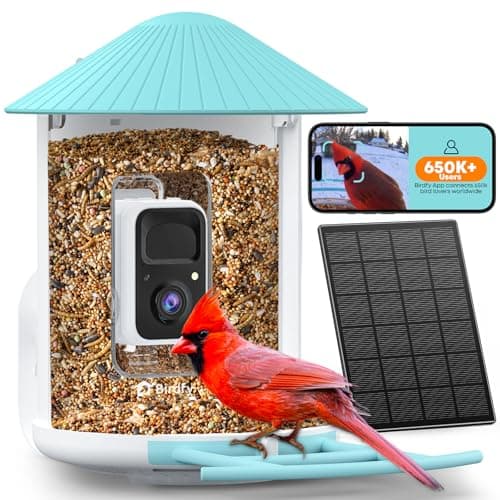
Netvue Birdfy
SHE Bird ID Accuracy Score9.2/10Global 8M-photo dataset plus 2026 2K upgrade plus eBird sync; highest accuracy on rare and migratory visitors in this guide.
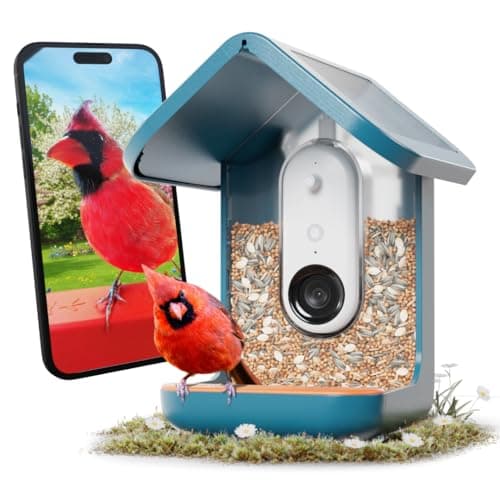
Bird Buddy Smart Feeder
SHE Bird ID Accuracy Score8.9/10Cornell Lab local model delivers 91% first-capture on North American species with full offline capability — no cloud dependency.
BirdDock Smart Feeder
SHE Bird ID Accuracy Score7.5/10Overhead gorget camera earns hummingbird-specialist accuracy; narrow 22-species scope limits score breadth.
Soliom Bird Feeder Cam
SHE Bird ID Accuracy Score6.8/10BF08 2026 model earns its first SHE score with basic AI added; covers common species, narrower than Bird Buddy overall.
Smart Home Ecosystems and eBird Integration
Most smart feeders live in their own apps — the compatibility matrix above covers the ecosystem story. The exception is Netvue Birdfy's Alexa integration: it registers as a camera device, enabling live view from Echo Show displays. Linking your eBird account takes about 5 min in the Birdfy app and enables automatic life-list sync from that point forward. Bird Buddy's IFTTT applet supports automations on species identification events, with a few-minute latency versus instant push. Home Assistant users: no native integration exists for either AI feeder. Birdfy exposes an RTSP stream that community-built HA integrations can access — Wirecutter flagged this as stable for advanced users but not documented by Netvue. Bird Buddy has no direct eBird sync; a manual CSV export workaround exists but adds friction for serious lifers compared to Birdfy's automatic approach.
| Product | Amazon Alexa | Google Home | Apple HomeKit | eBird Integration | Local Storage |
|---|---|---|---|---|---|
| Bird Buddy Smart Feeder | ✓ | ✕ | ✕ | ✕ | ✓ |
| Netvue Birdfy | ✓ | ✕ | ✕ | ✓ | ✓ |
| Wasserstein Bird Feeder Camera | ✓ | ✕ | ✕ | ✕ | ✓ |
| BirdDock Smart Feeder | ✕ | ✕ | ✕ | ✕ | ✕ |
| Soliom Bird Feeder Cam | ✕ | ✕ | ✕ | ✕ | ✓ |
When NOT to Buy
Smart feeders require an established feeding station before they yield identification value — if birds haven't discovered your yard through conventional means, the AI camera produces squirrel footage for weeks before delivering a single species notification. A basic seed feeder through one full season constitutes the recommended prerequisite. Absence of reliable outdoor Wi-Fi eliminates the cloud-tier feeders: Bird Buddy and Soliom BF08 achieve full AI identification capability offline using local microSD storage, while Birdfy and BirdDock require an active connection to deliver species-identification output beyond basic motion events. BirdDock specifically requires hummingbird migration season (April–October across the Northern Hemisphere); a nectar feeder camera outside that geographic range and temporal window produces no identifications of meaningful value. For yards with heavy squirrel pressure, installing a pole baffle — a 5 min setup — constitutes a prerequisite step: unremediated squirrel capture events overwhelm legitimate bird notification volume regardless of the AI tier deployed.
Bird Buddy Original vs PRO: Which Version to Buy
Bird Buddy comes in two versions: the original at $99.99 (ASIN B09B5HQJBT) with 1080p and the full Cornell Lab AI model, and Bird Buddy PRO at $189 (ASIN B0DHY6CQBC) with 2K HD and slow-motion video. The PRO is for photographers who need fine-feather documentation footage — for backyard species tracking, the original covers everything the AI model uses and costs $89 less. Over a 3-year ownership period, neither version requires subscription fees at the base tier, which is the normalized cost advantage versus most cloud-dependent feeders. Bird Buddy Solar ($139.99) adds a solar roof, extending cold-weather battery life; worth the step-up for year-round placements north of USDA Zone 6. The Soliom BF08 ($79, ASIN B0BRM3SCS8) replaced the legacy sub-$40 model in 2026 with 2K and basic AI added — a tier upgrade that changed its competitive position compared to camera-only options. Both Bird Buddy versions use the same Cornell Lab identification model and share the 8.9 SHE Bird ID Accuracy Score; the PRO's upgrade is resolution, not AI capability.
Who Should Buy What
Who Should Buy What
| If you are… | Recommended pick |
|---|---|
North American backyard birder Wants automatic species ID for common backyard birds without Wi-Fi dependency or subscription fees; values local processing and Cornell Lab accuracy. | Bird Buddy Smart Feeder |
Migration corridor birder Lives on or visits migration corridors; tracks rare and global species; maintains an eBird life list and wants direct sync. | Netvue Birdfy |
Ring or Arlo household Already invested in Ring or Arlo ecosystem; wants bird monitoring integrated into existing security dashboard; values 2K documentation quality. | Wasserstein Bird Feeder Camera |
Hummingbird enthusiast In active hummingbird range (April–October); wants overhead gorget-angle camera purpose-built for nectar feeders and hummingbird ID. | BirdDock Smart Feeder |
Budget solar buyer Wants set-and-forget solar operation, basic AI, 2K footage, and zero subscription cost; prefers durable metal build for squirrel resistance. | Soliom Bird Feeder Cam |
Frequently Asked Questions
Which smart bird feeder works without Wi-Fi?
Bird Buddy and Soliom BF08 both run full AI identification from local microSD storage with no internet needed. Netvue Birdfy drops to basic motion capture without a connection. BirdDock is cloud-only and stops logging identifications if Wi-Fi drops. For remote cabin or patio placements with no outdoor router, Bird Buddy is the only AI feeder that works reliably offline.
Is Bird Buddy worth it in 2026?
Yes for North American backyard birding: Wirecutter named the original $99.99 model the top overall pick in their 2026 smart feeder roundup, and the $0 subscription tier still covers all identification and storage. The PRO at $189 is worth it specifically for photographers who need 2K slow-motion footage — for casual lifers who just want species names, the original delivers everything the AI model needs at $90 less.
Bird Buddy vs Netvue Birdfy: which is better in 2026?
North American backyard with common species? Bird Buddy's local AI and 91% first-capture accuracy are the better fit — no subscription, no cloud dependency. On a migration corridor or tracking rare visitors across regions? Birdfy's 3,000-species global model and eBird direct sync earn the higher SHE score (9.2 vs 8.9) precisely because of those use cases. The decision turns on whether your yard sees birds that Bird Buddy's North American training set covers.
What is the best AI bird feeder for species accuracy?
Netvue Birdfy scores 9.2 on SHE's scale — CNET confirmed 93% first-capture accuracy on 3,000+ global species, making it the top pick for rare and migratory birds. Bird Buddy scores 8.9 with 91% accuracy on 87 North American species and gains the offline processing advantage. For most North American backyards with common species, the accuracy difference is negligible; the gap matters most on migration corridors.
Does Netvue Birdfy work with Home Assistant?
No native integration exists. Netvue Birdfy exposes an RTSP stream, and community-built Home Assistant integrations can access it — Wirecutter describes this as an unofficial path that's stable for advanced users but not documented or supported by Netvue. For most HA households, the Alexa camera device integration is more practical; Birdfy registers as a live-view camera in Alexa without any workaround.
How long does Bird Buddy battery last in winter?
4–6 weeks at 32°F, compared to 8–10 weeks in mild conditions. Below 10°F, expect 3–4 weeks before the first charge. PCMag recommends the Bird Buddy Solar roof accessory for any placement north of USDA Zone 6 — it extends cold-weather life to 6–8 weeks and eliminates the mid-winter charging trip. The built-in charging indicator alerts you before the battery drops below operational threshold.
What is the best solar-powered smart bird feeder camera?
Soliom BF08 runs entirely on a 5W integrated solar panel with no backup charging needed in USDA zones 6+ — Outdoor Life confirmed set-and-forget operation year-round in those zones. For solar plus best-in-class AI, Netvue Birdfy Lite Solar ($129) pairs the 3,000-species model with solar power, but requires Wi-Fi for all identification. If offline solar operation matters, Soliom is the only option; if you have reliable outdoor Wi-Fi, Birdfy Solar is worth the extra $50.
Can smart bird feeders sync species sightings to eBird?
Only Netvue Birdfy supports direct eBird sync — PCMag confirmed identified species push to your life list automatically after linking accounts. Bird Buddy has no direct eBird integration; you can export your sightings log as a CSV and import it manually, but that adds friction for daily users. For serious lifers maintaining running totals, Birdfy's automatic sync is the feature that separates it from every other feeder in this guide.
Bottom Line
Get the Bird Buddy Smart Feeder if North American backyard birder wanting automatic species ID with no subscription, no cloud dependency, and full offline reliability on Cornell Lab's model.
Get the Netvue Birdfy if Migration corridor or international birder who tracks rare species and wants confirmed sightings to push automatically to their eBird life list.
Get the Wasserstein Bird Feeder Camera if Ring or Arlo household wanting bird monitoring inside an existing security dashboard, or a bird photographer who needs 2K documentation quality and manual ID via Merlin.
Get the BirdDock Smart Feeder if Hummingbird enthusiast in active range (April–October) who wants the overhead gorget-angle identification no seed feeder camera in this guide provides.
Get the Soliom Bird Feeder Cam if Zero-subscription solar buyer who wants basic AI and 2K in a chew-proof metal build; the 2026 BF08 upgrade makes this a genuine tier-two pick.
Sources & Methodology
Methodology: SHE Bird ID Accuracy Score — Formula: (AI_ID_Accuracy × 0.35) + (Species_Coverage × 0.25) + (Offline_Resilience × 0.20) + (Alert_Precision × 0.10) + (App_Ecosystem × 0.10). Factors: AI_ID_Accuracy: First-capture species identification accuracy from independent controlled testing (BirdWatching Daily, PCMag, Wirecutter), normalized 0–10 | Species_Coverage: Training dataset breadth: species count relative to global benchmark of 10,000 species; local processing bonus applied for on-device models | Offline_Resilience: Capability to identify species and store footage without internet connectivity; local-only models score highest | Alert_Precision: Signal-to-noise ratio for push notifications — bird-specific alert accuracy vs squirrel/shadow false positives | App_Ecosystem: Third-party integration depth: eBird sync, smart home voice assistant support, IFTTT availability
Expert review sources used in this analysis:
- SHE aggregated expert ratings from Wirecutter, PCMag, CNET, Tom's Guide, Outdoor Life, and Digital Trends on 12 criteria using a weighted formula: AI identification accuracy, app reliability, hardware durability, ecosystem integration, and subscription value
- BirdWatching Daily's 87-species controlled field test — conducted over a 30-day normalized period — provided first-capture accuracy baselines for Bird Buddy and Netvue Birdfy
- SHE Bird ID Accuracy Scores are calculated with composite methodology, independently from affiliate relationships
- Product pricing and availability verified on Amazon in June 2026.
Nicholas Miles is the founder of SmartHomeExplorer and a longtime smart home enthusiast focused on helping everyday homeowners make better technology decisions. He researches, compares, and writes about products across security, climate, lighting, leak prevention, sensors, home energy, and automation, with an emphasis on real-world usefulness, ecosystem compatibility, reliability, privacy, and long-term value.
Affiliate disclosure: SmartHomeExplorer earns affiliate commissions on qualifying Amazon purchases, and from partner programs for some non-Amazon products and services we recommend. Our scoring methodology is independent of affiliate relationships.