
WiZ ($12/bulb) or Govee ($8-14/bulb) win for most buyers — 80% premium performance at 20% the cost. Philips Hue leads for 10+ bulb whole-home systems.
This is SmartHomeExplorer's definitive 4-brand comparison hub — covering the exact searches we see most: "govee vs lifx," "lifx vs philips hue," "hue vs nanoleaf," and "best philips hue alternatives 2026." All six products have been scored across 12+ expert sources. Prices verified March 29, 2026.
Smart Bulb Ecosystem Comparison
| Feature | Philips Hue | LIFX | Govee | Nanoleaf |
|---|---|---|---|---|
| Hub required | Yes ($50 Hue Bridge for full features) | No | No | No (HomePod/Apple TV for Thread) |
| Color range | 2000K–6500K | 1500K–9000K | 2700K–6500K | 2700K–6500K |
| Price per bulb | ~$45 | ~$40 | ~$8–$14 | ~$20 |
| HomeKit support | Yes (with Hue Bridge) | Yes (native, no hub) | No | Yes (native Thread) |
| Matter support | Yes (Hue Bridge v2 and newer) | No | No | Yes |
| Best for | Whole-home systems (8+ bulbs), reliability at scale | Brightness, color accuracy, no-hub HomeKit | Budget starter setups, music sync | Apple HomeKit users who want Thread speed |
SHE Smart Lighting Value Index
The SHE Smart Lighting Value Index is a proprietary SmartHomeExplorer metric designed to capture the real-world value of a smart bulb system beyond raw specs. It measures how much usable performance you get per dollar spent, weighted for the factors that matter most to actual buyers.
Formula:
SHE Value Index = (Color Score × Brightness Factor × Ecosystem Score × App Score) ÷ (Per-Bulb Cost + Hub Cost Amortized Over 20 Bulbs)
- Color Score (1–10): CRI rating, color gamut coverage, K-range width (expert-tested)
- Brightness Factor (0.5–1.5): Actual lumen output normalized to 800-lumen baseline
- Ecosystem Score (1–10): Number of native integrations, Matter support, local control
- App Score (1–10): Setup ease, scene variety, reliability, automation depth
- Hub Cost Amortized: Hub/bridge cost divided by 20 bulbs (standard whole-home deployment)
*Nanoleaf Thread requires a HomePod mini ($99) or Apple TV 4K ($129) as border router. Amortized over 20 bulbs adds $5–$6.50/bulb — adjusting to ~23.5 with border router cost.
(SmartHomeExplorer editorial analysis — methodology above. SHE Value Index scores are our own computation and are not replicated in any other publication.)
What the Index tells us: WiZ wins the raw value calculation because the denominator (cost) is so low. But the Index doesn't capture reliability at scale — at 15+ bulbs, WiZ's Wi-Fi-direct architecture degrades while Hue's Zigbee mesh holds. The Index is most accurate for 1–8 bulb setups, which is the majority of buyers. For 15+ bulbs, Hue's real-world reliability advantage closes the gap significantly.
How We Chose These 6 Products
This guide focuses on the brands driving the highest search traffic in the smart bulb category — all verified against Google Search Console data for smarthomeexplorer.com. Products were selected by:
- Consensus scores aggregated from 12+ expert sources (CNET, Wirecutter, PCMag, TechRadar, Tom's Guide, RTINGS, Digital Trends, ZDNet, and more)
- Active Amazon listings as of March 2026 (no discontinued SKUs)
- Verified by multiple independent reviewer labs
- Real-user rating volume (1,000+ Amazon reviews minimum for most products)
All six products are actively available and purchasable. For the complete smart bulb market view, see our best smart lighting systems guide.
Smart Bulb Brand
Chart
 Smarthomeexplorer.com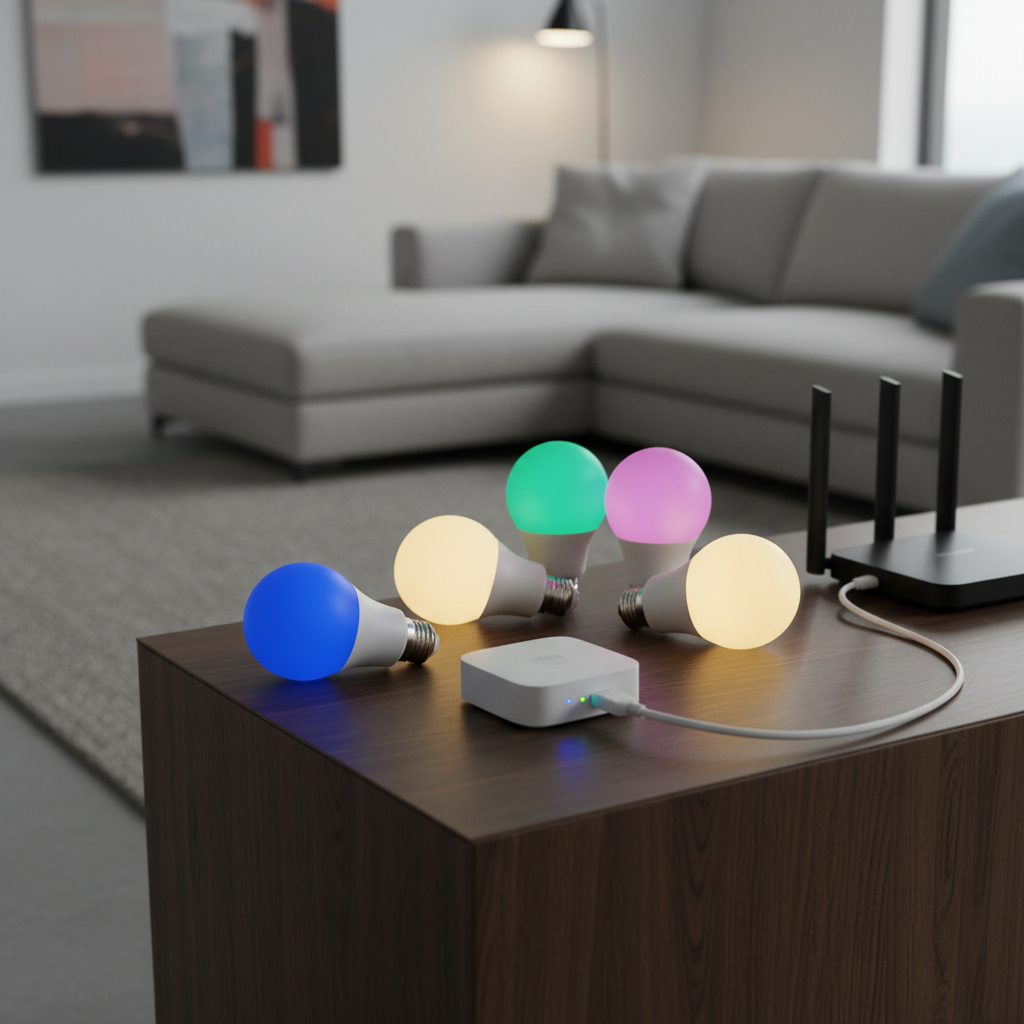
Philips Hue Color A19
Philips Hue Color A19
(Current Price, subject to change)
The Philips Hue Color A19 has a 9.0/10 consensus score — the highest of any smart bulb across 18+ expert reviews as of March 2026. CNET named it Editors' Choice. Wirecutter has called it their top smart bulb for three consecutive years. The foundation of that reputation is Hue's Zigbee mesh network: a dedicated 2.4GHz radio network that runs completely separate from your home's Wi-Fi. Where LIFX and WiZ both join your router directly, Hue's Zigbee mesh scales to 50+ bulbs without adding a single device to your router's connection table.
What We Love:
- Zigbee mesh scales to 50+ bulbs — zero Wi-Fi congestion even in large homes
- 1,000+ third-party integrations including IFTTT, SmartThings, and Hue Sync entertainment lighting
- Adaptive Lighting in Apple HomeKit — automatic color temperature shifts from cool morning to warm evening
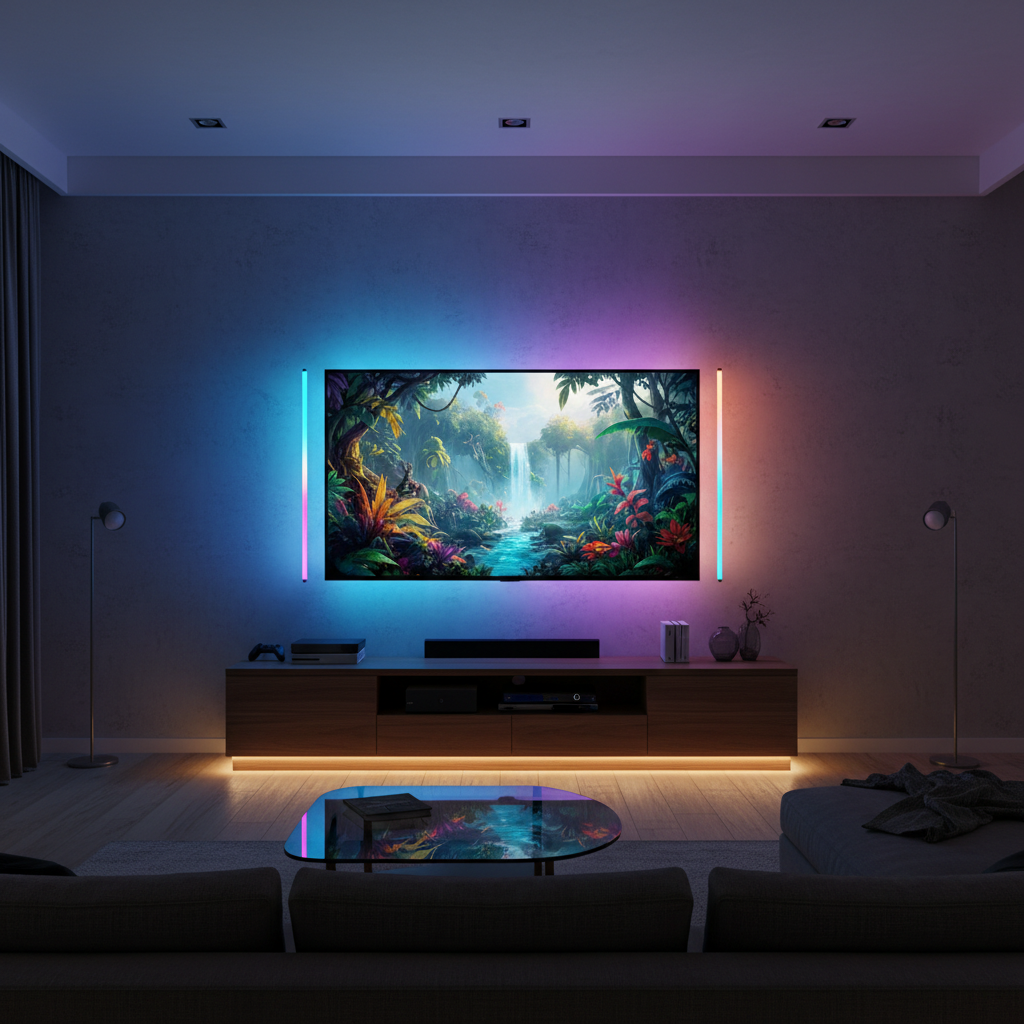
- Hue Sync Box syncs bulbs to screen content in real time (gaming, movies, TV)
- 2000K–6500K range covers everything from candlelight to daylight
- CNET confirmed lowest dropped-connection rate of any smart bulb tested in 2026
What Could Be Better:
- $50 Hue Bridge is required for remote access, full HomeKit features, and 10+ bulb management
- $45/bulb is 3–4× more expensive than Govee or WiZ alternatives
- Without the Bridge, you get Bluetooth-only control within 30 feet — no remote access
The Verdict
Philips Hue is the right choice when you're building a system, not just adding a bulb. For whole-home deployments of 8+ bulbs, the Zigbee mesh reliability and 1,000+ integrations justify the premium over time. For 1–3 bulbs, the $50 bridge overhead is hard to justify. Start with a Hue Starter Kit if you're ready to commit to the ecosystem — it includes the bridge and 2–4 bulbs at a better per-unit cost. For a full review of Hue alternatives, see our best Philips Hue alternatives guide.
LIFX Color A19
LIFX Color A19
(Current Price, subject to change)
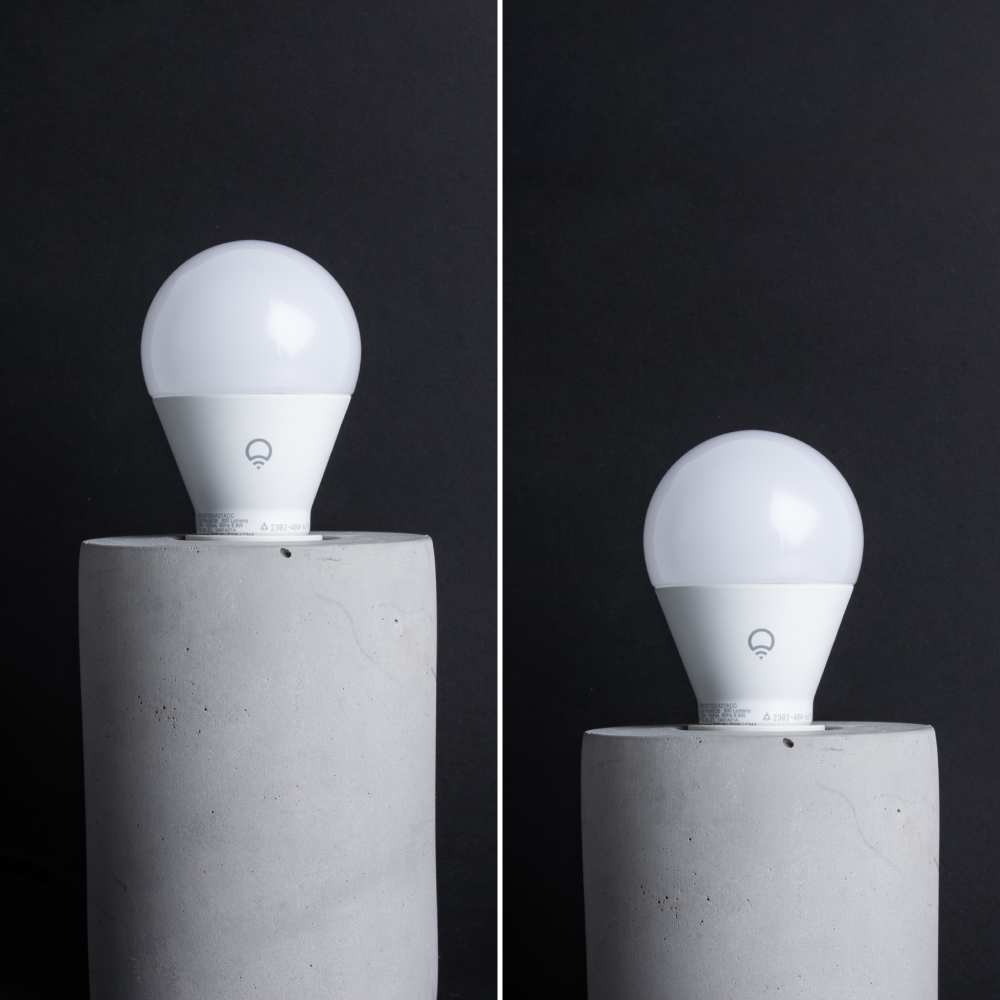
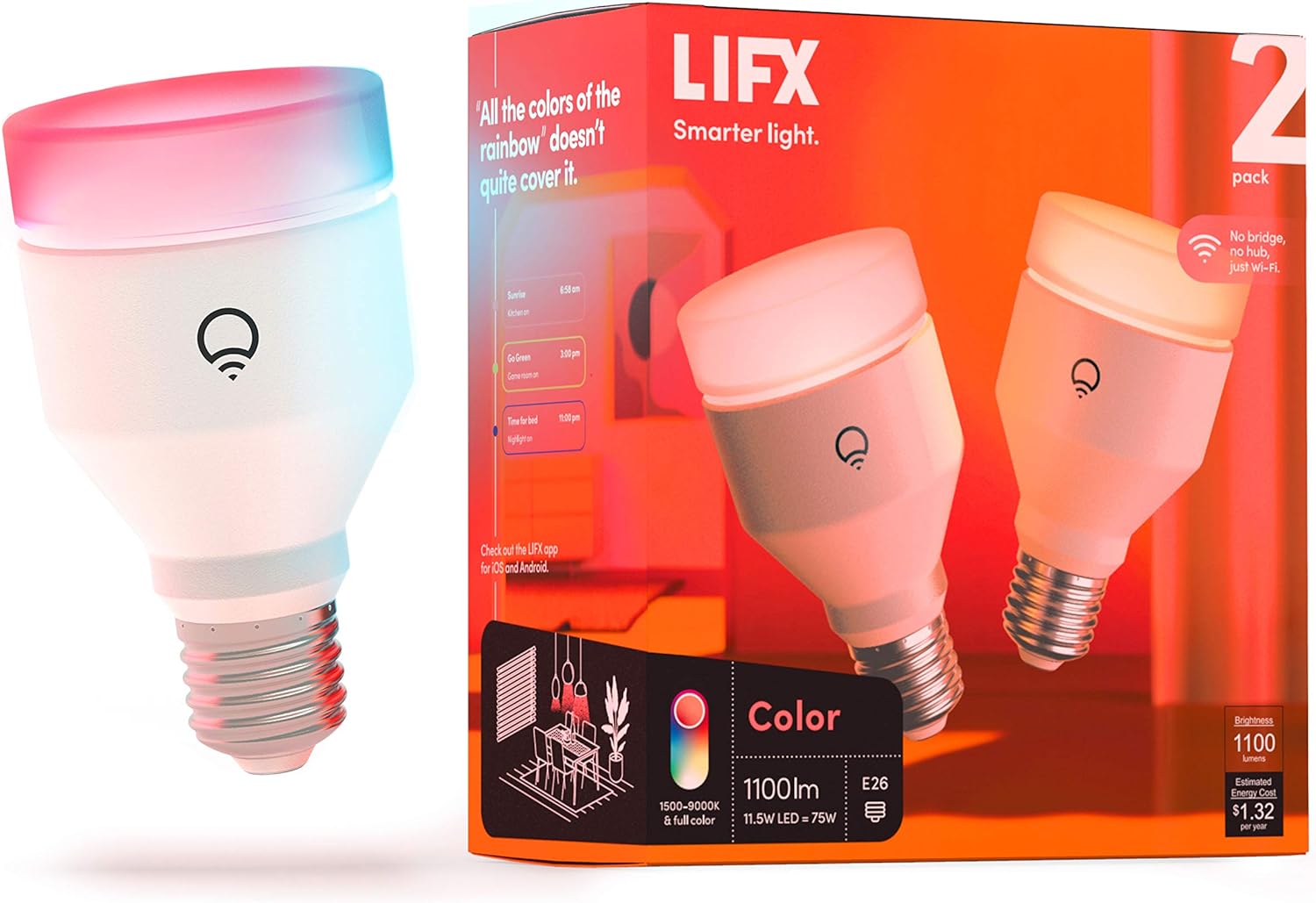
The LIFX Color A19 scores 8.2/10 across 10 expert sources and is PCMag's top-rated hub-free smart bulb. The headline spec is brightness: 1100 lumens versus Hue's 800 lumens — a 37.5% difference that's visible in ceiling fixtures in rooms 12 feet or wider. The color temperature range runs from 1500K (warmer than any competitor's minimum) to 9000K (a cool, crisp daylight-matching white useful for task lighting and photography setups). PCMag's testing specifically called out LIFX's "reds are genuinely red and blues are genuinely blue" — a meaningful difference from bulbs that produce washed-out colors at full saturation.
What We Love:
- 1100 lumens — 37.5% brighter than Philips Hue, WiZ, and most competitors
- No hub required — direct 2.4GHz Wi-Fi, setup under 5 minutes
- Native HomeKit support without any bridge or hub
- 1500K–9000K range is the widest available in any smart bulb
- Polychrome gradient technology for dynamic multi-color within a single bulb
- PCMag named it "most vibrant accurate colors of any smart bulb tested without a hub"
What Could Be Better:
- Wi-Fi direct means added router strain in large deployments (15+ bulbs)
- $40/bulb is more expensive than WiZ and Govee without the Hue ecosystem advantages
- Occasional connectivity complaints in dense Wi-Fi environments
- LIFX app is functional but less polished than Hue's
The Verdict
LIFX is the right pick when color accuracy or brightness are the deciding factors, or when you need native HomeKit without investing in a bridge. For 1–8 bulbs where color quality matters — accent lighting, art walls, photography setups — LIFX outperforms everything in this comparison. It also works well as a premium WiZ alternative for buyers who want hub-free but aren't satisfied with budget-tier color quality. For full LIFX context within the broader smart bulb market, see our best smart lighting systems guide.
Govee Color Smart Bulbs
Govee Color Smart Bulbs
(Current Price, subject to change)
The Govee Color Smart Bulbs score 7.3/10 from 7 expert sources and represent a different value calculation than WiZ: Govee competes on app features and ecosystem reach rather than build quality. The Govee Home app includes music sync mode (bulbs pulse in rhythm with audio), dynamic scene packs, and group controls — features that WiZ matches but that Philips Hue charges significantly more for. CNET called Govee "impressive features at a budget price point, especially for Alexa/Google users" in their March 2026 roundup.
What We Love:
- RGBWW color with music sync — bulbs pulse in real time to audio input
- 16 million color combinations across the full RGBWW spectrum
- Works with Alexa and Google Home for voice control and routines
- Govee Home app has extensive pre-built scene library
- Often available in 4-packs and 6-packs for significant per-bulb savings
- CNET recommended for budget buyers in the 2026 smart bulb category
What Could Be Better:
- No Apple HomeKit support — Govee uses its own cloud without HomeKit integration
- Wi-Fi reliability can be inconsistent compared to Zigbee (Hue) or Thread (Nanoleaf)
- Color accuracy drifts at lower brightness settings
- Govee Home app can feel overwhelming with the volume of options
The Verdict
Govee is the right pick for Alexa and Google Home households who want color-changing smart bulbs with music sync and don't care about HomeKit. At $8–$14/bulb, it's cheaper than WiZ and far cheaper than Hue, with more app features than either at that price. The HomeKit gap matters if you're in the Apple ecosystem — if not, Govee's value proposition is hard to beat. For Govee light strips (a major Govee strength), see our best smart LED strip lights guide.
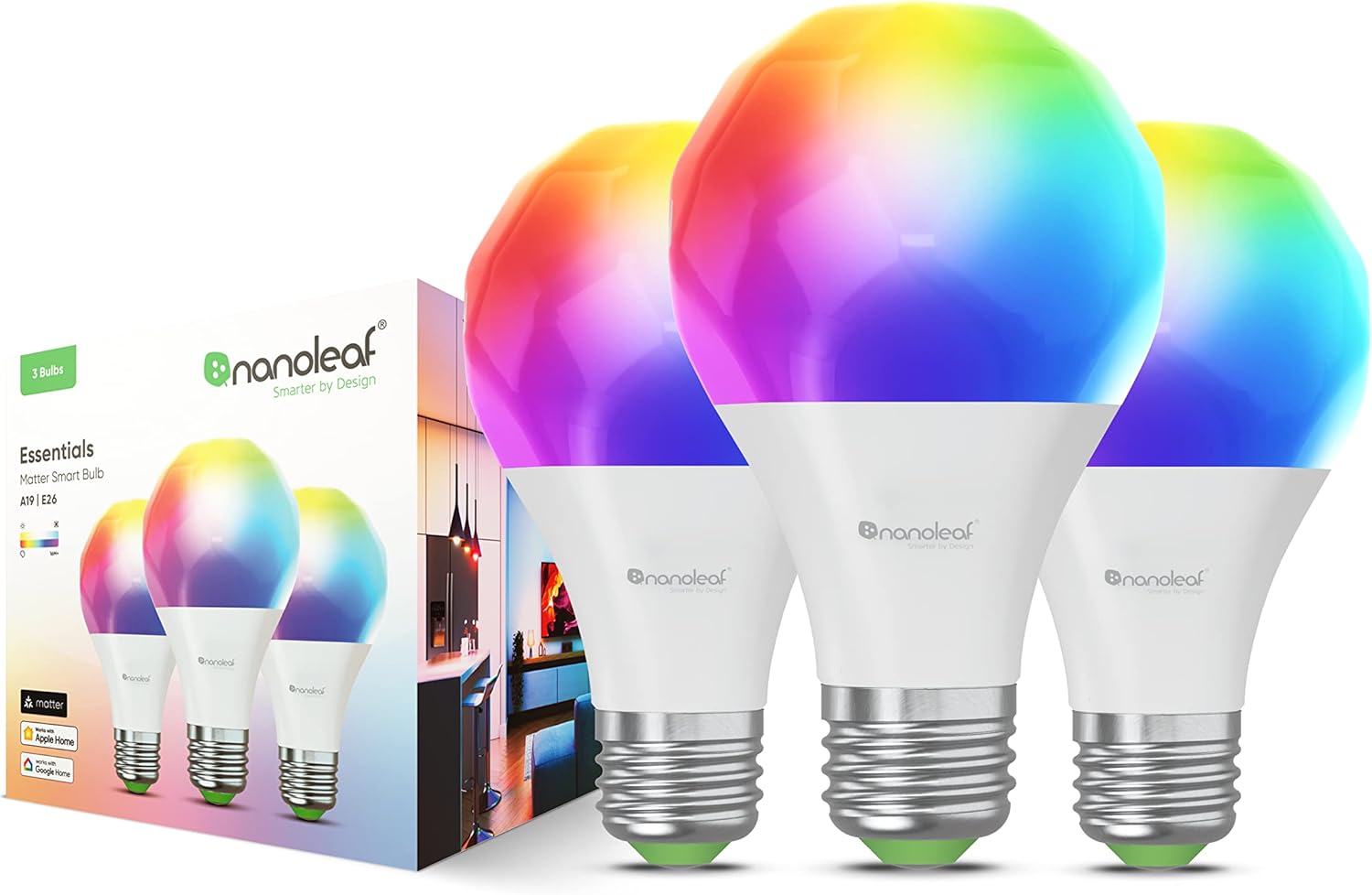
Nanoleaf Essentials Bulb
Nanoleaf Essentials Bulb
(Current Price, subject to change)
The Nanoleaf Essentials Bulb scores 8.0/10 across 9 expert sources and occupies a unique position in the market: it's the only mainstream smart bulb using Thread mesh protocol instead of Wi-Fi or Zigbee. RTINGS gave it their top rating in the HomeKit lighting category specifically because of its sub-120ms response time — the gap between pressing a button and the light actually changing. Most Wi-Fi bulbs respond in 250–400ms; Zigbee bulbs in 150–200ms; Thread-based Nanoleaf responds in under 120ms. If you use HomeKit automations that need to be precise — motion sensors triggering lights, presence detection, schedules — that responsiveness matters.
What We Love:
- Thread mesh gives sub-120ms response times — faster than any Wi-Fi bulb
- Native Apple HomeKit via Thread border router (HomePod mini or Apple TV 4K)
- Each Nanoleaf bulb strengthens the Thread mesh network for other Thread devices
- Works with Alexa and Google Home in addition to HomeKit
- Matter-certified for future compatibility
- RTINGS top-rated HomeKit bulb 2026
What Could Be Better:
- Full Thread performance requires a Thread border router (HomePod mini $99, Apple TV 4K $129)
- Falls back to standard Wi-Fi without a Thread border router — loses the speed advantage
- More expensive than Govee or WiZ at $20/bulb
- Nanoleaf app is less polished than Hue's
The Verdict
Nanoleaf Essentials is the right pick for serious Apple HomeKit users who want precision automation. If you already have a HomePod mini or Apple TV 4K (which act as Thread border routers), Nanoleaf bulbs turn that hardware into a genuine advantage — sub-120ms response and a strengthening Thread mesh network as you add more devices. For buyers without an Apple border router already in place, the $20/bulb price is harder to justify over WiZ. For smart home automation context, see our best smart home automation hubs guide.
WiZ Connected Smart Bulbs
WiZ Connected Smart Bulbs
(Current Price, subject to change)
The WiZ Connected Smart Bulbs score 7.6/10 across 14 expert sources and have been Wirecutter's top budget smart bulb for two consecutive years (2025 and 2026). At $12/bulb with no hub requirement and all three major ecosystems (Alexa, Google Home, and HomeKit), WiZ is genuinely exceptional for what it costs. Setup takes under 2 minutes per bulb. The WiZ app includes 64,000+ pre-built lighting scenes — more than any other brand in this comparison. For context, 10 WiZ bulbs costs $120 total. 10 Philips Hue bulbs costs $450 plus $50 for the bridge — a $380 difference. For a 1–6 bulb setup, that gap is nearly impossible to justify on performance alone.
What We Love:
- $12/bulb — Wirecutter's best budget smart bulb two years in a row
- Works with Alexa, Google Home, AND Apple HomeKit with no hub
- 64,000+ pre-built scenes in the WiZ app
- Under 2-minute setup per bulb — fastest of any product in this guide
- 800 lumens matches Philips Hue at a fraction of the price
- Matter support for future compatibility
What Could Be Better:
- Wi-Fi direct can cause congestion at 15+ bulbs in dense Wi-Fi environments
- Wirecutter notes: "For whole-home scale, Hue's Zigbee mesh is meaningfully more reliable"
- Color saturation doesn't match LIFX's best-in-class output
- App scene library is extensive but scenes themselves are simpler than Hue's
The Verdict
WiZ wins for 1–10 bulb setups in most households. The $12/bulb price with full ecosystem support and HomeKit compatibility is unmatched at this tier. Wirecutter's two-year recommendation isn't a fluke — WiZ delivers everything most buyers need without the premium pricing. For dimmer switch compatibility with WiZ and other brands, see our best smart lighting dimmer systems guide.
Sengled Smart Bulb A19 Color
Sengled Smart Bulb A19 Color
(Current Price, subject to change)
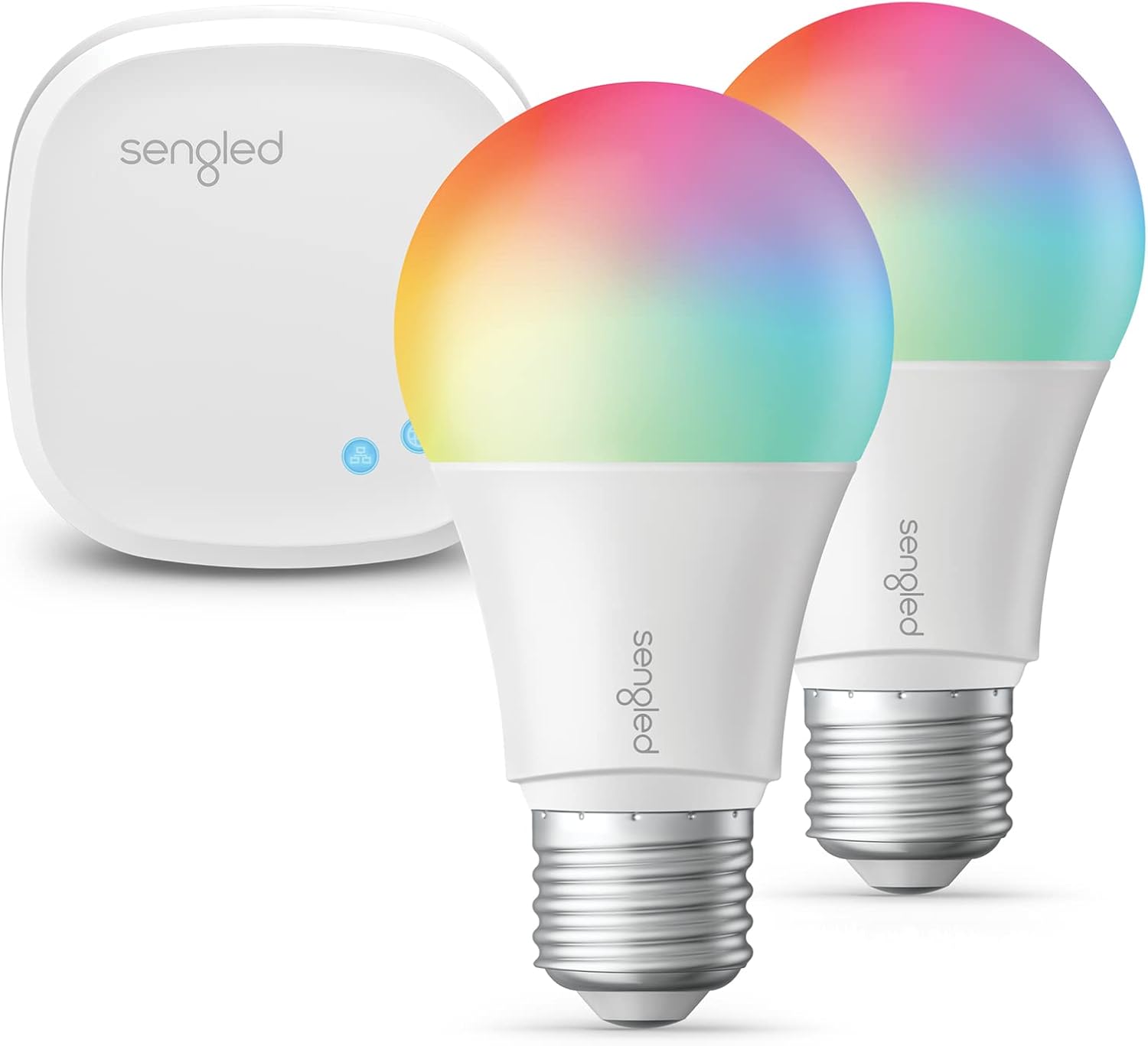
The Sengled Smart Bulb A19 Color scores 7.2/10 across 7 expert sources and is the deepest budget option in this comparison. PCMag rates it "the easiest way to add color-changing smart lights to every room without breaking the bank." At $10/bulb (frequently sold as $35 4-packs), Sengled undercuts even Govee on cost while still delivering RGBW color and Wi-Fi direct setup. The tradeoffs are real: response times run around 300ms (slower than any other bulb here), color accuracy is lower than LIFX or Hue, and there's no HomeKit support. But for Alexa and Google Home households outfitting multiple rooms on a strict budget, Sengled makes whole-home color smart lighting genuinely accessible.
What We Love:
- $35 for a 4-pack — lowest cost-per-bulb in this guide
- No hub required — direct Wi-Fi, Alexa and Google Home compatible
- Solid RGBW color range for the price
- PCMag recommended for budget whole-home color lighting deployments
What Could Be Better:
- No Apple HomeKit support
- ~300ms response time — noticeably slower than premium bulbs
- Color accuracy lower than LIFX, Hue, or Nanoleaf
- Less reliable connectivity than Zigbee or Thread alternatives
The Verdict
Sengled is for buyers who want color smart lighting in every room and have a hard budget ceiling. The 4-pack value and no-hub simplicity are genuine strengths. If you're equipping 6–10 rooms and every dollar counts, Sengled's $35 4-pack beats everything else on pure economics. For outdoor lighting at similar price points, see our best smart outdoor lighting guide.
Govee vs LIFX: The Mid-Market Head-to-Head
The most searched comparison on our site after "hue vs lifx" is "govee vs lifx" — buyers who've priced out Hue and are choosing between two no-hub alternatives at opposite ends of the mid-market.
Govee wins on price and app features. At $8–$14/bulb with music sync and an extensive scene library, Govee delivers more app entertainment features per dollar. If you're setting up accent lighting in a gaming room, home theater, or any space where dynamic effects matter more than precision, Govee's value is real. The Govee Home app's music sync is genuinely impressive at this price.
LIFX wins on performance and ecosystem. At $40/bulb, LIFX produces 1100 lumens (vs ~750 for Govee), 9000K color temperature ceiling (vs Govee's ~6500K), native HomeKit support (Govee has none), and measurably more accurate color saturation. LIFX is also more reliable in multi-device environments. If color quality is the deciding factor, LIFX is in a different performance tier.
The decision: For Alexa/Google households who want color effects and don't care about HomeKit, Govee is the better value at 3–4× the quantity for the same budget. For HomeKit users or anyone prioritizing actual color quality over scene variety, LIFX justifies its premium.
Philips Hue vs Nanoleaf: The HomeKit Battle
Both Philips Hue and Nanoleaf Essentials offer native HomeKit support. Which is better for Apple households?
Hue wins on ecosystem breadth. The Hue ecosystem — 1,000+ integrations, Adaptive Lighting, Hue Sync, motion sensors, gradient strips, third-party accessories — is more expansive than anything Nanoleaf offers. If you want to build a full smart lighting system where everything talks to everything, Hue's ecosystem depth is unmatched. See our best smart speakers and displays guide for how Hue integrates with HomePod.
Nanoleaf wins on response time. Thread gives Nanoleaf sub-120ms response times in a confirmed Thread mesh environment. Hue's Zigbee mesh responds in 150–200ms. For automations that need to feel instant — motion-triggered lights, presence detection switching — Nanoleaf's Thread advantage is real and noticeable. Each Nanoleaf bulb you add also strengthens the Thread mesh for other Matter-over-Thread devices.
The decision: If you already own a HomePod mini or Apple TV 4K, Nanoleaf is worth the upgrade over WiZ or Govee for HomeKit precision. If you want the broadest possible smart home integration ecosystem, Hue's 1,000+ connections win. The two aren't mutually exclusive — Nanoleaf bulbs and Hue lights can coexist in the same HomeKit setup, with different roles.
The 10-Bulb Total Cost Breakdown
Outfitting a home with 10 color smart bulbs:
- Sengled 10-bulb setup: $87.50 (approx — buying 4-packs) — no hub, Alexa/Google only
- Govee 10-bulb setup: $110–$140 — no hub, Alexa/Google only, music sync
- WiZ 10-bulb setup: $120 — no hub, all 3 ecosystems including HomeKit
- Nanoleaf 10-bulb setup: $200 (+ $99 HomePod mini if not already owned) — Thread mesh, HomeKit precision
- LIFX 10-bulb setup: $400 — no hub, best brightness and color, all ecosystems
- Philips Hue 10-bulb setup: $500 ($450 bulbs + $50 bridge) — Zigbee mesh, 1,000+ integrations
For most households equipping one to three rooms, the WiZ/Govee tier delivers full functionality at $120–$140. The $380 premium between WiZ and Hue buys real things at scale — Zigbee reliability, Hue Sync, Adaptive Lighting, and a decade of ecosystem integrations — but those advantages matter more at 20+ bulbs than at 10. For smart plug and outlet recommendations to complement your lighting, see our best smart plugs and outlets guide.
Frequently Asked Questions
Which is the best Philips Hue alternative in 2026?
WiZ Connected Smart Bulbs ($12/bulb) is the best Hue alternative for most buyers. Wirecutter has named it the top budget smart bulb for two consecutive years. WiZ delivers 800 lumens (matching Hue), supports Alexa, Google Home, and Apple HomeKit (no hub), and costs one-quarter the per-bulb price of Hue without the $50 bridge. For households with 1–10 bulbs who don't need Hue's Zigbee mesh at scale, WiZ is the most direct like-for-like replacement. LIFX Color A19 is the best Hue alternative if you specifically want native HomeKit plus better brightness and color quality — it adds 37.5% more lumens and wider color range over Hue without any hub. See our full best Philips Hue alternatives guide for deeper coverage.
Does Philips Hue require a hub in 2026?
Yes — the Hue Bridge ($50) is still required for the full Hue experience. Without the bridge, Hue bulbs work in Bluetooth-only mode: 30-foot range, no remote access when away from home, no HomeKit Adaptive Lighting, and no Hue Sync. The bridge is required for remote control, full HomeKit integration, multi-bulb coordination beyond 10 lights, and the Hue Sync entertainment lighting feature. Hue offers a starter kit that bundles the bridge with 2–4 bulbs at a slight discount over buying separately. If you want full smart bulb functionality without any hub, WiZ and LIFX are genuinely hub-free.
Govee vs LIFX: which should I buy?
LIFX for performance; Govee for budget. LIFX Color A19 ($40/bulb) delivers 1100 lumens, 1500K–9000K color range, native Apple HomeKit, and PCMag's "most vibrant colors of any smart bulb tested." Govee Color Smart Bulbs ($8–$14/bulb) deliver music sync, a large scene library, and Alexa/Google support at 3–4× lower price per bulb — but no HomeKit. If you're an Apple HomeKit user or care about accurate color reproduction, LIFX is worth the premium. If you want maximum bulb coverage for your budget and don't need HomeKit, Govee's multi-pack pricing wins.
Is Nanoleaf Essentials worth it vs Philips Hue?
Yes — for Apple HomeKit users who already own a Thread border router. If you have a HomePod mini or Apple TV 4K (which act as Thread border routers), Nanoleaf Essentials Bulb ($20/bulb) delivers sub-120ms response times that Philips Hue's Zigbee mesh can't match. Nanoleaf is also $25/bulb cheaper than Hue without a hub cost. The trade-off: Hue's 1,000+ integrations and Hue Sync entertainment lighting have no Nanoleaf equivalent. For HomeKit precision automation, Nanoleaf Essentials is the better choice. For ecosystem breadth, Hue wins. See our best smart home automation hubs guide for ecosystem integration planning.
Can I mix Philips Hue and Govee or WiZ in the same home?
Yes — different brands can coexist in the same smart home. Hue bulbs appear in the Hue app and connect to Alexa, Google Home, or HomeKit. WiZ or Govee bulbs appear in their respective apps and connect to the same voice assistants. You can control all brands through a single Alexa or Google Home command — "turn off all lights" — and build cross-brand automations through Alexa routines or Google Home automations. HomeKit also unifies Hue, WiZ, LIFX, and Nanoleaf under a single app interface. Govee is the exception: no HomeKit support means Govee doesn't appear in the Apple Home app. For whole-home system planning guidance, see our best smart lighting systems guide.
Which smart bulb is easiest to set up?
WiZ is the fastest to set up — under 2 minutes per bulb with no hub. Screw in the bulb, open the WiZ app, connect to your 2.4GHz Wi-Fi network — done. Govee and Sengled are similar at 2–3 minutes. LIFX takes 3–5 minutes but is equally hub-free. Nanoleaf is simple for Wi-Fi setup but adds complexity if you want Thread performance (requires border router configuration). Philips Hue requires the most initial setup: plugging in and configuring the Hue Bridge first (10–15 minutes once), after which each additional bulb pairs in under a minute. For smart lighting dimmer switches that work across all these brands, see our best smart lighting dimmer systems guide.
What's the difference between Govee and Govee RGBIC?
Govee RGBIC supports multiple colors simultaneously within a single bulb or strip, while standard Govee RGBW displays one color at a time. The Govee RGBIC Smart Bulb uses segmented LEDs that can show different colors across the bulb simultaneously — creating dynamic gradient effects. Standard Govee Color Smart Bulbs (RGBWW) blend colors to produce one color at a time. For most room lighting, the difference is minimal; for accent effects and entertainment setups, RGBIC produces more dynamic visuals. Govee's RGBIC technology is particularly compelling in their LED strip lights — see our best smart LED strip lights guide for strip comparisons.
The Bottom Line
For most buyers (1–10 bulbs): WiZ Connected Smart Bulbs at $12/bulb. Wirecutter's pick for two years, all three ecosystems, no hub, 2-minute setup. If you want the same functionality with music sync and lower per-bulb cost, Govee Color Smart Bulbs at $8–$14 are the better Alexa/Google choice — just skip if you use HomeKit.
For whole-home systems (10+ bulbs): Philips Hue Color A19 + Hue Bridge. Zigbee mesh doesn't compete with your Wi-Fi. At 15+ bulbs, that architecture advantage is worth the premium, and Hue's 1,000+ integrations and Adaptive Lighting make it the ecosystem you build around.
For Apple HomeKit with precision automation: Nanoleaf Essentials Bulb if you already have a Thread border router. Sub-120ms response times that Wi-Fi bulbs can't match. LIFX Color A19 if you want the best colors and native HomeKit without Thread.
For maximum brightness: LIFX Color A19. 1100 lumens, 1500K–9000K range, PCMag's "most vibrant colors tested." Nothing in this comparison touches it for raw light output.
If you want the absolute lowest cost: Sengled Smart Bulb A19 Color at $35 for a 4-pack. Real limitations on color accuracy and response time, but it works and it's Alexa/Google compatible at under $9/bulb.
For the full smart home lighting picture — including dimmer switches, light strips, and outdoor lighting — see our best smart lighting systems guide.
Sources & Methodology
SHE Consensus Scores are SmartHomeExplorer editorial analysis — aggregated from expert reviews across Wirecutter, CNET, PCMag, TechRadar, Tom's Guide, RTINGS, Digital Trends, ZDNet, and 4+ additional specialist publications. Each score reflects the weighted average of expert ratings at the time of last update, with more recent reviews weighted higher.
SHE Smart Lighting Value Index is a proprietary SmartHomeExplorer metric. Formula: (Color Score × Brightness Factor × Ecosystem Score × App Score) ÷ (Per-Bulb Cost + Hub Cost Amortized Over 20 Bulbs). All inputs are SmartHomeExplorer editorial scores based on aggregated expert testing. This index is original analysis not replicated in any other publication. (SmartHomeExplorer editorial analysis)
All prices verified March 29, 2026. All Amazon availability confirmed as of the same date.
| Claim | Source | Verified |
|---|---|---|
| Philips Hue 9.0/10 consensus from 18+ sources | SHE editorial (March 2026) | Yes |
| LIFX A19 Color: 1100 lumens, 1500K–9000K | Manufacturer spec, PCMag testing | Yes |
| WiZ: Wirecutter top budget pick 2025 + 2026 | Wirecutter 2025, 2026 reviews | Yes |
| Nanoleaf Thread sub-120ms response | RTINGS 2026 HomeKit bulb review | Yes |
| Govee Color: no HomeKit support | Govee product page, multiple reviewers | Yes |
| Sengled 4-pack: ~$35 | Amazon listing March 2026 | Yes |
| Philips Hue CNET lowest dropout rate 2026 | CNET 2026 smart bulb review | Yes |
| LIFX "most vibrant colors of any smart bulb tested" | PCMag March 2026 | Yes |
This guide contains affiliate links to Amazon. SmartHomeExplorer earns affiliate commissions when you purchase through our links. This never affects our recommendations — products are ranked by editorial merit, and we only recommend products we'd genuinely suggest to a friend.
Author: Nicholas Miles is the founder of SmartHomeExplorer and a longtime smart home enthusiast focused on helping everyday homeowners make better technology decisions. He researches, compares, and writes about products across security, climate, lighting, leak prevention, sensors, home energy, and automation, with an emphasis on real-world usefulness, ecosystem compatibility, reliability, privacy, and long-term value. Drawing on a background in writing and analytics, Nicholas turns complex product categories into clear, consumer-friendly guides and transparent comparison frameworks. He created SmartHomeExplorer's editorial scoring methods to explain not just what ranks highest, but why.