
Best Smart Alarm Clocks with Sunrise Simulation 2026
Five sunrise alarm clocks ranked on the SHE Sleep-Wake Experience Score — from the $44.99 Amazon Echo Spot to the $135.99 Hatch Restore 3, which leads at 7.6 because it pairs color sunrise light with the deepest sound library and built-in Alexa.
This article contains affiliate links. We may earn a commission at no extra cost to you. Prices change frequently — check the current price on Amazon before buying. Learn more
The Short Answer
The Hatch Restore 3 earns 7.6 on our proprietary SHE Sleep-Wake metric, a weighted formula evaluating sunrise color range, sound-library depth, routine support, and smart-home integration. Priced at $135.99, it uniquely consolidates a color sunrise ramp, a substantial library, and integrated Alexa control.
Featured in this Guide
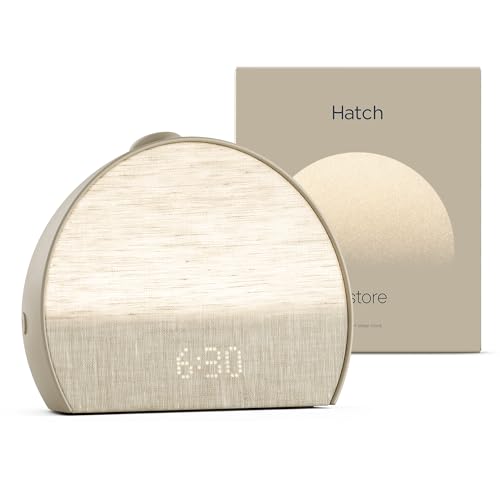
Hatch
Restore 3
- •Color sunrise, deepest sound library, built-in Alexa — the 7.6 SHE score leads the category at $135.99
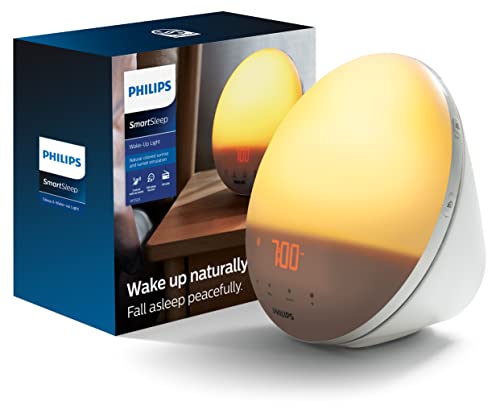
Philips
SmartSleep Wake-up Light HF3520
- •Colored sunrise plus sunset wind-down and FM radio with no app and no subscription at $87.19
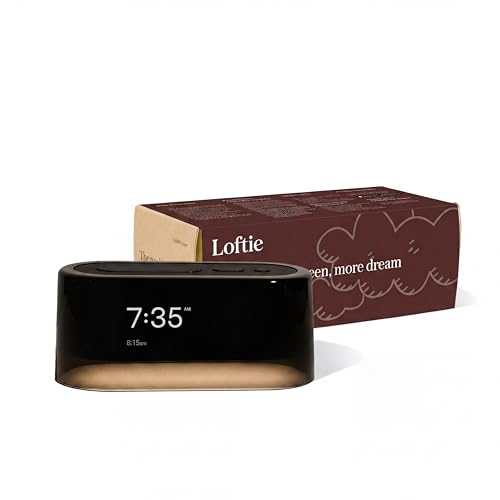
Loftie
Alarm Clock
- •Two-phase alarm and 100+ sounds free for life, phone-replacement design at $169.99 list

Casper
Glow Light
- •Flip-to-dim warm 2700K light, portable and rechargeable, no app needed at night — $151.80
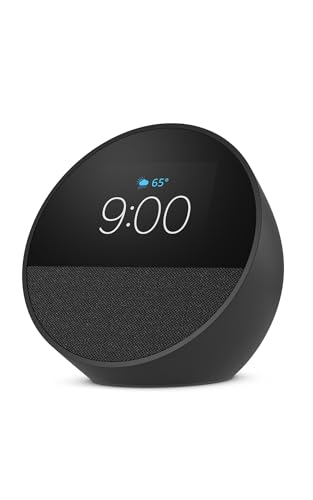
Amazon
Echo Spot (2024)
- •Alexa, a sunrise routine, and full smart-home control from the nightstand for $44.99
Head-to-Head: Five Sunrise Clocks Across Five Decision Dimensions
Lifestyle
Chart
 Smarthomeexplorer.com
Tap any pick to check its live price on Amazon.
Reolink RLK16-800B8 4K 16-Channel PoE NVR System (8-Camera)
RecommendedCheck price
ANNKE 4K PoE NVR Security Camera System (6-Camera)
RecommendedCheck price
eufyCam S3 Pro 2-Cam Kit (Solar, 4K)
Must BuyCheck price
Which Sunrise Alarm Clock Is Right for Your Mornings?
A blaring tone yanks you out of whatever sleep stage you happened to occupy, whereas a gradual light brightening across the 30 mins before your alarm produces a measurably gentler transition that Wirecutter credits in its sunrise-clock recommendation. Five clocks — from a $44.99 Echo Spot to a $135.99 Hatch Restore 3 — are evaluated on the proprietary SHE Sleep-Wake Experience Score, a weighted formula covering four factors — sunrise color range, sound depth, routine support, and smart-home reach — where a high color-range ranking delivers a light that genuinely resembles dawn rather than a lamp clicking on, which is the single difference most people notice on the very first morning of ownership. The calculation surfaces the Hatch Restore 3 at 7.6 because it outperforms every rival on light, sound, and ecosystem simultaneously, relative to the Philips HF3520, which leads on light alone. Pair your pick with Best Smart Home Wellness Devices 2026: 6 Picks.
Best Overall: Hatch Restore 3
Hatch Restore 3
- Color sunrise ramp up to 60 mins — the widest, most natural-looking warm-to-cool fade in this roundup
- Hatch+ at $5.99/mo unlocks the full sound library; the free tier is thin
(Current price, subject to change)
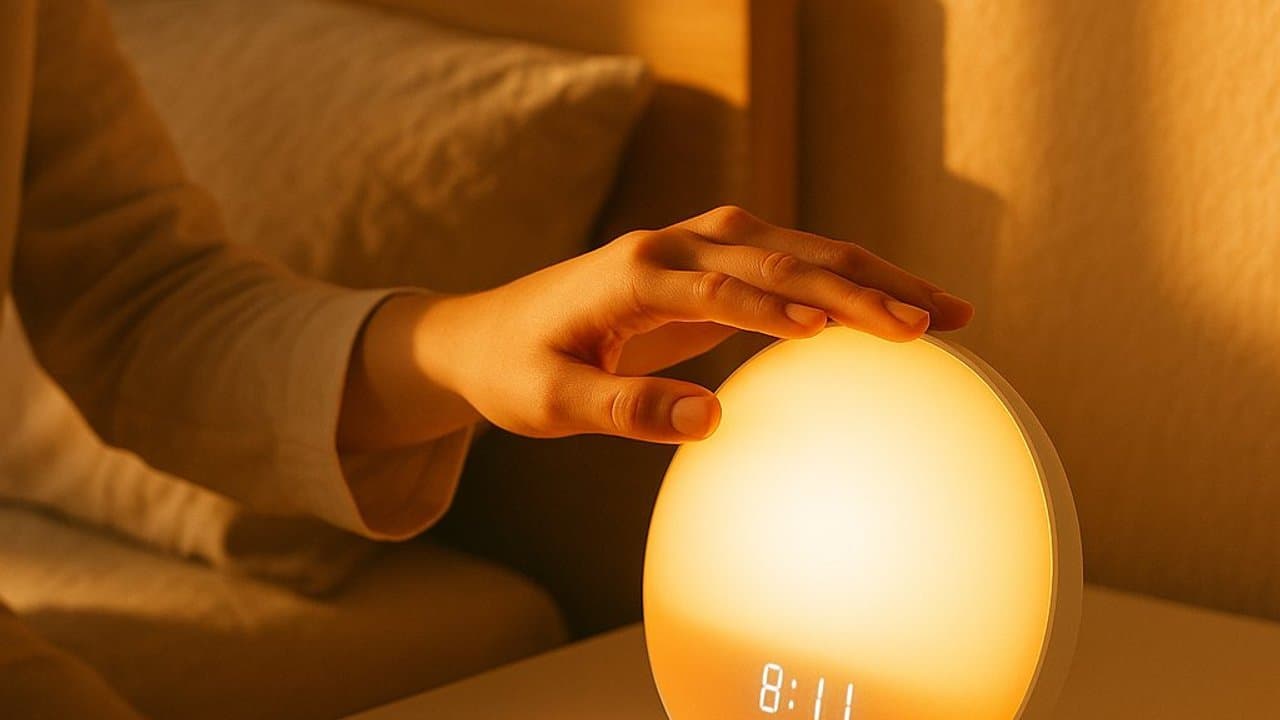
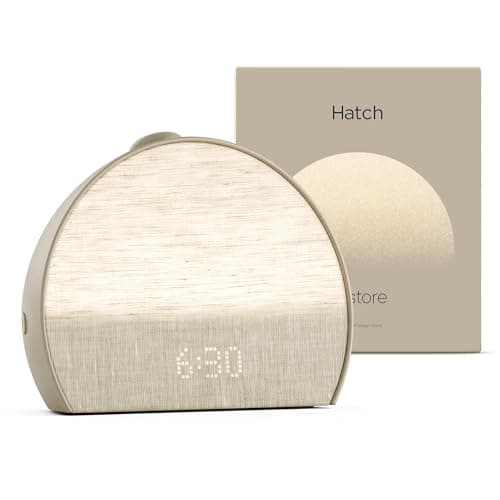
The Hatch Restore 3 is the sunrise clock most people should start with because it refuses to specialize. Its color sunrise gradient shifts from deep amber through orange into cooler daylight across a configurable window of up to 60 mins, producing a measurably gentler transition than the abrupt tone alarms it replaces. Wirecutter calls the Hatch Restore the sunrise alarm clock it recommends to everyone, and its screen-free lamp design sidesteps the bedside blue light that undermines phone alarms. The weighted formula yields 7.6 — the highest composite here — because the Restore 3 outperforms rivals across all four factors simultaneously.
The qualifier is Hatch+ at $5.99 monthly, which over a 2-year horizon adds roughly 144 dollars and unlocks the full library and guided programs; the free tier still delivers the sunrise, scheduling, and Alexa. That built-in Alexa is the differentiator the spec sheet undersells, relative to the standalone Philips: the clock triggers a whole-home routine, dims connected lighting, or nudges the thermostat without a separate Echo. The Hatch Sleep app handles app-controlled schedules, an integration advantage the screen-free silhouette achieves without cluttering the nightstand.
What We Love
- Color sunrise ramp up to 60 mins — the widest, most natural-looking warm-to-cool fade in this roundup
- Deepest sound library here — white noise, brown noise, nature beds, and guided wind-downs on the Hatch+ tier
- Built-in Alexa — trigger smart lights or the thermostat from bed without reaching for a phone
- Screen-free design — a warm lamp instead of a glowing display avoids the bedside blue light problem
- Spotify built in — streams audio with no separate speaker on the nightstand
What Could Be Better
- Hatch+ at $5.99/mo unlocks the full sound library; the free tier is thin
- Alexa-only — no Google Home or HomeKit, so Google-first lighting is out
The Verdict
If you've shortlisted a sunrise clock that has to do light, sound, and smart-home control all at once, the Hatch Restore 3 lines up with what you actually need at $135.99. If you'd rather skip the subscription, the Philips HF3520 leads on light for less. If $45 is the ceiling, the Echo Spot covers the basics.
Ready for game day?

SYLVOX 65" Outdoor 4K TV
See it on Amazon
EUHOMY Commercial Ice Maker, 100 lb/day
See it on Amazon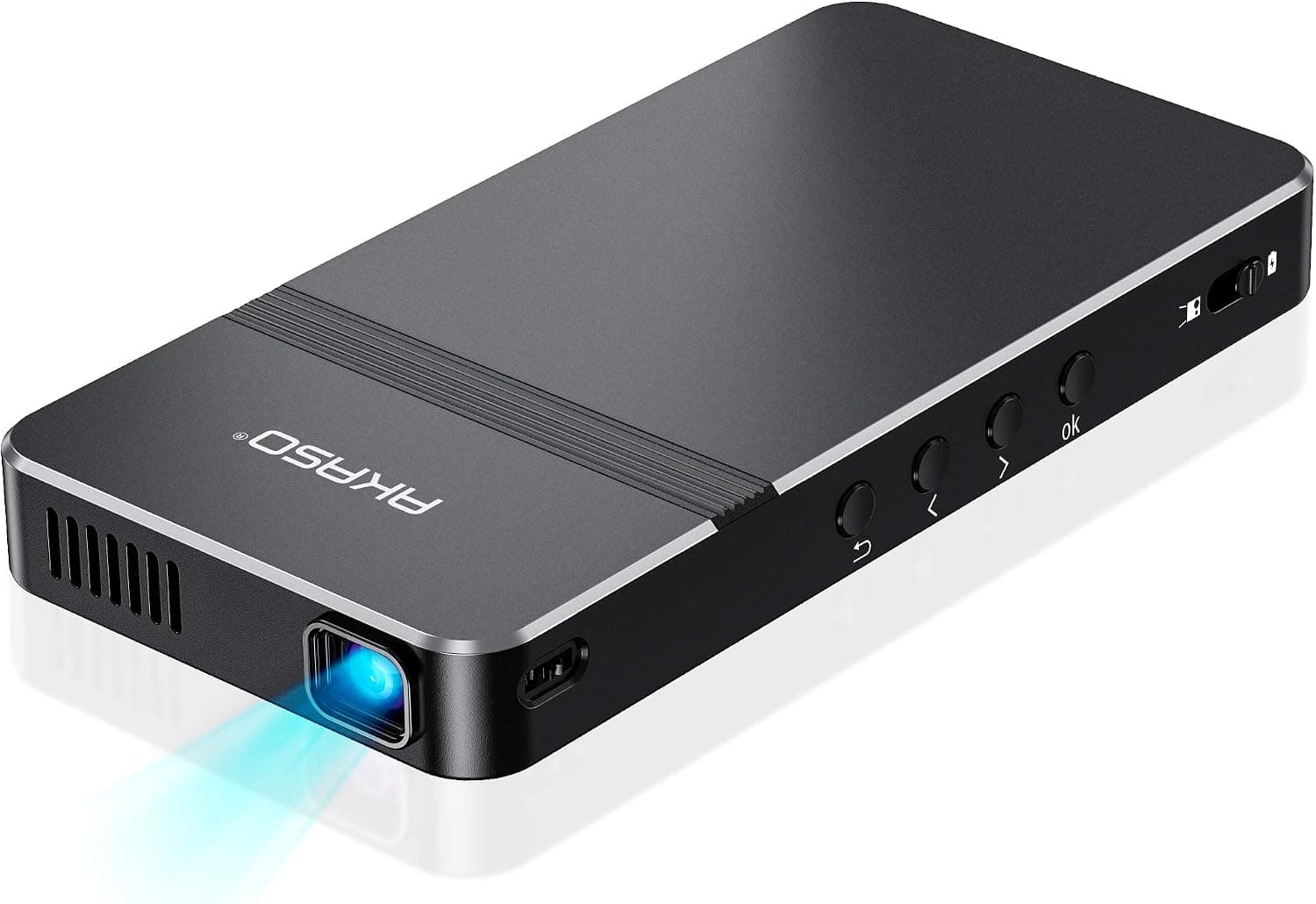
AKASO Mini Projector
See it on Amazon
Sponsored listings from Amazon’s Sponsored Products for Creators program, kept apart from our reviews and rankings. How we make money
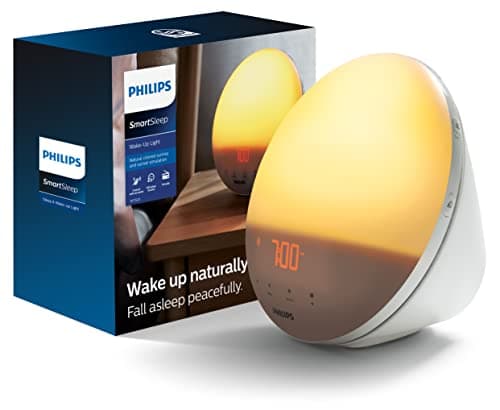
Best Light Therapy: Philips SmartSleep Wake-up Light HF3520
Philips SmartSleep Wake-up Light HF3520
- Colored sunrise simulation — a warm-to-bright dawn fade across a 30-min ramp grounded in Philips wake-up research
- No smart-home or voice integration — it can't trigger Alexa routines or reach a thermostat
(Current price, subject to change)
The Philips SmartSleep Wake-up Light HF3520 is the clock to buy when the light is the whole point and the recurring cost must be zero. Philips effectively created the consumer wake-up-light category, and CNET still treats the SmartSleep line as the standard competitors are measured against. The HF3520 simulates a colored sunrise over a 30 mins ramp, brightening from soft red-amber through orange into a warm yellow-white that signals dawn to the circadian photoreceptors in your eyes. Even at the modest lux this lamp produces, that warm-to-cool shift achieves the circadian effect rather than raw brightness alone.
What you forfeit at $87.19 is everything connected. There is no app, no Alexa, and no sleep tracking — you set the time on the unit itself in under 2 mins, valuing that self-contained reliability over pairing one more device to Wi-Fi. The 5 natural wake sounds and FM radio deliver audio backup, and the lamp's 10 brightness steps produce a workable reading light across a 30 mins wind-down. The weighted formula yields 7.1 — second here — carried by light quality and constrained, versus the connected Hatch, by the absent ecosystem.
What We Love
- Colored sunrise simulation — a warm-to-bright dawn fade across a 30-min ramp grounded in Philips wake-up research
- Sunset wind-down mode — gradually dims and warms the light to ease you toward sleep, not just out of it
- Zero subscription and no app — every feature ships in the box and works the day you plug it in
- FM radio plus 5 natural sounds — audio backup if the light alone does not fully wake you
- Doubles as a bedside reading lamp with 10 brightness steps
What Could Be Better
- No smart-home or voice integration — it can't trigger Alexa routines or reach a thermostat
- No sleep tracking; audio stops at FM radio and built-in sounds
The Verdict
If you've narrowed to a pure wake-up light and you want it to cost nothing to run, the Philips SmartSleep Wake-up Light HF3520 fits the brief at $87.19 — colored sunrise and sunset with no app and no monthly fee. If you also want Alexa or a deep sound machine, the Hatch Restore 3 is the better all-rounder. For a true budget bedside hub, the Echo Spot undercuts it.
Check price for the Philips SmartSleep Wake-up Light HF3520 →
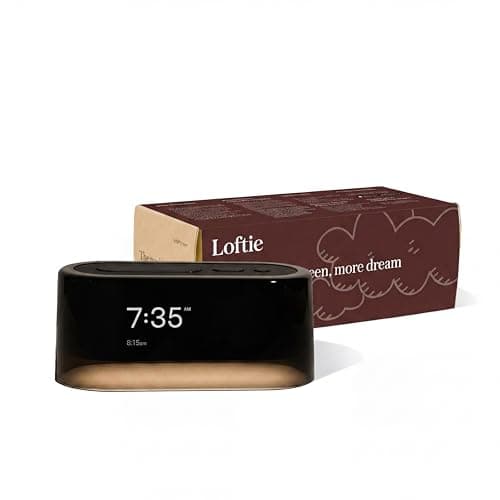
Best Subscription-Free: Loftie Alarm Clock
Best Subscription-Free PremiumLoftie Alarm Clock
- Two-phase alarm — a gentle first chime eases you toward waking, then a firmer second tone follows minutes later
- No color sunrise light — night light and blackout mode only, so it's a sound clock first
(Current price, subject to change)
The Loftie Alarm Clock starts from a thesis: phones undermine sleep, so the nightstand should deliver everything the phone once did without notifications and blue light. Tom's Guide singles out its two-phase alarm as the gentlest wake-up tech in the category — a soft first chime nudges you toward the surface of sleep, then a firmer tone follows a few minutes later, so you rarely jolt awake mid-cycle. The 100+ sounds, guided breathwork, and wind-down stories all ship free for the life of the device, making it the rare premium clock with no subscription waiting in the wings.
Where Loftie diverges from the roundup is light: there is no sunrise here, only a night light and blackout mode rather than a color-shifting dawn ramp, which is why the weighted formula lands it at 6.9 despite an otherwise excellent feature set. The Bluetooth speaker is a genuine bonus that pairs to a phone and produces a second use case. The deliberate absence of Alexa, Google Home, and HomeKit is intentional: Loftie integrates with Best Smart Home Hubs 2026: 7 Compared, Local Control through existing routines versus becoming one more connected device. If you prioritize sound over light, that's the path of least friction.
What We Love
- Two-phase alarm — a gentle first chime eases you toward waking, then a firmer second tone follows minutes later
- 100+ sounds, breathwork, and wind-down content all included free for the life of the device
- No subscription, ever — every feature ships in the box at a fixed one-time price
- Bluetooth speaker — doubles as a bedside speaker for podcasts or music without a phone alarm
- Blackout mode and a dimmable night light keep the bedroom screen-free overnight
What Could Be Better
- No color sunrise light — night light and blackout mode only, so it's a sound clock first
- No Alexa, Google Home, or HomeKit — a deliberate phone-replacement choice
The Verdict
If you've decided the phone has to leave the bedroom and you want a premium clock with everything included, the Loftie Alarm Clock checks the boxes that matter for a digital-minimalist nightstand at $169.99. If a sunrise light is non-negotiable, the Hatch Restore 3 or Philips HF3520 deliver the dawn ramp that Loftie skips entirely.
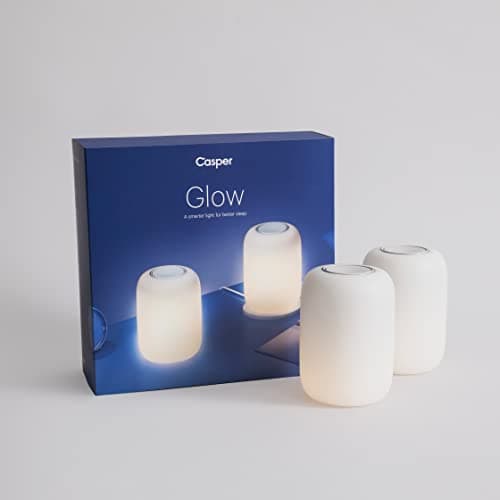
Best Bedside Lamp: Casper Glow Light
Casper Glow Light
- Flip-to-dim gesture — turn it over to dim and back to brighten; works in total darkness with no app
- Warm white only — no color-shifting sunrise, so it's a fade-up lamp, not a dawn simulation
(Current price, subject to change)
The Casper Glow Light is the most charming object in this roundup and the most honest about what it is not. Its signature move is the flip-to-dim gesture: invert the lamp to dim it and right it to brighten, which functions in pitch darkness with zero cognitive load and no app. The Verge calls the gesture addictive, and it remains so after a week. The warm 2700K-only light produces the least stimulating glow here, the unit is cordless and rechargeable, and the $151.80 double pack delivers 2 lamps for matching nightstands.
The weighted formula lands it at 5.6 because it is fundamentally a lamp wearing an alarm clock's costume. There is no color sunrise, merely a single warm temperature that fades up over a 30 mins routine, and no alarm sounds, so light-sensitive sleepers still require audio backup. The Verge frames it accurately as the most elegant nightstand light — a bedroom-decor piece with a thoughtful wake feature versus a circadian-entrainment instrument. If minimalism governs your bedroom and you accept that the Glow handles ambiance relative to a true dawn, it remains the most beautifully engineered hardware on this list.
What We Love
- Flip-to-dim gesture — turn it over to dim and back to brighten; works in total darkness with no app
- Warm 2700K light only — the least stimulating glow here and genuinely supportive of falling back asleep
- Portable and rechargeable — lift it off the base and carry it to the hallway without unplugging anything
- Ships as a double pack — two lamps for the price, ideal for matching nightstands
- 30-min wake fade ramps the light up gently in the morning with no harsh tone
What Could Be Better
- Warm white only — no color-shifting sunrise, so it's a fade-up lamp, not a dawn simulation
- No alarm sounds or smart-home integration — you need a separate audio alarm
The Verdict
If you've shortlisted a minimalist bedside lamp with a gentle wake fade and you have no patience for apps at night, the Casper Glow Light fits the brief at $151.80 for the double pack. If you need a color sunrise or any alarm sound, the Hatch Restore 3 or Philips HF3520 are the real sunrise clocks; this is a lovely lamp first.
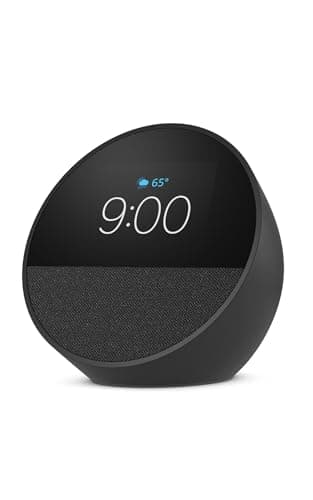
Best Budget: Amazon Echo Spot (2024)
Amazon Echo Spot (2024)
- Full Alexa reach — control lights, plugs, the thermostat, and locks from the nightstand at no extra cost
- Sunrise light is the weakest here — the small screen LED is dimmer than any dedicated wake light
(Current price, subject to change)
The Amazon Echo Spot (2024) earns its place by achieving the most for the least money. PCMag says the Echo Spot does everything a smart alarm clock should, plus everything Alexa can do, and the logic is straightforward: at $44.99 it is the only device here that converts the nightstand into a full smart-home command post. From bed you dim every Alexa-compatible light, check a doorbell feed, nudge the thermostat, and trigger a whole-home good-morning routine by voice, without unlocking a phone. The compact round display surfaces the time, weather, and now-playing track, and it streams Amazon Music, Apple Music, and Spotify with room-filling sound relative to its size.
The trade-off is the very subject of this guide: the sunrise. PCMag notes that the Echo Spot's routine fades the screen in over a 30 mins window, yet the small display LED is dimmer and less daylight-like than any dedicated wake light here, so it nudges versus entrains. The weighted formula lands it at 6.4, where its category-leading ecosystem-fit score does genuine lifting against modest light quality. For an Alexa household valuing smart-home reach far more than clinical dawn light, it delivers the obvious budget pick.
What We Love
- Full Alexa reach — control lights, plugs, the thermostat, and locks from the nightstand at no extra cost
- Lowest price here at $44.99 with no subscription required for the core sunrise and alarm features
- Compact display shows time, weather, and song titles at a glance without reaching for a phone
- Sunrise routine fades the screen in over 30 mins as part of an Alexa alarm
- Streams Amazon Music, Apple Music, and Spotify with room-filling sound for its size
What Could Be Better
- Sunrise light is the weakest here — the small screen LED is dimmer than any dedicated wake light
- The screen emits some blue light, a drawback if you check the time at night
The Verdict
If you already live inside an Alexa smart home and want a nightstand device that does sunrise, time, and whole-home control for as little as possible, the Amazon Echo Spot (2024) fits without compromise at $44.99. If sunrise light quality is the priority, step up to the Hatch Restore 3 or Philips HF3520 — the Echo Spot's fade is a convenience, not a circadian tool.
How We Score: SHE Sleep-Wake Experience Score
SHE Sleep-Wake Experience Score
Score Formula
(Sunrise Color Range × 0.30) + (Sound Library Depth × 0.25) + (Sleep-Routine Support × 0.25) + (Smart-Home Integration × 0.20)Score Factors
- Sunrise Color Range (30%)Breadth of the warm-to-cool color shift and the length and control of the ramp before alarm time. Weighted highest because the color change — not raw brightness — is what signals dawn to the circadian photoreceptors in the eye, so the range of the shift determines how natural the wake feels.
- Sound Library Depth (25%)How many high-quality sleep and wake sounds ship with the device, including white noise, nature beds, and guided wind-downs, and whether the full library is free or gated behind a subscription. Assessed across Wirecutter, PCMag, and Tom's Guide coverage.
- Sleep-Routine Support (25%)Whether the clock supports structured wind-down and wake routines, two-phase or progressive alarms, sunset modes, and per-user schedules — the design choices that determine whether the device shapes a routine or just goes off in the morning.
- Smart-Home Integration (20%)Native voice assistant support, manufacturer app quality, and the ability to trigger whole-home routines through Alexa, Google Home, or HomeKit from the nightstand. Weighted to reward ecosystem reach without overvaluing connectivity above the core wake experience.
SHE Sleep-Wake Experience Score — Ranked
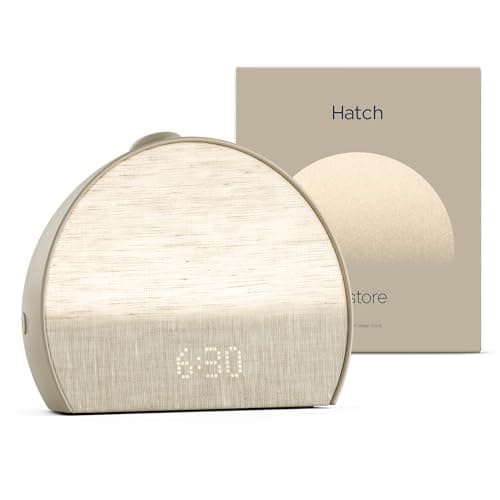
Hatch Restore 3
SHE Sleep-Wake Experience Score7.6/10Best overall — the only clock competing on light, sound, and Alexa ecosystem at once
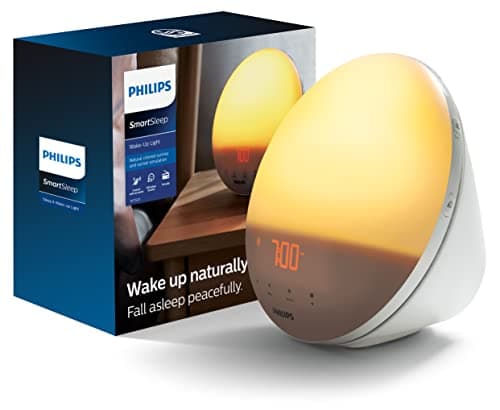
Philips SmartSleep Wake-up Light HF3520
SHE Sleep-Wake Experience Score7.1/10Leads on light alone — colored sunrise and sunset with zero subscription cost
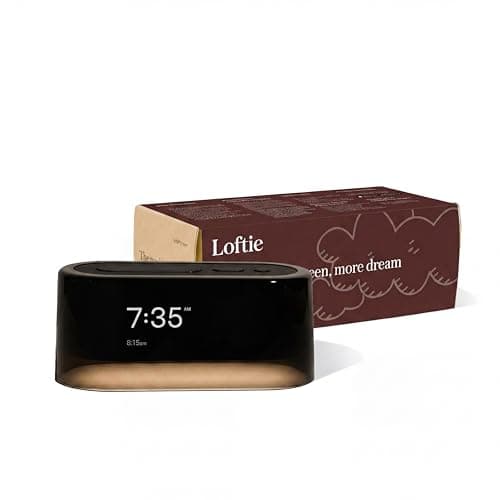
Loftie Alarm Clock
SHE Sleep-Wake Experience Score6.9/10Sound-first with a two-phase alarm; no sunrise light keeps it just behind the leaders
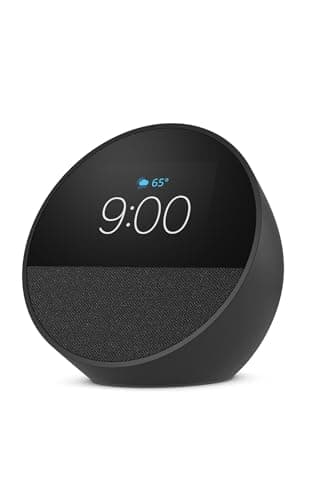
Amazon Echo Spot (2024)
SHE Sleep-Wake Experience Score6.4/10Budget all-rounder — category-best Alexa reach offsets a modest sunrise LED
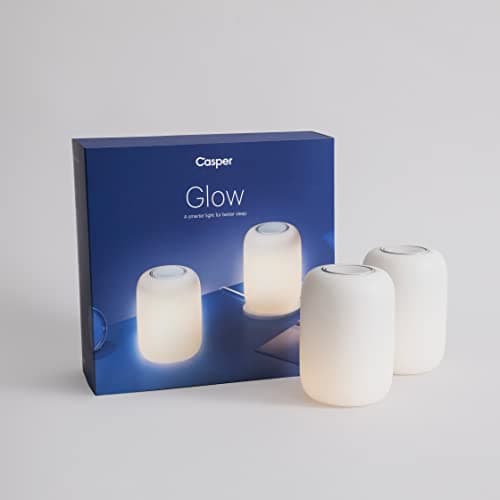
Casper Glow Light
SHE Sleep-Wake Experience Score5.6/10A beautiful bedside lamp with a wake fade — narrow light range and no sounds cap the score
SHE Sleep-Wake Experience Score
Four-factor proprietary rubric: sunrise color range (30%), sound library depth (25%), sleep-routine support (25%), smart-home integration (20%)
SmartHomeExplorer editorial analysis — 8 to 11 expert sources per product
Smart-Home Ecosystem Compatibility
Of the five sunrise clocks evaluated here, only two integrate meaningfully into a smart-home ecosystem, and they occupy opposite ends of the price range, which fundamentally complicates the connectivity calculation for households committed to a particular platform.
Amazon Echo Spot (2024): Native Alexa throughout. It controls every Alexa-compatible light, plug, lock, and thermostat from the nightstand, and any Alexa routine drives its sunrise alarm, which fades the screen in over a 30 mins window. It requires the Amazon ecosystem — there is no Google Home or Apple HomeKit support, so it remains an Alexa device exclusively. If your residence operates on Alexa, nothing here matches its ecosystem reach for $44.99.
Hatch Restore 3: Built-in Alexa with the Hatch Sleep app layered above. It triggers a whole-home routine, dims connected lighting, or adjusts the thermostat by voice from the nightstand, and its color sunrise ramps for up to 60 mins ahead of the alarm. Initial setup runs about 10 mins. Like the Echo Spot, it is Alexa-only — no Google Home or HomeKit — so a Google-first household forfeits the voice layer entirely.
Philips SmartSleep HF3520, Loftie Alarm Clock, and Casper Glow Light: Standalone or app-only. The Philips operates autonomously with no app or voice, completing setup in under 5 mins, and its colored sunrise brightens across a 30 mins ramp that earns the highest sunrise score of any non-Alexa pick here. Loftie pairs a Bluetooth speaker to your phone yet exposes no Alexa, Google Home, or HomeKit surface. The Casper Glow fades up warmly over a 30 mins routine and integrates with nothing beyond its own application. For these three, the clock remains a capable bedside device rather than a genuinely connected one.
If a sunrise clock that participates in whole-home routines is the objective, the honest answer is Alexa or nothing today: the Echo Spot and Hatch Restore 3 achieve that integration, and only when Alexa is your platform — a conclusion Wirecutter and PCMag both reach in their respective roundups.
When NOT to Buy
A sunrise alarm clock represents a questionable purchase when you already wake effortlessly within several minutes, because the documented benefit concentrates among people who genuinely struggle with dark-morning wake-ups. It also disappoints couples on divergent schedules: a 30 mins ramp wakes both occupants simultaneously, which without a sleep mask manufactures friction. For overnight navigation that won't wake a light-sensitive partner, a low-glare option from our Best Smart Night Lights for Hallways 2026: 5 Picks roundup is the gentler choice.
Sunrise simulation only succeeds in a darkened room, so if your bedroom absorbs streetlight spill or faces east without blackout curtains, the gradual ramp becomes invisible against ambient illumination. The curtains determine whether the simulation works at all. Fix that foundation first: our Best Smart Sleep Systems 2026: 5 Scored & Ranked guide covers the blackout, HVAC, and bedroom automation a sunrise ramp depends on. And for whole-room dawn rather than a single bedside point, Best Circadian Rhythm Light for Sleep 2026: 5 Smart Bulbs scheduled to warm at sunset and cool at wake are the natural complement to the clock.
A sunrise clock assists waking; it does not document how you slept overnight, which is a distinction the SHE Sleep-Wake Experience Score deliberately captures by weighting routine support and light quality rather than any sleep-measurement capability the clocks here simply do not possess. If sleep-stage tracking is your actual objective, an under-mattress sensor belongs on the shopping list instead — consult Best Smart Home Wellness Devices 2026: 6 Picks for the recovery and tracking pillars, because the optimal configuration pairs a sunrise clock with a dedicated tracker for under 200 dollars combined.
Who Should Buy What
Who Should Buy What
| If you are… | Recommended pick |
|---|---|
Most people who want one device You want the best all-around sunrise wake experience — color light, a deep sound library, and Alexa control — and you'll pay for the subscription to unlock the full library | Hatch Restore 3 |
Subscription-averse light buyers You want a proven sunrise-and-sunset wake-up light with no app and no monthly fee, and you don't need smart-home or voice features | Philips SmartSleep Wake-up Light HF3520 |
Digital minimalists You want to remove your phone from the bedroom entirely and prefer a sound-first clock with a two-phase alarm and everything included for one price | Loftie Alarm Clock |
Bedroom-minimalist lamp seekers You want a beautiful, portable bedside lamp with a gentle wake fade and tactile flip-to-dim control, and you don't need alarm sounds or a true sunrise | Casper Glow Light |
Alexa households on a budget You already own Alexa devices and want the cheapest nightstand unit that combines a sunrise routine, a clock display, and full smart-home voice control | Amazon Echo Spot (2024) |
Frequently Asked Questions
Do sunrise alarm clocks actually work?
Yes for most people, with a caveat. Research on simulated dawn — gradual light increasing over roughly 30 mins before wake time — links it to better subjective sleep quality and morning alertness versus a standard tone alarm. The effect is strongest for people who struggle to wake in the dark, including those with delayed sleep phase tendencies, seasonal mood shifts, or shift-work schedules. If you already wake easily, the benefit is smaller, but the experience of a light fade rather than a jolting tone is still more pleasant. The Hatch Restore 3 and Philips SmartSleep HF3520 produce the most natural-looking color sunrise of the five clocks here.
What color range matters for a sunrise alarm clock?
The shift from warm amber toward cool daylight matters more than peak brightness on its own. That color-temperature change is what signals to the circadian photoreceptors in your eyes that dawn is happening, even at modest light levels. A clock that only fades up a single warm tone — like the Casper Glow Light's 2700K-only light — produces a gentler wake than a tone alarm, but it is not a true color sunrise. The Hatch Restore 3 and Philips SmartSleep HF3520 both perform a genuine warm-to-cool color shift across the ramp, which is why they score highest on the sunrise factor in our rubric.
Can I use a sunrise alarm clock with my smart home?
It depends on the clock. The Amazon Echo Spot (2024) integrates most deeply with an Alexa smart home — it controls lights, plugs, locks, and the thermostat from the nightstand, and Alexa routines can drive its sunrise alarm. The Hatch Restore 3 also has Alexa built in. The Philips SmartSleep HF3520, Loftie Alarm Clock, and Casper Glow Light operate independently with no voice-assistant integration. If whole-home routines are a priority, choose the Echo Spot or the Hatch Restore 3, and note that both are Alexa-only — neither supports Google Home or Apple HomeKit.
Is the Hatch Restore 3 worth the subscription?
The base Hatch Restore 3 works without a subscription — the free tier covers the color sunrise, basic scheduling, and built-in Alexa. Hatch+ at $5.99 per month unlocks the full sound library, guided sleep programs, and advanced scheduling, which over a 2-year horizon adds roughly $144 to the total cost. For someone who uses sleep sounds every night and wants guided wind-downs, the subscription earns its keep; for someone who mainly wants the sunrise and a handful of sounds, the free tier is genuinely enough. If a recurring fee is a dealbreaker, the Philips SmartSleep HF3520 delivers a strong sunrise with no subscription at all.
Should I buy a sunrise clock or a sleep tracker?
They solve different problems, so the best setup often uses both. A sunrise alarm clock helps you wake up more naturally in the morning; a sleep tracker tells you what happened while you slept. None of the five clocks here is a substitute for an under-mattress sensor or wearable when your goal is sleep-stage data. If you want both, pair a sunrise clock like the Hatch Restore 3 with a dedicated tracker — see our wellness hub for the recovery and tracking picks. Buy the sunrise clock for better mornings and the tracker for the data; neither replaces the other.
Philips SmartSleep vs Hatch Restore 3 — which sunrise alarm should I buy?
Both produce a genuine warm-to-cool color sunrise, which is why they take the top two spots in our rubric, but they aim at different buyers. The Hatch Restore 3 scores 7.6 — the highest here — because it adds built-in Alexa and the deepest sound library, so it can dim your lights or nudge the thermostat from bed; its full library sits behind Hatch+ at $5.99 per month, and the device is $135.99. The Philips SmartSleep HF3520 scores 7.1 and leads on light alone: colored sunrise plus a sunset wind-down with no app, no voice, and no subscription at $87.19, but it can't touch your smart home. Choose the Hatch if you want one connected device for light, sound, and Alexa; choose the Philips for a proven standalone light with nothing to pay monthly.
Bottom Line
Get the Hatch Restore 3 if Get the Hatch Restore 3 if you want the best all-around sunrise alarm clock — color light, the deepest sound library here, and built-in Alexa — with optional $5.99/mo Hatch+ at $135.99.
Get the Philips SmartSleep Wake-up Light HF3520 if Get the Philips SmartSleep HF3520 if you want a proven sunrise-and-sunset light with no app and no subscription — the best pure wake-up light here at $87.19.
Get the Loftie Alarm Clock if Get the Loftie Alarm Clock if you want a premium, phone-free clock with a two-phase alarm and 100+ sounds included free for life at $169.99 list — just know it has no sunrise light.
Get the Casper Glow Light if Get the Casper Glow Light if you want a portable, tactile bedside lamp with a gentle wake fade and no apps at night — a $151.80 double pack, but a lamp first, not a true sunrise clock.
Get the Amazon Echo Spot (2024) if Get the Amazon Echo Spot (2024) if you're in an Alexa home and want a $44.99 nightstand device that does sunrise, time, and full smart-home voice control for the least money.
You already wake easily without an alarm, you share a bed with a partner on a different schedule, or your bedroom can't be made dark — sunrise simulation only pays off in a genuinely blacked-out room.
Sources & Methodology
Methodology: SHE Sleep-Wake Experience Score — Formula: (Sunrise Color Range × 0.30) + (Sound Library Depth × 0.25) + (Sleep-Routine Support × 0.25) + (Smart-Home Integration × 0.20). Factors: Sunrise Color Range (30%): Breadth of the warm-to-cool color shift and the length and control of the ramp before alarm time. Weighted highest because the color change — not raw brightness — is what signals dawn to the circadian photoreceptors in the eye, so the range of the shift determines how natural the wake feels. | Sound Library Depth (25%): How many high-quality sleep and wake sounds ship with the device, including white noise, nature beds, and guided wind-downs, and whether the full library is free or gated behind a subscription. Assessed across Wirecutter, PCMag, and Tom's Guide coverage. | Sleep-Routine Support (25%): Whether the clock supports structured wind-down and wake routines, two-phase or progressive alarms, sunset modes, and per-user schedules — the design choices that determine whether the device shapes a routine or just goes off in the morning. | Smart-Home Integration (20%): Native voice assistant support, manufacturer app quality, and the ability to trigger whole-home routines through Alexa, Google Home, or HomeKit from the nightstand. Weighted to reward ecosystem reach without overvaluing connectivity above the core wake experience.
Expert review sources used in this analysis:
- SmartHomeExplorer aggregated expert reviews from Wirecutter, CNET, PCMag, Tom's Guide, and The Verge across 8 to 11 sources per product, supplemented by manufacturer specification sheets from Hatch, Philips, Loftie, Casper, and Amazon
- The SHE Sleep-Wake Experience Score is a proprietary weighted formula rubric (Sunrise Color Range 30%, Sound Library Depth 25%, Sleep-Routine Support 25%, Smart-Home Integration 20%) developed specifically for the sunrise alarm clock category
- Each component score derives from verified manufacturer specifications cross-checked against the aggregated reviewer assessments, and the composite normalizes those factor inputs into a single comparable tier
- Amazon pricing was verified as of June 2026, within 30 days of publication
- Ecosystem compatibility across Alexa, Google Home, and HomeKit was confirmed against each manufacturer's product documentation
- No manufacturer provided payment or early access in exchange for the SHE Sleep-Wake Experience Score coverage.
Nicholas Miles is the founder of SmartHomeExplorer and a longtime smart home enthusiast focused on helping everyday homeowners make better technology decisions. He researches, compares, and writes about products across security, climate, lighting, leak prevention, sensors, home energy, and automation, with an emphasis on real-world usefulness, ecosystem compatibility, reliability, privacy, and long-term value.
Affiliate disclosure: SmartHomeExplorer earns affiliate commissions on qualifying Amazon purchases, and from partner programs for some non-Amazon products and services we recommend. Our scoring methodology is independent of affiliate relationships.