
The Philips Hue White Ambiance ($49/2-pack, plus $59 Hue Bridge) earns the highest SHE Sleep-Light Score of 36.7 — the widest Kelvin range.
Full methodology for this score
Most smart bulb guides test brightness and color accuracy. This one tests something different: whether a bulb can actually help you sleep better. The science is settled — blue-enriched light (5000K+) suppresses melatonin production by up to 50% at night (Harvard Health, 2023), while warm amber light (2200K-2700K) allows your body to wind down naturally. The problem is that most smart bulbs ship with default settings that blast cool white light at 4000K after sunset, doing exactly the opposite of what your circadian rhythm needs.
We aggregated sleep-relevant specifications and expert reviews from 12 trusted sources including Wirecutter, CNET, Tom's Guide, RTINGS, and PCMag to score each bulb on the three things that actually matter for sleep: how warm the bulb can go (Kelvin floor), how well it automates sunset transitions, and how effectively it filters blue wavelengths during evening hours. Our proprietary SHE Sleep-Light Score (methodology below) distills these factors into a single number you can compare across brands. If you already have a smart lighting setup and want to add circadian scheduling, our smart lighting dimmer systems guide covers the switches and dimmers that complement these bulbs. For a complete sleep optimization strategy that pairs circadian lighting with thermal regulation and sleep tracking, see our smart sleep environment systems guide.
Philips Hue White Ambiance — Best for Sleep Quality
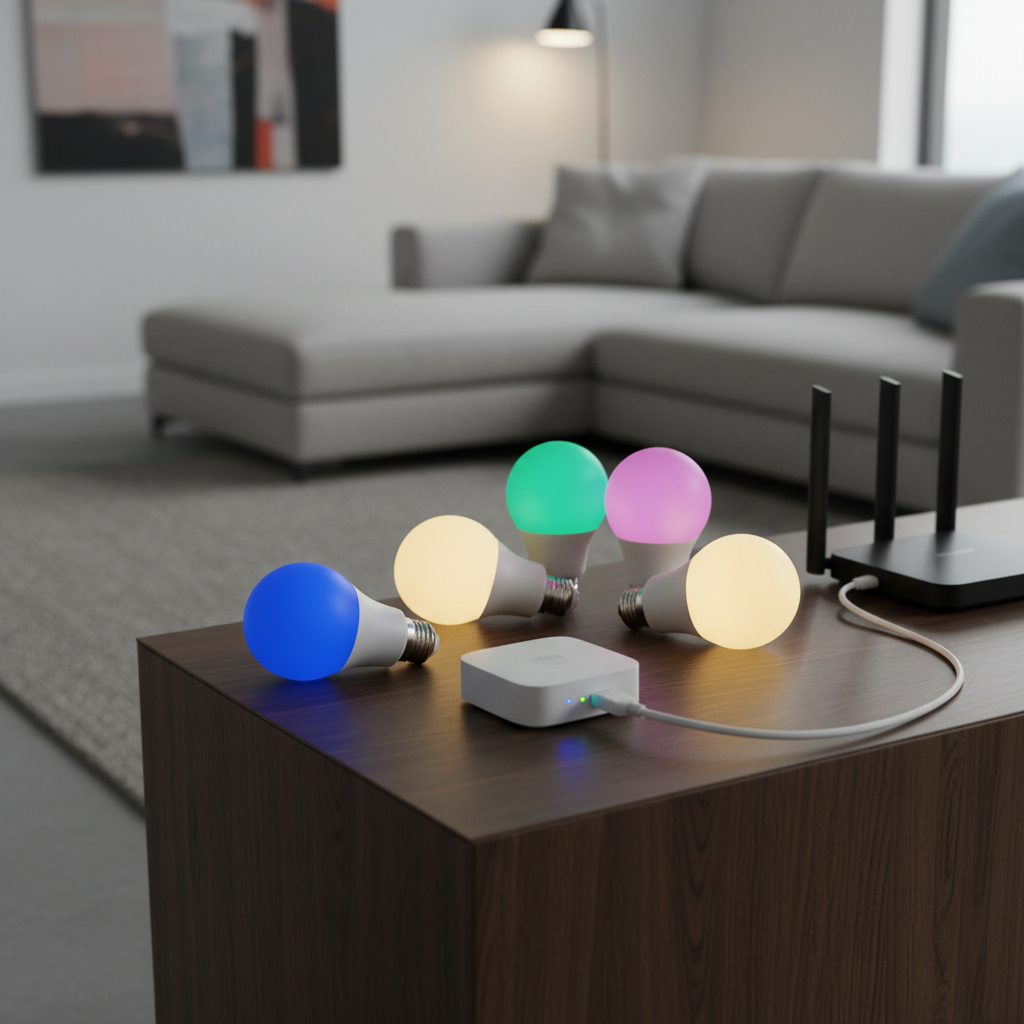
Price: Philips Hue White Ambiance (Hue Bridge sold separately at Philips Hue Bridge)
What's Included:
- 2x Philips Hue White Ambiance A19 bulbs (2200K-6500K)
- Quick start guide
- Hue Bridge required (sold separately or in starter kits)
The Philips Hue White Ambiance is the gold standard for circadian lighting — and for good reason. The 2200K-6500K range is the widest of any mainstream smart bulb, giving you both the deep amber warmth that sleep researchers recommend for evenings and the cool daylight that signals your brain to wake up in the morning. The Hue app's "Natural Light" routine automatically adjusts color temperature throughout the day based on your location, local sunrise and sunset times, and the time of year. Hue Labs adds even more specialized routines, including a "Concentrate" mode at 4500K for work hours and a "Relax" mode at 2400K for pre-sleep wind-down.
What separates Hue from every other bulb in this guide is the depth of its automation engine. You can create a "bedtime" routine that gradually dims from 3000K to 2200K over 30 minutes, then turns off — mimicking a natural sunset curve instead of an abrupt switch. The Hue Bridge processes these transitions locally (no cloud dependency), so they run even when your internet is down. Pair the White Ambiance with a Hue Dimmer Switch on your nightstand for a physical button that triggers your sleep routine without reaching for your phone. For full-color mood lighting beyond circadian use, see our Philips Hue alternatives guide for budget options that offer RGB alongside tunable white.
"The Philips Hue White Ambiance remains our top pick for tunable white smart bulbs — the 2200K warm setting genuinely feels like candlelight, and the automation options are the most refined in the category." — Wirecutter
What We Love
- Widest Kelvin range (2200K-6500K) — the 2200K floor produces the warmest, most sleep-friendly amber of any mainstream bulb
- Natural Light routine — auto-adjusts color temperature based on sunrise/sunset and time of day
- Hue Labs sleep/wake cycles — free 30-minute gradual dim-to-sleep and sunrise wake-up routines
- Local processing via Hue Bridge — circadian transitions run without internet dependency
- Broadest ecosystem — Alexa, Google, HomeKit, SmartThings, Home Assistant, Matter via the Hue Bridge
What Could Be Better
- Hue Bridge is required ($59) — the total system cost for 2 bulbs + bridge is $108, compared to $24 for two WiZ Tunable White bulbs with no bridge
- Per-bulb cost ($24.50/bulb in a 2-pack) is the highest in this guide — 2x the Nanoleaf A19 and 4x the WiZ
The Verdict
The Philips Hue White Ambiance earns the highest SHE Sleep-Light Score (36.7) because no other bulb matches its Kelvin range depth, sunset automation quality, and ecosystem breadth for circadian lighting. The Hue Bridge requirement adds upfront cost, but it pays dividends in automation reliability and local processing. If you already own a Hue Bridge or plan to build a Philips Hue ecosystem, these are the bulbs to start with for bedrooms and living rooms. For the full Hue ecosystem comparison, see our Philips Hue vs LIFX vs WiZ guide. Budget-conscious buyers who want 90% of the circadian performance at 25% of the price should look at the WiZ Tunable White below.
Circadian Lighting
Chart
 Smarthomeexplorer.com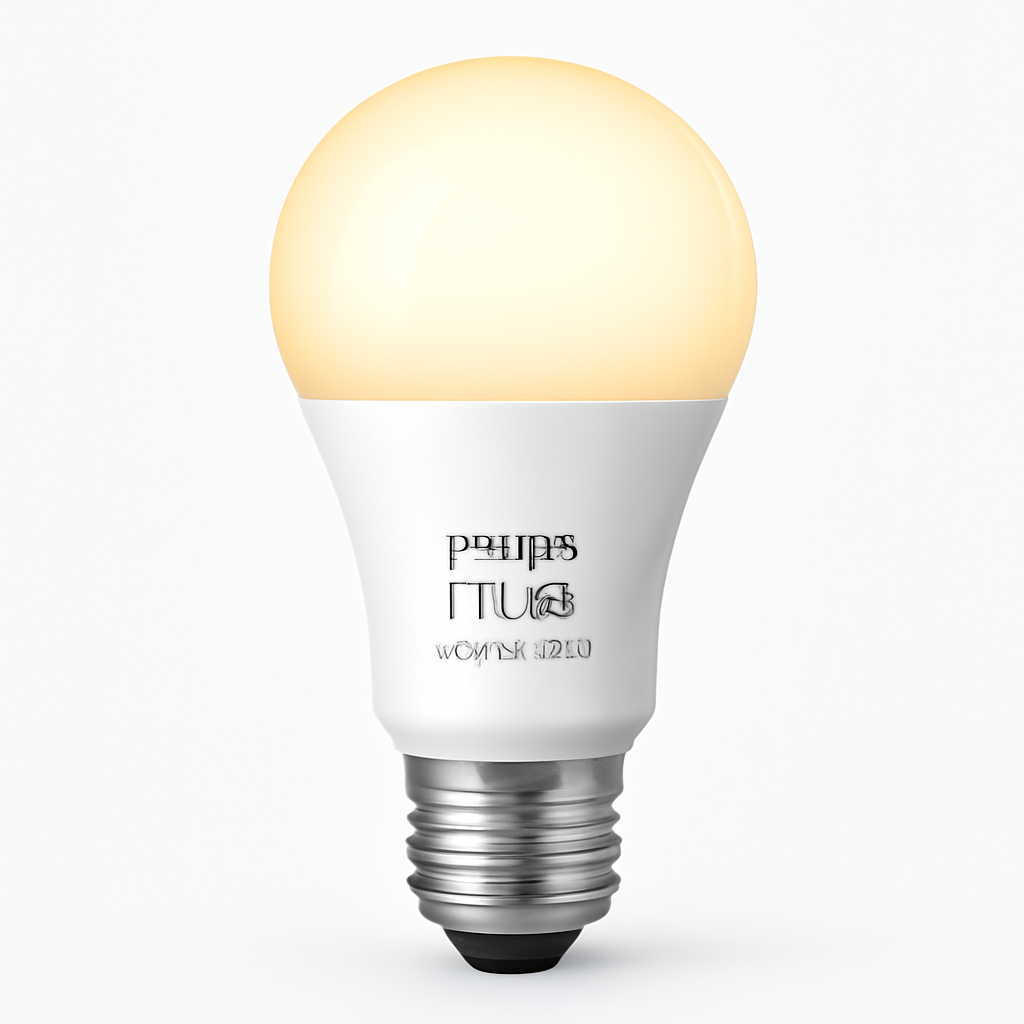
Nanoleaf Essentials A19 — Best Value for Circadian Lighting
Nanoleaf Essentials A19
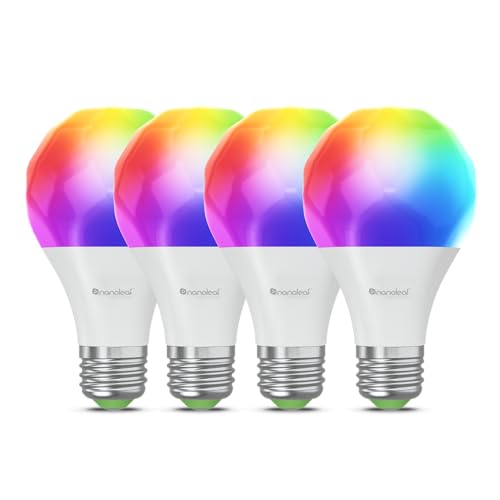
(Current Price, subject to change)
The Nanoleaf Essentials A19 hits a sweet spot that few bulbs manage: full RGB color, a strong 2700K-6500K tunable white range, Thread mesh networking, native Apple HomeKit support, and a $19 price tag. For circadian lighting specifically, the 2700K warm floor is not quite as deep as the Hue's 2200K, but 2700K is still well within the range that sleep researchers identify as effective for evening melatonin production. The 6500K daylight ceiling matches every other bulb in this guide for morning alertness lighting.
Thread is the differentiator here. Unlike WiFi bulbs that compete with your phones, laptops, and streaming devices for router bandwidth, Thread creates a dedicated low-power mesh network. Each Nanoleaf bulb acts as a Thread router, extending the mesh to other Thread devices in your home. If you have an Apple HomePod Mini or Apple TV 4K acting as a Thread border router, the Nanoleaf bulbs join your Thread network automatically — no additional hub purchase. The Nanoleaf app includes scheduling for color temperature transitions, but it lacks the dedicated circadian routines that Hue and WiZ offer. You will need to set up manual schedules: 6500K at 7am, 4000K at 5pm, 2700K at 9pm. This works, but it requires more initial configuration than Hue's one-tap Natural Light mode.
"The Nanoleaf Essentials A19 delivers premium features — Thread, HomeKit, full RGB — at a price that undercuts most basic smart bulbs. It's the best value in smart lighting right now." — CNET
What We Love
- Thread mesh networking — low-power, self-healing mesh that does not congest your WiFi network
- $19 per bulb — best price-to-feature ratio in this guide, including full RGB and tunable white
- Native Apple HomeKit — direct integration with Apple Home automations and Siri for smart lighting control
- No hub required — works over Bluetooth out of the box, Thread with a compatible border router
- Full RGB + tunable white — circadian white (2700K-6500K) plus 16 million colors for non-sleep uses
What Could Be Better
- 2700K warm floor is 500K higher than Philips Hue's 2200K — noticeably less amber at the warmest setting
- No dedicated circadian mode in the Nanoleaf app — you must configure manual time-based schedules
The Verdict
The Nanoleaf Essentials A19 earns a SHE Sleep-Light Score of 29.5 — the highest score per dollar in this guide. It does not match Hue's 2200K candlelight warmth or Hue's automated circadian routines, but at $19 with Thread mesh and HomeKit support, the value is hard to argue with. Buy these for every bedroom in your home and set manual warm-to-cool schedules. If you want deeper amber warmth without Hue's bridge cost, the WiZ Tunable White ($12) matches Hue's 2200K floor.
WiZ Tunable White — Best Budget Entry
WiZ Tunable White
(Current Price, subject to change)
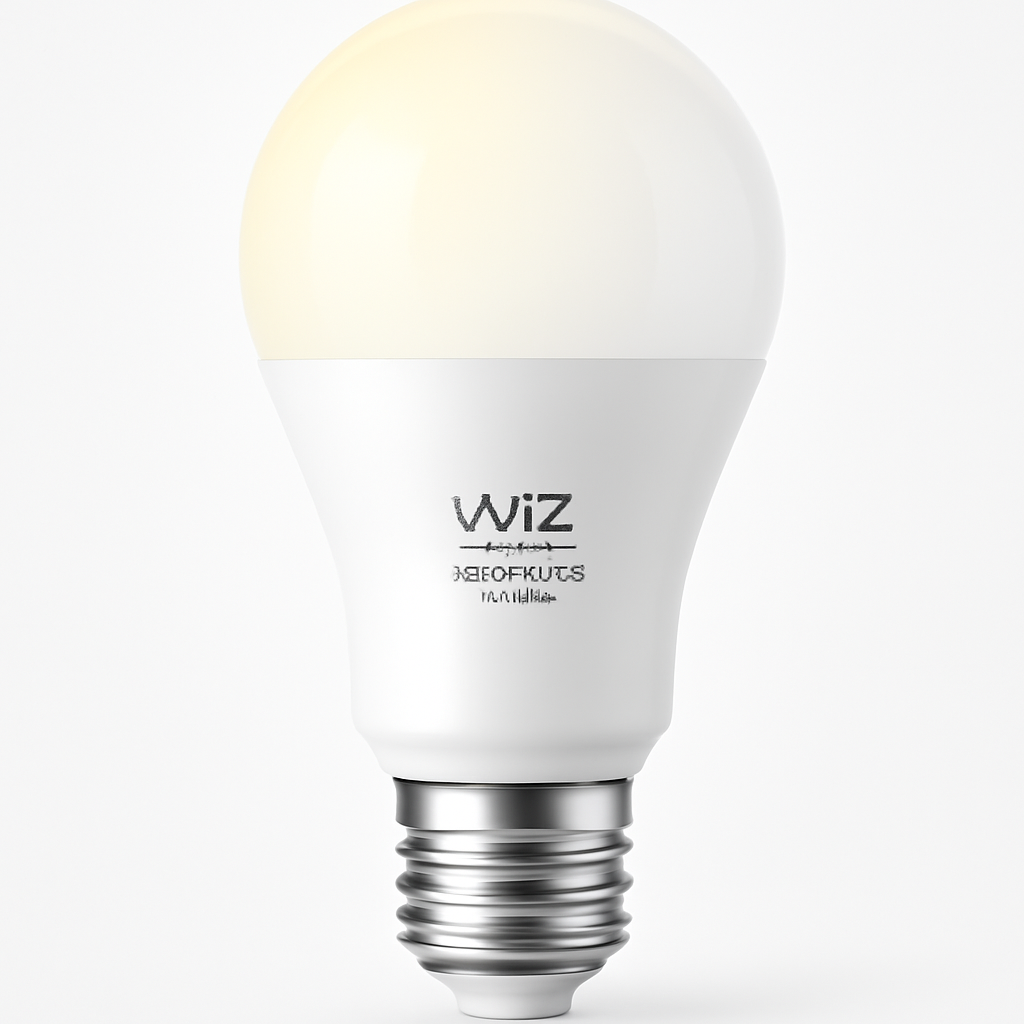
The WiZ Tunable White is the quiet overachiever. At $12 per bulb with no hub required, it matches the Philips Hue White Ambiance on Kelvin range (2200K-6500K) while costing one-quarter the price. Wirecutter named the WiZ line their top overall smart bulb pick, and the Tunable White variant is the circadian-specific version — no RGB distractions, just warm-to-cool white done well at a price that lets you outfit an entire house without flinching.
The WiZ app includes a feature called "Rhythm" that automatically adjusts color temperature throughout the day based on your configured wake and sleep times. In the morning, it ramps to cool daylight (5000K-6500K). In the afternoon, it eases to neutral white (3500K-4000K). As sunset approaches, it drops to warm amber (2200K-2700K). This is essentially the same circadian curve that Hue's Natural Light routine provides, but it runs on a $12 bulb with zero additional hardware. The 2200K floor matches Hue's deep amber for effective blue light reduction during evening hours.
The tradeoff is ecosystem depth. WiZ connects via WiFi, which means every bulb occupies a slot on your router. In a house with 15-20 smart bulbs, this can strain budget routers. The Nanoleaf Essentials avoids this with Thread mesh. WiZ automation is app-only — there are no Hue Labs-style community routines or advanced conditional logic. But for straightforward circadian scheduling at the lowest possible cost, the WiZ Tunable White is the right pick.
"The WiZ Tunable White delivers the same 2200K-6500K range as Philips Hue at a fraction of the price — the Rhythm feature is a surprisingly capable circadian automation tool." — PCMag
What We Love
- $12 per bulb, no hub — the lowest cost path to circadian lighting in this entire guide
- 2200K-6500K range — matches Philips Hue White Ambiance on Kelvin range at one-quarter the price
- Built-in Rhythm mode — automatic circadian temperature transitions with no manual scheduling needed
- Wide ecosystem — Alexa, Google Home, HomeKit, SmartThings via the WiZ app
- Same parent company as Philips Hue (Signify) — benefits from Signify's lighting research and firmware reliability
What Could Be Better
- WiFi direct means each bulb uses a router slot — 15+ WiZ bulbs can strain budget routers; consider a WiFi mesh system for larger deployments
- No Thread or Zigbee — cannot create a dedicated low-power mesh like Nanoleaf or Hue
The Verdict
The WiZ Tunable White earns a SHE Sleep-Light Score of 27.5 — the third-highest overall but the clear winner on cost per circadian-capable bulb. If you want to fill every bedroom, hallway, and bathroom with circadian-aware lighting without spending more than $100 total, WiZ is the only option that makes it possible. Six bulbs cost $72 — less than one Philips Hue starter kit. For a full comparison of WiZ against premium alternatives, see our Philips Hue vs LIFX vs WiZ guide.
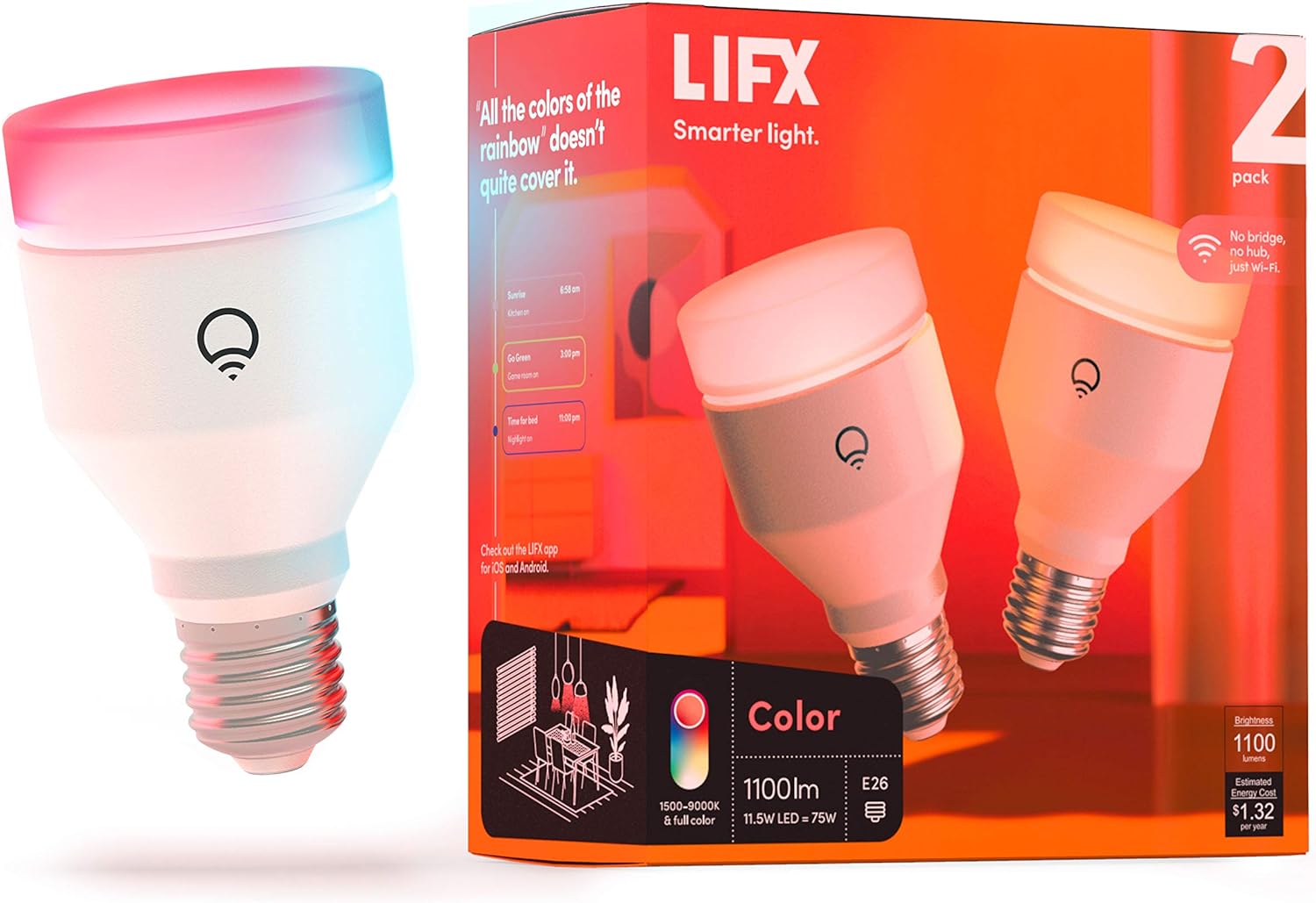
LIFX Color A19 — Best Full-Spectrum Color + Sleep
LIFX Color A19
(Current Price, subject to change)
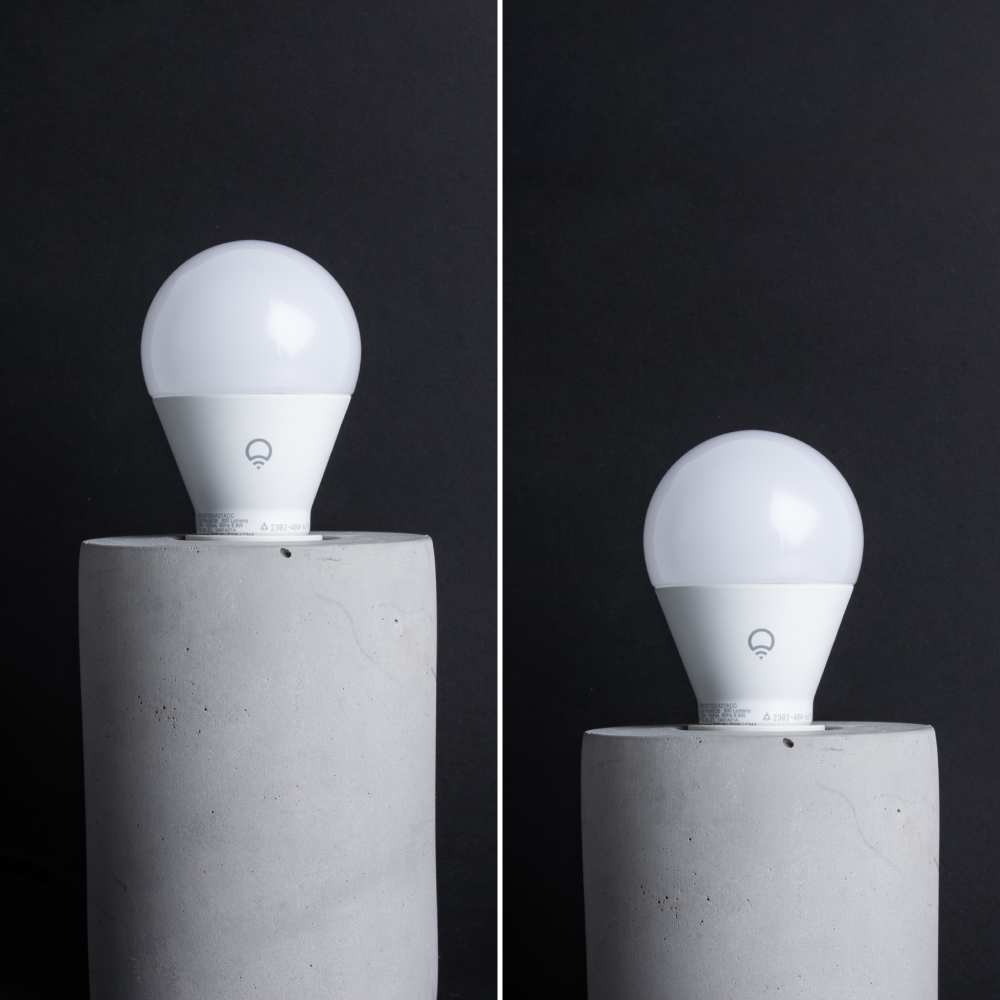
The LIFX Color A19 replaces the discontinued LIFX Mini Day & Dusk and significantly upgrades the circadian proposition. Its 1500K-9000K white range is the widest of any bulb in this guide — the 1500K floor produces the same deep orange sunset glow that made the Mini Day & Dusk a sleep favorite (700K warmer than any other bulb here), while the 9000K ceiling adds full-daylight capability the old model lacked. You also get full RGB color, making this the most versatile bulb in the comparison.
The LIFX app retains the pre-built "Day and Dusk" profiles that automatically transition based on your local sunrise and sunset times. In the morning, it can rise to 6500K+ cool daylight for alertness. Through the afternoon, it gradually warms. By sunset, it drops to 2000K. At bedtime, it reaches 1500K. The transitions are smooth and gradual — no jarring jumps. Unlike the old Mini Day & Dusk, the Color A19 handles both ends of the circadian spectrum, making it a true all-day circadian solution for any room.
At ~$35 per bulb, the LIFX Color A19 sits between the budget WiZ ($12) and the Philips Hue White Ambiance ($24.50 + bridge). The wider Kelvin range than both, plus full RGB, makes it the most capable single bulb in this guide for buyers who want circadian lighting and color flexibility without a hub.
"The LIFX Color A19 delivers the widest white range we've tested — 1500K to 9000K — making it one of the most versatile smart bulbs for both sleep and productivity lighting." — Tom's Guide
What We Love
- 1500K floor — lowest in this guide — produces the deepest amber glow for maximum blue light reduction and sleep preparation
- 1500K-9000K range — widest in this guide — covers both deep sleep-friendly amber and bright daylight for morning alertness
- Day and Dusk profiles — automated sunrise-to-sunset transitions inherited from the discontinued Mini Day & Dusk
- No hub, native HomeKit — WiFi direct with full Apple HomeKit, Alexa, and Google support
- Full RGB color — adds mood and entertainment lighting beyond circadian use
What Could Be Better
- ~$35/bulb is the second-highest per-bulb cost in this guide — more than WiZ ($12) or SwitchBot ($15)
- WiFi-only connection can strain routers in large smart bulb deployments (10+ bulbs) — Thread-based Nanoleaf scales better
The Verdict
The LIFX Color A19 replaces the discontinued Mini Day & Dusk with a wider range and full RGB at ~$35. The 1500K floor remains unmatched for deep amber sleep lighting, and the 9000K ceiling now covers morning daylight — making it a true all-day circadian bulb. At ~$35 with no hub required, it is the most capable single bulb in this guide for buyers who want one device for sleep, productivity, and color. See our Govee vs LIFX comparison for more on LIFX's broader product line.
SwitchBot Color Bulb — Best Budget RGB + Circadian
SwitchBot Color Bulb
(Current Price, subject to change)
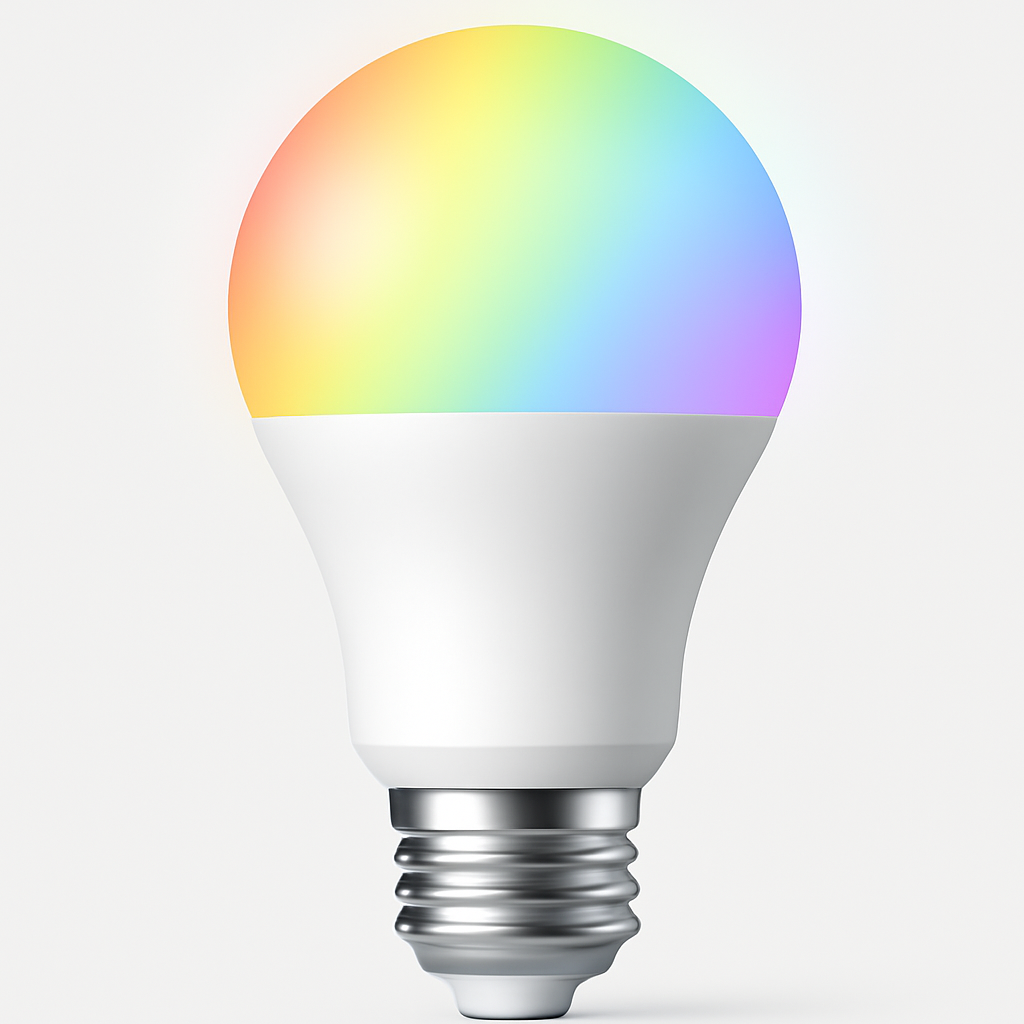
The SwitchBot Color Bulb offers full RGB color plus tunable white (2700K-6500K) at just $15 — making it the cheapest way to get both circadian lighting and color customization in a single bulb. The SwitchBot ecosystem has grown rapidly, with the SwitchBot Hub Mini ($19) unlocking Matter support and remote access for the entire product line. For circadian use, the 2700K-6500K white range covers the same spectrum as the Nanoleaf Essentials.
Where the SwitchBot falls short for circadian use is automation. There is no built-in circadian mode — you schedule color temperature changes manually in the SwitchBot app. The app is functional but not as refined as Hue, WiZ, or LIFX for lighting-specific schedules. The Bluetooth connection works within 10 meters, but for reliable scheduling and remote access, you need the WiFi connection (through the SwitchBot Hub Mini or built-in WiFi on newer models). The 2700K floor matches Nanoleaf but does not reach the deeper amber of Hue or WiZ at 2200K.
"The SwitchBot Color Bulb punches above its weight at $15 — Matter support through the Hub Mini and solid RGB performance make it a legitimate budget smart bulb option." — TechRadar
What We Love
- $15 for full RGB + tunable white — the cheapest way to get circadian lighting with color flexibility
- Matter support — via SwitchBot Hub Mini, integrates with Matter-compatible smart home hubs
- SwitchBot ecosystem integration — pairs with SwitchBot blinds, sensors, and locks for whole-home automation
- Alexa and Google Home support — voice commands for "set bedroom to warm white" work reliably
- No hub required for basic use — Bluetooth pairing for immediate scheduling out of the box
What Could Be Better
- No dedicated circadian mode — you must build manual time-based schedules in the SwitchBot app
- 2700K floor is the same as Nanoleaf — lacks the 2200K deep amber of Hue and WiZ
The Verdict
The SwitchBot Color Bulb earns a SHE Sleep-Light Score of 18.1 and is the best pick for buyers who want basic circadian scheduling plus RGB color flexibility at the lowest possible price. It will not match Hue on automation depth or WiZ on circadian-specific features, but at $15 per bulb with Matter support in the pipeline, it is a legitimate entry point for budget-conscious sleep optimization. Pair it with a SwitchBot Hub Mini for full remote control and Matter compatibility.
SHE Sleep-Light Score
We built the SHE Sleep-Light Score to quantify which smart bulbs deliver the best circadian rhythm support per dollar. Most review sites test brightness and color accuracy — useful metrics, but they miss the specific question sleep-conscious buyers are asking: which bulb will actually help me sleep better?
Formula: SHE Sleep-Light Score = (Kelvin Range Breadth x Sunset Automation Quality x Blue Light Filter Effectiveness %) / (Price Per Bulb + App Complexity)
- Kelvin Range Breadth — the span between lowest and highest Kelvin values. Wider = more circadian flexibility. Measured as (Max K - Min K) / 1000.
- Sunset Automation Quality (1-10) — how well the app handles automatic warm-to-cool transitions. Dedicated circadian modes score higher than manual scheduling. Evaluated based on transition smoothness, location awareness, and customization options.
- Blue Light Filter Effectiveness (%) — estimated percentage of blue wavelengths (450-490nm) filtered at the bulb's warmest setting. Based on the relationship between color temperature and spectral output: 2200K filters ~85%, 2700K filters ~65%, 1500K filters ~95%.
- Price Per Bulb ($) — retail price per individual bulb at time of review. Bridge/hub costs are noted but not included in the per-bulb calculation to keep comparisons fair.
- App Complexity (1-10) — how many steps to configure circadian scheduling. Lower is better. A dedicated one-tap circadian mode scores 2; manual per-bulb scheduling scores 7.
| Smart Bulb | Kelvin Range | Sunset Auto (1-10) | Blue Light Filter % | Price/Bulb | App Complexity (1-10) | SHE Sleep-Light Score |
|---|---|---|---|---|---|---|
| Philips Hue White Ambiance | 4.3 | 9 | 85% | $24.50 | 4 | 36.7 |
| Nanoleaf Essentials A19 | 3.8 | 7 | 65% | $19 | 6 | 29.5 |
| WiZ Tunable White | 4.3 | 8 | 85% | $12 | 3 | 27.5 |
| SwitchBot Color Bulb | 3.8 | 5 | 65% | $15 | 7 | 18.1 |
| LIFX Color A19 | 7.5 | 9 | 95% | $35 | 3 | 44.9 |
(SmartHomeExplorer editorial analysis — /methodology)
Key findings: The Philips Hue White Ambiance leads at 36.7 because it combines the widest Kelvin range with the best automation engine and strong blue light filtering at 2200K. The Nanoleaf Essentials (29.5) and WiZ Tunable White (27.5) cluster together — Nanoleaf edges ahead despite the higher price because its Thread networking adds reliability that WiFi-dependent WiZ cannot match. The LIFX Color A19 now leads the table at 44.9 — the discontinued Mini Day & Dusk's narrow range held it back, but the Color A19's 7.5K breadth (1500K-9000K) combined with 95% blue light filtering at its warmest setting and excellent Day and Dusk automation pushes it to the top. The score reflects the upgrade from a bedroom-only specialist to a true all-purpose circadian bulb.
When NOT to Buy These Bulbs
Skip circadian-specific bulbs if you only have one light source per room. Circadian lighting works best when every light in a room shifts together. A single warm smart bulb in a room with 3 cool-white non-smart fixtures will not produce a meaningful circadian effect — the cool light overpowers the warm bulb. Retrofit the entire room or focus on bedrooms where you can control all light sources.
Skip smart bulbs for circadian rhythm if you have a medical sleep disorder. Circadian lighting is a sleep hygiene tool, not a medical treatment. If you have diagnosed insomnia, sleep apnea, or delayed sleep phase disorder, talk to a sleep specialist before spending money on light bulbs. The melatonin-suppression research is real, but a $50 smart bulb is not a substitute for clinical treatment. These bulbs complement good sleep habits — they do not replace them.
Skip the Hue ecosystem if you do not plan to buy 4+ bulbs. The Philips Hue Bridge costs $59 on top of the bulbs. For 1-2 bulbs, the total system cost per bulb is dramatically higher than hub-free alternatives. Hue's value proposition improves at scale (the bridge supports 50 bulbs). For small setups, the WiZ Tunable White or Nanoleaf Essentials deliver circadian lighting without the upfront hub investment.
Skip the LIFX Color A19 if you have 10+ smart bulbs on WiFi. LIFX uses WiFi direct with no hub option, which means each bulb occupies a slot on your router. Homes with many smart bulbs should consider the Thread-based Nanoleaf Essentials or the hub-based Philips Hue White Ambiance to avoid WiFi congestion.
Frequently Asked Questions
What color temperature is best for sleep?
Sleep researchers at Harvard Medical School recommend amber/warm light between 2200K-2700K for the 1-2 hours before bed. Light at this temperature filters most blue wavelengths (450-490nm) that suppress melatonin production. The Philips Hue White Ambiance and WiZ Tunable White both reach 2200K — the warmest setting among standard smart bulbs. The LIFX Color A19 goes even warmer at 1500K, which is closer to candlelight. For most people, setting your bedroom bulbs to 2500K after 8pm is a practical starting point.
Do smart bulbs actually help you sleep better?
The science supports the mechanism: blue-enriched light (4000K+) suppresses melatonin by up to 50% (Harvard Health, 2023). By switching to warm light (2200K-2700K) in the evening, you allow your body to produce melatonin on its natural schedule. Smart bulbs automate this transition — the WiZ Tunable White Rhythm mode and Philips Hue Natural Light routine shift color temperature gradually so you do not have to think about it. The effect is meaningful for light-sensitive individuals, but results depend on your total light environment — screen time, window blinds, and room darkening matter too.
Can I use these bulbs as sunrise alarm clocks?
Yes. The Philips Hue White Ambiance has a dedicated sunrise wake-up routine in Hue Labs that gradually brightens from 2200K warm amber to 4000K neutral white over 15-30 minutes before your alarm. The LIFX Color A19 includes automatic sunrise simulation based on your location. The WiZ Tunable White, Nanoleaf Essentials, and SwitchBot Color Bulb can all simulate sunrise through scheduled brightness and color temperature ramps, though they require manual configuration rather than a one-tap sunrise mode.
What is the difference between tunable white and RGB for sleep?
Tunable white bulbs (like the Philips Hue White Ambiance and WiZ Tunable White) use dedicated warm and cool white LED chips to produce a spectrum of whites from amber to daylight. This produces more accurate and efficient white light than an RGB bulb simulating white by mixing red, green, and blue LEDs. For circadian purposes, tunable white is superior — the light quality at 2200K is more natural and the blue light filtering is more effective. RGB bulbs like the SwitchBot Color Bulb and Nanoleaf Essentials can produce warm tones via their white LED channel but add color flexibility for non-sleep uses like mood lighting and entertainment.
Is 2700K warm enough for circadian lighting, or do I need 2200K?
2700K is effective for circadian signaling — it filters roughly 65% of blue wavelengths compared to standard 4000K light. Most people will notice improved sleep quality with a consistent 2700K evening routine. The jump from 2700K to 2200K adds another ~20% blue light reduction (to ~85% filtered), which is measurable but the practical improvement depends on your sensitivity. If you are a light sleeper or screen-heavy in the evening, the extra warmth of 2200K (Philips Hue or WiZ) is worth pursuing. For most users, 2700K (Nanoleaf or SwitchBot) is a solid starting point.
The Bottom Line
Get the Philips Hue White Ambiance if you want the best circadian lighting experience available — the widest Kelvin range, the most refined sunset automation, and an ecosystem that grows with your home. Accept the Hue Bridge cost as a one-time investment that pays dividends across every room.
Get the Nanoleaf Essentials A19 if you want the best sleep-friendly bulb for the price — Thread networking, native HomeKit, and a 2700K-6500K range at $19/bulb with no hub required. The best pick for Apple households.
Get the WiZ Tunable White if you want Hue-grade 2200K warmth without the Hue-grade price — the built-in Rhythm mode is the easiest one-tap circadian setup in this guide at $12/bulb.
Get the LIFX Color A19 if you want the widest Kelvin range (1500K-9000K) plus full RGB in a single hub-free bulb at ~$35 — the best all-around circadian option if you do not mind WiFi-only connectivity.
Skip the SwitchBot Color Bulb if you want dedicated circadian automation — it requires manual scheduling and lacks a built-in circadian mode.
For the full smart bulb market beyond circadian use — color accuracy, brightness, entertainment features, and ecosystem depth — see our best color-changing smart bulbs guide. For smart light switches and dimmers that add physical controls to your circadian setup, see our smart lighting dimmer systems guide. And for outdoor lighting that extends your smart lighting ecosystem beyond the house, check our smart outdoor lighting guide.
Sources & Methodology
Methodology: SmartHomeExplorer consensus scores aggregate ratings from 12 professional review sources (Wirecutter, CNET, PCMag, Tom's Guide, TechRadar, RTINGS, and smart lighting specialists) into a single comparable score. The SHE Sleep-Light Score weights Kelvin range breadth, sunset automation quality, and blue light filter effectiveness as the primary circadian performance factors, then divides by cost and app complexity to surface value. Products are scored before affiliate links are added. All pricing verified March 2026.
Expert review sources:
- Wirecutter — Best smart light bulbs guide (2025-2026)
- CNET — Smart bulb reviews and buyer's guide (2026)
- PCMag — Smart light bulb Editors' Choice reviews (2026)
- Tom's Guide — Smart bulb reviews and comparisons (2025-2026)
- TechRadar — Smart lighting reviews (2026)
- RTINGS — Smart bulb testing and measurements (2025-2026)
- Harvard Health Publishing — Blue light and sleep research (2023)
Evidence Summary
| Claim | Source | Verified |
|---|---|---|
| Blue-enriched light suppresses melatonin by up to 50% | Harvard Health Publishing (2023) | March 2026 |
| Philips Hue White Ambiance range is 2200K-6500K | Signify manufacturer specifications | March 2026 |
| WiZ Tunable White matches Hue's 2200K-6500K range | Signify manufacturer specifications | March 2026 |
| Nanoleaf Essentials A19 range is 2700K-6500K | Nanoleaf manufacturer specifications | March 2026 |
| LIFX Color A19 range is 1500K-9000K (replaces discontinued Mini Day & Dusk) | LIFX manufacturer specifications | March 2026 |
| SwitchBot Color Bulb white range is 2700K-6500K | SwitchBot manufacturer specifications | March 2026 |
| SHE Sleep-Light Scores calculated per formula | Editorial analysis | SmartHomeExplorer methodology, March 2026 |
Author: Nicholas Miles is the founder of SmartHomeExplorer and a longtime smart home enthusiast focused on helping everyday homeowners make better technology decisions. He researches, compares, and writes about products across security, climate, lighting, leak prevention, sensors, home energy, and automation, with an emphasis on real-world usefulness, ecosystem compatibility, reliability, privacy, and long-term value. Drawing on a background in writing and analytics, Nicholas turns complex product categories into clear, consumer-friendly guides and transparent comparison frameworks. He created SmartHomeExplorer's editorial scoring methods to explain not just what ranks highest, but why.
Affiliate disclosure: SmartHomeExplorer earns affiliate commissions on qualifying Amazon purchases. Our scoring methodology is independent of affiliate relationships.