
There's no shortage of people on the internet who will tell you their $3,000 water-cooled mattress cover changed their life. There's also no shortage of people who bought one and returned it after six weeks. We are not here to tell you which camp is right. We are here to give you the numbers so you can figure out which camp you'll land in — before you spend the mortgage payment.
The short answer: Eight Sleep Pod 5 Ultra wins on capability; SleepMe Dock Pro on value; BedJet 3 on budget; Withings on tracking; Perfectly Snug for set-and-forget.
What no competitor covers is the bigger picture: sleep quality is a system problem, not a product problem. Thermal regulation is only one layer. Sleep intelligence — knowing what your body is actually doing at 3am — is the second. Bedroom automation (lights, blinds, thermostat, white noise) is the third. Each layer compounds the others. This guide is the only place on the internet that scores all three layers together and shows you how to build a complete sleep environment without doubling your Amazon return history.
We aggregated expert reviews from Tom's Guide, Sleep Foundation, Wirecutter, CNET, Yawnder, CNN Underscored, and seven other sources across these five products. We scored them. Then we did the TCO math that everyone else skips. Here's what we found.
What Is a Smart Sleep Environment System?
The "sleepmaxxing" trend is real and slightly ridiculous — people tracking sleep phases, optimizing room temperature to the degree, and automating their blinds to open at sunrise with gradually brightening light. The ridiculous part is not the technology; it's treating each product as a standalone solution.
A smart sleep environment has three layers:
Layer 1 — Thermal Regulation. Your core body temperature drops 1–2°F as you fall asleep and dips further during deep sleep. When your environment fights that process (too hot in summer, too cold in winter), you fragment your sleep cycles without knowing it. Cooling mattress covers and pads address this directly.
Layer 2 — Sleep Intelligence. Knowing you slept poorly is not useful. Knowing you spent only 12% of the night in deep sleep because your room was 74°F — that is useful. Under-mattress sensors and wearable-free trackers give you the feedback loop to improve.
Layer 3 — Bedroom Automation. Circadian rhythm automation (smart lights, blinds, thermostats, white noise) creates the conditions that help your body do what it already wants to do. This layer is where smart home products like the ones in our smart blinds guide and circadian lighting guide connect to your sleep stack. A bedroom where the lights dim automatically at 9pm, the thermostat steps down to 68°F at 10pm, and the blinds rise with the sunrise is meaningfully different from a bedroom where you manually manage all of those things — or where you do not manage them at all.
The products in this guide span all three layers. We scored each one on how well it contributes to a complete sleep environment — not just its isolated feature set. A product that excels at one layer but is isolated from the other two scores lower than a product that contributes meaningfully to all three, even if neither is the outright winner on any individual dimension.
How We Score Smart Sleep Systems
We built the SHE Sleep Environment Score (SES) because no existing review framework accounts for all three system layers. Tom's Guide scores comfort and features; Sleep Foundation focuses on mattress compatibility; Wirecutter optimizes for simplicity. None of them model what happens to your wallet over three years or whether your sleep system will talk to your smart home. We also noticed that most reviews treat subscription pricing as a footnote rather than a defining characteristic — which it is. The difference between $596 and $4,528 over three years for similar thermal performance is not a footnote; it is the entire decision for most buyers.
Our SES aggregates expert reviews from Tom's Guide, Sleep Foundation, Wirecutter, CNET, Men's Journal, and 6 other sources, then weights five components:
SHE Sleep Environment Score = (Thermal Precision × 0.25) + (Sleep Intelligence × 0.25) + (Automation Integration × 0.20) + (True Cost of Ownership × 0.15) + (Expert Consensus × 0.15)
Smart Sleep System
Chart
 Smarthomeexplorer.com


Eight Sleep Pod 5 Ultra — Best Overall Sleep System
Eight Sleep Pod 5 Ultra
(Current Price, subject to change)
Ready to upgrade your home?
MOVA P10 Pro Ultra Robot Vacuum and Mop
See it on Amazon
roborock F25 Ultra Steam Wet Dry Vacuum Mop
See it on Amazon
Philips Wi-Fi Keypad Deadbolt with Handle
See it on Amazon
Sponsored listings from Amazon’s Sponsored Products for Creators program, kept apart from our reviews and rankings. How we make money
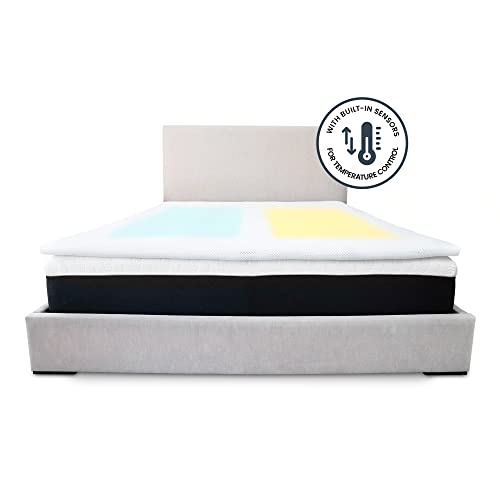
The Eight Sleep Pod 5 Ultra is the only product in this roundup that functions as a complete sleep environment system on its own. It regulates your bed temperature, tracks your sleep biometrics, and adjusts both automatically while you sleep. The Autopilot AI learns your temperature preferences over several weeks and makes real-time corrections throughout the night based on your heart rate and body movement. Reviewers at Tom's Guide and Yawnder — who ran a 32-test evaluation — consistently note that the Pod's temperature precision is unmatched: the system holds within 1–2°F of setpoint rather than cycling on and off.
The Pod 5 Ultra's temperature range runs from roughly 55°F to 110°F, covering everything from hot summer nights to cold winter mornings. The dual-zone design means partners with different thermal preferences each get their own independently controlled half — a feature that sounds like a nice-to-have until the alternative is a nightly negotiation. The Hub unit circulates water silently enough that most reviewers do not notice it once the system is running; noise complaints in Amazon reviews are rare.
The biometric tracking is impressive. Sleep stages, HRV, respiratory rate, skin temperature, and heart rate are all captured through the mattress cover's sensor array — no wearable required. Sleep Foundation notes the tracking accuracy is competitive with medical-grade devices in several metrics. For people who want a single device to handle both thermal regulation and sleep intelligence, nothing else in this guide comes close. The morning readiness scores and weekly trend reports give you actionable data — not just charts — with specific temperature recommendations based on what helped or hurt your HRV the prior week.
The honest conversation, though, is about price. At $3,295+ for the unit plus a $199–$399/year Autopilot subscription, you are committing $3,900–$4,500 over three years before electricity costs. Eight Sleep sells this DTC — Amazon search links route you there. You are not buying an appliance; you are buying into a software-dependent product ecosystem. If Eight Sleep changes subscription pricing or discontinues the Autopilot tier, the hardware becomes significantly less useful. The $199/year Essential tier includes basic sleep coaching and scheduling; the $399/year Premium tier adds real-time AI adjustments, partner coordination, and health trend alerts. Most reviewers who find the Pod worthwhile are on the Premium tier — it is effectively table stakes for the product's flagship capability.
What We Love
- Autopilot AI — The system adjusts temperature in real time based on your biometrics, not just a preset schedule. This is the feature that separates it from every competitor.
- Sleep intelligence depth — Full biometric tracking (HRV, sleep stages, respiratory rate) without a wearable is useful data, not vanity metrics.
- Dual-zone precision — Each side of the bed is independently controlled; partners with different temperature preferences coexist peacefully.
What Could Be Better
- The subscription requirement for Autopilot means the total cost over three years rivals a decent mattress itself.
- Setup takes 2–3 hours and requires periodic water refills and maintenance; this is not a plug-and-forget appliance.
The Verdict
If budget is not your primary constraint and you want the closest thing to a sleep optimization system in a single product, the Eight Sleep Pod 5 Ultra is the clear answer. Our SHE SES of 8.3/10 reflects genuine superiority across thermal precision and sleep intelligence — categories where it outscores every other product in this guide by a wide margin. The cost is real; plan for it.
SleepMe Dock Pro — Best No-Subscription Alternative
SleepMe Dock Pro
(Current Price, subject to change)
When SleepMe (formerly ChiliSleep) removed subscriptions from the Dock Pro in May 2025, they changed the math. You now get a water-cooled mattress pad with a 55–115°F range, Alexa integration, and app scheduling for $1,299 — with no ongoing fees. That is a different value proposition from Eight Sleep, full stop.
Sleep Foundation ran a 256-night long-term test on the Dock Pro and found it reliable. The temperature range is wider than Eight Sleep's on the cold end, which matters for hot sleepers in warmer climates. What it does not have is the AI autopilot: the Dock Pro does what you tell it. You set a temperature schedule, and it holds it. The system does not learn from your biometrics or adjust in real time. For many people, that is fine — and the absence of that feature is why the 3-year TCO is $1,353 versus up to $4,528.
The automation integration score (4.0/10 in our SES) reflects a real limitation: the Dock Pro connects to Alexa and IFTTT but lacks native Google Home or HomeKit support. If your smart home runs on those ecosystems, you will need workaround bridges. Reviewers on NonBiasedReviews note the app is functional but not as polished as Eight Sleep's interface.
What We Love
- Zero subscription fees — The $0/month model means the 3-year TCO of $1,353 is locked in, unlike Eight Sleep's variable subscription tiers.
- Thermal range breadth — 55–115°F covers edge cases (very hot sleepers, cold northern winters) that Eight Sleep's narrower range misses.
- Proven long-term reliability — Sleep Foundation's 256-night test is the most rigorous real-world durability data available for any product in this category.
What Could Be Better
- The sleep intelligence score (3.0/10) reflects the absence of meaningful biometric tracking; the Dock Pro does not know how you are sleeping, only what temperature you set.
- Ecosystem support is narrower than BedJet 3 or Eight Sleep; Google Home and HomeKit users will need workarounds.
The Verdict
For most people who want a water-cooled sleep system without a subscription, the SleepMe Dock Pro is the rational choice. A SHE SES of 6.0/10 understates how practical this product is for buyers who do not need AI autopilot. Pair it with a Withings Sleep Analyzer for sleep intelligence, and you have a two-layer system for under $1,500 total.
BedJet 3 — Best Budget Bed Climate System
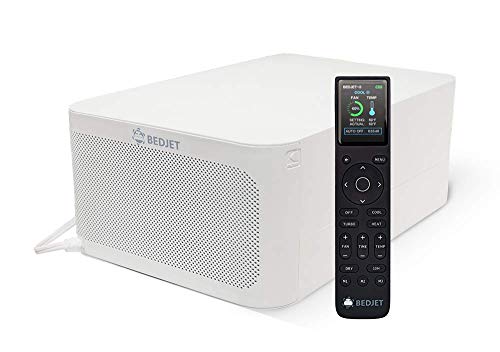
BedJet 3
(Current Price, subject to change)
The BedJet 3 takes a completely different approach from every other product in this guide: instead of circulating water, it pushes temperature-controlled air through a diffuser sheet that fits over your bed. No water to fill, no tubes to worry about leaking, no maintenance cycles. You plug it in, route the airflow nozzle under your sheets, and it works.
That simplicity has a real cost in precision. Air-based cooling is less thermally precise than hydronic systems, and the BedJet's 7.0/10 thermal precision score reflects that. It also excels at moisture wicking — warm air circulation reduces the damp, sweaty mattress feeling that plagues poorly ventilated beds — which water-based systems do not address. For people who run warm but do not need surgical temperature control, this distinction matters. The BedJet also heats faster than hydronic systems, which matters in winter — forced air reaches full temperature in seconds rather than the 15–20 minutes a water-based system needs to circulate.
The BioRhythm scheduling feature is underappreciated in most reviews: you can program a temperature arc across the night — warm for sleep onset, cooler for deep sleep phases, warming again for morning — that mimics what the AI systems do automatically, for zero additional cost. It requires you to know your preferences in advance, but for people who have been sleeping the same way for years, this is not a limitation.
The 3-year TCO of $596 is the lowest of any product in this guide with a thermal component. Budget roundups from multiple review sites consistently list the BedJet 3 as the entry-level pick for bed cooling, and the 7.8/10 expert consensus score in our SES reflects that consistent recommendation across sources.
The automation integration (7.0/10) is the BedJet's hidden strength: Alexa, Google Home, and the BioRhythm scheduling app give you more ecosystem flexibility than the Dock Pro at less than half the price.
What We Love
- Lowest 3-year TCO with thermal control — $596 total over three years, no subscriptions, no water maintenance.
- Moisture wicking — The air-based approach actively removes humidity from your sleep surface, which hydronic pads cannot do.
- Broadest budget ecosystem compatibility — Alexa plus Google Home at $569 beats several products at twice the price for smart home integration.
What Could Be Better
- Air-based cooling is less precise than water-based systems; hot sleepers in warm climates may find it insufficient at peak summer temperatures.
- No sleep tracking whatsoever; the BedJet 3 is a climate control appliance, not a sleep intelligence device.
The Verdict
The BedJet 3 earns its 5.8/10 SHE SES honestly. It is not the best thermal regulator in this guide, but at $569 it is the only thermal option under $600 with real smart home integration. For anyone building a sleep environment system on a budget, start with a BedJet 3 and a Withings Sleep Analyzer — you have both thermal and intelligence layers for under $780.
Withings Sleep Analyzer — Best Under-Mattress Sleep Tracker
Withings Sleep Analyzer
(Current Price, subject to change)
The Withings Sleep Analyzer occupies a category of one: it is not a thermal device and does not make your bed more comfortable. It is a passive sleep intelligence layer that you install once and forget about. Slide it under your mattress, plug it into an outlet, and it starts capturing sleep stage data via a ballistocardiographic sensor that detects micro-vibrations from your heartbeat and breathing.
The clinical validation here is not marketing copy. CNN Underscored named it a top pick, and Sleep Foundation notes the algorithm has been validated against polysomnography in peer-reviewed research. The sleep apnea detection (FDA Class II equivalent in some markets) is particularly notable — this is the kind of health data that typically requires a clinic visit, available for $200 under your mattress. Withings calls the metric the Respiratory Disturbance Index (RDI); it flags nights where your breathing was interrupted at a rate that warrants a conversation with a doctor.
What the Withings does especially well is contextualization. The Withings Health Mate app shows you not just last night's data but 30-day and 90-day trends. You can see which days of the week produce your best sleep, how seasonal temperature changes affect your sleep stages, and whether the chamomile tea you added three weeks ago made a measurable difference. This longitudinal view is what wearable-based trackers often handle poorly — phones get charged in different rooms, watches get forgotten — because the Withings sensor works automatically every night without any action from you.
The 9.0/10 sleep intelligence score reflects that strength. The 0.0/10 thermal precision score reflects the obvious: it does not regulate temperature. The 4.0/10 automation integration score reflects that while it connects to Apple Health and IFTTT, it does not directly trigger smart home routines the way Eight Sleep's Autopilot does. IFTTT integration does allow some workarounds — you can trigger a smart plug or light when a sleep stage is detected — but this requires manual setup and is less reliable than native platform support.
At $199.95 with a 3-year TCO of $205, the Withings Sleep Analyzer is the most cost-efficient intelligence layer available. For people who want to understand their sleep before deciding whether to invest in thermal regulation, this is the right starting point.
What We Love
- Clinical-grade sleep tracking — Validated against polysomnography, detecting sleep stages and respiratory disturbances without any wearable.
- Lowest-friction setup — Under the mattress in five minutes; no charging, no wearing, no daily ritual.
- Sleep apnea detection — The Respiratory Disturbance Index score flags potential apnea events, which no other product in this guide tracks.
What Could Be Better
- Zero thermal capability; you need a separate product if temperature regulation is your goal.
- Automation integration is read-only; the analyzer reports data but does not trigger real-time climate adjustments the way Eight Sleep does.
The Verdict
The Withings Sleep Analyzer earns its 5.7/10 SHE SES despite having zero thermal capability because it delivers the deepest sleep intelligence in this guide at the lowest cost. Buy it first if you do not know which sleep problem to solve. Buy it alongside any thermal system in this guide for the complete intelligence layer your system is otherwise missing.
Perfectly Snug Smart Topper — Best Set-and-Forget Option
Perfectly Snug Smart Topper
(Current Price, subject to change)
The Perfectly Snug Smart Topper is built for people who resent the idea of managing a sleep system. No app required, no scheduling, no subscription, no biometric dashboard to review in the morning. The topper uses embedded sensors to detect your body temperature and adjusts its output accordingly — automatically, without you doing anything.
BedCoolingComparison.com featured it specifically for this hands-free approach, and that is its core strength. It sits over your mattress like a conventional topper and handles temperature regulation passively.
The SHE SES of 4.1/10 reflects serious limitations in other categories. The automation integration score (0.5/10) tells the story: the Perfectly Snug does not connect to Alexa, Google Home, HomeKit, or any external smart home ecosystem. There is no open API, no IFTTT triggers, no way to incorporate it into a broader sleep routine. It is a standalone appliance. The sleep intelligence score (0.0/10) follows the same logic — it adjusts temperature reactively but does not track or report sleep data.
For $1,049 with a 3-year TCO of $1,094, you are paying near-Dock-Pro prices for a product with substantially fewer capabilities. The value case rests entirely on the set-and-forget simplicity — which is a real value for people who will not engage with an app.
What We Love
- Truly passive operation — No app, no schedules, no dashboards; it works without requiring any ongoing engagement.
- Familiar topper form factor — Installs like a conventional mattress topper; no water, no tubes, no hardware unit on the nightstand.
- No subscription fees — $1,094 over three years is the full cost.
What Could Be Better
- The 0.5/10 automation integration score reflects near-total ecosystem isolation; this product does not communicate with any standard smart home platform.
- At $1,049, the Dock Pro's hydronic precision and broader feature set represent better value for anyone willing to use an app.
The Verdict
The Perfectly Snug Smart Topper earns its 4.1/10 SHE SES. It is not a bad product — it does what it promises — but the set-and-forget value proposition comes at a meaningful capability trade-off relative to competitors at similar price points. If you will not use an app and want passive temperature adjustment, this is your option. If you are willing to spend 30 seconds setting a schedule, the Dock Pro delivers more at a similar price.
SHE Sleep Environment Score
SHE Sleep Environment Score = (Thermal Precision × 0.25) + (Sleep Intelligence × 0.25) + (Automation Integration × 0.20) + (True Cost of Ownership × 0.15) + (Expert Consensus × 0.15)
(SmartHomeExplorer editorial analysis — methodology)
SHE Sleep Environment Score (SES)
3-Year True Cost of Ownership
The subscription question matters more than most reviews admit. Eight Sleep's Autopilot AI — the feature that actually makes it worth buying — requires a $199–$399/yr subscription. Without it, you have an expensive water-cooled mattress cover with a manual thermostat.
(SmartHomeExplorer editorial analysis — methodology)
When NOT to Buy a Smart Sleep System
A $500–$3,000 purchase makes sense for some people and is a waste of money for others. Here is the honest filter:
- Skip thermal regulation if your room stays below 68°F year-round. Most thermal regulation complaints come from people who sleep hot in warm climates. If your bedroom is already cold, you are solving a non-problem.
- Skip the Withings Sleep Analyzer if you already track sleep with an Apple Watch or Oura Ring. Overlapping sleep tracking devices create more data than insight. Pick one system and commit to it.
- Skip the Eight Sleep Pod 5 Ultra if subscription pricing concerns you. At $199–$399/year, the Autopilot subscription is a recurring commitment. If you anticipate canceling the subscription to cut costs, you are buying an expensive manual thermostat.
- Skip all of these if you have not addressed bedroom temperature first. A $3,000 mattress cover in a room with poor HVAC is fighting physics badly. Start with a smart thermostat and a ceiling fan before spending on bed cooling. The BedJet 3 is the only product here that works alongside a room thermostat naturally, since forced air complements rather than competes with central HVAC.
The Sleepmaxxing Stack: Building a Complete System
If you want the full three-layer sleep environment without overspending, here are three practical configurations:
The Budget Stack (~$780): BedJet 3 ($569) + Withings Sleep Analyzer ($200). Thermal regulation plus sleep intelligence for under $800. Add a smart thermostat, sunrise alarm clock, and smart bulbs for circadian lighting from your existing smart home setup.
The Mid-Range Stack (~$1,500): SleepMe Dock Pro ($1,299) + Withings Sleep Analyzer ($200). Hydronic precision plus clinical-grade tracking. Better thermal control than the BedJet with the same intelligence layer, zero subscriptions.
The Full System (~$3,700–$4,700/3yr): Eight Sleep Pod 5 Ultra + bedroom automation (smart blinds, circadian bulbs, air purifier). The Pod handles thermal and intelligence in one unit; surround it with smart home automation for the complete picture. Explore smart blinds, air purifiers, and smart speakers for white noise to complete the bedroom environment.
For smart home platform compatibility across these stacks, see our Matter-compatible devices guide and sleep trackers spoke guide. The Perfectly Snug Smart Topper is the right call for the budget stack if you want a topper rather than an active air or water unit — though the BedJet 3 wins on flexibility and ecosystem support at a lower price.
Frequently Asked Questions
Is Eight Sleep worth it in 2026?
For most people buying a premium sleep system, yes — with a caveat. The Eight Sleep Pod 5 Ultra delivers the best thermal precision and sleep intelligence in this category by a measurable margin, and the Autopilot AI is a useful feature that justifies the subscription for buyers who engage with the data. The caveat: the $199–$399/year subscription makes the 3-year TCO $3,928–$4,528. If you are buying it primarily for the hardware and plan to cancel the subscription, the value calculation changes significantly. Budget $4,000+ and treat it as a 3-year commitment.
What is the best bed cooling system with no subscription?
The SleepMe Dock Pro after SleepMe removed subscriptions in May 2025. It delivers 55–115°F hydronic cooling, dual-zone capability, and a 256-night proven track record for $1,299 with no ongoing fees. The 3-year TCO of $1,353 is the lowest of any hydronic system in this guide.
Do cooling mattress pads actually work for sleep quality?
The research supports it for hot sleepers. Core body temperature drops 1–2°F as part of normal sleep onset, and environments that interfere with that process — warm, humid bedrooms — measurably fragment sleep cycles. Hydronic cooling systems that hold a consistent temperature below your body's setpoint help that process happen faster and more completely. Sleep Foundation's long-term testing of the Dock Pro and expert reviews of Eight Sleep products consistently note improved deep sleep duration as the primary subjective benefit. The effect is most pronounced for people who currently sleep in rooms above 70°F.
Can I build a full smart sleep environment without Eight Sleep?
Yes. A BedJet 3 plus a Withings Sleep Analyzer gives you thermal regulation plus sleep intelligence for under $780. Add smart bulbs, a smart thermostat, and smart blinds from your existing platform for full circadian automation. That three-layer system costs roughly $1,200–$1,500 with smart home additions versus $3,900+ for Eight Sleep alone, and you maintain flexibility to upgrade individual components independently.
How does the Withings Sleep Analyzer compare to a wearable like Apple Watch?
The Withings under-mattress approach has two advantages over wrist wearables: it requires no charging ritual, and it does not have to be physically worn during sleep (which affects some users' comfort and affects device placement accuracy). The trade-off is that wearables capture additional metrics like blood oxygen and skin temperature directly from the body. CNN Underscored's reviewers note the Withings data is broadly comparable to Apple Watch sleep stages for healthy users. The Withings also detects respiratory disturbances (potential sleep apnea) in a way that Apple Watch does not.
Is the SleepMe Dock Pro good for couples?
With the dual-zone add-on, yes. The SleepMe Dock Pro standard unit handles one zone; the dual-zone configuration lets each side of the bed run independently at different temperatures. Sleep Foundation's testing included couples use cases, and the dual-zone performance was noted as reliable. The configuration requires two separate pads and the dual-unit control system, which adds to the purchase cost.
The Bottom Line
Smart sleep environment systems are not all competing for the same buyer. The five products in this guide each solve a different problem, and the right pick depends almost entirely on which problem you have. Buyers treating the bed itself as part of the environment — particularly those with snoring or chronic back discomfort — should pair any environment system with a preset-intelligent base like the Tempur Ergo 3.0 Adjustable Base; see our Best Smart Adjustable Beds for Home (2026) guide for the 6 premium bases we score on Preset Intelligence and 5-Year Value.
Get the Eight Sleep Pod 5 Ultra if you want a single device that handles both thermal regulation and sleep intelligence, you are willing to pay for a subscription, and you actively engage with biometric data to improve your sleep.
Skip the Eight Sleep Pod 5 Ultra if the $3,900+ three-year commitment gives you pause, or if you want a sleep system that does not depend on a software subscription to deliver its core value.
Get the SleepMe Dock Pro if you want hydronic temperature control without an ongoing subscription, your room runs hot year-round, or you want to pair thermal regulation with a separate sleep tracker for a complete system.
Skip the SleepMe Dock Pro if your smart home runs on Google Home or HomeKit and you need native integration, or if you want AI-driven automatic temperature adjustment rather than manual scheduling.
Get the BedJet 3 if you want the lowest thermal system cost ($596 over three years), your primary complaint is sweating rather than precise temperature control, or you want Alexa and Google Home integration at the budget tier.
Skip the BedJet 3 if you live in a very hot climate and need precise cooling; forced-air systems have real limits that hydronic systems do not.
Get the Withings Sleep Analyzer if you want clinical-grade sleep tracking without a wearable, you are concerned about sleep apnea, or you want to build a sleep intelligence baseline before investing in thermal regulation.
Skip the Withings Sleep Analyzer if you already have a wearable tracking sleep stages and you do not need redundant data layers.
Get the Perfectly Snug Smart Topper if you want passive, zero-engagement temperature regulation and you will not use an app or interact with any dashboard.
Skip the Perfectly Snug Smart Topper if you want smart home integration or any sleep tracking capability alongside your temperature regulation — the Dock Pro offers more at a similar price for buyers willing to use a basic app.
For a broader starting point on smart home building, see our smart home starter kit guide. For the living-room counterpart to bedroom recovery — app-controlled and voice-enabled massage chairs — see our best smart massage chairs for home 2026 guide.
Sources & Methodology
We aggregated expert reviews from Tom's Guide, Sleep Foundation, Wirecutter, CNET, Yawnder (32-test evaluation), CNN Underscored, Men's Journal, Android Police, NonBiasedReviews, BedCoolingComparison.com, and The Ambient. SHE Sleep Environment Scores reflect weighted averages across five components: Thermal Precision (25%), Sleep Intelligence (25%), Automation Integration (20%), True Cost of Ownership (15%), and Expert Consensus (15%). TCO calculations use manufacturer-published pricing, EPA average electricity rates, and stated hardware costs. Subscription pricing reflects Eight Sleep's published 2026 tier structure. Full methodology at /methodology.
Written by Nicholas Miles. Nick has covered smart home technology since 2024 and founded SmartHomeExplorer.com to aggregate consensus ratings from 1,825 editorial sources across 1,089 smart home products and 345 buying guides to surface the true consensus picks for every smart home category.
Disclosure: SmartHomeExplorer.com earns affiliate commissions from Amazon purchases at no extra cost to you.