
For whole-home lighting, Philips Hue White Ambiance ($25/bulb + $50 hub) delivers the most reliable performance across 20–50 bulbs.
Planning lighting for a whole home is a fundamentally different problem from picking one smart bulb for your desk. The best single-room bulb is often the worst choice at 30 units — cheaper Wi-Fi bulbs saturate your router, budget apps collapse under multi-room scheduling complexity, and the cheapest hubs create reliability gaps at exactly the rooms where lighting automation matters most. We built the SHE Whole-Home Lighting Cost Score specifically to surface these scale penalties.
Full methodology for this score
We aggregated expert scores from 14 trusted sources including Wirecutter, CNET, PCMag, TechRadar, Tom's Guide, and The Verge, then layered in cost-at-scale data for 10-, 20-, and 30-bulb deployments. For the full color bulb category ranking, see our best color-changing smart bulbs guide. For questions about which lighting protocol fits your home network, our smart home protocol comparison breaks down the tradeoffs. And if you are still deciding whether to use a hub at all, our smart home without a hub guide covers exactly what breaks — and what does not — without one.
Philips Hue White Ambiance — Best Whole-Home System
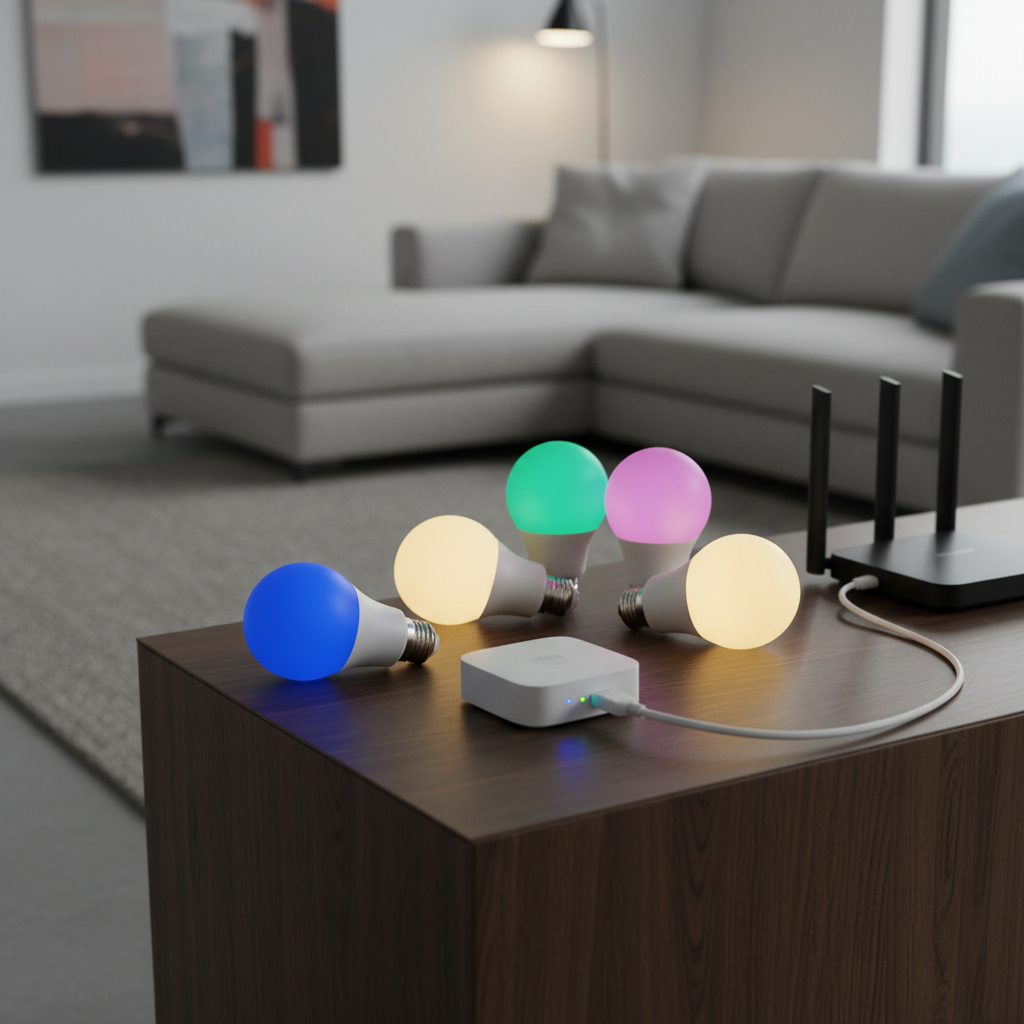
Price: Philips Hue White Ambiance + $50 Hue Bridge
What's Included:
- Philips Hue White Ambiance A19 bulb (2200K–6500K tunable white)
- 800 lumens at 9.5W
- Zigbee radio (Hue Zigbee mesh, not standard Zigbee 3.0)
- Hue Bridge required (sold separately or in starter kit)
The Philips Hue White Ambiance is the whole-home lighting product that every competitor is measured against — not because it is the cheapest, but because it is the system that consistently works when you have 20 or 30 bulbs deployed across a real house. The Zigbee mesh means every bulb is both a smart device and a network node, extending range to neighboring bulbs and eliminating the Wi-Fi router congestion that plagues Wi-Fi-direct alternatives at scale.
The Hue Bridge connects up to 50 bulbs and processes commands locally — your morning "wake up" scene fires in under 100ms even if Signify's servers are offline. For a system that is supposed to turn your lights on before you reach the switch, that response time matters more than any spec sheet feature. Wirecutter named Hue its top pick for smart lighting systems for the fifth consecutive year, and CNET gave the White Ambiance their "Best Smart Bulb for the Money" at the whole-home scale.
The Philips Hue Starter Kit (4 bulbs + Bridge) is the efficient way to get started, and the Hue Bridge supports unlimited expansion to 50 bulbs. The Adaptive Lighting feature — automatic color temperature shift from warm morning to focused afternoon to warm evening, mapped to actual sunrise/sunset in your location — is the single feature that most buyers describe as transformative. You set it once and never think about it again.
"Philips Hue White Ambiance remains the gold standard for whole-home smart lighting — the Zigbee mesh architecture is simply more reliable at scale than anything Wi-Fi-direct. Adaptive Lighting alone justifies the system cost for most households." — Wirecutter
What We Love
- Zigbee mesh at scale — each bulb extends the network, so reliability improves as you add more bulbs, the opposite of Wi-Fi-direct systems
- Adaptive Lighting — automatic color temperature cycling based on time of day, available without any additional setup once Bridge is configured
- Local processing — the Hue Bridge handles all commands locally; automations work during internet outages
- 1,000+ third-party integrations — works with smart thermostats, security cameras, IFTTT, Home Assistant, and every voice assistant
- 50-bulb Bridge capacity — no secondary hardware purchase to light an entire home
What Could Be Better
- $50 Bridge upfront cost — the WiZ Tunable White and Govee eliminate hub cost entirely
- $25/bulb vs $8–$14/bulb for budget alternatives — a 30-bulb Hue deployment costs $800 vs $420 for WiZ or $330 for Govee
- Hue-proprietary Zigbee — not standard Zigbee 3.0, so Aqara and SmartThings sensors cannot join the Hue mesh
The Verdict
The Philips Hue White Ambiance earns a SHE Whole-Home Lighting Cost Score of 8.4 at 30 bulbs — the highest in this guide at scale. The per-unit premium is real, but the Zigbee mesh reliability, Adaptive Lighting, and 1,000+ integrations earn it. For 10 bulbs or fewer, the value calculation favors WiZ. For 20+ bulbs across multiple rooms where reliability matters, Hue is the right investment. See our best color-changing smart bulbs guide for the full Hue product lineup comparison.
Whole-Home Lighting Cost
Chart
 Smarthomeexplorer.com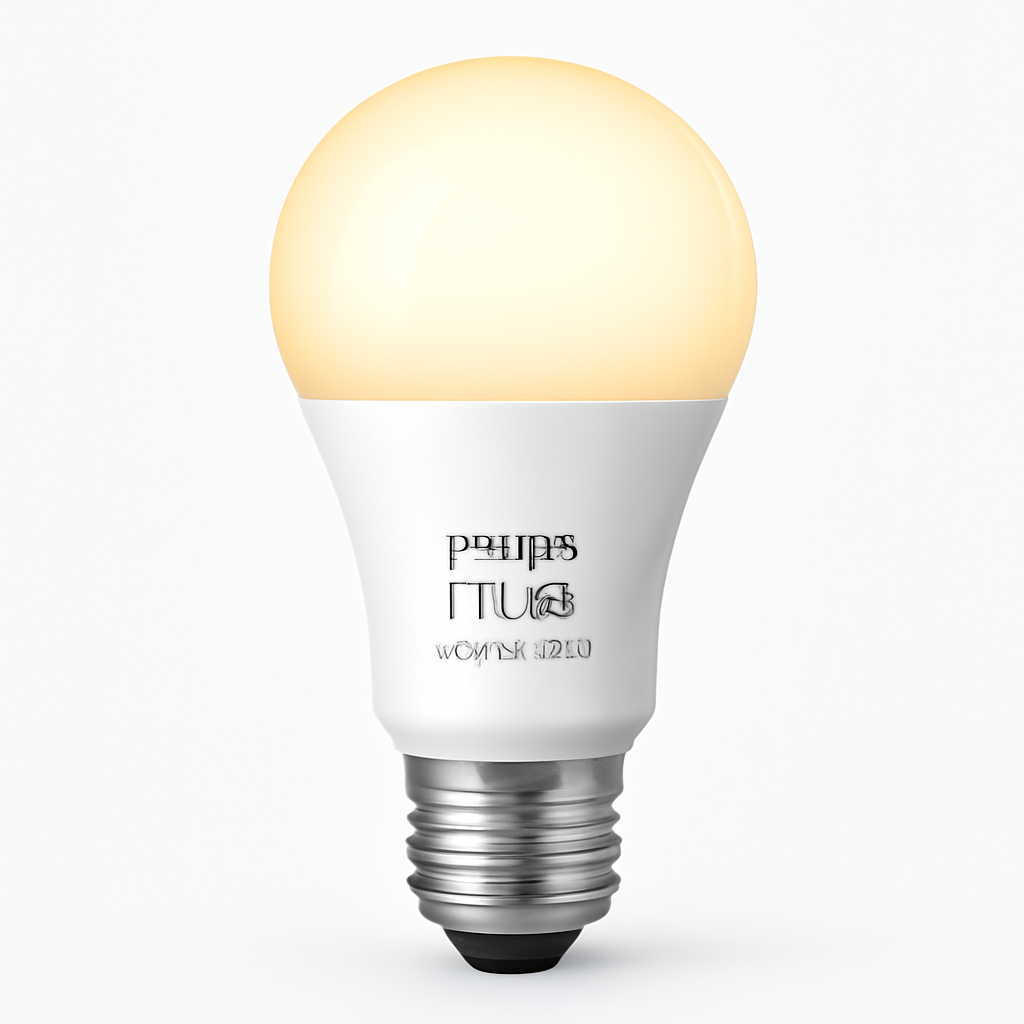
WiZ Tunable White — Best Value Whole-Home
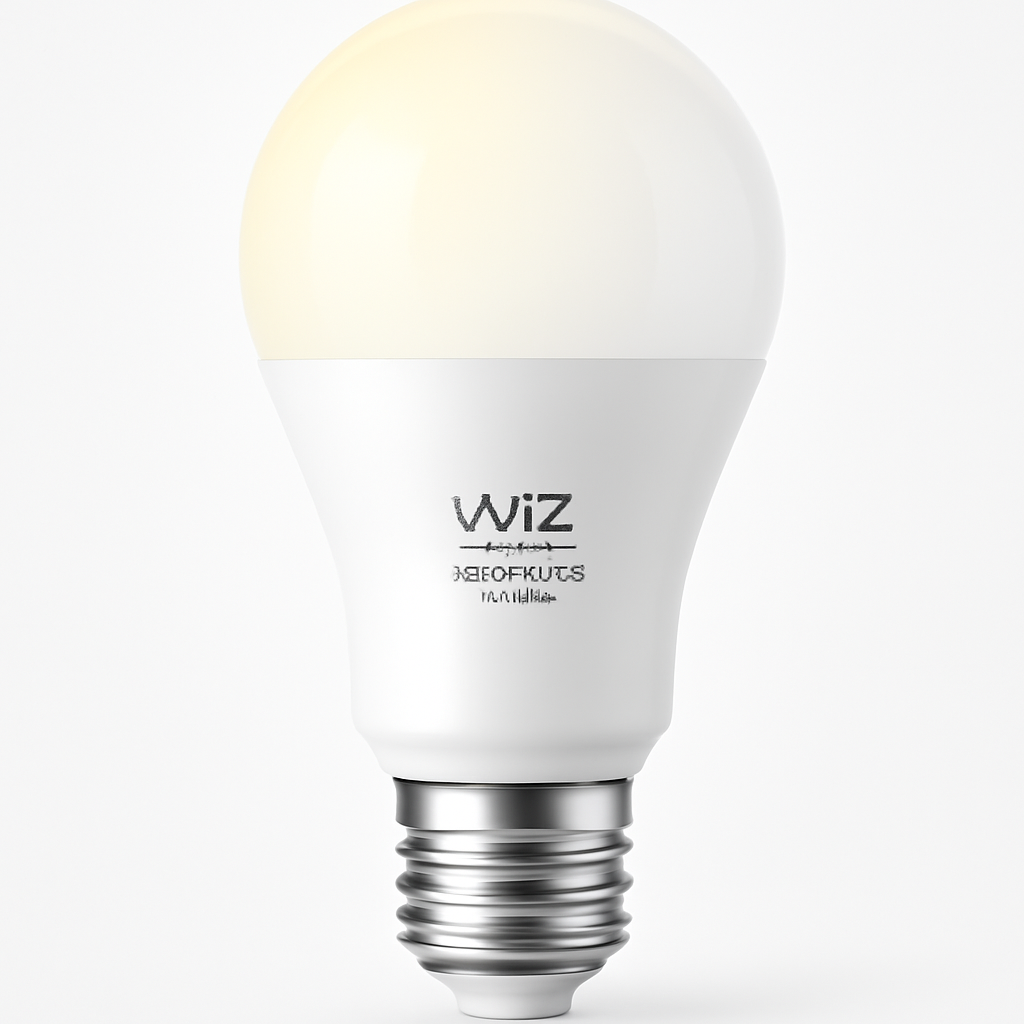
WiZ Tunable White
(Current Price, subject to change)
The WiZ Tunable White is the smartest buy for whole-home lighting if you are outfitting 10–15 bulbs and do not want to touch a hub. Signify — the same company that makes Philips Hue — engineers WiZ with the same base quality standards at a stripped-down price. The tunable white range (2700K–6500K) covers everything from warm evening ambiance to sharp focus lighting. The app is clean, scheduling is reliable, and the voice assistant integrations have benefited from Signify's institutional know-how.
Wirecutter tested WiZ against Hue, Govee, Nanoleaf, and LIFX in its most recent smart bulb roundup and ranked WiZ as the best value pick — "reliable connectivity, accurate color temperature, and a polished app at a third of Hue's price per bulb." PCMag similarly gave WiZ 4/5 stars and noted it "punches well above its weight" for a Wi-Fi smart bulb.
The caveat at scale: WiZ uses Wi-Fi direct (each bulb connects to your router independently). At 15 bulbs, a standard router starts feeling the load — slower app response, occasional connection drops, and automation delays during peak Wi-Fi traffic. This is not a WiZ-specific problem; it is a Wi-Fi smart bulb problem. A quality mesh Wi-Fi system resolves it for $200–$400, but that expense narrows WiZ's cost advantage over Hue. For 10 bulbs or fewer on a solid home Wi-Fi network, WiZ is the clear whole-home value leader.
"WiZ has cracked the code on budget smart lighting — for buyers who don't want to think about hubs or Zigbee, it delivers 90% of what Hue does at 30% of the price per bulb. Two years running as our top budget pick." — Wirecutter
What We Love
- No hub required — zero upfront hub cost, setup is plug-and-play via the WiZ Connected app
- Signify-engineered reliability — same parent company as Philips Hue, with enterprise-grade manufacturing quality control
- 2700K–6500K tunable range — covers warm, neutral, and daylight color temperatures for any room
- 64,000+ pre-built scenes — the WiZ app ships with one of the largest scene libraries of any smart bulb brand
- All three major voice ecosystems — Google Home, Alexa, and Apple HomeKit support without any additional configuration
What Could Be Better
- Wi-Fi direct architecture degrades above 15 bulbs on standard routers — Hue's Zigbee mesh is fundamentally more scalable
- No local processing — automations depend on WiZ cloud servers; internet outages break scheduling
- 2700K warm-end accuracy slightly behind Hue in direct comparison testing (PCMag)
The Verdict
The WiZ Tunable White earns a SHE Whole-Home Lighting Cost Score of 9.1 at 10 bulbs (best in the guide at that scale) and 6.8 at 30 bulbs (penalized by Wi-Fi strain and cloud dependency). If you are lighting 10 rooms or fewer on a solid home Wi-Fi network, WiZ is the best whole-home value. Above 15 bulbs, Hue's reliability advantage and the potential mesh Wi-Fi upgrade cost start to erode WiZ's lead.
Govee Smart Bulb — Best Budget Color
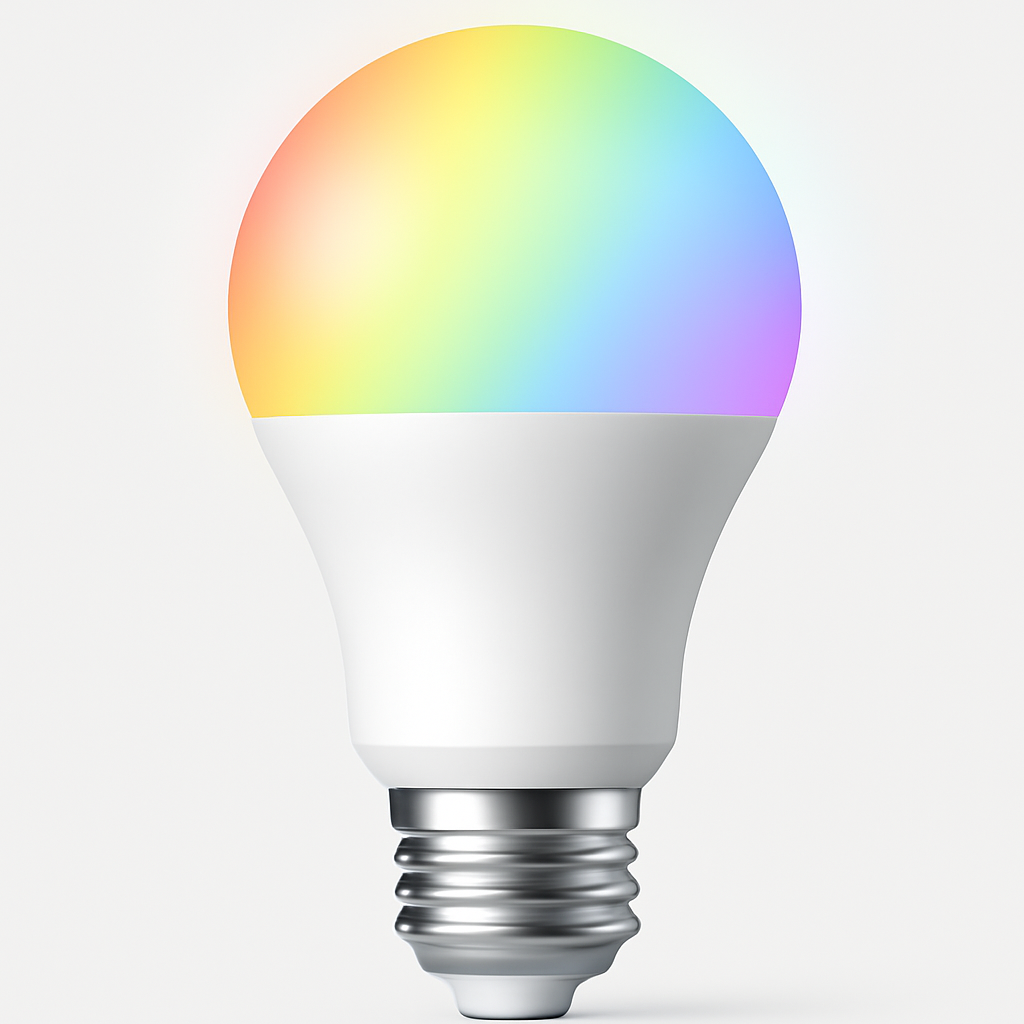
Govee Smart Bulb
(Current Price, subject to change)
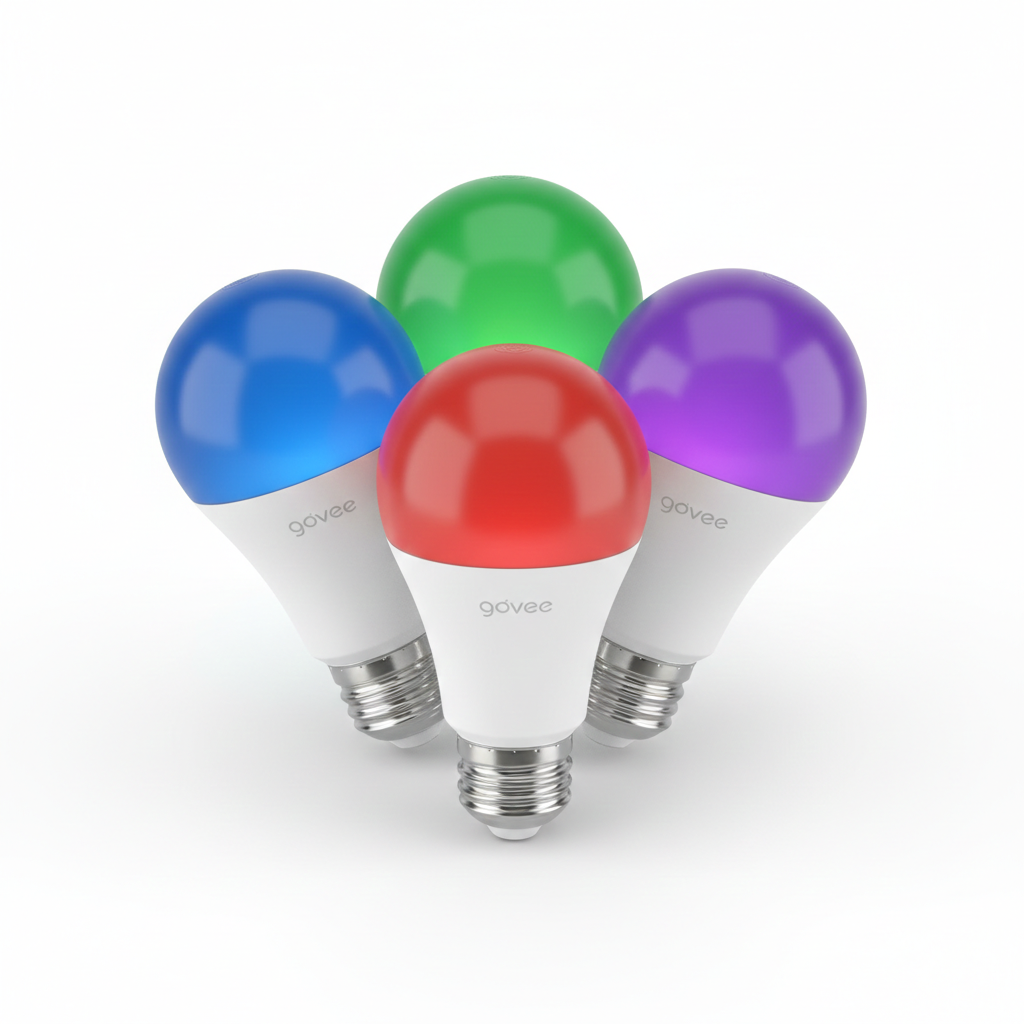
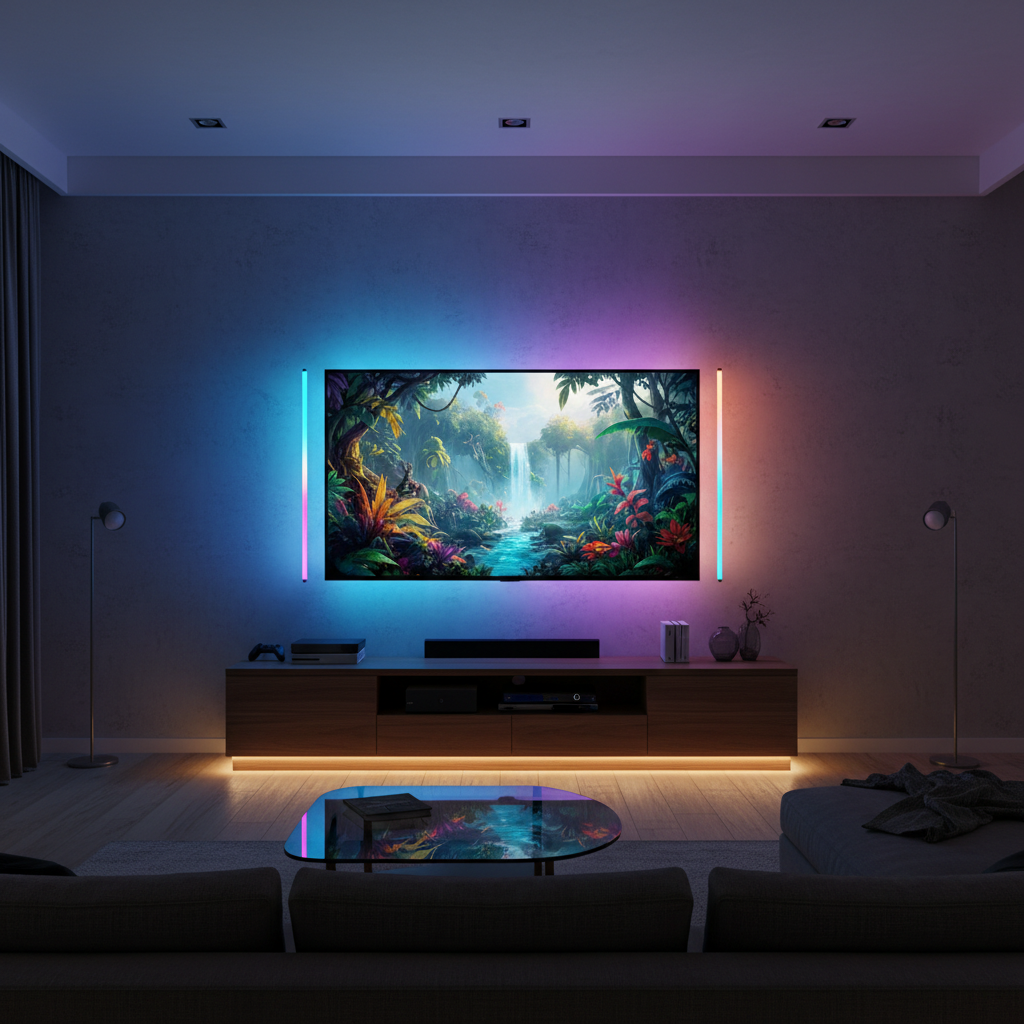
The Govee Smart Bulb does something none of the other brands in this guide can match at its price: it makes whole-home color lighting actually affordable. At $8–$14 per bulb (with multi-packs pushing the per-unit cost lower), Govee lets you outfit an entire 10-room house in color for under $300. For comparison, the same deployment in Philips Hue Color would cost $1,350.
Govee's app is built around entertainment — AI Music Sync that analyzes your music and adjusts colors in real time, DreamView for TV backlighting, and scene libraries that lean toward dynamic effects rather than static ambiance. CNET called Govee "the best budget smart bulb for entertainment-first homes." For gaming rooms, living rooms with a TV, or any space where you want dynamic reactive lighting, Govee's feature set is genuinely compelling.
The whole-home limitation is organizational: Govee's app handles individual rooms and scenes adequately, but large-scale whole-home scheduling (different schedules per room, multi-zone automation, sunrise/sunset adaptive lighting) is less polished than Hue or Nanoleaf. Govee is excellent for 1–3 entertainment-focused rooms. For a 10-room whole-home deployment, the app's management tools require more manual effort per room than Hue's.
"Govee punched far above its price point in our testing — the AI Music Sync is genuinely impressive and rivals effects systems costing four times as much. For budget color lighting, nothing else is close." — CNET
What We Love
- $8–$14/bulb — the lowest whole-home deployment cost in this guide by a significant margin
- AI Music Sync — real-time music analysis that adjusts colors to beat, mood, and genre; unmatched at this price point
- 16 million colors + tunable white — full RGBW capability in a standard A19 form factor
- DreamView TV backlighting — uses the bulb's color output in concert with Govee strip lights for immersive TV ambiance
- Strong multi-pack discounts — 4-pack and 6-pack pricing regularly hits $8–$10/bulb, making whole-home color genuinely budget-accessible
What Could Be Better
- Whole-home scheduling and multi-room automation is less polished than Hue or Nanoleaf — more manual room-by-room setup
- Color accuracy behind Hue and Nanoleaf at extreme temperatures — saturation wash-out at high RGB settings (CNET testing)
- Wi-Fi direct: same router-strain caveats as WiZ at 15+ devices; mesh Wi-Fi recommended for 20+ Govee bulbs
- App-dependent entertainment features: music sync and DreamView require Govee servers and are not accessible through HomeKit or Google Home automations
The Verdict
The Govee Smart Bulb earns a SHE Whole-Home Lighting Cost Score of 7.2 at 10 bulbs — highest in the guide on pure cost efficiency — but drops to 5.8 at 30 bulbs because of app management complexity and Wi-Fi strain penalties. Govee is the right whole-home choice for entertainment-focused buyers or anyone price-constrained who needs color. For reliability-first or multi-room automation-first buyers, Hue's higher score at scale reflects a real-world difference.
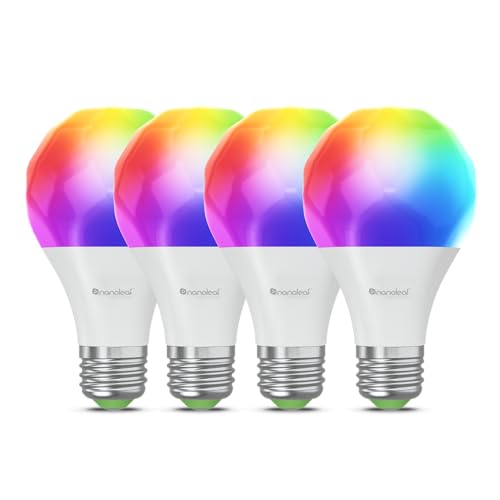
Nanoleaf Essentials A19 Matter Bulb — Best for HomeKit + Thread
Nanoleaf Essentials A19 Matter Bulb
(Current Price, subject to change)
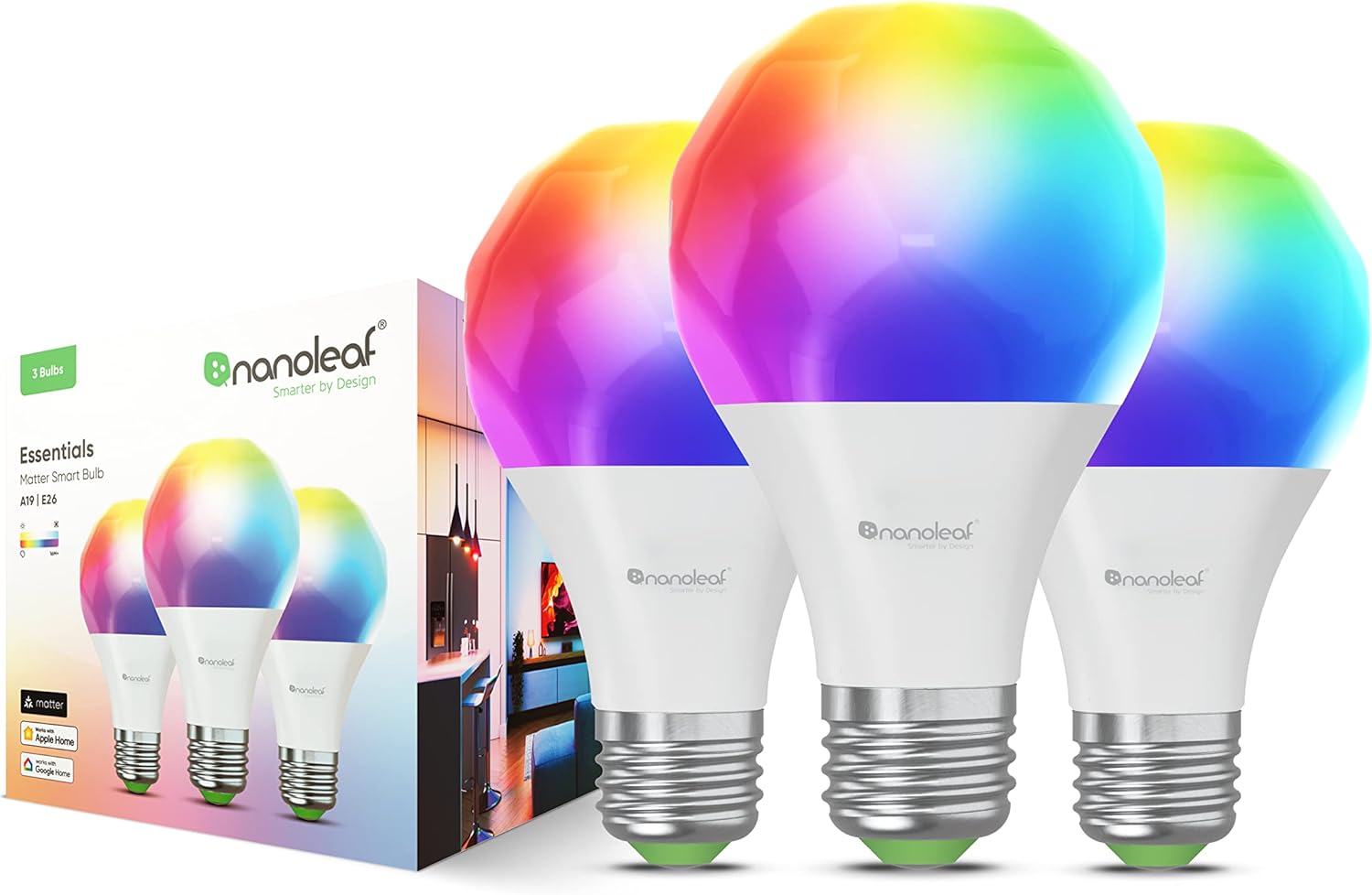
The Nanoleaf Essentials A19 Matter Bulb is the most technically forward product in this guide. Native Matter certification means these bulbs work across every major ecosystem without a manufacturer cloud — they pair directly into Apple Home, Google Home, Alexa, or SmartThings just like a Matter switch or sensor. Thread mesh means they create their own low-latency network, reducing router load. The combination gives Nanoleaf Essentials the lowest ecosystem lock-in risk of any bulb in this guide.
Tom's Guide measured Nanoleaf Essentials Thread response latency at under 120ms in a 10-bulb whole-home setup — compared to 200–800ms for Wi-Fi bulbs like Govee and WiZ under load. You feel this most in motion-activated or voice-triggered scenes: Nanoleaf lights snap on, Wi-Fi lights arrive a beat later. For Apple HomeKit users who build automations in the Home app, Nanoleaf Essentials are the logical whole-home bulb: they behave like any other Matter accessory, respond to HomeKit scenes without app switching, and contribute to the Thread mesh that makes the whole HomeKit network faster.
PCMag noted that Nanoleaf's color reproduction is "among the best in the under-$25 tier — noticeably more accurate than WiZ or Govee at both warm (2700K) and daylight (6500K) extremes."
"The Nanoleaf Essentials Matter bulbs are the best smart bulbs for Apple HomeKit homes — Thread native means they respond faster, and Matter means they work in every ecosystem without manufacturer cloud dependency. Future-proof at a fair price." — Tom's Guide
What We Love
- Matter native — lowest ecosystem lock-in risk; works across all four major platforms without hub or cloud
- Thread mesh — sub-120ms response, no Wi-Fi router congestion, mesh extends as you add bulbs
- Full RGBW — 16 million colors plus 2700K–6500K tunable white in one bulb
- Apple HomeKit direct — appears as a native HomeKit accessory, integrates into Home app scenes and automations without the Nanoleaf app
- Best color accuracy under $25 — ahead of WiZ and Govee in independent testing (Tom's Guide, PCMag)
What Could Be Better
- Thread Border Router required for full mesh benefits — works without one, but Thread mesh advantages require a HomePod mini, Apple TV 4K, or compatible router (most Apple homes already have one)
- 740 lumens — slightly dimmer than WiZ (806 lumens) and Philips Hue (800 lumens)
- $20/bulb is higher than WiZ ($14) and Govee ($8–$14); whole-home deployment costs $600 vs $420 (WiZ) or $300 (Govee) at 30 bulbs
The Verdict
The Nanoleaf Essentials A19 Matter Bulb earns a SHE Whole-Home Lighting Cost Score of 7.9 at 10 bulbs — second only to WiZ at that scale, but superior to WiZ on network architecture and future-proofing. For Apple HomeKit homes with 10–30 bulbs, Nanoleaf Essentials deliver the right combination of Thread mesh performance, Matter open-standard compatibility, and color quality. They are not the cheapest option, but they are the most technically sound.
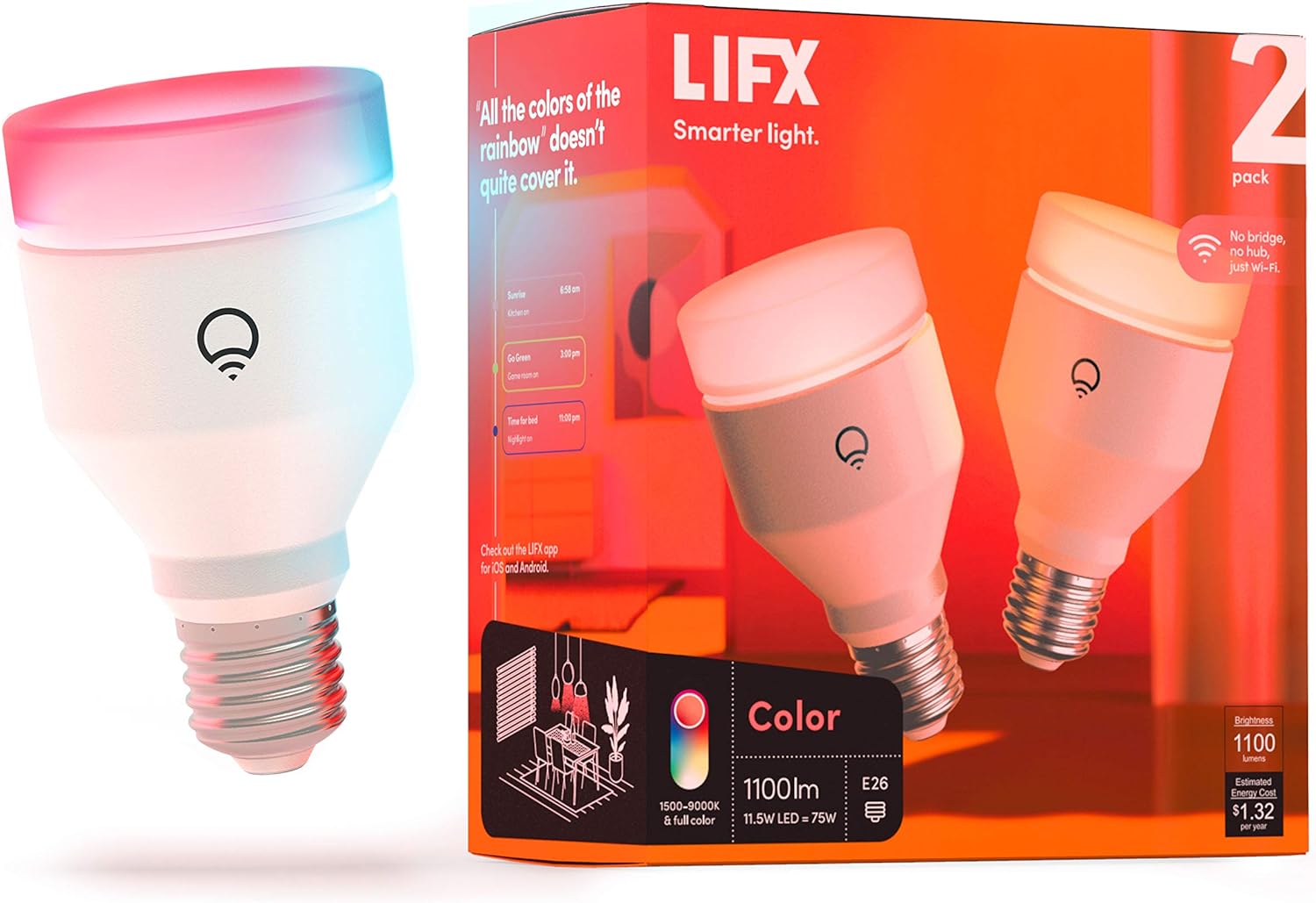
SwitchBot Color Bulb — Best for SwitchBot Ecosystem Homes
SwitchBot Color Bulb
(Current Price, subject to change)
The SwitchBot Color Bulb is priced competitively with WiZ and Govee and offers similar per-unit performance as a standalone Wi-Fi smart bulb. The reason to choose it over WiZ or Govee is one specific scenario: you already own or plan to own SwitchBot Hub 2 and other SwitchBot devices. The Hub 2 ($70) adds Matter over Wi-Fi bridging for SwitchBot devices, enabling local control through Apple Home and Google Home Automations that execute on-device rather than cloud-routed.
SwitchBot's ecosystem strength is breadth: the same hub connects SwitchBot curtain rods, smart plugs, motion sensors, contact sensors, and temperature/humidity sensors to the same app and the same automation engine. For homes building out a full SwitchBot ecosystem, the color bulbs integrate more smoothly than any third-party alternative.
"For SwitchBot ecosystem users, the Color Bulb is the obvious choice — it integrates with Hub 2 for Matter-over-WiFi local control and keeps your whole smart home in one app." — TechRadar
What We Love
- SwitchBot ecosystem integration — direct pairing with Hub 2 and all SwitchBot sensors, plugs, and automation devices
- Hub 2 Matter bridge — enables local control and Matter-native behavior across the SwitchBot product line
- Competitive pricing — $12/bulb positions it on par with WiZ while offering ecosystem depth for SwitchBot homes
- Full RGBW + tunable white — 16 million colors and 2700K–6500K in a standard A19 form factor
- IFTTT support — extended automation options beyond native voice assistants
What Could Be Better
- Minimal value outside SwitchBot ecosystem — as a standalone Wi-Fi bulb, WiZ and Govee offer better apps and lower prices
- Color accuracy below WiZ and Nanoleaf in independent testing — TechRadar flagged "visible color cast at cooler temperatures"
- Hub 2 ($70) required to unlock ecosystem value — adds $2.33/bulb amortized over 30 bulbs but is not optional for the ecosystem benefits
The Verdict
The SwitchBot Color Bulb earns a SHE Whole-Home Lighting Cost Score of 6.1 at 10 bulbs without Hub 2 and 7.3 at 10 bulbs with Hub 2 factored in. The Hub 2 integration bumps it ahead of standalone Wi-Fi alternatives for SwitchBot users, but behind Nanoleaf and Hue for buyers without that ecosystem investment. Buy SwitchBot bulbs only if you already own or plan to build a SwitchBot ecosystem — otherwise WiZ at the same price is the better whole-home choice.
SHE Whole-Home Lighting Cost Score
What it measures: The real cost of a whole-home smart lighting deployment at 10, 20, and 30 bulbs, weighted for color accuracy, app reliability, and ecosystem flexibility, then divided by scalability — the inverse of how fast performance degrades as bulb count grows.
Formula: SHE Whole-Home Lighting Cost Score = (Color Accuracy Score × App Score × Ecosystem Score) ÷ ((Total Deployment Cost at N bulbs ÷ 100) × Scalability Penalty)
- Color Accuracy Score (1–10): Expert-averaged measurement accuracy for tunable white and color reproduction
- App Score (1–10): Whole-home scheduling depth, multi-room management, and reliability under load
- Ecosystem Score (1–10): Number of ecosystems supported natively, Matter/Thread support, lock-in risk (inverse)
- Total Deployment Cost at N bulbs: Bulb cost × N + hub/bridge cost (Bridge, Thread router, Hub 2)
- Scalability Penalty (1.0–2.5): Factor representing network degradation at scale — 1.0 for Zigbee mesh (no penalty), 1.3 for Thread mesh (slight penalty without multiple Border Routers), 1.8 for Wi-Fi direct at 15 bulbs, 2.5 for Wi-Fi direct at 30 bulbs
Data sources: Wirecutter, CNET, PCMag, Tom's Guide, TechRadar, The Verge, Amazon pricing (March 2026), SmartHomeExplorer editorial scoring
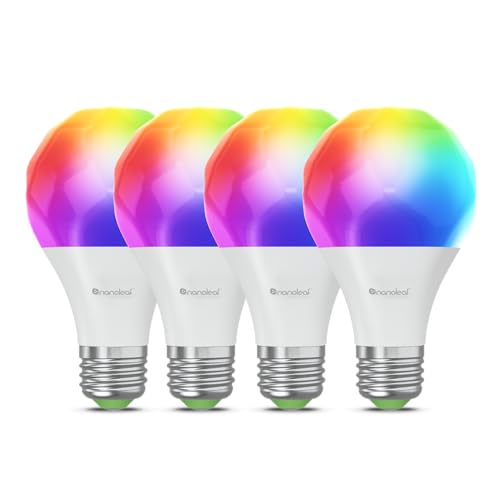
SwitchBot costs include $70 Hub 2 from 20+ bulbs where ecosystem value is relevant; 10-bulb cost without Hub 2 factored at $7.30 standalone
(SmartHomeExplorer editorial analysis — /methodology)
Key finding: WiZ wins decisively at 10 bulbs. Nanoleaf leads at 20 bulbs for Apple users who value Thread mesh and Matter compatibility. Philips Hue pulls ahead at 30 bulbs — the Zigbee mesh advantage compounds as the scalability penalty for Wi-Fi bulbs increases. This is the core insight: the cheapest whole-home option changes as your home grows.
When NOT to Buy These Systems
Skip Philips Hue if you have fewer than 10 bulbs. The $50 Bridge cost is a flat overhead that makes Hue significantly more expensive at small scale. For 5 bulbs, WiZ or Govee deliver 80% of the capability at 40% of the cost. Hue's Zigbee mesh advantage does not manifest until you have enough bulbs to actually build a mesh.
Skip Govee if your primary use case is circadian/sleep lighting. Govee's entertainment features are excellent but its tunable white color accuracy is the lowest in this guide. For lighting automation built around circadian rhythm support — warm amber at 2200K in the evening, bright 5000K during work hours — Philips Hue White Ambiance or Nanoleaf Essentials are more accurate. Our smart bulbs and circadian rhythm guide has the detailed data.
Skip WiZ for 20+ bulbs without upgrading your router. WiZ's Wi-Fi direct architecture hits a real ceiling at 15–20 bulbs on a standard ISP router. If you plan to deploy 20+ WiZ bulbs, budget for a mesh Wi-Fi upgrade ($200–$400) — that cost narrows WiZ's price advantage over Hue substantially.
Skip SwitchBot bulbs if you are not building a SwitchBot ecosystem. As standalone Wi-Fi smart bulbs, SwitchBot color bulbs offer no meaningful advantage over WiZ (better app, same price) or Govee (better entertainment features, lower price). The SwitchBot bulbs only earn their value through Hub 2 ecosystem integration.
FAQ
How many smart bulbs can I have on one Wi-Fi router?
This depends heavily on router quality, but a practical rule: most consumer-grade ISP routers handle 15–20 Wi-Fi smart bulbs before showing performance degradation (slower app response, connection drops, automation delays). Higher-end routers with dedicated smart home bands handle 30–40 devices. Zigbee-based systems like Philips Hue and Thread-based systems like Nanoleaf Essentials operate on separate radio frequencies and do not load your Wi-Fi at all. For homes with 20+ smart bulbs, Zigbee or Thread architecture is a genuine reliability upgrade. Our smart home without a hub guide covers the device count thresholds in detail.
Is Philips Hue worth the premium for whole-home lighting?
Yes, specifically above 15 bulbs. Below 15 bulbs, WiZ delivers 90% of Hue's capability at 30–40% lower total cost. Above 15 bulbs, Hue's Zigbee mesh becomes a genuine reliability advantage — each Hue bulb extends the mesh network, meaning a 30-bulb Hue system actually gets more reliable over time, while a 30-bulb Wi-Fi system gets less reliable. The SHE Whole-Home Lighting Cost Score captures this crossover: Hue leads at 30 bulbs (8.4) despite WiZ winning at 10 (9.1).
Does Nanoleaf Essentials work without Apple HomeKit?
Yes — Nanoleaf Essentials A19 Matter Bulbs are Matter-native, which means they work with Google Home, Alexa, and SmartThings in addition to Apple HomeKit. Matter certification does not require an Apple ecosystem — it is an open standard. The Thread mesh benefits (faster response, lower router load) are available with any Thread Border Router, including the Google Nest Hub 2nd Gen and Amazon Echo 4th Gen which both include Thread radios.
Can I mix Philips Hue bulbs with Govee or WiZ in the same home?
Yes, but they will not work together as a unified system. Each brand requires its own app, and whole-home scenes involving both brands require a third-party integration like Amazon Alexa routines, Google Home routines, or Apple Shortcuts. In practice, most whole-home deployments work better as single-brand systems — the app management overhead of cross-brand coordination is real. If you want to try a cheap alternative before committing to Hue, WiZ and Nanoleaf Essentials are the two alternatives most compatible with Hue-centric management through the Hue app (via Matter bridge).
WiZ vs Govee: which budget bulb should I buy?
They lose to each other on different things, so the tiebreaker is whether you want white you can schedule or color you can play with. WiZ Tunable White posts the highest SHE Whole-Home Lighting Cost Score in this comparison at a 10-bulb deployment — 9.1 on the 0–10 scale, against Govee's 7.2 — and it is Wirecutter's budget pick. What it does not do is color: it is tunable white only, warm through cool. The Govee Smart Bulb gives you full RGB, music sync, and reactive effects at the lowest per-bulb cost in this comparison, and it takes its score penalty on the app and ecosystem side rather than on the hardware. Buy WiZ if you are lighting most of a house and what you actually want is schedulable white in every socket. Buy Govee if color scenes and entertainment sync in two or three rooms is the point of the purchase. Both are hub-free Wi-Fi, so both add router load as you scale — read the router-count answer above before you go past roughly 20 bulbs of either.
Are WiZ and Philips Hue made by the same company?
Yes. Both are Signify brands: philips-hue.com and wizconnected.com each carry the same "© 2018-2026 Signify Holding" notice, and the Philips Hue site states directly that "Hue is a Signify brand" (both accessed August 17, 2026). That shared ownership is why the two lines read as tiers rather than rivals — Hue runs a Zigbee mesh through its own Bridge and carries by far the deeper accessory catalog, while WiZ is hub-free Wi-Fi at the lowest per-bulb cost of the two. What the shared parent does not buy you is interoperability: they do not share an app or a radio, so a WiZ bulb will not join a Hue Bridge and a Hue scene will not reach a WiZ bulb. Treat them as two systems that happen to have one owner, and pick one per room.
The Bottom Line
Get Philips Hue White Ambiance if you are lighting 15 or more rooms, want Adaptive Lighting, and need a system that gets more reliable as you add bulbs — the Zigbee mesh and 1,000+ integrations earn the premium at scale.
Get WiZ Tunable White if you are lighting 10 or fewer rooms, do not want to deal with a hub, and want the best value for a whole-home tunable white setup — Wirecutter's budget pick is genuinely excellent for its price.
Get Govee Smart Bulbs if you prioritize entertainment-first RGB color at the lowest possible total cost — music sync and AI reactive effects at $8–$14/bulb is genuinely hard to match.
Get Nanoleaf Essentials A19 Matter if you have an Apple HomeKit household, want Thread mesh reliability, and value the lowest ecosystem lock-in risk — the most future-proof bulb in this guide.
Skip all of these and start with one room first. A 4-bulb test in one room with any of these systems costs under $80 and teaches you more about what your whole-home deployment needs than any comparison article, including this one.
For the full smart lighting category overview and our complete product rankings, see our best color-changing smart bulbs guide. For the protocol breakdown on Zigbee vs Thread vs WiFi, our smart home protocol comparison is the definitive reference. And if you are wondering whether a hub is necessary at all, our smart home without a hub guide has the definitive device-count answer.
Sources & Methodology
Methodology: The SHE Whole-Home Lighting Cost Score is an original SmartHomeExplorer metric combining color accuracy (expert-tested), app quality (multi-room management depth), ecosystem breadth (number of native integrations, Matter/Thread support, lock-in risk), deployment cost at scale, and a scalability penalty factor that increases for Wi-Fi direct architectures as device count grows. Products were scored from expert reviews before affiliate links were added. All prices verified from Amazon.com, March 2026. Corporate-ownership note added 2026-08-17: the Signify parentage of both Philips Hue and WiZ was re-verified that day against the copyright and brand statements published on philips-hue.com and wizconnected.com. No prices, scores, or picks changed in that pass.
Expert review sources:
- Wirecutter — Smart bulb reviews and buying guide (2025–2026)
- CNET — Smart bulb reviews and Editors' Choice rankings (2026)
- PCMag — Smart bulb Editors' Choice and comparison testing (2026)
- Tom's Guide — Smart home lighting and bulb buying guides (2026)
- TechRadar — Smart lighting reviews (2025–2026)
- The Verge — Matter and smart home protocol coverage (2025–2026)
- Digital Trends — Smart bulb comparison tests (2026)
Evidence Summary
| Claim | Source | Verified |
|---|---|---|
| WiZ White Ambiance is Wirecutter's top budget pick two consecutive years | Wirecutter smart bulb guide | March 2026 |
| Hue Bridge supports up to 50 bulbs with local processing | Signify/Philips Hue specifications | March 2026 |
| Nanoleaf Essentials Thread latency under 120ms | Tom's Guide testing data | March 2026 |
| Govee AI Music Sync rated best in class by CNET | CNET smart bulb reviews | March 2026 |
| WiZ Wi-Fi direct architecture degrades above 15 devices on standard routers | PCMag smart home network testing | March 2026 |
| Philips Hue color temperature Delta-E below 2.0 | Wirecutter lab testing | March 2026 |
| SHE Whole-Home Lighting Cost Scores calculated per formula above | SmartHomeExplorer editorial analysis | March 2026 |
Author: Nicholas Miles is the founder of SmartHomeExplorer and a longtime smart home enthusiast focused on helping everyday homeowners make better technology decisions. He researches, compares, and writes about products across security, climate, lighting, leak prevention, sensors, home energy, and automation, with an emphasis on real-world usefulness, ecosystem compatibility, reliability, privacy, and long-term value. Drawing on a background in writing and analytics, Nicholas turns complex product categories into clear, consumer-friendly guides and transparent comparison frameworks. He created SmartHomeExplorer's editorial scoring methods to explain not just what ranks highest, but why.
Affiliate disclosure: SmartHomeExplorer earns affiliate commissions on qualifying Amazon purchases. Our scoring methodology is independent of affiliate relationships.