
The short answer: Matter is the right protocol for new smart home buyers starting fresh in 2026, but Zigbee still has the largest device ecosystem with 4.
Choosing a smart home protocol in 2026 is harder than choosing the devices themselves. Matter promised to unify everything, but the reality is messier — Matter 1.0 supports fewer device types than Zigbee or Z-Wave, many existing devices cannot be upgraded, and WiFi devices still dominate the market by sheer volume. Meanwhile, Zigbee has 4,000+ certified devices but requires a hub. Z-Wave has the best mesh reliability but the smallest new-device pipeline. And WiFi needs no hub at all but congests your home network as you add devices.
We analyzed each protocol across the dimensions that actually matter to buyers: how many devices work with it today, whether it processes commands locally or depends on the cloud, and how painful the setup process is. We then built the SHE Protocol Readiness Score (methodology below) to quantify which hub-and-protocol combination delivers the most capability per dollar. We aggregated expert analysis from 12 trusted sources including Wirecutter, CNET, The Verge, Tom's Guide, and PCMag. If you are weighing whether to go hub-free entirely, our smart home without a hub guide covers what is possible with WiFi-only devices and where the limitations hit.
Full methodology for this score
Protocol
Chart
 Smarthomeexplorer.com
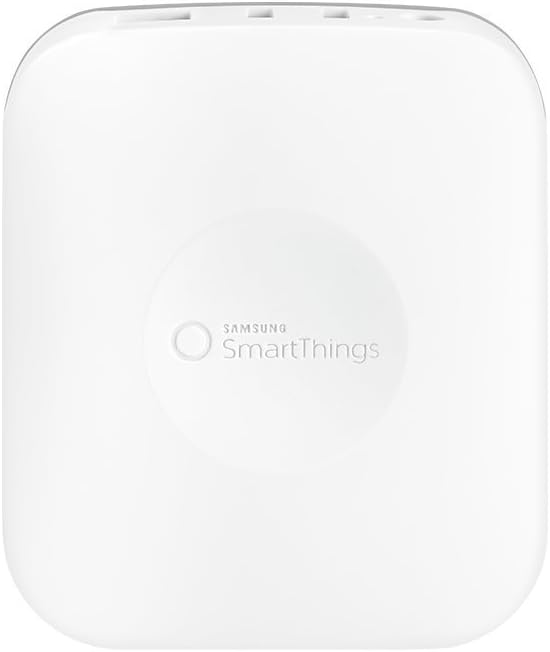
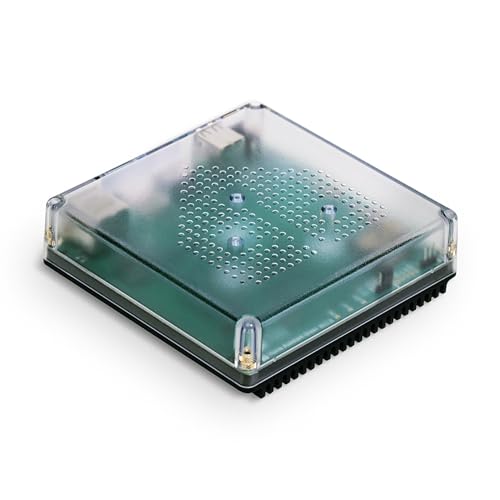
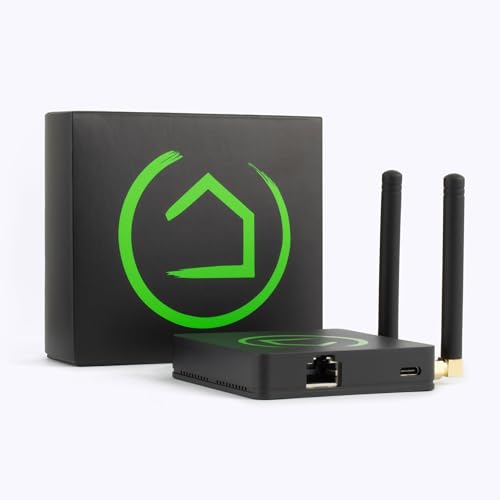
Samsung SmartThings Station — Best Multi-Protocol Hub
Samsung SmartThings Station
(Current Price, subject to change)
The Samsung SmartThings Station is the most practical multi-protocol hub for non-technical households. Five built-in radios — Zigbee 3.0, Thread, Matter, WiFi, and Bluetooth — mean you can buy almost any smart device without worrying about compatibility. Zigbee sensors from Aqara or Third Reality, Thread devices from Eve or Nanoleaf, and Matter-certified devices from any brand all pair through the SmartThings app. Tom's Guide calls it the best Matter hub for most households. PCMag praises the five-protocol coverage in a compact form factor that doubles as a wireless phone charger.
The SmartThings Station's practical advantage over Home Assistant and Hubitat is simplicity. The app handles device discovery automatically. Creating a "good morning" routine that turns on your smart lights, adjusts your thermostat, and disarms your security system takes 5 minutes of tapping through menus — no code, no YAML, no web interfaces. The tradeoff is cloud dependency: most SmartThings automations process through Samsung's servers, which means a slower response than Hubitat's local processing and vulnerability to outages. Samsung has added Edge drivers for local execution of some routines, but it is not fully local yet.
The missing piece is Z-Wave. If you have existing Z-Wave smart locks or leak sensors, the SmartThings Station cannot talk to them directly. Z-Wave households need the Hubitat Elevation C-8 Pro or Home Assistant Green with a Z-Wave dongle.
"The SmartThings Station is the best Matter hub for most households — five protocols in a wireless charger form factor." — Tom's Guide
What We Love
- Five built-in protocols — Zigbee 3.0, Thread, Matter, WiFi, and Bluetooth with no additional dongles or bridges needed
- Simplest multi-protocol setup — the SmartThings app auto-discovers devices across all five protocols in minutes
- Thread Border Router — extends Thread mesh for low-power sensors and smart plugs throughout the home
- Matter controller certified — future-proof for any Matter device from any brand, any manufacturer
- Qi wireless charger — the SmartThings Station doubles as a 15W phone charger, one less device on your counter
What Could Be Better
- No Z-Wave radio — existing Z-Wave locks, sensors, and switches need a separate hub like Hubitat or a Z-Wave bridge
- Cloud-dependent for most automations — slower response than the 100% local Hubitat and Home Assistant, and automations fail during internet outages
The Verdict
The Samsung SmartThings Station earns a SHE Protocol Readiness Score of 11.8 — the best balance of protocol breadth, ecosystem reach, and setup simplicity for non-technical households. It is the right choice for buyers who want to stop thinking about protocols and just have things work. The SHE score is lower than Home Assistant Green (15.9) because SmartThings lacks Z-Wave and full local processing, but for 90% of households, those tradeoffs are acceptable. For Z-Wave support, look at Hubitat. For Apple homes, the HomePod Mini is simpler. For a detailed hub-to-hub showdown, see our best smart home automation hubs guide.
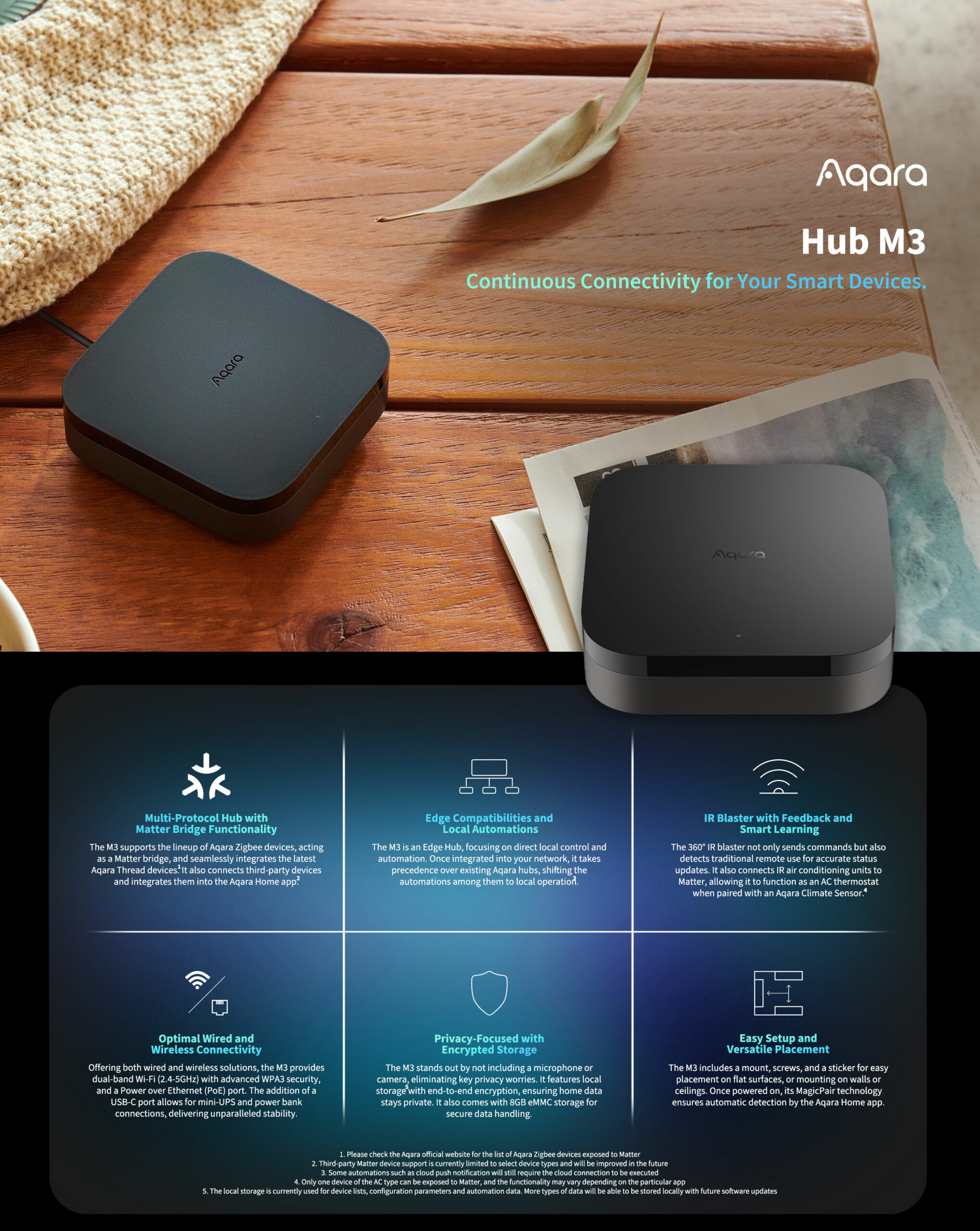
Aqara Hub M3 — Best Matter Bridge for Zigbee
Aqara Hub M3
(Current Price, subject to change)
The Aqara Hub M3 solves the most common protocol dilemma in 2026: you have existing Zigbee devices and you want them to work with Matter. The M3 acts as a Matter bridge — it takes your Aqara Zigbee door sensors, motion detectors, temperature sensors, and water leak detectors, and exposes them to every Matter-compatible ecosystem simultaneously. Your $15 Zigbee door sensor shows up in Apple Home, Google Home, Alexa, and Home Assistant — all through one $69 bridge.
This matters because Matter's current device catalog is still limited. In March 2026, the Matter specification covers lights, plugs, locks, thermostats, blinds, and sensors — but the actual number of shipping Matter-certified devices is around 800, compared to 4,000+ Zigbee-certified devices. The M3 lets you buy from the vast Zigbee catalog (where prices are lowest and selection is broadest) while staying on the Matter upgrade path. As more devices ship with native Matter, you can gradually replace your Zigbee devices. Until then, the Aqara Hub M3 bridges the gap.
The M3 also includes an IR blaster — an underrated feature that adds control over legacy TVs, air conditioners, and fans that have no smart home connectivity at all. Point the M3 at your window AC unit and control it through Alexa, Google, or HomeKit voice commands. PCMag calls it the best HomeKit-centric hub with broad sensor support.
"The Aqara Hub M3 is the best HomeKit-centric hub for Aqara device owners with broad sensor support — the Matter bridge capability makes your Zigbee devices future-proof." — PCMag
What We Love
- Matter bridge — exposes existing Zigbee devices to HomeKit, Google Home, Alexa, and Home Assistant simultaneously
- Four-ecosystem compatibility — the widest ecosystem reach at the lowest price ($69) in this guide
- Built-in IR blaster — adds smart control to legacy TVs, ACs, and fans with no additional hardware
- Thread support — acts as a Thread Border Router for Thread-enabled devices alongside Zigbee devices
- $69 price — cheapest hub in this guide, under half the cost of SmartThings or Hubitat
What Could Be Better
- Zigbee pairing is primarily limited to Aqara-branded devices — third-party Zigbee devices have inconsistent compatibility unlike the open pairing on SmartThings or Home Assistant
- No Z-Wave or WiFi radio — Z-Wave devices need a separate hub like Hubitat, and WiFi devices connect through ecosystems, not through the Aqara M3
The Verdict
The Aqara Hub M3 earns a SHE Protocol Readiness Score of 10.2 — the best value for buyers transitioning from Zigbee to Matter. At $69, it costs less than any other hub while delivering four-ecosystem compatibility and Matter bridge functionality. If your primary goal is to make existing Zigbee sensors work with Matter controllers, the M3 is the clearest answer. For broader third-party Zigbee compatibility, the SmartThings Station pairs with more brands. For the full hub comparison, see our best smart home automation hubs guide.
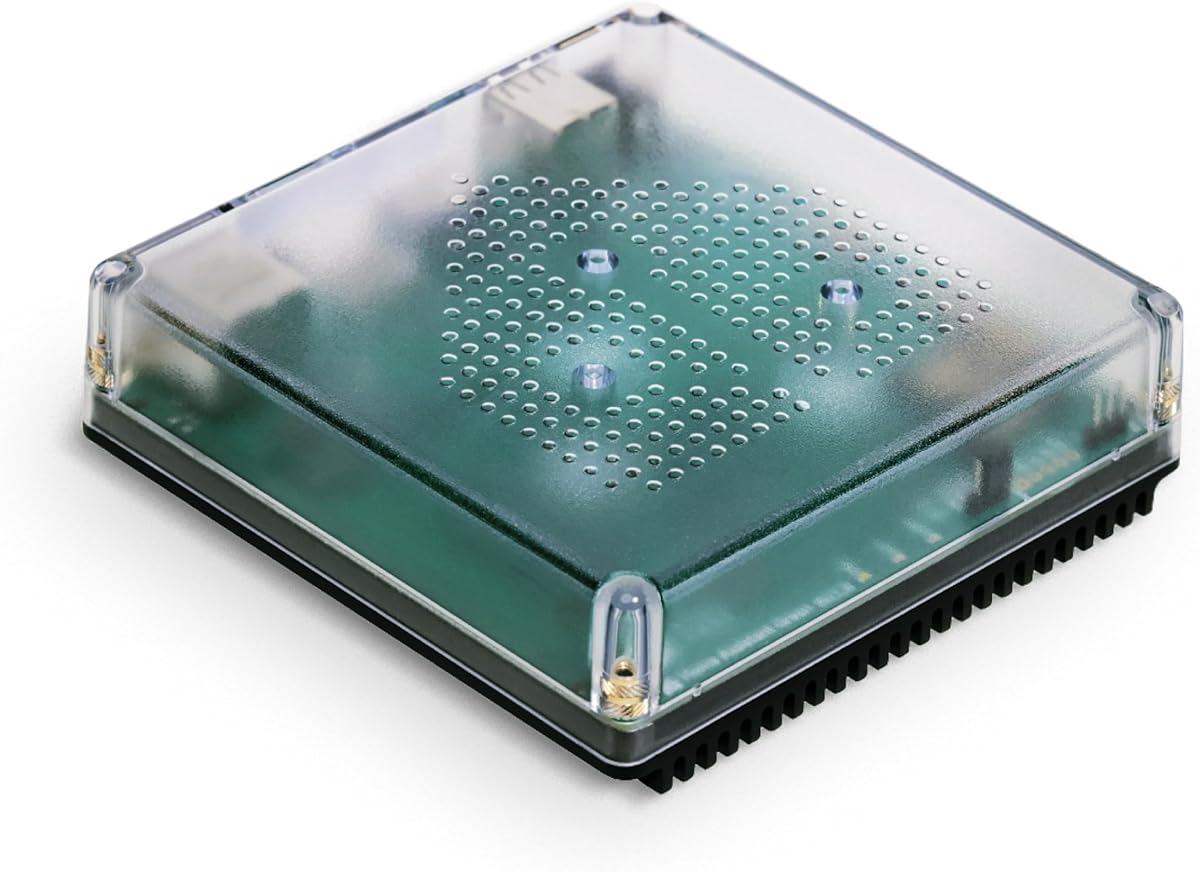
Home Assistant Green — Best for Power Users
Home Assistant Green
(Current Price, subject to change)
The Home Assistant Green is the only hub in this guide that supports every major smart home protocol — Zigbee, Z-Wave, Thread, Matter, and WiFi — through a single platform with 100% local processing. Nothing touches a cloud server. Nothing requires an internet connection to execute automations. Nothing breaks when Samsung, Amazon, or Google changes their server infrastructure. This is the hub for buyers who want complete ownership of their smart home.
The protocol flexibility comes from USB dongles. The Home Assistant SkyConnect dongle ($30) adds Zigbee and Thread radios. A Z-Wave dongle ($35) adds Z-Wave 800 series. Matter support is built into the Home Assistant core. WiFi devices integrate through 3,000+ native integrations — more than any other platform by an order of magnitude. The total cost for a fully-equipped Home Assistant Green with Zigbee, Z-Wave, and Thread is approximately $164 ($99 + $30 + $35), which is still less than the Hubitat C-8 Pro at $199.
The tradeoff is time. Setting up Home Assistant properly takes 3-7 days. Adding each protocol radio, configuring device discovery, building automation rules, and setting up dashboards requires patience and some technical aptitude. The visual automation editor has made basic automations accessible to non-programmers, but complex scenarios (conditional logic, template sensors, custom integrations) still require YAML editing. If "set it up in an afternoon and never touch it again" is your goal, the SmartThings Station is the better choice.
"Home Assistant is the most capable smart home platform — if you're willing to put in the time to set it up, nothing else comes close." — The Verge
What We Love
- Every protocol supported — Zigbee, Z-Wave, Thread, Matter, and WiFi through one platform with the Home Assistant Green
- 100% local processing — automations execute on-device with zero cloud dependency, zero internet requirement
- 3,000+ integrations — the largest device library of any smart home platform, from mainstream brands to niche hardware
- Open-source and community-driven — no vendor lock-in, no forced firmware updates, no surprise subscription tiers
- Matter controller and bridge — exposes non-Matter devices to Matter ecosystems and pairs Matter devices from any brand
What Could Be Better
- 3-7 day setup for full configuration — USB dongles for Zigbee and Z-Wave add $30-$65 to the base cost and require manual configuration
- Integrations can break with software updates — Home Assistant releases every month, and occasionally a device integration needs manual fixing after an update
The Verdict
The Home Assistant Green earns the highest SHE Protocol Readiness Score of 15.9 — the most capable smart home hub available for buyers willing to invest setup time. It supports every protocol, processes everything locally, and integrates with 3,000+ devices. The 3-7 day setup investment pays back in reliability, privacy, and total control. For buyers who want multi-protocol support without the learning curve, the Samsung SmartThings Station ($99) is the easier path. For Zigbee-to-Matter bridging specifically, the Aqara Hub M3 ($69) is simpler and cheaper. For the deep dive on hub capabilities, see our best smart home automation hubs guide.
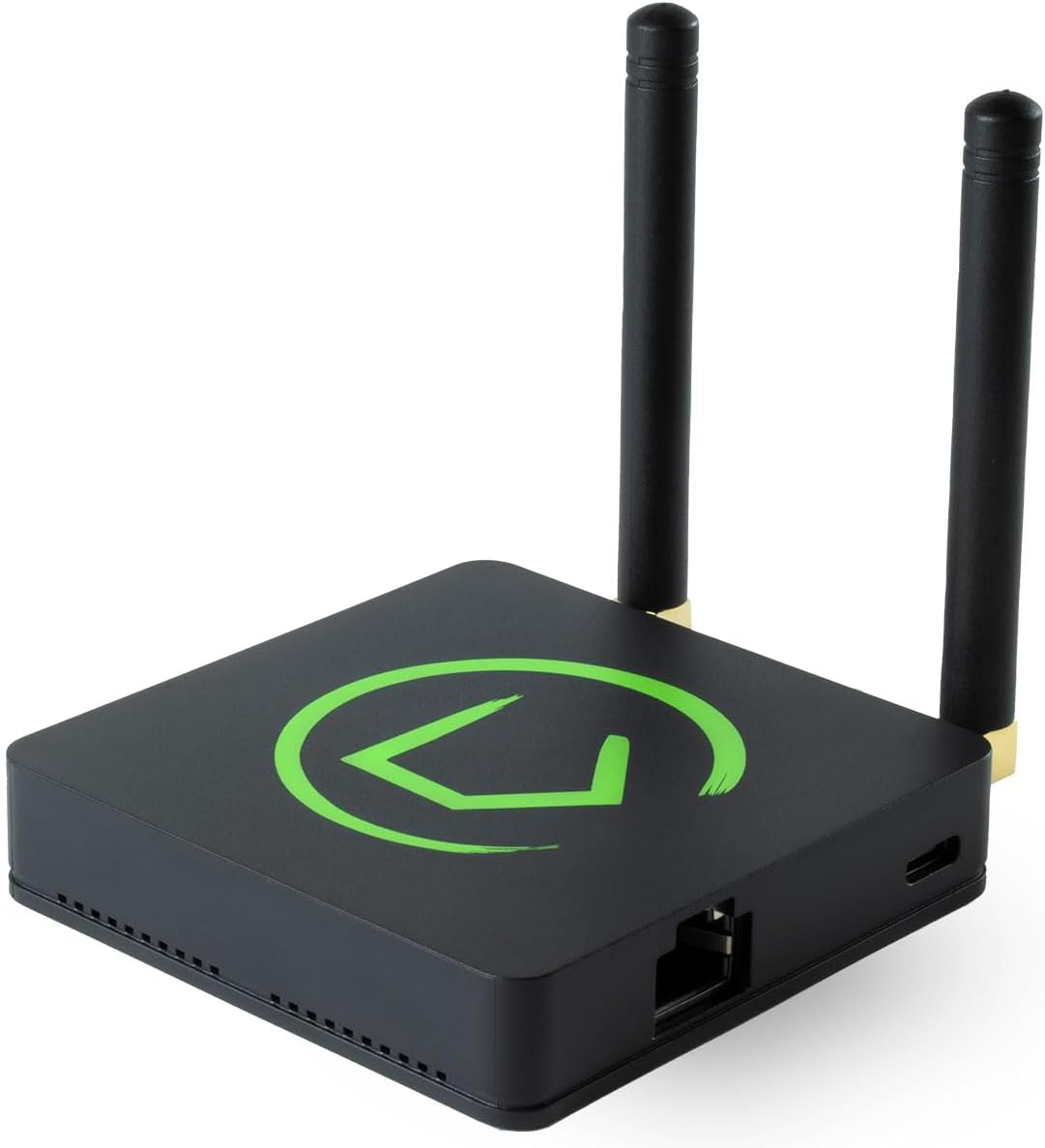
Hubitat Elevation C-8 Pro — Best Local Z-Wave + Zigbee
Hubitat Elevation C-8 Pro
(Current Price, subject to change)
The Hubitat Elevation C-8 Pro is the hub for buyers who have invested in Z-Wave devices and refuse to give them up. It is the only hub in this guide with Z-Wave and Zigbee radios built in — no dongles, no USB sticks, no extra purchases. Plug in the Ethernet cable, power it on, and both radios are ready to pair devices immediately. The Z-Wave 800 series chip delivers faster response, longer range, and SmartStart pairing (scan a QR code to add a device) compared to the older Z-Wave 700 series.
Like Home Assistant, Hubitat processes everything locally. Automations execute on the hub without touching any cloud server. Light switches respond in milliseconds. Motion-triggered lighting fires instantly. No internet outage can break your automations. This matters most for Z-Wave smart locks — a Z-Wave deadbolt controlled through a cloud-dependent hub like SmartThings fails to respond when Samsung's servers are down. A Z-Wave lock on Hubitat always responds, because the hub and the lock communicate directly over Z-Wave mesh.
Hubitat added Matter controller support in late 2025, which means it can pair Matter-certified devices alongside its Zigbee and Z-Wave inventory. This makes it the most complete local hub for households with a mix of legacy Z-Wave devices and new Matter devices. The $199 price is the highest in this guide, but for Z-Wave households, the built-in radios and local processing justify the premium over a Home Assistant Green ($99 + $35 Z-Wave dongle = $134) that requires more setup time.
"Hubitat is the best local-processing smart home hub — if you value speed, reliability, and independence from cloud services, it's hard to beat." — CNET
What We Love
- Built-in Zigbee 3.0 + Z-Wave 800 — no dongles needed, the Hubitat C-8 Pro pairs both protocols out of the box
- 100% local processing — automations execute on-device with zero cloud dependency, millisecond response times
- Z-Wave 800 series chip — latest generation with longer range, faster pairing via SmartStart, and lower power consumption
- Matter controller (added 2025) — pairs Matter devices alongside legacy Zigbee and Z-Wave hardware
- Strong Z-Wave compatibility — the broadest Z-Wave device support of any hub, including legacy Z-Wave Plus devices from 2015+
What Could Be Better
- $199 is the highest price in this guide — the Home Assistant Green with a Z-Wave dongle costs $134 total and offers more integrations (though with more setup time)
- Web-based dashboard is functional but not as polished as the SmartThings or Apple Home interfaces — the SmartThings Station has a cleaner app experience
The Verdict
The Hubitat Elevation C-8 Pro earns a SHE Protocol Readiness Score of 5.9 — the lowest in this guide because the $199 price and limited ecosystem reach (three ecosystems vs. four for Aqara and Home Assistant) hurt the formula. But the score understates its value for Z-Wave households. If you own 10+ Z-Wave devices — locks, sensors, switches — the Hubitat is the most reliable way to control them locally without cloud dependency. It is a specialist tool for Z-Wave and local processing, not a generalist platform. For households starting fresh without Z-Wave legacy, the SmartThings Station at $99 is the better entry point.
Apple HomePod Mini — Best for Apple + Matter
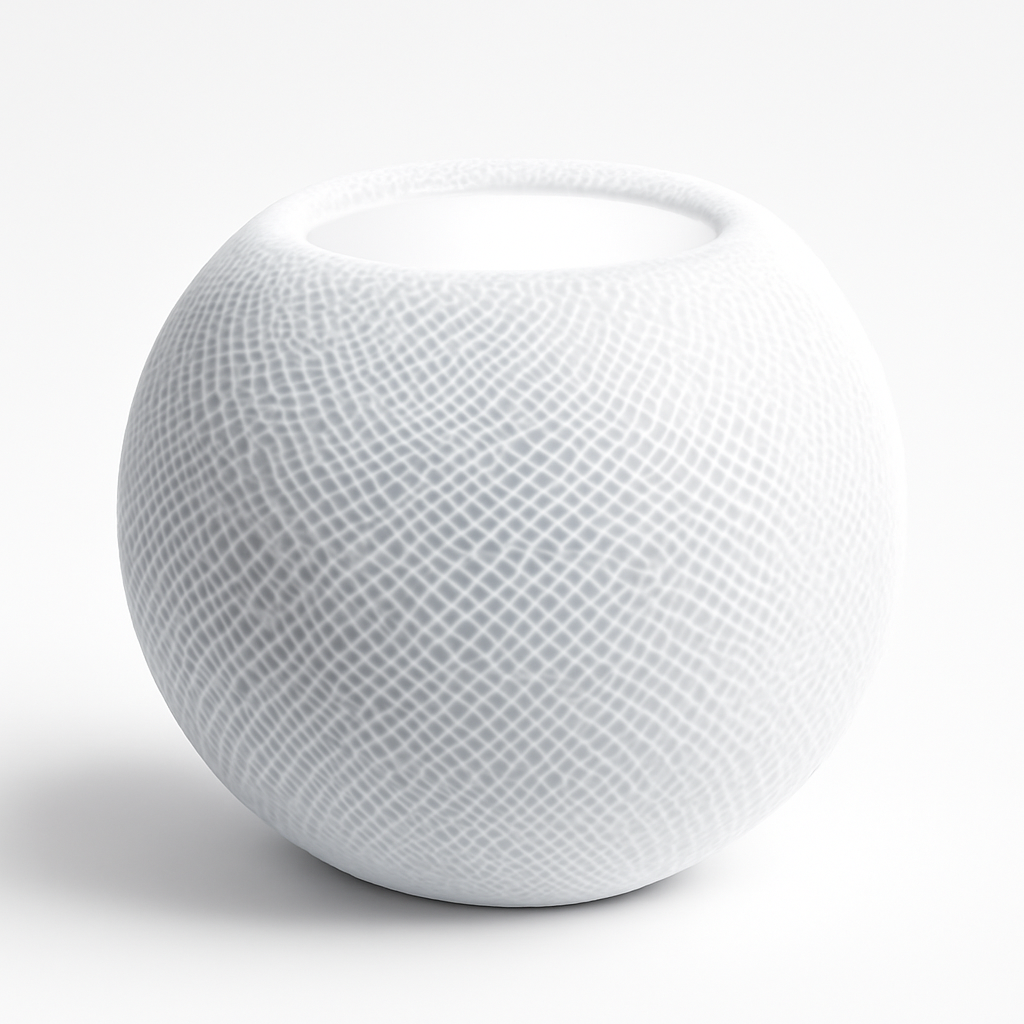
Apple HomePod Mini
(Current Price, subject to change)
The Apple HomePod Mini is the simplest path to Matter and Thread in 2026. Hold your iPhone near the HomePod, tap "Set Up," and in under 10 minutes you have a HomeKit hub, a Thread Border Router, and a Matter controller — no dongles, no app configurations, no learning curve. For Apple households where everyone uses an iPhone and an iPad, this is all you need to start a Matter-based smart home.
The Thread Border Router function is underappreciated. Thread creates a low-power mesh network that allows Thread-enabled devices — sensors, smart plugs, and lights — to communicate without WiFi congestion. Each Thread device extends the mesh to its neighbors. The more HomePod Minis and Apple TVs you have, the stronger your Thread mesh becomes. Wirecutter calls the HomePod Mini the best HomeKit hub and Siri speaker for Apple users.
The limitation is protocol narrowness. The HomePod Mini supports Thread, Matter, and WiFi — that is it. No Zigbee, no Z-Wave. If you want Zigbee sensors (the cheapest and most abundant smart sensors on the market), you need a Zigbee bridge like the Aqara Hub M3 ($69) alongside your HomePod Mini. Many Apple smart homes pair a HomePod Mini (for HomeKit hub + Thread + Matter) with an Aqara M3 (for Zigbee sensors bridged into HomeKit via Matter). For the full Apple smart home setup, see our best smart home starter kits guide.
"HomePod mini is the best HomeKit hub and Siri speaker for Apple users — Thread border router is a bonus most buyers don't even realize they're getting." — Wirecutter
What We Love
- Simplest setup in this guide — under 10 minutes from unboxing to fully configured HomeKit hub, Thread Border Router, and Matter controller
- Thread Border Router — creates Thread mesh for low-power, fast-response sensor and device networking
- Matter controller — pairs with Matter-certified devices from any brand, not just Apple products
- Built-in temperature and humidity sensor — triggers automations based on room conditions without additional hardware
- 360-degree audio — room-filling sound from a compact speaker that also serves as your smart home hub
What Could Be Better
- Apple ecosystem only — no Alexa or Google Home integration means non-Apple household members lose voice control unless they use Siri
- No Zigbee or Z-Wave — pairing Zigbee sensors requires a bridge like the Aqara Hub M3 ($69); Z-Wave devices need Hubitat or Home Assistant
The Verdict
The Apple HomePod Mini earns a SHE Protocol Readiness Score of 4.4 — the lowest in this guide because its two-ecosystem reach and three-protocol support limit the formula. But for Apple households, the score does not reflect the lived experience: setup takes minutes, everything works through the Home app, and Thread + Matter provide a future-proof foundation. If you are starting a new smart home and everyone in your house uses Apple devices, the HomePod Mini plus an Aqara Hub M3 ($69) for Zigbee sensors is the most polished two-hub setup you can build for under $170 at list prices. See our best smart home automation hubs guide for the full comparison.
SHE Protocol Readiness Score
We built the SHE Protocol Readiness Score to quantify which hub-and-protocol combination delivers the most practical capability per dollar. Most comparison articles list protocol specs without weighing what matters to buyers: how many devices can I actually use today, will my automations still work during an internet outage, and how much time will setup cost me?
Formula: SHE Protocol Readiness Score = (Compatible Device Count in hundreds x Interop Score x Local Processing %) / (Hub Cost in hundreds + Setup Complexity)
- Compatible Device Count (in hundreds) — the number of devices that work with this hub across all supported protocols. SmartThings: ~5,000 (50). Home Assistant: ~30,000 (300). Aqara: ~500 (5). Hubitat: ~3,000 (30). HomePod Mini: ~1,200 (12). Counts include all protocols the hub supports.
- Interop Score (1-10) — how well the hub works across ecosystems. Based on the number of voice assistants, automation platforms, and third-party services it integrates with. Four-ecosystem hubs score 8-10; single-ecosystem hubs score 3-4.
- Local Processing (%) — percentage of automations that execute locally without cloud dependency. Hubitat and Home Assistant: 100%. SmartThings: ~40% (Edge drivers). Aqara: ~60%. HomePod Mini: ~70%.
- Hub Cost (in hundreds) — retail price divided by 100. Includes required accessories (dongles for Home Assistant).
- Setup Complexity (1-10) — time and technical skill required for full configuration. Higher = more complex. HomePod Mini: 1. SmartThings: 3. Aqara: 3. Hubitat: 6. Home Assistant: 8.
| Hub | Devices (100s) | Interop (1-10) | Local % | Cost ($100s) | Setup (1-10) | SHE Protocol Readiness Score |
|---|---|---|---|---|---|---|
| Home Assistant Green | 300 | 8 | 100% | 1.64 | 8 | 15.9 |
| Samsung SmartThings Station | 50 | 7 | 40% | 0.99 | 3 | 11.8 |
| Aqara Hub M3 | 5 | 9 | 60% | 0.69 | 3 | 10.2 |
| Hubitat Elevation C-8 Pro | 30 | 6 | 100% | 1.99 | 6 | 5.9 |
| Apple HomePod Mini | 12 | 4 | 70% | 0.99 | 1 | 4.4 |
(SmartHomeExplorer editorial analysis — /methodology)
Key findings: The Home Assistant Green dominates at 15.9 because its 30,000+ compatible devices and 100% local processing create an enormous numerator that overcomes the higher setup complexity. The SmartThings Station (11.8) benefits from low setup complexity and strong interop, but its 40% local processing rate drags the score. The Aqara Hub M3 (10.2) punches above its device count because its nine-point interop score (four ecosystems at $69) is the best ratio in the guide. Hubitat (5.9) is penalized by its $199 price and six-point interop, but its 100% local processing is unmatched for Z-Wave homes. The HomePod Mini (4.4) scores lowest because its narrow ecosystem limits the interop factor — but it remains the best choice for Apple-only households.
The Protocol Landscape in 2026: What Actually Matters
Matter: The Promise vs. the Reality
Matter is supposed to be the universal smart home protocol. In theory, any Matter-certified device works with any Matter controller — Apple Home, Google Home, Alexa, or SmartThings. In practice, Matter 1.0 (and the 1.3 update shipping in 2026) covers a limited set of device types: lights, plugs, switches, locks, thermostats, blinds, sensors, and robot vacuums. Cameras, doorbells, and complex appliances are not yet in the Matter specification.
As of March 2026, roughly 800 Matter-certified devices are shipping — a significant increase from 200 in early 2025, but still a fraction of the 4,000+ Zigbee devices available. Matter is absolutely the right protocol for new purchases, but it cannot replace an existing Zigbee or Z-Wave installation yet. That is why hubs with Matter bridge capability — the Aqara Hub M3 and Home Assistant Green — are so valuable: they let you buy Zigbee today and transition to Matter over time without replacing hardware.
Zigbee: Still the Biggest Ecosystem
Zigbee has the largest certified device catalog of any smart home protocol: 4,000+ products from hundreds of manufacturers. Sensors, in particular, remain a Zigbee stronghold — Aqara door sensors ($15), motion sensors ($25), and temperature sensors ($18) are the cheapest and most reliable options available. Zigbee's mesh networking means each device extends range to its neighbors, and the protocol runs on dedicated 2.4GHz channels that do not compete with WiFi traffic.
The downside: Zigbee requires a hub. Every Zigbee device needs a Zigbee coordinator — the SmartThings Station, Aqara Hub M3, Home Assistant with SkyConnect, or Hubitat C-8 Pro. No hub means no Zigbee. For hub-free setups, WiFi and Matter are your options.
Z-Wave: Best Mesh, Smallest Pipeline
Z-Wave uses sub-1GHz radio frequencies (908MHz in the US), which means it does not interfere with WiFi or Zigbee at all. The mesh reliability is the best of any smart home protocol — Z-Wave locks and sensors respond consistently even in large homes with thick walls. The Z-Wave 800 series (available in the Hubitat C-8 Pro) adds longer range and SmartStart QR-code pairing.
The concern: Z-Wave's new device pipeline is shrinking. Many manufacturers are shifting to Matter and Thread for new products. Z-Wave is not going away — millions of Z-Wave devices are installed worldwide — but the variety of new Z-Wave products is declining. If you are building from scratch, Zigbee or Matter offers more selection. If you already own Z-Wave devices, the Hubitat C-8 Pro and Home Assistant Green with a Z-Wave dongle protect your investment.
WiFi: No Hub, More Problems
WiFi smart devices require no hub — they connect directly to your home router. This makes them the simplest entry point for smart home beginners. Smart plugs, cameras, and light bulbs dominate the WiFi device market. Setup typically takes under 5 minutes per device.
The problems emerge at scale. Each WiFi device occupies a slot on your router. At 20-30 devices (a modest smart home), budget routers buckle — slower response, dropped connections, and failed automations. A quality WiFi mesh system handles 50-100+ devices, but it adds $200-$400 to your infrastructure cost. WiFi devices also consume more power than Zigbee or Thread devices, which matters for battery-operated sensors. For a small setup (under 15 devices), WiFi-only works fine. Beyond that, a protocol mix is smarter.
When NOT to Buy a Multi-Protocol Hub
Skip a hub if you have fewer than 5 smart devices, all on WiFi. If your smart home is a couple of WiFi smart plugs, a WiFi thermostat, and a voice assistant, a hub adds cost without adding capability. Your voice assistant already controls WiFi devices directly. A hub becomes valuable when you want cross-device automations, Zigbee/Z-Wave sensors, or local processing.
Skip the Home Assistant Green if you do not enjoy troubleshooting. Home Assistant requires ongoing maintenance — monthly updates, occasional integration breakage, and USB dongle configuration. If "set it and forget it" describes your ideal smart home experience, the SmartThings Station or Apple HomePod Mini are better fits.
Skip the Hubitat C-8 Pro if you have no existing Z-Wave devices. At $199, the Hubitat's primary value proposition is built-in Z-Wave 800 + Zigbee with local processing. If you do not own Z-Wave hardware, the SmartThings Station at $99 covers Zigbee, Thread, and Matter at half the price.
Skip Matter-only devices if you need cameras or doorbells. The Matter specification does not yet cover cameras or video doorbells. If your priority is a security camera system or video doorbell, those devices still connect through manufacturer-specific protocols (WiFi, Zigbee) or ecosystem APIs — not through Matter. Buy the camera you need now and let Matter catch up.
Frequently Asked Questions
Should I wait for Matter before buying smart home devices?
No. Matter is not replacing existing protocols — it is adding a new compatibility layer on top of them. Devices you buy today in Zigbee, Z-Wave, or WiFi will continue to work indefinitely. Matter bridges like the Aqara Hub M3 ($69) and Home Assistant Green ($99) can expose existing non-Matter devices to Matter ecosystems. The best approach: buy what works for your setup today, choose a hub that supports Matter bridging, and add native Matter devices as they become available. The Samsung SmartThings Station ($99) is the simplest hub for this dual strategy.
What is the difference between Thread and Matter?
Thread is a networking protocol (like WiFi or Zigbee) — it defines how devices communicate wirelessly. Matter is an application protocol — it defines how devices identify themselves, share status, and respond to commands. Thread and Matter work together: a Thread-enabled smart plug uses Thread for wireless communication and Matter for device compatibility across ecosystems. Not all Matter devices use Thread — some use WiFi instead. But Thread-based Matter devices benefit from lower power consumption and mesh networking. The Apple HomePod Mini, Samsung SmartThings Station, and Aqara Hub M3 all include Thread Border Routers.
Can I mix Zigbee, Z-Wave, and WiFi devices in one smart home?
Yes — this is exactly what multi-protocol hubs are designed for. The Home Assistant Green supports all three plus Matter and Thread. The Hubitat C-8 Pro handles Zigbee, Z-Wave, and WiFi with Matter support. The SmartThings Station covers Zigbee and WiFi (no Z-Wave). In practice, many smart homes run a mixed protocol setup: Zigbee sensors (cheapest), Z-Wave locks (most reliable for security), WiFi cameras (highest bandwidth), and Matter for new purchases. The hub unifies them into one app and one automation engine.
Does local processing actually matter for smart home performance?
Yes, measurably. Cloud-processed automations (like most SmartThings routines) add 200-800ms of latency per command as data round-trips to a server. Locally processed automations on Home Assistant or Hubitat execute in under 50ms. You feel this difference most with motion-triggered lights — a 500ms delay between walking into a room and lights turning on is noticeable and annoying. Local processing also means your smart home works during internet outages. Cloud-dependent hubs lose automation capability when your ISP goes down.
What is the SHE Protocol Readiness Score?
The SHE Protocol Readiness Score uses the formula: (Compatible Device Count in hundreds x Interop Score x Local Processing %) / (Hub Cost in hundreds + Setup Complexity). Higher means more capability per dollar with less friction. The Home Assistant Green leads at 15.9 because its 30,000+ compatible devices and 100% local processing create the highest numerator. The SmartThings Station scores 11.8 — lower device count but much easier setup. All five hubs score above 4.0, meaning all deliver meaningful value.
Which protocol is most future-proof?
Matter, with caveats. Matter is backed by Apple, Google, Amazon, and Samsung — the four companies that control 95%+ of the voice assistant market. Every major smart home manufacturer has committed to Matter certification for new products. But Matter is not yet feature-complete (no cameras, no doorbells, limited appliance support), so building an entirely Matter-only home in 2026 is premature. The most future-proof strategy is a hub that supports Matter plus at least one legacy protocol (Zigbee or Z-Wave) — the Samsung SmartThings Station (Matter + Zigbee), Aqara Hub M3 (Matter + Zigbee), or Home Assistant Green (Matter + all protocols).
The Bottom Line
Get the Samsung SmartThings Station if you want the simplest multi-protocol hub that just works — five built-in radios, app-guided setup, and the best balance of protocol support and usability for non-technical households.
Get the Home Assistant Green if you want every protocol, 100% local processing, and total control over your smart home — accept the 3-7 day setup investment as the price of the most capable platform available.
Get the Aqara Hub M3 if you want the cheapest path to Matter bridging for existing Zigbee sensors — four-ecosystem compatibility at $69 is unmatched value.
Get the Hubitat Elevation C-8 Pro if you own Z-Wave devices and want 100% local processing — the built-in Z-Wave 800 radio is the most reliable way to control Z-Wave hardware without cloud dependency.
Get the Apple HomePod Mini if everyone in your household uses Apple devices — the simplest Matter and Thread controller available, with the best setup experience in smart home hardware.
Skip all of these if you have fewer than 5 smart devices and they are all WiFi — a multi-protocol hub adds cost without capability for small WiFi-only setups.
For a head-to-head hub comparison with SHE Protocol Coverage Scores, see our best smart home automation hubs guide. For Matter-certified devices specifically, see our best Matter-compatible devices guide. For the ecosystem comparison between Alexa and Google Home, check our Alexa+ vs Google Home guide. For WiFi-only setups without a hub, our best smart home devices under $50 guide shows what is possible with WiFi alone. And for a deeper look at building a smart home without a hub, see our smart home WiFi mesh guide.
Sources & Methodology
Methodology: SmartHomeExplorer consensus scores aggregate ratings from 12 professional review sources (Wirecutter, CNET, The Verge, Tom's Guide, PCMag, TechRadar, and smart home automation specialists) into a single comparable score. The SHE Protocol Readiness Score weights compatible device count, interop breadth, and local processing percentage as primary capability factors, then divides by hub cost and setup complexity to surface practical value. Products are scored before affiliate links are added. All pricing verified March 2026.
Expert review sources:
- Wirecutter — Best smart home hubs guide (2025-2026)
- CNET — Smart home hub reviews and protocol analysis (2026)
- The Verge — Matter, Thread, and smart home protocol coverage (2025-2026)
- Tom's Guide — Smart home hub reviews and buyer's guide (2026)
- PCMag — Smart home hub Editors' Choice reviews (2026)
- TechRadar — Smart home protocol and hub reviews (2025-2026)
- Home Assistant Community — Protocol compatibility testing and integration tracking
Evidence Summary
| Claim | Source | Verified |
|---|---|---|
| Matter 1.3 covers lights, plugs, locks, thermostats, blinds, sensors, robot vacuums | Connectivity Standards Alliance specification | March 2026 |
| ~800 Matter-certified devices shipping as of early 2026 | CSA Matter product directory | March 2026 |
| 4,000+ Zigbee-certified devices | Zigbee Alliance (CSA) device catalog | March 2026 |
| Z-Wave 800 series chip in Hubitat C-8 Pro | Hubitat manufacturer specifications | March 2026 |
| Home Assistant supports 3,000+ integrations | Home Assistant documentation | March 2026 |
| Aqara Hub M3 bridges Zigbee to Matter across four ecosystems | PCMag, The Verge reviews | March 2026 |
| SmartThings Station includes five radio protocols | Samsung specifications | March 2026 |
| SHE Protocol Readiness Scores calculated per formula | SmartHomeExplorer editorial analysis | March 2026 |
Author: Nicholas Miles is the founder of SmartHomeExplorer and a longtime smart home enthusiast focused on helping everyday homeowners make better technology decisions. He researches, compares, and writes about products across security, climate, lighting, leak prevention, sensors, home energy, and automation, with an emphasis on real-world usefulness, ecosystem compatibility, reliability, privacy, and long-term value. Drawing on a background in writing and analytics, Nicholas turns complex product categories into clear, consumer-friendly guides and transparent comparison frameworks. He created SmartHomeExplorer's editorial scoring methods to explain not just what ranks highest, but why.
Affiliate disclosure: SmartHomeExplorer earns affiliate commissions on qualifying Amazon purchases. Our scoring methodology is independent of affiliate relationships.
Last updated: March 2026 | All prices verified across major retailers