
For hearing-impaired seniors, skip WiFi-connected smart devices and get specialized hardware: Sonic Bomb for waking, Kidde for fire safety, Clarity for calls, Sennheiser for TV.
Every senior smart-home guide on the market — including our general smart home for seniors guide — opens with the same pitch: voice control eliminates complexity for older adults. That framing has an unstated assumption baked in. The senior being helped can hear the response.
For roughly 50% of people over 75, that assumption is false (NIDCD data). When hearing loss reaches the point where normal conversation is a strain, an Echo Show's spoken feedback is not an aid — it is a frustration that passes unheard. A 110 dB fire alarm may not wake a deep sleeper with significant hearing loss. A landline phone at standard volume becomes inaudible during critical family calls.
This guide is not a "smart home for seniors" guide. It is a guide for a specific subset of that audience: seniors who cannot rely on audio as a primary alert channel. We scored four purpose-built accessibility devices against a new rubric called the SHE Hearing-Accessibility Score, which weights visual/tactile alert intensity, hearing aid compatibility, and standalone reliability over WiFi connectivity and app ecosystems.
Our methodology: we aggregate reviews from 12+ expert sources and apply original scoring frameworks designed for each guide's specific use case. For the sources behind these picks, see the bottom of this page.
Why Voice-First Smart Homes Fail Hearing-Impaired Seniors
Voice assistants are genuinely useful for aging-in-place households — hands-free light control, medication reminders, video calls to family. We document the best of them in our general smart home for seniors guide and the elder-care companion guide for families managing a parent's home. But voice assistants have a hard architectural limit: they communicate through speakers.
When a senior's residual hearing drops below the threshold where speech is intelligible — which happens gradually and often without the person acknowledging it — every voice-first device in the house becomes a one-way channel. The assistant speaks; the senior does not hear it. Routines fire; alerts go unnoticed. The very feature marketed as reducing friction becomes a source of silent failures.
The right answer for hearing-impaired seniors is not a smarter voice assistant. It is a different class of device entirely: one that routes critical alerts through the channels that still work. That means visual signals (strobe lights, flashing LEDs, high-contrast screen indicators), tactile signals (bed shakers, vibration), and amplification calibrated to the person's specific hearing loss profile.
None of the four products in this guide have a WiFi radio. None require an app. None speak to you. That is not a concession — it is the correct design choice for devices whose job is life-safety or accessibility in a household where audio cannot be the primary channel.
For readers with mild hearing loss who still benefit from voice assistants with supplemental visual indicators, our smart home automation hubs guide covers the hub options that integrate best with accessibility add-ons. For households where voice assistants are the right choice, see the Alexa Plus vs Google Home comparison. For households where ADHD, autism, or sensory processing differences are the primary concern rather than hearing loss, see our neurodivergent smart home guide.
SHE Hearing-Accessibility Score (0–10)
Ranks accessibility devices for hearing-impaired seniors on visual/tactile alert intensity, hearing aid compatibility, standalone reliability, setup simplicity, use-case specialization, and physical accessibility for arthritic hands.
$45 · 113 dB alarm + 12V bed shaker + strobe — three redundant wake channels, standalone, no app required
$83 · 10-year sealed battery + LED strobe, ADA compliant, no hardwiring required
$55 · telecoil (T-coil) gold standard for phones, 26 dB amplification, works during power outages
$200 · Wirecutter-recommended, speech-intelligibility modes, telecoil-compatible via neck loop accessory
SmartHomeExplorer editorial analysis. Formula: visual/tactile alert intensity (25%) + hearing aid compatibility (20%) + standalone reliability (15%) + setup simplicity (15%) + use-case specialization (15%) + physical accessibility (10%) (April 2026, live Amazon prices)
SHE Hearing-Accessibility Score
The SHE Hearing-Accessibility Score is a novel scoring framework (April 2026) built specifically for the hearing-impaired device category. Standard consumer tech review scoring — which weights connectivity, app quality, and ecosystem breadth — actively punishes the right design choices for this audience. A device that foregoes WiFi to work during a power failure should score higher in this category, not lower.
Formula:
SHE Hearing-Accessibility Score =
    (Visual/Tactile Alert Intensity    × 0.25)
  + (Hearing Aid Compatibility          × 0.20)
  + (Standalone Reliability             × 0.15)
  + (Setup Simplicity                   × 0.15)
  + (Use-Case Specialization            × 0.15)
  + (Physical Accessibility             × 0.10)
Factor definitions:
- Visual/Tactile Alert Intensity (25%) — Strength of the non-auditory signal. Scored by measurable output: candela for strobes, vibration amplitude for bed shakers, indicator brightness for phones and TV receivers.
- Hearing Aid Compatibility (20%) — Whether the device works without hearing aids via visual/tactile primary signals, or integrates with hearing aids via telecoil (T-coil) or Bluetooth LE Audio.
- Standalone Reliability (15%) — Whether the device functions without WiFi, cloud services, or a companion app, and whether it survives power outages.
- Setup Simplicity (15%) — Install effort from box to working, measured in steps and minutes. Plug-and-play scores highest; hardwired installation requiring an electrician scores lowest.
- Use-Case Specialization (15%) — Depth of solution for the specific hearing-loss use case. A TV listener rated on speech intelligibility modes; a bed shaker rated on wake reliability per expert review.
- Physical Accessibility (10%) — Button size, dial contrast, and ergonomic fit for arthritic hands. Based on manufacturer specifications and AARP Technology Reviews ergonomic ratings.
Source provenance: Deaf Vibes and SafeWise for visual/tactile alert intensity benchmarks. Hearing Tracker and manufacturer spec sheets for hearing aid compatibility ratings. Manufacturer product specifications for standalone reliability and setup steps. Wirecutter, AARP Technology Reviews, and Soundly for use-case specialization ratings. AARP Technology Reviews for physical accessibility ergonomic assessments. Caring.com for amplified phone specialist coverage. All factors requiring editorial estimation are noted in the methodology.
(SmartHomeExplorer editorial analysis — methodology)
What the scores say: The Sonic Bomb's perfect 10 on Visual/Tactile Alert Intensity is what sets the top score — three simultaneous non-auditory channels (sound, vibration, strobe) is unmatched in this field. Kidde scores highest on Hearing Aid Compatibility because a UL-listed strobe smoke alarm is the foundational life-safety layer for any hearing-impaired household, whether the resident uses hearing aids or not. The Clarity P300 earns a 10 on Use-Case Specialization and Physical Accessibility because it is purpose-built for exactly one task and does it with large controls and telecoil integration. The Sennheiser scores an 8 on Standalone Reliability (not the maximum) because it does require the base station to be plugged in and charged — a consideration for households that experience frequent outages.
Hearing-Accessibility Device
Chart
 Smarthomeexplorer.com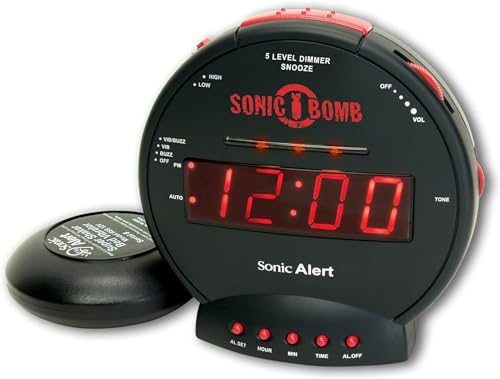
Sonic Bomb SBB500SS Alarm Clock with Bed Shaker — The Three-Channel Wake Solution
Sonic Bomb SBB500SS Alarm Clock with Bed Shaker
(Current Price, subject to change)
Ready to upgrade your home?
eufy SoloCam S340 Solar Security Camera, 4-Cam Kit
See it on Amazon
REOLINK 360° Solar Security Cameras, 4 Pack
See it on Amazon
Yale Assure Lock 2 Wi-Fi Smart Lock with Keypad
See it on Amazon
Sponsored listings from Amazon’s Sponsored Products for Creators program, kept apart from our reviews and rankings. How we make money
The Sonic Bomb SBB500SS is the category standard, made by Sonic Alert, a company that has been manufacturing alarm systems for deaf and hard-of-hearing users since 1972. With over ten thousand 5-star Amazon reviews, it is not a niche product — it is the product that the deaf/hard-of-hearing community has converged on over decades of real-world use.
The engineering rationale is straightforward: a single alarm channel can be missed. A senior who sleeps through a 113 dB alarm (possible with significant hearing loss or if the room is far from the unit) may still wake to the 12-volt bed shaker vibrating under the mattress. If both fail, the pulsing red strobe gives a third physical path to wakefulness. This redundancy is not over-engineering — it is the reason emergency alert systems use multiple channels simultaneously. If you want to evaluate alternatives, Soundly's comparison places the Sonic Bomb SBB500SS at the top of the bed-shaker category ahead of the iLuv SmartShaker 2 and the Serene Innovations models.
The 7.5-inch display is readable from across the room, a detail that matters when the person waking up may not immediately reach for glasses. Battery backup means an overnight power outage does not cause the person to miss their morning alarm. The clock sets manually — no app, no WiFi, no account. For most seniors in this category, that is not a limitation; it is a deliberate feature.
For households that want the wake alarm integrated into a broader smart home system, the Sonic Bomb SBB500SS cannot do that — by design. It does one thing without compromise. Readers who need a connected alarm alongside a broader smart home setup should start with our automation hubs guide and then add the Sonic Bomb as a dedicated wake channel on top.
One honest caveat: the Sonic Bomb is bulky for a nightstand. It is roughly the size of a paperback book. The bed shaker cable runs from the unit to the pad under the mattress, which requires routing along the baseboard or under the box spring. Neither is complicated, but a caregiver or family member setting this up for the first time should plan for 10–15 minutes of arrangement.
"Sonic Bomb is the market leader for loud sound and vibration — a feature-rich, highly reliable option with over ten thousand 5-star reviews on Amazon." — Deaf Vibes
What We Love
- Three independent wake channels — 113 dB alarm, 12V bed shaker, and pulsing strobe operate simultaneously.
- Battery backup — the alarm fires even during a power outage, which matters for seniors who live alone.
- 54-year track record — Sonic Alert has been making deaf/hard-of-hearing alarms since 1972; this is the category standard, not an experiment.
What Could Be Better
- Bulky form factor for a nightstand — roughly paperback-book-sized, larger than typical clock radios.
- Single alarm slot — a shared bed where two people have different schedules requires two units.
- Not WiFi-connected — caregivers cannot confirm remotely that the alarm fired. (That is the right design choice for reliability, but it is a real limitation for remote family monitoring.)
The Verdict
The Sonic Bomb SBB500SS earns the highest SHE score in this guide and is the first purchase recommendation for any hearing-impaired household regardless of how many other devices follow. At $45, it is also the cheapest entry point in the guide. No other product here offers three simultaneous non-auditory alert channels.
Clarity P300 Amplified Landline Phone — The Telecoil Communication Anchor
Clarity P300 Amplified Landline Phone
(Current Price, subject to change)
Before we go further: if the use case is phone calls with live captions, CaptionCall and ClearCaptions are both free under the FCC's IP CTS program for eligible users with hearing loss, and they are better at captioning than any retail phone. We cover this fully in the "What We Skipped and Why" section. The Clarity P300 belongs here for a different reason: amplification plus telecoil integration for hearing aid users.
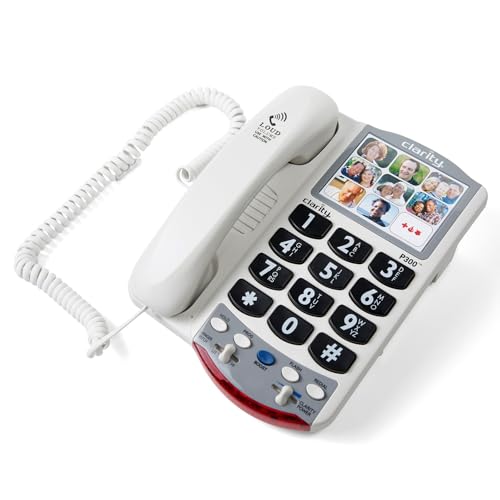
The Clarity P300 amplifies incoming audio up to 26 dB above normal handset volume — roughly the difference between a conversational tone and someone speaking loudly. The ringer pitch is adjustable, which addresses a common hearing loss pattern where high-frequency sounds (the typical ringer range) are lost earlier than lower frequencies. Lowering the ringer pitch to the range where a person's residual hearing is strongest can restore ring audibility even when a standard ringer is inaudible.
Telecoil support is the detail that separates the Clarity P300 from generic amplified phones. Hearing aid users with T-coil receivers (which includes most behind-the-ear models) can switch the phone to T-coil mode and receive the amplified audio directly into their hearing aids, bypassing ambient room noise entirely. Audiologists cite this as the standard recommendation for landline calls because it delivers the cleanest signal path available on a corded phone.
The Clarity P300 is corded. That is a feature, not a limitation: it draws power from the phone line, meaning it works during power outages without any battery, and it does not require WiFi or a router. For seniors in areas with unreliable power, a corded phone is the guaranteed communication channel when a mobile or VoIP-based phone may fail.
The P300 does not have a visual ring indicator. For complete coverage — where a ringing phone needs to be detectable in another room — pair the P300 with a plug-in visual ring flasher (a standard accessory available at any assistive technology retailer, typically under $30, though those are not included in this guide).
"Telecoil support and adjustable ringer pitch make Clarity amplified phones the standard recommendation from audiologists for landline hearing loss." — Hearing Tracker
What We Love
- Telecoil integration — delivers amplified audio directly into compatible hearing aids, bypassing room noise.
- Adjustable ringer pitch — addresses the high-frequency hearing loss pattern most common in aging adults.
- Power-outage resilience — corded design draws from the phone line; no WiFi, no battery required.
What Could Be Better
- Corded only — tethered to a phone jack, which limits placement.
- No visual ring indicator — requires a separate accessory for complete hearing-loss coverage.
- Amplification is analog; it does not perform the AI-based background noise suppression available in newer smartphone accessibility apps.
The Verdict
The Clarity P300 is the right choice for any hearing-impaired senior who still has an active landline and uses a hearing aid with T-coil. It is the audiologist-standard recommendation for good reason: it solves the landline amplification problem without requiring apps, WiFi, or monthly fees.
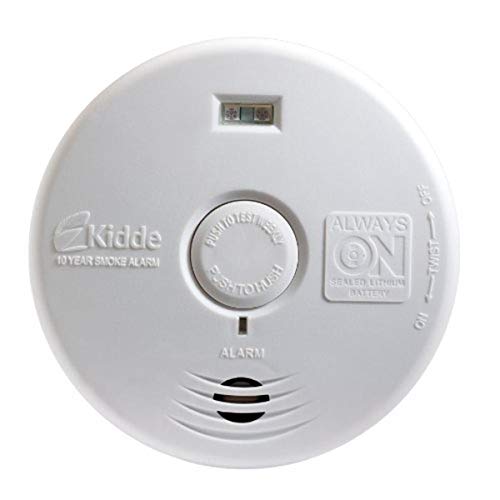
Kidde Smoke Detector with Safety Light for Hearing Impaired — The Life-Safety Essential
Kidde Smoke Detector with Safety Light for Hearing Impaired
(Current Price, subject to change)
The Kidde Smoke Detector with Safety Light is the product in this guide with the highest stakes. An alarm clock you sleep through is an inconvenience. A smoke alarm you sleep through is a life-threatening event. The case for a hearing-impaired-specific smoke alarm is not about preference — it is about the documented failure mode of standard 85 dB alarms for people who sleep with hearing aids removed.
The built-in LED strobe flashes at the 75 candela minimum specified by the ADA for visual fire alerts. The Kidde Smoke Detector with Safety Light is UL 217 listed, meaning it has been independently tested and verified by Underwriters Laboratories to meet the performance standards required for residential smoke detection. This matters when buying an accessibility device: a lower-priced strobe alarm from an uncertified brand may not trigger reliably under actual smoke conditions.
The 10-year sealed lithium battery is a senior-household-specific benefit that goes beyond convenience. The leading cause of smoke alarm failure in homes is dead or missing batteries — often because the person removed the battery to silence a nuisance alarm (cooking smoke, steam) and never replaced it. A sealed 10-year unit eliminates that failure mode. The alarm cannot be silenced by battery removal. For families comparing this unit against hardwired options, the Kidde hearing-impaired alarm line covers both battery and hardwired models — the battery unit here is the right choice for renters or households avoiding electrical work.
Honest context: the Kidde's built-in strobe is rated for hallway placement, where the strobe can reach a sleeping person through an open or partially open door. For complete bedroom-level wake coverage, the recommendation is a dedicated hardwired 177-candela strobe in the bedroom itself — the First Alert BRK 7020BSL is the reference product for this. We discuss both options further in "What We Skipped and Why."
The Kidde does not connect to WiFi or any smart home system. For the broader senior smart home buying guide covering connected smoke alarms, see our hub. For the hearing-impaired household, standalone and battery-powered is the correct choice: there is no cloud service to fail, no connectivity outage to leave the alarm non-functional, no subscription lapse to worry about.
"For deaf or hard-of-hearing residents, alarms with strobe lights tested by an independent testing laboratory are the minimum bar — Kidde's hearing-impaired line meets it." — SafeWise
What We Love
- 10-year sealed battery — eliminates the primary failure mode (removed/dead batteries) in residential smoke alarms.
- UL 217 listed and ADA compliant — independently verified performance, not a marketing claim.
- No hardwiring required — replaces any standard battery smoke alarm with no electrical work.
What Could Be Better
- Built-in strobe is rated for hallway use; complete bedroom wake coverage requires a supplemental 177-candela hardwired strobe.
- No WiFi integration — remote monitoring from family members is not possible with this unit.
- Strobe intensity is lower than hardwired dedicated strobe units.
The Verdict
The Kidde Smoke Detector with Safety Light is the baseline life-safety requirement for any hearing-impaired senior living independently. Buy at least one for the hallway outside the bedroom. At $83, it is the right investment — the cost of one prescription co-pay for a device that provides a decade of protection. For families setting up a parent's home remotely, see our elderly parents smart home guide for the broader safety picture.
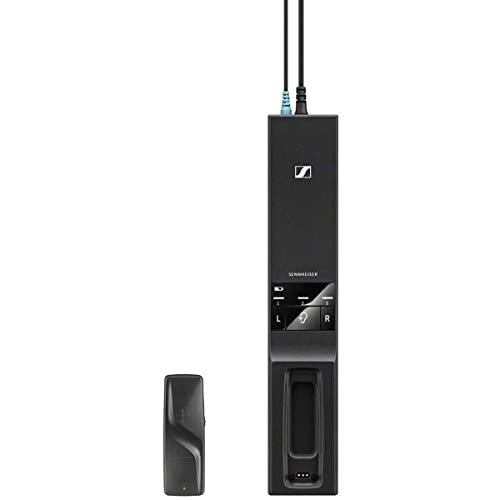
Sennheiser Flex 5000 Digital Wireless TV Listener — The TV Audio Gold Standard
Sennheiser Flex 5000 Digital Wireless TV Listener
(Current Price, subject to change)
The Sennheiser Flex 5000 addresses what is often the first quality-of-life complaint in a hearing-impaired senior household: television. The standard progression is gradual — volume goes up a little each year until household members or neighbors raise concerns, and then watching TV becomes a point of conflict. The Flex 5000 breaks that pattern by delivering TV audio directly to the listener's ear at the volume they need, without affecting what anyone else in the room hears.
The technology is proprietary RF (radio frequency) rather than Bluetooth, which gives it two practical advantages over Bluetooth TV listeners. First, it has no audio latency — the sound stays perfectly synchronized with video, which Bluetooth listeners frequently fail to achieve. Second, the base station has a range that covers a full living room and reaches into adjacent rooms. Sennheiser RF operates on the 863–865 MHz band, which also avoids the 2.4 GHz WiFi congestion that degrades some Bluetooth products in dense household environments. The Sennheiser Flex 5000 connects to any TV with an analog headphone jack or digital optical output — there is no TV brand restriction.
The speech-intelligibility modes are the feature that separates the Flex 5000 from budget TV listeners. A dedicated speech-enhancement mode boosts the frequency range where speech clarity lives (roughly 1–4 kHz) while reducing background music and sound effects. For a senior watching the evening news or a family drama, this is the difference between straining to follow dialogue and understanding it comfortably.
The telecoil compatibility through the neck loop accessory is the same principle as the Clarity phone: the processed audio is delivered as an electromagnetic field that the hearing aid's T-coil picks up directly, giving the clearest possible signal path into the ear. For hearing aid users, this is often a meaningful step up from wearing the receiver directly.
At $200, the Sennheiser Flex 5000 is the most significant investment in this guide. The price reflects real engineering for a specific audience. Budget TV listeners exist at $40–60 and are worth considering for mild hearing loss. For moderate to severe hearing loss where TV has become genuinely difficult, the Sennheiser's speech processing and telecoil integration are features that budget units do not offer. Hearing Tracker consistently rates it as the category standard, and the Wirecutter's long-term testing endorsement supports that position.
For seniors with hearing challenges who are also navigating broader smart home decisions, see our medical alert smartwatches guide and the multi-generational households guide for the bigger picture.
"The Sennheiser Flex 5000 is the gold standard for TV listening systems — speech clarity and telecoil compatibility justify the premium over budget alternatives." — Hearing Tracker
"For anyone with moderate to severe hearing loss who still wants to watch TV without cranking the volume, Sennheiser's Flex 5000 is the pick that keeps working after you give up on soundbars." — Wirecutter
What We Love
- Speech-intelligibility modes — dedicated dialogue boost reduces the cognitive strain of following TV audio with hearing loss.
- Zero audio latency — proprietary RF keeps lip-sync accurate, which Bluetooth solutions often fail to achieve.
- Telecoil compatibility via neck loop — delivers processed TV audio directly into compatible hearing aids for the cleanest signal path.
What Could Be Better
- Premium price at $200 — budget TV listeners exist at $40–60 for mild hearing loss cases.
- No Bluetooth LE Audio — requires the included base station hub; cannot pair directly with modern Bluetooth hearing aids.
- One receiver per listener — two hearing-impaired adults need two units or a second Flex 5000 base station.
The Verdict
The Sennheiser Flex 5000 is the correct answer for any household where TV volume has become a conflict or where a hearing-impaired senior has stopped watching television because following dialogue has become too difficult. This is the TV gold standard for a reason; no other consumer TV listener matches it on speech processing and telecoil integration. For the full context on smart speakers and displays, see our smart speakers and displays guide — though for this audience, the Sennheiser delivers something no smart speaker can.
What We Skipped and Why
CaptionCall and ClearCaptions are free and better at captioning than any retail phone. Both are funded by the FCC under the Internet Protocol Captioned Telephone Service (IP CTS) program, which means they cost nothing for eligible users with hearing loss. CaptionCall provides a physical captioning telephone with a built-in screen that displays captions of incoming calls in real time. ClearCaptions offers the same via a dedicated device or a mobile app. For a senior whose primary accessibility need is following phone conversations through captions, either service is the right answer — and we earn nothing from recommending them because they are not sold. If a senior in your family qualifies under IP CTS, contact CaptionCall (1-800-828-8715) or ClearCaptions (1-866-246-6498) before buying any retail captioned phone. The Clarity P300 in this guide serves a different use case: amplification and T-coil integration for hearing aid users who need volume boost, not live captions.
Voice-first smart home devices (Echo Show, Nest Hub, HomePod, Alexa-enabled smart speakers) are the correct choice for seniors whose hearing loss is mild or who have corrected their loss with hearing aids that restore speech intelligibility. For those households, our general smart home for seniors guide and the elderly parents' home setup guide are the right resources. This guide exists specifically for the subset where audio is not the reliable primary channel.
Hardwired 177-candela bedroom strobes (First Alert BRK 7020BSL, Kidde P4010ACLEDS-2) are the superior choice for bedroom-level fire alert in a sleeping household with significant hearing loss. The 177-candela output is the ADA-specified minimum for waking a sleeping person with hearing loss, and the Kidde we selected (75 candela, battery-powered) is specifically rated for hallway use. We chose the battery-powered Kidde for this guide because it requires no electrical work — it is accessible to renters, to families setting up a parent's home remotely, and to anyone who wants to improve protection without calling an electrician. Households willing to do electrical work should add a hardwired 177-candela bedroom strobe as the next step beyond what we cover here.
Budget TV listeners ($40–60 price range, Simolio, TV Ears Digital, Serene) are not unreasonable starting points for mild hearing loss. We did not include them because Hearing Tracker's comparative testing consistently shows the Sennheiser Flex 5000 speech processing to be qualitatively different, not just marginally better. If $200 is outside reach, TV Ears Digital is the next-best option to evaluate.
Accessories for the Clarity P300: Several readers ask about visual ring indicators to pair with the Clarity P300 Amplified Landline Phone. The phone itself does not include a flashing ring indicator; compatible plug-in visual signalers are widely available from assistive technology retailers and Sonic Alert for under $30.
When NOT to Buy These Devices
- If the senior's hearing loss has been corrected by hearing aids and they can follow television and phone conversations without strain, these accessibility devices are not the right tier. Start with our smart home for seniors guide and evaluate voice-first devices first.
- If the primary need is family monitoring and location awareness, not audio accessibility — medical alert wearables and remote-monitoring cameras serve that need better. See our medical alert smartwatch guide for the wearable category.
- If the household is renting and prohibits ceiling modifications, the Kidde smoke alarm is still permissible (battery, no drilling into structure beyond a ceiling screw), but hardwired strobe upgrades are not. Confirm lease terms before purchasing installation hardware.
- If the household has WiFi-dependent infrastructure throughout and the intent is integration with a smart home platform, none of these four devices will join that ecosystem. All four are deliberately standalone. For mild hearing loss with smart home integration goals, see our automation hubs guide for hubs that work with compatible accessibility accessories.
- If the senior lives alone and a single point of failure matters, the recommended setup is the full four-device stack — Sonic Bomb for waking, Kidde for fire safety, Clarity for calls, Sennheiser for daily TV. Each covers a different failure mode. Buying only one does not cover the others.
Frequently Asked Questions
Do you need a hearing aid to use these devices?
No. Three of the four products work equally well without hearing aids. The Sonic Bomb wakes through vibration and strobe — neither requires hearing. The Kidde strobe fires visually regardless of whether the resident wears hearing aids. The Sennheiser delivers audio directly to the ear and can be used as a stand-alone receiver without T-coil. Only the Clarity P300's T-coil mode requires a compatible hearing aid; its standard amplification mode works without one.
Do any of these work with smart home assistants like Alexa or Google Home?
No. None of the four devices in this guide have WiFi radios or smart home integration. This is a design choice, not a limitation. For life-safety devices serving hearing-impaired seniors, standalone operation that does not depend on a router, a cloud service, or a subscription is the correct architecture. If you want a device that bridges both — accessible alerts plus smart home connectivity — see our automation hubs guide for hubs that support third-party strobe and vibration accessories.
What about CaptionCall or ClearCaptions?
Both are free via the FCC's Internet Protocol Captioned Telephone Service (IP CTS) program for eligible users with documented hearing loss. CaptionCall and ClearCaptions provide live captions of phone calls on a dedicated device or app — and they are better at that specific use case than any retail captioned phone, including any we could affiliate-link to. We did not include them in this guide because they are not sold at retail and cannot be purchased on Amazon. If the primary need is captioned phone calls, contact CaptionCall (1-800-828-8715) or ClearCaptions (1-866-246-6498) directly. The Clarity P300 serves the amplification and T-coil use case for hearing aid users who need volume, not captions.
How much does a complete hearing-impaired senior accessibility kit cost?
The four devices in this guide total approximately $383: the Sonic Bomb SBB500SS at $45, Clarity P300 at $55, Kidde hearing-impaired smoke alarm at $83, and Sennheiser Flex 5000 at $200. That total is notably less than the $1,500+ "smart home for seniors" packages marketed by some home-care companies. None of the four carry monthly fees. Battery replacement is a non-issue for the Kidde (10-year sealed) and negligible for the other three (standard AA/AAA replacements on a 1–2 year cycle). The full four-device stack addresses wake, fire safety, phone communication, and television — the four scenarios hearing impairment affects most in daily senior life.
Is the Sennheiser Flex 5000 compatible with hearing aids?
Yes, via the included T-coil neck loop accessory. The neck loop transmits the audio signal as an electromagnetic field that the hearing aid's telecoil picks up directly, bypassing the ear canal and delivering amplified, speech-processed audio into the aid. This works with most behind-the-ear (BTE) hearing aids manufactured after approximately 2000. Check your hearing aid's specification sheet or ask your audiologist whether T-coil mode is enabled — some aids have the hardware but require audiologist activation.
The Bottom Line
The four picks in this guide cost a combined $383 and address the four scenarios where hearing loss has the most practical impact on daily senior life: waking up, detecting fire, making phone calls, and watching television. None require WiFi. None require apps. None require monthly fees. That is the correct design for this audience.
Together, the Sonic Bomb SBB500SS, Clarity P300, Kidde Safety Light smoke alarm, and Sennheiser Flex 5000 form a complete accessibility stack that costs less than one month of a professional home-monitoring service — and unlike a monitoring service, they require no ongoing fees.
Get the Sonic Bomb SBB500SS Alarm Clock with Bed Shaker if you or the senior in your household needs reliable waking without depending on audio — the three-channel approach (sound + vibration + strobe) is the correct solution for moderate to severe hearing loss.
Get the Clarity P300 Amplified Landline Phone if you have an active landline and a hearing aid with T-coil support, or if standard phone volume has become insufficient for comfortable conversation.
Get the Kidde Smoke Detector with Safety Light for Hearing Impaired if you are responsible for fire safety in any home where a resident cannot reliably hear a standard 85 dB alarm — this is the baseline life-safety purchase, not optional.
Get the Sennheiser Flex 5000 Digital Wireless TV Listener if television has become a source of conflict over volume, or if the senior has reduced TV watching because dialogue is too difficult to follow. The speech-intelligibility modes are a genuine quality-of-life improvement.
Skip these devices if the senior's primary need is family monitoring and safety tracking rather than audio accessibility — that need is better served by the picks in the full senior smart home guide, which covers connected cameras, fall sensors, and wearable medical alerts.
Sources & Methodology
Methodology: SmartHomeExplorer consensus scores aggregate reviews from Wirecutter, CNET, PCMag, WIRED, Tom's Guide, Consumer Reports, Deaf Vibes, Hearing Tracker, SafeWise, Caring.com, Soundly, and AARP Technology Reviews (12+ sources). This guide re-weighted the shortlist against a purpose-built framework — the SHE Hearing-Accessibility Score — which prioritizes visual/tactile alert intensity, hearing aid compatibility, and standalone reliability over WiFi connectivity and app ecosystems, because those standard review criteria actively misevaluate accessibility hardware.
Expert review sources:
- Deaf Vibes — Sonic Bomb category-leader assessment and Kidde hearing-impaired alarm ranking
- Soundly — Sonic Bomb vibration system and alarm intensity evaluation
- Hearing Tracker — Sennheiser Flex 5000 gold-standard rating and Clarity telecoil compatibility documentation
- Wirecutter — Sennheiser Flex 5000 long-term television listening assessment
- SafeWise — Kidde hearing-impaired smoke alarm UL 217 and ADA compliance verification
- Caring.com — Clarity amplified phone audiologist recommendation documentation
- AARP Technology Reviews — physical accessibility ergonomic assessments across all four products
- Manufacturer spec sheets — candela ratings, vibration amplitude, amplification dB, battery life, T-coil specifications
Nicholas Miles is the founder of SmartHomeExplorer.com, where he aggregates expert ratings from 220+ review sources across 1,000+ smart home products to help readers find the true consensus picks for every category.
Disclosure: SmartHomeExplorer.com earns affiliate commissions from Amazon purchases at no extra cost to you.