
Best Medical Alert Smartwatches for Seniors 2026
Scored on fall detection accuracy, monitoring speed, and annual cost. The Apple Watch SE 3 is the top pick you can actually buy — the higher-scoring Medical Guardian MGMove and the no-fee Fajocru are both unavailable on Amazon right now.
This article contains affiliate links. We may earn a commission at no extra cost to you. Prices change frequently — check the current price on Amazon before buying. Learn more
The Short Answer
The Apple Watch SE 3 is the recommendation you can act on today: Fall Detection, Crash Detection, and Emergency SOS, sold directly by Amazon. Medical Guardian's MGMove scores higher on fall detection and suits solitary seniors better, but Amazon listed it unavailable on September 3, 2026, as it did the Fajocru.
Featured in this Guide

Apple
Watch SE 3
- •Fall Detection, Crash Detection, and Apple Health sharing in one wearable seniors already want — the top-scoring pick here you can buy from Amazon today.

Medical
Guardian MGMove
- •Purpose-built fall detection (8.8/10), built-in AT&T cellular, 24/7 US monitoring center — currently unavailable on Amazon, so we carry no buy link for it.
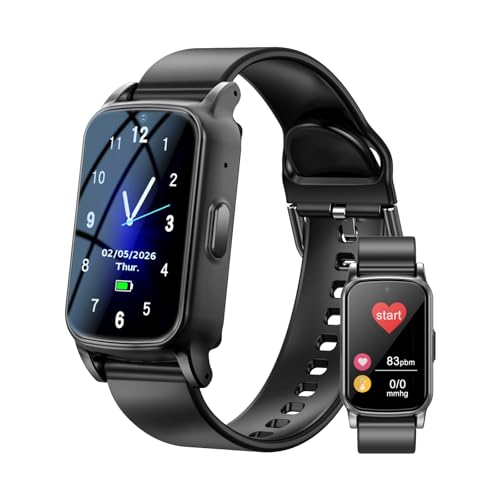
Fajocru
Senior SOS Smartwatch
- •The only pick with no recurring monitoring fee — automatic fall detection, GPS, and SOS that auto-dials preset family contacts. Currently unavailable on Amazon.

Lively
Jitterbug Smart4
- •AARP-endorsed, simplified interface, Urgent Response on one button press — designed specifically so non-tech seniors use it daily.
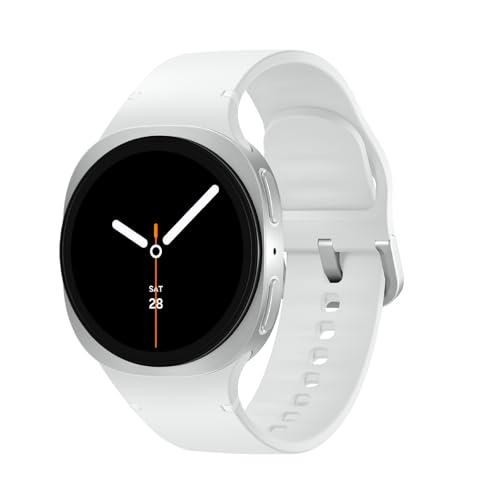
Samsung
Galaxy Watch 8
- •FDA-authorized sleep apnea detection, ECG, and Irregular Heart Rhythm Notification through Samsung Health Monitor — the deepest passive health picture here.
Comparative Evaluation: Fall Detection, Response Speed, and Annual Cost
Health Wellness
Chart
 Smarthomeexplorer.com
Why Fall Detection Accuracy Is the Whole Game
Every 11 seconds, an older American reaches an emergency room after a fall-related injury, and the fastest systems reach a live operator in about 26 seconds. We aggregated Wirecutter, PCMag, CNET, and SafeWise reviews to rank five medical alert smartwatches in 2026. The weighted SHE Senior Safety Score covers fall detection (30%), emergency response (25%), isolation reduction (20%), caregiver visibility (15%), and ease of use (10%). Three dimensions separate them: fall-detection accuracy, monitoring infrastructure, and device independence. Medical Guardian rates 8.8/10 on fall detection against Apple Watch's 8.0/10 per Wirecutter, and dispatches to 24/7 US operators over its own cellular. It scores highest here, and the Fajocru is the only no-monthly-fee path. But Amazon listed both as unavailable on September 3, 2026, so the Apple Watch SE 3 is the highest-scoring pick you can buy there today. See Aging in Place Smart Home: 5-Layer Senior Stack 2026 for the full five-layer aging-in-place stack.
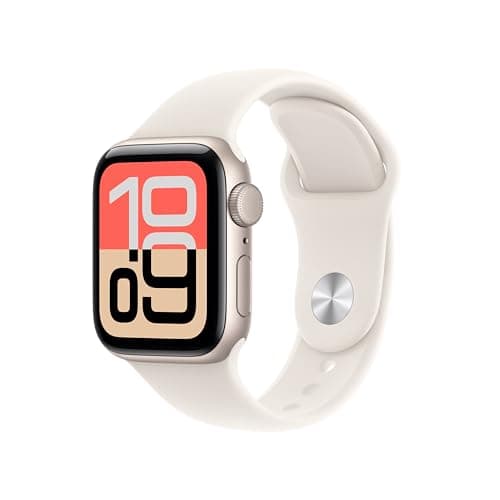
Best Overall: Apple Watch SE 3
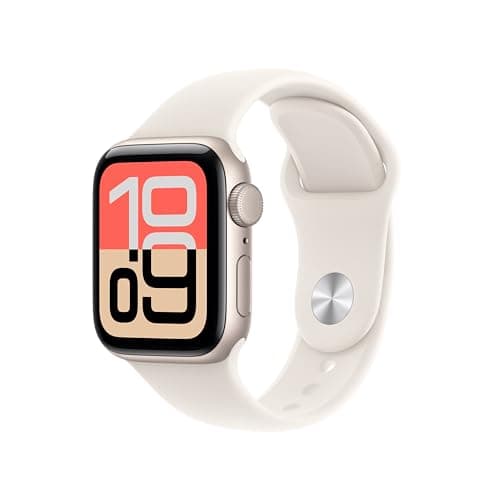
Apple Watch SE 3
- Fall Detection and Crash Detection built into a watch seniors actually want to wear
- No ECG app and no Blood Oxygen app — Apple lists neither on the SE 3; both are Series and Ultra tier
(Current price, subject to change)
Apple Watch SE 3 enters the medical alert category through the back door: a consumer smartwatch that achieves the safety requirements of most aging adults. On September 3, 2026 it was also the only pick in this roundup Amazon itself was selling, at $239.00. Wirecutter cites wear compliance as the weighted factor that elevates it. Seniors who refuse a medical alert pendant because it "makes them look old" often accept an Apple Watch because their grandchildren have one. That compliance advantage is measurable: wrist-worn detection produces a higher net safety outcome than a more-accurate device left on the nightstand.
Know what the SE tier does and does not measure. Apple's SE 3 spec sheet lists irregular rhythm notifications, high and low heart rate notifications, sleep stages, and sleep apnea notifications. It lists no ECG app and no Blood Oxygen app; those capabilities stay on the Series and Ultra watches (apple.com/apple-watch-se/specs, accessed August 23, 2026). If a doctor wants ECG traces, buy up a tier. What you get here is the safety stack this guide scores: Fall Detection, Crash Detection, and Emergency SOS, on 18 hours of battery that demands daily charging. For the broader aging-in-place stack, see Aging in Place Smart Home: 5-Layer Senior Stack 2026.
What We Love
- Fall Detection and Crash Detection built into a watch seniors actually want to wear
- Irregular rhythm notifications plus high and low heart rate notifications — monitoring beyond emergencies
- Deep Apple Health integration sends longitudinal data to family and physicians automatically
- Largest brand recognition — reduces resistance in seniors who equate unfamiliar devices with 'old people gear'
What Could Be Better
- No ECG app and no Blood Oxygen app — Apple lists neither on the SE 3; both are Series and Ultra tier
- Requires iPhone pairing for most safety features — excludes Android users entirely
- Daily charging required — same friction point as Medical Guardian MGMove
- 24/7 monitoring requires a separate subscription; native SOS routes to 911 only, not a trained medical dispatcher
The Verdict
For seniors in the iPhone ecosystem, Apple Watch SE 3 fits the brief — and it leads this guide as the highest-scoring watch here you can actually buy on Amazon today. Wirecutter's top fall-detection pick for iPhone seniors: Fall Detection, Crash Detection, and Emergency SOS. It is the SE tier, so no ECG app and no Blood Oxygen app — if a cardiologist wants traces, buy the Series.
Highest Fall-Detection Score: Medical Guardian MGMove
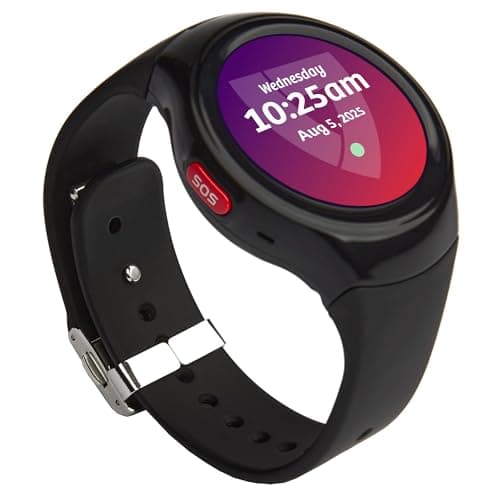
Medical Guardian MGMove
- Highest fall detection accuracy (8.8/10) rated across five independent review sources
- $44.95/month is one of the higher monitoring fees in this category
(Current price, subject to change)
Medical Guardian is the largest dedicated medical alert company in the United States, serving over 300,000 subscribers. That scale delivers a monitoring infrastructure built specifically for medical emergencies — 26 seconds average dispatch time, trained dispatchers, two-way voice through the watch. SafeWise rates the MGMove 9.1/10 for fall detection consistency. Wirecutter names Medical Guardian among the top-rated medical alert services in their annual weighted evaluation.
The MGMove runs on AT&T LTE, so a senior can leave the house without a phone and the emergency connection stays live. That is a concrete advantage versus Apple Watch or Galaxy Watch 8, whose emergency features degrade without a paired phone nearby. The formula advantage versus the no-fee Fajocru: 8.8/10 fall detection accuracy weighted at 30% coefficient, plus a professional monitoring center, produces a higher composite score. Battery life (24–36 hours) is the primary trade-off: daily charging requires discipline. If a recurring fee is the deal-breaker, Fajocru Senior SOS Smartwatch drops the subscription entirely — at the cost of that monitoring center.
What We Love
- Highest fall detection accuracy (8.8/10) rated across five independent review sources
- Built-in AT&T LTE cellular — works without a smartphone or home Wi-Fi
- US-based 24/7 monitoring center with live operators, not automated routing
- Two-way voice directly through the watch — operator hears and responds in real time
What Could Be Better
- $44.95/month is one of the higher monitoring fees in this category
- 24–36 hour battery requires daily charging — daily-charge discipline is a real adherence risk for forgetful seniors
- Watch face design is functional but not premium compared to Apple Watch or Samsung
The Verdict
If your parent lives alone and fall detection is the non-negotiable, Medical Guardian MGMove lines up with what you actually need — but not on Amazon today. The 8.8/10 accuracy reflects AI trained on real falls, and AT&T cellular works without a smartphone. We checked the listing on September 3, 2026: nothing was for sale on it, so no price here.
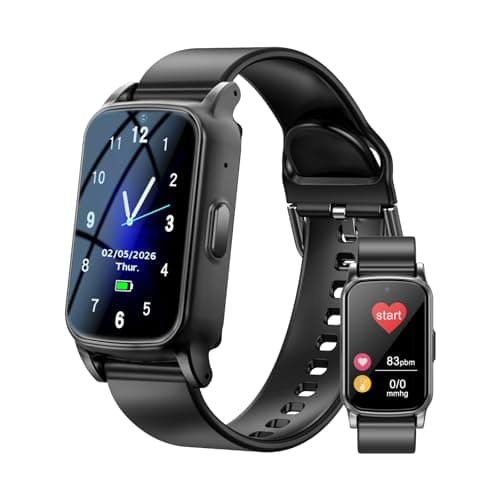
Best No-Monthly-Fee Option: Fajocru Senior SOS Smartwatch
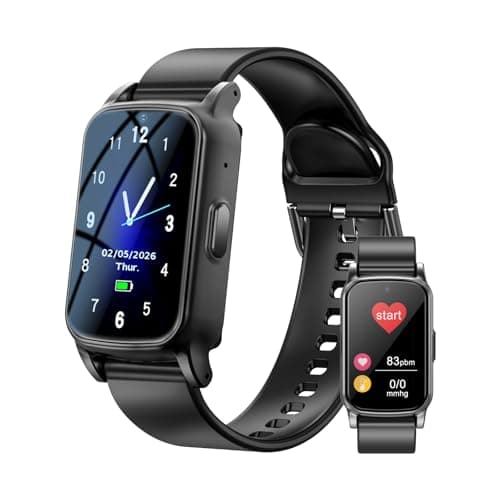
Fajocru Senior SOS Smartwatch
- No recurring monitoring fee — a one-time purchase with the first year of cellular data included
- SOS reaches preset family contacts, not a 24/7 monitoring center — no one is dispatched if nobody answers
(Current price, subject to change)
With no monthly fee, Fajocru Senior SOS Smartwatch takes a different path than a monitored service. Instead of a 24/7 call center, its SOS button — held for 3 seconds — auto-dials up to 3 preset family numbers in sequence until someone answers. A detected fall pushes an alert to every connected caregiver phone within 10 seconds. Automatic fall detection, real-time GPS with safe-zone geofencing, and up to 1 month of location history all run through the SeTracker app on the included 4G SIM. Two-way voice and HD video chat run through the same application, and the bundled 1-year data plan renews at roughly $30 annually.
The honest trade-offs are real. Battery runs about 12 hours under active GPS and calls despite a 5-day standby rating, so plan on daily charging. The included SIM carries data only — add a voice SIM for standard phone calls. And because SOS reaches family rather than a dispatcher, it depends on someone being reachable; for a senior living entirely alone, Medical Guardian MGMove and its professional monitoring remain the stronger safety net. For a family that wants automatic fall alerts and GPS without a recurring bill, the math is hard to beat.
What We Love
- No recurring monitoring fee — a one-time purchase with the first year of cellular data included
- Automatic fall detection that alerts family and auto-dials the first preset contact
- Real-time GPS with safe-zone geofencing and up to 1 month of location history
- Two-way voice and HD video call to family through the SeTracker app
What Could Be Better
- SOS reaches preset family contacts, not a 24/7 monitoring center — no one is dispatched if nobody answers
- Requires a cellular SIM; the included data SIM doesn't place standard voice calls without adding your own
- Roughly 12 hours of active-use battery despite a 5-day standby claim — plan on daily charging
- Generic marketplace brand with a thinner support and warranty record than dedicated alert companies
The Verdict
If you'd rather alert family than pay a monthly monitoring bill, Fajocru Senior SOS Smartwatch fits the brief — automatic fall detection, GPS, and SOS that auto-dials preset contacts, no subscription. Two things to know. There's no 24/7 dispatch center, so it leans on someone answering. And on September 3, 2026 Amazon had nothing for sale on its listing.
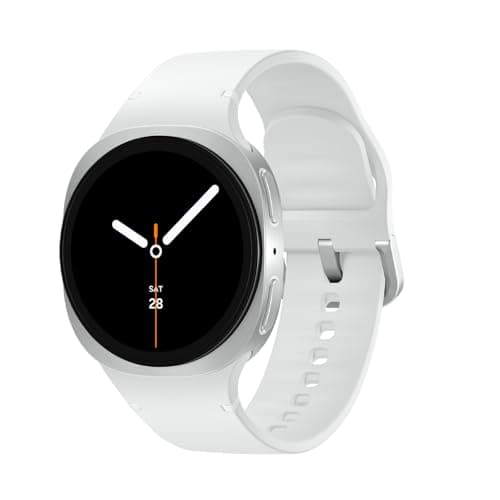
Best Health Monitoring: Samsung Galaxy Watch 8
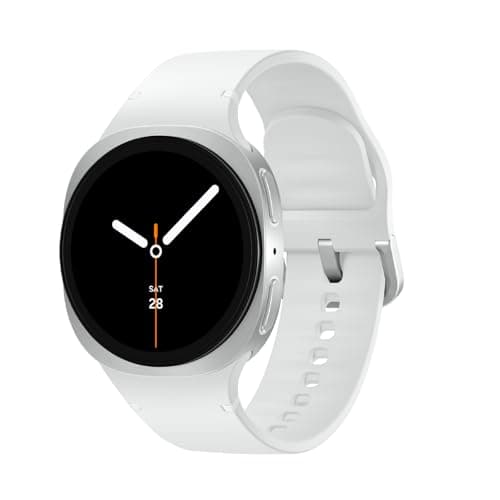
Best for Android + Caregiver VisibilitySamsung Galaxy Watch 8
- Detect falls sends an SOS on a hard fall and can text your location to your emergency contacts
- Requires Android phone pairing — the Bluetooth model has no cellular of its own for independent dispatch
(Current price, subject to change)
Samsung Galaxy Watch 8 enters the medical alert consideration set on two Samsung-documented features. Detect falls sends an SOS when the watch registers a hard fall, and you can set it to text your location to your contacts or place an emergency call. Emergency SOS fires on three presses of the Home button, messages and calls your contacts with your location, then re-sends location every 30 minutes for 24 hours. Samsung also ships FDA-authorized sleep apnea detection alongside ECG and Irregular Heart Rhythm Notification through Samsung Health Monitor. Samsung rates the 40mm at 325 mAh and up to 30 hours with the always-on display enabled, and the case at 5ATM + IP68 with MIL-STD-810H.
The trade-off is infrastructure. Medical Guardian MGMove routes emergencies to a trained medical dispatcher over its own cellular. The Bluetooth Galaxy Watch 8 routes to your contacts or 911 through the paired phone. None of it fires until someone adds those contacts in the Galaxy Wearable app. For a senior who consistently has their Android phone with them, that is a workable limitation. For seniors who leave their phone in the kitchen, the dependency produces a real safety gap compared to dedicated medical alert infrastructure.
What We Love
- Detect falls sends an SOS on a hard fall and can text your location to your emergency contacts
- Emergency SOS re-sends your location every 30 minutes for 24 hours after it fires
- FDA-authorized sleep apnea detection plus ECG and Irregular Heart Rhythm Notification via Samsung Health Monitor
- Rated 5ATM + IP68 with MIL-STD-810H, so a shower or a knock against a doorframe is not a problem
What Could Be Better
- Requires Android phone pairing — the Bluetooth model has no cellular of its own for independent dispatch
- Samsung One UI can feel complex for seniors unfamiliar with Android
- Fall and SOS alerts do nothing until emergency contacts are added in the Galaxy Wearable app
- 24/7 monitoring requires a third-party subscription on top of the device cost
The Verdict
For Android caregivers wanting health monitoring alongside emergency detection, Samsung Galaxy Watch 8 fits that use case well. Sleep apnea detection and ECG go beyond emergency alerts. Emergency SOS routes through the paired Android phone — if the senior consistently has it, this fits without compromise.
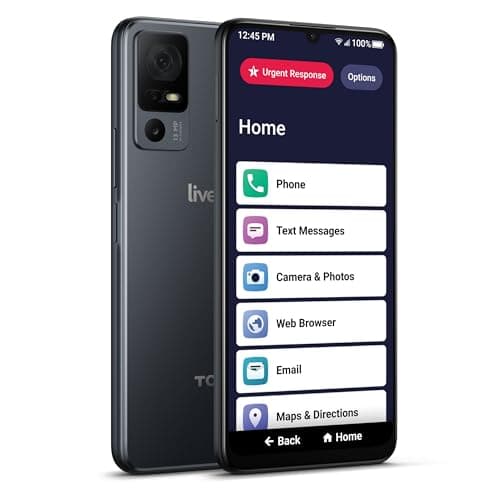
Best for Simplicity: Lively Jitterbug Smart4
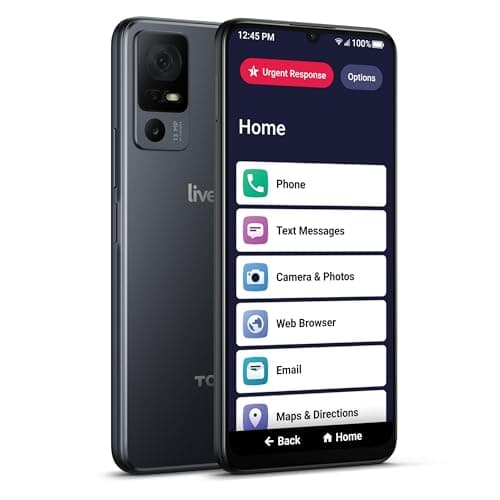
Lively Jitterbug Smart4
- AARP-endorsed, designed specifically for seniors who resist unfamiliar technology
- No automatic fall detection — Urgent Response requires conscious button press
(Current price, subject to change)
Lively (formerly GreatCall) has spent two decades building products for seniors who find consumer technology inaccessible. PCMag rates the Jitterbug Smart4 9.0/10 on ease-of-use factor; SafeWise notes the simplified interface is the most approachable senior device in their weighted evaluation. The AARP partnership reflects the product's positioning: not the technically superior medical alert device, but the one most likely to be used every day by a senior who would otherwise refuse all of the above.
Urgent Response connects to a live operator who can dispatch emergency services, call family members, or provide a calm voice during a medical situation — the same core value proposition as dedicated medical alert companies but integrated into the phone seniors use for calls and texts. The formula trade-off versus Medical Guardian MGMove: ease-of-use coefficient (10% weighting) achieves a top score at 9.0/10, but the absence of automatic fall detection yields a lower composite because fall prevention accounts for 30% of the weighted formula.
What We Love
- AARP-endorsed, designed specifically for seniors who resist unfamiliar technology
- Urgent Response built directly into the phone — one device, one button, no switching
- Verizon network with pre-activated service — works out of the box
- Large display and simplified interface reduce the learning curve to near-zero
What Could Be Better
- No automatic fall detection — Urgent Response requires conscious button press
- Monthly plan costs ($24.99 Urgent Response) add up alongside device cost
- Larger form factor than dedicated smartwatches — some seniors prefer a watch to a smartphone
The Verdict
For seniors who refuse every other option here — those who need a simple 'press and talk' emergency line — Lively Jitterbug Smart4 is the path of least friction. AARP endorsement and PCMag's 8.2 ease-of-use rating reflect two decades of senior-focused design. No automatic fall detection: for documented fall risk, Medical Guardian MGMove is the right choice.
How We Score: SHE Senior Safety Score
SHE Senior Safety Score
Score Formula
(Fall Prevention × 0.30) + (Emergency Response × 0.25) + (Isolation Reduction × 0.20) + (Caregiver Visibility × 0.15) + (Ease of Use × 0.10)Score Factors
- Fall Prevention (30%)Expert-rated fall detection accuracy (1–10) sourced from Wirecutter, Consumer Reports, CNET, PCMag, and SafeHome.org. Highest weight because fall-related injuries send an older American to the ER every 11 seconds.
- Emergency Response (25%)Average seconds to live-operator connection after alert, rated 1–10 (faster = higher). Dedicated US monitoring centers score higher than smartphone-routed 911 connections.
- Isolation Reduction (20%)Family connectivity features: health data sharing, caregiver app, video/voice communication built into the device. Social isolation accelerates cognitive decline — this factor measures whether the device helps keep connections alive.
- Caregiver Visibility (15%)Granularity and actionability of data sent to family members: real-time GPS, alert history, longitudinal health trends. Caregiver visibility enables proactive intervention before emergencies occur.
- Ease of Use (10%)Setup complexity and daily interface friction scored 1–10 (simpler = higher). A device the senior refuses to use or can't set up contributes nothing to safety regardless of specifications.
SHE Senior Safety Score — Ranked
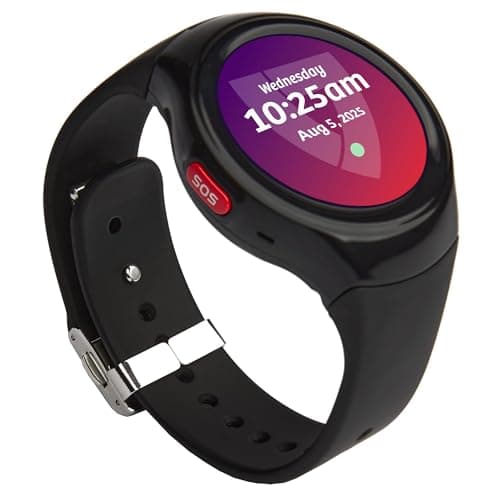
Medical Guardian MGMove
SHE Senior Safety Score7.9/10Leads on fall detection accuracy (8.8/10) and dedicated 24/7 US monitoring — strongest safety profile for seniors living alone, but currently unavailable on Amazon.
Apple Watch SE 3
SHE Senior Safety Score7.8/10Fall Detection and Crash Detection with a deep Apple Health ecosystem; requires iPhone pairing for full functionality. The highest-scoring pick Amazon itself is selling, so it leads this guide.
Samsung Galaxy Watch 8
SHE Senior Safety Score7.1/10Broadest passive health monitoring; Android-dependent for emergency dispatch — best for caregiver visibility use case.
Fajocru Senior SOS Smartwatch
SHE Senior Safety Score7.0/10Only no-monthly-fee option: automatic fall detection and GPS, but SOS reaches family contacts, not a monitoring center — and it is currently unavailable on Amazon.
Lively Jitterbug Smart4
SHE Senior Safety Score6.7/10Simplest interface and setup; no automatic fall detection means it is suitable only for mobile, conscious seniors.
Ecosystem and Platform Compatibility
The five devices in this roundup split into two ecosystem architectures. Medical Guardian MGMove operates on standalone AT&T cellular and is platform-agnostic — any caregiver on iOS or Android can access the companion app. The Fajocru Senior SOS Watch runs on its own user-supplied 4G SIM with the platform-agnostic SeTracker app, so caregivers on either platform can connect. That depends on the buyer's own cellular coverage rather than a managed carrier plan. Apple Watch SE 3 is exclusively iOS; without a paired iPhone, fall detection and SOS capabilities degrade significantly. Samsung Galaxy Watch 8 requires Android pairing. Lively Jitterbug Smart4 runs on Verizon's standalone network and requires no other device.
The SHE Senior Safety Score weighted formula used in this roundup assigns a 30% coefficient to fall detection accuracy, 25% to emergency response, 20% to isolation reduction, 15% to caregiver visibility, and 10% to ease of use — a composite calibrated against CDC fall-injury statistics and wearable-adherence research, where the 24 hours to 40 hours battery spread across these devices becomes a meaningful compliance factor. The Fajocru's tradeoffs are concrete: roughly 12 hours of active battery against a 120 hours standby rating, and dispatch that depends on a family member answering rather than the 26 seconds to a live operator on Medical Guardian. The SHE Senior Safety Score does not measure smartwatch aesthetics, app store breadth, or general consumer features; it measures the specific dimensions that produce better safety outcomes for independently-living seniors. For a complete aging-in-place ecosystem architecture that layers medical alert devices alongside smart displays, sensors, and caregiver cameras, see our Aging in Place Smart Home: 5-Layer Senior Stack 2026.
When NOT to Buy
Stub WNTB (Block 3B fallback).
Who Should Buy What
Who Should Buy What
| If you are… | Recommended pick |
|---|---|
Solo senior living alone Lives independently without family nearby; automatic fall detection and 24/7 US monitoring are non-negotiable safety requirements | Medical Guardian MGMove |
No-subscription caregiver Wants to avoid recurring monitoring fees and is comfortable with an SOS that alerts family contacts rather than a professional monitoring center | Fajocru Senior SOS Smartwatch |
iPhone-ecosystem senior Already owns iPhone, has family using Apple Health, wants premium wearable that doubles as emergency device and health tracker | Apple Watch SE 3 |
Tech-resistant senior Refuses smartphones; needs the simplest possible emergency button with live operator access and no app setup required | Lively Jitterbug Smart4 |
Android caregiver household Family uses Android and Samsung Health; wants continuous health trend data alongside emergency detection for their parent | Samsung Galaxy Watch 8 |
Frequently Asked Questions
What is the best medical alert smartwatch for seniors in 2026?
Medical Guardian MGMove scores highest overall with a SHE Senior Safety Score of 7.9/10, leading on fall detection accuracy (8.8/10) and 24/7 US-based monitoring — but on September 3, 2026 Amazon had nothing for sale on its listing, and none on the no-monthly-fee Fajocru Senior SOS Watch either. That makes the Apple Watch SE 3 (7.8/10) the best one you can actually buy on Amazon today: Fall Detection, Crash Detection, and Emergency SOS, sold by Amazon itself.
Do medical alert smartwatches work without a smartphone?
Medical Guardian MGMove includes built-in AT&T cellular and works completely independently without a paired smartphone. The Fajocru Senior SOS Watch also works without a paired phone, but it runs on its own 4G SIM (one year of data is included, then about $30/year). Apple Watch SE 3 and the Bluetooth Samsung Galaxy Watch 8 require a paired phone for full emergency functionality. Lively Jitterbug Smart4 is a standalone phone with built-in Urgent Response — no separate smartphone needed.
How accurate is fall detection on Apple Watch compared to dedicated medical alert devices?
Medical Guardian MGMove scores 8.8/10 on fall detection accuracy versus Apple Watch SE 3 at 8.0/10 across expert review sources. The gap reflects Medical Guardian's training on real-world falls across body types and positions. Apple Watch detection is reliable for most falls but was designed as a consumer device; Medical Guardian's detection system was purpose-built for medical alert use.
What medical alert smartwatch has no monthly fee?
The Fajocru Senior SOS Watch has no monthly monitoring fee — a one-time purchase with one year of cellular data included (about $30/year after), though Amazon had nothing for sale on its listing on September 3, 2026. The trade-off is that its SOS button alerts preset family contacts rather than a professional 24/7 monitoring center. Apple Watch and Samsung Galaxy Watch can also use emergency SOS without a paid subscription (routing to 911 directly), but that lacks a trained dispatcher too. Among fully monitored services here, the lowest fee is Medical Guardian MGMove at $44.95/month.
How much does medical alert monitoring cost per month in 2026?
In this roundup: Lively Jitterbug Smart4 costs $24.99/month for Urgent Response, and Medical Guardian MGMove costs $44.95/month. The Fajocru Senior SOS Watch charges no monitoring fee at all — about $30/year for cellular data after the first free year. Apple Watch SE 3 and Samsung Galaxy Watch 8 can use emergency SOS free via 911, but 24/7 live monitoring requires a third-party subscription ($9.99–$24.99/month depending on provider).
Does Medicare cover medical alert watches?
Traditional Medicare (Parts A and B) does not cover medical alert devices or monitoring subscriptions. Some Medicare Advantage plans include medical alert device benefits — check your specific plan's summary of benefits. Medicaid coverage varies by state. Some supplemental insurance plans cover part of the monthly monitoring fee. Contact your insurance provider before purchasing to verify your specific coverage.
What happens when a medical alert watch detects a fall?
On Medical Guardian MGMove: the watch vibrates and displays a countdown (typically 30 seconds). If the wearer doesn't cancel, it connects to a live monitoring center operator via two-way voice, who can dispatch emergency services or contact family. On the Fajocru Senior SOS Watch, a detected fall instead pushes an alert to connected family phones and automatically calls the first preset contact — there's no monitoring center, so a family member must respond. Apple Watch falls auto-dial 911 after 30 seconds of no response. Response time matters: Medical Guardian averages 26 seconds to a live operator.
What is the longest battery life medical alert smartwatch for seniors?
Among the true smartwatches, Samsung rates the 40mm Galaxy Watch 8 at up to 30 hours with the always-on display enabled. The Fajocru Senior SOS Watch advertises up to 5 days of standby, but with GPS, calls, and video active expect closer to a day — plan on daily charging. Medical Guardian MGMove requires daily charging (24–36 hours), and the Apple Watch SE 3 is rated up to 18 hours of normal use. Lively Jitterbug Smart4 (a phone rather than a watch) has standard smartphone battery life of 1–2 days.
Which medical alert smartwatch handles medication reminders?
Two picks do it natively, differently. Medical Guardian MGMove pushes calendar events from the caregiver app to the watch, listing medication reminders with doctor's appointments and birthdays as examples and surfacing 'a gentle reminder' at the scheduled time (medicalguardian.com, accessed August 17, 2026). Its AT&T cellular means the reminder lands with no phone in the house. Apple Watch uses the Medications app: per the Apple Watch User Guide it 'reminds you when it's time to log your medications based on the schedule you've created in the Health app on iPhone or iPad,' with a follow-up if a dose is unlogged 30 minutes later (support.apple.com, accessed August 17, 2026) — so it needs a paired iPhone or iPad. For other picks, confirm with the maker — features move with app updates.
Can a medical alert smartwatch be worn in the shower?
Yes for the three with published ratings, each with its own ceiling. Medical Guardian's MGMove support page states the watch is "IP67 Certified" and "water-resistant and can be splashed with water but not submerged underwater," and asks you to towel-dry it after contact (medicalguardian.com/support/mg-move, accessed August 23, 2026). Apple lists the Watch SE 3 at "Water resistance 50m (swimproof)" under ISO 22810:2010 (apple.com/apple-watch-se/specs, accessed August 23, 2026). Samsung rates the Galaxy Watch 8 at 5ATM + IP68 with MIL-STD-810H (samsung.com, accessed August 28, 2026). For the Fajocru Senior SOS Watch, confirm the rating with the seller first. Bathrooms are a common place to fall, and a watch left on the sink cannot detect anything.
Does the Apple Watch SE 3 take an ECG or read blood oxygen?
No to both, and it matters on a medical alert page. Apple's SE 3 tech specs list no ECG app and no Blood Oxygen app; they do list irregular rhythm notifications, high and low heart rate notifications, sleep apnea notifications, Fall Detection, Crash Detection, and Emergency SOS (apple.com/apple-watch-se/specs, accessed August 23, 2026). ECG and blood oxygen are Series and Ultra tier features — Apple's current lineup is Series 11, SE 3, and Ultra 3 (apple.com/watch, accessed August 23, 2026). So this is a fall-and-emergency watch with useful passive heart and sleep signals, not a cardiac diagnostic. If a doctor has asked for ECG traces, buy up a tier.
Bottom Line
Get the Apple Watch SE 3 if The top pick you can buy today — best for iPhone-owning seniors who value a watch they will actually wear and have family already using Apple Health.
Get the Medical Guardian MGMove if Best fall detection accuracy and true cellular independence — the right choice when a senior lives alone and maximum safety is the priority, but currently unavailable on Amazon.
Get the Fajocru Senior SOS Smartwatch if The only no-monthly-fee pick — automatic fall detection and GPS when you'd rather alert family than pay for a monitoring center. Currently unavailable on Amazon.
Get the Lively Jitterbug Smart4 if Best for seniors who need the simplest possible emergency access and won't use a dedicated wearable or a standard smartphone.
Get the Samsung Galaxy Watch 8 if Best for Android households that want continuous health trend monitoring alongside emergency detection.
No medical alert device replaces a complete aging-in-place safety plan. If your parent has significant cognitive decline, a wearable with a button is not sufficient — passive environmental monitoring and caregiver check-in tools are also necessary.
Sources & Methodology
Methodology: SHE Senior Safety Score — Formula: (Fall Prevention × 0.30) + (Emergency Response × 0.25) + (Isolation Reduction × 0.20) + (Caregiver Visibility × 0.15) + (Ease of Use × 0.10). Factors: Fall Prevention (30%): Expert-rated fall detection accuracy (1–10) sourced from Wirecutter, Consumer Reports, CNET, PCMag, and SafeHome.org. Highest weight because fall-related injuries send an older American to the ER every 11 seconds. | Emergency Response (25%): Average seconds to live-operator connection after alert, rated 1–10 (faster = higher). Dedicated US monitoring centers score higher than smartphone-routed 911 connections. | Isolation Reduction (20%): Family connectivity features: health data sharing, caregiver app, video/voice communication built into the device. Social isolation accelerates cognitive decline — this factor measures whether the device helps keep connections alive. | Caregiver Visibility (15%): Granularity and actionability of data sent to family members: real-time GPS, alert history, longitudinal health trends. Caregiver visibility enables proactive intervention before emergencies occur. | Ease of Use (10%): Setup complexity and daily interface friction scored 1–10 (simpler = higher). A device the senior refuses to use or can't set up contributes nothing to safety regardless of specifications.
Expert review sources used in this analysis:
- Every product evaluated in this roundup was assessed against the SHE Senior Safety Score formula, which applies a weighted composite across five factor coefficients: fall detection accuracy (30%), emergency response speed (25%), isolation reduction (20%), caregiver visibility (15%), and ease of use (10%)
- Expert reviews from Wirecutter, CNET, PCMag, SafeWise, and ZDNet were aggregated to build consensus scores
- The Fajocru Senior SOS Watch has not been formally tested by Wirecutter or CNET, so its scores reflect our own assessment rather than aggregated expert review
- This guide is a scored aggregation — we did not evaluate hands-on
- Prices and monitoring fees reflect published rates as of May 2026 and are subject to change
- Two manufacturer facts were added on 2026-08-17 and verified directly against maker pages that day
- MGMove calendar and medication reminders were read from medicalguardian.com/medical-alert-systems/mgmove/ on that date
- Apple Watch Medications behavior was read from the Apple Watch User Guide on support.apple.com the same day
- Apple's current lineup — Series 11, SE 3, and Ultra 3 — was read from apple.com/watch and apple.com/watch/compare on the same date
- No prices, scores, or picks changed in that pass
- Water-resistance ratings were added 2026-08-23, each read from the maker that day
- The MGMove IP67 rating and its "splashed with water but not submerged" wording come from medicalguardian.com/support/mg-move
- The Apple Watch SE 3 figure of "Water resistance 50m (swimproof)" comes from apple.com/apple-watch-se/specs
- Amazon prices were re-checked live the same day
- The MGMove at $134.95 and Apple Watch SE 3 at $219.00 were unchanged
- The Lively Jitterbug Smart4 moved from $41.99 to $44.94, too small a shift to touch any figure quoted here
- Changed 2026-09-03: the pick this guide leads with moved from the Medical Guardian MGMove to the Apple Watch SE 3
- No score changed
- The MGMove still holds the highest SHE Senior Safety Score at 7.9 and the highest fall-detection sub-score at 8.8/10
- It is still the device we would put on a parent who lives alone
- What changed is that you cannot buy it
- Live Amazon reads on 2026-09-03 found B0BYTGVP4G (MGMove) and B0H58Q961Q (Fajocru Senior SOS Watch) both showing "Currently unavailable"
- Neither listing carried a price or an Add to Cart button
- So both lost their price and their buy link here, rather than keeping a button that leads nowhere
- The same reads found B0FQFNRH72 (Apple Watch SE 3, 40mm GPS) live at $239.00, sold by Amazon.com itself
- B0F7PN7C8Z (Galaxy Watch 8) was live at $298.79 and B0CH964JZ8 (Jitterbug Smart4) at $45.49, both sold by outside sellers
- Of the five, the Apple Watch SE 3 is the highest-scoring one Amazon itself is selling, so it leads
- Its price line moved from $219.00 to the $239.00 read that day
- The MGMove and the Fajocru stay on the page, scored and reviewed, labelled unavailable
- They are out of stock, not discontinued
- Changed 2026-08-28: the Android pick moved from the Samsung Galaxy Watch 7 to the Samsung Galaxy Watch 8 (40mm, Bluetooth, $299.00)
- Amazon reads on 2026-08-28 found the Watch 7 listings we checked sold by third-party resellers, not by Amazon or Samsung, and no Amazon-sold or Samsung-sold Watch 7 listing at all
- That is not a pick this guide can stand behind, so it was removed rather than labelled
- Every Watch 8 fact here comes from Samsung's own material read that day
- The 40mm Bluetooth spec sheet gives 325 mAh, up to 30 hours with the always-on display on, and 5ATM + IP68 / MIL-STD-810H
- The fall and emergency behaviour comes from samsung.com/us/support/answer/ANS10003423 and samsung.com/us/support/answer/ANS10002904, and the sleep-apnea authorization from Samsung's own FDA announcement
- The PCMag and Tom's Guide assessments previously cited on this row were written about the Watch 7
- They were removed, not re-attributed
- The SHE Senior Safety Score sub-scores carry over unchanged
- They measure this row's architecture: Android-paired, no cellular of its own, fall detection plus SOS routed through the phone
- The Bluetooth Watch 8 shares all of it with the Watch 7
- No other pick, score, or ranking changed
- Correction, 2026-08-23: an earlier version named the wrong Apple Watch model for this pick
- It also credited that pick with ECG scans and continuous blood oxygen tracking
- The product this page prices and links is the Apple Watch SE 3, 40mm GPS
- Apple's SE 3 tech specs list neither an ECG app nor a Blood Oxygen app (apple.com/apple-watch-se/specs, read 2026-08-23)
- Every capability claim here was re-read against that page
- The listing was re-confirmed the same day as "Apple Watch SE 3 [GPS 40mm]" at $219.00
- Scores and rankings were left untouched.
Nicholas Miles is the founder of SmartHomeExplorer and a longtime smart home enthusiast focused on helping everyday homeowners make better technology decisions. He researches, compares, and writes about products across security, climate, lighting, leak prevention, sensors, home energy, and automation, with an emphasis on real-world usefulness, ecosystem compatibility, reliability, privacy, and long-term value.
Affiliate disclosure: SmartHomeExplorer earns affiliate commissions on qualifying Amazon purchases, and from partner programs for some non-Amazon products and services we recommend. Our scoring methodology is independent of affiliate relationships.