
The Basement Defender ($399) is the best smart sump pump monitor for most homeowners — it physically tests both your primary and backup pumps every day, includes a DC backup pump, and earned the highest SHE Sump Protection Score in our analysis.
Sump pump failure is responsible for 43% of all basement flooding incidents in the United States (American Society of Home Inspectors, 2024). The average basement flood costs $6,965 to remediate (HomeAdvisor, 2025), and that figure excludes the mold abatement that follows 72% of water intrusion events lasting more than 48 hours (Institute of Inspection, Cleaning and Restoration Certification). A sump pump that ran flawlessly last month can fail silently from a stuck float switch, a tripped breaker, or a burned-out capacitor — and the first sign of trouble is two inches of standing water in your finished basement. Smart sump pump monitors exist to close that gap between failure and discovery. Some watch your pump's electrical behavior for anomalies. Others measure water levels directly. The best ones test your pump proactively and alert you before the problem becomes a flood.
This is a spoke guide supporting our best whole-home water monitors hub — if you want devices that monitor all water flowing through your plumbing rather than sump-pump-specific protection, start there. For point sensors that detect water on floors near appliances and under sinks, see our best smart water leak detectors 2026. For a full room-by-room water protection strategy, see our water leak damage prevention guide.
We aggregated reviews from Sump Pump Problem, Sump Pump Gurus, Primadian Picks, LWS Water, The Home Depot Community, Amazon verified purchasers, and manufacturer documentation. Consensus scores reflect weighted averages of expert ratings on a 1-10 scale, with detection reliability and alert speed weighted 2x versus setup ease. We do not test products ourselves — we aggregate what experts and real users report and build consensus scores from their findings.
Methodology: How We Evaluated Smart Sump Pump Monitors
Smart sump pump monitors split into two fundamentally different approaches that affect both what they can detect and how they install: power-monitoring devices that plug into the wall outlet between your pump and the power source (PumpSpy, PumpFuse, Basement Defender) and water-level devices that use float switches or sensors inside the sump pit to detect rising water directly (Level Sense Pro, Sump Alarm WiFi). Power-monitoring devices install in seconds with no pit access. Water-level devices require running a sensor cable into the sump pit but detect the actual threat — rising water — regardless of whether the pump is plugged in or not.
We evaluated each device on five dimensions that determine real-world protection value:
Detection Method and Reliability: Power-draw monitors catch pump malfunctions (stuck switch, burned motor, tripped breaker) but miss scenarios where the pump is fine and the pit is simply overwhelmed by inflow volume. Water-level sensors catch rising water from any cause — pump failure, power outage, inflow exceeding pump capacity, or clogged discharge lines — but require physical sensor placement inside the pit. The most protective systems monitor both dimensions.
Alert Speed and Channels: How quickly does the device notify you after detecting a problem, and through how many independent channels? A monitor that sends only email is less reliable than one that fires app push notifications, SMS, phone calls, and a local siren simultaneously. During severe storms — exactly when sump pump failures happen most — WiFi and cellular networks are often degraded. Local alarms matter.
Backup Power: Power outages and sump pump failures are correlated events. A monitor without backup power is blind during the exact scenario it was designed to catch. Devices with internal batteries or battery backup systems provide monitoring continuity when the power goes out.
5-Year Total Cost: Device price plus any subscription fees over 60 months. A $79 device with no subscription costs $79 over 5 years. A $399 device with a $119/year subscription costs $994. Most buyers do not run this math before purchasing.
Installation Complexity: Some devices plug into a wall outlet in 30 seconds. Others require routing sensor cables into a sump pit, mounting control units to walls, and configuring WiFi through web portals. Installation complexity affects both initial setup friction and ongoing maintenance burden.
Smart Sump Pump Monitor
Chart
 Smarthomeexplorer.com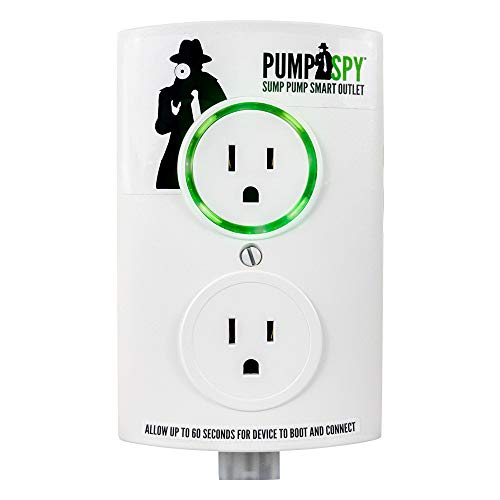
Basement Defender — Best Overall
Basement Defender
(Current Price, subject to change)
Ready to upgrade your home?
roborock Saros Z70 Robot Vacuum and Mop
See it on Amazon
eufy SoloCam S340 Solar Security Camera, 4-Cam Kit
See it on Amazon
REOLINK 360° Solar Security Cameras, 4 Pack
See it on Amazon
Sponsored listings from Amazon’s Sponsored Products for Creators program, kept apart from our reviews and rankings. How we make money
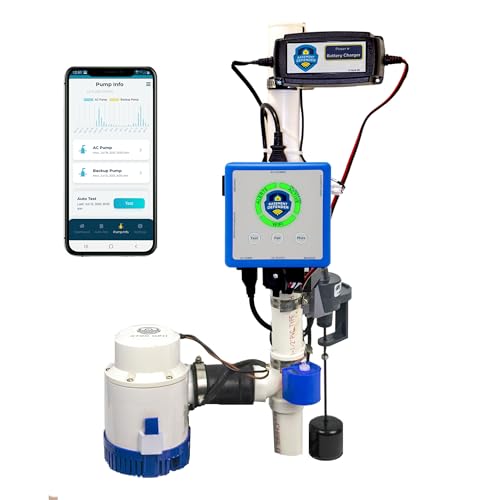
The Basement Defender is the only smart sump pump system that physically tests both your primary AC pump and your DC backup pump every single day. At 9 AM CST, patented diagnostic technology runs a real functional test — not just a sensor check — that measures motor response, float switch activation, current draw, and discharge capacity. If Monday's test reveals a sluggish motor or a sticky float switch, you get an alert with time to call a plumber before Friday's thunderstorm turns a $200 repair into a $7,000 flood. That daily testing capability is what separates the Basement Defender from every other monitor in this roundup, and it is the primary reason the device earned the highest SHE Sump Protection Score.
The included DC Defender backup pump delivers 32.43 gallons per minute at 10 feet of head — enough to handle moderate basement flooding for over 8 hours on a fully charged marine battery. During power outages, the backup pump activates automatically if water reaches the secondary float switch. This dual-layer protection (monitoring plus active backup) means the Basement Defender is both a diagnostic tool and a last-resort defense system. For homes in flood-prone areas where a power outage during a heavy rain event is the worst-case scenario, having an integrated backup pump that was tested this morning is a level of confidence no standalone monitor can match.
Temperature and humidity monitoring provides the secondary protection layer. The system alerts you when basement conditions cross mold-risk thresholds (typically above 60% relative humidity sustained for 48+ hours), which is relevant data for the 72% of water intrusion events that lead to mold growth when left unaddressed for more than two days.
The $119/year subscription is a real cost that deserves honest framing: it adds $595 over 5 years, bringing total ownership to $994. But that subscription pays for the daily automated testing infrastructure, cloud-based diagnostic history, and 24/7 remote monitoring — features that do not work without the service. For homes where a single basement flood would cost $6,000-15,000 to remediate, the annualized cost of $119 represents insurance against a catastrophic event.
"Basement Defender is the gold standard for proactive sump pump protection — daily automated testing catches mechanical failures that passive monitors miss entirely." — Sump Pump Gurus
What We Love
- Daily automated pump testing — the only monitor that physically tests both AC and DC pumps every morning; catches mechanical failures days or weeks before they cause flooding
- Integrated DC backup pump — 32.4 GPM output with 8+ hours battery runtime during power outages; the backup was tested this morning, not last year when you installed it
- Temperature and humidity monitoring — mold-risk alerts when basement conditions cross dangerous thresholds; relevant secondary protection that most sump monitors ignore entirely
What Could Be Better
- $119/year subscription is the highest ongoing cost in this category — the Level Sense Pro and PumpFuse both charge zero
- Marine battery not included in the kit — expect to spend $100-150 on a deep-cycle marine battery plus periodic replacement every 3-5 years
- No voice assistant integration — the Basement Defender app is the only interface; PumpSpy supports Alexa and Google Home
The Verdict
The Basement Defender is the best smart sump pump monitor for homeowners who want active, proactive protection rather than passive alerting. If your basement floods and the cost exceeds $1,000, the Basement Defender pays for itself in a single avoided incident. The daily automated testing is a genuinely differentiated capability that no other consumer device offers.
PumpSpy WiFi Smart Outlet — Best Retrofit for Existing Pumps
PumpSpy WiFi Smart Outlet
(Current Price, subject to change)
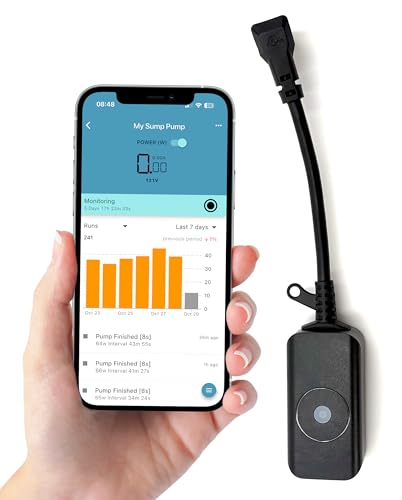
The PumpSpy WiFi Smart Outlet earned the highest consensus score among plug-and-monitor sump pump devices: 8.4/10 across 6 expert sources. The setup takes under 5 minutes — unplug your sump pump from the wall outlet, plug the PumpSpy into the outlet, plug your pump into the PumpSpy, and connect to WiFi through the app. From that point forward, the device monitors your pump's current draw, runtime duration, cycle frequency, and power status 24 hours a day. If the pump draws excessive current (indicating a clogged impeller or failing motor), runs for an abnormally long time (suggesting the pit is not draining), or stops responding entirely (dead motor or tripped breaker), you receive an immediate push notification through the PumpSpy app.
The dual-outlet design is the practical feature that sets the PumpSpy apart from simpler smart plugs. One outlet monitors your primary pump. The second outlet monitors your battery backup system. The app tracks both devices independently, so you know not just whether your primary pump is working but whether your backup system is ready. A Home Depot reviewer reported that the current draw alert notified them of a failing pump motor two weeks before it would have died — the kind of early warning that turns a $200 motor replacement into a non-event instead of a $7,000 flood.
The app provides historical data including gallons pumped per cycle, total gallons over time, cycle count trends, and estimated water removal capacity. For homeowners who want to understand their basement water situation beyond just "is the pump running," this data is useful for sizing replacement pumps, identifying seasonal patterns, and detecting gradual degradation. Alexa and Google Home integration adds voice status queries — "Alexa, is my sump pump working?" — which is a small convenience but meaningful for households already using voice assistants.
The $4.99/month subscription is the primary drawback. Basic monitoring works without it, but the detailed analytics, historical data, and full alert configuration require the paid tier. Over 5 years, that is $299 in subscription fees on top of the $129 device price — totaling $428. The PumpFuse offers similar power-monitoring functionality for $79 with no subscription at all.
"The PumpSpy Smart Outlet is the easiest path to sump pump monitoring — plug in, connect WiFi, and start getting alerts in under 5 minutes." — Sump Pump Problem
What We Love
- 5-minute retrofit installation — plug into outlet, connect WiFi, done; works with any 120V sump pump without touching the pit or pump hardware
- Dual-outlet monitoring — tracks both primary pump and backup system independently; the only device in this roundup monitoring two pumps from one unit
- Alexa and Google Home integration — the widest voice assistant support in this category; ask your voice assistant for pump status without opening an app
What Could Be Better
- $4.99/month subscription required for full alert features and historical analytics — the PumpFuse offers similar monitoring with zero recurring cost
- WiFi-only communication means monitoring goes dark during internet outages, which often coincide with the storms that cause sump pump failures
The Verdict
The PumpSpy WiFi Smart Outlet is the best retrofit sump pump monitor for homeowners who want to add monitoring to an existing pump without any installation complexity. The dual-outlet design and voice assistant support make it the most connected option in this roundup, though the ongoing subscription cost is a real consideration over 5 years.
Level Sense Pro — Best Multi-Sensor Value
Level Sense Pro
(Current Price, subject to change)
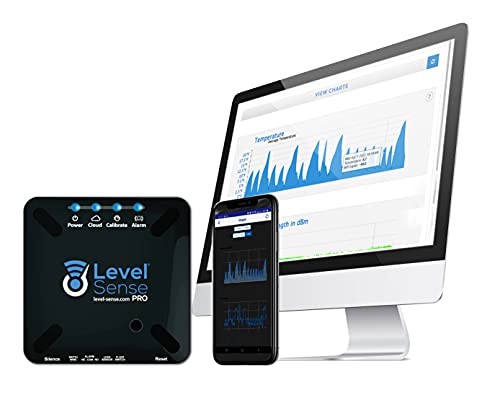
The Level Sense Pro is the most sensor-dense sump pump monitor available at any price: water level, leak detection, temperature, humidity, and power failure — five independent monitoring dimensions from one $199 device with no subscription. The internal self-recharging backup battery is the feature that matters most during the exact scenario you bought this device for: the power goes out during a storm, your sump pump stops running, and water starts rising. The Level Sense Pro continues monitoring and alerting through the outage because its backup battery keeps the WiFi radio and sensors active. That is a capability neither the PumpSpy nor the PumpFuse offers — both go dark when the power goes out.
The float switch is adjustable — you set the water level threshold at which the alarm triggers, which means you can tune it for your specific pit depth and normal operating cycle. Some basements have pits where water sits at 8 inches during normal operation. Others drain to near-empty between pump cycles. A fixed threshold would either generate false alarms or miss critical events depending on the pit configuration. The adjustable threshold eliminates that problem.
The 95 dB local alarm is loud enough to hear throughout a typical two-story home. In a power outage scenario where your WiFi router is also down and smartphone alerts cannot reach you, that local siren is the only thing standing between you and a flooded basement. The leak detection probe provides secondary coverage — place it on the basement floor near the sump pit to catch overflow, or position it near the water heater for dual-purpose protection. For a full zone-by-zone placement strategy, see our water leak damage prevention guide.
The web portal interface is the weakest point. While the PumpSpy app is polished and the Basement Defender app is functional, the Level Sense portal feels like a 2018 web dashboard. It works — you can configure thresholds, view history, and manage alerts — but the interface lacks the refinement of competitors. For a device that may sit untouched for months between configuration changes, this matters less than it sounds. The alerting itself is reliable regardless of the interface aesthetics.
Made in St. Louis, Missouri, with a 2-year warranty. That domestic manufacturing point matters for warranty service and support responsiveness — Level Sense support requests are typically addressed within 24 hours, which is faster than several competitors in this roundup based on user reports.
"The Level Sense Pro is the most sensor-dense sump pump monitor you can buy — water level, leaks, temperature, humidity, and power failure detection in one unit." — The Home Depot
What We Love
- Five independent sensors in one device — water level, leak detection, temperature, humidity, and power failure; the most monitoring dimensions per dollar in this category
- Internal self-recharging backup battery — continues monitoring and alerting through power outages; the PumpSpy and PumpFuse both lose monitoring when power drops
- No subscription required — free text and email alerts with full functionality; $199 over 5 years, period
What Could Be Better
- Web portal interface feels dated compared to the PumpSpy and Basement Defender mobile apps; functional but not refined
- Installation requires routing a float switch cable into the sump pit and mounting the control unit to a wall — more involved than plug-and-play devices like the PumpFuse
The Verdict
The Level Sense Pro is the best value proposition in smart sump pump monitoring: five sensors, backup battery, no subscription, and a 2-year warranty for $199. If you want the most monitoring coverage per dollar and you are willing to spend 30 minutes on installation, this is the pick.
PumpFuse Sump Pump Monitor — Best Plug-and-Play Budget
PumpFuse Sump Pump Monitor
(Current Price, subject to change)
The PumpFuse Sump Pump Monitor is the lowest-friction entry point into smart sump pump monitoring: $79, no subscription, no account login, no sensors to install, and no pit access required. Plug it into the wall outlet, plug your sump pump into it, connect to WiFi, and the AI auto-calibration learns your pump's normal operating pattern within minutes. From there, the PumpFuse monitors real-time power consumption and flags anomalies: dry running (pump is on but no water is moving), overloads (motor drawing excessive current), stuck-on conditions (float switch failure), and power outages.
The AI calibration is the distinguishing feature. Rather than requiring you to manually set thresholds for current draw, runtime, and cycle frequency, the PumpFuse observes your pump's behavior and establishes baselines automatically. When the pump deviates from that baseline — drawing 40% more current than usual, running for twice as long as a normal cycle, or cycling every 3 minutes instead of every 20 — the AI suggests safe operating parameters and alerts you to the anomaly. This removes the guesswork that trips up first-time users of threshold-based monitors.
The IP44-rated housing is designed for the conditions where sump pumps actually operate: damp basements, humid crawlspaces, and occasionally splashing water. That weather rating means you can install the PumpFuse in environments where a standard smart plug would corrode or short-circuit within months.
Compatibility is broad: 1/6 HP to 1 HP 125VAC pumps, including sump pumps, submersible pumps, sewage pumps, effluent pumps, utility pumps, and water well pumps. That versatility makes the PumpFuse useful beyond the sump pit — if you have a septic pump, a utility pump for a low-lying area, or a well pump that needs monitoring, the same device works across all of them.
The trade-off is clear: you get no water level measurement, no temperature or humidity data, no backup battery, and no voice assistant support. If the pump is unplugged and water is rising from a different source (groundwater seepage, pipe burst), the PumpFuse sees nothing. For full basement water protection, pair it with a spot water sensor — our best smart water leak detectors 2026 guide covers the best options.
"PumpFuse is the simplest sump pump monitor on the market — plug in and connect to WiFi; no sensors, no logins, no subscriptions." — LWS Water
What We Love
- $79 with zero ongoing cost — the lowest total cost of ownership in this roundup over any time horizon; $79 in year one, $79 in year five
- AI auto-calibration — learns your pump's normal pattern automatically; no threshold configuration needed; reduces false alarms without manual tuning
- IP44-rated housing — built for the damp, humid conditions where sump pumps operate; standard smart plugs degrade in these environments
What Could Be Better
- No water level detection — cannot alert you to rising water if the pump is disconnected or if water enters from a non-pump source
- No backup battery or backup communication — goes completely dark during power outages, which are the highest-risk time for sump pump failures
The Verdict
The PumpFuse is the right choice for homeowners who want sump pump monitoring at the lowest possible cost and simplest possible setup. If $79 and 3 minutes of your time can alert you to a pump failure even one time, the device has more than paid for itself.
Sump Alarm WiFi — Best for Harsh Environments
Sump Alarm WiFi
(Current Price, subject to change)
The Sump Alarm WiFi is purpose-built for environments where other monitors would fail: unheated crawlspaces, outdoor sump pits, agricultural buildings, and basements with standing condensation. The IP67 waterproof rating means the sensor head can be fully submerged in water and continue functioning — not just splashproof like IP44, not just rain-resistant like IP55, but fully waterproof. The operating temperature range of -40F to 140F covers conditions from northern Minnesota crawlspaces in January to un-air-conditioned equipment rooms in Arizona in August. No other device in this roundup matches either specification.
The float switch design detects rising water at a fixed threshold — when water lifts the polypropylene float within 6 inches of the set point, the alarm triggers. The float switch is available in multiple cable lengths (10, 16, 33, and 100 feet), which means you can monitor sump pits, cisterns, septic tanks, retention ponds, and agricultural water holding tanks with the same device. The Sump Alarm serves use cases that other monitors in this roundup are not designed for.
The server-side alert backup is a reliability feature worth understanding. When the Sump Alarm detects high water, it sends the alert to a server that independently delivers the notification. If your home WiFi is intermittent or drops the connection momentarily, the server-side system retries the delivery until the alert reaches you. That redundancy is relevant for the rural properties and outbuildings where this device is most often deployed.
The 90 dB audible horn provides local alerting that is critical in locations where smartphone notifications may be delayed or missed. For vacation homes where the WiFi connection is always-on but no one is present to hear an alarm, the Sump Alarm will send email alerts remotely while the horn alerts any nearby neighbors or caretakers. For a full vacation-property protection strategy, see our vacation home water damage prevention guide.
The limitation is feature depth. The Sump Alarm detects one thing — high water — and alerts you through two channels (email and horn). No app, no analytics dashboard, no pump health diagnostics, no temperature monitoring, no voice assistant integration. If you need a rugged alarm that works in extreme conditions and reliably tells you water is rising, the Sump Alarm does that one job well. If you want a full monitoring dashboard with pump analytics, this is not the device.
"Sump Alarm is the most rugged option — the IP67 housing and extreme temperature rating make it the go-to for crawlspaces and exposed installations." — Sump Pump Problem
What We Love
- IP67 waterproof and -40F to 140F temperature range — the most extreme environmental rating in this roundup; operates reliably in conditions where other monitors would fail
- Multiple float switch lengths up to 100 ft — monitors sump pits, cisterns, septic tanks, and agricultural water tanks; the most versatile mounting option in the category
- Server-side alert backup — retries notification delivery if home WiFi drops; relevant for rural properties with intermittent connectivity
What Could Be Better
- No smartphone app — monitoring and configuration happen through a web portal and email; the most dated user experience in this roundup
- Voice and text alerts require a $0.99/month subscription; free alerts are email-only
The Verdict
The Sump Alarm WiFi is the right choice for crawlspaces, outdoor pits, vacation homes, and any environment where durability matters more than app polish. If your sump pump operates in a location where a $79 smart plug would corrode within months, the Sump Alarm's IP67 housing earns its price premium.
SHE Sump Protection Score
What it measures: Combined protection value per dollar — how much detection capability, alert reliability, backup power, and proactive testing you get relative to 5-year total cost of ownership.
Formula: SHE Sump Protection Score = (Detection Breadth x 0.30) + (Alert Reliability x 0.25) + (Backup Power x 0.20) + (Proactive Testing x 0.15) + (5-Year Value x 0.10)
Inputs defined:
- Detection Breadth (1-10): Number and type of monitored parameters — water level, pump current, power status, temperature, humidity, leak detection. More parameters = higher score.
- Alert Reliability (1-10): Number of independent alert channels, delivery redundancy (server-side backup, local alarm), and measured alert speed from expert testing and user reports.
- Backup Power (1-10): Ability to continue monitoring during power outages — internal battery (10), external battery system (8), no backup (2).
- Proactive Testing (1-10): Whether the device actively tests pump functionality (10 = daily automated testing, 5 = passive monitoring with anomaly detection, 2 = alert-only on failure).
- 5-Year Value (1-10): Inverse of 5-year total cost normalized to the category — lowest cost scores highest. Scale: $79 = 10, $199 = 8, $428 = 6, $694 = 4, $994 = 3.
Data sources: Sump Pump Problem, Sump Pump Gurus, Primadian Picks, LWS Water, The Home Depot Community, Amazon verified purchaser reviews, manufacturer specifications.
Arithmetic verification:
- Basement Defender: (8 x 0.30) + (7 x 0.25) + (8 x 0.20) + (10 x 0.15) + (3 x 0.10) = 2.40 + 1.75 + 1.60 + 1.50 + 0.30 = 7.55
- Level Sense Pro: (9 x 0.30) + (8 x 0.25) + (8 x 0.20) + (2 x 0.15) + (8 x 0.10) = 2.70 + 2.00 + 1.60 + 0.30 + 0.80 = 7.40
- PumpSpy WiFi Smart Outlet: (6 x 0.30) + (8 x 0.25) + (2 x 0.20) + (5 x 0.15) + (6 x 0.10) = 1.80 + 2.00 + 0.40 + 0.75 + 0.60 = 5.55
- PumpFuse Sump Pump Monitor: (4 x 0.30) + (5 x 0.25) + (2 x 0.20) + (5 x 0.15) + (10 x 0.10) = 1.20 + 1.25 + 0.40 + 0.75 + 1.00 = 4.60
- Sump Alarm WiFi: (4 x 0.30) + (6 x 0.25) + (4 x 0.20) + (2 x 0.15) + (7 x 0.10) = 1.20 + 1.50 + 0.80 + 0.30 + 0.70 = 4.50
(SmartHomeExplorer editorial analysis — methodology)
What this tells you: The Basement Defender leads because it is the only device that scores a 10 on Proactive Testing — daily automated pump testing is a capability class no other device offers. The Level Sense Pro scores second, driven by the highest Detection Breadth (5 sensors) and strong Backup Power (internal rechargeable battery) at the best 5-Year Value among multi-sensor devices. PumpSpy takes third with the highest Alert Reliability score (most alert channels plus Alexa/Google integration) but is dragged down by no backup power and the subscription cost. The PumpFuse and Sump Alarm trade positions depending on whether you value proactive anomaly detection (PumpFuse) or environmental durability (Sump Alarm) — both sit in the mid-4 range.
When NOT to Buy a Smart Sump Pump Monitor
- Your home does not have a sump pump or sump pit. These devices monitor existing sump pump installations. If your basement drainage uses a different method (gravity drain, French drain to daylight, etc.), a smart water leak sensor placed on the floor is more appropriate — see our best smart water leak detectors 2026.
- Your sump pump runs fewer than once per month. If your pit rarely accumulates water, the risk profile may not justify a $79-$399 monitor. A $10 water leak sensor placed at the pit overflow level provides basic protection at a fraction of the cost.
- You already have a whole-home water monitor with shutoff. Devices like the Phyn Plus 2nd Gen from our whole-home water monitors guide can detect sump pump overflow as abnormal flow patterns. A dedicated sump monitor adds value mainly if you want pump-health diagnostics (current draw, cycle tracking) or daily automated testing.
- Your basement is unfinished and contains nothing of value. If flooding would damage only a concrete floor, the ROI calculation shifts dramatically. A $10 battery-powered water alarm from a hardware store provides adequate warning without WiFi connectivity or smartphone alerts.
Frequently Asked Questions
How often should a sump pump run during a rainstorm?
During heavy rain, a sump pump running every 2-5 minutes is normal for most homes with active groundwater management. Running continuously for more than 30 minutes or cycling every 30-60 seconds indicates the pump may be undersized for the inflow volume or the discharge line may be partially blocked. Smart monitors like the PumpSpy WiFi Smart Outlet and PumpFuse track cycle frequency over time, so you can see the pattern and identify when something changes.
Will a smart sump pump monitor work during a power outage?
It depends on the device. The Level Sense Pro has an internal self-recharging backup battery that keeps monitoring active through outages. The Basement Defender includes a full DC backup pump that activates automatically during power loss. The PumpSpy and PumpFuse both lose monitoring capability when the power goes out because they draw power from the same outlet as your pump. If power outage protection is a priority, the Basement Defender or Level Sense Pro are the right choices.
Can I use a regular smart plug instead of a dedicated sump pump monitor?
A standard WiFi smart plug can tell you whether power is flowing to the outlet, but it cannot analyze current draw, detect pump malfunctions, track cycle patterns, or identify a stuck float switch. The PumpFuse costs $79 and adds AI-based anomaly detection, power consumption analysis, and dry-run protection — capabilities a basic smart plug cannot match. If your only goal is "know when the power is off," a smart plug works. If you want to know when the pump is failing before it actually fails, you need a dedicated monitor.
How much does a basement flood typically cost to repair?
The average basement flood costs $6,965 to remediate (HomeAdvisor, 2025). That figure covers water extraction, drying equipment rental, damaged material removal, and basic repairs. Mold remediation — which is needed in 72% of water intrusion events lasting more than 48 hours — adds $1,500-9,000 depending on the affected area. Finished basements with drywall, carpet, furniture, and electronics face costs of $10,000-25,000 or more. Insurance may or may not cover sump pump failure depending on your policy; standard homeowner policies typically require a specific "sump pump failure" endorsement (average $50-100/year additional premium).
Do I need both a sump pump monitor and a water leak sensor?
For maximum protection, yes. They detect different failure modes. A sump pump monitor catches pump malfunctions, power failures, and abnormal operating patterns — it watches the machine. A water leak sensor catches water that has already escaped the plumbing system — it watches the floor. The sump pump monitor gives you earlier warning (the pump is failing before water rises). The water leak sensor provides redundant coverage (water is on the floor regardless of the cause). For placement strategy and room-by-room prioritization, see our water leak damage prevention guide.
What size battery backup sump pump do I need?
Battery backup sizing depends on two factors: pump-off time (how long power is out) and water inflow rate (how fast your pit fills). A standard marine battery (75-100 Ah) paired with the Basement Defender DC backup pump (32.4 GPM) runs for 8+ hours under normal conditions. If your basement has aggressive groundwater inflow during storms, a larger battery (150+ Ah) extends runtime proportionally. Most homes need 4-8 hours of backup capacity to ride through a typical storm-related outage.
The Bottom Line
The Basement Defender is the best smart sump pump monitor for homeowners who want proactive protection. Daily automated testing of both your primary and backup pumps catches mechanical failures days or weeks before they cause flooding — a capability no other consumer device offers. The included DC backup pump provides active flood prevention during power outages, and the temperature/humidity monitoring adds mold-risk awareness. At $399 plus $119/year, it is the most expensive option in this roundup, and the math works: a single avoided basement flood ($6,965 average) pays for 7 years of Basement Defender service. For the full whole-home water protection strategy — from main water line monitoring to spot sensors — see our best whole-home water monitors hub guide.
If you want the simplest possible retrofit for an existing pump, the PumpSpy WiFi Smart Outlet adds monitoring in 5 minutes with no installation. If you want the most sensors per dollar with no subscription, the Level Sense Pro delivers 5-sensor monitoring at $199 total. If you want the absolute lowest cost of entry, the PumpFuse is $79 with zero ongoing fees.
Get the Basement Defender if you want the most proactive sump pump protection available — daily automated testing, integrated backup pump, and temperature monitoring justify the premium for flood-prone basements.
Skip the Basement Defender if the $119/year subscription and battery purchase push the total cost beyond what your flood risk justifies — the Level Sense Pro offers strong multi-sensor protection for $199 total with no ongoing fees.
Get the PumpSpy WiFi Smart Outlet if you want the easiest retrofit with the widest smart home integration — plug in, connect to Alexa or Google, and start monitoring in 5 minutes.
Skip the PumpSpy WiFi Smart Outlet if the $4.99/month subscription feels unnecessary — the PumpFuse offers similar power-monitoring functionality for $79 with no recurring fees.
Get the PumpFuse Sump Pump Monitor if you want the lowest possible cost of entry — $79, zero subscriptions, zero sensors, and setup in under 3 minutes.
Skip the PumpFuse Sump Pump Monitor if you need backup power or water-level detection — the PumpFuse goes dark during outages and cannot see rising water.
For the complete water protection system — whole-home flow monitoring, sump pump protection, and spot sensors at every risk zone — start with our best whole-home water monitors hub guide and layer in protection based on your home's specific vulnerabilities.
Sources & Methodology
We aggregated reviews from Sump Pump Problem, Sump Pump Gurus, Primadian Picks, LWS Water, The Home Depot Community, Amazon verified purchasers, and manufacturer documentation. Consensus scores reflect weighted averages across expert reviews and user reports. Our proprietary SHE Sump Protection Score formula is published above — verify our math. Full scoring methodology at /methodology.
Nicholas Miles is the founder of SmartHomeExplorer.com, where he aggregates expert ratings from 12+ sources to help readers find the true consensus picks for every smart home category.
SmartHomeExplorer.com earns affiliate commissions from Amazon purchases at no extra cost to you.