
Best Smart Thermostats for Vacation Homes 2026
Ranked for property protection, not daily comfort: the ecobee Premium and Nest 4th Gen tie at the top of our SHE Remote Property Protection Score, the Nest auto-heats an empty cabin before pipes freeze, and the Meross baseboard model covers older cabins for $74.99.
This article contains affiliate links. We may earn a commission at no extra cost to you. Prices change frequently — check the current price on Amazon before buying. Learn more
The Short Answer
For a property abandoned for weeks, prioritize freeze protection over comfort configuration. The ecobee Premium and Nest 4th Gen tie at 8.7 on our SHE Remote Property Protection composite: ecobee prioritizes monitoring breadth through configurable sensors, while the Nest independently auto-heats before pipes freeze.
Featured in this Guide
Ecobee
Smart Thermostat Premium
- •Configurable low-temp alerts, humidity and air-quality sensing, and up to 32 SmartSensors for whole-property freeze coverage
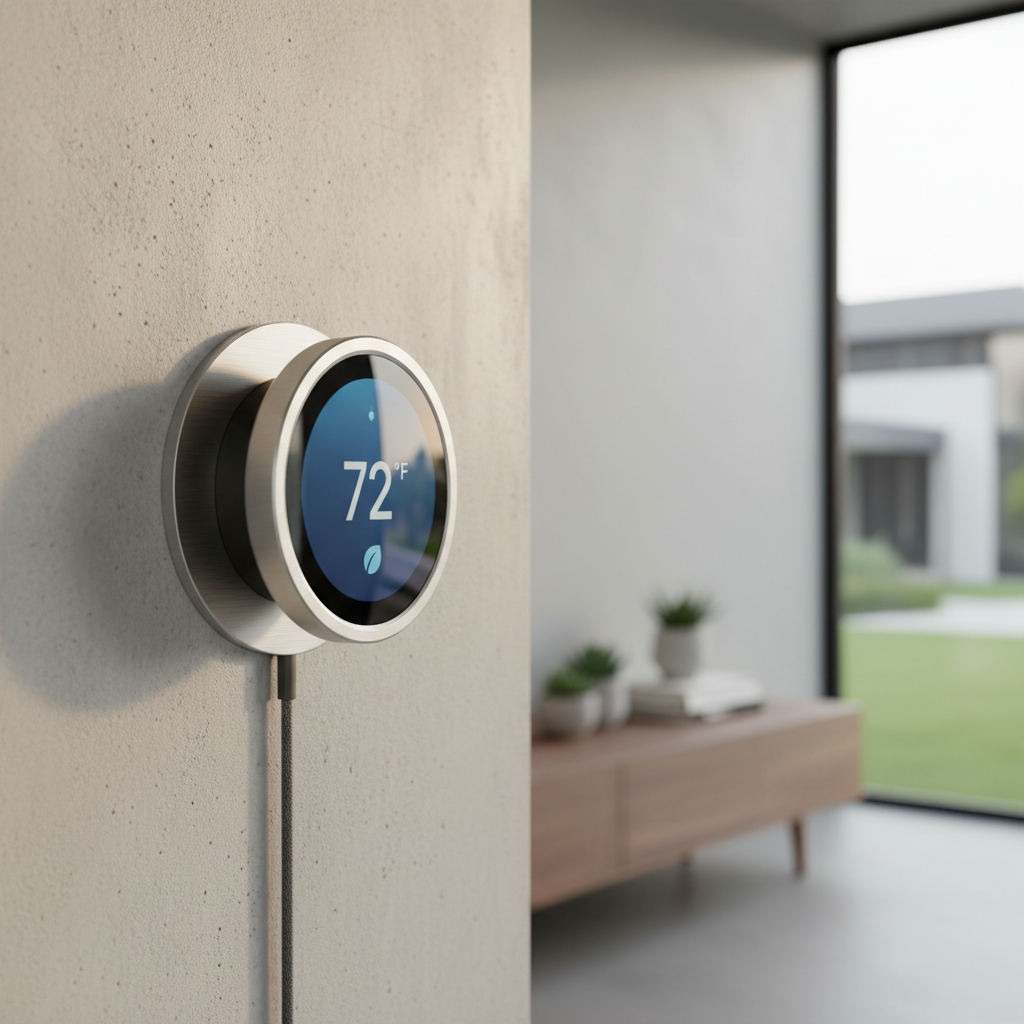
Nest Learning Thermostat 4th Gen
- •Safety Temperatures auto-heats an empty home before pipes freeze, even with no schedule, for Google households
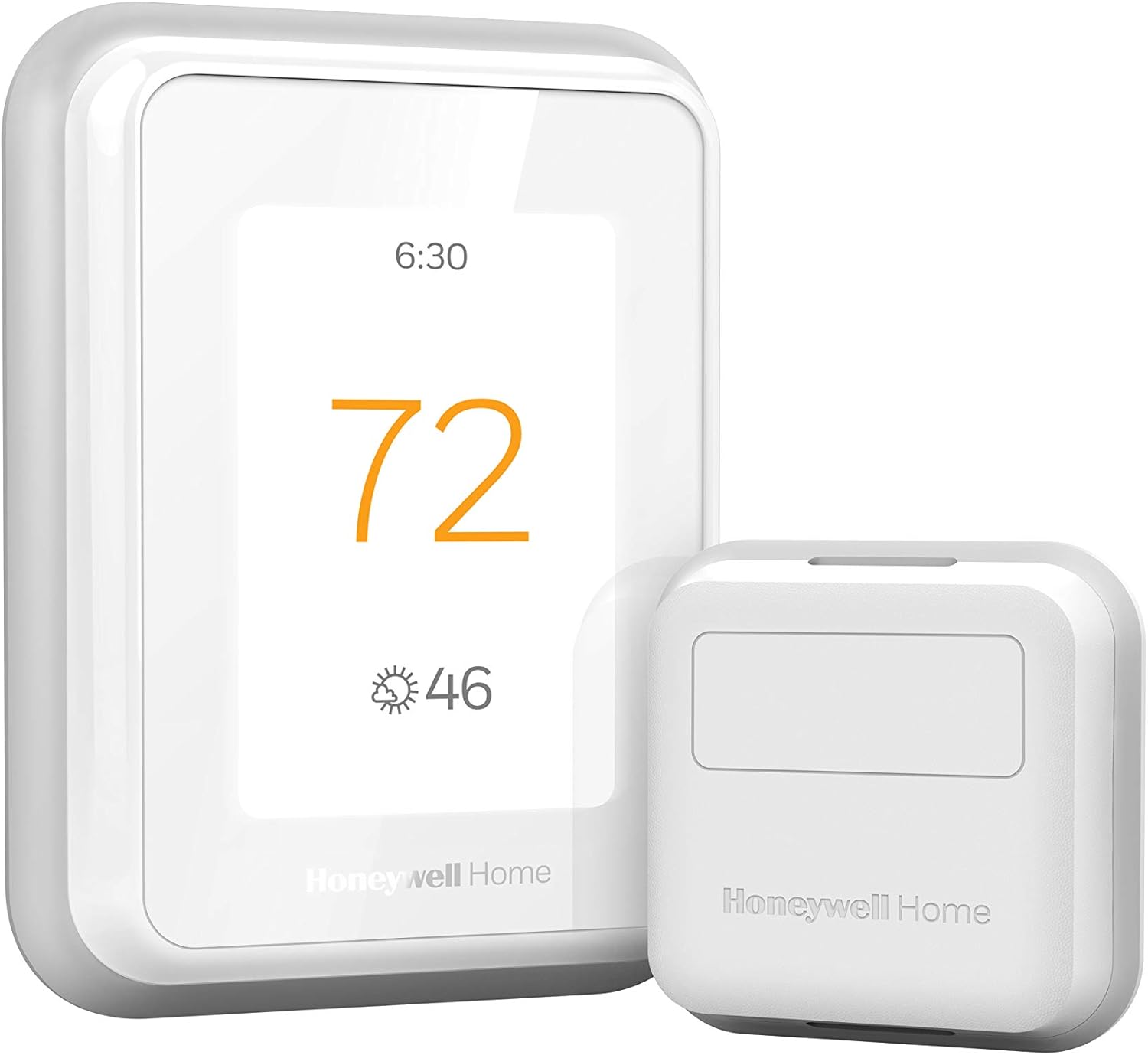
Honeywell
Home T9
- •Room sensors reach ~200 ft to catch cold spots near exterior walls before the main unit registers the drop
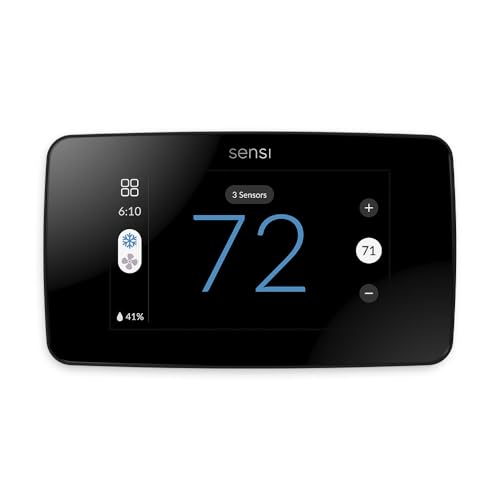
Sensi
Touch 2
- •Cross-platform including HomeKit with temperature and humidity alerts at a mid-range price
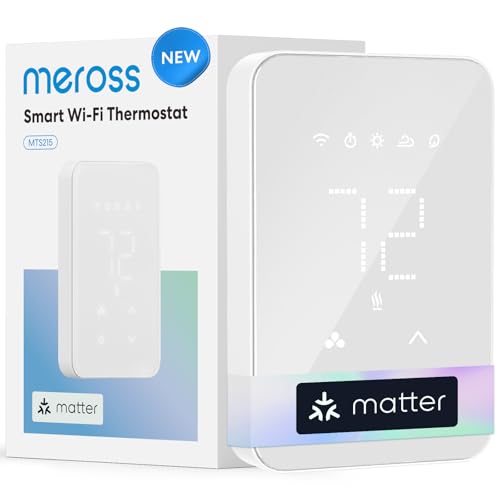
Meross
Matter Smart Thermostat (Electric Baseboard)
- •Matter-native line-voltage control for older electric-baseboard cabins at $74.99 list, running locally through outages
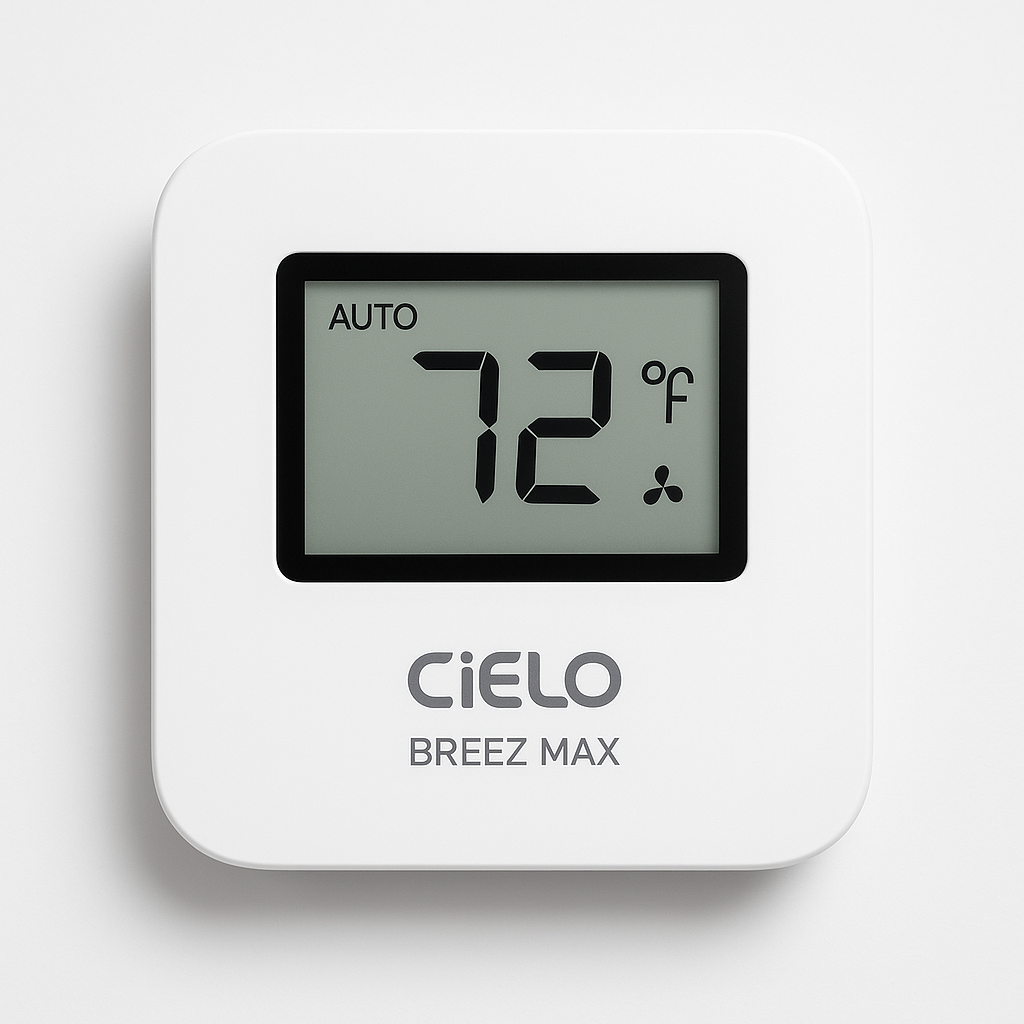
Cielo
Breez Max
- •IR control plus humidity monitoring for warm-climate condos and beach houses on a ductless system
Head-to-Head: Freeze Protection, Monitoring, Platforms, and the SHE Score
Smart Climate
Chart
 Smarthomeexplorer.com
Tap any pick to check its live price on Amazon.
AlorAir Sentinel HDi90 Basement/Crawlspace Dehumidifier with Pump
Check price
Big Ass Fans Haiku L 52-Inch Smart Ceiling Fan
Check price
Midea U Smart Inverter Window AC (12,000 BTU)
Check price
What Actually Matters for a Vacation-Home Thermostat
A burst pipe in an empty house can run $5,000 to $70,000 to repair, so for a second property the job of a thermostat shifts from daily comfort to property protection. In this guide we evaluated six thermostats you can buy today on one weighted composite, our SHE Remote Property Protection Score, which rewards freeze prevention, remote monitoring, alert quality, multi-property management, and efficiency while holding a minimum temperature. In practice, that means the ranking favors devices that warn you, or act, before a cold snap does damage. Wirecutter, CNET, and PCMag all cover the leading central-HVAC picks here. The ecobee Premium spreads up to 32 SmartSensors across ~60 ft of range; the Nest 4th Gen instead auto-heats; and the Meross covers older electric-baseboard cabins the others cannot, verified as of July 2026.
Best Overall: Ecobee Smart Thermostat Premium
Best Overall for Property ProtectionEcobee Smart Thermostat Premium
- Configurable low-temp alert by push and email
- It alerts on freeze rather than auto-heating like the Nest
(Current price, subject to change)
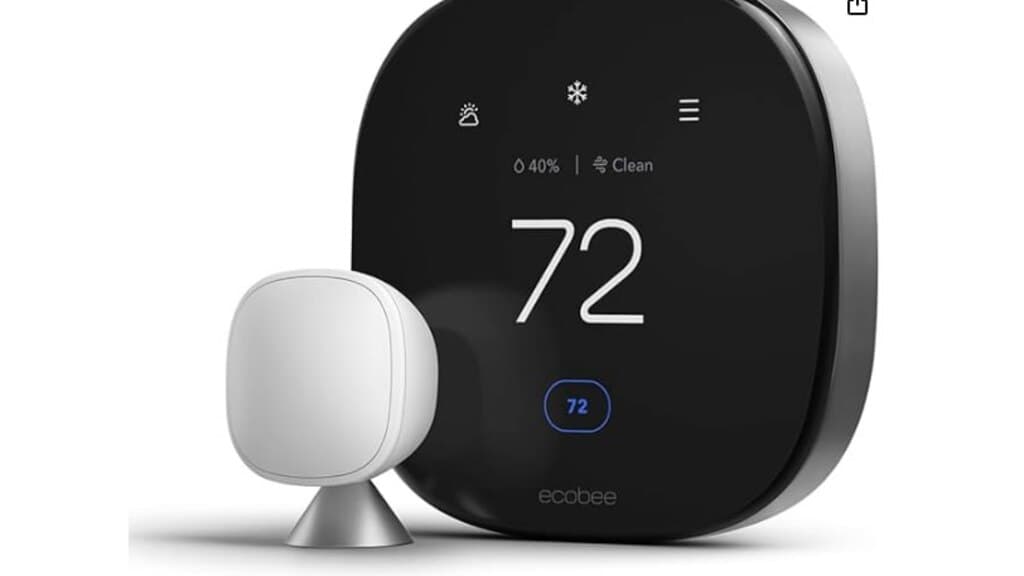
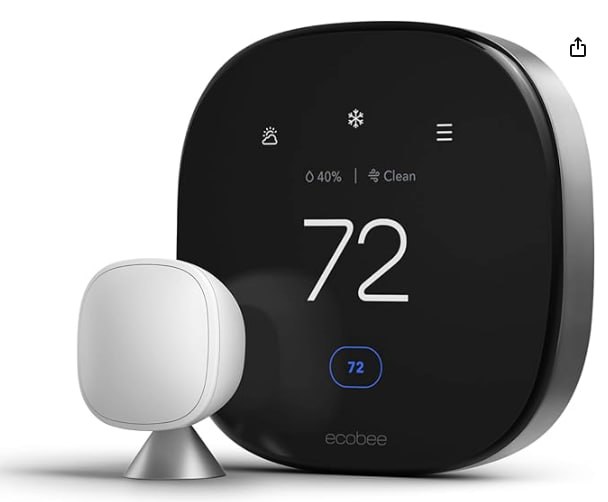
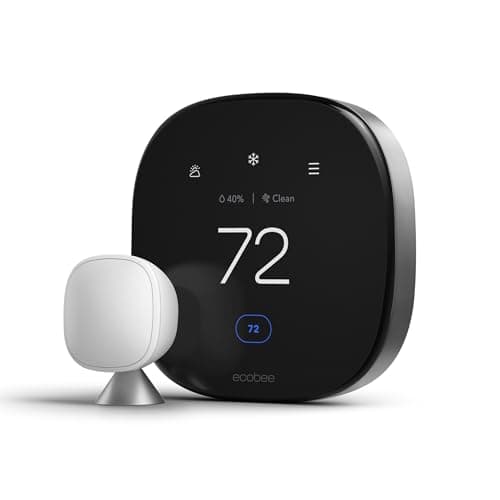
For a property you monitor from afar, the Ecobee Smart Thermostat Premium earns an 8.7 composite on our SHE Remote Property Protection Score, which in practice means it delivers the most complete early-warning system in this roundup. It supports up to 32 SmartSensors at roughly 60 ft of range, so you can place one near exposed pipes, one in the basement, and one in the attic; each reports independently. A configurable low-temperature alert enables both push and email notification, and the air-quality and humidity sensing flags the moisture spike that signals water intrusion. Wirecutter, CNET, and PCMag all cover the ecobee Premium, though we state their coverage rather than transcribe a score. At $249.99 it costs roughly 3x the Meross baseboard model, a real premium, and unlike the Nest it alerts rather than auto-heats. ecobee markets up to 26% HVAC savings and backs the unit with a 3-year warranty. Compared to the Google Nest Learning Thermostat 4th Gen, you trade auto-heat for monitoring breadth.
What We Love
- Configurable low-temp alert by push and email
- Air-quality and humidity sensing flags water intrusion
- Widest platform support: HomeKit, Google, Alexa, SmartThings
What Could Be Better
- It alerts on freeze rather than auto-heating like the Nest
- The most expensive central-HVAC pick here
- Each extra SmartSensor is a separate purchase
The Verdict
If you want the broadest property-monitoring package for a home you leave empty, the Ecobee Smart Thermostat Premium is where we point you here first. It ties the Nest at 8.7 on our composite and leads on monitoring breadth, with configurable low-temp and humidity alerts across up to 32 sensors.
Ready to upgrade your home?
ECOVACS DEEBOT X12 PRO Omni Robot Vacuum and Mop
See it on Amazon
eufy SoloCam S340 Solar Security Camera, 4-Cam Kit
See it on Amazon
REOLINK 360° Solar Security Cameras, 4 Pack
See it on Amazon
Sponsored listings from Amazon’s Sponsored Products for Creators program, kept apart from our reviews and rankings. How we make money
Best Auto-Heat: Google Nest Learning Thermostat 4th Gen
Best Auto-Heat for Google HomesGoogle Nest Learning Thermostat 4th Gen
- Safety Temperatures auto-heats before pipes freeze
- No Apple HomeKit support
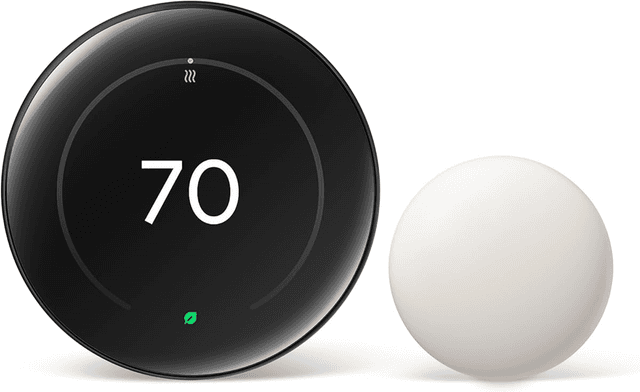
(Current price, subject to change)
For a ski cabin or northern lake house, the Google Nest Learning Thermostat 4th Gen earns an 8.7 composite that ties the ecobee for the top, and it does so by leading on pure freeze prevention. Its Safety Temperatures feature yields the roster's one genuinely hands-off safeguard: it auto-heats an empty home when the temperature crosses a set low, even with no schedule active, so it acts before you can. Home/Away Assist geofencing follows your phone, and the Google Home app manages multiple homes from one place. Wirecutter, CNET, and TechRadar cover the Nest Learning line, and we note that coverage without repeating a verdict. The trade-offs are real: there is no HomeKit, and alerts are app push only. At $279.99 it lists near 4x the Meross, includes a Nest Temperature Sensor, and carries a 2-year warranty; Google cites around 10 to 15 percent energy savings. Compared to the Ecobee Smart Thermostat Premium, you gain auto-heat but give up sensor breadth.
What We Love
- Safety Temperatures auto-heats before pipes freeze
- Home/Away Assist geofencing via your phone
- No C-wire required on most systems
What Could Be Better
- No Apple HomeKit support
- App push alerts only, with no email option
- The learning schedule wants regular occupancy
The Verdict
If your second home already runs on Google and you want the thermostat to act on its own, you'll be well-served here with the Google Nest Learning Thermostat 4th Gen. Its Safety Temperatures feature auto-heats an empty house before pipes freeze, which is why it ties for the top of our score at 8.7.
Check price for the Google Nest Learning Thermostat 4th Gen →
Best Multi-Room Sensing: Honeywell Home T9
Honeywell Home T9
- Room sensors reach ~200 ft to catch cold spots
- No Apple HomeKit support
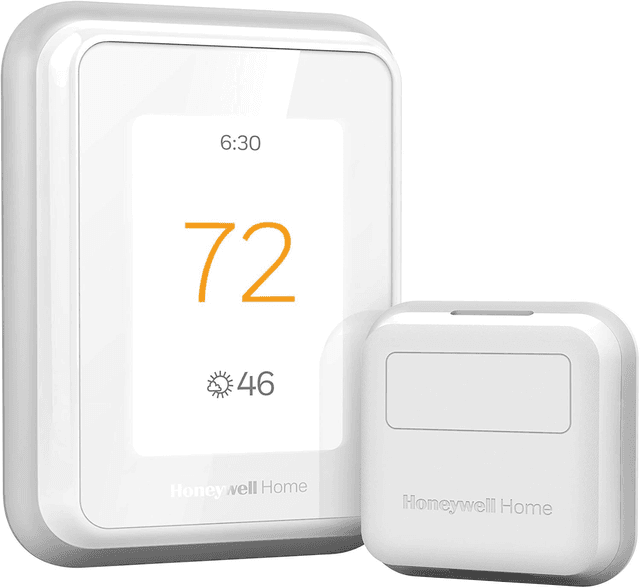
(Current price, subject to change)
In an older property with uneven insulation, the Honeywell Home T9 earns a 7.3 composite on our SHE Remote Property Protection Score, which in practice means its room sensors do the early-warning work the main unit cannot. It supports up to 20 Smart Room Sensors that read temperature, humidity, and motion, and those sensors reach a Resideo-listed 200 ft, over 3x the ecobee's listed 60 ft range, so a sensor near an uninsulated crawl space catches a cold spot before the thermostat registers the drop. Set the away minimum to hold pipes safe cheaply while the property sits empty. Tom's Guide and CNET cover the T9, and we state that coverage rather than a rating. Geofencing switches to away mode automatically, and dual-band Wi-Fi connects cleanly at a rural property. It works with Alexa, Google, and IFTTT, but not HomeKit. Compared to the Ecobee Smart Thermostat Premium, you gain wider sensor range but give up the air-quality sensor and the tighter multi-property dashboard.
What We Love
- Room sensors reach ~200 ft to catch cold spots
- Sensors read temperature, humidity, and motion
- Geofencing and reliable dual-band Wi-Fi
What Could Be Better
- No Apple HomeKit support
- Room-sensor pairing can take a few attempts
- Multi-location handling is less polished than ecobee
The Verdict
If your vacation home has cold corners the main unit never feels, the Honeywell Home T9 checks the boxes that matter for early warning. Its room sensors reach roughly 200 ft and read temperature, humidity, and motion, which is why it leads the mid-tier of our score at 7.3.
Best Value: Sensi Touch 2
Best Value with HomeKitSensi Touch 2
- HomeKit, Alexa, and Google at a mid-range price
- No auto-heat and no learning schedule
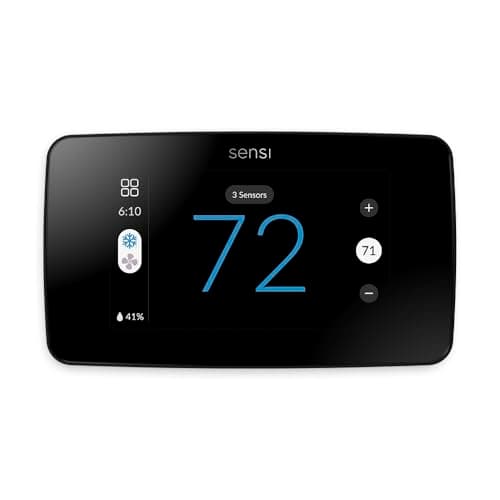
(Current price, subject to change)
For a straightforward central-HVAC second home, the Sensi Touch 2 earns a 6.6 composite, and its value comes from carrying Apple HomeKit alongside Alexa and Google at a price roughly 2x the Meross rather than a premium tier. It sends temperature and humidity alerts plus smart-maintenance notifications through the Sensi app, which enables you to catch a heating fault while the house sits empty through a long winter. It is Energy Star certified, and Emerson, a long-established HVAC maker, markets up to 23 percent savings and backs it with a 3-year warranty. CNET and Tom's Guide cover the Sensi Touch 2; we state that coverage rather than a number. One honest caveat: the Touch 2 generally recommends a C-wire, so confirm your system has one before you order, and it offers single-point sensing rather than the room sensors the T9 and ecobee include. Compared to the Honeywell Home T9, you gain HomeKit but lose multi-room coverage.
What We Love
- HomeKit, Alexa, and Google at a mid-range price
- Temperature, humidity, and maintenance alerts
- From Emerson, a long-established HVAC maker
What Could Be Better
- No auto-heat and no learning schedule
- Single-point sensing, no included room sensor
- Generally wants a C-wire; confirm yours first
The Verdict
If you want reliable remote alerts and cross-platform support without a premium spend, the Sensi Touch 2 is a sensible pick for that setup. It carries Apple HomeKit alongside Alexa and Google, sends temperature and humidity alerts, and earns a 6.6 on our composite as the roster's value option.
Best Budget: Meross Matter Smart Thermostat (Electric Baseboard)
Best Budget for Baseboard CabinsMeross Matter Smart Thermostat (Electric Baseboard)
- Matter-native local control through outages
- A frost setpoint, but no confirmed push freeze alert
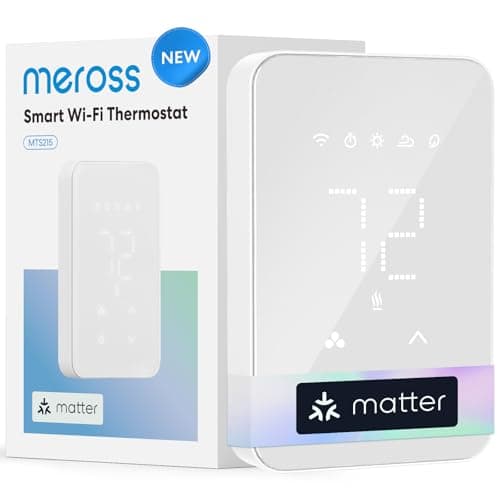
(Current price, subject to change)
For an older cabin the central-HVAC picks simply cannot wire into, the Meross Matter Smart Thermostat (Electric Baseboard) earns a 5.1 composite, and its appeal is category, not breadth: it is a line-voltage thermostat built for electric baseboard and radiant heat. Being Matter-native, it keeps running locally through an internet outage, which produces genuine reliability at a rural property where service drops during storms. At $74.99 it is a fraction of the ecobee, which lists about 3x higher, so outfitting several baseboard zones stays affordable. Be honest about the limits: it offers a frost-protection setpoint, but we could not confirm it pushes a phone freeze alert, so treat it as a set-and-hold minimum rather than a guaranteed warning. It also reads temperature at a single point with no remote sensors. Unlike the Wirecutter-reviewed central picks, this budget model has no major-outlet coverage. Compared to the Cielo Breez Max, it heats a baseboard cabin where the Cielo instead cools a mini-split condo.
What We Love
- Matter-native local control through outages
- Fits older electric-baseboard and radiant cabins
- Cheapest way to add remote frost protection
What Could Be Better
- A frost setpoint, but no confirmed push freeze alert
- Single-point reading, no remote sensors
- Line-voltage wiring differs from the central-HVAC picks
The Verdict
If you heat an older cabin with electric baseboards and want basic remote control for the least money, the Meross Matter Smart Thermostat (Electric Baseboard) is a buy where there's no need to overthink it. This Matter-native line-voltage model runs locally through internet outages and adds a frost-protection setpoint for $74.99 list.
Check price for the Meross Matter Smart Thermostat (Electric Baseboard) →
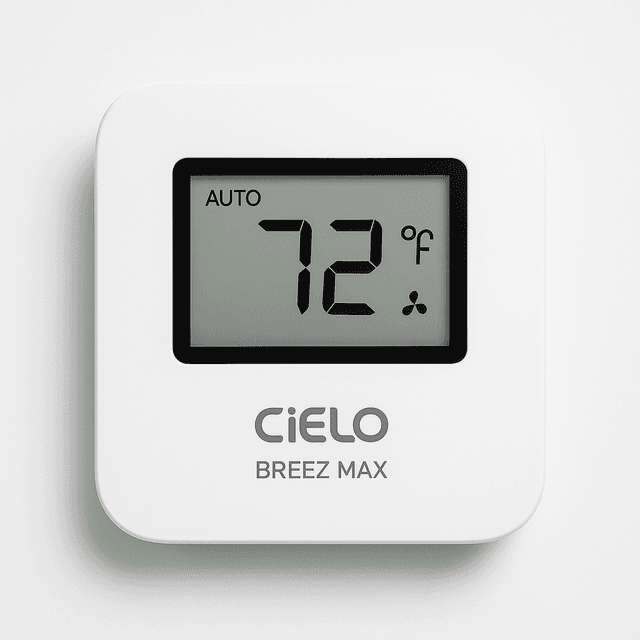
Best for Mini-Split: Cielo Breez Max
Best for Mini-Split and Warm ClimatesCielo Breez Max
- Controls ductless mini-splits and window ACs
- A cooling device, not a freeze-protection tool
(Current price, subject to change)
For a beach house or coastal condo, the Cielo Breez Max earns a 5.0 composite, and we position it honestly: it scores low on freeze because it is a cooling controller, not a frost tool. What it does deliver is smart control for ductless mini-splits, window ACs, and portable units that a wired thermostat cannot touch, using IR to reach thousands of AC models. Its built-in temperature and humidity sensors enable range alerts, which matters substantially more in a warm climate where mold, rather than frost, is the operative threat; remote pre-cooling readies the property before your arrival. It works with Alexa and Google but not HomeKit, and it needs line-of-sight to the indoor unit. At $119.99 it lists roughly 2x the Meross. No major outlet, whether Wirecutter, CNET, or Tom's Guide, has reviewed it, so its score rests on the composite and manufacturer specs. Compared to the Meross Matter Smart Thermostat (Electric Baseboard), it cools a mini-split condo where the Meross heats a baseboard cabin.
What We Love
- Controls ductless mini-splits and window ACs
- Built-in temperature and humidity sensors
- No wiring: plug in and aim at the AC unit
What Could Be Better
- A cooling device, not a freeze-protection tool
- No Apple HomeKit support, Alexa and Google only
- Needs line-of-sight IR to the indoor unit
The Verdict
If your vacation place is a warm-climate condo on a mini-split, the Cielo Breez Max fits the brief where a wired thermostat cannot. It adds remote scheduling and humidity alerts to a ductless or window AC, and earns a 5.0 on our composite as the honest humidity-and-cooling pick rather than a freeze device.
How We Score: SHE Remote Property Protection Score
SHE Remote Property Protection Score
Score Formula
(Freeze Prevention × 0.30) + (Remote Monitoring × 0.25) + (Alert Quality × 0.20) + (Multi-Property Management × 0.15) + (Energy Efficiency × 0.10)Score Factors
- Freeze Prevention (30%)Whether the device actively prevents freeze by auto-heating an empty home, or alerts you on a configurable low temperature so you can act. Auto-heat rates highest; a cooling-only controller rates lowest. This factor carries the most weight because a frozen pipe is the costliest failure a vacation home faces.
- Remote Monitoring (25%)Breadth and quality of remote temperature and humidity visibility, including per-room sensors placed near vulnerable pipes and any air-quality sensing. More independent sensing points across the property score higher.
- Alert Quality (20%)Push and email alerting and how configurable the thresholds are. A device that emails as well as pushes, at a threshold you set, scores above one with a single fixed app notification.
- Multi-Property Management (15%)How well one app dashboard manages several homes or thermostats, which matters for owners and property managers running more than one place.
- Energy Efficiency (10%)Certified or manufacturer-published savings while holding a minimum safe temperature through a long unoccupied stretch. Weighted lowest because protection outranks the power bill for an empty home.
SHE Remote Property Protection Score — Ranked
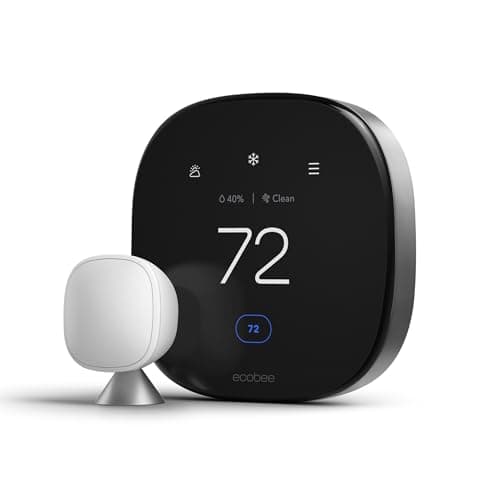
Ecobee Smart Thermostat Premium
SHE Remote Property Protection Score8.7/10$249.99 - ties for the top: broadest monitoring with up to 32 sensors, configurable low-temp and humidity alerts
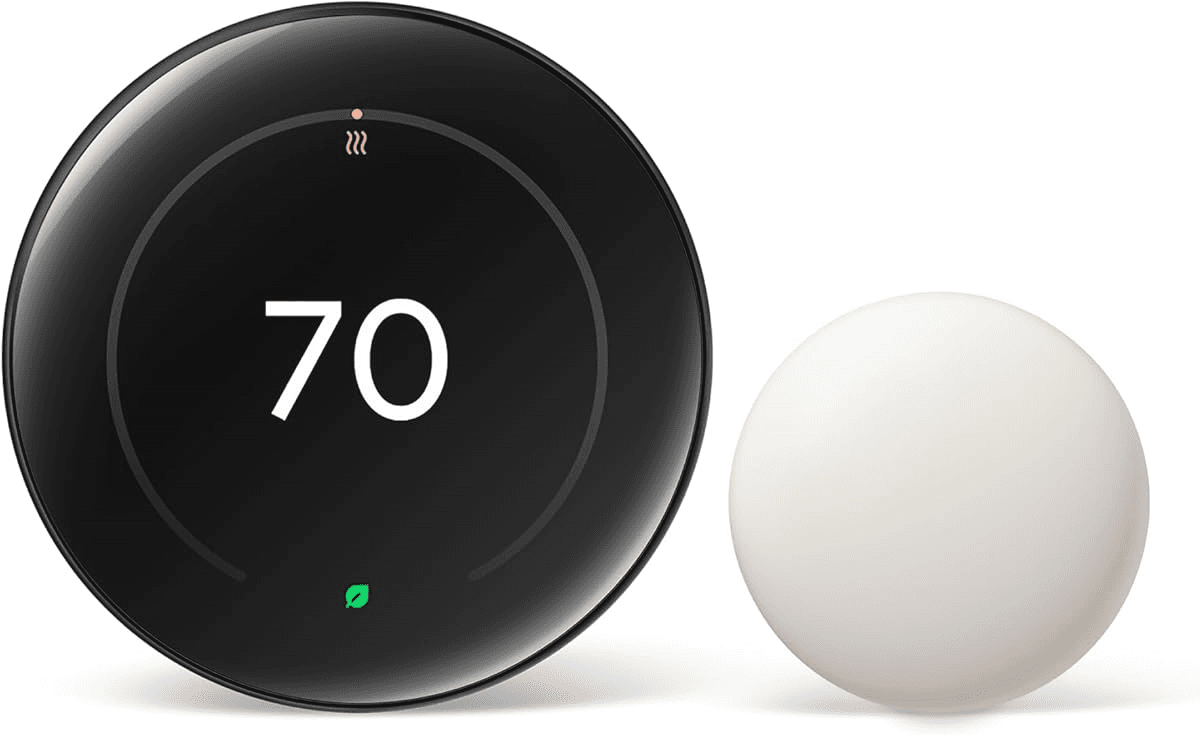
Google Nest Learning Thermostat 4th Gen
SHE Remote Property Protection Score8.7/10$279.99 - ties for the top: the only pick that auto-heats an empty home before pipes freeze
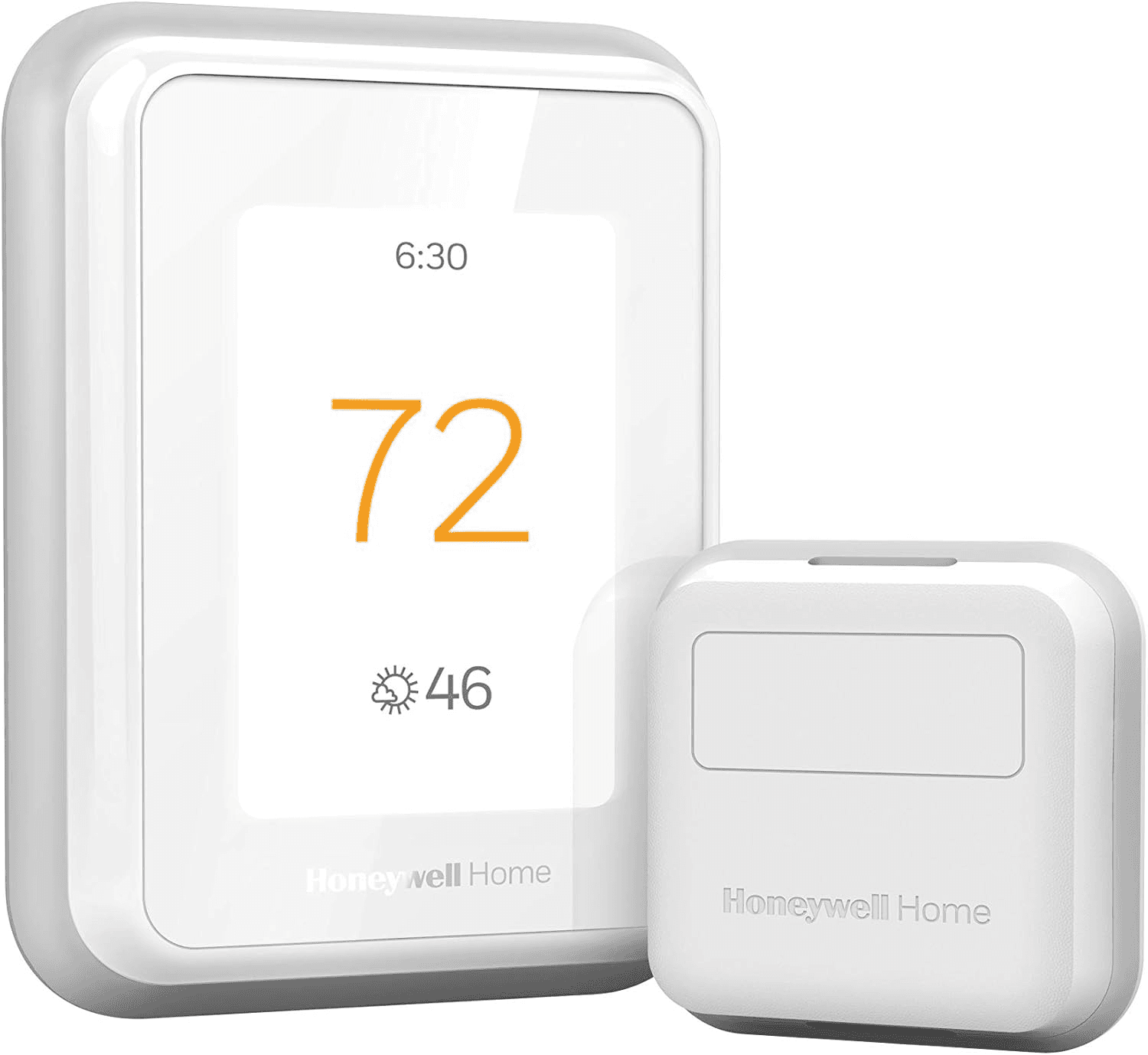
Honeywell Home T9
SHE Remote Property Protection Score7.3/10$199.99 - best multi-room sensing: up to 20 room sensors reach ~200 ft to catch cold spots
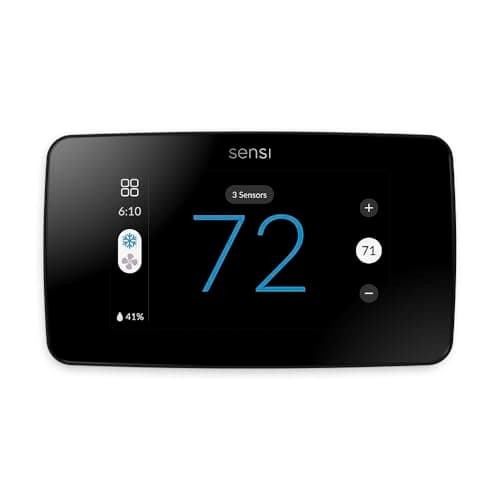
Sensi Touch 2
SHE Remote Property Protection Score6.6/10$149.99 - best value: cross-platform including HomeKit with temperature and humidity alerts
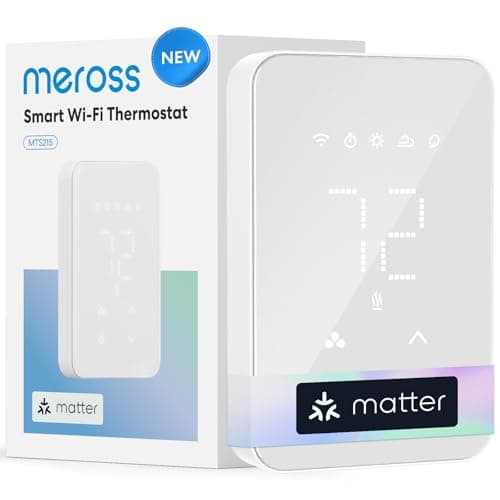
Meross Matter Smart Thermostat (Electric Baseboard)
SHE Remote Property Protection Score5.1/10$74.99 - budget baseboard: Matter-native line-voltage control for older electric-heat cabins
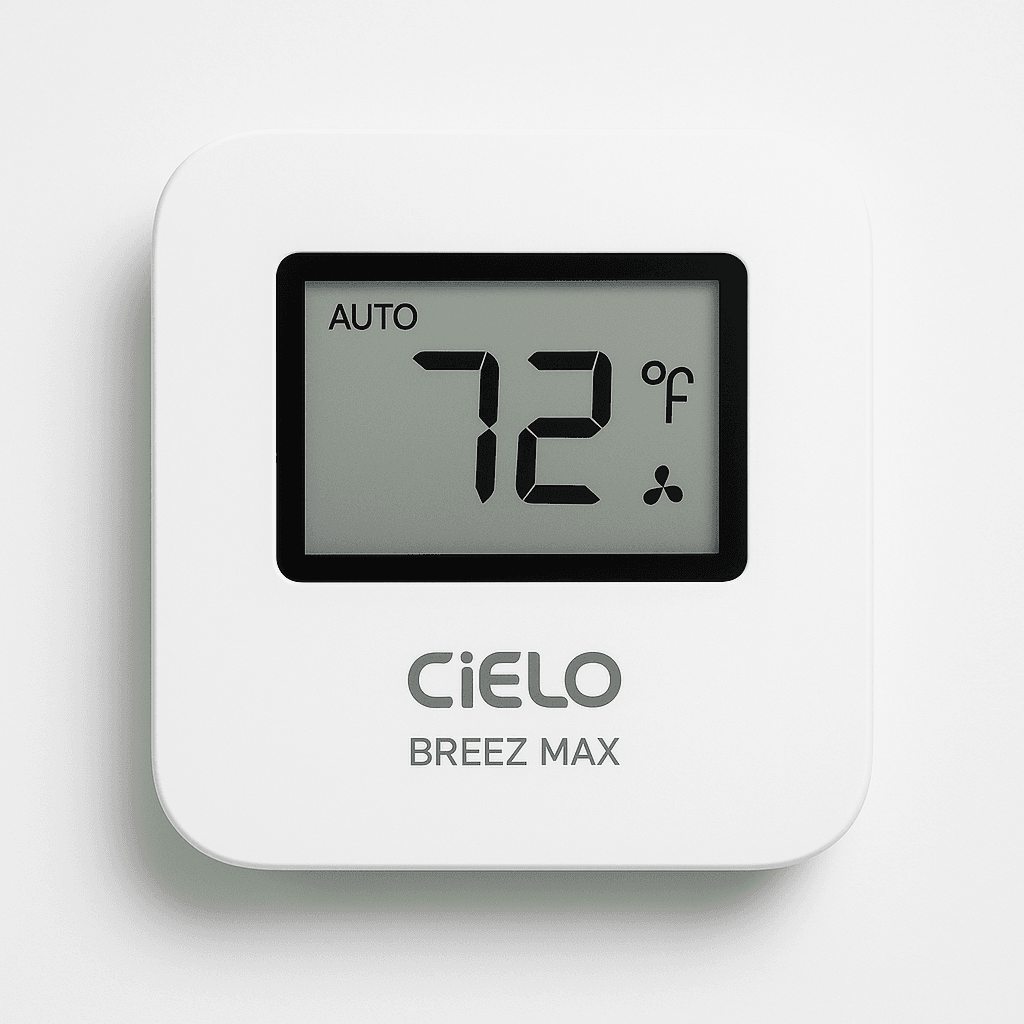
Cielo Breez Max
SHE Remote Property Protection Score5.0/10$119.99 - mini-split pick: humidity and cooling control for warm-climate condos, not a freeze tool
Matching a Thermostat to Your Property and Heat System
In this roundup the right pick depends on your heat system and ecosystem more than any single feature; our weighted composite deliberately gives freeze prevention the heaviest factor. For central HVAC in a cold-climate home, the freeze-focused picks lead: the Nest auto-heats, while the ecobee spreads up to 32 sensors at ~60 ft and the T9 reaches roughly 200 ft to catch cold spots, over 3x the ecobee's range. If you run Apple HomeKit, only the ecobee and the Sensi fit; the Nest and T9 are Alexa-and-Google devices. For an older cabin heated by electric baseboards, the Meross is the only match, since the central-HVAC thermostats cannot switch a line-voltage load. And for a warm-climate condo on a ductless mini-split, the Cielo is the honest choice: freeze is not the risk there, so its humidity monitoring and remote pre-cooling matter more than a freeze alert, as of July 2026.
When NOT to Buy
A connected thermostat is not always the answer. If your property has no reliable internet, remote alerts cannot reach you; the Meross still runs locally through a Matter hub, but push notifications need a connection. If you only visit in summer and never face freezing, a basic programmable thermostat does the job for far less. And if your heat system is millivolt, high-voltage, or a complex multi-stage heat pump, confirm compatibility before ordering, because the wrong thermostat simply will not drive it. Pair any pick with a Best Smart Water Shutoff Valves 2026: Phyn Leads 4 shutoff valve so a detected freeze can also stop the water.
Who Should Buy What
Who Should Buy What
| If you are… | Recommended pick |
|---|---|
Multi-property owner You want the widest sensor coverage and one dashboard to watch several homes, and would rather be alerted early than have the device act alone | Ecobee Smart Thermostat Premium |
Cold-cabin Google household You want the strongest hands-off freeze safeguard that auto-heats an empty home, and you already run Google Home | Google Nest Learning Thermostat 4th Gen |
Older home, uneven insulation You need room-by-room temperature awareness to catch cold spots near exterior walls before the main unit does | Honeywell Home T9 |
Value-minded HomeKit user You want cross-platform support including Apple HomeKit with remote alerts at a mid-range price | Sensi Touch 2 |
Electric-baseboard cabin You heat an older cabin with electric baseboards and want the cheapest Matter-native remote control and frost setpoint | Meross Matter Smart Thermostat (Electric Baseboard) |
Warm-climate mini-split You have a beach house or condo on a ductless system where humidity and cooling, not frost, are the concern | Cielo Breez Max |
Frequently Asked Questions
Can a smart thermostat prevent frozen pipes in a vacation home?
Indirectly for most, and directly for one. The ecobee Premium, Honeywell T9, and Sensi Touch 2 monitor indoor temperature and send low-temperature alerts so you can act before pipes reach danger. The Google Nest 4th Gen goes further: its Safety Temperatures feature auto-heats the home when the temperature crosses a set low, even with no schedule active, so it acts without you. In every case, holding a minimum setpoint while the house is empty is the real protection; the thermostat's job is to keep that setpoint and warn you if it slips.
What temperature should I set a vacation home to in winter?
Most HVAC professionals recommend keeping an unoccupied home at a minimum around 55 degrees Fahrenheit in winter. That holds interior walls and pipes well above freezing while keeping energy use modest, and some owners in very cold climates set a few degrees higher for margin. Any of the central-HVAC picks here can hold that minimum and alert you if the temperature falls below it; the Nest can also auto-heat back up on its own. Set the away or hold mode to your chosen minimum before you leave.
Which of these work with Apple HomeKit?
Two of the six: the ecobee Smart Thermostat Premium and the Emerson Sensi Touch 2 both support Apple HomeKit alongside Alexa and Google. The Meross baseboard model is Matter-native, so it also works with HomeKit through a Matter hub. The Google Nest 4th Gen, Honeywell T9, and Cielo Breez Max do not support HomeKit; the Nest and T9 run on Alexa and Google, and the Cielo runs on Alexa and Google as well. If your second home is an Apple household, start with the ecobee or the Sensi.
Which pick works for a mini-split or electric baseboard rather than central HVAC?
Match the device to the heat and cooling system. For a ductless mini-split, window AC, or portable AC, the Cielo Breez Max uses infrared to control the unit, since a wired thermostat cannot. For a cabin heated by electric baseboards or radiant heat, the Meross Matter baseboard model is the line-voltage pick. The ecobee, Nest, T9, and Sensi are all for central HVAC and will not drive a mini-split or a baseboard circuit, so confirm your system type before ordering.
Do these thermostats work without Wi-Fi?
The core heating and cooling keep running on the last schedule during a Wi-Fi outage, but the remote monitoring and alerts, the main reason to buy one for a vacation home, need internet. The Meross has an edge: as a Matter-native device it can be controlled locally through a compatible hub even when the internet is down, though push notifications still require a connection. If your property has unreliable service, weigh that carefully, because an alert you never receive cannot protect the house.
Can I manage several properties from one app?
Yes, to varying degrees. The ecobee app manages multiple thermostats and locations from a single dashboard, which is the smoothest multi-property experience in this group. Google Home does the same for Nest across multiple homes. The Honeywell T9 and Sensi Touch 2 also support multiple locations through their own apps, and the Meross works through the Meross app or any Matter hub. For an owner or property manager running more than one place, the ecobee and Nest dashboards are the most polished.
How much energy can these actually save?
The manufacturers publish figures rather than us testing them, so we attribute each honestly: ecobee markets up to 26 percent HVAC savings, Google cites roughly 10 to 15 percent for the Nest, and Emerson lists up to 23 percent for the Sensi, which is Energy Star certified. For a vacation home the savings come mostly from holding a low minimum while the house is empty rather than from a learning schedule, since an unoccupied property has no daily pattern to learn. We do not attach a dollar figure, because the real number depends on your climate, rates, and how long the home sits empty.
Bottom Line
Get the Ecobee Smart Thermostat Premium if you want the broadest monitoring: up to 32 sensors, configurable low-temp and humidity alerts, and the widest platform support.
Get the Google Nest Learning Thermostat 4th Gen if you run Google Home and want the one pick that auto-heats an empty home before pipes freeze.
Get the Honeywell Home T9 if your older home has cold corners and you want room sensors reaching ~200 ft to catch them.
Get the Sensi Touch 2 if you want cross-platform support including HomeKit with remote alerts at a mid-range price.
Get the Meross Matter Smart Thermostat (Electric Baseboard) if you heat an older cabin with electric baseboards and want the cheapest Matter-native remote control.
Get the Cielo Breez Max if your property is a warm-climate condo on a ductless mini-split where humidity, not frost, is the risk.
For most cold-climate second homes the Ecobee Smart Thermostat Premium and Google Nest Learning Thermostat 4th Gen tie for the top; choose the ecobee for monitoring breadth or the Nest for hands-off auto-heat. Skip a smart thermostat entirely if the property has no reliable internet or you never face freezing temperatures.
Sources & Methodology
Methodology: SHE Remote Property Protection Score — Formula: (Freeze Prevention × 0.30) + (Remote Monitoring × 0.25) + (Alert Quality × 0.20) + (Multi-Property Management × 0.15) + (Energy Efficiency × 0.10). Factors: Freeze Prevention (30%): Whether the device actively prevents freeze by auto-heating an empty home, or alerts you on a configurable low temperature so you can act. Auto-heat rates highest; a cooling-only controller rates lowest. This factor carries the most weight because a frozen pipe is the costliest failure a vacation home faces. | Remote Monitoring (25%): Breadth and quality of remote temperature and humidity visibility, including per-room sensors placed near vulnerable pipes and any air-quality sensing. More independent sensing points across the property score higher. | Alert Quality (20%): Push and email alerting and how configurable the thresholds are. A device that emails as well as pushes, at a threshold you set, scores above one with a single fixed app notification. | Multi-Property Management (15%): How well one app dashboard manages several homes or thermostats, which matters for owners and property managers running more than one place. | Energy Efficiency (10%): Certified or manufacturer-published savings while holding a minimum safe temperature through a long unoccupied stretch. Weighted lowest because protection outranks the power bill for an empty home.
Expert review sources used in this analysis:
- SmartHomeExplorer aggregates manufacturer specifications and the expert coverage available to produce consensus-based buying guidance; we do not perform first-party product testing
- The ecobee Premium, Google Nest 4th Gen, Honeywell T9, and Sensi Touch 2 are covered by major outlets including Wirecutter, CNET, PCMag, and Tom's Guide, and we state that coverage rather than transcribe any outlet's verdict or score
- The Meross baseboard model and the Cielo Breez Max have no major-outlet coverage, so their scores rest on the proprietary SHE Remote Property Protection Score and published specifications, which we say plainly
- Energy-savings percentages are attributed to the manufacturers that publish them: ecobee up to 26 percent, Google roughly 10 to 15 percent, and Emerson up to 23 percent
- Prices were captured on 2026-07-05 during a promotional window and are shown as list prices that change frequently, so check the current price on Amazon before buying.
Nicholas Miles is the founder of SmartHomeExplorer and a longtime smart home enthusiast focused on helping everyday homeowners make better technology decisions. He researches, compares, and writes about products across security, climate, lighting, leak prevention, sensors, home energy, and automation, with an emphasis on real-world usefulness, ecosystem compatibility, reliability, privacy, and long-term value.
Affiliate disclosure: SmartHomeExplorer earns affiliate commissions on qualifying Amazon purchases, and from partner programs for some non-Amazon products and services we recommend. Our scoring methodology is independent of affiliate relationships.