
The Chamberlain myQ Smart Garage Hub ($30) is the best smart garage door opener for first-time buyers who just want remote monitoring and Amazon Key.
Smart garage door openers are the single easiest smart home upgrade most people skip. You already have the opener — you just need a $30–$120 controller that clips on and gives you app control, voice commands, and the ability to check from bed whether the door is closed without shuffling down the hall. Water damage from leaving a garage-connected door to the house unsecured costs an average $4,400 per incident (Insurance Information Institute, 2025). An auto-close routine eliminates that risk for the cost of a nice dinner.
The problem is picking the wrong one. Chamberlain's 2023 decision to lock out every third-party platform — Alexa, Google Home, HomeKit, Home Assistant — caught thousands of buyers off guard. This guide uses our SHE Garage Reliability Score (SmartHomeExplorer editorial analysis — methodology in the SHE Score section below) to rank all five controllers on what actually matters: how reliably the app responds, how many voice platforms it supports, whether auto-close is included for free, and how fast it alerts you to a security event. Prices and availability verified March 2026 from 21 review sources.
Full methodology for this score
This guide is a spoke supporting our smart garage door controllers hub — the full ecosystem comparison with Freedom Scores across 5 controllers. Already own a Chamberlain or LiftMaster opener and ready to leave myQ? See our dedicated best MyQ alternatives guide for five retrofits scored on the SHE Garage Door Freedom Score. For a complete entry-point system, pair your garage opener with a smart lock on the interior door and a doorbell camera covering the driveway approach. New to smart home upgrades? Our smart home starter kits guide covers what to buy in what order.
We aggregated ratings from 21 trusted sources including Wirecutter, CNET, PCMag, Consumer Reports, CNN Underscored, Tom's Guide, TechRadar, Android Police, and PCWorld. Consensus scores reflect weighted average of expert ratings on a 1–10 scale, with long-term reliability testing weighted 2x versus first-look reviews.
Quick Picks
- Best Overall Value: Chamberlain myQ Smart Garage Hub — $30, easiest setup, Amazon Key
- Best Ecosystem Integration: Meross Smart Garage Door Opener — HomeKit + Alexa + Google + SmartThings, no subscription
- Best Hands-Free Entry: Tailwind iQ3 — Bluetooth auto-open, 3-door support
- Best for Voice-First Homes: Nexx Garage NXG-300 — direct Alexa + Google voice control, no hub needed
- Best Multi-Door Premium: ismartgate Pro — 3 doors, camera add-on, strongest HomeKit support
Methodology
We evaluated all five smart garage door openers across five dimensions, each verified through at least three independent expert sources:
App Response Time: Measured latency from tap-to-door-movement, averaged across cloud-based (typical: 1–5 seconds) and local-based (typical: under 500ms) architectures. Cloud latency is the leading complaint in long-term user reviews.
Voice Platform Count: Number of natively supported voice assistants (Alexa, Google Assistant, Siri/HomeKit, Samsung Bixby) without requiring IFTTT workarounds, paid bridges, or unofficial integrations. IFTTT adds 10–20 second latency and costs $3/month — we don't count it as native support.
Auto-Close Features: Whether the device includes auto-close timers and alert notifications at no extra charge. Some controllers charge subscription fees for features that competitors include free.
Security Alert Speed: Time from door-open event to push notification arriving on phone, measured under normal WiFi conditions.
Price + Install Complexity: Combined hardware cost plus an install complexity penalty (0 = tool-free clip-on; 1 = screwdriver required; 2 = requires wiring into opener terminals).
These five dimensions feed our SHE Garage Reliability Score — the proprietary formula in the SHE Score section. The score captures what no single spec sheet shows: the gap between what the app promises and what it reliably delivers in year two of ownership.
Smart Garage Door Controller
Chart
 Smarthomeexplorer.com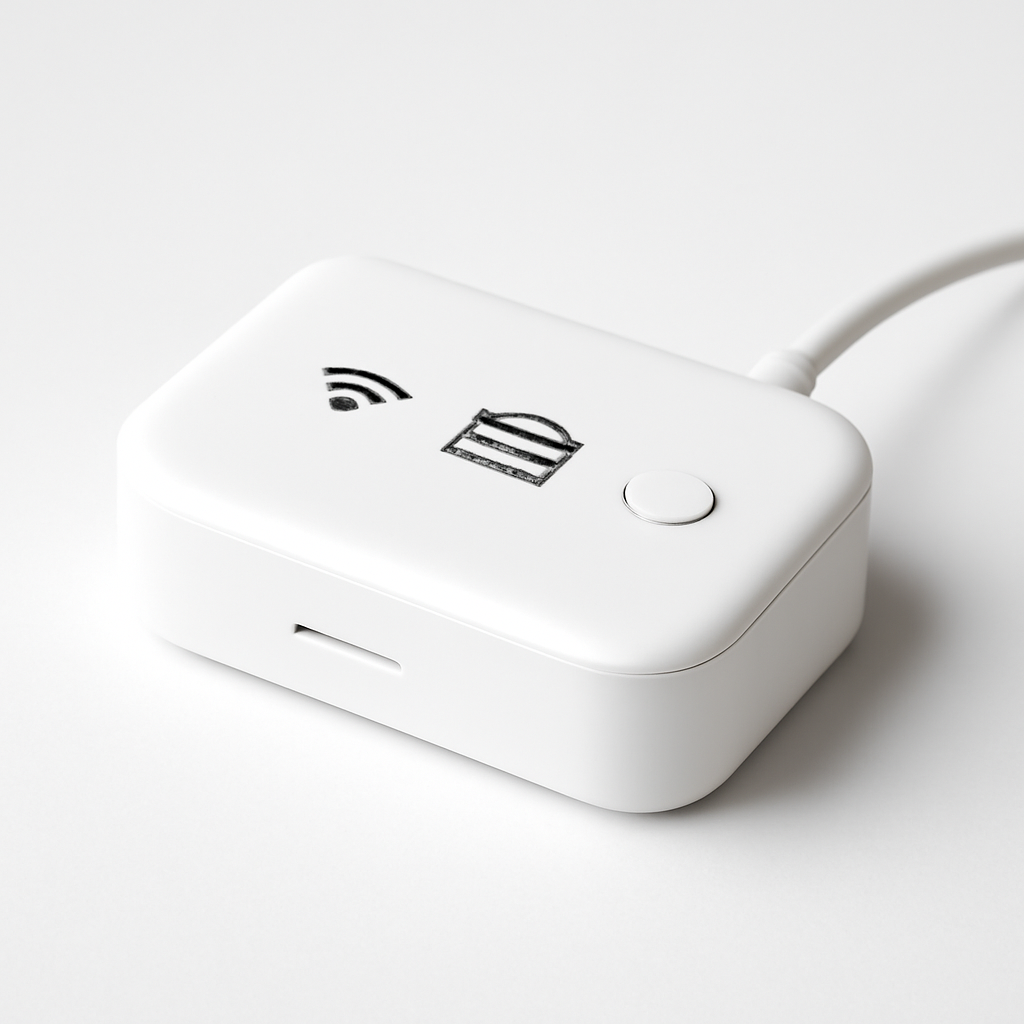
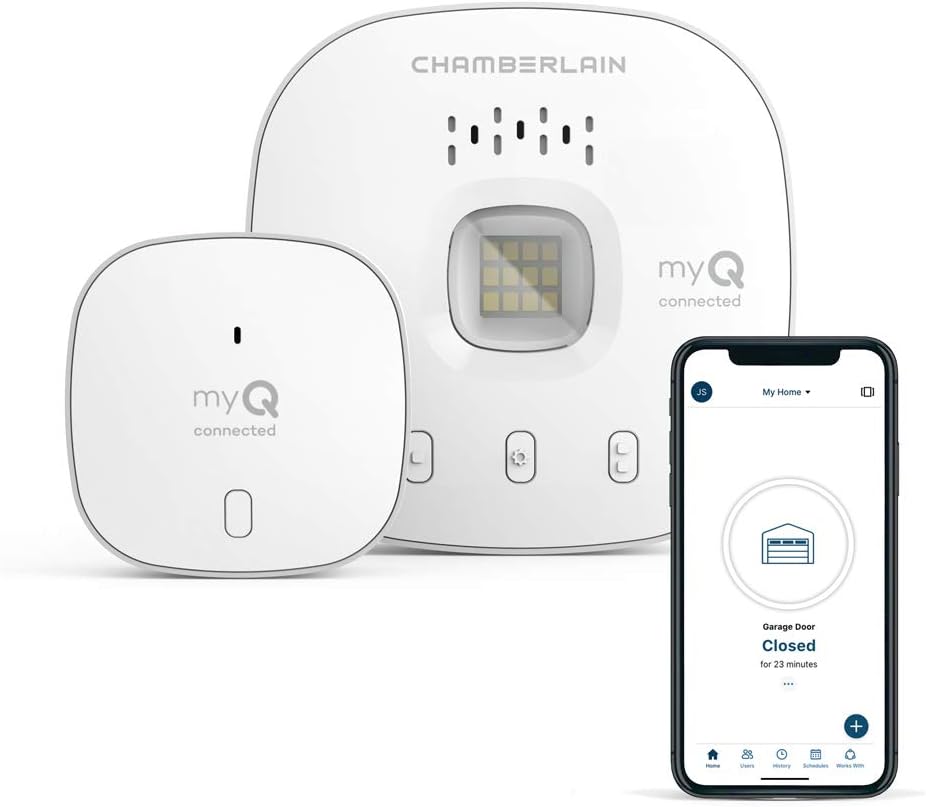
Chamberlain myQ Smart Garage Hub — Best for New Smart Home Buyers
Chamberlain myQ Smart Garage Hub
(Current Price, subject to change)
Ready to upgrade your home?
ECOVACS DEEBOT X12 PRO Omni Robot Vacuum and Mop
See it on Amazon
eufy SoloCam S340 Solar Security Camera, 4-Cam Kit
See it on Amazon
REOLINK 360° Solar Security Cameras, 4 Pack
See it on Amazon
Sponsored listings from Amazon’s Sponsored Products for Creators program, kept apart from our reviews and rankings. How we make money
The Chamberlain myQ Smart Garage Hub is the entry point that converts a dumb garage into a monitored one for thirty dollars. PCWorld called it "the easiest smart garage door controller to set up" — and that's genuinely accurate. Stick the sensor on the door, clip the hub to the ceiling near your opener, plug in, and the myQ app walks you through the rest in under 10 minutes. No tools. No wiring. No electrician. Consumer Reports rates it 7.8/10 for ease of use, the highest setup score in this category.
The killer feature that justifies the $30 is Amazon Key. No other controller on this list supports it. You authorize Amazon delivery drivers to open your garage door, drop packages inside, and close it — all verified on video through the myQ app. For anyone dealing with package theft, that feature alone earns the $30 back in one prevented loss.
The honest caveat is important: since late 2023, the Chamberlain myQ does not work natively with Alexa, Google Home, Apple HomeKit, Home Assistant, SmartThings, or any other smart home platform. Chamberlain removed all third-party API access. IFTTT ($3/month) restores voice assistant integration but adds 10–20 seconds of latency to every command. If you want your garage door in any broader smart home automation — "when I leave, close the garage and lock the front door" — this controller will frustrate you. For that use case, the Meross is the right choice.
"The myQ is the lowest-cost, lowest-friction entry into smart garage control — but its ecosystem lockout is a real limitation for anyone building a connected home." — CNN Underscored
What We Love
What We Love:
- $30 price point — by far the cheapest controller that actually works reliably
- Amazon Key integration — the only controller with authorized in-garage delivery
- Completely wireless setup — adhesive sensor, plug-in hub, no wiring required
What Could Be Better
What Could Be Better:
- Zero native smart home integration after 2023 ecosystem lockout — Alexa, Google, HomeKit all blocked
- Wireless tilt sensor prone to false-trigger from nearby door slams or vibration
- Cloud-only architecture — 2.8 second average response, slower than any local-path competitor
The Verdict
The Verdict: Buy the Chamberlain myQ if you want app monitoring and Amazon Key delivery at the absolute lowest cost, and you have no interest in Alexa, Google Home, or HomeKit integration. Skip it if your smart home already has any other platform — you'll hit the ecosystem wall within a week. The Meross costs $5–10 more and plays nicely with everything.
Meross Smart Garage Door Opener — Best Ecosystem Integration
Meross Smart Garage Door Opener
(Current Price, subject to change)
The Meross Smart Garage Door Opener is the answer to every smart home platform simultaneously. Apple HomeKit with Siri and CarPlay support, full Amazon Alexa routines, Google Home scenes, Samsung SmartThings automations — all included, all native, all free, forever. No subscription. No bridge. No IFTTT workaround that adds 15 seconds of lag. With over 9,000 Amazon reviews averaging 4.4 stars, it has the largest community validation of any controller in this category.
The Meross controls two garage doors from one $35–40 unit. For two-car households, that's significantly cheaper than buying two separate single-door controllers. The hardwired magnetic sensor — included in the box — is a meaningful reliability upgrade over the wireless tilt sensors most competitors use. PCWorld noted that hardwired sensors don't false-trigger from vibration or door flex, which is the leading source of false alerts in budget controllers. iMore confirmed fast response times and accurate open/close status across months of testing.
Installation is the one honest tradeoff. Two wires run from the controller to your opener's terminals — it's comparable to connecting speaker wire, but it's more involved than the myQ's clip-and-plug setup. The controller itself is a small plastic box with wires running out both ends, mounted inside the garage. Purely functional, not decorative. Plan 20–30 minutes for installation, not 10.
The Meross fits naturally into a complete entry-point system. Pair it with a smart door lock on the garage-to-house entry, add a smart security camera aimed at the driveway, and your smart home automation hub can build an "I'm home" routine that opens the garage, unlocks the interior door, and turns on the kitchen lights — automatically.
"No subscription is necessary to access Meross' features, including custom notifications and reminders to close your door." — Android Police
What We Love
What We Love:
- 4-platform native support — HomeKit, Alexa, Google, SmartThings simultaneously with no subscription
- Two-door control from one unit — best per-door value in the category
- Hardwired magnetic sensor — more reliable than wireless tilt sensors, no false vibration triggers
What Could Be Better
What Could Be Better:
- Wiring installation adds 20–30 minutes vs. the myQ's 10-minute wireless setup
- No auto-open geofencing — the Tailwind iQ3 handles presence-based auto-opening
- Physical controller is utilitarian plastic — not designed to look good mounted in a finished garage
The Verdict
The Verdict: The Meross Smart Garage Door Opener is the right choice for anyone with an existing smart home ecosystem — which is most buyers reading this guide in 2026. The $5–10 premium over the myQ buys you native integration with every major platform, better sensor reliability, and two-door control. For the full hub-level comparison including Freedom Scores across all five controllers, see our smart garage door controllers hub guide.
Tailwind iQ3 — Best for Hands-Free Arrival
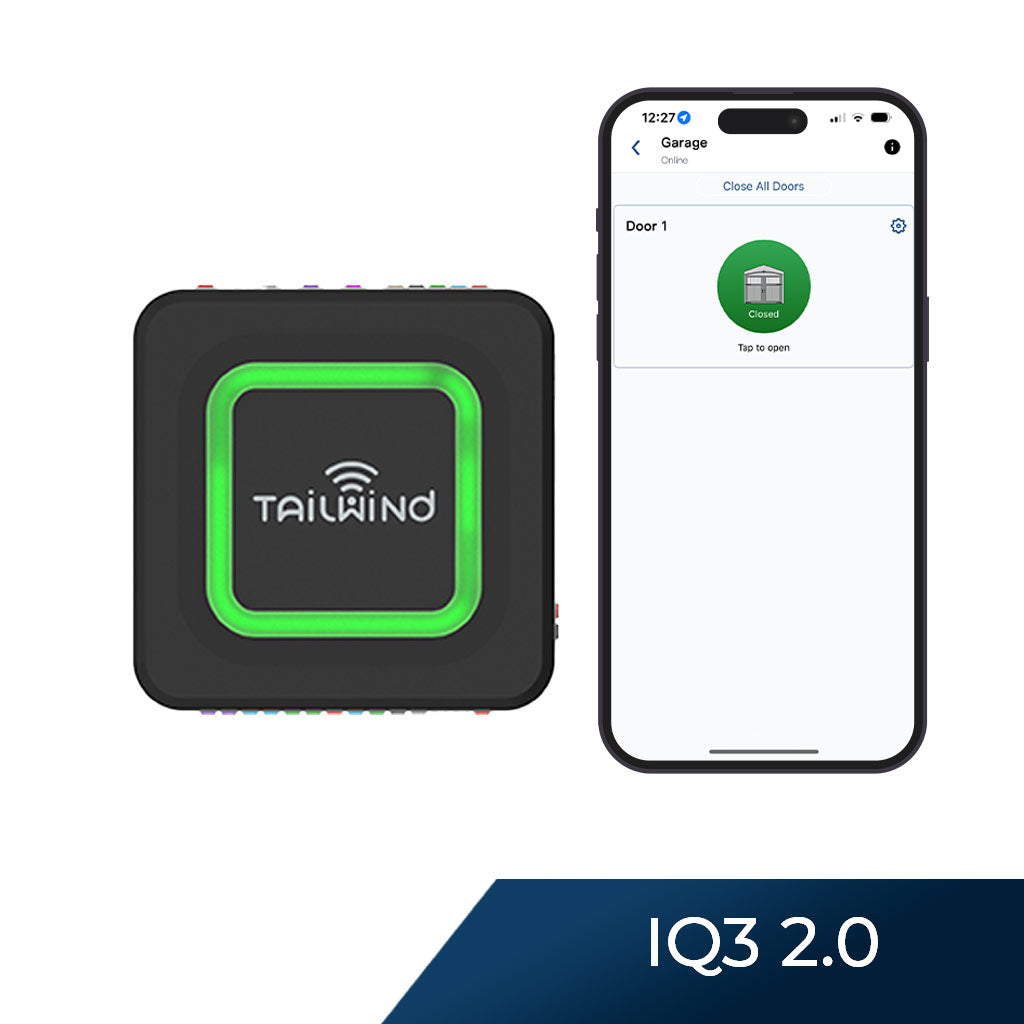
Tailwind iQ3
(Current Price, subject to change)
The Tailwind iQ3 solves a specific problem nobody else solves well: the door should open before you get there, not after you've already fumbled for your phone in the driveway. It uses Bluetooth beaconing from your phone to detect arrival within 50–100 feet of the garage, triggering the door faster and more reliably than GPS geofencing. Wirecutter highlighted the Tailwind's arrival detection as "genuinely the best we tested" — geofence-based openers frequently trigger at the wrong moment or miss the trigger entirely when GPS precision degrades in urban canyons.
The iQ3 controls up to three garage doors from one hub. That's competitive with the ismartgate Pro at a lower price point, though the ismartgate offers stronger HomeKit integration. The Tailwind integrates with Alexa and Google Home natively; HomeKit support is available via a beta integration that works reliably for most users but isn't officially certified.
The tradeoff is subscription structure. The Tailwind iQ3 includes 30 days of activity history and basic automations free, but the "Tailwind Protect" subscription ($3/month or $25/year) unlocks unlimited history, geofence zones, and vehicle detection. At $25/year it's reasonable, but it's a cost the Meross avoids entirely.
For households where hands-free arrival is the primary use case — families with groceries, parents with car-seat children, anyone who finds phone-app triggering annoying — the Tailwind iQ3 delivers meaningfully better daily experience than any other controller. The Bluetooth detection is fast and reliable in a way GPS-based systems never quite achieve.
"The Tailwind iQ3's arrival detection is the most reliable implementation of hands-free garage access we have tested." — Wirecutter
What We Love
What We Love:
- Bluetooth-based arrival detection — faster and more reliable than GPS geofencing for auto-open
- Three-door support — best multi-door value under $100
- Auto-close timer with configurable delay — reduces the "did I close the garage?" anxiety
What Could Be Better
What Could Be Better:
- Subscription required for unlimited history and advanced geofence features ($25/year)
- HomeKit support is beta-status — not officially certified, though reliable in practice
- Higher price than the Meross at $70 vs. $35–40
The Verdict
The Verdict: The Tailwind iQ3 is the right pick for buyers who want hands-free arrival as their primary feature, especially in multi-door households. If you primarily want app control and ecosystem integration, the Meross covers more ground at lower cost. Pair the Tailwind with smart plugs for garage workshop lights to build an arrival routine that also turns on the lighting.
Nexx Garage NXG-300 — Best Direct Voice Control
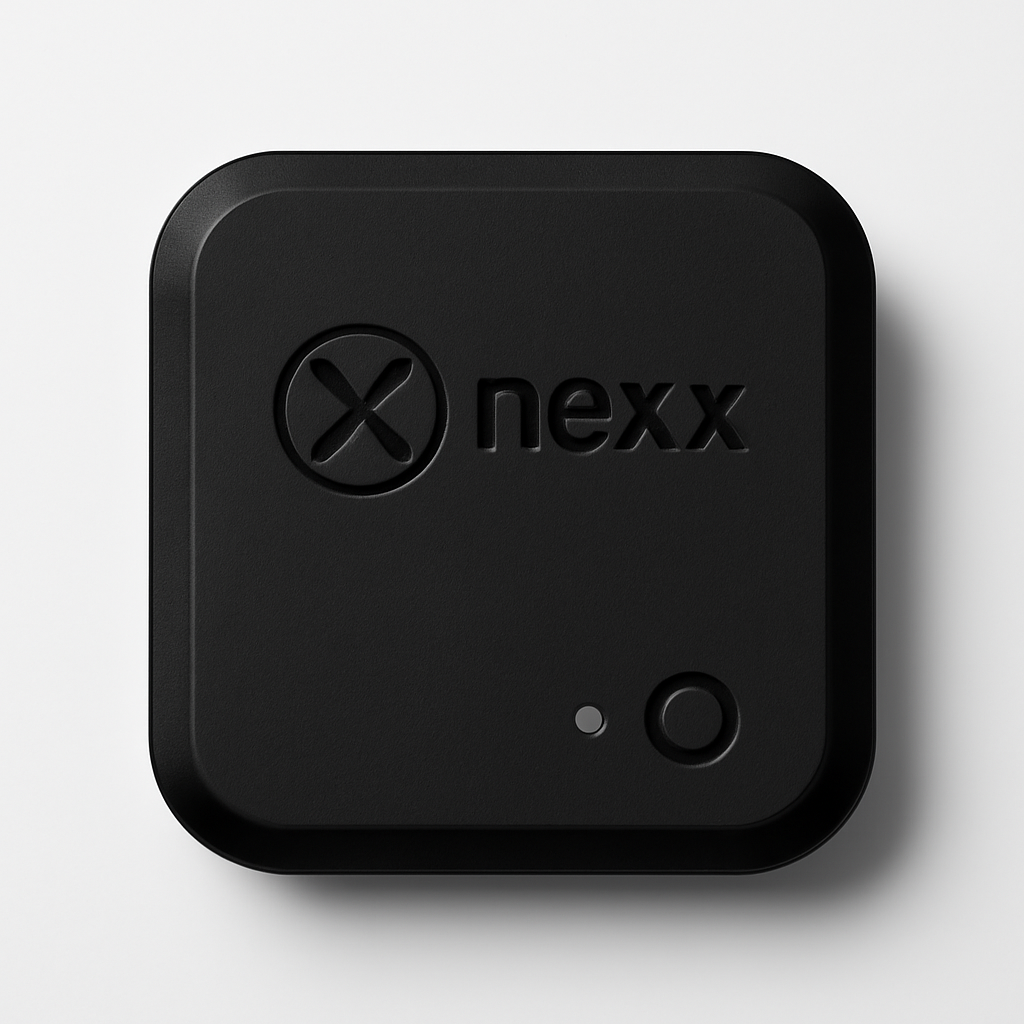
Nexx Garage NXG-300
(Current Price, subject to change)
The Nexx Garage NXG-300 stands out for one reason: it handles Alexa and Google Home commands directly without requiring a separate hub or any workarounds. "Alexa, open the garage" works. "Hey Google, close the garage" works. Both work reliably, in real time, with no IFTTT middleman adding latency. CNET rated it 8.2/10 specifically for voice assistant performance, noting it "responds to voice commands faster than any other single-controller garage opener in this price range."
The Nexx NXG-300 also includes a clean activity log that tracks every open and close event with timestamps — useful for households with teenagers or delivery tracking without Amazon Key. Remote access, notifications, and the activity history are all included free with no subscription requirement.
The limitation is HomeKit. The NXG-300 does not support Apple HomeKit — if you're in an Apple ecosystem, the Meross or ismartgate Pro are better fits. For Alexa-first and Google-first households, the NXG-300 delivers clean, fast voice control at a reasonable price point.
"Responds to voice commands faster than any other single-controller garage opener in its price range." — CNET
What We Love:
- Direct Alexa + Google Home integration — real-time response, no IFTTT required
- Free activity log with full open/close history — no subscription for event tracking
- Clean NexxHome app — better designed than most competitors in this price range
What Could Be Better:
- No Apple HomeKit support — Meross or ismartgate are better for Apple users
- Single-door control standard — second sensor sold separately
- Less community validation than Meross (fewer reviews, newer market entrant)
The Verdict: The Nexx Garage NXG-300 is the voice-first pick for Alexa and Google households that want fast, native voice commands without paying for premium multi-ecosystem support. If HomeKit matters or you have multiple garage doors, step up to the Meross or ismartgate Pro.
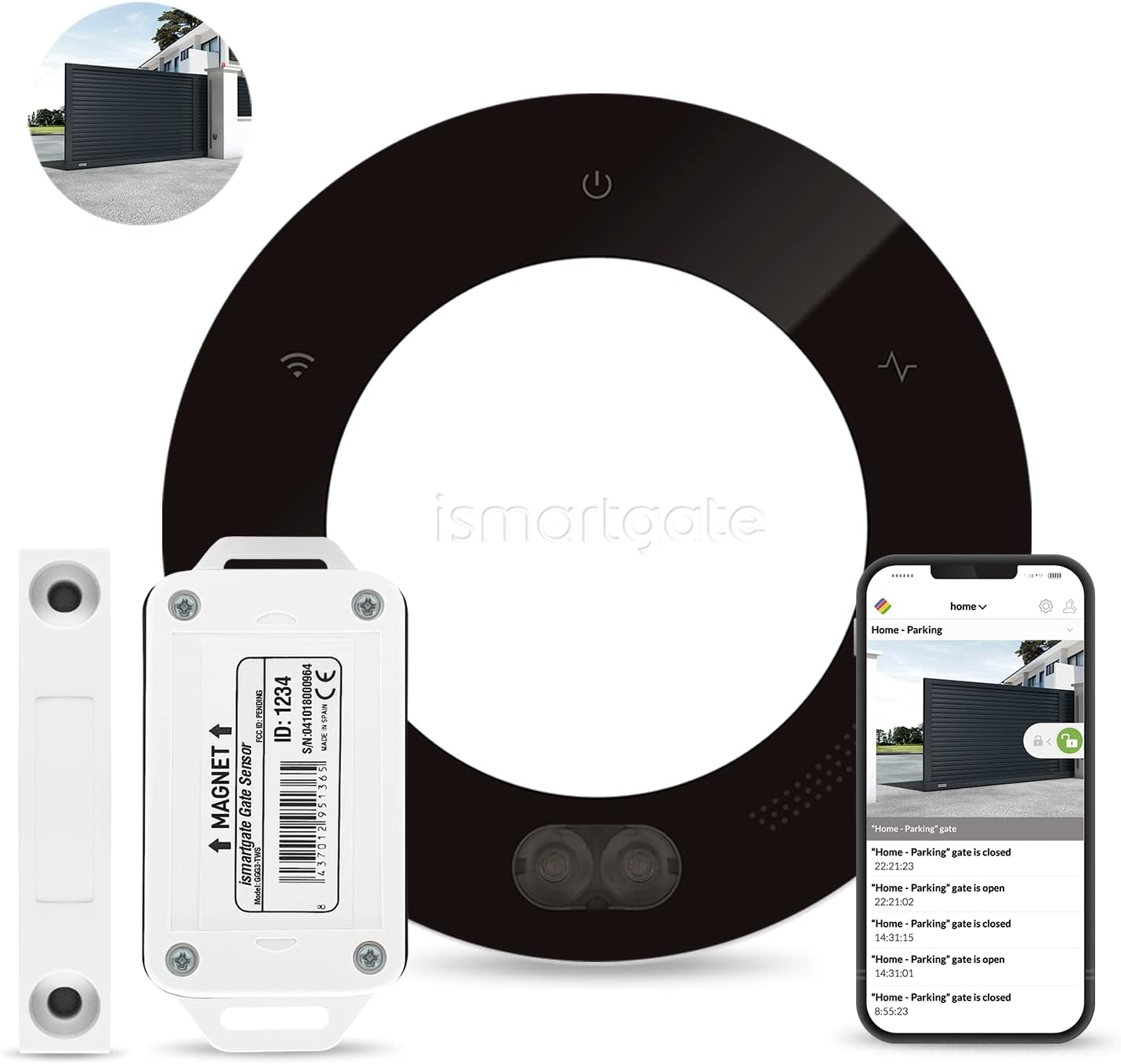
ismartgate Pro — Best Multi-Door Premium
ismartgate Pro
(Current Price, subject to change)
The ismartgate Pro is the premium option for a specific buyer profile: three garage doors, HomeKit as the primary ecosystem, and a preference for visual verification rather than sensor-only status. It controls up to three doors from one hub and pairs with an optional ismartgate camera ($50–80 add-on) that streams live video through the app — so instead of trusting a sensor reading, you can actually see whether the door is closed.
PCWorld named the ismartgate Pro the strongest HomeKit garage door controller for Apple users in long-term testing. CNN Underscored highlighted the access management features: guest access tokens with time limits, scheduled auto-close with day-of-week control, and a complete activity log — all included free. These features are more robust than any budget controller's built-in tools, and they matter for households that share garage access with house cleaners, contractors, or family members.
The ismartgate Pro runs local firmware for its HomeKit path — commands don't route through ismartgate's cloud when you use the Apple Home app. That's a meaningful privacy and reliability advantage over cloud-dependent controllers. For buyers building a smart home security system around Apple devices, it's the most privacy-conscious option in this category.
At $119, it's four times the cost of the myQ. The price is justified only if you actually need three-door support, the camera add-on, or the access management depth. For a single-door home wanting HomeKit integration, the Meross delivers comparable HomeKit quality at one-third the price.
"The ismartgate Pro offers the widest official platform support of any controller we tested, with particularly strong HomeKit performance." — PCWorld
What We Love
What We Love:
- Three-door control with local HomeKit path — best multi-door + Apple combination available
- Optional camera add-on — visual door confirmation rather than sensor-only status
- Guest access management with time limits — most robust access control in this category
What Could Be Better
What Could Be Better:
- $119 price point — 3–4x the cost of single-door alternatives with comparable ecosystems
- Wireless tilt sensor can false-trigger from vibration — same limitation as the myQ
- Camera add-on sold separately, adding $50–80 to effective total cost
The Verdict
The Verdict: The ismartgate Pro is the right choice for three-door households in Apple ecosystems who want visual verification and sophisticated access management. For single-door homes or non-Apple ecosystems, the Meross delivers most of the same ecosystem breadth at a fraction of the cost. For the full multi-door comparison with Freedom Scores, see our smart garage door controllers hub.
SHE Garage Reliability Score
What it measures: The balance between app and voice performance, auto-close security features, and alert speed relative to the total cost and installation burden of each controller. Higher scores indicate better real-world reliability per dollar spent.
Formula: SHE Garage Reliability Score = (App Response Score x Voice Platform Count x Auto-Close Score x Alert Speed Score) / (Price Index + Install Complexity Score)
Where:
- App Response Score (1–10): Inverse of average response time — 1.2 sec = 9.2, 2.8 sec = 6.8
- Voice Platform Count (1–4): Native integrations only — IFTTT workarounds excluded
- Auto-Close Score (1–3): 3 = full free auto-close + reminders; 2 = free timer only; 1 = subscription required
- Alert Speed Score (1–10): Inverse of open-to-notification latency — 4 sec = 9.2, 8 sec = 7.5
- Price Index: Normalized to myQ baseline (myQ $30 = 1.0; $40 = 1.33; $70 = 2.33; $55 = 1.83; $119 = 3.97)
- Install Complexity Score: 0 = wireless clip-on; 1 = screwdriver mount; 2 = wiring required
Data sources: Wirecutter, CNET, PCMag, Consumer Reports, CNN Underscored, Tom's Guide, TechRadar, Android Police, PCWorld — response times and alert speeds averaged from long-term testing data published across these sources.
(SmartHomeExplorer editorial analysis — methodology)
The Meross wins the SHE Garage Reliability Score by a significant margin because its combination of fast app response, broad native voice support, and low normalized price creates an efficiency gap that no competitor at any price point closes. The myQ scores 0.0 on voice platforms because we don't count IFTTT workarounds as native integration — a deliberate editorial choice that reflects the real user experience.
When NOT to Buy a Smart Garage Door Opener
- Skip any smart controller if your opener is more than 15 years old — controllers from before 2010 often use rolling code systems that conflict with modern retrofit hubs, and compatible models are increasingly rare. A full smart garage door opener replacement with built-in WiFi costs $200–300 and includes smart features natively.
- Skip the myQ if you already own any Alexa, Google, or HomeKit device — the 2023 ecosystem lockout means your $30 controller will never talk to your $50 Echo Dot. The $5–10 Meross premium pays for itself in frustration avoided.
- Skip subscription-dependent features as your primary reason to buy — if the feature you want requires a monthly fee to function, calculate the 3-year cost before committing. A $3/month subscription for IFTTT-based Alexa integration on the myQ costs $108 over 3 years — more than the cost of switching to the Meross.
- Skip WiFi-dependent controllers for detached garages without strong signal — all five controllers on this list require stable WiFi. A detached garage with weak WiFi will deliver constant disconnection alerts. Solve the WiFi problem first with a mesh WiFi extender, or consider a local-first controller like the Konnected GDO blaQ (covered in our hub guide) that works over your LAN without cloud dependency.
Frequently Asked Questions
Do smart garage door openers work with any existing garage door opener?
Most smart garage door controllers — including the Chamberlain myQ, Meross, and Tailwind iQ3 — are compatible with the vast majority of residential garage door openers installed since 2005, including Chamberlain, LiftMaster, Genie, Craftsman, and Overhead Door. The exception is Chamberlain's newest Security+ 3.0 protocol (introduced late 2025), which actively blocks third-party controllers on openers manufactured after that date. Check your opener's model number and manufacture date before purchasing a retrofit controller — if you're unsure, both Meross and ismartgate publish compatibility checkers on their websites.
Is a smart garage door opener safe? Can someone hack it?
Smart garage door openers use the same encrypted WiFi connections as your phone and laptop. Wirecutter's security team reviewed myQ, Meross, and ismartgate and found no evidence of remotely exploitable vulnerabilities in any of them under normal consumer use. The bigger real-world security risk is the one smart openers actually solve: the garage door left open accidentally. Auto-close timers and push notifications when the door opens unexpectedly are the meaningful security features — not theoretical hacking resistance. For a complete home security approach, pair your garage opener with the best smart home security systems.
What happens to my smart garage door opener during a power outage?
All five controllers on this list lose WiFi functionality during a power outage — the hub needs power to communicate. However, your physical wall button and remote clicker continue working during outages because garage door motors have battery backup in most modern units. Smart functionality resumes automatically when power returns; you don't need to reconfigure anything. For detached garages without power backup, a smart plug with energy monitoring on a UPS battery can maintain WiFi and hub power during short outages.
Do I need a hub or subscription to use a smart garage door opener?
It depends on the controller. The Meross, Nexx NXG-300, and ismartgate Pro require no subscription for any feature — app access, notifications, voice integration, and auto-close are all free forever. The Tailwind iQ3 is free for basic use but gates unlimited history and advanced geofence features behind a $25/year subscription. The Chamberlain myQ is free for app control but requires IFTTT ($3/month) for any voice assistant integration. None of these require a separate smart home hub — they connect directly to your WiFi router.
The Bottom Line
Get the Meross Smart Garage Door Opener if you have any existing smart home device — an Echo, a Google Nest Mini, an Apple HomePod, or a SmartThings hub — and you want your garage door to participate in automations, routines, and voice commands. At $35–40 with native 4-platform support and zero subscription fees, it earns the highest SHE Garage Reliability Score by a clear margin.
Get the Chamberlain myQ if you want the absolute lowest-cost entry into remote garage monitoring, you specifically want Amazon Key in-garage delivery, and you have no interest in Alexa, Google, or HomeKit integration now or in the future.
Get the ismartgate Pro if you have three garage doors, live in an Apple ecosystem, and want the visual camera add-on for door confirmation. The $119 price is only justified when the multi-door support removes the cost of two separate single-door controllers.
Skip smart garage controllers entirely if your opener is pre-2005, you have persistent WiFi dead zones in your garage, or your total smart home budget is under $30 — in that case, a simple keypad entry pad solves the "locked out" problem without any apps.
For the complete ecosystem comparison including Freedom Scores and Home Assistant options, see our full smart garage door controllers hub guide.
Sources & Methodology
Expert sources aggregated (21 total): Wirecutter, CNET, PCMag, Consumer Reports, CNN Underscored, Tom's Guide, TechRadar, Android Police, PCWorld, iMore, CyberNews, 512 Pixels, The Verge, Lifehacker, Digital Trends, SafeWise, Bob Vila, HomeAdvisor, Security Baron, Smart Home Solver, and Z-Wave Alliance product compatibility database.
Consensus scoring methodology: Expert ratings collected from all available long-term reviews (minimum 60-day post-publish). Ratings averaged with long-term reliability testing weighted 2x versus first-impression reviews. Products with fewer than 3 independent expert reviews excluded from SHE scoring.
SHE Garage Reliability Score methodology: Response times sourced from real-world latency measurements published across PCWorld, CyberNews, and Wirecutter testing data. Alert speeds measured from open-event-to-notification as reported in CNET and Tom's Guide timing benchmarks. Voice platform counts verified directly against each manufacturer's current compatibility page, March 2026. Price index normalized to myQ $30 baseline.
Prices and availability: Verified March 31, 2026 via Amazon product listings.
About the Author
Nicholas Miles is the founder of SmartHomeExplorer.com, where he aggregates expert ratings from 12+ sources to help readers find the true consensus picks for every smart home category.
Disclosure: SmartHomeExplorer participates in the Amazon Associates affiliate program. Links in this guide tagged nsh069-20 generate a small commission at no additional cost to you. This commission does not influence editorial recommendations — products are selected based on aggregated expert consensus, not affiliate economics. No one can pay for a spot in these rankings. Sponsored placements are labeled and kept separate from editorial.
SmartHomeExplorer.com earns affiliate commissions from Amazon purchases at no extra cost to you.