
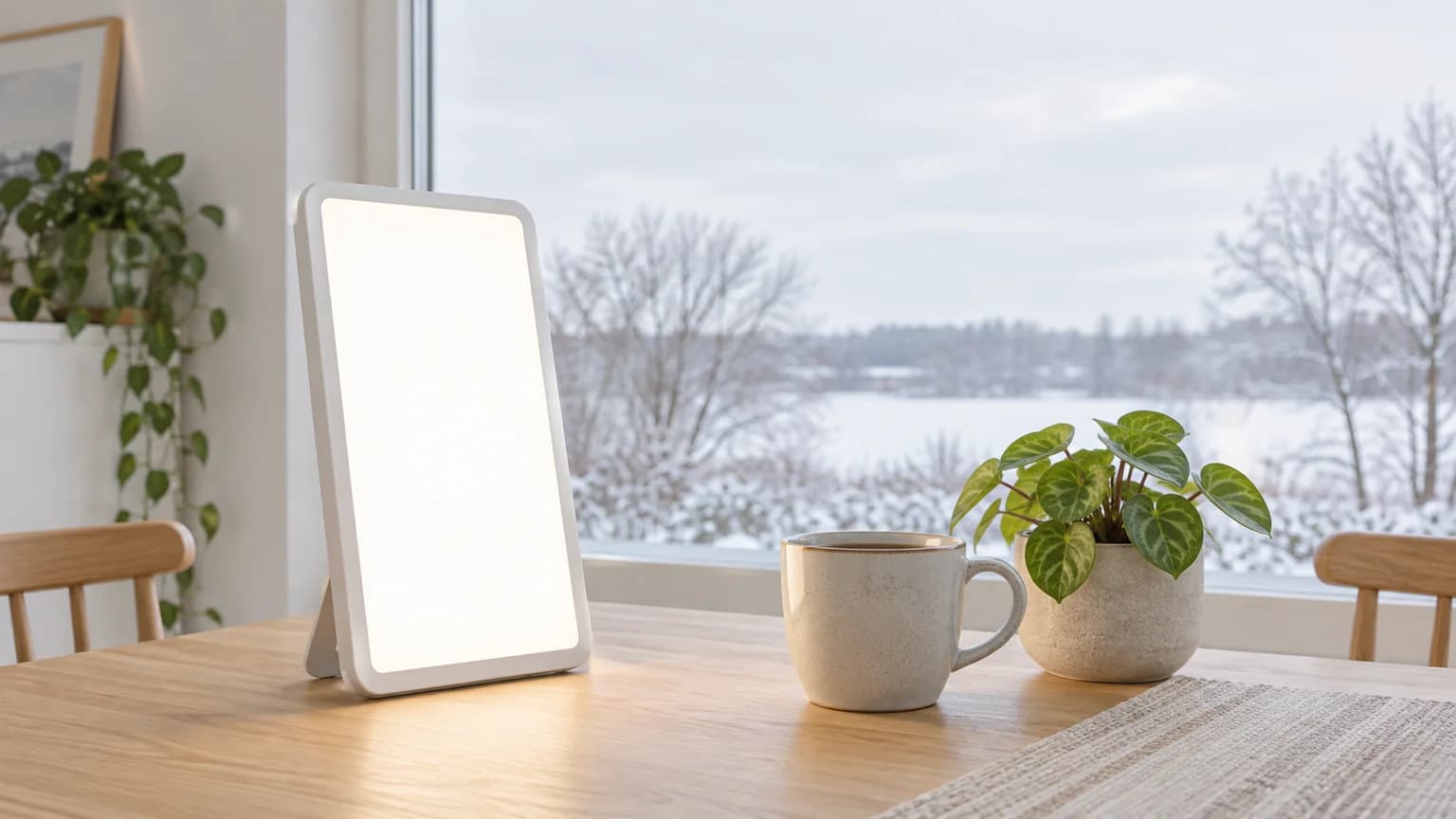
Best Light Therapy Lamps for SAD 2026
Two of these three lamps reach 10,000 lux only at 15 cm, which keeps your face close to the panel. This guide ranks three current Lumie models, led by the Lumie Task Bright Light Therapy Desk Lamp.
This article contains affiliate links. We may earn a commission at no extra cost to you. Prices change frequently — check the current price on Amazon before buying. Learn more
The Short Answer
The Lumie Task Bright Light Therapy Desk Lamp earns the highest SHE SAD Light Therapy Lamp Score because Tech Advisor and T3 award it the highest ratings here. The Lumie Dash 10,000 Lux Light Therapy Lamp ranks last in this guide, yet its documented 415 g weight suits frequent travel.
Featured in this Guide
Lumie
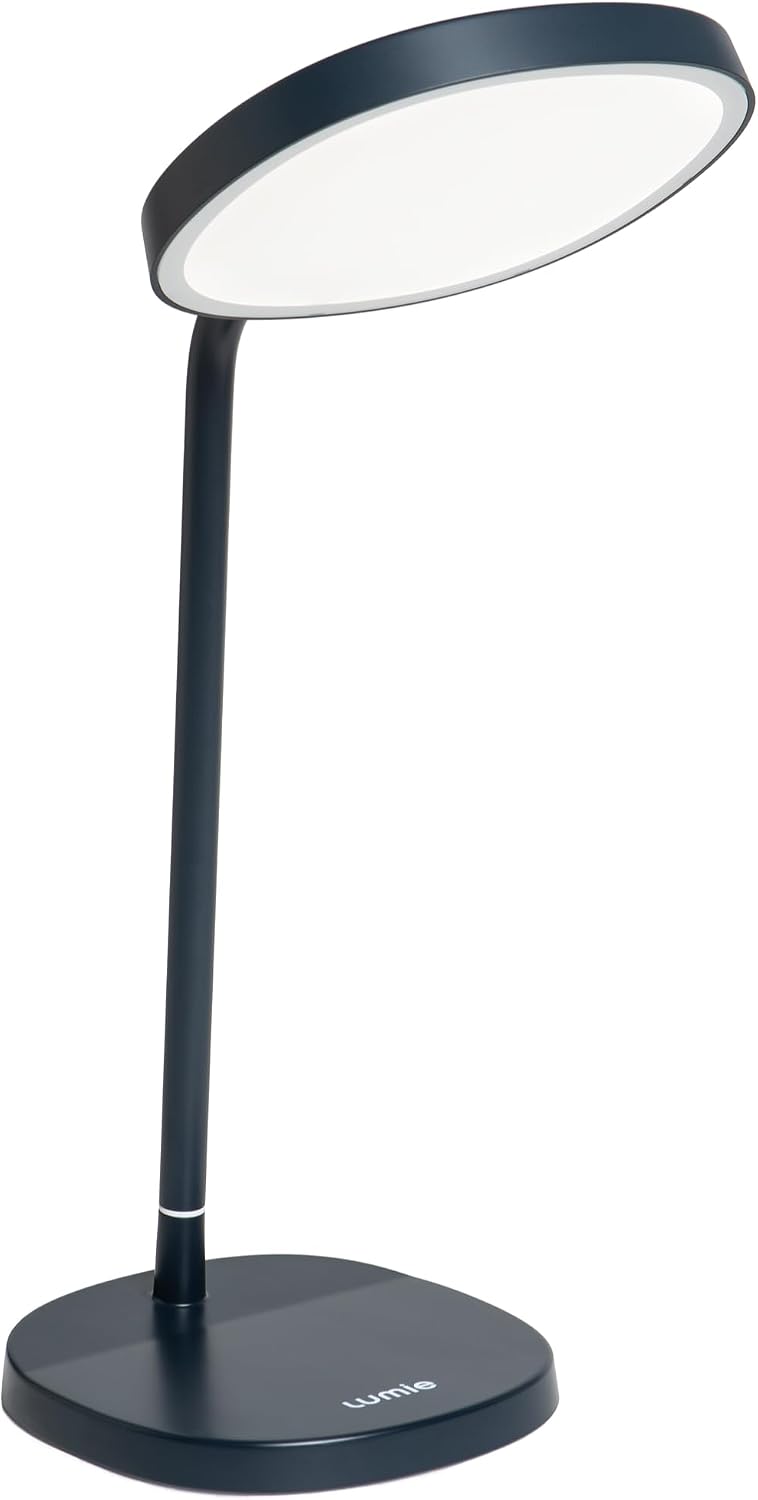
Task Bright Light Therapy Desk Lamp
- •Highest expert consensus here, 9.5/10 from 2 reviews
- •Neck and head rotate through 180°
Lumie
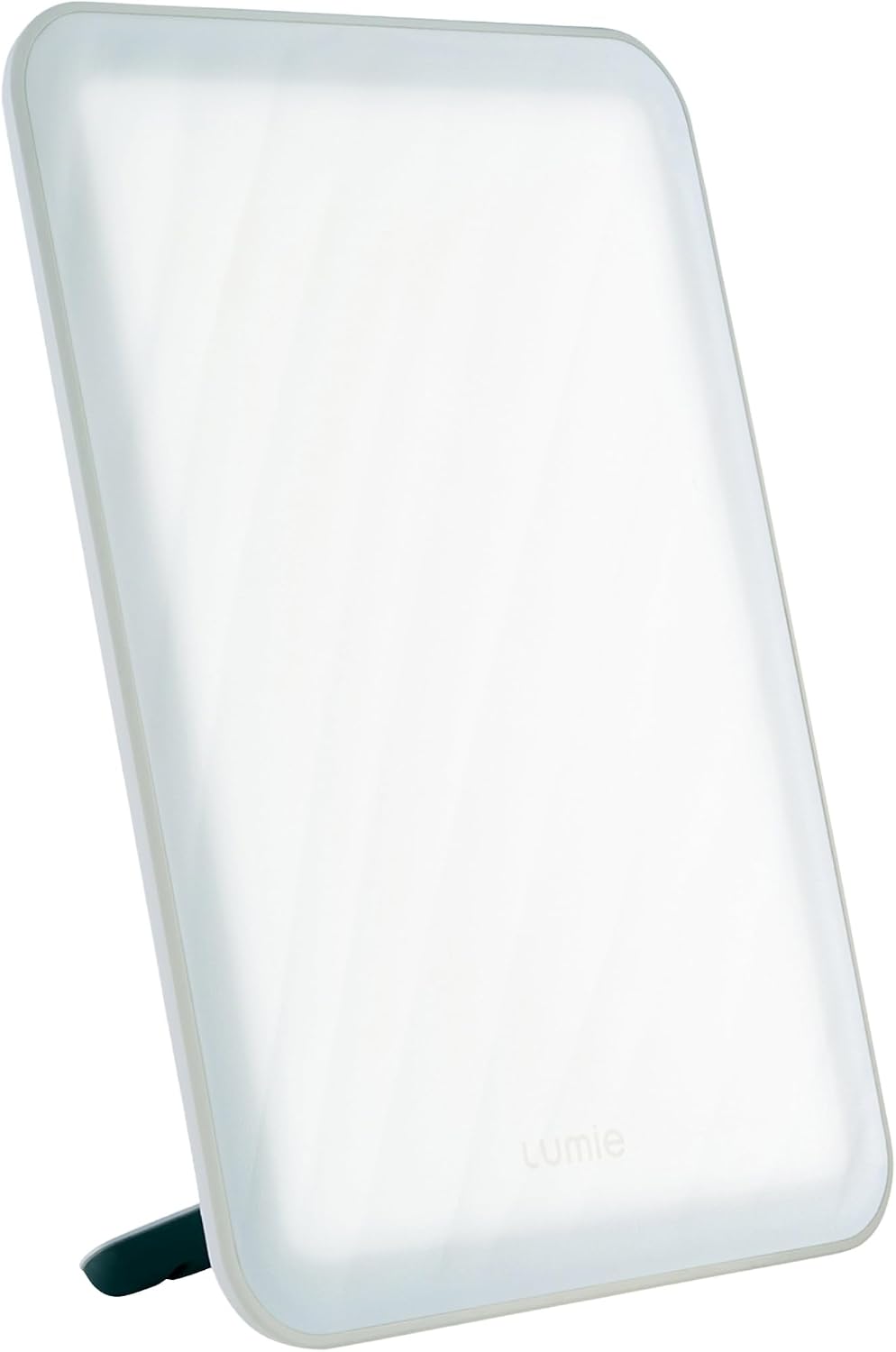
Vitamin L Slim Portable SAD Lamp
- •Lowest price here at $109.00 (as of Oct 12, 2026)
- •Reaches 10,000 lux at 7.9 inches
Lumie
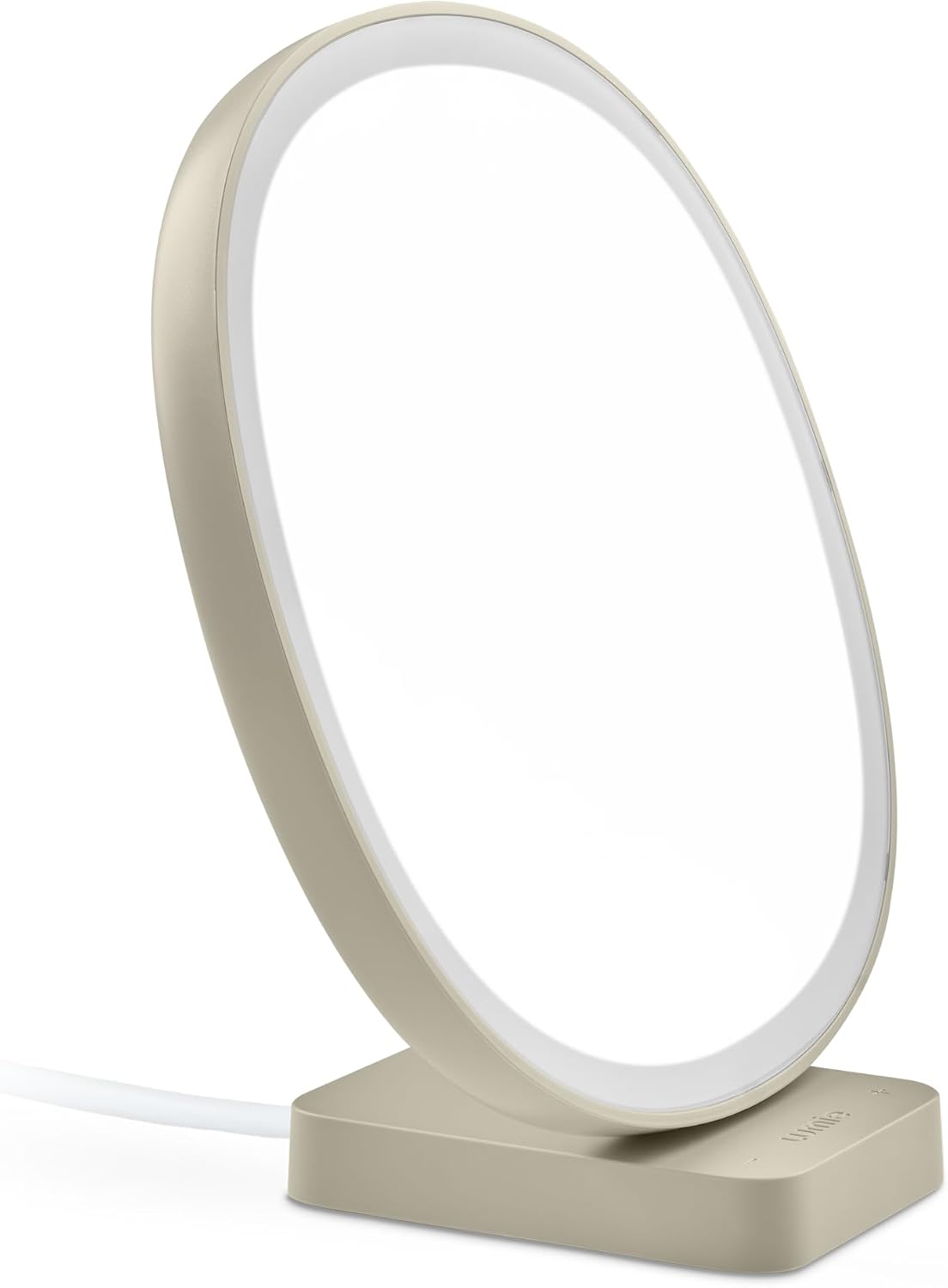
Dash 10,000 Lux Light Therapy Lamp
- •Lightest lamp here at 415 g
- •Setup is just plugging it in
Head-to-Head: Expert Score, Full-Strength Distance, Weight and Setup
Health Wellness
Chart
 Smarthomeexplorer.com
Tap any pick to check its live price on Amazon.
Real Relax 4D Massage Chair
Good ValueCheck price
Hyperice Normatec Elite Legs
Must BuyCheck price
Therabody JetBoots Prime
RecommendedCheck price
What a 10,000 Lux SAD Lamp Actually Buys You
Every lamp in this guide is specified to deliver 10,000 lux, so the meaningful differences concern distance, adjustability, weight and documented expert approval. The SHE SAD Light Therapy Lamp Score therefore reflects the expert consensus, a weighted average of verified outlet ratings, while distance, weight and price only assign supporting roles. The Lumie Task Bright Light Therapy Desk Lamp ranks first on the strength of consistently favourable Tech Advisor and T3 ratings. The Lumie Dash 10,000 Lux Light Therapy Lamp ranks last despite being the lightest option evaluated. Greater full-strength distance matters practically, because it lets you sit comfortably further back during a morning session. The Lumie Vitamin L Slim Portable SAD Lamp reaches the longest specified distance, 7.9 inches according to Lumie's published specification.
Best Overall: Lumie Task Bright Light Therapy Desk Lamp
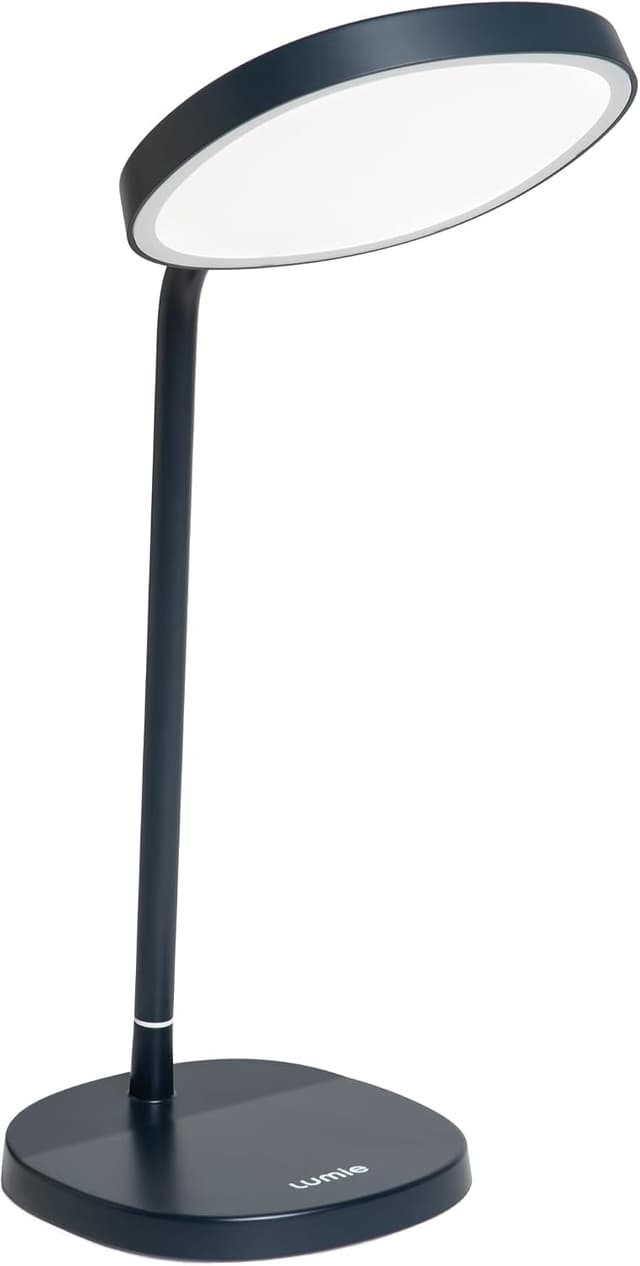
Lumie Task Bright Light Therapy Desk Lamp
- Neck rotates and head angles through 180°
- Height cannot be adjusted, per Tech Advisor
(Current price, subject to change)
The Lumie Task Bright Light Therapy Desk Lamp suits remote workers who want therapeutic illumination integrated into a conventional desk routine, rather than a separate panel occupying additional surface. Its SHE SAD Light Therapy Lamp Score sits highest in this guide because Tech Advisor and T3 both rate it near the maximum of their scales. Tech Advisor specifically documents a neck that rotates through 180° and a head that angles equally, directing illumination toward the desk or your face. T3 additionally documents availability in 5 colours, and its reviewer reports experiencing no headaches after adopting the lamp.
Lumie specifies 10,000 lux at 15 cm from broad-spectrum 5000K LEDs with a colour rendering index of 95+, intended to reduce eye strain. Tech Advisor's reviewer considered roughly half to two-thirds of maximum brightness comfortable for daytime computer work, which the Lumie Task's touch-sensitive base adjusts with a finger swipe.
Tech Advisor lists its fixed, non-adjustable height as a drawback. Its 1690 g weight is also the heaviest here, compared to 415 g for the Lumie Dash 10,000 Lux Light Therapy Lamp.
What We Love
- Neck rotates and head angles through 180°
- 10,000 lux at 15 cm from CRI 95+ LEDs
- Touch slider on the base sets brightness
- Available in 5 colours with a 3-year warranty
What Could Be Better
- Height cannot be adjusted, per Tech Advisor
- Heaviest here at 1690 g
- Most expensive lamp in this guide
The Verdict
If you want daily light therapy built into a working desk lamp, Lumie Task Bright Light Therapy Desk Lamp fits the brief. Tech Advisor and T3 rate it highest here, though it is the priciest and heaviest option.
Check price for the Lumie Task Bright Light Therapy Desk Lamp →
Ready to upgrade your home?
roborock Qrevo 2 Pro Robot Vacuum and Mop
See it on Amazon
ECOVACS DEEBOT X12 PRO Omni Robot Vacuum and Mop
See it on Amazon
Philips Wi-Fi Keypad Deadbolt with Handle
See it on Amazon
Sponsored listings from Amazon’s Sponsored Products for Creators program, kept apart from our reviews and rankings. How we make money
Best Value: Lumie Vitamin L Slim Portable SAD Lamp
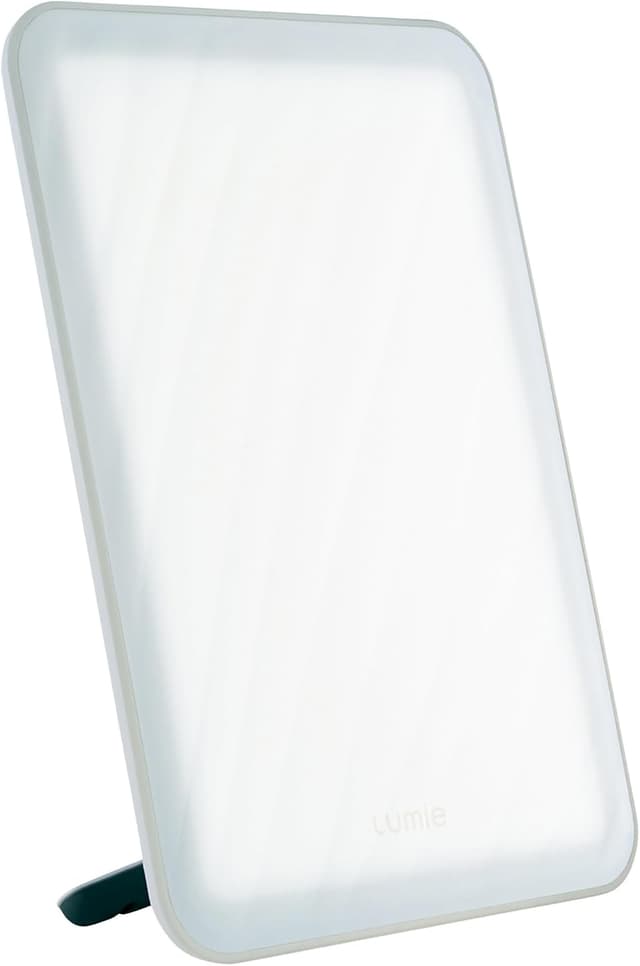
Lumie Vitamin L Slim Portable SAD Lamp
- Cheapest lamp in this guide
- Not dimmable, one setting only
(Current price, subject to change)
The Lumie Vitamin L Slim Portable SAD Lamp suits budget-conscious buyers who want a certified medical device that relocates easily between rooms, offices and travel destinations. Its SHE SAD Light Therapy Lamp Score lands second in this guide because T3 and TechRadar both rate it favourably, with TechRadar's assessment slightly higher than T3's. TechRadar describes a rippled diffuser that makes the illumination feel softer and more comfortable, carrying a slight orange tinge.
Lumie specifies 10,000 lux at 7.9 inches, while T3 reports the slim Vitamin L panel delivers 10,000 lux at 16cm, the recommended distance for a 30-minute treatment. TechRadar documents straightforward setup, slotting the stand onto the back and connecting the mains cable, and T3 confirms portrait or horizontal orientation.
T3 notes the lamp is not dimmable and offers only one setting, a meaningful limitation compared to the adjustable Lumie Task Bright Light Therapy Desk Lamp. TechRadar also observes that no travel bag is provided, although removing the stand lets the panel slide into an ordinary bag.
What We Love
- Cheapest lamp in this guide
- 10,000 lux at 7.9 inches, the longest distance here
- Certified medical device with UV-free output
- Softer light through a rippled diffuser, per TechRadar
What Could Be Better
- Not dimmable, one setting only
- No travel bag or hanging option
- Less sturdy in landscape orientation
The Verdict
For a dedicated morning session on a modest budget, Lumie Vitamin L Slim Portable SAD Lamp is a sensible pick for that setup. It costs the least here and reaches 10,000 lux furthest from your face, but it runs at one fixed brightness.
Check price for the Lumie Vitamin L Slim Portable SAD Lamp →
Lightest Weight: Lumie Dash 10,000 Lux Light Therapy Lamp
Lumie Dash 10,000 Lux Light Therapy Lamp
- Lightest lamp here at 415 g
- Head fixed at about 65°
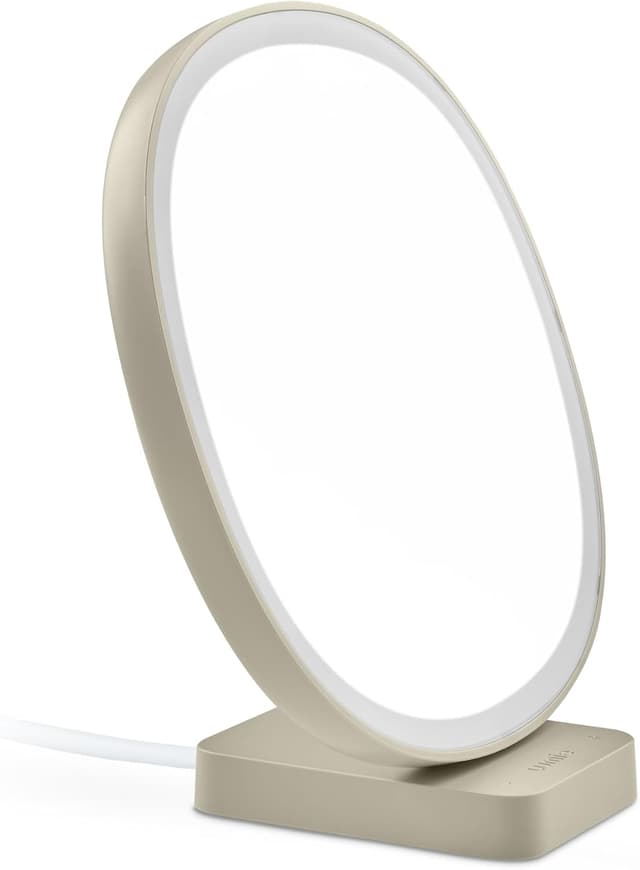
(Current price, subject to change)
The Lumie Dash 10,000 Lux Light Therapy Lamp suits travellers who prioritise portability, because Tech Advisor's reviewer reports it at 415 g, the lightest lamp in this guide. Its SHE SAD Light Therapy Lamp Score ranks third here because Tech Advisor and T3 both award it a solid but lower rating than the competing Lumie models receive.
Tech Advisor documents uncomplicated setup, since installation only involves plugging the compact Lumie Dash into the mains, and touch panels in the base adjust brightness in fine increments. T3 confirms 10,000 lux at 15cm, and its reviewer noticed improved wellbeing after 30 minutes on full brightness each morning. Lumie adds broad-spectrum, UV-free 5000K LEDs with a colour rendering index of 95+ and a 3-year limited warranty.
Tech Advisor reports the head is fixed at roughly 65° from horizontal and cannot be adjusted, unlike the rotating Lumie Task Bright Light Therapy Desk Lamp. It also costs more than the Lumie Vitamin L Slim Portable SAD Lamp, whose specified full-strength distance is longer.
What We Love
- Lightest lamp here at 415 g
- Setup is just plugging it in
- Touch panels adjust brightness in fine steps
- UV-free 5000K LEDs with CRI 95+
What Could Be Better
- Head fixed at about 65°
- Costs more than the Lumie Vitamin L Slim Portable SAD Lamp
- Lowest expert consensus in this guide
The Verdict
When portability and a tidy desk matter most, Lumie Dash 10,000 Lux Light Therapy Lamp checks the boxes that matter for that brief. It is the lightest lamp here, though its head angle is fixed.
Check price for the Lumie Dash 10,000 Lux Light Therapy Lamp →
How We Score: SHE SAD Light Therapy Lamp Score
SHE SAD Light Therapy Lamp Score
Score Formula
Products are ranked by Expert consensus, the weighted average of the verified outlet scores for each model on a 10-point scale, shown as is. A tie goes to the model with more outlet reviews, then to the better Full-strength distance, then to research order. The other factors never change the rank; each one with a role gives that role to the model that leads on it.Score Factors
- Expert consensusThe weighted average of verified outlet scores on a 10-point scale, and the only factor that sets the rank: the Lumie Task Bright Light Therapy Desk Lamp leads at 9.5, the Lumie Vitamin L Slim Portable SAD Lamp follows at 8.6 and the Lumie Dash 10,000 Lux Light Therapy Lamp trails at 8.0.
- Full-strength distanceThe distance at which each lamp gives its rated 10,000 lux, converted to centimetres; the Lumie Vitamin L Slim Portable SAD Lamp reaches 20 cm, while the other two reach 15 cm.
- WeightLamp weight in grams; the Lumie Dash 10,000 Lux Light Therapy Lamp is lightest at 415 g and takes the Lightest Weight role, ahead of 830 g and 1690 g.
- PriceThe Amazon price as checked on October 12, 2026; the Lumie Vitamin L Slim Portable SAD Lamp costs least and takes the Best Value role, while the Lumie Task Bright Light Therapy Desk Lamp costs most.
SHE SAD Light Therapy Lamp Score — Ranked
Scores rest on Lumie specifications and Tech Advisor, T3 and TechRadar ratings read for this guide, with prices checked on October 12, 2026; they are not first-party performance or reliability tests.
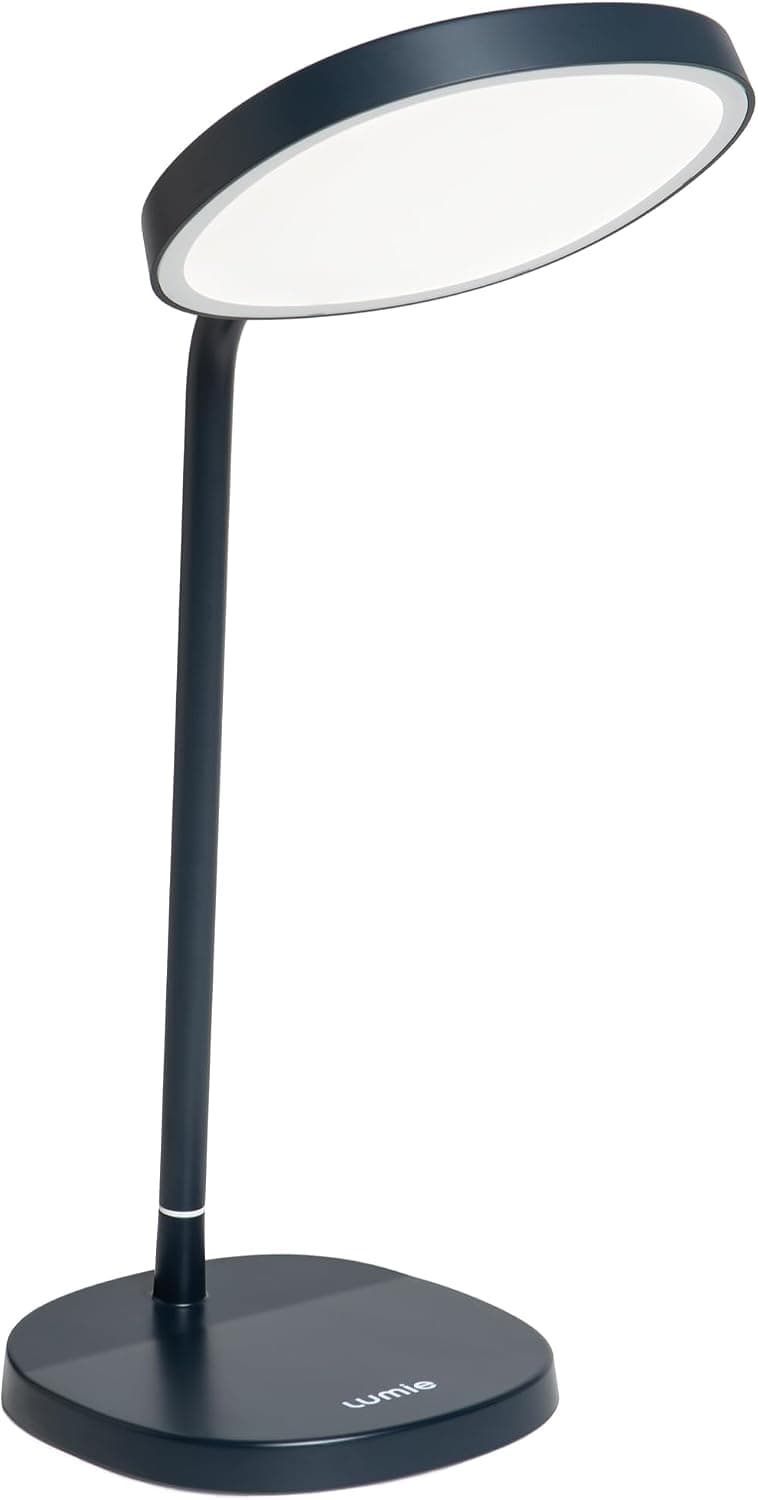
Lumie Task Bright Light Therapy Desk Lamp
SHE SAD Light Therapy Lamp Score9.5/10Highest consensus from Tech Advisor and T3, with a rotating 180° head.
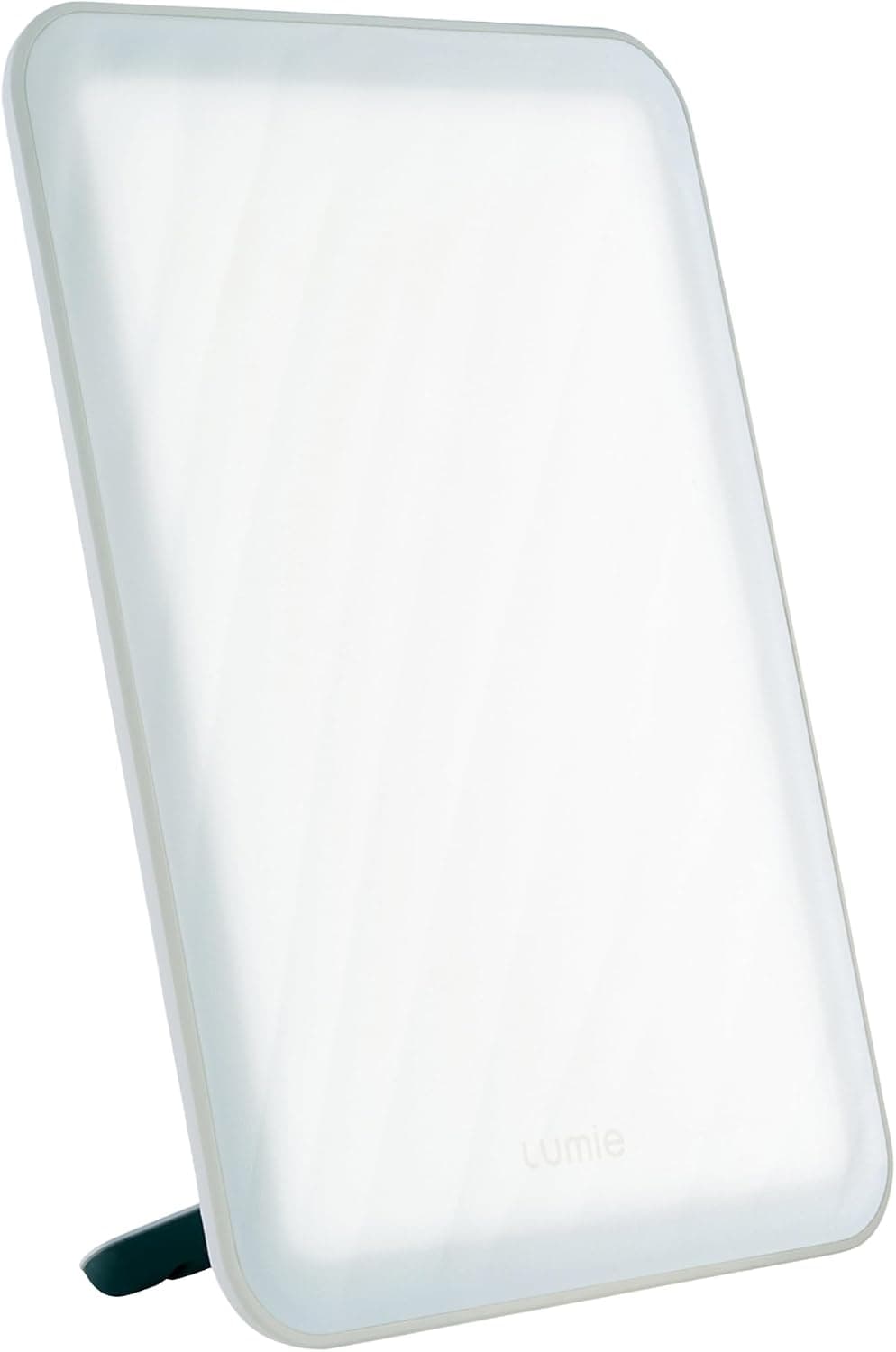
Lumie Vitamin L Slim Portable SAD Lamp
SHE SAD Light Therapy Lamp Score8.6/10Lowest price and longest full-strength distance, but not dimmable.
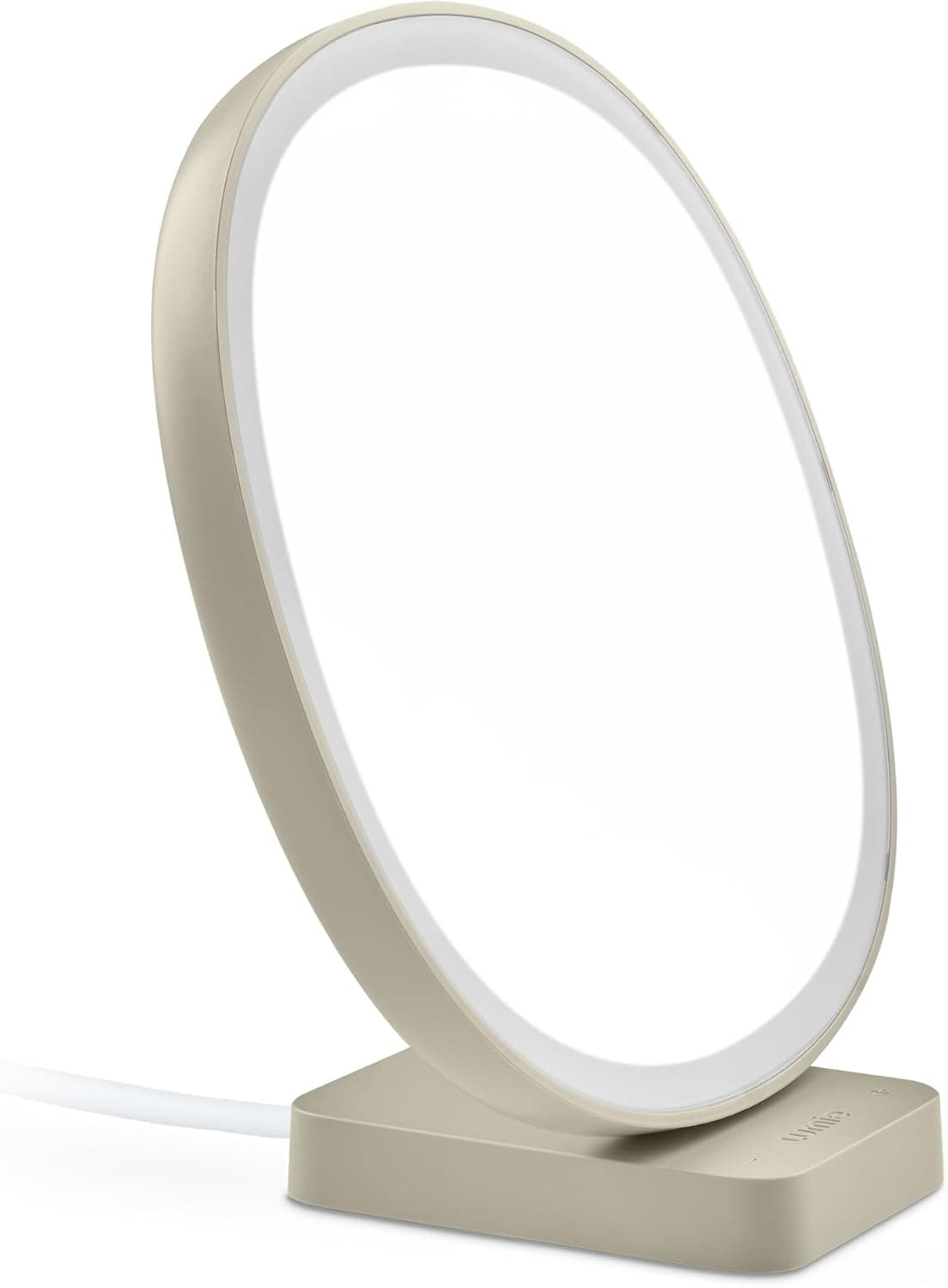
Lumie Dash 10,000 Lux Light Therapy Lamp
SHE SAD Light Therapy Lamp Score8.0/10Lightest at 415 g with plug-in setup, held back by a fixed head angle.
Power, Placement and Platform Compatibility
None of the listings or outlet reviews read for this guide documents Wi-Fi, app, Alexa, Google Home or HomeKit support, so each lamp operates as a standalone mains-powered appliance. The most consequential compatibility catch concerns power, because T3 reports its Lumie Dash 10,000 Lux Light Therapy Lamp arrived with UK and EU mains adapters. Confirm the plug supplied through the Amazon listing matches your outlets before scheduling morning sessions around it. TechRadar adds that the Lumie Vitamin L Slim Portable SAD Lamp uses a tightly fitting, right-angled 1.8m power cable.
For automated wake-up illumination rather than seated therapy, compare our Best Smart Alarm Clocks with Sunrise Simulation 2026 guide, and broader routines appear in Best Smart Home Wellness Devices 2026: 6 Picks coverage. Desk-based buyers pairing the Lumie Task Bright Light Therapy Desk Lamp with other equipment can consult the Best Smart Home Office 2026: 6-Product WFH Stack guide.
When NOT to Buy
Skip the category entirely if you cannot commit to a consistent morning routine, because T3 describes 30-minute treatments at the recommended distance. Anyone wanting app scheduling or voice-assistant control should also look elsewhere, since none of these documented specifications mentions connectivity. Shoppers who need adjustable lamp height should avoid the Lumie Task Bright Light Therapy Desk Lamp, which Tech Advisor criticises for a fixed height.
Who Should Buy What
Who Should Buy What
| If you are… | Recommended pick |
|---|---|
Desk-bound remote worker You want one lamp that lights your desk and delivers therapy, with a head that turns through 180°. | Lumie Task Bright Light Therapy Desk Lamp |
Budget-focused daily user You want the lowest price here and the longest full-strength distance, and one brightness setting is enough. | Lumie Vitamin L Slim Portable SAD Lamp |
Frequent traveller You want the lightest lamp here at 415 g with setup that is only plugging it in. | Lumie Dash 10,000 Lux Light Therapy Lamp |
Frequently Asked Questions
Do all three Lumie lamps actually deliver 10,000 lux?
Yes, each maker or reviewer specification states 10,000 lux, but at different distances. Lumie specifies the Lumie Task Bright Light Therapy Desk Lamp at 15 cm. T3 reports the Lumie Dash 10,000 Lux Light Therapy Lamp reaches 10,000 lux at 15cm. Lumie lists the Lumie Vitamin L Slim Portable SAD Lamp at 7.9 inches, the longest distance in this guide.
Which light therapy lamp is cheapest in this guide?
The Lumie Vitamin L Slim Portable SAD Lamp is the cheapest pick here at $109.00 (as of Oct 12, 2026), which earns it the Best Value role. The Lumie Dash 10,000 Lux Light Therapy Lamp sits in the middle at $225.00 (as of Oct 12, 2026). The Lumie Task Bright Light Therapy Desk Lamp costs the most at $325.00 (as of Oct 12, 2026). Price carries no weight in the SHE SAD Light Therapy Lamp Score, which ranks by expert consensus alone.
Can I adjust the brightness on these SAD lamps?
Two of the three can be dimmed. Tech Advisor says the Lumie Task Bright Light Therapy Desk Lamp sets brightness with a finger slide over its base logo. Touch panels on the Lumie Dash 10,000 Lux Light Therapy Lamp adjust brightness in fine steps. T3 notes the Lumie Vitamin L Slim Portable SAD Lamp is not dimmable and has one setting.
Which SAD lamp is easiest to travel with?
The Lumie Dash 10,000 Lux Light Therapy Lamp is the lightest at 415 g, per Tech Advisor. The Lumie Vitamin L Slim Portable SAD Lamp weighs 830 g and slides into a bag once the stand is removed, though TechRadar notes no travel bag is included. The Lumie Task Bright Light Therapy Desk Lamp weighs 1690 g, the heaviest here. Both lighter lamps use a 1.8m power cable, according to T3 and TechRadar.
How long should a light therapy session last with these lamps?
T3 describes 16cm as the recommended distance for a 30-minute treatment with the Lumie Vitamin L Slim Portable SAD Lamp. T3's reviewer of the Lumie Dash 10,000 Lux Light Therapy Lamp used it on full brightness for 30 minutes each morning and noticed a difference in her wellbeing. Tech Advisor's reviewer ran the Lumie Task Bright Light Therapy Desk Lamp at roughly half to two-thirds brightness for daytime computer work. Follow the session guidance supplied with your lamp, and ask a clinician about seasonal affective disorder treatment.
Were these lamps tested for this guide?
No. This guide aggregates ratings from Tech Advisor, T3 and TechRadar with Lumie's published specifications. No lamp was tested or measured for this guide. Each product's SHE SAD Light Therapy Lamp Score is its expert consensus from those outlets, and prices were checked on October 12, 2026.
Bottom Line
Get the Lumie Task Bright Light Therapy Desk Lamp if you want the highest-rated lamp here and a rotating head that doubles as a desk light.
Get the Lumie Vitamin L Slim Portable SAD Lamp if you want the lowest price and the longest full-strength distance, and can live without dimming.
Get the Lumie Dash 10,000 Lux Light Therapy Lamp if you want the lightest lamp here and setup that is only plugging it in.
Sources & Methodology
Methodology: SHE SAD Light Therapy Lamp Score — Formula: Products are ranked by Expert consensus, the weighted average of the verified outlet scores for each model on a 10-point scale, shown as is. A tie goes to the model with more outlet reviews, then to the better Full-strength distance, then to research order. The other factors never change the rank; each one with a role gives that role to the model that leads on it.. Factors: Expert consensus: The weighted average of verified outlet scores on a 10-point scale, and the only factor that sets the rank: the Lumie Task Bright Light Therapy Desk Lamp leads at 9.5, the Lumie Vitamin L Slim Portable SAD Lamp follows at 8.6 and the Lumie Dash 10,000 Lux Light Therapy Lamp trails at 8.0. | Full-strength distance: The distance at which each lamp gives its rated 10,000 lux, converted to centimetres; the Lumie Vitamin L Slim Portable SAD Lamp reaches 20 cm, while the other two reach 15 cm. | Weight: Lamp weight in grams; the Lumie Dash 10,000 Lux Light Therapy Lamp is lightest at 415 g and takes the Lightest Weight role, ahead of 830 g and 1690 g. | Price: The Amazon price as checked on October 12, 2026; the Lumie Vitamin L Slim Portable SAD Lamp costs least and takes the Best Value role, while the Lumie Task Bright Light Therapy Desk Lamp costs most.
Expert review sources used in this analysis:
- The SHE SAD Light Therapy Lamp Score formula and factor definitions follow word for word
- Products are ranked by Expert consensus, the weighted average of the verified outlet scores for each model on a 10-point scale, shown as is
- A tie goes to the model with more outlet reviews, then to the better Full-strength distance, then to research order
- The other factors never change the rank; each one with a role gives that role to the model that leads on it
- Expert consensus: The weighted average of the verified outlet scores for this model, on a 10-point scale
- Full-strength distance: The distance at which the lamp gives its rated 10,000 lux, from maker or reviewer specs, with inches converted to centimetres
- It stands in for therapy performance, since more distance means more room to sit back
- Weight: The lamp's weight in grams, from maker specs or reviewer measurements, with kilograms converted to grams
- Price: The current Amazon price for this model when we last checked, with prices checked on October 12, 2026
- Outlets read and used: Tech Advisor, T3 and TechRadar, alongside Lumie's own product pages for specifications
- The Lumie Task Bright Light Therapy Desk Lamp is cited by Tech Advisor and T3, both with verified ratings
- The Lumie Vitamin L Slim Portable SAD Lamp is cited by T3 and TechRadar, both with verified ratings; the TechRadar review dates from December 2020
- The Lumie Dash 10,000 Lux Light Therapy Lamp is cited by Tech Advisor and T3, both with verified ratings
- Coverage is thin: each model carries two verified outlet ratings, all on this site's outlet list, and no box list was found for any model
- Sources were read as of October 2026, and prices checked on October 12, 2026 from each product's Amazon listing
- No first-party testing or measurement was conducted for this guide, and none is implied; every figure comes from Lumie's specifications or the named outlets.
Nicholas Miles is the founder of SmartHomeExplorer and a longtime smart home enthusiast focused on helping everyday homeowners make better technology decisions. He researches, compares, and writes about products across security, climate, lighting, leak prevention, sensors, home energy, and automation, with an emphasis on real-world usefulness, ecosystem compatibility, reliability, privacy, and long-term value.
Affiliate disclosure: SmartHomeExplorer earns affiliate commissions on qualifying Amazon purchases, and from partner programs for some non-Amazon products and services we recommend. Our scoring methodology is independent of affiliate relationships.