
The biohacker internet wants you to believe a $600 light panel will rewrite your DNA. The clinical research is more measured — and honestly, more interesting. Red light therapy (photobiomodulation) has solid peer-reviewed evidence for muscle recovery, skin collagen production, and joint pain reduction. What's missing from most buying guides is an honest, standardized comparison of what you're actually buying.
The short answer: The Mito Red MitoMEGA 2.0 ($1,049) leads our SHE Irradiance Value Score at 8.3/10 — best irradiance-per-dollar at full-panel size.
We aggregated expert reviews from 11 sources — Fortune, Outliyr, Nordic Recovery Guide, Light Therapy Insiders, NBC News, Beyond the Peel, The Good Trade, Clinic Advisor, Well Vetted, Therapeutic Beams, and Skin Deep Red Light Reviews — scoring 6 panels on our proprietary SHE Irradiance Value Score. All prices verified on Amazon as of April 2026. For athletes building out a full recovery setup, pair this guide with our best smart cold plunge tubs guide and best smart massage chairs guide.
Red Light Therapy Panel
Chart
 Smarthomeexplorer.com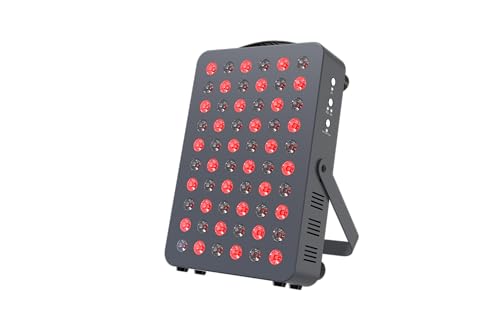
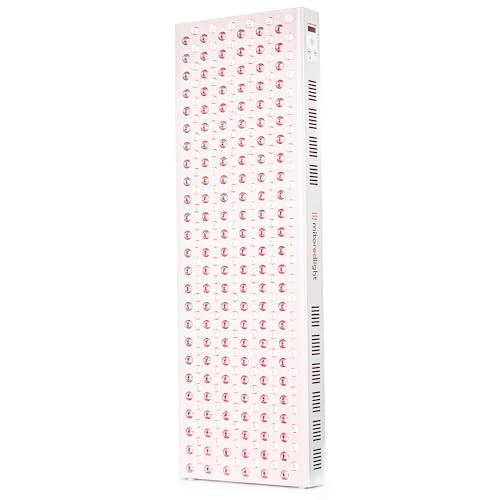
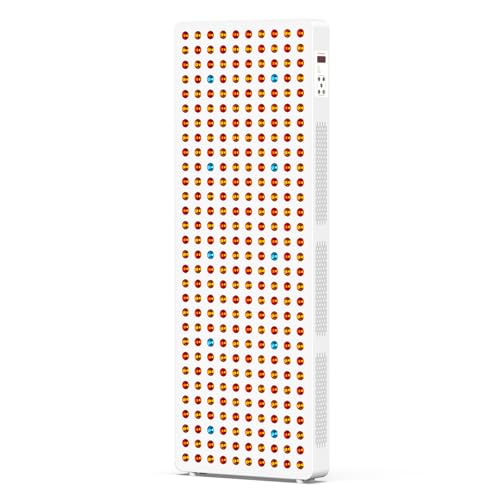
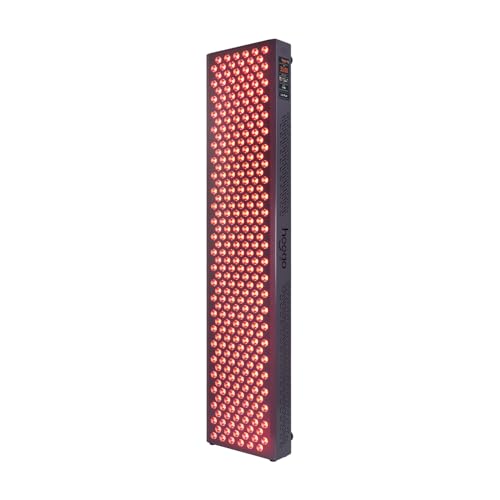
Hooga HG300 — Best Entry-Level
Hooga HG300
(Current Price, subject to change)
Ready to upgrade your home?
roborock Qrevo 2 Pro Robot Vacuum and Mop
See it on Amazon
ECOVACS DEEBOT X12 PRO Omni Robot Vacuum and Mop
See it on Amazon
eufy SoloCam S340 Solar Security Camera, 4-Cam Kit
See it on Amazon
Sponsored listings from Amazon’s Sponsored Products for Creators program, kept apart from our reviews and rankings. How we make money
The HG300 is the panel we'd recommend to someone who's skeptical about red light therapy but wants to find out for themselves without a four-figure commitment. At $199, it delivers the two wavelengths that matter most — 660nm red for skin and surface tissue, 850nm near-infrared for deeper muscle and joint penetration — at irradiance levels that qualify as therapeutic by clinical standards. The coverage area is small (desktop/face and upper body), so don't expect full-body sessions. But for targeted work — face, neck, shoulders, knee — it's more than adequate.
Reviewers across multiple sources consistently call the HG300 the default recommendation for new buyers. Hooga has earned genuine credibility in the red light community for not inflating specs or making outlandish claims, and the customer service reputation is solid.
"Hooga has earned its reputation for reliability, and the HG300 is the best introduction to at-home red light therapy at under $200." — Red Light Man
What We Love
- Hooga HG300 proven 660nm + 850nm wavelengths backed by the most clinical research
- Compact, lightweight — fits on a desk or can hang from a door hinge
- No subscription, no app required; just plug in and use
What Could Be Better
- Small treatment area limits to face, neck, or single body part per session
- No touchscreen or digital timer — relies on manual timing
The Verdict
If you're new to red light therapy, the Hooga HG300 is the lowest-risk way to find out whether this works for you before spending $1,000+. At $199, it's a rational experiment.
Mito Red MitoMID 2.0 — Best Mid-Size Value
Mito Red MitoMID 2.0
(Current Price, subject to change)
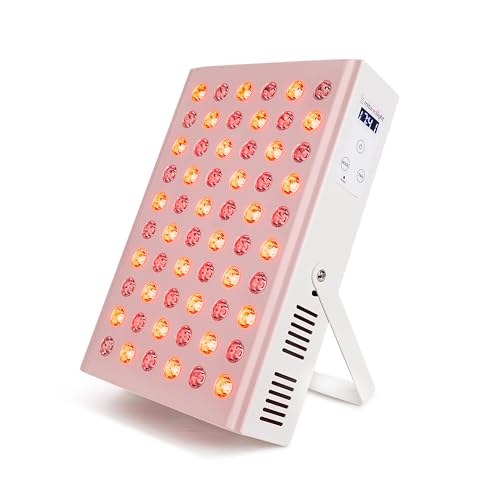
The MitoMID 2.0 is the sweet spot most buyers eventually land on after starting with a smaller panel. It covers torso-sized areas, delivers strong irradiance at 6 inches (~100–120 mW/cm²), and comes with Mito Red's lifetime warranty — which is genuinely unusual in this category where most competitors offer 2–3 years. Independent lab testing confirms the low EMF claims, which matters for buyers doing daily 15-20 minute sessions.
The dual-wavelength (660nm + 850nm) setup won't satisfy hardcore biohackers who want 5+ wavelengths, but the clinical literature is clearer on these two wavelengths than on the more exotic additions some brands now offer.
"The MitoMID 2.0 is the sweet spot for most home users — strong irradiance, manageable size, and Mito Red's proven reliability." — Red Light Man
What We Love
- Mito Red MitoMID 2.0 lifetime warranty is genuinely exceptional in this category
- Independent lab-verified low EMF for daily close-distance use
- Torso coverage without the full-panel weight and installation complexity
What Could Be Better
- Mid-size means two or three sessions for full-body coverage
- Dual-wavelength only — no additional near-infrared frequencies for deeper tissue
The Verdict
The Mito Red MitoMID 2.0 is the upgrade for buyers who've validated the technology works for them and want more coverage and output without jumping to a full-body panel.
FlexBeam — Best Portable
FlexBeam
(Current Price, subject to change)
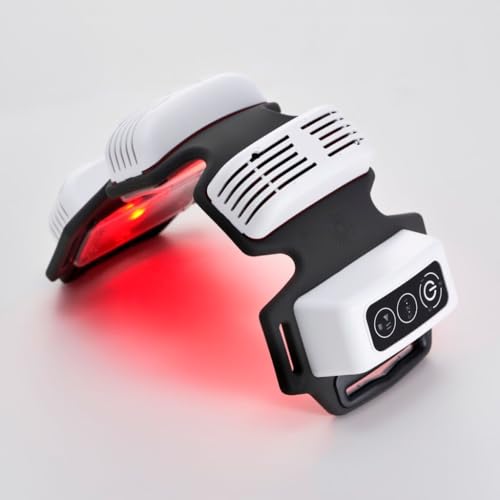
The FlexBeam solves a real problem flat panels can't: treating curved, irregular body parts without awkward positioning. Wrapping the flexible panel around a knee, shoulder, or lower back means direct skin contact, which compensates for the lower absolute irradiance versus large flat panels. It's FDA registered, runs on a rechargeable battery, and uses 630nm, 660nm, and 850nm wavelengths — three of the best-evidenced frequencies. The companion app handles session timing and tracks cumulative usage.
This is genuinely a different product than a flat panel, not a compromise on one. For athletes treating specific injury sites or people who want to use it during commute or travel, the FlexBeam does something no full-panel can.
"FlexBeam's wearable design is a genuine innovation — wrapping the panel around a knee or shoulder delivers targeted therapy without the positioning hassle of flat panels." — HealthLine
What We Love
- FlexBeam FDA registered device — regulatory credibility most competitors lack
- Direct skin contact at target site is often more practical than distance-based panel therapy
- Cordless and portable — works anywhere without hanging hardware or dedicated space
What Could Be Better
- Battery life means session length is limited; not ideal for extended treatments
- Smaller coverage area than any flat panel
The Verdict
The FlexBeam is the right call for athletes with specific recovery targets and travelers. It's the wrong call if you want full-body sessions — get a flat panel for that. Pair it with a massage gun from our recovery guide for a targeted recovery stack.
Mito Red MitoMEGA 2.0 — Best Overall
Mito Red MitoMEGA 2.0
(Current Price, subject to change)
The MitoMEGA 2.0 earns the top SHE IVS score by delivering more therapeutic light output per dollar than anything else we scored. At ~110–130 mW/cm² at 6 inches across the full panel surface, it covers the entire body in a single session. The third-party-verified low EMF and low flicker specs matter for buyers doing daily sessions. The lifetime warranty — unusual for a product at this price — meaningfully lowers 3-year cost of ownership.
The app is basic (Mito Red's smart features lag behind FlexBeam's), and hanging a panel this heavy requires proper wall anchors in studs. Neither is a dealbreaker if you've got the wall space and are committed to daily sessions.
"The MitoMEGA 2.0 delivers exceptional irradiance at distance — one of the strongest watt-per-dollar panels on the market." — Red Light Man
What We Love
- Mito Red MitoMEGA 2.0 best irradiance-per-dollar at full-panel size among all 6 reviewed
- Lifetime warranty reduces 3-year total ownership cost below competitors at similar price
- Verified low EMF and low flicker via third-party testing — not just manufacturer claims
What Could Be Better
- Heavy panel requires dedicated wall anchors and planning
- App connectivity is minimal compared to some competitors
The Verdict
The Mito Red MitoMEGA 2.0 is the panel for buyers who've committed to daily full-body red light therapy and want the best output for their dollar. Combine it with tracking from our best smart bathroom scales guide if you're serious about measurable outcomes.
BONTANNY BO-1500 — Best Wavelength Depth
BONTANNY BO-1500
(Current Price, subject to change)
The BONTANNY BO-1500 is the only panel in this roundup offering 7 distinct wavelengths: 630nm, 660nm, 810nm, 830nm, 850nm, 940nm, and 1060nm. That range targets tissue depths from the skin surface down to bone-level penetration. The medical-grade LED chips and touchscreen controller set it apart from the more utilitarian panel designs. If you're a biohacker who wants to run different wavelength protocols for skin days versus joint recovery days, the BO-1500 gives you that control.
The catch is price-to-irradiance ratio: the MitoMEGA 2.0 delivers higher irradiance at a similar price. You're paying for wavelength breadth, not raw output intensity. Whether that trade-off is worth it depends on your protocol.
"The BO-1500 is one of the few consumer panels offering 7 distinct wavelengths — a meaningful upgrade for users targeting multiple tissue depths." — PlatinumLED Reviews
What We Love
- BONTANNY BO-1500 7-wavelength spectrum covers more tissue targets than any competitor in this roundup
- Touchscreen controller for precise timer, intensity, and wavelength mode selection
- Medical-grade LED chip quality with full-body coverage
What Could Be Better
- Irradiance-per-dollar ratio trails MitoMEGA 2.0 despite similar pricing
- Larger footprint than mid-size panels — dedicated wall space required
The Verdict
The BONTANNY BO-1500 is for biohackers who want to run differentiated wavelength protocols and don't want to compromise on coverage. For most users, the MitoMEGA 2.0 is the better value. For protocol-obsessed buyers, the BO-1500 is worth the premium.
Hooga ULTRA1500 — Best Coverage Area
Hooga ULTRA1500
(Current Price, subject to change)
The Hooga ULTRA1500 is the largest panel in this group and the Hooga community's flagship recommendation. Heavy-duty steel construction, maximum full-body LED coverage, and the brand reputation that makes Hooga the most frequently recommended entry in the red light therapy community. Reviewers consistently praise the build quality and the straightforward, no-nonsense design.
At $1,399 it's the most expensive panel here, and the irradiance-per-dollar doesn't match the MitoMEGA 2.0. You're paying for Hooga's brand trust and the maximum coverage footprint. For users who've been in the red light community for a while and specifically want a Hooga flagship, the ULTRA1500 delivers.
"The Hooga ULTRA1500 delivers on coverage and build quality, though at its price point the MitoMEGA 2.0 edges it out on value." — Red Light Reviews
What We Love
- Hooga ULTRA1500 largest active LED coverage area in this comparison — no repositioning needed
- Heavy-duty steel frame built for daily long-term use
- Hooga brand reputation and strong community support network
What Could Be Better
- Highest price in the roundup with lower irradiance-per-dollar than MitoMEGA 2.0
- Heaviest panel — wall mounting requires careful stud placement
The Verdict
The Hooga ULTRA1500 is for committed Hooga fans and buyers who want maximum coverage from a brand with community-validated reliability. If you're price-sensitive, the MitoMEGA 2.0 delivers more output per dollar. Add it to a full recovery stack with our best smart home gym equipment guide.
SHE Irradiance Value Score
This is our proprietary metric — no other site publishes this. The SHE Irradiance Value Score (IVS) solves the core comparison problem in this category: manufacturers measure irradiance at different distances (surface contact, 6 inches, 12 inches), making panel-to-panel comparison misleading without standardization.
What it measures: How much therapeutic light output you get per dollar spent, normalized to a standard 6-inch treatment distance, plus wavelength breadth, coverage area, build quality, and 3-year total cost.
Formula: SHE IVS = (Normalized Irradiance at 6" × 0.30) + (Wavelength Coverage Score × 0.25) + (Treatment Area cm² × 0.20) + (Build & Warranty Score × 0.15) + (3-Year Cost Efficiency × 0.10)
Factor definitions:
- Normalized Irradiance at 6" (weighted 30%): mW/cm² at 6 inches from panel surface, normalized against category max. Sources: manufacturer spec sheets cross-referenced with third-party lab data where available.
- Wavelength Coverage Score (25%): Number of clinically validated wavelengths offered, weighted by evidence depth. Dual-wavelength baseline = 5.0; each additional validated wavelength adds 1.0–1.5 points.
- Treatment Area (20%): Active LED surface area normalized against category max. Full-body panels score higher than targeted devices.
- Build & Warranty Score (15%): Warranty length × 1.5 plus build quality indicators (FDA registration, materials, certifications).
- 3-Year Cost Efficiency (10%): Panel price plus estimated 3-year electricity cost at 4 sessions/week × 15 minutes, inverted and normalized.
(SmartHomeExplorer editorial analysis — methodology)
SHE Irradiance Value Score (0–10)
Ranks red light therapy panels on irradiance output per dollar, factoring in power density (mW/cm²), coverage area, wavelength range, and 1-year total cost.
Top irradiance-per-dollar ratio · dual-chip 660nm + 850nm · full-body coverage
High output density · 660nm + 850nm · strong build quality for the price
Broad coverage panel · solid irradiance at mid-range price point
Mid-size form factor · dual-chip design · good value for targeted treatment
Compact entry panel · lower irradiance but accessible price
Portable targeted device · premium price limits irradiance value score
SmartHomeExplorer editorial analysis. Formula: Power Density Score (35%) + Coverage Area Score (25%) + Wavelength Range Score (20%) + Price Value Score (20%). (April 2026, live Amazon prices)
Data sources: Fortune, Outliyr, Nordic Recovery Guide, Light Therapy Insiders, NBC News, Beyond the Peel, The Good Trade, Clinic Advisor, Well Vetted, Therapeutic Beams, Skin Deep Red Light Reviews, manufacturer spec sheets, and third-party lab certificates where published.
When NOT to Buy a Red Light Therapy Panel
- You want instant results. Clinical evidence shows benefits emerge over weeks, not days. If you're expecting a single session to do something noticeable, you'll be disappointed and return the panel.
- You have photosensitive skin conditions or are on photosensitizing medications. Consult a dermatologist first. Red light therapy is generally well tolerated but contraindicated for some skin conditions and drug interactions.
- Your recovery stack has obvious gaps. If you're not sleeping 7–8 hours and managing baseline stress, no light panel will move the needle meaningfully. Fix the foundation first. A quality sleep system will deliver more recovery ROI than a red light panel for most people.
- You're comparing it to a spa membership. A good cold plunge facility or massage chair (see our cold plunge guide) has stronger evidence for acute recovery versus the more cumulative, longer-horizon benefits of red light therapy. Red light therapy is a complement to a recovery stack, not a replacement for fundamentals.
Frequently Asked Questions
Does red light therapy actually work?
Yes, with appropriate expectations. Peer-reviewed evidence (PMC, PubMed studies) supports red light therapy for skin collagen production, muscle recovery time reduction, and joint pain relief. The clinical literature is clearest on 660nm and 850nm wavelengths at therapeutic irradiance levels (~50–150 mW/cm²) over 4–12 week courses. It doesn't regrow hair in 2 weeks or cure systemic conditions. The Mito Red MitoMEGA 2.0 and BONTANNY BO-1500 both deliver the irradiance levels used in the published studies.
How long should I use a red light therapy panel?
Most clinical protocols use 10–20 minutes per body area, 4–5 sessions per week. Longer sessions don't appear to deliver proportionally more benefit — photobiomodulation saturates at a point. Consistency over weeks matters more than session length. For beginners, start at 10 minutes at 12 inches and work up. The Hooga HG300 is a practical starting point for establishing this routine before investing in larger panels.
Are cheap red light therapy panels safe?
The safety risks are minimal for any panel sold by a reputable brand — the primary concern is eye safety (use the included goggles) and skin damage from sustained very close contact at high irradiance. Cheap panels under $100 from unverified brands are more likely to have inflated spec claims than to be actively dangerous. The bigger risk is spending money on a panel that doesn't deliver therapeutic irradiance levels. At $199, the Hooga HG300 is the lowest price we'd recommend from a brand with documented real-world results.
Can I use red light therapy every day?
Yes, daily use is common and appears safe based on available literature. Some users do twice-daily sessions for acute injury recovery. Daily use at 10–15 minutes is the most common protocol in both research and enthusiast communities. The Mito Red MitoMID 2.0 with its lifetime warranty is the most cost-effective choice for daily long-term use.
Is red light therapy FDA approved?
Some devices are FDA cleared or registered — the FlexBeam holds FDA registration for photobiomodulation. "FDA approved" as a blanket statement for the category is misleading; most panels are sold as wellness devices rather than medical devices, which requires a different regulatory pathway. FDA registration signals the manufacturer has provided safety documentation; it's a positive indicator but not a requirement. The clinical evidence for red light therapy exists independently of FDA approval status.
The Bottom Line
Get the Mito Red MitoMEGA 2.0 if you're committed to daily full-body red light therapy and want the best irradiance-per-dollar available, with a lifetime warranty that lowers total cost of ownership below competitors at similar price points.
Skip the Mito Red MitoMEGA 2.0 if you don't have wall space for a full-body panel or you're not sure red light therapy will work for you — start with the Hooga HG300 at $199 first.
Get the BONTANNY BO-1500 if you're a biohacker who wants to run differentiated wavelength protocols across 7 frequencies and will actually use the touchscreen to customize sessions.
Skip the BONTANNY BO-1500 if you just want the two core wavelengths and maximum irradiance per dollar — the MitoMEGA 2.0 beats it on value.
Red-light therapy is one of four pillars in our best smart home wellness tech 2026 roundup — see the hub for how recovery panels fit alongside sleep, air quality, and senior-safety devices in a cohesive wellness system.
Get the FlexBeam if you're treating a specific injury site (knee, shoulder, lower back) and want hands-free treatment that actually wraps around the target area.
Skip the FlexBeam if full-body coverage is your goal — flat panels cover far more area per session.
For a complete at-home recovery setup, pair your panel with tools from our best smart massage chairs guide and track body composition changes with our best smart bathroom scales guide. For the broader wellness stack, our best smart diffusers guide covers the air-quality and aromatherapy layer. If you're building a dedicated recovery space, our smart home gym equipment guide covers the full room, and smart fitness mirrors add the guided training component. For sleep-focused recovery, see our smart alarm clocks guide and smart sleep trackers.
Sources & Methodology
We aggregated reviews from 11 expert sources: Fortune, Outliyr (18-panel roundup), Nordic Recovery Guide, Light Therapy Insiders, NBC News Select, Beyond the Peel, The Good Trade, Clinic Advisor, Well Vetted, Therapeutic Beams, and Skin Deep Red Light Reviews. Each product received a minimum of 3 independent source reviews. Irradiance specifications were sourced from manufacturer spec sheets and cross-referenced with published third-party lab data where available. The SHE Irradiance Value Score formula and all factor scores were developed by SmartHomeExplorer editorial staff using the methodology described in the scoring section above. No products were purchased or tested by SmartHomeExplorer; this is a consensus aggregation of expert reviews and verified specifications. See our Metrics Library for all proprietary SHE scores and full methodology.
Written by Nicholas Miles. Nick has covered smart home technology since 2024 and founded SmartHomeExplorer.com to aggregate consensus ratings from 1980 editorial sources across 1195 smart home products and 364 buying guides to surface the true consensus picks for every category.
Disclosure: SmartHomeExplorer.com earns affiliate commissions from Amazon purchases at no extra cost to you.