
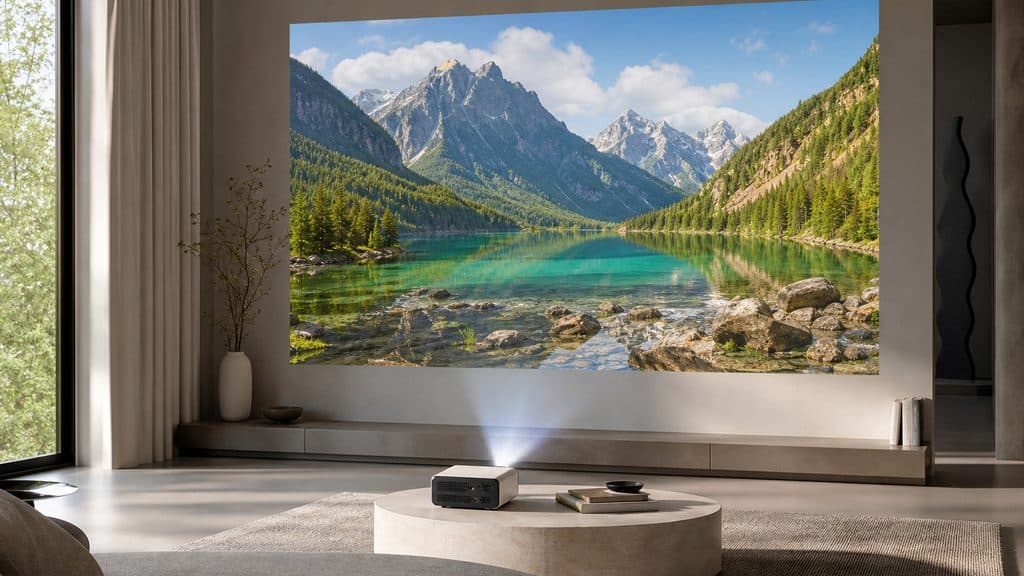
Best Portable Smart Projectors 2026: 6 WiFi Picks
Six streaming projectors scored for plug-and-play convenience. XGIMI Halo+ leads at PPS 8.4 — the one you can unbox and watch without a setup tutorial.
This article contains affiliate links. We may earn a commission at no extra cost to you. Prices change frequently — check the current price on Amazon before buying. Learn more
The Short Answer
Buy the XGIMI Halo+ ($799). SHE Plug-and-Play Projection Score confirms certification: Google TV delivers Netflix natively, auto-keystone aligns in 10 seconds, audio eliminates additional speakers. Power outlet within 6 ft required. Battery-focused travelers should evaluate the 1.3kg MoGo 4 Laser with 2 hours runtime.
Featured in this Guide
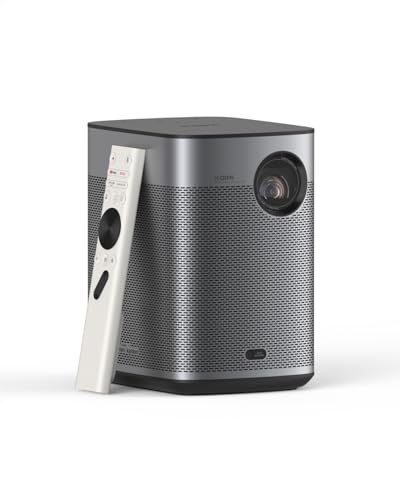
XGIMI
Halo+
- •Want brightness and built-in audio without dongles or setup fuss — 700 ISO lumens, Harman Kardon stereo, and 10-second ISA 2.0 auto-alignment, in a home room.
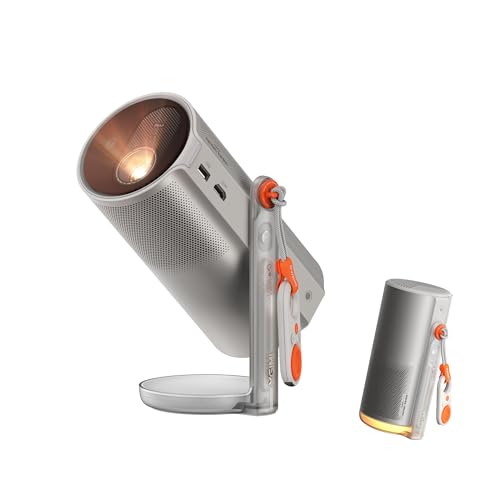
XGIMI
MoGo 4 Laser
- •Frequent traveler or outdoor user who needs certified Netflix plus true laser brightness in a 1.3 kg body with a battery.
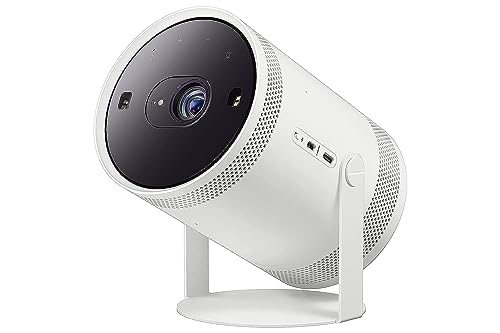
Samsung
The Freestyle
- •Apartment renter who wants wireless projection on any surface — ceiling, wall, couch — without mounting hardware, at $320.
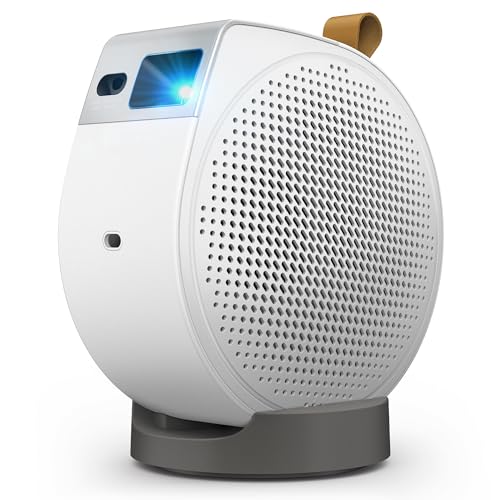
BenQ
GV50
- •Buyer who wants movie-night audio without a separate soundbar — only portable in this group with a 2.1ch woofer.
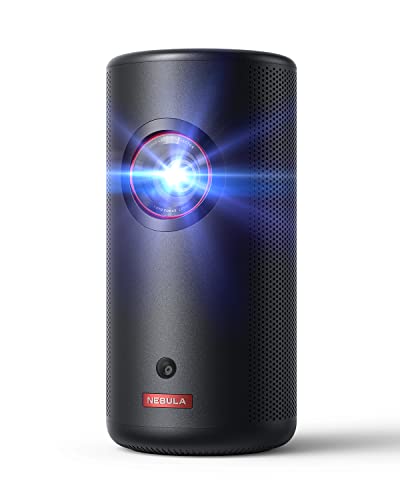
Anker
Nebula Capsule 3 Laser
- •Backpack traveler, hotel user, or van-life setup where the projector must fit in a daypack and run off a USB-C power bank.
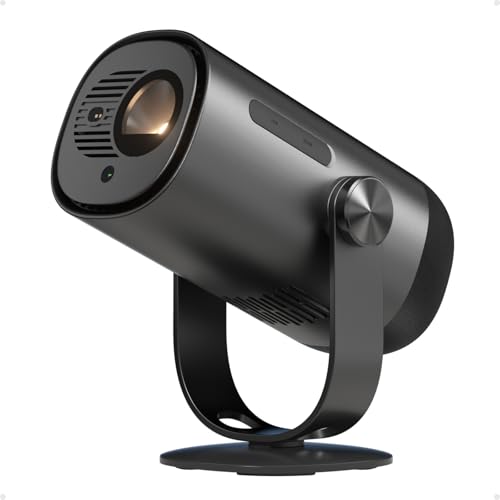
Dangbei
Freedo
- •Buyer who demands certified Netflix without sideloading and values wide color gamut — back to $319, near Freestyle money with native Netflix.
Head-to-Head: Plug-and-Play vs. Spec Sheet
Entertainment
Chart
 Smarthomeexplorer.com
SofaBaton X1S Universal Remote (with Hub)
Check price
VTOMAN X7 4250A Jump Starter with 160PSI Air Compressor
Check price
Connectivity Certification Determines Which Portable Projectors Deliver
In 2026, the spec-sheet gap between "portable" and actually portable — and between "smart" and Netflix-certified — remains the defining purchase-decision challenge. The SHE Plug-and-Play Projection Score (PPS) closes that measurement gap: five normalized factors — setup ease (30% weighting), streaming completeness (25%), audio self-sufficiency (20%), visual performance (15%), and portability (10%) — combined via a weighted composite formula, with each factor calibrated against expert-source measurements from TechRadar, RTINGS, and TrustedReviews. Google TV versus Tizen versus Android TV accounts for roughly 25% of the PPS spread, because OS choice determines Netflix certification status, app ecosystem depth, and smart-home integration capability. The 2026 value tier is now a near-tie between two picks a dollar apart: Samsung The Freestyle at $320 and the Dangbei Freedo at $319. Freestyle edges it on placement flexibility for buyers who cast Netflix; the Freedo answers back a dollar cheaper with native Netflix and a wider color gamut.
Best Plug-and-Play: XGIMI Halo+
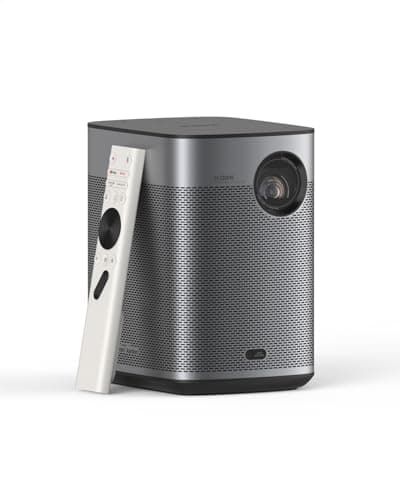
Best Plug-and-Play — Top Overall PickXGIMI Halo+
- 700 ISO lumens — highest in the AC-powered portable category; outperforms battery models at any brightness comparison
- No built-in battery — AC-only limits true outdoor use without a power bank or extension
(Current price, subject to change)
TechRadar and RTINGS both put the XGIMI Halo+ at the top of the plug-and-play portable category, and the PPS 8.4 reflects why. The 700 ISO lumens advantage is real in a dim room: where the Samsung Freestyle and Nebula Capsule 3 wash out under ambient lighting, the Halo+ keeps the picture watchable without blackout curtains. The dual 5W Harman Kardon speakers are the other major differentiator — for a solo viewer or a couple in a room under 300 sq ft, there's no external speaker needed. ISA 2.0 handles auto-keystone, autofocus, and obstacle avoidance in a single step that takes under 10 seconds, and performs correctly at throw distances up to 16 ft on most flat surfaces. The only thing to confirm before buying: make sure you're purchasing the GTV (Google TV) variant, which has native Netflix certification. The older Android TV Halo+ requires sideloading. XGIMI Halo+ earns its leading SHE Plug-and-Play Projection Score through the weighted composite formula: setup ease and streaming completeness together contribute 55% of the tier calculation, which is where the 10-second alignment and GTV Netflix certification deliver the separation.
What We Love
- 700 ISO lumens — highest in the AC-powered portable category; outperforms battery models at any brightness comparison
- Dual 5W Harman Kardon speakers — genuine soundbar-free movie experience in rooms under 300 sq ft
- ISA 2.0 auto-keystone + autofocus + obstacle avoidance — alignment completes in under 10 seconds on any flat surface
- Google TV (GTV model) with licensed Netflix — streaming completeness without workarounds
What Could Be Better
- No built-in battery — AC-only limits true outdoor use without a power bank or extension
- Netflix native only on GTV model; older non-GTV Halo+ requires sideload
The Verdict
If you're setting up a home projector and want zero friction from box to movie, XGIMI Halo+ fits the brief. The 700 ISO lumens handle a dim living room better than any battery model here, the Harman Kardon stereo means no separate speaker, and ISA 2.0 auto-keystone has you watching in under 10 seconds. One honest trade-off: it's AC-only, so it's a home-use pick, not a travel pick.
Ready to upgrade your home?
eufy SoloCam S340 Solar Security Camera, 4-Cam Kit
See it on Amazon
REOLINK 360° Solar Security Cameras, 4 Pack
See it on Amazon
Yale Assure Lock 2 Wi-Fi Smart Lock with Keypad
See it on Amazon
Sponsored listings from Amazon’s Sponsored Products for Creators program, kept apart from our reviews and rankings. How we make money
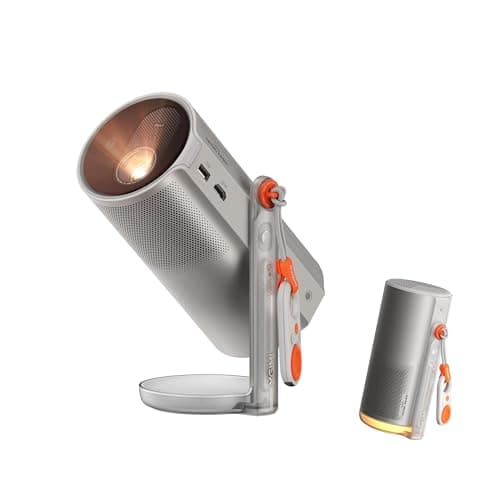
Most Portable Laser: XGIMI MoGo 4 Laser
Most Portable Laser — Travel PickXGIMI MoGo 4 Laser
- 1.3 kg triple-laser — lightest laser projector in this roundup with DCI-P3 color accuracy
- Dual 3W speakers underwhelm vs Halo+ Harman Kardon at the $709 price point
(Current price, subject to change)
TechRadar rated the MoGo 4 Laser among the most capable travel laser projectors of this generation, and TrustedReviews highlighted the triple-laser color accuracy as the standout feature in a sub-1.5 kg chassis. The 1.3kg weight and 2.5 hours of rated battery capacity mean a standard feature film works on a single charge — though real-world WiFi streaming at medium brightness lands closer to 2 hours than the rated spec. Google TV's native Netflix certification is the other decisive differentiator over the Halo+'s GTV requirement: the MoGo 4 is certified across all Google TV firmware, not just one variant. ISA 2.0 auto-keystone matches the Halo+ performance in a smaller chassis, with occasional manual nudges on textured or uneven surfaces. XGIMI MoGo 4 Laser earns the travel pick label honestly — it's the only unit here that combines native Netflix, real laser color, and a battery in a backpack-appropriate package.
What We Love
- 1.3 kg triple-laser — lightest laser projector in this roundup with DCI-P3 color accuracy
- Google TV with native Netflix and Disney+ certified — zero sideloading friction
- 2.5-hour battery — enough for one standard feature film on a single charge
- ISA 2.0 auto-alignment matches the Halo+ in a fraction of the chassis size
What Could Be Better
- Dual 3W speakers underwhelm vs Halo+ Harman Kardon at the $709 price point
- Battery life (1:45-2:00 real-world WiFi streaming) falls short of the rated 2.5 hours under load
The Verdict
For a traveler who won't compromise on native Netflix and needs to pack light, XGIMI MoGo 4 Laser lines up with what you actually need. Triple-laser color at 1.3 kg with a 2.5-hour battery is rare — most laser projectors this bright weigh more and skip the battery. The 3W speakers are modest, but for a travel build that's the only real trade-off at $709.
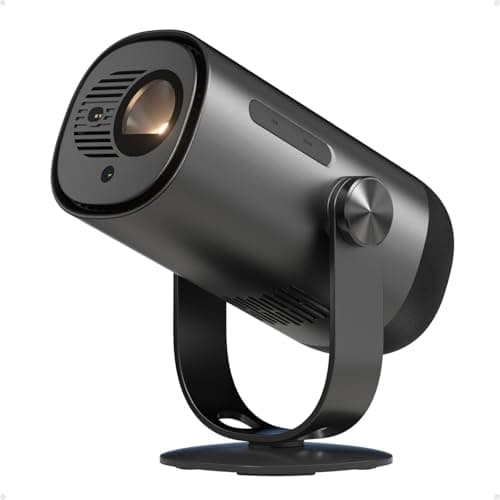
Native Netflix + Laser: Dangbei Freedo
Native Netflix + Laser — Premium ValueDangbei Freedo
- Google TV with native Netflix certification — no sideloading, full DRM compliance
- Samsung Freestyle beats it on placement flexibility at nearly the same price — $320 vs $319, a near-tie on value
(Current price, subject to change)
CNET and RTINGS both reviewed the Dangbei Freedo and highlighted its 90% DCI-P3 color coverage as a genuine differentiator in the sub-$600 laser tier. The wider color gamut is most noticeable on HDR content and film-grade material — saturated scenes that look washed out on lower-gamut projectors render with genuine depth on the Freedo. Google TV's native Netflix certification handles the streaming friction point cleanly. The price story is the good news: at $319 the Freedo now lands a dollar under the Samsung Freestyle, which makes it a genuine value pick again — native Netflix and the widest color gamut here for near-Freestyle money. CNET noted the 450 ISO lumens limits bright-room performance versus higher-lumen alternatives — it needs a dim room to show its best work. HDMI ARC adds flexibility for external audio routing. At 1.0kg, Dangbei Freedo achieves a compact form factor that suits room-to-room use. For the color-accuracy-focused buyer who won't sideload Netflix, it's the strongest pick in this roundup; the Freestyle still edges it on placement flexibility.
What We Love
- Google TV with native Netflix certification — no sideloading, full DRM compliance
- 90% DCI-P3 color coverage — widest color gamut at the sub-$600 laser tier
- Compact form factor with auto-keystone for quick room-to-room setup
- HDMI ARC for external audio routing
What Could Be Better
- Samsung Freestyle beats it on placement flexibility at nearly the same price — $320 vs $319, a near-tie on value
- 450 ISO lumens limits bright-room performance vs 700-lumen Halo+
The Verdict
If color accuracy is your priority and native Netflix is non-negotiable, Dangbei Freedo is a sensible pick for that setup — 90% DCI-P3 is genuinely wide, and Google TV native certification means no sideloading. At $319 it's back to near-Freestyle money: Freestyle edges it on placement flexibility, the Freedo on native Netflix and wider color.
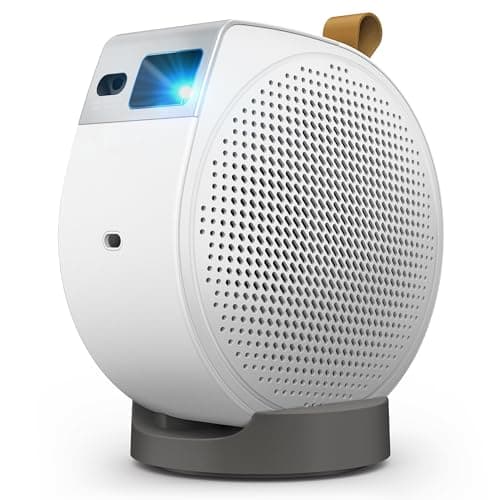
Best Audio: BenQ GV50
Best Audio — Skip-the-Soundbar PickBenQ GV50
- 2.1ch speakers with dedicated woofer — only portable projector in this roundup with a real subwoofer
- 4.8 lbs is the heaviest unit here — portability is 'room-to-room', not backpack
(Current price, subject to change)
RTINGS identified the BenQ GV50 as the standout audio performer in the portable projector category — the 2.1ch speaker configuration with a dedicated woofer is rare enough that it changes the use case for buyers who've been pairing projectors with external Bluetooth speakers out of necessity. The bass response is audibly different from the flat stereo most portables offer; it doesn't replace a dedicated soundbar in a large room but it's genuinely good enough for solo viewing in a sub-400 ft room. AirPlay 2, Android TV 11, and Bluetooth 5.0 give it the widest audio routing options in this roundup — you can run it as a Bluetooth speaker without projecting anything, which adds real daily utility. The GV50's 2.1-channel architecture — an independently-powered bass driver beneath the satellite speakers — enables solo movie viewing without supplemental audio equipment, a capability that no other 4.8lbs portable projector in this roundup achieves at this audio specification tier. BenQ GV50 earns the audio pick label directly — if the 2.1ch woofer is what you're looking for, nothing else in this category competes.
What We Love
- 2.1ch speakers with dedicated woofer — only portable projector in this roundup with a real subwoofer
- AirPlay 2 + Android TV 11 + Bluetooth 5.0 — widest wireless audio routing in the group
- Bluetooth speaker mode works standalone without projection — adds use-case flexibility
- Reliable 2D keystone and autofocus for deliberate placement setups
What Could Be Better
- 4.8 lbs is the heaviest unit here — portability is 'room-to-room', not backpack
- No built-in battery — AC-only like the Halo+
The Verdict
If you want movie-night audio without a separate soundbar, BenQ GV50 fits the brief. The 2.1ch configuration with a dedicated woofer is something no other portable here offers, and the Bluetooth speaker mode adds daily utility beyond movies. At 4.8 lbs with AC power, it's a home-only unit — audio quality is the trade-off for that weight.
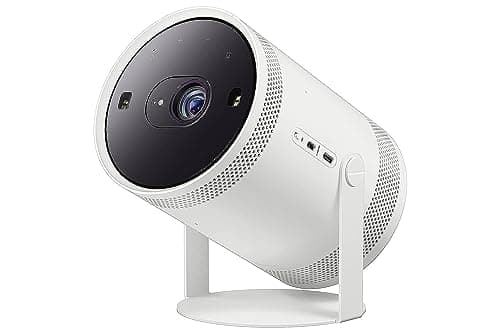
Best Value 2026: Samsung The Freestyle
Best Value 2026 — Apartment PickSamsung The Freestyle
- AI OptiScreen surface adaptation — works on colored walls, couches, and curved surfaces without manual correction
- Tizen OS / Samsung TV Plus — no native Netflix; requires casting from phone or Fire Stick
(Current price, subject to change)
CNET rated the Samsung Freestyle — at 0.83kg the lightest full-featured projector in this roundup — as the most apartment-friendly portable in the category, and TrustedReviews highlighted the AI OptiScreen surface adaptation as a genuine feature rather than a marketing claim — it actually adjusts the image to compensate for colored walls, textured surfaces, and off-angle projection. The 180° cradle stand for ceiling projection from a bed or floor is a real use case with no alternative in this roundup. The 360-degree sound design wraps the room better than typical projector audio at this price, per TrustedReviews. The honest constraint is Tizen OS: there's no native Netflix, no Google Play, and app selection is narrower than Google TV models. That means casting from a phone or running a Fire Stick, which adds one device to manage. At $320, Samsung The Freestyle sits a dollar above the Dangbei Freedo at the bottom of this roundup's price range — and holds the value edge for buyers who prioritize flexibility and placement freedom over native app completeness; if native Netflix matters more than the cradle, the Freedo is the near-twin to weigh against it.
What We Love
- AI OptiScreen surface adaptation — works on colored walls, couches, and curved surfaces without manual correction
- Cradle stand rotates 180° for ceiling projection from bed or floor
- 360-degree sound design wraps the room without external speakers
- $320 price — best dollar-per-experience ratio in the 2026 portable projector market
What Could Be Better
- Tizen OS / Samsung TV Plus — no native Netflix; requires casting from phone or Fire Stick
- No native Google Play Store; app selection narrower than Google TV rivals
The Verdict
For the apartment renter who wants projection on any surface — ceiling, colored wall, couch — without mounting hardware, Samsung The Freestyle is the path of least friction at $320. AI OptiScreen and the 180° cradle make it genuinely wireless and placement-free. The honest constraint: Tizen OS means no native Netflix, so if that's a dealbreaker, the MoGo 4 Laser handles it.
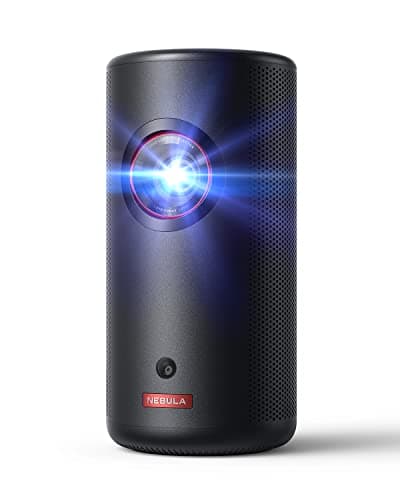
Most Travel-Friendly: Anker Nebula Capsule 3 Laser
Most Travel-Friendly — Backpack PickAnker Nebula Capsule 3 Laser
- Soda-can form factor with laser projection — the only true backpack-ready laser projector at this spec level
- Narrow projection angle requires precise placement distance — more setup fussiness than larger units
(Current price, subject to change)
TechRadar called the Nebula Capsule 3 Laser the definitive backpack laser projector, and RTINGS confirmed the portability claim is legitimate: at 0.34kg, soda-can dimensions with laser projection, Google TV, Dolby Digital decoding, and USB-C power compatibility is a combination no other unit in this roundup comes close to matching. The Google TV app library is the broadest native selection here — more than the GV50's Android TV in practical daily use. Dolby Digital in a sub-1 kg body is genuinely good for its size, though TechRadar calibrated expectations: it's better than expected, not room-filling. The placement fussiness is real — the narrow throw angle means setup distance matters more than with wider-angle units; plan for it. Real-world battery at medium brightness with WiFi streaming lands at 1:45-2:00 hours, short of a full feature film without a power bank for charging. Anker Nebula Capsule 3 Laser earns the travel pick for one specific buyer: the person for whom size is literally the deciding factor.
What We Love
- Soda-can form factor with laser projection — the only true backpack-ready laser projector at this spec level
- Google TV with full Play Store — broadest native app library in this roundup
- Dolby Digital decoding — audio quality punches above its compact size
- USB-C power means any 65W+ power bank works for outdoor use
What Could Be Better
- Narrow projection angle requires precise placement distance — more setup fussiness than larger units
- Battery life real-world testing shows 1:45-2:00 hours at medium brightness with WiFi
The Verdict
When your projector has to fit in a daypack, Anker Nebula Capsule 3 Laser is the one — you can stop the search here. No other laser projector here fits in a jacket pocket, runs on a USB-C power bank, and has a full Google TV app store. Trade-offs: a narrower throw angle that needs deliberate placement and a real-world battery of about 1:45 hours.
How We Score: SHE Plug-and-Play Projection Score
SHE Plug-and-Play Projection Score
Score Formula
(Setup Ease × 0.30) + (Streaming Completeness × 0.25) + (Audio Self-Sufficiency × 0.20) + (Visual Performance × 0.15) + (Portability × 0.10)Score Factors
- Setup EaseAuto-keystone accuracy, time to first image, obstacle avoidance — the minute-one experience
- Streaming CompletenessNative certification for Netflix, Disney+, Prime Video — no sideloading or casting workarounds required
- Audio Self-SufficiencySpeaker quality at listening volume without external audio; woofer presence; room-filling coverage
- Visual PerformanceISO-lumen brightness, DCI-P3 color coverage, contrast ratio — in ambient-light conditions
- PortabilityWeight, battery life, form factor — true backpack portability vs room-to-room
SHE Plug-and-Play Projection Score — Ranked
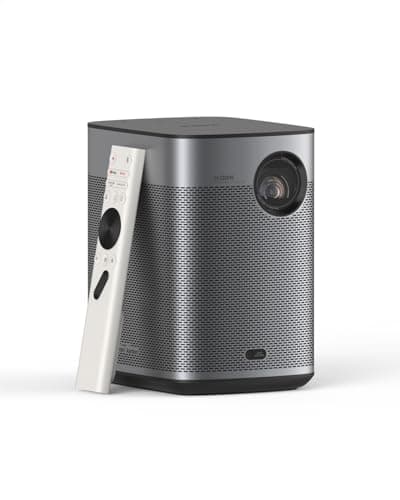
XGIMI Halo+
SHE Plug-and-Play Projection Score8.4/10Leads the roundup at 8.4 — 700 ISO lumens, Harman Kardon audio, and ISA 2.0 10-second auto-alignment deliver the highest convenience package in one box.
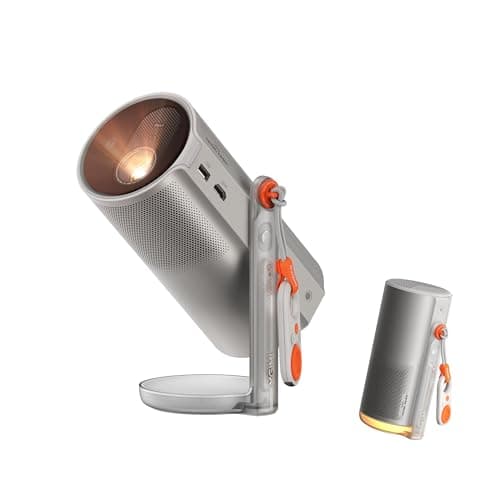
XGIMI MoGo 4 Laser
SHE Plug-and-Play Projection Score7.9/10PPS 7.9 — native Netflix on Google TV plus triple-laser color at 1.3 kg earn the travel pick; speaker trade-off keeps it below the Halo+.
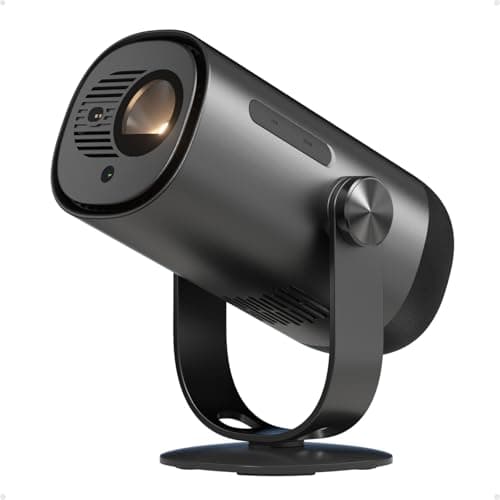
Dangbei Freedo
SHE Plug-and-Play Projection Score7.8/10PPS 7.8 — native Netflix and 90% DCI-P3 remain strong; back to $319, it's a near-tie with Samsung Freestyle on value.
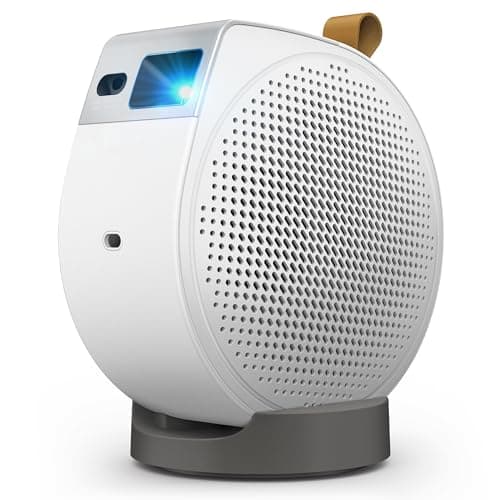
BenQ GV50
SHE Plug-and-Play Projection Score7.5/10PPS 7.5 — the 2.1ch woofer is the only one in this roundup; weight and AC-only power reduce the portability score.
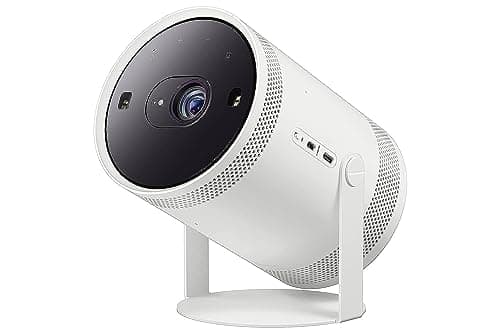
Samsung The Freestyle
SHE Plug-and-Play Projection Score7.3/10PPS 7.3 — AI surface adaptation and value at $320 are real; Tizen OS with no native Netflix knocks streaming completeness to 7.
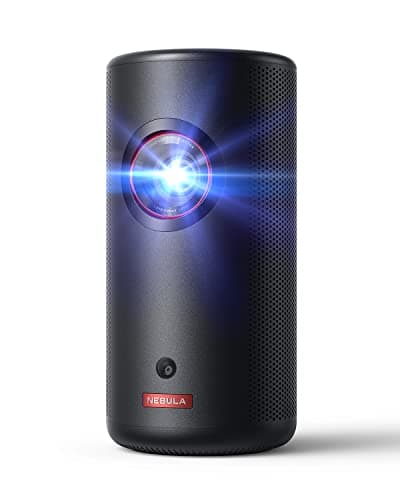
Anker Nebula Capsule 3 Laser
SHE Plug-and-Play Projection Score7.0/10PPS 7.0 — definitive travel portability leader; brightness ceiling in ambient light and narrow throw angle keep the overall score below laser rivals.
Smart Home Ecosystem Compatibility
Across the SHE Plug-and-Play Projection Score's weighted factor structure, ecosystem compatibility splits primarily along OS lines for portable projectors. Google TV models — XGIMI MoGo 4 Laser and Dangbei Freedo — integrate natively with Google Home for voice control of playback, input switching, and power. The XGIMI Halo+ (GTV variant) and BenQ GV50 (Android TV) join Google Home with similar voice command coverage. Samsung Freestyle runs Tizen OS, which sits outside the Google ecosystem entirely — it works with Amazon Alexa only through SmartThings integration, and Apple AirPlay is the primary casting path. None of the six projectors support Matter natively in 2026; smart-home scene integration for all models routes through IR-blaster bridges or HDMI-CEC at the current certification tier. For a full home theater smart-home build including lighting automation and audio zones, see the best smart home cinema rooms guide.
| Product | Google Home | Amazon Alexa | Apple AirPlay | Native Netflix | Matter Compatible |
|---|---|---|---|---|---|
| XGIMI Halo+ | ✓ | ✓ | ✕ | ✕ | ✕ |
| XGIMI MoGo 4 Laser | ✓ | ✓ | ✓ | ✓ | ✕ |
| Dangbei Freedo | ✓ | ✓ | ✕ | ✓ | ✕ |
| BenQ GV50 | ✓ | ✓ | ✓ | ✕ | ✕ |
| Samsung The Freestyle | ✕ | ✕ | ✓ | ✕ | ✕ |
| Anker Nebula Capsule 3 Laser | ✓ | ✓ | ✓ | ✕ | ✕ |
When NOT to Buy
Portable projectors disappoint in three specific situations. First, bright living rooms with ambient light and no blackout option: most portables wash out in uncontrolled ambient conditions — a mid-range OLED TV achieves more consistent picture quality for the same budget. Second, dedicated home theater rooms with a planned fixed ceiling mount: a 4K laser projector outperforms any portable on brightness, contrast, and resolution versus anything in this roundup. Third, Samsung-ecosystem households where native Netflix is non-negotiable: Freestyle's Tizen OS makes that a permanent casting dependency. In any of these three situations, a portable projector enables friction rather than convenience.
Who Should Buy What
Who Should Buy What
| If you are… | Recommended pick |
|---|---|
The Apartment Dweller Rents, can't mount anything, wants projection on any surface at $320 — AI OptiScreen handles colored walls and angled surfaces; 180° cradle enables ceiling projection from bed. | Samsung The Freestyle |
The Weekend Traveler Needs a projector in a daypack — soda-can form with USB-C power bank compatibility and Google TV means a real streaming experience wherever there's a flat surface. | Anker Nebula Capsule 3 Laser |
The Convenience Buyer Home-use buyer who wants the best plug-and-play score — 700 ISO lumens, Harman Kardon audio, and 10-second ISA 2.0 auto-alignment without needing external accessories. | XGIMI Halo+ |
The Audio-First Watcher Watches movies at home without a soundbar — the 2.1ch woofer is the only one here, and the standalone Bluetooth speaker mode adds daily utility beyond movie nights. | BenQ GV50 |
The Netflix Purist Won't tolerate sideloading for Netflix — Google TV certification plus triple-laser portability at 1.3 kg is the only combination here that solves both requirements without compromise. | XGIMI MoGo 4 Laser |
The Color Enthusiast Prioritizes color accuracy for film and HDR, needs native Netflix, around $319 — 90% DCI-P3 is the widest gamut here and the visual difference on color-graded content is real. | Dangbei Freedo |
Frequently Asked Questions
What is the best portable projector for outdoor movies in 2026?
For AC-powered backyard use: XGIMI Halo+ at 700 ISO lumens handles dusk and ambient light conditions better than battery models. For true battery-powered outdoor use: XGIMI MoGo 4 Laser gives you 1.3 kg and 2.5-hour battery with laser brightness. In full darkness, any unit here works; in ambient or dusk conditions, 500+ ISO lumens is the minimum worth considering.
Does the XGIMI Halo+ work without WiFi?
Yes — local media via USB-A plays directly, and HDMI input works fully offline for gaming consoles or Blu-ray players. Streaming apps (Netflix, YouTube, etc.) require WiFi. For hotel or travel use without reliable WiFi, download shows offline before leaving home via the Google TV apps, then play them without a connection.
Which portable projector has native Netflix without workarounds?
XGIMI MoGo 4 Laser and Dangbei Freedo both carry Google TV native Netflix certification — no sideloading, no casting required. The XGIMI Halo+ GTV variant also has it, but the standard Android TV Halo+ requires sideloading. Samsung Freestyle and BenQ GV50 have no native Netflix; AirPlay or casting from a phone is required.
How many lumens do I need for a portable projector in a bright room?
700+ ISO lumens for a room with ambient light and no blackout; 400–500 ISO for a consistently dim room; below 300 ISO for dark-room or movie-night-only use. Note: spec sheets often list ANSI lumens (measured in full dark) rather than ISO lumens (measured with some ambient light) — ISO is the more honest number for real-room performance.
XGIMI vs Samsung Freestyle — which is better for apartment use?
Samsung Freestyle wins on flexibility and price: wireless, works on any surface including ceilings, $320. XGIMI Halo+ wins on brightness and audio: 700 ISO lumens and Harman Kardon stereo fill a room better. The tie-breaker is Netflix: if native Netflix matters, the Halo+ GTV variant handles it; the Freestyle requires casting.
Can I use a portable projector on a ceiling from bed?
Samsung Freestyle does this natively with its 180° cradle stand — the most elegantly designed ceiling-projection solution in this roundup. XGIMI Halo+ auto-keystone corrects the image at extreme angles, but requires a tripod or surface to aim upward. For other models, a ceiling mount or angled tripod is needed.
What portable projector works best with Google Home and smart home?
Google TV models integrate most naturally: XGIMI MoGo 4 Laser and Dangbei Freedo support Google Home voice commands for playback and power. XGIMI Halo+ (GTV) and BenQ GV50 (Android TV) follow close behind. Samsung Freestyle is the exception — Tizen OS sits outside Google's ecosystem; it pairs with SmartThings and Alexa instead.
Anker Nebula Capsule 3 vs XGIMI MoGo 4 — which is more travel-portable?
Nebula Capsule 3 wins on pure size: soda-can form factor fits in a jacket pocket, runs off any 65W USB-C power bank. XGIMI MoGo 4 wins on performance: brighter laser, native Netflix, and longer battery life at 1.3 kg. If the projector must fit in a daypack alongside other gear, choose the Capsule 3. If size is flexible and performance matters more, MoGo 4 is the stronger pick.
Bottom Line
Get the XGIMI Halo+ if Home convenience buyer who wants the best plug-and-play score — 700 ISO lumens, Harman Kardon audio, and 10-second auto-alignment, no accessories needed. Confirm the GTV model.
Get the Samsung The Freestyle if Apartment renter or flexibility-first buyer under $350 who wants wireless projection on any surface, including ceilings, without mounting hardware.
Get the XGIMI MoGo 4 Laser if Traveler who needs native Netflix, laser-quality color, and a battery in a 1.3 kg body — the only unit here that combines all three.
Get the BenQ GV50 if Audio-first buyer who wants to skip the soundbar — the 2.1ch woofer is the only one in this roundup; plan for home-only use given the 4.8 lb weight.
Get the Anker Nebula Capsule 3 Laser if Hotel traveler or van-life setup where the projector must fit in a daypack and run off a USB-C power bank — nothing else here competes on form factor.
Get the Dangbei Freedo if Color enthusiast who needs native Netflix plus 90% DCI-P3 wide gamut around $319 — the visual difference on color-graded content justifies the pick.
Sources & Methodology
Methodology: SHE Plug-and-Play Projection Score — Formula: (Setup Ease × 0.30) + (Streaming Completeness × 0.25) + (Audio Self-Sufficiency × 0.20) + (Visual Performance × 0.15) + (Portability × 0.10). Factors: Setup Ease: Auto-keystone accuracy, time to first image, obstacle avoidance — the minute-one experience | Streaming Completeness: Native certification for Netflix, Disney+, Prime Video — no sideloading or casting workarounds required | Audio Self-Sufficiency: Speaker quality at listening volume without external audio; woofer presence; room-filling coverage | Visual Performance: ISO-lumen brightness, DCI-P3 color coverage, contrast ratio — in ambient-light conditions | Portability: Weight, battery life, form factor — true backpack portability vs room-to-room
Expert review sources used in this analysis:
- We aggregated expert reviews and scoring data from TechRadar, RTINGS, TrustedReviews, CNET, HomeTheaterReview, What Hi-Fi?, ProjectorReviews, and community discussions on r/projectors, r/hometheater, and AVS Forum
- Product specs verified against manufacturer documentation and Amazon listing data as of June 2026
- Scores reflect data current at publication date.
Nicholas Miles is the founder of SmartHomeExplorer and a longtime smart home enthusiast focused on helping everyday homeowners make better technology decisions. He researches, compares, and writes about products across security, climate, lighting, leak prevention, sensors, home energy, and automation, with an emphasis on real-world usefulness, ecosystem compatibility, reliability, privacy, and long-term value.
Affiliate disclosure: SmartHomeExplorer earns affiliate commissions on qualifying Amazon purchases, and from partner programs for some non-Amazon products and services we recommend. Our scoring methodology is independent of affiliate relationships.