
Best Smart TVs Under $1,000 (2026): 7 Picks
You want near-flagship picture, gaming, and a fast smart platform without paying flagship money. The TCL QM6K is the mini-LED to buy today; the TCL QM7K still leads our composite on dimming zones.
This article contains affiliate links. We may earn a commission at no extra cost to you. Prices change frequently — check the current price on Amazon before buying. Learn more
The Short Answer
The TCL QM6K is the mini-LED configuration you can actually purchase today, pairing Halo Control and Dolby Vision IQ with 144Hz VRR gaming. The TCL QM7K retains our highest composite on dimming zones, but its availability verification returned nothing purchasable.
Featured in this Guide
TCL
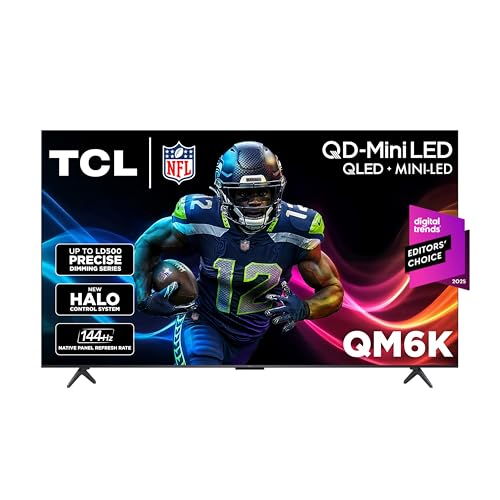
QM6K QD Mini-LED (65QM6K, 65-inch)
- •For the buyer who wants 65-inch mini-LED, Halo Control, and 144Hz VRR gaming, in stock today.
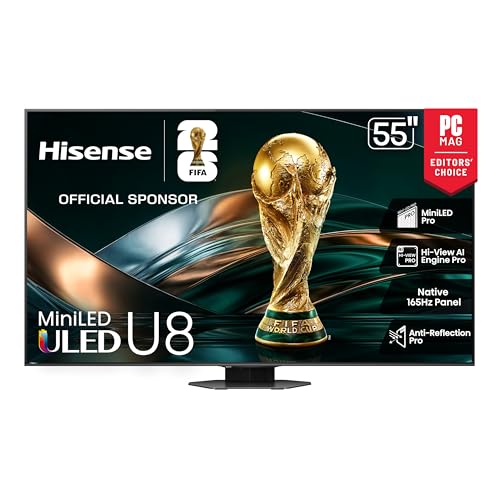
Hisense
U8QG Mini-LED ULED (55U8QG, 55-inch)
- •For the sunlit living room: Hisense rates the U8 series up to 5,000 nits peak at the top of the value tier.
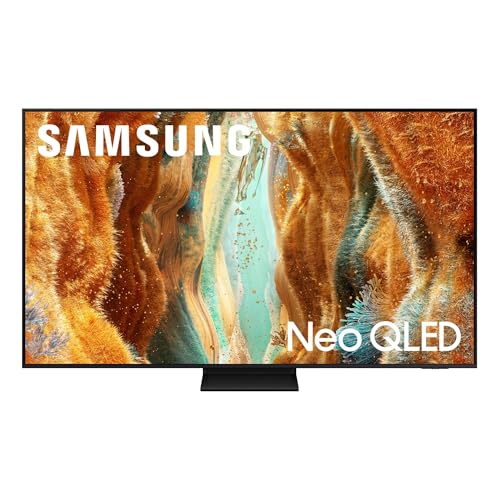
Samsung
QN70F Neo QLED (QN65QN70F, 65-inch)
- •For the Samsung household that wants Tizen, SmartThings, and Gaming Hub in one panel.
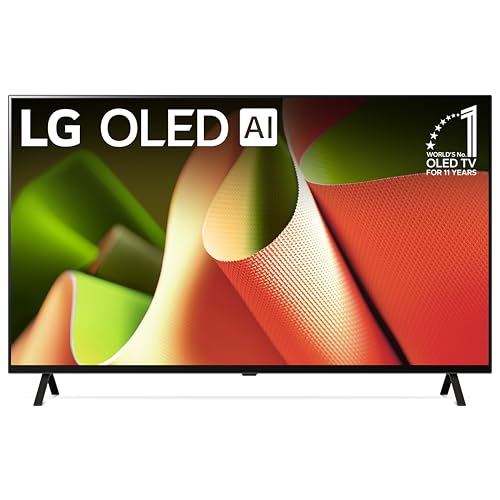
LG
B4 OLED (OLED55B4AUA, 55-inch)
- •For the dark-room viewer who wants infinite OLED contrast and four HDMI 2.1 ports under $1,000.
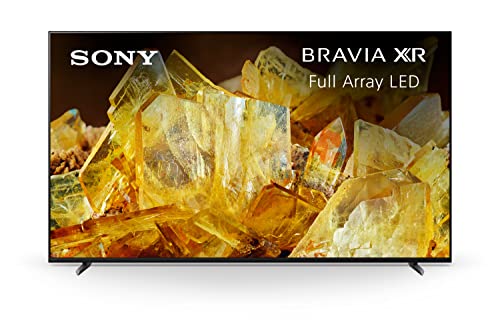
Sony
X90L BRAVIA XR Full Array LED (XR-65X90L, 65-inch)
- •For the streaming-heavy household that prizes Sony's motion handling and upscaling at 65 inches.
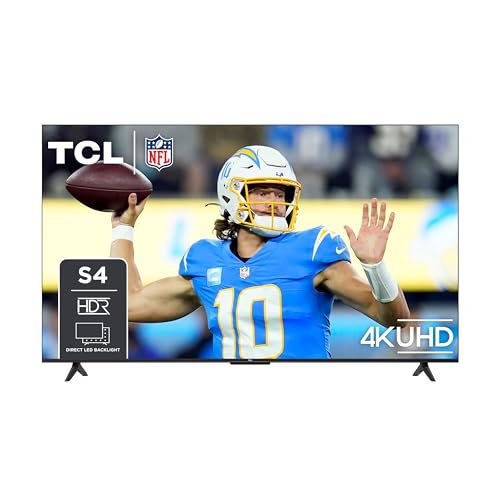
TCL
S4 4K (55S4, 55-inch)
- •For the cord-cutter who wants the cheapest decent Google TV 4K panel for a second room.
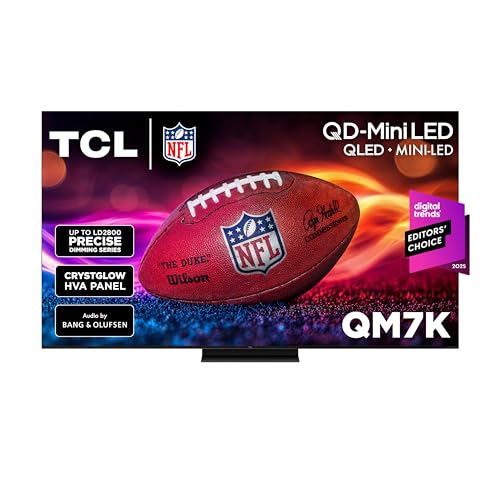
TCL
QM7K QD Mini-LED (55QM7K, 55-inch)
- •For the buyer who wants the most dimming zones, 144Hz gaming, and Bang & Olufsen audio at 55 inches.
Head to Head: Picture, Gaming, Dollar Performance, and Brightness
Smart TVs
Chart
 Smarthomeexplorer.com
SofaBaton X1S Universal Remote (with Hub)
Check price
VTOMAN X7 4250A Jump Starter with 160PSI Air Compressor
Check price
The Value Tier Is a Different Question
Because you have already concluded that spending 2x to 3x for a flagship is unjustifiable, the operative question becomes which under-$1,000 panel surrenders the least capability. That differs from identifying the "best TV," since the flagship OLEDs winning those roundups occupy our separate Best Premium Flagship OLED TVs (2026) guide rather than this evaluation.
This guide resolves the value-tier tradeoff through our weighted SHE Value-Flagship Score, a normalized composite synthesized from RTINGS, Tom's Guide, TechRadar, and Digital Trends reporting. The TCL QM7K leads our SHE Value-Flagship Score at 8.6 on roughly 5x the controlled dimming zones of the QM6K, but its availability verification returned nothing purchasable. Among the panels that remain purchasable, the TCL QM6K is our recommendation at 8.1. The Hisense U8QG retains 8.4 as the bright-room specialist, and the LG B4 remains the lone true-black OLED configuration beneath $1,000.
Best Overall Available: TCL QM6K QD Mini-LED (65QM6K, 65-inch)
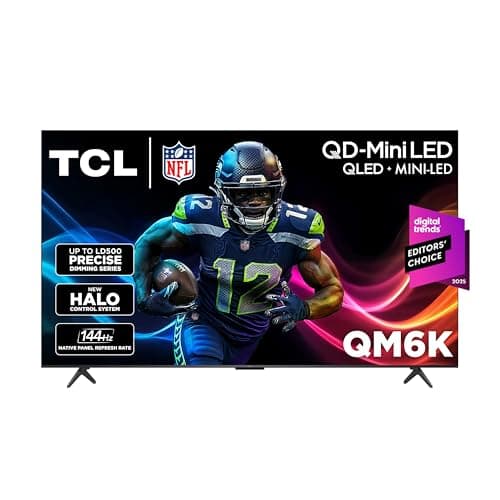
TCL QM6K QD Mini-LED (65QM6K, 65-inch)
- RTINGS calls it an affordable-premium QD Mini-LED with Halo Control to minimize blooming.
- Around 500 dimming zones, far fewer than the QM7K's up to 2,800, so contrast control is coarser.
(Current price, subject to change)
If you want a genuine mini-LED configuration rather than a basic LED panel, the TCL QM6K QD Mini-LED (65QM6K, 65-inch) is a sensible pick for that setup. At 65 inches it remains the most affordable mini-LED here carrying a live offer. RTINGS characterizes it as an affordable-premium QD Mini-LED incorporating Halo Control, Dolby Vision IQ, and HDMI 2.1, and designates it the strict-budget recommendation. TechRadar independently tested the 65-inch configuration and measured HDR peak brightness at 559.8 nits in Filmmaker mode alongside 695.5 nits in Standard, comparatively average for a budget mini-LED. You inherit the gaming specification and the Google TV platform the pricier TCL shares, at a substantially lower acquisition price.
What you relinquish is dimming precision: its roughly 500 zones amount to approximately a fifth of the TCL QM7K QD Mini-LED (55QM7K, 55-inch)'s available 2,800, so high-contrast scenes exhibit comparatively coarser highlight control. Its 8.1 on our SHE Value-Flagship Score reflects that division honestly. Compared to the QM7K it is demonstrably the weaker panel on specification, yet on 2026-08-22 the QM7K returned nothing purchasable, which is precisely why the QM6K leads this guide.
What We Love
- RTINGS calls it an affordable-premium QD Mini-LED with Halo Control to minimize blooming.
- TechRadar records 120Hz native with up to 144Hz VRR over HDMI 2.1, plus Dolby Vision IQ — the full gaming spec at the lowest mini-LED price here.
- RTINGS names it the strict-budget pick, including for the best 75-inch TV under $1,000.
What Could Be Better
- Around 500 dimming zones, far fewer than the QM7K's up to 2,800, so contrast control is coarser.
- Lower peak brightness than the U8QG, so bright-room HDR has less punch.
- The VA panel narrows viewing angles off-axis.
The Verdict
If you want 65-inch mini-LED you can buy today and you've shortlisted the TCL QM6K QD Mini-LED (65QM6K, 65-inch), this is a sensible pick for that setup — Halo Control, Dolby Vision IQ, and 144Hz VRR over HDMI 2.1.
Check price for the TCL QM6K QD Mini-LED (65QM6K, 65-inch) →
Ready for game day?
EUHOMY Commercial Ice Maker, 100 lb/day
See it on Amazon
AKASO Mini Projector
See it on Amazon
Bose Lifestyle Ultra Soundbar
See it on Amazon
Sponsored listings from Amazon’s Sponsored Products for Creators program, kept apart from our reviews and rankings. How we make money
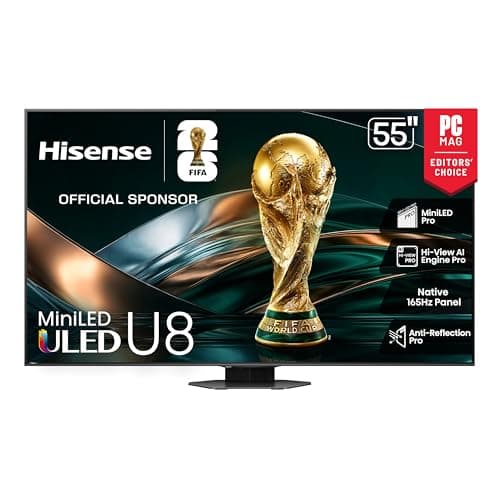
Best Bright-Room Mini-LED: Hisense U8QG Mini-LED ULED (55U8QG, 55-inch)
Hisense U8QG Mini-LED ULED (55U8QG, 55-inch)
- Hisense rates the U8 series up to 5,000 nits peak brightness, the bright-room specification of this tier.
- RTINGS tested the 65-inch U8QG and says its results should not be assumed to carry to the 55-inch panel.
(Current price, subject to change)
For the household whose foremost problem is a bright, window-lit room, the Hisense U8QG Mini-LED ULED (55U8QG, 55-inch) lines up with what you actually need. We positioned it here on brightness, because Hisense rates the U8 series up to 5,000 nits peak and Tom's Guide identifies the U8QG as a brightness star. One qualification belongs on the record. RTINGS purchased and evaluated the 65-inch U8QG, and states explicitly that its measurements should not be assumed to characterize the 55-inch. This guide therefore quotes no measured nits figure for that configuration. Relative to any OLED at this particular price, the mini-LED backlight still delivers bright-room headroom none of them approaches.
The honest qualification is which size you buy. The 55-inch configuration we anchor on remains comfortably inside the value tier. The 65-inch U8QG frequently lists above $1,000, relocating it into the Best Premium Flagship OLED TVs (2026) territory this guide deliberately stays beneath, and the VA panel narrows considerably off-axis. At 8.4 it sits just behind the TCL QM7K QD Mini-LED (55QM7K, 55-inch) on our SHE Value-Flagship Score, because its zone-count edge is offset by the QM7K's lower price. On 2026-08-22 its availability verification returned an in-stock offer sold directly by Amazon. For a dark room, the LG B4 OLED (OLED55B4AUA, 55-inch) delivers better contrast for less.
What We Love
- Hisense rates the U8 series up to 5,000 nits peak brightness, the bright-room specification of this tier.
- Mini-LED backlight with full-array local dimming, the contrast-control architecture this tier is built on.
- Google TV with a 144Hz panel, VRR, and ALLM on HDMI 2.1 for console and PC play.
What Could Be Better
- RTINGS tested the 65-inch U8QG and says its results should not be assumed to carry to the 55-inch panel.
- The 65-inch model frequently lists above $1,000, so only the 55-inch reliably stays in the value tier.
- Hisense's interface has historically had slower software updates than Samsung or LG.
The Verdict
For the sunlit-room buyer who has shortlisted the Hisense U8QG Mini-LED ULED (55U8QG, 55-inch), this checks the boxes that matter for bright spaces — a mini-LED backlight Hisense rates up to 5,000 nits peak across the U8 series, well beyond what the OLED picks here reach.
Check price for the Hisense U8QG Mini-LED ULED (55U8QG, 55-inch) →
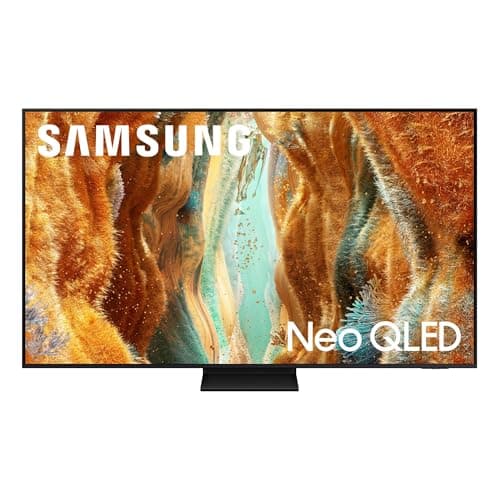
Best for SmartThings: Samsung QN70F Neo QLED (QN65QN70F, 65-inch)
Best for SmartThings HouseholdsSamsung QN70F Neo QLED (QN65QN70F, 65-inch)
- RTINGS documents Quantum Matrix local dimming and an NQ4 AI Gen2 processor across the QN70F lineup.
- Tom's Guide notes its AI Mode is no panacea and you can get a better experience for around the same price or less.
(Current price, subject to change)
If your home already runs on Samsung SmartThings and you want the TV to slot into that, the Samsung QN70F Neo QLED (QN65QN70F, 65-inch) earns its place for you specifically. RTINGS documents its Quantum Matrix local dimming and NQ4 AI Gen2 processor, and Tizen ties Samsung appliances and Matter devices into one app in a way no Google TV pick here matches for a Samsung household. Gaming Hub adds Xbox, GeForce Now, and Luna cloud streaming at 144Hz with VRR, which is a real convenience if you do not own a console.
The honest qualification, and the reason it sits at 7.6 rather than higher on our Value-Flagship Score, is that Tom's Guide is blunt about the value: its AI Mode lifts the picture to a generally pleasant viewing experience but is no panacea, and you can get a better experience for around the same price or less. Against the TCL QM7K QD Mini-LED (55QM7K, 55-inch) and Hisense U8QG Mini-LED ULED (55U8QG, 55-inch) on pure picture-per-dollar, the QN70F trails. It also drops Dolby Vision and Apple HomeKit. For a Samsung-ecosystem buyer the integration justifies the pick; for anyone neutral on platform, one of the TCL or Hisense sets is the stronger value.
What We Love
- RTINGS documents Quantum Matrix local dimming and an NQ4 AI Gen2 processor across the QN70F lineup.
- Tizen with SmartThings ties Samsung appliances and Matter devices into one app.
- Gaming Hub streams Xbox, GeForce Now, and Luna without a console, at 144Hz with VRR.
What Could Be Better
- Tom's Guide notes its AI Mode is no panacea and you can get a better experience for around the same price or less.
- No Dolby Vision, HDR10+ only, which limits some streaming HDR titles.
- No Apple HomeKit support for iPhone-centric households.
The Verdict
If you run a Samsung SmartThings home and you've shortlisted the Samsung QN70F Neo QLED (QN65QN70F, 65-inch), you'll be well-served here — Tizen, SmartThings, and Gaming Hub in one panel — though Tom's Guide is right that the value is tighter than its rivals.
Check price for the Samsung QN70F Neo QLED (QN65QN70F, 65-inch) →
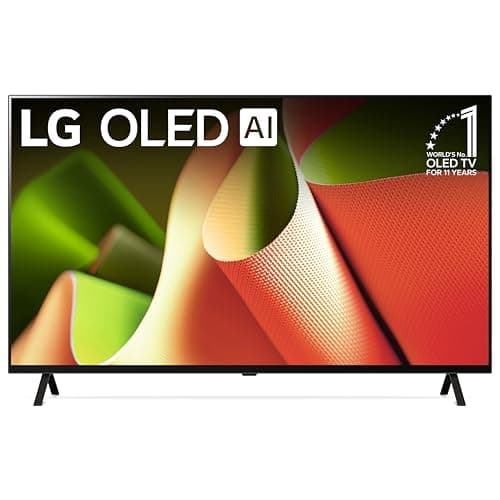
Best OLED Under $1k: LG B4 OLED (OLED55B4AUA, 55-inch)
Best OLED Under $1,000LG B4 OLED (OLED55B4AUA, 55-inch)
- Self-lit OLED pixels deliver infinite contrast and perfect blacks for dark-room viewing.
- Only the 55-inch stays under $1,000; larger sizes leave the value tier.
(Current price, subject to change)
If you watch mostly in a dark or light-controlled room, the LG B4 OLED (OLED55B4AUA, 55-inch) is the right call, because it is the one panel here with self-lit OLED pixels and the infinite contrast that comes with them. RTINGS describes it as an entry-level OLED with the Alpha 8 AI Processor 4K, the budget option below the C4, and TechRadar calls it the top budget OLED that gets even better for gaming. Its 4x HDMI 2.1 ports give it the most complete gaming connectivity here, double the 2x on the Sony, and webOS supports Alexa, Google, and AirPlay.
Where you should pause is room light and size. The LG B4 OLED (OLED55B4AUA, 55-inch)'s peak brightness sits below the mini-LED picks, so in a sunlit room the Hisense U8QG Mini-LED ULED (55U8QG, 55-inch) genuinely looks better. OLED additionally carries the familiar burn-in susceptibility whenever static content remains onscreen for 2 hours unchanged. Only the 55-inch configuration stays under $1,000. Step up to 65 inches and the B4 departs the value tier, at which point the flagship OLEDs in our Best Premium Flagship OLED TVs (2026) guide enter the conversation. Its 8.0 on our SHE Value-Flagship Score reflects an honest split, because it wins contrast and gaming connectivity but gives up the brightness the mini-LED sets hold.
What We Love
- Self-lit OLED pixels deliver infinite contrast and perfect blacks for dark-room viewing.
- Four HDMI 2.1 ports, the most complete gaming connectivity of any pick in this guide.
- TechRadar calls it the top budget OLED that gets even better for gaming.
What Could Be Better
- Only the 55-inch stays under $1,000; larger sizes leave the value tier.
- Lower peak brightness than the mini-LED picks, so it is weaker in very bright rooms.
- OLED carries a static-image burn-in risk for hours of unchanging content.
The Verdict
If dark-room cinema is your priority and you've shortlisted the LG B4 OLED (OLED55B4AUA, 55-inch), this fits the brief — it's the one true-black OLED on this list that stays under $1,000, with four HDMI 2.1 ports for gaming.
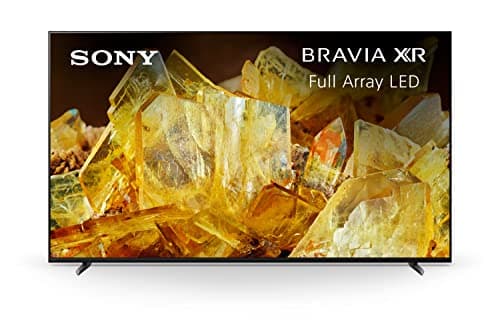
Best Processing: Sony X90L BRAVIA XR Full Array LED (XR-65X90L, 65-inch)
Best Processing and MotionSony X90L BRAVIA XR Full Array LED (XR-65X90L, 65-inch)
- RTINGS credits its Cognitive Processor XR with the most natural motion and upscaling of any pick here.
- RTINGS flags a VA viewing-angle weakness that narrows the picture off-axis.
(Current price, subject to change)
If a substantial portion of what you watch is compressed streaming, where the source is rarely pristine 4K, the Sony X90L BRAVIA XR Full Array LED (XR-65X90L, 65-inch) earns its slot, because Sony's processing is its genuine advantage over the value tier. RTINGS credits the Cognitive Processor XR with the most natural motion and upscaling here, scores it 8.1 Mixed Usage and 8.4 HDR Gaming, and measures contrast around 42,222 to 1 with local dimming engaged, deep blacks for a full-array LED. Digital Trends characterized it as a surprise hit, and it runs 4K at 120Hz with G-Sync, a meaningful pairing for the PS5 owner who games for 2 hours an evening.
The honest qualification is that it remains a 2023-generation set still widely sold, so its specification sheet trails the newest TCL picks: 120Hz rather than 144Hz, a VA panel that RTINGS flags for narrow off-axis viewing, and lower peak brightness than the Hisense U8QG Mini-LED ULED (55U8QG, 55-inch). It ties the TCL QM6K QD Mini-LED (65QM6K, 65-inch) at 8.1 on our SHE Value-Flagship Score by the opposite route of processing and motion rather than price and zone count. For a streaming-heavy PS5 household that values clean motion, the X90L is the appropriate pick; for a gamer chasing maximum refresh, the TCL sets pull decisively ahead.
What We Love
- RTINGS credits its Cognitive Processor XR with the most natural motion and upscaling of any pick here.
- Full-array LED that RTINGS measures around 42,222:1 contrast with local dimming engaged, for deep blacks in its class.
- RTINGS scores it 8.1 Mixed Usage and 8.4 HDR Gaming, with 4K/120Hz and G-Sync for PS5.
What Could Be Better
- RTINGS flags a VA viewing-angle weakness that narrows the picture off-axis.
- 120Hz rather than the 144Hz on the TCL mini-LED picks.
- Lower peak brightness than the U8QG for very bright rooms.
The Verdict
If you stream a lot of compressed content and you've shortlisted the Sony X90L BRAVIA XR Full Array LED (XR-65X90L, 65-inch), this is a sensible pick for that setup — Sony's Cognitive Processor XR gives it the cleanest motion and upscaling in the tier, with 8.1/8.4 RTINGS scores.
Check price for the Sony X90L BRAVIA XR Full Array LED (XR-65X90L, 65-inch) →
Best Under $400: TCL S4 4K (55S4, 55-inch)
TCL S4 4K (55S4, 55-inch)
- Google TV with built-in Google Assistant and Chromecast for the full streaming app library.
- Direct-lit LED contrast cannot match mini-LED or OLED in dark scenes.
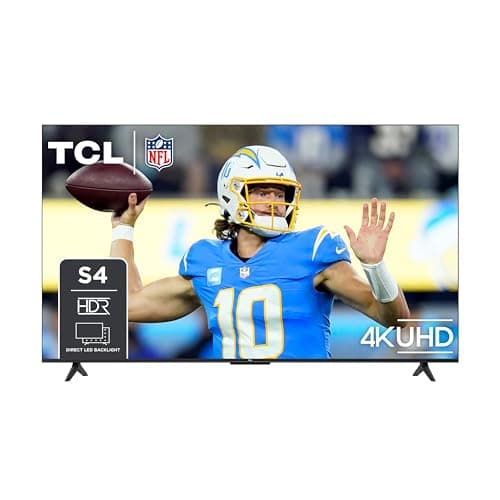
(Current price, subject to change)
If the goal is the lowest price that still gets you a real 4K streaming panel, the TCL S4 4K (55S4, 55-inch) is a sensible pick for that setup, and at well under $400 it is the budget anchor of this guide. It runs the same Google TV platform as the pricier TCL sets, with built-in Google Assistant and Chromecast and the full streaming app library, so the software experience is genuinely good for the money. A direct-lit 4K HDR panel delivers real 4K resolution from every major service, and ARC audio output connects a soundbar without a separate optical cable.
What you concede on the TCL S4 4K (55S4, 55-inch) is everything that the mini-LED and OLED picks above buy you: direct-lit LED contrast cannot match mini-LED or OLED in dark scenes, HDMI 2.0 caps gaming at 4K/60Hz, and peak brightness is low enough that HDR looks flatter than on the premium panels. Its 7.0 on our Value-Flagship Score reflects that — it is the platform-and-price pick, not the picture pick. For a secondary bedroom or a cord-cutter who watches in moderate light, it is exactly enough; for the main living-room set, spend up to the TCL QM6K QD Mini-LED (65QM6K, 65-inch) or TCL QM7K QD Mini-LED (55QM7K, 55-inch).
What We Love
- Google TV with built-in Google Assistant and Chromecast for the full streaming app library.
- Direct-lit 4K HDR panel delivers genuine 4K from every major streaming service.
- The cheapest decent streaming panel here, at well under $400 for 55 inches.
What Could Be Better
- Direct-lit LED contrast cannot match mini-LED or OLED in dark scenes.
- HDMI 2.0 ports cap gaming at 4K/60Hz, so there is no 4K/120Hz.
- Lower peak brightness makes HDR look flatter than the premium picks.
The Verdict
If you just want the cheapest decent streaming panel for a second room and you've shortlisted the TCL S4 4K (55S4, 55-inch), this fits the brief — Google TV and genuine 4K HDR for under $400, no need to overthink it.
Most Dimming Zones: TCL QM7K QD Mini-LED (55QM7K, 55-inch)
Best Overall ValueTCL QM7K QD Mini-LED (55QM7K, 55-inch)
- RTINGS measured up to 2,800 local dimming zones, far more than the QM6K's roughly 500, for tight highlight control.
- The 65-inch SKU's Buy Box price is volatile and sometimes drifts above the value-tier ceiling.
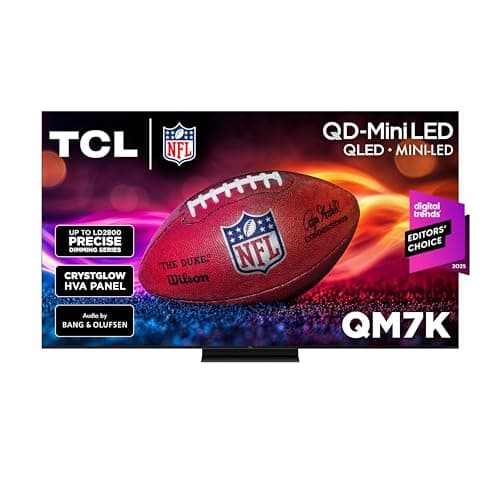
(Current price, subject to change)
If your priority is the most measured performance for the least expenditure, the TCL QM7K QD Mini-LED (55QM7K, 55-inch) is the appropriate call. That is precisely why it occupies the summit of our SHE Value-Flagship Score at 8.6. RTINGS documents up to 2,800 local dimming zones, approximately 5x the QM6K's count. That enables the QD Mini-LED panel to produce tight, well-controlled highlights rather than the soft blooming cheaper configurations exhibit. TechRadar characterizes it as a mid-range mini-LED offering exceptional performance for the price, with Halo Control keeping blooming at bay. The 144Hz refresh across its HDMI 2.1 inputs yields a panel surrendering remarkably little to competing sets costing 2x as much.
Where you should pause is the configuration you purchase. The 55-inch we anchor on remains the value sweet spot. The 65-inch QM7K's listed price fluctuates considerably, occasionally climbing past the value-tier ceiling this guide adheres to. The VA panel additionally narrows off-axis, so seating arranged widely relinquishes contrast at the edges. For a typical Google TV household with a front-facing couch, that changes nothing. For a very bright sunroom, the Hisense U8QG Mini-LED ULED (55U8QG, 55-inch) and its considerably higher peak brightness is the preferable fit.
What We Love
- RTINGS measured up to 2,800 local dimming zones, far more than the QM6K's roughly 500, for tight highlight control.
- 144Hz native refresh with HDMI 2.1 and low input lag delivers the full gaming spec at a mid-range price.
- Bang & Olufsen-tuned onboard audio is a genuine step above most sets in this tier.
What Could Be Better
- The 65-inch SKU's Buy Box price is volatile and sometimes drifts above the value-tier ceiling.
- The VA panel narrows off-axis, so a wide seating arrangement loses contrast at the edges.
- Onboard audio still trails a dedicated soundbar for a real home-theater room.
The Verdict
If you want the most TV per dollar under $1,000 and you've shortlisted the TCL QM7K QD Mini-LED (55QM7K, 55-inch), this fits the brief without compromise — up to 2,800 dimming zones and 144Hz gaming well below the flagship tier.
Check price for the TCL QM7K QD Mini-LED (55QM7K, 55-inch) →
How We Score: SHE Value-Flagship Score
SHE Value-Flagship Score
Score Formula
(0.30 × Picture Quality) + (0.25 × Dollar Performance) + (0.20 × Gaming) + (0.15 × Smart Platform) + (0.10 × Brightness)Score Factors
- Picture Quality (weight 0.30)RTINGS measured contrast, black level, color volume, and local-dimming quality, normalized to 0-10. The Hisense U8QG and TCL QM7K lead on mini-LED contrast control and the LG B4 wins on OLED black level, while the TCL S4's direct-lit panel scores lowest. Picture stays the top weight because it remains the primary purchase driver even in the value tier.
- Dollar Performance (weight 0.25)Measured performance per $100 at the common 55- or 65-inch street price — the value lever that defines this guide. The TCL QM7K leads because up to 2,800 dimming zones and 144Hz at a value-tier price is the most performance per dollar here; the Samsung QN70F scores lowest because Tom's Guide notes a better experience exists for the same price or less.
- Gaming (weight 0.20)HDMI 2.1 port count, maximum refresh rate, VRR and ALLM support, and input lag from RTINGS. The LG B4's four HDMI 2.1 ports and the TCL picks' 144Hz lead; the Sony X90L's 120Hz and the TCL S4's HDMI-2.0-capped 4K/60Hz trail.
- Smart Platform (weight 0.15)Smart-OS speed and breadth plus native voice and ecosystem depth — Google TV, Tizen, or webOS with Alexa, Google, Matter, or SmartThings. Google TV's app breadth scores well across the TCL, Hisense, and Sony picks; the Samsung QN70F's Tizen-plus-SmartThings is strongest for Samsung households specifically.
- Brightness (weight 0.10)Bright-room capability, normalized from published measurements and manufacturer peak-brightness ratings. The Hisense U8QG leads on a series rating of up to 5,000 nits peak; the LG B4 OLED scores lowest. Per-size measurements are not published for every SKU here, so this factor is weighted lowest and never carries a pick on its own.
SHE Value-Flagship Score — Ranked
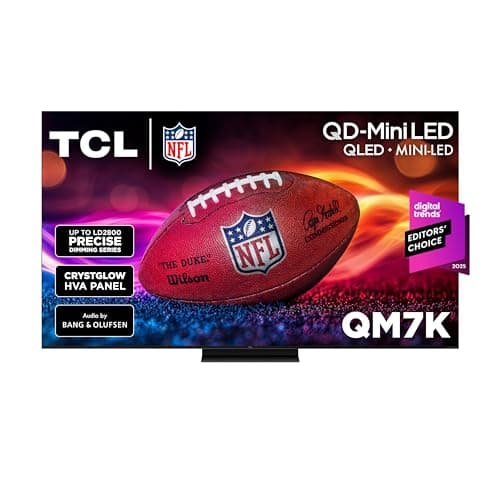
TCL QM7K QD Mini-LED (55QM7K, 55-inch)
SHE Value-Flagship Score8.6/10Up to 2,800 dimming zones and 144Hz gaming top the composite; no purchasable offer on the 2026-08-22 check.
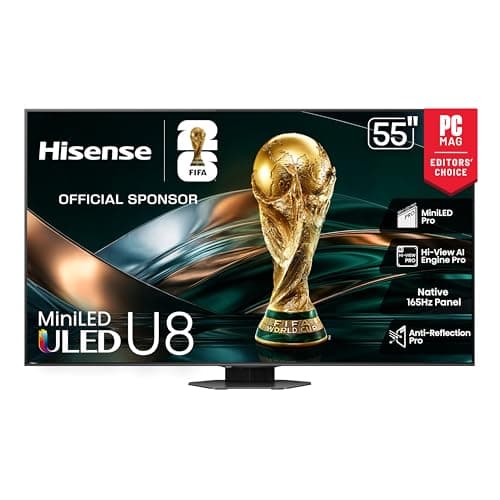
Hisense U8QG Mini-LED ULED (55U8QG, 55-inch)
SHE Value-Flagship Score8.4/10The bright-room specialist, rated up to 5,000 nits across the series; just behind the QM7K on dollar performance.
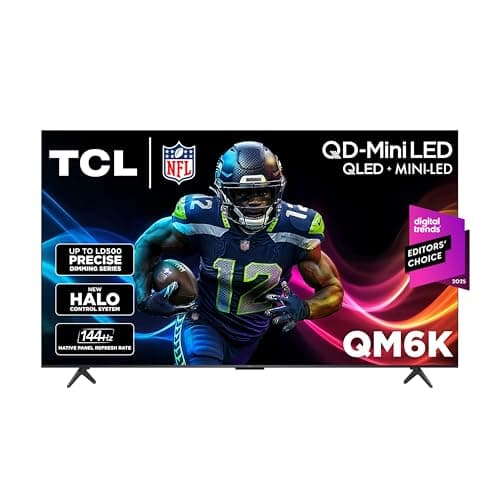
TCL QM6K QD Mini-LED (65QM6K, 65-inch)
SHE Value-Flagship Score8.1/10Our overall pick among the panels with a purchasable offer; ties the Sony despite coarser dimming.
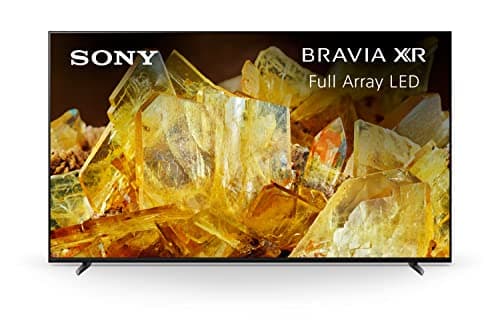
Sony X90L BRAVIA XR Full Array LED (XR-65X90L, 65-inch)
SHE Value-Flagship Score8.1/10Best motion and upscaling here; ties the QM6K by the opposite route of processing rather than price.
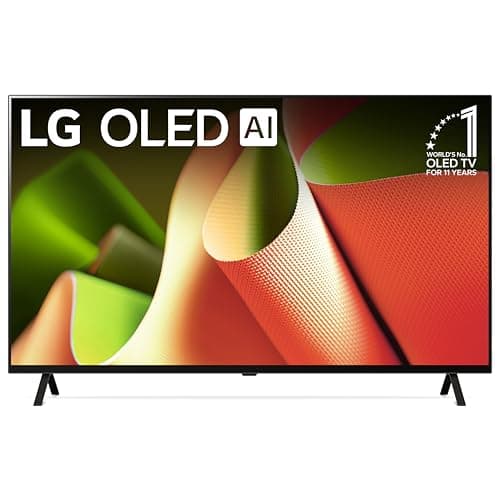
LG B4 OLED (OLED55B4AUA, 55-inch)
SHE Value-Flagship Score8.0/10The one true-black OLED on this list under $1,000, winning contrast and gaming connectivity but giving up brightness.
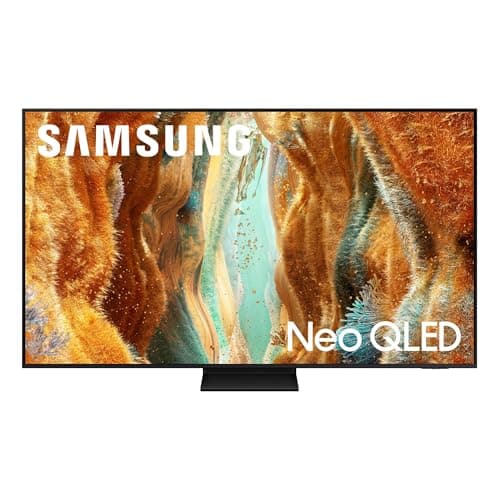
Samsung QN70F Neo QLED (QN65QN70F, 65-inch)
SHE Value-Flagship Score7.6/10Strong for Samsung SmartThings homes, but trails on pure picture-per-dollar per Tom's Guide.
SHE Value-Flagship Score
Weighted composite of picture quality, dollar performance, gaming, smart platform, and brightness (0-10).
SmartHomeExplorer composite of manufacturer specs and RTINGS, Tom's Guide, TechRadar, and Digital Trends reporting.
Smart Platform and Voice Assistant Fit
This is where the recurring "which OS should I get?" question finally resolves itself for the value tier, and it deserves more than a 5 mins glance because the platform outlives the panel over a 3-year ownership horizon. Five of the seven picks run Google TV — the TCL QM7K, TCL QM6K, Hisense U8QG, Sony X90L, and the budget TCL S4 — which provides built-in Google Assistant, Chromecast, and the broadest streaming app library, and which represents the cleanest fit for an Android-phone or Google Home household. The LG B4 runs webOS with Alexa, Google, and Apple AirPlay, making it the most ecosystem-neutral option here and the only set that communicates with all 3 major voice paths. The Samsung QN70F runs Tizen with SmartThings, which is the strongest choice only when you already own Samsung appliances and want the TV inside that single app; for anyone neutral on platform, Google TV's app breadth and cleaner search edge it out. None of these delivers full Apple HomeKit scene control, so iPhone-first households that want deep Home automation should weigh the LG B4's AirPlay support as the closest fit.
| Product | Google Assistant | Alexa | Chromecast | AirPlay | SmartThings |
|---|---|---|---|---|---|
| TCL QM6K QD Mini-LED (65QM6K, 65-inch) | ✓ | ✓ | ✓ | ✕ | ✕ |
| TCL QM7K QD Mini-LED (55QM7K, 55-inch) | ✓ | ✓ | ✓ | ✕ | ✕ |
| Hisense U8QG Mini-LED ULED (55U8QG, 55-inch) | ✓ | ✓ | ✓ | ✕ | ✕ |
| Samsung QN70F Neo QLED (QN65QN70F, 65-inch) | ✓ | ✓ | ✕ | ✓ | ✓ |
| LG B4 OLED (OLED55B4AUA, 55-inch) | ✓ | ✓ | ✕ | ✓ | ✕ |
| Sony X90L BRAVIA XR Full Array LED (XR-65X90L, 65-inch) | ✓ | ✓ | ✓ | ✓ | ✕ |
| TCL S4 4K (55S4, 55-inch) | ✓ | ✓ | ✓ | ✕ | ✕ |
Brightness Versus Contrast: the Mini-LED and OLED Tradeoff
The single decision that separates these picks is room light, and it resolves to mini-LED versus OLED. Mini-LED — the TCL QM7K, TCL QM6K, Hisense U8QG, and the Samsung QN70F's Neo QLED variant — wins bright rooms outright. Hisense rates the U8 series up to 5,000 nits peak, a level no OLED in this price range approaches. In a sunlit space that headroom delivers HDR that genuinely pops rather than HDR that looks flat. OLED, of which only the LG B4 here stays under $1,000, wins dark rooms outright. Self-lit pixels yield infinite contrast and true blacks no mini-LED dimming algorithm fully matches, with no visible blooming around bright objects on a black field. Our SHE Value-Flagship Score weights picture quality highest and brightness separately, precisely so that a dark-room buyer and a bright-room buyer reach different top picks from the same measured data.
Price is the other axis, and it is where the value tier earns its name across a 3-year ownership horizon. Relative to the flagship OLEDs in our Best Premium Flagship OLED TVs (2026) guide, every pick here delivers most of the experience for a fraction of the money, which is exactly why our SHE Value-Flagship Score weights dollar performance so heavily for this buyer. The honest tradeoff is that you give up the very top of measured brightness, the largest sizes at OLED prices, and a year or 2 of the newest processing. For the buyer who has decided the flagship spend is not worth it, that is the trade this guide is built around. Budget a soundbar regardless of which you pick, because none of these produces audio that does a good panel justice, and a hard burn-in habit of leaving a static channel on for hours still favors the mini-LED sets over the OLED.
When NOT to Buy
Stub WNTB (Block 3B fallback).
Who Should Buy What
Who Should Buy What
| If you are… | Recommended pick |
|---|---|
Value-first all-rounder You want 65-inch mini-LED, 144Hz VRR gaming, and Google TV for the least money available today. | TCL QM6K QD Mini-LED (65QM6K, 65-inch) |
Bright, sunlit living room Your room fights ambient light all day and you want the mini-LED rated highest for peak brightness in this tier. | Hisense U8QG Mini-LED ULED (55U8QG, 55-inch) |
Dark-room cinema viewer You watch in a light-controlled room, you want true OLED blacks and infinite contrast, and you want to stay under $1,000. | LG B4 OLED (OLED55B4AUA, 55-inch) |
Samsung-ecosystem household You already run SmartThings or Samsung appliances and want the TV inside that one app with Gaming Hub. | Samsung QN70F Neo QLED (QN65QN70F, 65-inch) |
Tight-budget second room You want the cheapest decent Google TV 4K panel for a bedroom or guest room and 4K/60Hz gaming is enough. | TCL S4 4K (55S4, 55-inch) |
Highlight-control purist Dimming-zone count decides it for you and nothing else will do, so up to 2,800 zones is the specification to hold out for. | TCL QM7K QD Mini-LED (55QM7K, 55-inch) |
Frequently Asked Questions
What is the best 65-inch smart TV under $1,000 in 2026?
The TCL QM6K is the strongest 65-inch that reliably stays under $1,000. It pairs QD Mini-LED and Halo Control with 120Hz native refresh carrying up to 144Hz VRR per TechRadar. It is also the only 65-inch mini-LED here that returned a purchasable offer on our 2026-08-22 check. The Sony X90L at 65 inches is the pick if you value Sony's processing and motion over refresh rate. The TCL QM7K and Hisense U8QG are best bought at 55 inches in this tier, because their 65-inch Buy Box prices swing above $1,000.
Is OLED or mini-LED better for a TV under $1,000?
It depends on your room. Mini-LED wins bright rooms: Hisense rates the U8QG series up to 5,000 nits peak, headroom no OLED at this price approaches. Note that RTINGS tested the 65-inch U8QG and says its results should not be assumed to carry to the 55-inch, so treat the series rating as a ceiling rather than a measured result for that size. OLED wins dark rooms: the LG B4's self-lit pixels deliver infinite contrast and true blacks no mini-LED fully matches. Among our picks the LG B4 is the OLED that fits under $1,000 at 55 inches.
Do I need an external streaming device with these TVs?
For most buyers, no. Five of these run Google TV with built-in Google Assistant, Chromecast, and the full app library, the LG B4 runs webOS, and the Samsung runs Tizen — all have every major streaming service. An external Apple TV 4K or Roku still adds a cleaner ad-free interface and, in Apple TV's case, a HomeKit hub, so keep one if you already own it; you do not need to buy one for these panels.
Which of these is best for Alexa, Google, or SmartThings?
For Google households, any of the four Google TV picks — the TCL QM7K, TCL QM6K, Hisense U8QG, or Sony X90L — fit natively. For a SmartThings or Samsung-appliance home, the Samsung QN70F's Tizen integration is the strongest. The LG B4 on webOS supports Alexa, Google, and Apple AirPlay, making it the most ecosystem-neutral pick if you mix platforms.
TCL QM6K versus QM7K: which should I buy?
The QM7K is the better TV: RTINGS measured up to 2,800 dimming zones on it versus around 500 on the QM6K, so its highlight control is much tighter, and that is why the QM7K leads our Value-Flagship Score at 8.6. The practical answer in 2026 is the QM6K at 65 inches, because it is the one of the two that returned a purchasable offer on our 2026-08-22 availability check. TechRadar measured the 65-inch QM6K at 559.8 nits HDR peak in Filmmaker mode and 695.5 nits in Standard, average for a budget mini-LED.
Is the Hisense U8QG worth close to $1,000?
If your room is bright, it is the mini-LED in this tier built for that job: Hisense rates the U8 series up to 5,000 nits peak, and Tom's Guide calls the U8QG a brightness star. Be aware of what has and has not been measured, though. RTINGS tested the 65-inch U8QG and says its results should not be assumed to carry to the 55-inch we anchor on, so no measured nits number for that size exists to quote. If you watch mostly in a dark room, the LG B4 OLED gives you better contrast for less.
Bottom Line
Get the TCL QM6K QD Mini-LED (65QM6K, 65-inch) if You want 65-inch mini-LED with Halo Control and 144Hz VRR gaming, and you want it in stock today.
Get the Hisense U8QG Mini-LED ULED (55U8QG, 55-inch) if Your room is bright and you want the mini-LED rated highest for peak brightness in this tier, at 55 inches.
Get the LG B4 OLED (OLED55B4AUA, 55-inch) if You watch in a dark room and want true OLED blacks and four HDMI 2.1 gaming ports while staying under $1,000.
Get the TCL S4 4K (55S4, 55-inch) if You want the cheapest decent Google TV 4K panel for a second room and 4K/60Hz gaming is enough.
Get the TCL QM7K QD Mini-LED (55QM7K, 55-inch) if Dimming-zone count is what decides it for you, and up to 2,800 zones with 144Hz gaming is the specification you will hold out for.
If you have decided you can spend more than $1,000, the flagship OLEDs — the LG G5, Samsung S95F, and Sony BRAVIA 8 II — win on measured brightness and the newest processing in our best-premium-oled-tvs-flagship-2026 guide. This guide is for buyers who have set the line at roughly $1,000.
Sources & Methodology
Methodology: SHE Value-Flagship Score — Formula: (0.30 × Picture Quality) + (0.25 × Dollar Performance) + (0.20 × Gaming) + (0.15 × Smart Platform) + (0.10 × Brightness). Factors: Picture Quality (weight 0.30): RTINGS measured contrast, black level, color volume, and local-dimming quality, normalized to 0-10. The Hisense U8QG and TCL QM7K lead on mini-LED contrast control and the LG B4 wins on OLED black level, while the TCL S4's direct-lit panel scores lowest. Picture stays the top weight because it remains the primary purchase driver even in the value tier. | Dollar Performance (weight 0.25): Measured performance per $100 at the common 55- or 65-inch street price — the value lever that defines this guide. The TCL QM7K leads because up to 2,800 dimming zones and 144Hz at a value-tier price is the most performance per dollar here; the Samsung QN70F scores lowest because Tom's Guide notes a better experience exists for the same price or less. | Gaming (weight 0.20): HDMI 2.1 port count, maximum refresh rate, VRR and ALLM support, and input lag from RTINGS. The LG B4's four HDMI 2.1 ports and the TCL picks' 144Hz lead; the Sony X90L's 120Hz and the TCL S4's HDMI-2.0-capped 4K/60Hz trail. | Smart Platform (weight 0.15): Smart-OS speed and breadth plus native voice and ecosystem depth — Google TV, Tizen, or webOS with Alexa, Google, Matter, or SmartThings. Google TV's app breadth scores well across the TCL, Hisense, and Sony picks; the Samsung QN70F's Tizen-plus-SmartThings is strongest for Samsung households specifically. | Brightness (weight 0.10): Bright-room capability, normalized from published measurements and manufacturer peak-brightness ratings. The Hisense U8QG leads on a series rating of up to 5,000 nits peak; the LG B4 OLED scores lowest. Per-size measurements are not published for every SKU here, so this factor is weighted lowest and never carries a pick on its own.
Expert review sources used in this analysis:
- Specifications and performance claims were verified as of June 2026
- They draw on RTINGS, TechRadar, Tom's Guide, and AVS Forum for the TCL QM7K
- They draw on RTINGS, Tom's Guide, and TechRadar for the Hisense U8QG
- RTINGS covers the TCL QM6K and the TCL S4
- Tom's Guide and RTINGS cover the Samsung QN70F
- RTINGS and TechRadar cover the LG B4 OLED, and RTINGS and Digital Trends cover the Sony X90L
- RTINGS measured the QM7K's up-to-2,800 dimming zones
- Tom's Guide named the U8QG a brightness star and noted the QN70F's AI Mode is no panacea
- TechRadar called the LG B4 the top budget OLED for gaming, and Digital Trends called the Sony X90L a surprise hit
- A correction to an earlier version of this guide: the 3,900-to-4,000-nit HDR peak previously printed for the 55-inch U8QG is not a 55-inch figure
- RTINGS states it bought and tested the 65-inch model, and that its results should not be assumed to carry to the 55-, 75-, or 100-inch versions
- Hisense's own 55U8QG page does publish a series-level rating of up to 5,000 nits peak brightness
- This guide quotes that as a manufacturer ceiling rather than as a measured result (rtings.com/tv/reviews/hisense/u8qg and hisense-usa.com, both re-read 2026-08-23)
- Every measured 55-inch nits claim has been removed rather than re-attributed
- TechRadar's own QM6K review tested the 65-inch and measured HDR peak brightness at 559.8 nits in Filmmaker mode and 695.5 nits in Standard
- It lists TCL's launch price for that size at $999.99 (techradar.com/televisions/tcl-qm6k-tv-review, read 2026-08-23)
- Prices for the Hisense U8QG, Samsung QN70F, LG B4, Sony X90L, and TCL S4 were verified live via the Amazon Creators API on June 17, 2026, at the sizes listed
- They change often
- The TCL QM6K and the Hisense U8QG were both re-verified as purchasable on 2026-08-22
- On that same check the TCL QM7K, LG B4, and Sony X90L returned no purchasable offer, so they are ranked on their measured merits rather than removed
- The QM6K leads this guide rather than the higher-scoring U8QG on the nits question alone
- The brightness figure that carried the U8QG is a 65-inch measurement, and RTINGS says its results should not be assumed to carry to the 55-inch
- The TCL QM7K 55-inch figure is an approximate street price rather than a Creators API quote
- The API returned no live price for that model at the time of writing
- The SHE Value-Flagship Score is SmartHomeExplorer's own weighted, normalized composite of those measured inputs
- It is distinct from the flagship picture rankings in our premium OLED guide, because it weights dollar performance heavily for the under-$1,000 buyer.
Nicholas Miles is the founder of SmartHomeExplorer and a longtime smart home enthusiast focused on helping everyday homeowners make better technology decisions. He researches, compares, and writes about products across security, climate, lighting, leak prevention, sensors, home energy, and automation, with an emphasis on real-world usefulness, ecosystem compatibility, reliability, privacy, and long-term value.
Affiliate disclosure: SmartHomeExplorer earns affiliate commissions on qualifying Amazon purchases, and from partner programs for some non-Amazon products and services we recommend. Our scoring methodology is independent of affiliate relationships.