

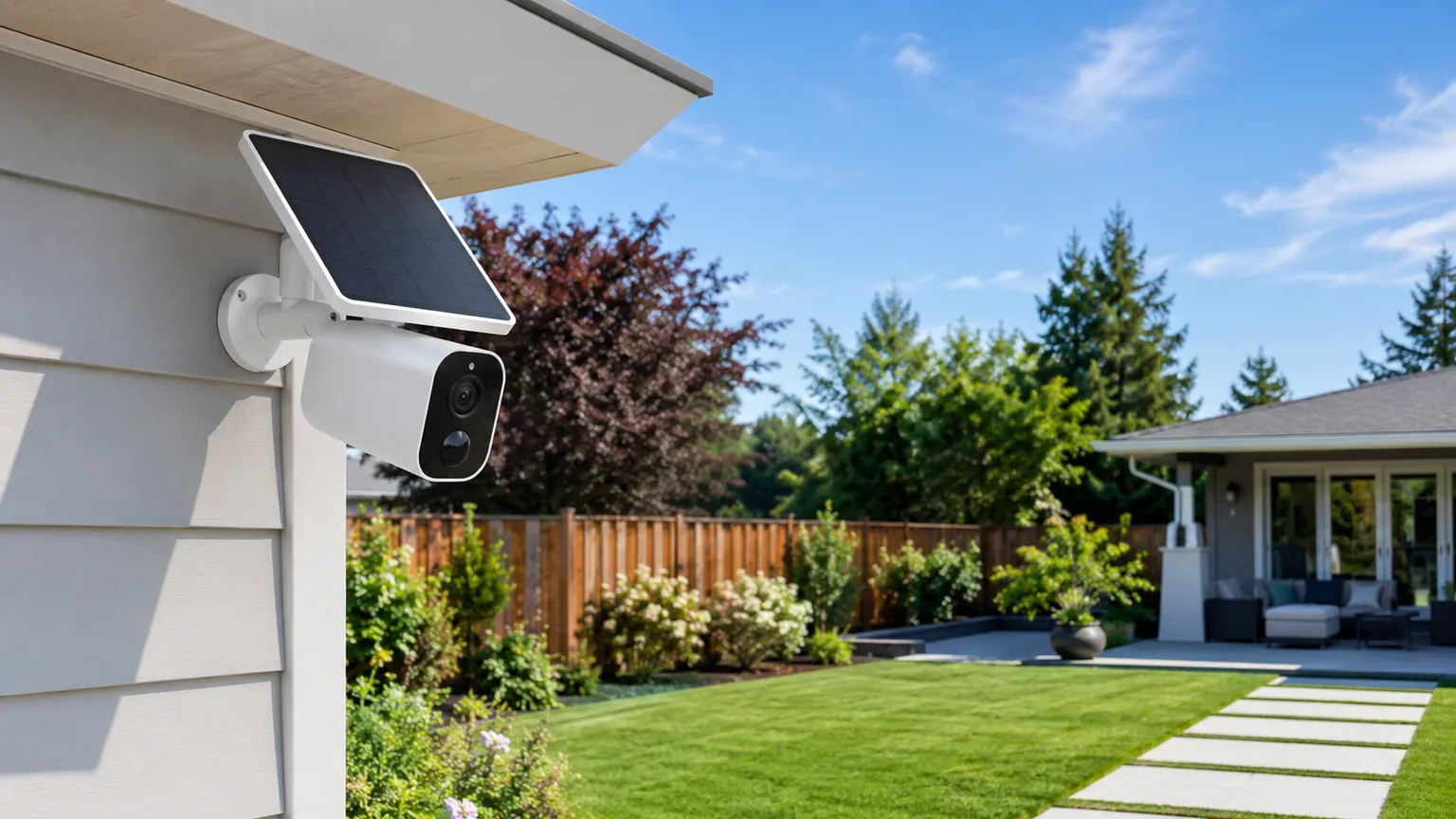
Best Solar 4K AI Security Cameras (No Subscription) 2026
The Reolink Argus 4 Pro wins — a 6W panel self-sustains on 10 min of daily sun, with on-device AI, free 512GB microSD, and zero monthly fees.
This article contains affiliate links. We may earn a commission at no extra cost to you. Prices change frequently — check the current price on Amazon before buying. Learn more
The Short Answer
The Reolink Argus 4 Pro prevails overall: its 6W panel self-sustains on roughly 10 min of daily sun. It integrates 4K detail, on-device AI, and free 512GB storage with zero fees. For an overcast lot, the Altas PT Ultra and its 500-day runway is preferable; the eufyCam S3 Pro kit excels at face recognition.
Featured in this Guide
Reolink
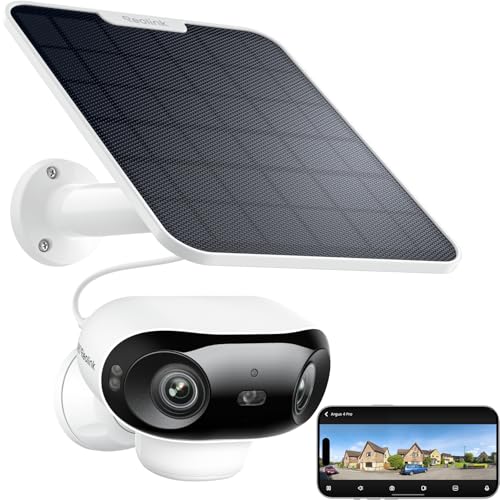
Argus 4 Pro 4K Solar Camera
- •6W panel self-sustains on 10 min of sun
- •4K dual-lens, free 512GB microSD, on-device AI, no fees

Reolink
Altas PT Ultra 4K Solar Camera
- •20,000mAh battery and 500-day runway shrug off a sunless month others cannot survive

Eufy
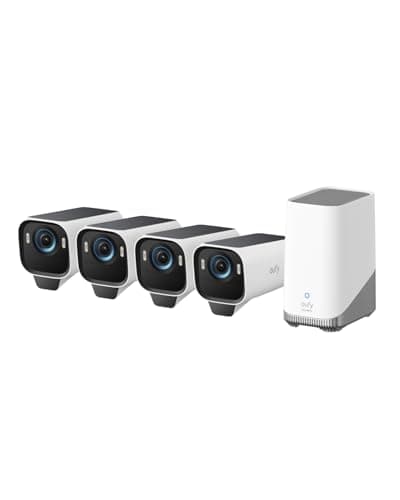
eufyCam S3 Pro 4-Cam Kit Solar Camera
- •On-device BionicMind face AI plus 16TB local NAS storage, all without a cloud subscription
Reolink
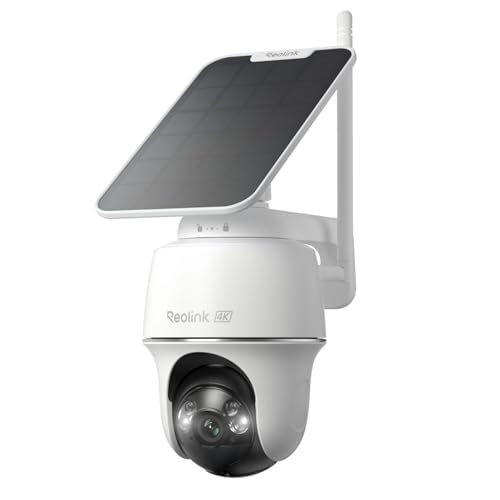
Argus PT Ultra 4K Solar Camera
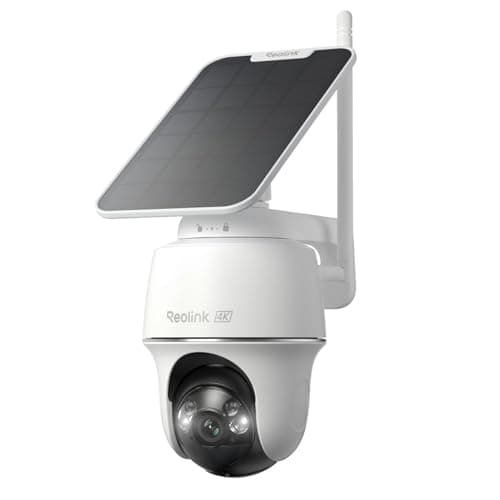
- •4K 360-degree auto-tracking on a 3W panel that needs only 20 min of daily sun, at $134.99
TP-Link
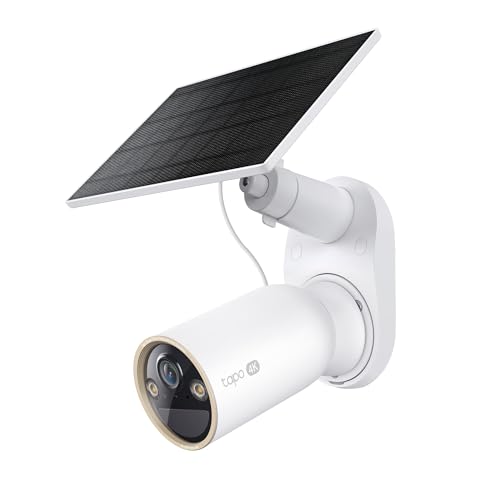
Tapo MagCam (C460 KIT)
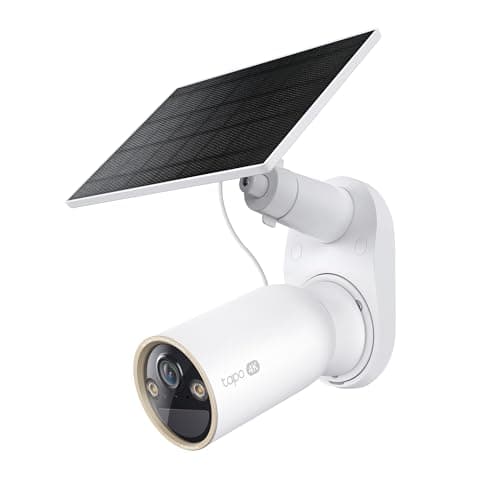
- •4K, on-device person detection, magnetic mount, free local storage at $111.99
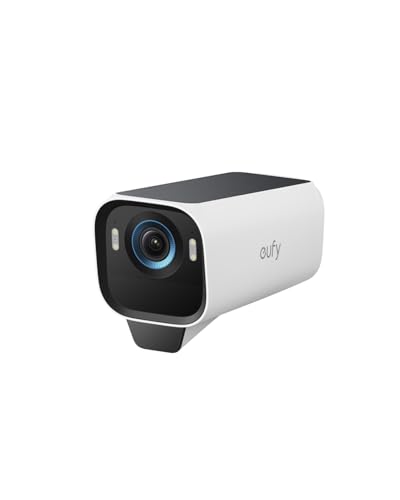
Eufy
eufyCam S3 Pro Add-on Solar Camera
Direct-sale only — not sold on Amazon
Read Review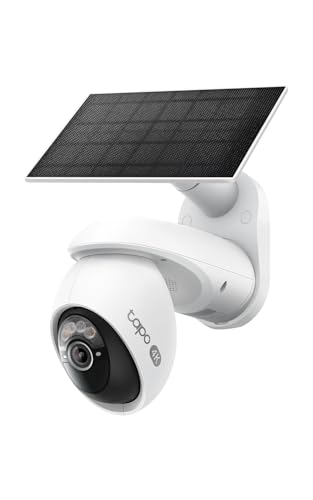
Head-to-Head: Solar, AI, Storage, and the SHE Score
Security
Chart
 Smarthomeexplorer.com
not sold on Amazon

Will It Run Itself Without a Bill?
You want one outdoor surveillance camera you install once and never reconsider. No ladder recharging, no monthly subscription, no false-alert notifications. The complication is that many "no subscription" cameras still restrict intelligent detection behind a paid plan, concealing a recurring fee within the listing.
In this roundup we scored eight 4K solar cameras on one weighted composite, the SHE Solar Camera Off-Grid Autonomy Score. Solar self-sufficiency carries the heaviest 30% coefficient, because panel wattage relative to daily illumination required is the specification buyers consistently misinterpret. The Argus 4 Pro 6W panel replenishes its battery on 10 min of sun; the SoloCam S340 2.2W panel needs roughly 2 hours. Tom's Guide and CNET corroborate that disparity. This guide normalizes solar sufficiency, classification accuracy, storage capacity, and fee structure into one comparable composite, weighing the autonomy you genuinely require over a 5-yr ownership window.
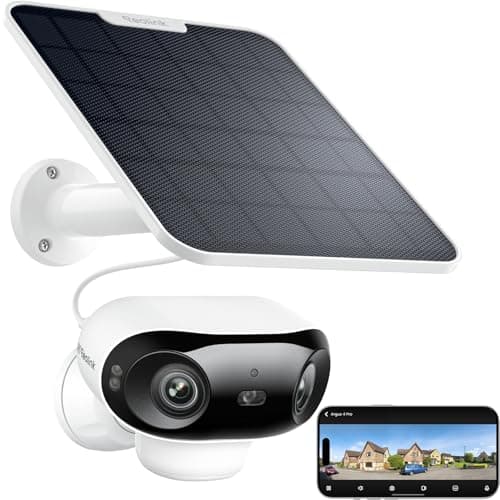
Best Overall: Reolink Argus 4 Pro 4K Solar Camera
Reolink Argus 4 Pro 4K Solar Camera
- Best solar ratio here: a 6W panel net-positives the battery on roughly 10 min of daily sun
- No on-device face recognition like the eufyCam S3 Pro
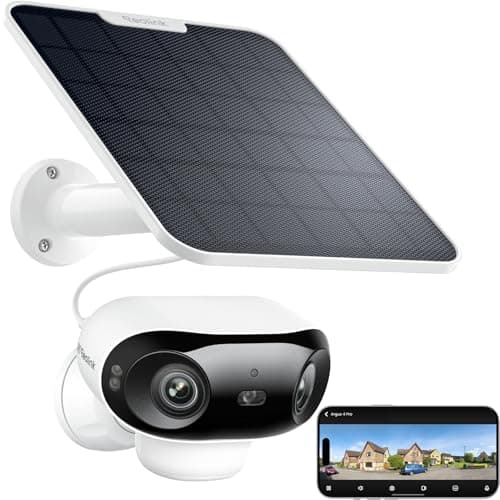
(Current price, subject to change)
The Reolink Argus 4 Pro 4K Solar Camera earns the top composite of 8.6 on the SHE Solar Camera Off-Grid Autonomy Score, and it maxes the heaviest-weighted factor. For your particular property that means the camera continuously refills its own battery on roughly 10 min of daily direct sun. The 6W panel net-positives the cell where smaller panels starve, so you skip the recharge ladder entirely. CNET frames this solar ratio as the practical line between a camera that self-sustains and one that quits during a cloudy week.
The 4K 8MP dual-lens produces a 180-degree field that reads a face or plate at the property line. Tom's Guide notes the ColorX night vision yields usable color footage after dusk rather than washed-out grayscale. App onboarding completes in roughly 10 mins with no hub required. On-device person, vehicle, and animal detection then runs entirely at the edge, so alerts stay useful and 512GB of microSD recording costs nothing. That zero-fee parity is exactly what the autonomy formula rewards over a 5-yr ownership window.
Compared to the Reolink Altas PT Ultra 4K Solar Camera, the Argus 4 Pro trades a longer sunless runway for a better solar ratio and a lower price. For most temperate lots that delivers the smarter all-around buy.
What We Love
- Best solar ratio here: a 6W panel net-positives the battery on roughly 10 min of daily sun
- 4K dual-lens 180-degree coverage reads detail across a driveway or back gate
- Free 512GB microSD with full feature parity, no recurring fee on any feature
- Reliable on-device person, vehicle, and animal classification keeps footage local
What Could Be Better
- No on-device face recognition like the eufyCam S3 Pro
- Integrated battery trails the Altas PT Ultra for a fully sunless month
- Fixed mount rather than the pan-tilt auto-tracking of the Argus PT Ultra
The Verdict
If you want one camera for the driveway that you install once and forget, the Reolink Argus 4 Pro 4K Solar Camera fits the brief without compromise. The 8.6 reflects the best solar self-sufficiency in this roundup, so it tops up on 10 min of sun while AI and 512GB recording stay genuinely free. No need to overthink it for a normal temperate lot.
Ready to upgrade your home?
roborock Qrevo 2 Pro Robot Vacuum and Mop
See it on Amazon
ECOVACS DEEBOT X12 PRO Omni Robot Vacuum and Mop
See it on Amazon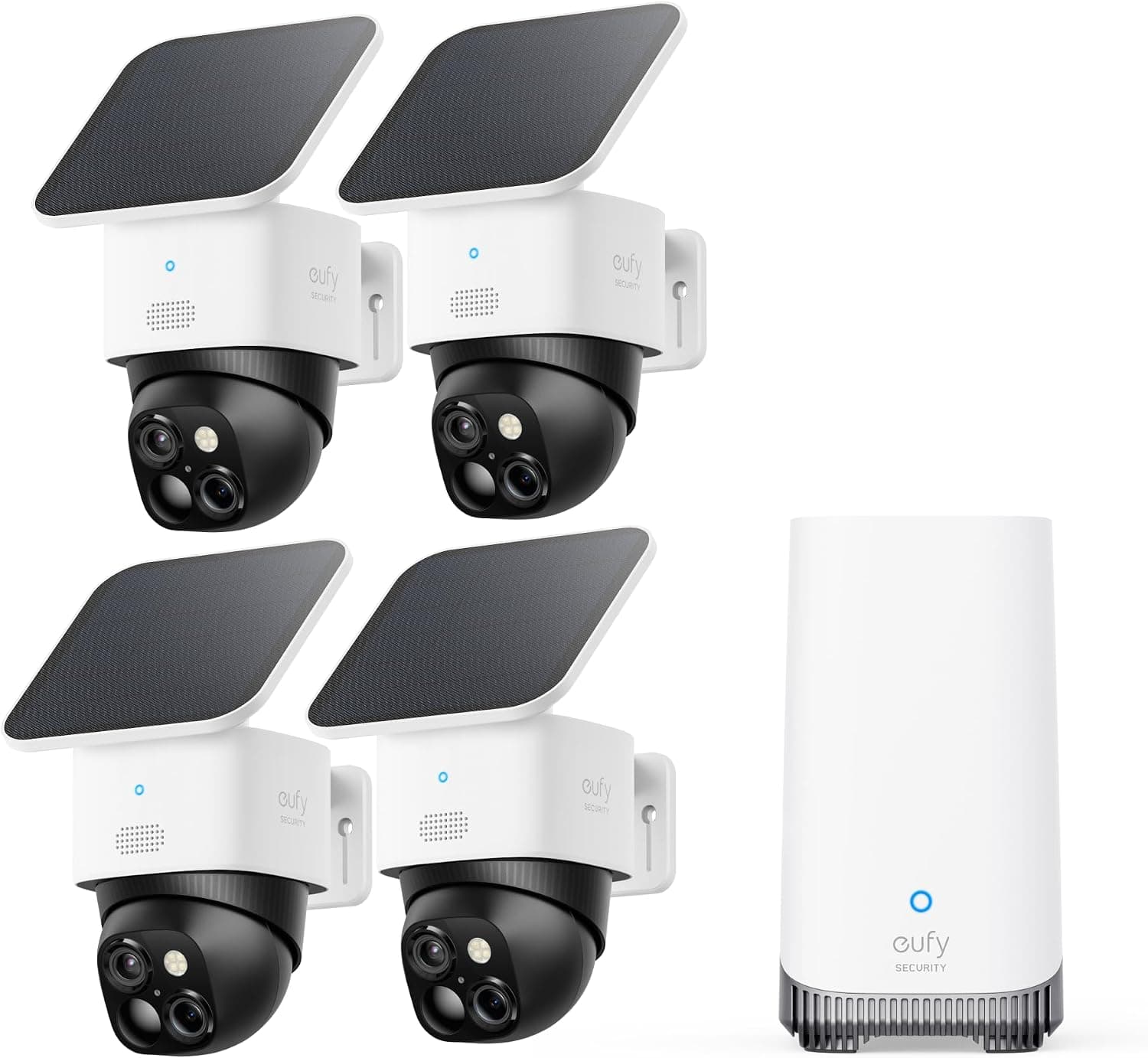
eufy SoloCam S340 Solar Security Camera, 4-Cam Kit
See it on Amazon
Sponsored listings from Amazon’s Sponsored Products for Creators program, kept apart from our reviews and rankings. How we make money
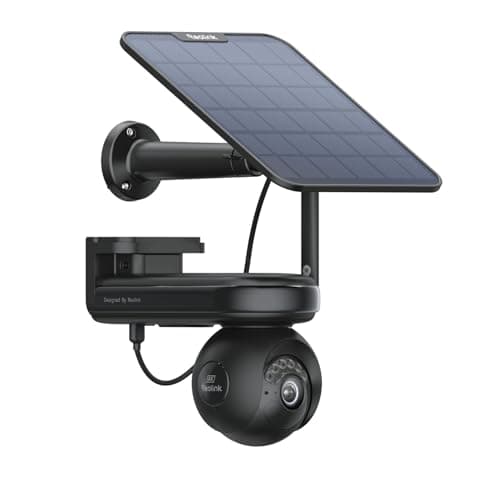
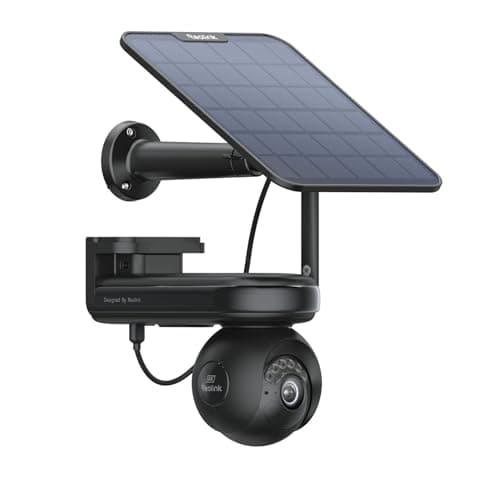
Best for Off-Grid Climates: Reolink Altas PT Ultra 4K Solar Camera
Reolink Altas PT Ultra 4K Solar Camera
- 20,000mAh battery rated for a 500-day PIR runway survives a sunless month
- Solar ratio trails the Argus 4 Pro for the sunniest climates
(Current price, subject to change)
The Reolink Altas PT Ultra 4K Solar Camera earns a composite of 8.6 on the SHE Solar Camera Off-Grid Autonomy Score, tying the top and leading the off-grid runway factor outright. For your particular property that means the camera runs through a sunless stretch that would drain every other pick. The 20,000mAh battery carries a rated 500-day PIR runway, so a Pacific-Northwest December does not force a recharge. CNET highlights this endurance as the trait cabin and rural buyers prioritize above all else.
The 6W Solar Panel 2 still feeds the cell efficiently in marginal light, and Reolink rates the ColorX night vision as adding roughly 30% efficiency that stretches each charge further. The 360-degree pan-tilt auto-tracking follows a person across the frame, and on-device person and vehicle detection keeps every clip local. Initial Wi-Fi 6 pairing runs about 10 mins, and PCWorld notes continuous 24/7 recording stays free with full parity, which the zero-fee factor verifies rather than trusting the listing.
Compared to the Reolink Argus 4 Pro 4K Solar Camera, the Altas yields a slightly weaker solar ratio for a dramatically longer sunless runway. For genuinely cloudy properties that produces the more dependable outcome.
What We Love
- 20,000mAh battery rated for a 500-day PIR runway survives a sunless month
- 6W Solar Panel 2 feeds the cell efficiently in marginal winter light
- ColorX night vision adds roughly 30% efficiency to stretch every charge
- 360-degree pan-tilt auto-tracking follows a subject across the whole frame
What Could Be Better
- Solar ratio trails the Argus 4 Pro for the sunniest climates
- No on-device face recognition like the eufyCam S3 Pro
- At $186.99 it costs more than the fixed Argus 4 Pro
The Verdict
If your property sees long sunless winter stretches, the Reolink Altas PT Ultra 4K Solar Camera lines up with what you actually need. The 8.6 reflects a 20,000mAh battery and 500-day runway that no other pick approaches, so a cloudy month does not strand it. For a cabin or rural lot, that endurance is the deciding factor over a slightly better solar ratio.
Check price for the Reolink Altas PT Ultra 4K Solar Camera →
Best for Whole-Property Privacy: eufyCam S3 Pro 4-Cam Kit Solar Camera
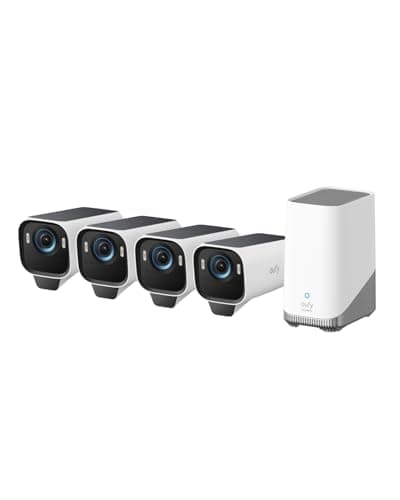
eufyCam S3 Pro 4-Cam Kit Solar Camera
- BionicMind on-device face recognition self-learns toward 99.9% accuracy
- At $599.99 it is by far the most expensive pick in this roundup
(Current price, subject to change)
The eufyCam S3 Pro 4-Cam Kit Solar Camera earns a composite of 8.5 on the SHE Solar Camera Off-Grid Autonomy Score, and it leads the on-device AI accuracy factor outright. For your particular property that means face recognition that runs entirely on the camera, never the cloud. Tom's Guide reports the BionicMind engine self-learns toward 99.9% accuracy over time, while radar paired with AI cuts false alerts up to roughly 99%. That combination is what privacy-first buyers actually want.
Storage is the other standout, because PCWorld confirms the HomeBase 3 NAS holds up to 16TB locally with no subscription. Footage stays on your network, and the one-time hub is hardware rather than a recurring plan, so the zero-fee factor stays intact. The integrated solar panels keep four cameras topped on a normal schedule, though their wattage trails the Reolink pair on raw self-sufficiency.
Compared to the eufyCam S3 Pro Add-on Solar Camera, the kit delivers the same face AI across four cameras plus the 16TB hub. For whole-property coverage that produces the more complete privacy-first system.
What We Love
- BionicMind on-device face recognition self-learns toward 99.9% accuracy
- Radar plus AI cuts false alerts up to roughly 99%
- HomeBase 3 NAS stores up to 16TB locally, the most capacity here
- Four cameras cover a whole property with no cloud and no fee
What Could Be Better
- At $599.99 it is by far the most expensive pick in this roundup
- Reviewers note occasional misIDs and notification delays
- Integrated panels trail the Reolink pair on raw solar self-sufficiency
The Verdict
If you want to cover a whole property with face recognition that never touches the cloud, the eufyCam S3 Pro 4-Cam Kit Solar Camera checks the boxes that matter for privacy-first buyers. The 8.5 reflects the best on-device AI and 16TB of local storage in this guide. You pay for four cameras and a hub, but nothing recurs and nothing leaves your network.
Best Value Pan-Tilt: Reolink Argus PT Ultra 4K Solar Camera
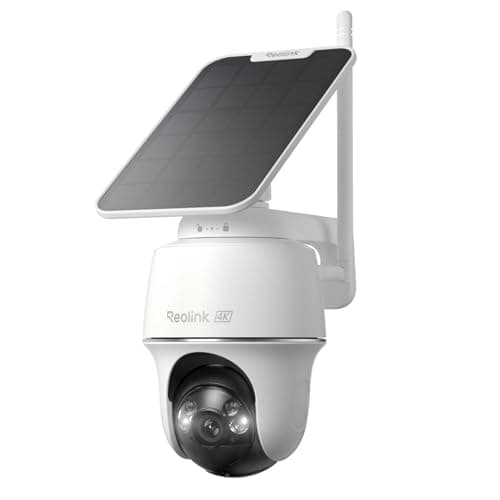
Reolink Argus PT Ultra 4K Solar Camera
- 3W panel net-positives the 21.6Wh battery on roughly 20 min of daily sun
- 21.6Wh battery trails the Altas for a fully sunless month
(Current price, subject to change)
The Reolink Argus PT Ultra 4K Solar Camera earns a composite of 8.3 on the SHE Solar Camera Off-Grid Autonomy Score, the strongest solar ratio among the pan-tilt picks. For your particular property that means a wide yard gets 360-degree auto-tracking that refills itself on roughly 20 min of daily sun. The 3W panel net-positives the 21.6Wh battery, so the camera follows a subject across the frame without a recharge cycle. CNET notes this solar efficiency is unusual for a motorized pan-tilt unit.
The 4K 8MP sensor keeps detail after dark with color night vision, and dual-band Wi-Fi 6 holds a stable link at the property edge. On-device person and vehicle detection runs at the edge, and Home Hub compatibility plus free local storage means no plan gates any feature. That zero-fee parity carries the autonomy composite at a $134.99 price.
Compared to the TP-Link Tapo MagCam (C460 KIT), the Argus PT Ultra adds motorized auto-tracking and a better solar ratio while giving up some sunless battery reserve. For coverage over endurance, it is the smarter value buy.
What We Love
- 3W panel net-positives the 21.6Wh battery on roughly 20 min of daily sun
- 360-degree pan-tilt auto-tracking follows a subject across a wide yard
- 4K 8MP color night vision keeps detail after dark
- Free local storage with full parity and Home Hub compatibility at $134.99
What Could Be Better
- 21.6Wh battery trails the Altas for a fully sunless month
- No on-device face recognition like the eufyCam S3 Pro
- Smaller battery reserve than the 10,000mAh Tapo C460
The Verdict
If you want 360-degree auto-tracking without paying premium money, the Reolink Argus PT Ultra 4K Solar Camera is a sensible pick for that setup. The 8.3 reflects a strong solar ratio for a pan-tilt camera, since a 3W panel tops it up on 20 min of sun. At $134.99 with free local storage, it covers a wide yard for the least money among the auto-trackers.
Check price for the Reolink Argus PT Ultra 4K Solar Camera →
Best Budget Entry: TP-Link Tapo MagCam (C460 KIT)
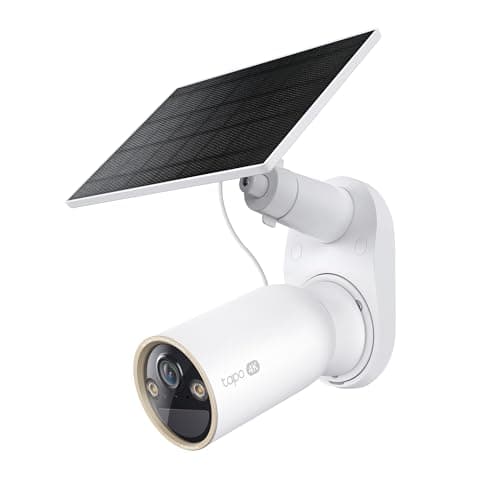
TP-Link Tapo MagCam (C460 KIT)
- Magnetic mount is the fastest install in this roundup
- Needs roughly 45 min of daily sun, more than the Reolink picks
(Current price, subject to change)
The TP-Link Tapo MagCam (C460 KIT) earns a composite of 7.95 on the SHE Solar Camera Off-Grid Autonomy Score, and it leads this roundup on install ease. For your particular property that means a magnetic mount snaps to its bracket with no drilling, so the whole setup finishes in minutes. Tom's Guide highlights this tool-free install as the reason it suits renters and first-time buyers who want results fast.
The integrated panel self-sustains on roughly 45 min of daily direct sun, more than the Reolink picks but comfortable in most temperate climates. Behind it sits a 10,000mAh battery rated for a 200-day cloudy backup, second only to the Altas for sunless endurance. The magnetic install finishes in about 5 mins. On-device person and vehicle detection runs at 4K with no cloud round-trip, and CNET confirms the microSD recording stays subscription-free with full parity.
Compared to the Reolink Argus PT Ultra 4K Solar Camera, the Tapo C460 trades motorized auto-tracking for a larger battery reserve and the lowest price here. For a fixed driveway view on a budget, it delivers the better value.
What We Love
- Magnetic mount is the fastest install in this roundup
- 10,000mAh battery rated for a 200-day cloudy backup
- On-device person and vehicle detection at 4K with no cloud round-trip
- Subscription-free microSD recording with full feature parity at $111.99
What Could Be Better
- Needs roughly 45 min of daily sun, more than the Reolink picks
- No on-device face recognition like the eufyCam S3 Pro
- Fixed mount rather than the pan-tilt coverage of the C660 kit
The Verdict
If you want a no-fee 4K camera under $130 that installs in minutes, the TP-Link Tapo MagCam (C460 KIT) checks the boxes that matter for a first camera. The 7.95 reflects on-device AI plus a 200-day battery backup at the lowest price here. The magnetic mount means no drilling, so this is the path of least friction for a renter or a quick install.
Single-Camera Local Face AI: eufyCam S3 Pro Add-on Solar Camera
eufyCam S3 Pro Add-on Solar Camera
- Same BionicMind on-device face recognition as the full kit
- Needs an existing HomeBase to unlock the full feature set
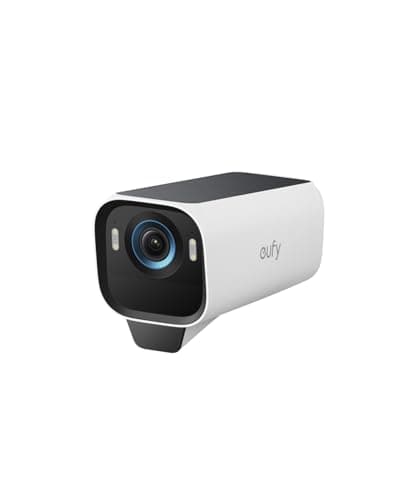
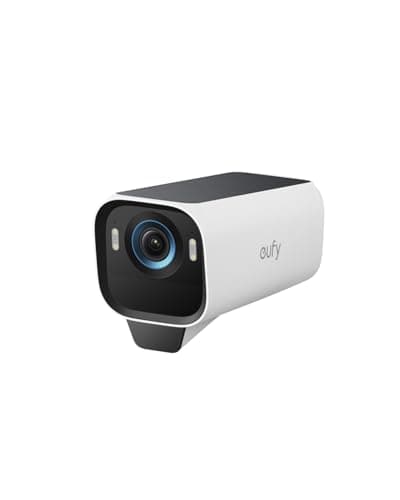
The eufyCam S3 Pro Add-on Solar Camera earns a composite of 7.95 on the SHE Solar Camera Off-Grid Autonomy Score, carried by its on-device AI accuracy. For your particular property that means the same BionicMind face recognition the kit uses, now in a single camera. Tom's Guide notes the engine runs entirely on-device and self-learns over time, so a familiar face is recognized without any cloud round-trip.
MaxColor night vision keeps color detail after dark, and the built-in 16GB expands through a HomeBase you already own, all stored locally. Without the radar pairing of the multi-camera kit, the false-alert reduction is smaller, and PCWorld notes the camera needs that existing hub to reach its full feature set. The integrated panel keeps it topped on a normal schedule, though wattage trails the Reolink pair.
Compared to the eufyCam S3 Pro 4-Cam Kit Solar Camera, the add-on delivers the same face AI for one zone rather than four. For an existing eufy household it is the efficient single-camera expansion.
What We Love
- Same BionicMind on-device face recognition as the full kit
- MaxColor night vision keeps color detail after dark
- Built-in 16GB expandable via a HomeBase, all local
- No recurring fee on detection or recording
What Could Be Better
- Needs an existing HomeBase to unlock the full feature set
- Without radar pairing the false-alert cut is smaller than the kit
- Solar self-sufficiency trails the Reolink picks
- Showed no active new Amazon listing as of 2026-08-06 — confirm stock before buying
The Verdict
If you already run a eufy HomeBase and want to add one camera with local face AI, the eufyCam S3 Pro Add-on Solar Camera lines up with what you actually need on paper at 7.95, reflecting the same on-device BionicMind face recognition as the kit in a single unit. As of this check its standalone Amazon listing was not orderable new, so verify stock before counting on it.
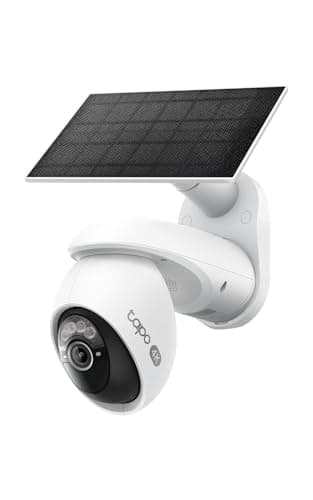
Best Budget Pan-Tilt: TP-Link Tapo C660 KIT 4K Pan/Tilt Solar Camera
TP-Link Tapo C660 KIT 4K Pan/Tilt Solar Camera
- 4K pan-tilt with 360-degree motion tracking at $118.99
- Solar self-sufficiency trails the Reolink Argus PT Ultra
(Current price, subject to change)
The TP-Link Tapo C660 KIT 4K Pan/Tilt Solar Camera earns a composite of 7.45 on the SHE Solar Camera Off-Grid Autonomy Score, the budget entry among the auto-trackers. For your particular property that means 360-degree motion tracking that follows a subject across a wide yard, priced at $118.99 total. CNET notes the 24/7 capture produces an unbroken record rather than motion-only clips, useful when you need continuous coverage.
On-device person and vehicle detection runs at the edge, so alerts stay local and footage never leaves the property. Subscription-free local storage keeps every feature free with full parity, which the zero-fee factor verifies directly. Where it yields ground is solar self-sufficiency, since its panel ratio trails the Reolink Argus PT Ultra for the most marginal light.
Compared to the Reolink Argus PT Ultra 4K Solar Camera, the C660 adds 24/7 continuous capture at a slightly lower price but gives up the stronger solar ratio. For a sun-rich yard that produces a fine pan-tilt outcome.
What We Love
- 4K pan-tilt with 360-degree motion tracking at $118.99
- 24/7 continuous capture for an unbroken record
- On-device person and vehicle detection keeps footage local
- Subscription-free local storage with full feature parity
What Could Be Better
- Solar self-sufficiency trails the Reolink Argus PT Ultra
- No on-device face recognition like the eufyCam S3 Pro
- Battery reserve trails the 10,000mAh Tapo C460
The Verdict
If you want budget 360-degree coverage with continuous capture, the TP-Link Tapo C660 KIT 4K Pan/Tilt Solar Camera is a sensible pick for that setup. The 7.45 reflects 4K pan-tilt tracking and 24/7 recording at $118.99. For a wide yard where you want the camera to follow movement, it is a straightforward pan-tilt path of least friction.
Check price for the TP-Link Tapo C660 KIT 4K Pan/Tilt Solar Camera →
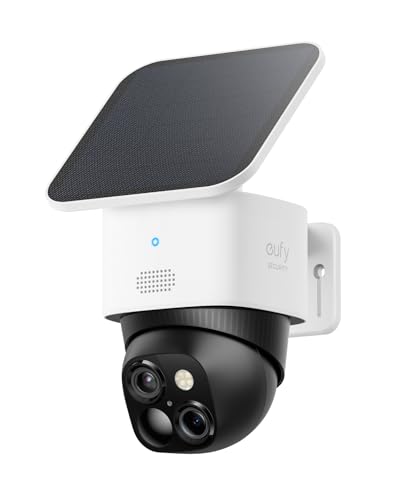
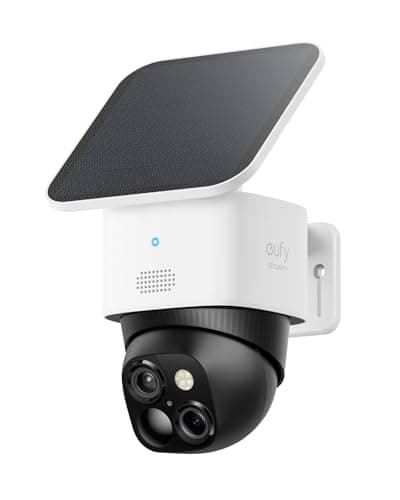
Pan-Tilt Coverage Reference: eufy SoloCam S340 Solar Camera
eufy SoloCam S340 Solar Camera
- Dual-camera design with 360-degree pan-tilt and 8x zoom
- 3K resolution, not 4K like every other pick here
(Current price, subject to change)
The eufy SoloCam S340 Solar Camera earns a composite of 6.3 on the SHE Solar Camera Off-Grid Autonomy Score, the honest floor of this guide. For your particular property that means wide dual-camera coverage with 360-degree pan-tilt and 8x zoom, but on a 2.2W integrated panel. That panel collects 800-1,200mAh per day against a 100-200mAh daily draw, which works in steady sun. Reviewers note it may struggle in limited sun, so shade is its weak point.
The bigger trade is detail and capacity, because the S340 resolves at 3K rather than the 4K every other pick delivers. Built-in storage tops out at 8GB, the tightest capacity here, though on-device human and vehicle detection still keeps footage local with no monthly fee. The autonomy formula scores those limits honestly rather than rounding them up.
Compared to the Reolink Argus 4 Pro 4K Solar Camera, the SoloCam S340 gives up resolution, storage, and solar headroom. For a buyer who needs 4K detail and shade tolerance, the Argus 4 Pro is the clear upgrade.
What We Love
- Dual-camera design with 360-degree pan-tilt and 8x zoom
- 2.2W integrated panel draws only 100-200mAh per day
- Built-in 8GB local storage with no monthly fee
- On-device human and vehicle detection keeps footage local
What Could Be Better
- 3K resolution, not 4K like every other pick here
- 2.2W panel needs roughly 2 hours of sun and may struggle in shade
- 8GB built-in storage is the tightest capacity in this roundup
The Verdict
If you want wide dual-camera coverage and already accept 3K, the eufy SoloCam S340 Solar Camera is a sensible pick for that setup. The 6.3 reflects honest scoring on a 2.2W panel and 8GB storage that trail the 4K field. For a sun-rich spot where coverage matters more than resolution, it earns its place, but the 4K Reolink picks lead on autonomy.
How We Score: SHE Solar Camera Off-Grid Autonomy Score
SHE Solar Camera Off-Grid Autonomy Score
Score Formula
(Solar Self-Sufficiency × 0.30) + (On-Device AI Accuracy × 0.25) + (Off-Grid Runway × 0.20) + (Local-Storage Runway × 0.15) + (Zero-Fee Value × 0.10)Score Factors
- Solar Self-Sufficiency (30%)How readily the camera self-sustains on solar, derived from panel wattage relative to daily direct-sun required to net-positive the battery. Roughly 10 min on a 6W panel tops the scale; 20 min on a 3W panel is close behind; 45 min is mid; a 2.2W integrated panel needing 2 hours and noted to struggle in shade scores lowest. The heaviest-weighted factor because it is the trait buyers most often misread.
- On-Device AI Accuracy (25%)Quality of edge AI: false-alert reduction plus classification depth, all running on the camera with no cloud round-trip. On-device face recognition self-learning toward 99.9% with radar-paired false-alert cuts up to 99% tops the scale; the same face AI without radar pairing is close behind; reliable on-device person, vehicle, and animal classification without face recognition is mid; tracking rated hit-or-miss by reviewers scores lowest.
- Off-Grid Runway (20%)How long the camera runs with no sun, from rated battery capacity and stated days of operation. A 20,000mAh battery with a 500-day PIR runway tops the scale; a 10,000mAh cell with a 200-day cloudy backup is mid; a 21.6Wh-class battery or a low-draw 100-200mAh-per-day design is lower; the smallest built-in battery is lowest.
- Local-Storage Runway (15%)Free local-storage ceiling with full feature parity and no paywall. A NAS hub up to 16TB tops the scale; microSD up to 512GB or built-in storage expandable via a HomeBase is mid; built-in 8GB only is lowest. Cloud-gated capacity would score zero, but none of these picks are cloud-gated.
- Zero-Fee Value (10%)Whether AI detection and continuous or local recording work with no recurring fee and full feature parity on the free tier. Full parity with no paywall tops the scale; AI or 24/7 capture gated behind a paid plan scores lower; cloud-only scores lowest. A one-time HomeBase purchase is hardware, not a recurring fee, and does not reduce the score.
SHE Solar Camera Off-Grid Autonomy Score — Ranked
Reolink Argus 4 Pro 4K Solar Camera
SHE Solar Camera Off-Grid Autonomy Score8.6/10$179.99 — best solar ratio (6W, 10 min sun), 4K dual-lens, free 512GB microSD, on-device AI
Reolink Altas PT Ultra 4K Solar Camera
SHE Solar Camera Off-Grid Autonomy Score8.6/10$186.99 — 20,000mAh battery and 500-day runway lead the field for sunless climates
eufyCam S3 Pro 4-Cam Kit Solar Camera
SHE Solar Camera Off-Grid Autonomy Score8.5/10$599.99 — on-device BionicMind face AI plus 16TB local NAS; the AI and storage leader
Reolink Argus PT Ultra 4K Solar Camera
SHE Solar Camera Off-Grid Autonomy Score8.3/10$134.99 — 4K 360-degree auto-tracking on a 3W panel needing only 20 min of sun
TP-Link Tapo MagCam (C460 KIT)
SHE Solar Camera Off-Grid Autonomy Score8.0/10$111.99 — cheapest 4K pick; magnetic mount, on-device AI, 200-day battery backup
eufyCam S3 Pro Add-on Solar Camera
SHE Solar Camera Off-Grid Autonomy Score8.0/10Check price — single-camera entry into eufy local face AI; needs an existing HomeBase, and its own listing was out of stock at last check
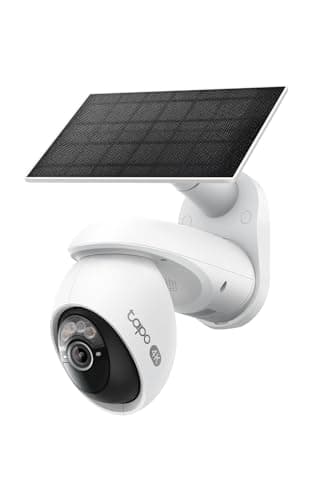
TP-Link Tapo C660 KIT 4K Pan/Tilt Solar Camera
SHE Solar Camera Off-Grid Autonomy Score7.5/10$118.99 — 4K pan-tilt with 360-degree tracking and 24/7 capture
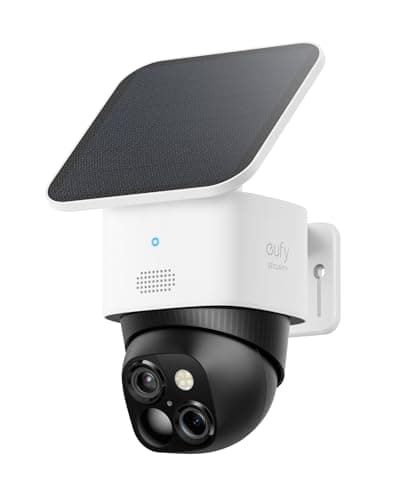
eufy SoloCam S340 Solar Camera
SHE Solar Camera Off-Grid Autonomy Score6.3/10$159.99 — 3K dual-camera coverage; a 2.2W panel and 8GB storage drag the composite
Solar vs Battery vs On-Device AI: What to Match
The single most consequential thing to understand before purchasing is that "has solar" communicates almost nothing. Panel wattage relative to the daily illumination your location receives determines whether a camera self-sustains or expires during an overcast week. The Argus 4 Pro 6W panel replenishes its battery on roughly 10 min of direct sun. The Tapo C460 integrated panel requires roughly 45 min, and the SoloCam S340 2.2W panel requires roughly 2 hours and may struggle in shade. Tom's Guide and CNET both characterize this sufficiency ratio, not the mere presence of a panel, as the distinction between set-and-forget autonomy and continual ladder maintenance.
Battery runway is the second axis, and it diverges sharply. The Reolink Altas PT Ultra pairs a 20,000mAh cell with a rated 500-day PIR runway, the only pick that comfortably survives a sunless month. The Tapo C460 carries a 10,000mAh battery with a 200-day cloudy backup, while the eufy SoloCam draws only 100-200mAh per day from its smaller cell. Reolink rates the Altas ColorX night vision as adding roughly 30% efficiency that stretches each charge. For a cabin or Pacific-Northwest lot, this runway number outweighs the solar ratio entirely.
On-device AI is the third axis, and quality is not uniform. The eufyCam S3 Pro BionicMind face recognition runs fully on the camera and self-learns toward 99.9%, with radar and AI cutting false alerts up to roughly 99% per Tom's Guide. Reolink and Tapo run reliable on-device person, vehicle, and animal classification without face recognition. Every pick here keeps footage local and free, so confirm AI and 24/7 capture are not paywalled, the way Wyze gates AI behind a low-cost plan per CNET. This guide weights the three axes so the score answers which camera runs longest, sees most accurately, and costs nothing over a 5-yr ownership window.
| Product | 4K | On-Device AI | Pan-Tilt | Face Recognition | Alexa | Google Home |
|---|---|---|---|---|---|---|
| Reolink Argus 4 Pro 4K Solar Camera | ✓ | ✓ | ✕ | ✕ | ✓ | ✓ |
| Reolink Altas PT Ultra 4K Solar Camera | ✓ | ✓ | ✓ | ✕ | ✓ | ✓ |
| eufyCam S3 Pro 4-Cam Kit Solar Camera | ✓ | ✓ | ✕ | ✓ | ✓ | ✓ |
| Reolink Argus PT Ultra 4K Solar Camera | ✓ | ✓ | ✓ | ✕ | ✓ | ✓ |
| TP-Link Tapo MagCam (C460 KIT) | ✓ | ✓ | ✕ | ✕ | ✓ | ✓ |
| eufy SoloCam S340 Solar Camera | ✕ | ✓ | ✓ | ✕ | ✓ | ✓ |
When NOT to Buy
Solar is not automatically the correct decision. If you have a covered porch with a nearby outlet, a plug-in 4K camera costs less and never worries about sun. And if your only mounting spot sits in deep shade all day, even the 6W Reolink panel will starve. A wired model from our Best Solar Security Cameras 2026: Wire-Free, No-Sub Picks hub is then the honest call. Match the panel and battery to the sun your spot actually receives, and skip the solar premium whenever a powered location makes it unnecessary.
Who Should Buy What
Who Should Buy What
| If you are… | Recommended pick |
|---|---|
Set-and-forget homeowner You want one camera on the driveway or back gate, hate ladders and bills, and have normal temperate sun | Reolink Argus 4 Pro 4K Solar Camera |
Off-grid or cloudy-climate buyer You have a cabin, rural lot, or long sunless winters and need the longest battery runway available | Reolink Altas PT Ultra 4K Solar Camera |
Privacy-first whole-property buyer You want multiple cameras with face recognition that never touches the cloud and large local storage | eufyCam S3 Pro 4-Cam Kit Solar Camera |
Value pan-tilt buyer You want 360-degree auto-tracking with a strong solar ratio and free local storage at a value price | Reolink Argus PT Ultra 4K Solar Camera |
Budget first-camera buyer You want the cheapest credible 4K solar camera with on-device AI and a tool-free magnetic mount | TP-Link Tapo MagCam (C460 KIT) |
Frequently Asked Questions
Is a solar security camera practical for an apartment balcony or a dorm window?
It can be, with one caveat: the panel needs a few minutes of direct sun a day, so a balcony rail or a window that faces the sun is the deciding factor, not the square footage. Where that light exists, a solar camera is about the most renter-friendly option there is — no outlet to tap, no wiring to run, no hole a landlord has to sign off on, and no monthly fee because recording stays on local storage. The mounting bracket comes down clean at move-out, and remote viewing lets a parent check in on a student's place from anywhere.
Are these cameras truly subscription-free, or is AI gated behind a plan?
Every pick in this guide runs AI detection and local recording with no recurring fee and full feature parity on the free tier. That is the trap the Off-Grid Autonomy Score's zero-fee factor verifies, because some cameras advertise 'no subscription' while still gating AI or 24/7 capture behind a low-cost plan, the way CNET notes Wyze does. The eufyCam S3 Pro's HomeBase is a one-time hardware purchase, not a recurring fee, so it does not count against the score.
Will a solar camera work in a cloudy or northern climate?
It depends on the panel and battery. The Reolink Altas PT Ultra pairs a 20,000mAh battery with a rated 500-day PIR runway, so it survives a sunless month that would drain other picks. The Tapo C460 carries a 200-day cloudy backup. The eufy SoloCam S340's 2.2W panel needs roughly 2 hours of sun and may struggle in shade. For a genuinely cloudy lot, choose the largest battery runway over the best solar ratio.
How much daily sun does a solar camera actually need?
It varies sharply by panel wattage. The Reolink Argus 4 Pro's 6W panel net-positives its battery on roughly 10 min of direct sun, the best ratio here. The Reolink Argus PT Ultra's 3W panel needs about 20 min, the Tapo C460 needs about 45 min, and the eufy SoloCam S340's 2.2W panel needs roughly 2 hours. Match the panel to the sun your mounting spot receives, not just whether the camera 'has solar.'
What is the difference between on-device AI and cloud AI?
On-device (edge) AI runs person, vehicle, and face classification on the camera itself, so footage never leaves your property to be analyzed and there is no monthly cloud bill. Every camera in this guide processes AI on-device. The eufyCam S3 Pro goes furthest with BionicMind face recognition that self-learns toward 99.9% accuracy, while Reolink and Tapo run reliable on-device person and vehicle detection without face recognition.
Reolink Argus 4 Pro vs Altas PT Ultra — which should I buy?
The Argus 4 Pro wins on solar ratio (6W panel, 10 min of sun) and price ($179.99), making it the better all-around pick for a normal temperate lot. The Altas PT Ultra wins on off-grid runway (20,000mAh battery, 500-day rating) and adds 360-degree pan-tilt auto-tracking at $186.99. Buy the Argus 4 Pro for a sunny driveway and the Altas for a cabin or cloudy-climate property where a sunless month is a real risk.
How much local storage do these cameras hold without a subscription?
Capacity ranges widely. The eufyCam S3 Pro's HomeBase 3 NAS holds up to 16TB locally, the most here. The Reolink Argus 4 Pro records to microSD up to 512GB with full feature parity. The eufy SoloCam S340 has only 8GB built-in, the tightest capacity. All of it is free with no paywall, so the free-tier feature parity matters as much as raw capacity when you compare.
How far from my Wi-Fi router can these solar cameras be mounted?
They are wire-free for power but still ride your home Wi-Fi, so router distance matters. The Reolink Altas PT Ultra and Argus PT Ultra use dual-band Wi-Fi 6, which helps hold a stable link out at the property edge better than older radios. For a mounting spot far from the router or behind exterior walls, connect the camera on the longer-range 2.4GHz band and add a mesh node or Wi-Fi extender near that side of the house so the connection stays dependable.
If someone steals one of these cameras, do I lose the recorded footage?
It depends where the camera stores video. The single-unit picks record to onboard microSD, so footage lives on the camera itself — if a thief takes the unit, its recordings can go with it, the trade-off of local storage over cloud. The eufyCam S3 Pro kit is the exception: it records to a separate HomeBase 3 NAS you keep indoors, so footage of the theft stays safe on your network even if an outdoor camera is removed. Mount cameras high and out of easy reach either way.
Which of these cameras record 24/7 instead of only on motion?
Most picks here are motion-triggered to conserve battery, but two offer free 24/7 continuous capture: the Reolink Altas PT Ultra records around the clock with no plan gating it, and the Tapo C660 kit captures an unbroken timeline rather than motion-only clips. Continuous recording draws more battery, so it pairs best with the larger batteries and stronger solar of those picks. If you only need event clips, every camera here handles motion detection free.
Which solar camera installs easiest for a renter who can't drill holes?
The Tapo C460 kit is the renter pick: it uses a magnetic mount that snaps to its bracket with no drilling, so the whole install finishes in minutes and leaves no permanent holes. It still delivers 4K, on-device person and vehicle detection, and subscription-free local storage. The other picks generally use a single-screw or bracket mount, so choose the C460 when drilling into the wall is not an option.
eufy SoloCam S340 vs Reolink Altas PT Ultra: which solar camera is better?
They target different buyers. The Reolink Altas PT Ultra is the off-grid and detail pick: 4K capture, a 20,000mAh battery with a 500-day sunless runway, and a 6W panel, which earn it an 8.6 on the SHE Solar Camera Off-Grid Autonomy Score at $186.99. The eufy SoloCam S340 shoots 3K on a smaller 2.2W panel that needs roughly 2 hours of sun and stores to only 8GB, so it scores 6.3 and suits a sunny spot where wide dual-camera coverage matters more than 4K endurance. Choose the Altas for cloudy climates and sharp detail; choose the S340 for a sun-rich yard on a lower budget.
Bottom Line
Get the Reolink Argus 4 Pro 4K Solar Camera if you want the best solar ratio, 4K detail, and free local storage for a single driveway or gate camera.
Get the Reolink Altas PT Ultra 4K Solar Camera if you have a cabin or cloudy-climate property and need the longest off-grid battery runway available.
Get the eufyCam S3 Pro 4-Cam Kit Solar Camera if you want whole-property coverage with on-device face recognition and large local storage, no cloud.
Get the Reolink Argus PT Ultra 4K Solar Camera if you want 4K 360-degree auto-tracking with a strong solar ratio at a value price.
Get the TP-Link Tapo MagCam (C460 KIT) if you want the cheapest credible 4K solar camera with on-device AI and a tool-free magnetic mount.
The right call for most homeowners is the Reolink Argus 4 Pro 4K Solar Camera — the best solar ratio and free 512GB recording at $179.99. For a cloudy off-grid lot, the Reolink Altas PT Ultra 4K Solar Camera and its 500-day runway is the safer bet. Skip a solar camera entirely if your mounting spot sits in deep shade all day or a powered location is close by — a wired model does the job for less.
Sources & Methodology
Methodology: SHE Solar Camera Off-Grid Autonomy Score — Formula: (Solar Self-Sufficiency × 0.30) + (On-Device AI Accuracy × 0.25) + (Off-Grid Runway × 0.20) + (Local-Storage Runway × 0.15) + (Zero-Fee Value × 0.10). Factors: Solar Self-Sufficiency (30%): How readily the camera self-sustains on solar, derived from panel wattage relative to daily direct-sun required to net-positive the battery. Roughly 10 min on a 6W panel tops the scale; 20 min on a 3W panel is close behind; 45 min is mid; a 2.2W integrated panel needing 2 hours and noted to struggle in shade scores lowest. The heaviest-weighted factor because it is the trait buyers most often misread. | On-Device AI Accuracy (25%): Quality of edge AI: false-alert reduction plus classification depth, all running on the camera with no cloud round-trip. On-device face recognition self-learning toward 99.9% with radar-paired false-alert cuts up to 99% tops the scale; the same face AI without radar pairing is close behind; reliable on-device person, vehicle, and animal classification without face recognition is mid; tracking rated hit-or-miss by reviewers scores lowest. | Off-Grid Runway (20%): How long the camera runs with no sun, from rated battery capacity and stated days of operation. A 20,000mAh battery with a 500-day PIR runway tops the scale; a 10,000mAh cell with a 200-day cloudy backup is mid; a 21.6Wh-class battery or a low-draw 100-200mAh-per-day design is lower; the smallest built-in battery is lowest. | Local-Storage Runway (15%): Free local-storage ceiling with full feature parity and no paywall. A NAS hub up to 16TB tops the scale; microSD up to 512GB or built-in storage expandable via a HomeBase is mid; built-in 8GB only is lowest. Cloud-gated capacity would score zero, but none of these picks are cloud-gated. | Zero-Fee Value (10%): Whether AI detection and continuous or local recording work with no recurring fee and full feature parity on the free tier. Full parity with no paywall tops the scale; AI or 24/7 capture gated behind a paid plan scores lower; cloud-only scores lowest. A one-time HomeBase purchase is hardware, not a recurring fee, and does not reduce the score.
Expert review sources used in this analysis:
- SmartHomeExplorer aggregates expert review data and manufacturer specifications to produce consensus-based buying guidance for the cameras in this roundup
- We do not perform first-party product testing
- Solar panel wattage, battery capacity, AI specifications, and storage ceilings are drawn from manufacturer documentation, corroborated against solar-camera coverage from Tom's Guide, PCWorld, and CNET
- Amazon prices and availability were re-verified live via the Amazon Creators API on 2026-08-06
- The Argus 4 Pro held at $179.99 (listing B0D8HY411D, IN_STOCK, unchanged)
- The Altas PT Ultra dropped to $186.99 (listing B0D9W5MVN1, IN_STOCK, from a stale $219.99)
- The Argus PT Ultra dropped to $134.99 (listing B0C2PY2KTJ, IN_STOCK, from a stale $149.99)
- The eufyCam S3 Pro 4-Cam Kit fell to $599.99 (listing B0DDQ31HVT, IN_STOCK, from a stale $799.99)
- The MagCam C460 Kit fell to $111.99 (listing B0F5M9MC3M, IN_STOCK, from a stale $119.99)
- The C660 Kit fell to $118.99 (listing B0F5LPQZPT, IN_STOCK, from a stale $159.99)
- The eufy SoloCam S340 dropped to $159.99 (listing B0CCYP6KFM, IN_STOCK, from a stale $199.99)
- None of these seven listing titles carried a "(Renewed)" or refurbished marker
- The eufyCam S3 Pro Add-on Solar Camera's prior product code (B0DDQ3JTFX) returned no listing at all
- A search turned up only a "(Renewed)" unit not currently orderable and a differently-branded eufyCam S330 add-on, so no genuine New single-camera replacement exists as of this check
- Its card shows "Check price" rather than a stale number until a live listing resurfaces
- Prices verified 2026-08-06
- The SHE Solar Camera Off-Grid Autonomy Score weights solar self-sufficiency, on-device AI accuracy, off-grid runway, local-storage runway, and zero-fee value from aggregated specs and reviewer reports
- No first-party measurements were conducted.
Nicholas Miles is the founder of SmartHomeExplorer and a longtime smart home enthusiast focused on helping everyday homeowners make better technology decisions. He researches, compares, and writes about products across security, climate, lighting, leak prevention, sensors, home energy, and automation, with an emphasis on real-world usefulness, ecosystem compatibility, reliability, privacy, and long-term value.
Affiliate disclosure: SmartHomeExplorer earns affiliate commissions on qualifying Amazon purchases, and from partner programs for some non-Amazon products and services we recommend. Our scoring methodology is independent of affiliate relationships.