
Best Solar Security Cameras 2026: Wire-Free, No-Sub Picks
Reolink Argus 4 Pro ($152.99) tops our SHE Solar Autonomy Score at 9.3 — a 6W panel that self-sustains on 10 mins of daily sun, dual-lens 4K, and free local storage. The eufy SoloCam S340 brings 360-degree pan-tilt, and the Wyze Battery Cam Pro is the value 2-pack at $179.98.
This article contains affiliate links. We may earn a commission at no extra cost to you. Prices change frequently — check the current price on Amazon before buying. Learn more
The Short Answer
For the homeowner mounting a camera on a shaded eave with no outlet, the Reolink Argus 4 Pro ($152.99) is the recommended pick because its 6W panel self-sustains on roughly 10 mins of daily sun and earns the category-leading 9.3 SHE Solar Autonomy Score, translating into a camera you never climb a ladder to recharge.
Featured in this Guide
Reolink
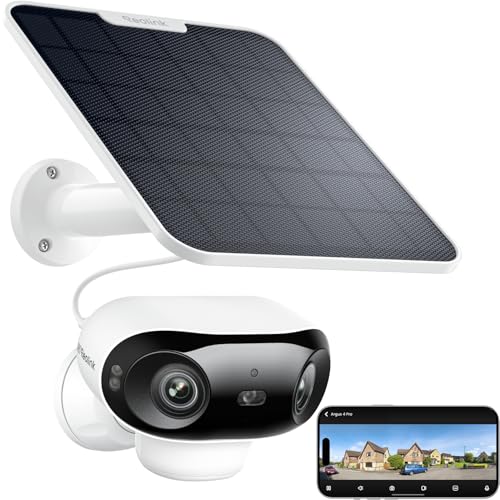
Argus 4 Pro (with 6W Solar Panel)
- •6W panel self-sustains on 10 mins of daily sun, dual-lens 4K, and free microSD storage at $152.99 — the highest Solar Autonomy Score here
Eufy
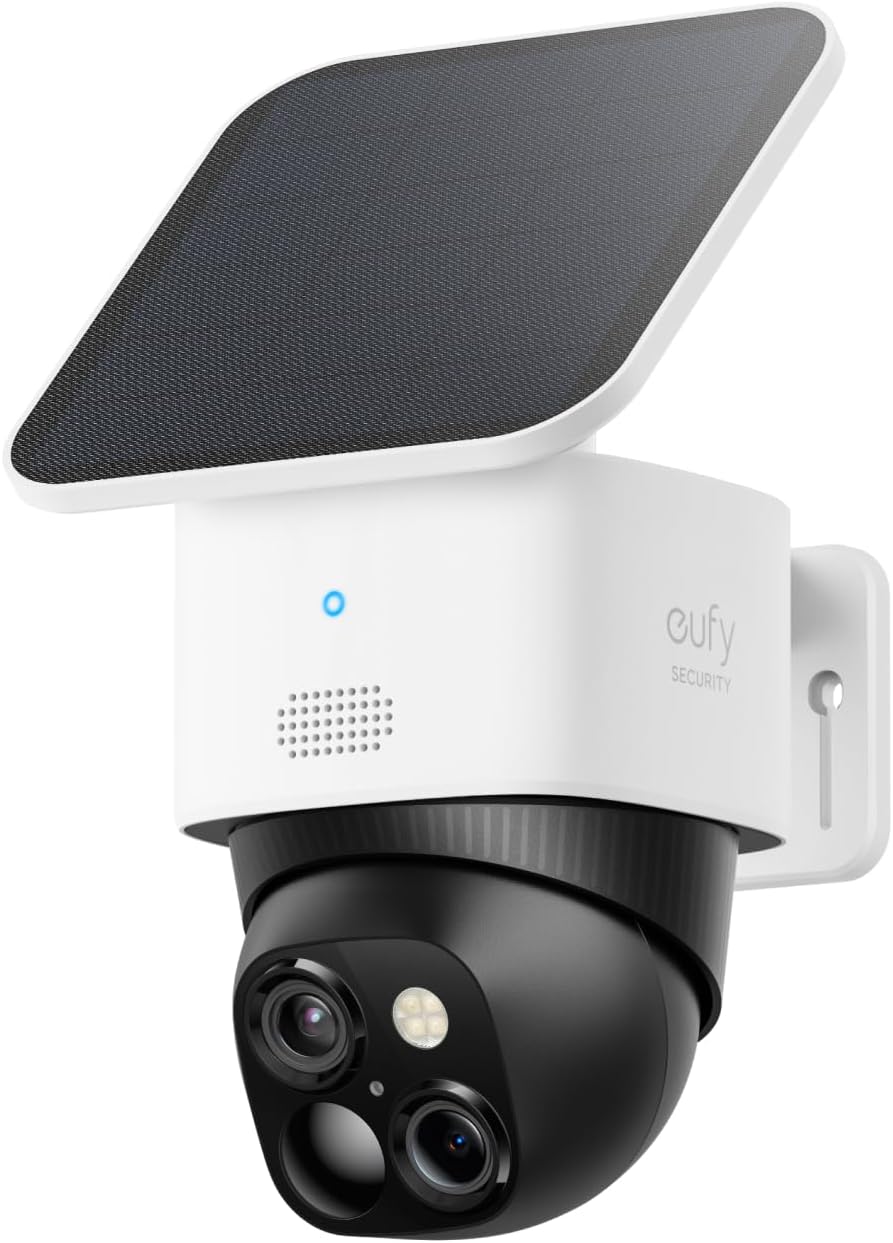
SoloCam S340
- •True 360-degree pan and 70-degree tilt with 8x zoom and built-in local storage at $199.99 — one camera watches a whole yard
Wyze
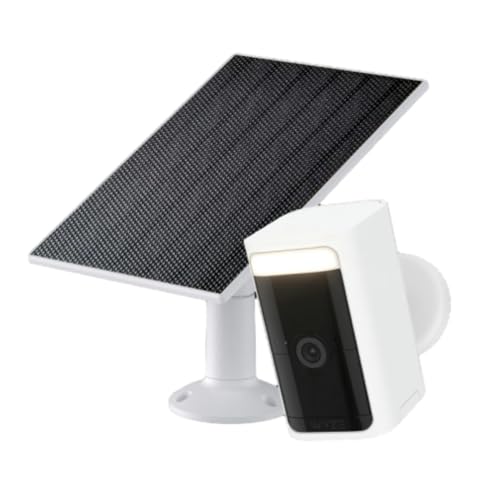
Battery Cam Pro (with Solar Panel)
- •2K cam with free microSD recording and radar-plus-PIR motion fusion
- •now a 2-pack at $179.98 (about $90 a camera), 2.5W solar panel sold separately
Arlo
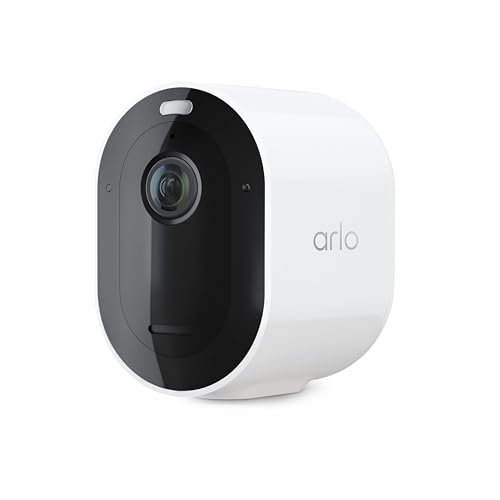
Pro 5S 2K (Solar-Compatible)
- •Was the only solar pick with HomeKit Secure Video
- •now no first-party listing, only scarce price-volatile third-party stock, so no longer a pick
Blink
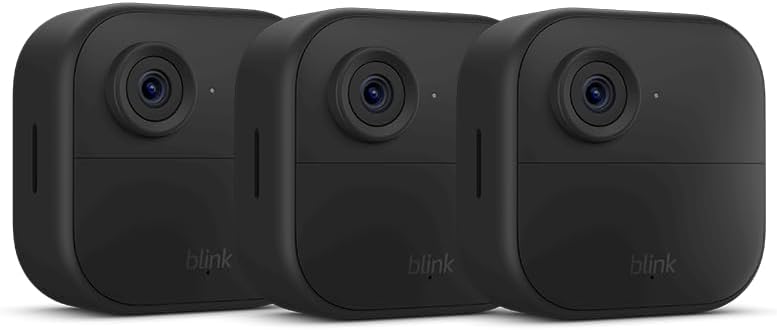
Outdoor 4
- •Up to two-year stock AA runtime and deep Alexa tie-in at $79.99 — solar is a top-up, not a lifeline
Head-to-Head: Charge, Battery, Storage, and Clarity
Smart Security
Chart
 Smarthomeexplorer.com
What Tips the Solar Decision
A solar camera only lives up to its name when the panel out-harvests the camera's daily draw in your actual mounting spot, which is why owners discover the unit was dead by January because it sat on a north wall and end up climbing a ladder to charge it indoors. So the buying decision is really charge math, not megapixels. The Reolink Argus 4 Pro self-sustains on 10 mins of daily sun versus the roughly 2 hours the eufy SoloCam S340 needs, and reviewers at outlets like TechRadar, DigitalCameraWorld, and PCWorld converge on panel wattage plus battery reserve as what separates the cameras that truly run forever. This guide ranks on the SHE Solar Autonomy Score, a weighted composite of charge harvest, low-light reserve, and no-subscription storage, normalized so the score reflects real autonomy rather than brochure sun.
Best Overall: Reolink Argus 4 Pro (with 6W Solar Panel)
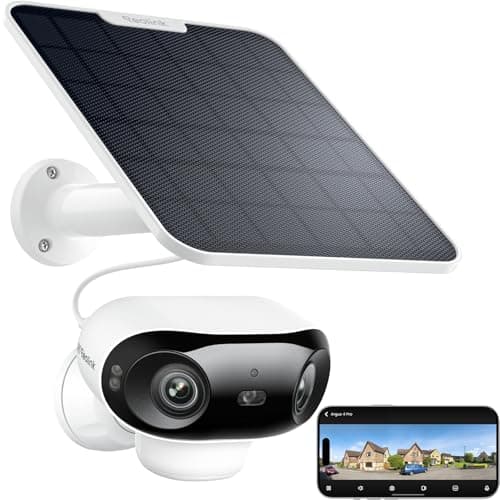
Reolink Argus 4 Pro (with 6W Solar Panel)
- Dual-lens 8MP sensor stitches a true 4K 180-degree panorama with no blind spot
- True 4K playback needs a 5GHz Wi-Fi 6 router, so older 2.4GHz-only homes stream lower
(Current price, subject to change)
The Reolink Argus 4 Pro (with 6W Solar Panel) earns 9.3 on the weighted SHE Solar Autonomy Score, a composite engineered to surface the camera you genuinely never climb a ladder to recharge. That category-leading result rests on a 9.6 charge-harvest sub-score alongside a 9.4 no-subscription-storage sub-score, because the bundled 6W panel requires only 10 mins of direct daily sun to keep the 5000mAh battery replenished while microSD recording up to 512GB eliminates any monthly fee, and at $152.99 it additionally delivers the dual-lens 4K resolution that lets you identify a face at distance.
Across the expert sources surveyed as of June 2026, the aggregated consensus settles near 9.3, with outlets like TechRadar and DigitalCameraWorld singling out the dual-lens 4K capture and subscription-free local storage as best-in-class value for a wire-free camera. Because the ColorX f/1.0 sensor produces usable full-color footage without a spotlight, night mode is additionally rated to extend battery longevity by roughly 30 percent versus infrared, which means that compared to the eufy's 2 hours of required sunlight, the 10 mins this pick demands represents the widest charge margin here. The honest catch remains the 5GHz Wi-Fi 6 router requirement, which an older 2.4GHz-only household will inevitably feel.
What We Love
- Dual-lens 8MP sensor stitches a true 4K 180-degree panorama with no blind spot
- The 6W panel keeps the battery topped off on roughly 10 mins of direct sun a day
- ColorX f/1.0 night vision delivers full-color footage with no spotlight
- Records locally to microSD up to 512GB with no monthly fee
What Could Be Better
- True 4K playback needs a 5GHz Wi-Fi 6 router, so older 2.4GHz-only homes stream lower
- As a battery cam it records on motion events, not 24/7 continuously
- The 180-degree dual-lens body is bulkier than a single-lens cam
The Verdict
For the homeowner mounting on a shaded eave who refuses a monthly fee, the Reolink Argus 4 Pro (with 6W Solar Panel) fits the brief without compromise at $152.99. The 9.3 means a 6W panel that self-sustains on 10 mins of daily sun, dual-lens 4K, and free microSD storage. The eufy adds 360-degree pan-tilt, but you'd give up the 4K and the easy panel relocation this pick is built around.
Check price for the Reolink Argus 4 Pro (with 6W Solar Panel) →
Ready to upgrade your home?
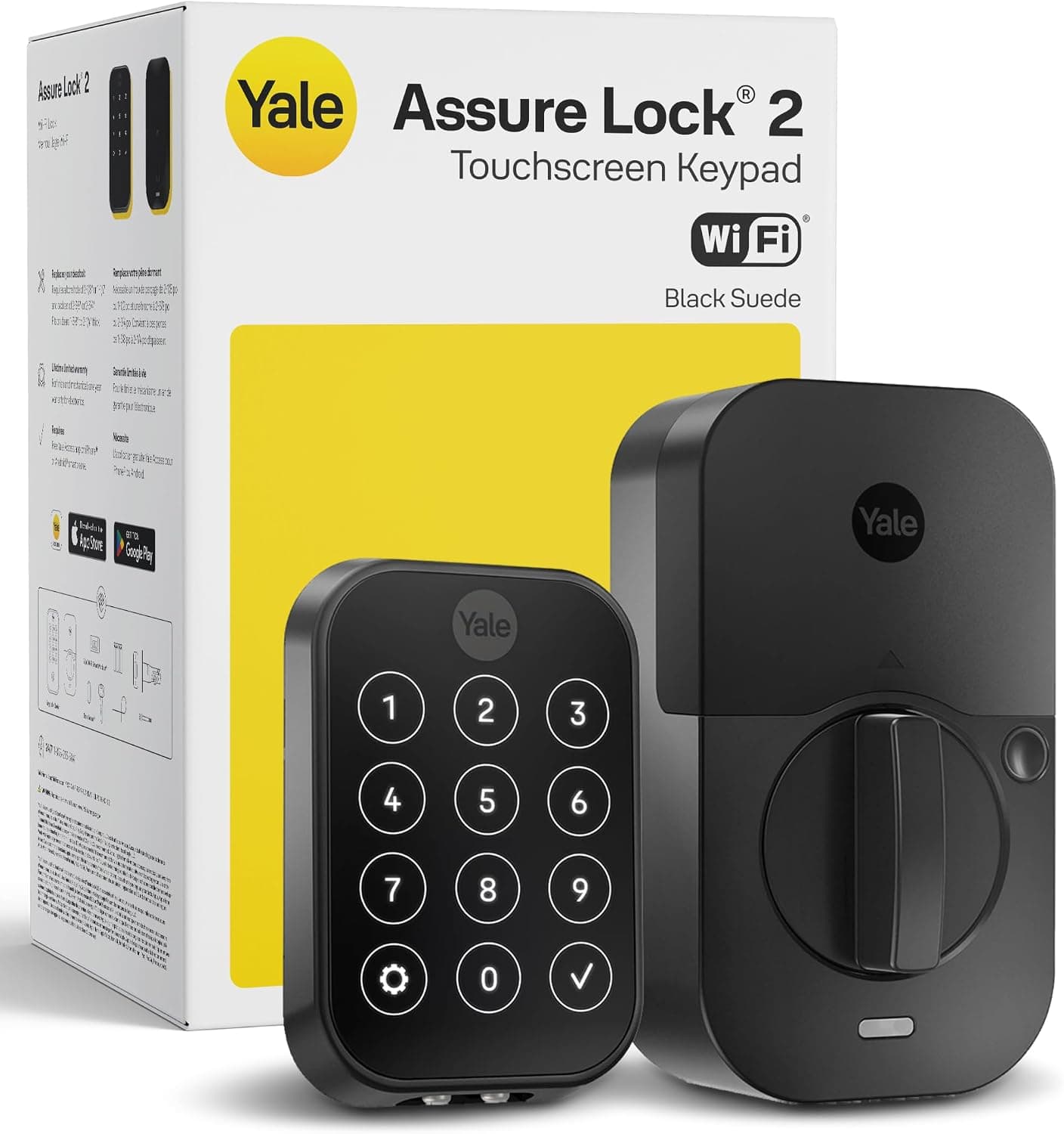
Yale Assure Lock 2 Wi-Fi Smart Lock with Keypad
See it on Amazon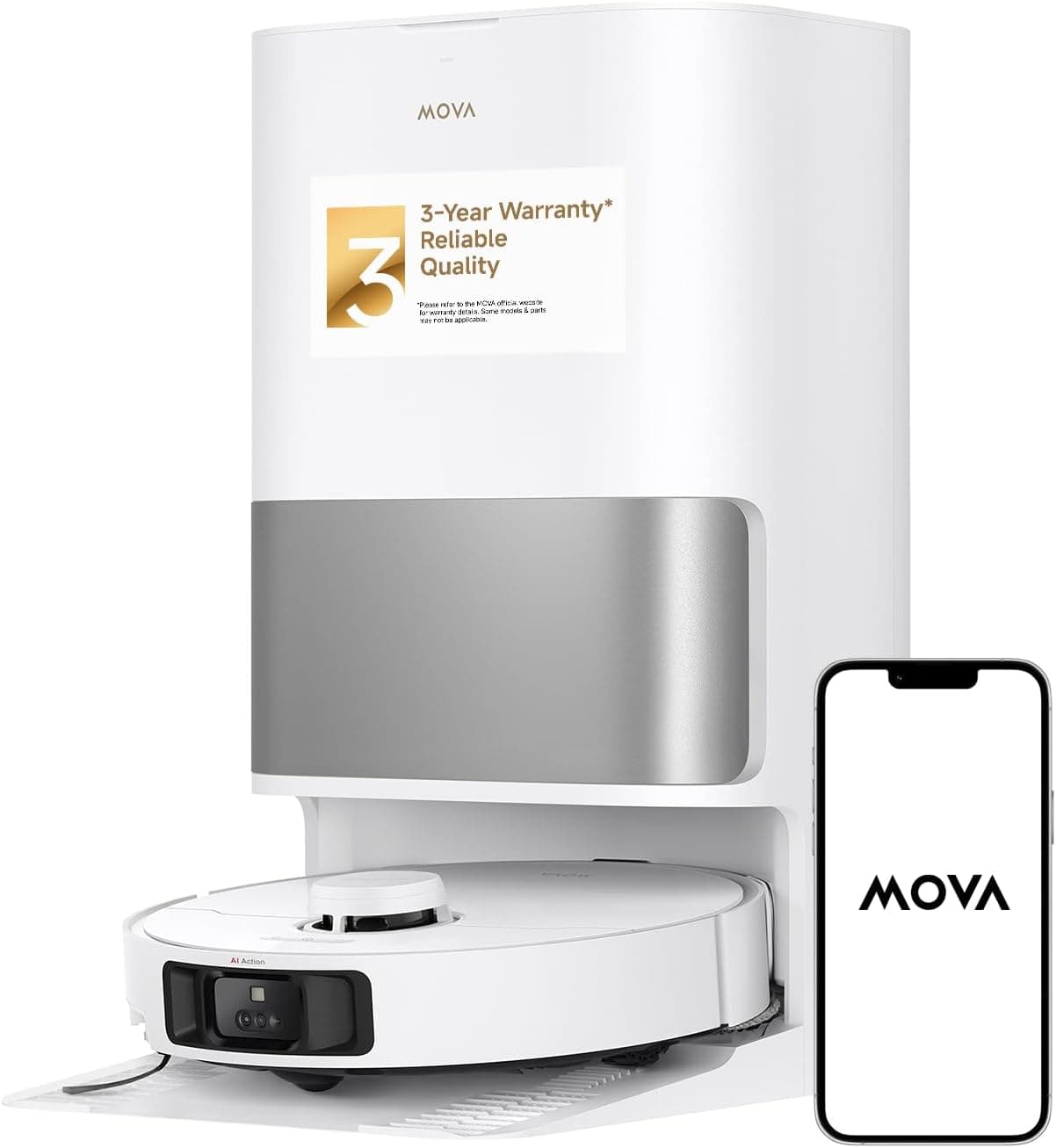
MOVA P10 Pro Ultra Robot Vacuum and Mop
See it on Amazon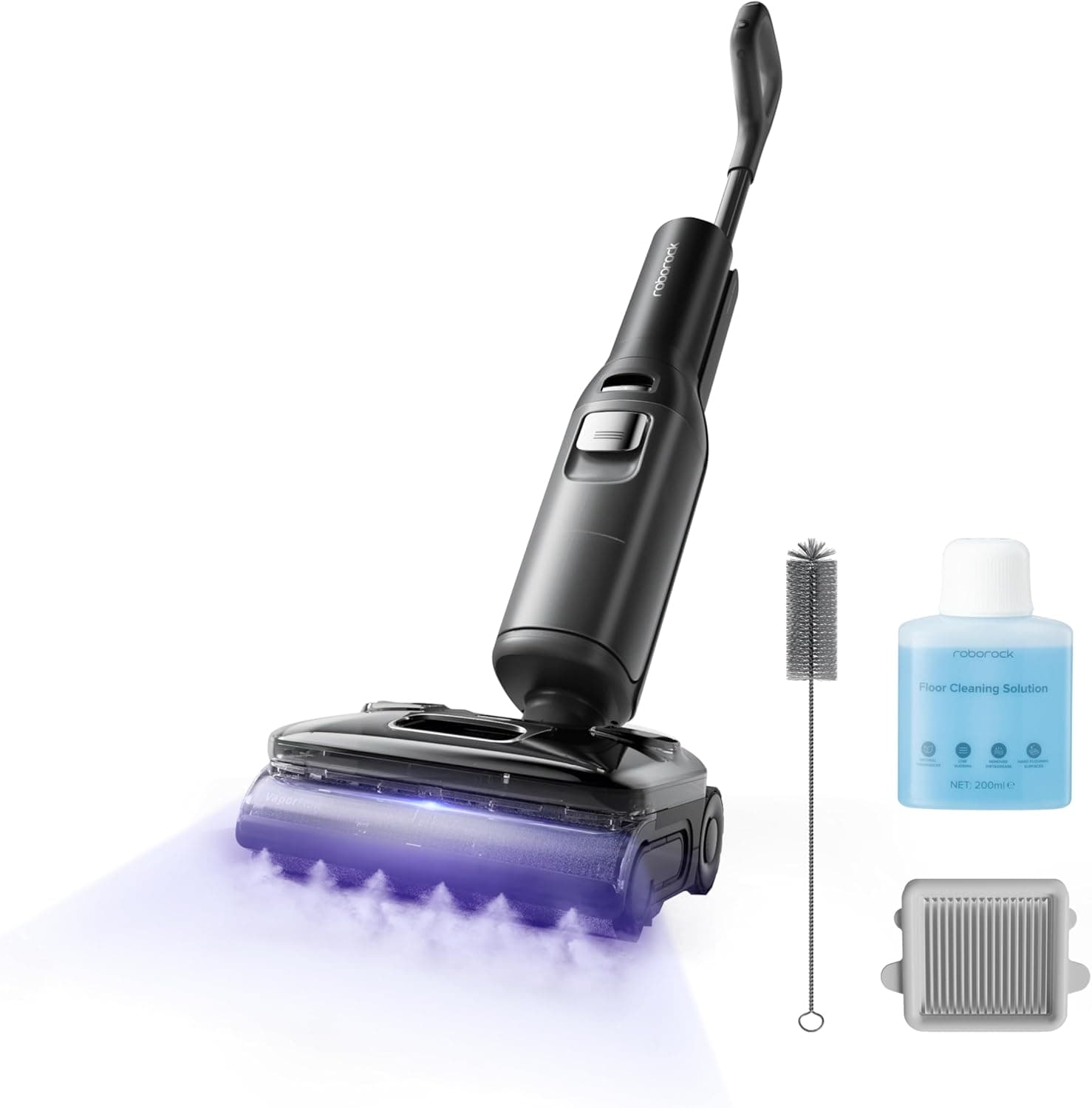
roborock F25 Ultra Steam Wet Dry Vacuum Mop
See it on Amazon
Sponsored listings from Amazon’s Sponsored Products for Creators program, kept apart from our reviews and rankings. How we make money
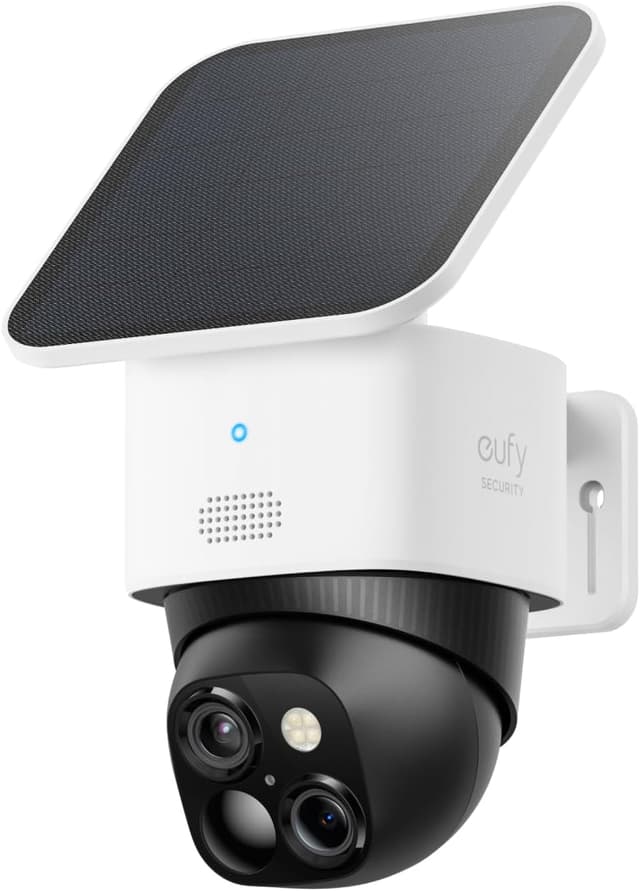
Best 360 Coverage: Eufy SoloCam S340
Eufy SoloCam S340
- Full 360-degree pan and 70-degree tilt with dual lenses and 8x hybrid zoom
- Limited to 2.4GHz Wi-Fi, which can struggle to push 3K at a large property edge
(Current price, subject to change)
The Eufy SoloCam S340 earns 8.5 on the weighted SHE Solar Autonomy Score, a composite that identifies the coverage leader rather than the resolution leader here. That result pairs an 8.6 charge-harvest sub-score with a 9.0 no-subscription-storage sub-score, because the integrated 2.2W panel collects 800-1,200mAh on a sunny day against a draw of only 100-200mAh, so just 2 hours of daily sun self-sustains it while 8GB of built-in storage records locally without any fee, and at $199.99 a single mounting point surveils an entire yard.
In review coverage, outlets like PCWorld and TrustedReviews credit the SoloCam S340 with sharp daytime 3K footage and an 8x zoom capable enough to read a package label, noting the panel keeps the battery replenished whenever the camera catches genuine sunlight. As of June 2026, the dual-spotlight color night vision, built-in siren, and two-way audio collectively cover deterrence as thoroughly as recording, and compared to the Reolink's relocatable panel the eufy requires roughly 2 hours of sun versus 10 mins. The honest limitation remains the 2.4GHz-only radio and the fixed panel, which a shaded mounting position will expose relative to the Reolink Argus 4 Pro (with 6W Solar Panel).
What We Love
- Full 360-degree pan and 70-degree tilt with dual lenses and 8x hybrid zoom
- The 2.2W panel self-sustains on about 2 hours of daily sun
- Built-in 8GB local storage with no monthly fee, HomeBase-expandable
- Dual-spotlight color night vision plus a siren and two-way audio
What Could Be Better
- Limited to 2.4GHz Wi-Fi, which can struggle to push 3K at a large property edge
- The panel is fused to the camera head, so you can't relocate it toward the sun
- Reviewers note slower live-view wake times than the Reolink
The Verdict
If you want one camera to watch a whole yard, the Eufy SoloCam S340 is a sensible pick for that setup at $159.99 list. The 8.5 reflects a true 360-degree pan-tilt view, 8x zoom, and free built-in storage — a single mounting point covers what two fixed cams would. You give up the Reolink's 4K and easy panel relocation, but for full-yard coverage that is a fair trade.
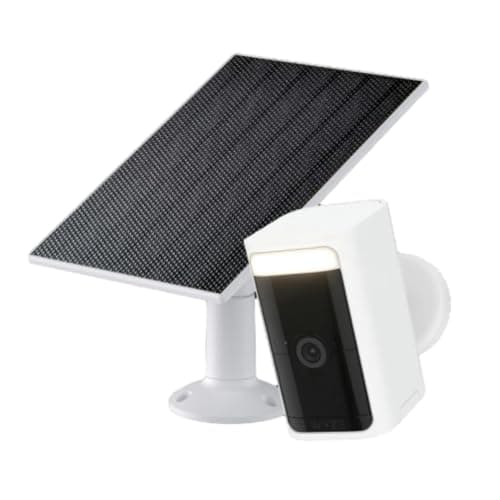
Best Budget: Wyze Battery Cam Pro (with Solar Panel)
Wyze Battery Cam Pro (with Solar Panel)
- Sold as a 2-pack at $179.98, about $90 a camera — the lowest per-camera price here
- It captures 2K HDR, not the 4K of the Reolink or the 3K of the eufy
(Current price, subject to change)
The Wyze Battery Cam Pro (with Solar Panel) earns 7.8 on the weighted SHE Solar Autonomy Score, a composite that identifies the value benchmark of the wire-free tier rather than the specification leader. That 7.8 pairs a 7.4 charge-harvest sub-score with a 7.6 no-subscription-storage sub-score, because the separately purchased 2.5W panel is the weakest here, yet a full battery sustains roughly six months of normal operation, so the panel merely offsets a light daily draw while free microSD recording carries no plan. It now ships exclusively as a 2-pack at $179.98, approximately $90 a camera, the lowest per-camera price in this guide.
Across review coverage, outlets like CNET and Tom's Guide characterize Wyze battery cameras as the value benchmark of the wire-free tier, crediting free local microSD recording while flagging that intelligent detection remains gated behind a low-cost subscription. The radar-plus-PIR motion fusion measurably reduces weather-driven false alerts, and 2K HDR color night vision preserves usable footage after dark. Re-verified July 10, 2026, the 2.5W solar panel is a separate purchase near $29, and the six-month reserve means that weaker panel primarily tops off a light draw rather than carrying it. Relative to the Reolink Argus 4 Pro (with 6W Solar Panel), it consequently trails on both clarity and self-sustaining charge.
What We Love
- Sold as a 2-pack at $179.98, about $90 a camera — the lowest per-camera price here
- A full battery lasts up to six months of normal motion-triggered use
- Radar-plus-PIR motion fusion cuts false alerts from rain, snow, and heat
- Records motion events locally to microSD with no subscription required
What Could Be Better
- It captures 2K HDR, not the 4K of the Reolink or the 3K of the eufy
- Smart person and vehicle detection sit behind a Cam Plus plan
- The 2.5W solar panel is a separate purchase and the weakest here
The Verdict
If low per-camera cost is the goal, the Wyze Battery Cam Pro (with Solar Panel) lines up with what you actually need — now sold as a 2-pack at $179.98, about $90 a camera. The 7.8 reflects free microSD recording and radar-plus-PIR motion fusion. You add the 2.5W solar panel separately (about $29) and pay $2.99 a month for AI alerts, but for a budget buyer that is a reasonable compromise.
Check price for the Wyze Battery Cam Pro (with Solar Panel) →
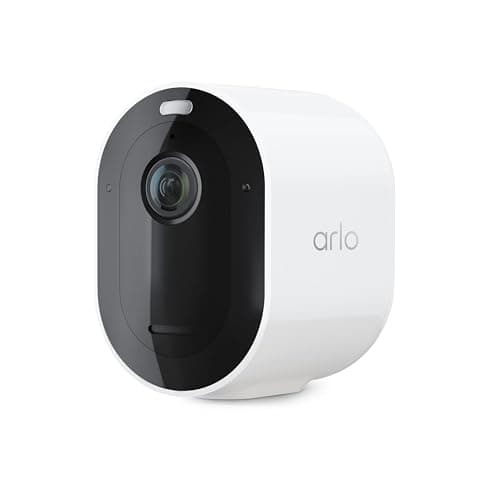
Apple HomeKit (supply-limited): Arlo Pro 5S 2K (Solar-Compatible)
Arlo Pro 5S 2K (Solar-Compatible)
- 2K HDR over a 160-degree field of view with color night vision and a spotlight
- The official solar panel is a separate purchase past the camera-only price
(Current price, subject to change)
The Arlo Pro 5S 2K (Solar-Compatible) earned 7.4 on the weighted SHE Solar Autonomy Score, a composite held down by storage rather than hardware. That 7.4 pairs a 7.6 charge-harvest sub-score with a 6.0 no-subscription-storage sub-score, because there is no microSD slot, so local recording requires an Arlo SmartHub and any real history effectively pushes you toward a paid Arlo Secure plan, even though the removable battery accepts the certified VMA5600 magnetic panel for hands-off charging. It was the only pick here with Apple HomeKit Secure Video.
Across years of Arlo coverage outlets like TechRadar and CNET classify the Pro 5S as the most flexible overall outdoor camera, citing its 2K HDR image, dual-band Wi-Fi, and broad platform support including HomeKit. The integrated siren, 12x zoom, and two-way audio round out a mature platform that delivers a polished app built to grow with add-on cams. Its last verified first-party camera-only price was $78.50 (June 7, 2026); because the listing no longer has a stable first-party New offer and shows only scarce third-party stock at volatile prices, our buy link now resolves to a tagged Amazon search rather than an unstable product page.
What We Love
- 2K HDR over a 160-degree field of view with color night vision and a spotlight
- Apple HomeKit Secure Video alongside Alexa and Google support
- The removable battery accepts Arlo's certified VMA5600 magnetic solar panel
- Integrated siren, 12x zoom, and two-way audio round out the platform
What Could Be Better
- The official solar panel is a separate purchase past the camera-only price
- No microSD slot, so local recording needs an Arlo SmartHub
- It tops out at 2K, so it trails the Reolink on raw resolution
The Verdict
If you want HomeKit Secure Video on a solar camera, the Arlo Pro 5S 2K (Solar-Compatible) fits the brief — but it no longer has a first-party New listing (July 2026); only scarce, price-volatile third-party stock remains, so we no longer list it as a pick. No current solar camera fills that HomeKit gap; an Apple household could pair a wired HomeKit pick with the others here.
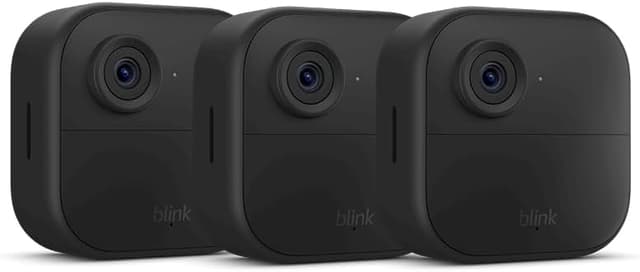
Longest Battery: Blink Outdoor 4
Blink Outdoor 4
- Up to two-year battery life on the included AA lithium cells, the longest stock runtime here
- 1080p resolution is a clear step down from the 2K and 4K cameras above
(Current price, subject to change)
The Blink Outdoor 4 earns 7.3 on the weighted SHE Solar Autonomy Score, a composite that reflects a runtime champion rather than an image champion. That 7.3 rests on a category-best 9.0 low-light-reserve sub-score because the included AA lithium cells deliver up to two-year battery life, the longest stock runtime in this guide, which means the optional solar mount is a top-up rather than a lifeline through a cloudy week. Positioned at $79.99 with a Sync Module 2 in the box, it is the smallest, most discreet body in this roundup.
In review coverage outlets like CNET and Tom's Guide rate the Blink Outdoor line as the value pick of the battery-camera world, crediting its two-year battery life and tight Alexa integration despite the modest 1080p resolution. Dual-zone enhanced motion detection cuts down on false alerts, and live view reaches any Echo Show in the home, while compared to the Reolink's 10 mins of required sun the Blink leans on its 2-year cell rather than its panel. The honest trade-offs are resolution and the separate $59.99 panel mount: relative to the Reolink Argus 4 Pro (with 6W Solar Panel) it trails on clarity, and the solar accessory adds meaningfully to the out-the-door cost.
What We Love
- Up to two-year battery life on the included AA lithium cells, the longest stock runtime here
- Pairs with the Blink Solar Panel Mount to go fully wire-free
- Deep Alexa integration streams live to any Echo Show
- 1080p HD day and infrared night live view with two-way talk
What Could Be Better
- 1080p resolution is a clear step down from the 2K and 4K cameras above
- Person detection and cloud clips sit behind a Blink plan unless you add a USB drive
- The solar panel mount is a separate accessory adding to the real cost
The Verdict
If long set-and-forget runtime matters more than 4K, the Blink Outdoor 4 is a sensible pick for that setup at $79.99. The 7.3 reflects up to two-year stock AA runtime, tight Alexa integration, and the smallest body here — solar becomes a top-up, not a lifeline. You give up resolution at 1080p, but for an Alexa household that prizes battery life that is a fair call.
How We Score: SHE Solar Autonomy Score
SHE Solar Autonomy Score
Score Formula
Charge_Harvest * 0.30 + Low_Light_Reserve * 0.25 + No_Sub_Storage * 0.20 + Resolution_Clarity * 0.15 + Install_Freedom * 0.10Score Factors
- Charge Harvest (30%)The entire promise of a solar camera is that it never needs charging, so this factor is a weighted, normalized sub-score of panel wattage against the camera's daily draw plus the manufacturer's stated minutes of sun per day. A 6W panel that needs only 10 minutes of sun self-sustains where a 2.5W panel on a heavier-drawing camera quietly falls behind over winter. The coefficient carries the top weight because charge math, not resolution, is what keeps the camera alive.
- Low-Light Reserve (25%)Panels do nothing in a shaded or north-facing spot, and short winter days are where solar cameras die, so this factor normalizes raw battery reserve and rated no-sun standby into a composite tier. A two-year AA runtime, a three-month reserve, or a roughly six-month charge is the buffer that keeps a camera alive through a cloudy week. The coefficient sits second because reserve is the safety net when harvest fails.
- No-Subscription Storage (20%)Wire-free buyers are fleeing recurring fees, so this factor rewards genuine local recording — microSD, built-in, or HomeBase — with full feature parity. The calculation penalizes cameras that gate AI detection or clip history behind a monthly plan, even when the hardware is excellent. The weight reflects that subscription-free storage is the second reason buyers choose this category at all.
- Resolution and Clarity (15%)A camera you never charge is worthless if you cannot read a face or a plate, so this sub-score weights sensor resolution and night-vision approach on a normalized tier. True 4K and full-color low-light such as ColorX or dual-spotlight score above 2K HDR or 1080p IR-only footage. The coefficient sits below power factors because clarity matters only once the camera reliably stays on.
- Install Freedom (10%)Lighter but real: a detachable panel on a long cable lets you chase the sun while the camera watches the door, so this factor normalizes mount flexibility into a tier. A panel fused to the camera head forces a single compromise mounting spot, while magnetic and tool-free mounts add flexibility. The coefficient closes the formula because install freedom shapes whether the other four factors can even be realized in your yard.
SHE Solar Autonomy Score — Ranked
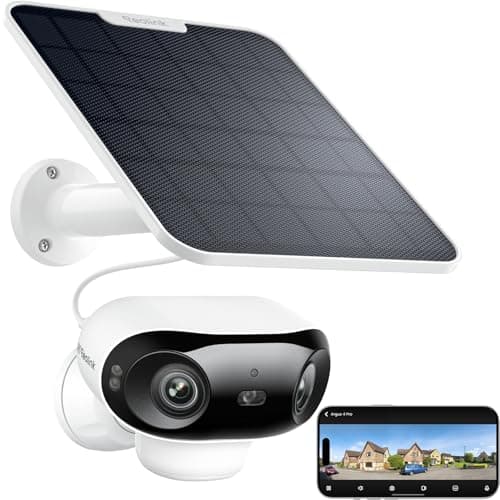
Reolink Argus 4 Pro (with 6W Solar Panel)
SHE Solar Autonomy Score9.3/10$152.99 — 6W panel, 10-min daily sun, dual-lens 4K, free microSD; the most self-sustaining pick
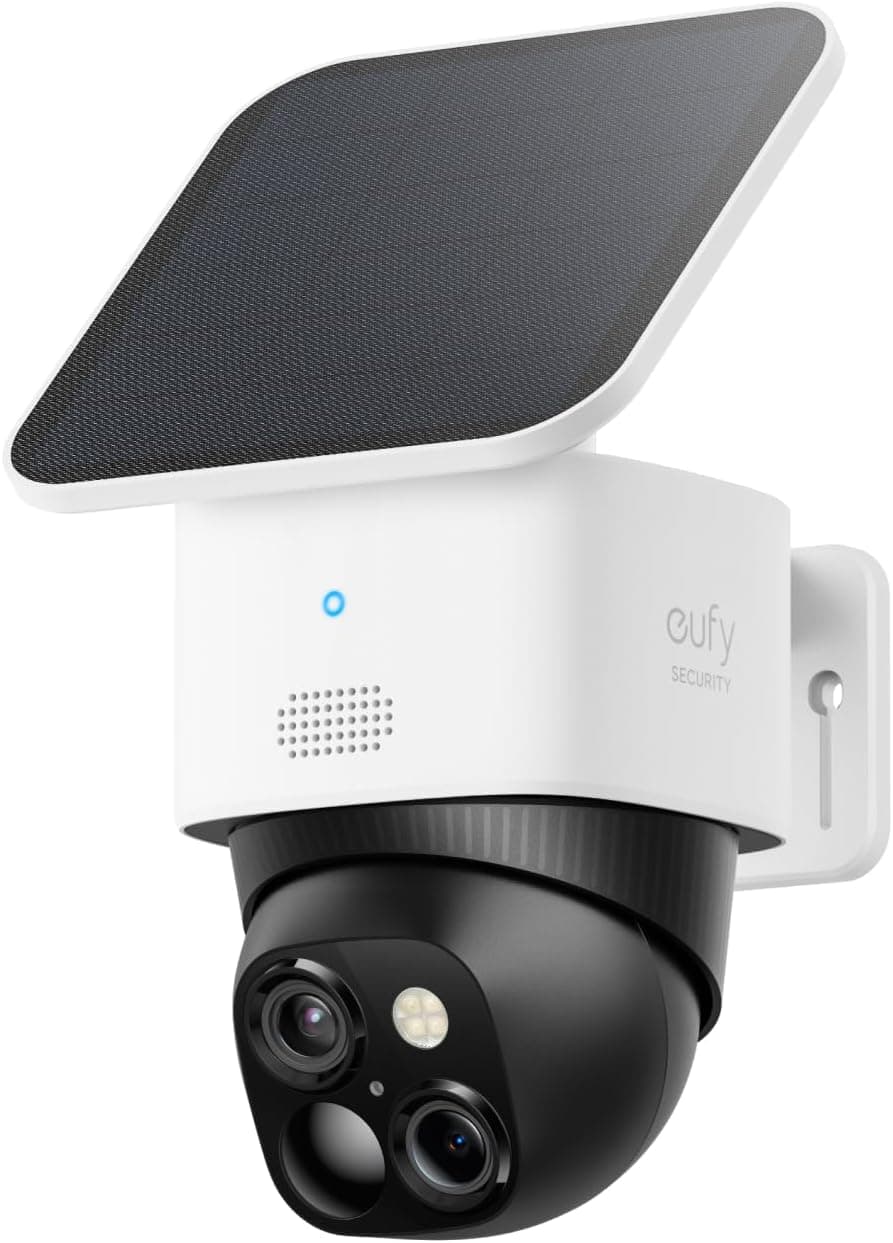
Eufy SoloCam S340
SHE Solar Autonomy Score8.5/10$199.99 — 360-degree pan-tilt, 8x zoom, built-in storage; best single-camera yard coverage
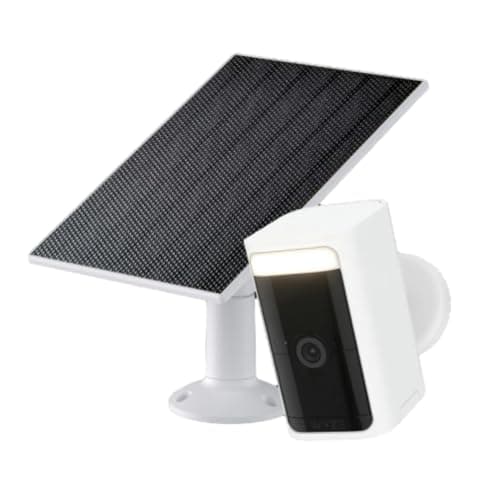
Wyze Battery Cam Pro (with Solar Panel)
SHE Solar Autonomy Score7.8/10$179.98 2-pack (~$90/camera) — free microSD, radar-PIR fusion, 2.5W panel sold separately; best per-camera value
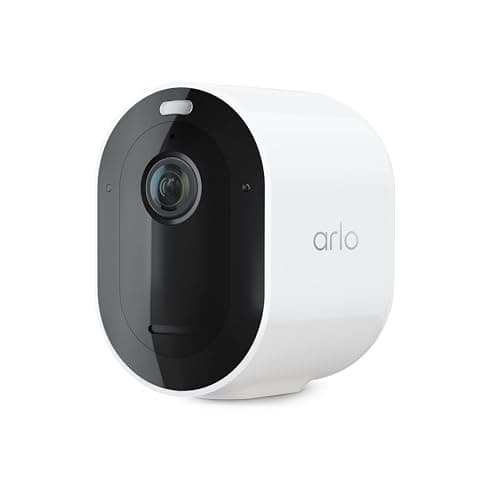
Arlo Pro 5S 2K (Solar-Compatible)
SHE Solar Autonomy Score7.4/10Was $78.50 — HomeKit Secure Video, 2K HDR, certified panel sold separately; now no first-party listing, only scarce volatile third-party stock (July 2026), no longer a pick
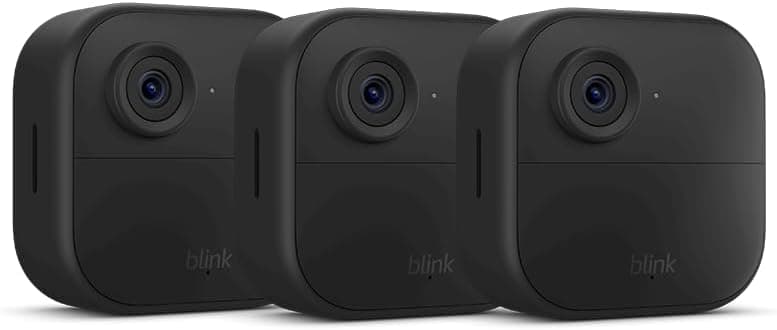
Blink Outdoor 4
SHE Solar Autonomy Score7.3/10$79.99 — two-year stock AA runtime, deep Alexa, 1080p; longest set-and-forget battery
Ecosystem, Storage, and No-Sub Fit
The smart layer here splits cleanly along subscription lines, which is precisely the distinction reviewers at outlets like TechRadar, CNET, and PCWorld rely on to separate the tiers, because the Reolink Argus 4 Pro (with 6W Solar Panel) and the Eufy SoloCam S340 both record locally with no subscription whatsoever — microSD up to 512GB on the Reolink, built-in 8GB plus a HomeBase on the eufy — which earns them the category-leading 9.4 and 9.0 no-subscription-storage sub-scores. The Wyze Battery Cam Pro (with Solar Panel) records motion clips to microSD free at 7.6, although its intelligent AI alerts remain gated behind a Cam Plus plan costing $2.99 a month, while the Arlo Pro 5S 2K (Solar-Compatible) and the Blink Outdoor 4 depend on a cloud subscription or an additional hub for complete functionality, which is exactly why they land at 6.0 and 6.2 on the identical factor despite genuinely excellent hardware.
On the ecosystem side, every camera here speaks Alexa, and most add Google Home, but only the Arlo Pro 5S 2K (Solar-Compatible) supports Apple HomeKit Secure Video, so an Apple-first household has exactly one pick. Alexa users get the deepest tie-in from the Blink Outdoor 4, which streams live to any Echo Show in the home. None of these need a Matter hub to deliver core wire-free power, since solar charging happens entirely at the camera. The recurring theme owners on r/homesecurity flag is the same one our SHE Solar Autonomy Score weights first: a panel mounted in real sun stays charged, and a panel on a north wall does not, no matter the brand. For a property with no Wi-Fi at all, our Best Cellular 4G LTE Security Cameras Without Wi-Fi 2026 guide covers the cellular LTE cameras these wire-free picks cannot replace, and our Best Outdoor Security Cameras Without Subscriptions 2026 roundup goes deeper on the no-fee storage angle.
| Product | Free Local Storage | Apple HomeKit | Alexa | Google Home | Bundled Solar Panel |
|---|---|---|---|---|---|
| Reolink Argus 4 Pro (with 6W Solar Panel) | ✓ | ✕ | ✓ | ✓ | ✓ |
| Eufy SoloCam S340 | ✓ | ✕ | ✓ | ✓ | ✓ |
| Wyze Battery Cam Pro (with Solar Panel) | ✓ | ✕ | ✓ | ✓ | ✕ |
| Arlo Pro 5S 2K (Solar-Compatible) | ✕ | ✓ | ✓ | ✓ | ✕ |
| Blink Outdoor 4 | ✕ | ✕ | ✓ | ✕ | ✕ |
When NOT to Buy
Skip solar entirely if your only mounting spot is deep shade or a hard north face that never sees direct sun, since no panel can out-harvest a constant draw there, even the 6W Reolink that self-sustains on 10 mins of sun elsewhere. Run a wired or PoE camera instead. Also skip if you genuinely need 24/7 continuous recording, since every camera here is a motion-triggered battery cam. Solar is the right buy when your spot catches real sun for a couple of hours a day and you want to kill the recharge chore and the cloud fee at once.
Who Should Buy What
Who Should Buy What
| If you are… | Recommended pick |
|---|---|
Shaded-eave homeowners You want a panel that self-sustains on a few mins of daily sun, true 4K, and free local storage with no monthly fee | Reolink Argus 4 Pro (with 6W Solar Panel) |
Whole-yard watchers You want one camera to pan and tilt across an entire yard with 8x zoom and subscription-free built-in storage | Eufy SoloCam S340 |
Budget kit buyers You want a low-cost 2K cam with free microSD recording and weather-resistant motion alerts, buying the 2-pack and adding the solar panel separately | Wyze Battery Cam Pro (with Solar Panel) |
Apple households You want HomeKit Secure Video on a solar camera — the Arlo Pro 5S 2K was the only such pick but now has no first-party listing (only scarce 3P stock), and no current pick fills the gap | Arlo Pro 5S 2K (Solar-Compatible) |
Set-and-forget Alexa users You want the cheapest long-runtime option with deep Alexa support, where solar is a top-up rather than a lifeline | Blink Outdoor 4 |
Frequently Asked Questions
Do solar security cameras really never need charging?
In a mounting spot that catches real direct sun, a well-matched solar camera tops itself off and never needs manual charging. The Reolink Argus 4 Pro self-sustains on about 10 minutes of direct sun a day, and the eufy SoloCam S340 needs roughly 2 hours. The catch is your spot: a north-facing or deeply shaded wall sees so little sun that the panel cannot keep pace with the camera's daily draw, and you end up recharging the battery indoors a few times a year. That mismatch, not the hardware, is why people think solar cameras still need plugging in.
How much sunlight per day does a solar security camera actually need?
It depends on panel wattage versus the camera's daily draw. The Reolink Argus 4 Pro's 6W panel needs only about 10 minutes of direct sun to run roughly 20 motion events a day indefinitely, while the eufy SoloCam S340's smaller 2.2W panel needs about 2 hours of sun to collect the 800 to 1,200mAh it gathers on a clear day. The weaker 2.5W panel on the Wyze leans more on the camera's long battery reserve. As a rule, aim for a spot with at least a couple of hours of direct sun, and favor a higher-wattage panel if your wall is partly shaded.
Will a solar camera keep working in winter and on a north-facing wall?
Winter and north walls are exactly where solar cameras struggle, because short days and low sun angles starve the panel. The cameras that survive lean on battery reserve: the Blink Outdoor 4 runs up to two years on stock AA cells, the eufy holds about a three-month reserve, and the Wyze holds roughly six months, so a cloudy week or two does not kill them. A true north face that never sees direct sun is the one case to skip solar entirely and run a wired or PoE camera instead.
Which solar cameras record locally with no monthly subscription?
The Reolink Argus 4 Pro records to microSD up to 512GB with full feature parity and no fee, and the eufy SoloCam S340 records to 8GB of built-in storage, expandable via a HomeBase. The Wyze Battery Cam Pro records motion clips to microSD free, though its smart person and vehicle alerts need a Cam Plus plan at $2.99 a month. The Arlo Pro 5S has no microSD slot and pushes you toward an Arlo Secure plan, and the Blink Outdoor 4 needs a Blink plan unless you add a USB drive to its Sync Module 2.
What is the difference between the Reolink Argus 4 Pro and the eufy SoloCam S340 for solar?
The Reolink wins on charge and clarity: its 6W panel self-sustains on 10 minutes of daily sun, it shoots dual-lens 4K, and its panel mounts on its own cable so you can chase the sun. The eufy wins on coverage: it pans a full 360 degrees and tilts 70 degrees with 8x zoom, so one camera watches a whole yard. The eufy's panel is fused to the camera head, so a shaded spot leaves no way to relocate just the panel. Pick the Reolink for clarity and panel flexibility, the eufy for one-camera full-yard coverage.
Is a 4K solar camera like the Reolink worth it over a cheaper 1080p Blink?
If you need to read a face or a license plate at distance, the jump from the Blink Outdoor 4's 1080p to the Reolink Argus 4 Pro's dual-lens 4K is meaningful, and the Reolink also records locally with no fee. If you mostly want presence detection and a long-runtime camera near a door, the Blink's up-to-two-year stock battery and deep Alexa tie-in make it the easier set-and-forget choice. Resolution clarity is weighted at 15 percent in our SHE Solar Autonomy Score precisely because power reliability matters more than pixels for most wire-free spots.
Can I buy a solar panel separately for an Arlo Pro 5S or Blink Outdoor 4?
Yes. The Arlo Pro 5S accepts Arlo's certified VMA5600 magnetic solar panel, sold separately, and the Blink Outdoor 4 pairs with the Blink Solar Panel Mount, a separate accessory that runs about $59.99. Both add to the real out-the-door cost, which is why our score favors the Reolink and Wyze, where the panel ships in the box. If you already own an Arlo or Blink camera, adding the matching panel is the cheapest path to going wire-free.
Do solar security cameras record 24/7 or only when they detect motion?
Every solar camera in this guide is a motion-triggered battery cam, not a continuous-record DVR, because recording 24/7 would drain the battery far faster than any panel could replenish. They wake on motion, record a clip, and return to standby, which is what lets the Reolink run about 20 motion events a day on 10 minutes of sun. If you genuinely need every second captured, you want a wired or PoE camera with continuous recording, not a solar battery cam.
What battery capacity should a solar camera have to survive a cloudy week?
Battery reserve, not panel size, is what carries a camera through a cloudy stretch. The Reolink's 5000mAh cell, the eufy's roughly three-month reserve, the Wyze's six-month charge, and the Blink's up-to-two-year AA runtime all provide enough buffer to ride out a week or more with little sun. As a guideline, look for a stated no-sun standby measured in months rather than days, which every pick here clears comfortably. The reserve is the safety net our Low-Light Reserve factor weights at 25 percent.
Can I mount the solar panel separately from the camera to chase the sun?
It depends on the model. The Reolink Argus 4 Pro's 6W panel connects on its own cable, so you can mount the panel in a sunny spot while the camera watches a shaded door, and the Arlo and Blink panels are likewise separate accessories. The eufy SoloCam S340 is the exception: its 2.2W panel is fused to the camera head, so a shaded mounting spot leaves you no way to relocate just the panel. Panel relocation is exactly what our Install Freedom factor rewards.
Do these solar cameras work without Wi-Fi for a remote cabin?
No. Every camera in this guide needs a Wi-Fi connection to stream and store clips, even though it powers itself with solar. For a remote cabin or a property with no Wi-Fi at all, you need a cellular LTE camera with its own SIM, which is a separate category covered in our cellular LTE security camera guide. Solar solves the power problem, not the connectivity problem, so the two are independent decisions for an off-grid spot.
How long do solar camera batteries last before they need replacing entirely?
The rechargeable lithium cells in cameras like the Reolink, eufy, and Wyze typically hold a usable charge for several years before capacity degrades enough to notice, similar to a phone battery, and the constant trickle charge from a well-mounted panel actually eases the wear of deep discharge cycles. The Blink Outdoor 4 uses replaceable AA lithium cells instead, so you simply swap them after the stated up-to-two-year stock runtime rather than replacing a built-in pack. In practice, most owners replace the camera before the battery becomes the limiting factor.
Bottom Line
Get the Reolink Argus 4 Pro (with 6W Solar Panel) if you want a panel that self-sustains on a few mins of daily sun, true 4K, and free local storage with no monthly fee.
Get the Eufy SoloCam S340 if you want one camera to pan and tilt across an entire yard with 8x zoom and subscription-free built-in storage.
Get the Wyze Battery Cam Pro (with Solar Panel) if you want a low-cost 2K cam with free microSD recording, buying the 2-pack at $179.98 and adding the solar panel separately.
Get the Arlo Pro 5S 2K (Solar-Compatible) if you want HomeKit Secure Video on a solar camera and can find a stable New Arlo Pro 5S 2K listing — it now has no first-party offer, only scarce volatile third-party stock (July 2026).
Get the Blink Outdoor 4 if you want the cheapest long-runtime option with deep Alexa support, where solar is a top-up rather than a lifeline.
The right call for most shaded-eave homeowners is the Reolink Argus 4 Pro (with 6W Solar Panel) at $152.99 — a 6W panel that self-sustains on 10 mins of daily sun, dual-lens 4K, and free microSD storage earn the top 9.3 Solar Autonomy Score. If budget comes first, the Wyze Battery Cam Pro (with Solar Panel) is a 2-pack at $179.98, about $90 a camera. Skip solar entirely if your only spot is a deep-shade north wall, where no panel can keep pace and a wired or PoE camera is the better buy.
Sources & Methodology
Methodology: SHE Solar Autonomy Score — Formula: Charge_Harvest * 0.30 + Low_Light_Reserve * 0.25 + No_Sub_Storage * 0.20 + Resolution_Clarity * 0.15 + Install_Freedom * 0.10. Factors: Charge Harvest (30%): The entire promise of a solar camera is that it never needs charging, so this factor is a weighted, normalized sub-score of panel wattage against the camera's daily draw plus the manufacturer's stated minutes of sun per day. A 6W panel that needs only 10 minutes of sun self-sustains where a 2.5W panel on a heavier-drawing camera quietly falls behind over winter. The coefficient carries the top weight because charge math, not resolution, is what keeps the camera alive. | Low-Light Reserve (25%): Panels do nothing in a shaded or north-facing spot, and short winter days are where solar cameras die, so this factor normalizes raw battery reserve and rated no-sun standby into a composite tier. A two-year AA runtime, a three-month reserve, or a roughly six-month charge is the buffer that keeps a camera alive through a cloudy week. The coefficient sits second because reserve is the safety net when harvest fails. | No-Subscription Storage (20%): Wire-free buyers are fleeing recurring fees, so this factor rewards genuine local recording — microSD, built-in, or HomeBase — with full feature parity. The calculation penalizes cameras that gate AI detection or clip history behind a monthly plan, even when the hardware is excellent. The weight reflects that subscription-free storage is the second reason buyers choose this category at all. | Resolution and Clarity (15%): A camera you never charge is worthless if you cannot read a face or a plate, so this sub-score weights sensor resolution and night-vision approach on a normalized tier. True 4K and full-color low-light such as ColorX or dual-spotlight score above 2K HDR or 1080p IR-only footage. The coefficient sits below power factors because clarity matters only once the camera reliably stays on. | Install Freedom (10%): Lighter but real: a detachable panel on a long cable lets you chase the sun while the camera watches the door, so this factor normalizes mount flexibility into a tier. A panel fused to the camera head forces a single compromise mounting spot, while magnetic and tool-free mounts add flexibility. The coefficient closes the formula because install freedom shapes whether the other four factors can even be realized in your yard.
Expert review sources used in this analysis:
- SmartHomeExplorer aggregates expert review data and community sentiment to produce consensus-based buying guidance
- We do not perform first-party product testing
- Expert ratings and product assessments draw on solar and battery outdoor-camera buyer's guides and category roundups from outlets that cover this segment — TechRadar, DigitalCameraWorld, PCWorld, TrustedReviews, CNET, and Tom's Guide — rather than first-party tests of each individual unit
- Specifically, TechRadar's Argus 4 Pro coverage anchors the dual-lens 4K and no-subscription local-storage findings, while CNET's Wyze and Blink reviews anchor the subscription-gated-AI and two-year-battery notes
- Charge-harvest and battery-reserve context draws on published manufacturer specifications, including the Reolink Argus 4 Pro's 6W panel and 10 mins of stated daily sun, the eufy SoloCam S340's 2.2W panel and roughly 2 hours of sun, and the Blink Outdoor 4's up-to-two-year AA runtime
- Community reliability and owner reports are drawn from r/homesecurity and the smart-home communities on Reddit, where the recurring praise is subscription-free local recording and the recurring complaint is panels mounted on shaded or north-facing walls that fall behind in winter
- Amazon prices and availability were verified via the Amazon Creators API, with every price verified June 7, 2026: Reolink Argus 4 Pro $152.99, eufy SoloCam S340 $199.99, Wyze Battery Cam Pro now sold as a 2-pack at $179.98 with the 2.5W solar panel separate (about $29, re-verified July 10, 2026), Arlo Pro 5S 2K $78.50 (single-camera SKU since lost its first-party New listing as of July 2026, leaving only scarce, price-volatile third-party stock, so it is no longer listed as a pick), Blink Outdoor 4 $79.99
- The SHE Solar Autonomy Score weights charge harvest (30%), low-light reserve (25%), no-subscription storage (20%), resolution and clarity (15%), and install freedom (10%); factor sub-scores derive from manufacturer specifications and aggregated reviewer assessments, and no first-party measurements were conducted.
Nicholas Miles is the founder of SmartHomeExplorer and a longtime smart home enthusiast focused on helping everyday homeowners make better technology decisions. He researches, compares, and writes about products across security, climate, lighting, leak prevention, sensors, home energy, and automation, with an emphasis on real-world usefulness, ecosystem compatibility, reliability, privacy, and long-term value.
Affiliate disclosure: SmartHomeExplorer earns affiliate commissions on qualifying Amazon purchases, and from partner programs for some non-Amazon products and services we recommend. Our scoring methodology is independent of affiliate relationships.