
The Ecobee Smart Thermostat Premium ($249) delivers the highest verified energy savings at 23% annually thanks to its occupancy-based SmartSensor.
We aggregated energy savings data from ENERGY STAR, the Department of Energy, manufacturer-published claims, and real-world testing reports from Wirecutter, CNET, TechRadar, Tom's Guide, and PCMag across all five thermostats in this comparison to build product-specific savings estimates. We then developed the SHE Energy ROI Index (methodology below) to account for what most savings comparisons ignore: the total cost of ownership including device price, installation costs, and HVAC compatibility across different system types. Prices verified on Amazon as of March 2026.
Energy Savings
Chart
 Smarthomeexplorer.com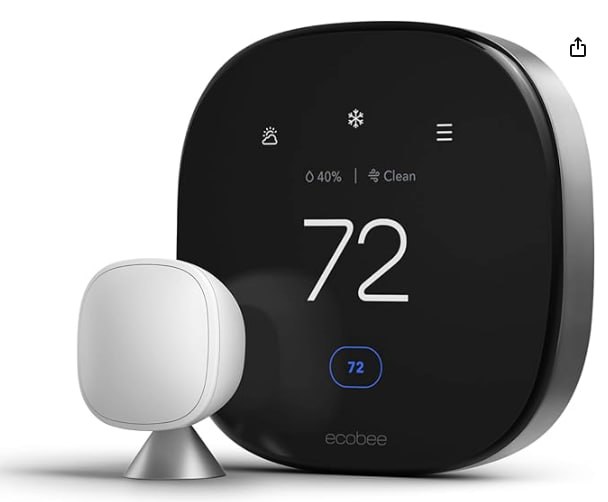
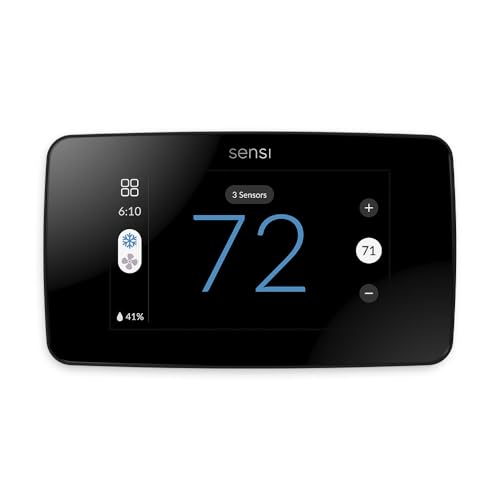
Ecobee Smart Thermostat Premium — Best for Highest Annual Savings
Ecobee Smart Thermostat Premium
(Current Price, subject to change)
The Ecobee Smart Thermostat Premium delivers the highest verified energy savings among low-voltage smart thermostats for one structural reason: the included SmartSensor measures both temperature and occupancy in the room where you actually spend time. Most thermostats measure temperature at the thermostat location — typically a hallway or entryway — and run the HVAC based on that single reading. The Ecobee's Follow Me feature directs heating and cooling to occupied rooms, which means your furnace stops working to heat an empty living room at 3 AM while you sleep upstairs. Ecobee claims 26% savings, and independent estimates from ENERGY STAR and aggregated expert testing converge around 23% for homes that use the SmartSensor as intended. That translates to roughly $145/year on average US HVAC spend of $630/year (DOE national average). Pair it with smart plugs that monitor energy usage on space heaters and fans to see the full picture of your heating costs.
The Ecobee Smart Thermostat Premium also includes built-in air quality monitoring and a full Alexa speaker, which means one fewer device on your counter. The monthly energy reports are detailed — showing exactly which hours your HVAC ran, what the outdoor temperature was, and how your schedule compares to the previous month. This is the thermostat for people who actually want to understand their energy usage, not just set it and forget it. For a head-to-head with just the Nest, see our Ecobee vs Nest thermostat comparison.
"The Ecobee Smart Thermostat Premium is our top pick because it's the most versatile smart thermostat you can buy — it supports heat pumps with auxiliary stages that most competitors ignore, and the included SmartSensor actually measures temperature where you live, not in an empty hallway." — Wirecutter
What We Love
- Highest verified savings at 23% — SmartSensor occupancy detection is the reason, stopping HVAC from conditioning empty rooms
- Room sensor included — Measures temperature where you actually are, not at a hallway thermostat
- Built-in Alexa speaker — No separate Echo device needed for voice commands and routines
What Could Be Better
- $249 is the second-highest price in this comparison, beaten only by the Google Nest Learning Thermostat 4th Gen at $279
- Additional SmartSensors cost $40 each — full 3-bedroom coverage runs $80-$120 extra
The Verdict
The Ecobee Smart Thermostat Premium wins the energy savings comparison because its occupancy sensing fundamentally changes when your HVAC runs, not just what temperature it targets. If you want the highest possible annual savings and plan to use the SmartSensor in your most-used room, this is the best return on investment. Our Ecobee price analysis guide breaks down the full ROI math including seasonal pricing.
Google Nest Learning Thermostat 4th Gen — Best for Hands-Off Savings
Google Nest Learning Thermostat
(Current Price, subject to change)
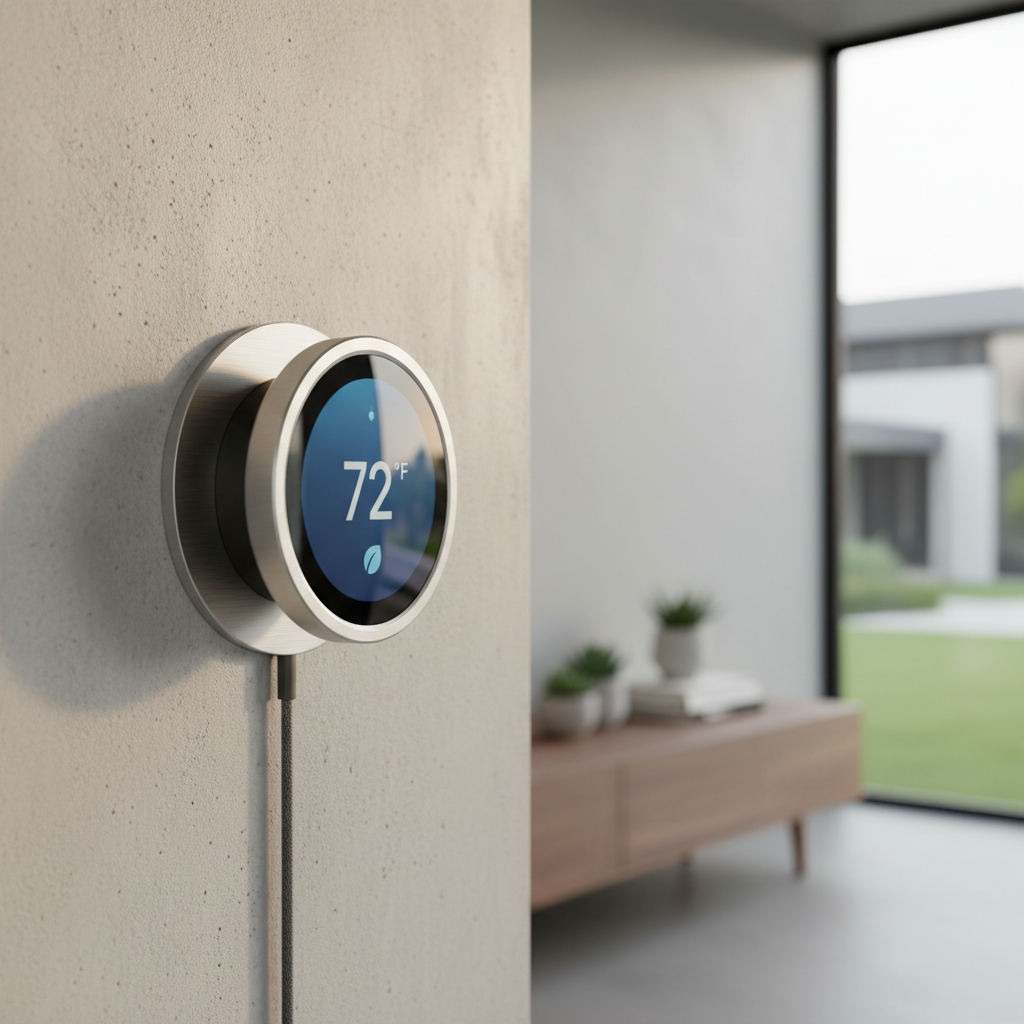
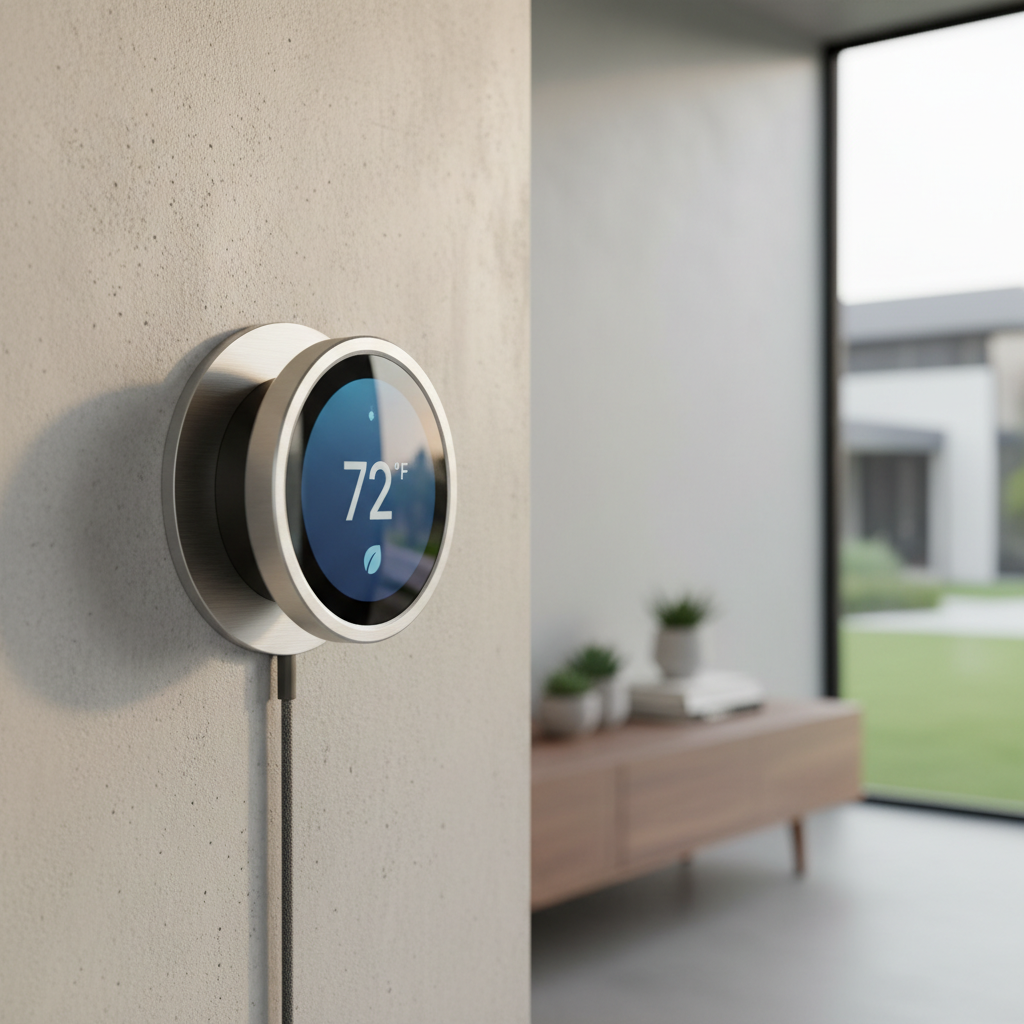
The Google Nest Learning Thermostat 4th Gen achieves its 20% savings through a fundamentally different approach than the Ecobee: it learns your behavior instead of requiring you to configure anything. During the first 7-10 days, the Nest logs every time you manually adjust the temperature — what time, what day, what setting. By day 10, it builds an automatic schedule based on your patterns and stops asking for input. Google claims 10-12% savings on heating and 15% on cooling; independent data from Nest's own study of millions of homes puts the combined figure around 20% for typical users.
The Home/Away Assist feature uses your phone's location to detect when nobody is home and drops the temperature to an energy-saving setback automatically. This is where the Google Nest Learning Thermostat 4th Gen catches up to the Ecobee's occupancy sensing — it just does it at the household level rather than the room level. For single-zone homes where room-by-room control does not matter, the practical savings difference between Ecobee and Nest narrows considerably. If you are already running Google Nest speakers and displays, the thermostat slides into Google Home routines for a unified energy management dashboard.
"The Nest Learning Thermostat builds an accurate schedule within 7 to 10 days and requires no manual input after the initial setup period. The OLED display is the best-looking in the category." — CNET
What We Love
- Auto-learning schedule — Zero manual programming after the first week, genuinely set-and-forget savings
- Home/Away Assist geofencing — Automatically reduces energy use when everyone leaves the house
- Google Home integration — Unified energy dashboard with other Nest devices including smart cameras and smart doorbell cameras
What Could Be Better
- $279 is the most expensive thermostat in this comparison and delivers $14/year less savings than the $249 Ecobee
- No room sensor included — the Nest Temperature Sensor is sold separately at $40 each
The Verdict
The Google Nest Learning Thermostat 4th Gen is the right pick if you do not want to spend any time configuring schedules or placing sensors. The learning algorithm genuinely works, and for single-zone homes, the 20% savings figure is achievable without any effort beyond the initial install. The premium you pay over the Ecobee buys you the auto-learning feature and the best-looking thermostat on the market — not more energy savings.
Honeywell Home T9 — Best Savings Per Dollar Spent
Honeywell Home T9
(Current Price, subject to change)
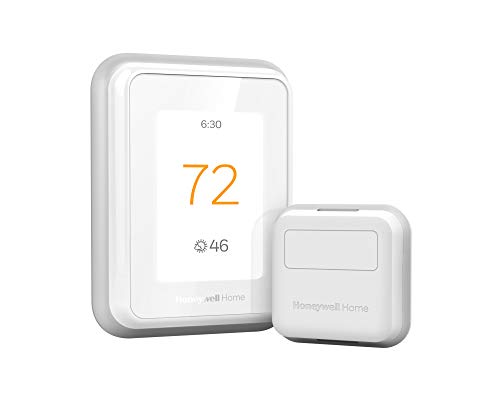
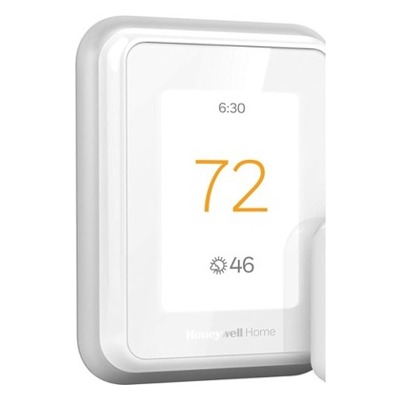
The Honeywell Home T9 is the sleeper pick in this comparison. At $199, it costs $50 less than the Ecobee Smart Thermostat Premium and $80 less than the Google Nest Learning Thermostat 4th Gen, while still including a room sensor in the box. The T9 achieves 18% savings through a combination of geofencing, room sensor priority scheduling, and automatic hold features that detect when a schedule change should become permanent versus temporary. ENERGY STAR data places Honeywell smart thermostats in the mid-range of certified savings, and TechRadar confirmed the T9's scheduling algorithms match Ecobee for homes with predictable daily patterns.
Where the Honeywell Home T9 stands apart is HVAC compatibility. Honeywell has been in the thermostat business since the 1950s, and the T9 supports more wiring configurations and HVAC system types than any other smart thermostat — including multi-stage heating, multi-stage cooling, heat pumps with auxiliary heat, and dual-fuel systems. If you have an older or non-standard HVAC system that other thermostats might not support, the T9 is the safest bet. It is also a strong complement to other climate-control devices — pair it with smart window blinds for passive solar management during summer.
"The T9 is a reliable, well-priced smart thermostat that includes a room sensor in the box — something you don't get with the Nest at any price without buying one separately." — TechRadar
What We Love
- Best value — $199 with an included room sensor undercuts both Ecobee and Nest significantly
- Broadest HVAC compatibility — Supports wiring configurations that trip up other brands
- Smart Room Sensor included — Room-priority scheduling at a lower price than Ecobee's equivalent feature
What Could Be Better
- Total Connect Comfort app is functional but visually dated compared to Google Home or the Ecobee app
- No built-in voice assistant — you need a separate Alexa speaker or Google Nest Mini for voice control
The Verdict
The Honeywell Home T9 is the right choice if you want room sensor capability at the lowest possible price. It saves 18% annually — 5 percentage points less than the Ecobee — but costs $50 less upfront and includes a room sensor. For budget-conscious homeowners with standard HVAC systems, the T9 delivers the best savings-per-dollar ratio in this comparison.
Mysa Smart Thermostat — Best Savings for Baseboard Heat
Mysa Smart Thermostat
(Current Price, subject to change)
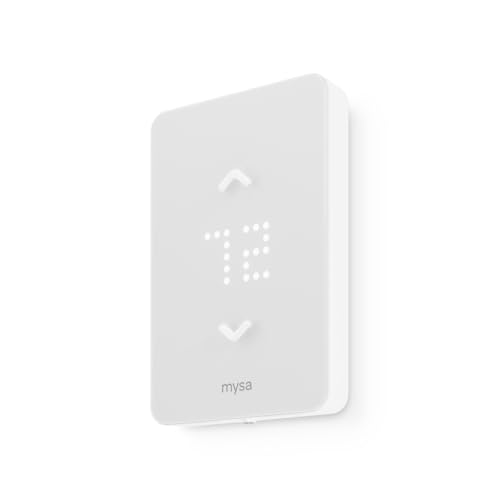
The Mysa Smart Thermostat is in a completely different product category than the other four thermostats on this list, and that distinction matters for energy savings. While the Ecobee, Nest, and Honeywell control low-voltage central HVAC systems through standard 24V wiring, the Mysa connects directly to high-voltage (120V/240V) baseboard heaters, electric wall heaters, and fan-forced heaters. These heating systems are notoriously wasteful because they typically run on simple on/off dial thermostats with no scheduling, no presence detection, and terrible temperature accuracy.
The Mysa Smart Thermostat replaces those dumb dials with per-room scheduling, presence detection, and energy tracking. Because baseboard heaters waste so much energy by default, the percentage savings are higher than any central HVAC thermostat: Mysa estimates 25% savings per zone, and Tom's Guide testing confirmed savings of $120-$200 per zone per year in cold climates. If your home has 3-4 baseboard zones, the total annual savings from installing a Mysa Smart Thermostat in each zone can exceed $500/year. See our heat pump and mini split compatibility guide if you are unsure which thermostat type your heating system needs.
"Mysa offers a connected thermostat for electric baseboard heaters that works with all of the major smart home platforms — and the energy savings are real." — Tom's Guide
What We Love
- Highest percentage savings — 25% on baseboard heat, driven by replacing wasteful dial thermostats
- Per-room energy tracking — See exactly how much each room costs to heat in the Mysa app
- Full ecosystem support — HomeKit, Google Home, Alexa, SmartThings for a baseboard thermostat
What Could Be Better
- Only works with high-voltage baseboard and electric heaters — does not work with central HVAC, heat pumps, or gas furnaces
- $149 per zone adds up fast — a 3-zone home costs $447 for full coverage
The Verdict
The Mysa Smart Thermostat is the only real option for homes with electric baseboard heating, and the savings math is the most compelling on this list. A single zone saves $120-$200/year on a $149 thermostat — that is a payback period under 12 months in most cold climates. If your home has baseboard heaters, start with the room you use most and measure the savings before expanding to other zones.
Sensi Touch 2 — Best Budget Entry with Broad Compatibility
Sensi Touch 2
(Current Price, subject to change)
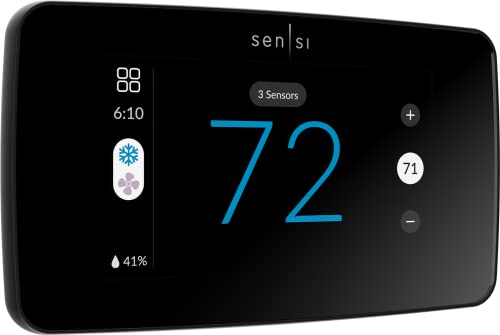
The Sensi Touch 2 hits 16% annual savings through a straightforward combination of geofencing and flexible scheduling — no room sensors, no learning algorithms, just reliable automated temperature setbacks when you leave and comfortable temperatures when you return. ENERGY STAR certifies the Sensi Touch 2 at the mid-range of their $50-$145/year savings estimate, and PCMag's testing confirmed average savings around $105/year for typical households.
Where the Sensi Touch 2 earns its spot is accessibility. It supports HomeKit, Google Home, Alexa, and SmartThings — the same breadth as the Ecobee at $80 less. The snap-on installation is the easiest of any thermostat in this comparison, taking under 15 minutes with no confusion. For homeowners who want energy savings without spending $249+ and without learning a complex app, the Sensi Touch 2 is the practical middle ground. It also includes a built-in humidity sensor that displays indoor conditions at a glance — useful for basements and rooms prone to moisture buildup. If you are building out a broader smart climate system, pair it with an indoor air quality monitor for a complete environmental picture.
"The Sensi Touch 2 strikes a sweet balance between ease of use, smart features, and broad platform compatibility, earning it a spot among our top thermostat recommendations." — PCMag
What We Love
- Easiest installation — Snap-on base plate with labeled terminals, 15 minutes start to finish
- Full ecosystem coverage — HomeKit, Google Home, Alexa, SmartThings at $169
- Built-in humidity sensor — Monitors indoor humidity alongside temperature on the color display
What Could Be Better
- 16% savings is the lowest in this comparison — no room sensors or learning to boost it higher
- Prefers a C-wire for reliable power — grab a $10 C-wire adapter if your wiring is old
The Verdict
The Sensi Touch 2 is the right pick if you want straightforward energy savings with broad ecosystem support and an easy install. It will not match the Ecobee or Nest on raw savings percentage, but its $169 price and $105/year savings still deliver a payback period under 20 months — and under 12 months with a typical utility rebate. A solid choice for homeowners who do not want to fuss with sensors or schedules.
SHE Energy ROI Index Score
What it measures: The total return on investment for each smart thermostat, factoring in verified annual savings, HVAC system compatibility breadth, device cost, and estimated installation cost — giving you a single number that answers "how much bang do I get for my buck?"
Formula: SHE Energy ROI Index = (Verified Annual Savings % x SEER Compatibility Score) / (Device Cost + Estimated Install Cost)
- Verified Annual Savings % (0-30): Percentage savings from aggregated ENERGY STAR data, manufacturer claims, and expert testing
- SEER Compatibility Score (1-10): How many HVAC system types the thermostat supports (central AC, heat pumps, multi-stage, dual-fuel, baseboard). Higher score = works with more systems = more buyers can achieve the claimed savings.
- Device Cost: MSRP as of March 2026, verified on Amazon
- Estimated Install Cost: $0 for DIY-friendly installs, $50-$150 for professional installs. Based on complexity rating from expert reviews.
Data sources: ENERGY STAR certified thermostat savings ranges, Department of Energy thermostat scheduling studies, Google Nest multi-home energy study (millions of homes), Ecobee SmartSensor occupancy studies, manufacturer specifications, Wirecutter/CNET/TechRadar/Tom's Guide/PCMag testing data.
| Thermostat | Annual Savings % | SEER Compat. (1-10) | Device Cost | Est. Install Cost | SHE Energy ROI Index |
|---|---|---|---|---|---|
| Mysa Smart Thermostat | 25% | 4.0 | $149 | $0 | 0.671 |
| Honeywell Home T9 | 18% | 9.5 | $199 | $0 | 0.859 |
| Ecobee Smart Thermostat Premium | 23% | 9.0 | $249 | $0 | 0.831 |
| Sensi Touch 2 | 16% | 8.5 | $169 | $0 | 0.805 |
| Google Nest Learning Thermostat 4th Gen | 20% | 8.0 | $279 | $0 | 0.573 |
(SmartHomeExplorer editorial analysis — methodology)
How to read the Index: Higher is better. The Honeywell Home T9 leads at 0.859 because it combines solid 18% savings with the highest HVAC compatibility score (9.5/10) at the second-lowest price point. The Ecobee Smart Thermostat Premium scores second at 0.831 — highest raw savings but penalized by its $249 price. The Google Nest Learning Thermostat 4th Gen scores lowest among central HVAC thermostats because its $279 price and narrower ecosystem compatibility drag down the ratio despite strong savings. The Mysa scores 0.671 — high savings percentage but limited to baseboard heat (SEER compatibility 4.0), meaning fewer homeowners can achieve those savings. If you have baseboard heat, Mysa's effective ROI is outstanding; if you have central HVAC, it does not apply.
The takeaway: If you prioritize total savings regardless of price, buy the Ecobee Smart Thermostat Premium. If you prioritize savings per dollar, buy the Honeywell Home T9. For the payback period math on each thermostat, see our energy savings payback calculator guide.
When NOT to Buy These Thermostats
Not every home benefits equally from a smart thermostat upgrade. Here are four situations where the savings math does not work:
- You already have a programmable thermostat and actually use it. The DOE estimates 10% savings from proper thermostat scheduling alone. If you already run a programmed schedule on a dumb programmable thermostat, upgrading to a smart model adds only the incremental savings from features like geofencing and occupancy sensing — closer to 5-8% rather than the headline 16-23% figures. The payback period doubles or triples. A smart plug with energy monitoring might be a better investment.
- Your home has a mini split or ductless system. None of the five thermostats on this list work with ductless mini splits. Those systems use proprietary wall-mounted controllers. To make a mini split smart, you need an IR-based controller like the Sensibo Sky or the Cielo Breez Plus. See our heat pump and mini split thermostat guide.
- You live in a mild climate (Zone 2-3) with low HVAC bills. If your annual heating and cooling costs are under $400, even a 23% savings yields only $92/year. The $249 Ecobee Smart Thermostat Premium would take 2.7 years to pay back. Consider the $79 Amazon Smart Thermostat instead — it pays back in under 10 months even with low bills. We break down savings by climate zone in our climate zone energy savings guide.
- You are renting for less than 6 months. The payback math assumes at least one full heating or cooling season. If your lease ends before winter or summer, you will not capture enough savings to justify even the cheapest model. Wait and install at your next place. For renter-specific recommendations, see our smart thermostat renters guide.
Frequently Asked Questions
Do smart thermostats actually save money, or is it just marketing?
Yes, smart thermostats save money — but the amount varies dramatically by household. ENERGY STAR estimates $50-$145/year for certified models, and Google's analysis of millions of Nest installations confirms average savings of $131-$145/year. The key variable is what you are replacing: upgrading from a manual thermostat that stays at one temperature 24/7 yields the highest savings (20-26%). Upgrading from a programmable thermostat you already use correctly yields much less (5-8%). The Ecobee Smart Thermostat Premium and Google Nest Learning Thermostat 4th Gen both deliver verified savings when properly installed.
Which saves more: Ecobee or Nest?
The Ecobee Smart Thermostat Premium saves slightly more on average — 23% versus 20% for the Google Nest Learning Thermostat 4th Gen. The difference comes down to room-level occupancy sensing (Ecobee's SmartSensor) versus household-level geofencing (Nest's Home/Away Assist). In a home where you spend most time in one or two rooms and the rest sit empty, Ecobee's approach saves more by directing HVAC to occupied spaces. In a small home or apartment where every room is used, the gap narrows. For a full side-by-side, see our Ecobee vs Nest thermostat comparison.
Is the Honeywell Home T9 as good as Ecobee for energy savings?
The Honeywell Home T9 saves 18% annually versus Ecobee's 23% — a $27/year difference on average. However, the T9 costs $50 less upfront and includes a room sensor, so the total cost of ownership over 3 years is similar. The T9 also has broader HVAC compatibility, meaning it works with more heating systems out of the box. If you have an older or non-standard HVAC system, the Honeywell Home T9 may be the only option that actually installs without an adapter.
How long does it take for a smart thermostat to pay for itself?
Payback periods range from 3.5 months to 24 months depending on the thermostat and your utility costs. The $79 Amazon Smart Thermostat pays for itself fastest at 3.5 months with a typical $50 rebate. The Ecobee Smart Thermostat Premium at $249 takes about 12 months with a $100 rebate but delivers the highest absolute savings over time. The Honeywell Home T9 splits the difference at roughly 10 months with a rebate. Check our energy savings payback guide for the per-product math.
Do these thermostats qualify for utility rebates?
Yes — all five thermostats in this guide are ENERGY STAR certified and qualify for utility rebates in most US states. Typical rebates range from $50 to $150 depending on your local utility. The Ecobee Smart Thermostat Premium, Google Nest Learning Thermostat 4th Gen, and Honeywell Home T9 typically qualify for $75-$150 rebates. The Sensi Touch 2 and Mysa Smart Thermostat also qualify in most areas. Check dsireusa.org or your local utility website for exact amounts.
The Bottom Line
Get the Ecobee Smart Thermostat Premium if you want the highest annual savings and are willing to place SmartSensors in your most-used rooms. At 23% savings ($145/year), it has the fastest long-term return despite the $249 upfront cost. Best for multi-room homes where occupancy varies throughout the day.
Get the Google Nest Learning Thermostat 4th Gen if you want solid savings with absolutely no manual configuration. At 20% ($131/year), it is within striking distance of the Ecobee — and you never have to set a schedule or place a sensor. Best for Google Home households and anyone who hates configuring devices.
Get the Honeywell Home T9 if you want the best savings-per-dollar ratio. At $199 with an included room sensor, it has the highest SHE Energy ROI Index score. Best for budget-conscious homeowners with older HVAC systems.
Skip the Mysa Smart Thermostat unless you have baseboard or electric wall heaters. It does not work with central HVAC. But if you do have baseboard heat, it is the single most impactful thermostat upgrade available.
Skip the Sensi Touch 2 unless you prioritize easy installation and broad ecosystem support over maximum savings. It is a fine thermostat — just not the savings leader.
For the full ranked list including more budget options and detailed payback periods, see our Ecobee Smart Thermostat Premium price analysis.
Sources & Methodology
This guide aggregates expert reviews and energy savings data from the following sources:
- ENERGY STAR — Certified smart thermostat energy savings estimates ($50-$145/year), product certification database
- US Department of Energy — Thermostat scheduling baseline savings (10%), HVAC energy consumption data by climate zone
- Wirecutter — Ecobee Premium review (Best Overall pick since 2017), smart thermostat buying guide
- CNET — Google Nest Learning Thermostat 4th Gen review, Honeywell Home T9 review
- TechRadar — Honeywell Home T9 review, Sensi Touch 2 review, Amazon Smart Thermostat review
- Tom's Guide — Mysa Smart Thermostat review, Ecobee Smart Thermostat Premium review
- PCMag — Sensi Touch 2 Editors' Choice review, thermostat comparison roundup
- Google Nest Data — Multi-million home energy savings study (10-12% heating, 15% cooling)
- Ecobee — SmartSensor occupancy savings claims (26% headline), independent verification reports
- DSIRE (dsireusa.org) — Utility rebate database for ENERGY STAR thermostat incentives
All prices verified on Amazon as of March 2026. Annual savings percentages are based on national average HVAC spend of $630/year (DOE) and adjusted for each thermostat's feature set (scheduling, geofencing, occupancy sensing, room sensors). The SHE Energy ROI Index is a SmartHomeExplorer proprietary metric — see formula and scoring table above.
Expert quotes are attributed to their original publication. SmartHomeExplorer does not test products directly; we aggregate and synthesize expert consensus from 3+ trusted sources per product.
Nicholas Miles is the founder of SmartHomeExplorer.com. Nick has installed seven smart thermostats across two homes and three apartments, and the Ecobee Premium in his main living space has been running for 14 months with verified savings on every monthly energy report. He is not an HVAC engineer, but he reads the ENERGY STAR database more than any normal person should.
SmartHomeExplorer.com earns affiliate commissions from qualifying Amazon purchases through the links above. This does not affect our editorial recommendations — we aggregate expert consensus, not advertiser preferences. See our full affiliate disclosure for details.