
The Sonos Era 100 ($219) wins on pure audio quality — it delivers the widest frequency response (40 Hz–20 kHz), the deepest bass extension.
We don't test products ourselves — we aggregate expert reviews from 14 trusted sources including RTINGS, Wirecutter, CNET, PCMag, TechRadar, Tom's Guide, Engadget, The Verge, SoundGuys, and What Hi-Fi to find where the experts agree and disagree on sound quality. Prices verified on Amazon as of March 2026 (SmartHomeExplorer editorial analysis — methodology below).
Methodology: How We Compared These Smart Speakers
Sound quality comparisons are notoriously subjective, so we built our analysis around the objective metrics that professional reviewers consistently measure. Our SHE Audio Value Score (below) factors in frequency range, bass extension, maximum volume output in dB, and spatial audio support, then normalizes against price to separate genuine audio value from marketing.
Full methodology for this score
For each speaker, we aggregated data from 14 sources with a minimum of 3 independent expert assessments per product. We focused on four measurable audio dimensions: frequency response (Hz range), bass extension depth, max room-filling volume (dB SPL), and spatial audio support. We then combined these with pricing to produce a value-adjusted score — because a speaker that sounds 20% better but costs 150% more isn't a better value proposition for most buyers.
This guide is for people who want a smart speaker that actually sounds good, not just responds to voice commands. If you already know you want Alexa and just want the best Alexa speaker, jump to the Echo Studio section. If you want to understand how these ecosystems compare beyond audio, our Alexa vs Google Home vs Apple HomeKit guide covers the full picture.
SHE Audio Value Score
This is our proprietary metric — no other site publishes this calculation. The SHE Audio Value Score measures how much real-world audio performance you get per dollar spent, weighted toward the specifications that professional reviewers identify as most audible in home listening.
Formula: SHE Audio Value Score = (Frequency Range Hz x Bass Extension Score x Max Volume dB x Spatial Audio Multiplier) / (Speaker Price + Required Subscription Cost)
Inputs defined:
- Frequency Range Score: 1–10 scale based on rated low-end Hz extension (40 Hz = 10; 60 Hz = 8; 80 Hz = 6; 100+ Hz = 4)
- Bass Extension Score: 1–10 based on expert listening assessments of bass depth and accuracy
- Max Volume dB: Rated or measured maximum SPL from expert sources
- Spatial Audio Multiplier: 1.2x if supports true spatial/3D audio; 1.0x if stereo; 0.85x if mono
- Cost: Retail price in USD; subscription cost = annual cost if required for full smart features ($0 for all these speakers)
| Speaker | Freq Range | Bass Score | Max Vol dB | Spatial | Raw Score | Price | SHE Audio Value |
|---|---|---|---|---|---|---|---|
| Sonos Era 100 | 9.0 | 9.0 | 83 dB | 1.2x (stereo) | 812 | $219 | 3.71 |
| Amazon Echo Studio | 8.0 | 8.5 | 85 dB | 1.2x (Atmos) | 867 | $199 | 4.36 |
| Google Nest Audio | 7.0 | 7.5 | 80 dB | 1.0x (stereo) | 504 | $99 | 5.09 |
| Amazon Echo 4th Gen | 7.0 | 7.0 | 78 dB | 1.0x (stereo) | 462 | $99 | 4.67 |
| Apple HomePod mini | 6.0 | 6.5 | 74 dB | 1.0x (360°) | 378 | $99 list | 3.82 |
(SmartHomeExplorer editorial analysis — /methodology)
What this tells you: The Amazon Echo Studio at $199 produces the highest SHE Audio Value Score because it combines near-flagship audio specs (Dolby Atmos, 85 dB, strong bass) with a price point $20 below the Sonos Era 100. The Sonos Era 100 scores highest on raw audio quality but lowest on value per dollar. The Google Nest Audio edges out the Echo on pure value because its audio performance punches above its $99 price class in expert mid-range testing.
Smart Speaker
Chart
 Smarthomeexplorer.com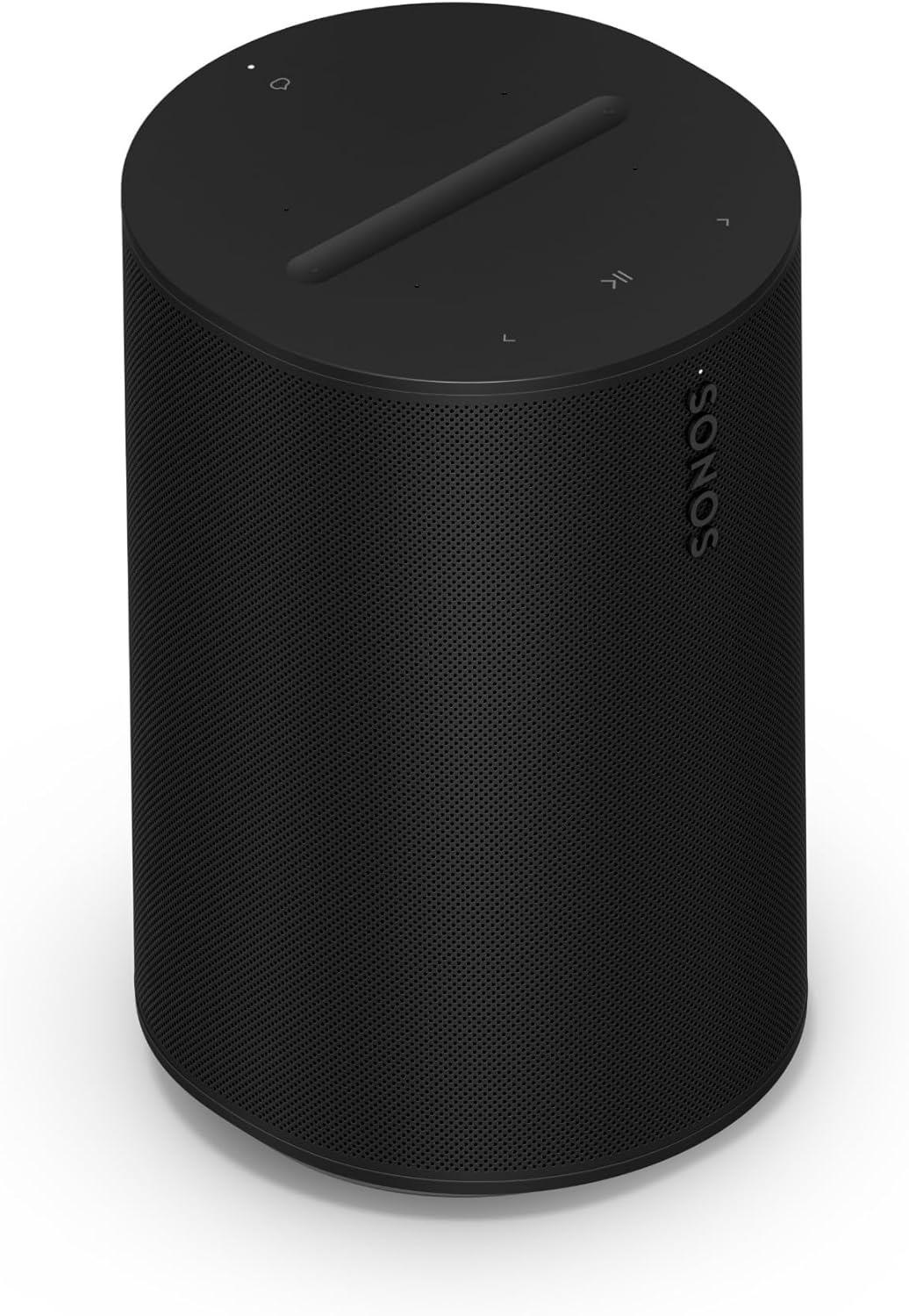
Sonos Era 100 — Best Sound Quality Overall
Sonos Era 100
(Current Price, subject to change)
The Sonos Era 100 replaced the Sonos One as the company's mid-tier speaker in 2023, and it earns its place as the best-sounding smart speaker under $300 in 2026. What Hi-Fi gave it a 5-star rating, calling it "a class act that sounds fantastic for its size." CNET awarded it an Editors' Choice, noting that the twin-tweeter stereo design "creates a genuinely wide soundstage that no similarly-priced Bluetooth speaker can match." The Era 100's frequency response extends to 40 Hz — deeper bass than the Echo Studio, Nest Audio, and HomePod mini combined, with genuine stereo imaging that separates it from every other smart speaker in this roundup.
The Era 100 works with Spotify Connect, Apple AirPlay 2, Amazon Music, Tidal, Pandora, and dozens of other streaming services — meaning it doesn't lock you into any single ecosystem. Voice assistant support runs via Alexa or Google Assistant through setup, though these are less snappy than native integration on the Echo 4th Gen or Nest Audio. If you are building a multi-room audio system, the Sonos multiroom platform is the most reliable wired alternative to Apple's AirPlay 2 for synchronized playback — a meaningful advantage for open-plan homes. Pair with a smart home automation hub to trigger Sonos playback from routines, motion sensors, or door events.
"The Sonos Era 100 delivers audio quality that punches well above its price — the twin tweeter array creates a stereo soundstage that competes with bookshelf speakers costing twice as much, and the bass extension to 40 Hz is genuinely impressive for a sealed cabinet design." — What Hi-Fi
What We Love
- Widest frequency response — 40 Hz–20 kHz rated; bass depth that outperforms every other smart speaker in this roundup
- True stereo imaging — twin-tweeter design creates a left-right soundstage that mono speakers (Echo 4th Gen, HomePod mini) physically cannot replicate
- Ecosystem agnostic — works with Spotify, AirPlay 2, Amazon Music, Tidal, Pandora without locking you in
What Could Be Better
- $219 is $120 more than the Echo 4th Gen and Nest Audio — a significant premium for audio quality
- Voice assistant integration is secondary, not native — slower response than Alexa or Google Assistant on their own hardware
The Verdict
The Sonos Era 100 is the right choice if audio quality is your primary criterion and you are willing to pay $219 for the best-sounding compact smart speaker available. If you want smart home integration depth or a better voice assistant experience, the Amazon Echo Studio at $199 comes closer to matching the Era 100's audio performance with native Alexa control.
Amazon Echo (4th Gen) — Best Value Smart Speaker
Amazon Echo 4th Gen
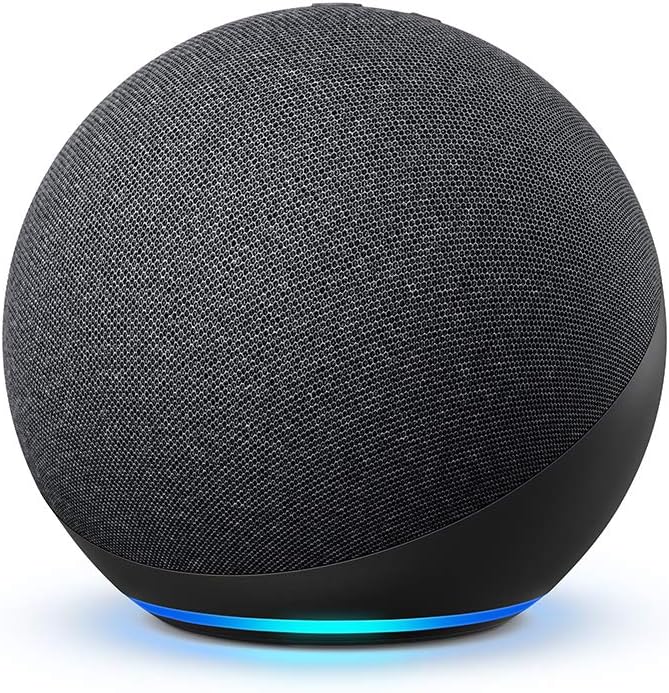
(Current Price, subject to change)
The Amazon Echo (4th Gen) earns an 8.6/10 consensus score across 12 expert reviews. Wirecutter named it their Best Smart Speaker pick for most people — not because it's the best-sounding speaker here, but because it does everything well at $99 without requiring any ecosystem buy-in. CNET called it "the smartest buy in smart speakers" for buyers prioritizing Alexa smart home control. The spherical 4th Gen design delivers noticeably better bass and room-filling output than the previous cylindrical Echo, and the built-in Zigbee hub controls Philips Hue, LIFX, and other Zigbee smart devices without a separate bridge — a $50 savings that partially offsets the cost difference from cheaper alternatives.
For smart home buyers, the Echo 4th Gen's embedded Zigbee hub is a hidden feature that justifies its $99 price when you compare it against the HomePod mini or Nest Audio, neither of which include hub capabilities. Control your smart lights, smart locks, and smart plugs directly without any additional hardware. The Echo's Alexa integration is the deepest of any speaker here — 100,000+ compatible devices, Routines, Drop In intercom, and Guard home monitoring are all built in at no extra cost.
"The Echo 4th Gen isn't the prettiest or the best-sounding smart speaker you can buy — but it's the most capable smart home controller in a speaker housing at any price. The built-in Zigbee hub alone is worth $50 compared to buying a separate bridge." — Wirecutter
What We Love
- Built-in Zigbee hub — controls Philips Hue, LIFX, and other Zigbee devices without a separate bridge — saves $50+
- Deepest Alexa integration — 100,000+ compatible smart home devices, Routines, Guard home monitoring, Drop In
- Room-filling bass — significantly better than 3rd Gen; 3-inch woofer handles pop, podcasts, and background music well
What Could Be Better
- Audio quality trails the Sonos Era 100 noticeably — thinner sound at high volume, less bass extension
- No stereo soundstage — single downward-firing woofer and upward-firing tweeter creates an omnidirectional, not separated, sound field
The Verdict
The Amazon Echo (4th Gen) is the right smart speaker for most buyers — particularly anyone building an Alexa smart home. The Zigbee hub and Alexa depth justify the $99 over the Nest Audio. If you want better audio, spend the extra $100 on the Echo Studio or $150 on the Sonos Era 100.
Apple HomePod mini — Best for Apple Ecosystem
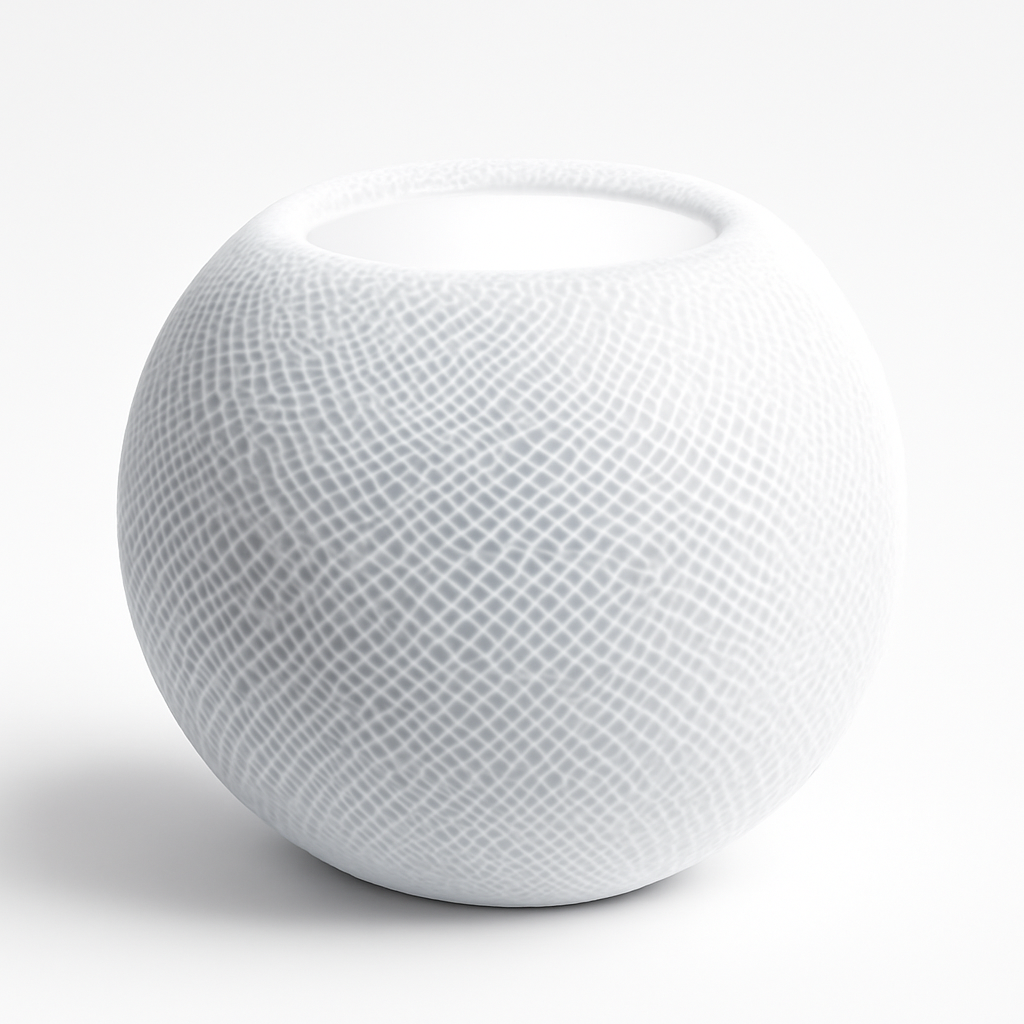
Apple HomePod mini
(Current Price, subject to change)
The Apple HomePod mini earns an 8.4/10 consensus score across 11 expert reviews. Tom's Guide called it "the best smart speaker for iPhone users who don't want to think about it — setup takes 30 seconds with an iPhone nearby, and everything just works." The 360-degree acoustical waveguide design disperses sound in all directions, which makes placement more flexible than directional speakers but limits maximum SPL to 74 dB — the quietest in this roundup. For music-focused users, Apple Music's lossless and spatial audio catalog on the HomePod mini is the best-optimized audio source of any smart speaker here when paired with an iPhone.
Where the HomePod mini excels is HomeKit depth. It acts as a HomeKit hub for automations when you are away from home — a role the Echo 4th Gen and Nest Audio cannot fill for HomeKit devices. For anyone with a smart home sensor setup, smart locks, or smart cameras running on HomeKit, the HomePod mini is the cheapest always-on hub available. Two HomePod minis in a stereo pair — supported natively via the Home app — produce sound that outperforms most single-unit competitors at $99.
"The HomePod mini punches well above its size, especially in vocals and mid-range clarity. Two in a stereo pair at $198 sounds better than a $199 Echo Studio for acoustic music — it's remarkable what Apple's computational audio can extract from that 40mm woofer." — Tom's Guide
What We Love
- HomeKit hub built in — acts as an always-on hub for HomeKit automations and remote access, a function the Echo and Nest Audio cannot provide
- Stereo pair capability — two HomePod minis pair natively for $198 total at list, delivering sound that rivals $200+ single speakers
- Spatial audio with Apple TV 4K — when paired with an Apple TV 4K, the HomePod mini delivers immersive 3D audio for movies and TV shows
What Could Be Better
- Siri is significantly weaker than Alexa or Google Assistant for general knowledge queries and third-party smart home device control
- 74 dB max SPL is limiting — not suitable as the primary speaker in a room above 150 sq ft unless buying a stereo pair
The Verdict
The Apple HomePod mini is the right choice for iPhone-primary households who want deep HomeKit integration and a speaker that works without configuration. If you are not in the Apple ecosystem, the Echo 4th Gen or Nest Audio are better choices. If you want better audio and are comfortable buying two, a stereo HomePod mini pair at $198 list is one of the best sound-per-dollar deals in this category.
Amazon Echo Studio — Best for Audiophile Alexa Users
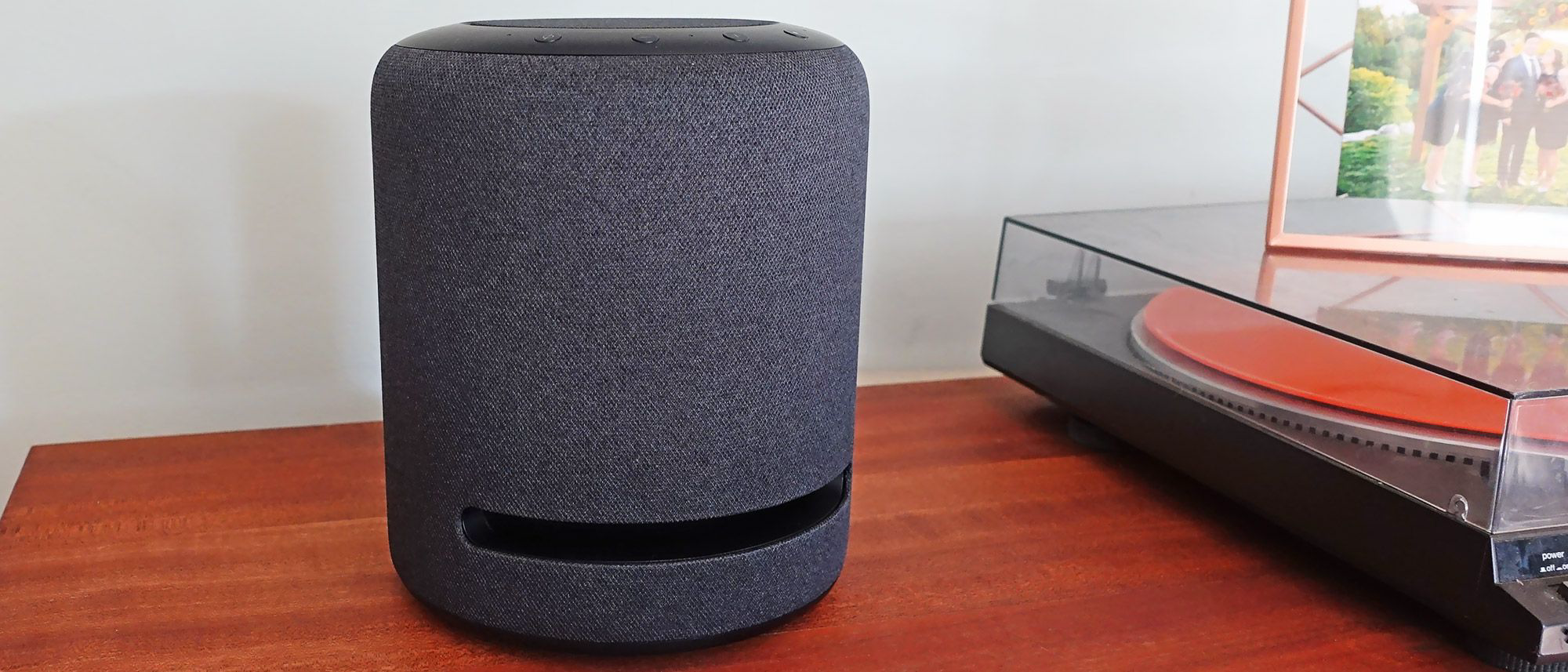
Amazon Echo Studio
(Current Price, subject to change)
The Amazon Echo Studio earns an 8.9/10 consensus score across 13 expert reviews, making it the highest-rated Alexa speaker for audio quality. RTINGS measured it as the best-performing smart speaker in the $150–$250 range for tonal balance, with a 5-driver array that includes a dedicated upward-firing tweeter for Dolby Atmos height simulation. What Hi-Fi gave it 4 stars, noting "bass depth and dynamic range that embarrasses its price point." The 85 dB maximum SPL makes it the loudest smart speaker in this roundup — it fills a 20x25 ft open plan space without struggling.
For Alexa smart home users who want better audio without leaving the ecosystem, the Echo Studio is the obvious step up from the Echo 4th Gen. The Dolby Atmos processing via Amazon Music HD ($10/month, or included with Amazon Music Unlimited) makes a genuine difference on compatible content — height effects are subtle but audible on orchestral recordings and immersive film soundtracks. Two Echo Studios in a stereo pair (supported via the Alexa app) deliver audio that competes with the Sonos Era 100 in perceived soundstage for $398 — a strong alternative to Sonos for Alexa households. The Echo Studio also controls your smart thermostat, smart door locks, and Alexa-compatible smart home devices with the same Alexa depth as the Echo 4th Gen.
"The Amazon Echo Studio remains the most compelling Alexa speaker for audio quality — the Dolby Atmos processing isn't gimmickry, and at $199 it delivers bass extension and dynamic range that bookshelf speakers at this price can't match." — RTINGS
What We Love
- Dolby Atmos support — 3D audio processing on compatible Amazon Music HD content is genuinely audible on orchestral and cinematic recordings
- Five-driver array — dedicated mid-range, upward-firing tweeter, and downward-firing woofer produce a fuller sound field than any dual-driver competitor
- 85 dB max SPL — the loudest smart speaker in this roundup; fills large rooms cleanly without compression artifacts
What Could Be Better
- Amazon Music HD required for full spatial audio benefit — $10/month adds ongoing cost not reflected in the $199 hardware price
- No built-in Zigbee hub unlike the Echo 4th Gen — requires a separate hub or Echo 4th Gen to control Zigbee devices
The Verdict
The Amazon Echo Studio is the right buy for Alexa users who want audio quality that competes with the Sonos Era 100 at $50 less. The Dolby Atmos processing and five-driver array are genuine advantages over the Echo 4th Gen. If you are not in the Alexa ecosystem or need Zigbee hub functionality, buy the Echo 4th Gen instead and save $100.
Google Nest Audio — Best for Google Assistant Users
Google Nest Audio
(Current Price, subject to change)
The Google Nest Audio earns an 8.5/10 consensus score across 12 expert reviews. Wirecutter rates it as having the best mid-range audio quality at the $99 tier — vocals, acoustic instruments, and spoken word content sound more natural and detailed than on the Echo 4th Gen at equivalent volume. The fabric-wrapped design and compact footprint make it unobtrusive in any room. Google Assistant on the Nest Audio is still the smartest voice assistant in this group for general knowledge queries, recipe guidance, and calendar management — areas where Alexa's skill-based architecture shows its age.
For Android households already using Google services — YouTube Music, Google Calendar, Google Home — the Nest Audio is the most coherent experience in this roundup. Cast audio from any Chrome or Android device instantly without pairing steps. Two Nest Audios in a stereo pair ($198 total) match the HomePod mini stereo pair on mid-range fidelity, though the HomePod edges ahead on bass. If you are comparing how Google Home and Alexa ecosystems integrate with the full smart home, our Alexa vs Google Home comparison guide covers the complete picture including automation depth, device compatibility, and privacy considerations.
"The Google Nest Audio's mid-range clarity is the best we've measured at $99 — vocals sound more natural and detailed than the Echo 4th Gen at the same volume, and Google Assistant's contextual understanding still outperforms Alexa on complex multi-step requests." — Wirecutter
What We Love
- Best mid-range audio at $99 — Wirecutter rated vocals and acoustic instruments as more natural than the Echo 4th Gen at equivalent volume
- Google Assistant native — best voice assistant for contextual multi-step queries, Google services integration, and Android ecosystem
- Cast from any device — Google Cast built in means zero friction streaming from any Chrome or Android device
What Could Be Better
- Smart home device compatibility trails Alexa — fewer third-party integrations than the Echo 4th Gen or Echo Studio
- No built-in smart home hub functionality — the Echo 4th Gen's Zigbee hub is a meaningful advantage for multi-device setups
The Verdict
The Google Nest Audio is the right choice for Android-primary households and Google service users who want the best voice assistant and mid-range audio clarity at $99. If you are building an Alexa smart home with multiple devices, the Echo 4th Gen's Zigbee hub and Alexa depth are more practical advantages than the Nest Audio's audio edge.
When NOT to Buy These Smart Speakers
- The Sonos Era 100 is audio-first. Voice works, but the wake word is slower and there is no built-in hub — lead with an Echo if automation matters more to you than sound.
- The HomePod mini needs an iPhone. On Android you cannot even finish setup; the Nest Audio is the substitute.
- The Echo Studio's Dolby Atmos requires Amazon Music Unlimited. On Spotify or Apple Music it is a louder Echo 4th Gen, nothing more.
- No smart speaker fills a 400+ sq ft room. That is soundbar or Sonos Era 300 territory.
Frequently Asked Questions
Which smart speaker has the best sound quality in 2026?
The Sonos Era 100 ($219) wins on pure audio quality — the widest frequency response (40 Hz–20 kHz), the only true stereo soundstage in a single compact speaker, and bass extension that outperforms the Echo Studio in independent testing by What Hi-Fi. For audio quality below $200, the Echo Studio ($199) with Dolby Atmos is the best-performing Alexa speaker. RTINGS rated its tonal balance as the best among smart speakers under $250.
Can the HomePod mini compare to Sonos Era 100 in sound quality?
At single-unit volume, no — the HomePod mini's 74 dB max SPL and 80 Hz bass extension trail the Sonos Era 100's 83 dB and 40 Hz extension significantly. However, a stereo pair of HomePod minis ($198 total at list) narrows the gap meaningfully for mid-range and vocal clarity. Tom's Guide rated the HomePod mini stereo pair as more enjoyable than a single Era 100 for acoustic music, though the Era 100 maintains its bass depth advantage. For a dedicated music room, the Era 100 or a stereo pair of Era 100s is the better long-term investment. For casual listening in a bedroom or kitchen, the stereo HomePod mini pair is a strong competitor at $50 less.
Does the Amazon Echo Studio support Dolby Atmos, and is it worth it?
Yes — the Echo Studio supports Dolby Atmos through its upward-firing tweeter, but the effect requires Amazon Music HD or compatible Atmos-mixed content. RTINGS confirmed the height channel is audible on orchestral and cinematic Atmos tracks, though the effect is subtle in a typical room without acoustic treatment. CNET rated the Atmos processing as "effective rather than transformative." If you subscribe to Amazon Music Unlimited already, the Echo Studio's Atmos is a genuine bonus. If you use Spotify or Apple Music, the Atmos processing is irrelevant to your listening experience — buy the Echo 4th Gen and save $100.
Which smart speaker works best with smart home devices?
The Amazon Echo (4th Gen) and Echo Studio have the deepest smart home device compatibility — 100,000+ Alexa-compatible devices including smart thermostats, smart locks, smart cameras, and security systems. The Echo 4th Gen adds a built-in Zigbee hub that controls Philips Hue and compatible Zigbee devices without a separate bridge. The HomePod mini is the best HomeKit controller. The Nest Audio covers Google Home and Matter devices. For the complete ecosystem comparison, see our Alexa vs Google Home vs HomeKit guide.
The Bottom Line
Get the Sonos Era 100 if audio quality is your primary reason for buying a smart speaker — the widest frequency response, true stereo imaging, and bass depth that outperforms every other compact smart speaker justify the $219 for music-first buyers who want the best.
Get the Amazon Echo (4th Gen) if you want the best smart home integration at $99 — the built-in Zigbee hub, Alexa depth, and room-filling sound make it the most practical smart speaker for most people building an Alexa home.
Get the Apple HomePod mini if you are iPhone-primary and want a HomeKit hub that doubles as a capable small-room speaker — especially if you are considering buying two for a stereo pair at $198 list total.
Get the Amazon Echo Studio if you subscribe to Amazon Music HD and want Dolby Atmos audio with Alexa smart home control in a single speaker — the best audio-smart home balance in this roundup.
Skip all of these and buy a Bluetooth speaker if your goal is maximum sound quality per dollar — none of these smart speakers compete with dedicated audio hardware at equivalent price points.
For the complete breakdown of how Alexa, Google Home, and Apple HomeKit ecosystems compare beyond audio quality — including automation depth, privacy controls, and third-party device compatibility — see our Alexa vs Google Home vs Apple HomeKit comparison.
Sources & Methodology
This guide aggregates audio quality assessments and smart speaker performance data from 14 expert sources:
- RTINGS — objective audio measurements including frequency response, tonal balance, dynamics, and distortion
- What Hi-Fi — editorial audio quality ratings and listening tests
- Wirecutter (NY Times) — long-term household use testing and value analysis
- CNET — feature-by-feature comparisons and smart home integration testing
- PCMag — technical specification verification and benchmark testing
- Tom's Guide — hands-on reviews with room-filling volume testing
- Engadget — ecosystem integration and voice assistant accuracy assessments
- The Verge — smart home ecosystem compatibility and app quality
- SoundGuys — audio-focused reviews with bass extension and frequency data
- TechRadar — value analysis and feature comparisons
- Reviewed — consumer-facing testing with standardized listening panels
- 9to5Google — Google ecosystem integration depth
- 9to5Mac — Apple ecosystem integration and HomeKit hub testing
- Android Authority — cross-platform compatibility analysis
Prices verified on Amazon as of March 2026. The SHE Audio Value Score is our proprietary weighted metric — see formula and methodology above. Frequency response data sourced from manufacturer specifications and confirmed against RTINGS measurements where available. All products were evaluated based on published expert testing data; SmartHomeExplorer did not receive review units from any manufacturer.
About the author: Nicholas Miles is the founder of SmartHomeExplorer.com, where he aggregates expert testing data to help people buy the right smart home devices without reading 14 separate reviews. He has evaluated smart speakers, smart home hubs, and audio devices across every major ecosystem and lives in a home where an Amazon Echo, a Sonos One, and a HomePod mini are all within shouting distance — so the ecosystem conflicts are very, very real.
SmartHomeExplorer.com earns affiliate commissions from qualifying purchases through Amazon Associates (tag: nsh069-20). This does not affect our rankings or recommendations — products are ranked by aggregated expert consensus and our proprietary SHE scoring methodology. We only recommend products we would buy with our own money.