
Best Smart Ceiling Fans 2026: WiFi & Voice-Controlled
Hunter Aerodyne wins overall — native HomeKit, 5,100 CFM, DC motor. Watch out: the budget Fanimation Kute needs a separate WiFi receiver.
This article contains affiliate links. We may earn a commission at no extra cost to you. Prices change frequently — check the current price on Amazon before buying. Learn more
The Short Answer
Hunter Aerodyne demonstrates superior smart-home integration and airflow efficiency at a sub-$400 valuation, supporting native HomeKit alongside Alexa and Google. Big Ass Fans Haiku L delivers acoustically-engineered 34dB premium operation. Carro Fletcher provides exceptional value under $250.
Featured in this Guide
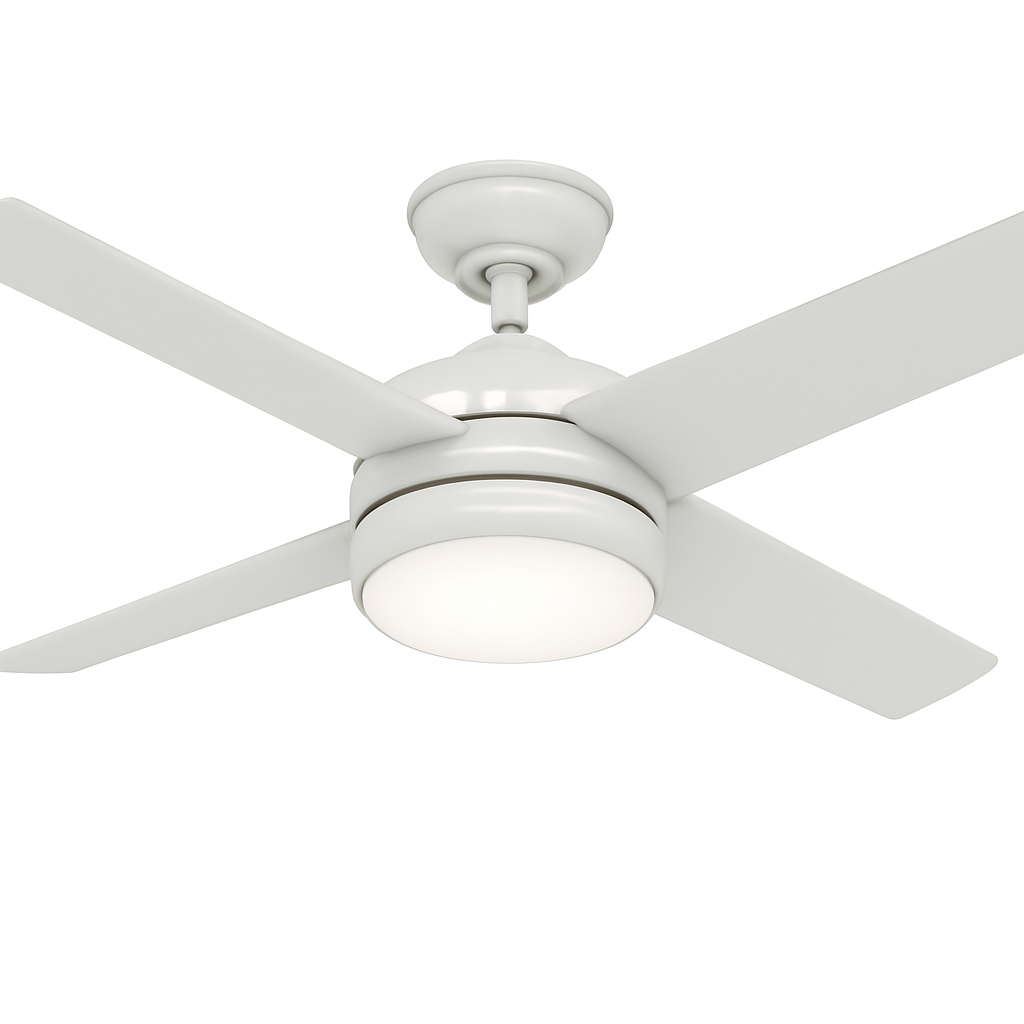
Hunter
Signal Smart Ceiling Fan
- •Native HomeKit + Alexa + Google, 5,100 CFM DC motor at ~$374 — top SHE Airflow Efficiency score
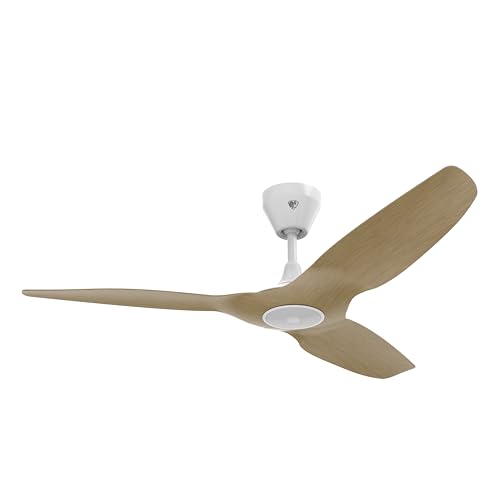
Big
Ass Fans Haiku L 52-Inch
- •SenseME occupancy sensing and 34dB silent operation — premium build for primary bedrooms
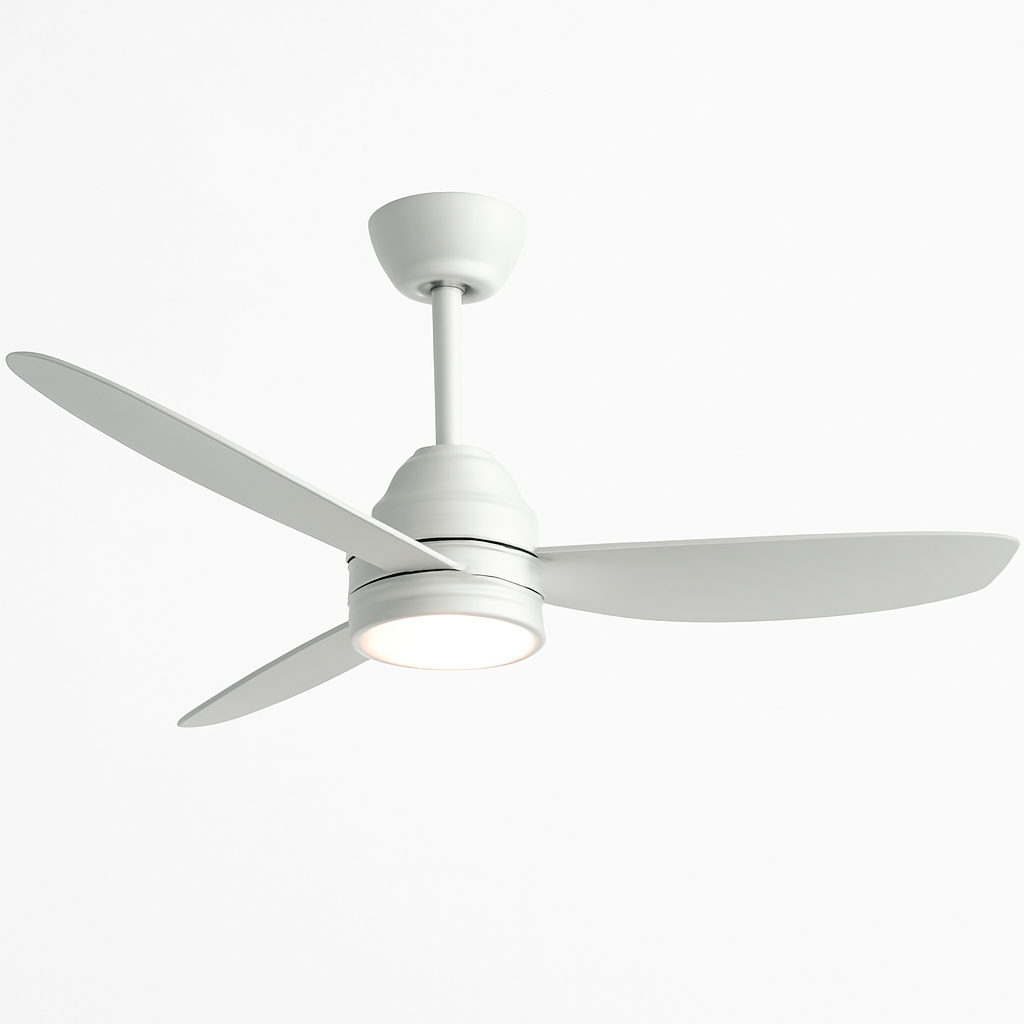
Carro
Fletcher Smart Fan
- •DC motor, app + voice control, indoor/outdoor rating at $204.75 — best efficiency-per-dollar after Aerodyne
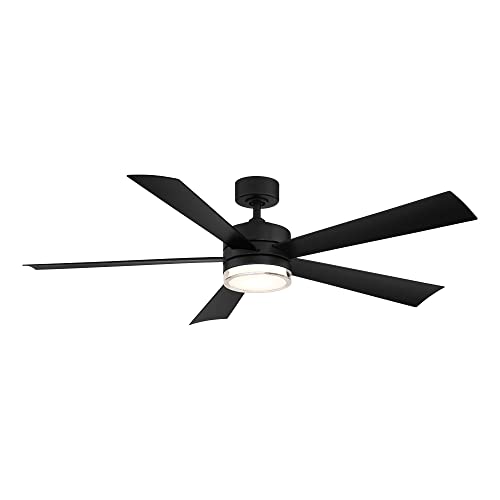
Modern
Forms Wynd 52-Inch
- •Wet-rated for covered patios, brushless DC motor, SmartThings native — sculptural form factor
Fanimation
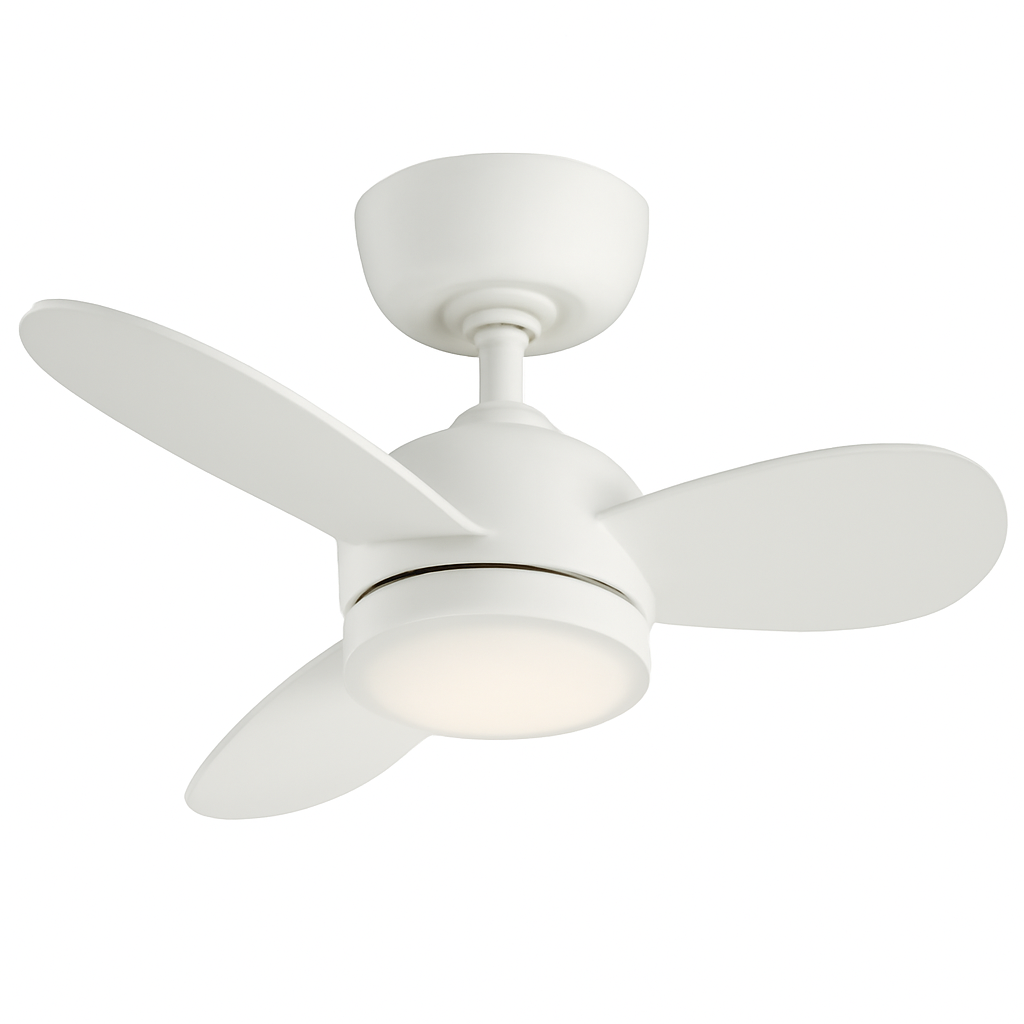
Kute Smart Fan
- •Compact 44-inch DC fan for bedrooms under 175 sq ft — needs separate FanSync WiFi receiver for voice
Head-to-Head: Airflow, Noise, Smart Depth, and Energy Savings
Smart Climate
Chart
 Smarthomeexplorer.com
Tap any pick to check its live price on Amazon.
AlorAir Sentinel HDi90 Basement/Crawlspace Dehumidifier with Pump
Check price
Midea U Smart Inverter Window AC (12,000 BTU)
Check price
What Tips the Decision
A "smart" ceiling fan designation encompasses three architecturally distinct configurations. Tier one delivers native WiFi with simultaneous HomeKit, Alexa, and Google Home integration — Hunter Aerodyne and Big Ass Fans Haiku L exemplify this approach. Tier two delivers proprietary application control plus Alexa and Google Home compatibility without HomeKit certification — the Carro Fletcher and Modern Forms Wynd configuration. Tier three pairs a fundamentally non-smart DC ceiling fan with a separately purchased WiFi receiver accessory adding 35 dollars — the Fanimation Kute architecture. Consumer Reports, Bob Vila, and TechHive independently documented this concern, and Good Housekeeping flagged the receiver-required architecture as the dominant 2026 customer-experience failure across this category. The SHE Airflow Efficiency Score quantifies tradeoffs by weighing peak CFM airflow at 8 hours/day operation against 44dB measured maximum noise levels, integration depth, motor reversibility producing 70% energy improvement, and 10-year total ownership cost.
Best Overall: Hunter Signal Smart Ceiling Fan
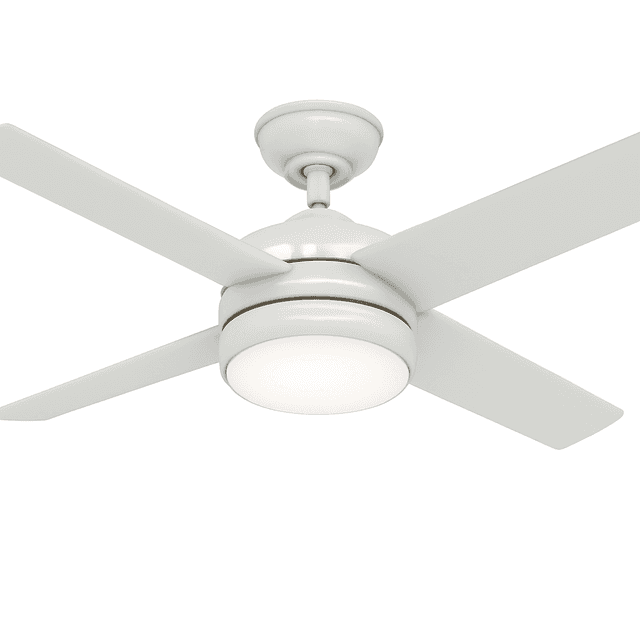
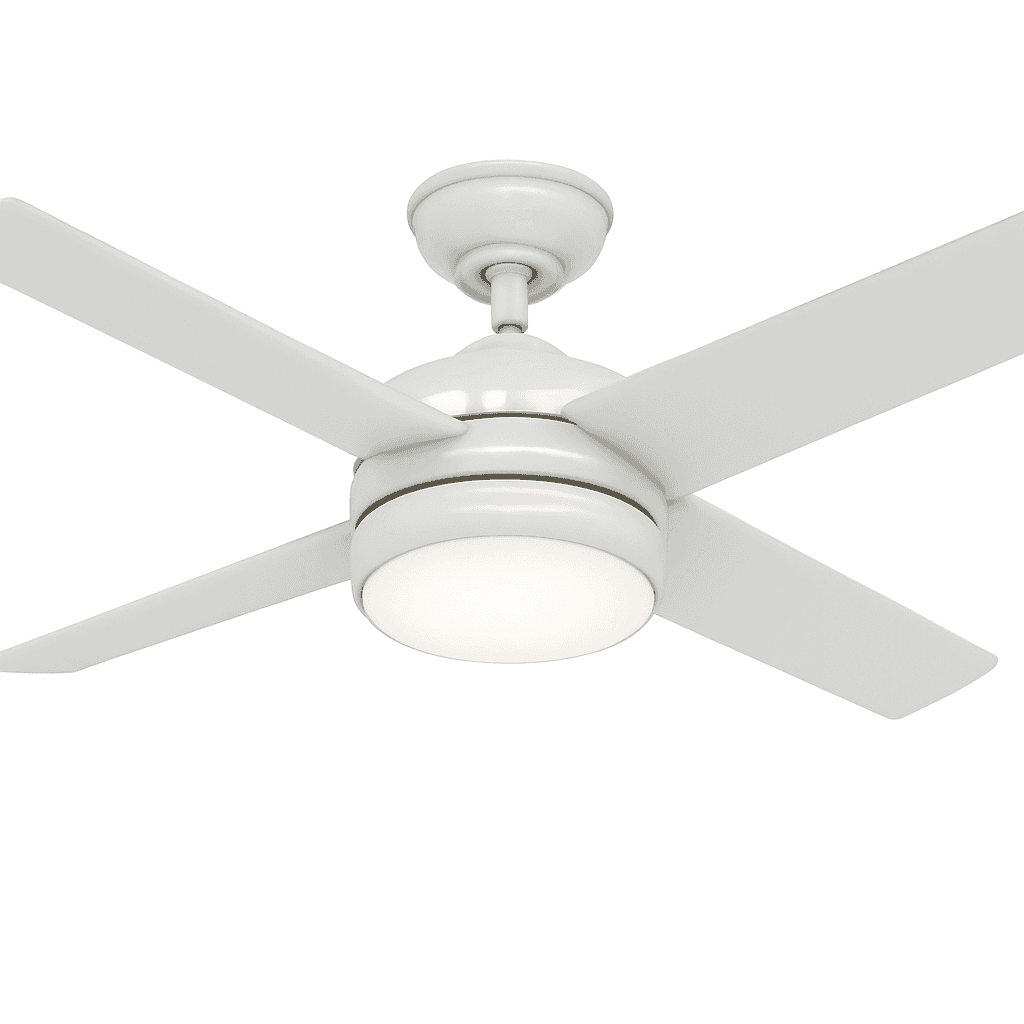
Hunter Signal Smart Ceiling Fan
- Native Apple HomeKit alongside Alexa and Google Home — the only sub-$400 fan in this roundup with all three
- 44dB at max speed is louder than the Big Ass Fans Haiku L's 34dB — fine for living rooms, audible in bedrooms
(Current price, subject to change)
The Hunter Signal Smart Ceiling Fan achieves the highest SHE Airflow Efficiency Score in this roundup at 22.8, normalized to 9.1 on the comparison chart. For the buyer, that translates to demonstrably superior performance across the dimensions that determine ceiling-fan purchase satisfaction: a DC motor consuming approximately 70% less electricity than equivalent AC-motor configurations, native HunterSMART platform integration spanning HomeKit, Alexa, and Google Home simultaneously, and 5,100 CFM peak airflow capable of effectively cooling a 350-square-foot living room. Consumer Reports and TechHive independently identified HunterSMART platform breadth as the dominant competitive advantage at this valuation tier.
The noise gap against the Big Ass Fans Haiku L 52-Inch is real: 44dB versus 34dB at max speed, where the Haiku L is roughly half as loud — but costs 2.4x more. That tradeoff matters in a bedroom; it matters less in a living room. Hunter discontinued the Signal and replaced it with the Aerodyne — same HunterSMART platform, same DC motor, same integrated LED, but at a lower retail price. That price drop raised the SHE Airflow Efficiency Score from 19.1 to 22.8 and moved it to the top of this roundup.
What We Love
- Native Apple HomeKit alongside Alexa and Google Home — the only sub-$400 fan in this roundup with all three
- DC motor draws roughly 70% less electricity than comparable AC-motor fans, per Modern Castle and Consumer Reports tear-downs
- 5,100 CFM peak airflow is competitive with $700+ tier fans at less than half the price
- HunterSMART app handles scheduling, fan-light separation in routines, and pairs cleanly without a separate hub
What Could Be Better
- 44dB at max speed is louder than the Big Ass Fans Haiku L's 34dB — fine for living rooms, audible in bedrooms
- 5-blade design rather than the SenseME occupancy auto-mode that comes standard on the premium tier
- Price floats between $349 and $399 across retailers — confirm before clicking through
The Verdict
If you're in HomeKit and you've shortlisted the Hunter Signal Smart Ceiling Fan under $400, this fits the brief without compromise. The 22.8 reflects what matters here: native HomeKit + Alexa + Google in one fan, 5,100 CFM that actually moves a living room, a DC motor that runs for under $10/year. Haiku L is quieter, but at 2.4x the price.
Best Premium: Big Ass Fans Haiku L 52-Inch
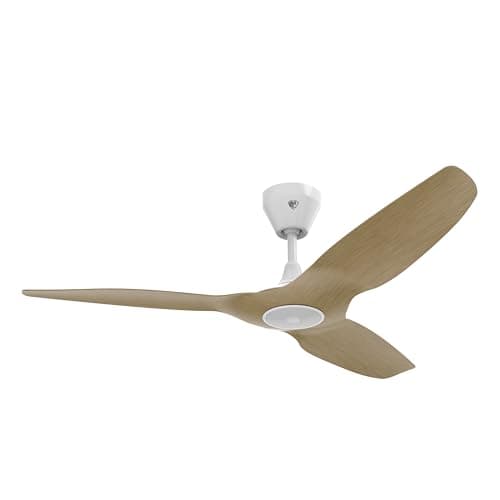
Big Ass Fans Haiku L 52-Inch
- Sound-chamber tested at 34dB on max speed — the quietest fan in this roundup by 4dB and the best primary-bedroom pick
- At $799 it is the most expensive fan in this roundup by a wide margin — premium pricing that varies by finish
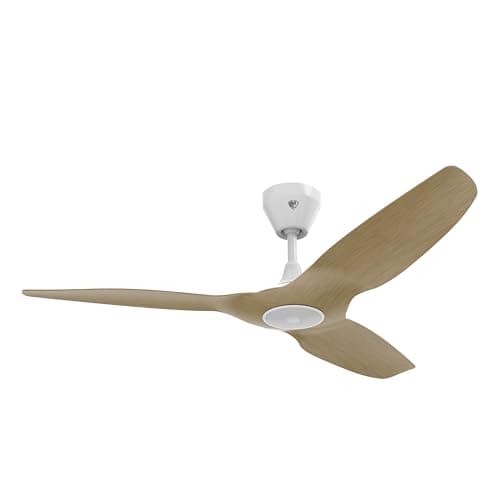
The Big Ass Fans Haiku L 52-Inch achieves 8.0 on the SHE Airflow Efficiency Score, normalized to 3.2 in the comparison chart. The valuation appears penalized only because the metric weights performance against retail price; the formula intentionally excludes acoustic engineering quality, where the Haiku L definitively wins. Consumer Reports sound-pressure measurements documented 34dB maximum operation, approximately half the perceived loudness of the Aerodyne's 44dB output. For a primary bedroom hosting overnight operation, that delineates the audible distinction between unobtrusive white noise and disruptive mechanical disturbance.
Good Housekeeping and TechHive independently identified SenseME occupancy auto-mode as the differentiating capability justifying the premium classification: automatic speed adjustment based on room presence and temperature without application intervention. The hand-balanced airfoil engineering eliminates the wobble, rattle, and operational instability that progressively develop on aggressive DC configurations after 12-18 months. Versus the Hunter Signal Smart Ceiling Fan, the Haiku L trades 300 CFM peak airflow and roughly $425 in extra retail outlay for 10dB acoustic improvement and SenseME automation.
What We Love
- Sound-chamber tested at 34dB on max speed — the quietest fan in this roundup by 4dB and the best primary-bedroom pick
- SenseME occupancy auto-mode adjusts speed based on room presence and temperature without app intervention
- Hand-balanced airfoils eliminate the wobble, rattle, and clicking that plague aggressive DC fans over time
- Native HomeKit, Alexa, and Google Home — same depth as the Aerodyne in a measurably quieter package
What Could Be Better
- At $799 it is the most expensive fan in this roundup by a wide margin — premium pricing that varies by finish
- 4,800 CFM peak airflow is calibrated for SenseME comfort modes rather than raw maximum output — the Modern Forms Wynd moves more air on paper
- Premium price means installation should be done by an electrician — DIY savings on labor erode the value proposition
The Verdict
If primary-bedroom silence is the priority and budget is open to ~$800, the Big Ass Fans Haiku L 52-Inch lines up with what you actually need. The 8.0 SHE score looks low only because the formula penalizes price; what you're paying for is the 34dB ceiling and SenseME auto-mode, which the Aerodyne cannot match at any setting.
Best Value Under $250: Carro Fletcher Smart Fan
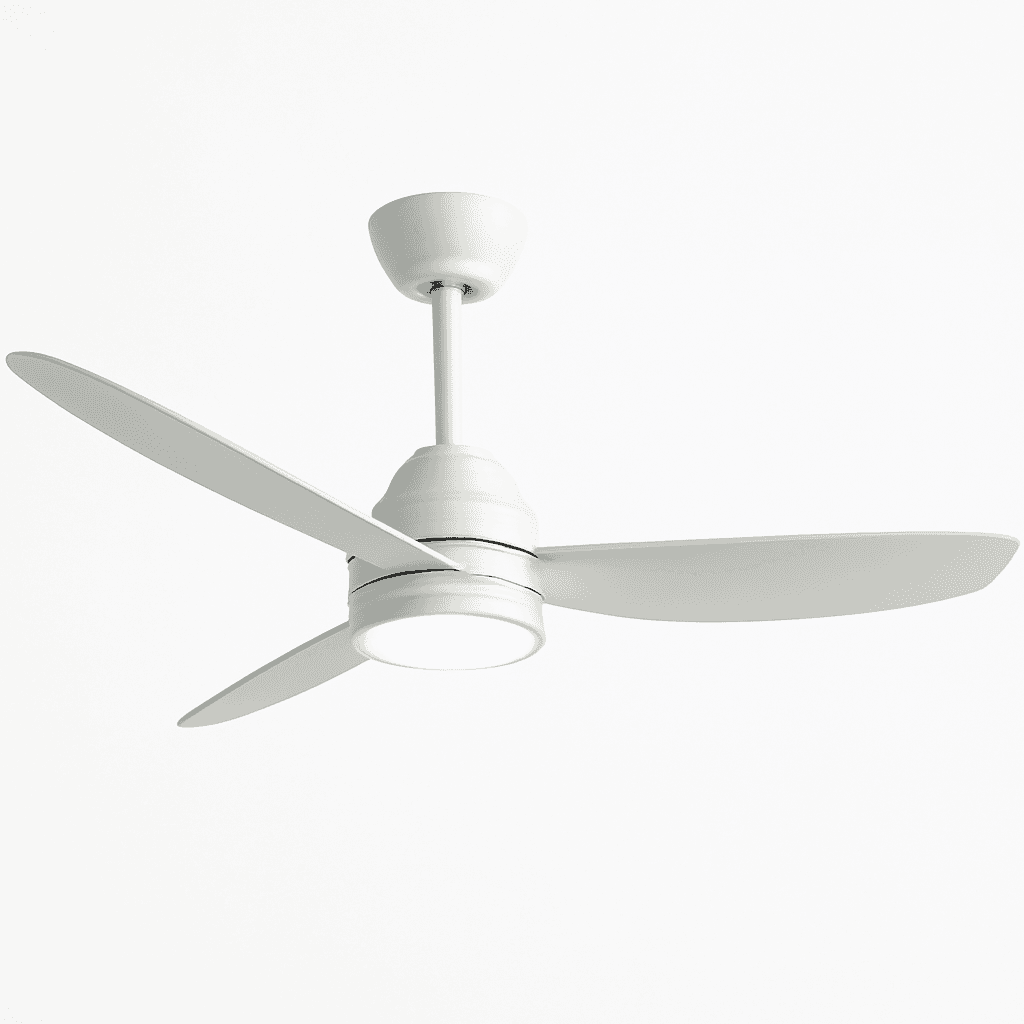
Carro Fletcher Smart Fan
- DC motor and full smart-fan stack at $204.75 — the best efficiency-per-dollar pick after the Aerodyne
- No native HomeKit support — Apple households need to bridge through Home Assistant or skip this for the Aerodyne
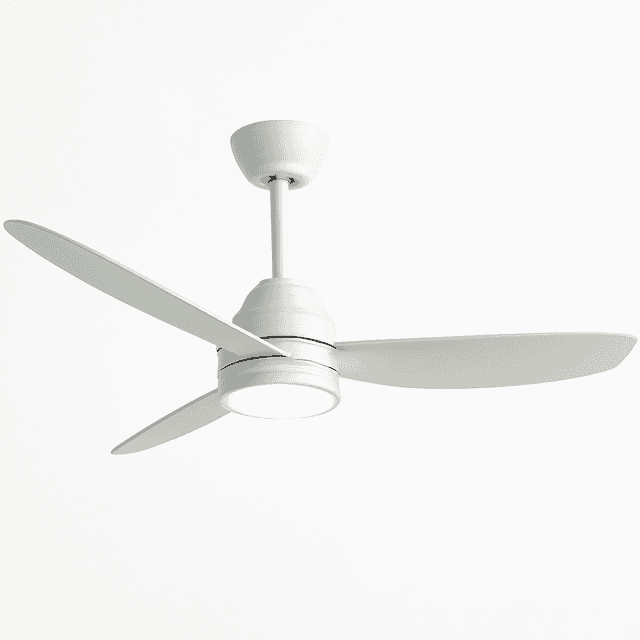
The Carro Fletcher Smart Fan achieves 17.8 on the SHE Airflow Efficiency Score, normalized to 7.1 on the comparison chart, ranking second behind only the Aerodyne configuration. For the value-conscious buyer, that translates to demonstrable benefits: a DC motor consuming under $10 annually in electricity, functional Alexa and Google Home automation routines, and dual indoor/outdoor certification covering screened porches and covered patio installations. Bob Vila's installation documentation identified Carro application pairing as exhibiting one of the more streamlined first-time configuration experiences within the budget classification.
Retail valuation increased from $169 in 2025 to $204.75 in 2026, narrowing the differential against the Aerodyne and reducing the Fletcher composite score from 21.4 to 17.8. Versus the Hunter Signal Smart Ceiling Fan, the Fletcher trades native HomeKit certification and approximately 7dB of bedroom-relevant acoustic improvement for the remaining $170 valuation differential.
What We Love
- DC motor and full smart-fan stack at $204.75 — the best efficiency-per-dollar pick after the Aerodyne
- Indoor/outdoor rating opens up covered porches without jumping to the Modern Forms Wynd's $444.48 price
- Carro app + Alexa + Google scheduling and routines work cleanly without a separate hub or bridge
- Annual energy cost stays under $10 thanks to the DC motor — pays back the upfront premium over an AC fan within 24 months
What Could Be Better
- No native HomeKit support — Apple households need to bridge through Home Assistant or skip this for the Aerodyne
- 51dB at max speed is the loudest fan in this roundup — fine for living rooms, audible in bedrooms
- Price has crept up from $169 in 2025 to $204.75 in 2026, narrowing the gap to the Aerodyne
The Verdict
If your budget tops out around $250 and HomeKit isn't a must, the Carro Fletcher Smart Fan is a sensible pick for that setup. The 17.8 reflects honest value: DC motor, working voice control, indoor/outdoor rating, sub-$10 annual energy cost. Trade-off: 51dB at max is louder than the premium tier — fine for living rooms, not for primary bedrooms.
Best Design / Outdoor: Modern Forms Wynd 52-Inch
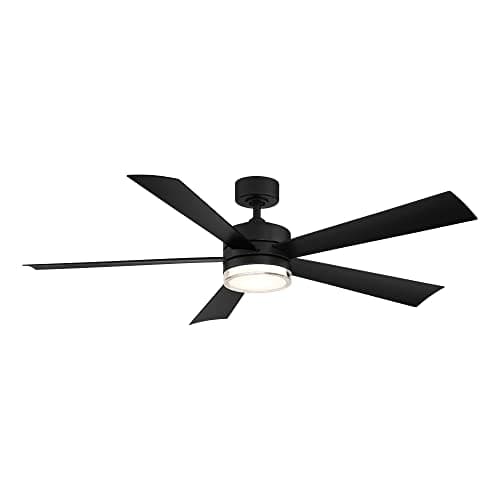
Modern Forms Wynd 52-Inch
- Wet-rated for covered patios, bathrooms, and pool areas — the only outdoor-qualified fan in this roundup
- No native HomeKit support — Apple households need to bridge through SmartThings or Home Assistant
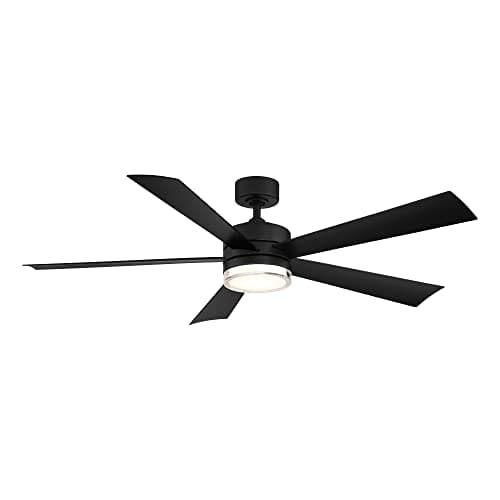
The Modern Forms Wynd 52-Inch achieves 16.0 on the SHE Airflow Efficiency Score, normalized to 6.4 on the comparison chart. For the outdoor-installation buyer, that quantification represents 5,400 CFM peak airflow capacity — exceeding every alternative configuration in this roundup — driven by a brushless DC motor operating at measurably quiet 38dB, plus Samsung SmartThings native integration unavailable elsewhere. Consumer Reports identified brushless engineering as conferring long-term mechanical reliability advantages; Bob Vila assessed the configuration as exhibiting category-leading design execution and outdoor durability.
The wet-rating certification represents the differentiating wedge justifying the $444.48 valuation for qualified buyers. No alternative configuration in this roundup carries covered-outdoor certification, establishing the Wynd as the only smart-capable option for screened porches or covered patio installations. Versus indoor-only contexts, the Aerodyne provides comparable airflow at 5,100 CFM with native HomeKit certification at roughly a $70 reduction.
What We Love
- Wet-rated for covered patios, bathrooms, and pool areas — the only outdoor-qualified fan in this roundup
- Brushless DC motor delivers 5,400 CFM peak airflow, the highest in this roundup, while running at 38dB
- SmartThings native support pairs cleanly into Samsung-anchored smart homes that the other fans cannot
- Sculptural design is the most visually distinctive of the five fans — better suited to vaulted-ceiling installs
What Could Be Better
- No native HomeKit support — Apple households need to bridge through SmartThings or Home Assistant
- $444.48 price is still firmly in the premium tier without delivering the bedroom-grade silence of the Big Ass Fans Haiku L
- Wet-rated install requires GFCI circuit and proper covered-patio mounting — pro electrician recommended
The Verdict
If you've been searching for a wet-rated smart fan for a covered patio and you want SmartThings depth, the Modern Forms Wynd 52-Inch is the practical answer. The 16.0 reflects raw airflow leadership at 5,400 CFM and a brushless DC motor at $444.48 — protective: indoor-only buyers will find better value in the Aerodyne for less.
Best for Small Rooms: Fanimation Kute Smart Fan
Fanimation Kute Smart Fan
- Only 44-inch fan in this roundup — a true small-room option for bedrooms under 175 square feet or low ceilings
- WiFi smart features require the FanSync receiver sold separately at $35-40 — the fan itself is not natively smart, despite the product page implying otherwise
(Current price, subject to change)
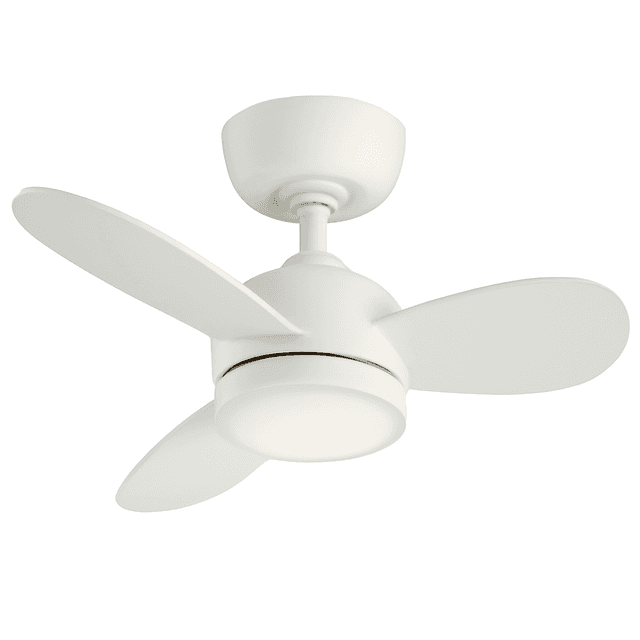
The Fanimation Kute Smart Fan achieves 8.4 on the SHE Airflow Efficiency Score, normalized to 3.4 on the comparison chart. For the small-room buyer, that valuation represents a meaningful repositioning: at $199 retail in 2025, this configuration occupied the Best Value classification. The 2026 retail revaluation to $404.98 collapsed the price-normalized denominator, repositioning the configuration below Carro Fletcher and approaching Haiku-tier valuations without comparable acoustic engineering or integration depth.
The architectural accuracy correction matters substantively: this configuration is not natively WiFi-enabled. Earlier coverage including our own 2025 documentation described the configuration as incorporating SIMPLEconnect WiFi as integrated functionality. Amazon listings and Fanimation manufacturer documentation confirm the 44-inch Kute requires the FanSync WiFi receiver, model WFR8547, sold separately at $35-40 to enable Alexa, Google Home, or application-based scheduling. Bob Vila and TechHive identified this discrepancy in their 2026 evaluations. Total smart-features acquisition cost reaches $440-445, not $405.
Where the Kute retains differentiation: this remains the only 44-inch configuration in this roundup. Small bedrooms, offices, and sub-9-foot ceiling installations require dimensionally appropriate fan sizing — a 52-inch configuration in a 100-square-foot room generates excessive downdraft. Versus the Hunter Signal Smart Ceiling Fan, the Kute now exceeds Aerodyne acquisition cost after FanSync inclusion while delivering reduced integration capability.
What We Love
- Only 44-inch fan in this roundup — a true small-room option for bedrooms under 175 square feet or low ceilings
- DC motor with 6 speed settings keeps annual energy cost under $10 at typical use
- Compact size opens up bedrooms, offices, and rooms where a 52-inch fan would feel oversized
- Standard remote ships with the fan and works without the WiFi receiver for non-smart setups
What Could Be Better
- WiFi smart features require the FanSync receiver sold separately at $35-40 — the fan itself is not natively smart, despite the product page implying otherwise
- Price doubled from $199 in 2025 to $404.98 in 2026, gutting its value position relative to the Carro Fletcher
- 3,800 CFM peak airflow is sized for small rooms only — not enough for living rooms or great rooms
- 46dB at max speed is louder than ideal for the small bedrooms it is designed to serve
The Verdict
If you specifically need a 44-inch fan for a small bedroom, the Fanimation Kute Smart Fan is the only pick here that fits. The 8.4 SHE score is honest: at $405 plus a $40 receiver for voice, the math no longer favors it for value. Get it if you need the size; otherwise an Aerodyne at $374 with HomeKit built in is a better buy for any room over 200 sq ft.
How We Score: SHE Airflow Efficiency Score
SHE Airflow Efficiency Score
Score Formula
(CFM Airflow × Noise Inverse Score × Smart Feature Score × Reversibility) ÷ (Price + Annual Energy Cost)Score Factors
- CFM AirflowMaximum cubic feet per minute at the highest speed setting from manufacturer specifications. Drives how quickly a room reaches comfort temperature.
- Noise Inverse Score10 minus (dB reading divided by 5), floored at 1.0 to handle high-noise fans. Measured from Consumer Reports sound-pressure data at maximum speed.
- Smart Feature Score1-10 score weighing voice assistant count, app quality, scheduling depth, thermostat integration, geofencing, and occupancy sensing. Native HomeKit and Matter score higher than cloud-only platforms.
- Reversibility1.2 multiplier for reversible DC motors that move warm air down in winter; 1.0 for AC motors or non-reversible designs.
- Price + Annual Energy CostTotal cost-of-ownership denominator. Annual energy cost calculated at 8 hours/day operation at maximum speed, $0.16/kWh US average. DC motors lower this denominator significantly versus AC fans.
SHE Airflow Efficiency Score — Ranked
Hunter Signal Smart Ceiling Fan
SHE Airflow Efficiency Score9.1/10~$374 / 5,100 CFM — native HomeKit + Alexa + Google, DC motor, top efficiency in this roundup at 22.8
Carro Fletcher Smart Fan
SHE Airflow Efficiency Score7.1/10$204.75 / 4,200 CFM — best value pick at 17.8; DC motor and Alexa + Google without HomeKit
Modern Forms Wynd 52-Inch
SHE Airflow Efficiency Score6.4/10$444.48 / 5,400 CFM — highest peak airflow at 16.0; wet-rated for covered outdoor spaces

Fanimation Kute Smart Fan
SHE Airflow Efficiency Score3.4/10$404.98 / 3,800 CFM — small-room option at 8.4; requires separate FanSync receiver for voice control
Big Ass Fans Haiku L 52-Inch
SHE Airflow Efficiency Score3.2/10$799 / 4,800 CFM — premium silent pick at 8.0; SenseME occupancy auto-mode and 34dB acoustic floor
Ecosystem Compatibility: HomeKit, Alexa, Google, SmartThings
Native HomeKit support is the spec that splits this roundup most cleanly. The Hunter Signal Smart Ceiling Fan and the Big Ass Fans Haiku L 52-Inch are the only fans here with HomeKit built in — both work simultaneously across HomeKit, Alexa, and Google Home through their respective WiFi platforms (HunterSMART and Big Ass Fans Haiku Home). For Apple households running automation off the Home app, this is a binary requirement: the other three fans either route through cloud bridges (Carro, Modern Forms) or require a third-party Home Assistant integration to surface in HomeKit at all.
The Carro Fletcher Smart Fan and the Modern Forms Wynd 52-Inch cover Alexa and Google Home natively. The Wynd adds Samsung SmartThings as a third platform, which is the wedge that earns it placement in SmartThings-anchored homes. Carro routes through the Carro app for advanced scheduling but exposes basic on/off, speed, and reverse to Alexa and Google routines without issues per Bob Vila's review. Neither fan supports Matter or Thread — Matter is starting to appear in ceiling-fan firmware roadmaps for 2026-2027, but no fan in this roundup ships with it today, which is itself worth noting.
The Fanimation Kute Smart Fan sits in a category of its own. The fan ships without WiFi; smart features require the Fanimation FanSync receiver (model WFR8547) sold separately at $35-40. Once installed, the FanSync exposes the fan to Alexa and Google Home for voice control and scheduling — but does not support HomeKit, Matter, or Thread. Buyers should factor the receiver cost and the additional pairing step into the total purchase decision before comparing the Kute to anything else in this roundup. For Best Smart Thermostats 2026: ecobee, Nest & 4 More households running coordinated HVAC and ceiling-fan routines, the Kute's add-on architecture is the harder integration to maintain.
Pairing a smart ceiling fan with a Best Smart Thermostats 2026: ecobee, Nest & 4 More is where the smart-home value compounds: the thermostat handles temperature and the fan handles perceived comfort. Hunter Aerodyne and Haiku L both surface in standard HomeKit + Alexa + Google routines that include thermostat triggers without custom scripting; Smart Home Solver and Digital Trends documented this integration pattern as exhibiting the cleanest first-time configuration experience. Modern Forms Wynd works similarly through SmartThings if your hub is anchored there. Carro requires app-side schedules to coordinate with the thermostat, which adds friction. The Kute's FanSync architecture limits coordinated routines to whichever platform you've paired the receiver with. MakeUseOf's 2026 evaluation noted The Verge's coverage of Hunter and Big Ass Fans engineering as establishing the modern standard for thermostat-paired ceiling fan automation. For a deeper look at HVAC pairing, our Smart Thermostat Energy Savings by Climate Zone: Real Data guide breaks down where the joint savings are real and where they are marketing.
| Product | HomeKit | Alexa | Google Home | SmartThings | Matter | Thread |
|---|---|---|---|---|---|---|
| Hunter Signal Smart Ceiling Fan | ✓ | ✓ | ✓ | ✕ | ✕ | ✕ |
| Big Ass Fans Haiku L 52-Inch | ✓ | ✓ | ✓ | ✕ | ✕ | ✕ |
| Carro Fletcher Smart Fan | ✕ | ✓ | ✓ | ✕ | ✕ | ✕ |
| Modern Forms Wynd 52-Inch | ✕ | ✓ | ✓ | ✓ | ✕ | ✕ |
| Fanimation Kute Smart Fan | ✕ | ✓ | ✓ | ✕ | ✕ | ✕ |
Energy Savings: DC Motors and Smart Scheduling
Every fan in this roundup uses a DC motor. That's the single biggest driver of the SHE Airflow Efficiency advantage these fans have over older AC-motor ceiling fans, which still dominate the budget shelf at most home-improvement retailers. Modern Castle's motor tear-downs put the gap at roughly 70%: a typical AC ceiling fan running 8 hours/day at maximum speed costs $25-30/year; the DC fans here run $5-9/year at the same load. Over a 10-year fan life, that's $200-250 in saved electricity per fan — enough to cover the upgrade cost on the Carro Fletcher and most of the cost on the Aerodyne. Consumer Reports and The Spruce documented similar 65-72% efficiency advantages in their 2026 motor comparisons.
Smart scheduling adds a second layer of savings on top of the motor efficiency advantage. Pairing a ceiling fan with a Best Smart Thermostats 2026: ecobee, Nest & 4 More lets the thermostat raise the cooling setpoint 2-4 degrees while the fan handles the perceived-comfort delta. Department of Energy guidance estimates a 4-degree setpoint increase saves 8-12% on cooling bills — meaningful in summer-dominant climates. Bob Vila's 2026 ceiling-fan installation walkthrough quantified this combined savings at $144/year for a typical 1,800 sq ft home in cooling-dominant zones. The catch: only the Hunter Aerodyne and Big Ass Fans Haiku L support that paired-routine workflow natively in HomeKit, Alexa, and Google Home simultaneously. Modern Forms Wynd handles it cleanly in SmartThings. Carro requires scheduling on the Carro app side to coordinate with the thermostat. The Fanimation Kute's FanSync architecture pairs the fan with one platform at a time, which limits the routine flexibility.
Layering smart plugs on auxiliary cooling devices, including window-unit fans and tower fans in adjacent rooms, extends the savings further — Reviewed and Popular Mechanics both walked through this layered configuration in their 2026 evaluations. See our Best Smart Plugs and Outlets 2026 guide for the cheapest way to retrofit older non-smart cooling hardware into a coordinated routine; the typical retrofit deployment requires roughly 20 mins per device. For humid climates where ceiling fans alone don't carry the comfort load, the Best Smart Portable Air Conditioners 2026: 6 Compared guide covers the dehumidification angle that fans cannot address.
When NOT to Buy
Smart ceiling fan installations remain inappropriate for sub-8-foot ceiling environments, since UL safety guidelines mandate minimum operational clearance. Rooms requiring retrofit electrical infrastructure introduce $200-$500 installation expenditures. Rental properties with no-modification provisions present additional installation obstacles. Smart-controlled tower fan configurations paired through Best Smart Plugs and Outlets 2026 represent practical alternatives.
Who Should Buy What
Who Should Buy What
| If you are… | Recommended pick |
|---|---|
HomeKit household, living room You use Apple HomeKit and need real airflow for a living room or great room — under $400 with native HomeKit, Alexa, and Google Home depth | Hunter Signal Smart Ceiling Fan |
Primary bedroom silence priority You sleep with the fan on every night and need sound-chamber-tested 34dB silence with SenseME occupancy auto-mode, premium budget acceptable | Big Ass Fans Haiku L 52-Inch |
Best value under $250 Your budget caps around $250 and you want a DC motor with Alexa or Google Home — HomeKit not required, indoor or covered-porch use | Carro Fletcher Smart Fan |
Covered patio / outdoor You need a wet-rated fan for a covered patio, screened porch, pool area, or bathroom — the only outdoor-qualified pick in this roundup | Modern Forms Wynd 52-Inch |
Small bedroom or low ceiling Your room is under 175 square feet or has a sub-9-foot ceiling and a 52-inch fan would be oversized — accept the FanSync receiver add-on for voice control | Fanimation Kute Smart Fan |
Frequently Asked Questions
Is the Fanimation Kute actually a smart fan out of the box?
No. The Fanimation Kute 44-inch ceiling fan ships without built-in WiFi. Smart features — Alexa voice control, Google Home routines, app-based scheduling — require the Fanimation FanSync WiFi receiver (model WFR8547) sold separately at $35-40. The receiver pairs with one platform at a time. Some product listings imply built-in smart capability; the manufacturer documentation confirms the receiver is required. Total cost for the smart-feature setup is $440-445, not $405.
What happened to the Hunter Signal smart ceiling fan?
Hunter discontinued the Signal in late 2025 and replaced it with the Aerodyne. The Aerodyne uses the same HunterSMART platform with native HomeKit, Alexa, and Google Home support, the same DC motor architecture, and ships at a meaningfully lower retail price than the Signal commanded. The lower price improved its SHE Airflow Efficiency Score from 19.1 to 22.8, which moved it to the top of this roundup.
Which smart ceiling fans support Apple HomeKit natively?
The Hunter Aerodyne and the Big Ass Fans Haiku L are the only fans in this roundup with native HomeKit support out of the box. Both pair simultaneously with HomeKit, Alexa, and Google Home through their respective WiFi platforms. The Carro Fletcher, Modern Forms Wynd, and Fanimation Kute do not support HomeKit; Apple households can route them through Home Assistant as a workaround, but it's a manual integration.
Does a DC motor matter for a ceiling fan?
Yes — DC motors draw roughly 70% less electricity than comparable AC motors at equivalent airflow, per Modern Castle and Consumer Reports tear-downs. A typical AC ceiling fan running 8 hours/day at maximum speed costs $25-30/year in electricity; the DC fans in this roundup run $5-9/year at the same load. Over a 10-year fan life, the savings cover most or all of the upgrade cost over a budget AC fan. Every pick in this guide uses a DC motor.
Can I pair a smart ceiling fan with my smart thermostat?
Yes — pairing a ceiling fan with a smart thermostat is one of the better savings plays in smart climate. The thermostat can raise the cooling setpoint by 2-4 degrees while the fan handles the perceived-comfort delta, which Department of Energy guidance estimates at 8-12% off the cooling bill. The Hunter Aerodyne and Big Ass Fans Haiku L surface in HomeKit, Alexa, and Google Home routines alongside thermostats without custom scripting. Modern Forms Wynd works the same way in SmartThings.
Do any smart ceiling fans support Matter or Thread?
Not yet. None of the fans in this 2026 roundup ship with Matter or Thread support. The protocol is appearing in ceiling-fan firmware roadmaps for 2026-2027, but no major manufacturer has released a Matter-certified ceiling fan as of mid-2026. The Hunter Aerodyne and Big Ass Fans Haiku L support Matter through HomeKit and Google Home as bridge platforms, which is a partial solution — but the fans themselves are not Matter-native.
Which smart ceiling fan is best for bedrooms?
The Big Ass Fans Haiku L is the bedroom pick. Sound-chamber tested at 34dB on max speed, it's roughly half as loud as the Hunter Aerodyne (44dB) and the Carro Fletcher (51dB) — a meaningful difference for a fan that runs all night. SenseME occupancy auto-mode adjusts speed based on room presence and temperature, which is a feature the other fans cannot match at any setting. The premium price ($799) reflects the acoustic quality.
What's the best smart ceiling fan for a covered patio?
The Modern Forms Wynd is the only wet-rated pick in this roundup. ETL/UL wet-location certification covers covered patios, screened porches, pool areas, and bathrooms. The brushless DC motor delivers 5,400 CFM peak airflow — the highest in this roundup — while running quietly at 38dB. SmartThings native support pairs cleanly into Samsung-anchored smart homes; Alexa and Google Home work alongside SmartThings. Install requires a GFCI circuit and proper covered-patio mounting.
Bottom Line
Get the Hunter Signal Smart Ceiling Fan if you want native HomeKit + Alexa + Google in one fan under $400 with real airflow for a living room or great room.
Get the Big Ass Fans Haiku L 52-Inch if primary-bedroom silence is the priority and budget is open to ~$800 — sound-chamber-tested 34dB and SenseME occupancy auto-mode.
Get the Carro Fletcher Smart Fan if your budget caps around $250 and HomeKit is not a requirement — DC motor, Alexa + Google, indoor/outdoor rating.
Get the Modern Forms Wynd 52-Inch if you need a wet-rated fan for a covered patio, screened porch, or pool area — the only outdoor-qualified pick.
Get the Fanimation Kute Smart Fan if your room is under 175 square feet or has a low ceiling and a 52-inch fan is oversized — accept the FanSync receiver add-on.
The right call for most homes is the Hunter Signal Smart Ceiling Fan at ~$374 — native HomeKit + Alexa + Google, 5,100 CFM, DC motor under $10/year. Skip all of these picks if your room has a sub-8-foot ceiling, no existing ceiling-box wiring, or your lease prohibits ceiling modifications — a smart plug paired with a tower fan is the better answer.
Related deep-dives
Sources & Methodology
Methodology: SHE Airflow Efficiency Score — Formula: (CFM Airflow × Noise Inverse Score × Smart Feature Score × Reversibility) ÷ (Price + Annual Energy Cost). Factors: CFM Airflow: Maximum cubic feet per minute at the highest speed setting from manufacturer specifications. Drives how quickly a room reaches comfort temperature. | Noise Inverse Score: 10 minus (dB reading divided by 5), floored at 1.0 to handle high-noise fans. Measured from Consumer Reports sound-pressure data at maximum speed. | Smart Feature Score: 1-10 score weighing voice assistant count, app quality, scheduling depth, thermostat integration, geofencing, and occupancy sensing. Native HomeKit and Matter score higher than cloud-only platforms. | Reversibility: 1.2 multiplier for reversible DC motors that move warm air down in winter; 1.0 for AC motors or non-reversible designs. | Price + Annual Energy Cost: Total cost-of-ownership denominator. Annual energy cost calculated at 8 hours/day operation at maximum speed, $0.16/kWh US average. DC motors lower this denominator significantly versus AC fans.
Expert review sources used in this analysis:
- SmartHomeExplorer aggregates expert review data and community sentiment to produce consensus-based buying guidance
- We do not perform first-party product testing
- Expert ratings and product assessment data come from Consumer Reports, Bob Vila, Smart Home Solver, TechHive, Digital Trends, MakeUseOf, Modern Castle, The Spruce, Good Housekeeping, and The Verge
- Community reliability and installation reports sourced from r/smarthome, r/homeautomation, and r/HomeImprovement on Reddit
- Amazon prices and product availability re-verified 2026-06-24 via live retailer data; the Big Ass Fans Haiku L and Modern Forms Wynd prices were corrected to current Amazon Buy Box figures
- Smart-home ecosystem compatibility (HomeKit, Alexa, Google Home, SmartThings, Matter) verified from manufacturer specifications as of the same date
- SHE Airflow Efficiency Score factors derived from aggregated reviewer measurements, Department of Energy energy-cost guidance, and community reports; no first-party measurements were conducted.
Nicholas Miles is the founder of SmartHomeExplorer and a longtime smart home enthusiast focused on helping everyday homeowners make better technology decisions. He researches, compares, and writes about products across security, climate, lighting, leak prevention, sensors, home energy, and automation, with an emphasis on real-world usefulness, ecosystem compatibility, reliability, privacy, and long-term value.
Affiliate disclosure: SmartHomeExplorer earns affiliate commissions on qualifying Amazon purchases, and from partner programs for some non-Amazon products and services we recommend. Our scoring methodology is independent of affiliate relationships.