
Smart plugs only save meaningful money when they control the right kind of load. A smart plug on a lamp with tiny standby draw may take years to pay.
If your only goal is to kill tiny "vampire" loads from devices in standby, smart plugs are often a slower payoff than people expect. If your goal is to control devices that waste hours of runtime each week, smart plugs can absolutely earn back their cost.
The key distinction is simple: energy monitoring + reliable scheduling + the right device = real ROI. Cheap plugs without monitoring can still be useful, but they are much worse at proving savings and easier to misuse on appliances that barely move the bill.
The Department of Energy's energy-use formula is straightforward: daily energy use comes from wattage multiplied by hours used, divided by 1,000. That means the best money-saving plug is the one attached to a device with enough avoidable runtime to matter. SmartHomeExplorer used that formula, common residential electricity-rate assumptions, and product-level feature analysis to build the ROI framework below.
For a broader roundup of general-use picks, see our main smart plugs and outlets guide. If you want the cross-platform ecosystem angle, also see our Matter-compatible devices guide, our smart home starter kits guide, our smart home devices under $100 guide, our smart power strips and energy monitors guide, and our smart thermostat energy savings guide.
SHE Plug Payback
Chart
 Smarthomeexplorer.com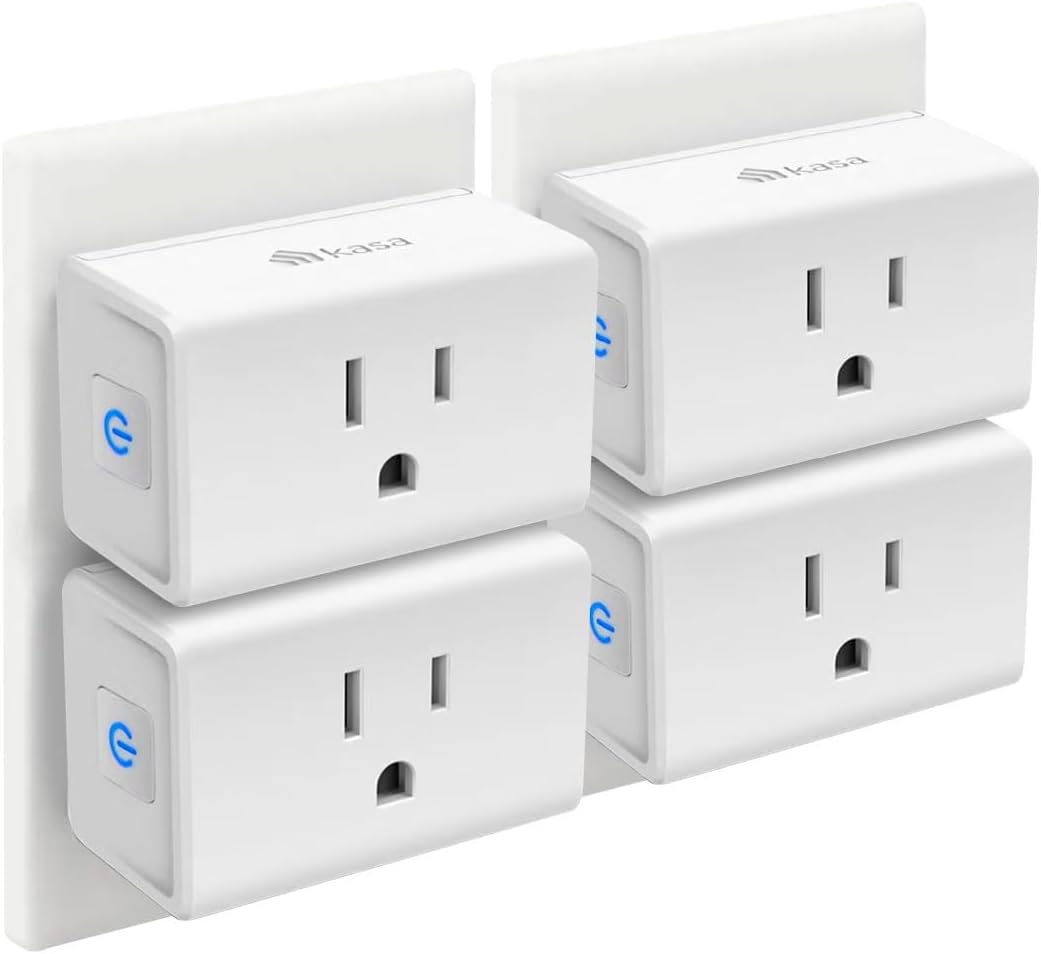
Best Overall ROI: Kasa Smart Plug
Kasa Smart Plug
(Current Price, subject to change)
The Kasa Smart Plug is the easiest recommendation for people who care about actual payback, because the per-plug cost is low enough that you do not need heroics to earn it back. If you use one on a wasteful device category, the savings math starts to make sense quickly.
Why It Wins on Savings
The EP25 combines the three ingredients that matter most: low cost, reliable schedules, and energy monitoring. Monitoring matters because it keeps the article honest. Without it, buyers tend to assume every outlet is a savings opportunity. In reality, only a few of them are.
At roughly $7.25 per plug in a four-pack, the EP25 has one of the lowest barriers to payback in the category. That makes it a much stronger money-saving tool than a $40 premium plug, even if the premium plug has better industrial design or local-control bragging rights.
Best Use Cases
This is the plug for:
- space heaters you only want running at specific hours
- fans that should shut off after sleep hours
- office gear that does not need overnight idle time
- holiday lighting or accent lights that should never be left on all night
If you use the EP25 to shut off a trivial standby load, the ROI can be slow. If you use it to reduce active runtime on the right plug-in devices, the economics get much better.
What Could Be Better
It is not a Matter-native device, so buyers who want maximum future-proofing across ecosystems may prefer the KP125M. The app is functional rather than elegant.
The Verdict
The Kasa Smart Plug is the smart plug most likely to actually save money for residential buyers, because it lowers the cost of experimentation while still giving you the data to see which automations are worth keeping.
Why Kasa Smart Plug Is the ROI Winner

The Kasa Smart Plug wins this guide because it combines the lowest-friction payback math with the strongest confidence that your schedules will actually keep running. It is also already the anchor product in our broader smart plugs and outlets guide, which makes it the most practical recommendation instead of the most theoretical one.
If you want cheap convenience without caring much about analytics, the Amazon Smart Plug still makes sense. If you want a low-cost alternative with energy monitoring and can tolerate weaker reliability, the Wyze Smart Plug remains a viable budget play.
Best Budget Alternative: Wyze Smart Plug
Wyze Smart Plug
(Current Price, subject to change)
The Wyze Smart Plug makes sense when the main goal is keeping hardware cost low while still getting some visibility into what your devices consume.
Why It Can Still Save Money
A cheap plug with energy monitoring can still be a useful tool when attached to a wasteful load. The issue is not whether Wyze can save money at all — it can. The issue is whether you trust it as much as Kasa to do that month after month without missed schedules or app annoyances cutting into the habit.
The Verdict
The Wyze Smart Plug is the budget backup pick. If Kasa is the smarter long-term buy, Wyze is the cheaper way to start experimenting with plug-level savings.
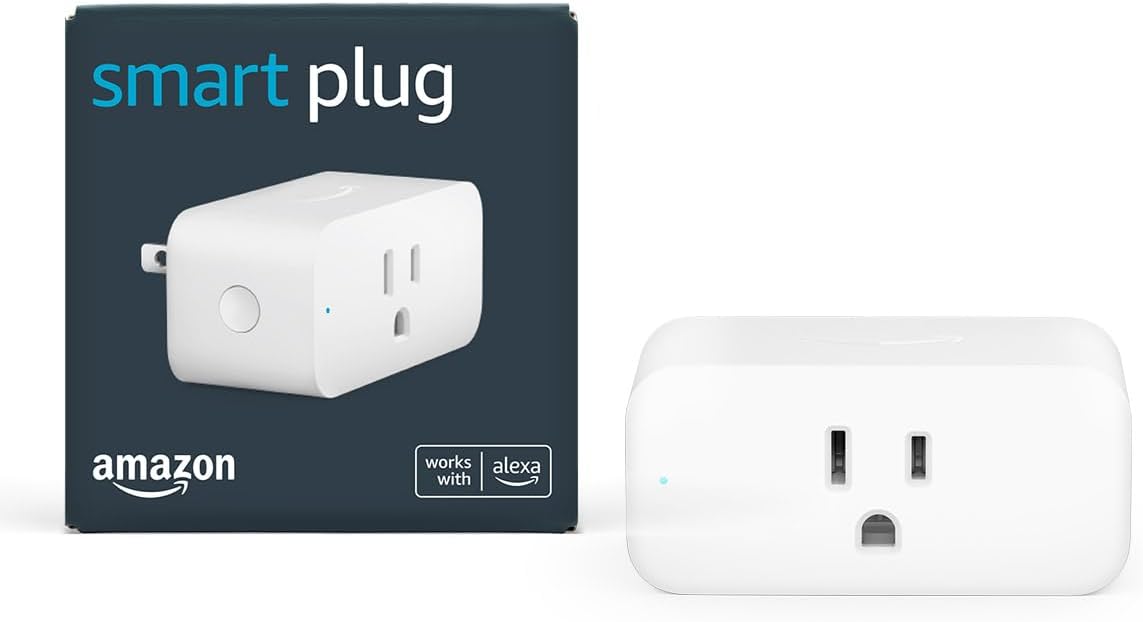
Best Convenience Baseline: Amazon Smart Plug
Amazon Smart Plug
(Current Price, subject to change)
The Amazon Smart Plug is what happens when convenience beats analytics. It is easy, familiar, and perfectly fine for Alexa homes — but as a money-saving tool, it is weaker than Kasa's best options.
Why the ROI Case Is Limited
No energy monitoring means you are guessing more often. That makes it harder to identify whether the plug is solving a real waste problem or just adding remote control to something that was never expensive to run in the first place.
Best Use Cases
- Alexa-only households
- lamps or seasonal decor where convenience matters more than measured savings
- people who want the simplest possible smart-plug setup
What Could Be Better
It is Alexa-only and lacks the measurement layer that makes an ROI article useful.
The Verdict
The Amazon Smart Plug is a convenience plug, not the strongest savings plug. Buy it for ease, not for serious energy math.
When Smart Plugs Actually Save Money
- When they shorten runtime on medium- or high-draw devices rather than just cutting microscopic standby power.
- When they help you identify waste with energy monitoring instead of guessing.
- When schedules are reliable enough that the automation sticks for months, not three days.
- When the plug cost is low enough that your payback window is realistic.
When Smart Plugs Do Not Save Much Money
- When you put them on already-efficient low-draw devices with almost no waste to eliminate. See our whole-home energy monitors guide to find where your real energy waste is hiding. If you are aiming for whole-home energy independence, see our home battery storage guide for the systems that store solar savings overnight.
- When you use them only for novelty convenience instead of automation that changes runtime.
- When the plug is expensive and the connected device barely uses power. For cheaper plug options, see our smart power strips guide.
- When the load should never be on a standard 15A smart plug in the first place.
Frequently Asked Questions
Do smart plugs actually save money or just add convenience?
They do both, but the savings depend entirely on the device attached. Smart plugs can save money when they cut avoidable runtime on fans, heaters, dehumidifiers, office equipment, and entertainment gear. They are much less impressive when used only to eliminate tiny standby loads. If you want convenience only, the Amazon Smart Plug is fine. If you want convenience plus measurable savings, the Kasa Smart Plug is the better buy.
What kind of device gives a smart plug the fastest payback?
A device with enough avoidable runtime to matter. Space heaters, dehumidifiers, room fans, and office setups often produce the fastest payback because smart scheduling cuts real hours of use. Tiny standby-only devices usually do not. If your main goal is lowering wasted runtime, start with the Kasa Smart Plug or Kasa Smart Plug.
Are energy-monitoring smart plugs worth paying extra for?
Usually yes, if your goal is ROI rather than gadget novelty. Energy monitoring lets you see which outlet matters and which one is wasting your time. That makes products like the Kasa Smart Plug and Eve Energy more useful than simple on/off plugs for buyers who want proof instead of vibes.
Is the Amazon Smart Plug worth it if I only use Alexa?
Yes for convenience, not necessarily for strongest savings. The Amazon Smart Plug is a strong convenience product for Alexa homes because setup is effortless. But the lack of deep monitoring makes it harder to optimize for actual cost reduction. It is the right choice when simplicity matters more than analysis.
Bottom Line
If you want a smart plug that actually saves money, buy for measurable waste reduction, not for generic "energy savings" marketing. The Kasa Smart Plug is the best overall ROI pick because it is cheap enough to pay back quickly and smart enough to show you where the waste really is. The Kasa Smart Plug is the better long-term choice for cross-platform households. The Amazon Smart Plug is still worth buying if your only real priority is Alexa convenience. For a more targeted shortlist restricted to plugs with real energy-monitoring radios at a sub-$20 price ceiling, see our best smart plugs with energy monitoring under $20 guide — it ranks the four qualifying plugs on accuracy, history depth, reliability, and dollars per insight.
Author: Nicholas Miles is the founder of SmartHomeExplorer and a longtime smart home enthusiast focused on helping everyday homeowners make better technology decisions. He researches, compares, and writes about products across security, climate, lighting, leak prevention, sensors, home energy, and automation, with an emphasis on real-world usefulness, ecosystem compatibility, reliability, privacy, and long-term value. Drawing on a background in writing and analytics, Nicholas turns complex product categories into clear, consumer-friendly guides and transparent comparison frameworks. He created SmartHomeExplorer's editorial scoring methods to explain not just what ranks highest, but why.
Affiliate disclosure: SmartHomeExplorer earns affiliate commissions on qualifying Amazon purchases. Our scoring methodology is independent of affiliate relationships.