
The Anker SOLIX F3800 ($1,999.99 list) is our July 2026 value verdict; the EcoFlow DELTA Pro 3 ($3,699 list) is the most capable single backup unit.
This guide was fully re-verified on July 17, 2026: every roster unit was probed live through the Amazon Creators API for price, condition, and stock, and every specification below comes from the manufacturer's own listing data. The List Price column carries the manufacturer list figures read on that date, and we have calendared a September re-verification for every figure on this page. Amazon's current price may sit below those figures and changes frequently, so check the current price before buying. We weight usable capacity, AC output ceiling, and expansion architecture most heavily because the job of a home-backup power station is keeping critical circuits running through an outage — capacity and output determine whether the unit can carry your refrigerator, medical device, or window AC for meaningful time.
The market shift since our April edition is generational: 240V-class dual-voltage output and six-figure-watt-hour expansion ceilings have arrived in the mainstream. The Anker SOLIX F3800 and F3800 Plus both deliver 6,000W with 120V/240V output, the EcoFlow DELTA Pro 3 scales to a 48kWh system, and the BLUETTI Apex 300 brings simultaneous 120V/240V and a 0ms UPS mode under $1,700 list. For the cross-tier decision framework comparing portable stations against standby generators and whole-home batteries, see our best smart home backup power systems guide. If you are weighing a premium station against a wall-bolted battery plus smart panel, the smart panel and whole-home battery hub scores both tiers side by side. For identifying which circuits and loads to prioritize during an outage, our best whole home energy monitors guide covers the data foundation.
EcoFlow DELTA Pro 3 — best overall for home backup in 2026
What is the best overall portable power station for home backup in 2026?
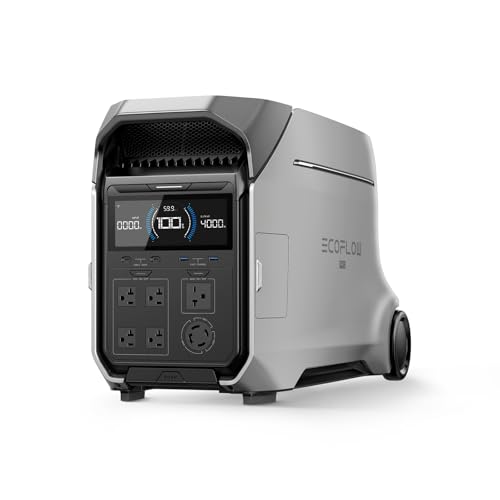
EcoFlow DELTA Pro 3 portable power station
(Current Price, subject to change)
Ready for game day?
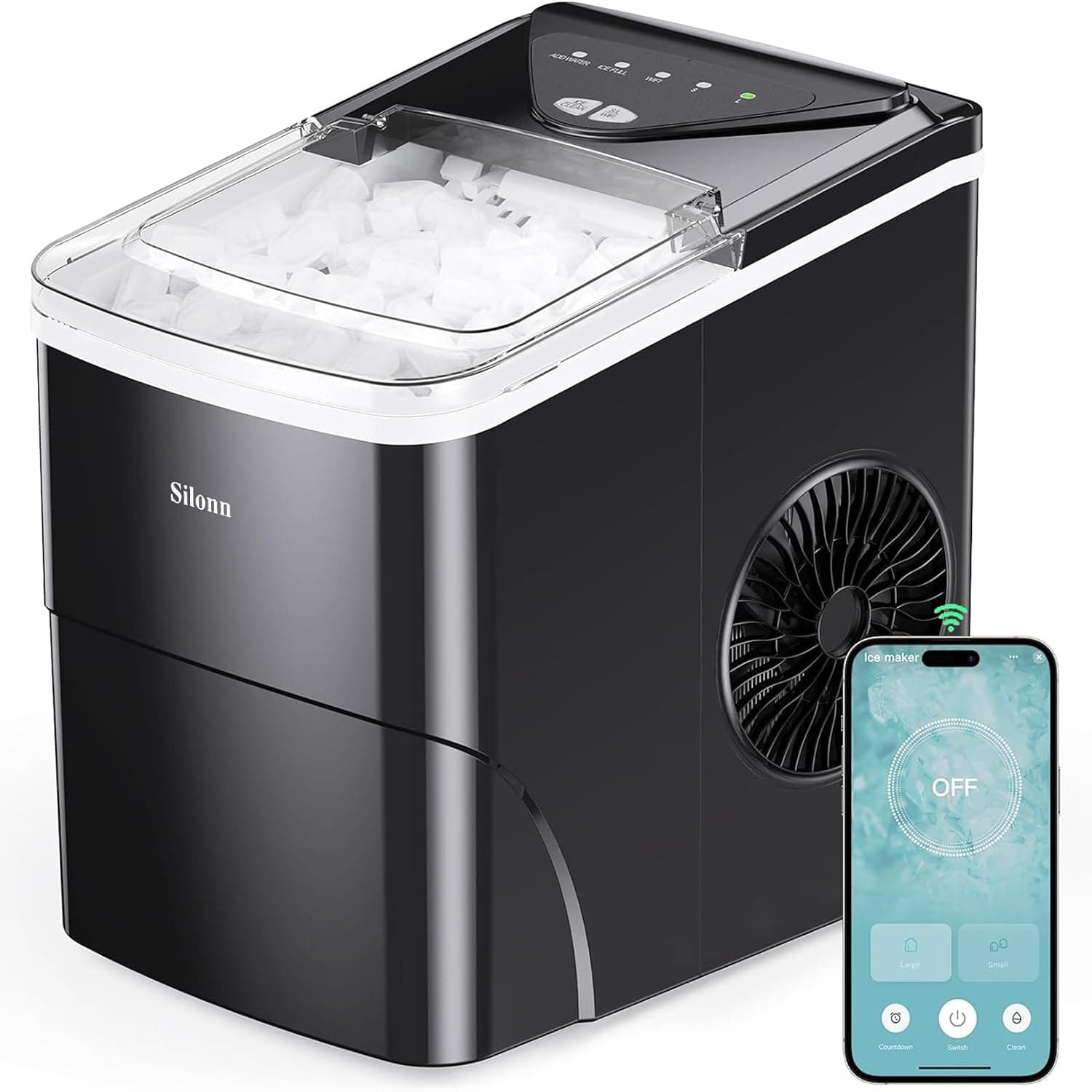
Silonn Smart Countertop Ice Maker
See it on Amazon
Roku 65" Select Series 4K QLED Smart TV
See it on Amazon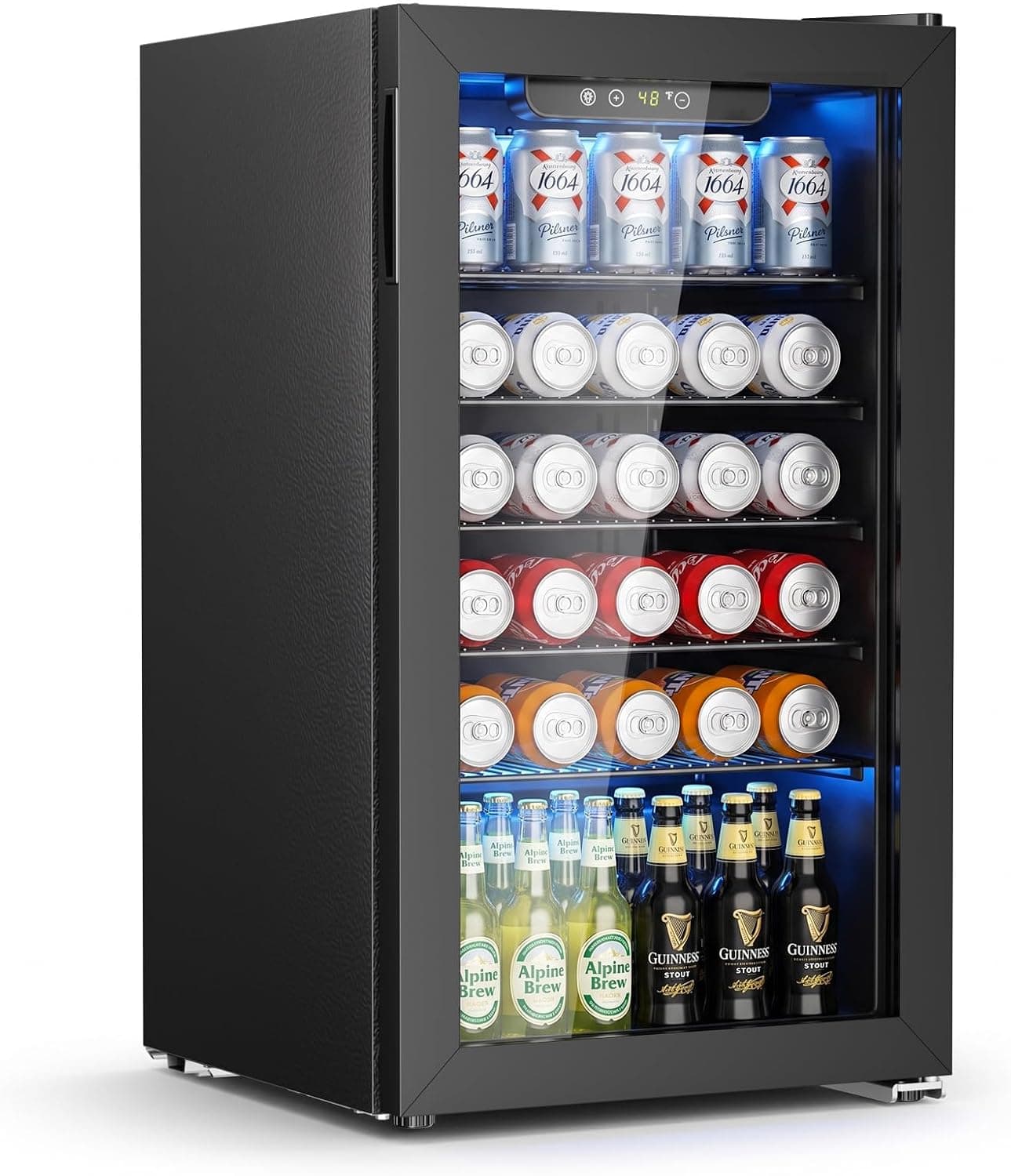
Antarctic Star 130-Can Beverage Refrigerator
See it on Amazon
Sponsored listings from Amazon’s Sponsored Products for Creators program, kept apart from our reviews and rankings. How we make money
The EcoFlow DELTA Pro 3 is the most capable single unit in this guide by the numbers on its own listing: a 4,096Wh LFP base battery, a 4,000W AC output that X-Boost stretches to 6,000W and the system scales to 12,000W, and 120V/240V dual-voltage support that covers well pumps, dryers, and other 240V circuits no 120V-only station can touch. The expansion architecture is the deepest here — EcoFlow rates the system as expandable to 48kWh with extra batteries or smart generators, which moves it from big-battery duty into multi-day whole-home-critical-circuit territory. The listing rates its LFP chemistry at 4,000 cycles before dropping to 80% capacity, roughly 11 years of regular use.
Two practical notes from the same listing data. The unit runs as quietly as 30 dB under light load — EcoFlow's X-Quiet claim — which matters when it sits in a bedroom hallway during an outage. And at a $3,699 list price it costs $1,700 more than the Anker SOLIX F3800's list while delivering a lower continuous output rating, which is exactly why the value index below ranks the Anker first even as the DELTA Pro 3 keeps the best-overall slot on capacity and ecosystem depth.
What We Love
- 4,096Wh LFP base capacity — the largest base battery in this guide, per the manufacturer listing
- 4,000W AC output, 6,000W with X-Boost, scalable to 12,000W — with 120V/240V dual-voltage support
- Expandable to 48kWh — the deepest expansion ceiling on this roster
- 4,000-cycle LFP rating — 80% capacity retained after 4,000 cycles, per EcoFlow's battery documentation
- As low as 30 dB operation — quiet enough for occupied rooms during an outage
What Could Be Better
- $3,699 list is the joint-highest price here; the Anker SOLIX F3800 lists 6,000W output for $1,700 less
- A 48kWh build-out requires DP3 Extra Batteries at $2,599 list each
- At this class's weight, moving it between floors is a two-person job
- The July capture found it $1,300 under list at EcoFlow's own Amazon storefront — treat street pricing as volatile until the September re-verification
The Verdict
The EcoFlow DELTA Pro 3 is the pick when capability outranks price: the roster's largest base battery, 120V/240V output, and the only 48kWh expansion path on this page. At $3,699 list you are paying for headroom the value index deliberately refuses to subsidize — buy it for the ceiling, not the per-dollar arithmetic.
Does the EcoFlow DELTA Pro 3 work with solar panels?
Yes — solar charging is a core input path for the DELTA Pro 3, and its expansion listing describes recharge via extra batteries or smart generators alongside panel input. EcoFlow sells dedicated panels, and the unit's app manages charge sources and rates. We did not independently verify a maximum solar input wattage for this 2026 listing, so check the current EcoFlow spec sheet for the exact panel ceiling before sizing an array. For panel selection and placement considerations, our best solar powered smart home devices guide covers the setup fundamentals.
Can the EcoFlow DELTA Pro 3 run a whole house during a power outage?
Not a whole house, but a curated set of critical circuits — and with expansion, for a long time. The base 4,096Wh unit runs a refrigerator drawing 150W on average for roughly 23 hours by straightforward arithmetic (4,096Wh × 0.85 inverter efficiency ÷ 150W), and its 120V/240V output covers appliance classes most portables cannot start. EcoFlow's own positioning — 2 to 4 days of whole-home backup at full 48kWh expansion — depends on adding DP3 Extra Batteries at $2,599 list per 4kWh unit. For sizing against your real loads before you buy, our best whole home energy monitors guide is the right first step.
Anker SOLIX F3800 — best value in 2026
What is the best value portable power station for home backup in 2026?
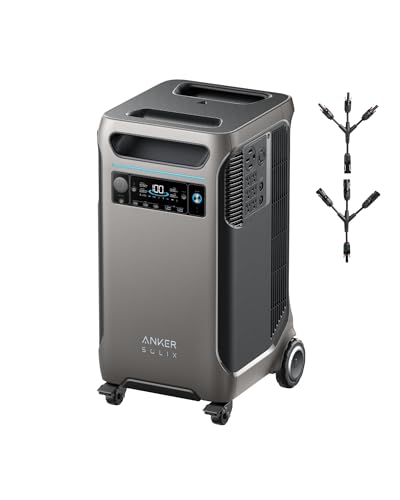
Anker SOLIX F3800 portable power station
(Current Price, subject to change)
The Anker SOLIX F3800 wins this refresh's value verdict outright: 6,000W of 120V/240V AC output — the highest continuous rating in this guide, tied only with its own Plus sibling — attached to a 3,840Wh LFP battery at a $1,999.99 list price. Run the value arithmetic and it is not close: 3,840 × 6,000 × 2.0 expansion factor against roughly $2,000 of list price produces a SHE Backup Value Score of 23.0, top of the index by a wide margin. The dual-voltage output matters in practice because 240V is what a well pump, a dryer circuit, or a transfer-switch feed actually requires.
The listing's two signature extras push it past generic high-output rivals: a NEMA 14-50 port that charges an EV directly with a standard charging cable, and an L14-30 RV inlet path — capabilities we frame here strictly as backup-flexibility bonuses, since this guide's job is home backup rather than road power. Expansion runs to six BP3800 packs at 3,840Wh each for a 26.9kWh system, with the packs listing a 10-year lifespan claim and an Anker-stated 5-year warranty. At capture the F3800 carried a live limited-time deal badge — a reminder that July street prices are promotional; the $1,999.99 figure above is the list-class number.
What We Love
- 6,000W AC output with 120V/240V dual voltage — the class ceiling, at the class's lowest list price
- 3,840Wh LFP base capacity — a full family day of essential loads, per Anker's own positioning
- Expands to 26.9kWh — up to six BP3800 packs at 3,840Wh each
- NEMA 14-50 and L14-30 ports — direct EV charging and generator-style connections without adapters
- SHE Backup Value Score 23.0 — the highest capacity-output-per-dollar result on this roster
What Could Be Better
- The Plus sibling adds 3,200W solar input and generator charging for $700 more list
- 26.9kWh full build-out means six expansion packs — a five-figure total at list
- Its listing publishes no solar-input ceiling — the 3,200W solar path and generator input are the Plus model's listed territory, so solar-first buyers should verify the panel spec before choosing this tier
- A live limited-time deal at capture makes current street pricing unreliable until the September re-check
The Verdict
The Anker SOLIX F3800 is this refresh's value verdict: 6,000W of dual-voltage output and 3,840Wh at $1,999.99 list produce a SHE Backup Value Score of 23.0, the top result on the index by a wide margin. For a wall-outlet recharge plan, nothing on the page delivers more backup per list dollar.
Anker SOLIX F3800 vs F3800 Plus: which should I buy?
Buy the F3800 Plus ($2,699.99 list) only if solar or generator charging is central to your plan: it adds 3,200W of solar input and pure-sine generator input to the same 3,840Wh / 6,000W / 120V-240V core, and shares the same six-pack 26.9kWh expansion ceiling. If your recharge plan is a wall outlet — which describes most storm-prep buyers — the standard F3800 delivers identical backup capability for $700 less list, which is why it, not the Plus, tops our value index.
Can the Anker SOLIX F3800 charge an electric vehicle?
Yes, directly — the listing's NEMA 14-50 port accepts a standard EV charging cable with no grounding accessories, a genuine differentiator in this class. Treat it as an emergency top-up tool rather than a daily charger — 3,840Wh restores a modest slice of a typical EV's range, useful when an outage coincides with an empty battery and a hospital run. The same port family (with L14-30) also feeds RV inlets, though for this guide's purposes the home-backup use is the one that earns the port its keep.
Anker SOLIX F3800 Plus — best expansion flagship in 2026
What is the best expandable portable power station for home backup in 2026?
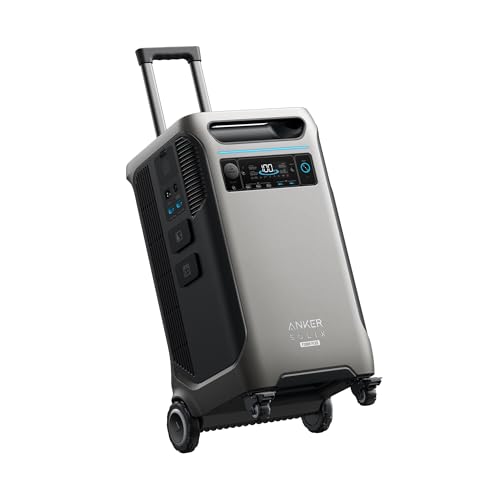
Anker SOLIX F3800 Plus portable power station
(Current Price, subject to change)
The Anker SOLIX F3800 Plus is the F3800 core — 3,840Wh, 6,000W, 120V/240V — with the recharge side built out: 3,200W of solar input, the highest on this roster per its listing, plus pure-sine gas-generator input for hybrid resilience when an outage outlasts the sun. Anker's listing positions the 6,000W output as 58% more than same-capacity rivals, and whether or not you lean on the marketing arithmetic, nothing else here matches the combination of output ceiling and input ceiling in one cabinet.
Expansion mirrors the standard F3800: up to six BP3800 packs for a 26.9kWh system. That makes the Plus the right anchor for a solar-forward, multi-day backup build — and the wrong spend for a wall-outlet-recharge buyer, who gives up nothing that matters by saving $700 with the standard model. Its SHE Backup Value Score of 17.1 lands second on the index: the extra $700 of list price buys input capability the value formula deliberately does not credit, so read the 17.1 as the price of solar headroom.
What We Love
- 3,200W solar input — the roster's highest listed panel ceiling, for sun-primary recharge plans
- Gas-generator input — pure-sine charging keeps the system fed through week-long outages
- Same 6,000W / 120V-240V output as the F3800 — dryer, well-pump, and 240V circuit capable
- 26.9kWh expansion ceiling — six BP3800 packs at 3,840Wh each
- SHE Backup Value Score 17.1 — second on the index, carrying its solar premium
What Could Be Better
- $700 over the standard F3800 buys input capability, not more output or capacity
- Full 26.9kWh expansion is a five-figure list-price project
- Solar arrays large enough to use 3,200W of input are their own investment and siting problem
- Deal-window pricing at capture; list figures shown pending the September re-check
The Verdict
The Anker SOLIX F3800 Plus earns its $700 premium only when the recharge plan runs off-grid: 3,200W of listed solar input and pure-sine generator charging on the same 6,000W dual-voltage core. Solar-forward, multi-day builders should anchor here; everyone else keeps identical backup output with the standard F3800 for less.
How fast does the Anker SOLIX F3800 Plus recharge from solar?
The listing rates solar input at 3,200W. At that ceiling, refilling the 3,840Wh battery takes under two hours of ideal-condition sun by straight arithmetic (3,840 ÷ 3,200), though real-world panel output, angle, and cloud cover stretch that meaningfully. The practical read: with even a half-sized 1,600W array, an afternoon of decent sun restores a full family-day of capacity — the difference between a one-night backup and a week-long routine. Panel siting fundamentals live in our best solar powered smart home devices guide.
Jackery HomePower 3600 Plus — best solar bundle in 2026
What is the best solar power station bundle for home backup in 2026?
Jackery HomePower 3600 Plus portable power station
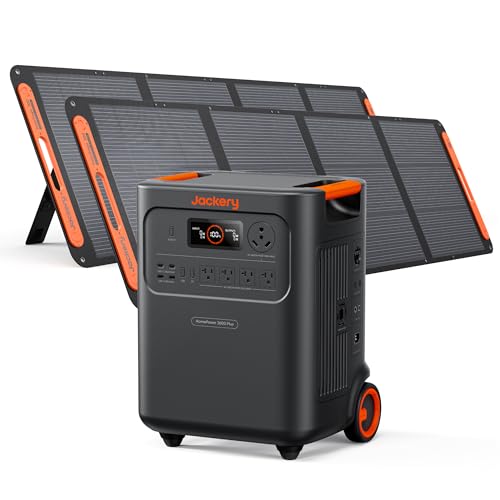
(Current Price, subject to change)
The Jackery HomePower 3600 Plus is the roster's turnkey solar package: the $3,699 list price includes two 200W panels, so the recharge plan ships in the same order as the battery. The station itself lists 3,584Wh of LFP capacity behind a 3,600W AC output that doubles to 7,200W when two units run in parallel — with dual-voltage 120V/240V available in that paired configuration — and expansion runs to 21kWh. Jackery's headline safety claim is materials-level: ceramic-membrane battery cells tested at 302°F against thermal runaway, per the listing.
Charging flexibility is the other differentiator: four input paths, with a hybrid AC-plus-DC combination that takes the unit from empty to full in about 2 hours per the listing — matched on this roster only by the Explorer 2000 Plus's wall-charge claim. The honest caveats: the panels account for a meaningful slice of the bundle price, which is why its SHE Backup Value Score of 6.3 (computed against the full bundle list) undersells the bare station; 400W of included panel input is a trickle-charge array, not an off-grid backbone; and Jackery notes the panels ship separately from the station.
What We Love
- Two 200W panels in the box price — the only complete solar starter kit on this roster
- 3,584Wh LFP + 3,600W AC (7,200W parallel) — with 240V available in dual-unit parallel
- 0–100% in about 2 hours — hybrid AC+DC charging, per the listing
- Expandable to 21kWh — mid-roster ceiling, well past multi-day essentials
- 302°F-tested ceramic-membrane cells — Jackery's listed thermal-safety architecture
What Could Be Better
- The value index scores the bundle, not the bare station — panel dollars depress the 6.3
- 400W of included panels recharges slowly; serious solar plans need a bigger array
- 240V requires a second unit in parallel, unlike the single-cabinet Anker and EcoFlow flagships
- Panels ship separately and may arrive after the station, per Jackery's own listing note
The Verdict
The Jackery HomePower 3600 Plus is the turnkey answer: the only pick that ships its recharge plan — two 200W panels — in the same order, backed by a roughly 2-hour hybrid recharge per the listing. Accept a value score that carries the panels' cost, and treat the 400W array as a starter kit rather than an off-grid backbone.
Is the Jackery HomePower 3600 Plus enough to run a refrigerator through a multi-day outage?
By the arithmetic, comfortably — with the panels doing daily work. A 150W-average refrigerator draws roughly 3.6kWh a day; the station's 3,584Wh × 0.85 usable estimate covers about 20 hours per charge, and each day of decent sun on the included 400W of panels claws back a meaningful fraction. For genuine multi-day resilience without sun, the 21kWh expansion path or a bigger array is the answer — or step up the output tier to the Anker SOLIX F3800 Plus and its 3,200W solar ceiling.
BLUETTI Apex 300 — best budget entry in 2026
What is the best budget portable power station for home backup in 2026?
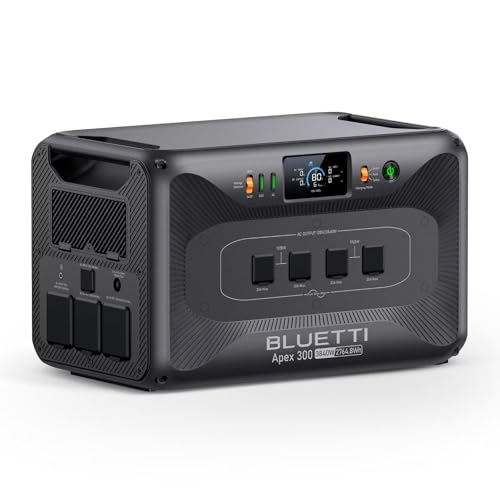
BLUETTI Apex 300 portable power station
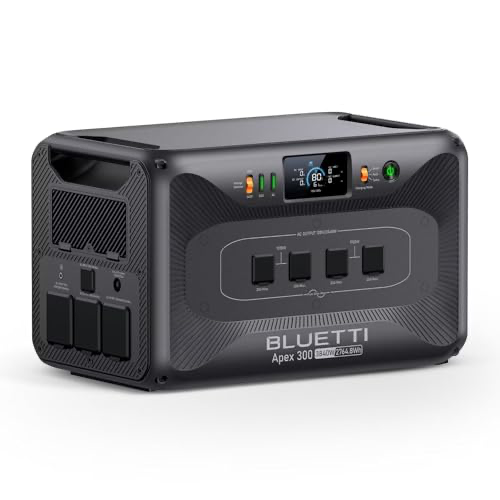
(Current Price, subject to change)
The BLUETTI Apex 300 is the cheapest ticket into serious-output home backup on this roster, and its listing is unusually specific about why it belongs here: six AC outlets rated to 3,840W with 7,680W of surge headroom, simultaneous 120V/240V output, and a 0ms UPS mode that keeps essentials from blinking when the grid drops — the feature that turns a power station into an always-on backstop for a CPAP, a router, or a chest freezer rather than something you fetch from the garage.
Expansion is modular through BLUETTI's B300K and B500K batteries, with the wider accessory system (Hub D1, alternator chargers, the SolarX 4K input module) growing the platform over time; the listing does not publish a single system ceiling, so our value formula credits only the two verified expansion models — worth knowing when comparing its SHE Backup Value Score of 8.7 against the Anker pair's listed 26.9kWh ceilings. At 2,764.8Wh the base battery is the smallest of the big-format units here, which is the honest budget trade: you are buying output class and UPS behavior now, capacity later.
What We Love
- $1,699 list — the lowest-priced 240V-capable unit on this roster
- 3,840W outlets with 7,680W surge — starts compressors and pumps that stall smaller inverters
- Simultaneous 120V/240V — both voltages live at once, per the listing
- 0ms UPS mode — uninterrupted failover for always-on essentials
- B300K/B500K expansion path — grow capacity as the budget allows
What Could Be Better
- 2,764.8Wh base capacity is the smallest of the large-format picks here
- No published total-system expansion ceiling on the listing — we score only what is verified
- The accessory ecosystem (hubs, fast chargers, solar module) is à la carte spending
- Carried a live limited-time deal badge at capture; list price shown pending September re-check
The Verdict
The BLUETTI Apex 300 is the budget gateway to flagship behaviors: simultaneous 120V/240V, 7,680W of surge headroom, and a 0ms UPS mode at $1,699 list. The trade is the smallest large-format battery on this roster and an expansion path we credit only as far as its two verified pack models.
What does the BLUETTI Apex 300's 0ms UPS mode actually do?
Plugged into the wall and into your device chain, the Apex 300 passes grid power through until the moment the grid fails, then switches to battery with no measurable gap — 0ms per the listing. In practice that means a desktop computer does not reboot, a CPAP does not stop, and a chest freezer's compressor does not hard-cycle when a storm takes the line down at 2 a.m. Dedicated UPS units do this for electronics at smaller capacities (our best smart UPS battery backup guide covers that tier); the Apex 300 is what it looks like when the same behavior sits on 2,764.8Wh of LFP battery.
Jackery Explorer 2000 Plus — best compact value in 2026
What is the best compact portable power station for home backup in 2026?
Jackery Explorer 2000 Plus portable power station
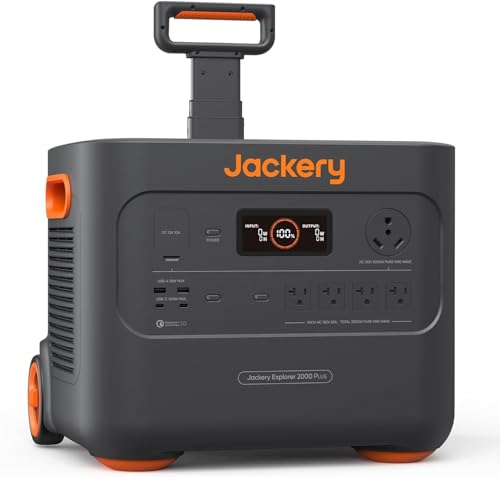
(Current Price, subject to change)
The Jackery Explorer 2000 Plus is the holdover from our April roster, kept for the buyer the flagships overshoot: its 2,042Wh LiFePO4 battery and 3,000W AC output cover the refrigerator-lights-devices essentials in the roster's smallest-capacity package, with a roughly 2-hour wall recharge per the listing. Expansion reaches 12kWh via up to five battery packs on a single unit — the listing's dual-unit configurations extend the family to 24kWh — so the compact entry is not a capacity dead end.
Buyers should read its price history with clear eyes: at the July 17 capture this unit sat 55% below its $1,999 list — by far the steepest promotional gap on the roster, and exactly the kind of back-to-school pricing our deal-window policy treats as unreliable for evergreen guidance. We score and present it at list; if the street price you see approaches the capture gap, the value calculation shifts dramatically in its favor, and the September re-verification will settle where its everyday price actually lives. At list, its SHE Backup Value Score of 6.1 trails the field — the honest consequence of 120V-only output in a roster that has gone dual-voltage.
What We Love
- 2,042Wh + 3,000W in the smallest package here — essentials-class backup without the bulk
- Roughly 2-hour wall recharge — storm-warning top-ups on short notice, per the listing
- Expands to 12kWh — up to five packs on one unit; dual-unit systems reach 24kWh
- LiFePO4 chemistry — the same long-cycle-life battery class as the flagships
- The roster's simplest setup — plug in, charge, run
What Could Be Better
- No 240V output on its listing — the capability line that now defines the flagship class
- 2,042Wh base runs a refrigerator roughly 11–12 hours by arithmetic, not multi-day
- 3,000W output trails every flagship here
- The 55% capture-window discount makes its real street price the least certain on this page
The Verdict
The Jackery Explorer 2000 Plus stays on the roster for the essentials buyer: 2,042Wh and 3,000W in the smallest, simplest package here. Its 55%-off capture price shows how volatile its street pricing runs — shop it with the $1,999 list figure in hand and let the September re-verification settle where its everyday price lives.
When NOT to Buy a Portable Power Station
Skip this category if you only need UPS-style protection for electronics — a dedicated UPS costs far less, and our best smart UPS battery backup guide covers that tier. Skip it if you expect multi-day whole-home runtime without solar or expansion batteries — even the 48kWh-class builds here carry critical circuits, not central HVAC plus everything else. Skip it if you need automatic whole-panel failover with no cords — that is transfer-switch territory, covered in our backup power systems guide and the smart electrical panels hub. And skip the flagship tier on a tight budget with rare outages — the BLUETTI Apex 300 at $1,699 list exists precisely for that case.
Portable Power Station Comparison
Setup Difficulty (1-10 scale)
SHE editorial difficulty ratings, based on the setup steps each listing describes — every unit here is cord-and-app simple compared with any installed backup tier:
- Jackery Explorer 2000 Plus — 1/10; the simplest here: one cable, one app, done
- EcoFlow DELTA Pro 3 — 2/10; unbox, charge, plug in; app setup in minutes; EcoFlow's own listing pitches it as simple enough that "even a kid can manage it"
- Anker SOLIX F3800 — 2/10; plug-and-play; the NEMA ports need nothing beyond the cable you already own
- BLUETTI Apex 300 — 2/10; plug-and-play with a supplied grounding screw; UPS mode is a wiring-order decision, not an install
- Anker SOLIX F3800 Plus — 3/10; as the F3800, but solar and generator inputs add wiring planning, not installation
- Jackery HomePower 3600 Plus — 3/10; plug-and-play per the listing; panels ship separately and set up outdoors
Expandability
- EcoFlow DELTA Pro 3 — to 48kWh with DP3 Extra Batteries ($2,599 list per 4kWh) or smart generators; the deepest ceiling on the roster
- Anker SOLIX F3800 — to 26.9kWh via up to six BP3800 packs (3,840Wh each; 10-year lifespan claim, Anker-stated 5-year warranty)
- Anker SOLIX F3800 Plus — the same six-pack BP3800 architecture to 26.9kWh, with 3,200W solar and generator input feeding the stack
- Jackery HomePower 3600 Plus — to 21kWh per the listing
- Jackery Explorer 2000 Plus — to 12kWh on one unit (five packs); 24kWh across a dual-unit system
- BLUETTI Apex 300 — B300K/B500K packs; no published system ceiling, so we credit only the verified models
240V Capability
- EcoFlow DELTA Pro 3: yes — 120V/240V dual-voltage output on the single cabinet
- Anker SOLIX F3800: yes — 120V/240V dual voltage with NEMA 14-50 and L14-30 ports
- Anker SOLIX F3800 Plus: yes — the same 120V/240V output as the standard F3800
- Jackery HomePower 3600 Plus: partial — 240V only in a dual-unit parallel configuration
- BLUETTI Apex 300: yes — simultaneous 120V/240V, both voltages live at once per the listing
- Jackery Explorer 2000 Plus: no — its listing shows no 240V output
Why it matters: well pumps, dryer circuits, and many transfer-switch feeds are 240V loads. If your outage plan includes any of them, the 120V-only tier is disqualified before price enters the conversation — this single spec is the cleanest divider between the 2026 flagship class and the previous generation.
Ecosystem Compatibility
- EcoFlow DELTA Pro 3 — EcoFlow app; expansion via DP3 Extra Batteries and smart generators to a listed 48kWh system ceiling
- Anker SOLIX F3800 — Anker app; BP3800 pack family (up to six) to 26.9kWh; NEMA 14-50 and L14-30 ports connect EV and RV gear you may already own
- Anker SOLIX F3800 Plus — same Anker app and BP3800 family, plus 3,200W solar input and pure-sine gas-generator charging
- Jackery HomePower 3600 Plus — Jackery app; parallels with a second unit for 7,200W/240V; expansion to 21kWh
- BLUETTI Apex 300 — BLUETTI app; B300K/B500K packs plus the Hub D1, alternator-charger, and SolarX 4K accessory system
- Jackery Explorer 2000 Plus — Jackery app; up to five packs to 12kWh on one unit, 24kWh across a dual-unit system
Monthly Cost
- All six picks: $0/month. No roster listing attaches a subscription or cloud fee to core backup control — the EcoFlow, Anker, Jackery, and BLUETTI apps all run their stations without a plan, per the listing data we captured
- Ongoing costs are the electricity to keep the battery topped off and any expansion hardware you add later — in a smart-home market where cameras and monitoring increasingly bill monthly, backup power remains a buy-once category
SHE Backup Value Score
What it measures: Backup capability delivered per list-price dollar — usable capacity times output ceiling times verified expansion headroom, normalized by price.
Formula: SHE Backup Value = (Wh Capacity × Output Watts × Expandability Factor) / (List Price × 1,000)
Expandability Factor: 1.0 + 0.2 per verified expansion step, capped at 2.0. We count only expansion published on the product's own listing: the 48kWh DELTA Pro 3 ceiling and both Ankers' six-pack architectures reach the 2.0 cap; the HomePower's 21kWh ceiling scores 1.8; the Explorer's five-pack architecture scores 2.0; the Apex 300's two verified expansion models (no published ceiling) score 1.4. This edition recomputes every score at list price — our April edition used captured street prices, which the current promo window makes unusable — so scores are not comparable across editions.
(SmartHomeExplorer editorial analysis — /methodology)
SHE Backup Value Score — July 2026 Roster (at list price)
(Wh capacity × output watts × expandability factor) ÷ (list price × 1,000). Higher = more backup capability per list-price dollar.
3,840Wh · 6,000W · $1,999.99 list
3,840Wh · 6,000W · $2,699.99 list
4,096Wh · 4,000W · $3,699 list
2,764.8Wh · 3,840W · $1,699 list
3,584Wh · 3,600W · $3,699 list (bundle w/ panels)
2,042Wh · 3,000W · $1,999 list
What this tells you: The Anker SOLIX F3800's 23.0 is the arithmetic speaking plainly — the class's highest output on a near-flagship battery at the class's lowest flagship list price. The EcoFlow DELTA Pro 3's 8.9 shows what the formula deliberately does not credit: its 48kWh ceiling, 240V depth, and app ecosystem justify its best-overall slot even as its $3,699 list halves its per-dollar score. The HomePower 3600 Plus's 6.3 is depressed by scoring the full bundle price, panels included — read it alongside the fact that no other pick ships its recharge plan in the same order. And the Explorer 2000 Plus's 6.1 at list is the honest cost of single-voltage output in a class that has gone dual-voltage — a score its deep and frequent street discounts can flip in practice, which is precisely why we re-verify in September.
Frequently Asked Questions
How long does a portable power station last during a blackout?
Runtime is arithmetic, not marketing: multiply capacity by roughly 0.85 for inverter losses, then divide by your load. A 150W-average refrigerator on the Anker SOLIX F3800's 3,840Wh runs about 21–22 hours; the same fridge on the Explorer 2000 Plus's 2,042Wh runs about 11–12. Add lights and device charging (150W combined) and those figures roughly halve. These are estimates — compressor duty cycles and inverter behavior move real numbers in both directions — which is why sizing from your own measured loads via our energy monitors guide beats sizing from spec sheets.
Can a portable power station run a window air conditioner?
The output ratings here clear a window AC's startup surge comfortably — every unit on this roster lists 3,000W or more continuous, and the Apex 300 lists 7,680W of surge headroom specifically. Runtime is the real constraint: an 800W-average window unit draws down even the DELTA Pro 3's 4,096Wh in roughly 4–4.5 hours by arithmetic. Overnight summer-outage cooling is an expansion-battery use case, not a base-unit one.
What is LFP battery chemistry and why does it matter?
Every station in this guide runs lithium iron phosphate (LFP/LiFePO4) cells, and the listings quantify why that matters: EcoFlow rates the DELTA Pro 3 platform at 4,000 charge cycles before capacity drops to 80% — roughly 11 years of regular use by its own math — and Anker states a 10-year lifespan for the BP3800 expansion packs. Jackery's HomePower listing adds a materials-level claim: ceramic-membrane cells tested at 302°F against thermal runaway. The practical upshot is that a 2026 LFP station is a decade-class purchase, which is what separates this generation from the earlier chemistry it replaced.
Do these power stations require a subscription?
No — none of the roster listings attaches a subscription or cloud fee to core backup control, and every app (EcoFlow, Anker, Jackery, BLUETTI) operates its station without a mandatory plan per the listing data we captured. Your ongoing costs are electricity for charging and any expansion hardware you add later. In a smart-home market where cameras and monitoring increasingly bill monthly, backup power remains a buy-once category, and we weight that in its favor.
Can I use a portable power station indoors?
Yes — no combustion, no exhaust, which is the entire safety case against running a gas generator anywhere near living space. The considerations that remain are heat dissipation during fast charging, keeping the intake vents clear, and noise — where the DELTA Pro 3's as-low-as-30 dB figure is the only manufacturer-listed number on this roster. Indoor placement next to the loads it protects is exactly how the Apex 300's 0ms UPS mode is meant to be used.
Should I buy now or wait out the back-to-school pricing?
Buy on need, not on the promo calendar — but read prices skeptically this month. Our July 17 capture found live limited-time deals on the F3800 and Apex 300, a deep 55% gap on the Explorer 2000 Plus, and four-figure spreads between street and list on the EcoFlow and Jackery flagships. Every price in this guide is the list-class figure precisely because promo-window captures make poor evergreen guidance; we re-verify all of them in September. If an outage season is bearing down on you, the right unit at a promo price is a good buy today — just verify the current price against the list figures here so you know what the discount actually is.
The Bottom Line
Get the EcoFlow DELTA Pro 3 if you want the most capable single unit: the largest base battery here (4,096Wh), 120V/240V output with X-Boost to 6,000W, the deepest expansion ceiling (48kWh), and quiet 30 dB-class operation. It is the roster's capability pick at $3,699 list, and the value index simply prices that ambition honestly.
Get the Anker SOLIX F3800 if you want the strongest backup-per-dollar on the page — 6,000W of dual-voltage output and 3,840Wh at $1,999.99 list, with a 26.9kWh expansion path and direct EV charging. Our SHE Backup Value Score of 23.0 makes it this refresh's clearest verdict.
Get the Anker SOLIX F3800 Plus if your recharge plan is solar or generator: 3,200W of panel input and pure-sine generator charging on the same 6,000W core, for $700 more list.
Get the Jackery HomePower 3600 Plus if you want the recharge plan included: two 200W panels in the bundle, a 2-hour hybrid recharge, and 302°F-tested cells, at the cost of a value score that carries the panels' price.
Get the BLUETTI Apex 300 if the budget stops at $1,699 list but you refuse to give up 240V or uninterrupted failover — its 0ms UPS mode and 7,680W surge are flagship behaviors at the entry price.
Get the Jackery Explorer 2000 Plus if you want essentials-class backup in the roster's smallest, simplest package and can shop its famously volatile street price with the list figure in hand.
Skip all of them if you need multi-day whole-home coverage with no cords and no sun — that is standby-generator and whole-home-battery territory, and our backup power systems guide is the right scorecard for it.
Sources & Methodology
Methodology: SmartHomeExplorer produces consensus-based buying guidance from manufacturer specifications and verified live retail data; we do not perform first-party product testing. For this July 2026 refresh, every specification cited — capacities, output ratings, expansion ceilings, charge times, safety claims — comes from the product's own Amazon listing (title and feature bullets) as captured live via the Amazon Creators API on July 17, 2026, and every price is the list-class (MSRP/savings-basis) figure from the same capture. No expert-outlet reviews were consulted for this edition, and no outlet-attributed claims appear above. Runtime figures are arithmetic estimates (capacity × 0.85 inverter efficiency ÷ load) and are labeled as such. All captured street prices fell inside the back-to-school promotional window and are treated as deal-suspect; a September re-verification is calendared for every figure on this page.
Verification summary:
| Claim | Source | Verified |
|---|---|---|
| DELTA Pro 3: 4,096Wh, 4,000W (6,000W X-Boost), 48kWh ceiling, 30 dB, 4,000-cycle LFP | Amazon listing (EcoFlow), Creators API capture | July 17, 2026 |
| SOLIX F3800 / F3800 Plus: 3,840Wh, 6,000W, 120V/240V, 26.9kWh via six BP3800, 3,200W solar (Plus) | Amazon listings (Anker), Creators API capture | July 17, 2026 |
| HomePower 3600 Plus: 3,584Wh, 3,600W (7,200W parallel), 21kWh, 2×200W panels, 302°F cell test | Amazon listing (Jackery), Creators API capture | July 17, 2026 |
| Apex 300: 2,764.8Wh, 3,840W outlets (7,680W surge), simultaneous 120V/240V, 0ms UPS | Amazon listing (BLUETTI), Creators API capture | July 17, 2026 |
| Explorer 2000 Plus: 2,042Wh, 3,000W, 12kWh (5 packs) / 24kWh dual-unit | Amazon listing (Jackery), Creators API capture | July 17, 2026 |
| All prices (list-class), conditions (New), and stock states | Amazon Creators API offersV2 probe | July 17, 2026 |
About the author: Nicholas Miles is the founder of SmartHomeExplorer.com, where every product recommendation is built on verified data rather than a single opinion. He focuses on real-world integration across smart-home ecosystems.
Written by Nicholas Miles. Nick has covered smart home technology since 2024 and founded SmartHomeExplorer.com to aggregate consensus ratings from expert editorial sources across 2,868 smart home products and 318 buying guides to surface the true consensus picks for every smart home category.
Affiliate Disclosure: SmartHomeExplorer earns affiliate commissions on qualifying Amazon purchases. Our scoring methodology is independent of affiliate relationships — the SHE Backup Value Score is computed before any link decisions are made.
Last updated: July 18, 2026 | List Price column read July 17, 2026; Amazon's current price changes frequently